Last updated: April 23, 2026
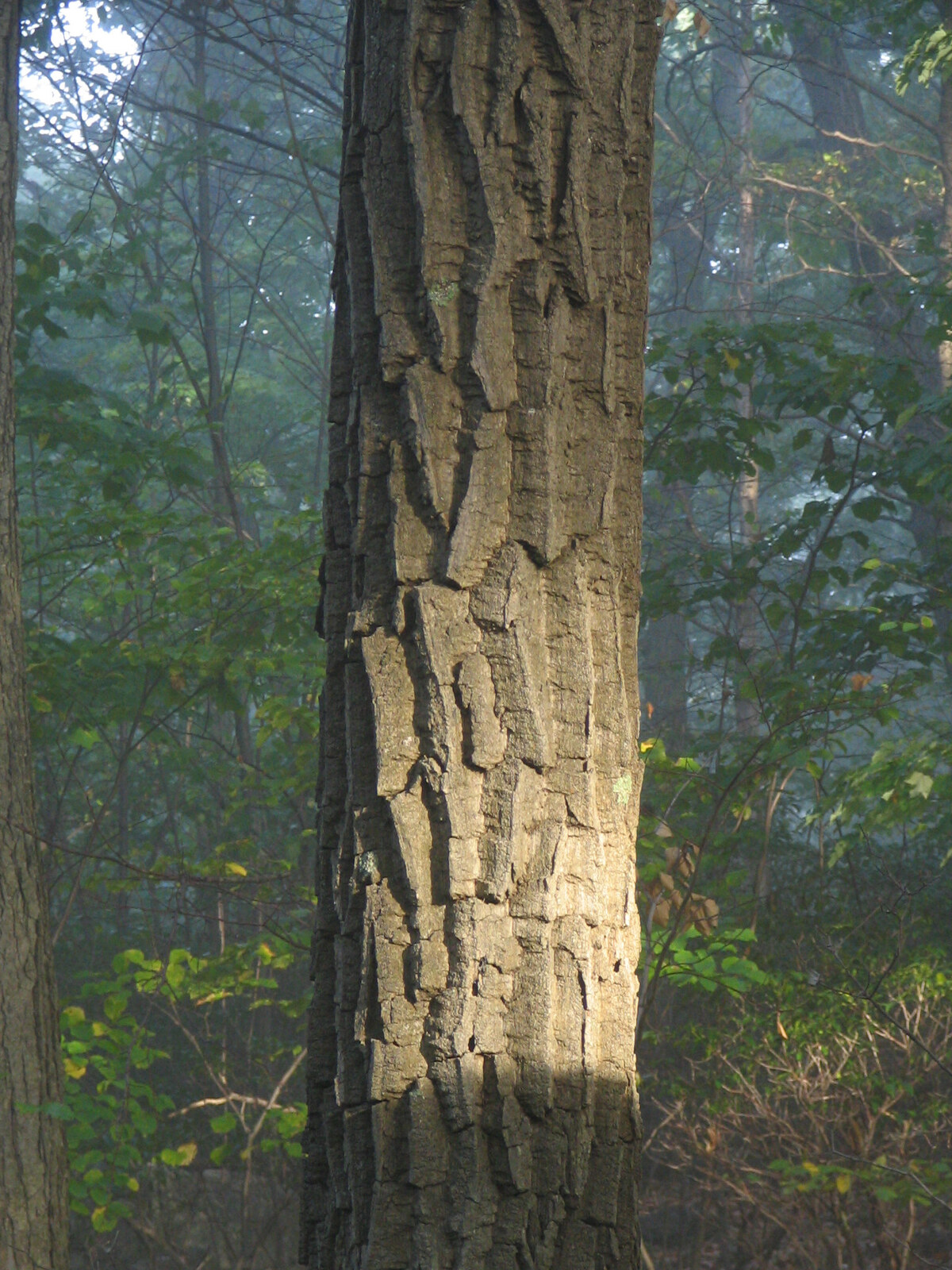
Marion County's industrial economy was a timber economy before it was a coal economy. The same decades that opened the Whitwell and Victoria coal seams and the Dixie Portland cement plant also cleared thousands of acres of Cumberland Plateau and Walden Ridge hardwood forest. The cut timber went into three markets simultaneously: mine props for the deep coal operations, cordwood for the coke ovens, and cross-ties for the Nashville, Chattanooga & St. Louis Railway (see NC&StL) as it pushed its Sequatchie Valley branches through the county between 1867 and 1891. Timber revenue was not reported separately from the operations that used it, but the underlying forest resource was one of the things the British capital of the 1870s and 1880s arrived in Marion County to capture.
The pre-industrial forest
Before the late 19th century, Marion County's forests were a mosaic. The Cumberland Plateau caps on either side of the Sequatchie Valley carried dry-site oak and chestnut on the ridgetops and sandstone benches, with cove hardwoods of tulip poplar, hemlock, sugar maple, beech, and basswood in the moist plateau hollows. The Sequatchie Valley floor and the limestone flats above the Tennessee River carried mixed oak-hickory stands with bottomland hardwoods along the rivers and creeks. The American chestnut was a dominant canopy tree on plateau ridgetops and the eastern slopes, producing mast crops that supplemented farm hog feeding through October and November, and the clearest visible loss of the 20th-century forest was its disappearance after the chestnut blight reached Marion County between about 1920 and 1940. See the flora subpage for the species composition and the endemic and notable species subpage for the wildlife community the forest supported.
Timber for the coke, coal, and railroad complex
When James Bowron's British-capital partnership formed the Southern States Coal, Iron and Land Company in 1877 and began opening the Whitwell mines and Victoria coke ovens, the operation consumed timber at a scale that the county had not seen before.
Each deep coal mine required tens of thousands of board feet of mine props, the timber supports that held the roof of every drift, entry, and working face. Props were typically cut from hardwood saplings and small trees eight to fourteen inches in diameter, preferably oak or hickory, and were replaced continuously as they cracked, were crushed, or were lost in roof falls. Marion County mines drew props from the plateau forests above them, with logging crews and small sawmills working the coves and ridges year-round.
Coke-oven cordwood was a different specification. Before the Victoria beehive coke ovens settled into their eventual coal-fired pattern, and at various points through their operating life, the ovens burned significant quantities of stacked cordwood for ignition, supplementary heat, and auxiliary coking. That cordwood was cut from plateau hardwoods and stacked at the oven rows above the coal seams. The ratio of coal to supplementary wood shifted over time, but the practice kept local cordwood demand high through the 1880s and 1890s.
Railroad cross-ties for the NC&StL Jasper, Inman, and Pikeville branches were cut from white oak, chestnut oak, and locust, the species most resistant to rot and insect damage. An average tie at the turn of the century measured 8 feet by 8 inches by 8 inches and required roughly one-half of a merchantable hardwood log. A mile of single-track line consumed about 2,800 ties. The Jasper Branch (1867), the Inman Branch (1883), and the Pikeville Branch (1891), together with the spur to Deptford / Richard City and the 1902 extension to Orme, required tens of thousands of ties pulled out of Marion County forests. Tie replacement every seven to ten years across the life of the branches sustained the demand long after the initial construction.
Collectively, the three markets kept roughly contemporaneous logging crews working across the plateau above Whitwell, Victoria, Inman, and Orme from the 1870s through the early 20th century. The Cumberland Plateau rim above Whitwell and the eastern slope toward the Tennessee River Gorge show the clearest cutover signatures on 1930s-era TVA aerial photography, with second-growth stands visibly younger than the adjacent uncut hollows.
Sawmills, tie mills, and company logging
Period Marion County sawmills were typically small, family-run or company-auxiliary operations. A portable steam sawmill could be set up on a bench within a mile or two of a cut and moved as the stand was exhausted. Chattanooga and Sequatchie Valley tie contractors bought cut timber on the stump, sawed it on-site, and hauled the finished ties to rail sidings at Whitwell, Victoria, Inman, Richard City, and Jasper. The NC&StL itself did not operate company mills in the county, at least in the period that the available railroad histories document; its ties came from private contractors and from regional tie yards in Chattanooga.
Marion County did not develop the large company sawmill towns that some West Tennessee bottomland-hardwood counties and some North Georgia Appalachian counties sustained. The county's plateau logging was a distributed enterprise working in parallel with mining and railroad construction rather than a standalone extractive town in its own right. Orme, Ladd, Guild, Inman, and Victoria each had logging camps associated with their main operations but did not become logging towns per se.
The chestnut blight
The most consequential single event in Marion County forest history was the arrival of chestnut blight (Cryphonectria parasitica), the Asian fungal pathogen that reached East Tennessee between about 1920 and 1940 and killed essentially every American chestnut in the forest. On plateau ridges that had been dominated by mature chestnut, the canopy loss ran 20 to 40 percent of the overstory, with chestnut oak, white oak, hickory, and tulip poplar expanding to fill the gaps over the next several decades. The economic consequences for plateau farmers were large. Chestnut had underwritten fall hog mast feeding and produced marketable nuts; after the blight, both were gone.
Standing dead chestnut ("ghost chestnut") remained useful as lumber and shingle stock for decades after the blight, and salvage logging of blight-killed trees went on through the 1940s and into the 1950s before the last merchantable stems rotted out. Field reports of live sprouts still occur in Marion County; most sprouts are killed by the persistent blight before reaching reproductive size.
Modern forest cover and present-day timber
Marion County's modern forest cover reflects the recovery of the cutover plus the land that was never cut. The 2022 USDA Census of Agriculture reported 21,877 acres of woodland inside county farms (see the agriculture subpage), roughly 35 percent of all land in farms. That figure understates total forest cover in the county because much of the Cumberland Plateau forest is in non-farm ownership, including Prentice Cooper State Forest on the north rim of the Tennessee River Gorge, Marion County portions of the Tennessee River Gorge Trust's holdings, South Cumberland State Park acreage inside county boundaries, and private timber-company ownership.
Present-day commercial timber harvesting in Marion County is a modest industry. Periodic selective cuts on plateau benches, hardwood pulpwood removals, and the occasional pine plantation thinning account for most of the local timber work. The larger regional timberland-ownership pattern has consolidated: institutional timber-investment companies have replaced many of the individual family operators who ran the early-20th-century sawmills. The Tennessee Division of Forestry and the University of Tennessee Extension forestry program track forest health across the southern Cumberland, and both have documented continuing stress from invasive pests (emerald ash borer has been in the region since 2010, and hemlock woolly adelgid has reached the Cumberland).
Old growth and salvage
Scattered remnants of uncut or near-uncut forest exist in Marion County, most visibly in the Tennessee River Gorge where steep slopes made 19th- and early-20th-century logging uneconomical. Hemlocks two centuries old have been documented on the plateau, and the cove hardwoods in the most inaccessible gorge-side coves include old-growth specimens. The published Great Smoky Mountains and Savage Gulf State Natural Area old-growth literature provides the closest comparative baseline for these stands.
Related
About the Coal & Coke Industry →
About the NC&StL Railway →
About Marion County flora →
About Orme →
About Whitwell →
Sources
- USDA NASS — 2022 Census of Agriculture County Profile, Marion County, Tennessee (woodland acreage in farms)
- Wikipedia — Chestnut blight
- Tennessee Encyclopedia — Forests
- Tennessee Encyclopedia — Forestry in Tennessee
- Tennessee Encyclopedia — Lumber Industry
- Tennessee Department of Agriculture — Division of Forestry
- Wikipedia — Nashville, Chattanooga and St. Louis Railway (source for branch-line construction dates and mileage used in tie-demand estimates)
- Tennessee Encyclopedia — Marion County