Last updated: September 22, 2026
A rural Appalachian county of fewer than 30,000 people, Marion County has produced two Tennessee governors (Peter Turney and James B. Frazier), multiple U.S. senators and congressmen, two Medal of Honor recipients, the judge who presided over the Scopes "Monkey" Trial, the prosecutor who argued that same case, a silent-film actress who appeared in the first Best Picture winner, the second man to break the sound barrier, and a generation of championship athletes. Its earlier history is inseparable from Cherokee leaders who resisted American expansion and the Cherokee woman who sold the land for the county seat. The figures below either lived in the county, were born there, or share a documented connection to its history.
County Namesake
Marion County, established in 1817, was one of dozens of U.S. counties named for a Revolutionary War hero whose guerrilla campaigns in South Carolina made him a national legend. He never visited Tennessee.
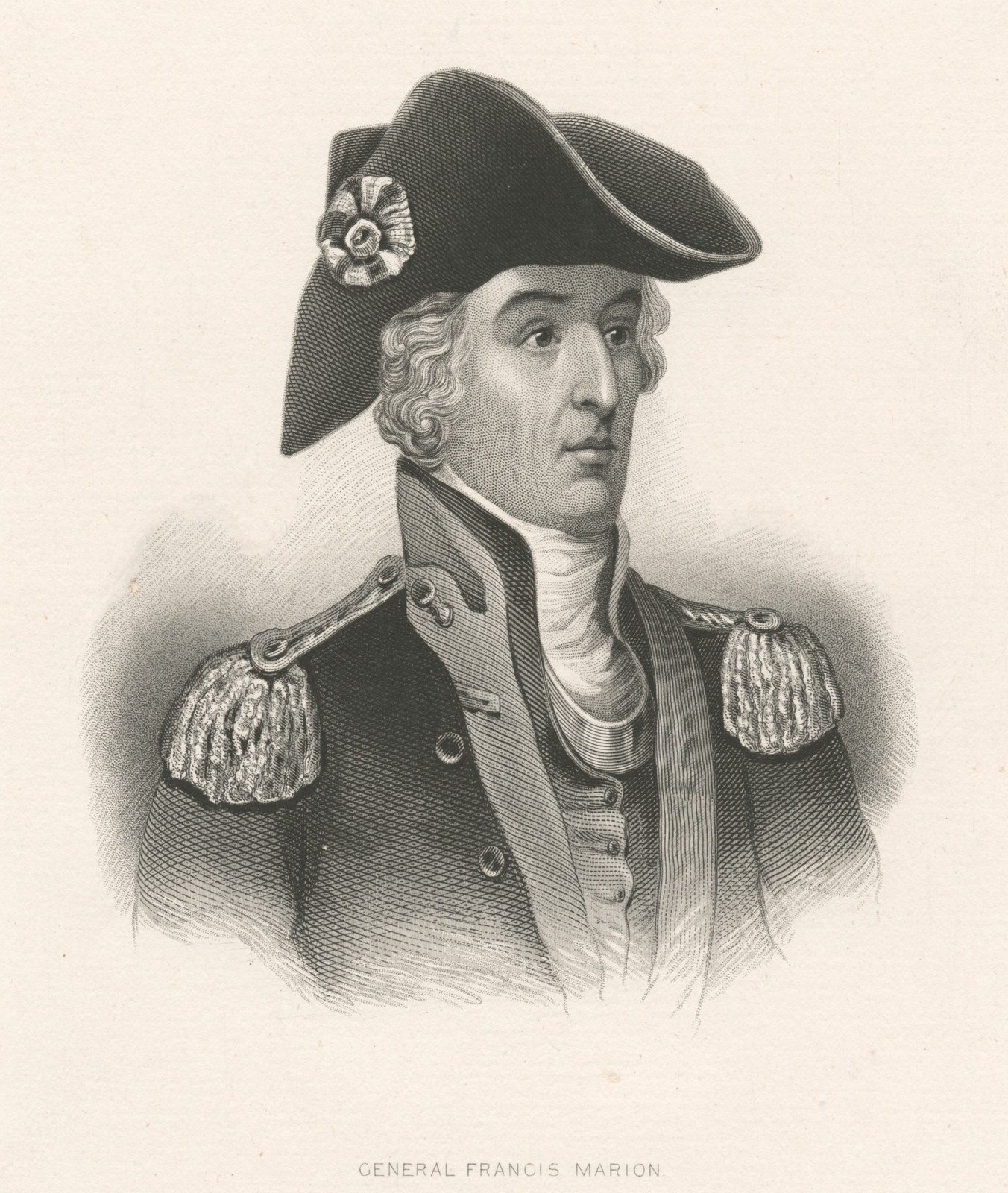
Francis Marion (c. 1732–1795)
Known as "The Swamp Fox," Francis Marion was a brigadier general in the Continental Army during the American Revolution. Born in Berkeley County, South Carolina, Marion used guerrilla tactics against British forces in the Carolina lowcountry, striking from swamp hideouts and disrupting British supply lines. His irregular warfare became a model for American partisan operations. He served in the South Carolina Senate after the war and died at his plantation on February 27, 1795. He never set foot in Tennessee, but when the Tennessee General Assembly carved Marion County from the Sequatchie Valley in 1817, they named it for him, as dozens of other counties and towns across the United States had done.
Cherokee Leaders & Figures
Before 1817, the lands of Marion County were Cherokee territory. The leaders below shaped the region's history through resistance, diplomacy, and, in Betsy Pack's case, a one-dollar land sale that created the county seat.
Dragging Canoe (Tsiyu Gansini) (c. 1738–1792)
Dragging Canoe was a Chickamauga Cherokee war leader and the most prominent Native American figure connected to present-day Marion County. The son of the peace chief Attakullakulla and a Natchez woman named Nionne Ollie, he opposed the 1775 Treaty of Sycamore Shoals, warning that the ceded Kentucky lands would become "a dark and bloody ground." After colonial retaliatory raids destroyed the Overhill towns in 1776, he broke with the Cherokee Nation in the spring of 1777 and withdrew his followers to Chickamauga Creek, near present-day Chattanooga; Evan Shelby's militia burned those towns in 1779 and the faction rebuilt them, but the raid had shown how exposed they were, and in 1782 Dragging Canoe led his followers south along the Tennessee River and established the Five Lower Towns below the Tennessee River Gorge. Two of those towns, Running Water (present-day Whiteside) and Nickajack (near present-day Shellmound), stood in what is now Marion County.
Running Water Town served as Dragging Canoe's headquarters for over a decade. From there he coordinated raids across the American Southeast with a coalition that included Cherokee, Creek, Shawnee, British Loyalists, and agents of France and Spain. A young Tecumseh participated in Chickamauga campaigns, and historians consider Dragging Canoe a model for Tecumseh's later resistance. Dragging Canoe died on February 29, 1792 (some sources give March 1), at Running Water Town, reportedly from exhaustion after an all-night celebration. He was buried with tribal ceremonies from Running Water Town; Raulston and Livingood place the unmarked grave near Haletown, where U.S. Highway 41 crosses the Tennessee River, in ground now submerged by Nickajack Lake, and the Tennessee Historical Commission marker for Running Water Town on U.S. 64 at Haletown records the same tradition. His full story, from Sycamore Shoals to the grave under the lake, is on the dedicated Dragging Canoe page.
Crowmocker (Kag'-ahyelis'ke) (active c. 1779–c. 1790)
Crowmocker was the Cherokee chief who led the settlement bearing his name in the Battle Creek cove of present-day Marion County. His town was a neighbor of the Five Lower Towns rather than one of them (a separately attested Cherokee settlement, not to be confused with Crow Town in Alabama), positioned several miles inland from the river towns of Nickajack and Running Water. The settlement sat along the Nickajack Trail, an overland route connecting the Cumberland settlements to the Lower Towns, making it a staging point for raids northward across the Cumberland Plateau. James Mooney's Myths of the Cherokee (1900) records the Cherokee form of his name as Kag'-ahyelis'ke. J.L. Rollings' 1956 memoir states that land at the head of Battle Creek "was ceded by the Indian Chief, Cromocker, to the white people, about the year 1790." Whether that "cession" was negotiated, gradual, or forced is not clear from the source. Crowmocker's fate after that date, and the fate of his town during the 1794 Nickajack Expedition, are unresolved.
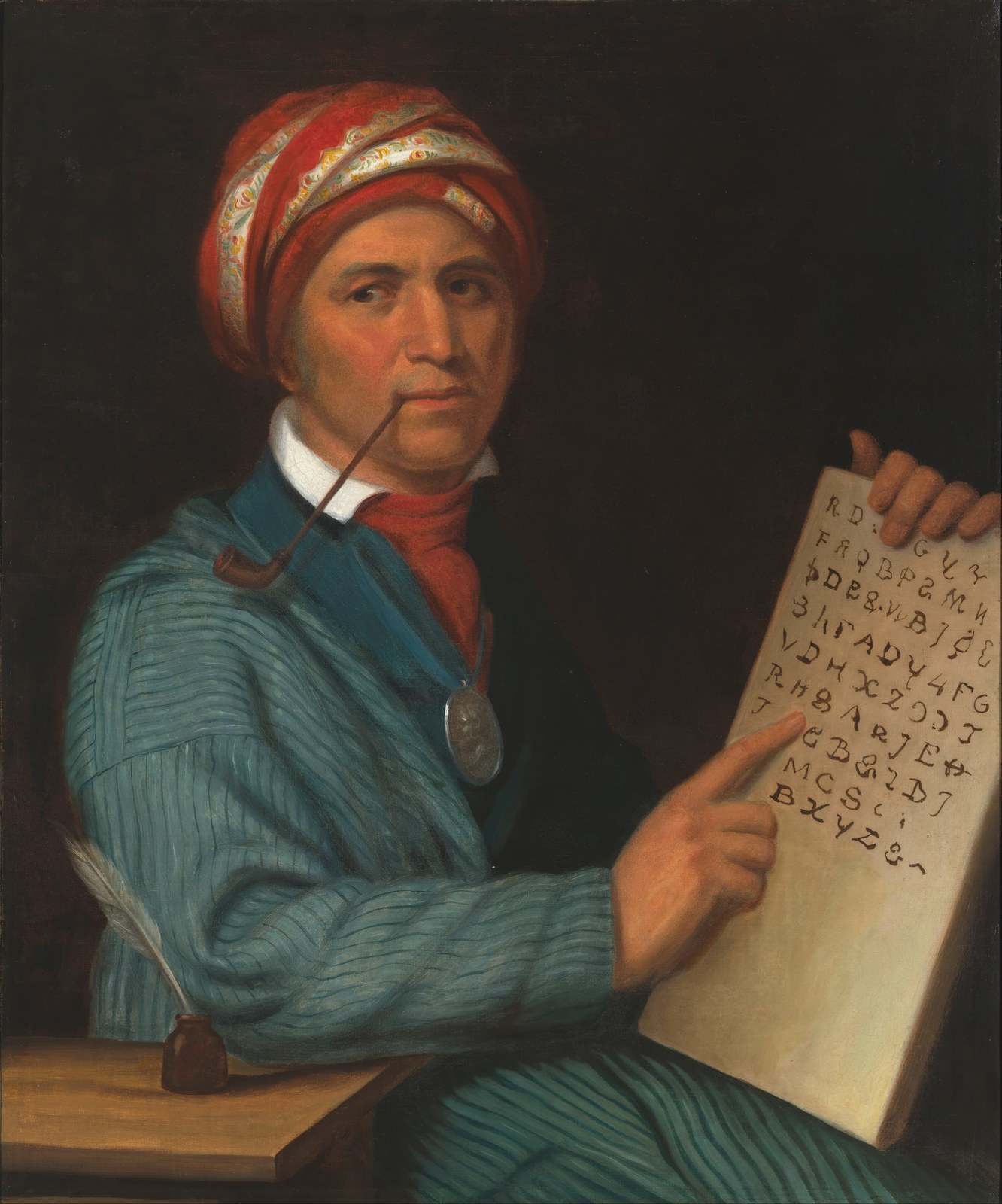
Sequoyah (c. 1770–1843)
Born in the Cherokee town of Tuskegee (present-day Monroe County, Tennessee), Sequoyah created the Cherokee syllabary, a writing system that enabled the Cherokee nation to read and write in its own language. The Cherokee Nation formally adopted the syllabary in 1821. Sequoyah lived at Willstown (present-day Fort Payne, Alabama), a successor to the Lower Towns that lay just south of Marion County. The giant redwood trees of California (genus Sequoia) are named in his honor. His direct ties to present-day Marion County are limited: he is associated with the broader Lower Cherokee region rather than the specific territory of the county. He died c. 1843, probably in Mexico, during an expedition to find a lost band of Cherokee.
Betsy Pack (Elizabeth Lowrey Pack) (c. 1789–c. 1860)
Daughter of Cherokee Chief John Lowrey and Nannie Watts, Betsy Pack is the woman who gave Marion County its civic center. Under the Treaty of 1819, her Cherokee landholdings were reduced to a 640-acre reservation where the town of Jasper now stands. She sectioned off roughly 40 acres, which contained her home and the burial sites of her children, and deeded the land to the Marion County commission for the county seat for one dollar. The courthouse was built near the center of that tract in 1820, approximately where the present courthouse stands. Early county land records confirm the transaction: "PACK, Betsy (p121) 1820 Pack Reservation at Town Creek."
Pack married William Shorey Pack around 1816 and operated a ferry on the Tennessee River near Jasper. She and her mother had previously run a public house on Battle Creek called Lowrey's Place. After selling her remaining acreage, she moved to Wills Valley in Alabama (near present-day Fort Payne), where she lived at a plantation called Rose Hill. In 1838, during the Trail of Tears, she was forced to sell Rose Hill and emigrate west, settling in the Flint District (present-day Adair County, Oklahoma). She died around 1860. The main north-south street in Jasper, Betsy Pack Drive (State Route 150), bears her name, and a Tennessee Historical Commission marker stands in her honor at the courthouse.
John Watts the Younger (Kunnesee) (c. 1750–1802)
John Watts the Younger was Dragging Canoe's nephew and, after Dragging Canoe's death at Running Water on February 29, 1792, the military leader of the Chickamauga Cherokee. He was the son of a white father who sometimes served as interpreter for the Cherokee and of a Cherokee mother who was a sister of Chief Old Tassel, the head of the Nation murdered under a truce flag in 1788, a killing that, per Raulston and Livingood, greatly affected his nephew's course. Known as Young Tassel or Corn Tassel, Watts had refused any part in the 1775 Henderson land sale, and though not renowned as a warrior in his early years he came to be regarded as a very crafty diplomat; at Dragging Canoe's death Governor Blount considered him “unquestionably the leading man in the Nation.” He moved his headquarters to Willstown, closer to his Creek allies and his source of Spanish supplies, and continued the military campaign against the settlements for two and a half years, including the September 1793 Cavett's Station attack on the Knoxville outskirts. After the 1794 destruction of Nickajack and Running Water by Major James Ore's militia, Watts negotiated the Treaty of Tellico Blockhouse on November 7 and 8, 1794 with Territorial Governor William Blount, ending the Chickamauga Wars. He moved west with surviving Lower Towns families and died in the Arkansas country in 1802. Watts is a consequential figure in the Cherokee history of Marion County as the leader who accepted the terms of the peace that closed the wars and handed the Tennessee River corridor to American settlement.
Col. Joseph Brown (1772–1868)
Joseph Brown was an Anglo-American captive at Nickajack town whose 1834 Narrative is the most detailed firsthand account of daily life in a Chickamauga town on the eve of its destruction. Taken captive on May 9, 1788 at age sixteen when Chickamauga warriors intercepted his family's flatboat off the Nickajack landing, Brown was adopted into the household of The Breath, the principal man of Nickajack town, after the raiders killed his father, two of his older brothers, and five other men of the party. He lived in the town for roughly eleven months before being exchanged. In September 1794, Brown served as guide for Major James Ore's expedition that destroyed Nickajack and Running Water, using the same approach paths across Monteagle Mountain that he had traveled as a captive. After the war, Brown moved to Maury County, Tennessee, became a Presbyterian minister, and served for decades in circuit ministry across Middle Tennessee. He died on September 21, 1868, at the age of 96. The same Monteagle Mountain route Brown traveled in 1794 was later descended, in the opposite direction, by the 1838 Bell detachment of the Trail of Tears.
The Breath (d. September 13, 1794)
The Breath was the principal man of Nickajack town in its final years and one of the named leaders of the Five Lower Towns. He enters the record most vividly in 1788: angered by the killings aboard the Brown family boat, he adopted the sixteen-year-old captive Joseph Brown into his own household, a protection that almost certainly kept the boy alive. Six years later he was among the first men killed when Major James Ore's militia struck Nickajack at dawn on September 13, 1794, guided there by the same Joseph Brown. On The Breath's body, per Raulston and Livingood, Ore's men found the letter from the Spanish governor Baron de Carondelet announcing that Spain could no longer supply the Chickamauga towns, the document that framed the war's end. His name, his protection of Brown, and the letter found on his body make him one of the best-attested Cherokee figures in Marion County's early record.
Col. James Brown (d. May 9, 1788)
James Brown was a Revolutionary War veteran from Guilford County, North Carolina, traveling to claim a military-bounty grant on the Cumberland River when his journey ended at Nickajack. Knowing the danger of passing the Lower Towns, per Raulston and Livingood, he had built his flatboat for defense: two-inch planks along the gunwales, loopholes for marksmen, and a small swivel gun mounted on deck. Aboard were his wife, three daughters, four of his six sons, five other young men, and an enslaved woman. Warriors boarded the boat off the Nickajack landing on May 9, 1788 under the pretext of trading; Brown, two of his older sons, and the five other young men were killed, and the survivors were taken captive and distributed among households, including his son Joseph, whose captivity and 1794 return as a guide became one of the hinge stories of the county's history.
John McDonald (dates uncertain)
John McDonald was a Scottish trader, born at Inverness, who reached Charleston in 1766 and built a trading post where the great war and trading paths crossed South Chickamauga Creek. Appointed British assistant superintendent of Indian Affairs, he followed Dragging Canoe's people west and made Running Water his base of operations, supplying the Lower Towns first with British goods and then, per Raulston and Livingood, drawing trade goods and weapons through Savannah and Augusta before changing allegiance outright to become “Spanish Agent to the Chickamaugas.” His counsel could cut against the war, too: it was McDonald's advice that spared the captured Maybery party in 1785 and persuaded Daniel Ross to stay. Through his daughter Mollie's marriage to Ross he was the grandfather of Principal Chief John Ross. (He is no relation to Frank W. McDonald, the 20th-century restorer of Ketner's Mill, profiled below.)
Daniel Ross (dates uncertain)
Daniel Ross came into the Lower Towns as a prisoner and stayed for life. A young Scot recently arrived in America, he was aboard the trading boat of Francis Maybery when the Chickamaugas captured it on the Tennessee River in 1785. When a chief hostile to the party's trading partners was found aboard, the captives' lives hung in the balance until John McDonald intervened, recommending that they be spared, and that Ross stay on to open a trading post. Ross did. Per Raulston and Livingood, he won the confidence of the towns, married McDonald's daughter Mollie, was adopted into the tribe, and lived and traded among the Cherokee for the next forty-five years, raising a family whose son John Ross, born 1790, became Principal Chief of the Cherokee Nation in 1828 and led it through the removal era. The line from a captured boat on the Marion County stretch of river to the principal chieftaincy of the Cherokee Nation runs through this family.
Tecumseh (1768–1813)
The great Shawnee confederation-builder spent part of his young manhood in what is now Marion County, and like Sequoyah he is included here for that connection rather than as a county figure. Tecumseh came south to Running Water Town with the Shawnee band of his elder brother Cheesekaw (Cheeseekau), in 1788 per Raulston and Livingood or in 1789 or 1790 per modern biographers. They were the sons of a chief killed fighting the Americans north of the Ohio and of a Cherokee mother who had returned south. Cheesekaw joined Dragging Canoe's war and was mortally wounded attacking Buchanan's Station near Nashville in 1792; Tecumseh, who in the book's telling had pledged to stay until his brother was avenged, rode with the Chickamauga war parties and roamed the Sequatchie Valley for roughly two years, hearing the constant Lower Towns talk of strength through confederation. The pan-tribal alliance he built a generation later, before his death at the Battle of the Thames in 1813, drew on the model of Dragging Canoe's resistance, a connection formed in the years he was based on Marion County ground.
Major George Lowrey (dates uncertain)
George Lowrey was the leading figure of the Cherokee family that Raulston and Livingood call the “dynasty” of Battle Creek Valley. Under the Treaty of 1819 he was among at least six members of the Lowrey family who took 640-acre reservations along Battle Creek and at its mouth, holding his property, in the book's words, “until he disposed of his property because of the intolerance of white settlers.” By the mid-1820s the Lowrey reservees had been pressed off their land and most moved to Wills Valley in Alabama, years before the federal removal. George Catlin painted his portrait, now held by the Gilcrease Institute; the original survey grant of his kinswoman Elizabeth Lowry's 640 acres on Battle Creek survives in the Cherokee Collection at the Tennessee State Library and Archives. The Lowrey reservations are the clearest documented case of Cherokee families holding legal title inside the new county, and of how briefly that title was allowed to stand.
Military & Political Leaders
For a county of its size, Marion produced a notable concentration of statewide officeholders: two governors, multiple U.S. senators and congressmen, and a Confederate colonel who later became chief justice. Several of these figures practiced law in Jasper early in their careers before rising to prominence elsewhere.
John Kelly (early 19th century)
Founding civic figure and the namesake of the community of Kellysville. Tennessee Acts of the 1820s and 1830s record John Kelly across a sequence of early-county offices: Marion County's lottery manager in 1825; founding trustee and chairman of the Board of Trustees of the Samuel Houston Academy under Tennessee Acts of 1826, Chapter 15; county clerk by 1827 (with Kellysville named for him in the same chapter); authorized to build a Sequachee River mill dam in 1827; turnpike road commissioner in 1831; and Tennessee Railroad Commissioner in 1835. In subsequent years he recurred in Marion County turnpike, river, and transportation legislation. Kelly's chairmanship of the Sam Houston Academy board in 1826 places him at the head of Marion County's first formal educational institution; his other offices placed him at the center of the county's transportation, civic, and lottery infrastructure through the 1820s and 1830s. The Goodspeed biography of his son Alexander Kelly adds that John Kelly (born 1779 in Greenbrier, Virginia) came down the Tennessee River with his wife Nancy Mayo to Lowry's Landing in 1808, served in the 1834 Tennessee constitutional convention, helped organize Olive Branch Lodge F&AM at Jasper, and relocated to Kelly's Ferry in 1838 where he spent the rest of his life.
Major James Ore (c. 1755–1829)
James Ore was a Tennessee militia officer from Sumner County who led the September 1794 expedition that destroyed the Cherokee Lower Towns of Nickajack and Running Water on the Tennessee River, within present-day Marion County. Acting on state authority but without explicit federal sanction, Ore's roughly 550-man force marched down Battle Creek past Martin Springs, crossed the river overnight from the creek's mouth on ox-hide boats and a raft, surprised Nickajack at dawn on September 13, 1794, and then fought three miles upriver to destroy Running Water, the headquarters town that Dragging Canoe had commanded until his death two years earlier. On the body of The Breath, Nickajack's principal man, Ore's men found the letter from the Spanish governor Carondelet cutting off supplies to the towns, the clearest sign that the war was ending. Casualty counts in contemporary accounts vary, but the raid shattered the military capacity of the Chickamauga coalition and led directly to the Treaty of Tellico negotiations that formally ended the Chickamauga Wars. The expedition opened the Tennessee River corridor below the gorge to Euro-American settlement. Ore later served in the Tennessee House of Representatives and died in 1829.
John Shropshire (1767–1846)
John Shropshire is the man whose home hosted Marion County's first court session on November 20, 1817. The Tennessee General Assembly's Acts of 1817, Chapter 109, the statute that created the county, named Shropshire's house at Cheekville in the upper Sequatchie Valley as the venue for the courts of pleas and quarter sessions and the circuit court “until otherwise provided for.” The arrangement lasted about a year before court business moved briefly to the older two-story double log Cheek house in the Liberty sub-locality, then permanently to Jasper in 1819 on land deeded to the county by Betsy Pack.
Born May 18, 1767 in Virginia, Shropshire moved to the Sequatchie Valley as Cherokee land cessions opened the territory to Anglo-American settlement after the 1794 destruction of the Lower Towns at Nickajack and Running Water. He worked as a smith and ran a blacksmith shop near his home, where he also served as a justice of the peace; period accounts describe lesser trials being held in the shop alongside the formal court sessions in the house. After the seat moved to Jasper, Shropshire stayed on at his Cheekville home and became a prominent figure in the upper-valley community for the rest of his life. He died June 16, 1846, six decades before the British-capital coal-and-iron boom that would transform Cheekville into Whitwell.
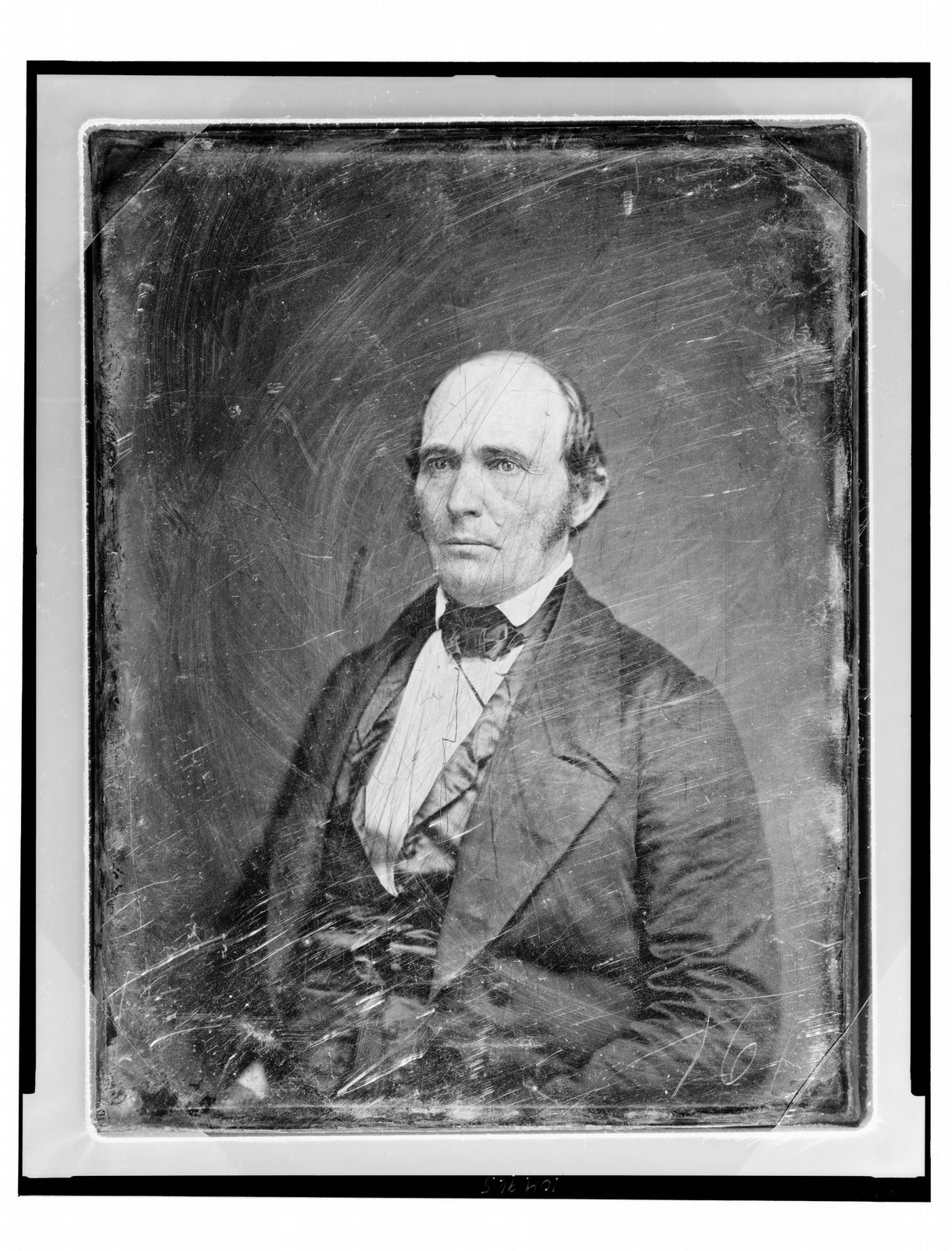
Hopkins L. Turney (1797–1857)
Born on October 3, 1797, in Dixon Springs, Smith County, Tennessee, Hopkins Lacey Turney had no formal schooling. He served in the Seminole War in 1818, then read law on his own and began practicing in Jasper, Marion County, around 1825. His son Peter was born in Jasper in 1827 before the family relocated to Winchester, Franklin County. Turney served in the Tennessee House of Representatives beginning in 1828, then won election to the U.S. House as a Democrat, serving Tennessee's 5th District for three terms (1837 to 1843). The Tennessee General Assembly elected him to the U.S. Senate, where he served from 1845 to 1851, chairing the Committee on Retrenchment and the Committee on Patents and the Patent Office. He died on August 1, 1857, in Winchester.
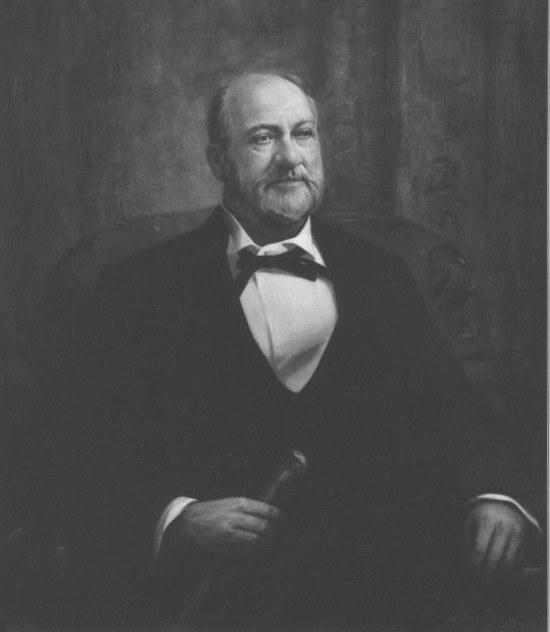
Peter Turney (1827–1903)
Born on September 22, 1827, in Jasper, Marion County, Peter Turney was the son of Senator Hopkins L. Turney. He attended schools in Franklin County and Nashville, read law in his father's office and under Judge W. E. Venable, and was admitted to the bar in 1848. He practiced in Winchester, Franklin County. In the weeks after Fort Sumter in April 1861, Turney raised and organized the 1st Tennessee Infantry, commanding the regiment as colonel through First Manassas, the Shenandoah Campaign, the Seven Days Battles, Second Manassas, Antietam, and Fredericksburg, where he was severely wounded in the face and neck on December 13, 1862. He never returned to active fighting, serving out the war in an administrative command in Florida.
After the war, Turney was elected to the Tennessee Supreme Court following the 1870 constitutional convention. He was reelected in 1878 and 1886, serving as Chief Justice from 1886 to 1893, a total of 23 years on the bench. Elected governor in 1893, his most significant action was signing legislation in April 1893 that ended Tennessee's convict lease system. His 1894 re-election was one of the most controversial in state history: he narrowly lost the popular vote to Republican H. Clay Evans, but the Democratic state legislature negated over 23,000 votes, citing irregularities, and declared Turney the winner. He died on October 19, 1903, in Winchester and is buried in Winchester City Cemetery. The Turney Center correctional facility is named in his honor.
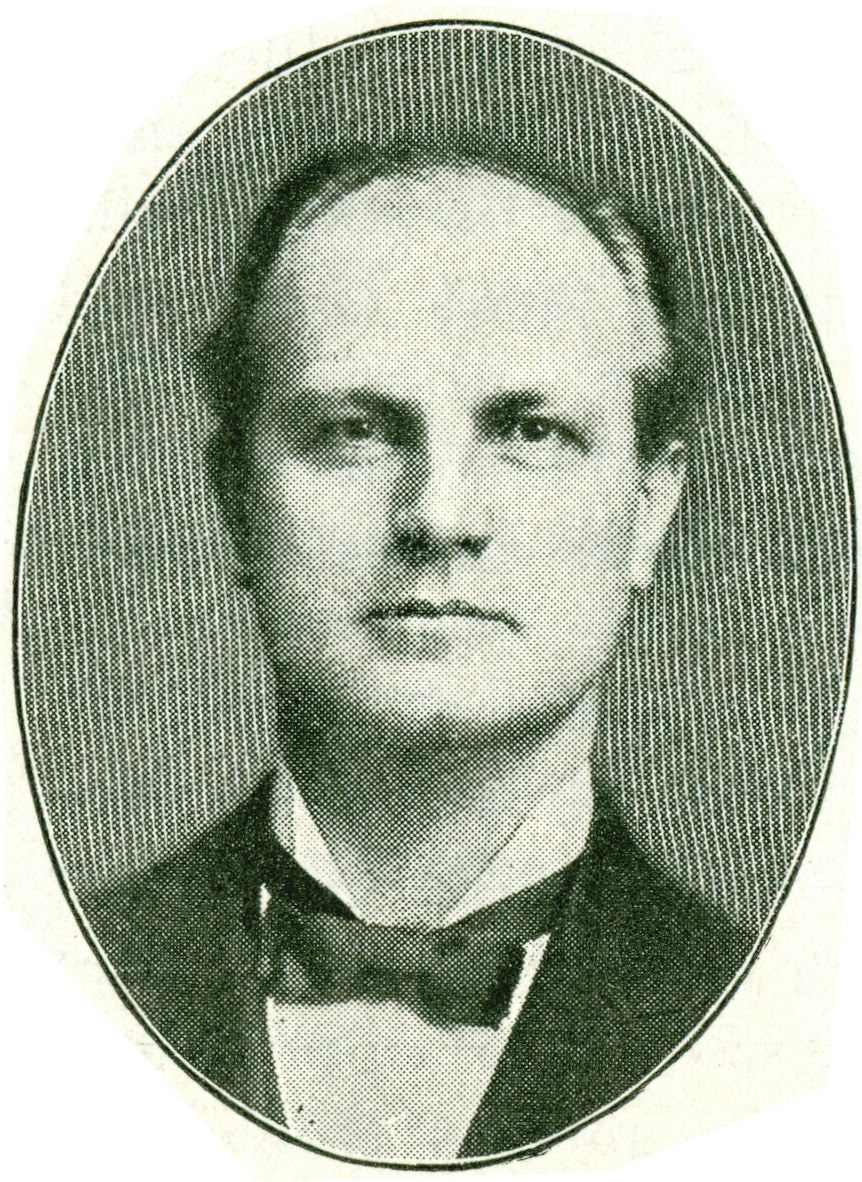
James B. Frazier (1856–1937)
Born on October 18, 1856, in Pikeville, Bledsoe County, Tennessee, in the same Sequatchie Valley region as Marion County, James Beriah Frazier graduated from the University of Tennessee in 1878 and was admitted to the bar in 1881. He practiced law in Chattanooga, not Marion County, and his inclusion among Marion County figures rests on the Tennessee Encyclopedia's listing and local tradition rather than direct residency. He served as a Democratic elector for William Jennings Bryan in 1900, which brought him statewide visibility, and was elected the 28th Governor of Tennessee in 1902.
As governor (1903 to 1905), Frazier eliminated the state's floating debt, increased funding for rural schools, signed the Adams Law extending temperance restrictions, and enacted mine safety regulations. When Senator William B. Bate died on March 9, 1905, Frazier convened the General Assembly and secured his own election to the U.S. Senate, then resigned the governorship. This controversial self-appointment created a lasting rift in the state Democratic Party, and Frazier lost his Senate renomination in 1911. He returned to Chattanooga, practiced law with his son James B. Frazier Jr. (who later served in the U.S. House from 1949 to 1963), and died on March 28, 1937. He is buried at Forest Hills Cemetery in Chattanooga. Frazier's specific connection to Marion County, beyond regional association, is not well documented in primary sources.
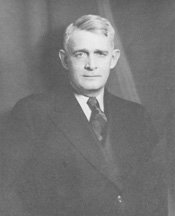
Tom Stewart (1892–1972)
Born Arthur Thomas Stewart on January 11, 1892, in Dunlap, Sequatchie County, Tennessee, Stewart attended the Pryor Institute in Jasper, Marion County (the school whose building later became Marion County High School in 1910). After earning a law degree from Cumberland University, he practiced briefly in Birmingham before returning to Jasper, where he practiced law from 1915 to 1919. He then moved to Winchester and became district attorney for the 18th Judicial Circuit in 1923.
In 1925, Stewart served as chief prosecutor in the Scopes "Monkey" Trial in Dayton, the same trial presided over by Marion County native Judge John T. Raulston. Stewart's strategy kept the trial narrowly focused on whether John Scopes violated the Butler Act, successfully blocking the defense's attempts to introduce expert scientific testimony. In 1938, Stewart won election to the U.S. Senate, where he served two terms (1939 to 1949). Politically aligned with the E. H. Crump political machine in Memphis, Stewart lost the 1948 Democratic primary when Crump withdrew support and backed a different candidate, splitting the vote and allowing Estes Kefauver to win the nomination. He died on October 10, 1972, in Nashville.
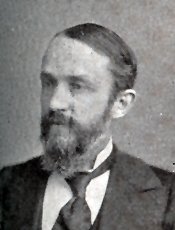
Foster V. Brown (1852–1937)
Born on December 24, 1852, near Sparta, White County, Tennessee, Foster Vincent Brown graduated from Burritt College in Spencer in 1871, earned a law degree from Cumberland School of Law in 1873, and began practicing in Jasper, Marion County, in 1874. He served as attorney general of the fourth judicial district, which included Marion County, from 1886 to 1894. A Republican, Brown represented Tennessee's 3rd Congressional District in the U.S. House from 1895 to 1897 and later served as Attorney General of Puerto Rico from 1910 to 1912. His son, Joseph Edgar Brown, also represented Tennessee's 3rd District in Congress (1921 to 1923). Brown died on March 26, 1937, in Chattanooga.
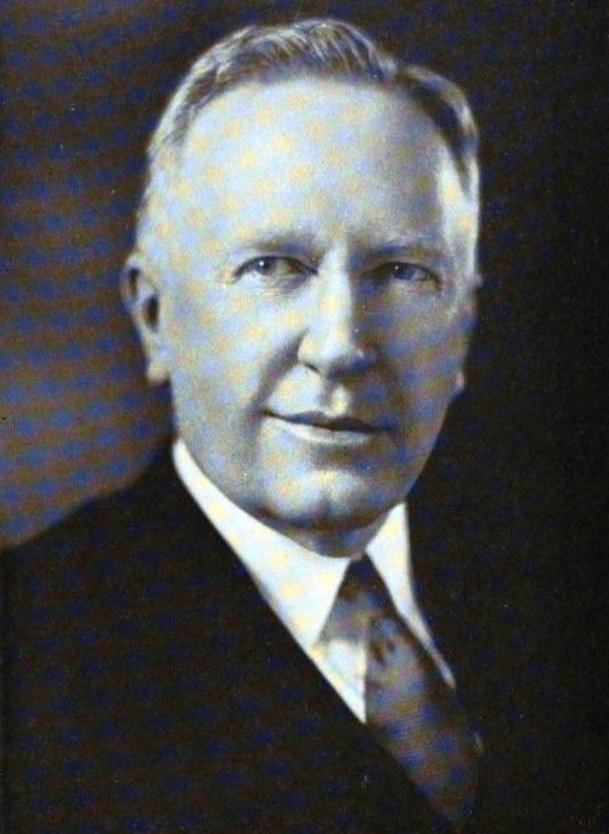
Sam D. McReynolds (1872–1939)
Born on April 16, 1872, near Pikeville, Bledsoe County, Samuel Davis McReynolds graduated from Cumberland University and was admitted to the bar in 1893. He served as a judge on Tennessee's sixth circuit criminal court beginning in 1903, where he presided over the case of State v. Ed Johnson (later the landmark United States v. Shipp before the U.S. Supreme Court). Elected to the U.S. House in 1922, McReynolds represented Tennessee's 3rd Congressional District, which included Marion County, for 16 years. He chaired the House Committee on Foreign Affairs from 1931 until his death on July 11, 1939, in Washington, D.C.
Shelby A. Rhinehart (died 2002)
Shelby A. Rhinehart was a Democratic member of the Tennessee General Assembly who represented District 37 (which included parts of Marion County along with Bledsoe, Sequatchie, and Van Buren counties) during the years that TDOT planned, funded, and built the 1981 Tennessee State Route 156 bridge across the Tennessee River at South Pittsburg. The steel tied-arch bridge, locally known as the "Blue Bridge," was named in his honor as the Shelby Rhinehart Bridge. Rhinehart died on September 19, 2002. The bridge is covered on the Blue Bridge subpage.
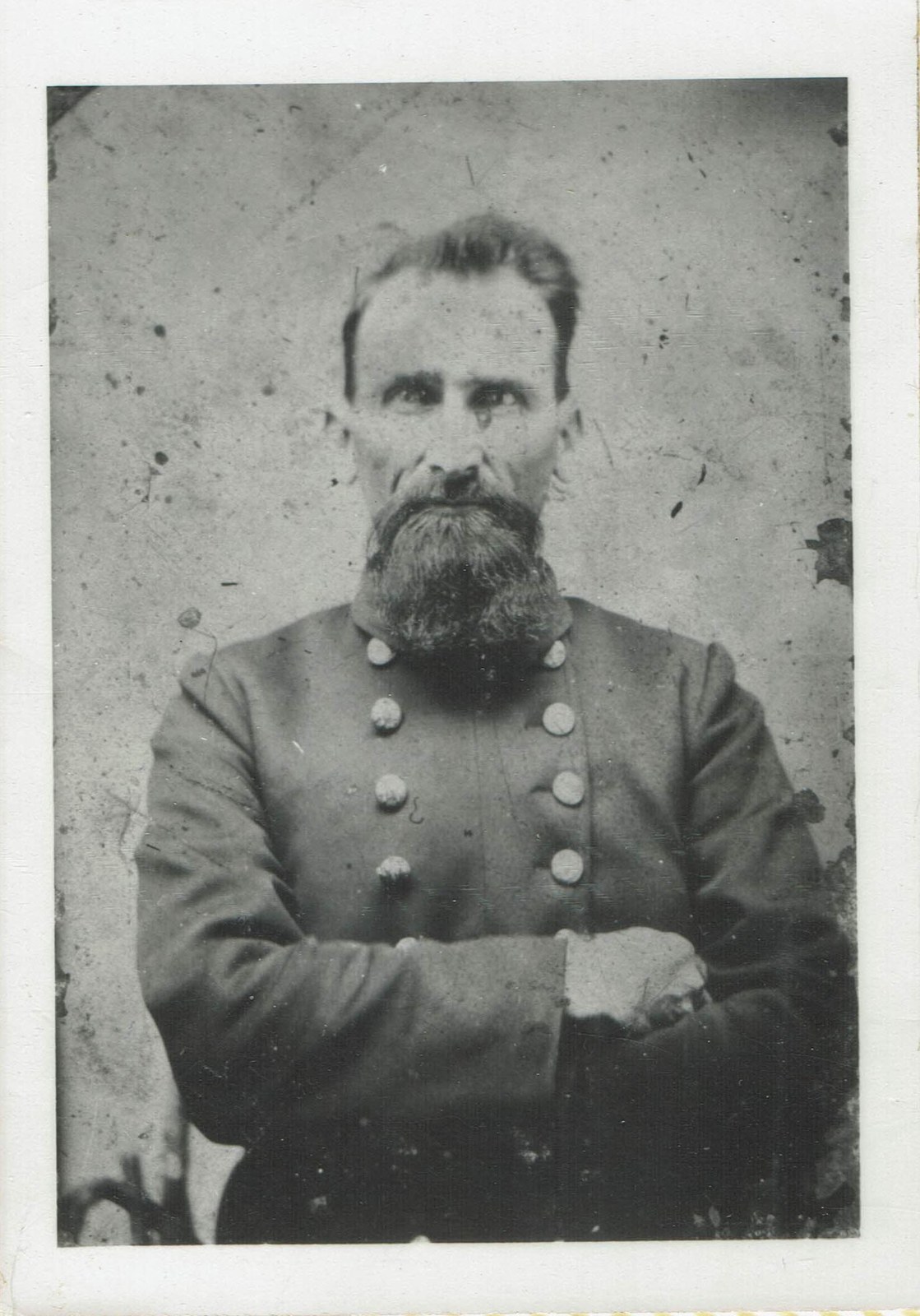
John Sexton (1843–?)
Born on October 3, 1843, in the Sixth District of Marion County, John Sexton enlisted in the Confederate Army during the Civil War, serving in Company H of the 4th Georgia Cavalry. He rose to sergeant and served as a courier on the staffs of General D. H. Hill and General W. H. T. Walker. He participated in the Battle of Chickamauga, the Atlanta Campaign, and the Battles of Franklin and Nashville. After the war, Sexton returned to Marion County and was elected sheriff in 1886 on the Democratic ticket, serving a two-year term. He married Mary Hartman in 1867, and together they had eleven children. His Goodspeed biography is the source for the detail above. The portrait was contributed by a descendant of the Sexton family, who identifies the sitter as John Sexton.
Sheriff George Washington “Wash” Coppinger (1859–1927)
Born on October 1, 1859, Wash Coppinger was a Marion County member of the Coppinger family for whom Coppinger Cove, on the plateau escarpment above the Sequatchie Valley, is named. He served as Marion County sheriff across multiple terms in the 1910s and 1920s. He won re-election in 1926 against open-shop candidate Ben Parker in a contest that had begun as a fight over how aggressively to pursue moonshine-still raids in the Sequatchie Valley but quickly absorbed the long-running labor dispute at the H. Wetter Manufacturing stove plant in South Pittsburg. The Tennessee Historical Commission marker at Cedar Avenue and Third Street identifies him as a pro-union figure caught up in the political rivalries of that race.
Per the Christmas Night Shootout subpage, Coppinger was killed on Christmas night, December 25, 1927, in the gun battle at Cedar Avenue and Third Street in South Pittsburg, the climax of the H. Wetter labor dispute, alongside five other law-enforcement officers including South Pittsburg city marshal Ben Parker, the same man Coppinger had defeated at the polls in the previous year's election. Coppinger and his wife Sarah E. are buried at Bean-Roulston Cemetery on Sweeden's Cove Road. On the Monday after the shootout, Marion County Court at Jasper unanimously elected his son and chief deputy Turner Coppinger as the new sheriff; Turner was sworn in by County Court Clerk W. T. Hornsby and took charge of the office immediately. The Coppinger family's role in Marion County law enforcement continued, with T. E. Coppinger serving as sheriff in 1928 and 1934. Sheriff Wash Coppinger is the named victim on Tennessee Historical Commission marker 2B-32, dedicated July 20, 2014, and the principal individual remembered on the 1927 Christmas Night Shootout page.
Master Sergeant Raymond H. Cooley (1916–1947)
Raymond Henry Cooley was born on May 7, 1916, in Dunlap in adjoining Sequatchie County and entered United States Army service from Richard City in southern Marion County. He served as a platoon guide in Company B, 27th Infantry Regiment, 25th Infantry Division in the Pacific Theater during World War II. On February 24, 1945, near Lumboy on Luzon in the Philippines, Cooley led an assault on a camouflaged Japanese entrenchment and silenced one machine-gun nest with grenades. Rushed by six Japanese soldiers as he held an armed grenade, he covered the grenade with his own body rather than throw it and risk wounding his comrades fighting at close quarters. He survived the blast and was promoted to master sergeant after the action. President Harry S. Truman presented Cooley with the Medal of Honor on August 23, 1945, at the White House.
Cooley returned to Marion County and was appointed county trustee. He was killed in an automobile accident on March 12, 1947, at the age of 30. His wife, Agnes Cooley, was subsequently appointed to complete his term. He is buried at Cumberland View Cemetery in Kimball. A stretch of Tennessee Highway 28 through the Sequatchie Valley was named the Raymond Cooley Highway in his honor. The wars and military service page gives the full account.
Master Sergeant Ray E. Duke (1923–1951)
Ray E. Duke was born on February 9, 1923, in Whitwell. He served with Company C, 21st Infantry Regiment, 24th Infantry Division during the Korean War. On April 26, 1951, near Mugok, Korea, Duke's company was attacked by a numerically superior force. Duke organized the defense, moved between positions under fire, and was wounded three times but refused evacuation. He was captured by enemy forces and died as a prisoner of war on November 11, 1951, at the age of 28.
Duke was posthumously awarded the Medal of Honor on March 19, 1954. His citation states that his "conspicuous gallantry and outstanding courage above and beyond the call of duty" saved his company from being overrun. He is buried at the Chattanooga National Cemetery. Duke remains the only Marion County soldier to have received the Medal of Honor posthumously. The wars and military service page gives the full account.

William Reuben Lehr (d. 2017)
William Reuben Lehr grew up in South Pittsburg and attended Richard Hardy Memorial School with his five brothers. He left school at 15 and, by his family's account, lied about his age to enlist for the Korean War, where he served as a mortar gunner on the front line.
In June 2013, Lehr received an honorary high school diploma from RHMS under Tennessee's veteran honorary diploma program, established by Public Chapter 736 of 2010, which directs the State Department of Education to issue diplomas to veterans of World War I, World War II, the Korean War, and the Vietnam War who left a Tennessee high school before graduating to serve. His daughter Cathy initiated the request through the state program; Cindy Blevins handled the school's end at RHMS. The diploma, with cap and tassels, was presented to him on Father's Day. He passed away in 2017. The RHMS page covers the program and the 2013 ceremony in detail.
Judges & Legal Figures
Marion County's most nationally visible legal figure presided over a trial that tested the boundary between religion and science in American public education. The county also produced the man who prosecuted that same case.
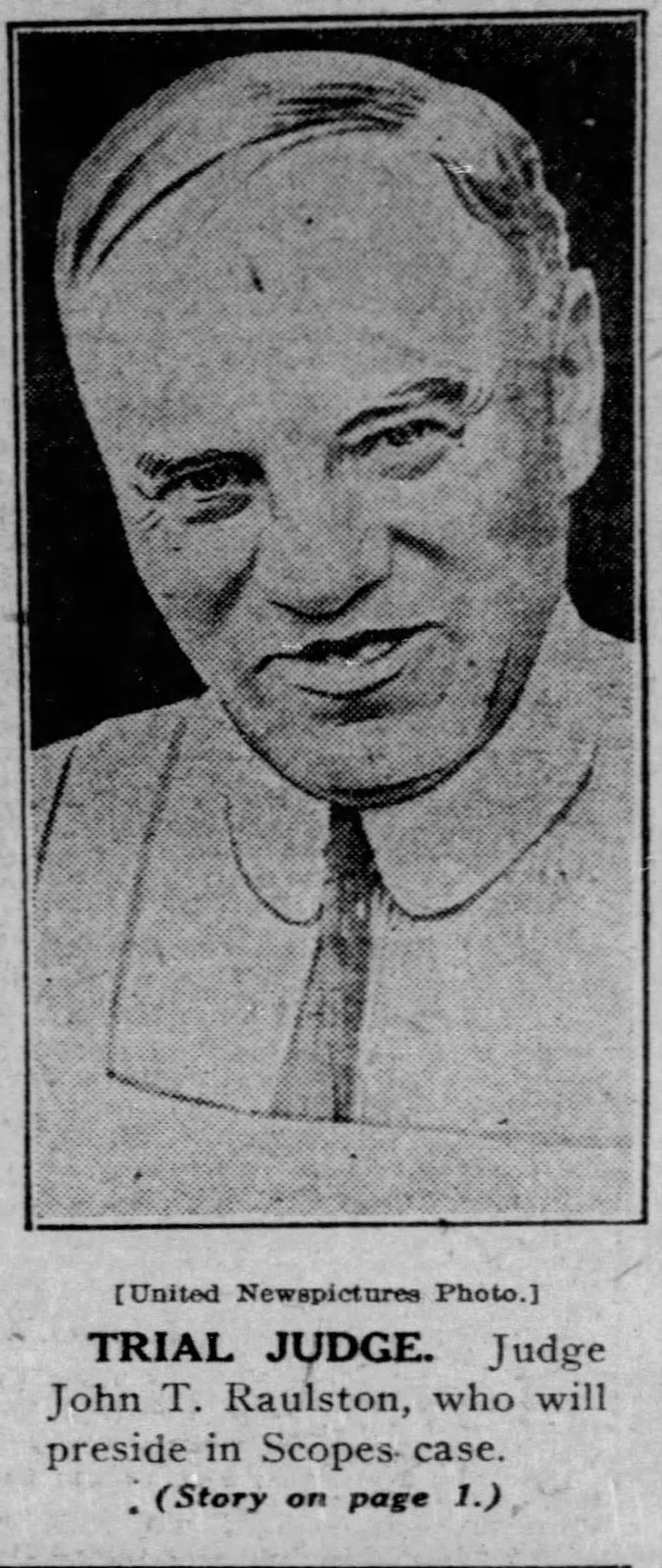
John T. Raulston (1868–1956)
Born on September 22, 1868, on a farm in Marion County to William Doran Raulston and Comfort Matilda Tate, John Tate Raulston attended country schools before studying at U.S. Grant University (later Tennessee Wesleyan College) and the University of Chattanooga. He read law in the office of William D. Spear at Jasper and was admitted to the bar in 1896. He served in the Tennessee state legislature and ran unsuccessfully for the U.S. House as a Republican in 1908. In 1918, he was elected judge of the Eighteenth Tennessee Circuit, which included Rhea County.
In July 1925, Raulston presided over the Scopes "Monkey" Trial in Dayton, Tennessee, the prosecution of high school teacher John Scopes for violating the Butler Act by teaching evolution. Raulston opened each day's proceedings with prayer, barred expert witnesses in science and theology from testifying, and ruled that Scopes was on trial rather than the law itself. He cited defense attorney Clarence Darrow for contempt after a heated exchange, though the citation was later dropped when Darrow apologized. Fearing the weight of the crowd would collapse the courtroom floor, Raulston moved the trial to the courthouse lawn. Scopes was convicted and fined $100, though the Tennessee Supreme Court later reversed the conviction on a technicality: the fine exceeded the $50 maximum a judge could impose, and should have been set by the jury.
Raulston was defeated for re-election to his judgeship in 1926. He lectured on the legal aspects of fundamentalism, ran for governor of Tennessee as a Republican, and practiced law with the firm Raulston, Raulston, and Swafford until retiring in 1952. Later in life, he modified his stance, stating that the state should not restrict science education. He died on July 11, 1956, in South Pittsburg. He is buried at Cumberland View Cemetery in Kimball. He was fictionalized as Judge Merle Coffey in the play and films Inherit the Wind.
Industrialists & Civic Leaders
The coal, cement, and railroad ventures that reshaped Marion County in the late 19th and early 20th centuries were driven by entrepreneurs whose influence extended well beyond the valley.
Richard Orme Campbell (1860–1912)
Chattanooga coal operator and the namesake of the Marion County town of Orme. Around 1902, Campbell acquired the struggling Needmore mining operation in Doran's Cove from Chattanooga businessman Frederick Gates after the Nashville, Chattanooga & St. Louis Railway agreed to extend a branch line into the cove. He reorganized the operation as the Campbell Coal and Coke Company, renamed the settlement in his own honor, and built a full company town on the cove floor: a commissary, storehouse, three-story hotel, schoolhouse, miners' cottages, and a separate smaller school and church for the families of Black miners farther up the mountain. Per the community page on Orme, the mine shipped about 1,000 tons of coal a day at its peak. Campbell died in 1912; large-scale operations at Orme shut down after a 1939 miners' strike, and the last sublease mining ended around 1970.
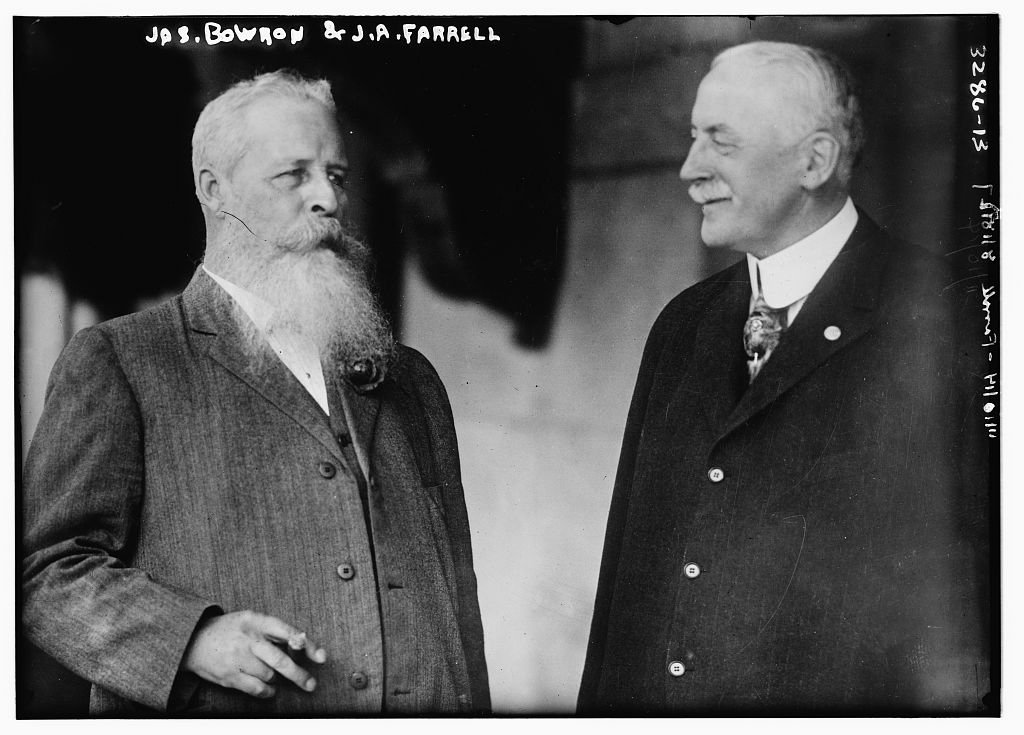
James Bowron (1844–1928)
Born on November 16, 1844, in Stockton-on-Tees, County Durham, England, James Bowron led the British capital that built out South Pittsburg's industrial complex through the 1870s and early 1880s. In 1874, the Bowron family organized the Southern States Coal, Iron and Land Company in South Pittsburg, aiming to apply British iron-making techniques to Tennessee's mineral wealth. James Bowron Sr. died in New York in November 1877, and the younger Bowron assumed duties as general manager per Bhamwiki's James Bowron entry. He opened coal mines at Whitwell, coke ovens at Victoria, iron mining at Inman, and smelters in South Pittsburg.
In 1882, Bowron sold Southern States to the Tennessee Coal, Iron and Land Company (TCI) for $1,400,000 in stock and bonds (per Bhamwiki) and moved with TCI through reorganizations into the 1890s. After TCI's headquarters relocated to Birmingham in 1895, Bowron managed the company's Ensley Works steel operation until his resignation in 1901 over a dividend-financing dispute with the board. He went on to lead Gulf States Steel Company as its founding president from December 1913. His papers are held at the University of Alabama Libraries. He died on August 25, 1928, in Birmingham.
Glancy Sherman (1862–1935)
Born on October 10, 1862, in Wellsburg, Pennsylvania, the son of Harley Sherman, Jr. and Ellen Lick Sherman per the c. 1935 biographical-encyclopedia sketch on TNGenWeb Marion County, Glancy Sherman was raised in the fruit-raising country of Erie County, Pennsylvania, where he built up a nursery-stock business before turning to real estate and timber prospects in the rising South. He arrived in Sequatchie in 1889 as an agent of New England businessmen who had come to extract the area's timber and mineral resources. Over the next four decades he led a structured development of the community through the Sequatchie Town and Improvement Company and the Sequatchie Coal and Iron Company, the syndicate corporations he helped organize. He tapped the mountainside springs through his Sequatchie Water Works to supply the community with fresh water, constructed dams for electricity and flood control before TVA, built roads, and cultivated extensive agriculture. He built the Sequatchie Supply Store (1890) and led the establishment of the Sequatchie Handle Works by 1899, serving as its president, general manager, and treasurer for the rest of his life. On the Cumberland Mountain slopes above Sequatchie Cave he planted a vineyard of ten thousand white Niagara grape vines and shipped the harvest to eastern markets; per the same TNGenWeb sketch, his grapes received high honors at the 1904 World's Fair in St. Louis. Within two decades he was considered Marion County's wealthiest landowner and industrialist.
In Chattanooga on January 3, 1906, Sherman married Bertha Alice Tower, daughter (per the TNGenWeb biographical-encyclopedia sketch cited above) of Herbert Bascom Tower and Alice (Hart) Tower of Ashtabula, Ohio; her father was a Union Army veteran who served under General William T. Sherman on the march to the sea. In 1927, Sherman built the stone mansion now known as Glancy Manor (4275 Valley View Highway, Sequatchie), a castle-shaped home built with stone hauled from Sewanee. In 1928, he and Bertha deeded 27 acres along the Little Sequatchie River to the Chattanooga area Girl Scout Council, creating Camp Glancy, which operated as a Girl Scout camp from 1929 through 1942; after the Girl Scouts left, Bertha deeded the property to the Chattanooga Presbytery of the Cumberland Presbyterian Church, which continues to operate it as a Christian camp. Sherman died on October 17, 1935, and is buried at Pine Grove Cemetery in Jasper; Bertha managed the Sequatchie Handle Works after her husband's death and lived until March 21, 1967. In 2023, Sequatchie native John Anthony Smith of the cybersecurity firm Conversant Group began restoring the mansion through his nonprofit Glancy Community Development, Inc.
Col. James A. Whiteside (1803–1861)
Chattanooga-area lawyer, legislator, and railroad promoter whose name the small Marion County station eventually carried. Whiteside served in the Tennessee General Assembly, worked to secure a charter for the Nashville & Chattanooga Railroad, and invested in Lookout Mountain land and tourism. When the railroad crossed the Running Water ravine on Raccoon Mountain in 1854 on a 780-foot timber trestle, the station at the west end of the crossing was known successively as Running Water, Etna, and, after Whiteside's death, Whiteside. The 1864 photograph of the rebuilt Whiteside trestle by U.S. Military Railroads photographer George N. Barnard is one of the earliest surviving images of Marion County.
Josephus Conn Guild Sr. (1855–1907)
Chattanooga engineer and promoter who organized the Chattanooga and Tennessee River Power Company in 1904 and secured federal authorization to build a privately funded lock and dam across the Tennessee River at Hale's Bar, a sandbar in the middle of the gorge in eastern Marion County. To house the workforce, Guild's company built two self-contained construction villages starting in October 1905, one on the north bank (which took his name) and one on the south bank called Ladd. Guild died in 1907, six years before the dam was finished, and the project continued under Chattanooga entrepreneur Charles E. James and New York financier Anthony Brady. The Hales Bar Dam opened on November 13, 1913, and the Guild post office that had opened in his worker village on August 11, 1906, operated at the dam site until TVA renovations in the 1940s moved it to Haletown, where it still carries mail today. See the Hale's Bar construction village →
Addison Bostain Sr. (b. 1886)
Carpenter, concrete foreman, and one of the tradesmen who built Hales Bar Dam. Bostain was born in 1886 on Sand Mountain in Dade County, Georgia, one of a twin pair in a family of eight children, and was living in Marion County by 1910: the federal census that year recorded him at Whiteside, aged 24, working as a carpenter for a coal mine alongside his father William. Sometime after 1910 he moved to the dam job about five miles away, and by 1914 the family was living in company housing at Guild, where his son was born and spent his early childhood. He also played for the Guild ball club, pitching for the team the newspapers called the Lock and Dam when it traveled to South Pittsburg in April 1912; his brother Earl played alongside him. See early baseball in Marion County →
Bostain left Marion County in the spring of 1918 for the Wilson Dam project at Muscle Shoals, Alabama, where he became a general foreman in charge of concrete formwork, and went on to the Lake Murray Dam project in South Carolina as general foreman and superintendent for the powerhouse, draft tubes, and spillway. He settled at Chapin, South Carolina, in 1930 and ran a grocery store there with his wife Bertha until 1961. His career ran from a trade learned at a coal mine, through Hales Bar, to hydroelectric projects in Alabama and South Carolina. The account of his life comes from a family history written by his grandson.
David Ketner (c. 1800–c. 1870s)
Orphaned as a child, David Ketner settled in the cove that now bears his name at the base of Suck Creek Mountain, on the eastern edge of Marion County. In 1824, he built a grist mill, a blacksmith shop, and a wool carding house in Ketner's Cove. The mill ground corn and wheat for settlers across the Sequatchie Valley and operated continuously at its original site until 1930. His son Alexander later relocated the family milling business to the Sequatchie River, where it survives today as Ketner's Mill.
Alexander "Pappy" Ketner (c. 1830s–c. 1900s)
Son of David Ketner who carried the family milling business into its second generation. In 1868, Alexander relocated the operation from Ketner's Cove to a site on the Sequatchie River about a mile and a half east of Victoria, where a ford and later a bridge crossed the river. The present three-story brick mill on that site was built in 1882 under his direction and has been in continuous use as Ketner's Mill ever since. It was added to the National Register of Historic Places on September 22, 1977.
Frank W. McDonald (20th century)
Marion County civic leader who led the restoration of Ketner's Mill beginning in 1974. Working with Clyde Ketner and a team of volunteers, McDonald spent three years repairing the 1882 brick mill, restoring its waterwheel and grinding equipment, and securing its listing on the National Register of Historic Places in 1977. He also founded the annual Ketner's Mill Country Fair, held on the third weekend of October, which has grown into one of the largest arts-and-crafts fairs in southeast Tennessee.
Clyde Ketner (20th century to 1992)
Grandson of founder David Ketner and the last Ketner-family operator of Ketner's Mill. Clyde Ketner kept daily water-powered corn-meal production running at the Sequatchie River mill site through the second half of the 20th century, well after most water-powered community mills in the southern United States had closed under competition from industrial milling. He worked with Frank W. McDonald on the 1974 to 1977 restoration project, helped launch the first Ketner's Mill Country Fair in 1977, and continued grinding cornmeal for retail sale and for visitors to the country fair until his death in 1992. He was the third generation of his family to operate the mill in continuous succession from 1824.
R. F. M. Kirkpatrick (early 20th century)
South Pittsburg businessman who acquired two 25-by-140-foot lots fronting Cedar Avenue in downtown block #3 in February 1920 and commissioned the construction of the Imperial Theatre, the building that is today the Princess Theatre. Kirkpatrick hired the local architect Reece B. Patton to design and build the two-story brick structure; per the Princess Theatre subpage, the Imperial opened on Friday, July 29, 1921 with a screening of Tank Town Follies starring South Pittsburg native Jobyna Ralston. Kirkpatrick sold the operation to H. G. Jenkins in 1924, after which the building ran successively as the Palace and then as the Princess.
Reece B. Patton (early 20th century)
Local South Pittsburg architect who designed and built the original Imperial Theatre building, today the Princess Theatre, on Cedar Avenue in downtown South Pittsburg between 1920 and 1921 for owner R. F. M. Kirkpatrick. The two-story brick structure has carried the same load and the same Cedar Avenue facade through the building's successive Imperial, Palace, Princess, and Valley Cinema incarnations and into the post-2014 SPHPS-restored configuration. Per the Goodspeed biography of Benjamin Franklin Patton, Reece Brabson Patton was a brother of Benjamin Franklin Patton and a partner in the family contracting firm B. F. Patton & Co., which under the Kilpatrick Tennessee River Coal Company contract built the Rexton mining-town buildings in 1909 and 1910. Both brothers were sons of Judge William O. Patton (d. 1893) and Caroline (Raulston) Patton of Sweden's Cove.
Ringland "Rex" Fisher Kilpatrick (1881–1955)
New-York-based mining investor, primary backer and namesake of the abandoned Rexton coal-mining town at the head of King's Cove in southwestern Marion County. In early 1909, Kilpatrick led an investor group that purchased land at the head of King's Cove, organized the Tennessee River Coal Company, and announced plans to mine the upland coal seam, build a five-mile spur railroad from the Dixie-Portland cement plant's line at Copenhagen, and erect a permanent company town named in his honor. Construction proceeded through 1910 with the town formally incorporated on October 31, but the venture collapsed in 1911 to 1912 when the coal seam was found to be much thinner than the surveys had predicted, the railroad was partly washed out by a flash flood, and Kilpatrick's father Frank J. Kilpatrick, a major Tennessee River Coal Company backer, died in New York City on November 4, 1911. The Kilpatrick family had earlier underwritten the Bridgeport, Alabama boom of 1888 to 1893; Frank J. and brother Walter F. Kilpatrick built the "Kilpatrick Row" of Queen Anne homes in Bridgeport that survives today. Rex Kilpatrick returned to New York after the 1912 Rexton failure and lived until 1955; the only known photograph of him, courtesy of his descendant Rex K. Bray, is reproduced on the SPHPS Ghost Towns page.
Wells Wilkinson (mid-20th century)
Long-time Dixie Portland Cement employee appointed Personnel and Safety Supervisor at the Richard City plant in 1959. According to Kelly Wilkerson's 2003 Middle Tennessee State University thesis on Richard City, under Wilkinson's supervision the plant set a series of national safety records in the U.S. cement industry: five separate one-year intervals without lost work time, including one stretch of 1,136 consecutive days. A 1962 plant barbeque celebrated 737 accident-free days, with Oscar King of the Portland Cement Association's Knoxville office addressing the workers. Wilkinson retired in November 1977 after roughly two decades in the safety-supervisor role.
Richard Hardy (1868–1927)
Michigan-born educator and insurance executive who joined the fledgling Dixie Portland Cement Company at Deptford, Tennessee in 1905, was elected president in 1914, and in the same year saw the combined communities of Deptford and Copenhagen renamed Richard City in his honor. He served as Mayor of Chattanooga from October 1923 to April 1926 and in 1926 moved to New York with the newly consolidated Pennsylvania-Dixie Cement Corporation. The Richard Hardy Memorial School, dedicated the same year he left Chattanooga and renamed after his death in August 1927, still bears his name. Full profile →
Owen Russell Beene (late 19th century)
South Pittsburg landowner and civic patron in the city's industrial founding decades. Per the SPHPS Chapel on the Hill page, in 1888 Beene commissioned contractor Angus McRae of Sewanee to build a stone meeting house for the new South Pittsburg Primitive Baptist congregation on land he owned near the old Gunter Cemetery on Clute's Hill. Sandstone blocks were quarried at Sewanee and hauled to the site by horse-drawn wagons; construction was completed in spring 1889. On May 17, 1889, Beene transferred the building and the property to the congregation's trustees (W.O. Patton, Angus McRae, and J.C. Beene) for one dollar, attaching a deed restriction that the property would revert to his heirs if the congregation ever lapsed for five years. The clause governed the chapel's full ninety-year operating life and was triggered in 1979 when the Primitive Baptists dissolved; Beene's heirs held the building until conveying it to the City of South Pittsburg in 2001. The restored Chapel on the Hill carries stained-glass windows in honor of Beene and of his descendants.
Nathan and Padgett Arnold (contemporary)
Founders of Sequatchie Cove Creamery, the Marion County farmstead- cheese operation on Dixon Cove Road along the Little Sequatchie River. Per the agriculture subpage, the Arnolds trained in cheese making in France, Vermont, and Wisconsin between 2005 and 2006 and founded the creamery in March 2010 on the 300-acre Sequatchie Cove Farm, established by the Keener family in 1996. Their Savoie-inspired Alpine-style cheeses, made from a single-herd Jersey dairy, have won seven American Cheese Society awards, including a 2012 first-in-category for the Cumberland tomme. The creamery is one of the most visible specialty-agriculture operations in the county and the point-of-origin for Marion County farmstead cheese in regional restaurants and Whole Foods markets. See the agriculture subpage for the broader specialty-operations context.
Benjamin Trussell (early 19th century)
Benjamin Trussell was an early Anglo-American settler at the head of Battle Creek, near present-day Martin Springs, and is one of the very few named Marion County residents whose interaction with a Trail of Tears detachment is documented in the detachment's own records. Per the Tennessee Division of Archaeology study on the Trail of Tears in Tennessee, on October 26, 1838, Trussell sold corn and fodder to Captain John Bell's detachment at the head-of-Battle-Creek camp, where roughly 660 Cherokee and their 318 horses were preparing to climb the Monteagle grade on the westward removal. “Trussell Point” on the Cumberland Plateau above Martin Springs carries his name.
Henry Long (1782–1875) and Zilpha Long (1792–1860)
Early Anglo-American settlers of Mullins Cove, the river-bend cove on the Marion County side of the Tennessee River Gorge. Henry Long was born in Virginia in 1782 and had made his way to Jonesborough in East Tennessee by 1807, when at the age of twenty-five he traveled down the Tennessee River by raft and settled in the cove. He married Zilpha, born 1792, in 1808, and by 1811 the couple had assembled a tract of roughly 2,000 acres along the river inside the cove. The Longs built up a farming and livestock-trading operation, and for much of the 19th century they and their descendants were the dominant landowning family in that stretch of the gorge. Zilpha died in 1860 and Henry in 1875; both were buried in what later became known as Long Cemetery #2, a portion of which was inundated when the Tennessee River pool rose behind Hales Bar and, later, Nickajack Dam. Surviving tombstones from the family burial ground carry a distinctive hand-pointing-skyward motif and are among the oldest legible stones in Mullins Cove.
Jim Oliver (1937–2007)
Pelham-born restaurateur whose Jim Oliver's Smoke House defined the Chattanooga-to-Nashville traveler stop on Monteagle Mountain for 46 years. Born August 4, 1937 in Pelham in Grundy County, Oliver relocated from Cleveland, Ohio to Monteagle in 1960 with his wife Janice and rented a roadside stand called the Beehive Drive-In. With his brother Melvin he purchased and reopened the closed Monteagle Diner on U.S. 41 and ran it for a decade before selling his interest to Melvin in 1973. In 1975, Oliver built the Smoke House Restaurant from the ground up: fourteen employees, eighty seats, a gift shop, and a menu of family recipes featuring traditional old smoke house style meats. Named one of the top 500 restaurants in the country in 1988 and 1989, the Smoke House expanded into a trading post, banquet hall, conference center, lodge, and guest cabins over the following decades. Oliver died unexpectedly at his Monteagle residence on May 16, 2007 at age 69. His children James David Oliver, Betsy Oliver, and Nancy Oliver continue the family business. The main Smoke House restaurant was destroyed by fire on April 27, 2021; the Smoke House Patio Grill and the lodge continue in operation.
John “Thunder” Thornton (contemporary)
Kimball-based developer and president of Thunder Enterprises, the company behind the two largest private land-use projects on the Marion County plateau in the 21st century. Thornton's company began assembling the Jasper Highlands tract on Jasper Mountain in 2008, eventually consolidating about 8,893 acres above the town of Jasper and opening the first lots for sale in 2014. By the early 2020s roughly 1,300 of the planned 1,600 Jasper Highlands lots had been sold to buyers in 48 states and eight countries. In late 2021 Thunder Enterprises announced the acquisition of roughly 7,400 acres on Aetna Mountain across the Tennessee River for a second mountaintop development, River Gorge Ranch; Governor Bill Lee attended the groundbreaking on April 8, 2022.
Thornton's plateau projects have also drawn regulatory and civic scrutiny. According to reporting in the Chattanooga Times Free Press, Nashville Scene, and The Chattanoogan, Thornton filed a libel suit in 2024 against two Marion County residents who had publicly compared the geology under the Aetna Mountain development to “Swiss cheese” because of a legacy of coal mining in the mountain. The suit was dismissed in October 2024, and Thornton was later ordered to pay more than $200,000 in legal fees to the defendants. Thunder Enterprises has stated that the developments' engineering and environmental plans were reviewed and permitted by the Tennessee Department of Environment and Conservation and by licensed engineers, and that construction has proceeded under those permits.
Education Leaders
Marion County's education history includes figures who shaped institutions from the antebellum academy era through the segregation period and the modern championship era.
Jackson Pryor (1816–1900)
Born in Marion County on January 15, 1816. After farming and running an extensive mercantile business in Jasper from 1838, Pryor founded the Pryor Institute around 1889 along with his brother Washington Pryor and Col. A. L. Spears. The institute was the largest school in the Sequatchie Valley, and its building became Marion County High School in 1910, a decade after Pryor's death on November 16, 1900. His papers (1830 to 1897) are held at the Tennessee State Library and Archives.
Brown McReynolds (dates uncertain)
Community leader in South Pittsburg who organized Marion County's first high school for Black students. In 1917, McReynolds led a committee of Black citizens, including Dr. W. J. Astrapp, Dennis Martin, and Arthur Haywood, to establish a high school. At the May 3, 1919 Marion County Board of Education meeting, Astrapp proposed naming the school for McReynolds, saying he had "done more for the establishment of the school than any other man." A high school program opened in rented space in 1918; a fire destroyed it in 1919, and a permanent McReynolds High School was rebuilt with Rosenwald Fund support and opened in 1921.
Merzellar M. Burnett (dates uncertain)
Principal of McReynolds High School for 25 years. Burnett opened every school year with a reading from the Book of Ecclesiastes. He later wrote A History of the Development of Negro Public Schools in Marion County, Tennessee from 1929 to 1950, a document held in Tennessee State University's School Desegregation Digital Collection and one of the few firsthand accounts of Black education in Marion County during the Jim Crow era.
E. H. Craven (dates uncertain)
Served as Marion County Register of Deeds in 1894, recorded in the TNGenWeb Marion County officials list with the notation "(black)" beside his name. An elected Black county officer in Tennessee in 1894, holding a post that controlled the county's deed and land records, is significant: the 1890s in Tennessee saw active Black political participation giving way to tightening disfranchisement. No biographical detail beyond Craven's name, office, and race annotation has been recovered from surviving records. See the Black History of Marion County page for context.
Charles Wiggins (dates uncertain)
Teacher at McReynolds High School who transferred to South Pittsburg High School after the McReynolds building burned in 1965. Wiggins was born in South Pittsburg and is one of the few McReynolds faculty members whose oral history has been preserved: the SPHPS Voices of South Pittsburg collection includes an interview covering school integration and the McReynolds fire from the perspective of a teacher who lived the transition.
Ken Colquette (dates uncertain)
Head football coach at Marion County High School from 1980 to 1996. In 17 seasons Colquette won four TSSAA state championships (1990, 1992, 1994, 1995) and finished as state runner-up twice. His teams compiled a 63-6 record from 1990 to 1995. In 2018 the school named its football field in his honor; the Chattanooga Times Free Press covered the dedication. His tenure overlapped Eric Westmoreland's record-setting career and produced multiple MCHS players who went on to play at the highest levels.
Don Grider (dates uncertain)
Head football coach at South Pittsburg High School from 1969 to 1992. Grider led the Pirates to their first TSSAA football state championship in 1969, a 26-to-6 win over Tennessee Preparatory School in Nashville in the debut season of Tennessee's classification-based playoff system. The 1969 team, integrated three years after the McReynolds High School closure, was the first integrated Marion County state-championship roster. His son Vic Grider succeeded him in the head-coaching chair after the 1994 title.
Vic Grider (dates uncertain)
Head football coach at South Pittsburg High School for 22 seasons beginning in the early 1990s, son of former Pirates head coach Don Grider. He served as defensive coordinator under head coach Danny Wilson during the 1994 state championship season, then succeeded Wilson as head coach. His teams won state championships in 1999, 2007, and 2010. Grider later took an athletic-director role at Dade County High School in Georgia.
Wes Stone (dates uncertain)
Head football coach at South Pittsburg High School since March 2022. Stone, a South Pittsburg alumnus, had previously served as offensive coordinator, defensive coordinator, and special-teams coordinator under earlier Pirates staffs. When then-new head coach Chris Jones left the program after a single 2021 game to return to coaching in the Canadian Football League, Stone served as co-head coach with Heath Grider for the rest of that season, during which the Pirates won a state championship. Stone was formally named full head coach in March 2022, and has won TSSAA Class 1A state championships in 2023 and 2025 as the program's sole head coach.
Timothy Starkey (dates uncertain)
Head football coach at Marion County High School during the Warriors' 2024 TSSAA Class 2A state championship run. Marion County defeated Milan for the title, ending a 29-year championship drought that stretched back to the last Colquette-era championship in 1995. Starkey took the program through the 2022 and 2023 runner-up seasons that set up the 2024 breakthrough.
Randall Boldin (dates uncertain)
Head football coach at Whitwell High School during the Tigers' 2018 TSSAA Class 1A state championship, his second season at Whitwell. The Tigers finished 15 and 0 and defeated Cornersville 7 to 6 at Tennessee Tech in Cookeville to win the school's only state football title. The victory gave Marion County its all-champion-county distinction as the only Tennessee county where every high-school football program had won a state championship, joining the programs at Marion County High and South Pittsburg High.
Sports Figures
Marion County High School's football program, built into a dynasty by coach Ken Colquette in the 1990s, produced multiple athletes who went on to play at the highest levels. Whitwell and South Pittsburg have added their own notable players to the county's sports roster during the post-integration era.
Eric Westmoreland (b. 1977)
Born on March 11, 1977, in Jasper, Eric Westmoreland played running back and safety at Marion County High School during the Colquette dynasty years. In his senior season (1995) he rushed for 2,359 yards and 40 touchdowns, finishing his career with over 6,000 rushing yards and 85 touchdowns and a team record of 56-1 across three TSSAA state championships (1992, 1994, 1995). He was named Tennessee Class 3A "Mr. Football" in 1995. At the University of Tennessee, Westmoreland was a four-year letterman at linebacker, earned Second-team All-SEC honors in 2000, and helped the Volunteers win the 1998 BCS National Championship. The Jacksonville Jaguars selected him in the third round (73rd overall) of the 2001 NFL Draft. He played four NFL seasons with the Jaguars (2001 to 2003) and the Cleveland Browns (2004), recording 81 career tackles and 2.0 sacks.

Jacob Saylors (b. 2000)
Born on March 8, 2000, in Jasper, Jacob Saylors was a four-year starter at Marion County High School, where per Sequatchie Valley Now's September 2025 reporting on his jersey retirement, his rushing ability helped Marion County to three straight Class 2A state championship game appearances. He also played basketball and baseball.
At East Tennessee State University, per Wikipedia's biographical entry, Saylors rushed for 3,861 career yards and 33 touchdowns, earning Second-team All-American honors in 2021. After going undrafted in 2023, he led the UFL's St. Louis Battlehawks in rushing in both 2024 and 2025, earning All-UFL honors both years. In July 2025 the Detroit Lions signed him; he appeared as a return specialist during the 2025 season, and the Lions signed him to a contract extension in January 2026. In September 2025, Marion County High School retired his number 8 jersey.
Hudson Petty (dates uncertain)
Two-way standout at running back and defensive back for Whitwell High School who, per the Whitwell High School page, was named MVP of the TSSAA Class 1A championship game on December 1, 2018, Whitwell's 7-to-6 win over Cornersville at Tennessee Tech in Cookeville. Petty's championship-game performance on both sides of the ball capped Whitwell's 15-and-0 season, the school's first and only state football title, and gave Marion County its all-champion-county distinction. He went on to play at the college level.
Arts, Culture & Aviation Figures
South Pittsburg produced two figures who reached a national audience in the first half of the 20th century, one in early American cinema and one in postwar military aviation, and later generations of Marion County residents created a project that drew international attention.

Jobyna Ralston (1899–1967)
Born Jobyna Lancaster Raulston on November 21, 1899, in South Pittsburg, she was the daughter of Joseph Lancaster Raulston and Sarah E. Kemp Raulston. Her mother, a portrait photographer, groomed her for a career in the arts. Named after actress Jobyna Howland, she made her stage debut at age 9 at the Wilson Theatre in South Pittsburg, performing as Cinderella at the theatre's 1909 opening. She attended acting school in New York around 1915, dropping the "u" from her surname to become Ralston.
After Broadway work, including the dancing chorus of Two Little Girls in Blue, comedian Max Linder encouraged her to move to Hollywood. She was named a WAMPAS Baby Star in 1923 and became Harold Lloyd's leading lady, co-starring in seven of his films: Why Worry? (1923), Girl Shy (1924), Hot Water (1924), The Freshman (1925), For Heaven's Sake (1926), Sweet Daddies (1926), and The Kid Brother (1927). She also appeared in William A. Wellman's Wings (1927), the first film to win the Academy Award for Best Picture, where she met co-star Richard Arlen. They married in 1927 and had one son, Richard Arlen Jr. Her last film was Rough Waters (1930), co-starring Rin Tin Tin; she did not successfully transition to talkies. She died on January 22, 1967, at the Motion Picture Country Home in Woodland Hills, California.
Captain James Thomas Fitz-Gerald, Jr. (1920–1948)
Born July 13, 1920 in South Pittsburg, the second child and first son of James Thomas Fitz-Gerald and Alice Elizabeth Jones Fitz-Gerald. Fitz-Gerald graduated from South Pittsburg High School in 1938 as Vice-President of his class and earned his Eagle Scout award in 1940. He attended the United States Military Academy at West Point, graduating in the first class of "Wings of West Point," which integrated flight training into the cadet program.
Assigned to the 78th Fighter Group of the Eighth Air Force in England in April 1944, Fitz-Gerald was shot down on his twenty-eighth combat mission on August 8, 1944 and held as a prisoner of war at Stalag Luft III in Moosburg, Germany until liberation in April 1945. After the war he was assigned to jet-propelled-aircraft development at Wright Field in Dayton, Ohio, then transferred to Muroc Air Base (later Edwards Air Force Base) in California to fly the Bell XS-1 rocket plane.
On February 24, 1948, Fitz-Gerald flew the X-1 to Mach 1.10, becoming the second man to break the sound barrier behind Chuck Yeager. He exceeded Mach 1 three more times in subsequent flights, reaching Mach 1.15 on May 4, Mach 1.08 on May 25, and Mach 1.1 on April 6, 1948. Chuck Yeager credited Fitz-Gerald in his autobiography as the second pilot to break Mach 1 in the X-1, describing him as a young West Pointer with a wife and new baby.
Fitz-Gerald died on September 20, 1948, of head injuries suffered when his T-33 jet cartwheeled on landing at Metropolitan Airport in Van Nuys, California, eleven days earlier. He was twenty-eight years old. He is buried at the West Point cemetery, and James Fitz-Gerald Boulevard at the main gate of Edwards Air Force Base is named for him. A stained-glass window in the restored Chapel on the Hill in South Pittsburg honors his memory. His widow Lillian and son James Thomas Fitz-Gerald III continued to live in Mobile, Alabama after his death.
Joseph Lodge (1848–1931)
Born on March 29, 1848, in Pennsylvania, Joseph Lodge was the oldest of five siblings. His father died when he was young, making him the family breadwinner. He left home at 15 and trained as a machinist at Poole's Machine Shop in Wilmington, Delaware. In 1867 he boarded a ship to Cuba, where he lived for two years, then traveled to Peru, where he built and operated railroads, signing letters home "Jose Lodge." Per Lodge Cast Iron's corporate history, he moved to Tennessee in 1876, walked from Chattanooga to South Pittsburg one afternoon (about 25 miles), and settled there the following year with his wife Anna.
In 1896, Lodge founded the Blacklock Foundry in South Pittsburg, naming it after his friend and minister Joseph Blacklock. After a fire destroyed the original building in 1910, he rebuilt a few blocks away and renamed the company Lodge Manufacturing. He died on January 4, 1931, at age 82, and is buried at Patton Annex Cemetery in South Pittsburg. His daughter Edith Kellermann carried the business forward. The company has remained family-owned for five generations and is today the largest private employer in Marion County.
Hiram Beene Moore, M.D. (1914–2005)
South Pittsburg native and Black physician who returned home from medical training in 1945 and treated patients of all races out of a Cedar Avenue practice for nearly six decades. Moore earned his MD in 1944 and interned at Lincoln Hospital in Durham, North Carolina, before opening his own practice in South Pittsburg in 1945. Operating in a segregated foundry town, he treated white and Black patients alike, sometimes through the back door at the explicit request of white families who would not have crossed the color line in public.
Per the Tennessee Historical Commission marker erected in 2025 at 206 Elm Avenue, Mayor Lew W. Loyd named Moore in 1958 as the first Black member of the South Pittsburg Housing Authority. The National Medical Association honored him in 1964 as General Practitioner of the Year. The city named Moore Park in his honor and dedicated its public clock to him in 1999. He served on the Lodge Manufacturing Company board of directors, closed his medical practice in 2002, and died on August 9, 2005.
Linda Hooper, David Smith, and Sandra Roberts
Principal, assistant principal, and teacher at Whitwell Middle School who launched the Paper Clips Project in 1998. Hooper initiated the effort by asking Smith to find a voluntary after-school project to teach tolerance. Smith and Roberts co-developed the Holocaust education class, and Smith discovered the Norwegian paper clip resistance symbol through internet research. The project grew into an international effort that collected over 30 million paper clips and inspired a 2004 documentary film.
Sources
- Ronnie Bostain, Addison Bostain Sr.: Hydroelectric Dam Construction Projects, family history (the Bostain profile: birth and family, the 1910 census entry at Whiteside, the Hales Bar and Guild years, and the later Wilson Dam and Lake Murray careers). Community contribution, 2026
- John Sexton portrait. Community photo, courtesy of Ronnie Bostain
- Wikipedia — Dragging Canoe
- J. Leonard Raulston and James Weston Livingood, Sequatchie: A Story of the Southern Cumberlands (Knoxville: University of Tennessee Press, 1974), p. 39 (the 1782 founding of the Five Lower Towns), p. 42 (the Lower Towns leadership roster), p. 44 (McDonald as Spanish agent), p. 48 (the Maybery capture and Daniel Ross), pp. 48–49 (the 1788 Brown boat attack and Joseph Brown's captivity), pp. 49–50 (Cheesekaw and Tecumseh among the Chickamaugas), pp. 51–52 (Dragging Canoe's death and burial near Haletown; Blount's estimate of Watts and the Willstown move), pp. 54–55 (The Breath's death and the Carondelet letter), and the plates following p. 54 (George Lowrey, the Battle Creek “dynasty,” and the Elizabeth Lowry grant).
- Wikipedia — Tecumseh
- Wikipedia — Cheeseekau
- Tennessee Encyclopedia — John McDonald
- Tennessee Encyclopedia — John Ross
- Wikipedia — Treaty of Sycamore Shoals
- Wikipedia — Sequoyah
- WikiTree — Elizabeth (Lowrey) Pack
- Wikipedia — Jasper, Tennessee
- Wikipedia — Hopkins L. Turney
- U.S. House History — Hopkins L. Turney
- Wikipedia — Peter Turney
- Tennessee Encyclopedia — Peter Turney
- Wikipedia — James B. Frazier
- National Governors Association — James Beriah Frazier
- Wikipedia — Tom Stewart
- Famous Trials — A. Thomas Stewart
- Wikipedia — Raymond H. Cooley
- Wikipedia — Ray E. Duke
- Wikipedia — Foster V. Brown
- Wikipedia — Sam D. McReynolds
- Wikipedia — Scopes Trial
- Wikipedia — John T. Raulston
- Find a Grave — John T. Raulston
- Wikipedia — James Bowron
- BhamWiki — James Bowron
- Wikipedia — Jo Conn Guild
- Wikipedia — Hales Bar Dam
- Ketner's Mill — official site
- NPGallery — Ketner's Mill NRHP nomination
- South Pittsburg Historic Preservation Society — Profile of Captain James Thomas Fitz-Gerald Jr. (transcribed from The Story of Marion County, Its People and Places, 1990, pp. 247-248)
- South Pittsburg Historic Preservation Society — Chapel on the Hill (Owen Russell Beene donor windows; 1889 deed restriction)
- Wikipedia — Jobyna Ralston
- Classic Movie Hub — Jobyna Ralston and South Pittsburg
- Lodge Cast Iron — Story of Our Founder, Joseph Lodge
- Find a Grave — Joseph Lodge
- Wikipedia — Eric Westmoreland
- Wikipedia — Jacob Saylors
- Sequatchie Valley Now — Marion County Retiring Jacob Saylors Jersey
- HMdb — Hiram Beene Moore, M.D., historical marker (Tennessee Historical Commission, 2025)
- Rachel Zoll, “Black Doctor In White Town Made Patients Color-Blind,” Associated Press / Seattle Times, October 17, 1999 (Hiram Beene Moore profile)
- Tennessee Encyclopedia — Marion County
- Wikipedia — Paper Clips Project
- TNGenWeb Marion County — Jackson Pryor Biography
- South Pittsburg Historic Preservation Society — McReynolds High School
- Goodspeed I-L biographies, TNGenWeb Marion County (John Kelly via the Alexander Kelly entry)
- Goodspeed N-P biographies, TNGenWeb Marion County (Benjamin Franklin Patton; Reece Brabson Patton family relation)
- TNGenWeb Marion County — Glancy Sherman biographical-encyclopedia sketch (Harley Sherman Jr., Ellen Lick Sherman, Bertha Tower lineage, World's Fair vineyard recognition)
- Tennessee Division of Archaeology — The Trail of Tears in Tennessee: A Study of the Routes Used (Benjamin Trussell, Bell detachment Martin Springs camp)
- Chattanooga Times Free Press — Marion County naming football field for Colquette
- Tennessee State University — School Desegregation Digital Collection
- Data USA — Marion County, TN
- Tennessee Department of Veterans Services — Diplomas for Past War Veterans (Public Chapter 736, 2010; TCA § 49-2-119) (William Reuben Lehr profile)
- Community contribution from Cathy, daughter of William Reuben Lehr, May 2026 (Lehr biography, 2013 RHMS ceremony, family cemetery ties)