Last updated: April 23, 2026
- Peak era: 1877 to roughly the 1930s
- Coal-mining towns: Whitwell, Victoria, Orme
- Coke-oven town: Victoria
- Iron-ore town: Inman
- Smelting and foundry center: South Pittsburg
- Primary railroad: Nashville, Chattanooga & St. Louis (NC&StL)
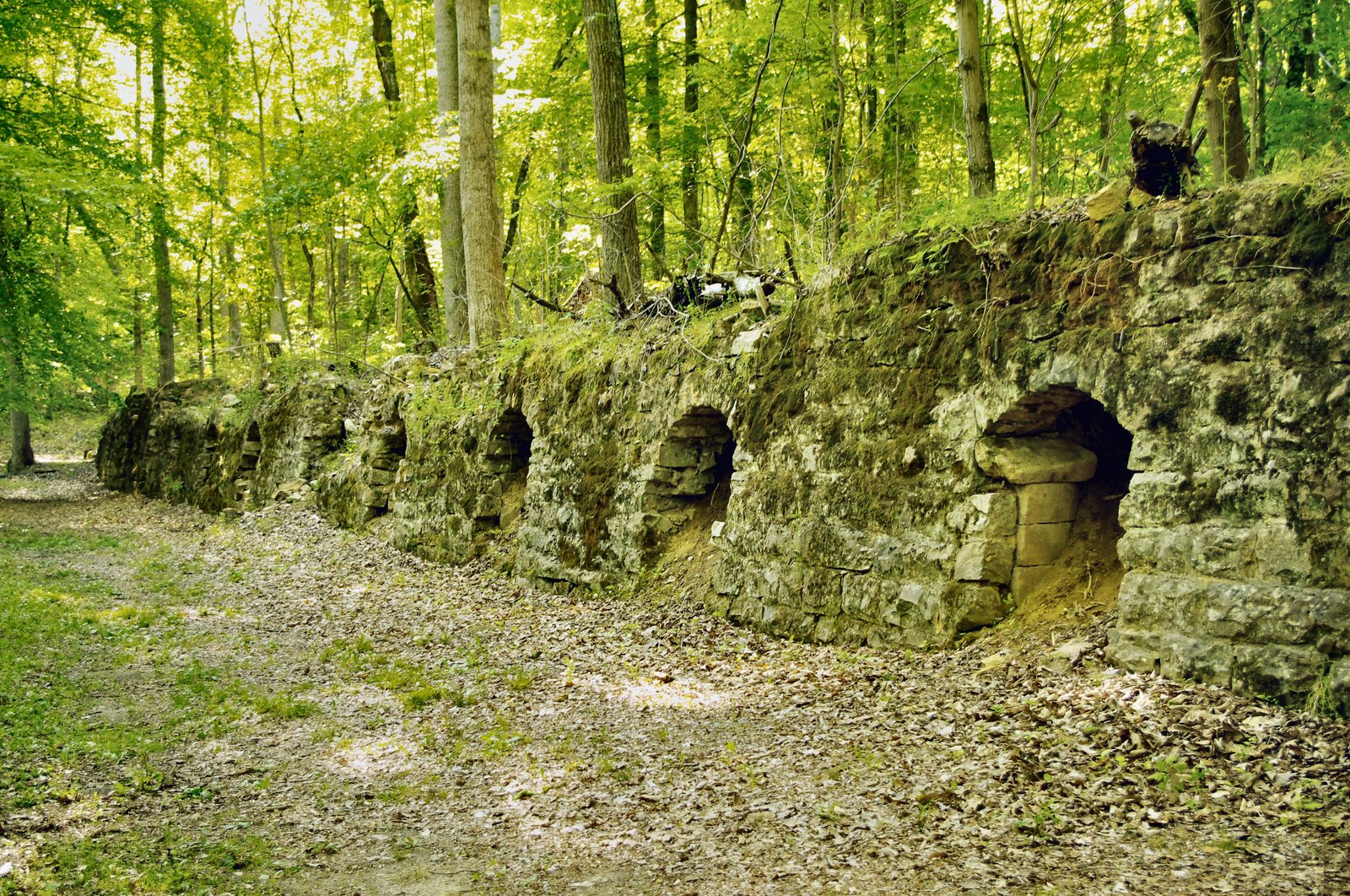
For roughly half a century, Marion County was an integrated coal-and-iron district. British capital financed the operation; Whitwell, Orme, and Victoria mined the coal; Victoria coked it in rows of beehive ovens; Inman supplied the iron ore; and South Pittsburg smelted the result. The Nashville, Chattanooga & St. Louis Railway tied the whole system together. By the 1930s and 1940s the industry had collapsed, outcompeted by Birmingham, Alabama's larger integrated operation and undercut by the general shift away from beehive coke. What remains today is mostly foundations, oven ruins, worker cottages, and place names.
Before the 1877 boom: antebellum mining
Commercial coal mining in Marion County did not begin with the British 1877 investment. Small antebellum operations on the Cumberland Plateau were already shipping coal by the 1850s. The Etna Mines on top of Aetna Mountain were established in 1852, and the Battle Creek Mines on the western side of the county opened in the late 1850s, predating the British-backed operations at South Pittsburg and Whitwell by a generation. In 1873, Pennsylvania geologist James Macfarlane wrote in The Coal Regions of America that in 1869 the Aetna mines in Marion County and the Sewanee mines in adjoining Grundy County together produced “by far the greater part” of the coal mined in Tennessee (per the TNGenWeb Marion County coal mines page). Output from both the Aetna and Battle Creek operations was interrupted by the Civil War, and the postwar restart proved difficult until the larger British capital investments of the mid-1870s arrived with rail, coke, and iron infrastructure at a scale the antebellum operators had not attempted.
An 1863 coal-property map of Marion County, reproduced on TNGenWeb from the William H. Emmett collection, records a broader scatter of antebellum operations than later narratives usually remember. Along with Etna and Battle Creek, the map labels Needmore (later absorbed into Orme in the 1890s), Vulcan, and Summit, three small plateau workings that never grew into coke-oven towns and do not survive as incorporated places or dedicated community pages on this site. They appear here only as names on the 1863 map, a reminder that the Marion County coal district before the Civil War was a patchwork of small named operations rather than a single industrial complex.
British capital and the 1877 boom
The single biggest postbellum transformation of Marion County was the arrival of heavy industry. In the mid-1870s, British investors formed the Southern States Coal, Iron and Land Company to exploit the Sequatchie Valley's coal seams and nearby iron deposits. In 1877, James Bowron and a group of English associates brought enough capital to actually develop the operation. Coal mines opened at Whitwell and Victoria, coke ovens were built at Victoria, iron ore was mined near Inman, and smelters and foundries clustered at the planned industrial town of South Pittsburg, which was incorporated in 1887 as a “southern Pittsburgh.”
In 1874, the Bowron family organized the Southern States Coal, Iron and Land Company to exploit coal seams and iron deposits in the Sequatchie Valley. James Bowron Sr. and his son James Bowron Jr. (born November 16, 1844, in Stockton-on-Tees, England) sailed to Tennessee in 1877 to manage the operation. James Bowron Sr. died in November 1877, and the younger James assumed duties as general manager. Under his leadership the company expanded coal production and coke-oven construction at Victoria.
In 1882, Southern States was sold to the Tennessee Coal, Iron and Land Company (later the Tennessee Coal, Iron and Railroad Company, or TCI) for $1,400,000 in stock and bonds (per Bhamwiki's biographical entry on Bowron). TCI operated three blast furnaces at South Pittsburg by 1888, making the town one of the busiest iron-producing centers in Tennessee. Joseph Lodge, who had worked for Southern States, went on to found Lodge Manufacturing (now Lodge Cast Iron) in South Pittsburg in 1896.
The Sequatchie Valley Railroad
The Sequatchie Valley Railroad was extended from Jasper to Whitwell in 1887 to carry coal to the South Pittsburg blast furnaces. A branch line to Orme was built in 1902 at the request of Frederick Gates. These rail connections were essential: without them, the coal-coke-iron operations would not have been economically viable. The railroad made it possible to move heavy bulk commodities cheaply enough to justify the capital investment in mines, ovens, and furnaces.
How a coal-and-coke complex worked
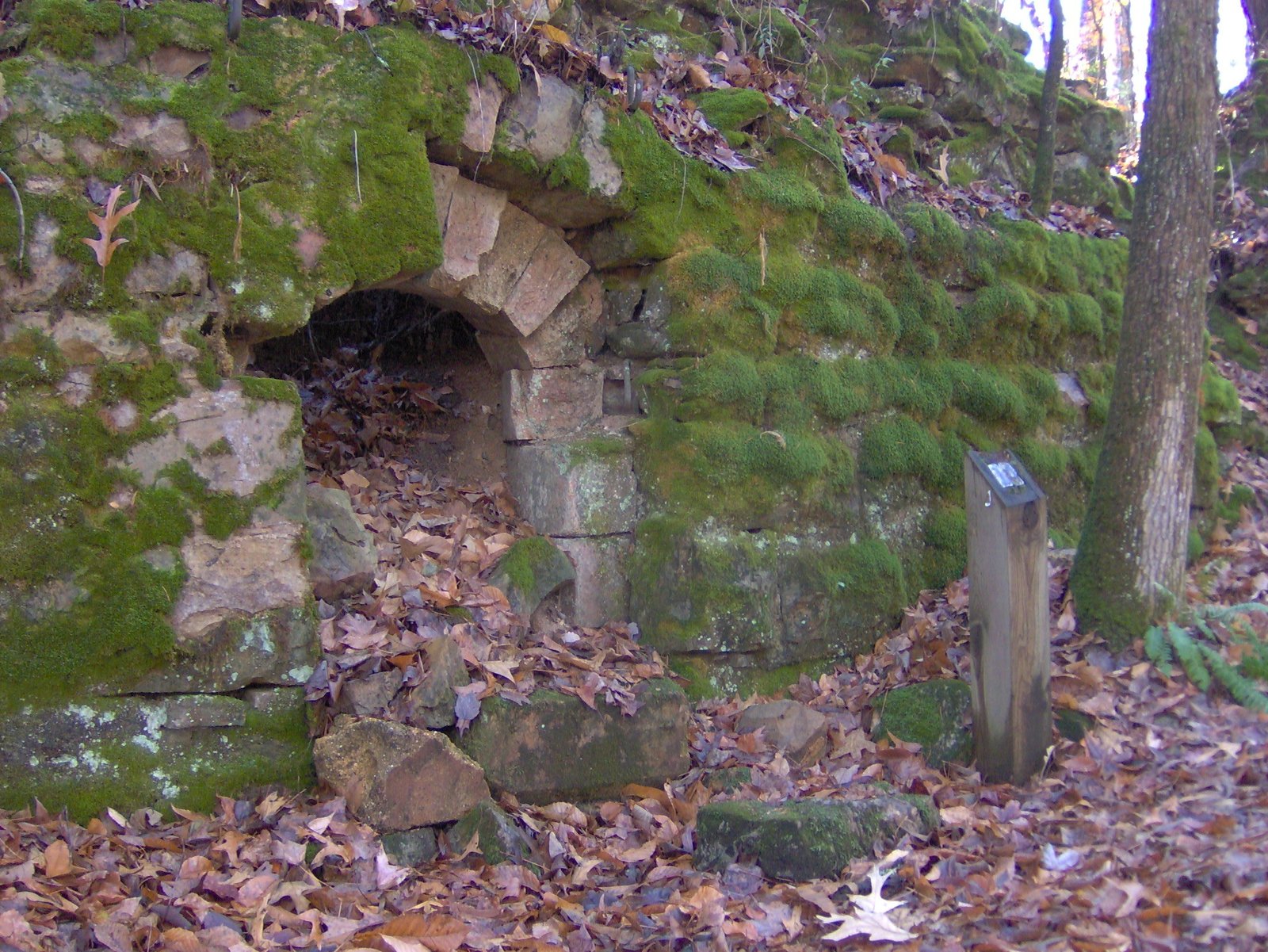
Iron smelting in the 19th century required three inputs in balance: iron ore, coke (not raw coal, because coal's impurities ruined iron), and limestone as a flux. Turning coal into coke meant baking it in oxygen-starved ovens until the volatile compounds drove off, leaving a porous, nearly pure-carbon fuel. Marion County happened to have coal, iron ore, limestone, and water all within a few miles of each other, which is what made the investment pencil out.
Beehive coke ovens, the technology used at Victoria, were rows of round brick ovens that resembled beehives. Coal was loaded in from the top, set alight, and sealed until coking finished, typically about 48 to 72 hours. The ovens were cheap to build and ran around the clock. Their drawback was environmental: thick smoke, waste heat vented to the atmosphere, and no recovery of the volatile chemicals that modern byproduct ovens capture.
The Marion County towns
Whitwell
Whitwell was one of the busiest coal-mining communities in the Sequatchie Valley through the late 19th and early 20th centuries. Mines opened here as part of the 1877 industrial boom and operated alongside the coke ovens at Victoria and the iron-ore mines at Inman. Because the coal seams lay high on the Cumberland Plateau above the valley town, a gravity incline carried loaded coal cars down the mountain to a tipple beside the railroad. Rail service connected Whitwell to the South Pittsburg smelters and to the broader NC&StL system. The mining economy shaped Whitwell for generations: housing stock, small commercial strips, churches, and civic rhythms were built around the shift schedule of the mines. When mining wound down through the 20th century, Whitwell contracted but did not disappear.
Victoria
Victoria was built to host coke ovens, long rows of beehive ovens where Whitwell coal was converted into coke for the South Pittsburg furnaces. Victoria was a classic coke-oven company town: workers' cottages, commissary, rail siding, and rows of ovens arranged to be loaded and pulled on schedule. When the iron industry collapsed through the 20th century, undercut by Birmingham and by the shift away from beehive coke, Victoria's industrial purpose evaporated. The town shrank and today retains little of its original scale. Some coke oven ruins, foundations, and worker housing remnants remain.
Orme
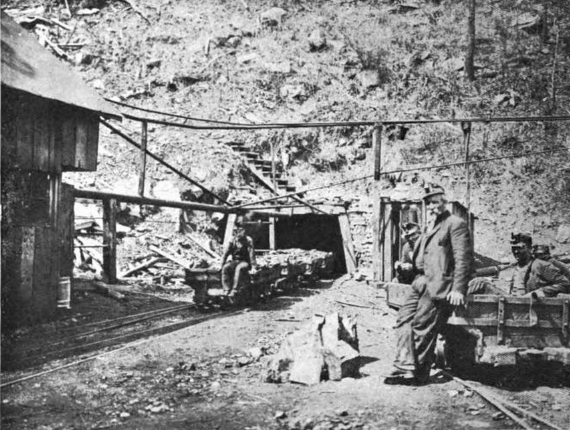
Orme is a separate chapter. A coal-mining community called Needmore was established in the narrow valley against the western escarpment in the early 1890s. In the late 1890s, Chattanooga businessman Frederick Gates purchased the Needmore operations and began negotiating with the NC&StL to build a branch line into the valley. The railroad agreed to build the branch in 1902. Gates then sold the Needmore operation to Richard Orme Campbell (1860 to 1912), who reorganized it as the Campbell Coal and Coke Company and renamed the town Orme. Campbell built out a proper company town: a commissary, storehouse, office, a three-story hotel, workers' cottages, and schoolhouses for the white miners' children and for the families of Black miners on a different part of the mountain. At its peak the operation was shipping about 1,000 tons of coal per day.
After a major miners' strike in 1939, large-scale mining at Orme shut down. The rail company pulled up the tracks and the steel was reused for World War II munitions production. Smaller sublease mining continued on and off into the 1960s but was finished by about 1970. Today Orme is one of Tennessee's smallest incorporated towns; a few original cottages and the depot still stand.
Inman
Inman was the iron-ore mining leg of the complex. Iron-ore deposits in the ridges around Inman had been known locally for decades before they were seriously exploited, but the arrival of British capital through the Southern States Coal, Iron and Land Company and the 1877 Bowron investments made commercial mining viable. At its peak, the Inman Mine was a significant regional producer, supplying iron ore to the smelters at South Pittsburg. The community supported miners and their families, though it never grew to the size of the planned towns at Kimball or South Pittsburg. As the Tennessee iron industry was outcompeted by Birmingham, with its own integrated coal, ore, and limestone supply, the Marion County iron district contracted. By the middle of the 20th century, major operations at Inman had shut down.
Labor and company-town life
All four towns were essentially company towns, with the operator providing housing, commissary, and church-and-school infrastructure for the workforce. Life inside a 19th-century coal-and-coke town was hard and regimented, and Black and white miners were housed and schooled separately. The 1939 Orme strike was the most documented labor action in the county's mining history; coalfield labor relations more broadly were shaped by the regional United Mine Workers organizing drives of the 1920s and 1930s.
Why it all collapsed
Three pressures broke the Marion County coal-and-iron system in the first half of the 20th century. First, Birmingham, Alabama, with its own integrated coal, ore, and limestone supply, could smelt iron at lower cost and at much larger scale. Second, the shift from beehive coke to byproduct coke made Victoria's technology obsolete; modern coke plants recovered tars and gases worth more than the coke itself, and beehive operations simply could not compete. Third, the best and most accessible coal seams in the valley were gradually worked out, raising unit costs as the remaining seams got thinner and deeper. By the 1940s the industry was effectively finished, and the postwar economy reoriented around Lodge Manufacturing, distribution along the future I-24 corridor, and service and health-care employment.
What remains
- Victoria: coke-oven ruins and worker housing remnants
- Orme: original worker cottages and the NC&StL depot
- Whitwell: historic downtown and coal-era buildings
- Inman: surface-mining remnants on the surrounding slopes
- South Pittsburg: smelter-era buildings and the historic Princess Theatre district
Whitwell's Coal Miners Museum preserves the district's mining history. The museum includes mine maps showing hundreds of feet of underground shafts, mining equipment, photographs, and oral histories from former miners and their families.
The Dunlap Coke Ovens in neighboring Sequatchie County, listed on the National Register of Historic Places in 1985, are the best-preserved examples of the same beehive coke-oven technology used at Victoria. The 268 ovens at Dunlap are now a public park and offer the clearest picture of what the Victoria operation once looked like.
In 1981, 13 miners died in the No. 21 Mine explosion at Whitwell, the worst mining disaster in modern Tennessee history. Mining at Whitwell continued on a smaller scale until 1997.
Coal reserves
As of 1979, the known recoverable reserves of coal in the Whitwell Shale in southern Tennessee totaled approximately 377 million tons, according to a U.S. Department of Energy evaluation. The size of the remaining reserves reflects how much coal was originally present in the southern Cumberland Plateau, even after decades of intensive mining.
Related
About Whitwell →
About Victoria →
About Orme →
About Inman →
About Mount Olive, on the plateau above Whitwell →
About Aetna, on the coal-pitted plateau above the Tennessee River Gorge →
About Battle Creek, at the original Battle Creek Mines →
Battle Creek Mines deep dive (Tennessee's fifth coal mine, 1854; the 1869 post office; the 1905 Battle Creek Coal & Coke Co. at Orme) →
About Cheekville, the pre-1877 settlement that James Bowron's company simultaneously transformed into Whitwell →
About South Pittsburg →
About the NC&StL Railway →
Sources
- Tennessee Encyclopedia — Marion County
- TNGenWeb — Marion County Coal Mines
- Wikipedia — Orme, Tennessee
- Wikipedia — Whitwell, Tennessee
- Wikipedia — South Pittsburg, Tennessee
- Wikipedia — Nashville, Chattanooga and St. Louis Railway
- Wikipedia — Coke (fuel)
- Bhamwiki — James Bowron
- U.S. DOE/OSTI — Evaluation of the coal reserves in the Whitwell Shale in the Southern Cumberland Plateau in Tennessee
- Southeast Tennessee Tourism — Coal Miners Museum in Whitwell