Last updated: April 23, 2026
- Type: Town (one of the smallest in Tennessee)
- Founded as Needmore: early 1890s
- Renamed Orme: c. 1902
- 2020 population: 87 (down from 126 in 2010)
- Named for: Richard Orme Campbell (1860–1912), mine operator
Orme is a small former coal-mining town tucked into a remote valley against the western escarpment of the Cumberland Plateau, in the southwestern corner of Marion County. At its peak it was a busy company town shipping 1,000 tons of coal a day; today it is one of Tennessee's smallest incorporated towns and functions as a quiet residential community.
Setting
Orme sits in the head of Doran's Cove, a narrow box-canyon valley in the southwestern corner of Marion County, bounded on three sides by the Cumberland Plateau escarpment and opening south toward Jackson County, Alabama. The plateau walls rise close to a thousand feet above the town, which made the valley difficult to serve by rail and, later, by water. Orme Road provides the only road access on the Tennessee side out of the valley, climbing south into Alabama; the alternative is to top the plateau on State Route 156 and descend from above. Mineral springs and a waterfall-fed creek supplied the town's water until the 2007 drought exposed how thin that supply could run. The town was first called Needmore in the early 1890s; the current name comes from Chattanooga coal operator Richard Orme Campbell, who renamed the town around 1902 when the Nashville, Chattanooga & St. Louis Railway agreed to build a branch line in.
Doran's Cove carried Indigenous use for thousands of years before the coal camps arrived. Archaic and Woodland rockshelter sites are documented along the plateau escarpment around the cove, and the lower Tennessee River bottoms a few miles to the south held Mississippian farming communities. By the late 18th century the cove was part of the Chickamauga (Lower) Cherokee country, on the southern edge of the Cherokee homeland along the Tennessee River. The remaining Cherokee community was forcibly removed along the Trail of Tears in 1838, roughly half a century before the valley was opened for coal. The Cherokee Nation continues today as a sovereign nation headquartered in Oklahoma.
Origins as Needmore (1890s)
A coal-mining community called Needmore was established in the valley in the early 1890s. Mining was slow to develop because of the valley's isolation and the lack of adequate rail connections. In the late 1890s, Chattanooga businessman Frederick Gates purchased the Needmore operations and began negotiating with the Nashville, Chattanooga & St. Louis Railway to build a branch line into the valley.
Campbell's coal and coke operation (1902)
The NC&StL agreed to build the branch line in 1902. Gates then sold the Needmore operation to Richard Orme Campbell (1860–1912), who reorganized it as the Campbell Coal and Coke Company and renamed the town Orme. The Needmore post office, which had opened earlier in 1902, closed the same year as the Orme post office opened, marking the institutional changeover.
Campbell built out a proper company town: a commissary, storehouse, office building, a three-story hotel, workers' cottages, and, under Tennessee's segregation laws, a large schoolhouse for the white miners' children and a smaller school and church for the families of Black miners farther up the mountain. At its peak the operation was shipping about 1,000 tons of coal per day.
Battle Creek Coal & Coke Company (1905)
Campbell sold the Orme operation in 1905, and the new owners reorganized the company as the Battle Creek Coal & Coke Company, taking the name back from the original 1854 Battle Creek Mines on the lower creek that had become South Pittsburg in 1876. The 1904 photographs of the Orme commissary near the NC&StL depot pre-date the company-name change but document the operation as Campbell built it; subsequent images show the same buildings under the new ownership. By 1912, the Battle Creek Coal & Coke Company was running four drift mines cut into the Cumberland Plateau wall, some reaching high up the cliff face above the town. Production peaked in the 1910s and faltered in the 1920s as Birmingham, Alabama, outcompeted the Sequatchie Valley smelter market. More on the Battle Creek Mines, including both the original 1854 operation and the 1905 Orme reorganization →
Decline (1939–1970)
After a major miners' strike in 1939, large-scale mining at Orme shut down. The rail company pulled up the tracks, and the steel was reused for World War II munitions production. Smaller sublease mining continued on and off into the 1960s but was finished by about 1970.
The 2007 water crisis
Orme gained national attention in 2007 during a severe drought when the town's water supply, fed by a waterfall-fed creek and a natural spring that normally provided up to 60,000 gallons per day, dropped to just 5,000 gallons, not enough to pressurize the distribution lines. The town was forced to ration water, turning on the municipal supply for only three hours per day. Residents hauled water from a fire hydrant across the state line in Bridgeport, Alabama. The story drew national news coverage.
Mayor Tony Reames negotiated a permanent solution: a 2.5-mile pipe connecting Orme to Bridgeport, Alabama's municipal water system, funded by a $377,590 USDA emergency grant. The pipeline was targeted for completion by November 2007. The crisis highlighted the vulnerability of small Appalachian towns with aging infrastructure and limited water sources.
Present day
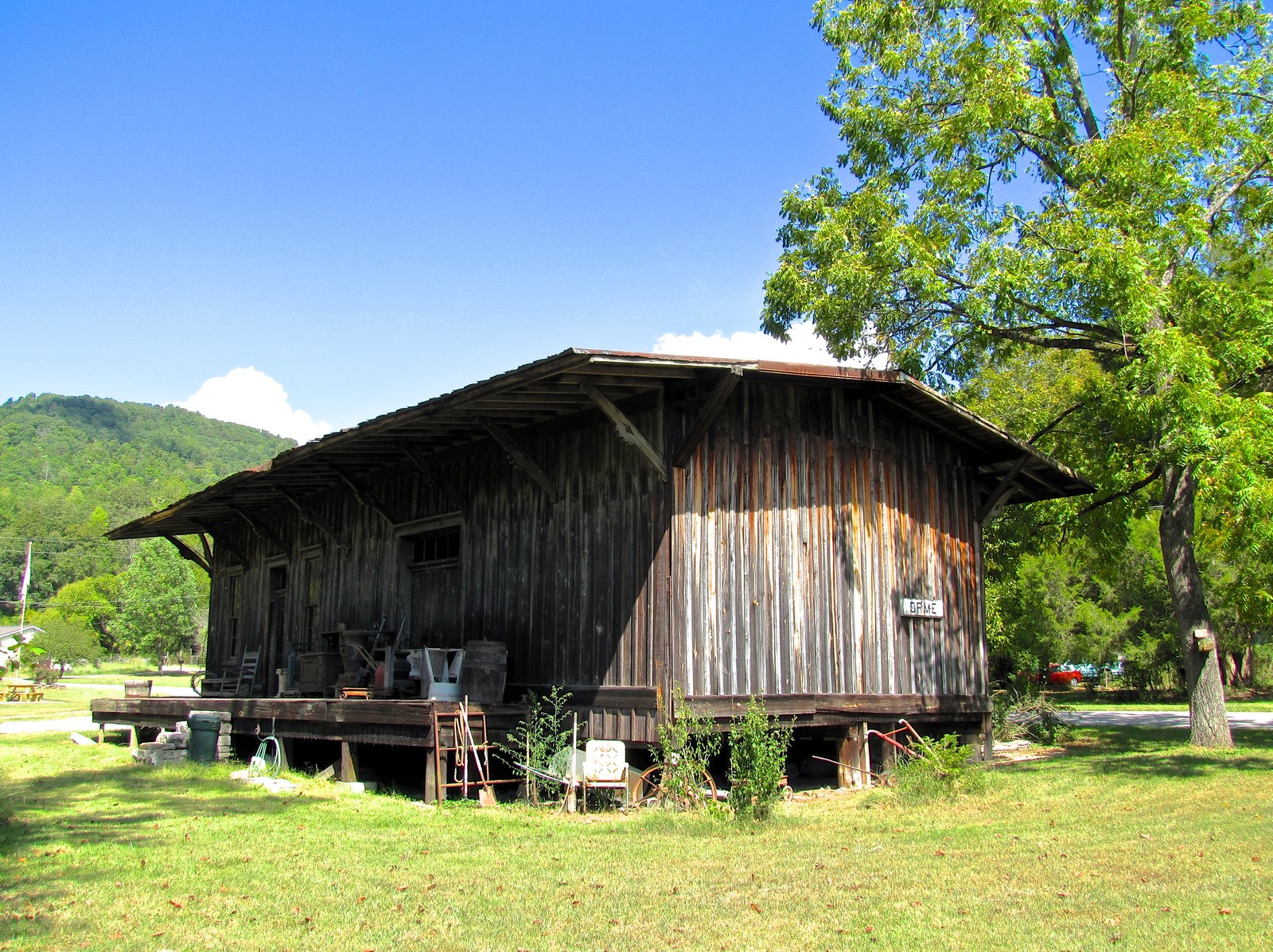
A few of the original workers' cottages and the wooden railroad depot still stand, giving a sense of the town's boom-era layout. The population has continued to shrink: from 653 in 1910 at the height of the mining era to 277 in 1940, 122 in 1970, and just 87 at the 2020 census. The town occupies northern Doran's Cove, a narrow valley surrounded by near-thousand-foot Cumberland Plateau walls. Access is via Orme Road to Jackson County, Alabama, or through Tennessee Route 156 atop the plateau. Orme remains incorporated. Most services require a trip to South Pittsburg or Bridgeport.
Population
| Year | Population |
|---|---|
| 1910 | 653 (peak) |
| 1940 | 277 |
| 1970 | 122 |
| 2000 | 124 |
| 2010 | 126 |
| 2020 | 87 |
Notable people
- Jimmy Outlaw (1913, 2006), Major League Baseball player.
Landmarks
- Former NC&StL depot area
- Surviving workers' cottages
- Remnants of mine workings on the surrounding mountain
Related
Rexton →
Coal & coke industry →
Battle Creek Mines (covers the 1905 reorganization at Orme) →