Last updated: April 23, 2026
- Company: Dixie Portland Cement Company; after 1926, a plant of the Pennsylvania-Dixie Cement Corporation (Penn-Dixie); after 1981, Dixie Cement, Inc. (a subsidiary of Moore McCormack Resources)
- Plant site: Richard City, at the southern edge of Marion County, adjacent to South Pittsburg
- Construction began: March 1906
- First cement produced: week of November 8, 1907
- Plant closed: April 14, 1980; permanently closed 1982
Dixie Portland Cement was one of the largest industrial operations in southern Marion County for most of the 20th century. Its plant at Richard City, adjacent to South Pittsburg, produced Portland cement from local limestone for construction markets across the Southeast, and the company built a planned town around it to house its workforce. The company was absorbed into the Pennsylvania-Dixie Cement Corporation in 1926 and operated as a Penn-Dixie plant until the 1980 Chapter 11 filing and the plant's permanent closure in 1982.
Founding: Chattanooga engineers and Kansas cement men
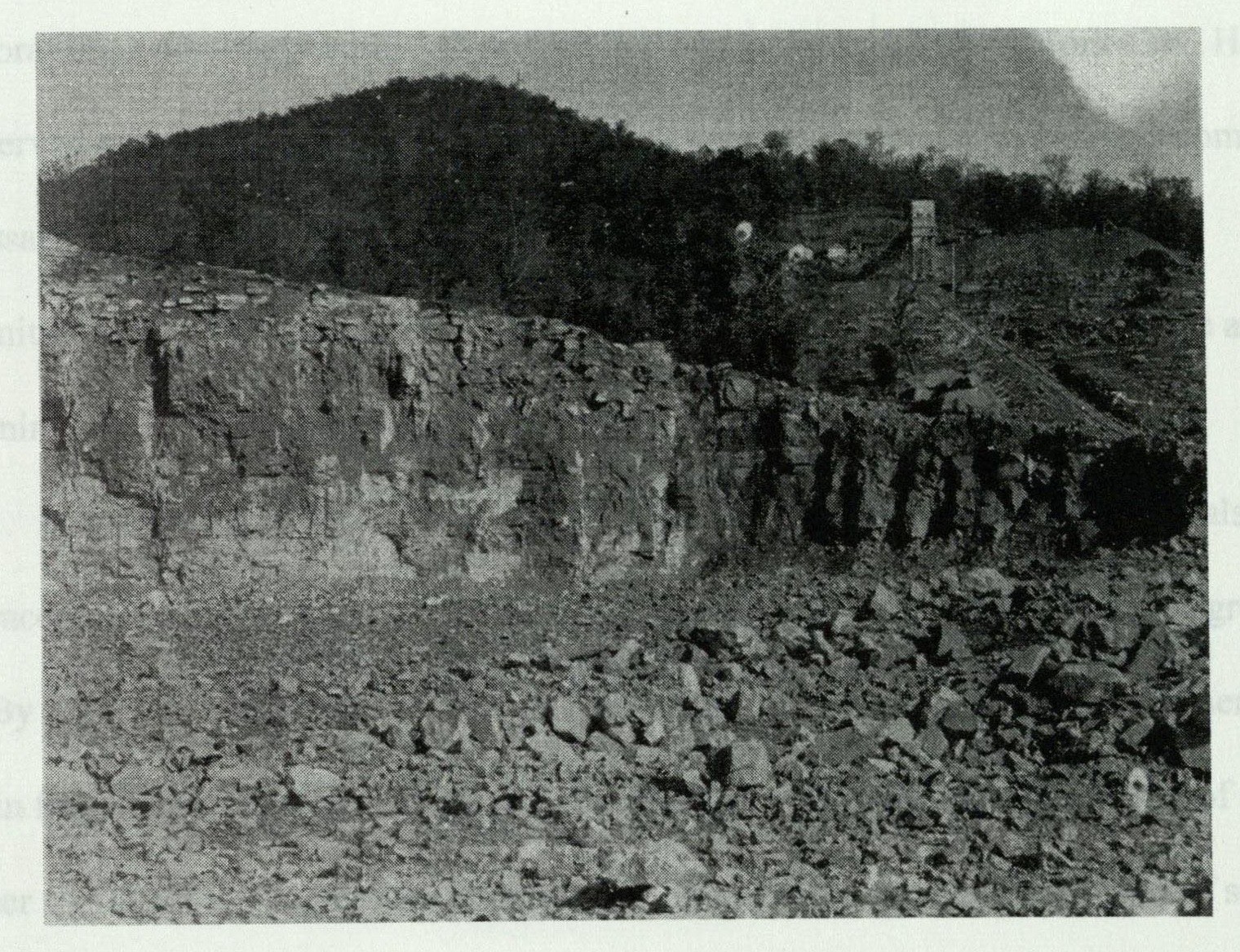
The concept originated in Chattanooga in the early 1900s. Per Kelly Wilkerson's 2003 MTSU thesis on Richard City, engineer Ellis Soper, who had directed construction of the Market Street Bridge in Chattanooga, approached George Nicholson, an Iola, Kansas cement manufacturer managing four other plants at the time, and Lee Hunt of Hunt Engineering, also of Iola, about siting a cement plant near Chattanooga. Soper tested the site at Deptford, on the southern edge of Marion County, with the assistance of Colonel Spencer Eakin of the industrial department of the Nashville, Chattanooga & St. Louis Railway.
Dixie Portland purchased an estimated 500 to 600 acres of land, much of it from Albert Cook (whose recollection of being approached by two “travel-stained, mud covered youngsters” Hunt and Soper was published in the December 1923 Dixie Doings company newsletter and reprinted in the South Pittsburg Hustler, 22 March 1945), believing the site held the raw materials for long-term operation at large capacity. Construction of the $1.5 million plant began in March 1906, and the company began building worker housing the same year. The company was formally incorporated in 1907.
Detroit stockholder George W. Millen recruited Richard Hardy to the company in 1905 from his post as director of the Pittsburgh branch of the New York Life Insurance Company. Hardy was elected secretary and treasurer on the company's formal incorporation in 1907.
How the plant worked
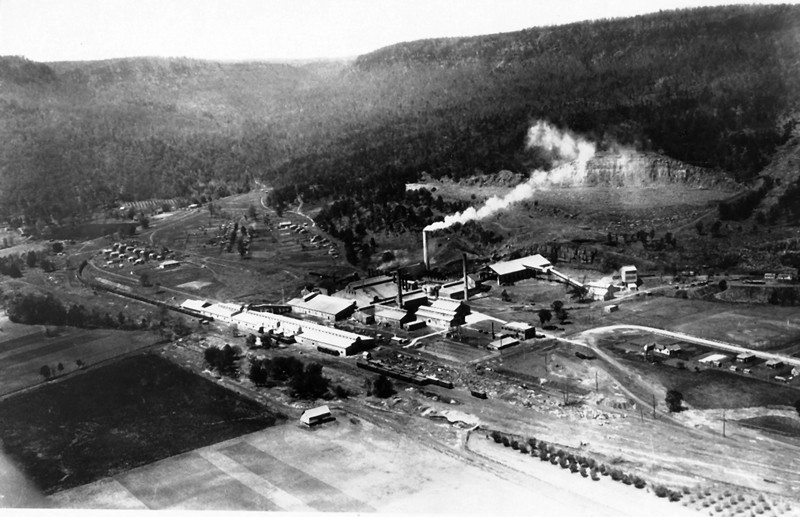
The Richard City operation was a dry-process Portland cement plant using local limestone blasted out of the mountainside behind the plant. Crushed limestone was combined with clay, sand, and iron ore; the mixture was fed through coal-fired rotary kilns that drove it through a series of chemical reactions peaking at roughly 2,700 degrees Fahrenheit; the resulting clinker was cooled, ground with gypsum, and packaged into barrels and later into bags for shipping. The plant's rail spur branched off the NC&StL Pikeville Branch (see NC&StL Railway) at Deptford, and finished cement left the site by rail, truck, and later by Tennessee River barge after the TVA lock-and-dam system made the Marion County reach fully navigable.
Cement from Richard City was shipped across the Southeast and beyond. Period contracts on file in Wilkerson's 2003 thesis reference orders for U.S. Army Corps of Engineers river and dam projects, TVA construction in the 1930s and 1940s, Southern state highway and bridge contracts through the interstate era, and major private construction. The 1930 1.1 million-barrel South Carolina road contract shared with Signal Mountain Cement Company is the single largest-documented period order. A 1944 to 1945 $1.46 million company-wide improvements program included the largest single share at Richard City, recognizing the plant as Penn-Dixie's most productive facility.
Starting up: 1907 to 1914
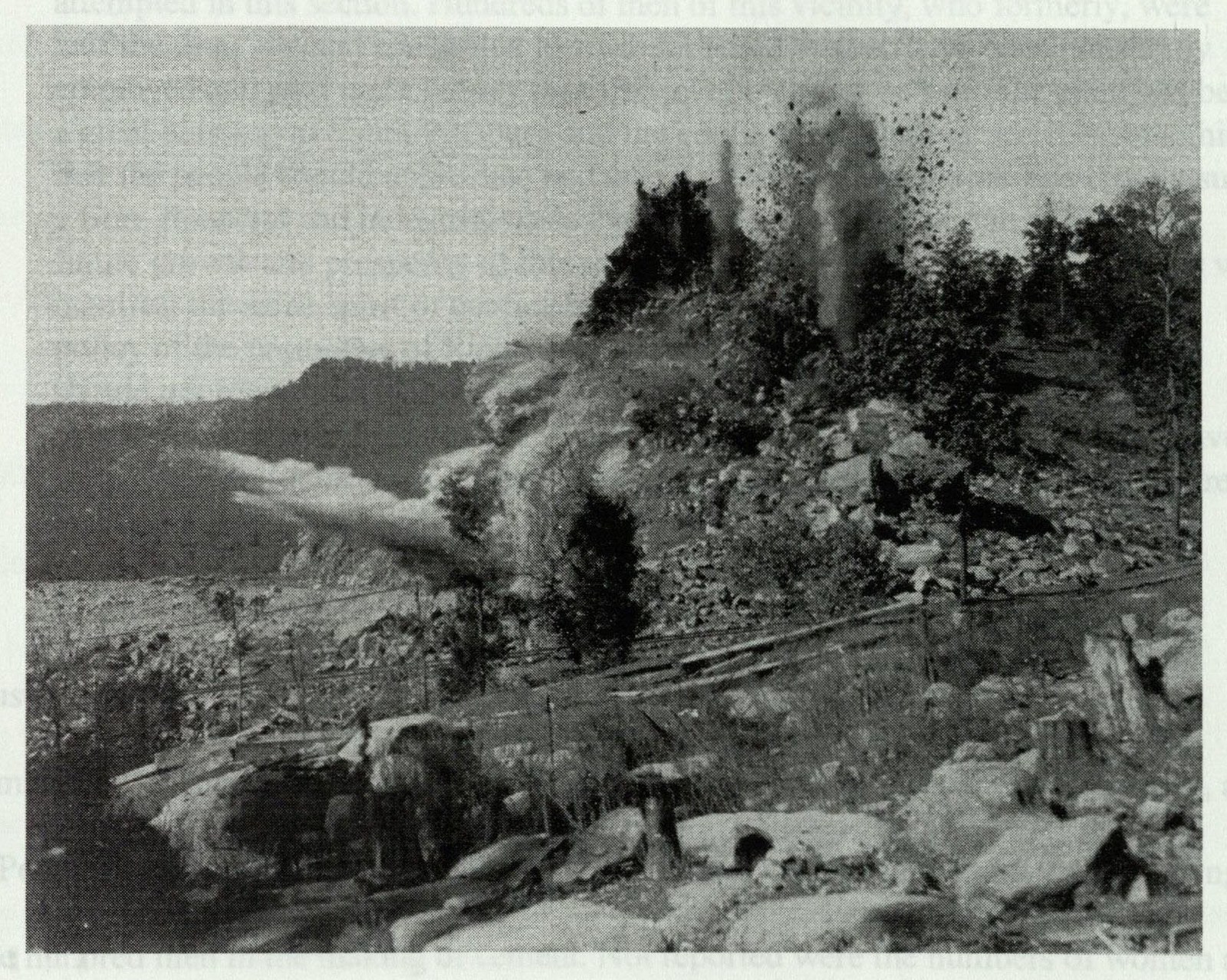
The South Pittsburg Hustler reported continuous construction from the start. By May 1907 the cement chimneys, coal dryer, raw-materials building, and machine shop were complete; work on a rail spur began that month. In the week of November 8, 1907, the plant produced its first Portland cement. The coal-fired upper power house drove crusher and dryer machinery, and a steam shovel worked the base of the quarry dump. The plant ran day and night shifts from the outset.
The financial Panic of 1907 to 1908 hit during the plant's startup. The company completed construction anyway, and steady growth began at the end of 1910. The 1910 U.S. Census of Marion County shows that about half the workers at the plant were Tennesseans. The rest came from Alabama, Georgia, Michigan, Iowa, Illinois, Ohio, New York, Maryland, the Carolinas, Mississippi, Florida, Massachusetts, and from as far as Ireland, Turkey, Poland, Germany, and England. One early supervisor, Tom Mix, went on to become a western-film star; per Wilkerson (citing the Chattanooga Times, 27 March 1996, p. C1), Mix served as the plant's supervisor of labor and horses and was commissioned as a Marion County deputy to keep order, left a few years later, and returned as a visitor at the height of his fame in 1933.
The Hardy presidency and the naming of Richard City
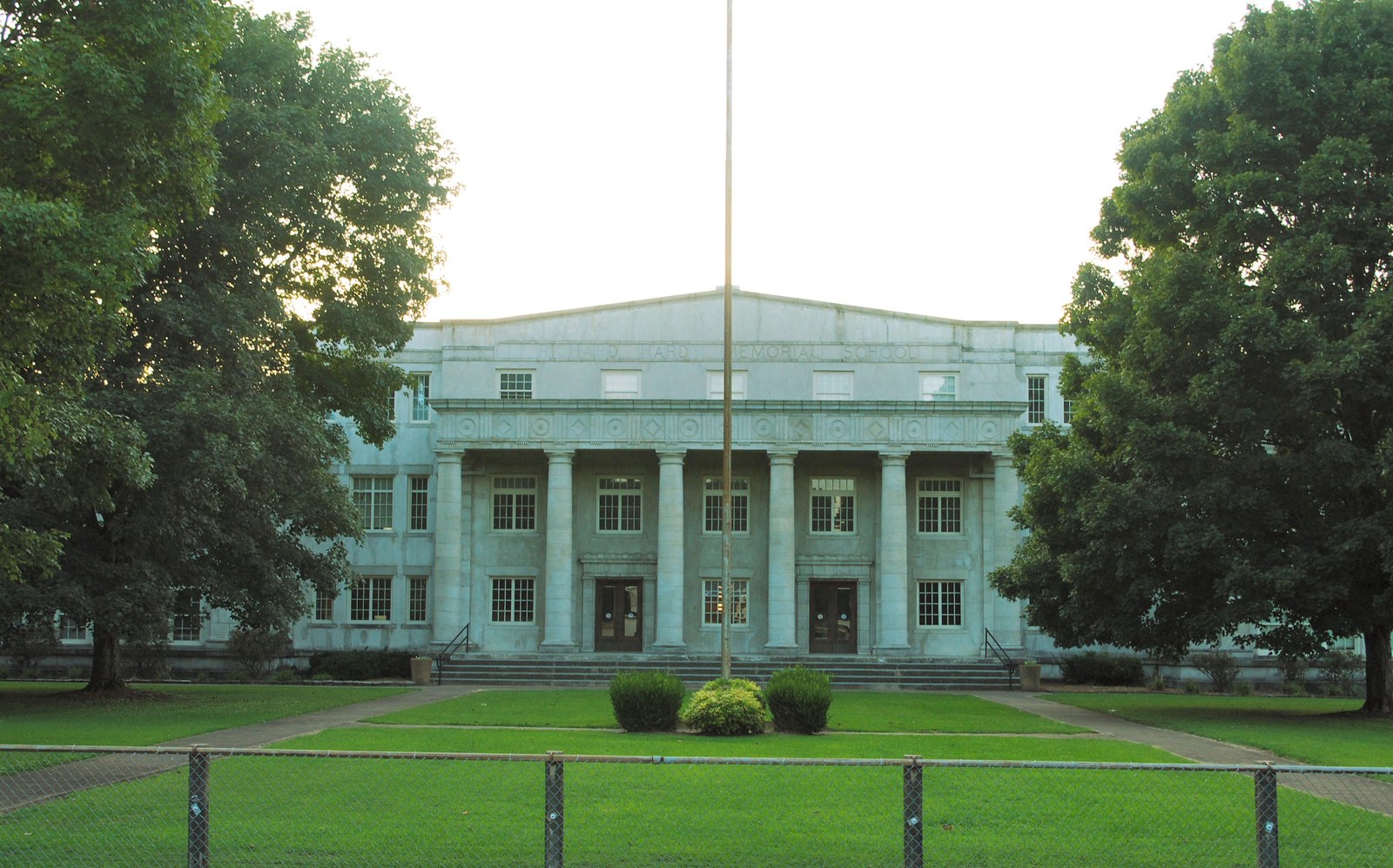
Richard Hardy was elected president of Dixie Portland in 1914, and the combined communities of Deptford and Copenhagen were renamed Richard City in his honor. By 1917 the plant employed 600 to 700 people. Hardy built out the planned town around the plant, including company-built housing in cement stucco, the Dixie Inn hotel, the commissary, a hospital, a church, a swimming pool, baseball diamond, tennis court, and the schools that became the Richard Hardy Memorial School.
In 1923 the Chattanooga city commission elected Hardy to serve the unexpired term of Mayor Alexander W. Chambliss, who had been appointed to the Tennessee Supreme Court. Hardy continued as Dixie Portland president throughout his mayoralty.
The 1926 Penn-Dixie merger
In 1926, Dixie Portland consolidated with several other large eastern cement producers to form the Pennsylvania-Dixie Cement Corporation, a $45 million corporation headquartered in New York City. Hardy became Chairman of the Board of the new corporation, declined to seek another term as Chattanooga mayor, and relocated to New York. He died of heart disease on August 14, 1927, at age 59, and was buried at Forest Hills Cemetery in Chattanooga. The Richard City plant continued to operate as a Penn-Dixie facility.
Production and wages
In 1927, the Richard City plant employed about 300 men producing 6,000 barrels of cement per day, on a monthly payroll of about $30,000. Cement workers earned $0.75 per hour, ranking with painters and plumbers above electrical workers, roofers, and carpenters. The plant was not unionized in 1927.
In 1930 Penn-Dixie and the Signal Mountain Cement Company shared a 1.1 million barrel order for South Carolina road construction, with Penn-Dixie's share at 600,000 barrels. The plant ran 600 employees on 12-hour shifts and shipped finished cement out by rail, barge, and truck. In 1931 production was cut as the Depression deepened, and in 1936 Penn-Dixie president John A. Miller acknowledged continuous losses since 1931 in his Christmas cards to workers, who received $15 to $50 year-end bonuses.
The plant recovered by the mid-1940s. In 1944 Penn-Dixie spent $550,000 on improvements across all its plants, and in 1945 it announced a $910,000 program covering Richard City, Kingsport, Clinchfield (Georgia), and Nazareth (Pennsylvania), with the largest share planned for Richard City. By that point the Richard City plant was producing 4,000 to 5,000 barrels per 24-hour day.
Safety records under Wells Wilkinson
In 1959, longtime employee Wells Wilkinson was appointed Personnel and Safety Supervisor. Under Wilkinson the plant set national safety records: five separate one-year intervals without lost work time, including one stretch of 1,136 consecutive days. A 1962 plant barbeque celebrated 737 accident-free days, with Oscar King of the Portland Cement Association's Knoxville office addressing the workers. Wilkinson retired in November 1977.
The company town
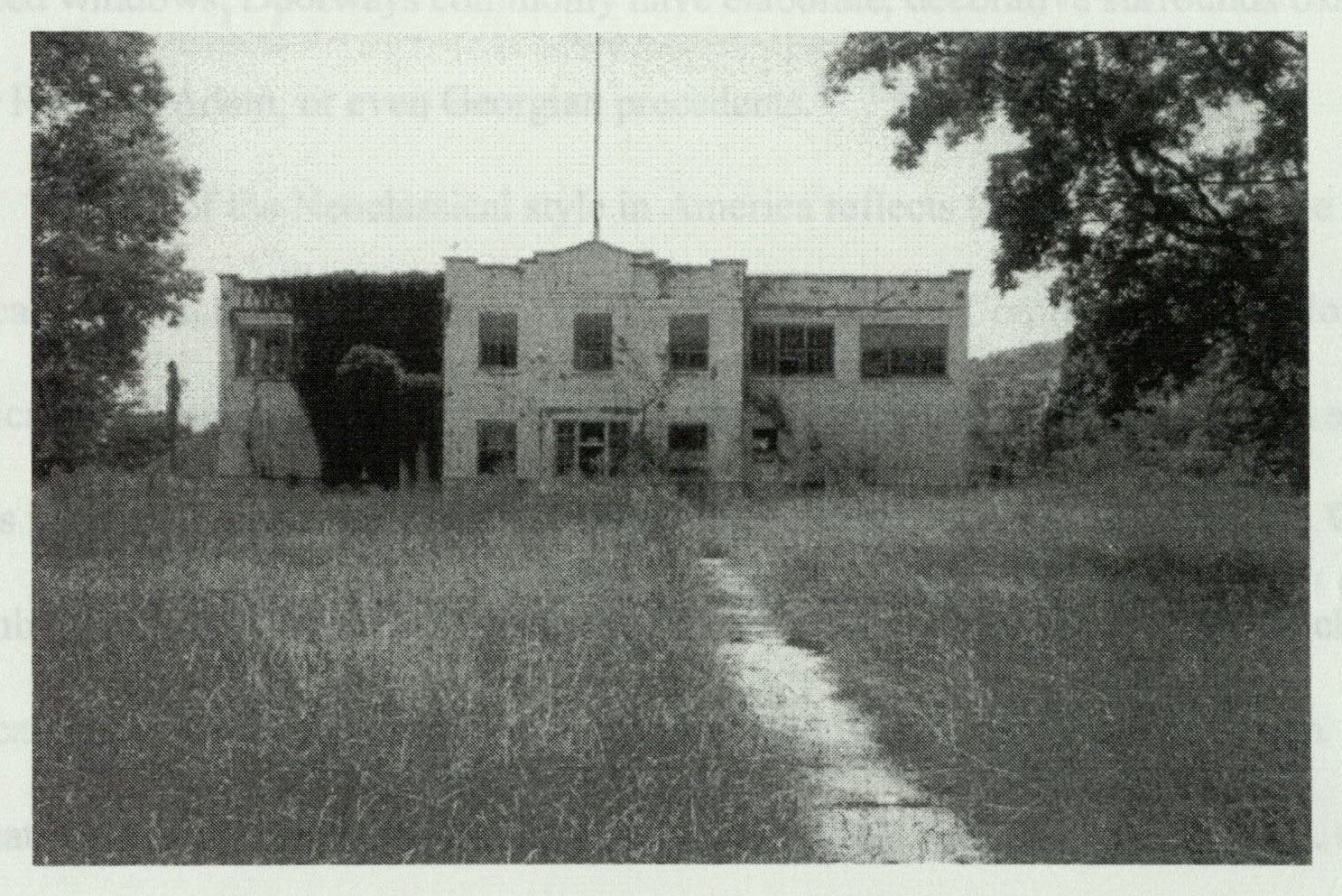
Richard City itself was a company town in the fullest sense of the term. Dixie Portland and then Penn-Dixie owned the worker housing, the Dixie Inn hotel, the commissary, the baseball diamond and tennis court, the hospital (with company-employed physicians), the church, the swimming pool, and the schools that eventually consolidated into the Richard Hardy Memorial School. Workers paid rent to the company, bought groceries from the company store, and raised children who attended company-supported schools. The dominant visual character of the town was cement: houses were cast in cement stucco on concrete foundations, utility poles were cement, fencing around company properties was cement, and even some detached storage sheds and garages were built entirely of cement. Several dozen of the cement-stucco houses and the associated utility structures survive today and anchor the National Register of Historic Places district that was formalized around the school building.
The paternalism of the Richard City company-town arrangement was typical of the heavy-industry settlements of the period but unusually complete in its physical expression. The 1910 U.S. Census recorded a workforce drawn from across the eastern and mid-western United States and from Ireland, Turkey, Poland, Germany, and England, a pattern that sustained a more cosmopolitan settlement than the surrounding Marion County average for several decades. Kelly Wilkerson's 2003 Middle Tennessee State University thesis remains the most detailed single treatment of the town as a company-town case study.
Decline and closure: 1977 to 1982
In November 1977, former Penn-Dixie chairman Jerome Castle was fired; in November 1979 he was convicted of defrauding the company of more than $3 million in a Florida land transaction. Penn-Dixie reported $22 million in losses at the end of 1978, and on April 8, 1980 Penn-Dixie Industries filed for Chapter 11 bankruptcy protection. The Richard City plant closed six days later, on April 14, 1980, with 120 workers on the payroll at shutdown.
On February 28, 1981, Moore McCormack Resources Corporation of Stamford, Connecticut, purchased the Richard City plant along with the former Penn-Dixie Kingsport plant and created a subsidiary, Dixie Cement, Inc., to run them. Moore McCormack announced plans for a new $60 to $100 million facility at Richard City, with regional headquarters to follow. Rehiring was conditioned on workers dropping their affiliation with the International Cement, Lime, and Gypsum Workers Union, which had represented them under Penn-Dixie.
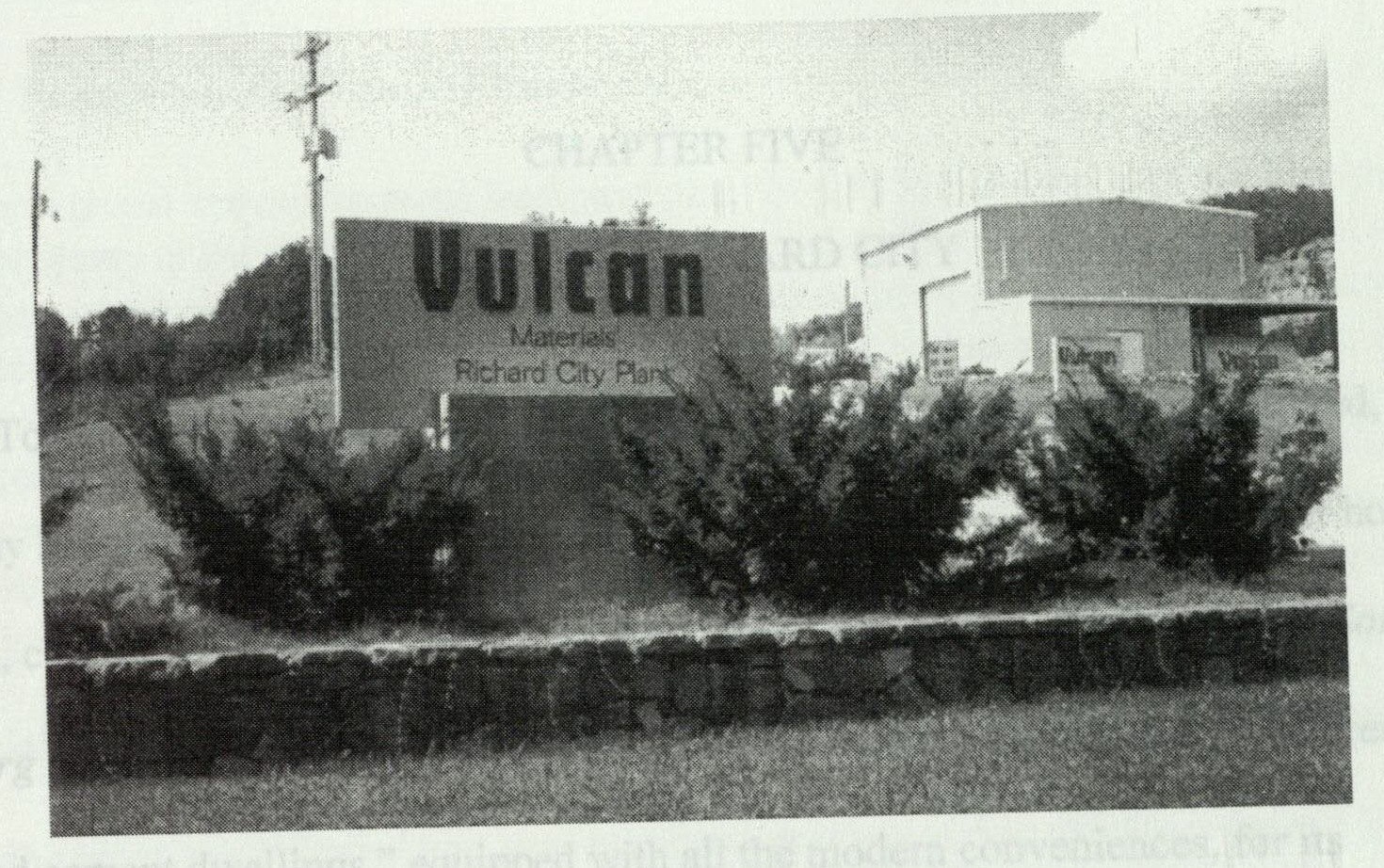
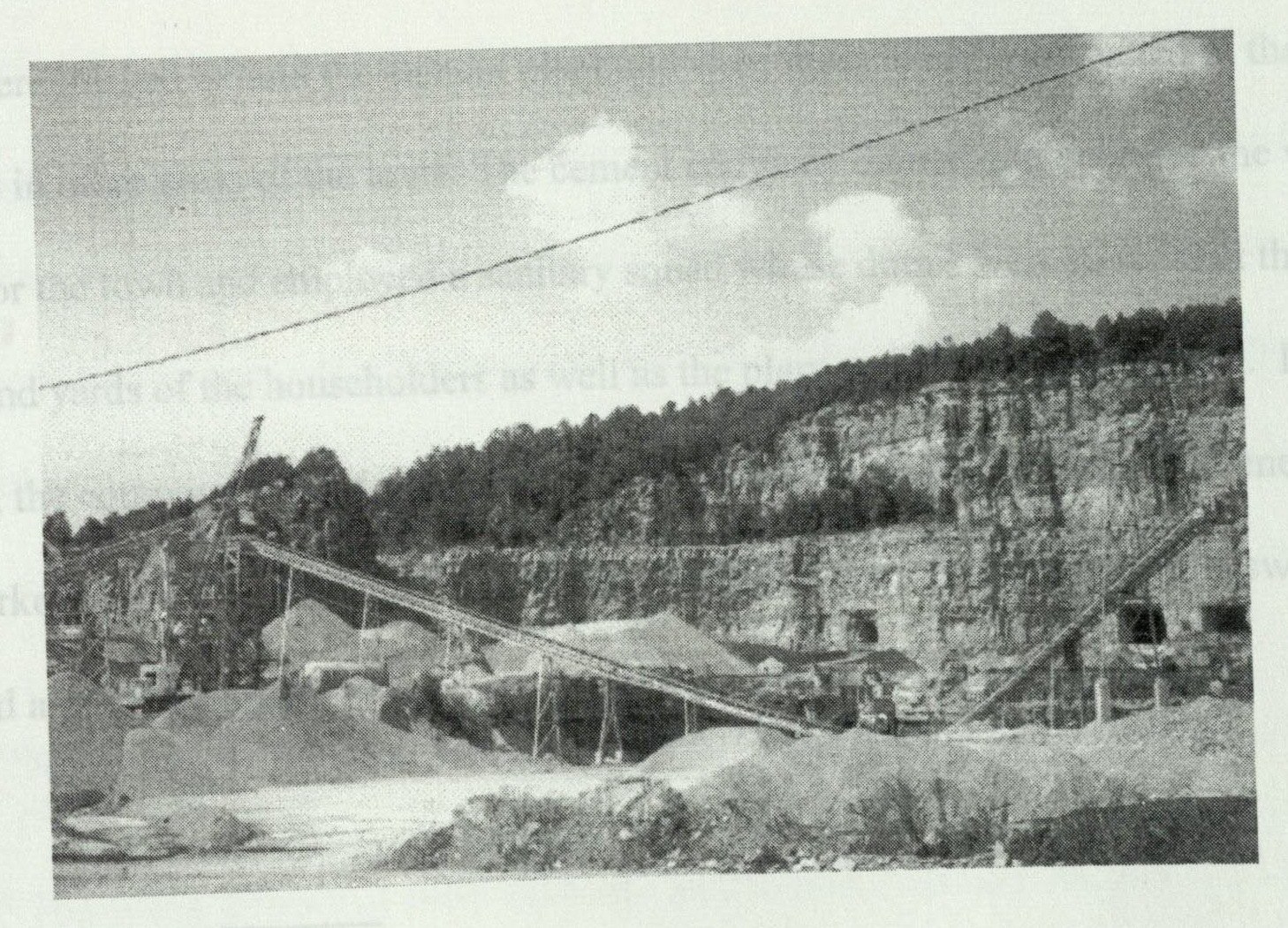
Workers voted 53 to 26, with seven abstentions, to retain the union on October 23, 1981. Moore McCormack began layoffs a week later, and the plant closed permanently in 1982. The promised replacement facility was never built. As of Wilkerson's 2003 fieldwork, the rock quarry at the site was being operated by Vulcan Materials.
Vulcan Materials and aftermath
After Moore McCormack's abandoned 1981-to-1982 operation, the Richard City site passed into the quarry-aggregates industry. As of Kelly Wilkerson's 2003 fieldwork, the rock quarry at the site was being operated by Vulcan Materials, the nation's largest producer of construction aggregates. Vulcan ran the Richard City operation as a limestone aggregate quarry rather than a cement plant, using the same mountainside reserve that Dixie Portland and Penn-Dixie had mined for nearly 75 years. The broader cement-plant buildings, kilns, and clinker storage silos were demolished or left standing in partial ruin.
Vulcan no longer reports a separate Richard City operation. Aggregate-industry consolidation has been continuous in the 21st century, and the Marion County site may have changed operators since Wilkerson's 2003 report.
The Richard Hardy Memorial School handoff
The 1981 Moore McCormack purchase included the Richard Hardy Memorial School, which had been company-owned since construction. On June 3, 1985, the Dixie Cement subsidiary deeded the school and roughly eight acres of surrounding property to the Richard City Special School District for a purchase price of one dollar. The transfer closed out company ownership of the school, which remains in operation today under the same independent district.
Related
About Richard City (the company town) →
About Richard Hardy Memorial School →
About Richard Hardy →
About the Cumberland Avenue Bridge →
About the NC&StL Railway →
About Marion County labor history →
About South Pittsburg foundries and metal trades →
About South Pittsburg →
The modern era (the post-industrial transition) →
Sources
- Kelly Wilkerson, Richard City, Tennessee: Home, Community, and Paternalism in a Southern Company Town, 1900–1985, M.A. thesis, Middle Tennessee State University, May 2003 (primary source for dates, wages, production, ownership chain, and closure sequence)
- “A Great Cement Plant in Tennessee,” Manufacturer's Record, 20 August 1908, reprinted in the South Pittsburg Hustler, 11 September 1908
- “Marion County Is Rich in Industrial Possibilities,” South Pittsburg Hustler, 10 March 1927
- “Penn-Dixie in Working Capital Squeeze, Files for Protection under Chapter 11,” Wall Street Journal, 8 April 1980
- Moore McCormack Resources press release, Stamford, Connecticut, 3 June 1985, Richard Hardy Memorial School archives
- Tennessee Encyclopedia — Richard City
- Tennessee Encyclopedia — Marion County