Last updated: August 5, 2026
- Dates: September 1794 (march, attack, and return by September 18)
- Dawn attack: September 13, 1794
- Commanding officer: Major James Ore of Sumner County militia
- Guide: Joseph Brown, former captive at Nickajack
- Force: about 550 mounted Southwest Territory militia
- Targets: Nickajack and Running Water (in modern Marion County), with Crowmocker possibly struck the same day
- Cherokee losses: about 70 killed; a large number of captives taken
- American losses: 3 wounded and no fatalities in most accounts; Raulston and Livingood record one man lost
- Political conclusion: Treaty of Tellico Blockhouse, November 7–8, 1794
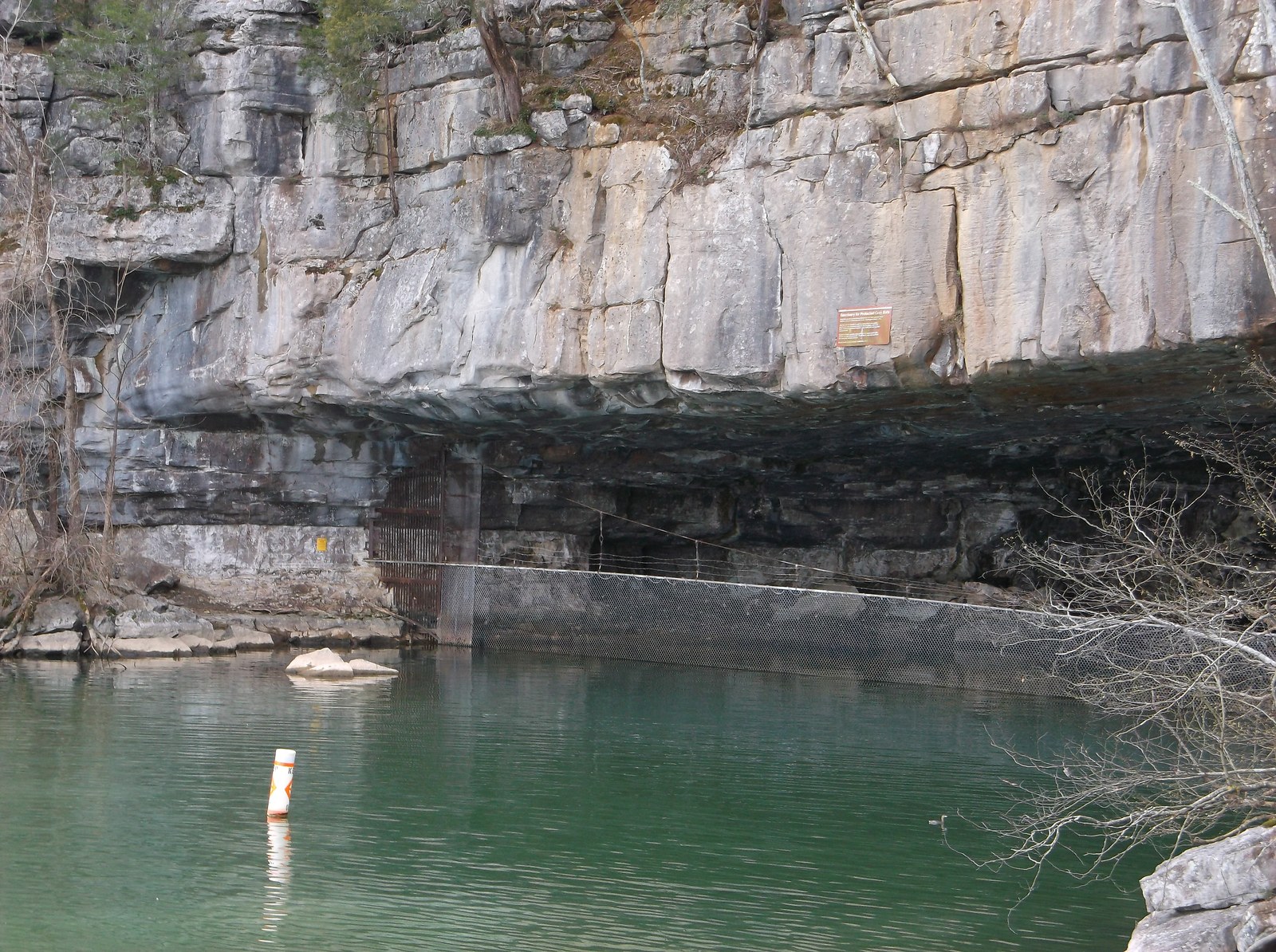
The Nickajack Expedition of September 1794 was the single most consequential military action in the modern history of Marion County. In less than a week, a 550-man mounted militia under Major James Ore marched south from Nashville across the Cumberland Plateau, crossed the Tennessee River at dawn on September 13, burned the Cherokee town of Nickajack, pushed downstream the same day to burn Running Water, and returned to the Cumberland settlements by September 18. About seventy Cherokee were killed; three Americans were wounded. The raid was unauthorized by federal authorities in Philadelphia and barely tolerated by Territorial Governor William Blount, but it worked. The Chickamauga Wars ended within eight weeks, and twenty-three years later the area the raid cleared became Marion County, Tennessee.
The strategic situation in the summer of 1794
After eighteen years of raids and counter-raids on the Cumberland frontier, the military equation had shifted. The Chickamauga leadership, based at the Lower Towns in what is now Marion County, had lost its founder: Dragging Canoe had died at Running Water in February 1792, and leadership had passed to his nephew John Watts the Younger. Spanish arms and Creek allies still reached the Lower Towns, but a Tennessee militia defeat of a Chickamauga-Creek force at Hightower in northwest Georgia in September 1793 had broken the tactical initiative. Raids on the Cumberland settlements, however, continued. In the summer of 1794, Nashville-area farms were again being raided with regularity. The Cumberland militia's appetite for a direct strike at the Lower Towns, long constrained by federal policy, had become harder to restrain.
The territorial legislature had been demanding exactly such a strike all year. The territorial House of Representatives, which first met in February 1794, made the border situation its first priority and adopted a memorial to Congress urging a declaration of war against the Creeks and Cherokee, citing, per Raulston and Livingood, that in the previous two and a half years raiders “had killed, in a most barbarous and inhuman manner, upwards of two hundred citizens of the United States, residents of this Territory, without regard to age or sex,” had carried others into captivity, and had stolen at least two thousand horses. A second memorial later that year counted 67 people killed, 10 wounded, and 25 taken captive in six months, with 374 horses stolen, and concluded from hard experience that treaties and presents would not restrain the Chickamaugas: “Fear, not love, is the only means by which the Indians can be governed.” Settlers across the Tennessee country were crowding into blockhouses. James Robertson, the veteran Cumberland leader, spoke for the frontier when he asked, “When will the Lower Towns get their deserts?” Robertson had the territorial governor's private sympathy for an offensive thrust; Secretary Knox in faraway Philadelphia still flatly refused federal sanction, and Robertson, aware that Knox could not easily intervene in local plans, willingly assumed responsibility for an offensive even if it cost him his official position.
Federal policy toward the Native nations under Secretary of War Henry Knox held that frontier militias could not cross into Cherokee country without presidential authorization, and that such authorization would not be given. Territorial Governor William Blount, caught between his federal superiors and his militia officers, communicated the federal position officially while giving his officers enough discretion that they could act on their own authority. When Major James Ore of Sumner County proposed an expedition against the Lower Towns in late August 1794, Blount gave him orders that can be read either way, a written assignment to patrol the Cumberland frontier, an unwritten understanding that if the patrol led where Ore clearly intended to take it, Blount would not interfere. Ore took the latter reading.
The march
Ore assembled about 550 mounted militiamen at an appointed rendezvous in the first week of September 1794: volunteers from Kentucky, from the lower Cumberland communities, and from the Nashborough neighborhood, built around Sumner and Davidson county companies and including William Whitley's Kentucky mounted volunteers. The key guide was Joseph Brown, then twenty-two years old, now long freed from his captivity at Nickajack in 1788 and 1789, who knew the approach routes from the north with the intimacy of someone who had hunted and traveled them as a member of a town household. Without Brown, Ore's force could not have crossed the plateau to the river in the time available. Although Robertson framed the operation as defensive, his instructions to Ore, per Raulston and Livingood, were to cross the Tennessee River and destroy the Lower Towns if he did not meet raiding parties on the way. The route Brown set out followed an existing Cherokee trail south from Nashville across the Cumberland Plateau, descended Monteagle Mountain at the head of Battle Creek, and followed the creek valley down through the cove. The force camped at Martin Springs on the night of September 11, 1794, and the next evening, about dark, reached the Tennessee River and made camp near the mouth of Battle Creek.
The crossing that followed was the hardest part of the operation. The night of September 12 was unusually dark and the river was running full after recent rains, and the need for surprise required the half-mile crossing to begin at once. Raulston and Livingood, drawing on the early accounts, describe Ore's men shuttling arms and ammunition across in two clumsy ox-hide boats of the kind the Long Hunters had used, guided by small shoreline fires in the darkness. Others built a raft to carry shot bags, guns, and clothes; one swimmer pulled it with a rope in his mouth while others pushed from behind, and at least one man who could not swim kicked his way across holding a bundle of cane. By morning slightly more than half the party was on the south bank. Some traditions place the crossing at a ford below the present town of Shellmound; the accounts agree that the men who had not crossed moved along the north shore opposite Nickajack to cut off escape in that direction, while a detachment under Whitley covered the approaches upstream toward Running Water. A fall fog over the river and the fully grown corn standing in the town fields covered the final approach.
The attack on Nickajack
The militia reached the Nickajack town landing at first light. Surprise was essentially complete. Joseph Brown's Narrative describes Cherokee families waking to gunfire and trying to reach the river or the cave entrance. The Breath, the principal man of Nickajack and Brown's former adoptive father, was among the first men killed. The town was burned. About 70 Cherokee were killed in and around Nickajack itself, including an unknown number of women, children, and elderly. Between 15 and 20 captives were taken, most of them women and children; one account records the capture of a small group of enslaved Black people who had been held by Cherokee households in the town and who were taken by the militia as property, a detail the Brown narrative mentions and that subsequent American accounts tend to omit.
Only three Americans were wounded. None were killed. The discrepancy between Cherokee and American casualties reflected the complete surprise of the attack and the absence of significant defensive preparation at Nickajack, whose warrior population had not expected an American force to cross the plateau undetected.
The attack on Running Water
After burning Nickajack, Ore's force moved upriver roughly three miles to Running Water, the town that had been Dragging Canoe's personal residence and the de facto political capital of the Lower Towns. The attack on Running Water was less one-sided. The town's warriors had heard the firing at Nickajack and were coming to the aid of their fellow townspeople when, per Raulston and Livingood, they met the frontiersmen at a narrow defile where the mountain juts out over the river between the two towns. After a brief struggle the defenders were pushed back and scattered, and Ore continued on to the town, which he burned. Casualty breakdowns between the two towns vary in the sources; the combined figure of roughly seventy Cherokee killed is the best-attested number.
The site of Running Water is marked today. A Tennessee Historical Commission marker (number 2B 5) stands on U.S. 64 at Haletown, recording that the town stood 700 yards to the southeast, in the river pass visible from the road, and that Dragging Canoe “is buried near there,” the same burial tradition Raulston and Livingood record. The marker text is transcribed at the Historical Marker Database.
Whether a parallel force struck Crowmocker in the Battle Creek cove the same day is unclear. Some local accounts assume that a detachment burned Crowmocker as part of the same operation; the Brown narrative and Ore's own report focus on the two river towns. Crowmocker disappears from American records after 1794, and whether its destruction was contemporaneous with the Nickajack Expedition or a later follow-up action is not established. See the dedicated Crowmocker page for the full treatment.
The return and the political aftermath
The men reassembled immediately after the burning of Running Water and began the homeward march without delay. Ore's force re-crossed the Tennessee River, climbed Monteagle Mountain, and reached the Cumberland settlements on September 18, 1794, five days after the attack. Most American accounts record three wounded and no fatalities; Raulston and Livingood write that the expedition had lost one man. Either way, the destruction of Nickajack and Running Water was complete. For the first time since Dragging Canoe moved his people into the Sequatchie country in 1782, an invading force had penetrated their secure retreat.
The expedition came home carrying two pieces of news that framed what it had accomplished. On the body of The Breath, per Raulston and Livingood, Ore's men found a letter from Baron Hector de Carondelet, the Spanish governor at New Orleans, informing the Chickamauga chiefs that Spain was in serious difficulty at home, could no longer furnish them with supplies, and advised them to be at peace with the United States. And on the march back to Nashborough the army learned that “Mad” Anthony Wayne had crushed the northern nations at Fallen Timbers in northwest Ohio, ending any prospect of the wider Native confederation the Chickamaugas had hoped for. The Spanish supply line and the northern alliance had been the two external supports of the Chickamauga war effort; by the time the militia rode home, both were gone.
Ore filed his after-action report with Governor Blount, who forwarded it to Secretary of War Knox with the note that the expedition had been conducted without federal authorization. Knox was furious. A formal federal repudiation of the raid was drafted and, in substance, issued. No officer or militiaman was punished. Ore's military career continued; he would later serve briefly in the Tennessee state legislature.
The Chickamauga response was not retaliation but peace. John Watts the Younger, confronted with the destruction of both river towns, the dispersion of the survivors, the loss of The Breath and other senior leaders, and a Spanish supply line now too disrupted to replace what had been burned, opened negotiations within weeks. On November 7 and 8, 1794, at the Tellico Blockhouse on the Little Tennessee River, Watts and other surviving Chickamauga leaders met William Blount and formally ended hostilities. The Treaty of Tellico Blockhouse accepted the boundaries of the 1791 Treaty of Holston and acknowledged U.S. sovereignty over the ceded areas. The military phase of Cherokee resistance east of the Mississippi was over.
What the expedition did, and did not, resolve
The Nickajack Expedition resolved one question and opened several others. It resolved whether the Lower Towns would remain a Cherokee military capital: they would not, and were not rebuilt. The Tennessee River corridor through what would become Marion County became American-controlled ground. The end of Chickamauga raids on the Cumberland settlements allowed the rapid expansion of Nashville and the opening of the Sequatchie Valley to American settlement a decade later.
It did not, however, resolve Cherokee presence in the area. A significant Cherokee population remained in and around the former Lower Towns throughout the early 19th century. Under the Treaty of 1819, at least six members of the Lowrey family took 640-acre reservations along Battle Creek and near Jasper, including Betsy Pack's reservation that became the county seat. The nineteen-year window of Cherokee reservees living beside settler households, and the violence that closed that window well before federal removal reached the area, is traced on the First Settlers page. The federal removal itself, the Trail of Tears of 1838, completed the displacement that the 1794 expedition had begun.
Sensitive-language note
This page uses “raid” and “attack” rather than “battle” for the events of September 13, 1794 because the casualty ratio (about seventy Cherokee dead against three wounded Americans, no American dead) reflects the surprise of the attack on a partly civilian population at dawn rather than a military engagement between armies in the field. It avoids “massacre,” a term that appears in some older Cherokee sources for the attack, out of caution about a word that has become politically charged in Cherokee history writing. It is worth recording that Raulston and Livingood, writing in 1974, describe the scene at Nickajack plainly as “more of a massacre than a battle.” The underlying fact, a night march across the mountain to reach a town asleep, a dawn attack by an overwhelmingly superior force, and the deaths of about seventy Cherokee people, is what the sources document and what this page describes.
Related
The Chickamauga Wars, 1776–1794 →
The Cherokee Lower Towns: Nickajack and Running Water →
Trail of Tears through Marion County, 1838 →
First settlers and Cherokee reservees, 1805 to 1838 →
Nickajack and Running Water community page →
Crowmocker community page →
Monteagle and the plateau crossing →
Battle Creek community page →
Sources
- Wikipedia — Nickajack Expedition
- Wikipedia — Cherokee–American wars
- Wikipedia — Chickamauga Cherokee
- Wikipedia — John Watts (Cherokee chief)
- Wikipedia — William Blount, Territorial Governor
- Wikipedia — William Whitley, Kentucky militia
- Wikipedia — Treaty of Tellico Blockhouse, 1794
- Wikipedia — Nickajack Cave
- Tennessee Encyclopedia — Chickamaugas
- Tennessee Encyclopedia — Marion County
- Native History Association — Dragging Canoe
- Joseph Brown, Narrative of the Life of Col. Joseph Brown, reprinted from Western Journal, 1834.
- J. Leonard Raulston and James Weston Livingood, Sequatchie: A Story of the Southern Cumberlands (Knoxville: University of Tennessee Press, 1974), pp. 52–55 (the 1794 territorial memorials, Robertson's role, the route by Martin Springs and the mouth of Battle Creek, the night river crossing, the destruction of both towns, the defile fight, the Carondelet letter, and the Fallen Timbers news).
- Historical Marker Database — Running Water Town (Tennessee Historical Commission marker 2B 5, U.S. 64 at Haletown)