Last updated: May 26, 2026
- Type: Town (spans Marion, Grundy, and Franklin counties)
- Founded: 1870 as Moffat Station
- Incorporated: 1962
- 2020 population: 1,393
- Elevation: 1,926 ft
- Area: 9.15 sq mi
- Majority county: Grundy (~65% of residents)
Monteagle straddles the southern Cumberland Plateau where Marion, Grundy, and Franklin counties meet. At 1,926 feet, it is the highest community in the Marion County sphere, roughly 1,300 feet above Jasper in the Sequatchie Valley below. Only about a third of the town's population falls within Marion County lines; the majority is in Grundy County. The town is best known as the home of the Monteagle Sunday School Assembly, one of approximately nine surviving Chautauqua assemblies in the United States, and as the site of the Highlander Folk School, a civil rights training center where Rosa Parks attended a desegregation workshop months before the Montgomery Bus Boycott.
Setting
Monteagle sits atop the southern Cumberland Plateau at roughly 1,926 feet, with the Marion County line running across the eastern edge of town so that the town's Marion County portion is primarily the slopes and headwaters draining toward the Battle Creek watershed and the Sequatchie Valley below. The Assembly grounds, DuBose Conference Center campus, and most of the commercial core of Monteagle lie within the Grundy County portion, with a smaller share of population and land in Franklin County to the southwest. According to the 2000 census, 64.9 percent of the town's population was in Grundy County, 34.6 percent in Marion County, and 0.5 percent in Franklin County. Interstate 24 climbs to the plateau on the eastern face of Monteagle Mountain and passes through the southern edge of town before descending into Franklin County; U.S. Route 41 and U.S. Route 41A follow the old ridge roads through the center of town.
The name Monteagle comes from local folk usage reporting eagles that once lived in the area. The community was originally platted as Moffat Station, after Scottish-Canadian temperance organizer John Moffat, who purchased more than 1,000 acres on the plateau in 1870 and founded a railroad-era settlement along the Nashville & Chattanooga line. The name shifted to Mount Eagle, then Mounteagle, and finally the single-word Monteagle that was standard by the 1962 municipal incorporation.
The mountain was part of the Cherokee homeland before Anglo-American settlement and was used for hunting, travel, and seasonal camps tied to Cherokee towns on the lower rivers; the caves on the south face, including Monteagle Saltpeter Cave (long known as Battle Creek Cave), were sources of saltpeter for Indigenous peoples long before Confederate and earlier Euro-American crews worked the hoppers. The Chickamauga Wars of 1776 to 1794 touched this high country as Indigenous fighters used the plateau rim to move between the Lower Towns and the Overhill country, and Joseph Brown's 1794 guide-led crossing of Monteagle Mountain made possible the expedition that destroyed Nickajack and Running Water. After the 1838 Trail of Tears forcibly removed the remaining Cherokee community in the region, the mountain passed into Anglo-American hands; the Cherokee Nation, today a sovereign nation headquartered in Oklahoma, traces a portion of its ancestry through those families.
Founding as Moffat Station (1870)
In 1870, John Moffat, a Scottish-Canadian temperance organizer, purchased over 1,000 acres of forest land on the Cumberland Plateau and founded a community along the railroad line crossing the mountain. The settlement was originally called Moffat Station, later renamed Mount Eagle, then Mounteagle, and finally Monteagle. In 1872, Moffat donated 50 acres to Fairmount College, a women's college relocating from Jackson, Mississippi. Fairmount operated from 1872 to 1921, and its most notable alumna was Soong May-ling, who later became Madame Chiang Kai-shek.
The Sunday School Assembly (1882 to present)
The Monteagle Sunday School Assembly (MSSA) was chartered by the State of Tennessee on October 31, 1882, by the Sunday School Convention of Tennessee. Its stated mission was "the advancement of science, literary attainment, Sunday School interests, and the promotion of the broadest popular culture in the interest of Christianity, without regard to sect or denomination." The Assembly opened its first summer session on July 17, 1883, modeled on the original Chautauqua at Lake Chautauqua, New York (founded 1874).
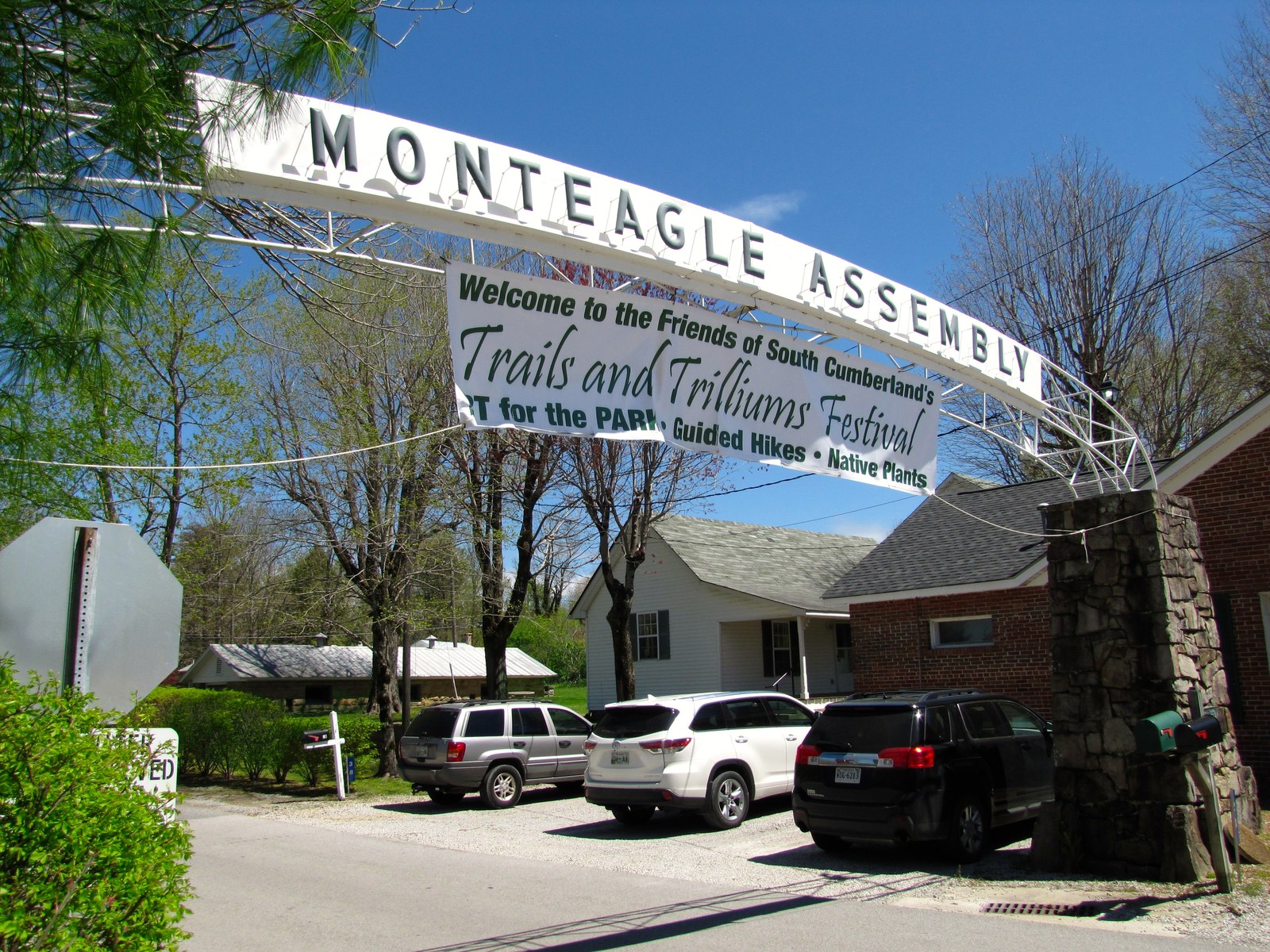
The 100-acre Assembly grounds today contain 162 buildings, mostly Queen Anne and Carpenter Gothic frame cottages with deep porches. Warren Chapel, designed by Nashville architect Edwin A. Keeble (who was born in the Assembly in 1905), and Harton Dining Hall anchor the public spaces. About 40% of the grounds are parkland. The MSSA was added to the National Register of Historic Places on March 25, 1982 (its centennial). Members represent 23 states, and many families have been part of the Assembly for five generations. Only members may purchase homes within the gates, and mortgages are not permitted.
Trail of Tears (1838)
In late October 1838, approximately 700 Cherokee led by John Bell and escorted by Lieutenant Edward Deas passed through what is now Monteagle en route to Indian Territory (present-day Oklahoma). A historical marker along U.S. 41 commemorates this passage, one of the many detachments of the forced Cherokee removal.
Highlander Folk School (1932, 1961)
In 1932, Myles Horton founded the Highlander Folk School in Monteagle. The school focused on labor education and civil rights organizing and became one of the few racially integrated meeting spaces in the South. In August 1955, Rosa Parks attended a desegregation workshop at Highlander, four months before the Montgomery Bus Boycott. Other civil rights leaders, including Martin Luther King Jr. and John Lewis, also participated in Highlander programs.
Tennessee revoked the school's charter in 1961 on charges that were widely seen as politically motivated. The school relocated and continues today as the Highlander Research and Education Center in New Market, Tennessee.
DuBose Conference Center (1921, 2023)
On the former Fairmount College grounds, Reverend William Stirling Claiborne and Dr. Mercer P. Logan founded the DuBose Memorial Church Training School in 1921. It was named for William Porcher DuBose, an Episcopal theologian who had served as Fairmount's chaplain and wrote major theological works from his Monteagle study until his death in 1918. The main building, Claiborne Hall, was rebuilt in 1924 in Mission Revival style after a fire. The campus was added to the National Register of Historic Places in 1980. It became a conference center in the 1950s and served the Episcopal Diocese of Tennessee for decades. The center closed permanently on April 29, 2023, when the diocese deconsecrated the property, citing decreased demand and pandemic-related challenges.
The Monteagle Mountain grade
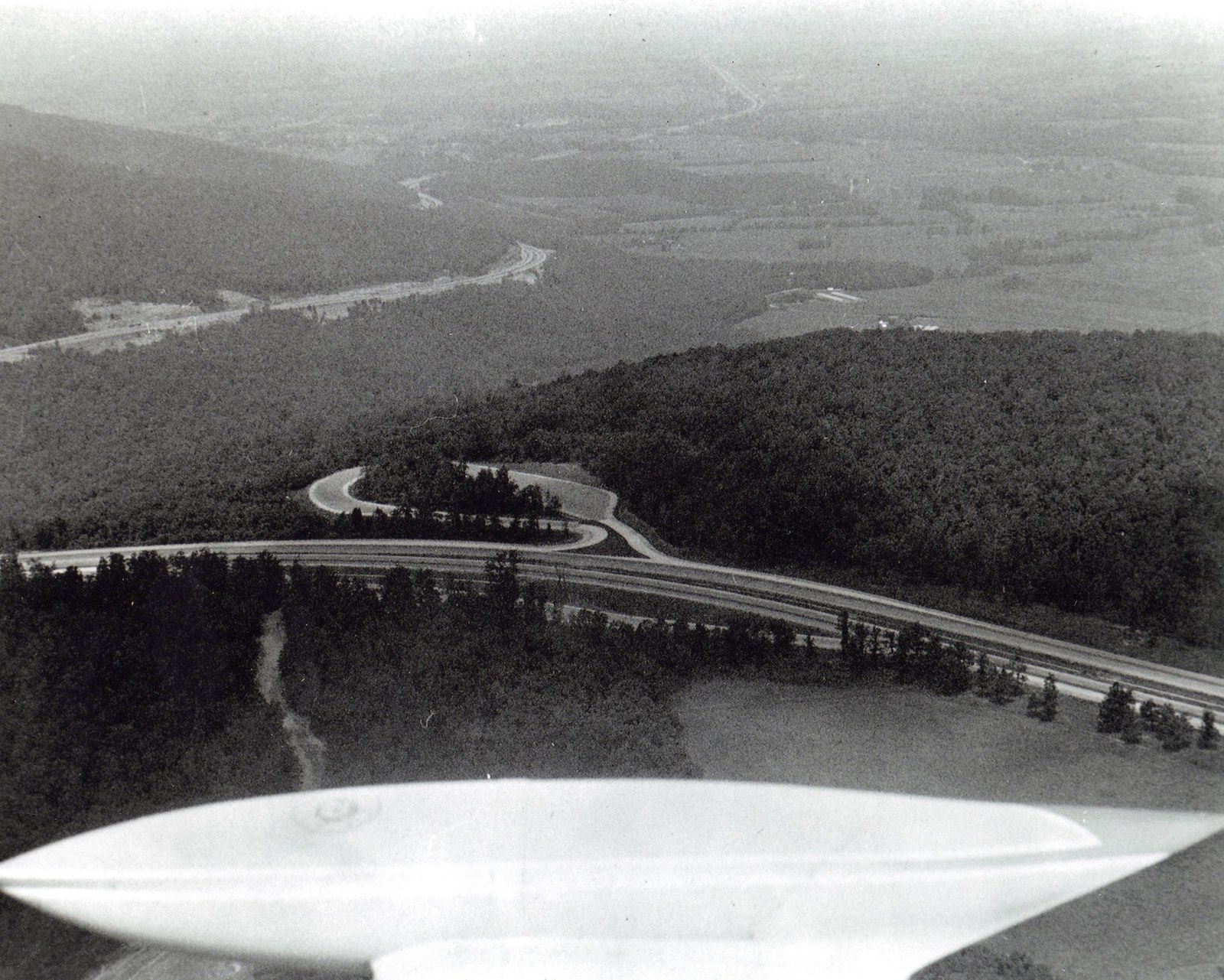
The 12-to-13-mile stretch of Interstate 24 over the Cumberland Plateau at Monteagle is one of the most dangerous highway segments in the United States for trucks. The eastern descent drops 1,933 feet with a 6% grade sustained for roughly five miles; the western downgrade drops 778 feet over four miles at 5%. Two runaway truck ramps serve eastbound traffic. The Tennessee Highway Patrol has recorded 30 runaway-ramp incidents on Monteagle since 2003. Safety improvements in the late 1980s reduced eastbound accidents from 54 in 1983 to 3 in 1991. The grade has entered popular culture through Jerry Reed's "The Legend" (from Smokey and the Bandit) and Johnny Cash's "Monteagle Mountain" (on the album Boom Chicka Boom).
Incorporation and tri-county government (1962)
Monteagle operated as an unincorporated settlement for ninety years before the Tennessee General Assembly granted it a municipal charter on February 1, 1962, almost exactly as construction began on Interstate 24 across the plateau. The town government operates under a General Law Mayor-Aldermanic charter, with a mayor and four aldermen elected to staggered four-year terms. The council meets on the last Tuesday of each month at Town Hall. Because the corporate limits extend across three counties, the town coordinates with Marion, Grundy, and Franklin county governments on property-tax rolls, law enforcement mutual aid, and emergency response; school-age residents fall into the Grundy County, Marion County, or Franklin County systems depending on where they live inside the town. Monteagle Elementary serves the Marion County portion of town within the Marion County school district.
Events and cultural life
Three long-running annual events anchor Monteagle's civic calendar. The Monteagle Mountain Market for Arts & Crafts, held each summer since the early 1960s and marking its 64th annual edition in 2023, draws more than 100 artisans and craftspeople to Hannah Pickett Park for a two-day juried show. The Monteagle Sunday School Assembly's summer program, running since 1883, fills the grounds from June through August with lectures, classical-music concerts, children's programs, and Sunday worship, many of them open to nonmembers. Winter and spring programming has grown around the Assembly's DuBose-era training facilities, mountain lodges, and the Monteagle Winery tasting room.
The unofficial cultural landmark of postwar Monteagle was Jim Oliver's Smoke House on West Main Street, begun by Jim Oliver in 1960 as a drive-in called the Beehive and expanded into a smoked-meat restaurant in 1975. At its peak the Smoke House complex included a 500-seat restaurant, an 85-room Best Western lodge, 20 rustic log cabins, a 10,000-square-foot general store, a 5,000-square-foot conference center, and a Saturday-night live-music hall that drew Nashville songwriters. The restaurant building burned in a fire on April 27, 2021; operations moved to the Smokehouse Patio Grill behind the original site and continue there. The adjoining cabins, lodge, and general store survived the fire and remain in operation.
The Mountain Goat Trail, a rail-to-trail conversion of the former Nashville, Chattanooga & St. Louis coal branch that climbed Monteagle Mountain, has taken shape in phases since the Mountain Goat Trail Alliance was founded in the late 2000s. Paved sections now connect Sewanee, Monteagle, and Tracy City across roughly 12 miles, with the Sewanee-to-Monteagle segment, about six miles, the most heavily used. Additional construction funded through a 2023 TDEC grant closed the gap between downtown Monteagle and Tracy City.
Present day
Monteagle today is a town of 1,393 (2020 census), up nearly 17% from 2010. Its character is defined by three overlapping roles: gateway to the southern Cumberland Plateau's parks and trails (Foster Falls, Fiery Gizzard, Savage Gulf), service center for I-24 travelers, and neighbor to the University of the South in Sewanee, 5.5 miles southwest via U.S. 41A. The Assembly continues to operate summer programs, and the I-24 interchange area provides gas stations, restaurants, motels, and travel services. Monteagle Elementary School serves the town within the Marion County school district.
Monteagle Elementary School
Monteagle Elementary School traces its origins to the 1890s, when it was first located on King Street in Grundy County. In 1938, the school relocated across the railroad tracks to its current Marion County site on Second Street. The new 1938 facility was considered remarkably modern for the era, featuring indoor plumbing, central heating, and a dedicated lunchroom. The campus underwent substantial updates in 2004 and additional classroom and cafeteria expansion projects in 2007, and today serves Pre-K through eighth grade as one of the four elementary schools operated by Marion County Schools. Per Logan Carmichael's Sequatchie Valley Now history of Marion County education, the school's long history on the mountain mirrors the larger story of Monteagle education, which crosses three county lines for school-age residents depending on where in town they live.
Population
| Year | Population |
|---|---|
| 1970 | 934 |
| 1980 | 1,126 |
| 2000 | 1,238 |
| 2010 | 1,192 |
| 2020 | 1,393 |
Notable people
- Mary Anderson (1866, 1953), inventor of the windshield wiper (patent 1903), inducted into the National Inventors Hall of Fame in 2011; maintained a summer home in Monteagle.
- Edwin A. Keeble (1905, 1978), Nashville architect (designed the Life & Casualty Tower); born in the Assembly.
- William Alexander Percy, poet and lawyer; bought the summer house "Brinkwood" in Monteagle.
Landmarks
- Monteagle Sunday School Assembly (NRHP, 1982; active summer program)
- DuBose Conference Center campus (NRHP, 1980; closed 2023)
- Highlander Folk School site (historical)
- Monteagle Mountain I-24 grade and runaway truck ramps
- Trail of Tears historical marker, U.S. 41
- Jim Oliver's Smoke House (1975; restaurant building burned 2021, operations continue)
- Mountain Goat Trail (former NC&StL coal branch, rail-to-trail)
- Hannah Pickett Park (annual Mountain Market arts and crafts festival)
Related
The Nickajack Expedition, September 1794 (the Monteagle crossing) →
The Trail of Tears through Marion County (Bell detachment ascent) →
The Depression and New Deal (Highlander Folk School) →
Geography of Marion County →
Religious history of Marion County →
Transportation & railroads →
Town Governments (Marion County's incorporated towns) →
Sources
- Wikipedia: Monteagle, Tennessee
- Wikipedia: Monteagle Sunday School Assembly
- Wikipedia: DuBose Conference Center
- Wikipedia: Monteagle Mountain
- Wikipedia: Fairmount College
- Monteagle Sunday School Assembly
- King Institute, Stanford: Highlander Folk School
- Wikipedia: Mary Anderson (inventor)
- Tennessee Encyclopedia: Monteagle Sunday School Assembly
- Town of Monteagle: official municipal site
- MTAS: Monteagle, Tennessee
- Jim Oliver's Smoke House: Smoke House history
- Logan Carmichael, “Lessons Through the Generations: The History of Education in Marion County,” Sequatchie Valley Now, May 26, 2026 (Monteagle Elementary's 1890s King Street origin in Grundy County, the 1938 relocation to Second Street in Marion County, and the 2004 and 2007 renovations)
- Chattanooga Times Free Press: Smoke House re-emerges after 2021 fire
- Mountain Goat Trail Alliance: The Trail
- Grundy County Herald: Mountain Goat Trail path toward completion
- Mountains of Adventure: Monteagle Mountain Market for Arts & Crafts