Last updated: April 23, 2026
- Dates in Marion County: October 23 to 27, 1838 (Bell detachment)
- Size of the Bell detachment: about 660 Cherokee; about 318 horses
- Marion County camp: Head of Battle Creek, near present-day Martin Springs
- Local provider: Benjamin Trussell, who sold corn and fodder to the detachment on October 26
- Route out of the county: ascent of Monteagle Mountain toward Sewanee, Winchester, and the Nashville Turnpike
- Federal authority: Treaty of New Echota (December 29, 1835) and Indian Removal Act (May 28, 1830)
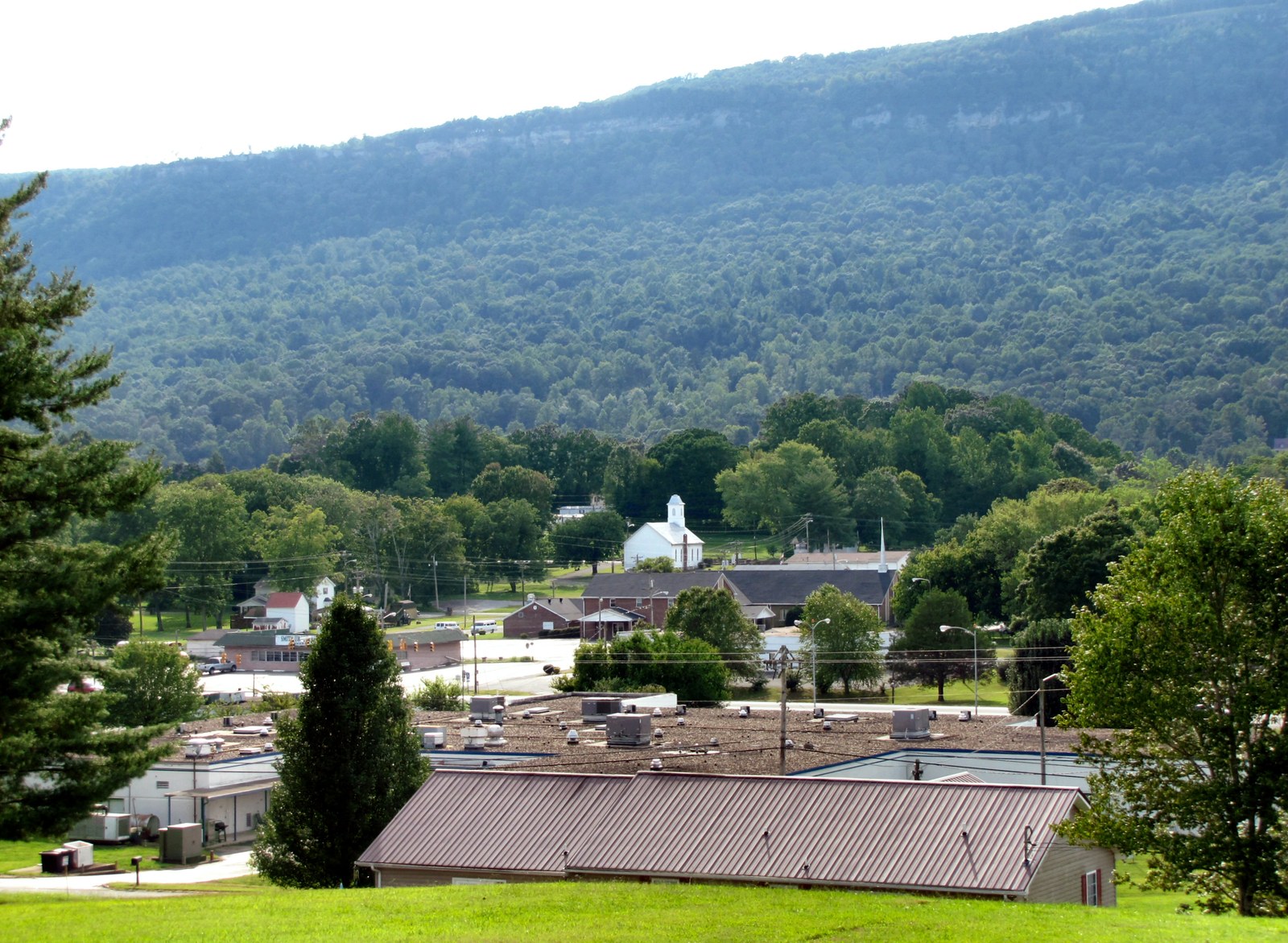
The forced removal Americans call the Trail of Tears was the federal government's expulsion of the Cherokee Nation from its eastern homeland in 1838 and 1839. Between 15,000 and 16,000 Cherokee people were marched overland and floated downriver to what is now northeastern Oklahoma, in conditions that killed somewhere between 2,000 and 8,000 of them. Marion County sat on the removal route itself. The Bell detachment, one of the thirteen overland parties, camped in the county in late October 1838 and climbed Monteagle Mountain on its way north and west. Betsy Pack, the Cherokee woman whose land had become Jasper in 1820, was removed from her Alabama home the same year. This page traces the Marion County dimension of the removal: the detachment routes, the local provider who fed them, the people forced out, and the longer displacement that began with the 1794 Nickajack Expedition and finally closed in 1838.
The federal removal policy
The Trail of Tears was the end of a twenty-year federal policy of pressuring southeastern Native nations to cede their land and move west. Congress had passed the Indian Removal Act on May 28, 1830, authorizing President Andrew Jackson to negotiate removal treaties with the Cherokee, Creek, Choctaw, Chickasaw, and Seminole Nations. In 1835, a small minority faction of the Cherokee leadership, without authority from the elected Cherokee government under Principal Chief John Ross, signed the Treaty of New Echota. The treaty ceded the entire Cherokee homeland east of the Mississippi in exchange for land in Indian Territory and a cash payment.
Ross and the elected Cherokee government rejected the treaty. A Cherokee petition signed by more than fifteen thousand Cherokee people, a majority of the eastern Cherokee Nation, reached the U.S. Senate in 1836 asking that the treaty not be ratified. The Senate ratified it anyway by a single vote. On May 26, 1838, U.S. Army forces under General Winfield Scott began rounding up Cherokee families at gunpoint and holding them in internment stockades in Tennessee, Georgia, Alabama, and North Carolina. Conditions in the stockades were appalling. Hundreds of Cherokee died of dysentery, measles, whooping cough, and exposure before any detachment began moving west.
Most of the physical removal was conducted between August 1838 and March 1839. The detachments traveled overland across the Cumberland Plateau and through the Ohio Valley via two main routes, the northern route through southern Kentucky and southern Illinois to the Mississippi River crossing at Cape Girardeau, and the river route down the Tennessee and Arkansas rivers by steamboat and keelboat. Marion County sat on the northern route's crossing of the Cumberland Plateau.
The Bell detachment in Marion County, October 1838
The Bell detachment of approximately 660 Cherokee was one of two detachments that included a significant number of Cherokee signers of the Treaty of New Echota and their immediate families, often called the “Treaty Party.” The detachment was led by Captain John Bell and traveled under U.S. Army escort by Lt. Edward Deas. It departed the Cherokee Agency at Calhoun, Tennessee on October 11, 1838. Its route passed north through what is now Meigs, Rhea, and Bledsoe counties, descended into the Sequatchie Valley, and then climbed the Cumberland Plateau by the Monteagle grade, the same long climb that now carries I-24 traffic to and from the Sequatchie Valley.
The detachment entered Marion County on or about October 23, 1838. It camped for several nights at the head of Battle Creek, near present-day Martin Springs at the base of Monteagle Mountain. The camp location was chosen because it was a reliable watered stop before the steep climb up the plateau. The detachment's journal records the camp and the supply purchases that went with it: Captain Bell's quartermaster needed corn and fodder for 318 horses and food for the roughly 660 people of the detachment before they attempted the climb.
On October 26, 1838, a local settler named Benjamin Trussell sold corn and fodder to the detachment at the head-of-Battle-Creek camp. Trussell is one of the very few named Marion County residents whose interaction with a Trail of Tears detachment is documented in the detachment records themselves. The sale is recorded in Captain Bell's account books, which survive in the National Archives. A feature on the Cumberland Plateau above Martin Springs is known as Trussell Point in his memory; a biographical stub for Trussell is on the People page.
The detachment left the Battle Creek camp on October 27, 1838 and ascended the Monteagle grade. The ascent took the better part of two days; one account records horses breaking down under the load and a death among the detachment on the climb. The path up the mountain was essentially the same path that Joseph Brown and Major James Ore had descended forty-four years earlier, in September 1794, to attack the Cherokee Lower Towns. The two crossings connect across four decades and redraw the same Cherokee removal story in both directions. By the end of October 28, the detachment had reached the plateau and was moving north toward Winchester and the Nashville Turnpike, which it followed west toward the Mississippi River crossing.
The Benge detachment and the northern edge of the county
The Benge detachment, about 1,100 Cherokee under Cherokee conductor John Benge and Assistant Principal Chief George Lowrey, took a route that passed north of Marion County across the plateau. The Benge detachment departed Fort Payne, Alabama on October 3, 1838, crossed the Tennessee River near Gunter's Landing, and climbed the Cumberland escarpment west of the present Marion County line. Its route through what is now Grundy and Franklin counties moved close enough to the Monteagle grade that some accounts place sections of the detachment's march inside today's Marion County boundary. The route cannot be reconstructed with precision; the documentation of the Benge detachment is thinner than that of the Bell detachment, and 19th-century county boundaries were still in flux.
George Lowrey's presence on the Benge detachment carries particular weight for Marion County. He had held a 640-acre reservation on Battle Creek under the Treaty of 1819 and had been pressured off it by settler violence in the mid-1820s, well before federal removal reached the area. Two decades after leaving his Battle Creek reservation he crossed the plateau above it as Assistant Principal Chief of a Cherokee Nation being forced west by federal policy. After reaching Indian Territory, Lowrey helped draft the 1839 Cherokee Nation constitution and served as Assistant Principal Chief until his death in 1852.
Betsy Pack's removal
Betsy Pack (Elizabeth Lowrey Pack, c. 1789 to c. 1860), whose 640-acre reservation under the Treaty of 1819 had become Jasper in 1820, had left Marion County for a plantation called Rose Hill in Wills Valley, Alabama around 1827. She lived there, with a household that included enslaved workers, through the 1830s. In 1838, under the same removal authority that took the Bell and Benge detachments west, she was forced to sell Rose Hill and emigrate to the Cherokee Nation West. She reached the Flint District of the new Cherokee Nation in present-day Adair County, Oklahoma. She died there around 1860.
Betsy Pack's story is a particular kind of American contradiction: a Cherokee woman of mixed heritage whose father was a chief and whose husband was a white settler; a reservee who sold the land that became the county seat of a white county in the South; and an enslaver whose own family was forcibly displaced by a federal policy indistinguishable in its mechanics from the displacement her household's enslaved workers had experienced. The Pack surname persists in Marion County today through collateral lines and through other marriages into early settler families; the Pack line forced west in 1838 continued in the Flint District and its neighboring communities in Oklahoma.
The Cumberland Presbyterian Church and Cherokee Christianity
A smaller thread of the removal story passes through Marion County's religious history. The Cumberland Presbyterian Church, founded in 1810 during the Second Great Awakening on the Cumberland frontier, had begun missionary work among the Cherokee in the 1820s at stations including Brainerd near present-day Chattanooga. Several Cherokee Cumberland Presbyterian converts traveled with the detachments and continued their faith in the Cherokee Nation West. The Ebenezer Cumberland Presbyterian Church in Marion County, organized in the mid-1840s, reflects the same denominational tradition that had carried Cherokee Christian families west six years earlier.
The longer displacement: 1794 to 1838
The Trail of Tears was the federal act that completed a displacement already well advanced in Marion County. The Nickajack Expedition of September 1794 had ended Cherokee military control of the Tennessee River gorge and cleared the way for American settlement. The Treaty of 1819 had created a narrow legal window in which Cherokee reservees under George Lowrey, Betsy Pack, and the Lowrey family could hold 640-acre reservations inside the county. That window had closed by the mid-1820s under settler pressure and local violence. By 1838, Cherokee residence in Marion County was already rare. The 1838 removal was the federal stamp on a displacement locally completed more than a decade earlier.
That sequence, military defeat, narrow legal coexistence, local violence, and finally federal removal, is the Cherokee history of Marion County in four steps. It is why the standard county histories can describe the 1794 and 1817 and 1819 dates without pausing to explain the 1838 one: the work of displacement was mostly done by the time the detachments passed through.
The Cherokee Nation today
The Cherokee Nation is a sovereign nation, based in Tahlequah, Oklahoma, with more than 466,000 citizens. The Eastern Band of Cherokee Indians, based in Cherokee, North Carolina, is a separate sovereign nation of descendants of the approximately 1,000 Cherokee who avoided removal. The United Keetoowah Band of Cherokee Indians, also based in Oklahoma, is a third federally recognized Cherokee nation. Cherokee descendants of the Nickajack, Running Water, and Lowrey reservee lines continue to live in all three nations and in Marion County. Cherokee presence in the area has not ended. It has moved, survived, and continued.
Related
The Cherokee Lower Towns →
The Chickamauga Wars, 1776–1794 →
The Nickajack Expedition, September 1794 →
First settlers of Marion County and Cherokee coexistence →
Martin Springs community page and Bell detachment camp →
Monteagle and the plateau crossing →
Jasper and Betsy Pack's 1820 land sale →
Sources
- Wikipedia — Trail of Tears
- Wikipedia — Indian Removal Act, 1830
- Wikipedia — Treaty of New Echota, 1835
- National Park Service — Trail of Tears National Historic Trail
- National Park Service — Trail of Tears History & Culture (detachments and routes)
- Tennessee Encyclopedia — Cherokee Removal
- Tennessee Encyclopedia — Cherokees
- Wikipedia — George Lowrey, Cherokee Assistant Principal Chief
- Wikipedia — Cherokee Nation
- Wikipedia — Eastern Band of Cherokee Indians
- Historical Marker Database — Betsy Pack marker, Jasper