Last updated: May 12, 2026
- World War I: 668 Marion County men served; at least 20 died in service
- World War II: at least 65 Marion County men killed; two Medal of Honor recipients from the county
- Korean War: 12 Marion County men killed, including one Medal of Honor recipient
- Vietnam War: 10 Marion County men killed
- War memorials: four monuments on the Jasper courthouse grounds; Veterans Memorial Park in Whitwell
Marion County's military history in the 20th century begins with the 668 men the county sent to the American Expeditionary Forces and the Navy in World War I and continues through the county's disproportionate losses in three wars that followed. Two Marion County soldiers received the Medal of Honor: Master Sergeant Raymond H. Cooley, born in Dunlap in adjoining Sequatchie County and connected to Richard City through his Marion County service career, in World War II and Master Sergeant Ray E. Duke of Whitwell in Korea. A third figure, Captain James Thomas Fitz-Gerald, Jr. of South Pittsburg, survived a German prisoner-of-war camp to become the second man to break the sound barrier. The courthouse square in Jasper holds four war memorials that record the names of the county's dead from all four 20th-century conflicts, and a Veterans Memorial Park in Whitwell, established around 2009 to 2010, serves as a broader tribute.
This page traces Marion County's military service from World War I through the post-9/11 era. For the Civil War, the county's largest and most devastating military experience, see the dedicated Civil War in Marion County subpage.
World War I (1917–1918)
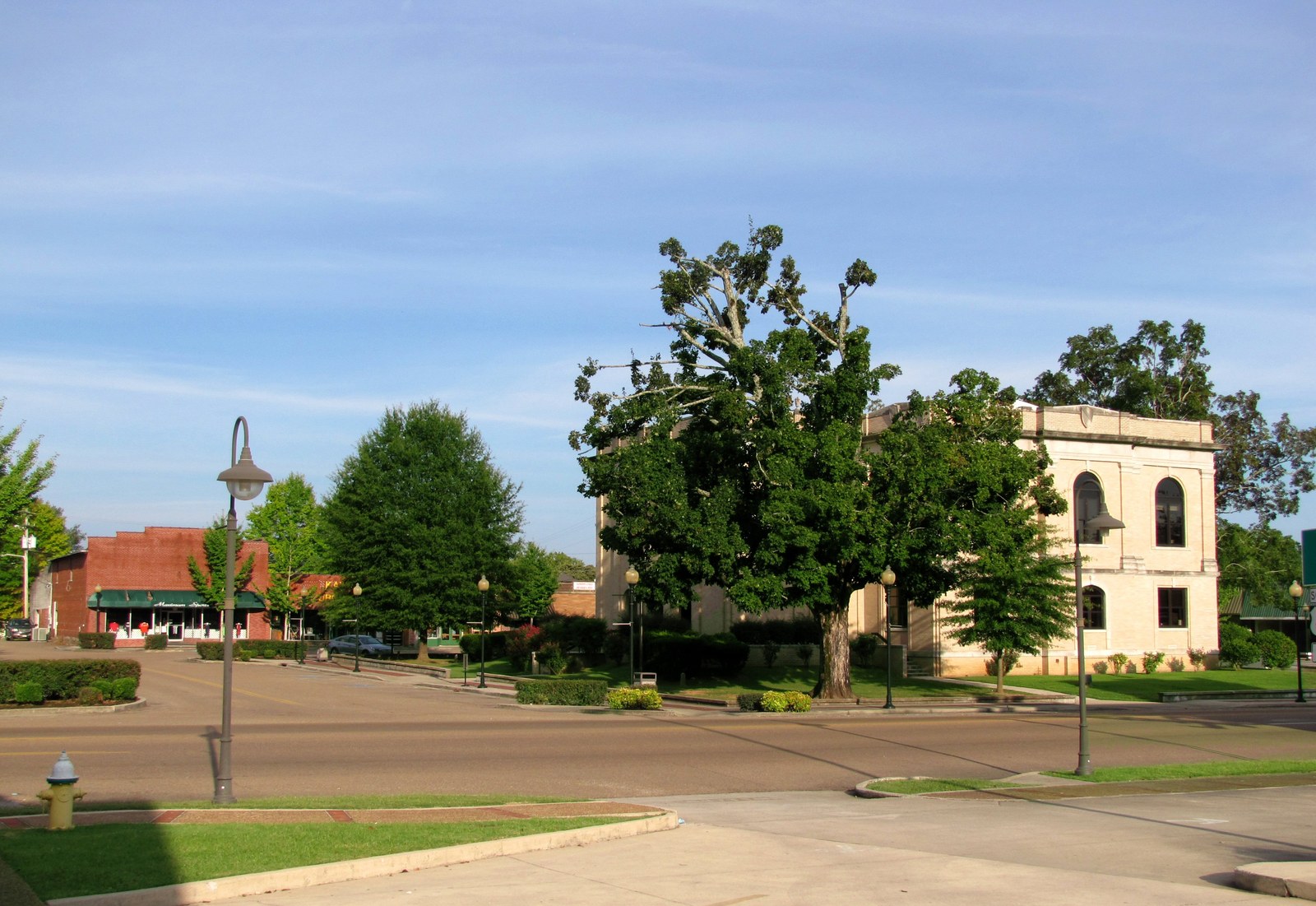
When the United States entered the war in April 1917, Marion County was still an agricultural and extractive-industry county of roughly 20,000 people. The county's contribution to the war was substantial for its size. A Tennessee State Library and Archives roster compiled from state records lists 668 Marion County men who served in the military during the war: 574 in the Army (including 11 officers), 70 in the Navy, 12 in the Marine Corps, and 12 in unspecified branches. Of the 668, 16 were wounded in action, and at least 20 died during their service, whether from combat, disease, or accident. The 1918 influenza pandemic, which killed more American soldiers than enemy fire, struck military camps across the country. At least one Marion County soldier, Lacy Oscar Smith, is recorded in state archives as having died during the pandemic.
A World War I memorial on the Jasper courthouse square, erected by Marion Post No. 62 of the American Legion, is dedicated "To the sons of Marion County who gave their lives for democracy and the freedom of the world." The memorial lists 21 names: Otis Brown, C. L. Bryant, Elton Carter, S. E. Condra, Reece Crabtree, Cecil L. Davenport, Thos. C. Dodson, F. W. Fults, J. T. Hackney, W. E. Harrell, Horace Harris, J. T. Hogan, Earl Holtzclaw, F. L. Long, Hugh S. McKelvey, S. F. Powell, Wm. A. Slaughter, Lacy O. Smith, Wm. A. Suits, Rufus D. Venable, and Homer C. Winton. The slight discrepancy between the 20 deaths in the TSLA roster and the 21 names on the memorial likely reflects differences in record-keeping criteria: the memorial may include men who died shortly after their service from war-related causes, while the state roster counted only deaths during active service.
The TSLA roster also records four Marion County men taken as prisoners of war and three men cited for bravery. The roster provides a rare demographic snapshot of a rural Tennessee county's mobilization: the 668 men represent roughly one in every 30 county residents, or a much larger share of the county's military-age male population.
World War II (1941–1945)
World War II drew Marion County into a global conflict at a scale beyond anything the county had experienced since the Civil War. The Depression and New Deal page notes that "Marion County men entered military service at scale" after 1940, and the county's surviving industries, notably Lodge Cast Iron and the South Pittsburg foundries, won defense contracts and expanded through the war years.
The human cost was severe. A World War II memorial on the Jasper courthouse square, erected in 1952 by the American Legion and the Veterans of Foreign Wars, is "Dedicated to the memory of the sons of Marion County Tenn. who gave their lives in World War Two, 1941–1946." The memorial lists 65 names:
Winton Anderson, E. F. Baker, Henry Baker, Denver Barker, Albert Barnes, Horace Barton, J. D. Blevins, Kermit Blevins, Jack Brooks, Warren Brown, F. C. Caldwell, P. D. Caldwell, Charles Clay, Gaynelle Condra, H. Cookston, Raymond Cooley, Raleigh Cotton, Cecil Davis, Harold DeArmond, Ira DeArmond, Paul Dye, Ralph Dye, Homer Fox, T. B. Fox, Howard Garner, Cader Green, Marvin Gregory, Jessie Griffith, Elwood R. Hand, Jack Harris, Forrest Hill, Carlton Howard, K. J. Howard, J. H. Howell, Hoyt Johnson, Richard Lee, Henry Lusk, Howard Lusk, John Massengale, James McCarter, Millard McWhorter, C. D. Meeks, John Mitchell, Troy Mitchell, Troy Nunley, L. D. Palmer, Amos Parks, Herman Patton, Ira Pickett, James Pryor, James Ransom, Billy Rector, Allen Simmons, Tommy Smith, Clarence Swaford, Wallace Thomas, D. G. Thomas, Herman Tucker, Chester Turner, Eulin Veal, William Webb, Huey West, Ray Williams, Haskell Wilson, and Sam Woodlee.
Master Sergeant Raymond H. Cooley, Medal of Honor
Raymond Henry Cooley was born on May 7, 1916, in Dunlap in adjoining Sequatchie County and entered United States Army service from Richard City in September 1941. He served as a platoon guide in Company B, 27th Infantry Regiment, 25th Infantry Division in the Pacific Theater. On February 24, 1945, near Lumboy on Luzon in the Philippines, Cooley led an assault on a camouflaged Japanese entrenchment defended by machine guns, rifles, and mortars. He silenced one machine-gun position with hand grenades and was advancing on a second when six Japanese soldiers rushed him as he held an armed grenade. Rather than throw the grenade and risk wounding his comrades intermingled with the enemy in the close action, Cooley covered the grenade with his own body. He survived the blast, one of a small number of Medal of Honor recipients who fell on a grenade and lived. He was promoted to master sergeant after the action.
President Harry S. Truman presented Cooley with the Medal of Honor on August 23, 1945, at the White House. Per the verbatim citation, he "deliberately covered the grenade with his body and was severely wounded as it exploded," saving the lives of the men around him. Cooley returned to Marion County after the war, suffered lasting effects from his combat wounds, and was elected county trustee in 1946. He was killed in a single-vehicle accident on Marion County roads on March 12, 1947, at the age of 30. His wife, Agnes Cooley, was subsequently appointed to complete his term as trustee. He is buried at Cumberland View Cemetery in Kimball. Tennessee Highway 28 between Jasper and Interstate 24 is officially named the Raymond H. Cooley Highway in his honor.
Captain James Thomas Fitz-Gerald, Jr.
James Thomas Fitz-Gerald, Jr. (1920–1948) of South Pittsburg served with the 78th Fighter Group of the Eighth Air Force in England. Shot down on his twenty-eighth combat mission on August 8, 1944, he was held as a prisoner of war at Stalag Luft III until liberation in April 1945. After the war, Fitz-Gerald was assigned to experimental jet and rocket aircraft testing. On February 24, 1948, he flew the Bell X-1 to Mach 1.10, becoming the second man to break the sound barrier after Chuck Yeager. He died on September 20, 1948, from injuries sustained in a T-33 landing accident. James Fitz-Gerald Boulevard at the main gate of Edwards Air Force Base is named for him, and a stained-glass window in the restored Chapel on the Hill in South Pittsburg honors his memory. A full biography appears on the people page.
The home front
Marion County's war effort extended beyond the men who fought overseas. The South Pittsburg foundries and Lodge Cast Iron shifted to defense production, casting parts for the military. The transition from New Deal work-relief to wartime production between 1940 and 1942 effectively ended the Depression in the county. The Civilian Conservation Corps was formally disbanded in 1942, and the Works Progress Administration wound down in 1943. The wartime economy brought full employment to communities that had been in economic distress for over a decade.
The Korean War (1950–1953)
A Korean Conflict memorial on the Jasper courthouse square honors 12 Marion County men killed in the war: Russell L. Baker, Robert Lee Blevins, James W. Condra, R. E. Duke, James H. Freeman, Dewey A. Griffith, Millard D. Hargis, Robert A. Meeks, Earl W. Palmer, Billy Dean Pryor, Willard H. Tate, and Ted Woodlee.
Master Sergeant Ray E. Duke, Medal of Honor
Ray E. Duke was born on February 9, 1923, in Whitwell. He enlisted in the Army and by the Korean War held the rank of Master Sergeant, serving with Company C, 21st Infantry Regiment, 24th Infantry Division. On April 26, 1951, near Mugok, Korea, Duke's company was attacked by a numerically superior enemy force. Duke organized the defense, moving between positions under fire to direct his men and deliver ammunition. He was wounded three times during the engagement but refused evacuation and continued fighting. He was eventually captured by enemy forces.
Duke died as a prisoner of war on November 11, 1951, at the age of 28. He was posthumously awarded the Medal of Honor on March 19, 1954. His citation states that his "conspicuous gallantry and outstanding courage above and beyond the call of duty" saved his company from being overrun. He is buried at the Chattanooga National Cemetery. Of the two documented Medal of Honor recipients from Marion County, Duke received his posthumously while Cooley was decorated during his lifetime.
Postwar recognition: William Reuben Lehr
Of the many Marion County men who returned from Korea, some have been recognized in later decades through Tennessee's veteran honorary high school diploma program, established by Public Chapter 736 of 2010. The program directs the State Department of Education to issue diplomas to veterans who left a Tennessee high school before graduating to serve in World War I, World War II, the Korean War, or the Vietnam War. Applications run through the Tennessee Department of Veterans Services and the local school district that the veteran left.
In June 2013, William Reuben Lehr of South Pittsburg, who had left Richard Hardy Memorial School at age 15 to enlist as a mortar gunner on the Korean front line, received his RHMS diploma under the program. The diploma, with cap and tassels, was presented to him on Father's Day. Lehr passed away in 2017. The RHMS page covers the program and the 2013 ceremony in detail.
The Vietnam War (1955–1975)
A Vietnam Conflict memorial on the courthouse square, sharing the same monument as the Korean memorial, honors 10 Marion County men killed in the war: Gerald L. Blevins, Charlie Brown Jr., Marion F. Condra Jr., Jerry L. Crabtree, Bobby G. Hargis, James H. Lee, Larry D. Lusk, James E. McKelvey, Gilbert V. Stewart, and Bill C. Turner.
The Vietnam-era memorial names trace a pattern visible across the courthouse monuments: surnames recur from war to war. Blevins, Condra, Hargis, and McKelvey appear on more than one of the four memorials, reflecting the generational continuity of Marion County families whose members served across the century's conflicts.
The courthouse war memorials
The four war memorials on the Jasper courthouse square form the county's primary memorial landscape. The courthouse page describes their physical setting. The memorials are documented in the Historical Marker Database:
The World War I Memorial, erected by Marion Post No. 62 of the American Legion, carries 21 names. The World War II Memorial, erected in 1952 by the American Legion and VFW, carries 65 names. The Korean Conflict / Vietnam Conflict memorial carries 12 Korean War names and 10 Vietnam War names. A fourth monument, the Marion County War Memorial, provides a broader tribute to all who served.
Outside Jasper, a Veterans Memorial Park in Whitwell, established around 2009 to 2010, serves as a community memorial space honoring veterans of all eras.
Post-9/11 service
Marion County residents have continued to serve in the armed forces through the wars in Afghanistan and Iraq and in ongoing military operations. The Veterans Memorial Park in Whitwell and the annual Memorial Day and Veterans Day observances on the courthouse square serve as the county's primary venues for recognizing contemporary military service.
Related pages
- The Civil War in Marion County – the county's largest military experience, 1861 to 1865
- The Marion County Courthouse – the four war memorials on the courthouse grounds
- The Depression and New Deal – the economic context from which the county entered World War II
- The TVA Era – mid-century infrastructure and the postwar economy
- Jasper – the county seat and site of the courthouse memorials
- Whitwell – Ray E. Duke's hometown and site of the Veterans Memorial Park
- Kimball – near Richard City, Raymond Cooley's hometown
- South Pittsburg – James Fitz-Gerald's hometown and wartime foundry center
- Captain James Thomas Fitz-Gerald, Jr. – full biography on the people page
Sources
- Genealogical Fact Sheets: Marion County – TN Secretary of State / State Library & Archives
- Marion County, Tennessee World War I Memorial – Historical Marker Database
- Marion County, Tennessee World War II Memorial – Historical Marker Database
- Korean Conflict / Vietnam Conflict Memorial – Historical Marker Database
- Marion County, Tennessee War Memorial – Historical Marker Database
- Raymond H. Cooley – Wikipedia
- Ray E. Duke – Wikipedia
- Profile of Captain James Thomas Fitz-Gerald Jr. – South Pittsburg Historic Preservation Society (legacy site)
- Marion County – Tennessee Encyclopedia
- Tennessee Department of Veterans Services – Diplomas for Past War Veterans (Public Chapter 736, 2010; TCA § 49-2-119)
- Community contribution from Cathy, daughter of William Reuben Lehr, May 2026 (Lehr biography and 2013 RHMS ceremony)