Last updated: June 7, 2026
- Type: Planned cement company town, later annexed into South Pittsburg
- Predecessor settlements: Deptford and Copenhagen
- Planned and built: 1906 onward, by the Dixie Portland Cement Company
- Renamed: 1914, in honor of Dixie Portland president Richard Hardy
- Annexed by South Pittsburg: in the 1980s
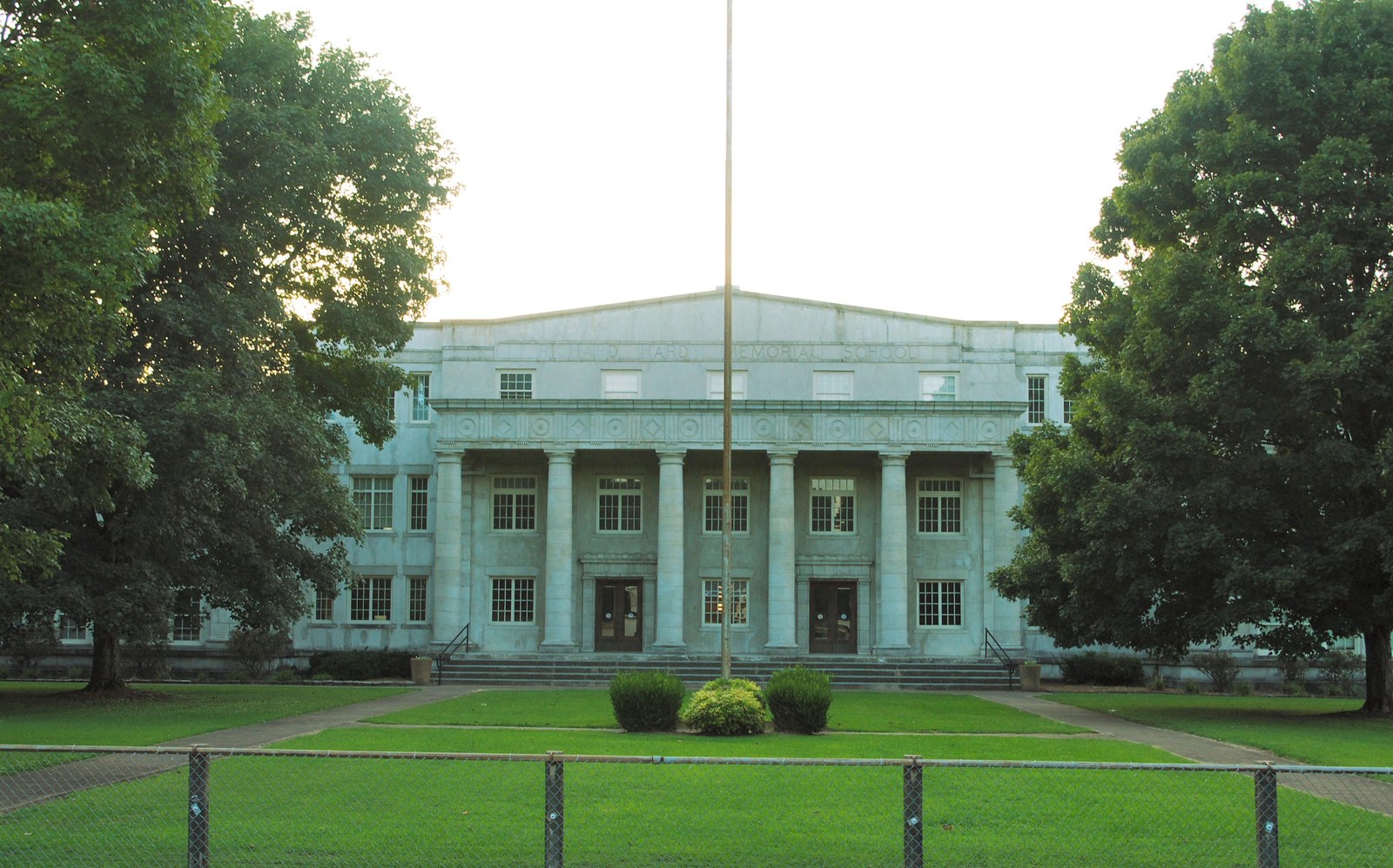
Richard City was a planned cement company town at the southern edge of Marion County, built beginning in 1906 by the Dixie Portland Cement Company. It replaced two earlier settlements, Deptford and Copenhagen, was renamed for company president Richard Hardy in 1914, and continued as a Penn-Dixie town after 1926. South Pittsburg annexed the community in the 1980s as the plant closed, but the name and many of the original cement-stucco buildings remain in the fabric of the modern city.
Setting
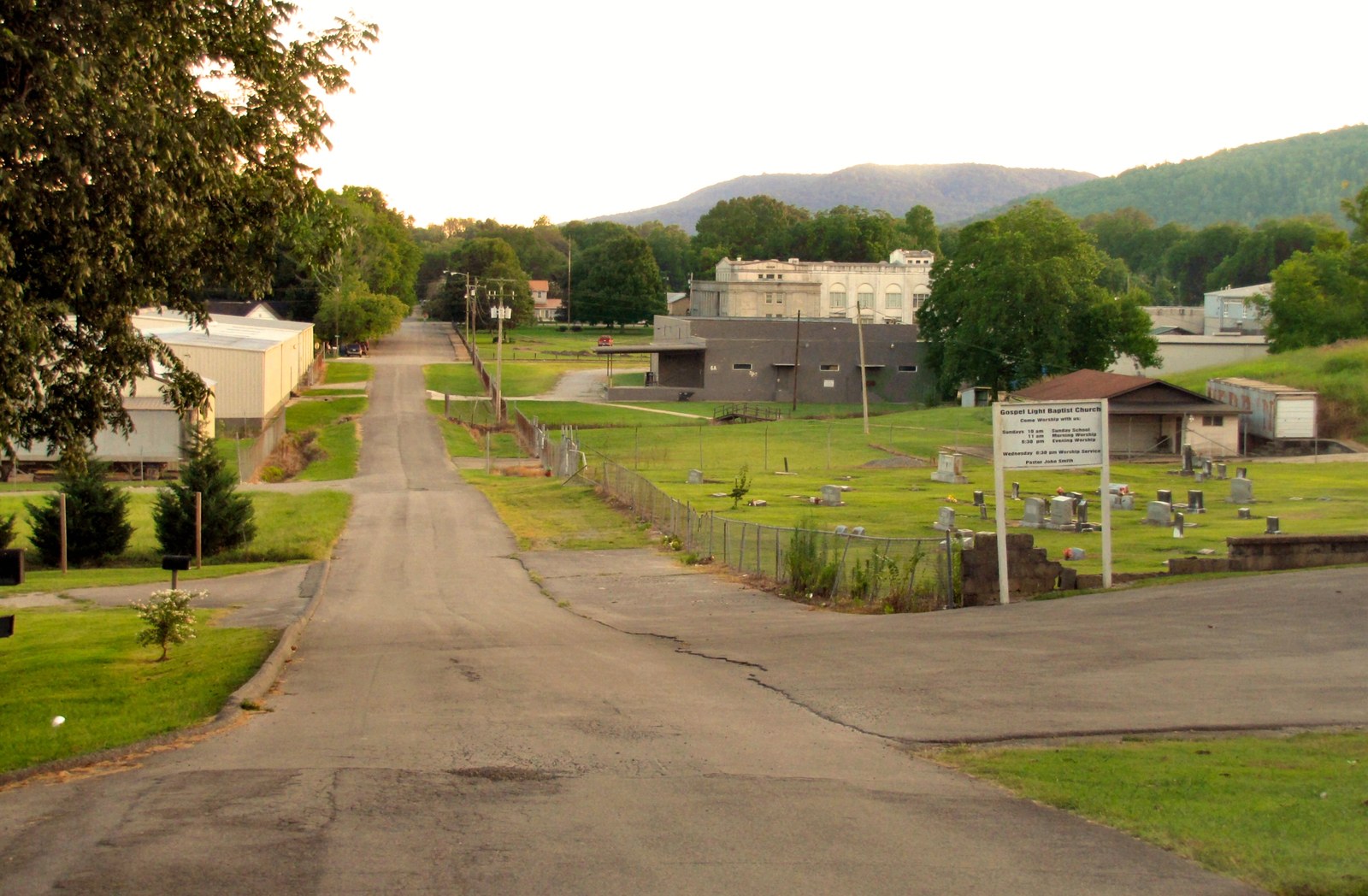
Richard City sits at the southernmost edge of Marion County, wedged between South Pittsburg to the north and the Alabama state line to the south. The Cumberland Plateau rises close behind the town to the west, and the ground slopes down toward the Tennessee River flats to the east. The limestone beds and shale outcrops that made the site attractive for Portland cement manufacture run right under the old town, and the former plant quarry still cuts into the hillside above Cumberland Avenue. Poplar Springs Branch threads through the residential streets and crosses under the 1906 Cumberland Avenue Bridge, the only concrete arch bridge ever built in the county. The Nashville, Chattanooga & St. Louis rail line served the plant through a dedicated spur, and a short stretch of the old line still runs along the former works. The name comes from Richard Hardy, who was elected president of Dixie Portland Cement in 1914; two older place-names, Deptford and Copenhagen, were effectively replaced by Richard City over the following decade.
The ground the cement plant was built on had been part of the Chickamauga (Lower) Cherokee homeland before the forced removal of the Cherokee along the Trail of Tears in 1838. The Cherokee Nation continues today as a sovereign nation headquartered in Oklahoma.
Deptford and Copenhagen, before 1906
Two small communities occupied the site that became Richard City. Deptford, first settled in the 19th century by Owen R. Beene, had scattered farmhouses, a depot, a post office operating from 1890 to 1893, and a two-story combined store, saloon, and school. A subdivision plan drawn by Thompson and Hall Engineers was never fully built out. Copenhagen, on land owned largely by Albert Cook, extended into northeastern Alabama; it had its own post office from 1883 to 1918 and a train depot served by the Nashville, Chattanooga & St. Louis Railway as early as the turn of the century. Residents of both communities worked in nearby factories or in the Marion County coal mines.
The most documented Copenhagen institution was W. L. Kirkpatrick's general store, which stood near the railway depot from the late 1870s onward. Kirkpatrick served as general-store owner, postmaster, and depot agent for Copenhagen during that period. Three of his wives — Bettie Kate Williams (died 1888), Della Reaves (died 1897), and Nancy Brooks — are buried at the Kirkpatrick Cemetery on Jackson County Road 208 in Bridgeport, Alabama, about a mile south of the Tennessee line, per the South Pittsburg Historic Preservation Society's cemetery inventory. The store burned to the ground on November 21, 1924. The 1881 Copenhagen Map of the same area, held by the Bridgeport Train Depot Museum and reproduced by TNGenWeb, is the earliest documented comprehensive map of the future Richard City site.
The Dixie Portland plant and the company town
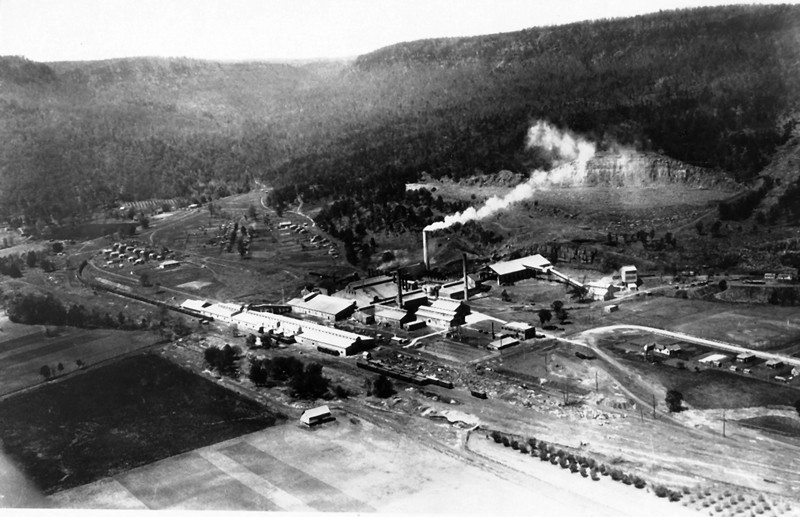
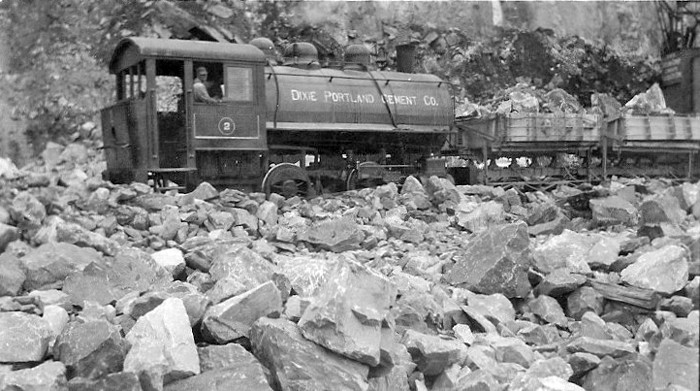
Construction of the Dixie Portland Cement plant began in March 1906. The company purchased roughly 500 to 600 acres of land, much of it from Albert Cook. By the end of 1907 the plant was producing Portland cement, running day and night shifts. Housing, streets, and civic buildings went up alongside the plant. Dixie Portland ultimately built more than 100 homes for workers, along with the Dixie Inn hotel, a commissary and post office, grocery stores, a diner, a hospital, parks, a swimming pool, a baseball diamond, a tennis court, the Richard City First Baptist Church, and the Dixie Portland Memorial School, now Richard Hardy Memorial School.
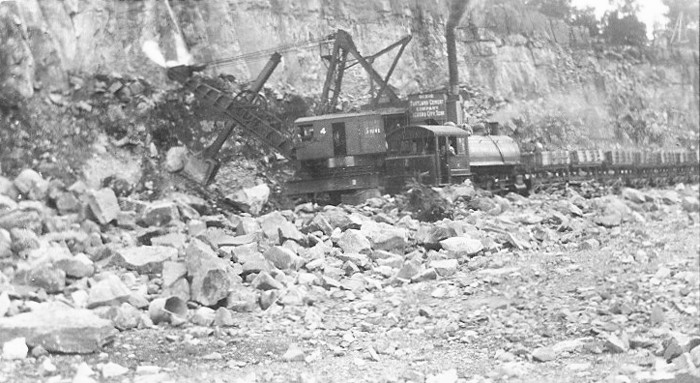
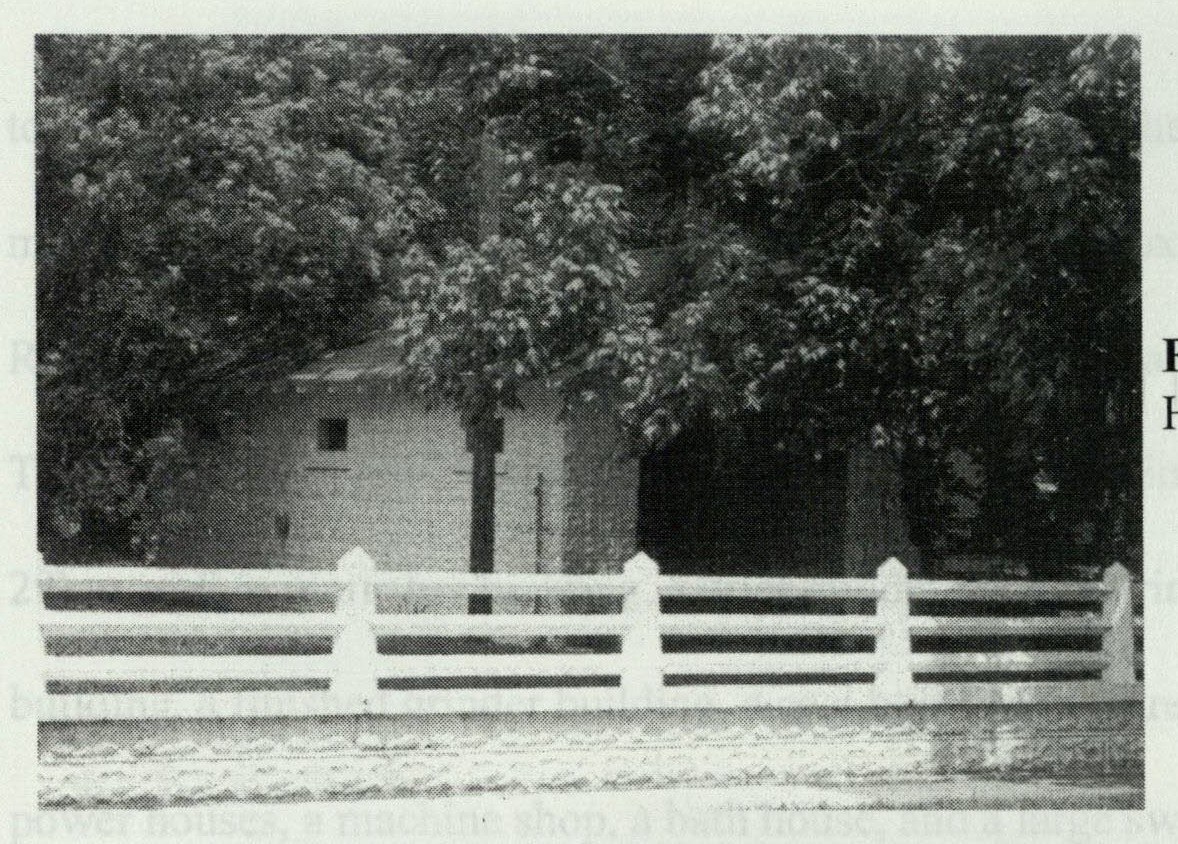
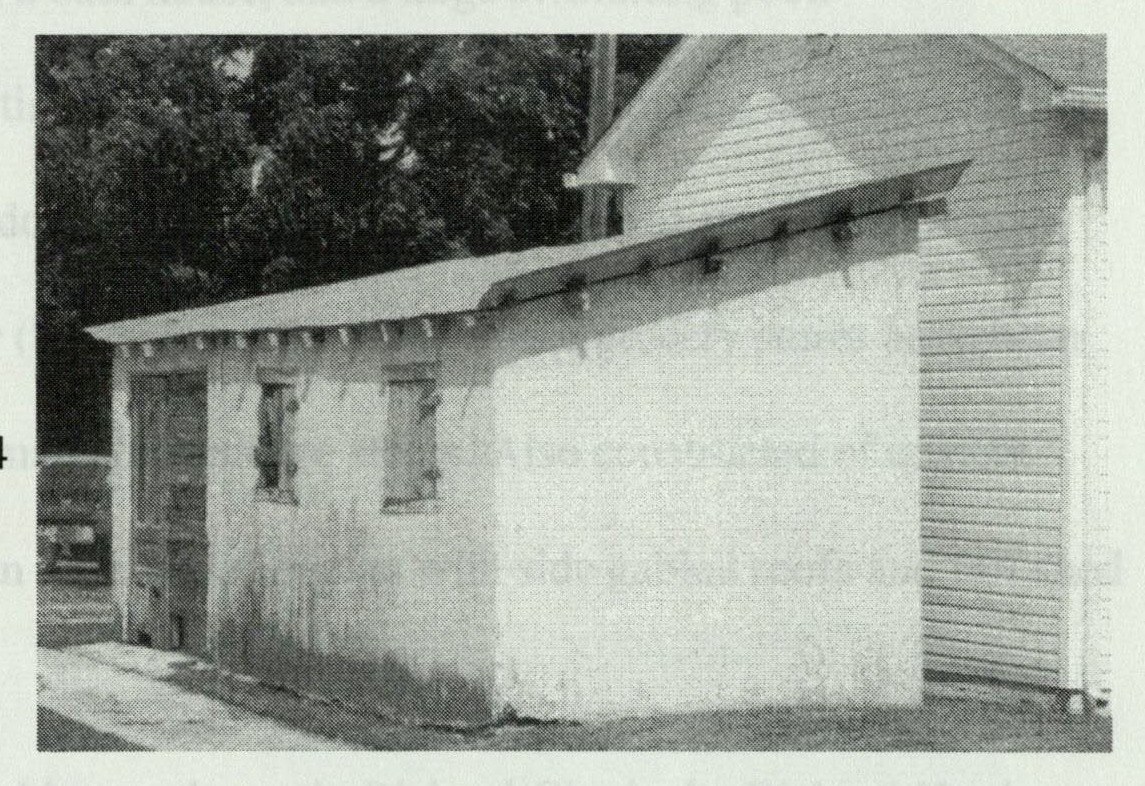
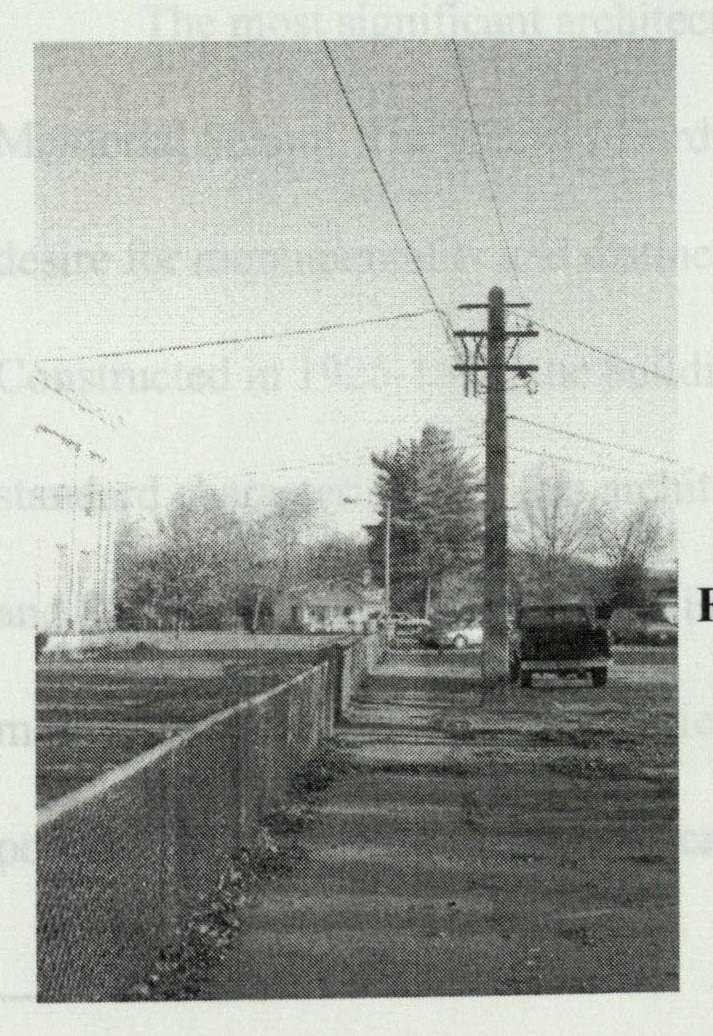
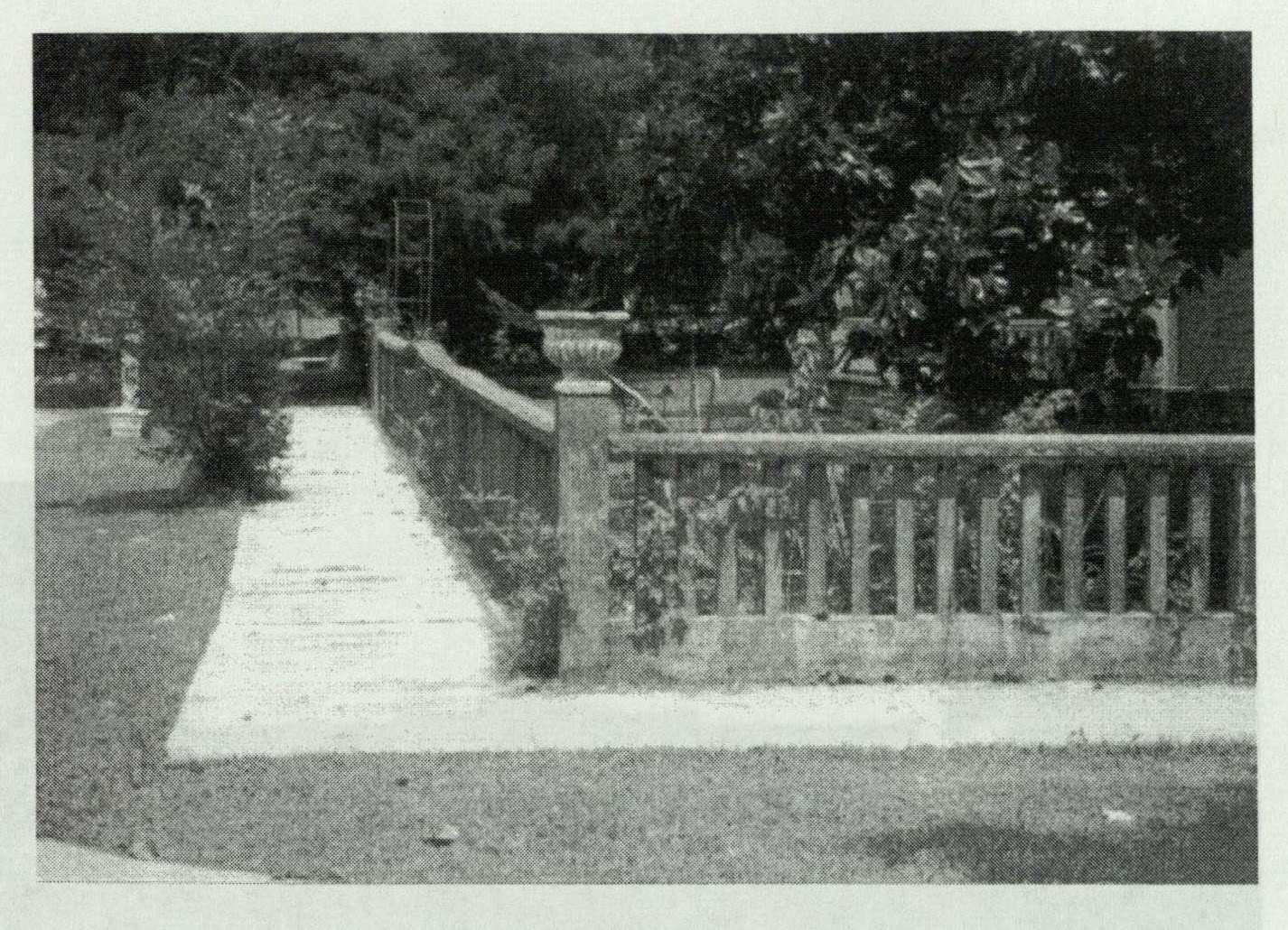
Most of the town's housing, and the public buildings, were built of cement stucco over wire frame, using the plant's own Portland cement product. Cement utility poles in obelisk form and cement fences ran through the streets. A distinctive whistle regime marked shift changes, accidents, and rock blasts in the quarry: three whistle blasts before a blast, at which point residents walked toward the state line to get out of range.
The school that Dixie Portland built in 1926 as its World War I memorial, Richard Hardy Memorial, continues today as the only school in the independent Richard City Special School District, one of a small number of surviving Tennessee special school districts. The district's governance, funding, and relationship to the countywide Marion County Schools system is covered on the district governance subpage, and the school's 1926 building, 1995 and 2006 additions, and centennial year in 2026 are covered in detail on the Richard Hardy Memorial subpage.
Naming for Richard Hardy, 1914
In 1914, Richard Hardy, who had joined Dixie Portland in 1905 and served as secretary and treasurer since incorporation in 1907, was elected president of the company. The combined communities of Deptford and Copenhagen were formally renamed Richard City in his honor. By 1917 the plant employed 600 to 700 people, and Richard City had become the second-largest concentration of industrial workers in the county after South Pittsburg.
Tom Mix at Dixie Portland
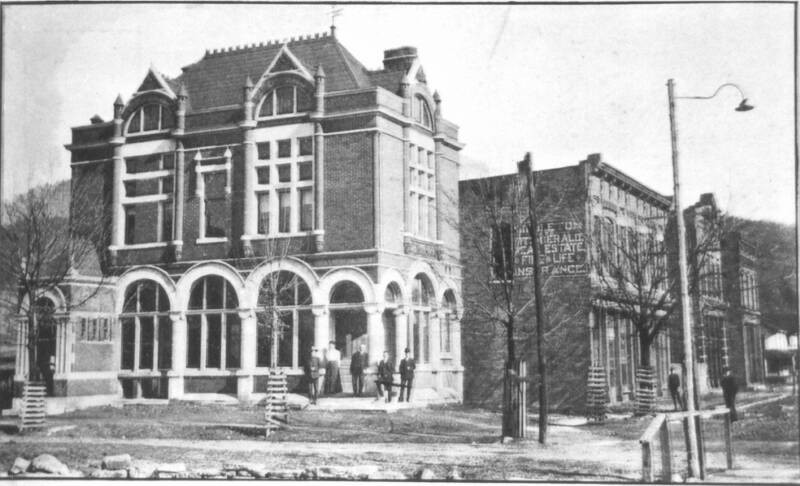
Among the earliest Dixie Portland employees was Tom Mix, who would within a decade become one of the most recognizable Western movie stars in the United States. Mix came to Richard City with Ellis Soper in the opening construction season as supervisor of labor and horses, and was also commissioned as a Marion County deputy to keep order on the plant site and in the new town. He left a few years later for the rodeo and Wild West-show circuit that led him to Hollywood, and on the way out of Marion County he sat for a period photograph at the First National Bank in South Pittsburg in 1906 alongside Richard Hardy, Miss Irene McRae, T. G. Garrett, and A. A. Cook, per the photograph reproduced on the South Pittsburg Historic Preservation Society's Buildings page.
Mix returned to Richard City in 1933 at the height of his film career, a homecoming covered in a March 27, 1996 retrospective in the Chattanooga Times. By the firsthand account of Marion County resident Luvenia Francis Bloss Pace, whose journal is transcribed in the RootsWeb / TNGenWeb Marion County archive, Mix continued to visit the county repeatedly through the 1920s; Pace recalled meeting him several times at her school and named him as a friend of Cappy Holden, the former South Pittsburg and Richard City sheriff. Kelly Wilkerson's 2003 Middle Tennessee State University thesis features Mix prominently in its account of the company's first construction season.
Housing, amenities, recreation
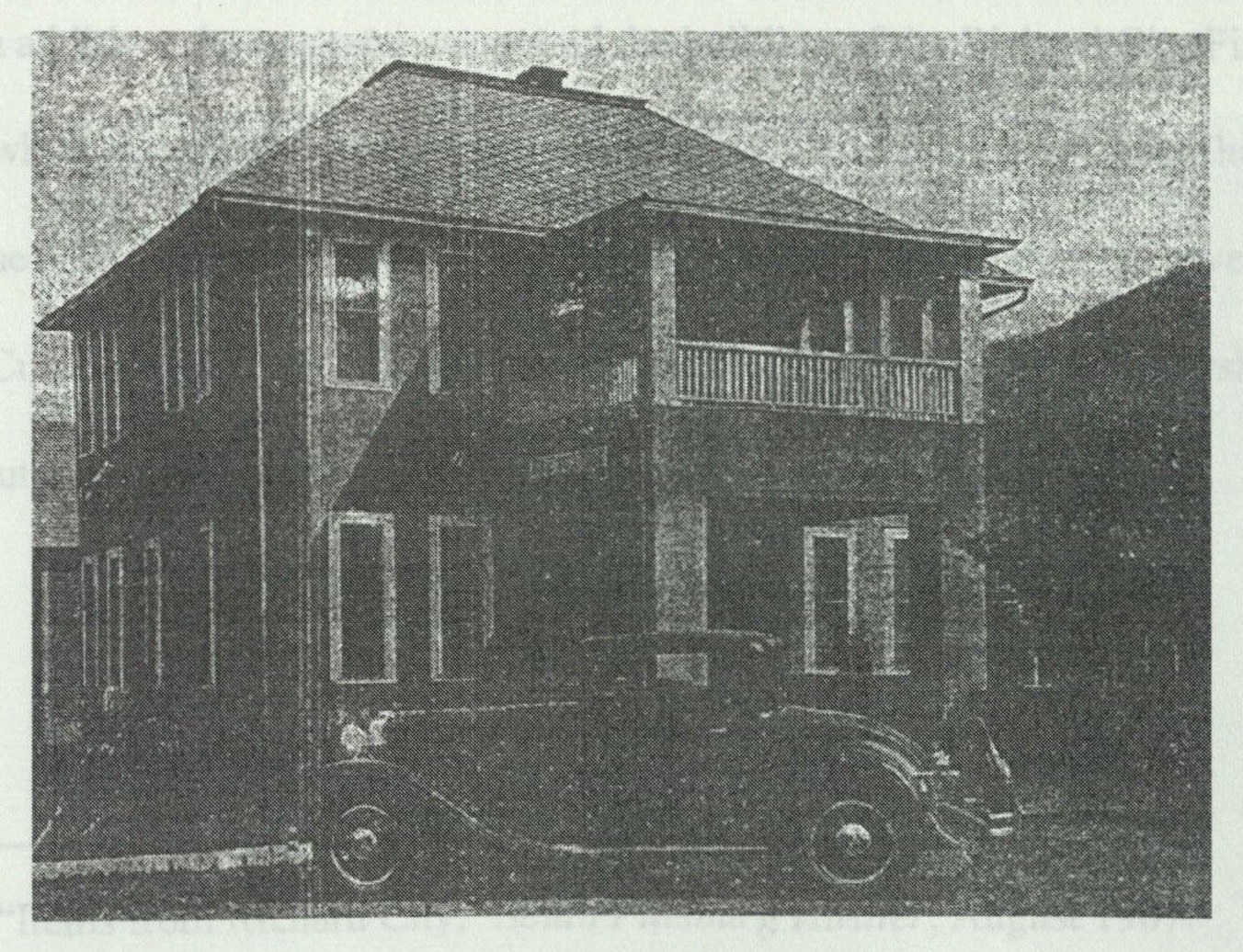
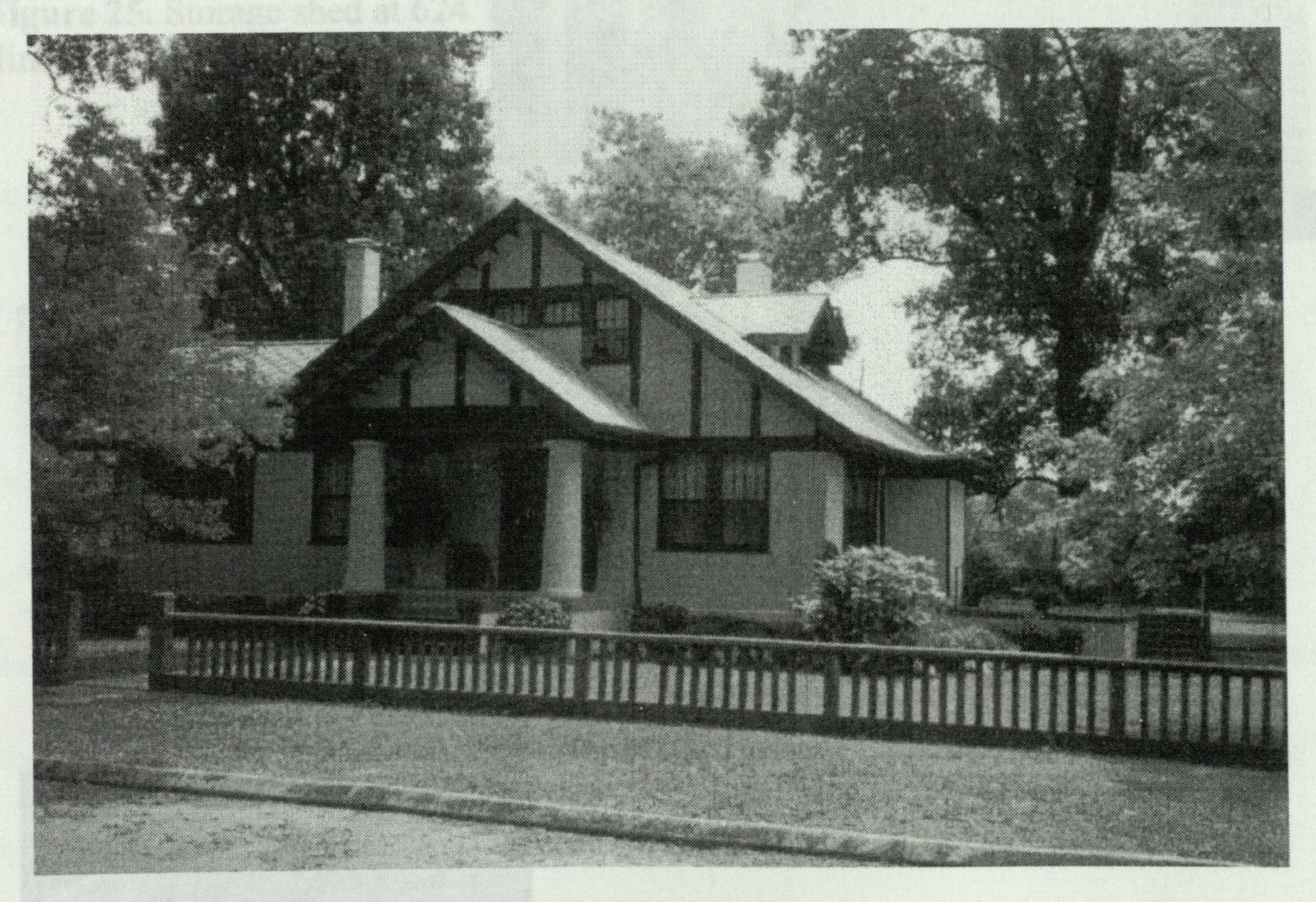
The first residential area, Townsite, was platted in 1907 by W. F. Arendale and Hardie Kirkpatrick on land adjoining the plant at the end of 23rd Street, with about 200 residence lots of 50 by 150 feet. Water was supplied from nearby mountain springs by a company-built pipe system. Four nine-room boarding houses, built in the Four Square cement-stucco style, housed single workers. The superintendent's house was a cement-stucco Bungalow in Townsite.
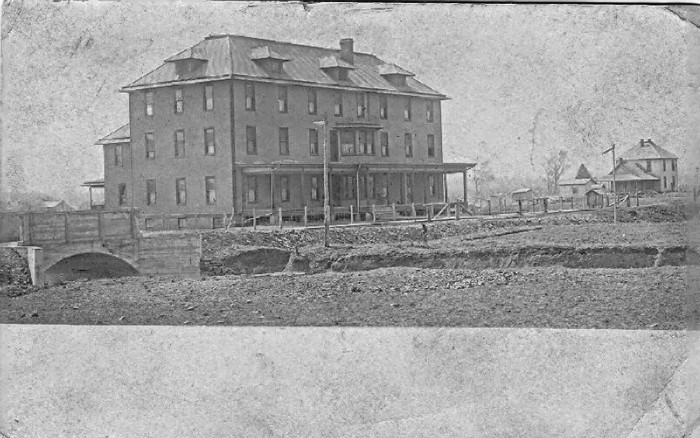
The Dixie Inn hotel, designed and built by Lee Hunt Engineering beginning in 1907 on Cumberland Avenue, was a two-story L-shaped cement-stucco building with 32 guest rooms, electric lights, steam heat, and hot and cold baths. It principally housed visiting businessmen, managers, and teachers. Dr. J. W. Kirkpatrick's infirmary at the Dixie Inn later grew into the Dixie Hospital on the road to the plant. Families applied for company housing by waiting list; Wells Wilkinson paid ten dollars a month, including electricity, under that arrangement. Company homes were later sold or given to private owners in stages.
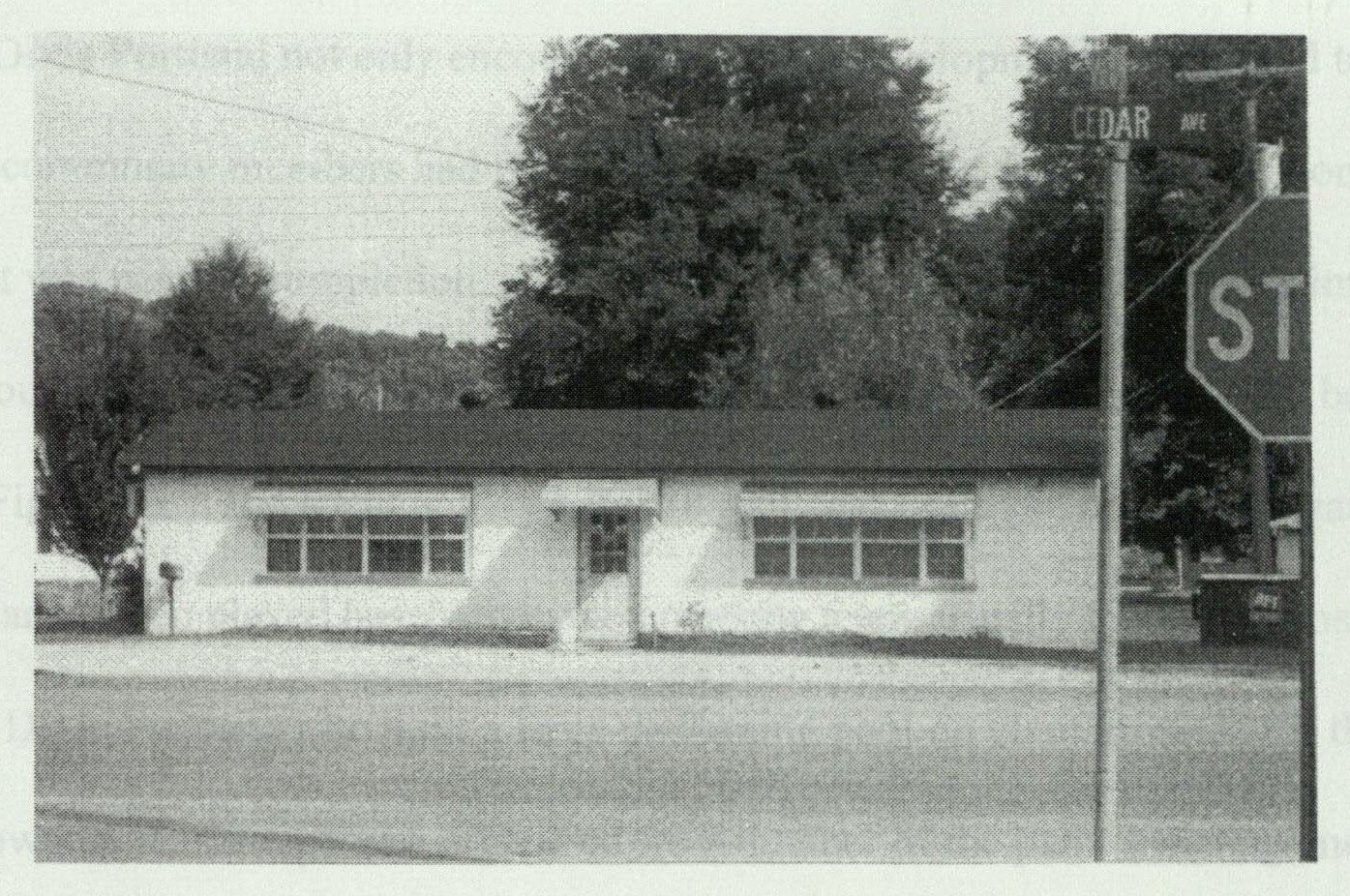
The commissary, with post office, was run by clerk A. M. Holland under postmaster Dr. J. I. Raulston. Private stores clustered near the plant gate, of which Webb and Neal Grocery was the most prominent; its building stood into the early 1990s, operating at that point as Billy Bob's Tavern. A large bus nicknamed Big Liz ran hourly between South Pittsburg, the plant, and the commissary. The Dixie Diner operated for a time and later became the Richard City Cafe.
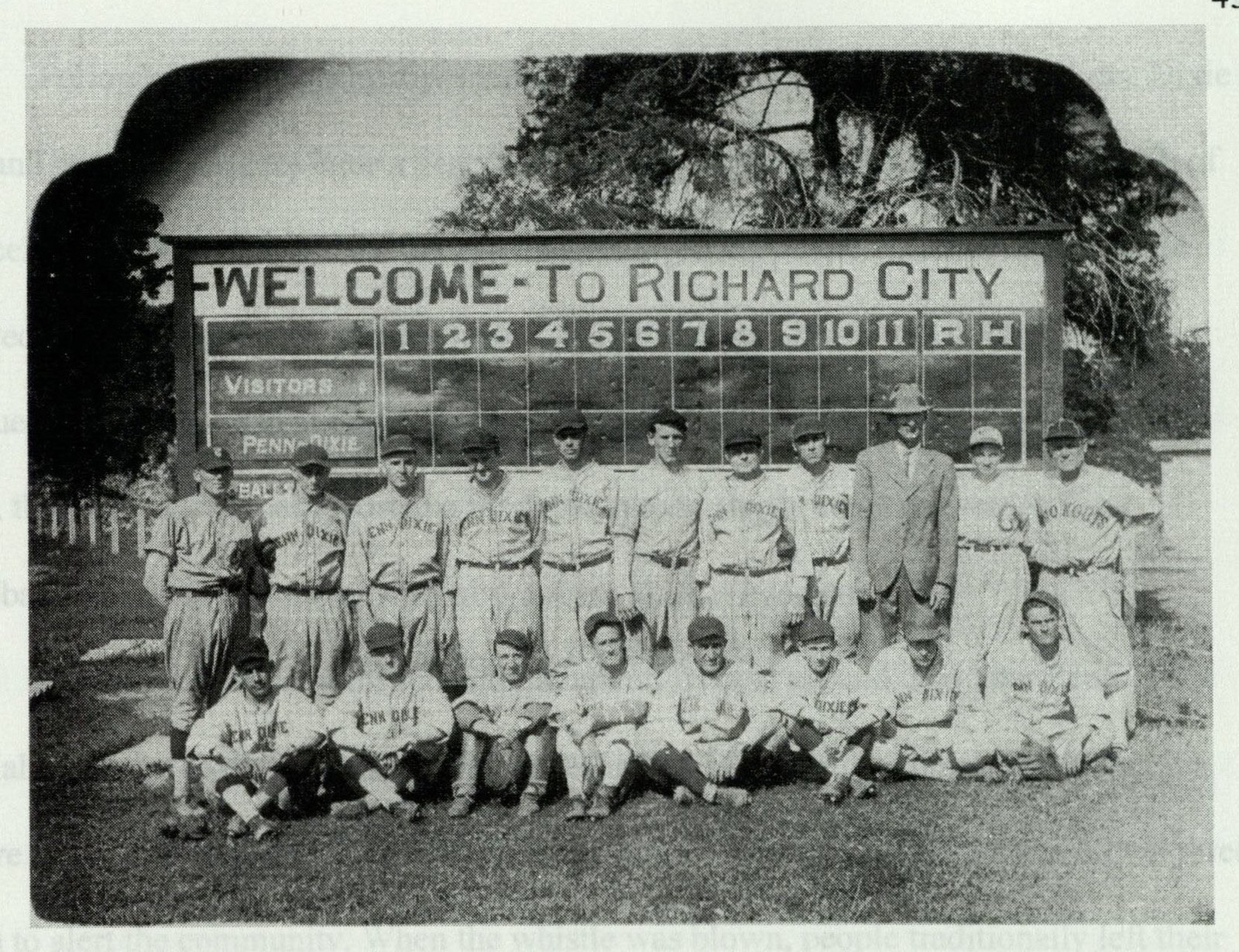
Recreation was substantial. The company built a baseball diamond in 1907 and a team that competed against other local squads; Richard Hardy often pitched. The company nine belongs to a wider pattern of company and town baseball that included the Hales Bar construction village and the town teams at South Pittsburg and Jasper. A large swimming pool, a tennis club, and a tennis court were built on plant grounds, with plant chemist W. H. Kewish and Hardy among the tennis club members. Annual company barbecues, Fourth of July celebrations with fireworks and baseball, and a formal annual banquet at the Dixie Inn from 1924 onward rounded out the social calendar.
Workers and families across the generations
Richard City's company-town arrangement produced a multi-generational workforce: sons followed fathers into the plant, and daughters worked there alongside them. The RootsWeb / TNGenWeb Marion County archive holds two group photographs taken on plant grounds around 1938 that document the pattern directly. The first is a portrait of 54 veteran employees with 25 to 31 years of service each at the Richard City plant — meaning the entire group had been hired between 1907 and 1913 and was still on the rolls in 1938. The roster names workers including Ernest Walker, Ervin Winfield Faris Sr., Joseph Russell Case, James Henry Paris, Thomas Spencer, and Albert “Slim” Holder, alongside four dozen others documented at name level on the TNGenWeb cement-company page.
The companion photograph, also taken in 1938, shows fathers and their sons and daughters who were all working at Penn-Dixie in the same year. The lineup includes Bill Alton with son James Robert “Jim” Alton; Ralph William Allison with brother Leonard Allison and father B Allison; Joseph P. Fischer with son Francis Joseph Fischer; Albert Newton Burkhalter with father Newton Lafayette Burkhalter; Emerson “Big M” Martin with sons Oliver Eugene Martin and Elzie Martin; and ten other family pairings, named in full on the TNGenWeb companion page. Both photographs were submitted to the archive by Jerre Hookey, and together they document the rank-and-file cement workers whose careers shaped the town across most of the 20th century.
Religious life
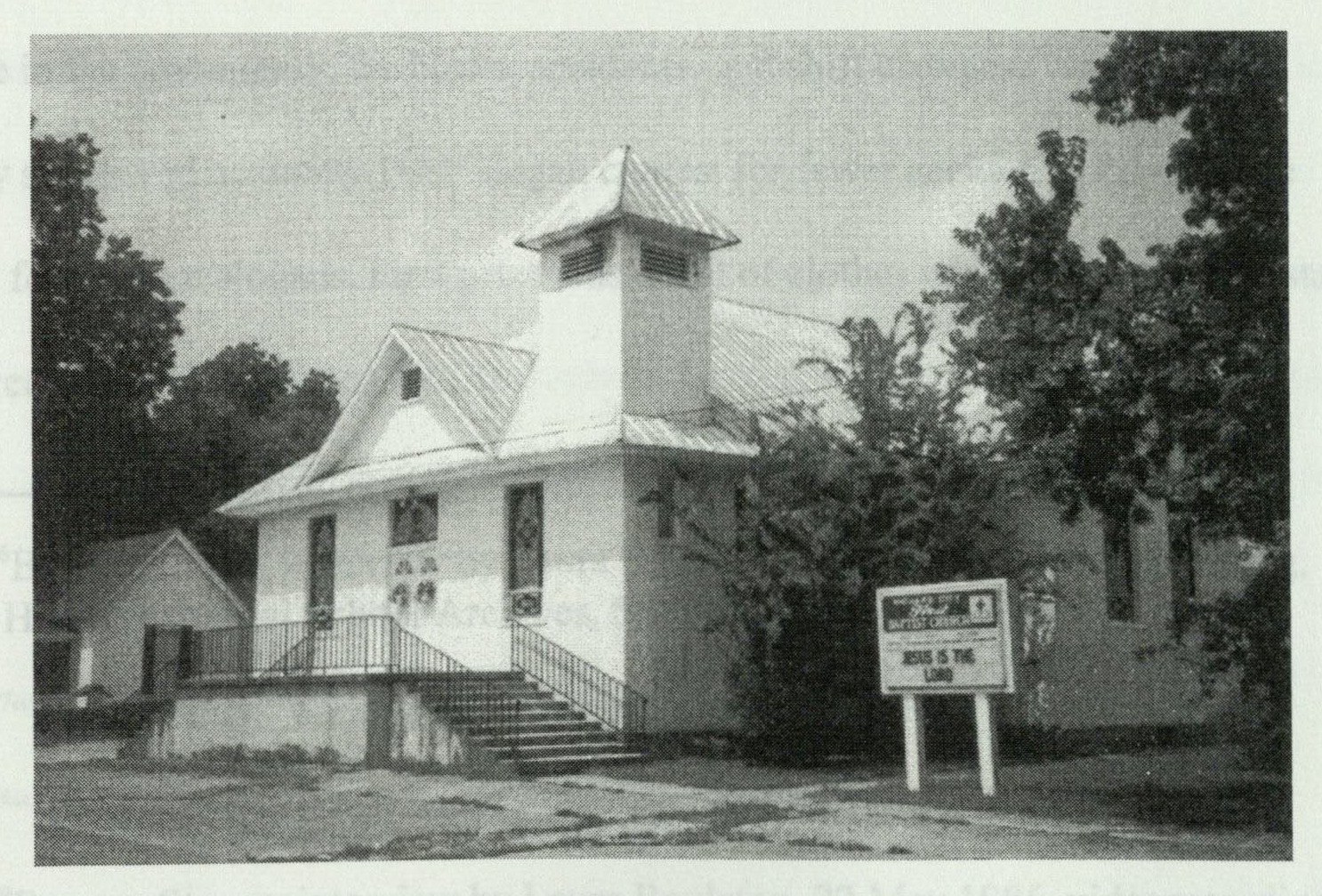
Two congregations anchored Richard City's religious life. A Cumberland Presbyterian Church at Deptford held services through the Dixie Portland period, per Kelly Wilkerson's 2003 thesis. The Richard City First Baptist Church, built in the 1920s at Hamilton Avenue and Eighteenth Street and supported by Dixie Portland, served a congregation whose records date to the late 1800s. The Baptist church building was constructed in the same cement-stucco vocabulary as the rest of the company town, with a cross gable roof, stained-glass windows flanking the central front door, an irregular plan, and a bell tower.
Race and separate facilities
The 1910 U.S. Census of Marion County records that nearly half of the workers listed as heads of households or single men at the plant were Black Tennesseans. Under Tennessee's segregation laws, the company built a separate neighborhood behind the plant for Black workers and families, and a separate school; a company newsletter note from March 1927 references “two schools in Richard City (colored and white)” entering a writing contest. A small number of biracial families also lived in the area. The houses behind the plant have since been torn down. The Black community's history in Richard City is the single largest outstanding research subject for the town, as Kelly Wilkerson flags in the concluding chapter of her 2003 thesis.
Richards Cemetery
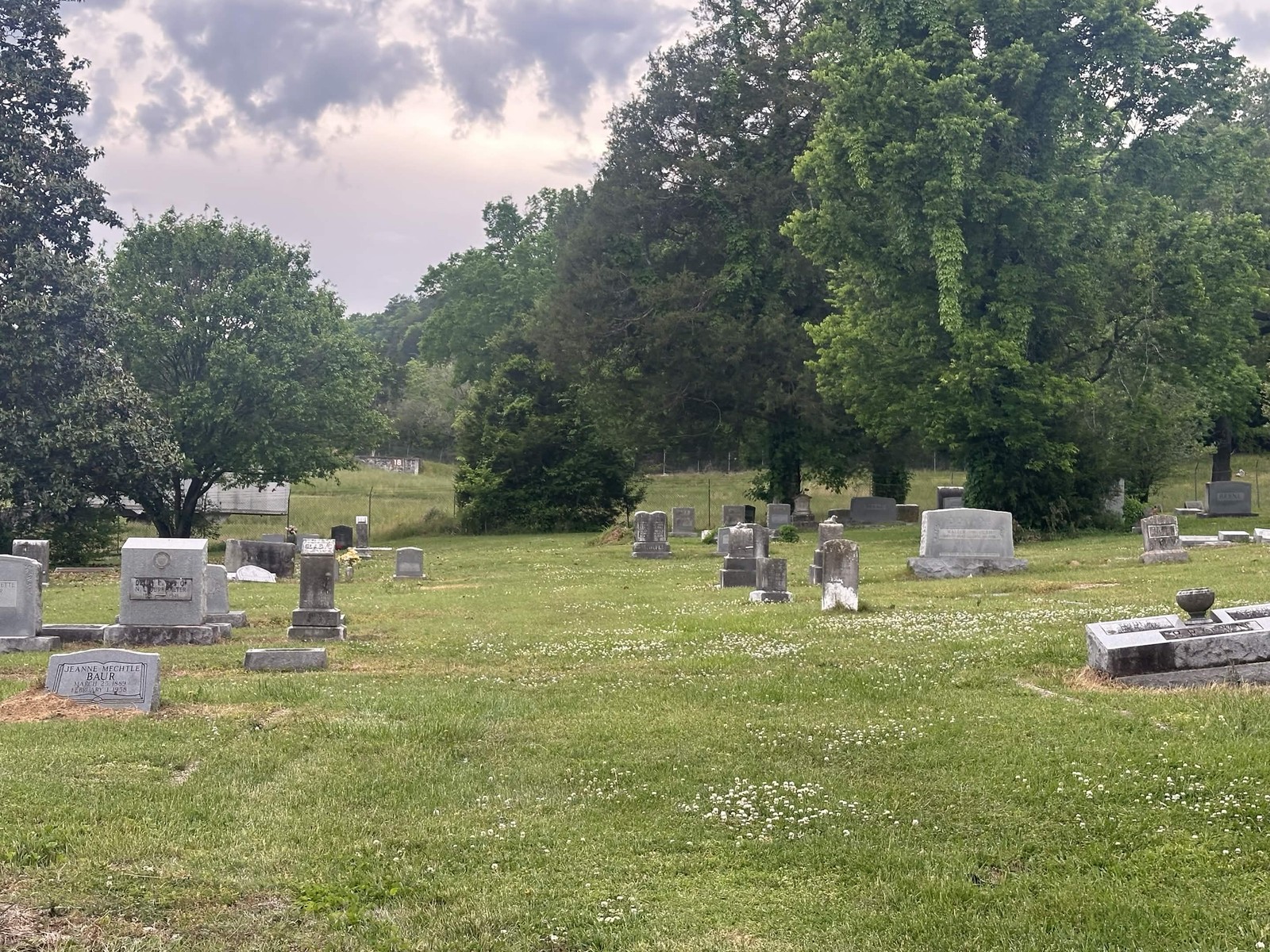
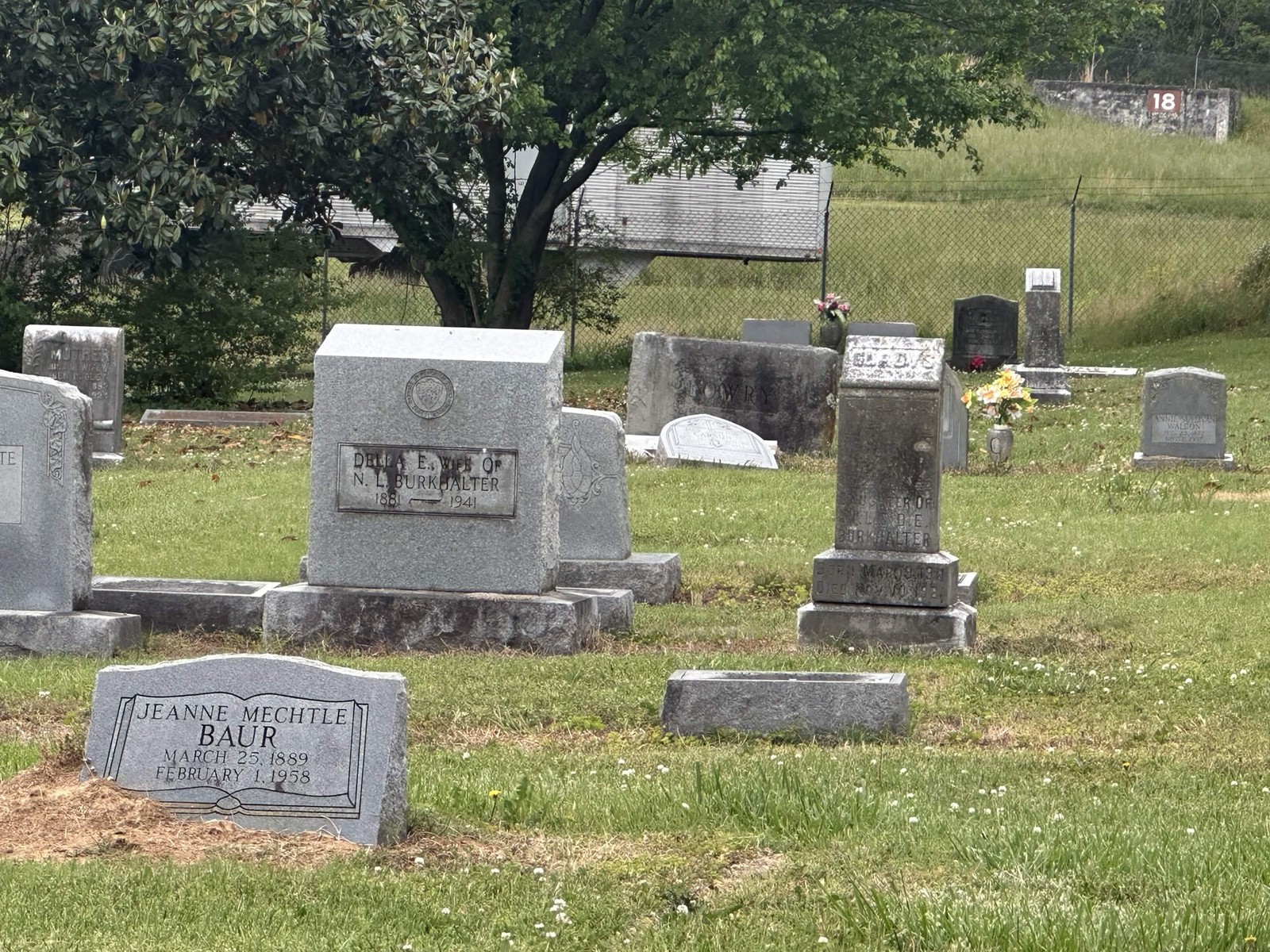
The most documented Richard City burial ground is the Richards Cemetery, set out from the old Penn-Dixie plant near the Alabama state line. The cemetery was inventoried on October 24, 2005 by Dennis and Erin Lambert for the South Pittsburg Historic Preservation Society, which publishes the Richards Cemetery roster with photographs of many of the surviving stones. The front half of the cemetery remains maintained; the back half has reverted to brush. Recorded burials include the Richards family, the McRae family — whose Angus McRae (1848 to 1893) was the contractor for the 1888 Primitive Baptist Church in South Pittsburg, now Chapel on the Hill — the Cook, Kirkpatrick, Houston, Patton, Woodfin, Phillips, Prigmore, Thomas, Walker, Deakins, and Emison families.
Rail connections
The Dixie Portland plant was served by a rail spur tied into the Nashville, Chattanooga & St. Louis Railway. Colonel Spencer Eakin, of the NC&StL's industrial department, had assisted Ellis Soper with the original site testing at Deptford. Work on the spur began in May 1907. Finished cement shipped by rail, along with barge traffic on the Tennessee River and, after the 1920s, truck.
Architecture and the NRHP listing
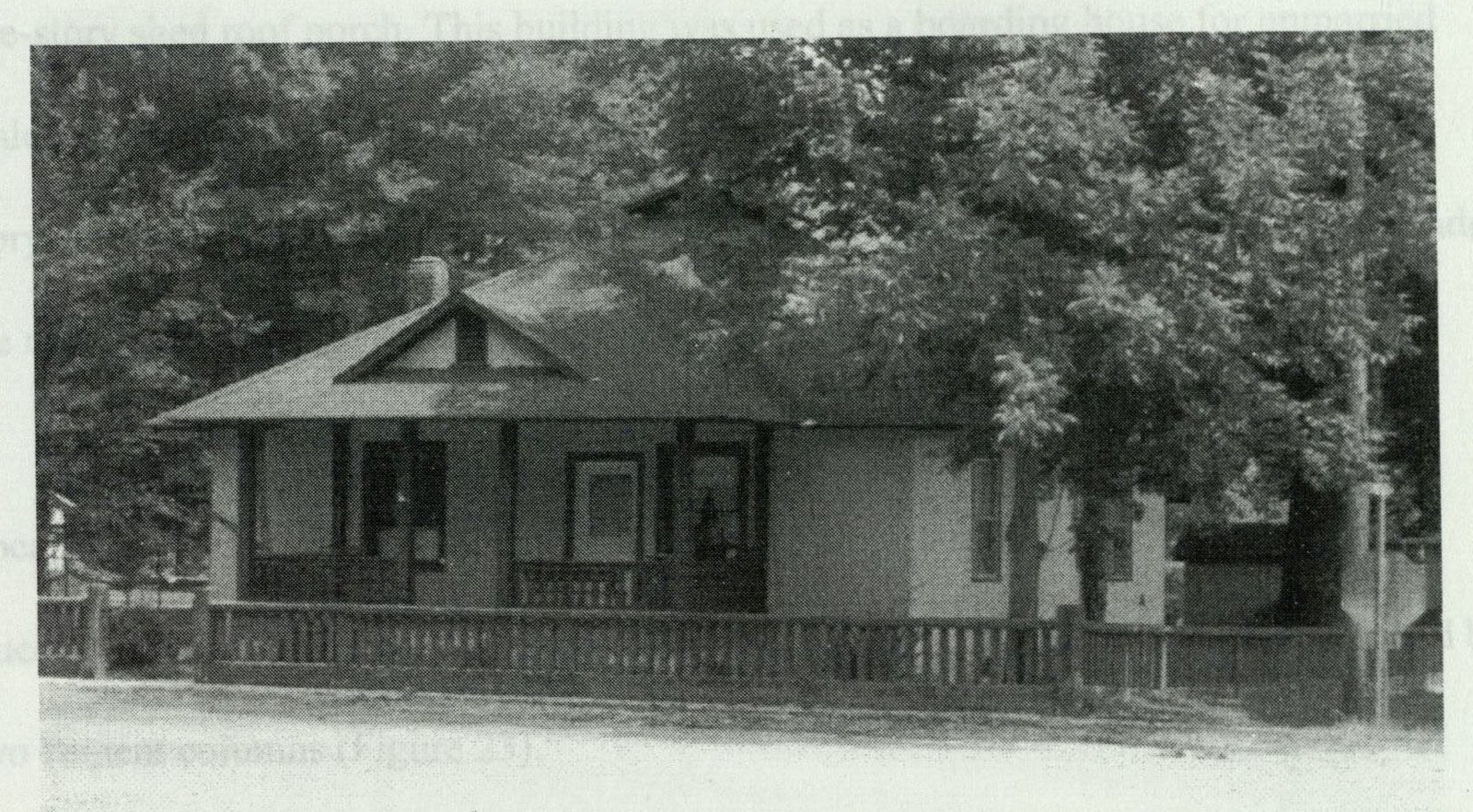
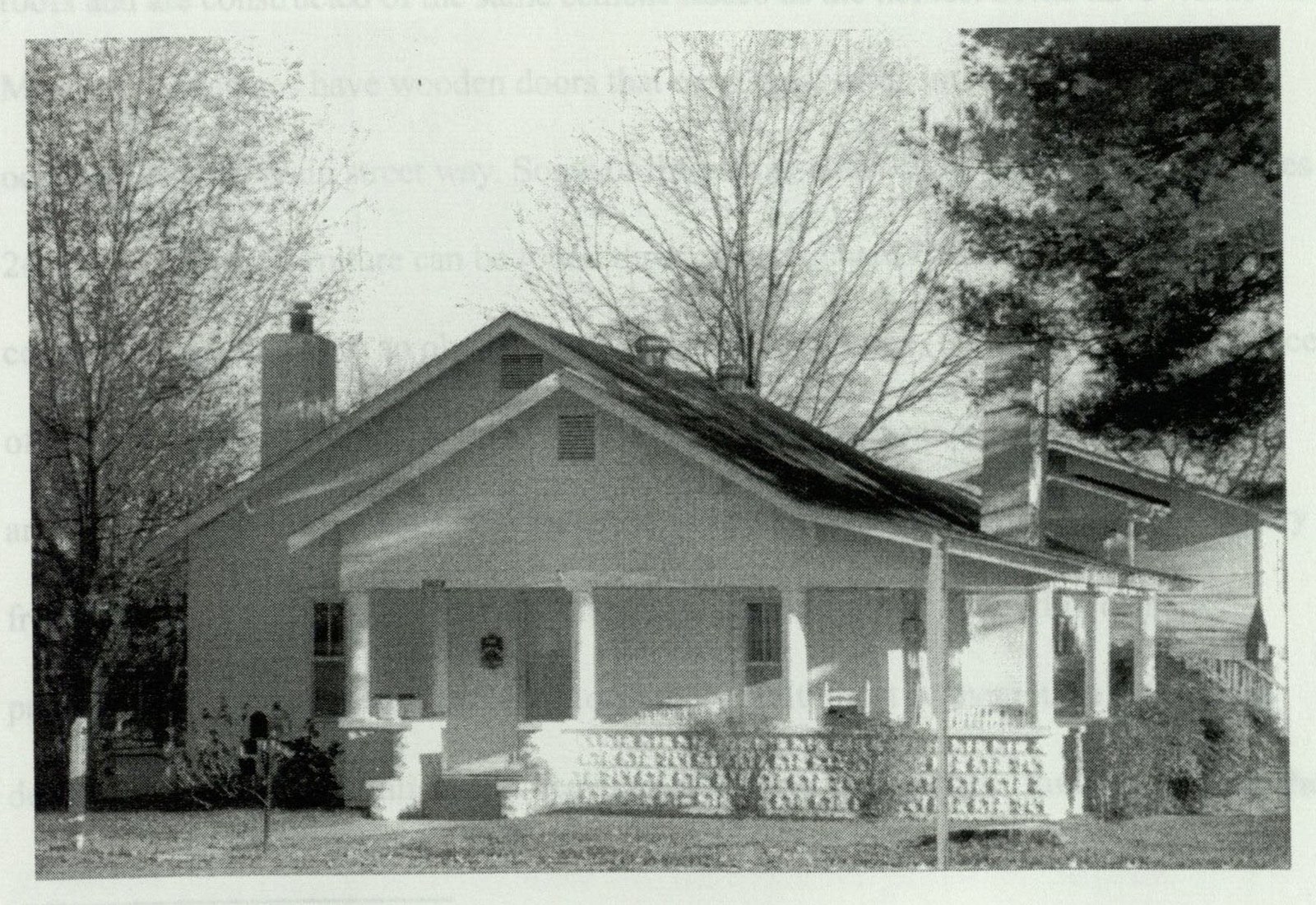
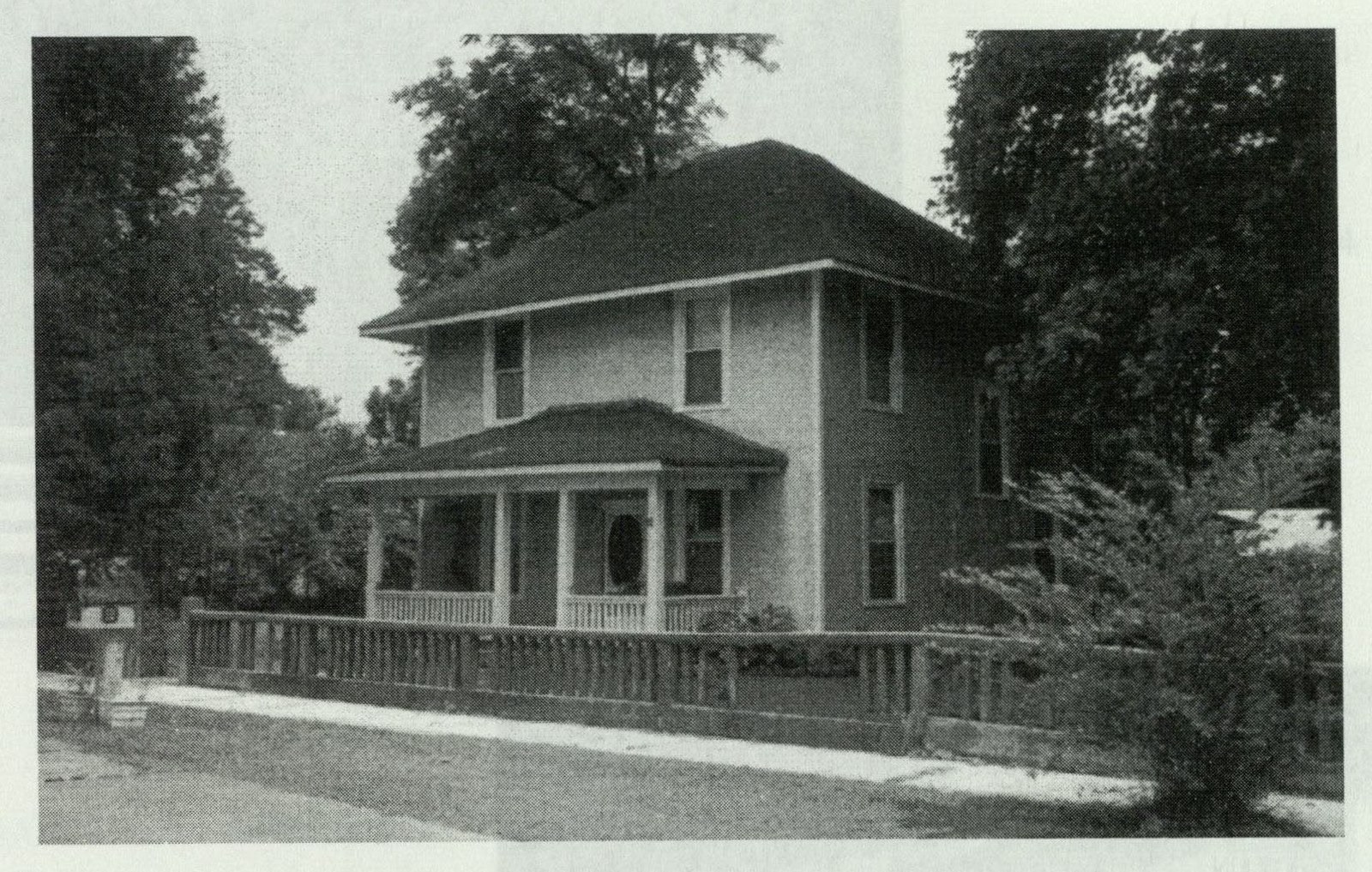
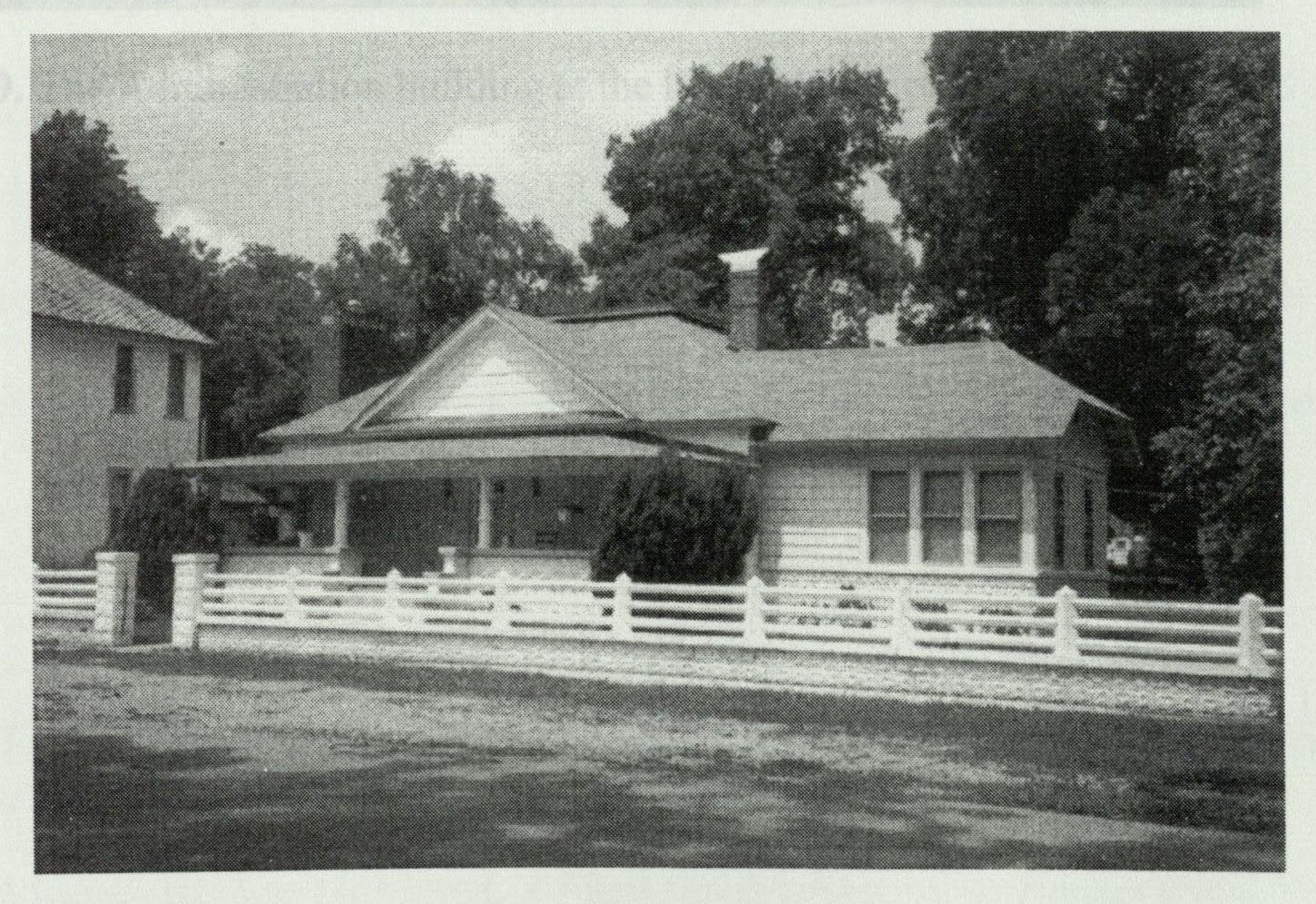
Karen L. Daniels documented the town's distinctive all-cement architecture in a 1991 Multiple Property Documentation Form for the National Register of Historic Places, prepared for the Tennessee Historical Commission. Four main residential styles predominate, all built of cement stucco over wire frame: the square one-story Pyramid Cottage with steeply pitched roof (the most common), the rectangular one-story Dixie Cottage with front gable and wraparound porch, the two-story Four Square with steep pyramid roof (used mainly for boarding houses and the hospital), and the one-and-a-half-story cross-gable Bungalow with cement-columned gable porch.
The Cumberland Avenue Bridge over Poplar Springs Branch, designed by Lee Hunt Engineering and built in 1906, was the only concrete arch bridge ever constructed in Marion County. It was listed individually on the National Register on October 28, 1991, and removed on July 13, 2001, after a project widened the deck for two-way traffic. The arch span itself remained in place; the bridge has its own subpage.
Two historic districts in Richard City were added to the National Register on July 25, 1991. The Putnam-Cumberland Historic District of Richard City (NRHP #91000898) covers properties along Cumberland and Putnam Avenues, and the Townsite Historic District of Richard City (NRHP #91000897) covers properties along Dixie, Lee Hunt, and Cumberland Avenues. The Richard Hardy Memorial School, in Classical Revival style and designed by Chattanooga architect Charles Bearden, was listed individually on September 30, 1982 (NRHP #82003990).
Outbuildings, fencing, and utility poles
The town's cement-stucco construction extended beyond houses to garages, storage sheds, fences, and even utility poles. Karen L. Daniels identified these elements as contributing features of the cement-construction district.
Closure and annexation
Penn-Dixie Industries, the successor to the 1926 Pennsylvania-Dixie Cement Corporation, filed for Chapter 11 bankruptcy on April 8, 1980, and closed the Richard City plant six days later. Moore McCormack Resources bought the plant in February 1981 through its Dixie Cement subsidiary and announced a replacement facility that was never built. After a union representation vote on October 23, 1981, the plant was laid off and closed permanently in 1982. South Pittsburg formally annexed the Richard City community in the same period (the Tennessee Encyclopedia gives 1985), but the Richard City Special School District, the Richard City cemeteries, and the Richard City name itself remain in use.
Richard City today
The Richard City of the present is a neighborhood of South Pittsburg rather than a separate municipality, but much of the company-built fabric of the town survives. The Pyramid Cottage, Dixie Cottage, Four Square, and Bungalow cement-stucco houses still line the streets of the Putnam-Cumberland and Townsite Historic Districts, documented in the 2015 Brian Stansberry photographs of Holly Avenue and the Richard Hardy Memorial School. Cement utility poles and post-and-rail cement fencing remain along the same streets, as recorded in Wilkerson's 2003 thesis figures.
The 1926 Richard Hardy Memorial School remains the centerpiece of the town and the only school of the Richard City Special School District, a public PreK-through-12 district that operates independently of Marion County Schools and serves families from across the southern end of the county. Vulcan Materials operated the rock quarry at the former plant site as of Kelly Wilkerson's 2003 fieldwork; the current operator is best confirmed through Tennessee Department of Environment and Conservation mining-permit records, since aggregate-industry consolidation has continued in the years since.
Landmarks and remnants
- Richard Hardy Memorial School (1926), still in operation
- Richards Cemetery, out from the old Penn-Dixie plant near the Alabama state line
- Raymond H. Cooley (1916–1947), World War II Medal of Honor recipient, was from Richard City; he is buried at Cumberland View Cemetery in Kimball, and Highway 28 is named the Raymond Cooley Highway in his honor
- Cumberland Avenue Bridge (1906); listed on the National Register October 28, 1991 and removed July 13, 2001
- Cement-stucco housing in the Pyramid Cottage, Dixie Cottage, Four Square, and Bungalow styles throughout the former townsite
- Richard City First Baptist Church, cement stucco with bell tower, Hamilton Avenue at 18th Street
- Cement utility poles and fences in the obelisk form
Related
About Dixie Portland Cement →
About Richard Hardy Memorial School →
About Richard Hardy →
About South Pittsburg →
Wars and military service (Raymond Cooley, Medal of Honor) →
Sources
- Kelly Wilkerson, Richard City, Tennessee: Home, Community, and Paternalism in a Southern Company Town, 1900–1985, M.A. thesis, Middle Tennessee State University, May 2003 (primary source throughout)
- Karen L. Daniels, “Cement Construction in Richard City, Tennessee,” Multiple Property Documentation Form, National Register of Historic Places, Tennessee Historical Commission, 1991
- Karen L. Daniels, “Cumberland Avenue Bridge, Richard City, Marion County,” NRHP Registration Form, 1991
- “A Great Cement Plant in Tennessee,” Manufacturer's Record, 20 August 1908
- South Pittsburg Hustler, 22 November 1907, 18 October 1907, 15 May 1908, 11 October 1907, 19 March 1909, 16 July 1931, 10 March 1927
- “Tom Mix at Richard City,” Chattanooga Times, 27 March 1996, p. C1 (per Wilkerson 2003)
- 1986 oral-history videorecordings by Laura Raulston of Wells Wilkinson, Buford Stroup, Frances Stroup, Catherine Case, Melvin Kilgore, and Joe Raulston, Richard Hardy Memorial School archives
- Luvenia Francis Bloss Pace journal, transcribed in the RootsWeb / TNGenWeb Marion County collection
- Tennessee Encyclopedia — Richard City (Kelly Wilkerson, 2018)
- South Pittsburg Historic Preservation Society — The Richard City Story
- South Pittsburg Historic Preservation Society — Richards Cemetery (inventoried by Dennis and Erin Lambert, October 24, 2005)
- South Pittsburg Historic Preservation Society — Sequatchie Valley Railroad: Penn-Dixie Cement Plant Switch Track
- SPHPS Buildings — First National Bank (1906 photo with Tom Mix and Richard Hardy)
- TNGenWeb Marion County — Penn-Dixie Cement Company veteran-employees photograph, c. 1938 (54-employee roster)
- TNGenWeb Marion County — Penn-Dixie fathers, sons, and daughters photograph, c. 1938
- TNGenWeb Marion County — Dixie Hospital photograph (submitted by Euline Harris)
- John Shearer, “History of the Hardy Home,” Chattanoogan.com, March 25, 2013
- Wikipedia — NRHP Listings in Marion County, Tennessee
- Wikipedia — Raymond H. Cooley