Last updated: April 23, 2026
- Founded: 1896 by Joseph Lodge (originally as Blacklock Foundry)
- Location: South Pittsburg, Tennessee
- Products: Cast-iron skillets, Dutch ovens, grill pans, griddles, hearth cookware
- Ownership: Five generations of the Lodge family (family-owned to this day)
- Employment: Approximately 400 (Marion County's largest private employer)
Lodge Cast Iron is the oldest continuously operating cast-iron cookware foundry in the United States. For over 125 years, it has operated in South Pittsburg, Tennessee, never leaving the town where it was founded. Ownership has passed through five generations of the same family, making Lodge not just a manufacturer but a defining institution of Marion County's identity. The company's survival through more than a century of industry contraction, its reinvention of the product through pre-seasoning, and its role as the county's economic anchor have made cast iron inseparable from local culture.
Joseph Lodge and the Blacklock Foundry (1896)
Joseph Lodge was born on March 29, 1848, in Pennsylvania and left home at fifteen. He trained as a machinist at Poole's Machine Shop in Wilmington, Delaware, then in 1867 boarded a ship to Cuba, where he lived for two years before traveling to Peru to work building railroads. He arrived in Tennessee in 1876, walked 25 miles from Chattanooga to South Pittsburg, and settled there the following year with his wife Anna. The town's coal deposits, rail connections, and existing smelter infrastructure, inherited from the Sequatchie Valley iron boom, made it an attractive site for a foundry.
In 1896, Lodge founded his foundry and named it the Blacklock Foundry after his minister friend, Joseph Blacklock. The original product line extended well beyond cookware: the Blacklock Foundry produced stoves, sad irons (flat irons for pressing clothes), tea kettles, kitchen sinks, and cast-iron cooking vessels. Joseph and his wife had two children, son Les (born 1883) and daughter Edith (born 1881), both of whom would shape the company's future.
Fire and Rebuilding (1910)
In May 1910, the Blacklock Foundry burned. Rather than close, Joseph Lodge rebuilt the operation three months later on a new site a few blocks away. With the rebuild came a new name: Lodge Manufacturing Company. The quick recovery demonstrated a resilience that would characterize the company through the century ahead. South Pittsburg's iron-working labor pool and raw material access made rebuilding locally the obvious choice, reinforcing the bond between the company and its town.
Five Generations of Family Ownership
Lodge's unbroken family ownership across five generations is central to its cultural significance. In an era when most American manufacturing has consolidated into large conglomerates or moved offshore, Lodge remains rooted in the same small Tennessee town where it started.
Joseph Lodge's daughter, Edith Lodge Kellermann, married Charles Kellermann, merging the two family lines that would guide the company for decades. Their son Dick Kellermann served as president from 1949 to 1973, steering the company through the postwar shift in American kitchens toward aluminum and nonstick cookware. His brother William Leslie Kellermann succeeded him and served as president from 1973 to 1984.
The fourth generation brought Bob Kellermann, who led Lodge as president and CEO for roughly forty years. Bob's tenure proved transformative. He championed the pre-seasoning process that would redefine Lodge's market position (see below) and guided the company through its most significant period of growth. In the fifth generation, Henry Lodge served as CEO before transitioning to Chairman in May 2019, and Dick Lodge continued in a leadership role. That same month, Mike Otterman became the first non-family CEO in the company's history. The company remains family-owned.
The Pre-Seasoning Revolution (2002)
For over a century, cast-iron cookware shipped bare. Buyers had to season it themselves: coating the raw iron with oil and baking it repeatedly to build up a nonstick surface. The process was a barrier to entry for cooks unfamiliar with cast iron.
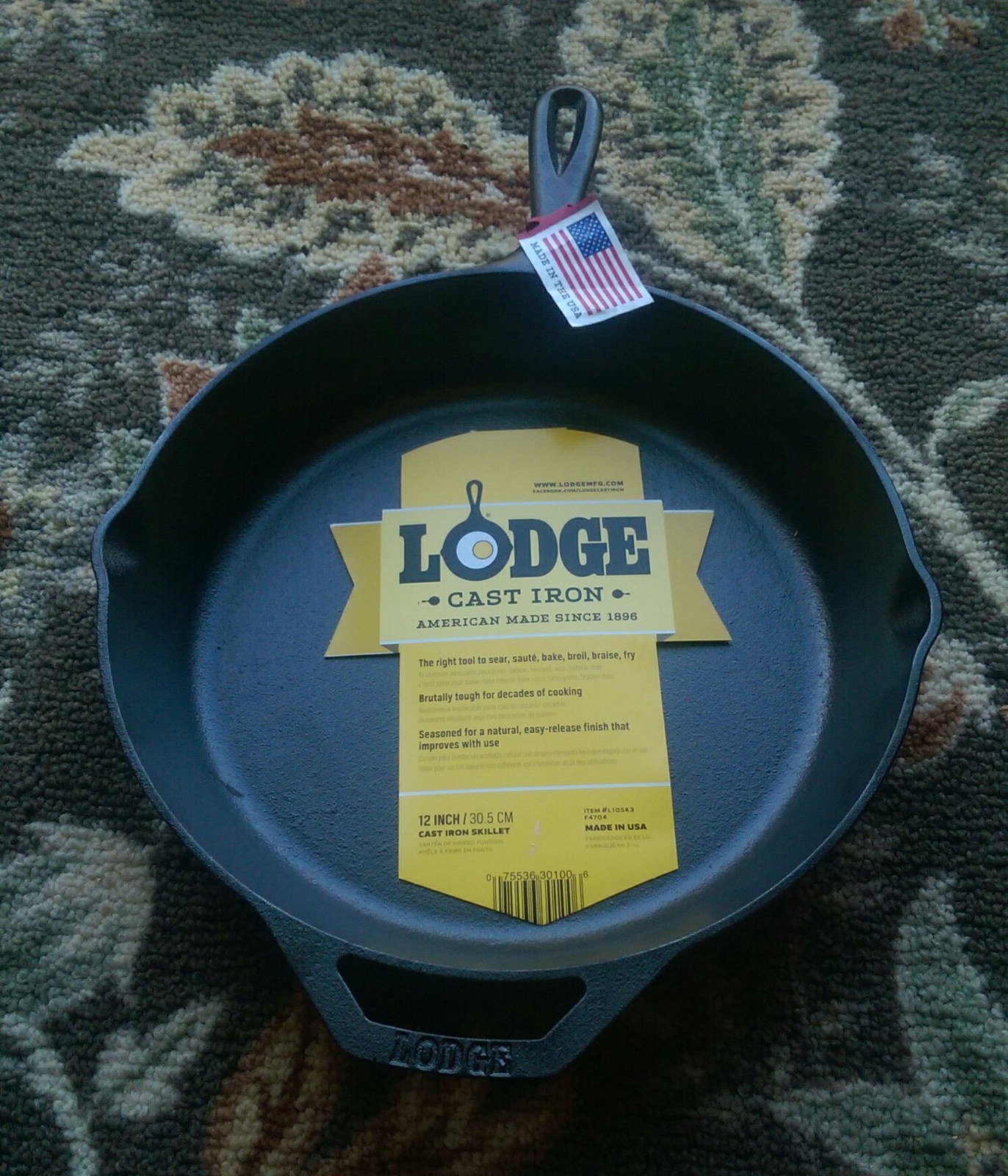
In 2002, under Bob Kellermann's direction, Lodge became the first cast-iron manufacturer to pre-season its cookware at the foundry. The process took eighteen months to perfect. The company's tagline for the launch captured a certain self-aware humor: "We should have thought of this 100 years ago." Within five years, Lodge discontinued unseasoned iron entirely.
The decision proved to be a turning point not just for Lodge but for the entire cast-iron market. Pre-seasoning eliminated the most common objection new buyers had to cast iron, and it arrived at a moment when consumers were beginning to question the safety of synthetic nonstick coatings. The move is widely credited as a catalyst for the modern cast-iron cooking renaissance.
The Cast-Iron Renaissance
Through the mid-20th century, cast iron's share of the American cookware market declined steadily as aluminum, stainless steel, and Teflon-coated pans became standard. By the 1990s, Lodge was one of the last American cast-iron cookware makers still operating.
Beginning in the 2000s and accelerating through the 2010s, consumer interest in cast iron surged. Health concerns over PTFE (Teflon) coatings, a renewed interest in durable goods, and the influence of food media all contributed. Between 2011 and 2017, about a dozen new cast-iron cookware brands entered the market. By 2024, the global cast-iron cookware market was valued at approximately $3.1 billion. Lodge, with its pre-seasoned product line and century of brand recognition, was positioned at the center of this revival.
For Marion County, the renaissance translated directly into economic growth. Lodge's expanding production meant more jobs and investment in a rural county where large employers are few.
A New Foundry (2017)
In 2017, Lodge completed a major expansion. A new 127,000-square-foot foundry in South Pittsburg added two production lines and two induction furnaces, increasing the company's capacity by roughly 75 percent. The same year, Lodge opened a 212,000-square-foot distribution center in New Hope, Tennessee, also in Marion County. At the time of its construction, the distribution center was the largest building ever built in Marion County.
The 2017 expansion kept both production and distribution within Marion County, a decision consistent with the family's long commitment to the community.
Blacklock Premium Line (2019)
In July 2019, Lodge launched the Blacklock premium cookware line, named for the original 1896 foundry. Blacklock pieces are approximately 25 percent lighter than standard Lodge cookware and receive a triple-seasoning treatment. The name was a deliberate nod to the company's origins, connecting the newest product line to the foundry Joseph Lodge built over a century earlier.
$56 Million Expansion (2021)
On October 22, 2021, Governor Bill Lee and Tennessee Department of Economic and Community Development Commissioner Bob Rolfe announced that Lodge would invest $56 million to further expand its South Pittsburg operations and add 239 new jobs. The expansion reconfigured the existing facility and added manufacturing equipment to meet sustained post-pandemic demand. Combined with the 2017 buildout, the 2021 investment brought Lodge's South Pittsburg workforce to roughly 400 and solidified its position as Marion County's largest private employer.
Lodge Museum of Cast Iron (2022)
On October 8, 2022, Lodge opened the Lodge Museum of Cast Iron at 220 East 3rd Street, in a refurbished building immediately next door to the new foundry and a few blocks east of Cedar Avenue. Admission is $10. The museum features three permanent exhibitions: How It's Made, which walks visitors through the foundry process; Lodge History and Legacy, covering the five generations of family ownership; and Cast Iron Culture, developed in collaboration with the Southern Foodways Alliance, exploring cast iron's role in American cooking traditions.
The museum's centerpiece is the world's largest cast-iron skillet. Weighing 14,360 pounds and measuring over 18 feet from handle to handle, the skillet has a capacity of approximately 650 eggs. The record was confirmed by the World Record Academy.
In February 2023, the Oxford, Mississippi-based restaurateur and James Beard Award winner John Currence opened a Big Bad Breakfast location inside the Lodge Cast Iron Foundry and Museum complex on 3rd Street. The restaurant operates daily from 7:00 a.m. to 2:30 p.m. and added a Cornbread Omelet to its menu in honor of the National Cornbread Festival held annually a few blocks away. The Lodge Museum, the new foundry, the factory outlet store, and Big Bad Breakfast together concentrate Lodge's visitor footprint onto a single East 3rd Street block, effectively a second downtown center to complement the original Cedar Avenue commercial row.
The museum serves as both a tourist destination and a cultural archive, preserving the material history of an industry that shaped South Pittsburg and Marion County for over a century.
Cast Iron as Local Identity
Because Lodge has operated in South Pittsburg since 1896, cast iron is more than an industry in Marion County. It is part of the region's material culture. Skillets, Dutch ovens, grill pans, and hearth cookery appear in local homes, restaurants, festivals, and museum displays. The annual National Cornbread Festival, held each spring in South Pittsburg with Lodge as anchor sponsor, draws thousands of visitors and opens the foundry to public tours. The festival centers on cornbread cooked in cast-iron skillets, linking the town's industrial product directly to the region's food traditions.
Few American manufacturers of any kind can claim continuous operation in the same small town for over 125 years. Fewer still remain family-owned. Lodge's persistence has made cast iron a point of local pride, a thread connecting South Pittsburg's 19th-century iron boom to its 21st-century economy.
Museum and visitor operations today
The National Cornbread Festival in late April remains the only time of year the active foundry itself is open to the public for tours. The Lodge Museum of Cast Iron at 220 East 3rd Street in South Pittsburg is open year-round and has become a regular stop on the Tennessee and Chattanooga-region tourism circuit. The museum's Cast Iron Culture exhibit, developed in collaboration with the Southern Foodways Alliance, documents cast iron's role in southern foodways and is periodically updated. Lodge also operates a factory outlet store and a cookbook and accessories retail operation across the street from the museum, concentrating the company's visitor footprint on a single downtown block.
Related
About South Pittsburg →
About the National Cornbread Festival →
Marion County Foodways →
The modern era (Lodge's reinvention and expansion) →
Sources
- Lodge Cast Iron: About Lodge History
- Lodge Cast Iron: "Story of Our Founder Joseph Lodge"
- Wikipedia: Lodge (company)
- Chattanooga Times Free Press: "Lodge fires up bigger foundry" (Dec. 13, 2017)
- World Record Academy: Largest Cast Iron Skillet
- Tennessee Encyclopedia: Marion County
- Globe Newswire: Big Bad Breakfast opens South Pittsburg location in the Lodge Cast Iron Foundry and Museum (Feb. 7, 2023)
- Big Bad Breakfast — South Pittsburg, TN (location page)