Last updated: April 27, 2026
- Type: Town (county seat)
- Established: 1819 (county seat); chartered 1820; first incorporated under Private Acts of 1851-52, Chapter 253; reincorporated under a modern Mayor-Aldermanic charter in 1959
- 2020 population: 3,612
- Elevation: 620 ft
- Area: 9.95 sq mi
- Named for: Sgt. William Jasper, Revolutionary War hero
Jasper sits in the Sequatchie Valley at the southern end of Marion County, where U.S. 72 and Tennessee Route 150 (Betsy Pack Drive) meet at the courthouse square. It is the oldest county-seat town in the county and has served as the civic center of Marion County since 1819. Interstate 24 passes through its southern outskirts, and the Sequatchie Valley National Scenic Byway runs through its historic downtown. With a 2020 population of 3,612, Jasper is the county's largest community.
Setting
Jasper sits at the south end of the Sequatchie Valley where it opens onto the Tennessee River. The Sequatchie River flows just east of town before emptying into the Tennessee River at Jasper's southeastern boundary, a confluence now submerged beneath Nickajack Lake. The Cumberland Plateau rises to the north and west in steep sandstone escarpments, with Jasper Mountain forming the immediate backdrop above the town; low hills extend to the east, and Nickajack Lake occupies the old Tennessee River channel to the south. Elevation at the courthouse square is about 620 feet, and the town covers 9.95 square miles. U.S. Routes 41, 64, and 72 run concurrently through Main Street, crossing Tennessee Route 150 (Betsy Pack Drive) at the square; Interstate 24 passes along the southern outskirts, and the Sequatchie Valley National Scenic Byway follows US-72 and TN-28 north through the historic downtown.
Jasper is named for Sergeant William Jasper (c. 1750 to October 9, 1779) of the 2nd South Carolina Regiment, a Revolutionary War soldier celebrated for retrieving the regimental flag under British fire during the defense of Fort Moultrie on June 28, 1776. He died three years later at the Siege of Savannah. He had no direct connection to Tennessee; the Tennessee General Assembly, following a common early-republic practice, chose the name as a patriotic commemoration when it organized the new town in 1820.
Cherokee and pre-Cherokee presence
The ground on which Jasper sits was in Indigenous use for thousands of years before it was a courthouse square. Archaeological evidence from the Sequatchie Valley and the nearby Tennessee River flats documents Archaic and Woodland occupation (roughly 8000 BC to AD 900), and Mississippian villages (c. AD 900 to 1600) worked the river bottoms at the mouth of the Sequatchie and along the main stem of the Tennessee just south of modern Jasper. The valley's deep soils, dependable springs, and direct line between the plateau rims drew long-term camps and villages; the wider mound-building network along the Tennessee ran through this section. The valley's deep prehistory is told on the In the Beginning page.
By the late 18th century, the Sequatchie Valley and the Tennessee River bottoms were part of the Cherokee homeland. The Chickamauga (Lower) Cherokee towns of Nickajack and Running Water lay a short distance south on the Tennessee, and the future Jasper tract sat within their agricultural and travel range. Both towns were destroyed in the 1794 Nickajack Expedition, but Cherokee households, including the Lowrey family connected to the Jasper founding, continued to hold ground in the valley. Under the Treaty of 1819, several members of the Lowrey family took 640-acre reservations along Battle Creek and near Jasper, and Elizabeth "Betsy" Pack, a Cherokee woman and daughter of Chief John Lowrey, held the forty-acre tract that became the county seat. The remaining Cherokee community in Marion County was forcibly removed along the Trail of Tears in 1838; Betsy Pack was allowed to remain on her Jasper land under her 1819 reservation and ran a ferry on the Tennessee River and, with her mother Nannie Watts, a public house on Battle Creek. The Cherokee Nation, today a sovereign nation headquartered in Oklahoma, traces a portion of its ancestry through the families of the Lower Towns. Jasper's founding, unusually among Tennessee county seats, is directly tied by deed and by continuing street name to a Cherokee woman who was still living on the land she sold.
Origins and founding (1817, 1819)
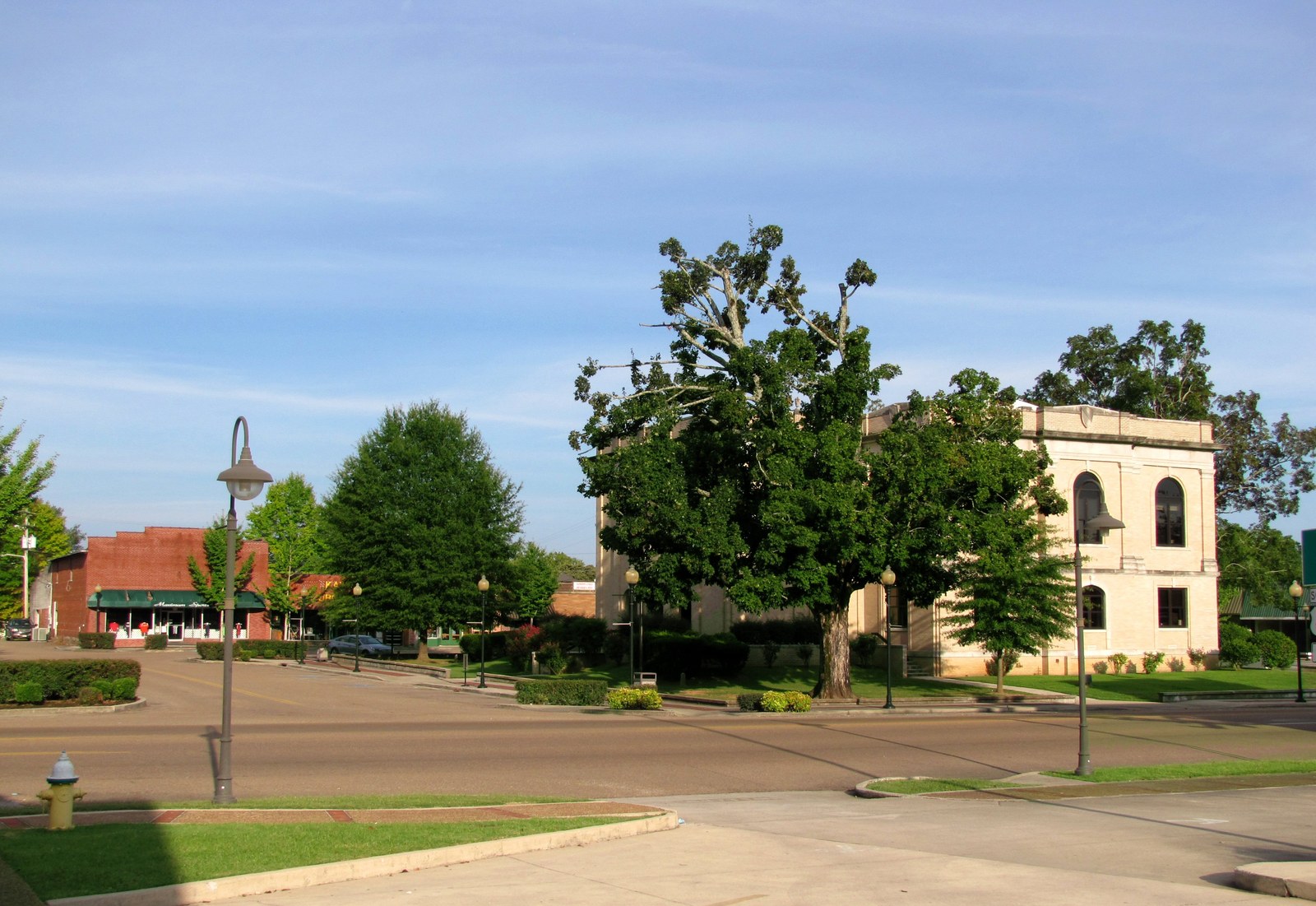
When the Tennessee General Assembly created Marion County in 1817, the first county court was held in the home of John Shropshire in Cheekville, the present-day town of Whitwell. Two years later, county commissioners chose a more central location for a permanent seat. They purchased a 40-acre tract from Elizabeth "Betsy" Pack, a Cherokee woman and daughter of Chief John Lowrey, for the nominal price of one dollar. Betsy Pack had received the land as a Cherokee reservation under the treaties of the 1810s, and the tract she sold became the core of the new town.
The town was named for Sergeant William Jasper of the 2nd South Carolina Regiment, a Revolutionary War soldier celebrated for his defense of Fort Moultrie during the British bombardment of June 28, 1776. A courthouse was completed on the tract in the early 1820s, establishing Jasper as the political and legal center of the county. Betsy Pack herself remained in the area; she and her mother, Nannie Watts, had earlier operated a public house on Battle Creek known as Lowrey's Place, and Betsy ran a ferry on the Tennessee River. The town's principal street, Betsy Pack Drive, carries her name today.
Antebellum growth
Through the 1820s and 1830s, Jasper developed as a small county-seat market town, serving the farms of the Sequatchie Valley floor. The town attracted lawyers, merchants, and tradesmen who depended on courthouse business. Among the earliest prominent residents was Hopkins L. Turney, who began a law practice in Jasper in 1825 and went on to serve in the U.S. House of Representatives and the U.S. Senate (1845 to 1851). His son, Peter Turney, was born in Jasper on September 22, 1827, and would later serve as Chief Justice of the Tennessee Supreme Court and Governor of Tennessee.
The Sequatchie Valley road, running from Pikeville south to the Tennessee River crossings, passed through town and made Jasper a stop on the stagecoach route. By 1860, the town had a population of 249. Though small, it was the commercial and legal hub of a county of roughly 7,100 people.
Civil War (1861, 1865)
Marion County was deeply divided by the war. In the two secession referenda of 1861, the county voted to remain in the Union, in line with most of East Tennessee. Even so, the county sent soldiers to both armies, and in some families members enlisted on opposite sides.
Jasper's location on the road between Nashville and Chattanooga made it strategically significant. Troops from both armies passed through repeatedly. On June 21, 1862, skirmishes erupted at Rankin's Ferry near Jasper, at Shellmound, and along Battle Creek as Confederate General Braxton Bragg maneuvered his Army of Tennessee northward past the Union lines on his way to invade Kentucky. In June and July 1863, during the Tullahoma Campaign, Union General William S. Rosecrans reversed the movement, driving Bragg's forces out of Middle Tennessee and through Marion County toward Chattanooga in what historians have called one of the most skillful maneuvers of the war.
Peter Turney, by then a prominent lawyer, raised the 1st Tennessee Infantry (Confederate) and served as its colonel. He was wounded at the Battle of Fredericksburg in December 1862, shot through the mouth, and saw no further field action. The war disrupted Marion County's economy, destroyed infrastructure, and left lasting divisions in the community.
The railroad era (1867, 1890s)
Before the war, a branch railroad from Bridgeport, Alabama, to Jasper had been authorized in 1860, but construction was delayed by the conflict. The Jasper Branch Railroad was completed in 1867. The first shipment over the line, on March 12, 1867, was nine bales of cotton sent by Owen Russell Beene. Jasper's depot became the original terminus.
In 1868, the Sequatchie Valley Railroad Company was organized to extend the tracks northward from Jasper through the valley. The rails reached Victoria by 1877, when the Nashville, Chattanooga & St. Louis Railway (NC&StL) purchased the line. The NC&StL extended it to Whitwell in 1887, Dunlap in 1888, and Pikeville in 1891, completing a 60-mile route from Bridgeport to Pikeville with Jasper as a key midpoint. The railroad brought new commerce to Jasper, though the heaviest industrial growth in the county occurred at South Pittsburg and the coal towns rather than at the county seat.
By 1890, Jasper's population had grown to 902.
The courthouse fire and rebuilding (1922, 1925)
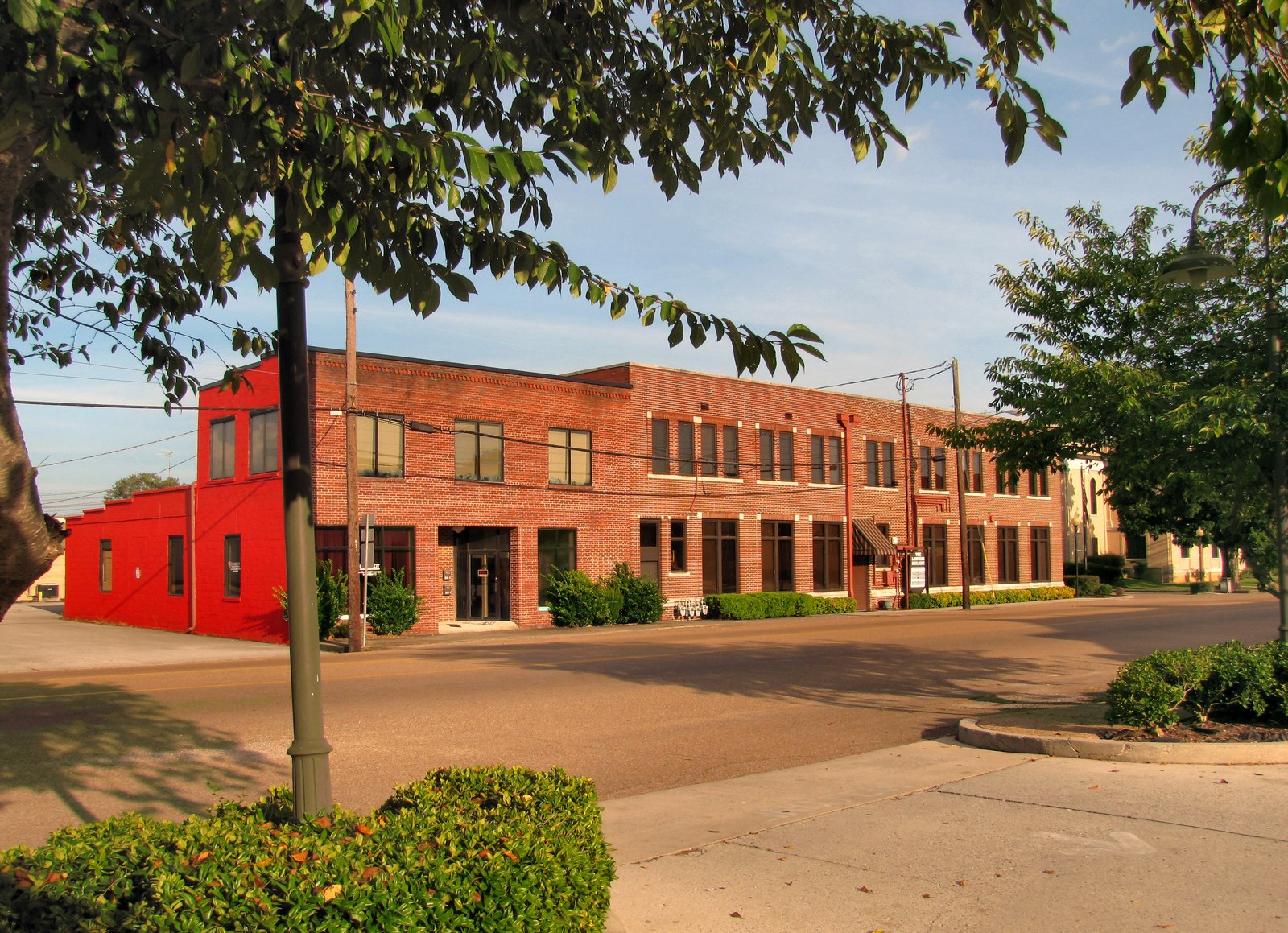
On August 4, 1922, fire destroyed the Marion County Courthouse, taking with it decades of county records including court minutes. The loss was severe: genealogists and historians still note the gap in the county's documentary record. A new courthouse, the third on the site, was completed by 1925. The buff-brick, two-story structure with arched windows and an arched entrance pavilion faces north on the courthouse square and remains in use today. The building suffered a second fire in 1984 and was remodeled in 1986 by Volkhart Architects of Chattanooga, with Warren Construction as contractor. For the full courthouse history, including the Betsy Pack land sale and the war memorials on the grounds, see the courthouse page. The memorials name the county's dead from World War I through Vietnam; the full roster and the stories of the county's two Medal of Honor recipients are on the wars and military service page.
20th century
Jasper avoided the boom-and-bust cycle that marked the coal towns of the northern valley and the industrial cities on the river. Its economy was anchored by county government, professional services, retail, and small manufacturing rather than heavy industry. Population grew steadily: from 1,251 in 1930 to 2,009 in 1970 and 3,214 by 2000.
The completion of Interstate 24 through southern Marion County in the 1960s and 1970s improved Jasper's regional accessibility while shifting some commercial gravity toward the Kimball interchange. Jasper retained its role as the county's governmental center, with the courthouse, county offices, and the circuit court all remaining on the square.
Municipal incorporation and postwar civic life (1851, 1934, 1959)
Jasper was first incorporated as a municipality under Private Acts of 1851-52, Chapter 253, a century and a half before its modern reincorporation. The 1851-52 charter formalized the town as a self-governing municipality with its own mayor and aldermen, building on the 1820 town charter that had followed the 1819 county-seat designation. Jasper did not operate under a modern municipal charter, however, until 1959, when the town was reincorporated with a Board of Mayor and Aldermen government. The board seats one mayor and four aldermen, elected at large, and meets on the second Monday of each month at City Hall on the courthouse square. The restructured government took on responsibility for streets, utilities, zoning, the municipal police force, and the Jasper Fire Department, which provides fire and rescue services for the town and mutual aid across southern Marion County.
A generation before incorporation, in December 1934, the town opened the Jasper Public Library in a small room at the rear of the city office. The library moved several times before settling at 14 West Second Street. In 2020 it was renamed the Carolyn Stewart Public Library in honor of a librarian who had worked there for 45 years, the longest-serving employee in the history of the town or the library. It anchors the Marion County library system along with the Orena Humphreys branch in Whitwell.
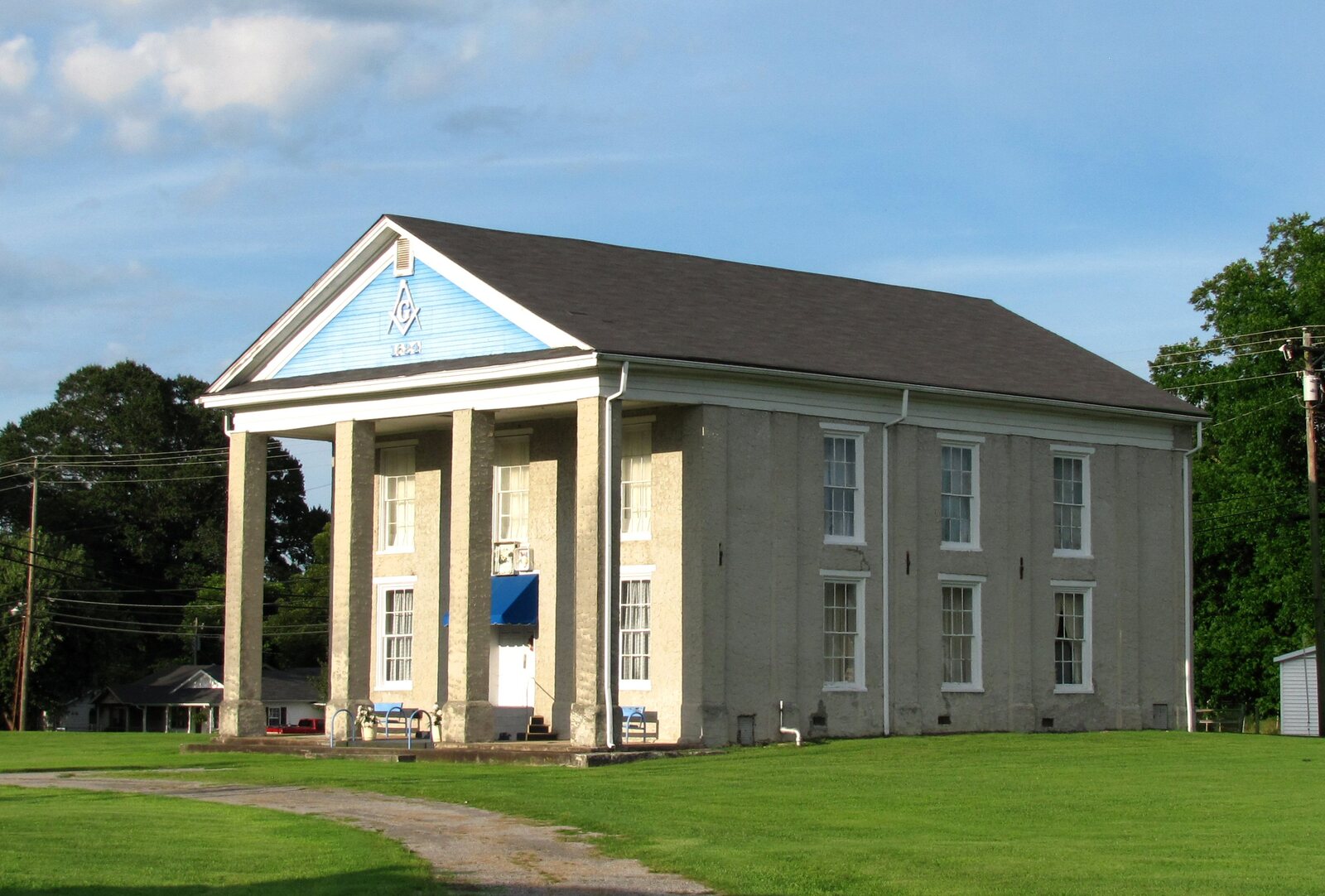
Civic fraternal life in the town centered on the Olive Branch Masonic Lodge No. 297, whose two-story brick hall at 204 Academy Street was built in 1857 and remained in continuous use. The lodge is the oldest fraternal body in the county and the only lodge building on the National Register-era streetscape of downtown Jasper that still serves its original purpose. The Jasper Lions Club and other service clubs met through the postwar decades at churches and restaurants around the square, and in 2026 the Marion County Chamber of Commerce operated from 302 Betsy Pack Drive as the county's unified business organization, representing Jasper, Kimball, South Pittsburg, Whitwell, Monteagle, and the smaller valley communities under a single chamber rather than separate town-level bodies.
Marion County High School and the Warriors
Public secondary education in the county consolidated at Jasper in 1910, when the brick Pryor Institute building on College Street, an 1887 coeducational academy founded by Jackson and Washington Pryor and Col. A. L. Spears, was sold and reopened as Marion County High School. The school grew through the 20th century as the county's single comprehensive public high school and drew students from Jasper, Kimball, Powell's Crossroads, Sequatchie, and the cove communities, with South Pittsburg and Whitwell running separate high schools. Its athletic teams took the name Warriors.
Under head coach Ken Colquette, Marion County ran one of the more successful football programs in Tennessee history during the early 1990s, winning four TSSAA state championships in a six-year span: 1990, 1992, 1994, and 1995. The 1992 championship game ended with a 28 to 26 upset of Brentwood Academy on a 39-yard touchdown pass from Scott Stephens to Guy Hansard and a 33-yard Hansard interception return. The 1994 title came on a 43 to 14 win over Portland, with sophomore running back Eric Westmoreland scoring four touchdowns. In 1995, Westmoreland was named Class 3A Mr. Football and was the championship game MVP in a 28 to 7 win over Humboldt. The Warriors returned to the state title game as runners-up five times through the 2010s, including a 2016 Class 2A final, and advanced to the Class 2A BlueCross Bowl again in 2024 after a 42 to 0 semifinal win over York Institute. Former Warrior running back Jacob Saylors signed with the Detroit Lions in 2025, and his #8 jersey was retired at MCHS in September 2025.
The deeper county-wide athletic ledger, including the 14 combined TSSAA football championships across Marion County, South Pittsburg, and Whitwell and the 97-year rivalry with South Pittsburg that ended in 2021, is collected on the Marion County athletics and MCHS vs. SPHS rivalry pages.
Festivals and annual events
The Marion County Fair, held for decades at the fairgrounds behind Dairy Queen in Jasper, ran as a county-wide multi-day summer event with carnival rides, livestock and homemade-goods competitions, music, and a Fair Queen and Princess pageant begun in 1958. The fair drew from every community in the valley. It is no longer held as an active annual event; the fairgrounds property remains off Betsy Pack Drive.
The town's own civic calendar is built around four large annual events. The Easter Egg Extravaganza in early spring and the Fourth of July Big Boom celebration at Jasper City Park bracket the warm season; the Jack-O-Lantern Jamboree on Halloween brings vendors, music, and trick-or-treating to the courthouse square; and Christmas in a Small Town pairs the annual Christmas parade with a lighted downtown and the seasonal Polar Paradise ice rink in December. These events are organized through the town's Parks and Recreation department in partnership with Jasper Main Street, the nonprofit downtown-revitalization organization formed in March 2014 under the Tennessee Main Street Program to coordinate historic-preservation, event programming, and streetscape work along Betsy Pack Drive.
Annexation and the Exit 158 corridor (2012, 2018)
Jasper's modern growth has pushed southward along U.S. 41 and Interstate 24 rather than through the older downtown street grid. In February 2012, the Board of Mayor and Aldermen unanimously approved a study to annex the corridor between U.S. 41 and I-24 Exit 158, anticipating a Love's Travel Stops development at the interchange. Over the next six years, the town extended water and sewer service toward the exit in stages, and in October 2018 the Marion County Commission and Jasper reached an annexation agreement covering the Exit 158 parcels, including the site of the former Tennessee-Alabama Fireworks store. The Speedway station and Love's travel center that followed added significant commercial sales tax and hospitality revenue to the town and placed Jasper in direct proximity to Kimball's longer-established retail corridor at Exit 152. Together the two exits now anchor Marion County's interstate-era service economy.
Present day
Jasper today is a small city of 3,612 people (2020 census) that functions as the administrative heart of Marion County. The courthouse square remains the center of downtown, ringed by a mix of historic commercial buildings, law offices, and local businesses. County government and the court system are the largest employers in the immediate area. Parkridge West Hospital, at 1000 Tennessee Route 28 on the town's northern edge, was built in 1998 as Grandview Medical Center and joined the HCA-owned Parkridge Health System in March 2014; it runs a 24-hour emergency department and serves the Sequatchie Valley, including Sequatchie, Marion, and Grundy counties in Tennessee and adjacent parts of north Georgia and northeast Alabama. Marion County Airport (Brown Field), 4.5 miles southeast of downtown, serves general aviation.
The Jasper Regional History Museum preserves artifacts from the area's Cherokee, Civil War, and railroad heritage. The town sits along the Sequatchie Valley National Scenic Byway, and the surrounding area offers access to South Cumberland State Park's climbing and hiking venues, including Foster Falls and Denny Cove. Marion County Park at 9696 U.S. 41 is a county-run lakefront recreation area on Nickajack Reservoir with a paved walking loop, camping, fishing, and a boat launch; the TVA Little Cedar Mountain Small Wild Area sits a short drive west on the same lake with a 3.3-mile loop trail. See the hiking and trails hub for the full set of trails reachable from Jasper. The Marion County Partnership for Economic Development works to attract new industry to the area, and Jasper Main Street continues its decade-long streetscape and events program downtown. Between the 2020 census population of 3,612 and the ongoing Jasper Highlands buildout on the plateau above town, Jasper is the principal growth center of Marion County and its civic anchor.
Jasper Highlands
On the plateau directly above Jasper, Jasper Highlands is the largest private residential development in Marion County's modern history. Thunder Enterprises, led by John “Thunder” Thornton, began assembling the roughly 8,893-acre tract on Jasper Mountain in 2008 and opened the first lots for sale in 2014. By the early 2020s about 1,300 of the planned 1,600 lots had been sold. The mountaintop community sits above the city on grades as steep as 11 percent and is a separate place from Jasper proper, though it shares the valley's school district, post office, and civic services. See the dedicated page for the full account.
Population
| Year | Population |
|---|---|
| 1860 | 249 |
| 1890 | 902 |
| 1930 | 1,251 |
| 1960 | 1,450 |
| 1970 | 2,009 |
| 2000 | 3,214 |
| 2020 | 3,612 |
Notable people
- Betsy Pack (Elizabeth Lowrey Pack) (c. 1789, c. 1860), daughter of Cherokee Chief John Lowrey; sold the 40-acre tract on which Jasper was built for one dollar in 1819.
- Hopkins L. Turney (1797, 1857), U.S. Representative and U.S. Senator from Tennessee; began his law practice in Jasper in 1825.
- Peter Turney (1827, 1903), Colonel of the 1st Tennessee Infantry (CSA), Chief Justice of the Tennessee Supreme Court (1886, 1893), and Governor of Tennessee (1893, 1897); born in Jasper.
- Foster V. Brown (1852, 1937), U.S. Representative from Tennessee's 3rd District (1895, 1897); practiced law in Jasper from 1874.
- Tom Stewart (1892, 1972), U.S. Senator and Scopes Trial prosecutor; attended the Pryor Institute and practiced law in Jasper from 1915 to 1919.
- Eric Westmoreland (b. 1977), born in Jasper; Tennessee Class 3A "Mr. Football" in 1995; played linebacker at the University of Tennessee (1998 national champions); third-round NFL draft pick by the Jacksonville Jaguars in 2001.
- Jacob Saylors (b. 2000), born in Jasper; four-year starter at Marion County High School; running back at East Tennessee State (3,861 career yards); signed by the Detroit Lions in 2025. MCHS retired his #8 jersey in September 2025.
Landmarks
- Marion County Courthouse (1925, restored after 1980s fire)
- Marion County Sheriff's Office (5 Oak Avenue; office established 1820)
- Historic commercial block on Betsy Pack Drive
- Olive Branch Masonic Lodge No. 297 (building 1857, 204 Academy Street)
- Carolyn Stewart Public Library (14 West Second Street)
- Jasper Regional History Museum
- Marion County Fairgrounds
- Parkridge West Hospital (1998)
- Marion County Airport (Brown Field)
- Pine Grove Cemetery (243 Mel Dixon Lane; about 2,001 memorials, including a 2016 Daughters of the American Revolution monument to Capt. Alexander Kelly of King's Mountain and the Lewis pioneer family from the Shenandoah Valley)
Related
Jasper Highlands (the mountaintop development above Jasper) →
First settlers of Marion County (Betsy Pack and the 1819 Lowrey reservations) →
The Trail of Tears through Marion County (Betsy Pack's removal from Alabama in 1838) →
The Marion County Sheriff (law enforcement since 1820) →
Elections and County Commission (county judges, county executives, and the county mayor) →
Town Governments (mayors and boards of Marion County's incorporated towns) →
The Civil War in Marion County →
Reconstruction in Marion County →
Transportation & railroads →
Religious history of Marion County →
Demographics & economy →
Sources
- Wikipedia: Jasper, Tennessee
- Wikipedia: Marion County, Tennessee
- Wikipedia: Peter Turney
- Wikipedia: Hopkins L. Turney
- Wikipedia: Tullahoma campaign
- Tennessee Encyclopedia: Marion County
- Tennessee Encyclopedia: Peter Turney
- Sequatchie Valley National Scenic Byway: Jasper
- Sequatchie Valley Railway Village: History
- Tennessee State Library & Archives: Marion County fact sheet
- American Courthouses: Marion County
- Tennessee Secretary of State: Marion County genealogical fact sheet
- Marion County, Tennessee official website
- Jasper Highlands developer site
- Chattanooga Times Free Press: Mountaintop appeal, Jasper Mountain development (2014)
- Chattanooga Times Free Press: Jasper Highlands adds bigger, secluded lots (2018)
- The Chattanoogan: Jasper Highlands selling out (2021)
- TNLand: Jasper Highlands in Marion County (2021)
- TNLand: Aetna Mountain's River Gorge Ranch (2022)
- Town of Jasper, TN: official municipal site
- Town of Jasper: Carolyn Stewart Municipal Library
- Marion County Election Commission: County and Municipal Officials
- Ballotpedia: Jasper, Tennessee
- Jasper Main Street
- Marion County Chamber of Commerce
- Marion County Fair (Jasper)
- Marion County High School: History
- TSSAA: Marion County High School football championship history
- Chattanooga High School Football: state champions (Marion County 1990, 1992, 1994, 1995)
- Parkridge West Hospital, Jasper
- Chattanooga Times Free Press: Marion County annexation deal with Jasper (2018)
- Chattanooga Times Free Press: Jasper advances annexation study (2012)