Last updated: April 27, 2026
- Original name: South Pittsburg Municipal Hospital (SPMH)
- Current name: Old South Pittsburg Hospital Paranormal Research Center (OSPHPRC)
- Address: 1100 Holly Avenue, South Pittsburg, TN 37380
- Location: Holly Avenue between 10th and 12th Streets, at the foot of South Pittsburg Mountain
- Built: Opened October 1959
- Founders: Four local physicians
- Doctors honored on Chapel donor windows: Viston Taylor, Russ Adcox, Jimmy Havron, Bill Headrick, Gene Ryan, and John Hackworth
- Original size: About 68,000 square feet, with multiple additions over the following decades
- Closed as a hospital: 1998
- Reopened as paranormal research center: mid-2010s
- Current operator: Ronne Daudt, paranormal investigator from the Chicago area
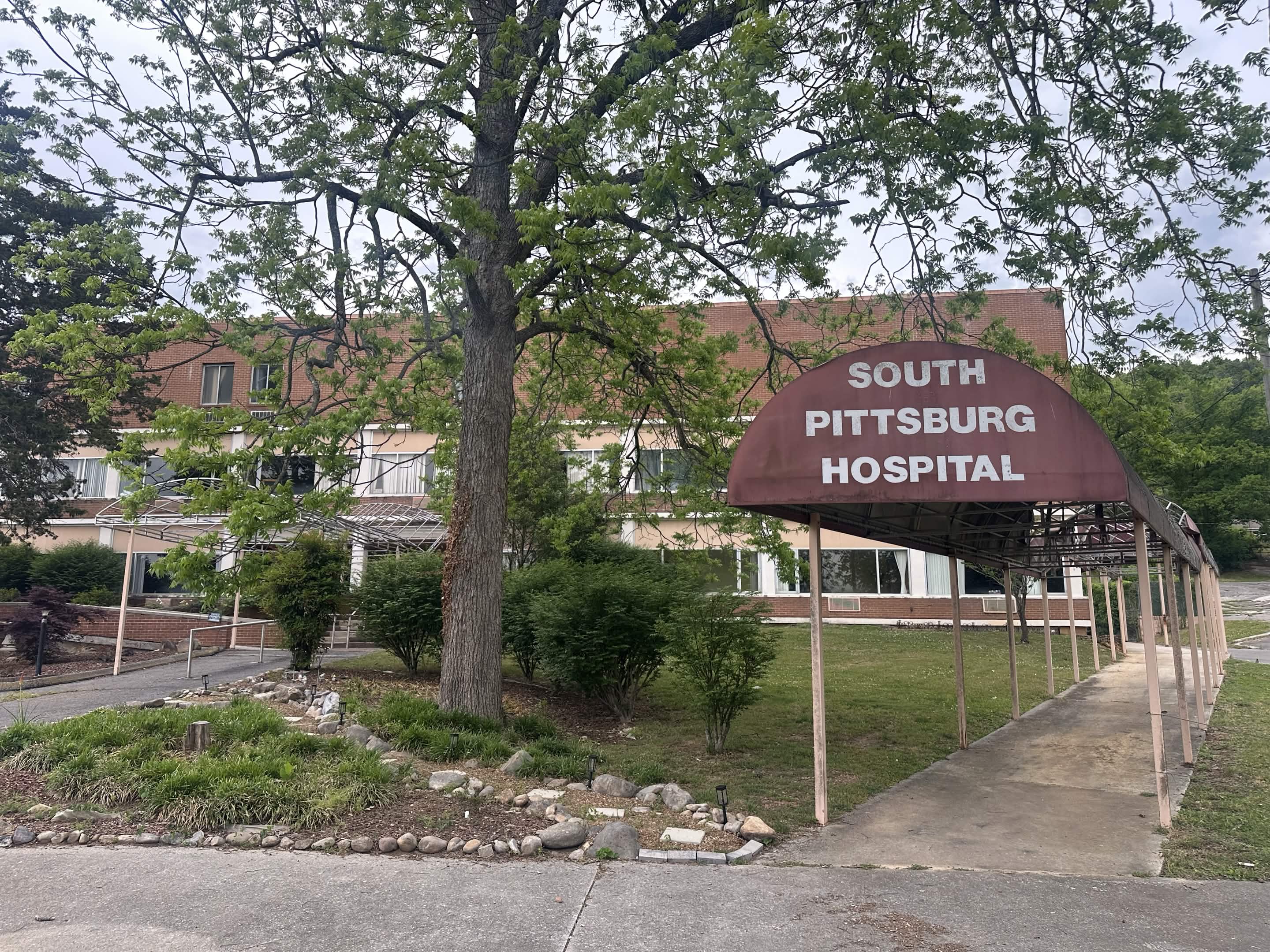
The Old South Pittsburg Hospital is a community hospital that opened in October 1959 as the South Pittsburg Municipal Hospital (SPMH), served the lower Sequatchie Valley for almost forty years, and closed in 1998 when a larger replacement hospital opened in Jasper. After a long stretch of vacancy and an ownership change involving the IRS, the building was acquired by Chicago paranormal investigator Ronne Daudt and reopened in the mid-2010s as the Old South Pittsburg Hospital Paranormal Research Center (OSPHPRC), an overnight investigation venue that has since been featured on several national paranormal-television programs. It is one of two well-known Marion County properties whose second life is built around its haunted reputation, the other being the Hales Bar Dam powerhouse.
The hospital era (1959 to 1998)
Through the first half of the 20th century, residents of South Pittsburg and the surrounding river towns relied on a small circle of private physicians and on the company-built Dixie Hospital at Richard City, which Dr. J. W. Kirkpatrick had opened first as an infirmary at the Dixie Inn and later expanded into a larger facility on the road to the Dixie Portland Cement plant. There was no full-service public hospital in southern Marion County. By the late 1950s, the population around South Pittsburg, New Hope, Kimball, and Jasper had grown enough to support a permanent acute-care facility, and a group of four physicians organized the project. The facility opened in October 1959 as the South Pittsburg Municipal Hospital, on the slope of South Pittsburg Mountain along Holly Avenue at the northern edge of town.
The original 1959 building covered about 68,000 square feet, with an emergency entrance, a single inpatient floor, surgical suites, and a basement service level. Multiple wing additions were built over the next several decades as the hospital expanded its service area to cover most of the Sequatchie Valley south of Dunlap and parts of north Alabama. For most of its operating life it was the closest hospital to South Pittsburg, Richard City, New Hope, Kimball, Sequatchie, and the smaller riverside communities, and it served as the local emergency department, maternity ward, and surgical center.
The names of the four physicians who founded the hospital in 1959 are not preserved as a group in available local primary sources. The South Pittsburg Historic Preservation Society's restored Chapel on the Hill carries a stained-glass window inscribed “South Pittsburg Municipal Hospital Doctors” that names six physicians who practiced there during its operating years: Viston Taylor, Russ Adcox, Jimmy Havron, Bill Headrick, Gene Ryan, and John Hackworth. The window honors hospital doctors generally rather than the specific founding four, and not all six were necessarily present at the 1959 opening. The doctors' window is one of several donor windows in the Chapel that recognize South Pittsburg families and institutions.
Promotional material for the building's current paranormal-research use names a “Dr. J.B. Havron” as one of the four founding physicians. That identification appears to confuse two different members of the Havron family. A separate Chapel donor window recognizes Prof. J.B. and Grace Dean Havron, who were educators rather than physicians; the South Pittsburg Historic Preservation Society's oral-history program records that Cindy Patrick's grandparents, the J.B. Havrons, worked at South Pittsburg High School, and that her father, Dr. James (“Jimmy”) Havron, was the SPMH doctor named on the hospital window. The local primary-source record therefore supports a Havron physician at SPMH but as Dr. James Havron, not the educator J.B. Havron.
Closure and the move to Jasper
By the 1990s the SPMH building was aging, the original 1959 plant had been overlaid by decades of small additions rather than replaced, and the regional population center had shifted up the valley toward Jasper, Kimball, and the Interstate 24 interchanges. A new nonprofit-owned hospital, Grandview Medical Center, was built on the northern edge of Jasper. Grandview opened the week of September 29, 1998, and the South Pittsburg Municipal Hospital quietly closed its doors the same year. The Jasper hospital later joined the HCA-owned Parkridge Health System in March 2014 and is known today as Parkridge West Hospital. The new building took on SPMH's role as the Sequatchie Valley's emergency department and acute-care facility, serving Marion, Sequatchie, and Grundy counties along with adjacent parts of north Alabama and northwest Georgia.
The South Pittsburg building was left vacant after the closure. It moved through several owners over the next decade and a half, and at one point was conveyed to the Internal Revenue Service in connection with tax problems involving prior owners. Local-government correspondence at the time noted ongoing problems with mold and zoning compliance.
Vacant years and a haunted reputation
For most of the years between the 1998 closure and the building's purchase by its current owner, the hospital sat largely empty on the slope of South Pittsburg Mountain. During that period the property accumulated a steady local reputation for being haunted. Stories circulated about disembodied voices in the corridors, lights and equipment behaving oddly, and figures seen on the upper floors after dark. Some accounts traced the reputation back to events that allegedly occurred during the hospital's operating years; others were simply the kind of folklore that gathers around any abandoned medical building. The reputation predated the property's commercial use as a paranormal venue and is part of the reason later owners chose that direction for its second life.
The Old South Pittsburg Hospital Paranormal Research Center
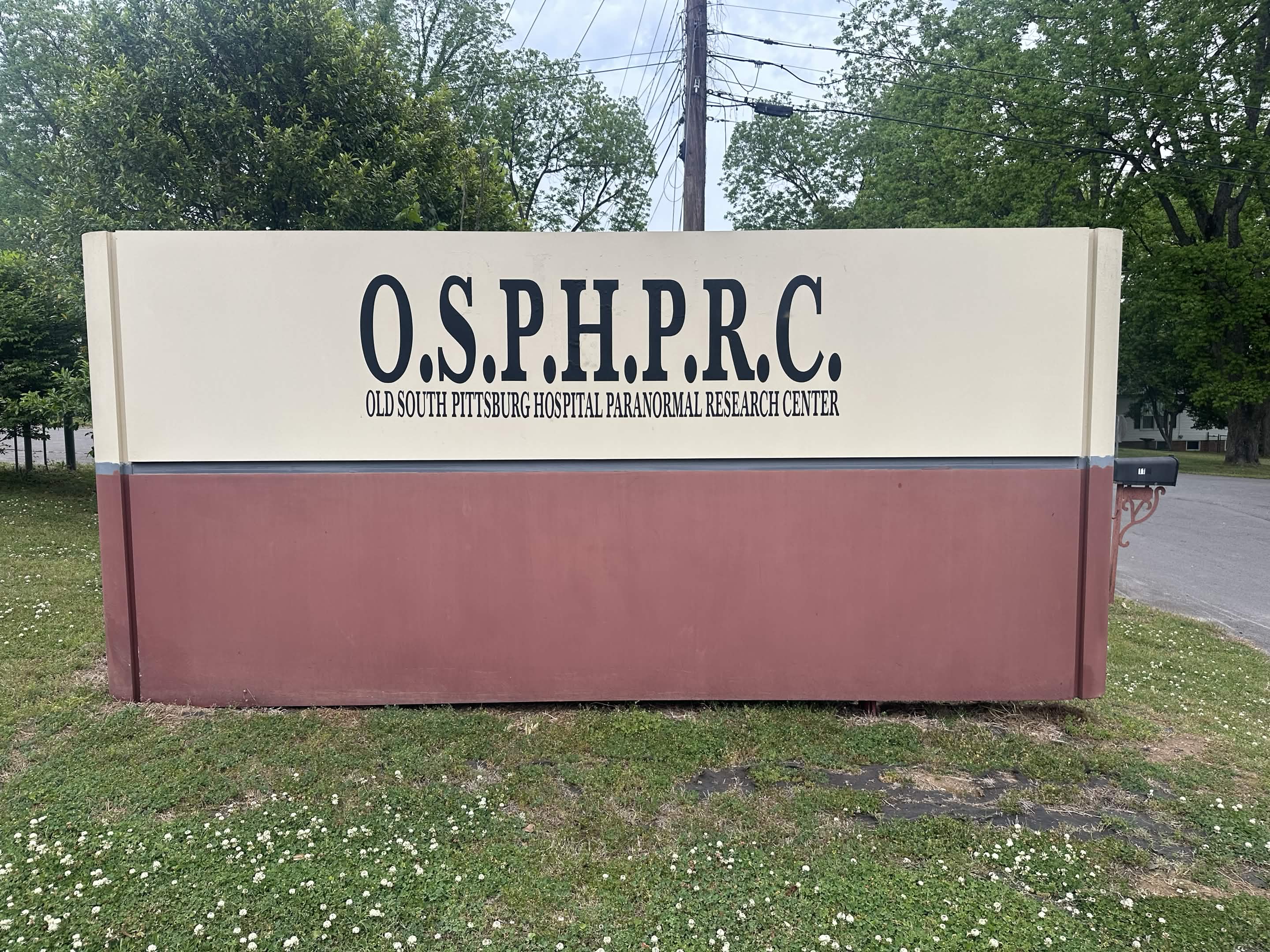
The current operator, Ronne Daudt, is a paranormal investigator who began running investigations as part of a small group in the Chicago area in the late 1990s. Daudt visited the South Pittsburg building during one of his earlier investigations and, according to interviews he has given, the experience prompted him to pursue ownership of the property. He acquired the building in the mid-2010s and reopened it as the Old South Pittsburg Hospital Paranormal Research Center. Sources differ on whether the formal reopening was in 2014 or 2018; the earlier date may correspond to soft-open investigations before the formal purchase closed.
OSPHPRC operates as a paid investigation venue and overnight tour site rather than as a traditional historic museum. Visitors book multi-hour or overnight stays in the building and conduct their own paranormal investigations using the operator's equipment. South Pittsburg's city administrator at the time, Gene Vess, noted in 2020 that the new owners had addressed the earlier mold and zoning issues and that the venue had become a source of steady out-of-town visitor revenue, with significant numbers of guests traveling up from Atlanta and Chattanooga. The center also hosts conventions and team-based paranormal events.
The building has appeared on several national paranormal-television programs, most notably Travel Channel's Destination Fear (Season 1, Episode 2, "Old South Pittsburg Hospital," 2019), the Tennessee Wraith Chasers' Ghost Asylum, Kindred Spirits, Paranormal Challenge, and Haunted Hospitals. Promotional copy across these appearances describes it as one of the most haunted locations in Tennessee.
Reported phenomena
The phenomena described in OSPHPRC tour material and in television-show framing are part of the building's current narrative use rather than independently verified events. With that caveat, the most commonly described figures are a child spirit on the third floor known by guests as “Buddy,” a tall male figure also reported on the third floor and described variously as a former surgeon and as aggressive toward women, a basement nurse figure, a separate female nurse figure, and a doctor and janitor pair. General reports include disembodied voices, shadow figures, full-body apparitions, and interference with electronic equipment brought into the building by visiting investigators.
The hospital's haunted reputation is also covered, alongside the Hales Bar Dam powerhouse, on the Folklore and the paranormal page.
Significance to South Pittsburg
The 1959 to 1998 hospital era represents the first and only time South Pittsburg had its own full-service general hospital. For most of those four decades, residents of the city, of Richard City, and of the surrounding rural townships were born, treated, and in many cases died inside the building. Its 1998 closure was part of the same regional shift that moved retail, government services, and civic gravity from the older river towns up to the Interstate 24 interchange at Kimball and the new hospital and county-services campus at Jasper. The building's second life as a paranormal venue is unusual but it has at least kept the structure occupied, maintained, and on the local map after the era of small, community-owned municipal hospitals ended.
Related
About South Pittsburg →
About Jasper →
About Richard City →
Folklore and the paranormal in Marion County →
About Hales Bar Dam →
Sources
- South Pittsburg Historic Preservation Society — Chapel on the Hill (donor windows naming the SPMH doctors and the Prof. J.B. & Grace Dean Havron window)
- South Pittsburg Historic Preservation Society — Voices of South Pittsburg (oral-history program; Cindy Patrick interview on the Havron family and Dr. James Havron's medical practice)
- Jerry Summers, “South Pittsburg's Old Haunted Hospital,” Chattanoogan, June 14, 2020
- IMDb — Destination Fear, Season 1 Episode 2, “Old South Pittsburg Hospital” (2019)
- Travel Channel — Ghost Asylum, “Old South Pittsburg Hospital”
- Parkridge West Hospital, Jasper (the 1998 replacement facility)
- Photographs by Tyce H, 2026 (front of the building, OSPHPRC monument sign).