Last updated: April 27, 2026
Marion County sits within a broader Appalachian cultural region where folklore, music, and folk medicine have deep roots. The hauntings at Hales Bar Dam and the Old South Pittsburg Hospital are the county's most fully attested traditions, carried in local press and on national paranormal-television programs. Around them sit the Cherokee river lore of the Tennessee River gorge, coal-camp mining traditions imported from older Appalachian coalfields, the granny-woman healer tradition shared across the Cumberland Plateau, and the fiddle and string-band lineage of the Sequatchie Valley corridor.
Hales Bar Dam: Marion County's Most Documented Haunting

Hales Bar Dam, built between 1905 and 1913 on the Tennessee River near Guild in Marion County, is the richest source of ghost traditions in the county. The construction was brutal: between 109 and 112 workers died in industrial accidents during the eight-year project, with additional deaths from pneumonia. A boiler explosion killed one worker. A falling derrick crushed two. One drowned after his foot tangled in a rope. Violence in the labor camps resulted in several murders. The dam's foundation sat on fractured Bangor Limestone, which leaked from the start and was never successfully sealed. By the late 1950s, the dam was leaking 2,000 cubic feet of water per second.
TVA ceased operations at Hales Bar Dam on December 14, 1967, and the structure was demolished by September 1968 when Nickajack Dam replaced it. The powerhouse survived and now operates as a marina, event venue, and destination for paranormal tourism. It has been featured in paranormal investigation television and regional press.
The Submerged Cemetery at Long
When TVA created Nickajack Lake, the rising waters reached the community of Long and its cemetery. Graves were not relocated before inundation. As late as the 1990s, three headstones marking the graves of Henry, Moses, and Sarah Long were reported visible above the waterline approximately 70 yards from shore, where Dry Creek empties into the lake. The claim circulates widely in paranormal tourism sources.
The Dragging Canoe Tradition
A popular tradition holds that the Cherokee war chief Dragging Canoe cursed the land following the 1775 Treaty of Sycamore Shoals, in which the Transylvania Company purchased more than 20 million acres of Cherokee land. Dragging Canoe is documented as calling the ceded territory "dark and bloody ground" and warning that settlers would find it unproductive. Cherokee tradition also held that the Tennessee River whirlpool known as "The Suck", near the dam site, was a place where spirits dwelt and where those who approached would be drawn in. The "dark and bloody ground" quote is historically documented in primary sources, but its specific application as a "curse on the dam site" is a later folk tradition layered onto the original record.
The Old South Pittsburg Hospital
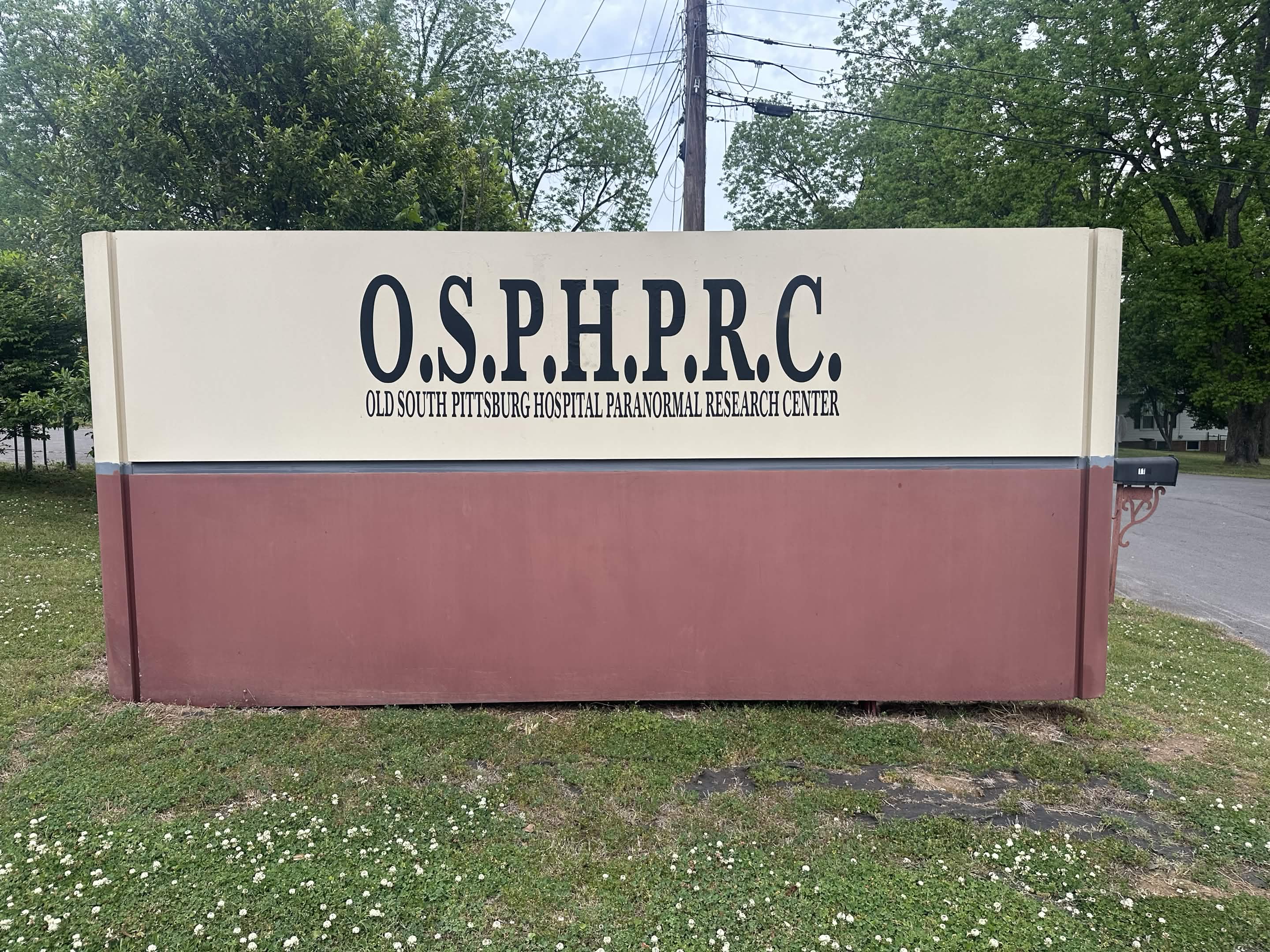
The county's second well-known paranormal-tourism site is the Old South Pittsburg Hospital, the former South Pittsburg Municipal Hospital at 1100 Holly Avenue. Built in 1959 by four physicians and serving the lower Sequatchie Valley until it closed in 1998, the building sat largely vacant through the early 2000s. During those years it accumulated a steady local reputation for being haunted, with stories of disembodied voices in the corridors, equipment behaving oddly, and figures seen on the upper floors after dark. The reputation circulated locally before any commercial use of the property and is part of the reason later owners chose a paranormal-tourism direction for its second life.
In the mid-2010s the building was acquired by Chicago paranormal investigator Ronne Daudt and reopened as the Old South Pittsburg Hospital Paranormal Research Center (OSPHPRC), an overnight investigation venue. The current narrative material describes a recurring cast of figures: a child spirit on the third floor known to guests as “Buddy,” a tall male figure also reported on the third floor, a basement nurse and a separate female nurse, and a doctor and janitor pair. The phenomena are part of the venue's tour material rather than independently verified events; they form the contemporary folklore of the building in the same way that the submerged graves and construction-fatality stories form the contemporary folklore of Hales Bar.
The hospital has appeared on Travel Channel's Destination Fear (Season 1, Episode 2, 2019), the Tennessee Wraith Chasers' Ghost Asylum, Kindred Spirits, Paranormal Challenge, and Haunted Hospitals. Promotional copy across these appearances describes it as one of the most haunted locations in Tennessee.
Nickajack Cave Traditions
Nickajack Cave, with its enormous mouth (originally 140 feet wide and 50 feet high before partial flooding in 1967), was a stronghold for Dragging Canoe's Chickamauga Cherokee and was destroyed by American militia in the 1794 Nickajack Expedition. The cave has long carried the kind of local legends — murders, moonshining, buried treasure — common to large entrances on the plateau. The cave's association with Johnny Cash's 1967 episode has itself entered the realm of local legend.
Coal Mine Lore
Marion County's coal mining communities, including Whitwell, Victoria, Orme, Inman, and Needmore, operated mines from the 1870s through the late 20th century. The worst documented disaster was the No. 21 Mine explosion at Whitwell on December 8, 1981, which killed 13 miners when a cigarette lighter ignited a pocket of methane gas. The Tennessee Consolidated Coal Company (operating through subsidiary Grundy Mining Company) was found liable for failures in ventilation, evacuation, and smoking enforcement. A 1983 lawsuit settlement paid approximately $10 million to survivors' families. The mine closed in 1997.
The broader Appalachian mining folklore tradition includes "Tommy Knockers," spirits of men killed in previous accidents who warn current miners of danger by knocking on rock. The tradition has Cornish mining origins and was carried to Appalachian coal fields by immigrant miners. In some communities, miners left the last bite of food from their lunch pail in the mine as an offering. The tradition was widespread across the Tennessee and Kentucky coal fields where Marion County miners worked and trained.
Granny Women and Folk Medicine
The "granny woman" tradition, in which women healers served as midwives and herbalists in isolated mountain communities, is one of the more documented aspects of Appalachian folk culture. The practice blended Cherokee plant knowledge (ginseng, sassafras, wild cherry bark, sumac, black walnut, dogwood bark, yellowroot) with European herbal tradition, all framed within Protestant Christianity. Practitioners treated burns, warts, bladder and stomach problems, and fever. Catnip tea was a common remedy for hives; sulfur placed in shoes was used as a flu preventative. The tradition was practiced "through a strictly Protestant lens," and practitioners would have strongly rejected any association with paganism.
The tradition was active throughout the Cumberland Plateau and Sequatchie Valley region. The earliest Anglo-American settlers in what became Marion County, including the Bean and Raulston families who settled Sweeten's Cove as early as 1808, had direct contact with Cherokee communities whose plant knowledge formed one pillar of the granny-woman pharmacopoeia.
Fiddle and Folk Music Traditions
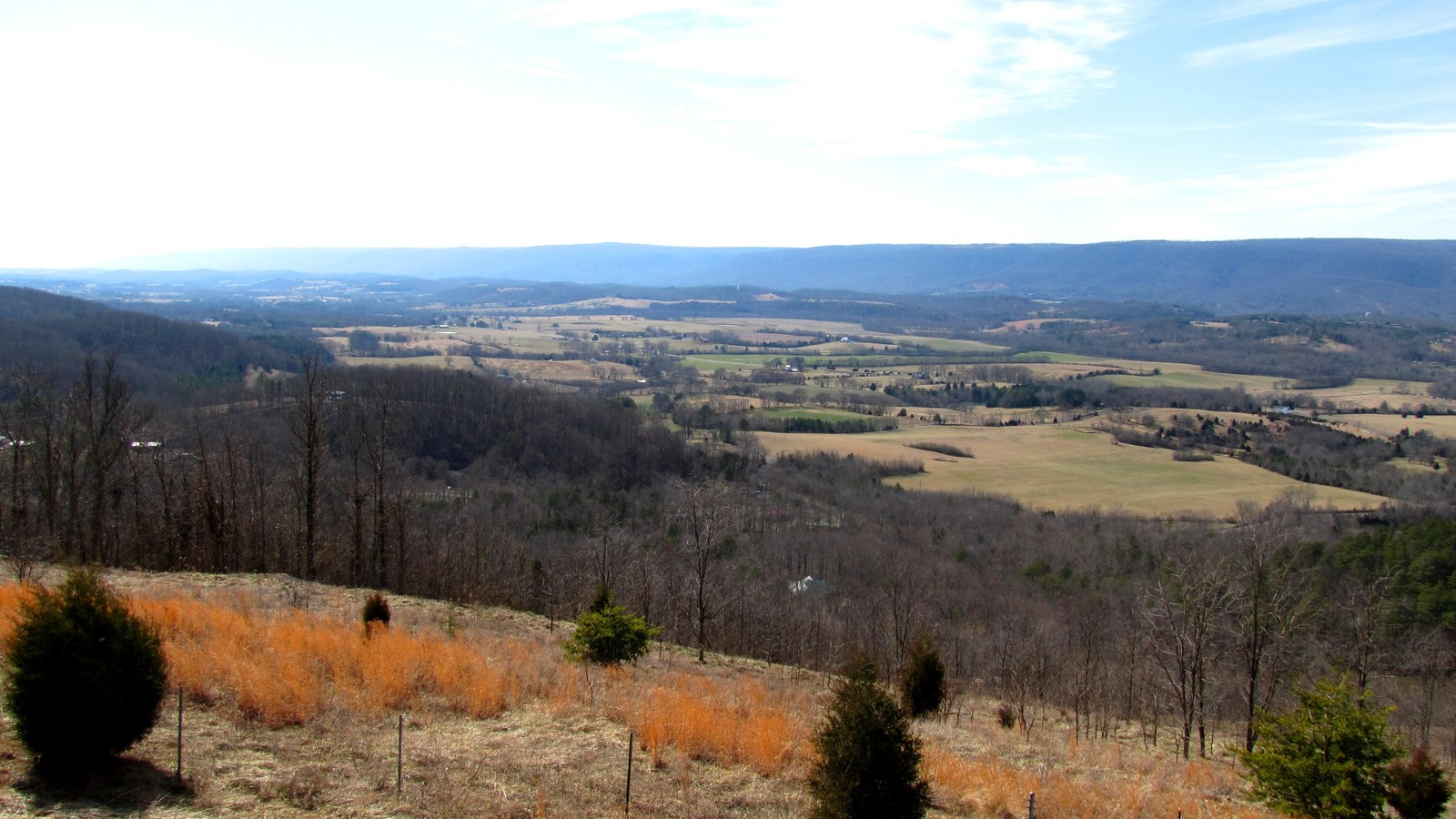
The Sequatchie Valley and Walden Ridge have a documented fiddle and string-band tradition that connects to the broader Cumberland Plateau musical heritage.
Joseph Decosimo and the Sequatchie Valley Fiddle Tradition
Joseph Decosimo, a fiddler and scholar (PhD American Studies, MA Folklore) who grew up on Signal Mountain on Walden Ridge above Chattanooga, has done the most to document and preserve the fiddle tradition of the Sequatchie Valley corridor. His 2012 album Sequatchie Valley (Sleepy Cat Records) draws on tunes learned directly from older musicians' living rooms, field recordings, and 78 rpm records. Tracks include "Jenny in the Cotton Patch" (learned from Bob Douglas's style), "Old Chattanooga," "Sally Brown," and "In the Pines." Bob Douglas taught the fiddler Blaine Smith the tune "Old Chattanooga" in the 1920s, documenting the living transmission of tunes along the Walden Ridge and Sequatchie Valley corridor.
Clyde Davenport (1921 to 2020)
Clyde Davenport, a master fiddler who spent his life on the Cumberland Plateau (Wayne County, Kentucky, on the same plateau system), was keeper of more than 200 fiddle tunes, many rare, learned from his father, grandfather, and neighboring fiddlers. He played solo fiddle in cross-tuning styles with a fluid blues approach. In 1986, County Records released Clydeoscope: Rare and Beautiful Tunes from the Cumberland Plateau. Davenport received a National Heritage Fellowship from the National Endowment for the Arts and was a direct influence on Joseph Decosimo. His fieldwork recordings are held at the Berea College archives and the Library of Congress.
The Two Poor Boys (Joe Evans and Arthur McClain)
The Two Poor Boys, the folk-blues duo of Joe Evans and Arthur McClain, recorded between 1927 and 1931, producing rags, hoedowns, pop songs, and blues. They also recorded under the pseudonyms "Colman and Harper." Evans played guitar and vocals; McClain played mandolin, guitar, kazoo, piano, and violin. Their complete works (20 tracks) have been reissued by Document Records. The Tennessee Encyclopedia connects them to the Sequatchie Valley.
Local History Sources
Published county histories and compilations by local authors are the most promising sources for folk traditions not yet captured in academic or newspaper archives. Key volumes include:
- Nonie Webb, Marion County historian: Marion County, TN: The County with a Future (1987); The Story of Ketner's Mill (1987); Marion County, Tennessee: History and Keepsake Memories (430+ pages, covering first settlers, oral histories, photographs, maps, and postcards); Old Schools, Teachers, & Students of Marion County, Tennessee.
- Georgiana Kotarski, Ghosts of the Southern Tennessee Valley (John F. Blair, Publisher): a regional ghost anthology drawing on old newspaper accounts and personal interviews from southeast Tennessee, northwest Georgia, and north Alabama. Kotarski, a director at the Sequatchie Valley campus of Chattanooga State, describes experiencing a haunted 1880 farmhouse in the Sequatchie Valley with a ghostly farmer figure and a phantom white cat.
The WPA Federal Writers' Project documentation for Marion County (Tennessee State Library and Archives, Record Group #107, Roll 57) is primarily genealogical and church-record focused: deeds, church registers, and marriage records. The WPA Guide to Tennessee (1939) contains state-level folklore and Tennessee Valley sections that reference the Sequatchie Valley region in regional rather than county-level framing.
Moonshine and folklore of the still sites
Tennessee's early temperance laws, state prohibition beginning in 1909, and federal prohibition from 1920 through 1933 made unlicensed distilling profitable on the Cumberland Plateau for more than a century. The folklore surrounding moonshine, from "revenuer" ambushes in hollows off Raccoon Mountain to claims of hidden stills in Marion County caves, circulated in the same oral-tradition space as ghost stories and Civil War guerrilla tales. Tennessee Council for Professional Archaeology has catalogued archaeological evidence of moonshine still sites on Raccoon Mountain, giving some of this folklore a physical anchor. Read more about Moonshine and Prohibition →
Related
"The Suck" Rapids and Cherokee River Lore →
Johnny Cash at Nickajack Cave →
The Old South Pittsburg Hospital →
Hales Bar Dam →
Music Heritage →
Moonshine and Prohibition →
About Haletown & Guild →
About Nickajack & Running Water →
Religious History →
Sources
- Wikipedia: Hales Bar Dam
- Association of State Dam Safety: Hales Bar Dam, Many Firsts and Many Lessons
- Jerry Summers, “South Pittsburg's Old Haunted Hospital,” Chattanoogan, June 14, 2020
- IMDb: Destination Fear, S1E2, Old South Pittsburg Hospital (2019)
- Wikipedia: No. 21 Mine Explosion
- Wikipedia: Nickajack Cave
- Atlas Obscura: The Long Tradition of Folk Healing Among Southern Appalachian Women
- Smithsonian Folklife: Appalachian Folk Magic
- Sleepy Cat Records: Joseph Decosimo
- NEA Heritage Fellowship: Clyde Davenport
- Wikipedia: The Two Poor Boys
- Chattanoogan.com: Nonie Webb Has New Book on Marion County
- Georgiana Kotarski, Ghosts of the Southern Tennessee Valley