Last updated: April 23, 2026
- 2022 poultry and egg sales: $24,973,000 (58 percent of Marion County's $43.1 million in total agricultural product sales)
- Broilers and other meat-type chickens on inventory (Dec. 31, 2022): 918,298 birds
- State rank, poultry and egg sales: 16th of 95 Tennessee counties
- Layers on inventory (Dec. 31, 2022): 6,301
- Pullets: 155; Turkeys: 35
- Nearest integrator processing complex: Koch Foods, Chattanooga (Hamilton County)
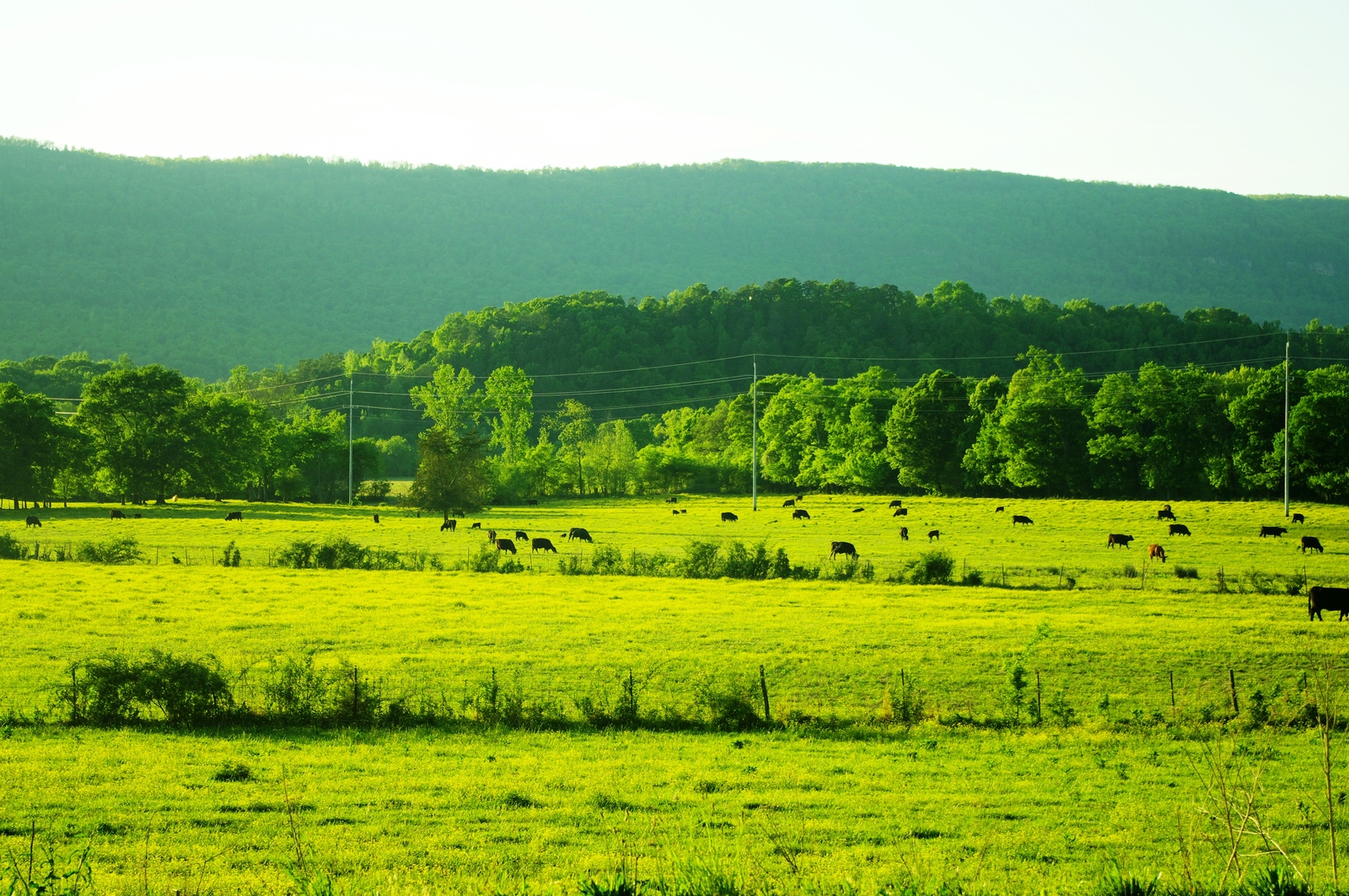
Marion County is a broiler county. The 2022 Census of Agriculture records $24.97 million in poultry and egg sales at Marion County farms, which is 58 percent of the $43.10 million in total agricultural product sales reported that year. No other commodity class approaches that scale. Cattle and calves, the next-largest livestock line, booked $2.04 million in sales, less than a tenth of poultry. Marion ranks 16th of 95 Tennessee counties in poultry and egg receipts, placing it among the top fifth of the state in an industry that has become the dominant form of Tennessee livestock agriculture outside dairy and beef.
None of this was true within living memory. Marion County's farm economy through the early and middle 20th century ran on corn, hay, cattle, and smaller acreages of wheat, oats, and tobacco, a pattern shaped by the Sequatchie Valley's limestone-based bottomlands and the thin plateau soils above them. Poultry was a yard flock on nearly every farm, but commercial broiler operations on anything like modern scale did not arrive until the southeastern vertical-integration boom of the 1960s and 1970s caught up with the Chattanooga-area hinterland. The shift from a diversified smallholder agriculture to a poultry-dominated contract-grower economy is the single largest structural change in Marion County farming of the past half century.
What the 2022 USDA Census shows
The USDA National Agricultural Statistics Service publishes a county-profile page for every county in every Census of Agriculture. The 2022 profile for Marion County (FIPS 47115) is the most recent snapshot and is the single best quantitative source for what county agriculture actually looks like today.
Total market value of agricultural products sold in Marion County in 2022 came to $43,097,000, a 153 percent jump from the 2017 figure. Livestock, poultry, and products accounted for 63 percent of that value; crops made up the other 37 percent. Within the livestock column, poultry and eggs alone ($24,973,000) outweighed every other product category on the Marion County profile, crop and livestock combined.
The accompanying livestock inventory, taken December 31, 2022, put Marion County broiler and other meat-type chicken numbers at 918,298 birds on farm that day. The figure is a point-in-time count, not annual production, and the actual number of birds a county like Marion ships to processing plants over a full year is several multiples of the inventory snapshot, since broilers reach slaughter weight in roughly six to eight weeks and growers run five to seven flocks per house per year. On inventory day the county also held 6,633 cattle and calves, 6,301 layers, 596 horses, 537 sheep and lambs, 351 goats, 155 pullets, 135 hogs, and 35 turkeys. The poultry numbers dwarf the rest.
Marion's 2022 poultry-and-egg state rank of 16th out of 95 puts it in the top 17 percent of Tennessee counties by poultry receipts, in the same tier as the heavily-integrated Middle and East Tennessee broiler counties without being among the state's top-five producers.
Contract growing and the integrator relationship
Modern commercial broiler production in the Southeast is organized as a contract-grower system rather than a traditional farm-owned-and-sold operation. Growers sign production contracts with an integrator company that owns the birds, the feed, the medication, and (usually) the transport. The grower supplies the land, the houses, the utilities, and the labor, and is paid per bird on a tournament-style ranking against other growers in the complex. Major southeastern integrators include Tyson Foods, Koch Foods, Pilgrim's Pride, Perdue Farms, Wayne-Sanderson Farms, and several regional players. Koch Foods controls the Chattanooga complex, making it the closest large integrator to Marion County.
Koch Foods operates a processing plant and a feed mill in Chattanooga (Hamilton County, about 20 to 40 road miles from Marion County communities), with contract growers in surrounding counties supplying the complex. The 2022 census figures for Marion County are consistent with a grower-base tied into the Koch Chattanooga complex: the county has the broiler inventory, infrastructure, and processing distance that the southeastern integrator model rewards, and it lacks the specialty operations (milk-from-cows, tobacco, fruit) that would indicate a non-poultry-dominated farm economy. Direct contract rolls are not made public by either the integrator or USDA, and so the specific roster of Marion County growers under contract with Koch, and the possible presence of other integrators in the county, are not disclosed in public records.
Grower payment under the tournament system has been a flashpoint in national poultry-industry debate for most of the past decade. USDA's 2022 Transformation of the Poultry Industry rule and multiple federal antitrust actions against Tyson, Koch, Pilgrim's, and other integrators have centered on price-fixing, grower-ranking formulas, and wage-suppression claims. Those national debates filter into Marion County through the contracts local farmers sign, the bird weights the complex requires, and the capital expectations (houses typically cost several hundred thousand dollars each to build) that ride on those contracts.
Grower infrastructure
A modern broiler operation in the southeastern model is four to eight tunnel-ventilated houses clustered on a single farm, each housing 20,000 to 30,000 birds per flock. Houses are typically 42 or 43 feet wide and 500 to 600 feet long, built on compacted clay pads with concrete foundations and corrugated-metal siding. Tunnel ventilation (evaporative cool cells at one end, exhaust fans at the other) moves outside air the length of the house and sets the maximum bird density the integrator contract allows. Water, feed, and lighting are automated on timers and controllers.
Marion County's broiler operations are distributed across the Sequatchie Valley bottom and on plateau benches and cove bottoms above it. Broiler houses require flat sites, road access for feed trucks and catching crews, and reliable electric and water service, which in practical terms puts them along the valley floors south of Whitwell, on plateau benches near Powells Crossroads and Sequatchie, and in coves adjacent to the South Pittsburg, Kimball, and New Hope corridor. The county's Sequatchie Valley geography, with its fault-bounded graben and fertile alluvial bottomlands, helps explain why broiler density here is higher than on the drier plateau caps of the Cumberland to the west.
The shift from diversified farming
The scale of poultry on the current Marion County profile is a late-20th-century phenomenon. In 1950 Tennessee raised about 6.5 million broilers statewide; by 2020 the state produced more than 200 million, an order-of-magnitude expansion driven by vertical integration, advances in genetics and feed, and the industry's consolidation around a handful of large firms. Marion County's entry into that system came in waves. Early commercial poultry in the county tended to be mixed-use yard flocks and small independent broiler operations; the larger integrator-contracted broiler houses came online through the 1980s and 1990s as the Chattanooga complex expanded. By the 2017 Census of Agriculture the county was already a top-tier Tennessee poultry county, and the 2022 figures mark a further 153 percent jump in total agricultural sales over five years, almost all of it on the poultry side.
The shift has reshaped the county's farm demographics. Marion County reported 308 farms in 2022 on 62,071 acres, an average of 202 acres per farm, each figure up about 13 percent since 2017. The county had 556 producers, of whom 171 (roughly 31 percent) were classified as "new and beginning farmers," an unusually high share for rural Appalachian Tennessee. That figure probably reflects two parallel trends: generational transfer of broiler operations from retiring parents to their children, which triggers a statistical "new producer" record even when the operation itself is continuous; and the consolidation of diversified smallholder land into larger poultry-and-pasture contracts. The 45 percent of farms reporting less than $2,500 in annual sales shows that a large subsistence and hobby-farm layer still exists alongside the commercial broiler operations.
Cattle and calves remain a second substantial livestock sector in the county, and the agriculture page covers the Sequatchie Valley row-crop, cattle, hay, and Century Farms side of the picture. Poultry is the dominant commodity by receipts, but it is not the only Marion County farm activity.
Economic weight
At $24.97 million in 2022 sales, poultry accounts for roughly 58 percent of Marion County's farm receipts but only a few percent of the broader county economy, which is dominated by manufacturing, healthcare, retail, and the I-24 corridor logistics and hospitality cluster. Within the farm economy, though, poultry is the payroll. It funds house construction loans at local banks, feed and propane purchases, and the labor markets for catching crews and transport drivers. The concentration of value in a single commodity class also carries the volatility built into the broiler industry: an avian-influenza outbreak, a grower-contract renegotiation at the Chattanooga complex, or an integrator consolidation can cut 58 percent of county farm receipts in a single reporting year.
The county has no processing plant of its own. Marion County broilers leave the county on feed trucks and live-haul trailers, are processed in Hamilton County or farther afield, and return, if at all, as retail chicken on grocery shelves at the Kimball Interstate 24 interchange. The finished product rarely shows up in county-level economic accounts. That distinguishes Marion's poultry economy from older industries like Lodge Cast Iron, where the value chain from iron pouring to museum visitor admission all unfolds inside the county.
Environmental and land-use questions
Broiler production at the scale the 2022 census documents carries known environmental trade-offs. Poultry litter is a concentrated phosphorus and nitrogen source; its use as a pasture fertilizer is common across Marion County but can degrade surface water in streams draining application fields if application rates and timing are poorly managed. Mortality disposal, carcass composting, and fly and odor complaints have been recurring issues in broiler counties across Tennessee and the Southeast, though Marion County specifically has not figured in the large-scale environmental enforcement actions that have hit some Mississippi, Alabama, and North Georgia broiler counties. The county's karst geology (see Nickajack Cave and the Sequatchie Valley karst system) makes groundwater especially sensitive to surface-applied nutrients.
Land-use pressure from poultry consolidation is also visible on the ground. Broiler-house complexes have a much larger footprint per dollar of revenue than row-cropping, and the long-term conversion of pasture and hayland to broiler-and-pad acreage is part of what the Tennessee Farmland Legacy Partnership and county-level farmland preservation advocates track. Marion County has formally declared April as Farmland Preservation Month, signaling that farmland conversion is a recognized local concern, though the statistical trajectory of the county's land-in-farms figure has actually risen since 2017.
Related
About Marion County agriculture more broadly →
About the Sequatchie Valley →
About Marion County demographics and economy →
About Whitwell →
About Jasper →
About Powells Crossroads →
Sources
- USDA NASS — 2022 Census of Agriculture County Profile, Marion County, Tennessee (cp47115.pdf)
- USDA NASS — 2022 Census of Agriculture, Tennessee County Profiles index
- USDA NASS — State Agriculture Overview, Tennessee
- USDA ERS — County-level data sets
- Wikipedia — Koch Foods (Chattanooga and Morristown, Tennessee, facility locations)
- Tennessee Encyclopedia — Agriculture
- Tennessee Encyclopedia — Livestock
- Tennessee Department of Agriculture — Century Farms
- Tennessee Encyclopedia — Marion County