Last updated: August 5, 2026
- Lake: Nickajack Lake (TVA reservoir, ~10,370 acres, max depth 145 ft)
- Cave: Nickajack Cave (entrance 140 ft wide, partially flooded since 1967)
- Dam: Nickajack Dam (81 ft tall, 3,767 ft long, 104 MW capacity)
- Operator: Tennessee Valley Authority (TVA)
- Normal pool elevation: 633.5 feet above sea level
Three features in southern Marion County share the Nickajack name: a TVA reservoir, a large limestone cave, and the dam that links them. All three sit along the Tennessee River where it passes through the Tennessee River Gorge toward the Alabama state line. The name comes from the Cherokee Lower Town of Nickajack, which stood in the same area in the late 18th century. Read more about Nickajack & Running Water →
Nickajack Dam
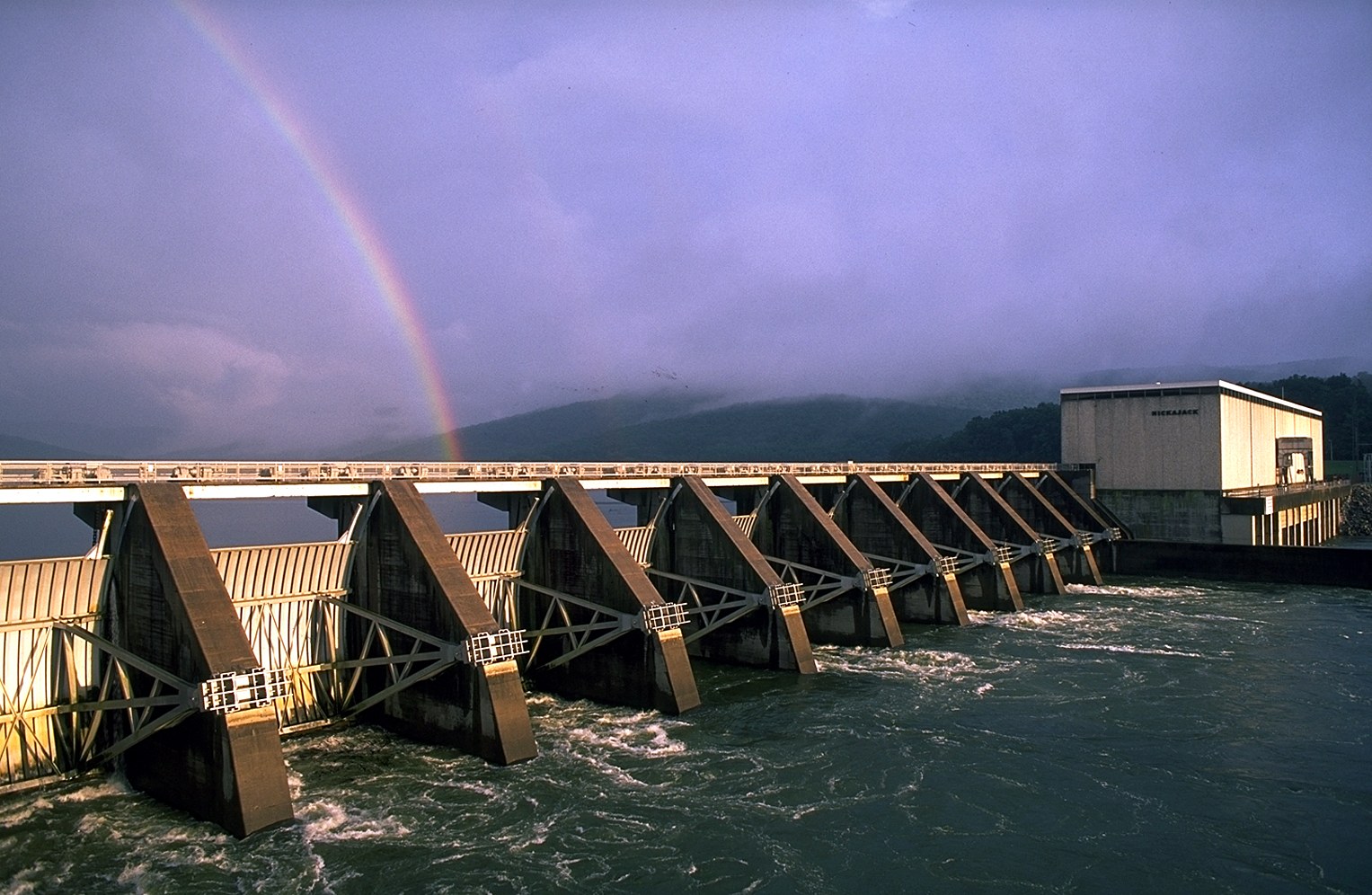
Nickajack Dam was completed by the Tennessee Valley Authority on December 14, 1967, at a cost of $73 million. The dam is 81 feet tall and 3,767 feet long, located 424 miles above the Tennessee River's mouth. It replaced the older Hales Bar Dam (1913), about six miles upstream. Hales Bar had been built privately by the Tennessee Electric Power Company but suffered from chronic leakage through karst limestone in its foundation; by 1960, the dam was losing roughly 2,000 cubic feet per second through its base. TVA chose to build a new dam at a site with more solid bedrock rather than continue repairing the original.
Construction was authorized on January 9, 1964, and began on April 1 of that year. The dam's powerhouse generates 104 megawatts of hydroelectric power. Its auxiliary navigation lock, operated by the U.S. Army Corps of Engineers, measures 600 by 110 feet and can handle nine large barges per operation, lifting vessels 41 feet between the downstream and upstream water levels.
Nickajack Lake
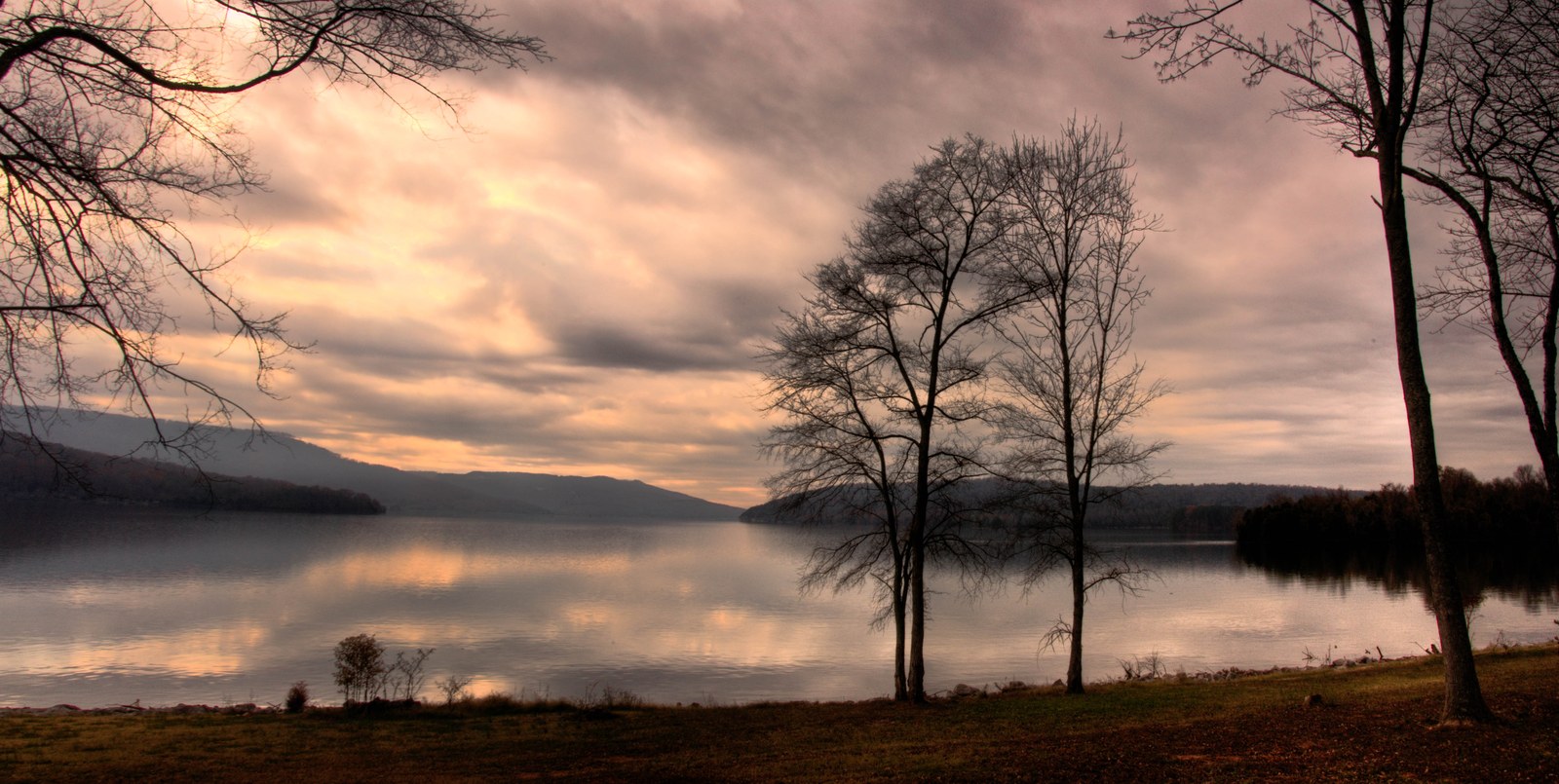
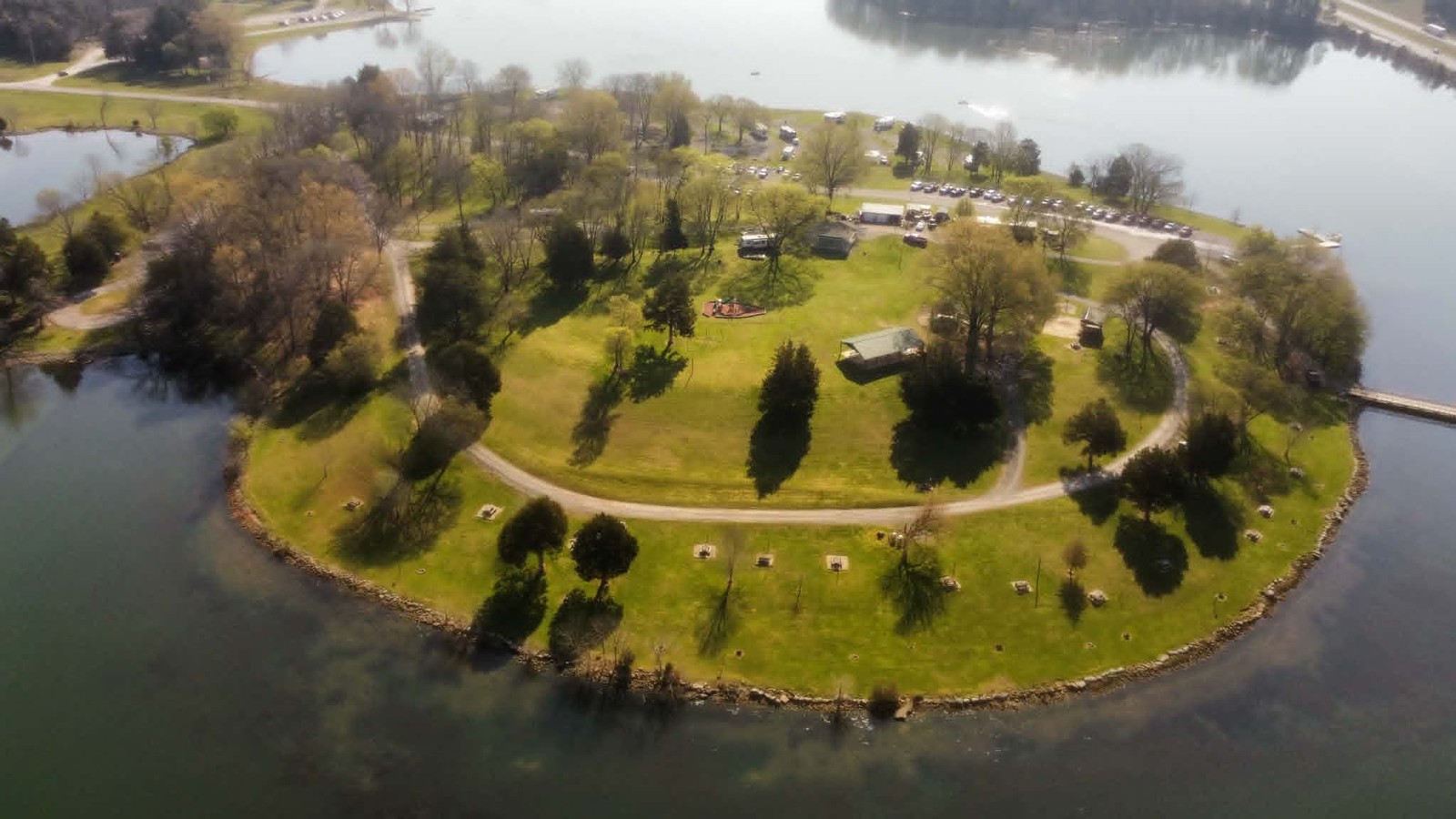
Nickajack Lake is the reservoir formed by Nickajack Dam. It stretches roughly 46 miles upstream to Chickamauga Dam, covering about 10,370 acres in parts of Marion and Hamilton counties in Tennessee and a small portion of Alabama. The lake has 179 miles of shoreline and reaches a maximum depth of 145 feet. Its normal pool elevation of 633.5 feet above sea level remains consistent throughout the year, unlike neighboring Chickamauga Lake, which fluctuates seasonally.
The lake holds healthy populations of largemouth and smallmouth bass, channel and trophy-sized blue catfish, walleye and sauger, white and striped bass, and both crappie species; the freshwater drum and American paddlefish round out the warm-water fishery. A limited paddlefish snagging season opens on Nickajack Reservoir each spring under TWRA's annual proclamation; lake sturgeon are protected from harvest year-round. In 2011, a lake sturgeon was caught in the lake, the first sighting of the species there since it disappeared in the 1960s; subsequent recaptures support a slowly recovering, hatchery-origin population. The full fish and aquatic life inventory covers 91 species documented or expected in Marion's Tennessee River and tributary waters. The lake also provides recreation through boating, paddling, and swimming, and serves TVA's hydroelectric, navigation, and flood-control missions.
Nickajack Cave
Nickajack Cave is a large limestone cave on the south bank of the Tennessee River. Its original entrance was 140 feet wide and 50 feet tall, one of the largest cave mouths in the southeastern United States. When Nickajack Dam raised the river level in 1967, the lower 25 to 30 feet of the entrance was submerged, reducing the visible opening to about 20 to 25 feet above water. Before flooding, visitors could walk about a quarter mile into the cave along a waist-deep stream to reach its interior chambers.
Gray bat colony
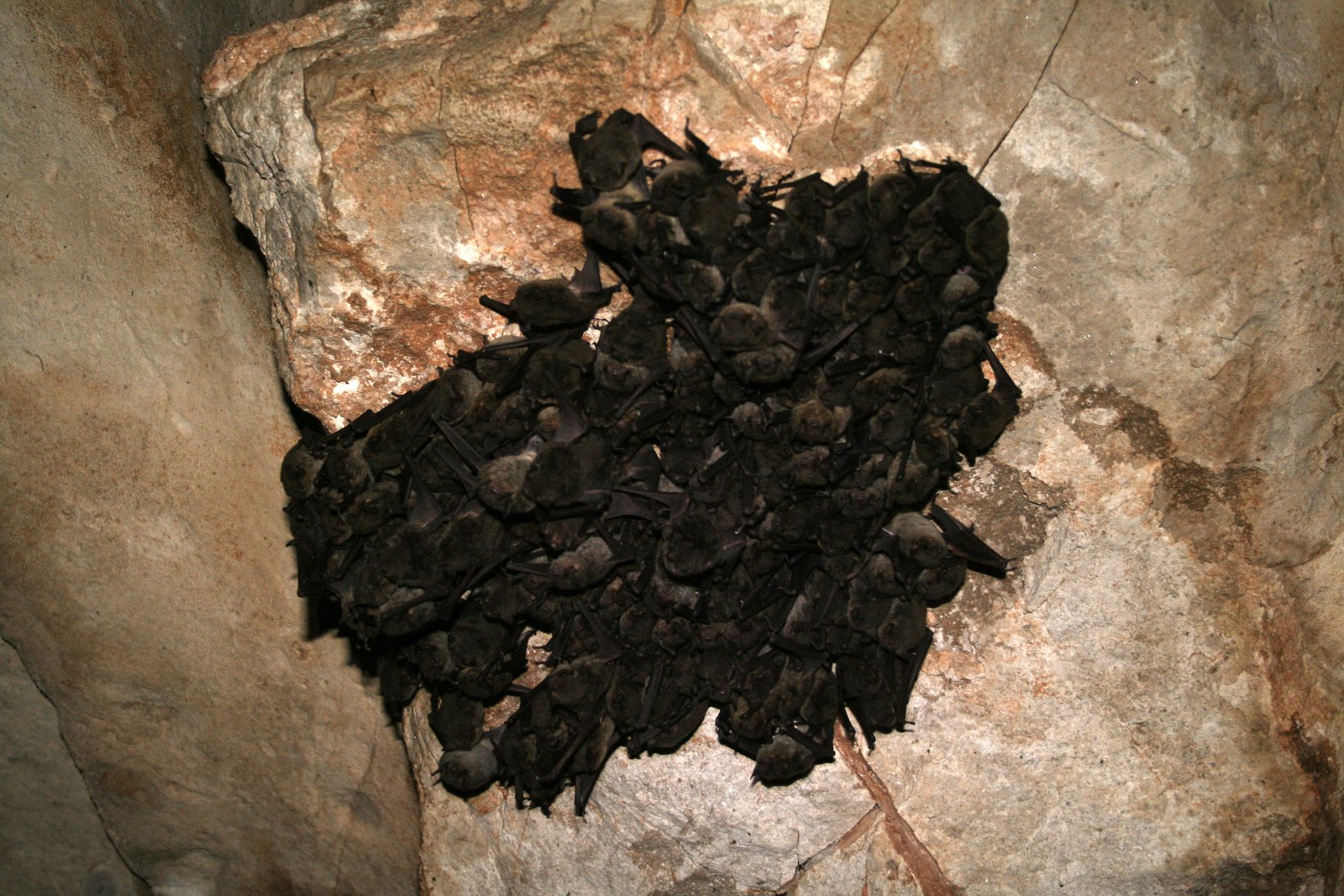
The cave houses a maternity colony of gray bats (Myotis grisescens), a federally endangered species. Each spring, pregnant females arrive to give birth and raise young in the cave's protected interior. Summer colony size has been estimated at more than 100,000 bats. In 1981, TVA fenced off the cave entrance to protect the colony from disturbance while still allowing bats to fly in and out freely. The gate effectively ended decades of uncontrolled public access that had been disturbing the roost.
Between late April and early October, evening bat emergences can be observed from a TVA observation platform near the cave mouth. A 1,000-foot boardwalk leads from the Maple View Day Use Area through the woods along the shoreline to the viewing area. Summer dusk emergences of more than 60,000 bats at a time can also be viewed from boats on the Tennessee River. TVA hosts an annual bat count each summer as part of its monitoring and public education programs.
Ecological loss
The 1967 flooding of the cave's lower passages destroyed the habitat of two endemic species found nowhere else in the world: the pseudoscorpion Microcreagris nickajackensis and the ground beetle Pseudanophthalmus nickajackensis. Both are presumed extinct, a consequence of the dam construction that made the gray bat's protection possible. For more on the gray bat's recovery and Marion County's other federally listed species, see the endemic and notable species page.
Layered history
The cave's oldest European-American story is a legend of the French and Indian War era. Raulston and Livingood's Sequatchie preserves a tradition, set down by Judge Felix Voorhies in his “Acadian Reminiscences,” that a band of Acadian exiles, deported from Nova Scotia in the expulsion that began in 1755 and searching overland for their scattered kin in Louisiana, camped “in the neighborhood of Nickajack Cave.” Among them, the legend says, was the orphan girl Evangeline whom Longfellow's poem later made famous. In the story, a party of Canadian hunters and trappers camped nearby welcomed the exiles, resupplied them with game and venison, and advised them that the easiest road to Louisiana was the river itself; the Acadians felled trees, built an unwieldy boat the account calls “cumbrous,” sold their horses and wagons to their Canadian friends, and floated down the Tennessee, the Ohio, and the Mississippi to the Acadian settlement above New Orleans. It is a legend rather than a documented event, but it is among the earliest stories attached to the cave's name.
The name itself carries layered history. The historian John P. Brown recorded that the Cherokee called the place Ani-Kusati-yi, “Creek People Place,” and that the Creeks called the cave itself Tecallassee, “Old Crossing Place.” The competing etymologies are treated in full on the Cherokee Lower Towns page.
The documented chapters follow. The Cherokee Lower Town of Nickajack stood at the cave mouth from 1782 until Major James Ore's militia destroyed it at dawn on September 13, 1794, in the Nickajack Expedition that ended the Chickamauga wars. Saltpeter mining began in 1800 under James Ore, who obtained Cherokee permission to extract the mineral from the cave's deposits. Mining continued during the War of 1812 and resumed during the Civil War, when the Confederate Nitre and Mining Bureau operated the site until Federal troops occupied the area in late 1863 or early 1864.
The cave operated as a commercial tourist attraction beginning by 1872, with steamboat tours running from Chattanooga. It passed through several operators, including Lawrence S. Ashley (who staged a hoax disappearance inside the cave in 1927 as a publicity stunt) and Leo Lambert in the 1940s. Commercial operations ended in the late 1940s.
The cave is also associated with stories of being a refuge for runaway enslaved people during the antebellum era. In 1967, Johnny Cash described entering the cave intending to die and emerging with a spiritual experience that began his recovery from addiction. Read more about the Cash episode →
Related
About the Tennessee River Gorge →
About "The Suck" rapids →
About Nickajack & Running Water →
About Hales Bar Dam →
The valley's first peoples and the 1964–65 Nickajack salvage digs →
About Marion County fauna →
About endemic and notable species →
Sources
- Wikipedia: Nickajack Dam
- Wikipedia: Nickajack Lake
- Wikipedia: Nickajack Cave
- TVA: Nickajack Dam
- The Tennessee Magazine: Much Tennessee History Happened at Nickajack Cave
- U.S. Fish & Wildlife Service: Gray Bat (Myotis grisescens)
- Tennessee Wildlife Resources Agency: Gray Bat
- Southeast Tennessee: Experience History and Nature at Nickajack Cave
- J. Leonard Raulston and James Weston Livingood, Sequatchie: A Story of the Southern Cumberlands (Knoxville: University of Tennessee Press, 1974), chapter 3, “Whose Land?,” pp. 29–30, and chapter 4, pp. 39–41 and 52–55 (the 1782 founding and 1794 destruction of the town, and the name legend with John P. Brown's counter-etymology), plus pp. 29–30 (the Acadian legend, per Judge Felix Voorhies's “Acadian Reminiscences”).
- Wikipedia: Expulsion of the Acadians (the 1755 deportation and the Acadians' dispersal to the Atlantic colonies and Louisiana)