Last updated: April 23, 2026
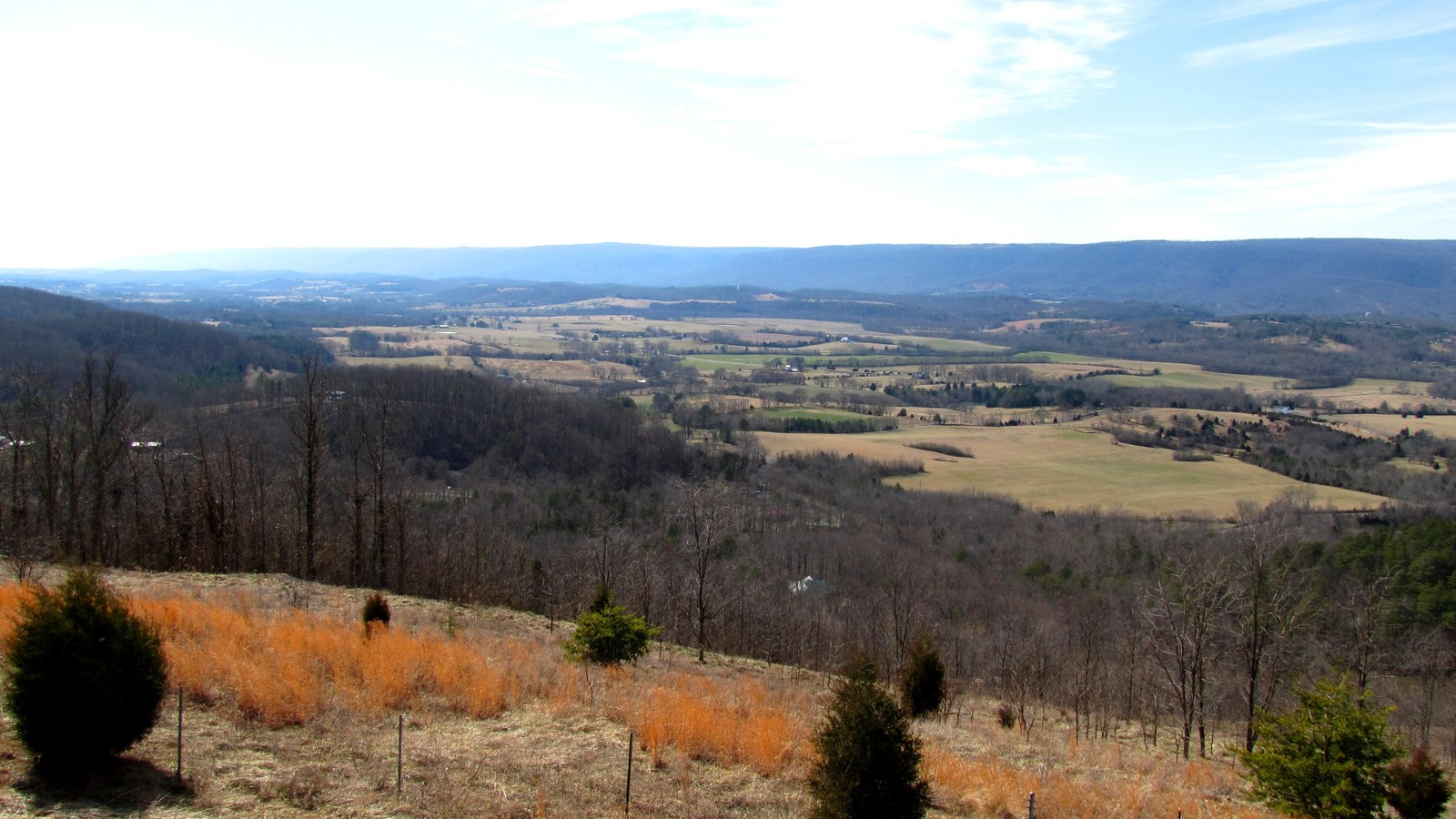
Marion County sits within a documented southern Appalachian music region defined by the Sequatchie Valley, the Cumberland Plateau escarpment on Walden Ridge, and the Tennessee River Gorge corridor to Chattanooga. The region's fiddle tradition was recorded by commercial field units in the late 1920s, preserved by master fiddlers who taught the next generation, and more recently documented on record by scholars and performers based in the Sequatchie Valley and on Signal Mountain. This page tracks the named musicians, recordings, and transmission lines that connect Marion County to the broader Appalachian stringband heritage.
Joseph Decosimo and the Sequatchie Valley recordings
Joseph Decosimo (b. 1980s), a fiddler and scholar who grew up on Signal Mountain on Walden Ridge above Chattanooga, has done the most to document and perform the fiddle tradition of the Sequatchie Valley corridor. Decosimo holds a PhD in American Studies and an MA in Folklore and has played on stages from the Grand Ole Opry to the Smithsonian Folklife Festival. His 2012 album Sequatchie Valley (Sleepy Cat Records) draws directly on tunes learned in older musicians' living rooms, from field recordings, and from rare 78 rpm records.
The album tracks include “Jenny in the Cotton Patch” (learned in the style of Chattanooga fiddler Bob Douglas), “Old Chattanooga,” “Sally Brown,” “Billy in the Lowground,” “Red Mountain,” and “In the Pines.” The liner notes document specific transmission chains between named fiddlers. The most detailed is the record of how Bob Douglas taught Blaine Smith the tune “Old Chattanooga” in the 1920s. That chain of living transmission, fiddler to fiddler along the Walden Ridge and Sequatchie Valley corridor, is the clearest documented lineage that runs into Marion County.
Clyde Davenport (1921 to 2020)
Clyde Davenport was a master fiddler who lived on the Cumberland Plateau in Wayne County, Kentucky, on the same plateau system that Marion County occupies at its southern end. Davenport kept more than 200 fiddle tunes, many of them rare, that he had learned from his father, his grandfather, and neighboring fiddlers. He played solo fiddle in multiple cross-tunings with a distinctive fluid blues approach.
In 1986, County Records released Clydeoscope: Rare and Beautiful Tunes from the Cumberland Plateau. Davenport received a National Heritage Fellowship from the National Endowment for the Arts in 1992, the highest U.S. recognition for a traditional artist. He was a direct influence on Joseph Decosimo. His field recordings are held at Berea College and the Library of Congress American Folklife Center. Davenport's plateau repertoire is the documented pool from which much of the Decosimo-era Sequatchie Valley material was drawn.
The Two Poor Boys (Joe Evans and Arthur McClain)
Joe Evans and Arthur McClain, recording as The Two Poor Boys, cut 20 sides between 1927 and 1931 for the Champion/American Record Corporation and Vocalion labels. They also recorded under the pseudonym "Coleman and Harper." Evans played guitar and sang lead; McClain played mandolin, guitar, kazoo, piano, and violin. Their catalog includes rags, hoedowns, pop numbers, and early blues. The complete works have been reissued by Document Records.
The Tennessee Encyclopedia connects the Two Poor Boys to the Sequatchie Valley. Their catalog is one of the earliest commercial recordings of southeast Tennessee music and belongs in any account of the region's music heritage.
Bob Douglas (1900 to 2000)
Bob Douglas of Chattanooga played fiddle from the 1910s to the 1990s and was the most widely recorded and best-documented fiddler in the Chattanooga region. He performed with the WDOD Barn Dance in the 1930s and on many regional stages thereafter. Douglas taught Blaine Smith the tune Old Chattanooga in the 1920s, and his repertoire and style are one of the anchors of the Sequatchie Valley fiddle material that Decosimo later recorded. Douglas lived to age 99 and played into his late 90s. His lineage is the most direct connection between early 20th-century commercial country fiddling in southeast Tennessee and the living revival community in the Sequatchie Valley.
Church and gospel traditions
Gospel singing has been part of Marion County's religious life since the earliest Primitive Baptist, Cumberland Presbyterian, and Methodist congregations organized in the 1820s and 1830s. Shape-note and Sacred Harp singing traditions spread across the southern Cumberland Plateau in the 19th century and shaped the singing schools and church conventions of the region. Black congregations in South Pittsburg developed parallel gospel traditions under segregation, anchored by Mt. Bethlehem Baptist, Randolph Chapel, and the historic A.M.E. and A.M.E. Zion congregations.
Bluegrass, country, and modern stringband
Bluegrass and modern stringband music continue in Marion County as living traditions rather than through recorded monuments. The National Cornbread Festival, the Whitwell Labor Day Celebration, and the Monteagle Mountain Market all book stringband and bluegrass acts on their programs, and churches, civic halls, and front porches throughout the county support weekly jam sessions. The Smoke House Patio Grill in Monteagle has become one of the more visible weekend live-music venues on the Chattanooga- to-Nashville corridor since the 2021 fire. The tradition is participatory more than commercial, and the named musicians above are a small fraction of the players active in the county today.
The recorded heritage
Three commercial recordings anchor the published record of music from this corner of the Cumberland Plateau. Joseph Decosimo's 2012 Sequatchie Valley album draws the fiddle tradition of the corridor directly from older musicians' living-room sessions and field recordings. Clyde Davenport's 1986 Clydeoscope: Rare and Beautiful Tunes from the Cumberland Plateau preserves more than 200 tunes from the same plateau system at its Kentucky northern end. The Two Poor Boys' 20 sides for Champion and Vocalion between 1927 and 1931 are the earliest commercial recordings tied to the Sequatchie Valley. Nonie Webb's county histories and Georgiana Kotarski's regional anthology add scattered references to the musical life carried in family memory and church hymn singing that runs alongside the recorded record.
Related
Folklore and Local Lore →
Festivals and Fairs →
Foodways →
Sources
- Sleepy Cat Records — Joseph Decosimo
- National Endowment for the Arts — Clyde Davenport, National Heritage Fellow
- Wikipedia — Clyde Davenport
- Wikipedia — The Two Poor Boys
- Tennessee Encyclopedia — Fiddle and Old-Time Music Contests
- Tennessee Encyclopedia — Marion County
- Smithsonian Center for Folklife and Cultural Heritage