Last updated: May 8, 2026 (bird inventory expansion)
The animals of Marion County live in three overlapping worlds: the dry oak-hickory ridges and rockhouse sandstone of the Cumberland Plateau, the limestone-floored farmland and karst streams of the Sequatchie Valley, and the steep rich-soil slopes and slack water of the Tennessee River Gorge. Each landscape has its own characteristic species. A summer evening at Nickajack Cave can include a column of one hundred thousand gray bats leaving the entrance; a walk along the Sequatchie River may turn up a hellbender salamander under a rock; a Prentice Cooper ridge in May fills with cerulean warbler song.
Species lists here draw from Tennessee Wildlife Resources Agency records, U.S. Fish and Wildlife Service listings, eBird Tennessee sightings, iNaturalist observations, Tennessee River Gorge Trust inventories, and published field guides. Where a species is regionally characteristic but has not been specifically documented in Marion, the prose notes that. Hunting and fishing regulations are outside the scope of this page; it is a habitat and natural-history reference.
- Mammals: ~78 species documented or credibly expected, from black bear and white-tailed deer down to the pygmy shrew, including all sixteen Tennessee bat species
- Birds: 206 species documented or credibly expected, of about 240 reported on eBird, across year-round residents, raptors, breeding and passage migrants, wintering waterbirds, and other cold-month visitors
- Reptiles and amphibians: 106 species documented or credibly expected, across 32 snakes, 16 turtles, 9 lizards and skinks, 29 salamanders, and 20 frogs and toads; plateau rockhouses and caves support several regional specialists
- Fish: 91 native and established non-native species documented in or expected from the Tennessee River, Nickajack Lake, the Sequatchie River, Battle Creek, and other tributary creeks within Marion County
- Federal listings relevant to the county: gray bat (endangered), Indiana bat (endangered), northern long-eared bat (endangered), eastern hellbender (proposed endangered 2024), monarch butterfly (proposed threatened 2024)
Mammals of Marion County
About seventy-eight mammal species are documented in or credibly expected in Marion County out of Tennessee's roughly eighty-nine. The list runs from white-tailed deer and black bear down to the smoky shrew (under five grams) and includes all sixteen Tennessee bats, several of them federally listed. Marion's reach is unusually rich because the county sits where three habitats meet: the dry oak-hickory ridges of the Cumberland Plateau, the limestone-floored farmland and karst caves of the Sequatchie Valley, and the slack water and rich-soil slopes of the Tennessee River Gorge. The cards below cover every documented or credibly expected species, grouped by what a visitor is likely to encounter rather than by strict taxonomic order. Conservation status notes follow the Tennessee Wildlife Resources Agency's classification, with federal listings called out where they apply.
Large herbivores and ungulates
The white-tailed deer is Tennessee's most abundant large mammal. Deer were near-extirpated across the state by the 1930s through unregulated market hunting and habitat loss; restocking efforts by what would become the Tennessee Wildlife Resources Agency rebuilt the herd through the mid- and late twentieth century. Today every Marion County landscape supports deer, from the plateau ridges to suburban edges around Jasper and Kimball. Peak activity is dawn and dusk; the November rut brings deer onto highways, and vehicle collisions spike every fall. Elk and feral wild hog round out the county's large-mammal cast: elk are reintroduced about a hundred miles northeast of Marion and are not established here, while wild hogs are an invasive species TWRA permits year-round take of.
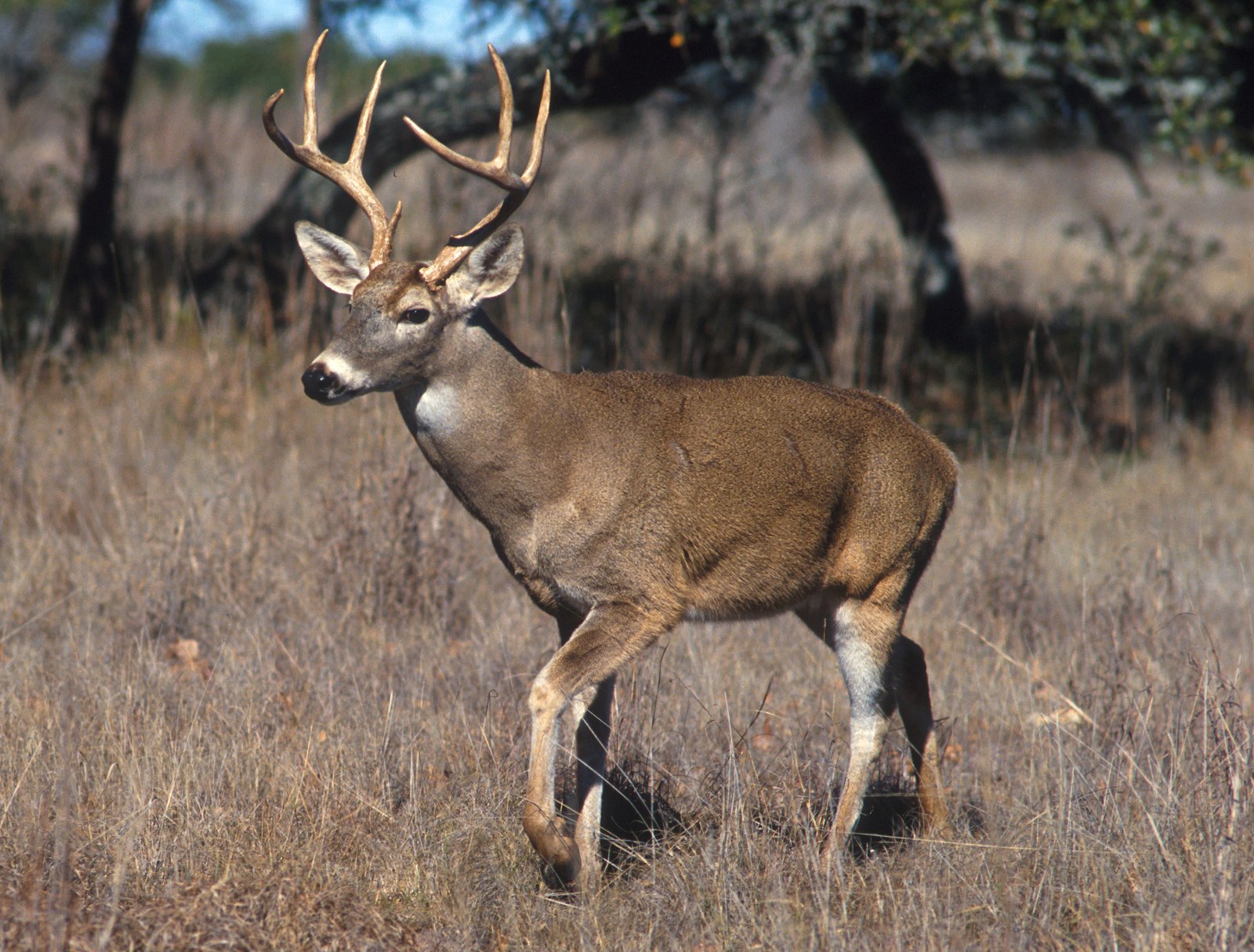
White-tailed deer
Odocoileus virginianus
The county's most abundant large mammal. Restocked after early-twentieth-century extirpation; now ubiquitous from plateau ridges to subdivision edges. Peak activity at dawn and dusk; rut in November.
Status: Secure, abundant. Tennessee's primary big-game species.
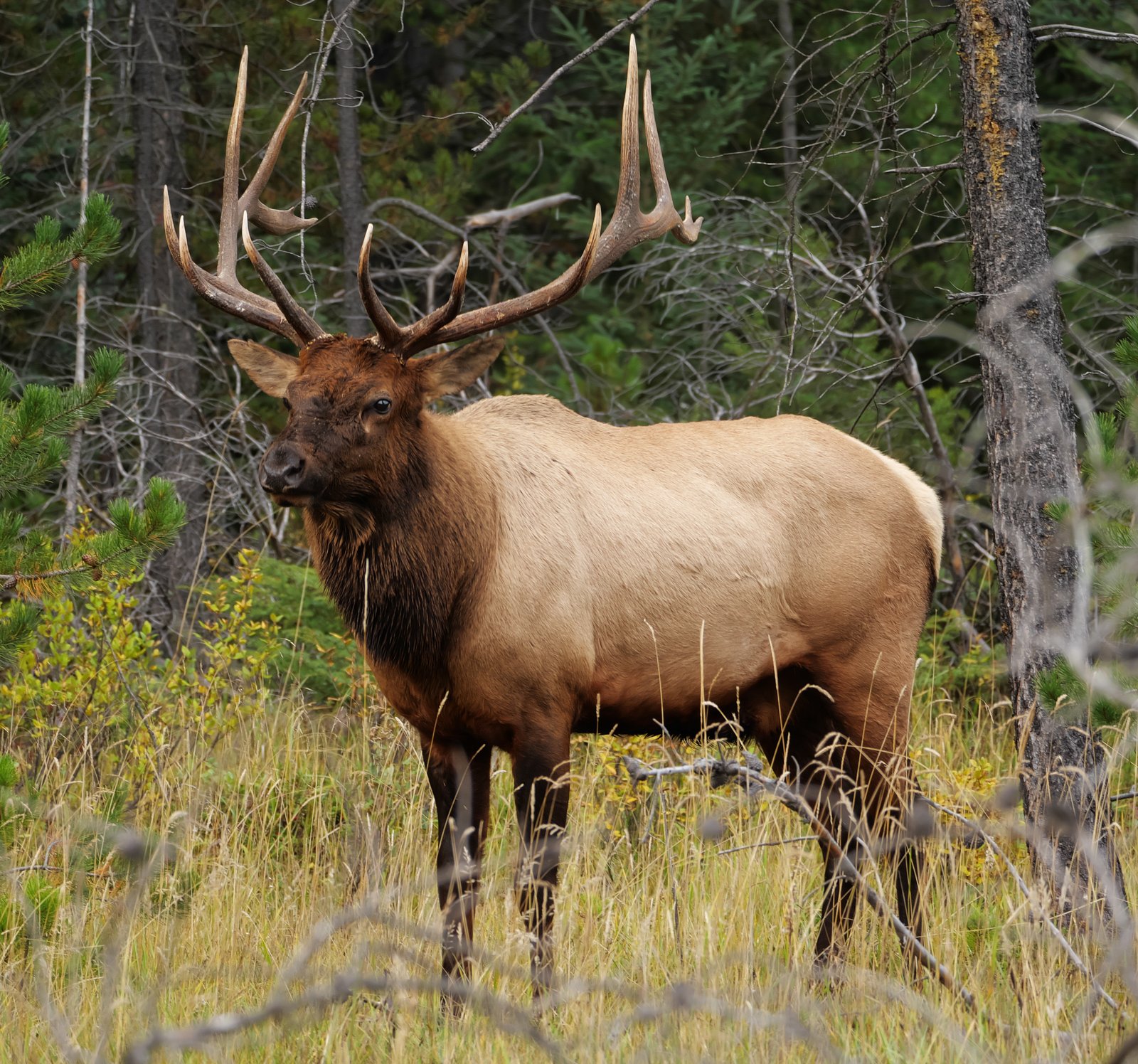
Elk
Cervus canadensis
Reintroduced to Tennessee at the North Cumberland Wildlife Management Area in Anderson County between 2000 and 2008. The closest restoration herd is roughly a hundred miles northeast of Marion; not established locally.
Status: Reintroduced; rare or accidental in Marion.
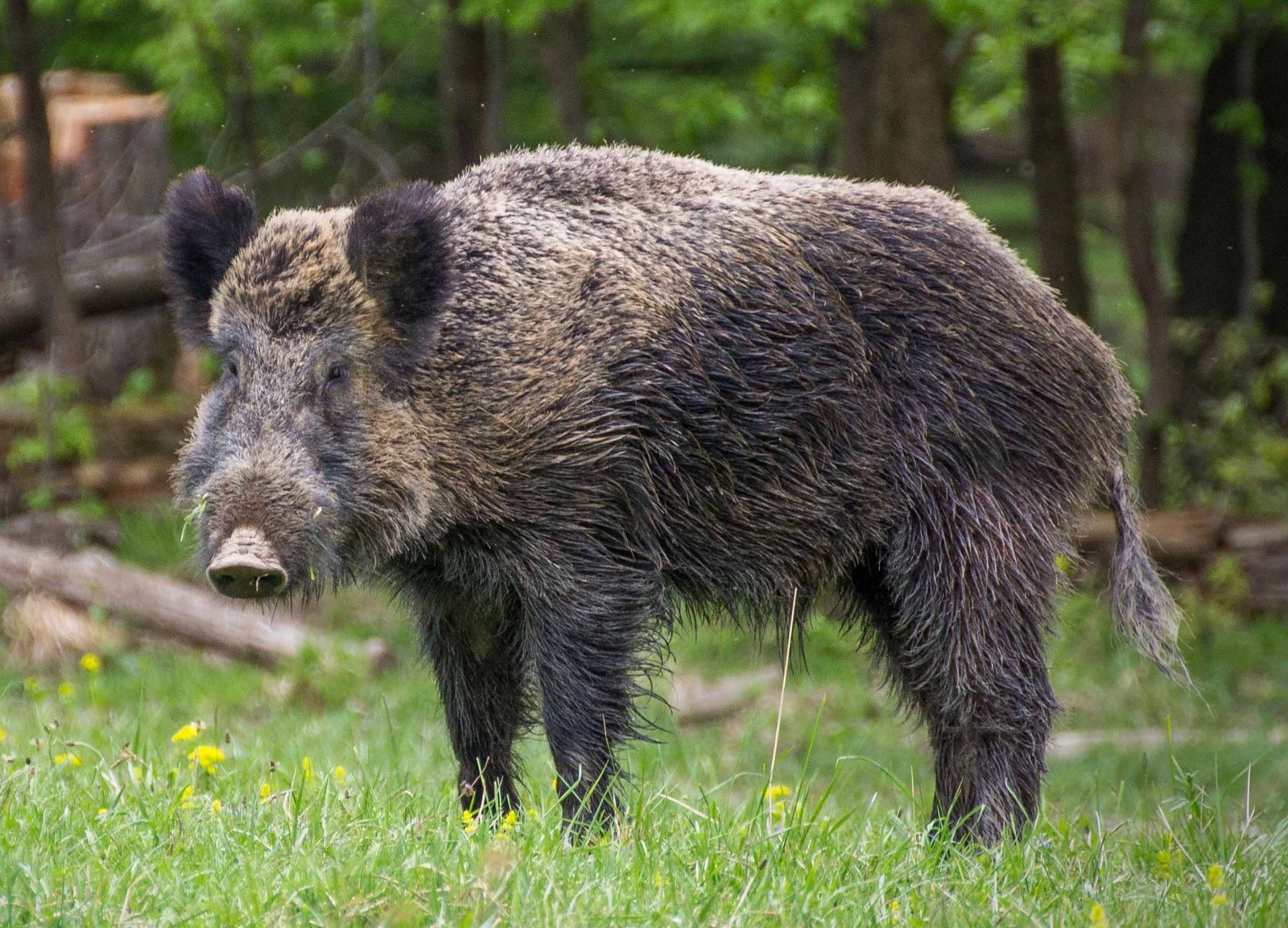
Wild hog
Sus scrofa (feral)
Invasive descendants of escaped domestic and Eurasian boar stock. Documented across the Cumberland Plateau and on South Cumberland WMAs; year-round take is allowed under TWRA rules. Damage to forest understory and crop ground is significant.
Status: Invasive; population control encouraged.
Carnivores and mesocarnivores
The American black bear is the county's largest native carnivore. Bears disappeared from most of the southern Cumberland Plateau by the mid-twentieth century. Populations in the Smokies and in Big South Fork have grown in recent decades, and bears have been dispersing west and south through the plateau's wild corridors. Confirmed sightings have become regular in Prentice Cooper State Forest, the Sewanee Domain, and Savage Gulf. A bear here is almost always a young male looking for territory; females with cubs follow more slowly. Food storage rules at plateau campgrounds have been tightening in response. The smaller carnivores cover a wider range of habitats and are more commonly encountered: coyotes are audible most nights, bobcats hunt rabbits along forest edges, gray foxes are the only American canid that climbs trees, and raccoons are abundant around any water.
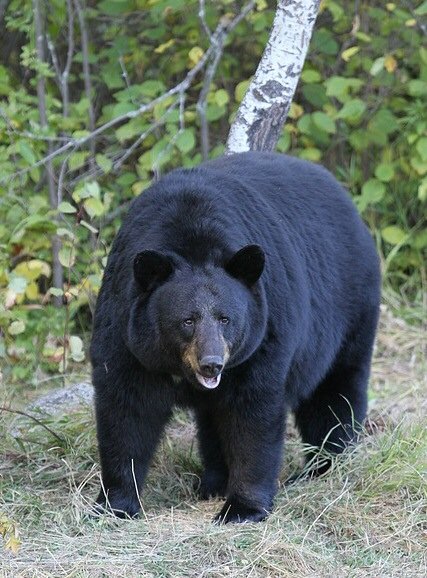
American black bear
Ursus americanus
The county's largest native carnivore. Recolonizing the southern Cumberland Plateau from Smokies and Big South Fork populations; confirmed sightings in Prentice Cooper, the Sewanee Domain, and Savage Gulf.
Status: Secure (Tennessee), recolonizing.
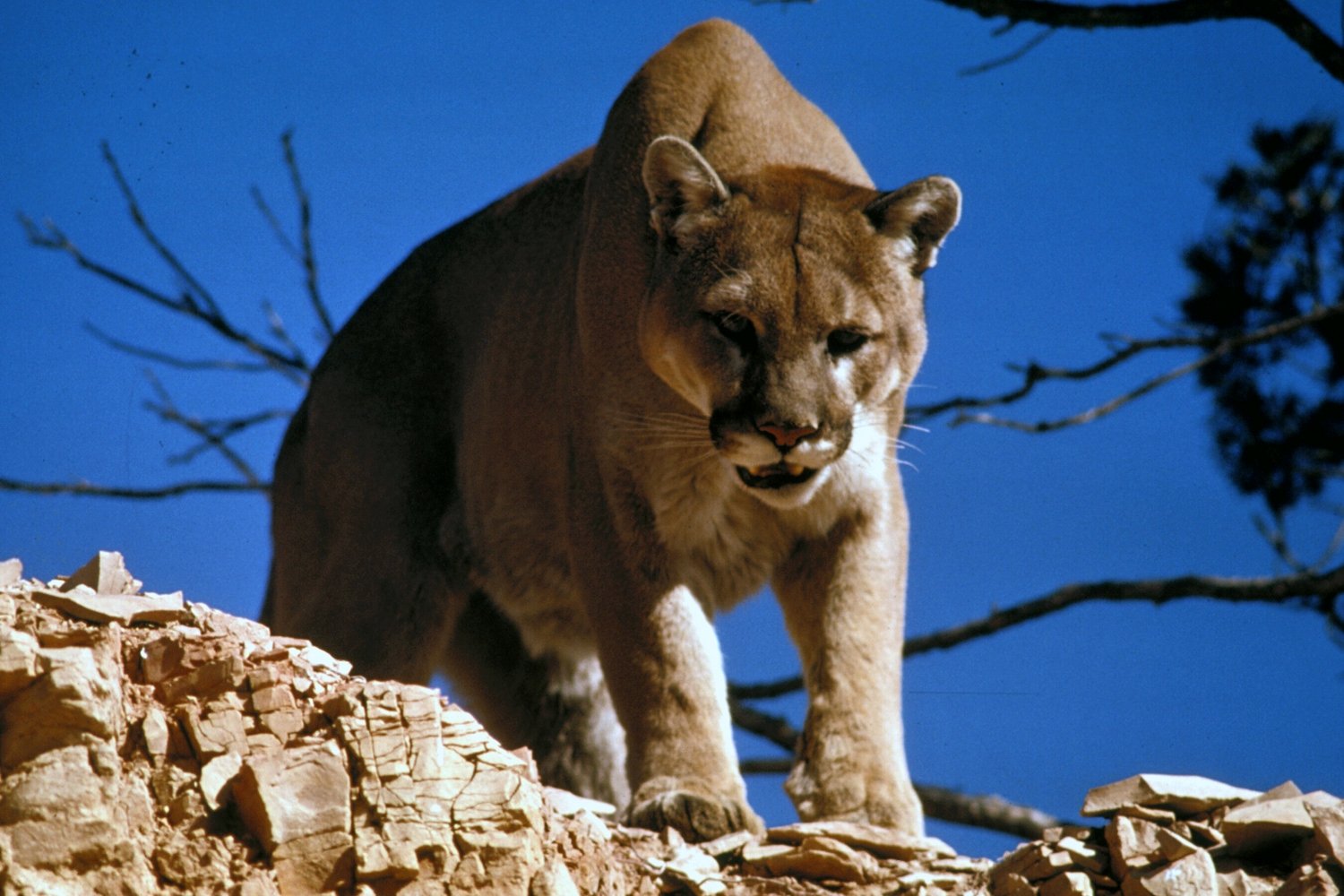
Cougar
Puma concolor
TWRA tracks confirmed Tennessee sightings, mostly transient animals dispersing east from the western U.S. No resident breeding population has been documented in Tennessee in modern times.
Status: Rare or accidental; no resident population.
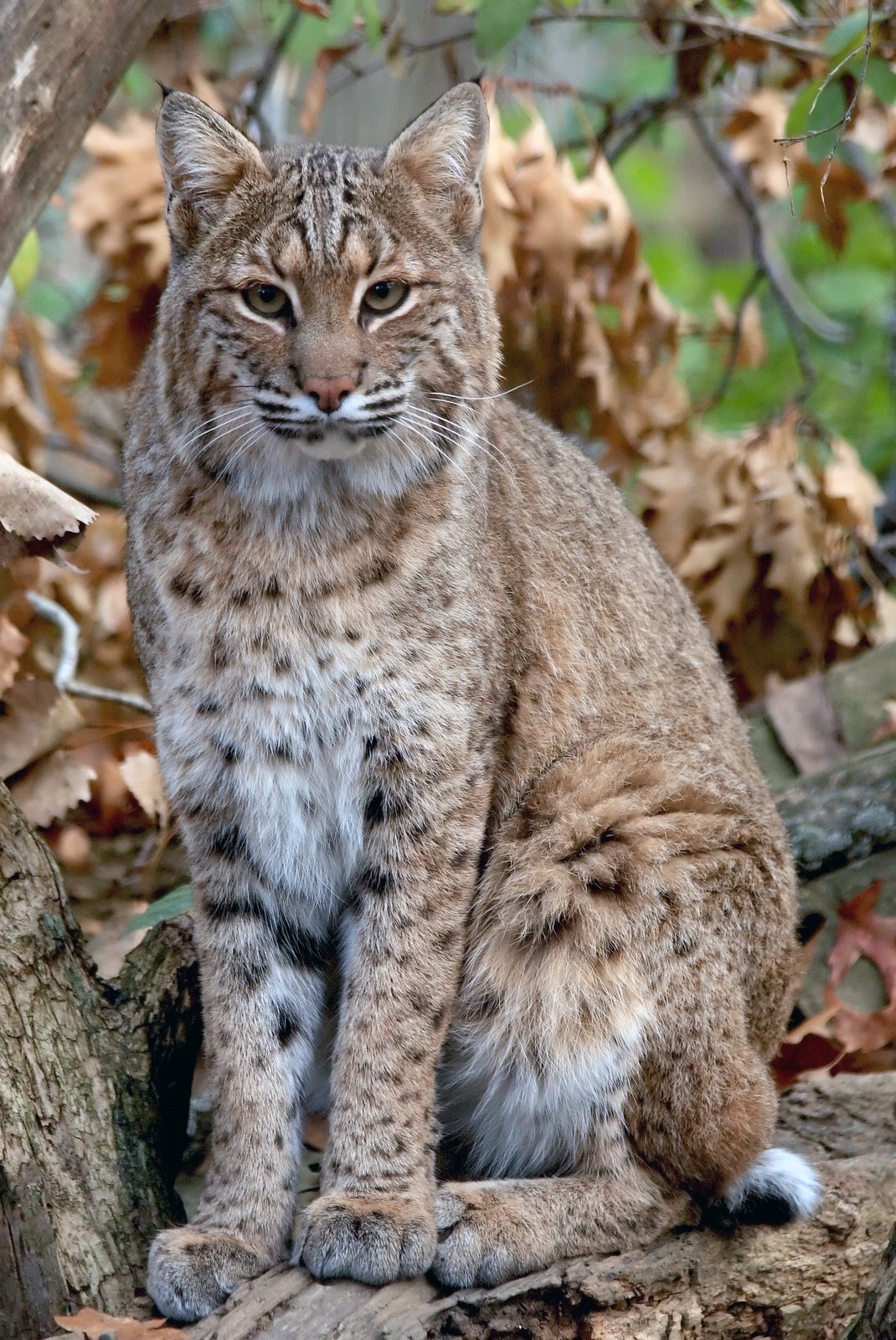
Bobcat
Lynx rufus
The county's only resident wild cat. Hunts rabbits and rodents along forest edges, plateau rim sites, and old fields. Almost entirely nocturnal and crepuscular; tracks and scat are easier to find than the animal.
Status: Secure, common but seldom seen.
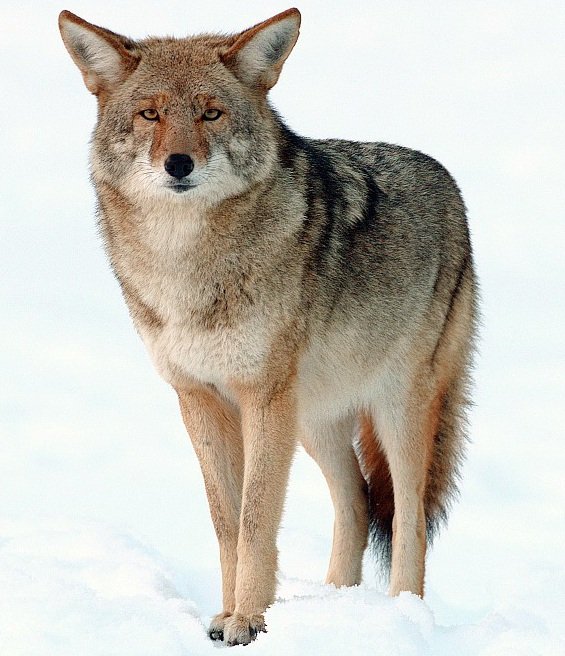
Coyote
Canis latrans
Colonized Tennessee in the twentieth century and now fills much of the ecological space red wolves once occupied. Audible most nights in Marion, often in coordinated group howls.
Status: Secure, abundant.
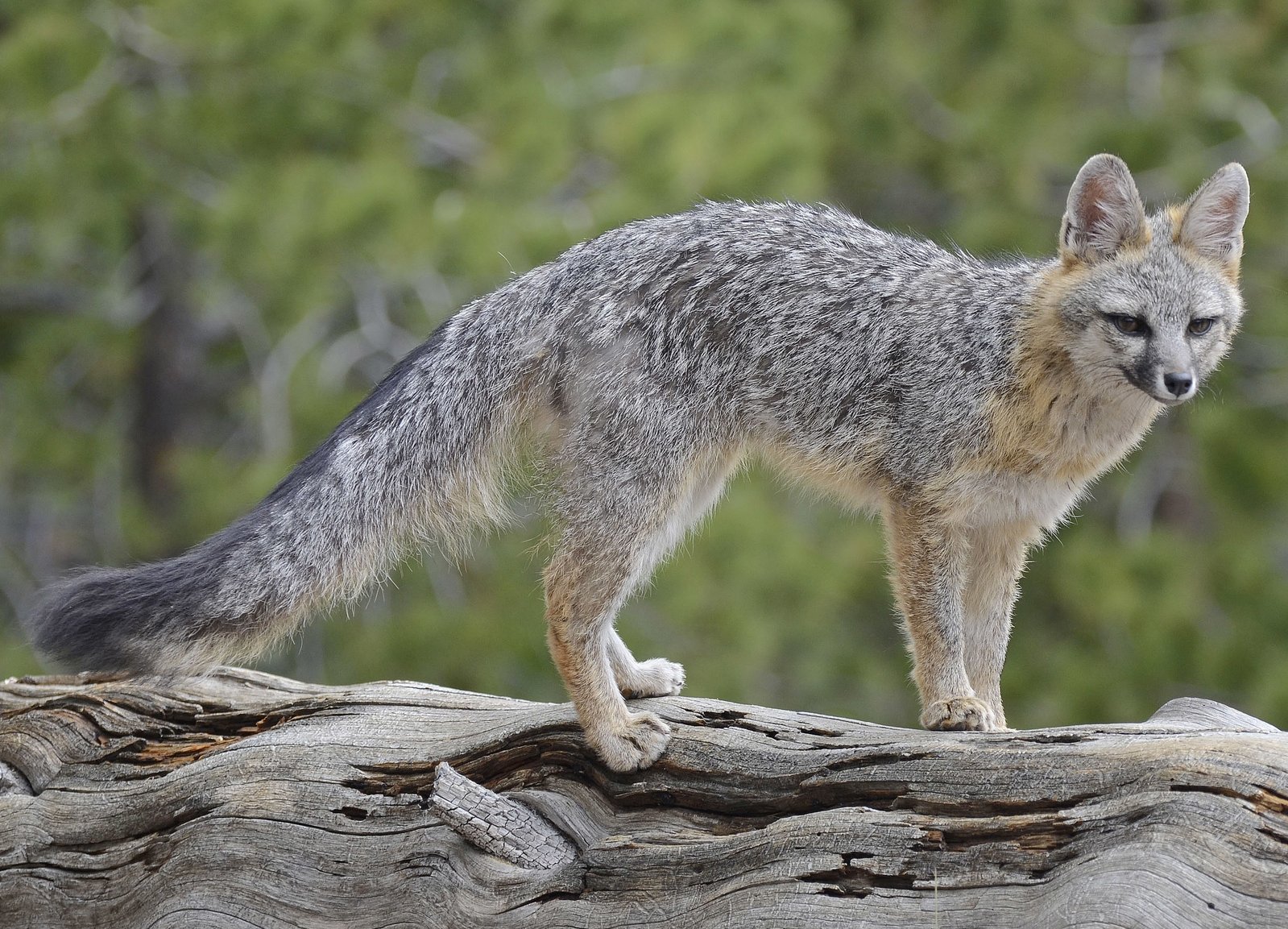
Gray fox
Urocyon cinereoargenteus
The only American canid that climbs trees, using rotating wrists and semi-retractable claws. Prefers brushy mixed-deciduous habitat over the open farmland the red fox favors.
Status: Secure.
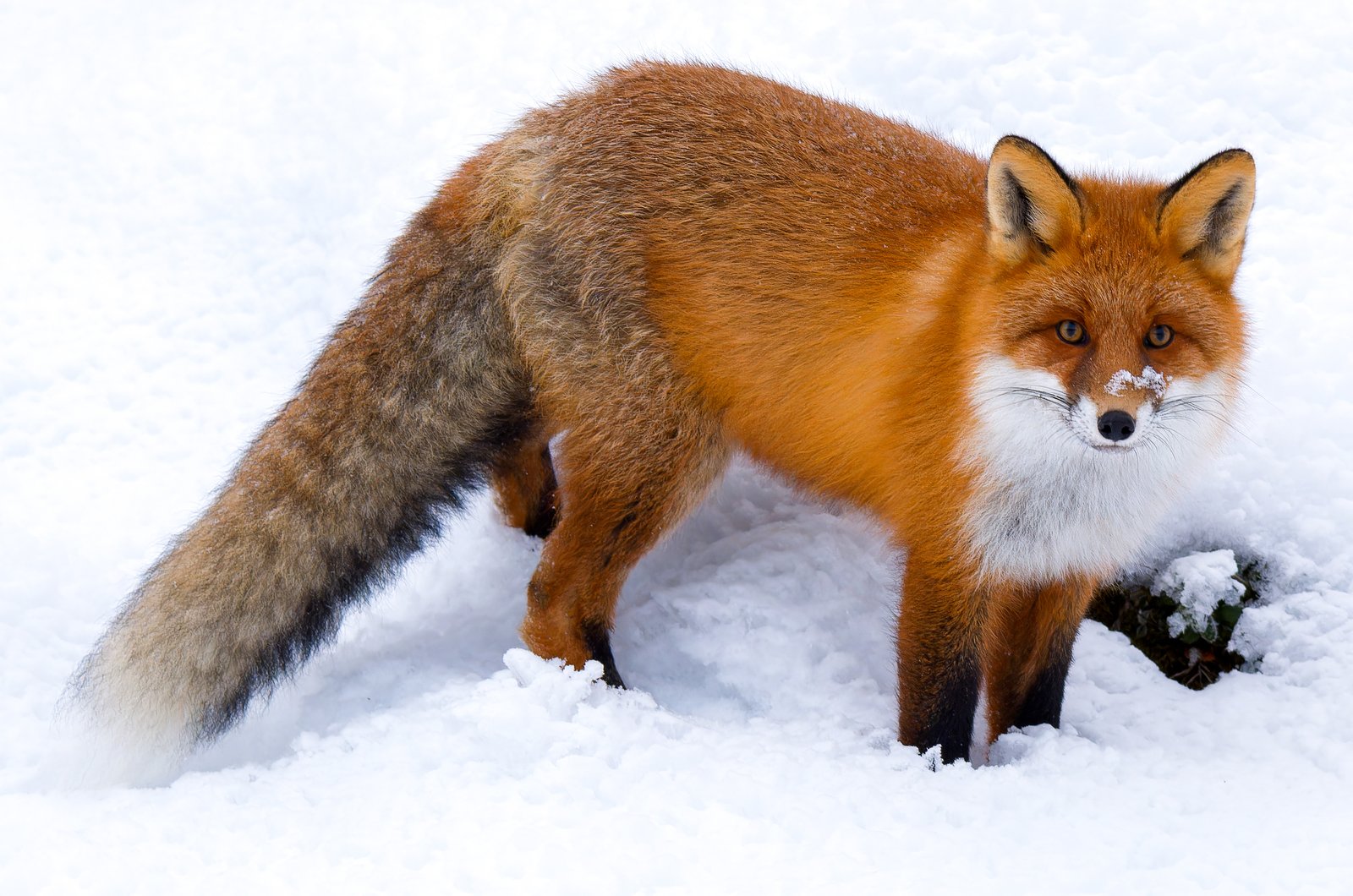
Red fox
Vulpes vulpes
Larger and longer-legged than the gray fox, with a white-tipped tail. More typical of valley farmland and open ground than the gray fox's brushy woodland habitat.
Status: Secure.
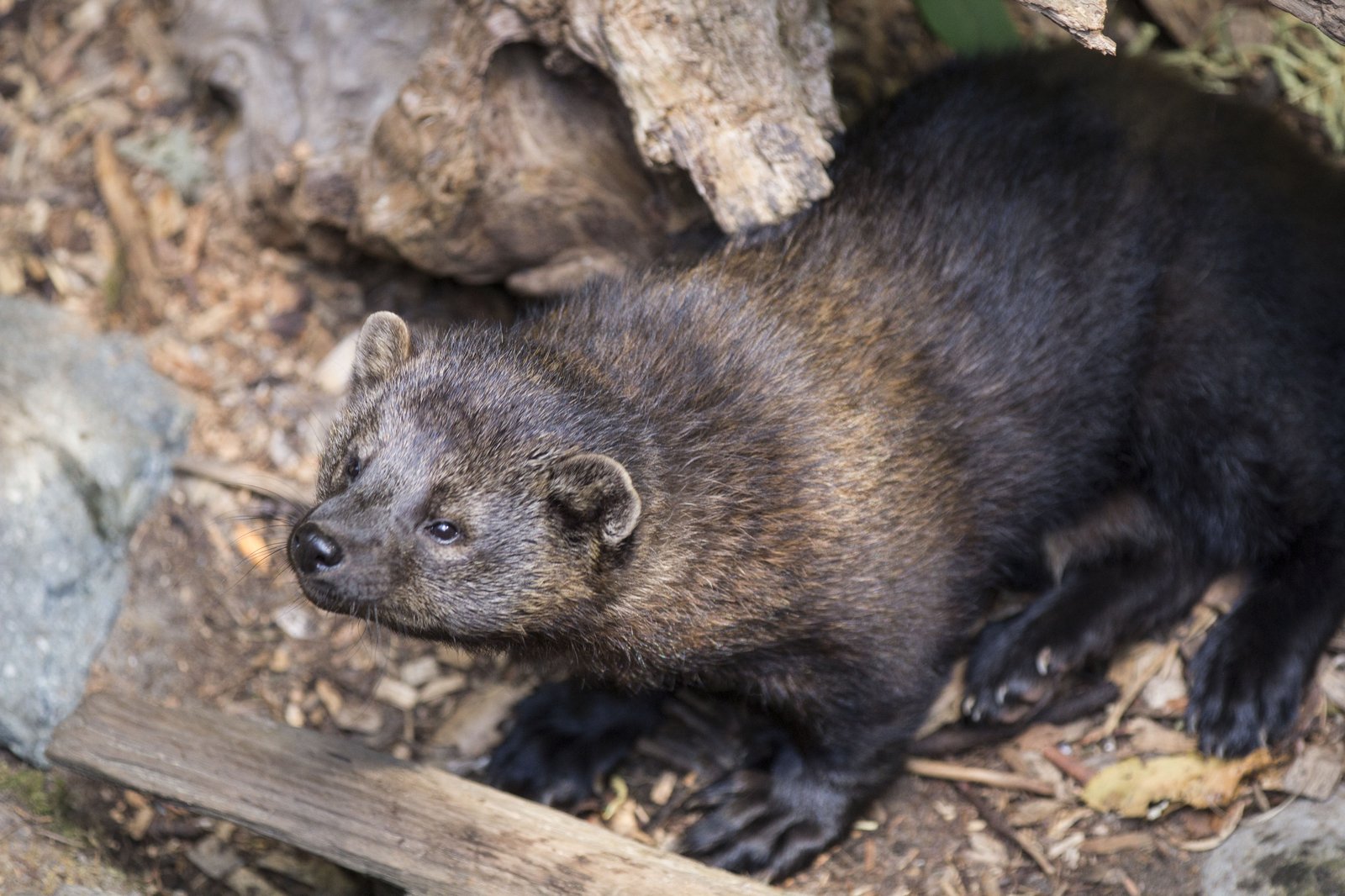
Fisher
Pekania pennanti
A large mustelid of the weasel family. Tennessee's range edge is in the eastern mountains; no confirmed Marion records.
Status: Rare or accidental at the western range edge.
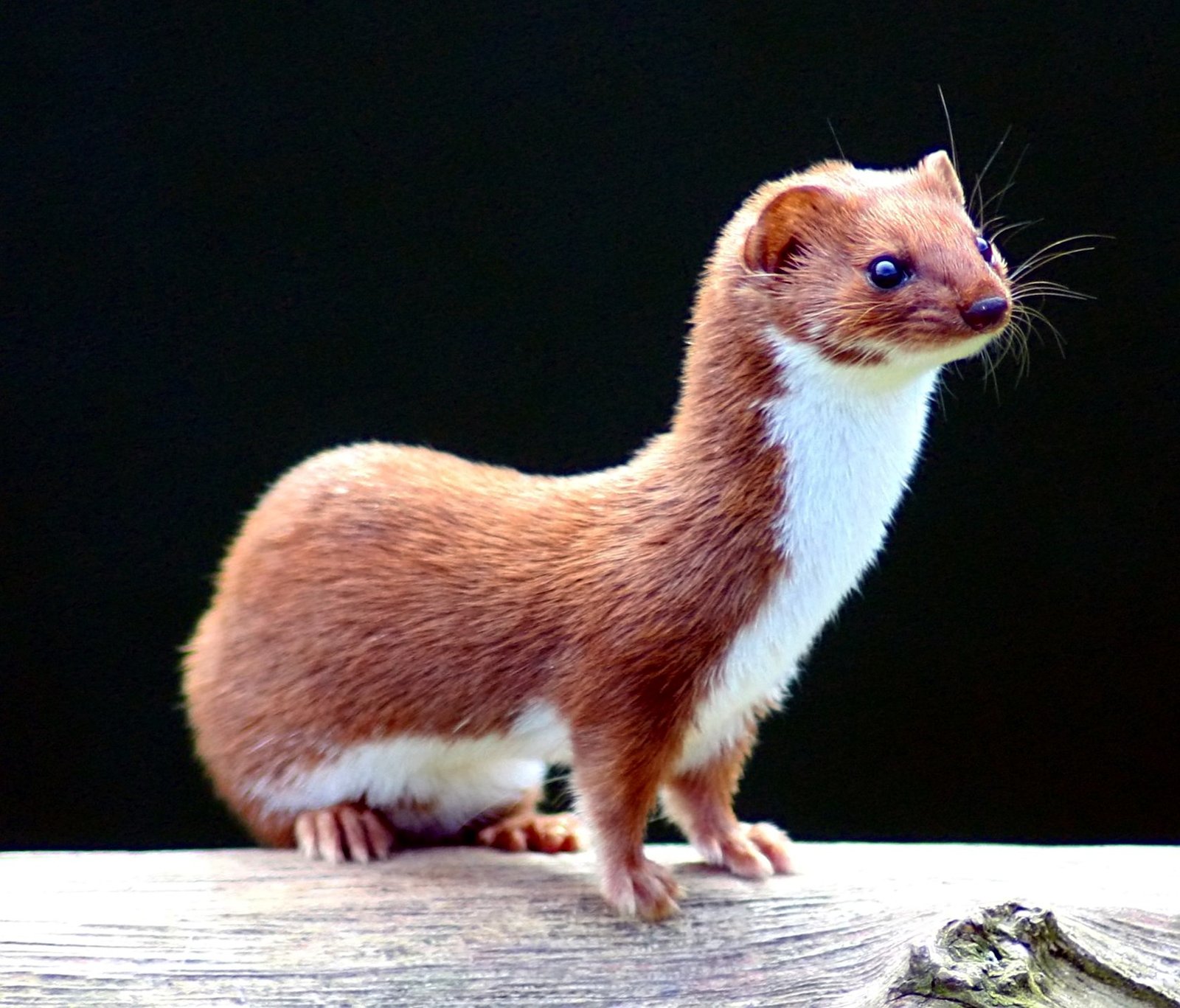
Least weasel
Mustela nivalis
The smallest carnivore in North America, under fifty grams. Hunts mice and voles in old fields and brushy edges; statewide range covers Cumberland Plateau but rarely seen.
Status: Secure but uncommon.
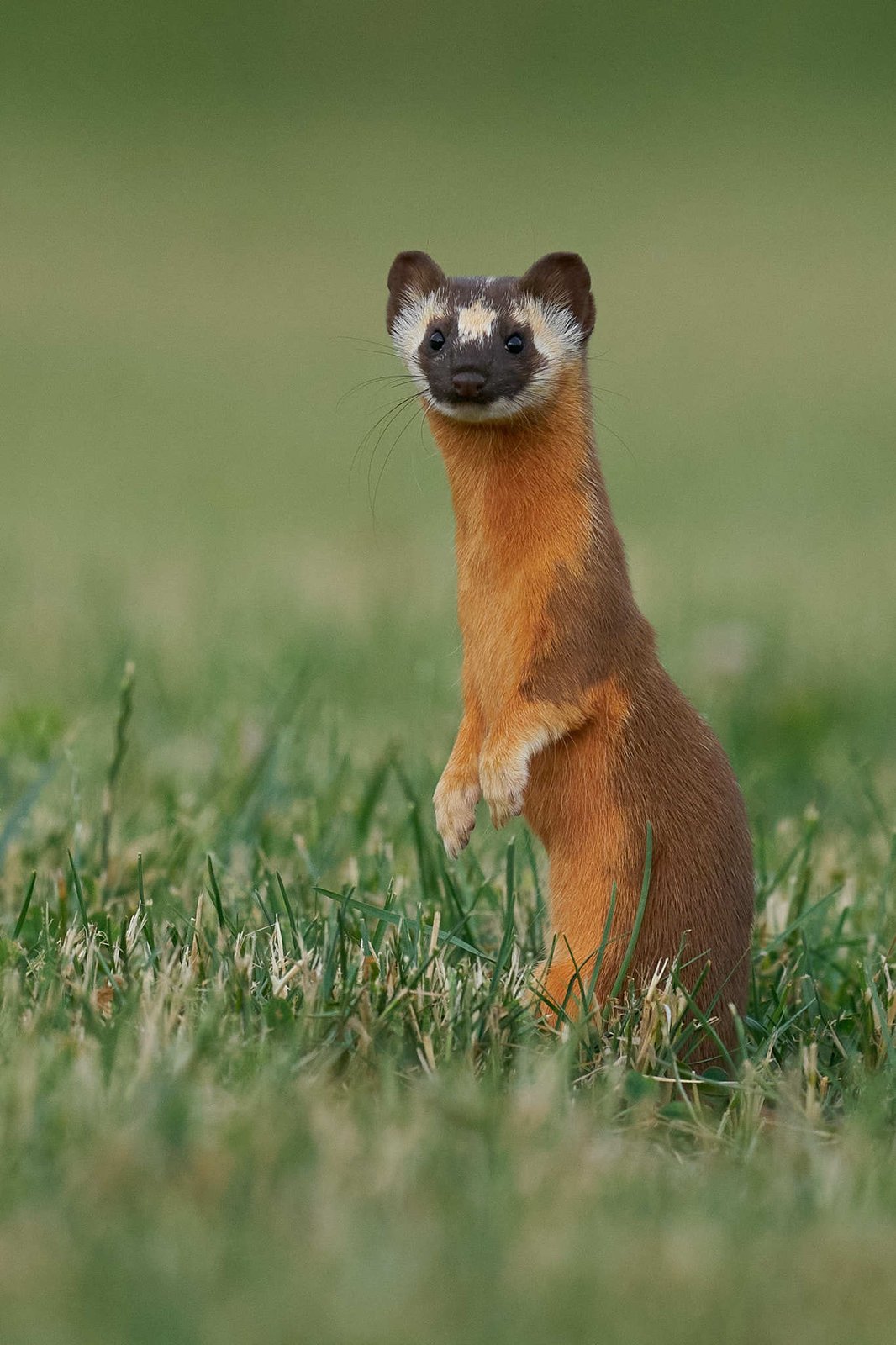
Long-tailed weasel
Neogale frenata
Larger than the least weasel, with a black tail tip retained year-round. Hunts rodents and rabbits in mixed habitats from forest to farmland.
Status: Secure.
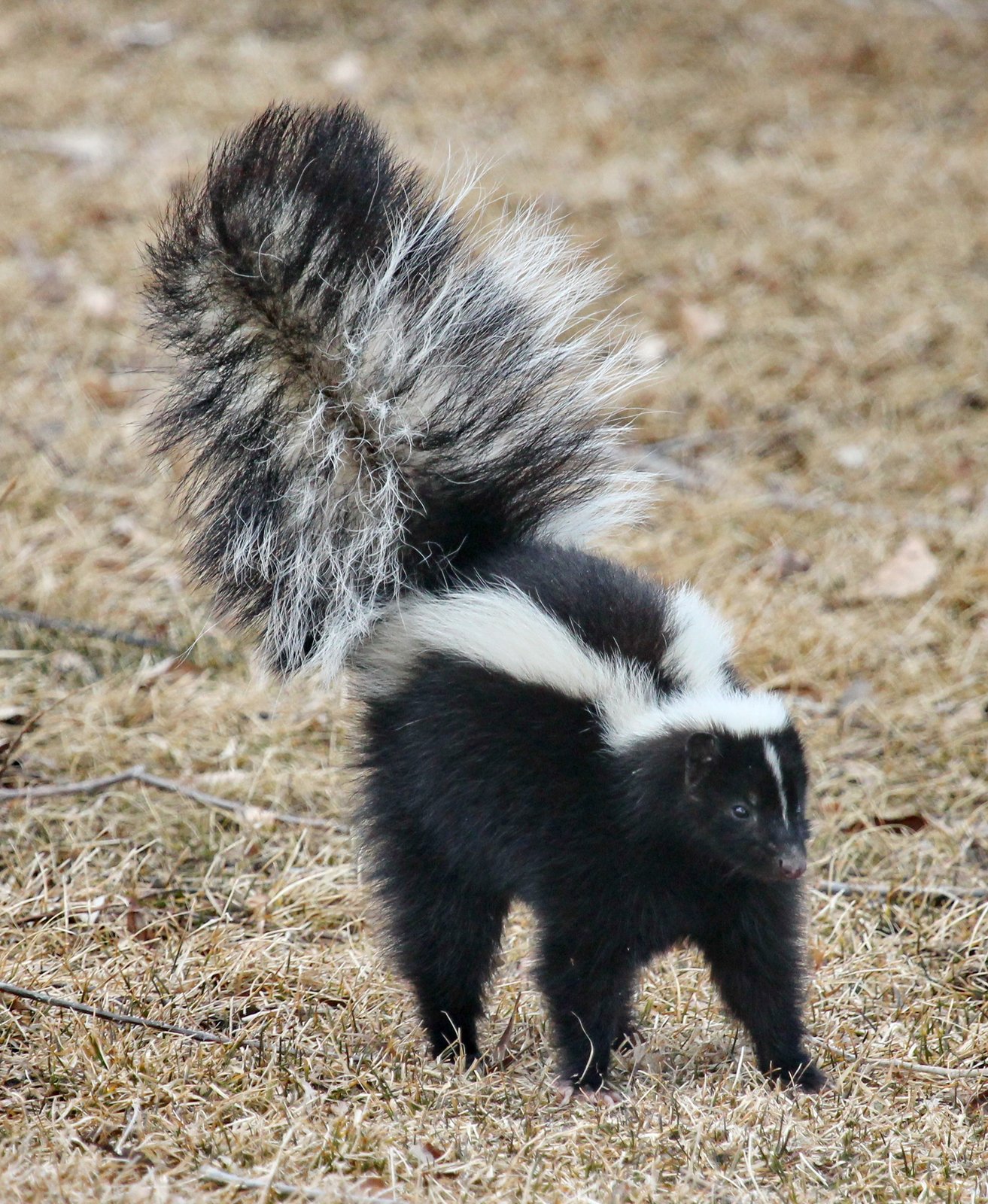
Striped skunk
Mephitis mephitis
The familiar two-stripe skunk of fields, yards, and roadsides. Generally more nuisance than danger; rabies vector status is the public-health concern that drives most local advisories.
Status: Secure.
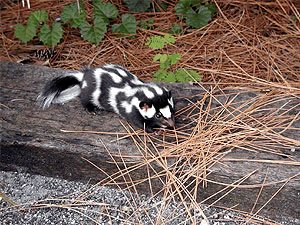
Eastern spotted skunk
Spilogale putorius
Smaller and more agile than the striped skunk, with white spots and stripes on a black ground. Performs a handstand defense display before spraying. Declining across its range; uncommon on the Cumberland Plateau.
Status: TWRA-listed; declining.
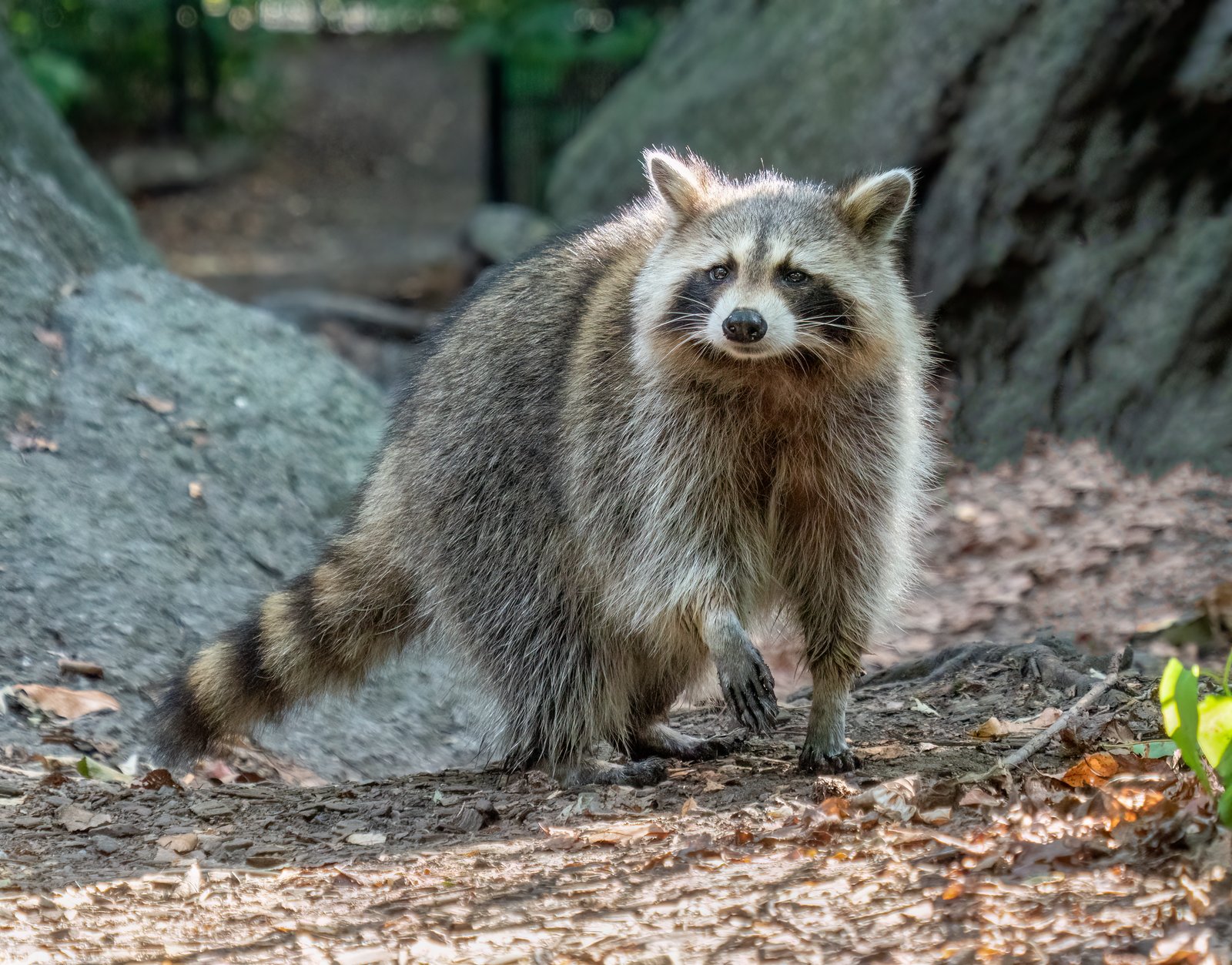
Raccoon
Procyon lotor
Tennessee's official state wild animal, designated in 1971. Abundant around any water in the county. The lighthouse of opportunistic eastern wildlife: dexterous front paws, long memory for food sources, comfortable in towns. A primary rabies vector in the Southeast.
Status: Secure, abundant; Tennessee state wild animal.
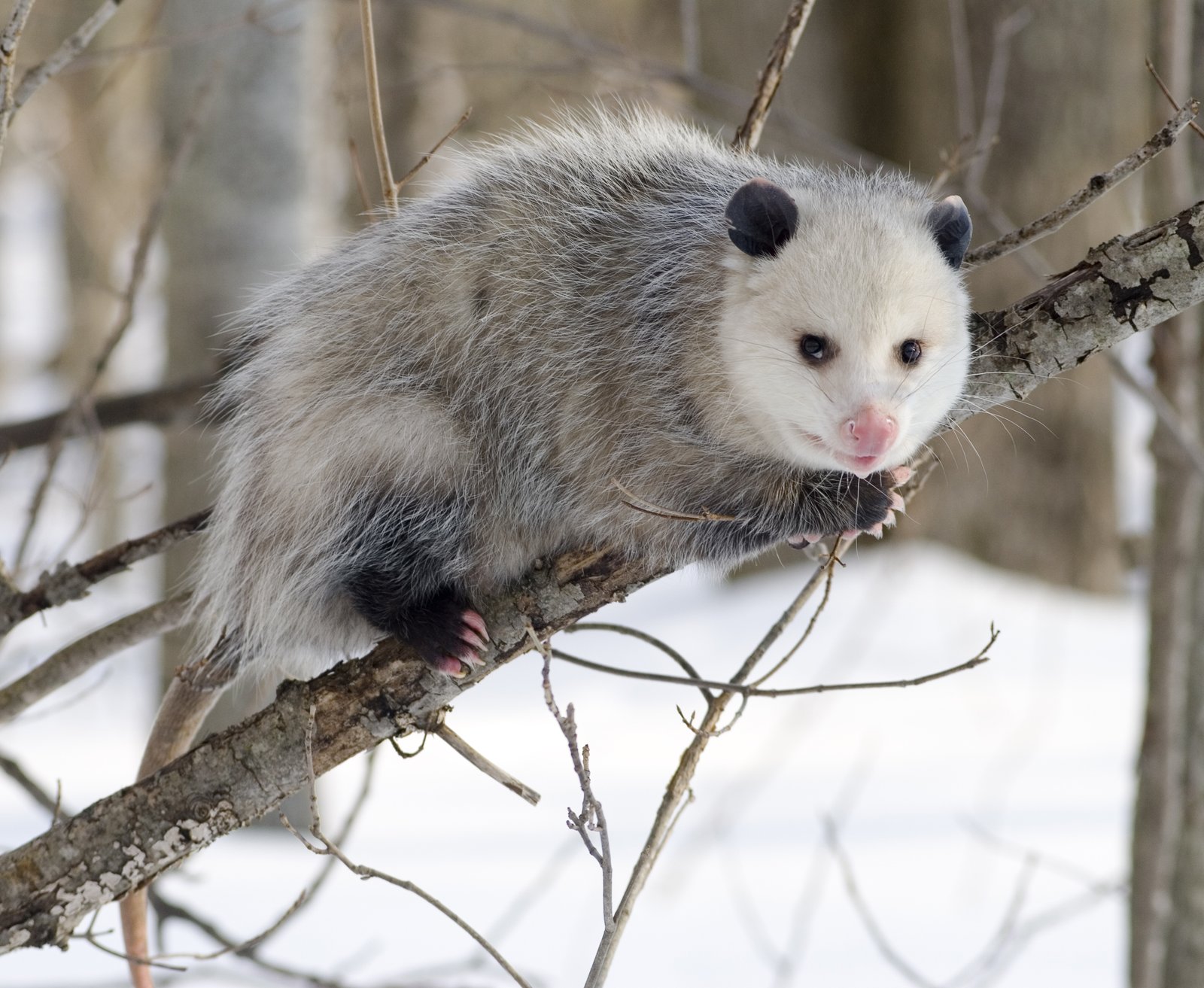
Virginia opossum
Didelphis virginiana
The only marsupial north of Mexico. Females carry young in a pouch, then on the back. Common from river bottoms to dumpsters; tolerant of cold but loses ear tips and tail to frostbite at the northern range edge.
Status: Secure.
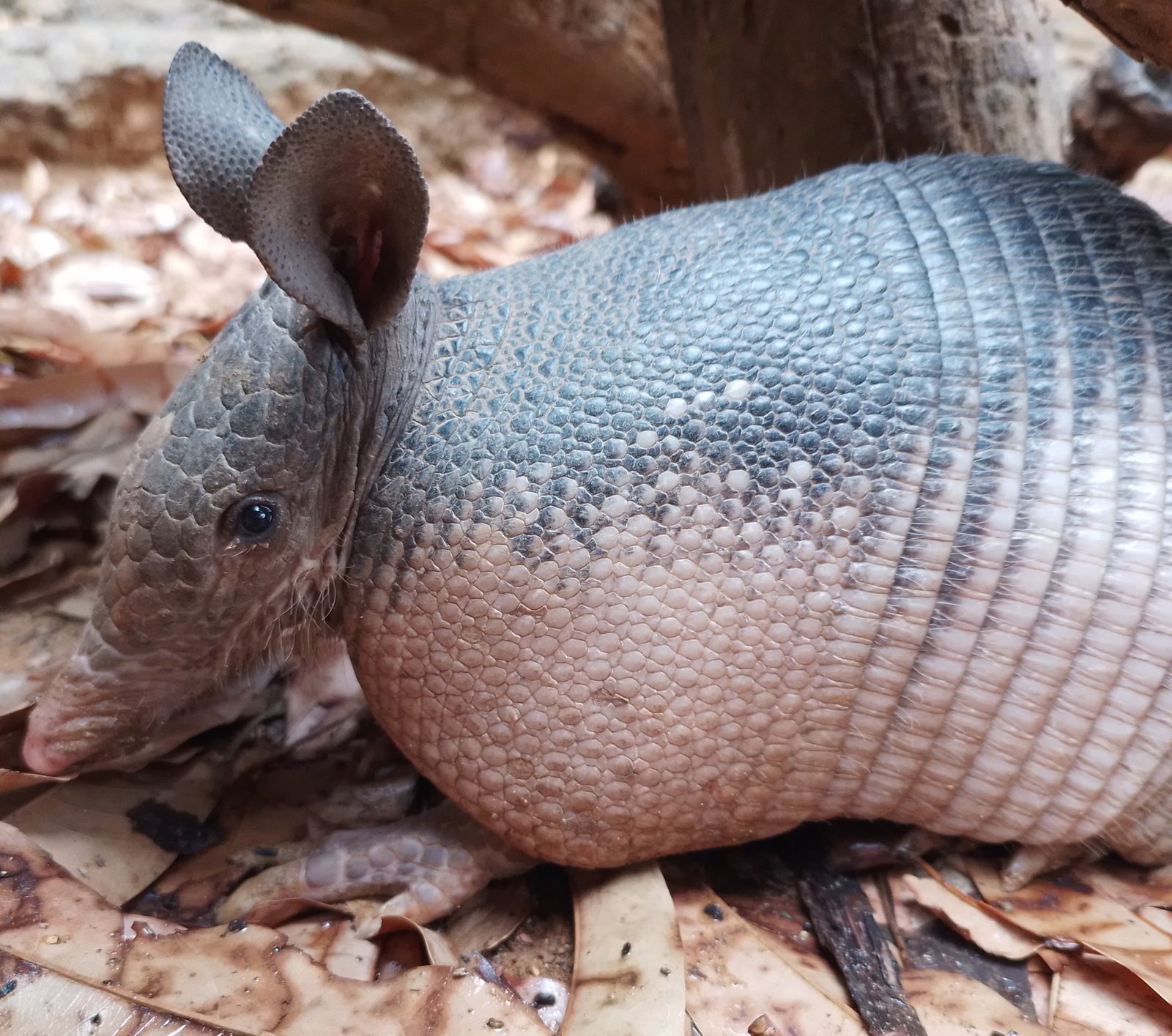
Nine-banded armadillo
Dasypus novemcinctus
Range-expanding north into Tennessee from the Gulf states. Sequatchie Valley fields and roadside ditches are within the documented expansion. Always gives birth to identical quadruplets.
Status: Range-expanding; recently established in Tennessee.
Aquatic and semi-aquatic mammals
The North American river otter is one of the county's conservation success stories. Otters were extirpated from almost all of Tennessee by the 1950s through unregulated trapping and polluted rivers. TWRA reintroductions in the 1980s and 1990s on the Tennessee and Cumberland systems took hold; otters now breed on Nickajack Lake, the lower Sequatchie River, and smaller tributaries. Sign (slides, scat on log piles, five-toed tracks) is easier to find than the animal itself. Beavers have also recovered and now maintain ponds on many small tributaries of the Sequatchie. Muskrats and minks share the same waters; the invasive coypu, introduced for the fur trade in the early twentieth century, occurs sparsely in east Tennessee but is more typical of west Tennessee rivers.
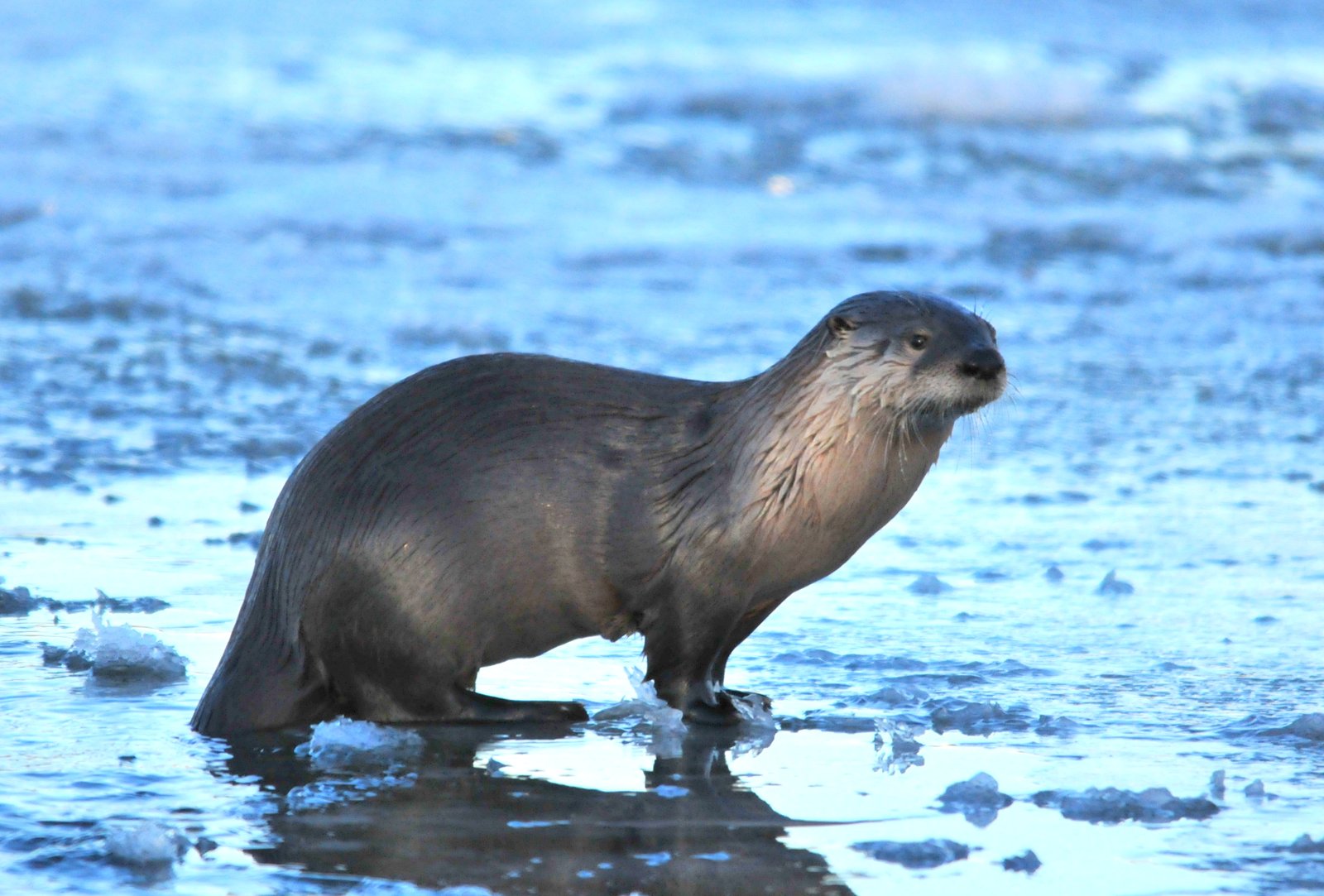
North American river otter
Lontra canadensis
Reintroduced to Tennessee waters in the 1980s and 1990s after near-statewide extirpation. Now breeding on Nickajack Lake and the lower Sequatchie River; one of the county's clearest conservation recoveries.
Status: Secure, recovered.
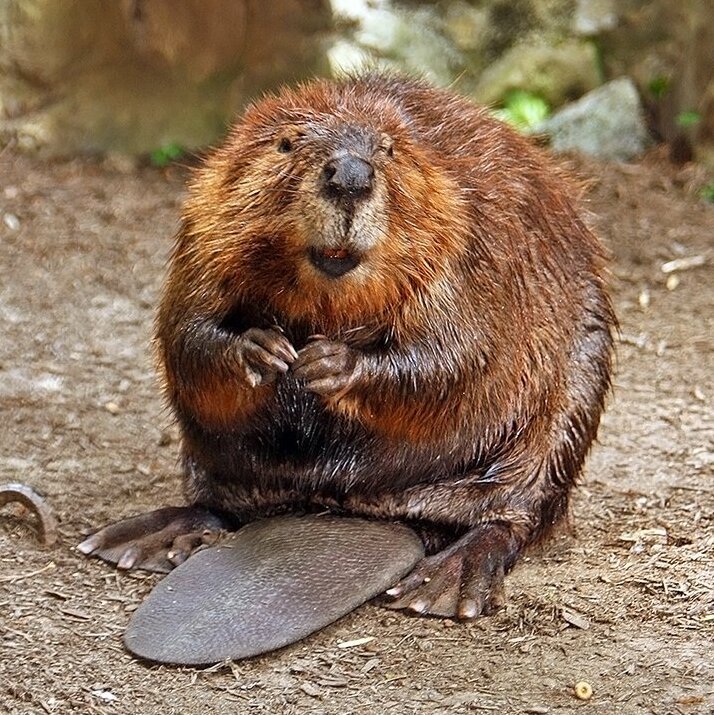
American beaver
Castor canadensis
Recovered from heavy nineteenth-century trapping; now abundant on Marion's small tributaries. Beaver dams reshape valley streams every season, creating wetlands that other species depend on.
Status: Secure, recovered.
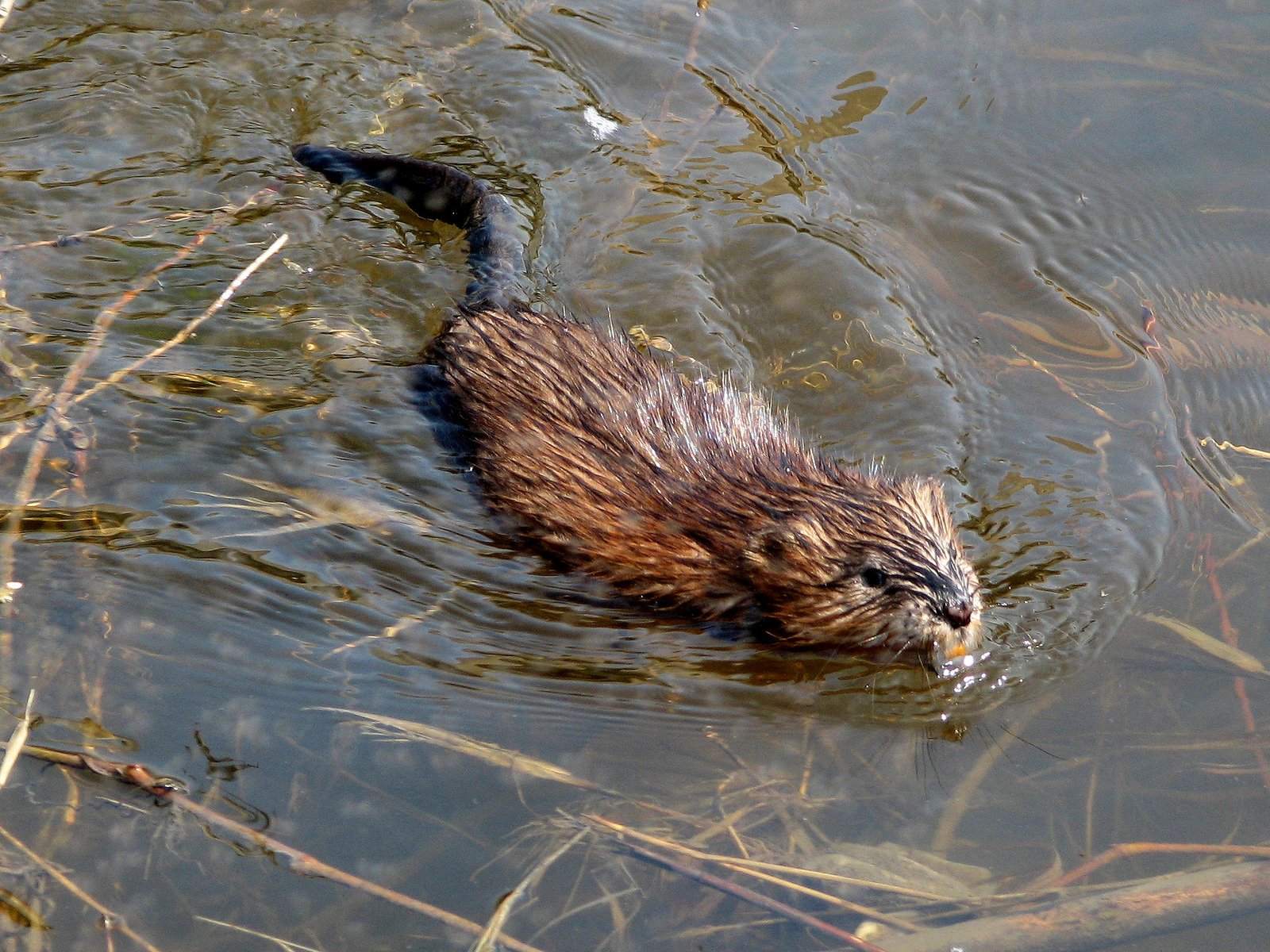
Common muskrat
Ondatra zibethicus
A medium-sized rodent of marshes, lake margins, and slow streams. Builds bank dens or vegetation lodges; expected along the Tennessee River shoreline and Sequatchie River backwaters.
Status: Secure.
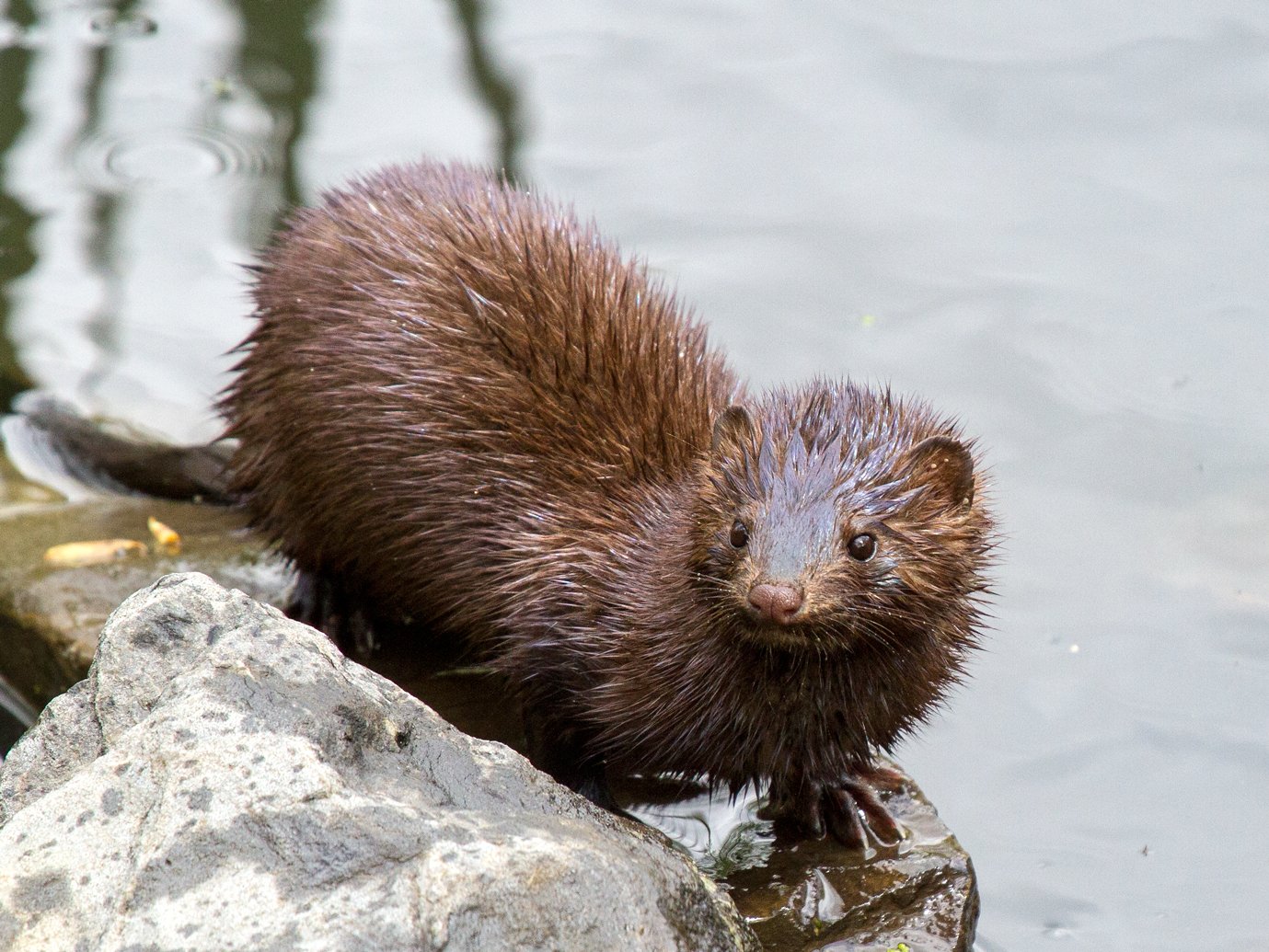
American mink
Neogale vison
A semi-aquatic mustelid that hunts fish, crayfish, frogs, and muskrats along stream margins. Expected on the Tennessee River corridor and along Sequatchie River tributaries.
Status: Secure.
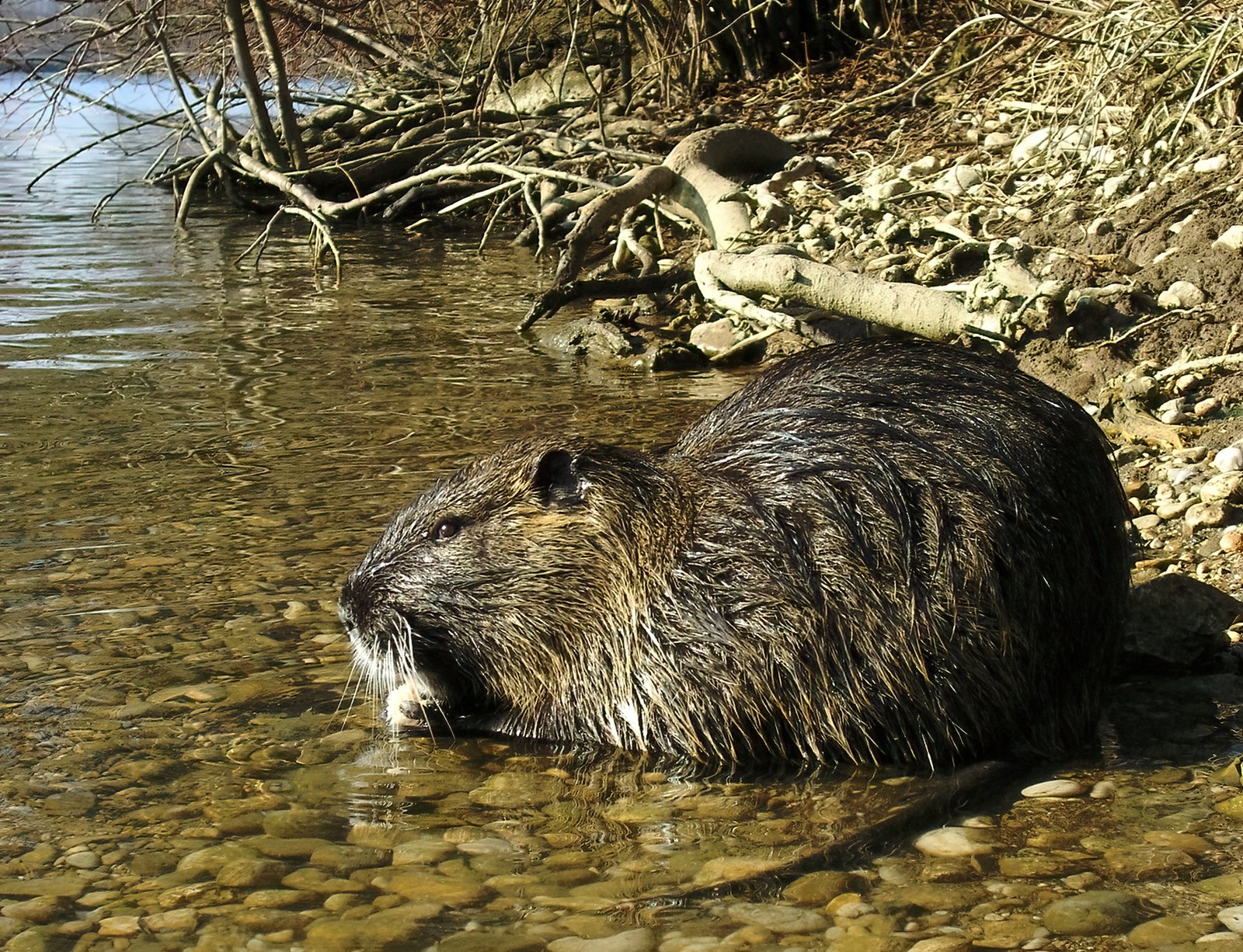
Coypu (nutria)
Myocastor coypus
Introduced from South America for the fur trade; rare in east Tennessee compared to the Gulf-coast wetlands where it is invasive. Damages marsh vegetation by undercutting root systems.
Status: Invasive; rare or accidental in Marion.
Rabbits, squirrels, and rodents
The eastern cottontail is the standard rabbit of valley farmland and field edges; the closely related Appalachian cottontail occurs at higher plateau elevations and is hard to distinguish in the field without skull or genetic data. Tree squirrels and chipmunks fill the hardwood canopy and forest floor. Beneath them, the rodent community is large, diverse, and almost entirely unseen: a single Cumberland Plateau hectare can hold a dozen species of mice, voles, woodrats, and jumping mice in the leaf litter and rock crevices, and the Allegheny woodrat is a regional cliff and bluff specialist of growing conservation concern.
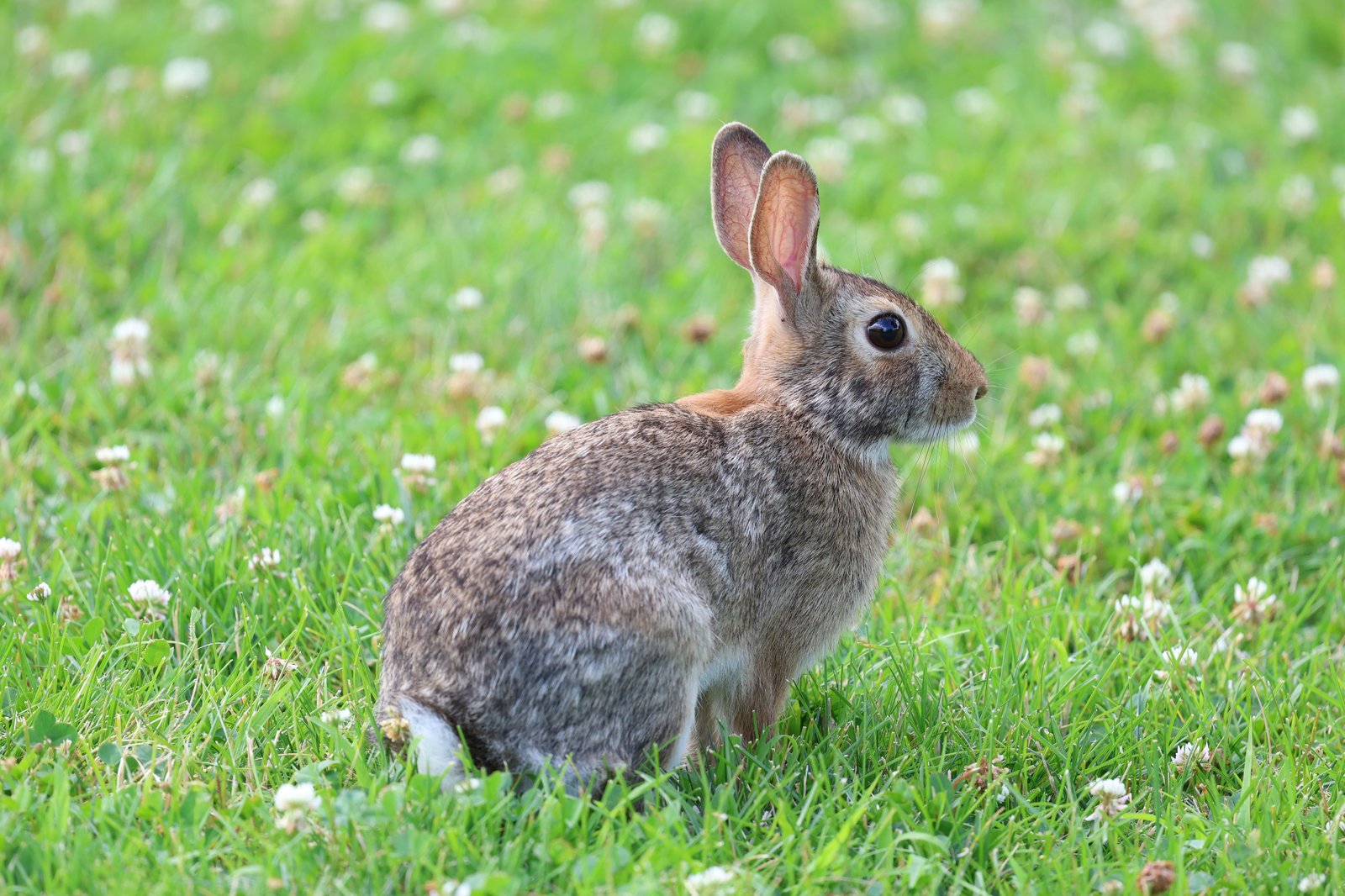
Eastern cottontail
Sylvilagus floridanus
The standard rabbit of valley farmland, field edges, and yards. Crepuscular; abundant where edge habitat is available.
Status: Secure, common.
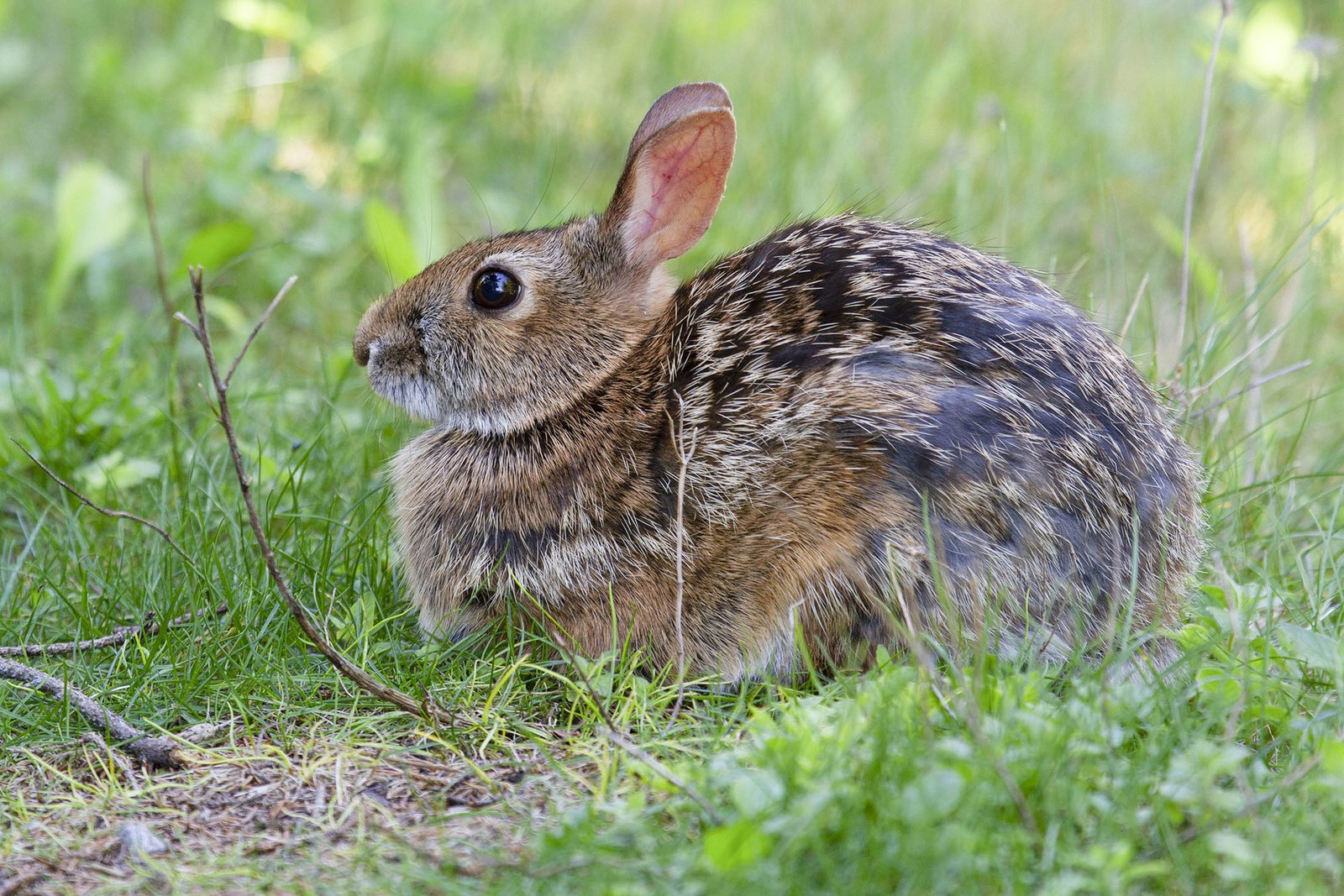
Appalachian cottontail
Sylvilagus obscurus
A separate species associated with higher-elevation heath and mountain laurel thickets along the Cumberland Plateau. Closely resembles the eastern cottontail; reliable distinction requires skull measurements or genetic sampling.
Status: TWRA Deemed in Need of Management.
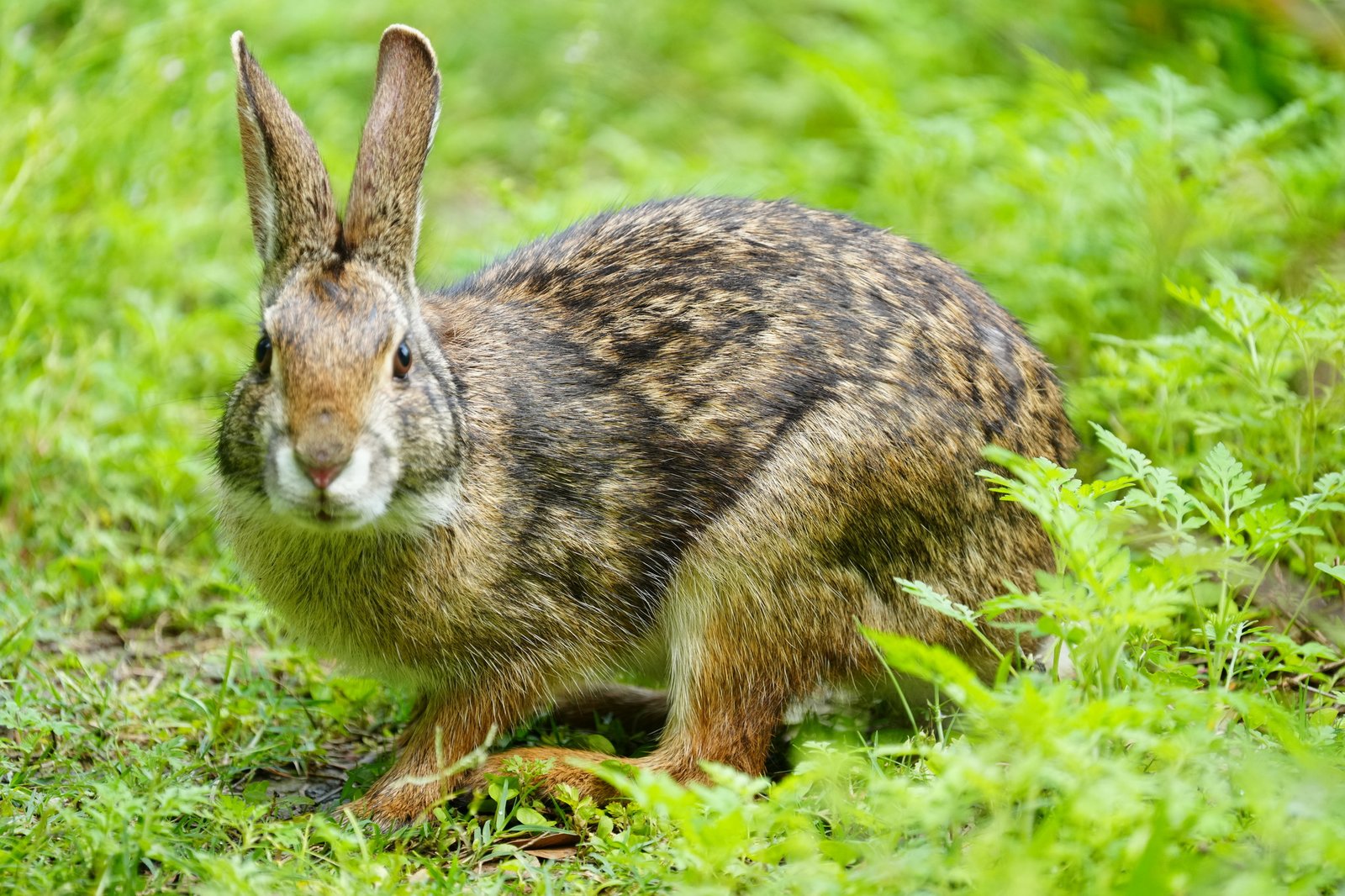
Swamp rabbit
Sylvilagus aquaticus
Larger than the eastern cottontail and tied to bottomland and floodplain habitats. Range typically west Tennessee, with the eastern range edge reaching Tennessee River bottomlands.
Status: Secure; range-edge in Marion.
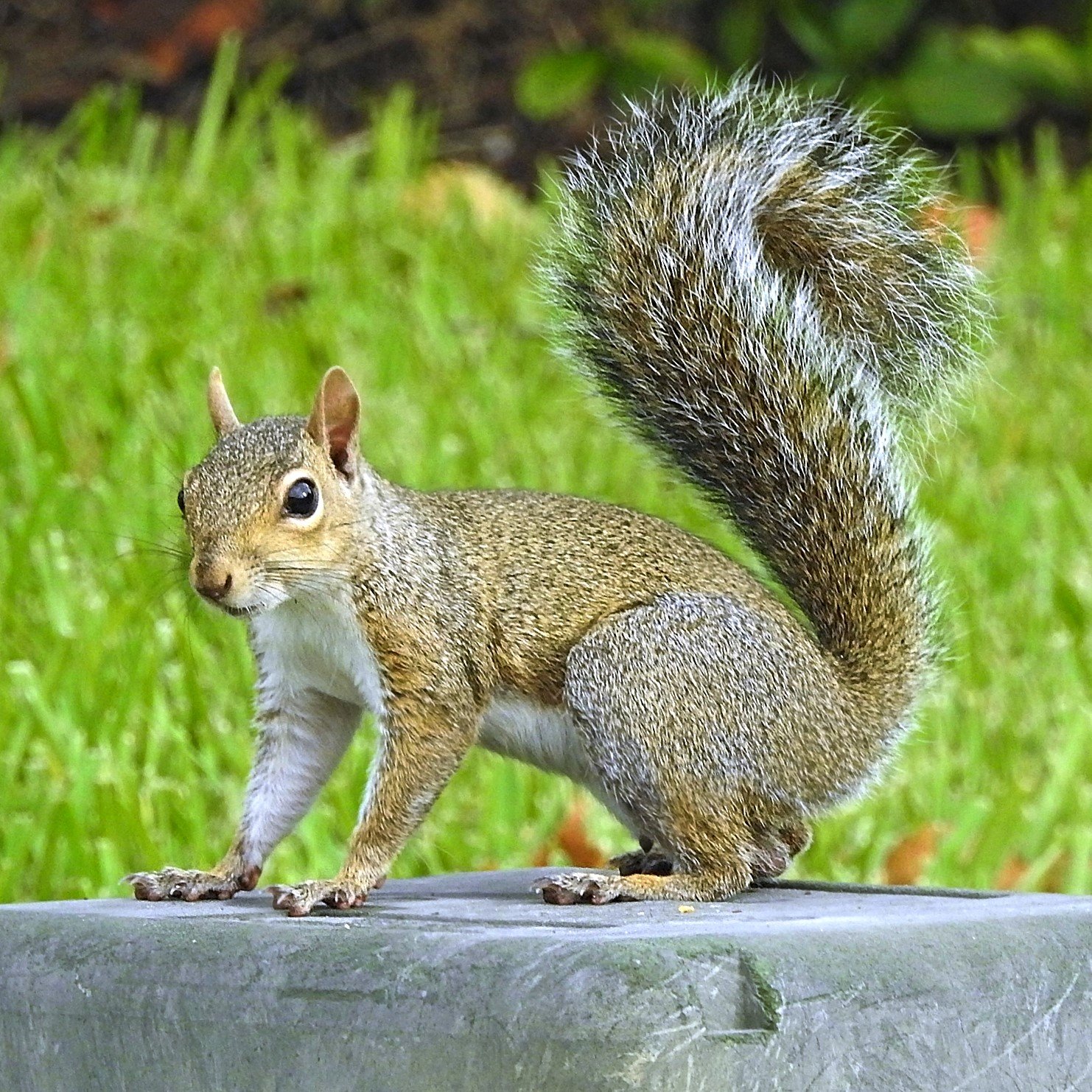
Eastern gray squirrel
Sciurus carolinensis
The default tree squirrel of Marion's hardwood forests, parks, and yards. Active year-round; caches acorns and hickory nuts for winter.
Status: Secure, abundant.
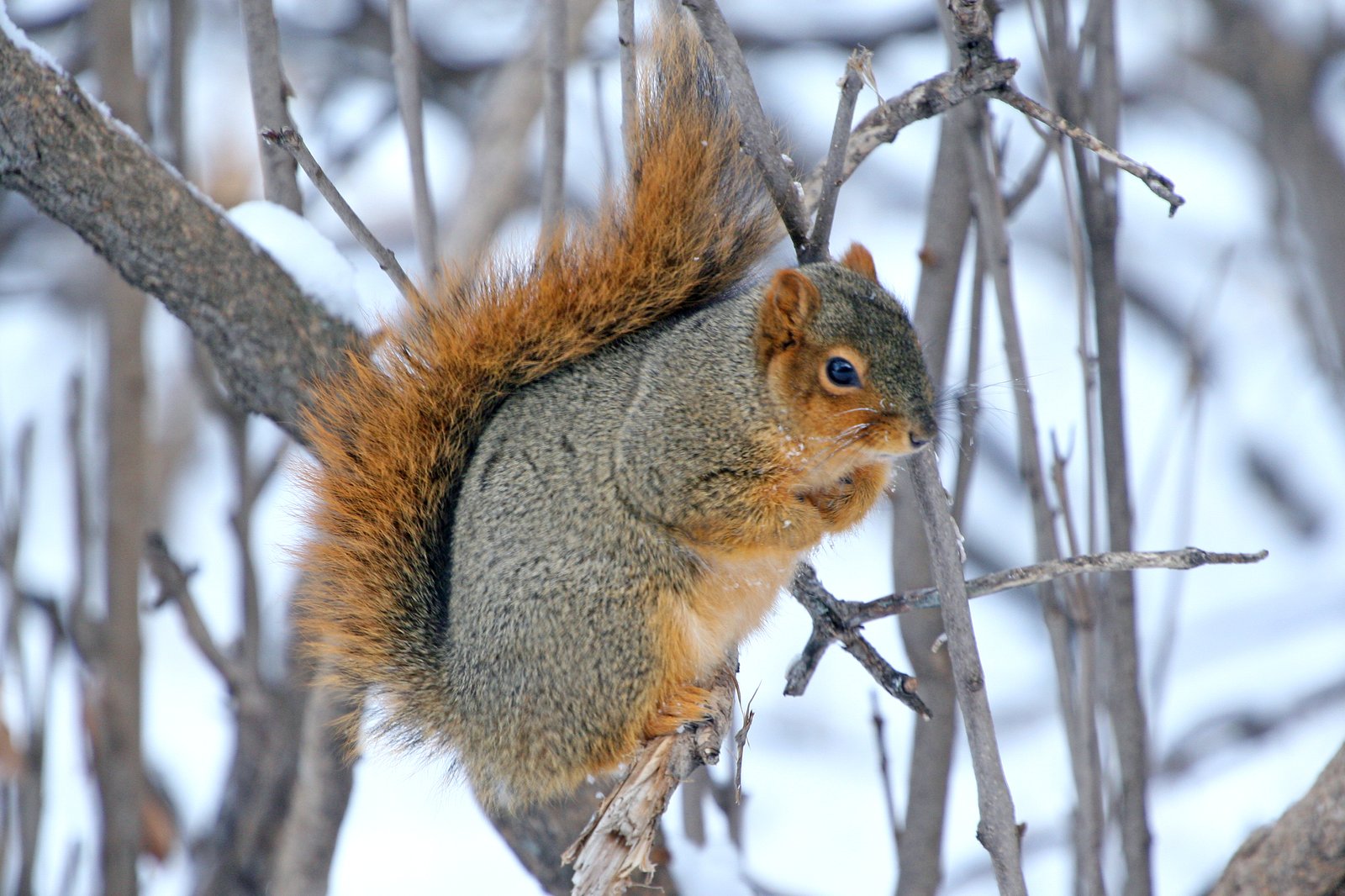
Eastern fox squirrel
Sciurus niger
Larger than the gray squirrel and more orange-red. Prefers open oak-hickory woodlands with a sparse understory; less common in dense Cumberland Plateau forest interior than the gray.
Status: Secure.
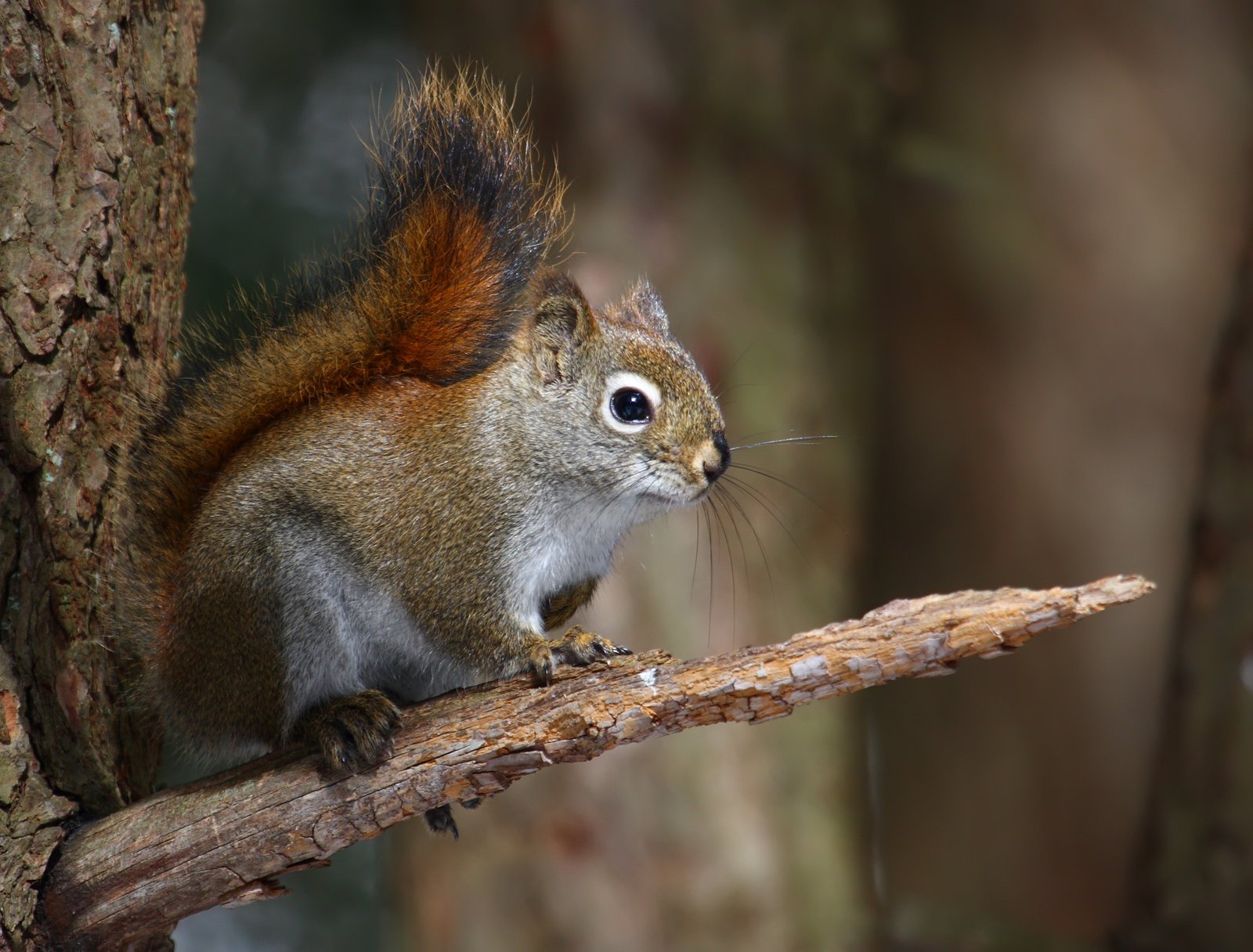
American red squirrel
Tamiasciurus hudsonicus
A small, vocal squirrel of conifer stands; loud chattering call is often the first sign. Tennessee range is range-limited; expected on higher Cumberland Plateau pine and hemlock pockets.
Status: Secure but locally distributed.
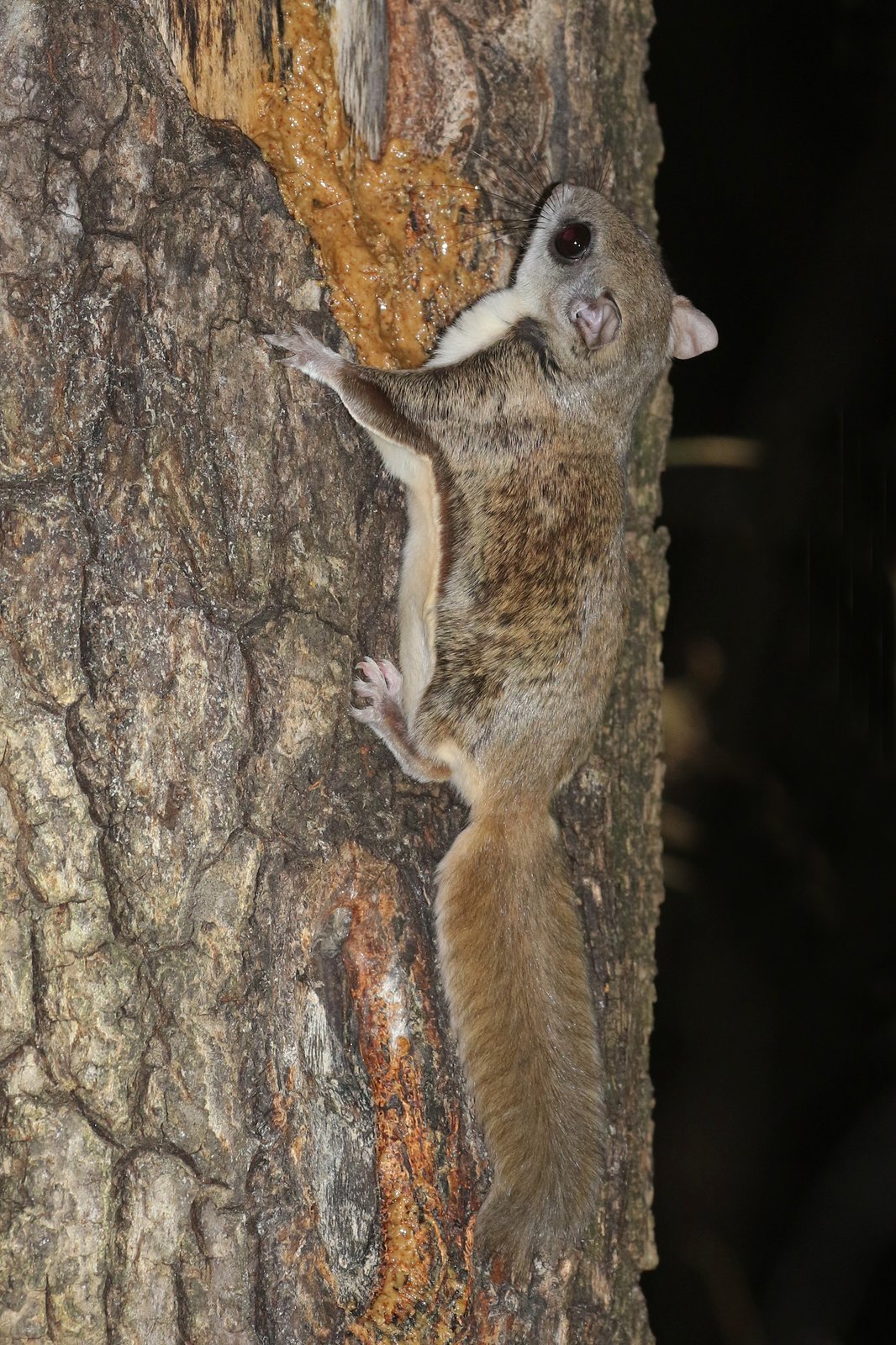
Southern flying squirrel
Glaucomys volans
Small, nocturnal, and almost never seen by daylight. Glides between trees on a furred patagium stretched between wrist and ankle. Common in mature hardwood forest, often denning in old woodpecker cavities.
Status: Secure.
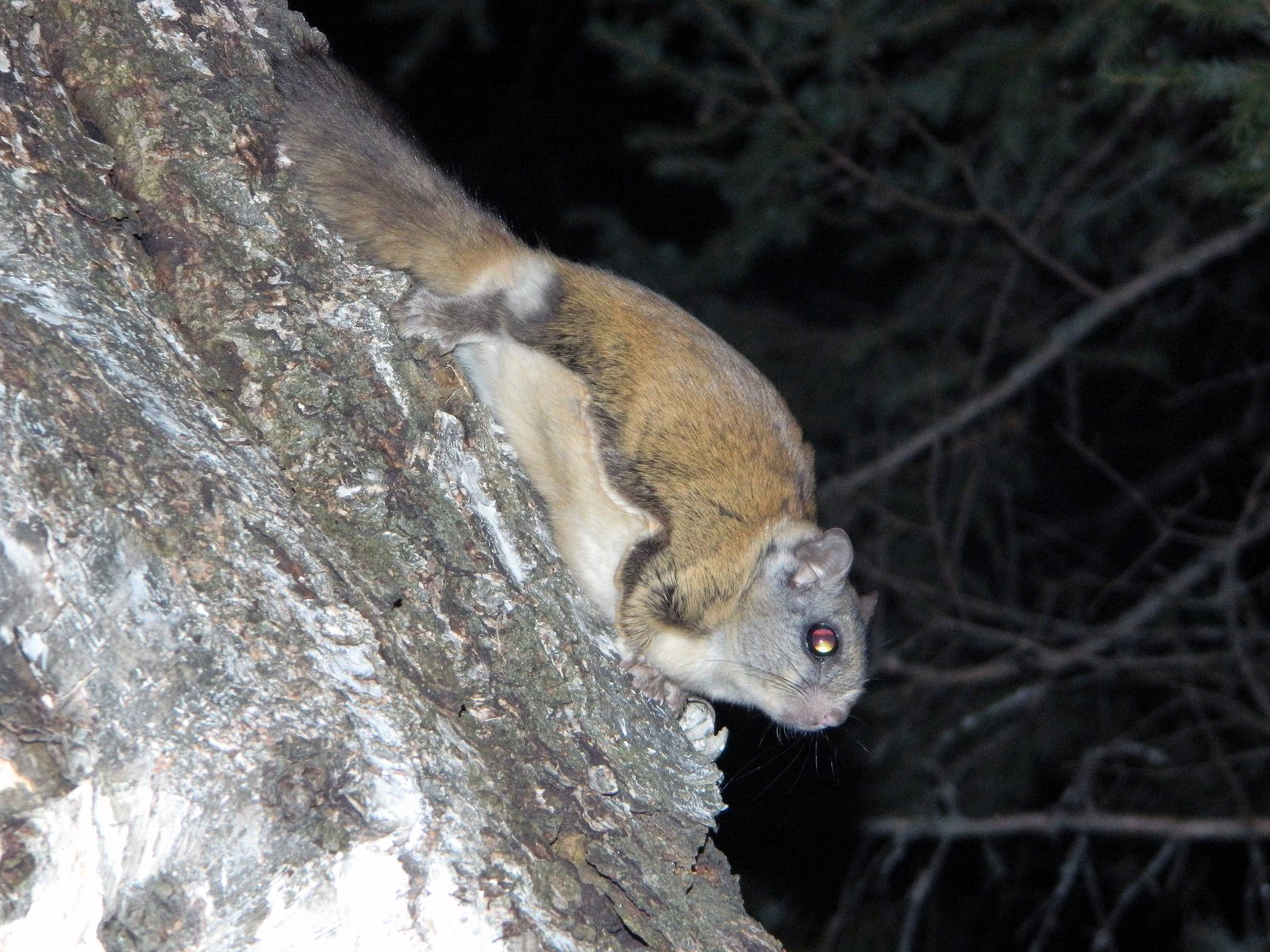
Northern flying squirrel
Glaucomys sabrinus
Larger than the southern flying squirrel and restricted to high-elevation spruce-fir forest. Tennessee primary range is the Smokies and Roan Mountain; rare or accidental in Marion.
Status: TWRA-listed; range-restricted.
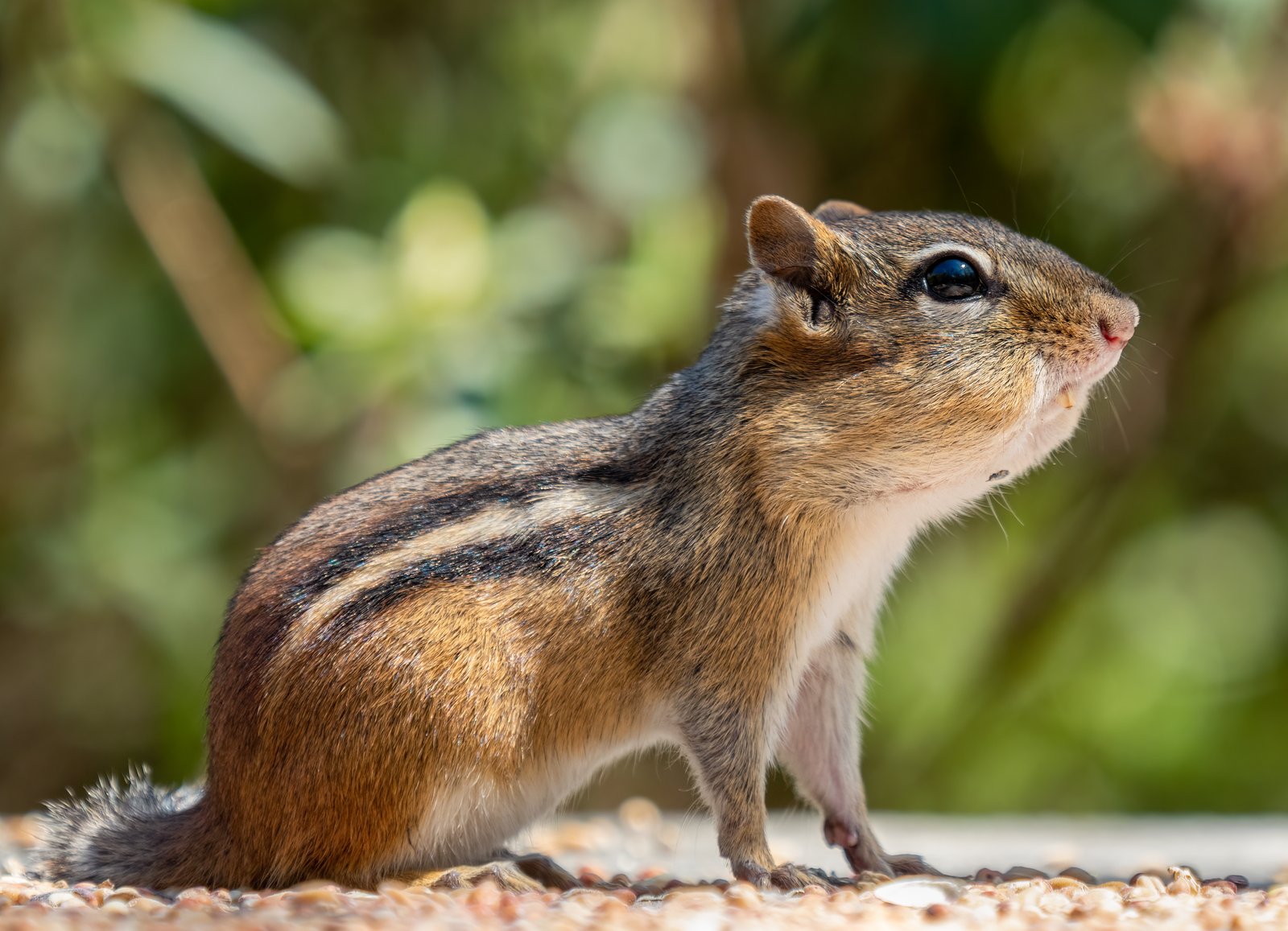
Eastern chipmunk
Tamias striatus
The five-stripe ground squirrel of Marion forests, rock walls, and woodlot edges. Hibernates lightly through winter, waking to feed from cached seeds.
Status: Secure.
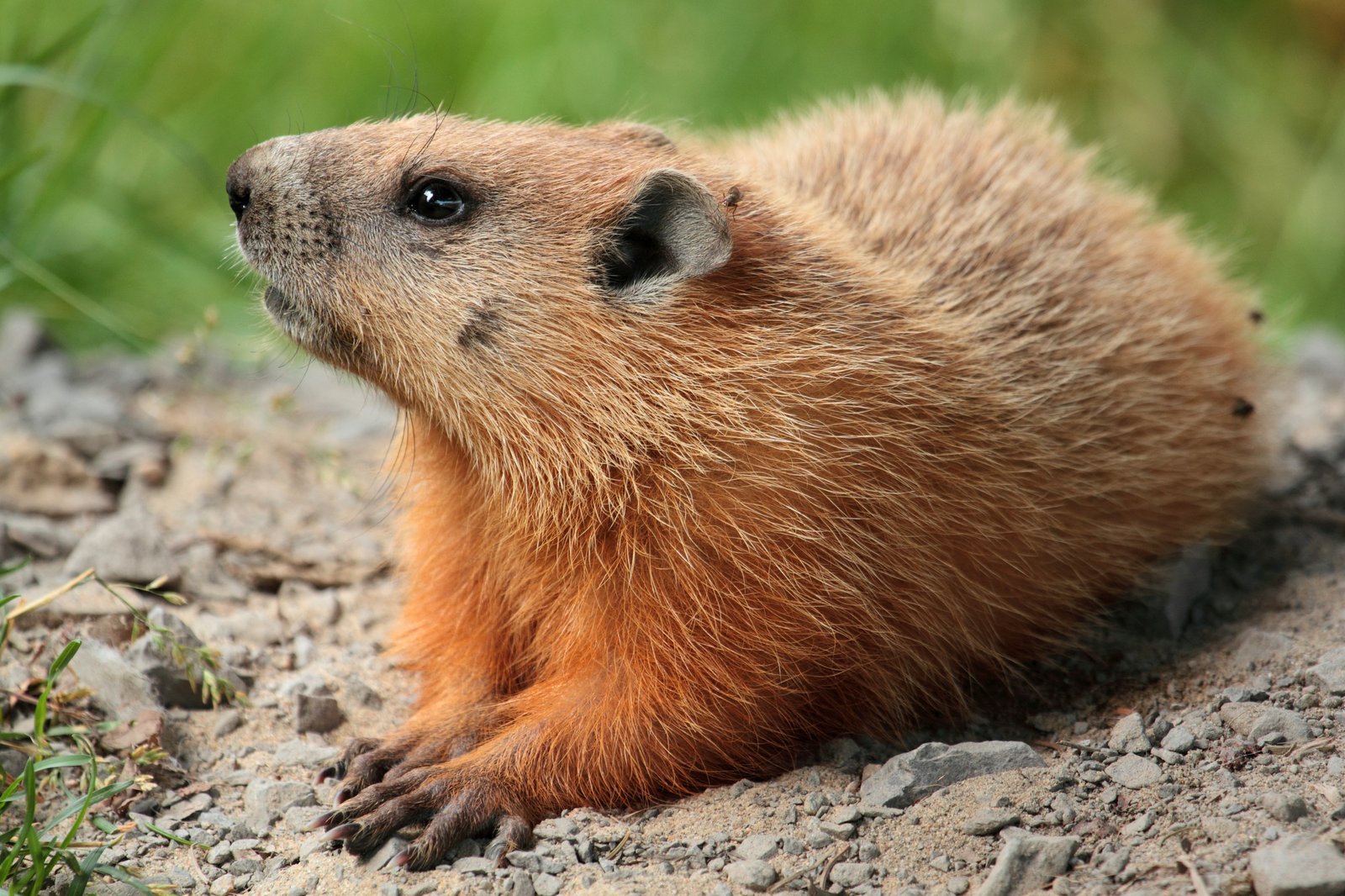
Woodchuck (groundhog)
Marmota monax
A large ground-dwelling squirrel of roadsides, fields, and woodlot edges. Burrows are extensive and persistent; old burrow systems are reused by foxes, skunks, and snakes.
Status: Secure.
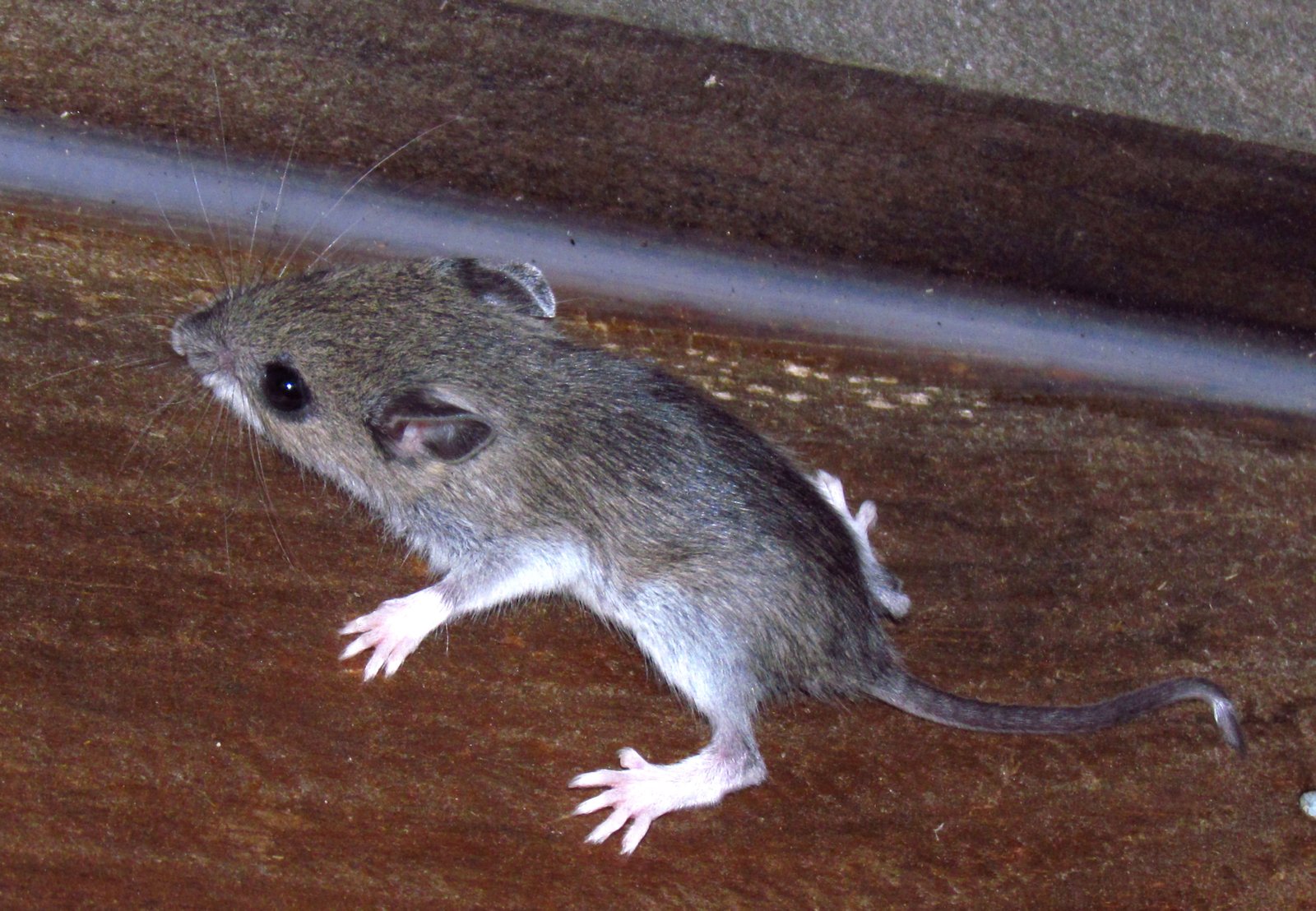
White-footed mouse
Peromyscus leucopus
A common forest-floor and brushy-edge mouse with a sharply bicolored tail. Primary host for the larval and nymphal stages of the blacklegged tick that transmits Lyme disease.
Status: Secure.
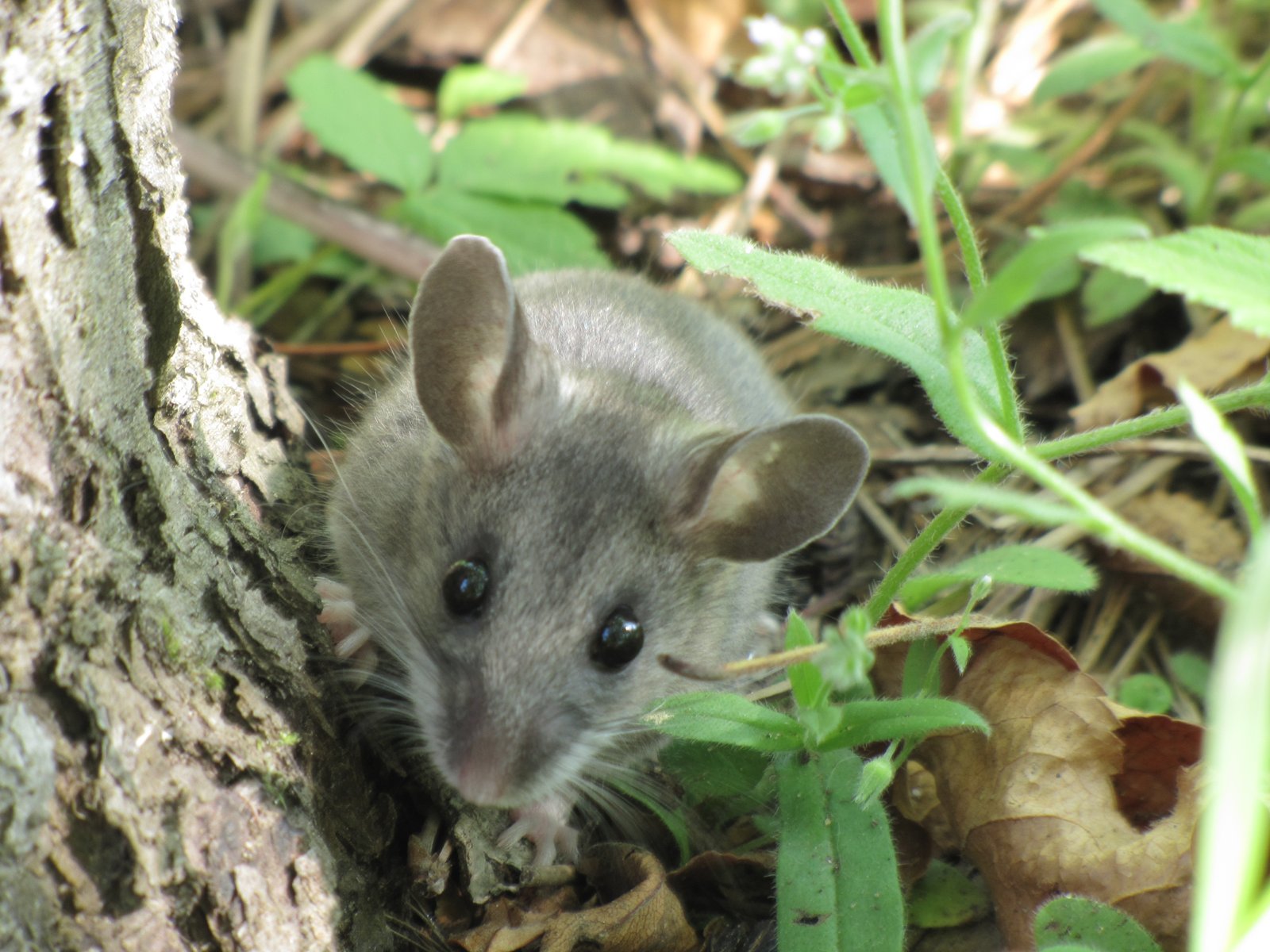
North American deermouse
Peromyscus maniculatus
Closely related to the white-footed mouse and difficult to distinguish in the field. Wider habitat range, including grasslands and high-elevation rocky ground. The principal hantavirus reservoir in the eastern U.S.
Status: Secure.
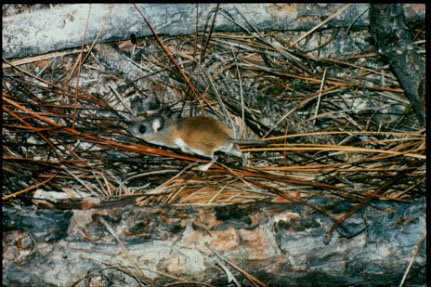
Cotton deermouse
Peromyscus gossypinus
A larger Peromyscus tied to bottomland hardwood and swamp-edge habitats. Tennessee River bottomlands and the lower Sequatchie are within the documented range.
Status: Secure.
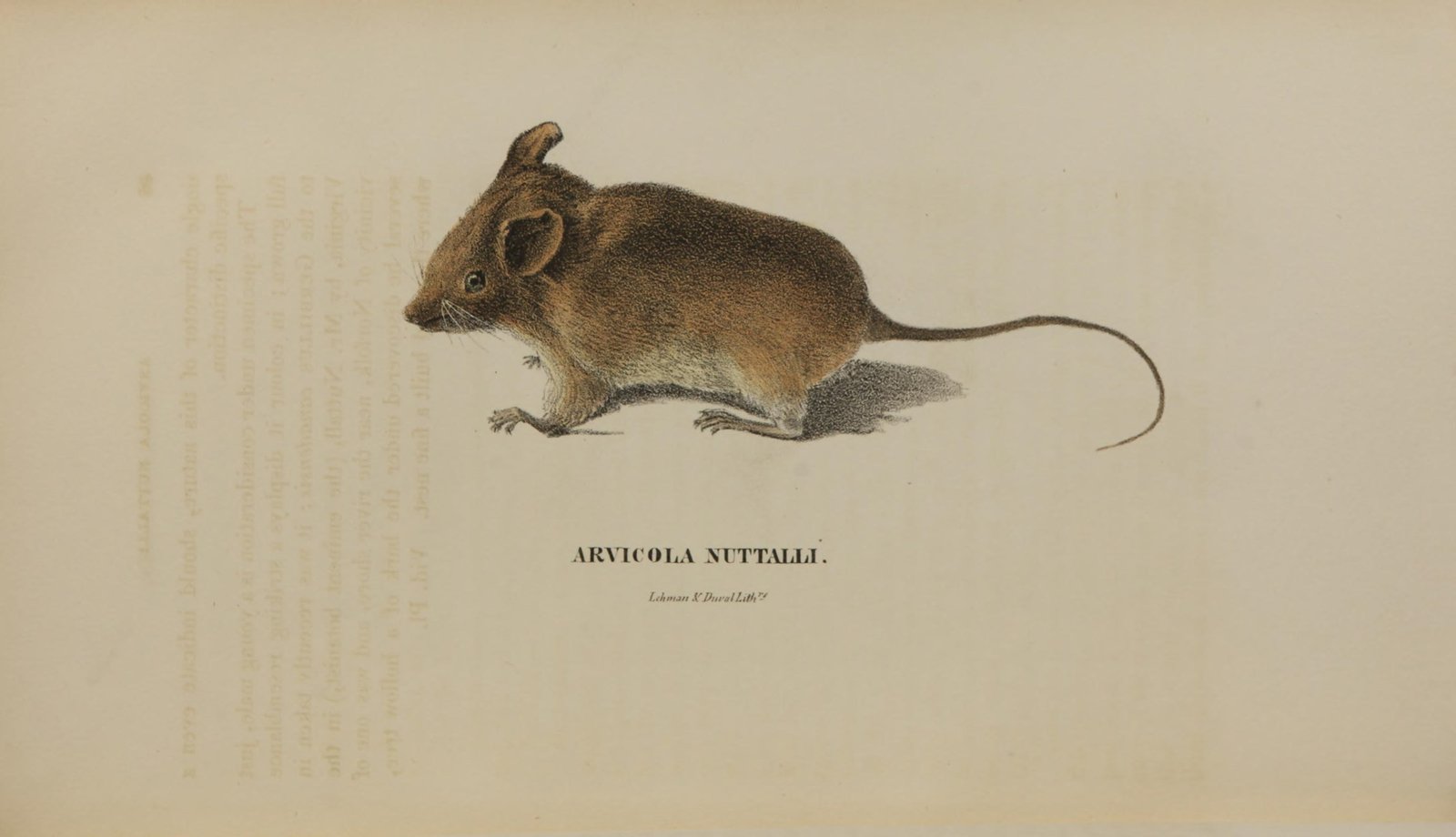
Golden mouse
Ochrotomys nuttalli
A handsome cinnamon-orange mouse that builds aboveground nests in vine tangles and shrubby growth. Expected on Cumberland Plateau forest edges and brushy fence rows.
Status: Secure.
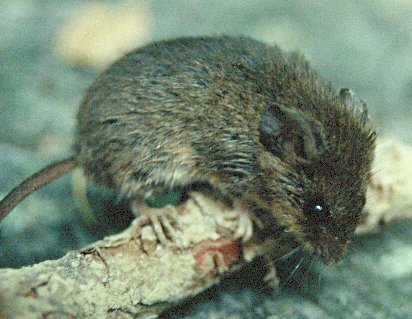
Eastern harvest mouse
Reithrodontomys humulis
A small, grooved-incisor mouse of old fields, broomsedge meadows, and weedy roadside ditches. Builds woven globular grass nests aboveground.
Status: Secure.
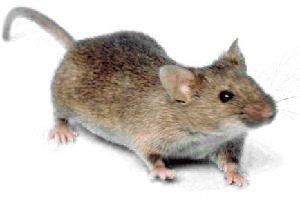
House mouse
Mus musculus
Introduced from Eurasia and now ubiquitous in human settlements. Found wherever stored food, structures, and warmth coincide; the standard pest mouse of Marion towns and farmsteads.
Status: Introduced; ubiquitous.
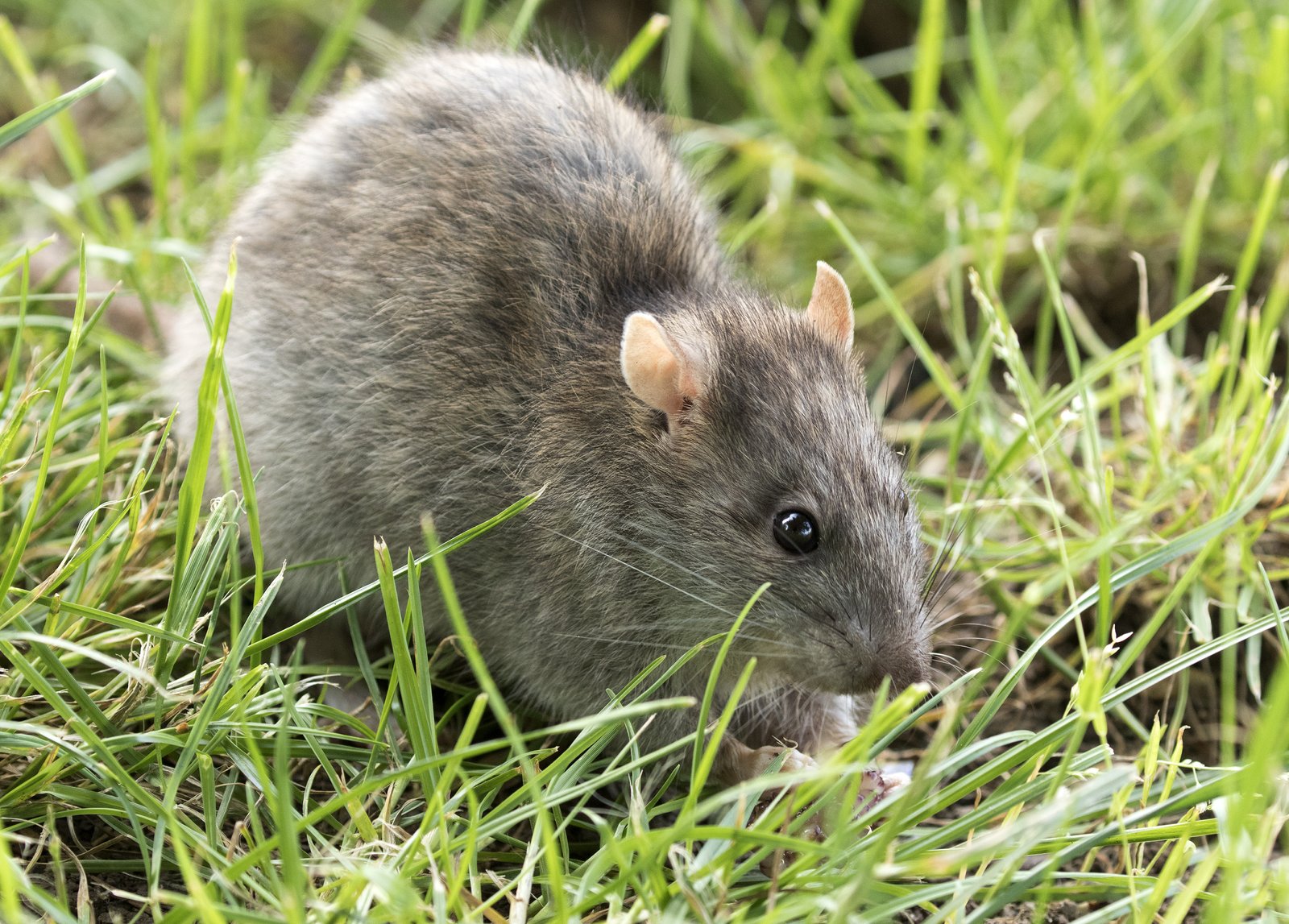
Brown rat
Rattus norvegicus
The dominant urban and rural commensal rat in Tennessee. Larger and more aggressive than the roof rat; lives in burrows, sewers, and basements rather than overhead.
Status: Introduced; commensal with humans.
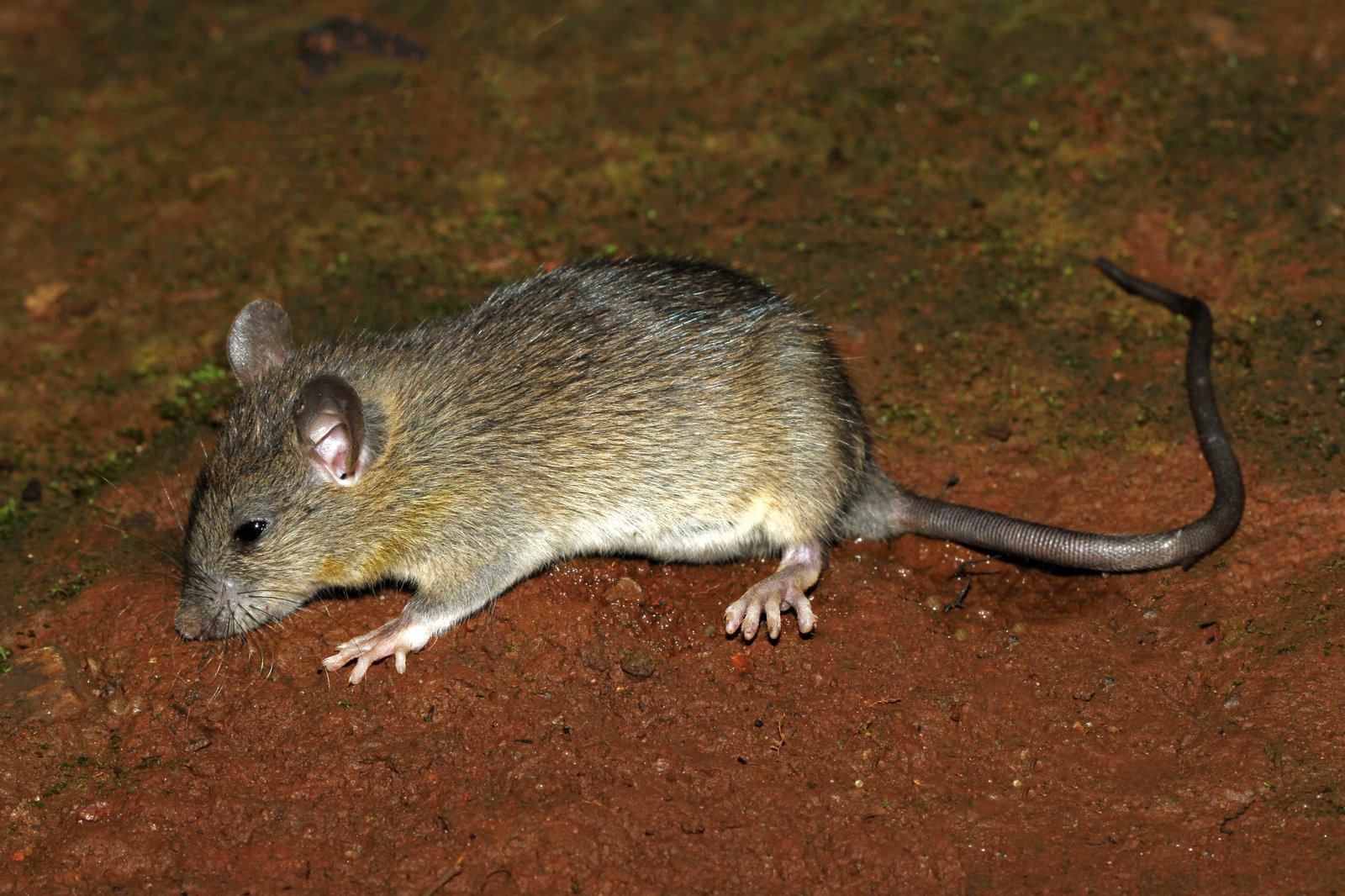
Roof rat
Rattus rattus
Slimmer and more agile than the brown rat; nests in trees, attics, and overhead spaces. Less common than the brown rat in Tennessee but present in older buildings and port-related infrastructure.
Status: Introduced; less common than the brown rat.
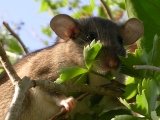
Eastern woodrat
Neotoma floridana
Builds large stick middens in rock crevices and at cave mouths. Expected on Cumberland Plateau bluffs and rockhouses; the “packrat” that collects bones, bottle caps, and other shiny debris into the nest.
Status: Secure.
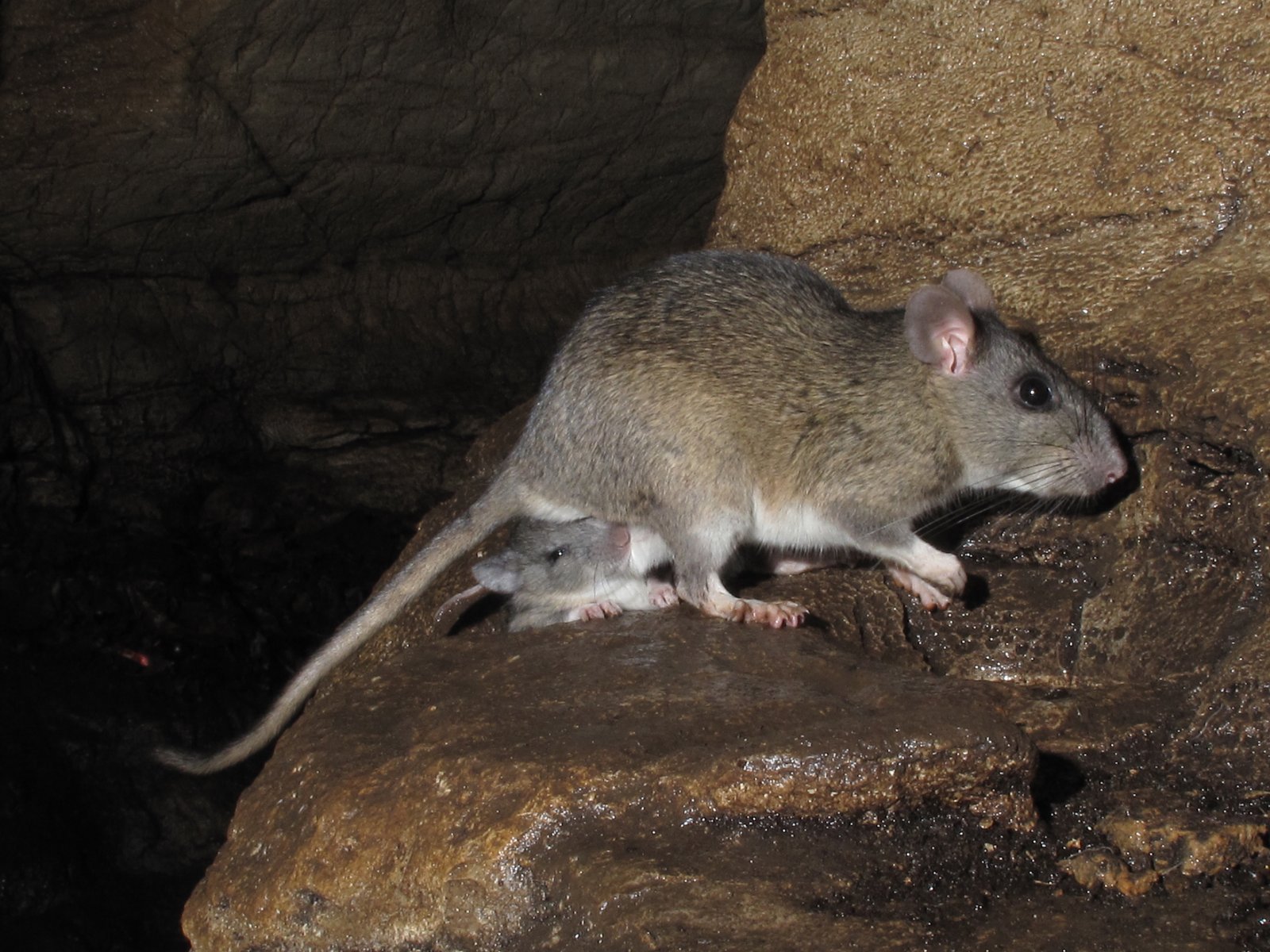
Allegheny woodrat
Neotoma magister
A rocky-cliff specialist of the central and southern Appalachians, declining across most of its range. Expected on the Tennessee River Gorge bluffs and the Walden Ridge escarpment within Marion.
Status: TWRA Deemed in Need of Management.
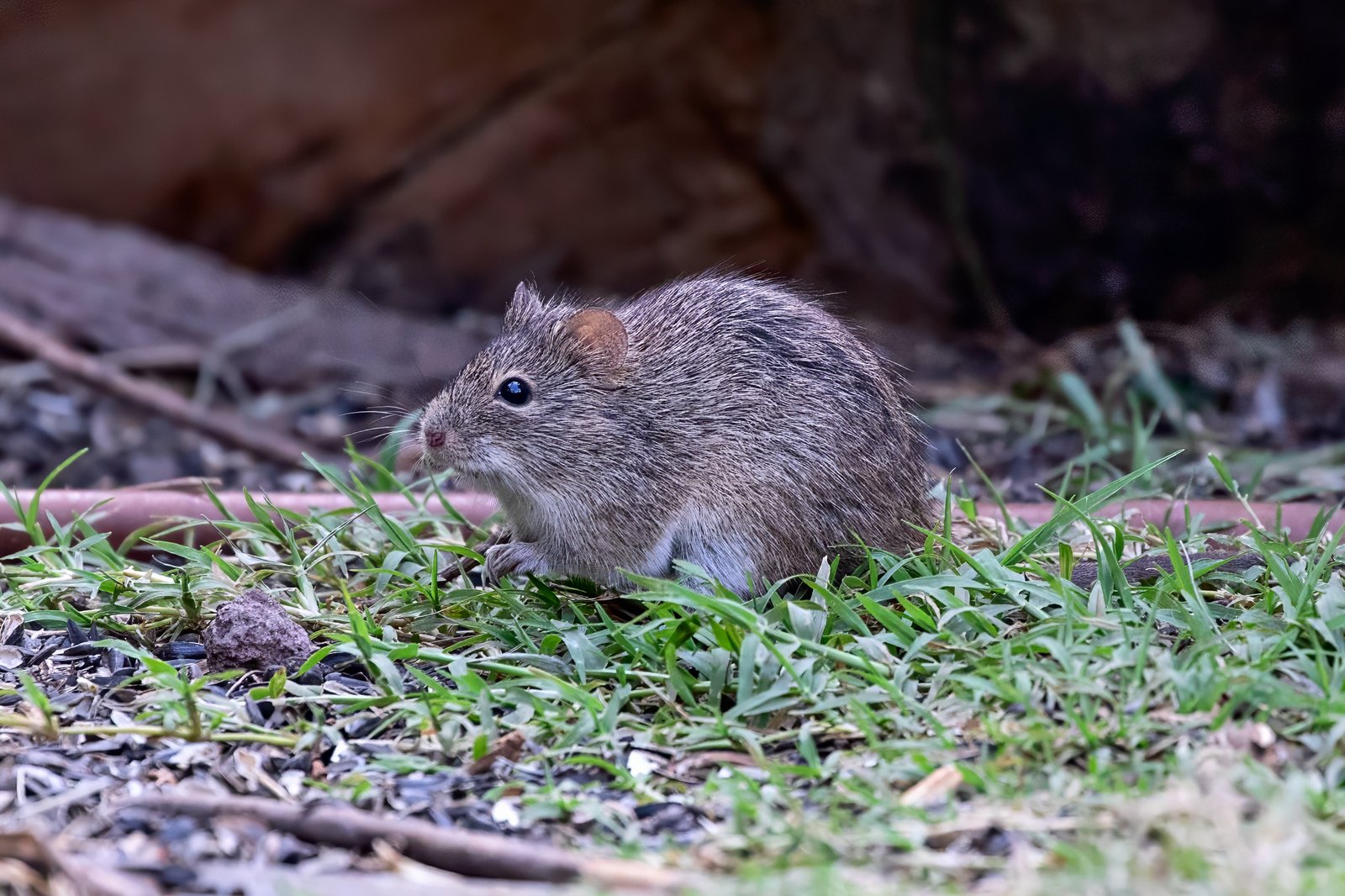
Hispid cotton rat
Sigmodon hispidus
A medium-sized, coarse-furred rat of grasslands and old fields. Builds runways through dense grass; population cycles can be dramatic, with sharp peaks every few years.
Status: Secure.
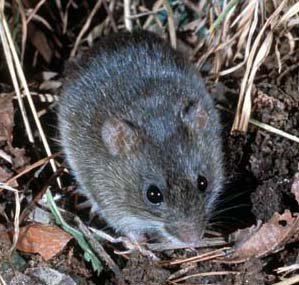
Marsh rice rat
Oryzomys palustris
A semi-aquatic rat of marshes, wet meadows, and weedy stream edges. Expected near Tennessee River wetlands and the lower Sequatchie River.
Status: Secure.
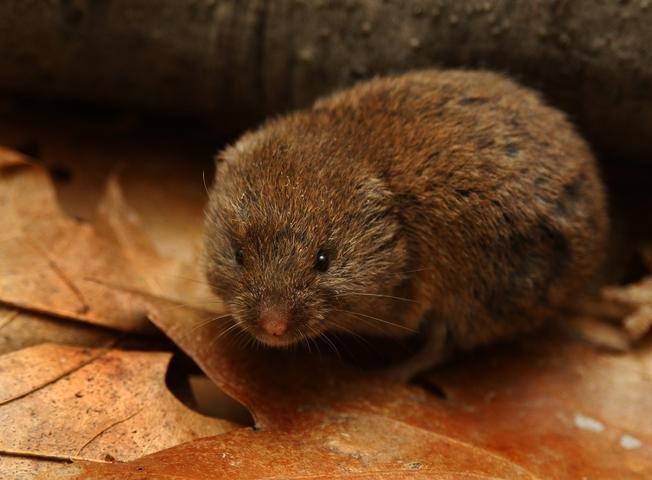
Woodland vole (pine vole)
Microtus pinetorum
A small, short-tailed vole of forest floors and orchards. Lives in shallow burrows and surface runways under leaf litter; common where soils are loose enough to tunnel.
Status: Secure.
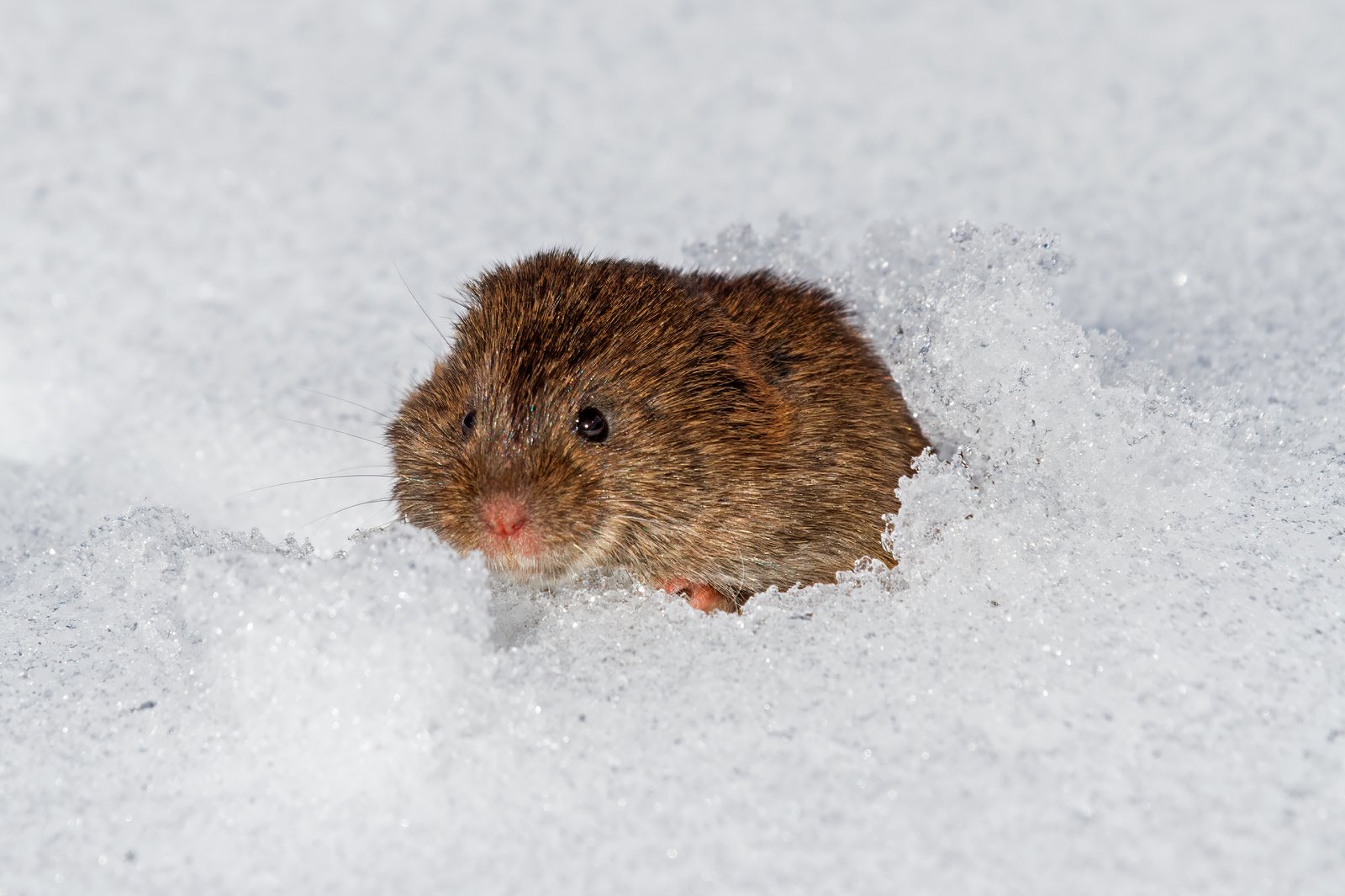
Meadow vole
Microtus pennsylvanicus
The standard vole of valley grasslands and old fields. Builds runway systems through grass and surface litter; one of the most populous mammals on the continent.
Status: Secure.
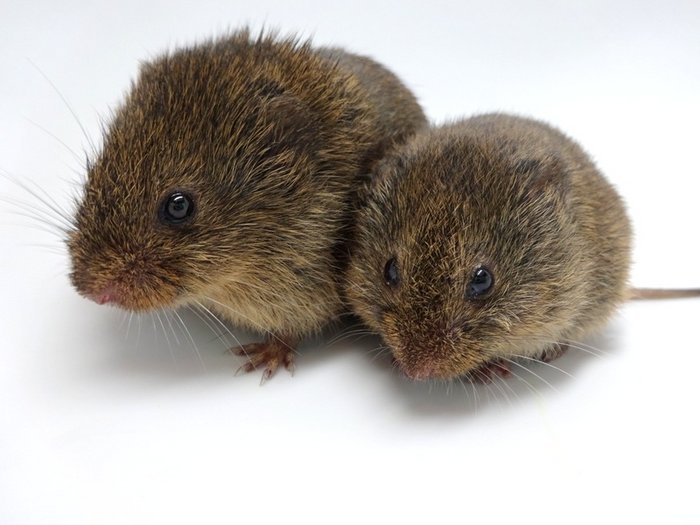
Prairie vole
Microtus ochrogaster
A grassland and farmland vole at its eastern range edge in Tennessee. Famous in animal-behavior research for forming long-term pair bonds, in contrast with the meadow vole's polygynous mating system.
Status: Secure but range-restricted.
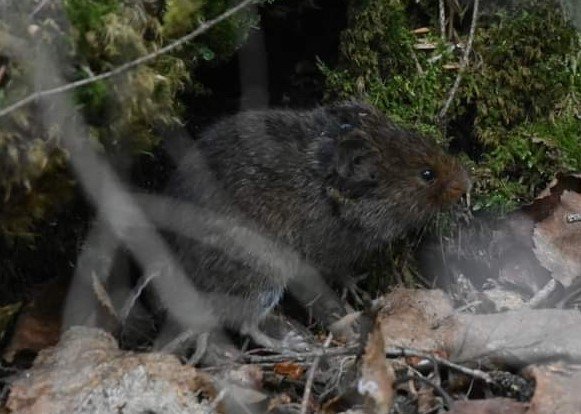
Rock vole
Microtus chrotorrhinus
A high-elevation talus-slope specialist with a yellow-orange muzzle. Tennessee primary range is the eastern mountains; rare or accidental in Marion's plateau habitat.
Status: TWRA Deemed in Need of Management.
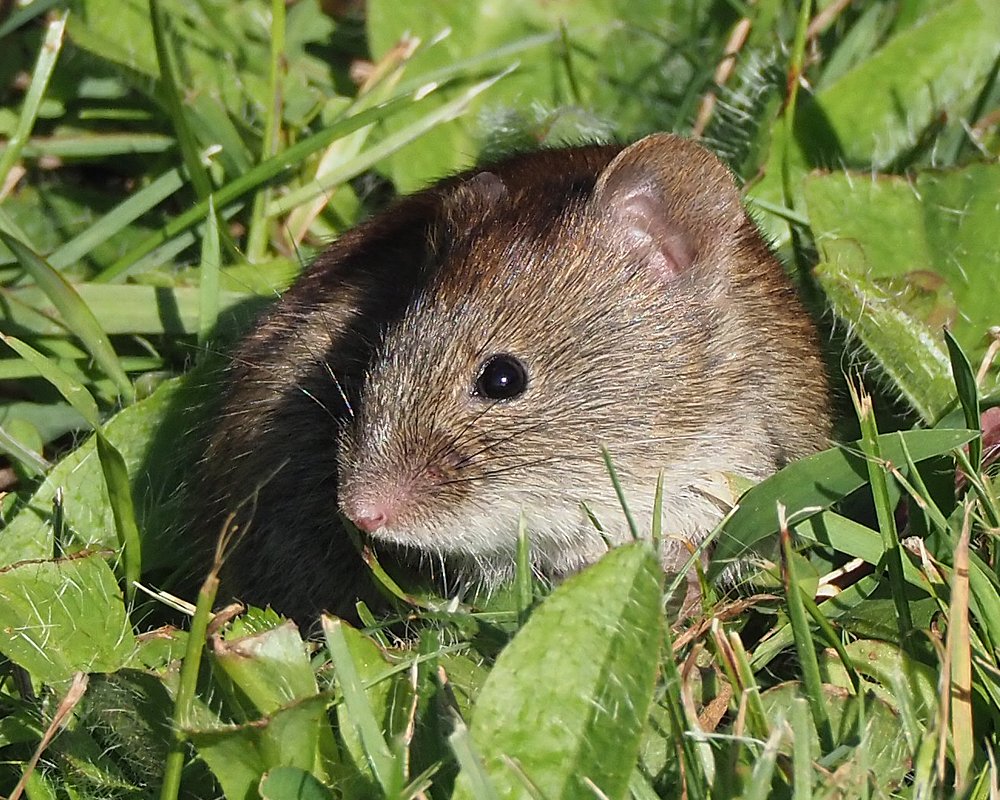
Southern red-backed vole
Myodes gapperi
A small forest-floor vole with a chestnut-red dorsal stripe. Tennessee primary range is the eastern mountains; rare in Marion habitats.
Status: Secure but range-restricted.
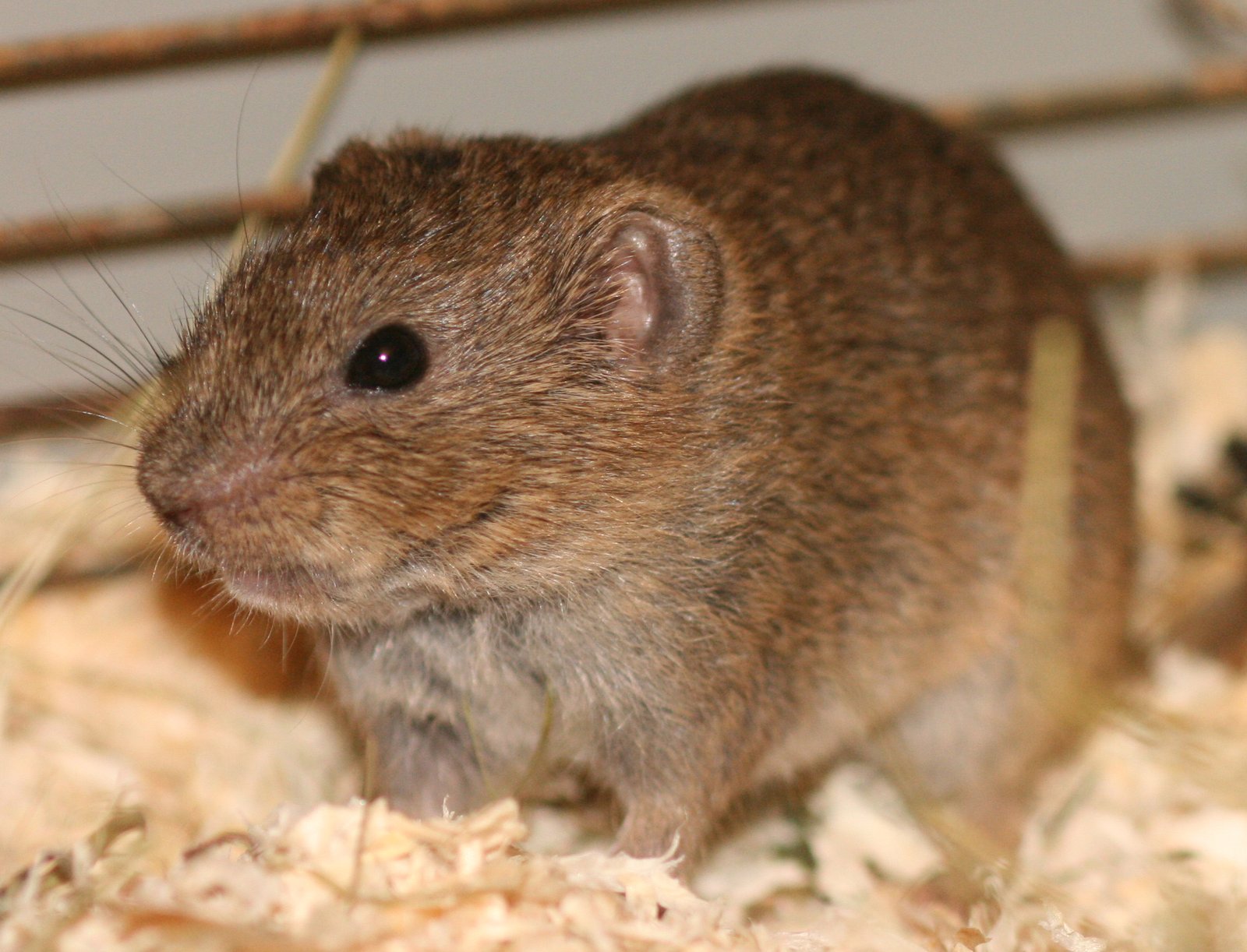
Southern bog lemming
Synaptomys cooperi
A small vole-like rodent of damp meadows, sphagnum bogs, and grassy seeps. Documented on the Cumberland Plateau in suitable wet-meadow habitat.
Status: TWRA Deemed in Need of Management.
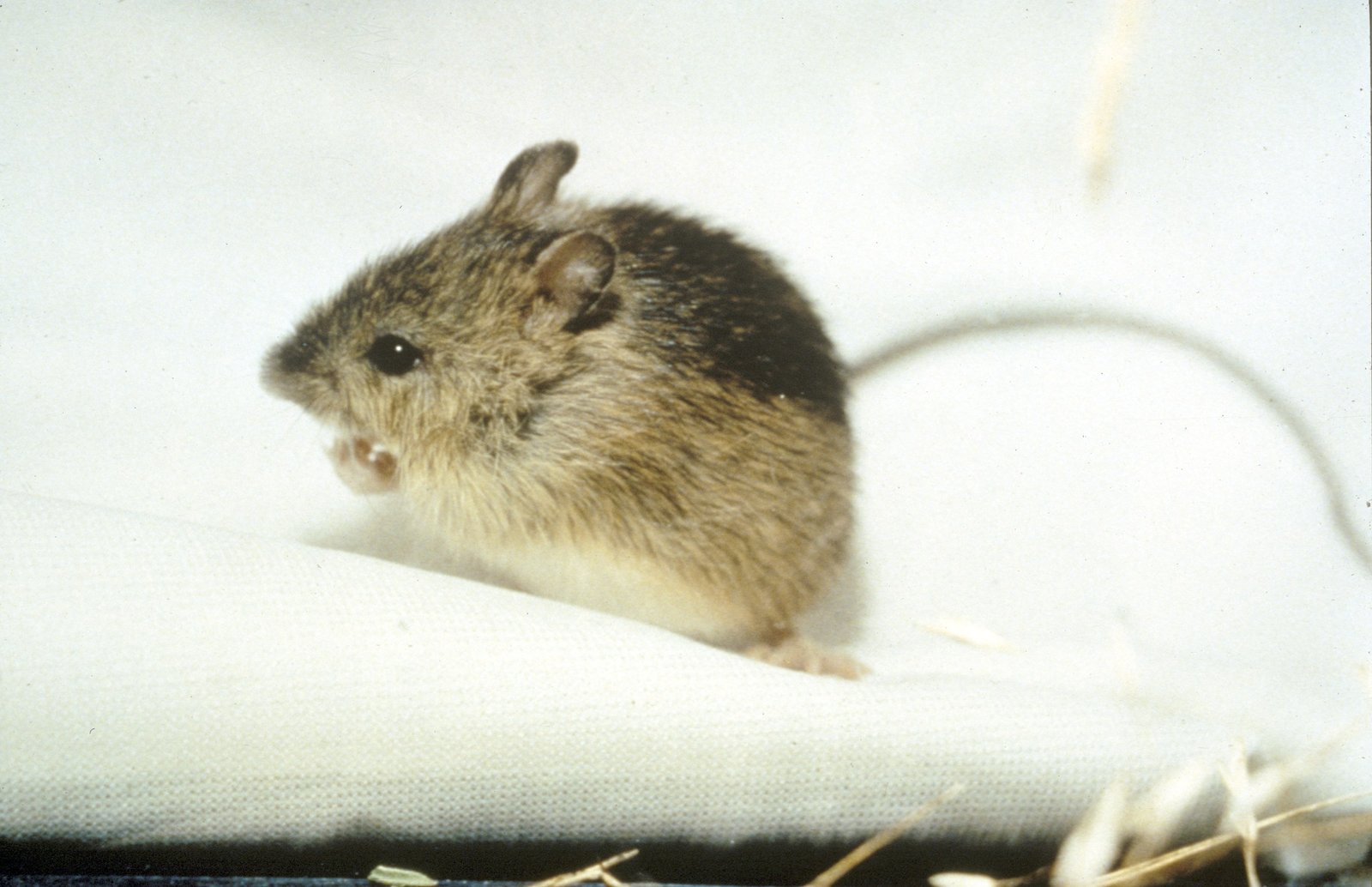
Meadow jumping mouse
Zapus hudsonius
Large hind feet and a long tail; capable of jumps of more than a meter when startled. Hibernates from October through April. Expected in damp grasslands and seep edges.
Status: Secure.
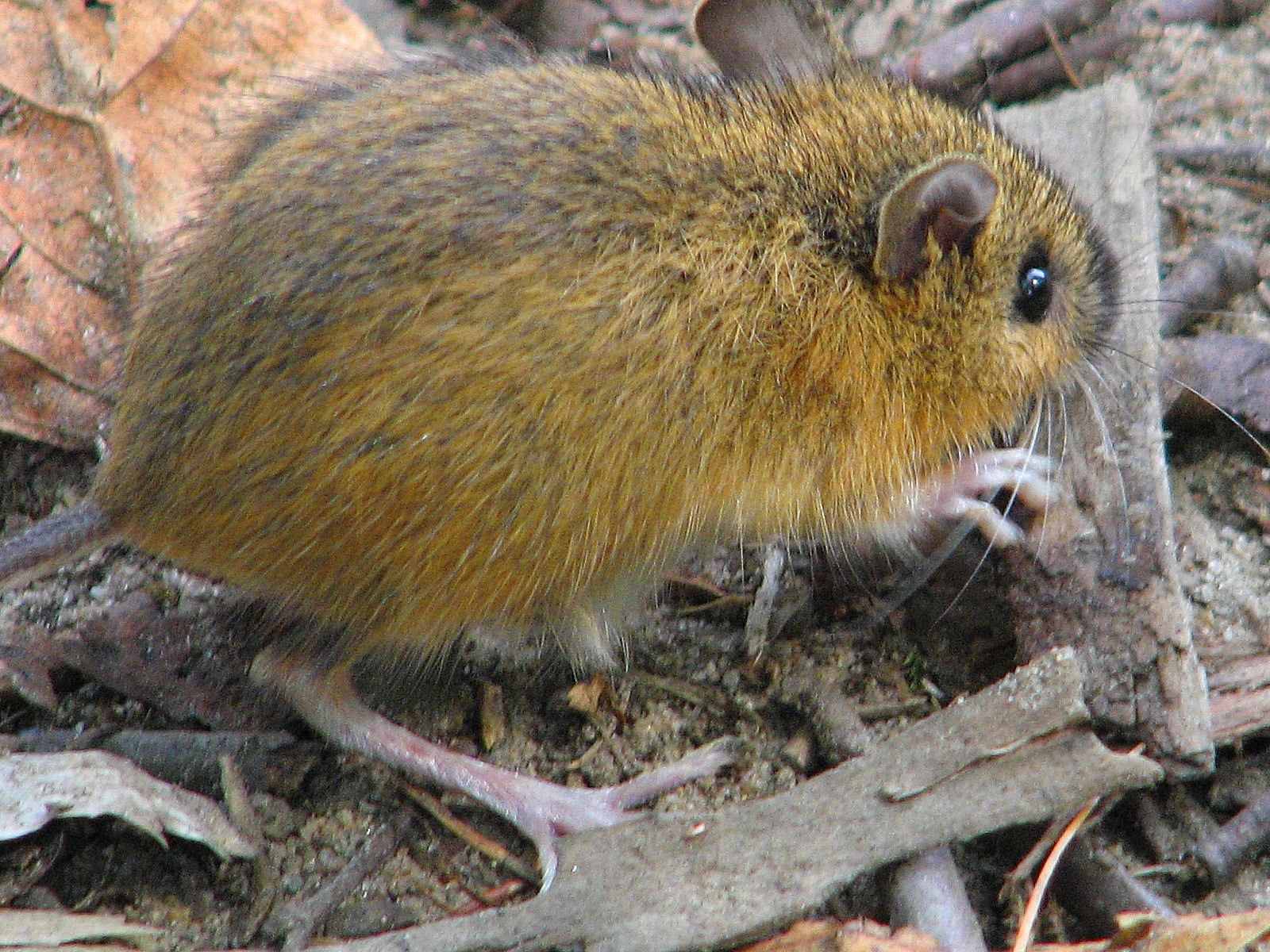
Woodland jumping mouse
Napaeozapus insignis
A forest-dwelling cousin of the meadow jumping mouse, with a contrastingly white tail tip. Expected in moist Cumberland Plateau coves and rhododendron thickets.
Status: Secure.
Insectivores: shrews and moles
Shrews and moles are small, short-lived, and almost never seen, but their combined biomass on a Cumberland Plateau hectare often exceeds that of the rodents above them. Shrews hunt insects, worms, and small invertebrates in surface leaf litter and shallow runways; their metabolism is so fast that going more than a few hours without food is fatal. Moles spend nearly all their time underground in tunnel systems, surfacing only to disperse. Several Tennessee shrews are listed by TWRA as “Deemed in Need of Management,” reflecting how poorly their populations are sampled rather than known declines.
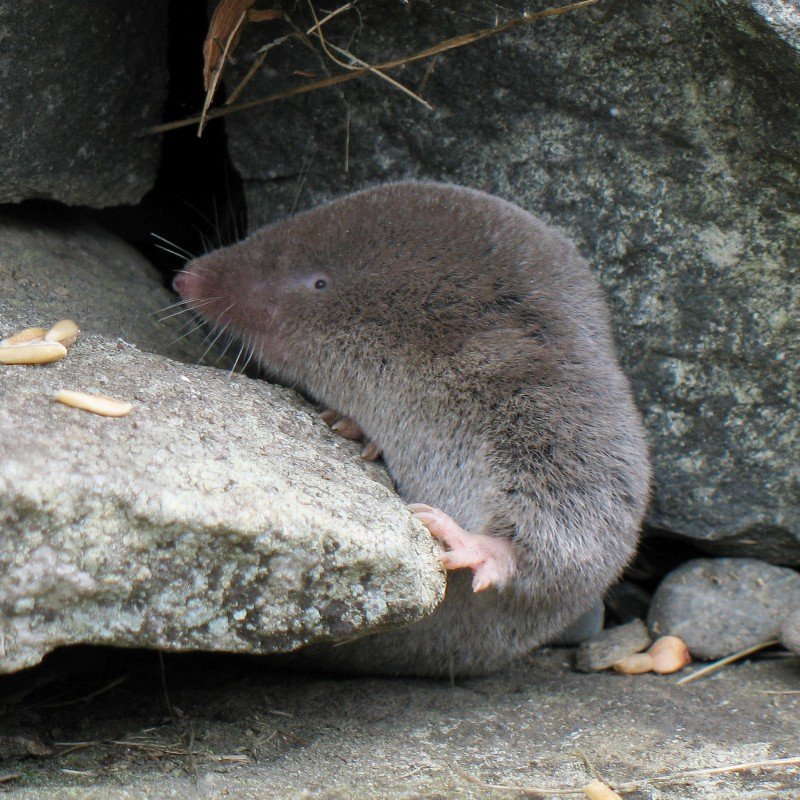
Northern short-tailed shrew
Blarina brevicauda
The largest and most commonly trapped Tennessee shrew. One of the few mammals with venomous saliva, used to subdue insect and small-vertebrate prey.
Status: Secure.
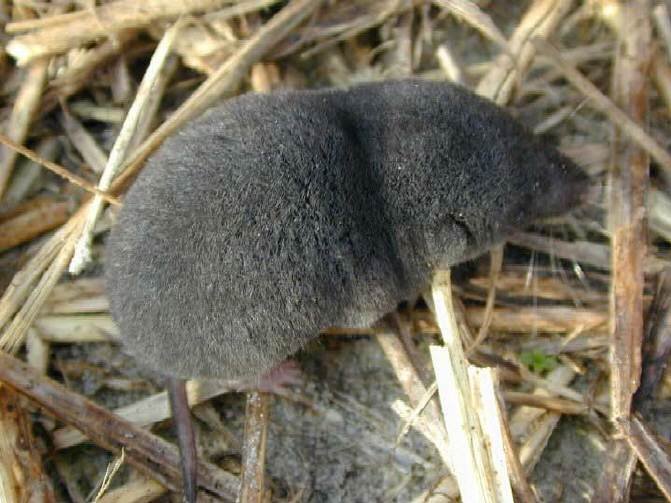
Southern short-tailed shrew
Blarina carolinensis
Smaller cousin of the northern short-tailed shrew; range overlaps the Cumberland Plateau edge. Distinguishing from the northern in the field is essentially impossible without measurements.
Status: Secure.
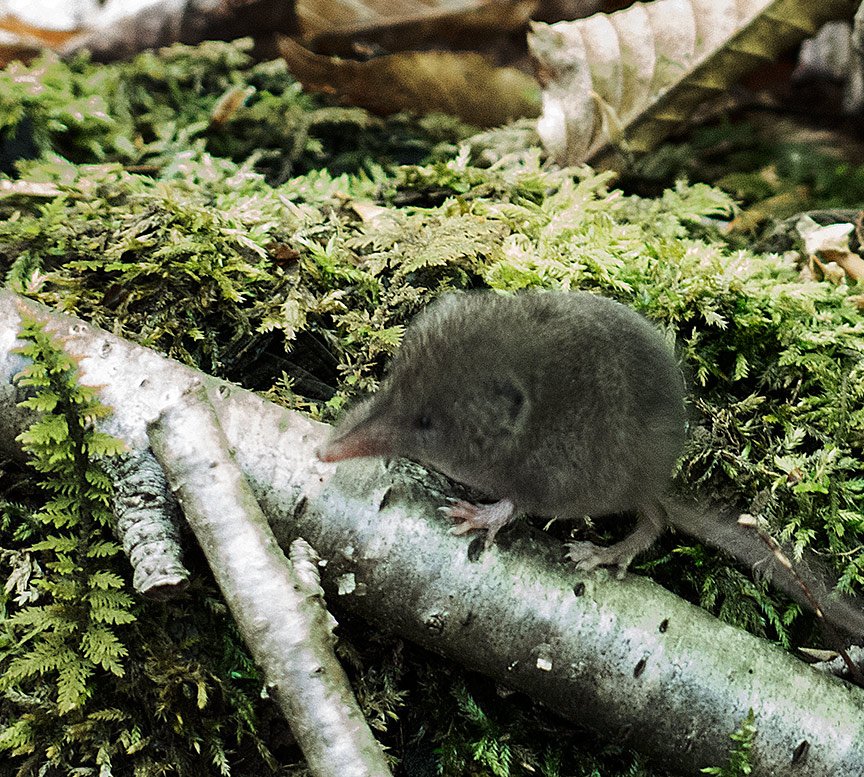
North American least shrew
Cryptotis parva
One of the smallest mammals in North America, under five grams. Lives in old-field grass and brushy edges; sometimes found in colonial groups, unusual among shrews.
Status: Secure.
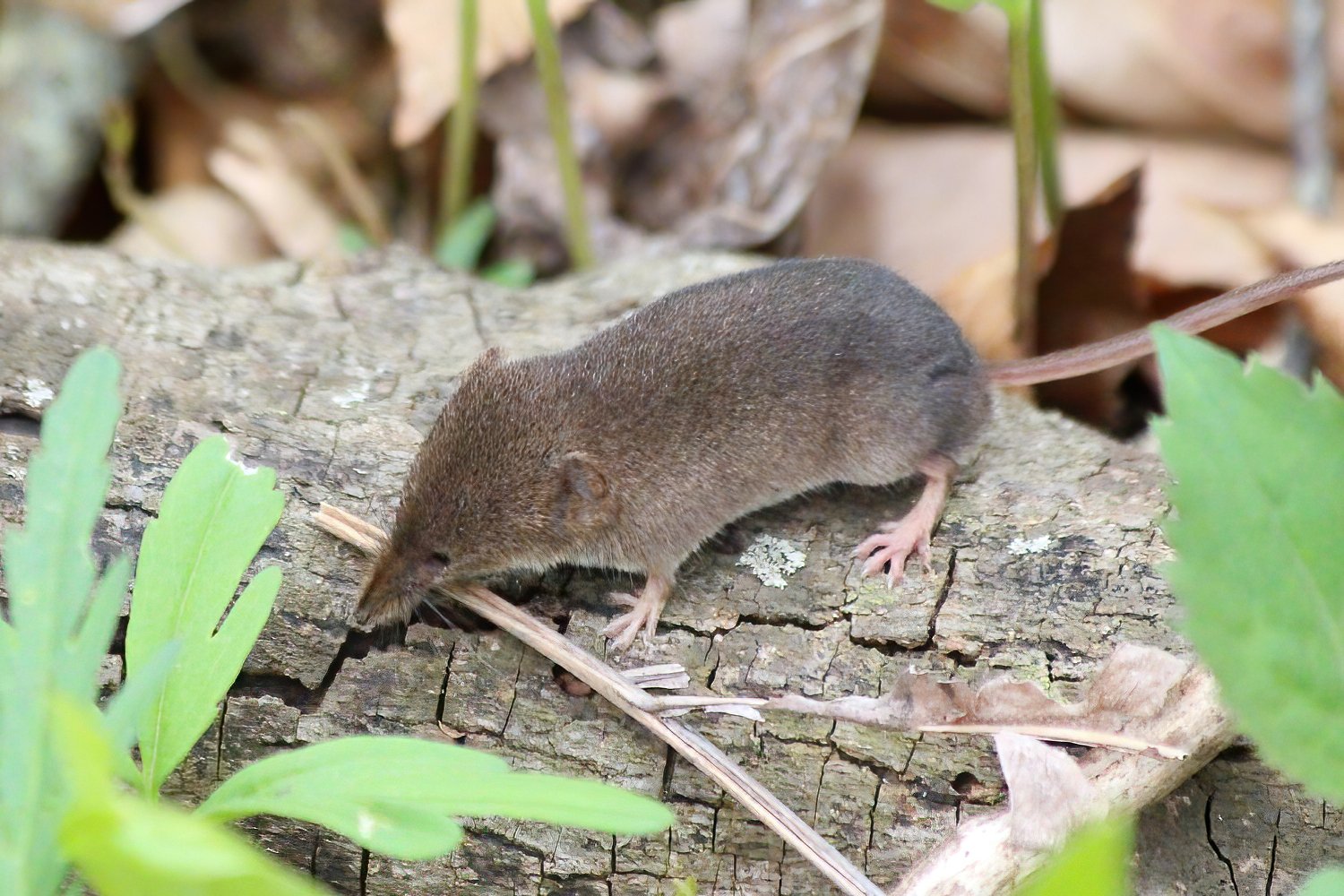
Cinereus (masked) shrew
Sorex cinereus
A long-tailed Sorex shrew of moist forest floor. Range-restricted in Tennessee; expected at higher Cumberland Plateau elevations and in cool ravine bottoms.
Status: Secure but range-restricted.
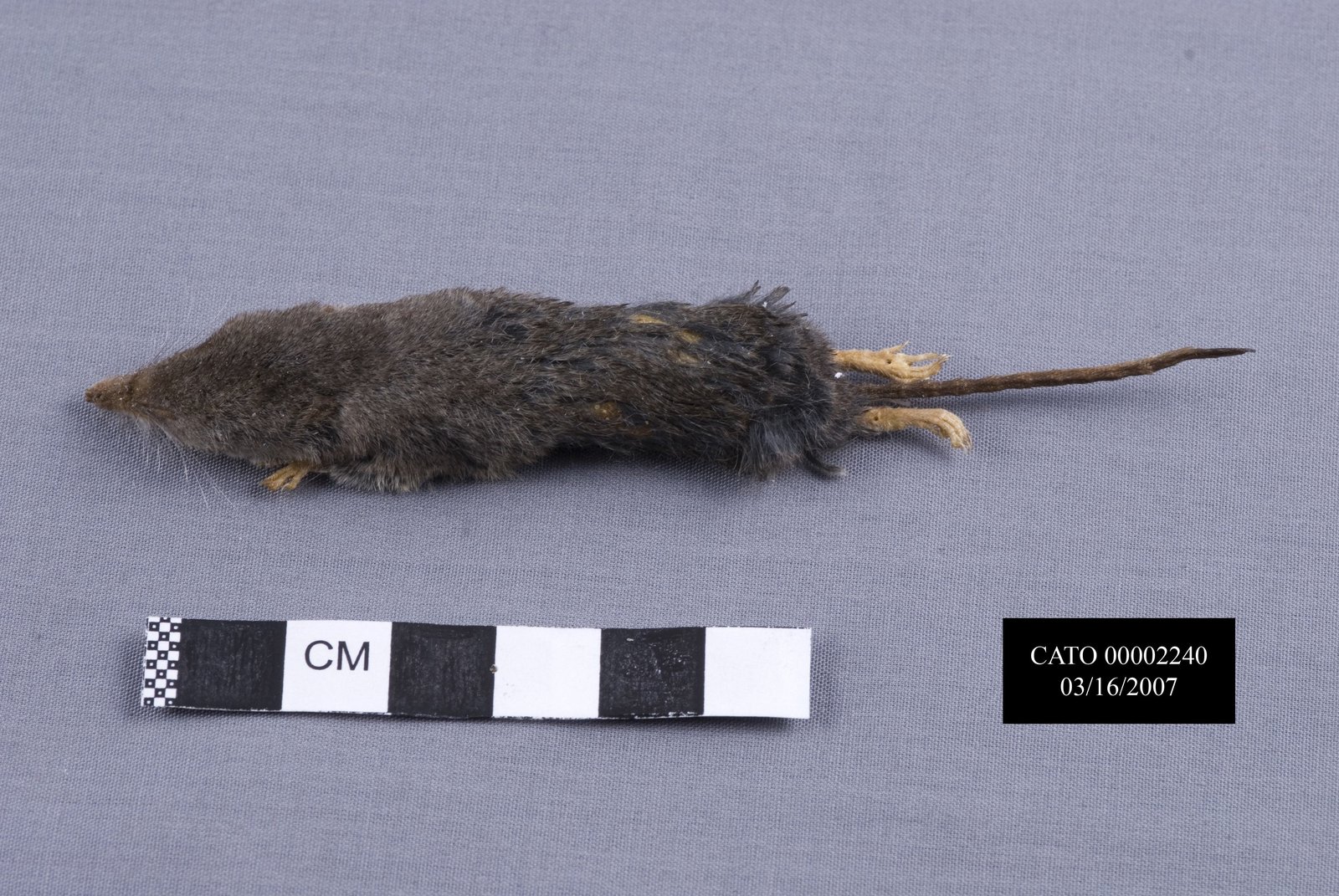
Smoky shrew
Sorex fumeus
A dark-gray Sorex shrew of damp leaf-litter forests in the central and southern Appalachians. Expected in moist Cumberland Plateau coves with deep humus.
Status: Secure.
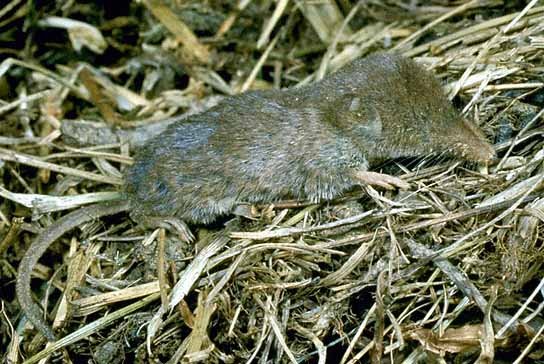
Southeastern shrew
Sorex longirostris
A small Sorex shrew of bottomland hardwoods, brushy fields, and stream edges in the Southeast. Range covers most of Tennessee.
Status: Secure.
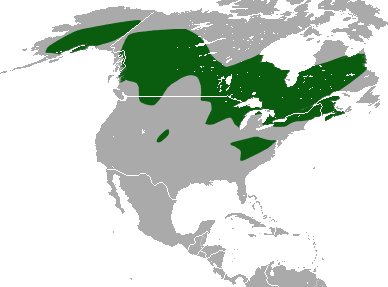
American pygmy shrew
Sorex hoyi
One of the smallest mammals on Earth at roughly two to four grams. Expected in moist forest with deep humus and surface debris on the Cumberland Plateau.
Status: TWRA Deemed in Need of Management.
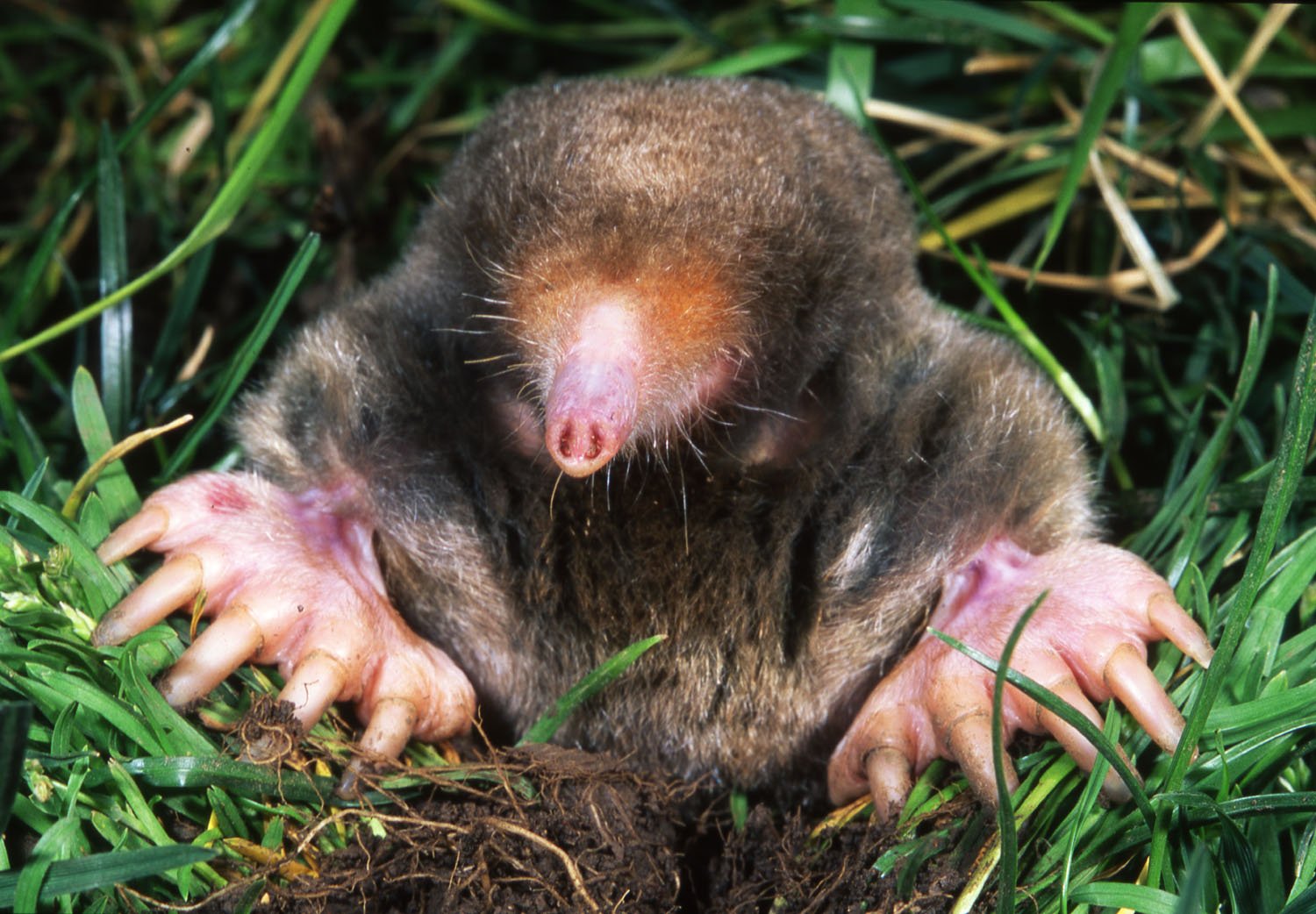
Eastern mole
Scalopus aquaticus
The standard mole of Marion's loam soils. Tunnel ridges through lawns, pastures, and old fields are the usual sign. Hairless tail and oversized fossorial forelimbs.
Status: Secure.
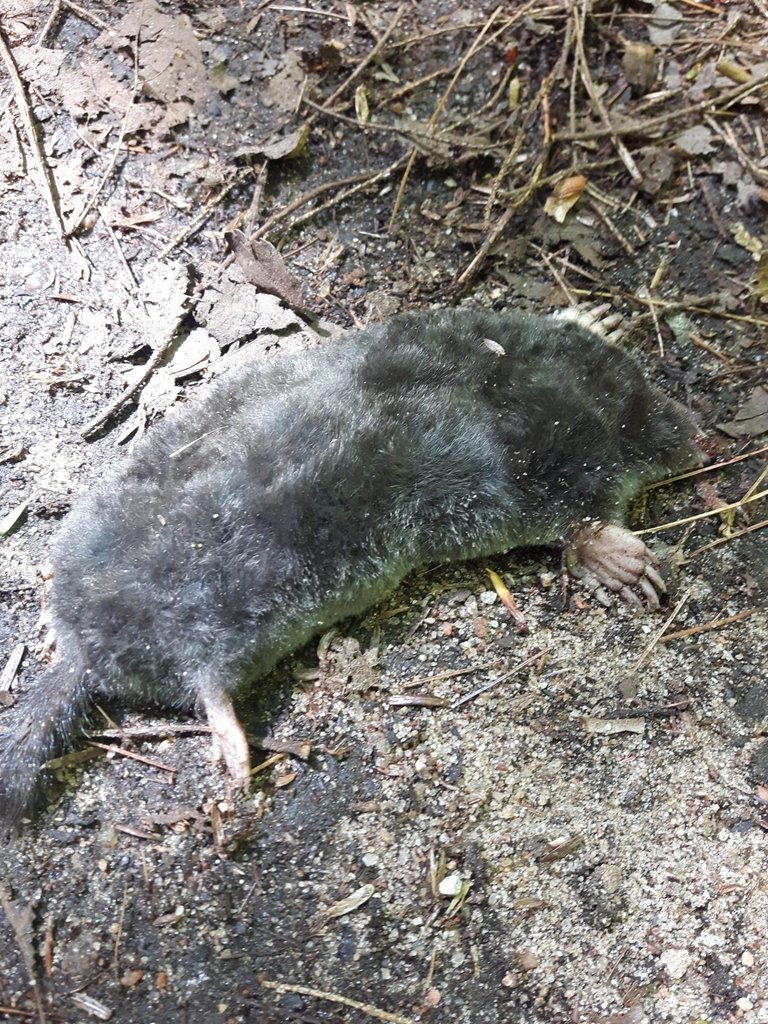
Hairy-tailed mole
Parascalops breweri
Smaller than the eastern mole, with a fur-covered tail. Prefers higher-elevation forest soils on the Cumberland Plateau; range overlaps the eastern mole at Marion.
Status: Secure.
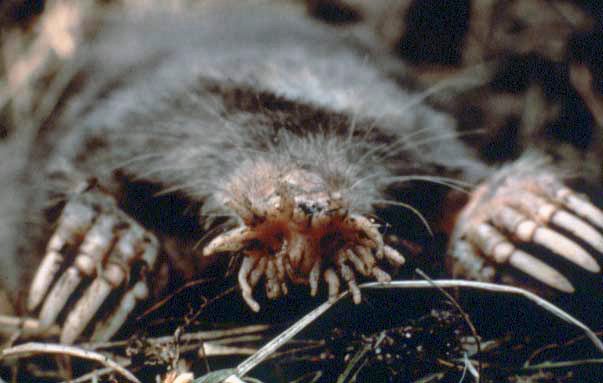
Star-nosed mole
Condylura cristata
The most distinctive North American mammal nose: twenty-two pink fleshy tentacles arranged in a star, used to identify prey by touch in milliseconds. Expected near streams and saturated ground.
Status: Secure but local.
Bats and the shadow of white-nose syndrome
Marion County is bat country. Its limestone karst supports large caves that bats use for maternity roosts in summer and hibernacula in winter, and its extensive forested escarpments provide feeding airspace and tree-roost habitat. Sixteen bat species are documented or credibly expected in the county, more than half of them state-listed and several federally listed. The gray bat is the signature species: the maternity colony at Nickajack Cave is one of the largest known anywhere in the species' range, with TWRA estimates placing the summer population at well over one hundred thousand animals and numbers continuing to rise since the cave was gated in 1981. At dusk from late May through August, the column of bats leaving the cave mouth is visible from boats on Nickajack Lake.
White-nose syndrome
White-nose syndrome is a fungal disease of hibernating bats caused by Pseudogymnoascus destructans. It was first confirmed in New York in 2006 and reached middle Tennessee by 2010. The fungus grows on bat skin during hibernation, rousing the animals and burning through their winter fat reserves. Cave-hibernating bats (little brown, tri-colored, northern long-eared) have crashed in the Southeast by 90 percent or more in affected caves. Gray bats have been less hard hit so far, possibly because their summer maternity caves are warmer than the temperatures P. destructans prefers, but the species remains a concern. Tree-roosting migratory bats (eastern red, hoary, silver-haired) are not infected because they do not hibernate in caves.
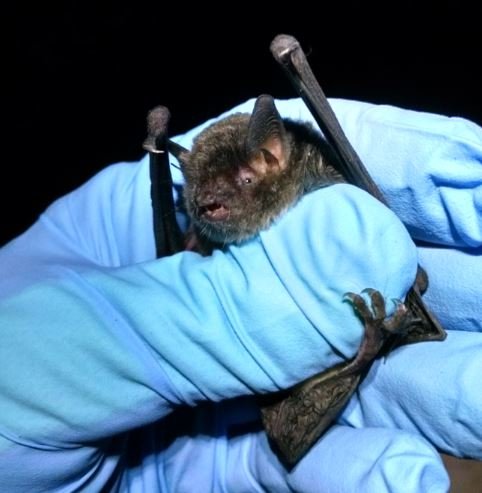
Gray bat
Myotis grisescens
Federally endangered since 1976. Marion's signature bat: Nickajack Cave hosts one of the largest known maternity colonies in the species' range, with summer population well over a hundred thousand. Feeds almost exclusively over water.
Status: Federally endangered.
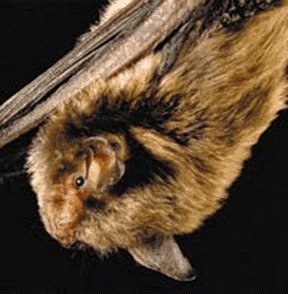
Indiana bat
Myotis sodalis
Federally endangered since 1967. Hibernates in cold, stable caves and forms maternity colonies in loose-bark tree roosts along streams. Marion's karst and riparian corridors provide suitable habitat.
Status: Federally endangered.
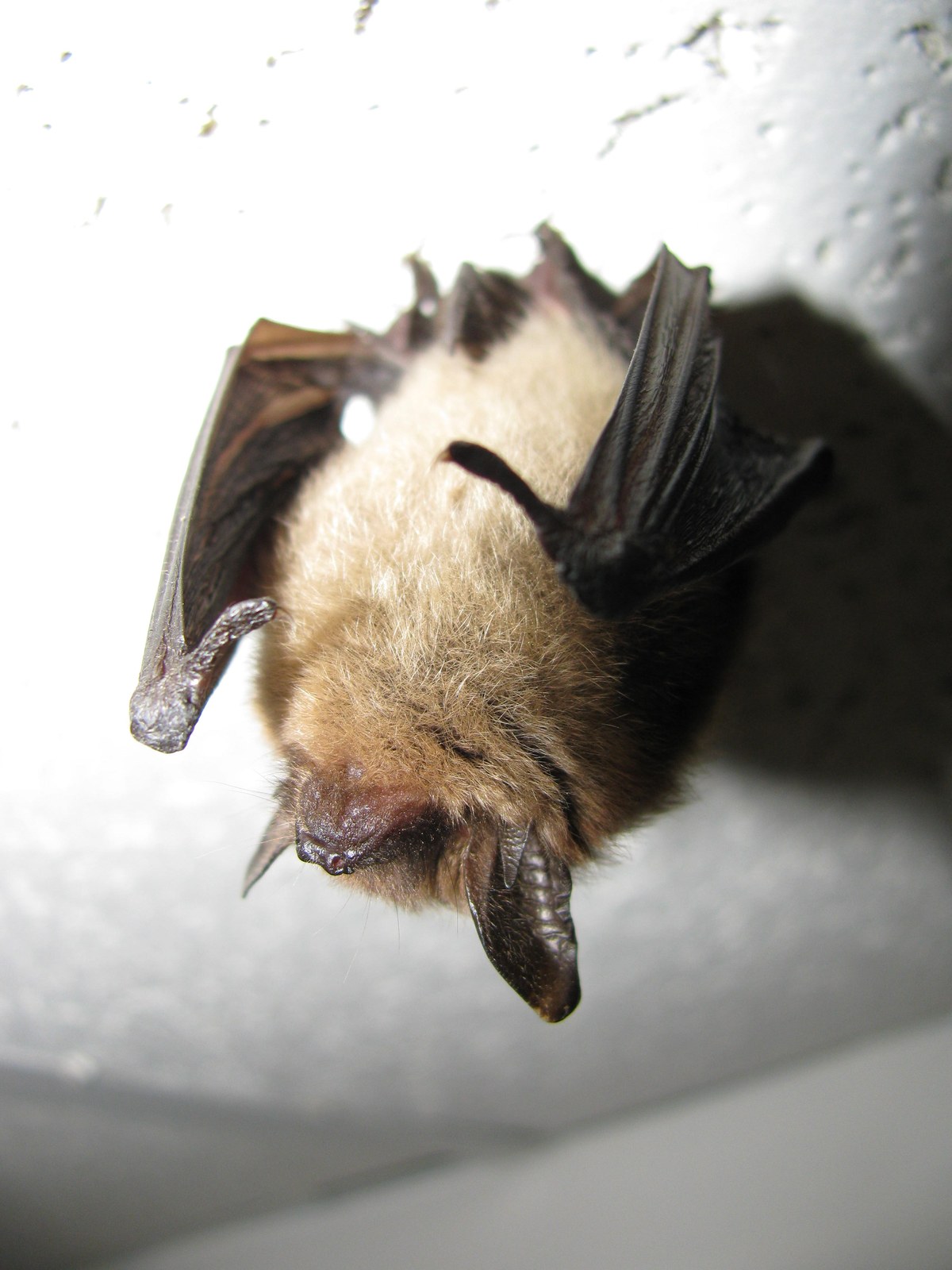
Northern long-eared bat
Myotis septentrionalis
Reclassified from threatened to endangered in 2022 after white-nose syndrome collapse. Uses similar cave-hibernation and tree-roost habitat as the Indiana bat.
Status: Federally endangered (uplisted 2022).
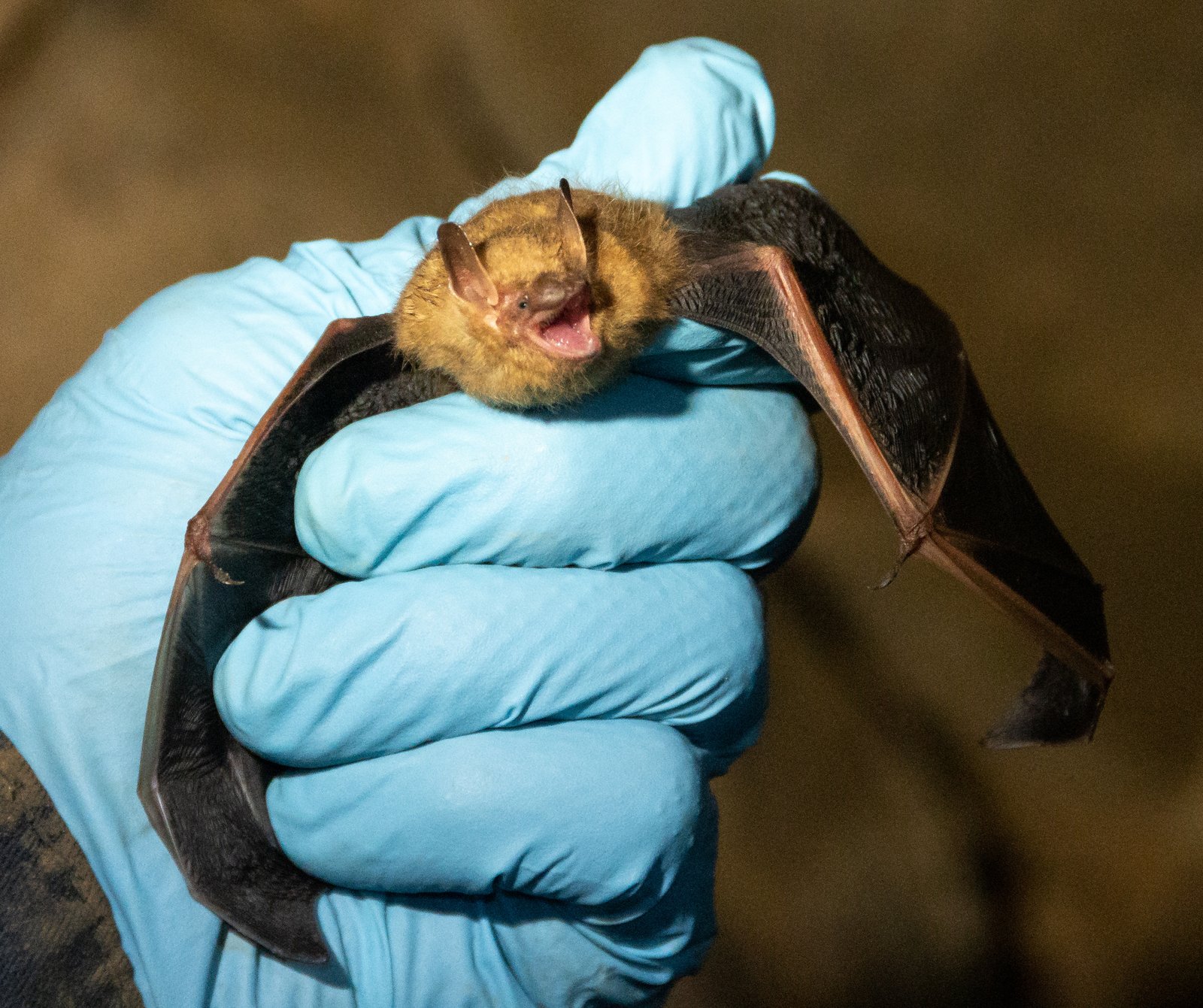
Tri-colored bat
Perimyotis subflavus
Among the smallest Tennessee bats. Cave-hibernating species hit hard by white-nose syndrome; proposed for federal endangered listing in 2022.
Status: Federally proposed endangered.
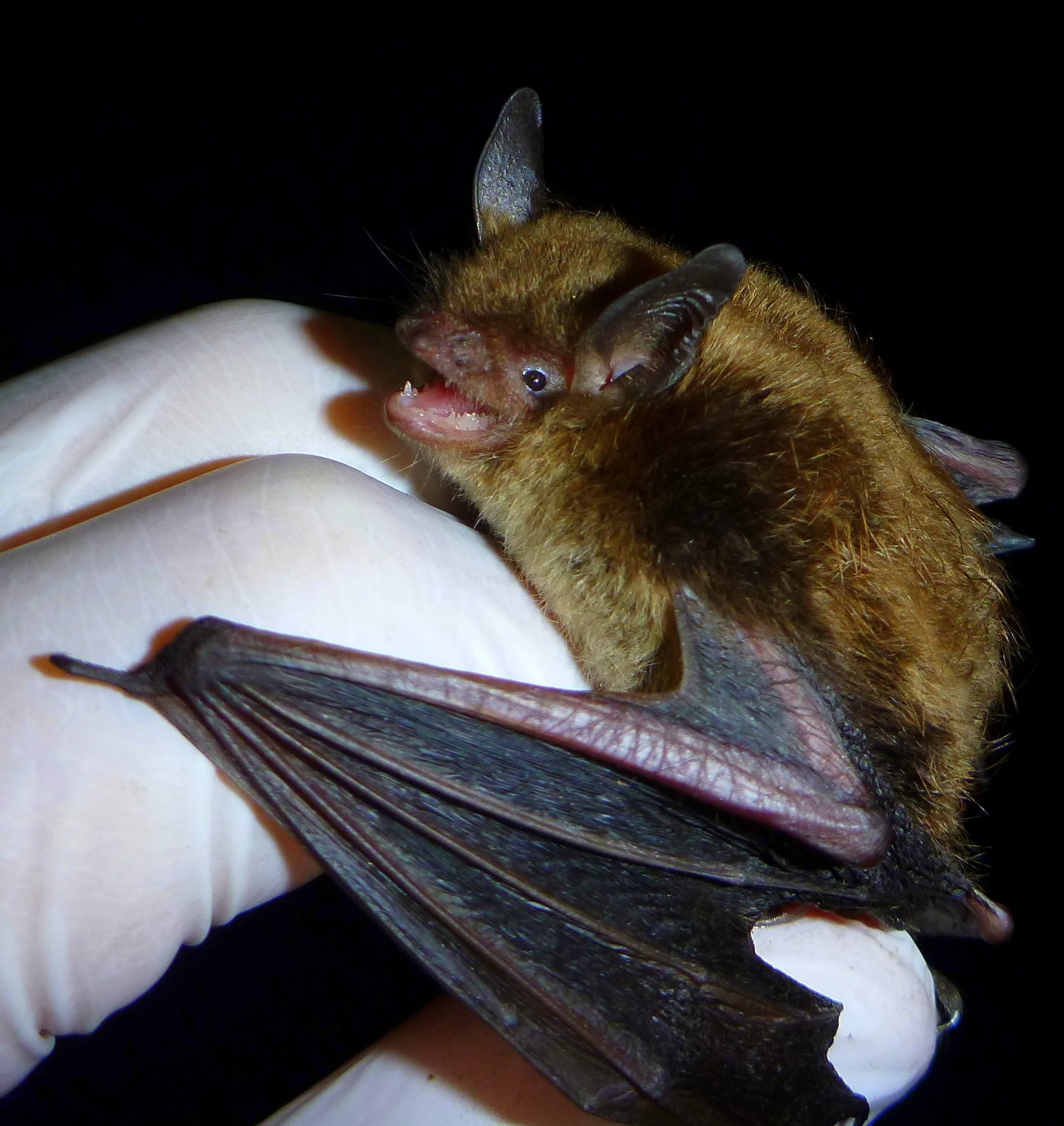
Little brown bat
Myotis lucifugus
Once one of the most abundant bats in the eastern U.S.; populations collapsed by more than 90 percent across much of the range after white-nose syndrome arrived. Under federal review.
Status: Collapsed by white-nose syndrome.
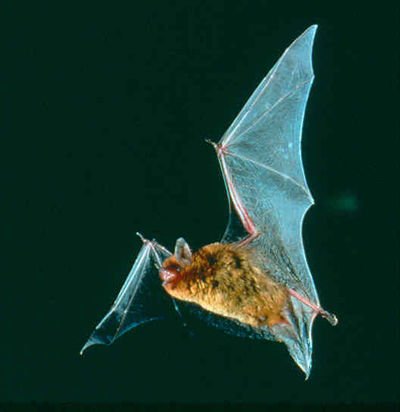
Southeastern bat
Myotis austroriparius
A southeastern Myotis using cave maternity colonies and bottomland hardwood roosts. Expected on the Cumberland Plateau where suitable caves and bottomland forest meet.
Status: TWRA-listed; populations declining.
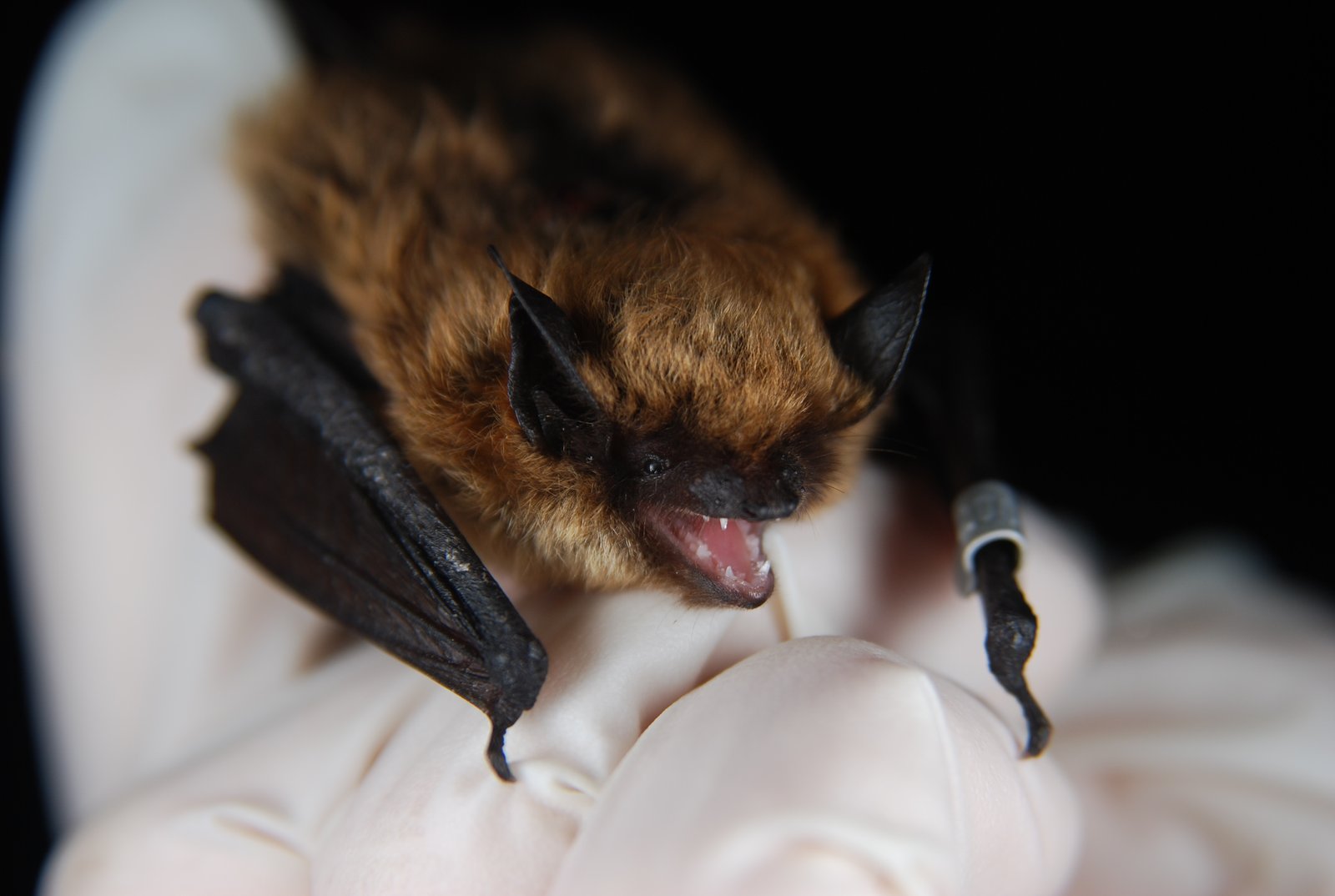
Eastern small-footed bat
Myotis leibii
A cliff- and crevice-roost specialist. Expected on Cumberland Plateau bluffs, talus slopes, and rockhouse-rich sandstone walls.
Status: TWRA Deemed in Need of Management.
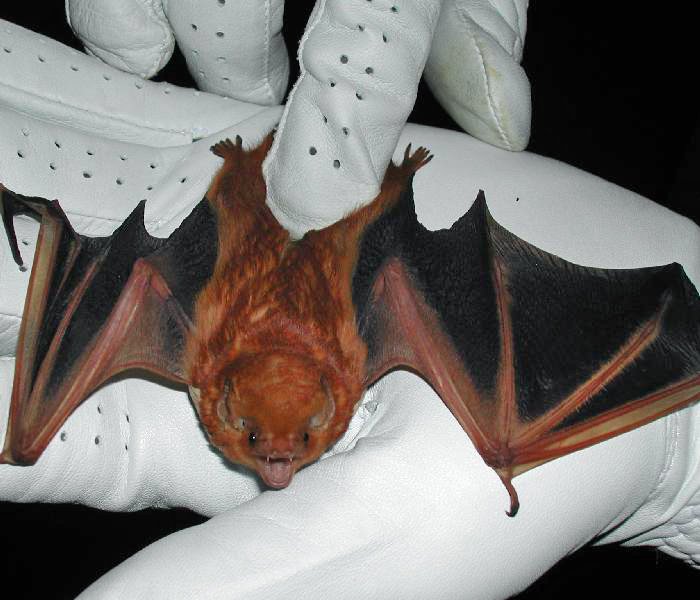
Eastern red bat
Lasiurus borealis
Roosts in tree foliage rather than caves and migrates south for winter; not affected by white-nose syndrome. Males a bright brick-red, females a duller frosted chestnut. A red bat hanging under a leaf looks very much like a dead oak leaf itself.
Status: Secure (tree-roost migrant).
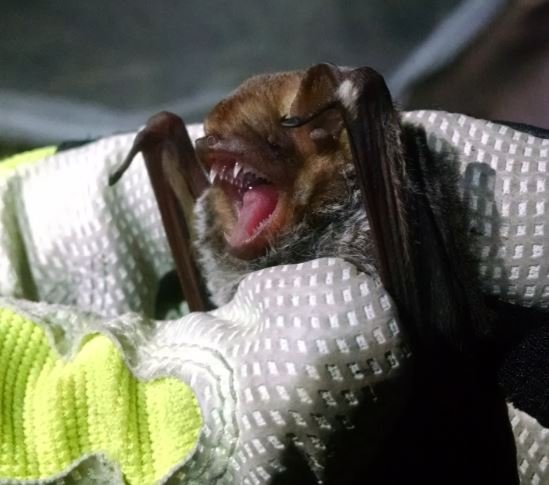
Seminole bat
Lasiurus seminolus
A tree-roosting bat with mahogany-red fur, often roosting in Spanish moss and pine foliage. Range-edge in Tennessee; expected at the south end of Marion.
Status: Secure but range-edge.
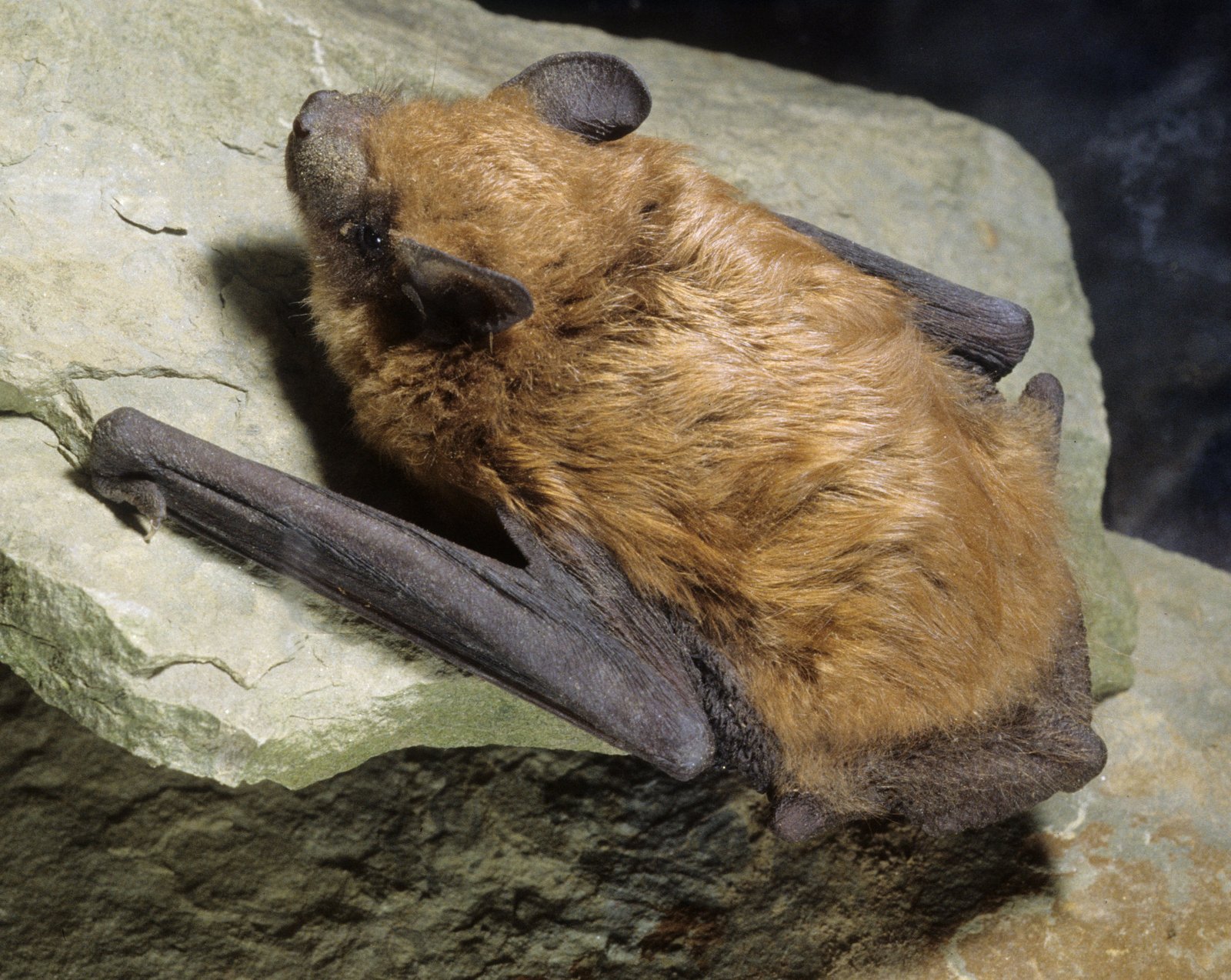
Big brown bat
Eptesicus fuscus
The most familiar Tennessee bat in human structures. Roosts in attics, barns, and bridge expansion joints as well as caves; partially impacted by white-nose syndrome but more resistant than smaller Myotis species.
Status: Secure (cave and building roost).
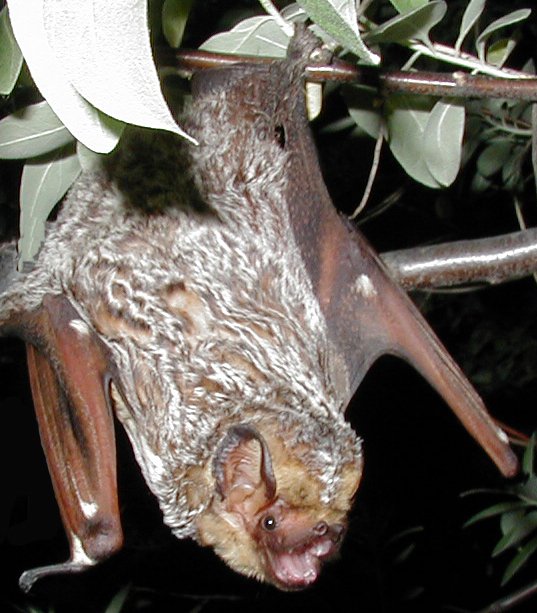
Hoary bat
Lasiurus cinereus
The largest bat in the county, with a wingspan up to sixteen inches and silver-frosted fur. Long-distance tree-roost migrant; passes through in spring and fall.
Status: Secure (long-distance migrant).
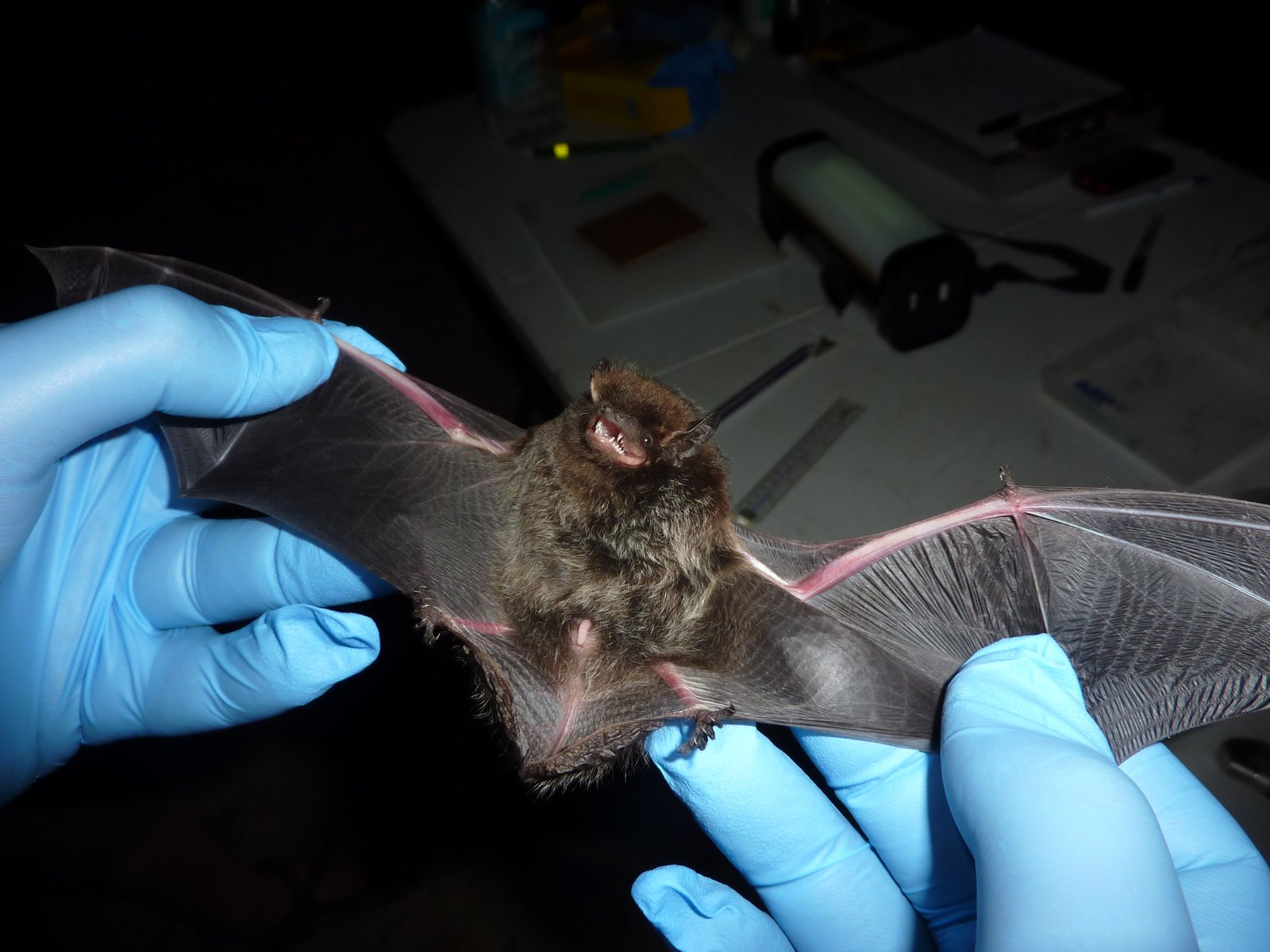
Silver-haired bat
Lasionycteris noctivagans
A medium-sized tree-roosting migrant with silver-tipped fur. Roosts under loose bark and in tree cavities; passes through Marion in spring and fall.
Status: Secure (migratory).
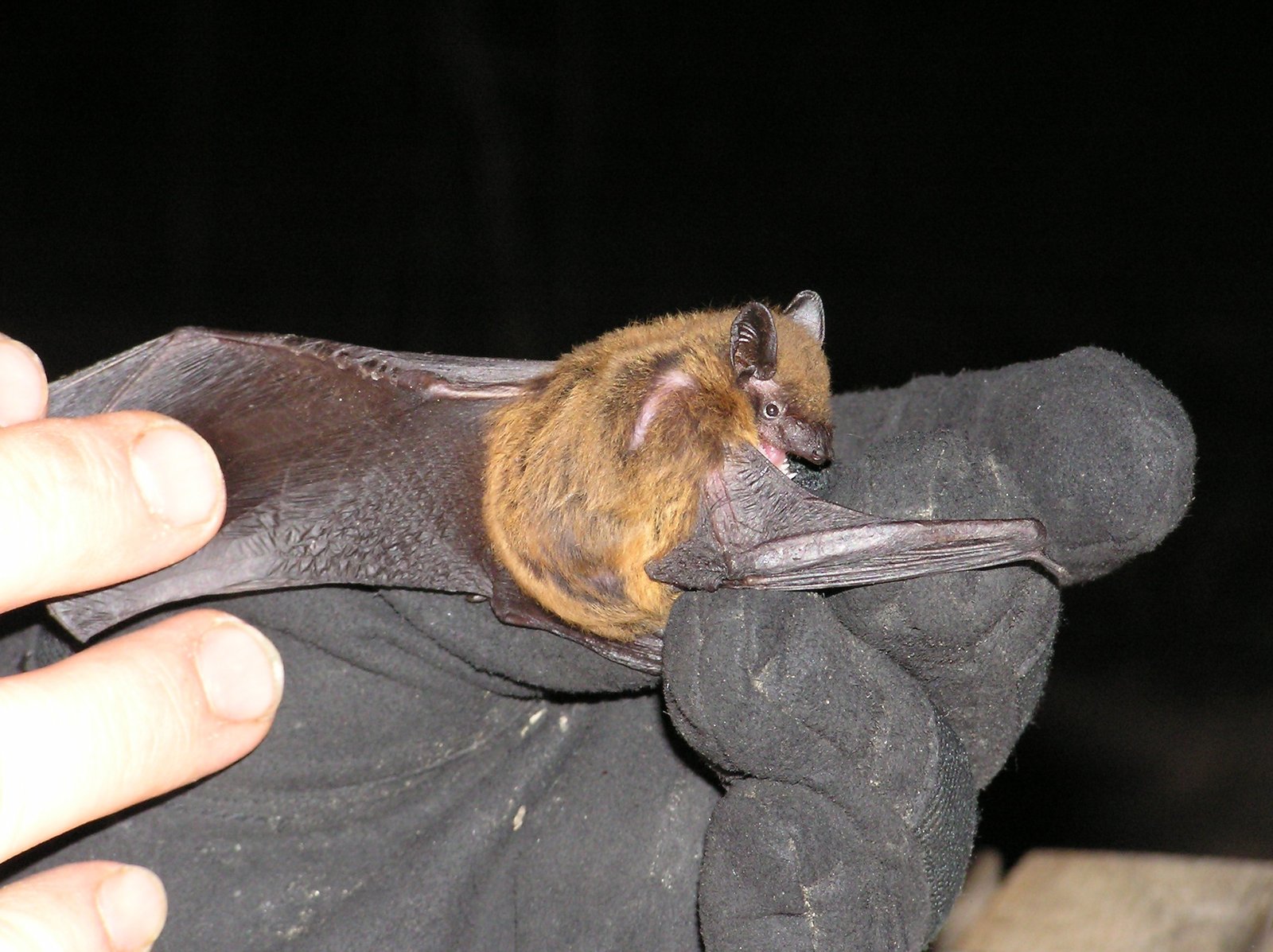
Evening bat
Nycticeius humeralis
A small brown southeastern bat that forms maternity colonies in tree cavities and buildings. Range covers Marion; emerges early in the evening.
Status: Secure.
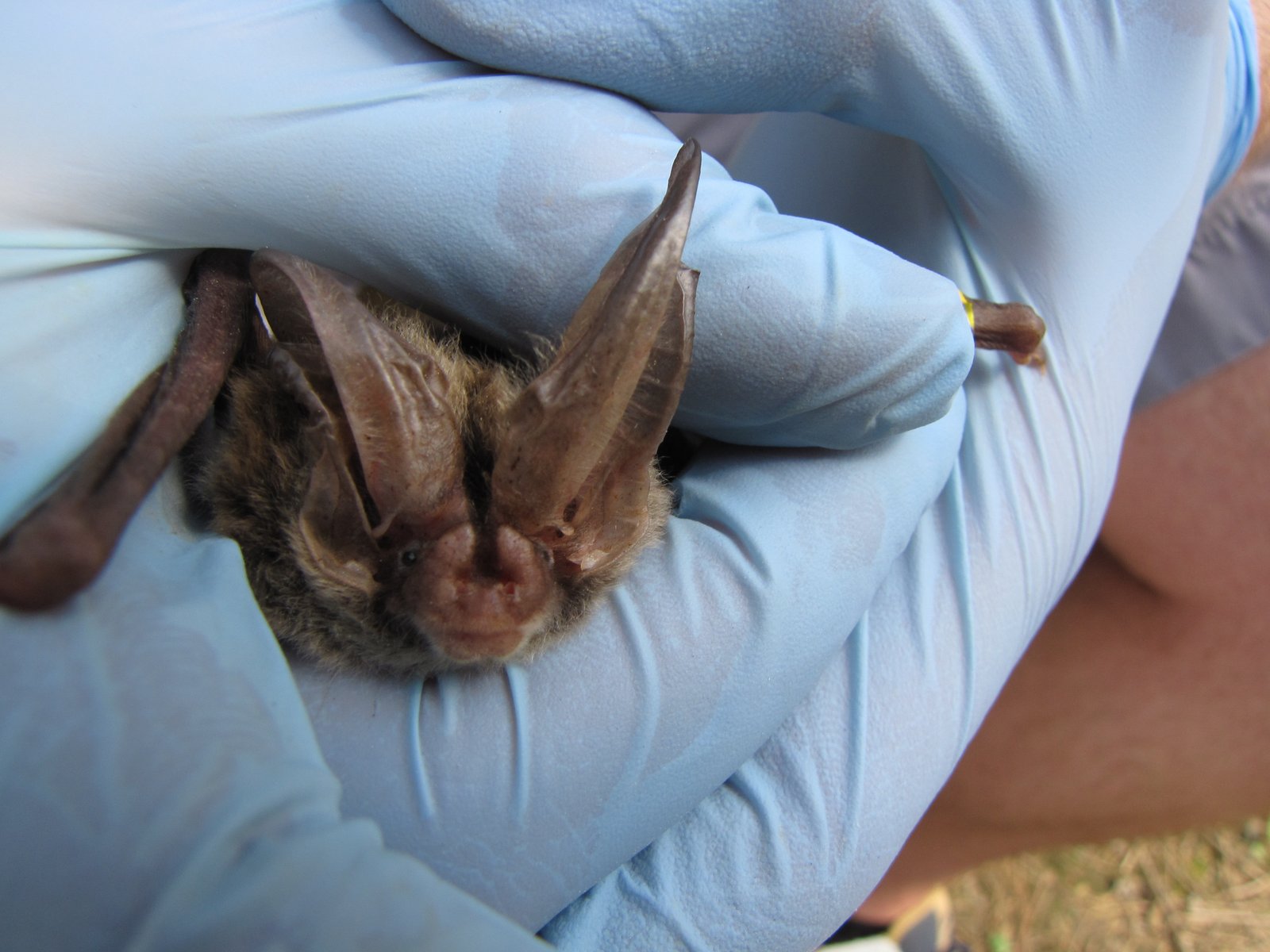
Rafinesque's big-eared bat
Corynorhinus rafinesquii
Distinguished by enormous one-inch ears coiled at rest. Roosts in tree hollows, abandoned buildings, and cave entrances. Expected along the Tennessee River drainage.
Status: TWRA Deemed in Need of Management.
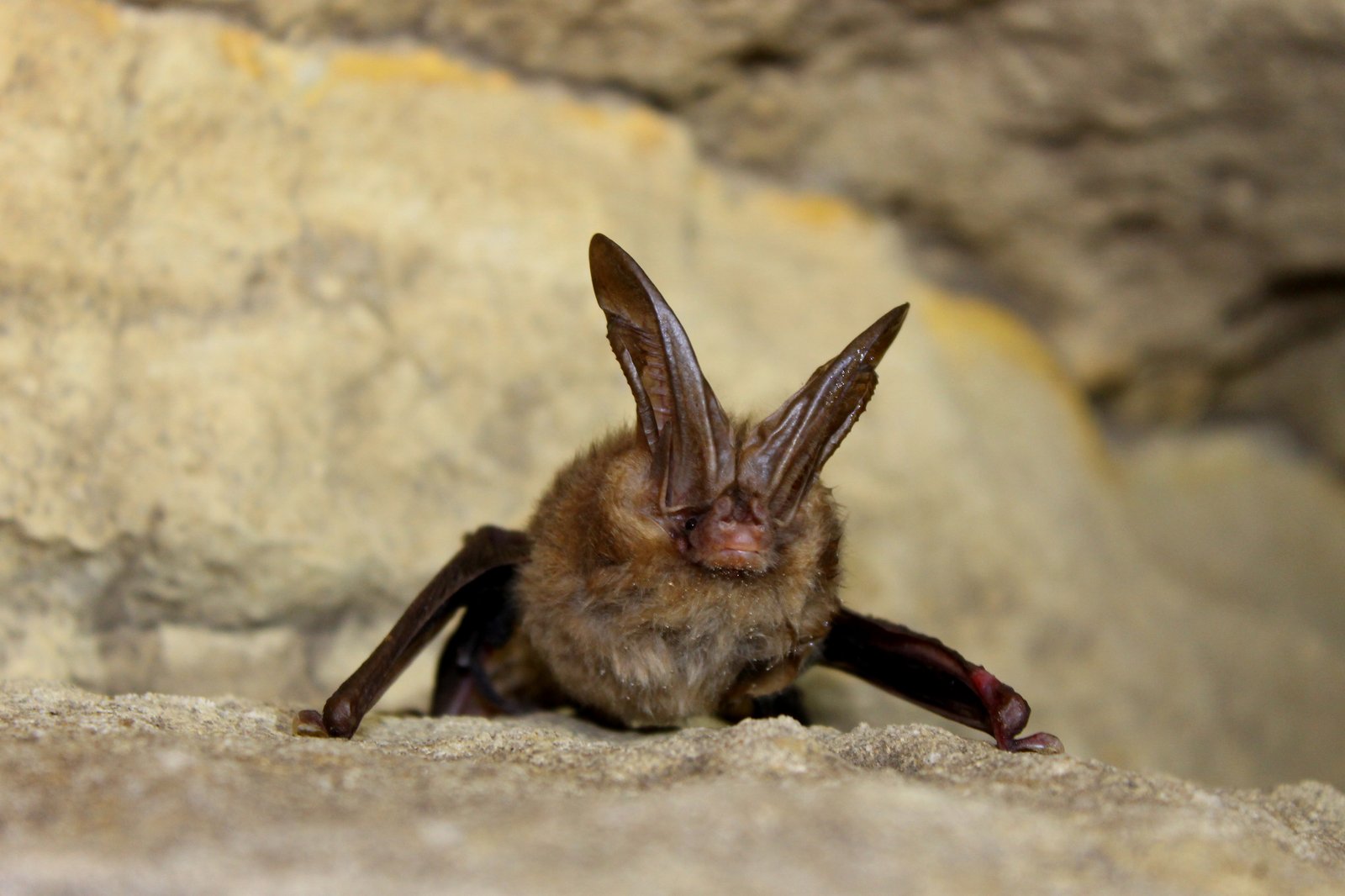
Virginia big-eared bat
Corynorhinus townsendii virginianus
Federally endangered subspecies restricted to limestone caves of the central and southern Appalachians. Tennessee primary range is in the eastern mountains; rare or accidental in Marion.
Status: Federally endangered.
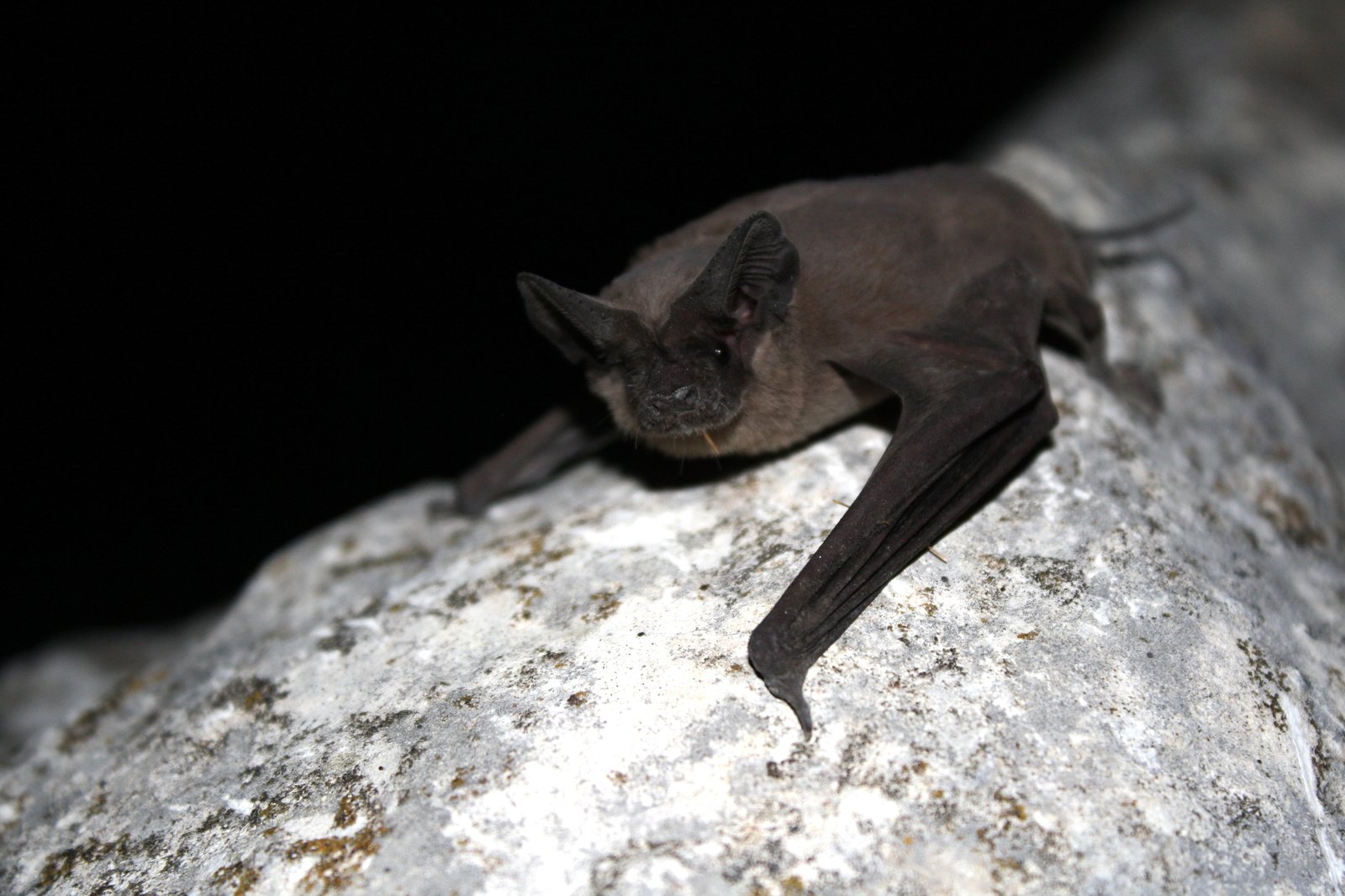
Brazilian free-tailed bat
Tadarida brasiliensis
A long, narrow-winged bat capable of high-speed flight. Range-expanding north into Tennessee; expected in summer in Marion, often using bridges and large buildings as roosts.
Status: Secure; range-expanding.
Ecological threats to bats and the gray-bat colony at Nickajack are treated more fully on the endemic and notable species page.
Reptiles : snakes
Tennessee Wildlife Resources Agency lists 32 native snake species statewide. Marion supports a deep slice of that list because of its habitat overlap: dry plateau ridges and rockhouse sandstone, the Sequatchie Valley's limestone-floored farmland and karst streams, the Tennessee River corridor, and every bottomland and seep in between. Two venomous species are reliably present, and most of the remaining nonvenomous snakes occur somewhere in the county. All snakes are protected under Tennessee wildlife law; it is illegal to kill a snake in Tennessee without cause.
Venomous snakes
Marion has two pit vipers in active residence: the timber rattlesnake on plateau ridges, and the copperhead almost everywhere else. Both have triangular heads, vertical pupils, and heat-sensing pits between nostril and eye. The pygmy rattlesnake reaches the eastern edge of its Tennessee range in this part of the state and is occasionally reported. The cottonmouth, the only other Tennessee pit viper, is treated separately below: it does not occur in Marion County, and most “cottonmouth” sightings here are nonvenomous water snakes.
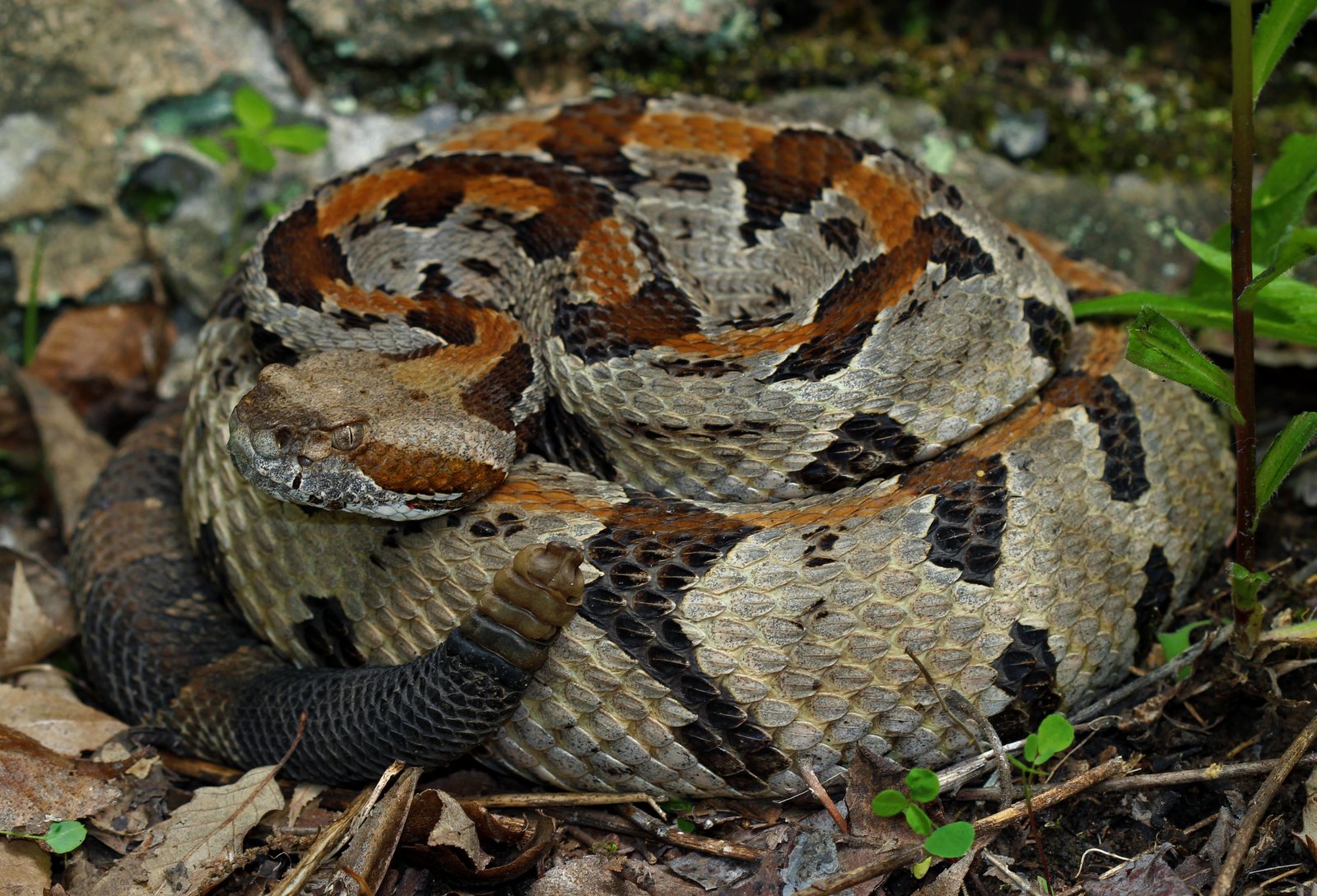
Timber rattlesnake
Crotalus horridus
Marion's larger venomous snake, an ambush hunter of rocky oak-hickory ridges and talus slopes on the Cumberland Plateau escarpment. Color varies from nearly black to yellow with dark crossbands; older animals exceed five feet. Most live within a mile of a communal den that may be in use for a century or more.
Status: TWRA Deemed in Need of Management; protected under Tennessee wildlife law.
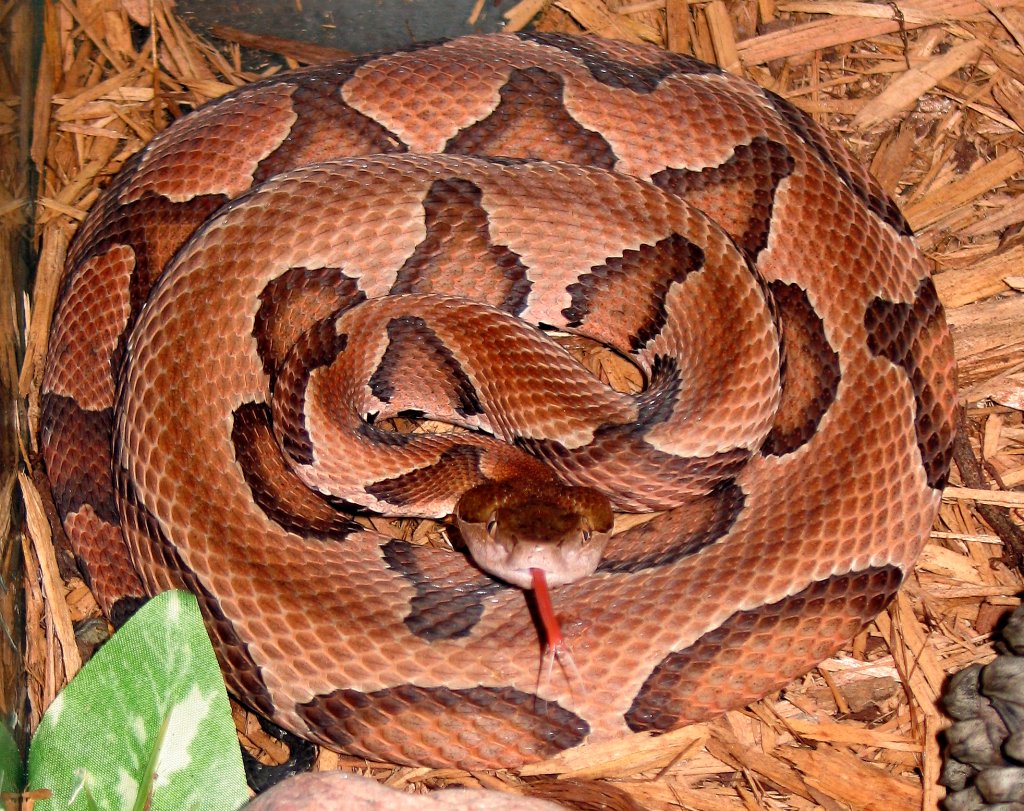
Northern copperhead
Agkistrodon contortrix
Common throughout Marion in stream bottoms, rocky woodlots, and suburban edges. Coppery tan with dark hourglass crossbands narrowest along the spine and well camouflaged in leaf litter. Holds its ground rather than fleeing, which makes it the most frequently bitten venomous snake in Tennessee.
Status: Secure; protected under Tennessee wildlife law.
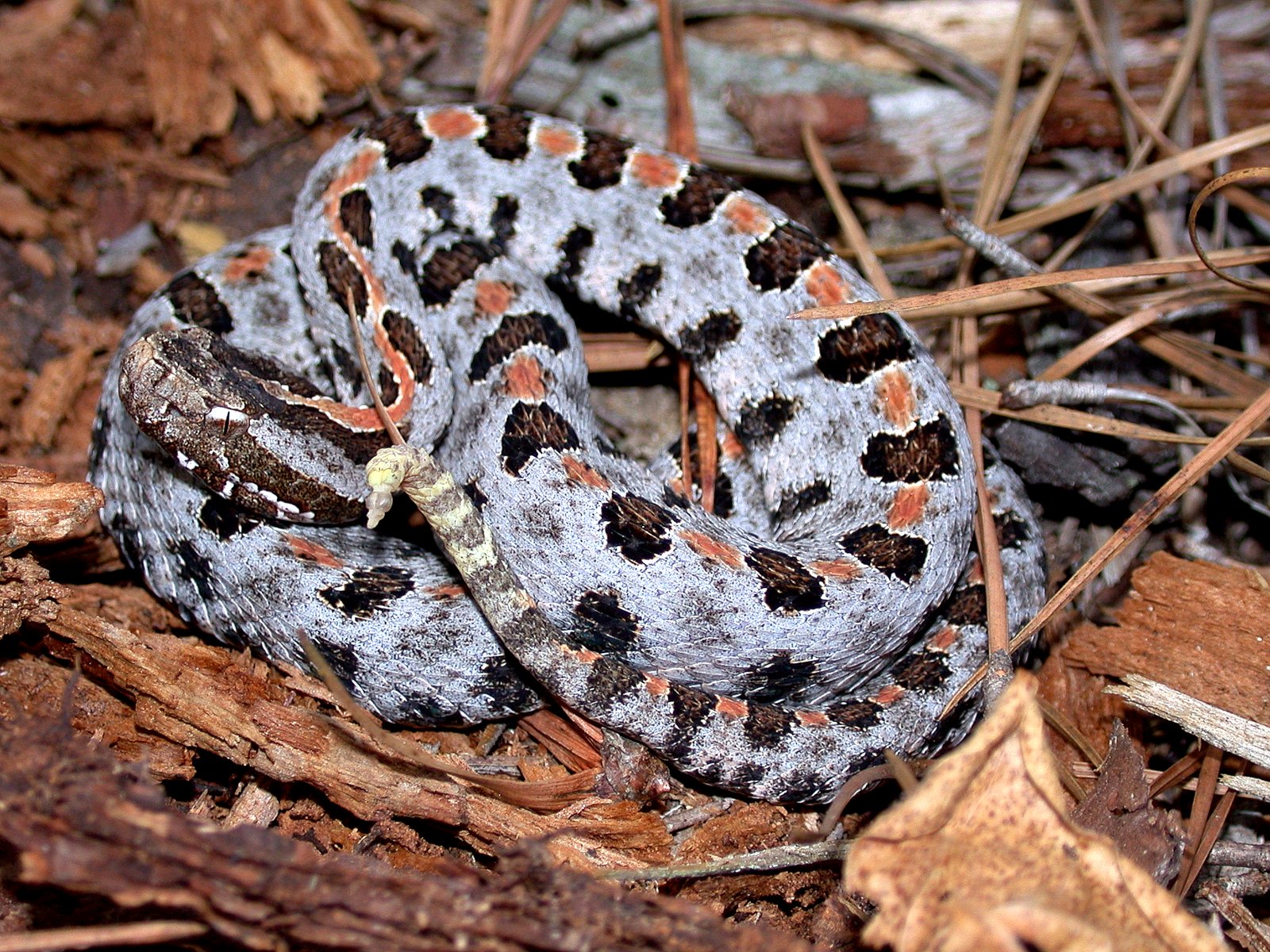
Pygmy rattlesnake
Sistrurus miliarius
A small rattlesnake at the eastern edge of its Tennessee range. Adults reach about two feet, with a tiny rattle that is barely audible at close range. Marion sits at the northern fringe of plausible occurrence and records are sparse.
Status: TWRA Deemed in Need of Management; range-edge in Tennessee.
ID gotcha: cottonmouth vs. northern water snake
The cottonmouth (Agkistrodon piscivorus) does not occur in Marion County. Its Tennessee range is limited to the western third of the state and does not reach the Cumberland Plateau or the middle Tennessee River. Thick dark snakes seen swimming in the Tennessee River, Sequatchie River, or Nickajack Lake are almost always nonvenomous northern water snakes (Nerodia sipedon). Water snakes can flatten the head when threatened and open the mouth in a defensive display, which is why they are so often misidentified and killed. Quick field marks: water snakes have round pupils and no heat-sensing pit; they swim with the whole body and most of the head submerged rather than riding high and flat like a cottonmouth; they lack the dark eye-stripe mask. If in doubt, step back and leave the snake alone.
Nonvenomous snakes
The remaining 29 species are all harmless to people. They divide loosely into the larger constrictors and racers, the watersnakes, the gartersnakes and ribbonsnakes, the small leaf-litter and burrowing species, and a handful of range-edge specialists. Most are documented in or credibly expected in the county per Tennessee Wildlife Resources Agency snake records.
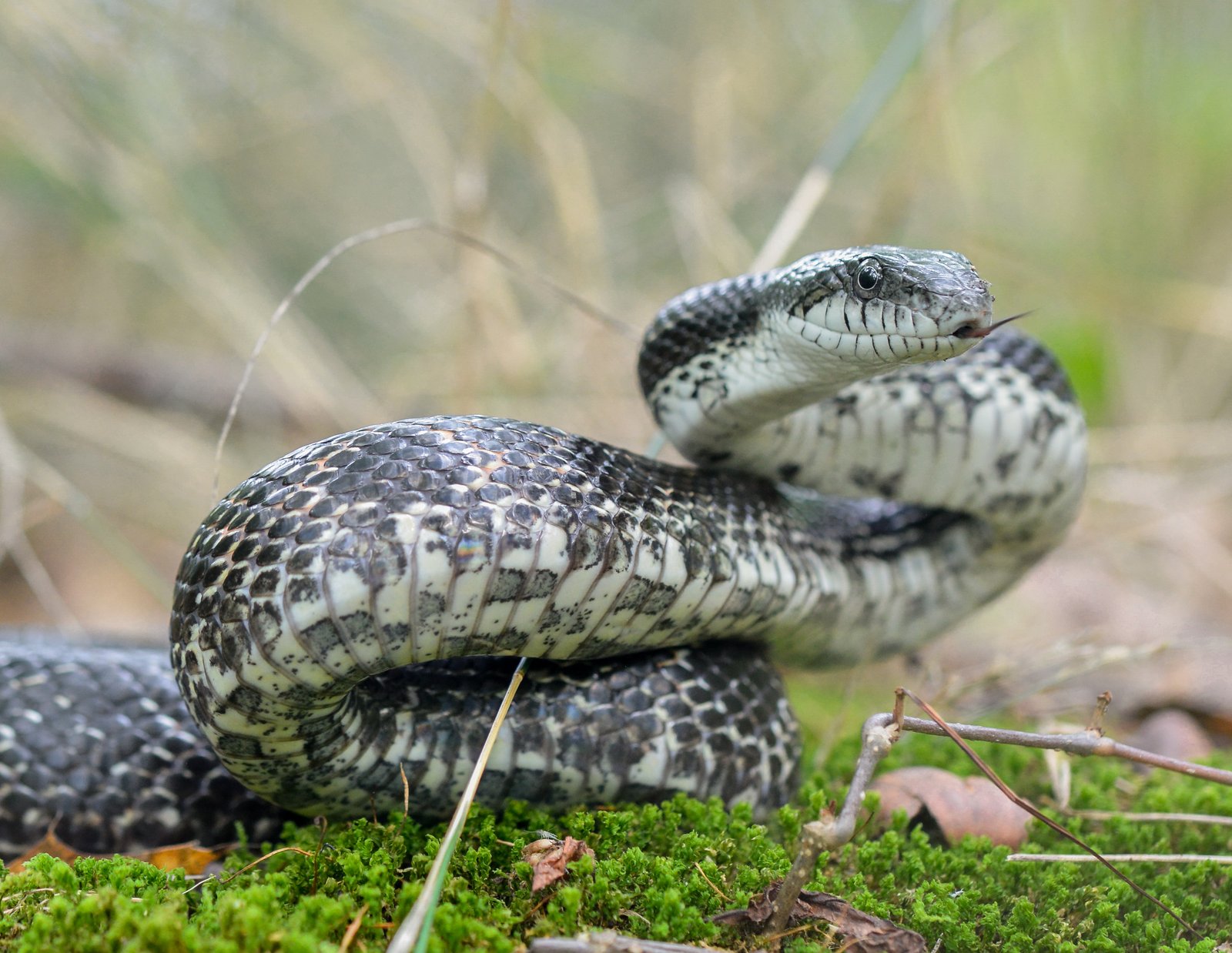
Eastern ratsnake
Pantherophis alleghaniensis
A glossy black snake up to six feet long that climbs trees readily and raids bird nests, attics, and barn rafters. The most commonly encountered large nonvenomous snake in Marion.
Status: Secure.
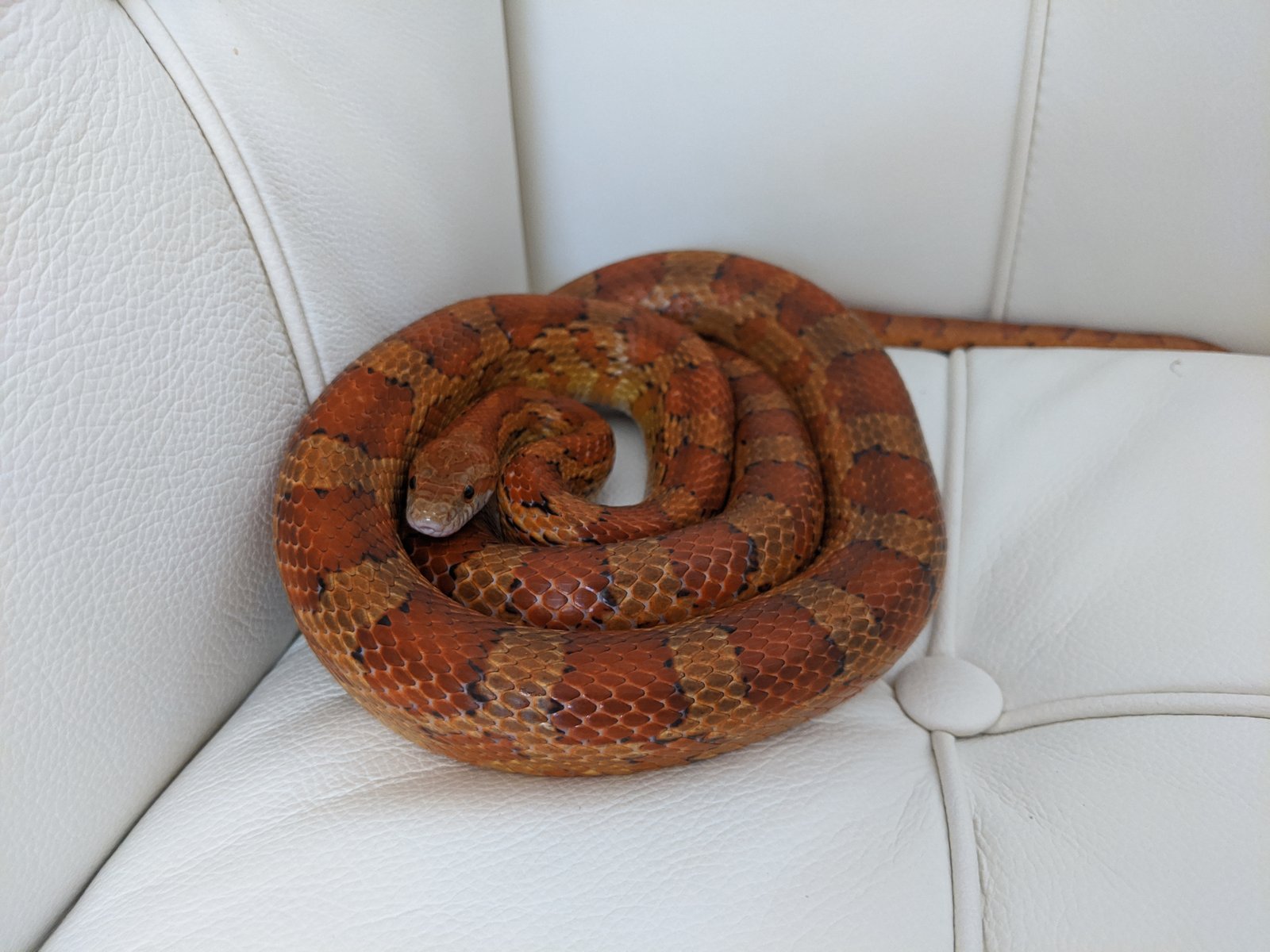
Red cornsnake
Pantherophis guttatus
An orange-red snake with bold red blotches outlined in black, often seen near barns and old fields where it hunts rodents. Smaller than its ratsnake cousin and prized in the pet trade for its color.
Status: Secure.
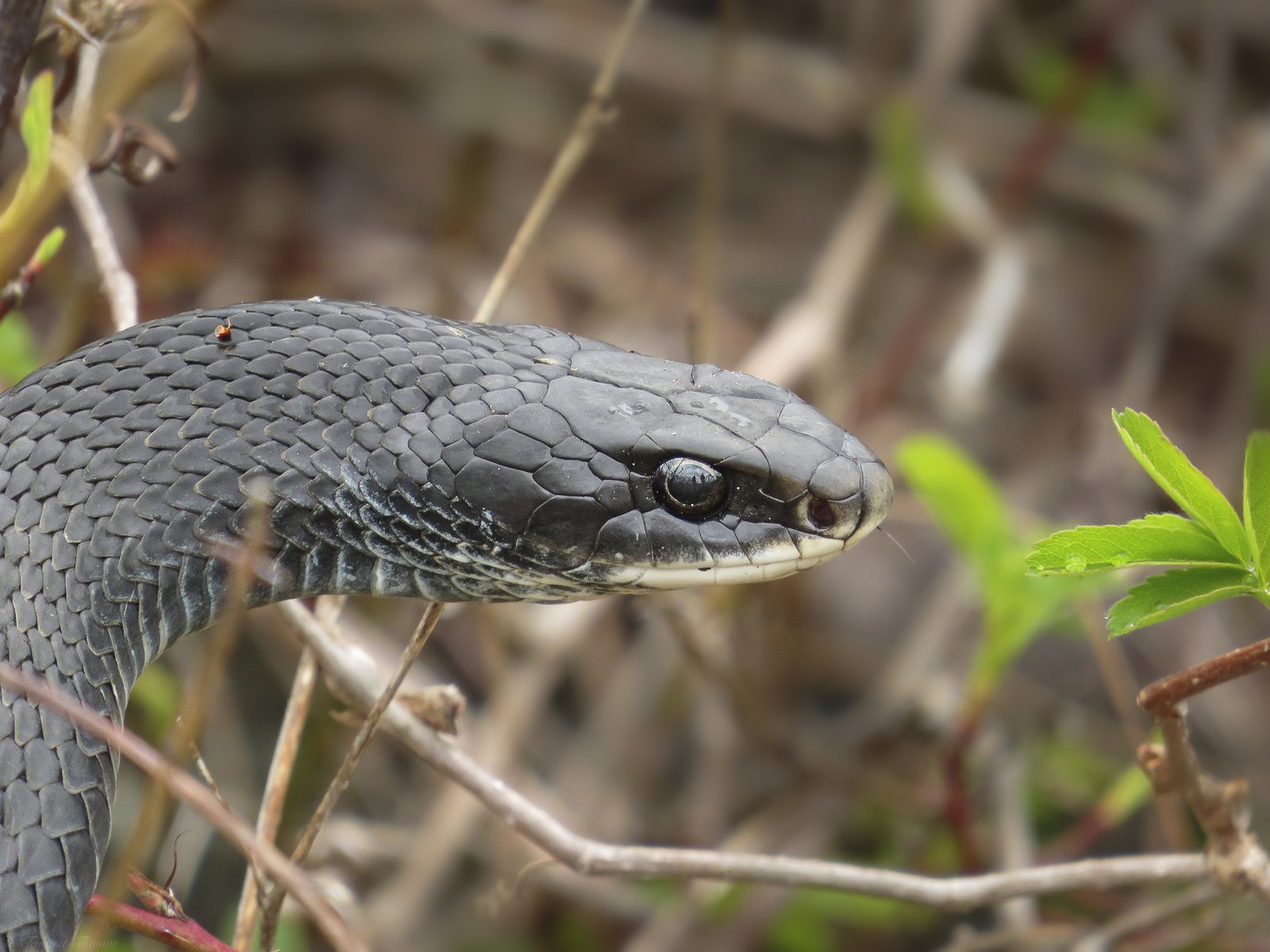
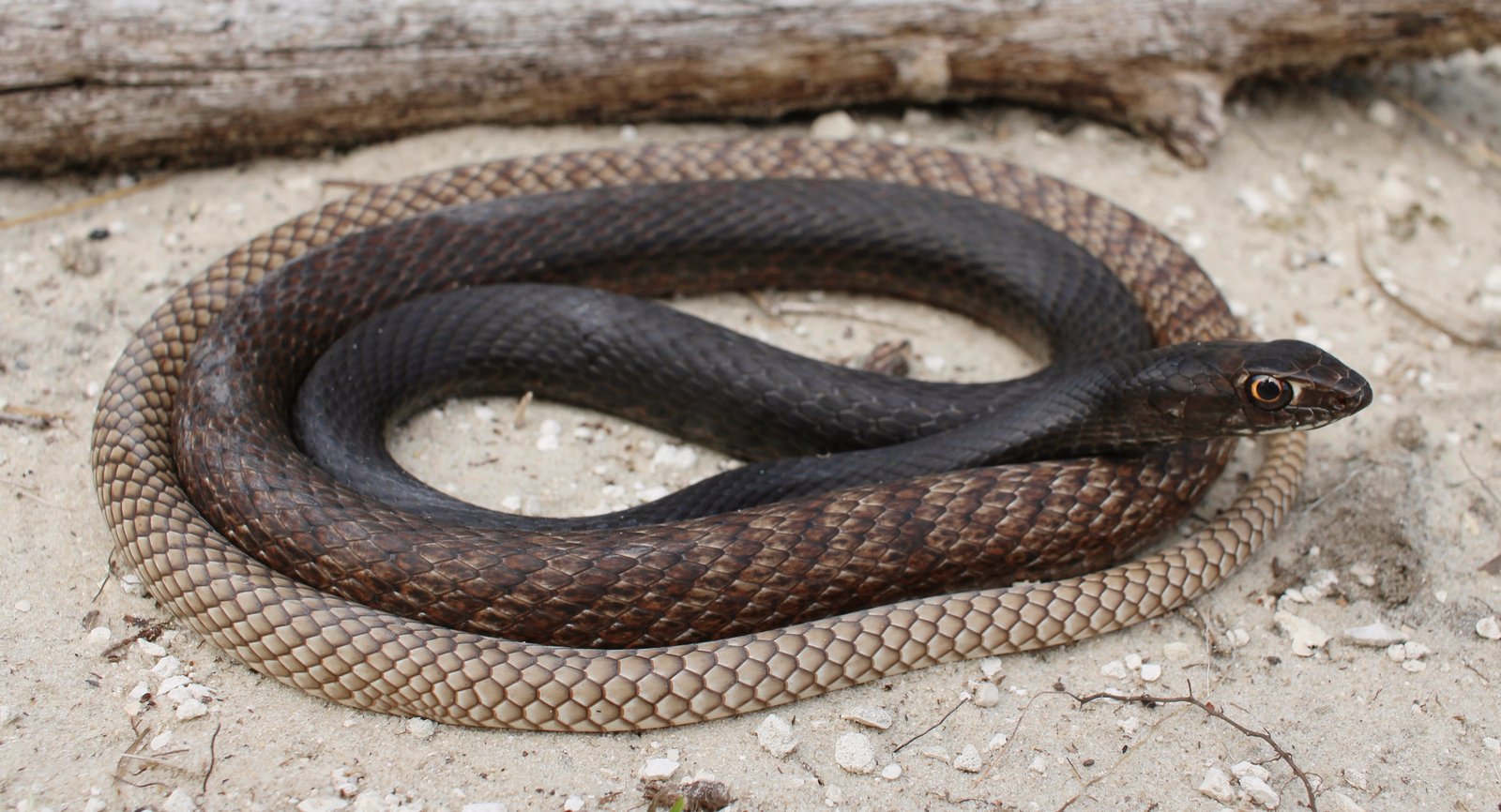
North American racer
Coluber constrictor
A fast, slender, pure-black snake of fields and forest edges. Sometimes called the “black racer.” Holds its head up off the ground when alert and moves quickly through grass and brush rather than relying on camouflage.
Status: Secure.
Coachwhip
Masticophis flagellum
A long, slender snake of dry open ground, with a dark forebody fading to lighter tan on the tail. Tennessee occurrence is uncommon; Marion would be at the edge of plausible range.
Status: TWRA Deemed in Need of Management; rare in Tennessee.
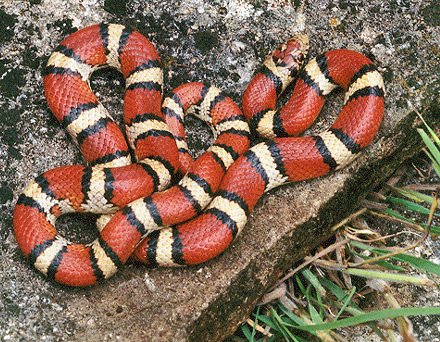
Eastern milk snake
Lampropeltis triangulum
A medium-sized snake with red, black, and tan blotches that some people mistake for a copperhead. Harmless; eats small mammals and other snakes, including young copperheads. Often found around old foundations and barns.
Status: Secure.
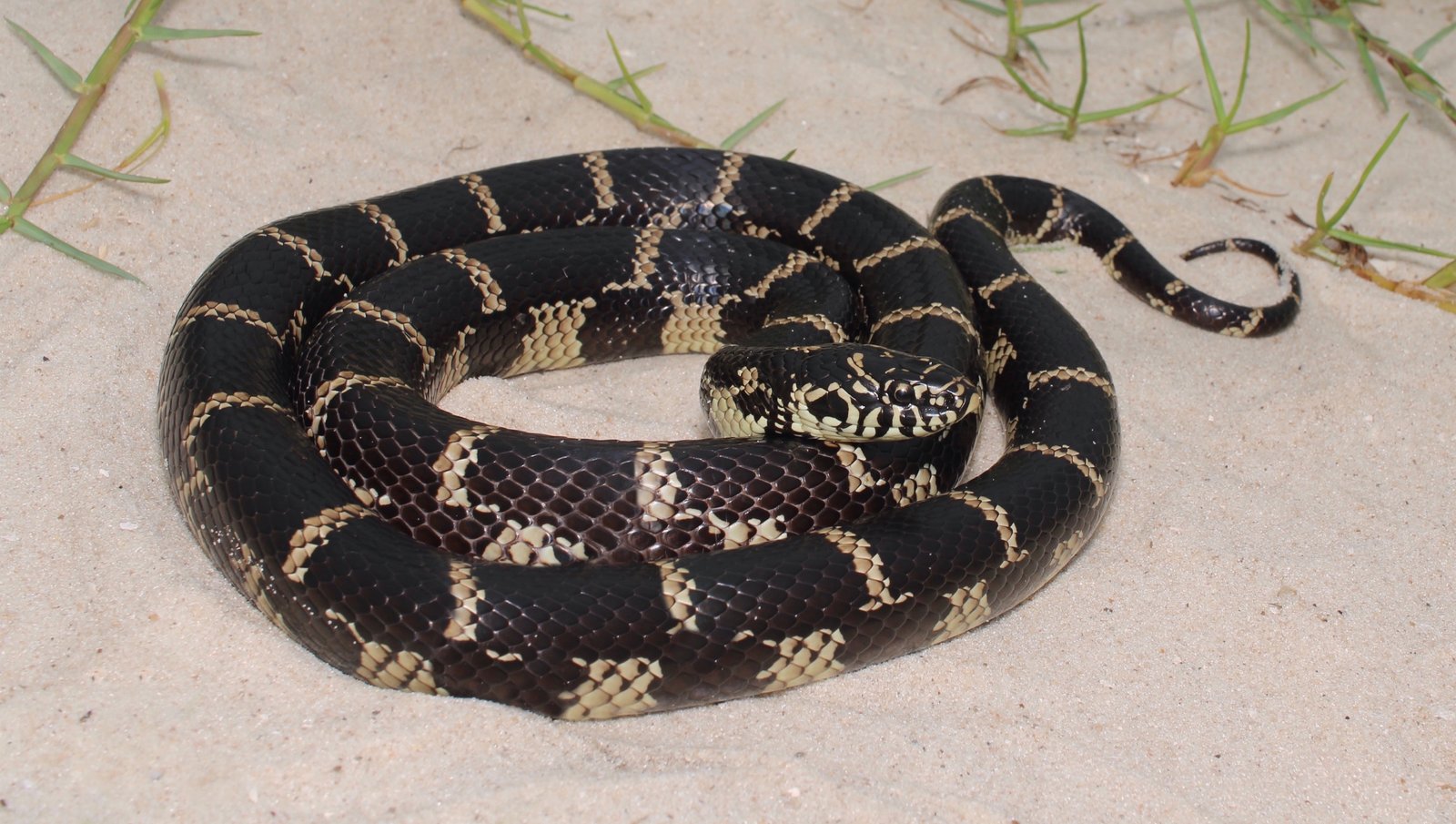
Common kingsnake
Lampropeltis getula
A glossy black snake with thin yellow chain-like crossbands. Constricts and eats other snakes, including venomous species, which gives it the “king” name.
Status: Secure.
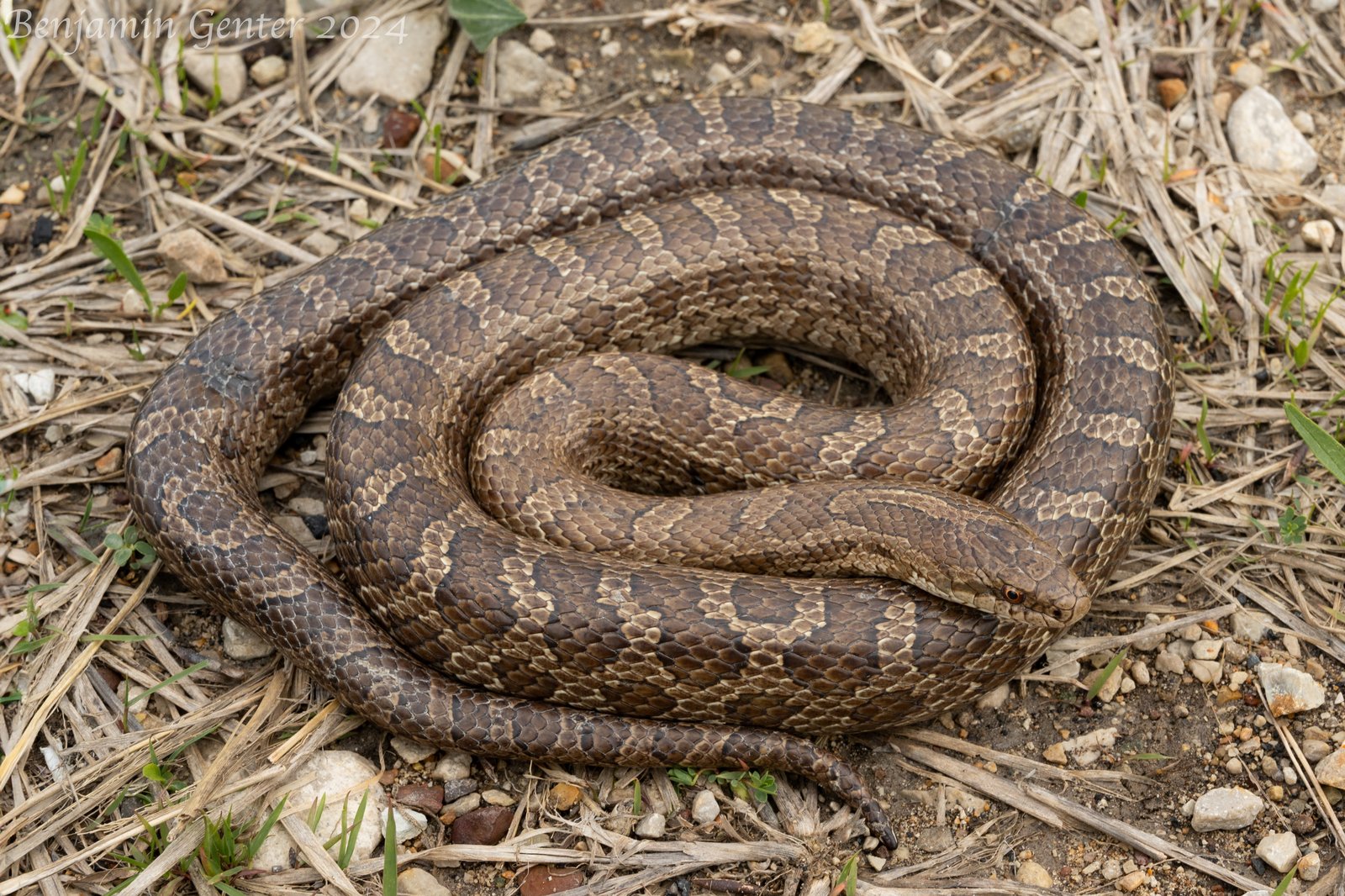
Yellow-bellied kingsnake
Lampropeltis calligaster
Also called the prairie kingsnake. A tan-and-brown blotched snake of the Sequatchie Valley's open farmland and field edges. Hunts rodents and lizards in old pastures and barn lots.
Status: Secure.
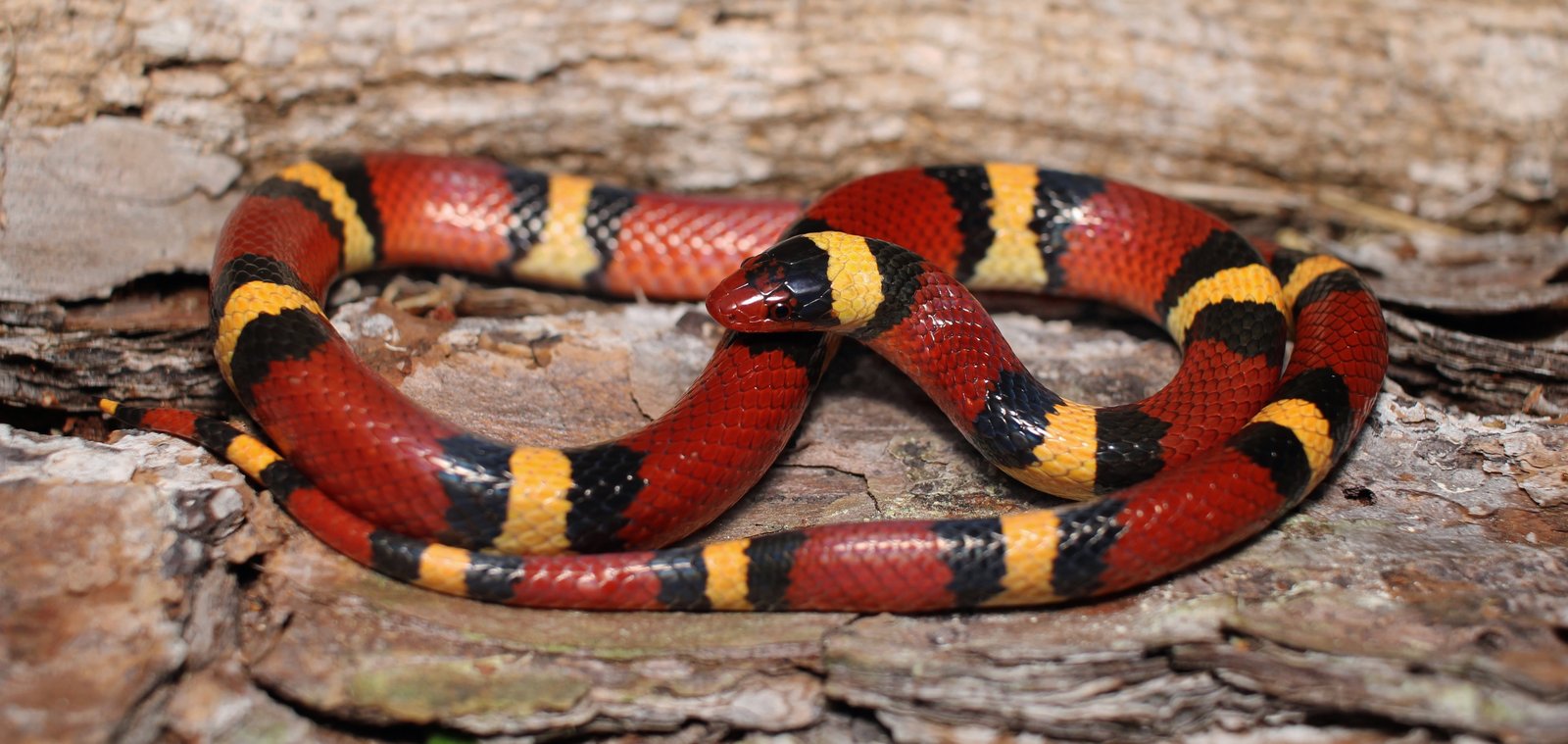
Scarlet kingsnake
Lampropeltis elapsoides
A small, brilliantly banded red, black, and yellow snake that mimics the venomous coral snake (which does not occur in Tennessee). Secretive: spends most of its time under loose bark and in rotting logs.
Status: Secure but uncommon.
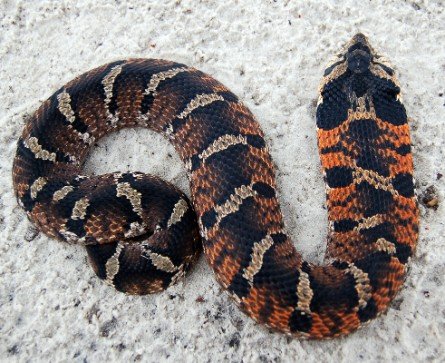
Eastern hog-nosed snake
Heterodon platirhinos
Stout-bodied with an upturned snout used for digging up toads. When threatened, flares the neck cobra-style; if that fails, rolls onto its back, opens its mouth, and plays dead. Harmless to people.
Status: Secure.
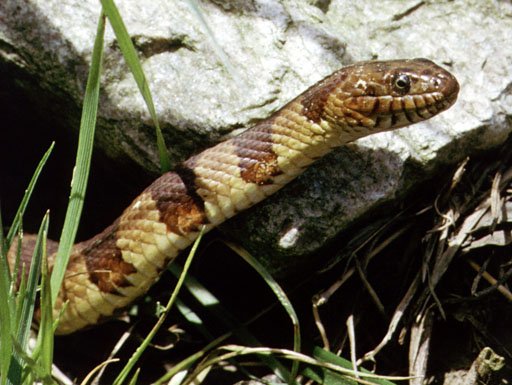
Northern watersnake
Nerodia sipedon
Marion's common nonvenomous water snake, found along the Tennessee River, the Sequatchie River, Nickajack Lake, and most ponds and creeks. Often misidentified as a cottonmouth and killed; flattens its head and may bite if cornered, but is harmless.
Status: Secure.
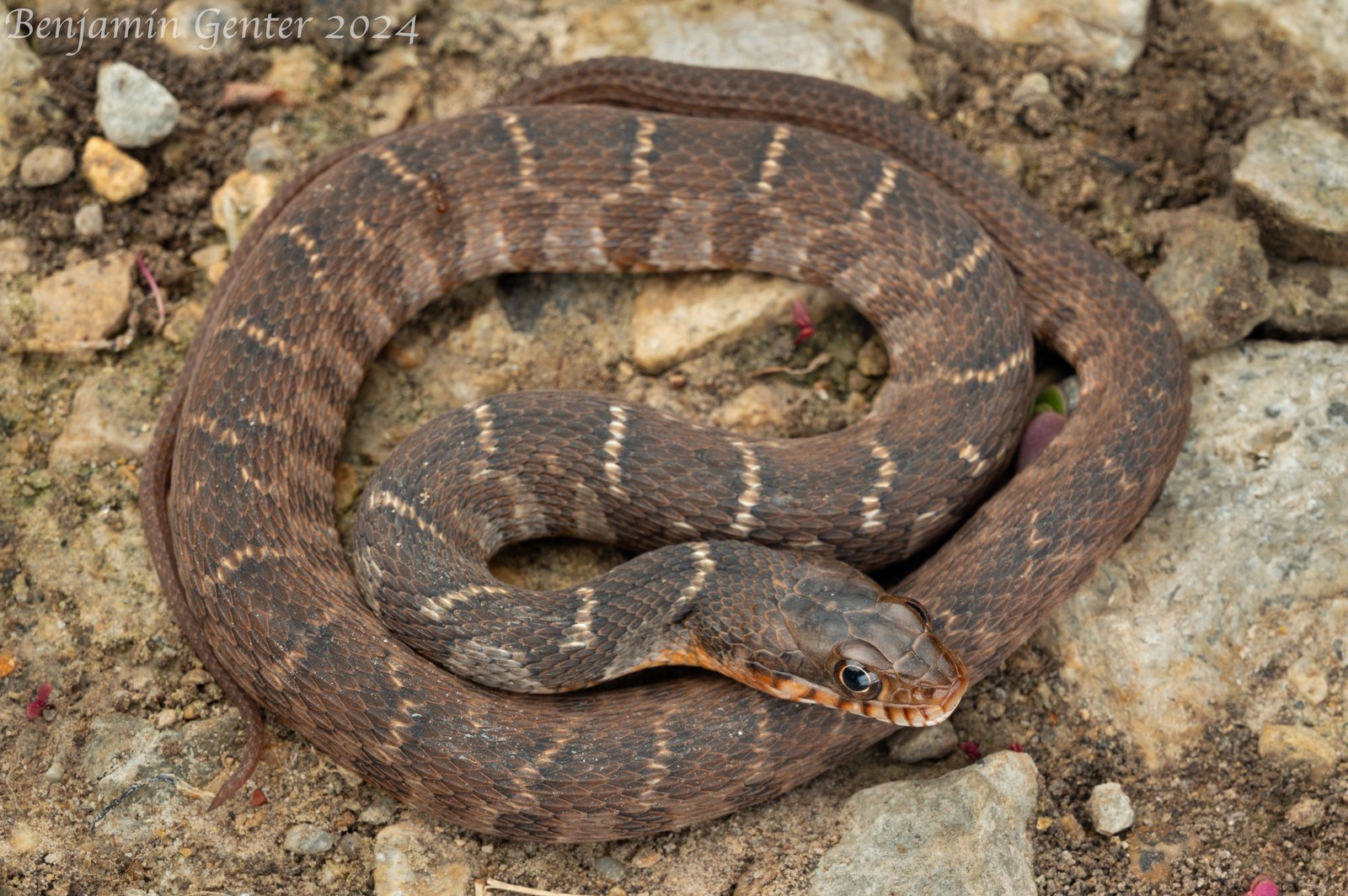
Plain-bellied watersnake
Nerodia erythrogaster
A heavy-bodied water snake with a uniformly orange or yellow belly and a darker, less patterned back than the northern water snake. Expected on the Tennessee River and Nickajack Lake margins.
Status: Secure.
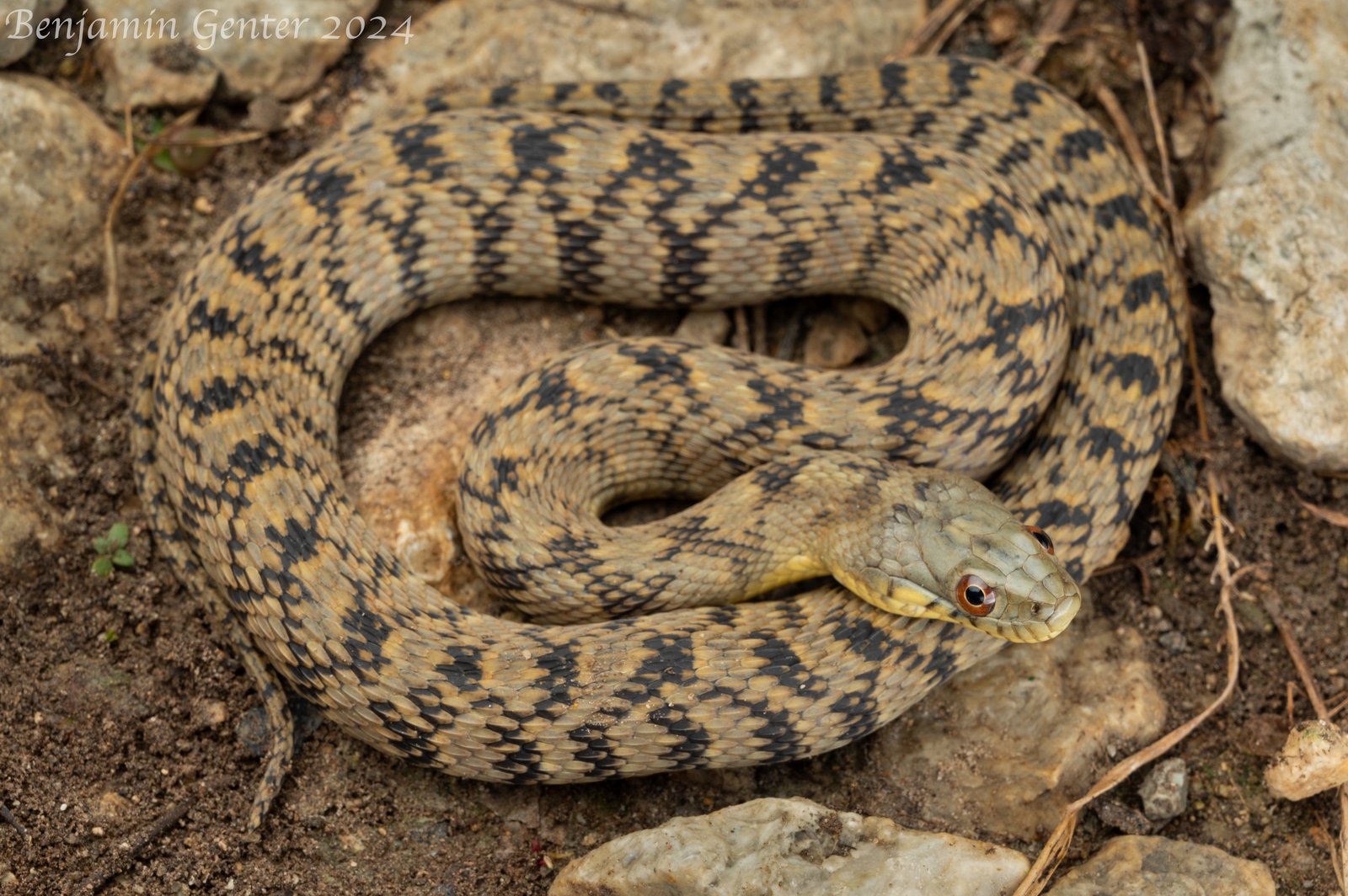
Diamond-backed watersnake
Nerodia rhombifer
A large water snake with a chain-link diamond pattern. Tennessee occurrence is concentrated in the lower Tennessee and Mississippi river drainages; Marion records are at the eastern edge of this range.
Status: Secure but range-edge in Marion.
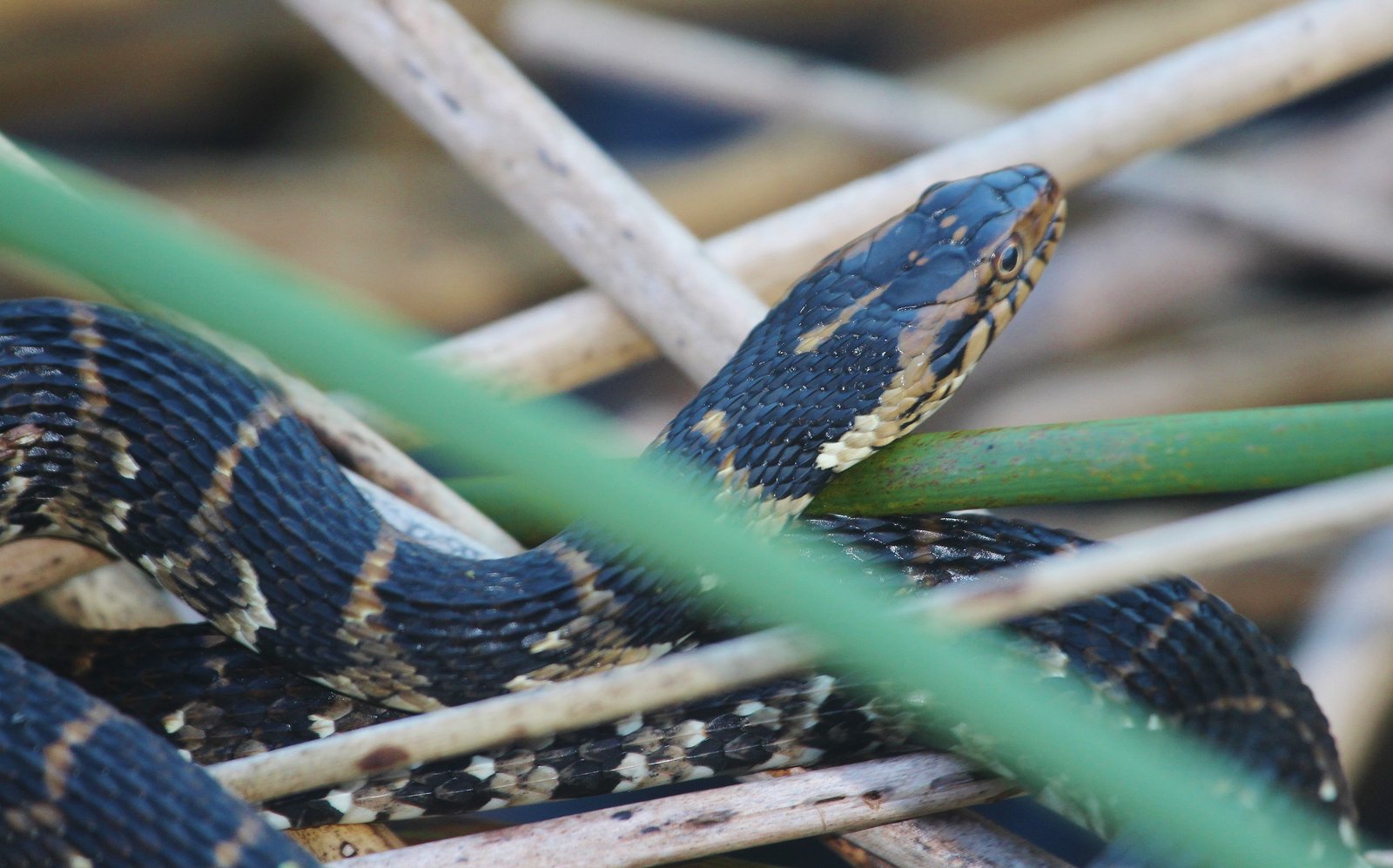
Southern watersnake
Nerodia fasciata
Also called the banded water snake. Heavy crossbands run the full length of the body. Tennessee range is concentrated west of the Cumberland Plateau, making Marion records uncommon.
Status: Secure but rare in Marion.
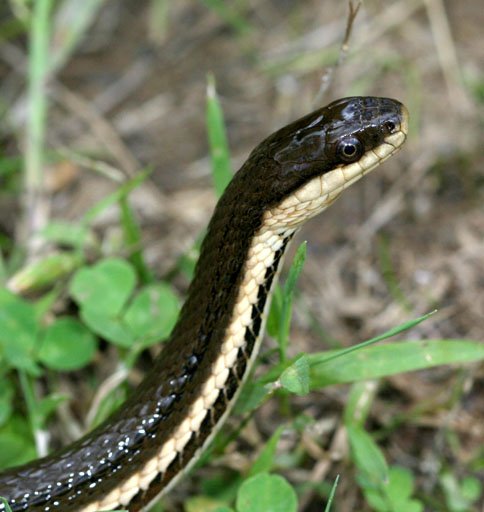
Queen snake
Regina septemvittata
A slim brown-and-yellow water snake of clear, rocky streams. Specializes almost exclusively on freshly molted soft-shelled crayfish; absent from streams where crayfish populations have crashed.
Status: Secure but habitat-restricted.
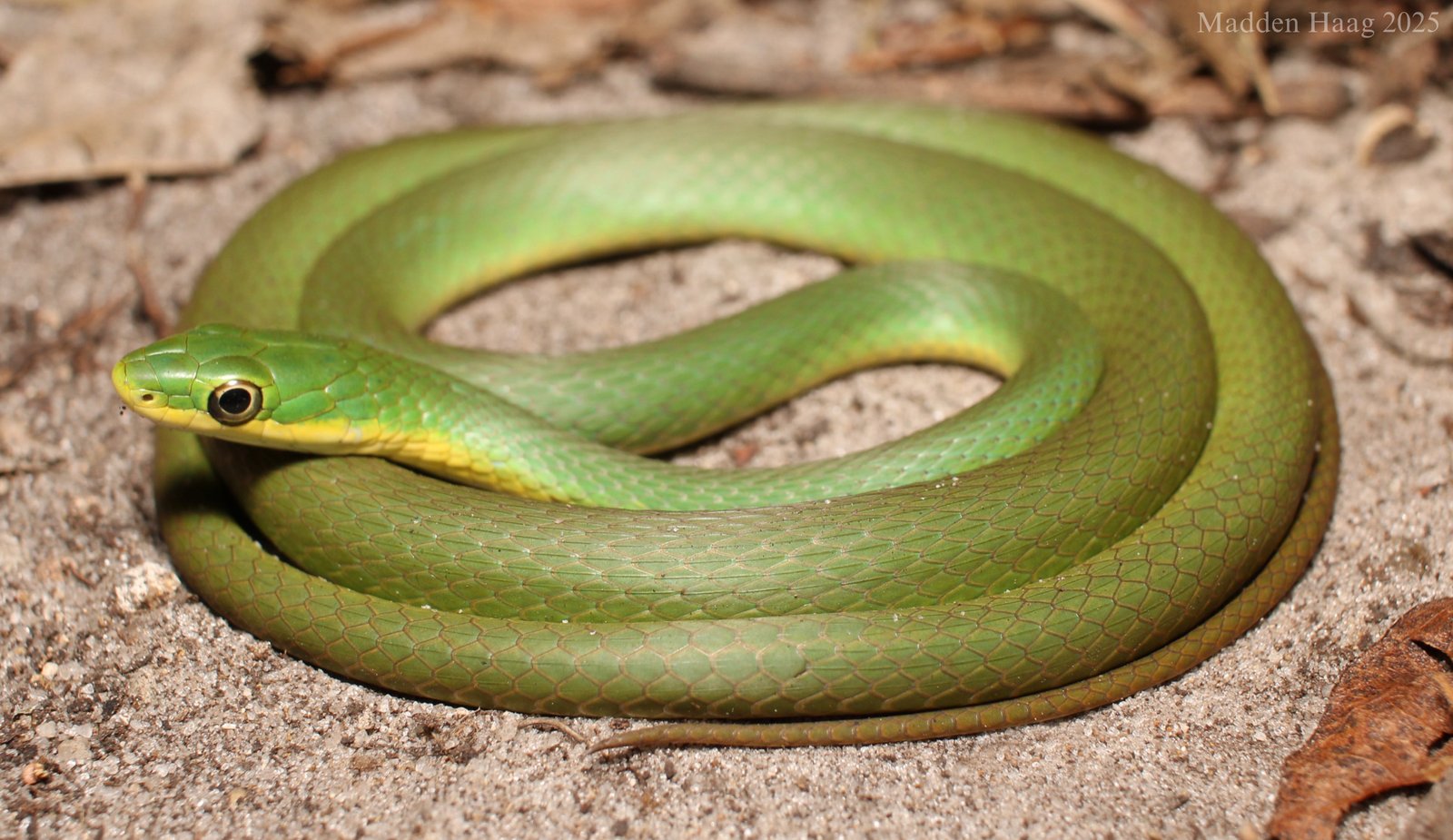
Rough greensnake
Opheodrys aestivus
A slender bright-green snake of streamside vegetation and overhanging branches. Hunts caterpillars and spiders in the foliage; the green back fades quickly to blue after death, which is the form often seen in old preserved specimens.
Status: Secure.
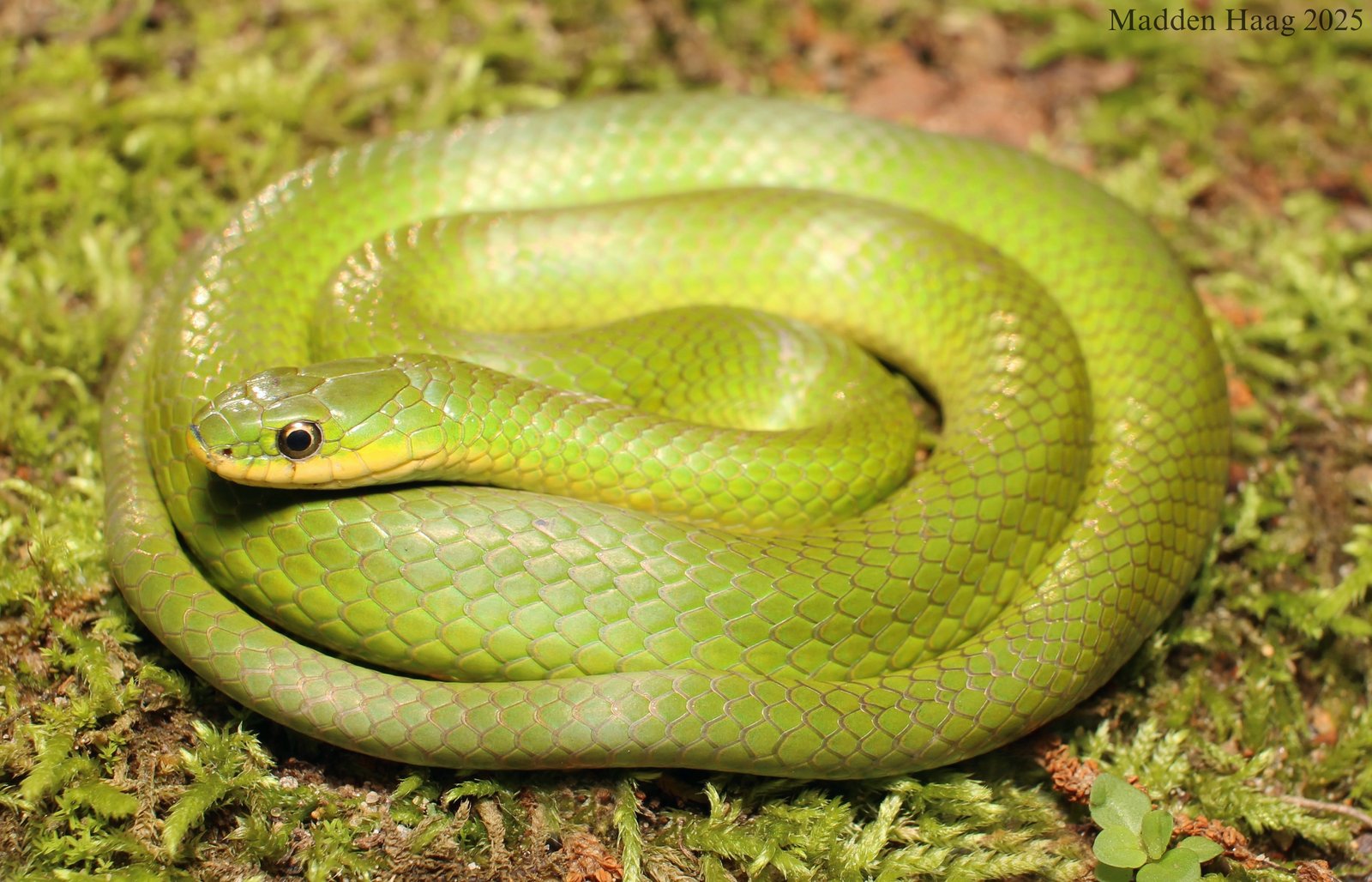
Smooth greensnake
Opheodrys vernalis
Smaller and ground-dwelling where the rough greensnake is arboreal. Marion is at the southern range edge in Tennessee.
Status: TWRA Deemed in Need of Management; rare in Tennessee.
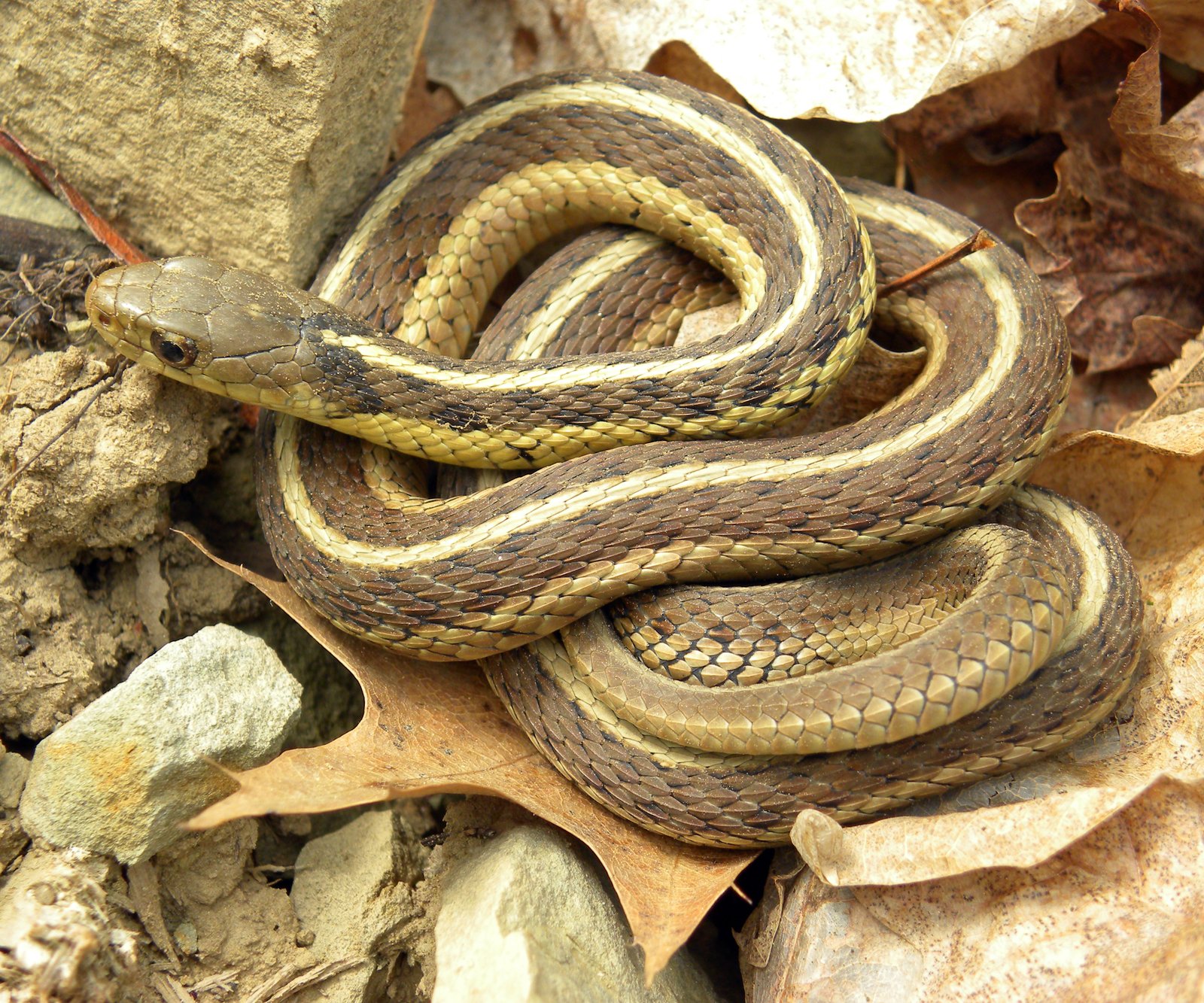
Common gartersnake
Thamnophis sirtalis
A small striped snake found in nearly every yard, garden, and field margin. Three pale stripes on a dark body; gives birth to live young. The “eastern garter snake” some older texts cite is the same animal.
Status: Secure.
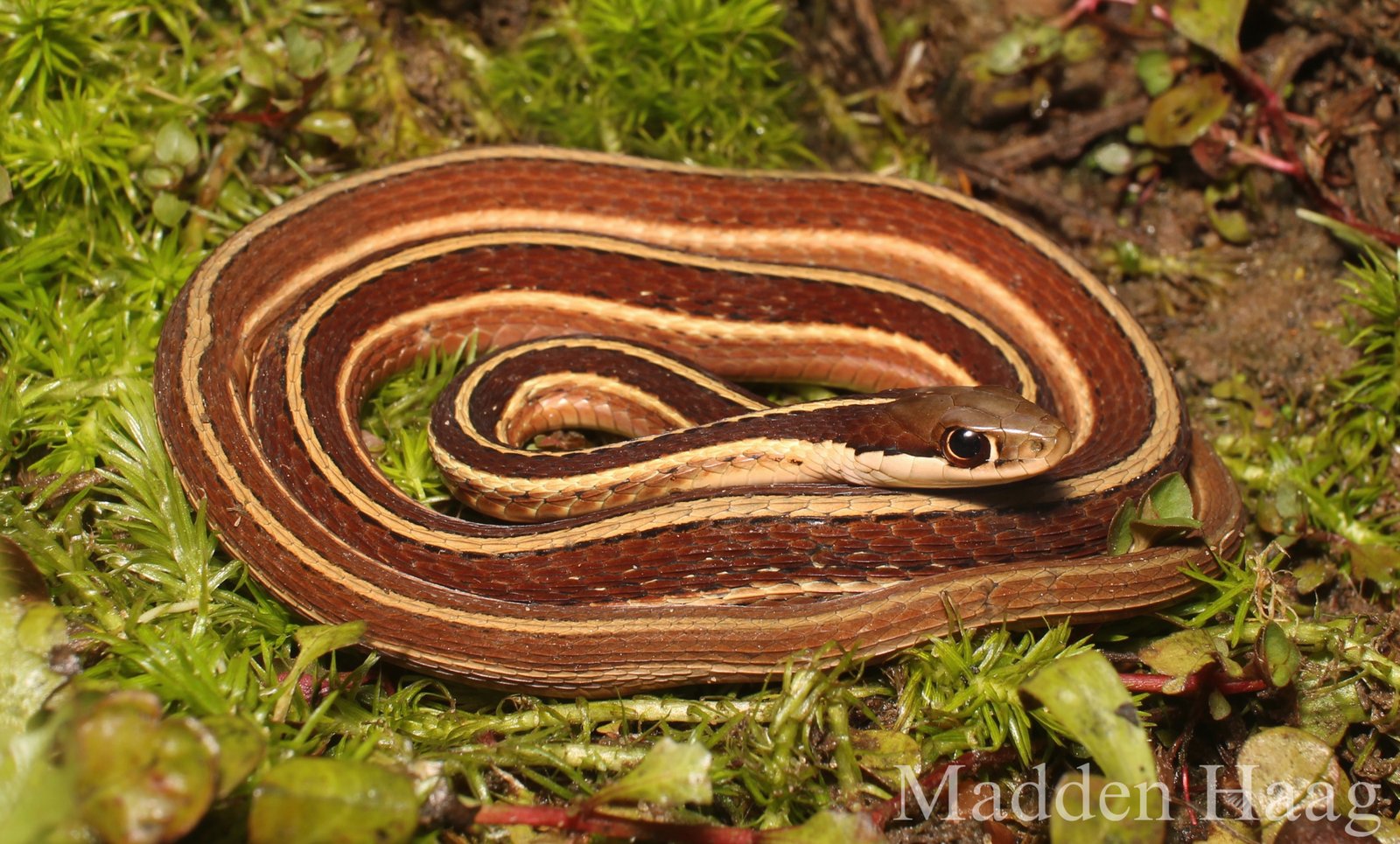
Eastern ribbonsnake
Thamnophis sauritus
A slimmer, more aquatic relative of the garter snake. Three bright yellow stripes on a chocolate body; longer tail, more pointed head. Hunts frogs and small fish along stream and pond margins.
Status: Secure.
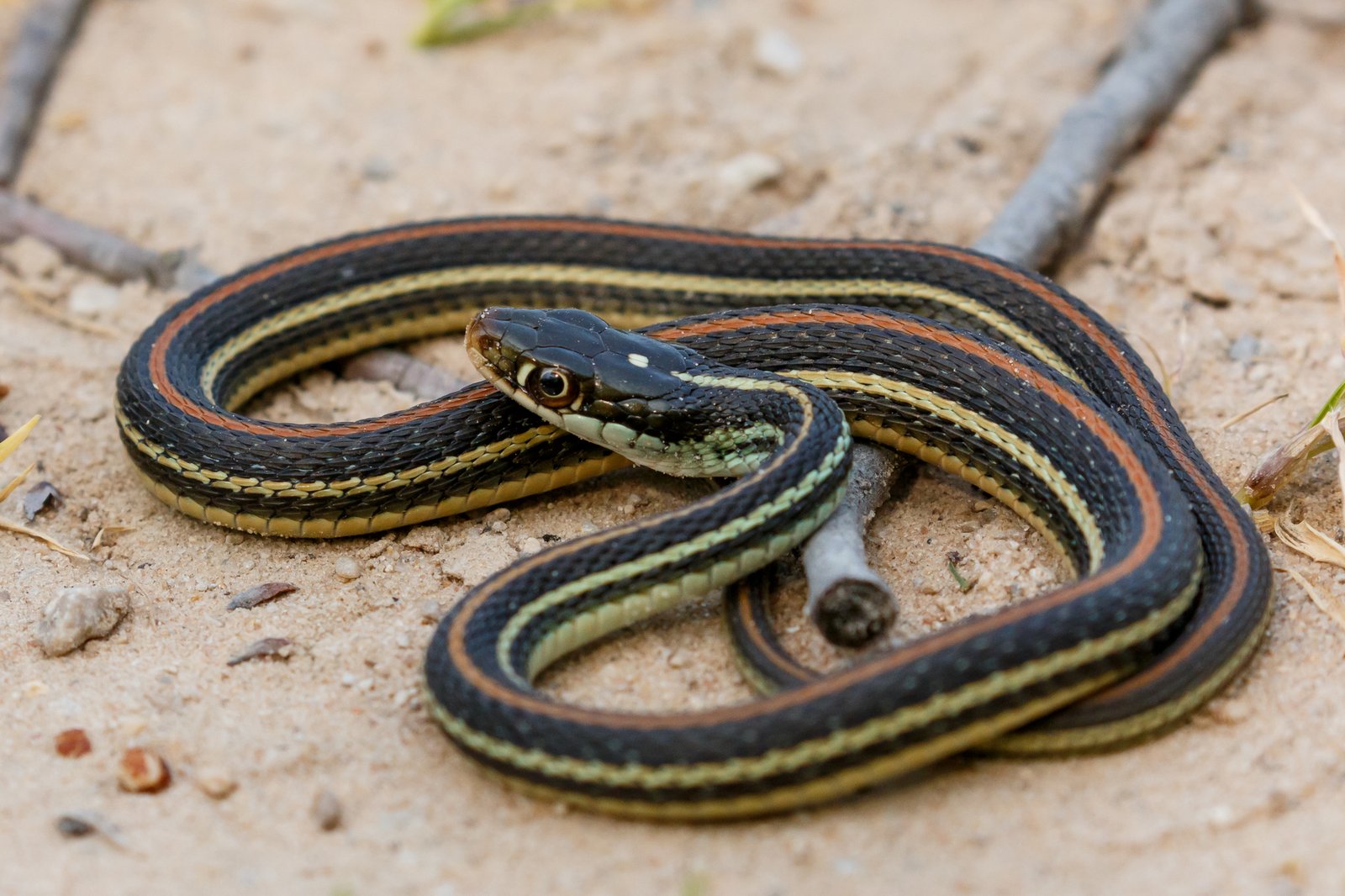
Western ribbonsnake
Thamnophis proximus
A close cousin of the eastern ribbonsnake distinguished by paler labial scales and a slightly different head pattern. Tennessee distribution is patchy; Marion records are at the eastern edge of the range.
Status: Secure but range-edge.
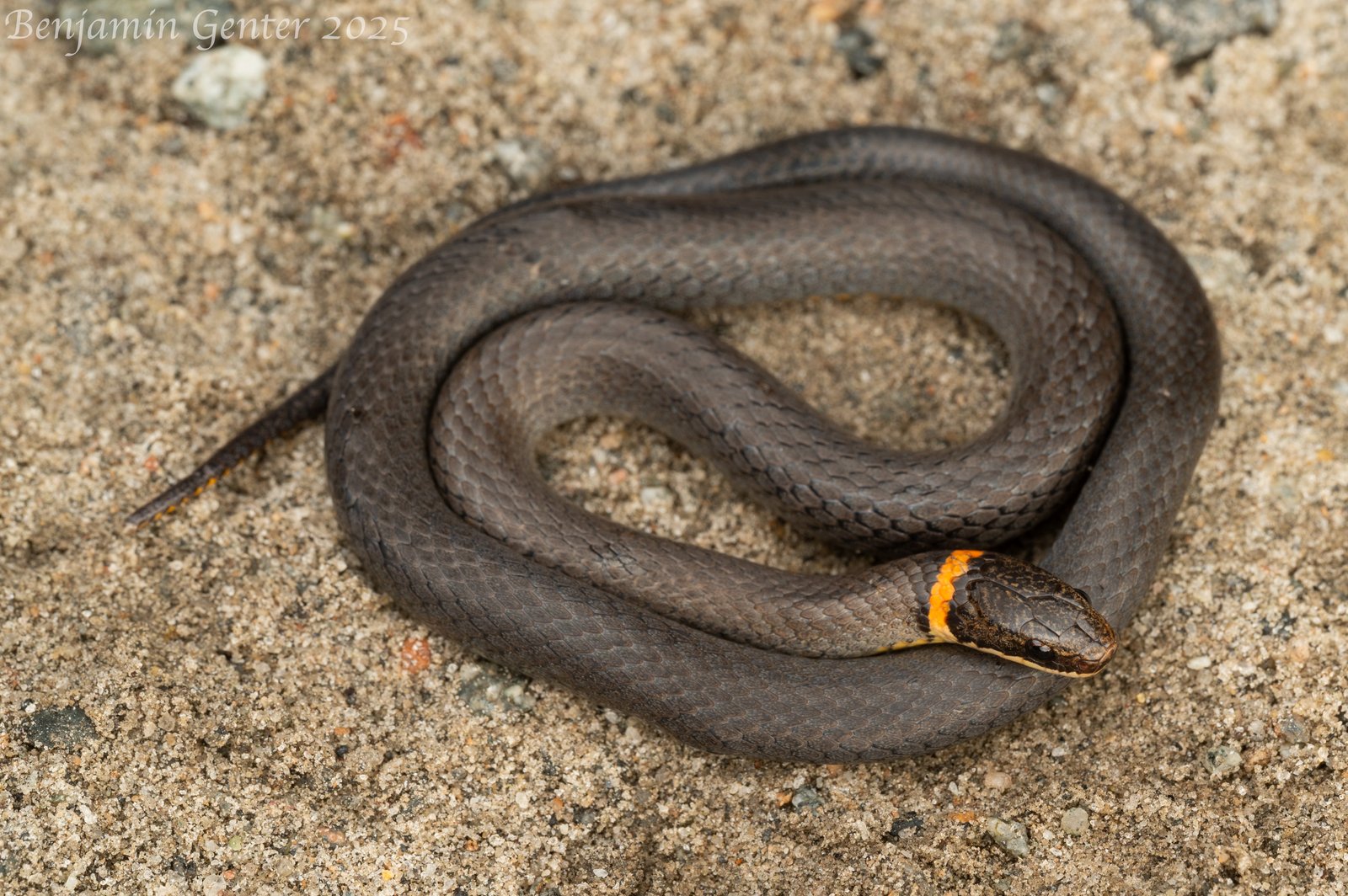
Ring-necked snake
Diadophis punctatus
A small, slate-gray snake with a vivid yellow-orange ring around the neck and matching belly. Coils its tail upside-down to flash the bright underside as a defense. Often found under flat rocks and rotting logs.
Status: Secure.
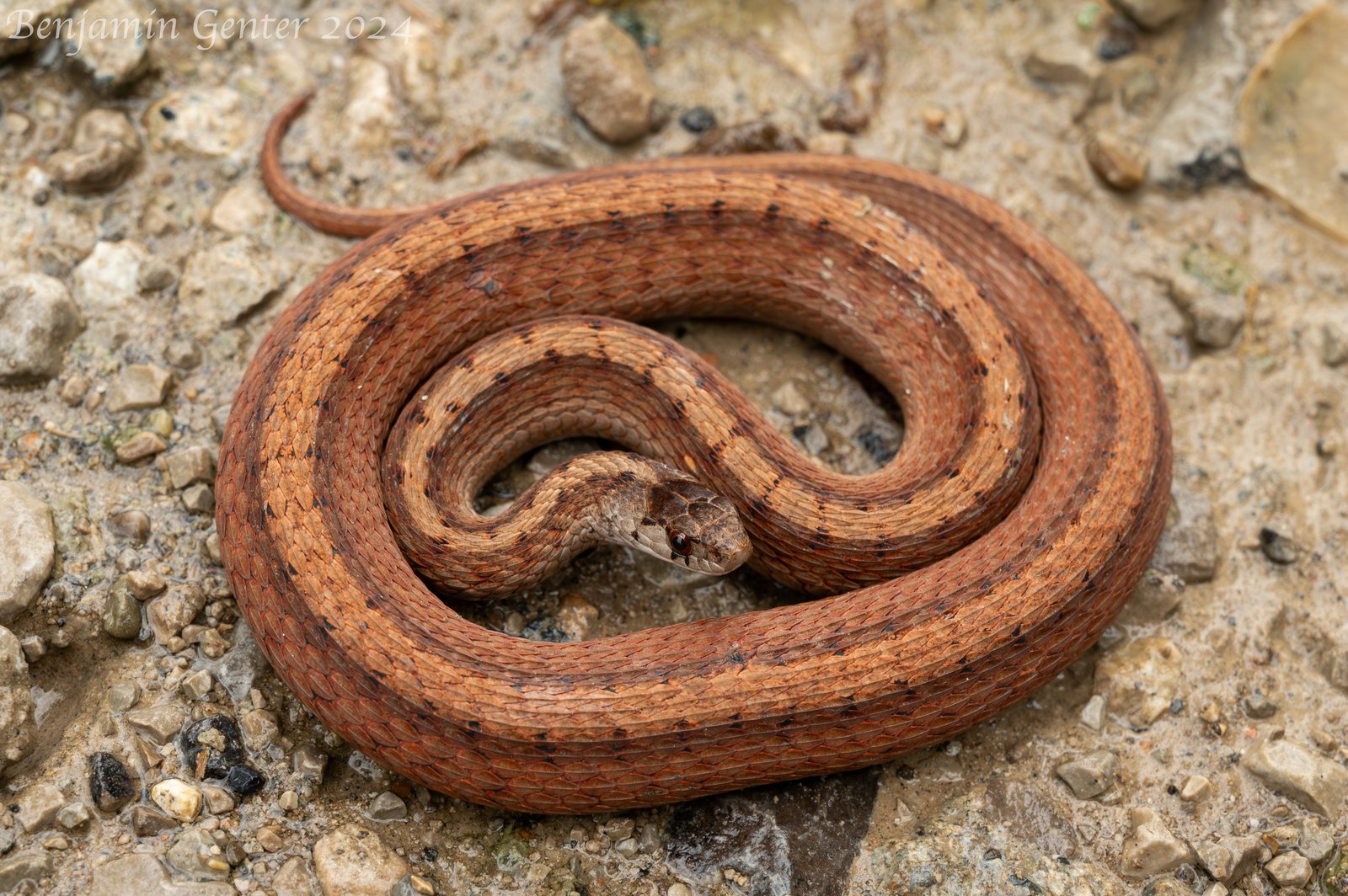
DeKay's brownsnake
Storeria dekayi
A small brown snake of gardens, yards, and suburban woodlots. Eats slugs, earthworms, and snails. Spends most of its time under leaf litter and is often turned up while gardening.
Status: Secure.
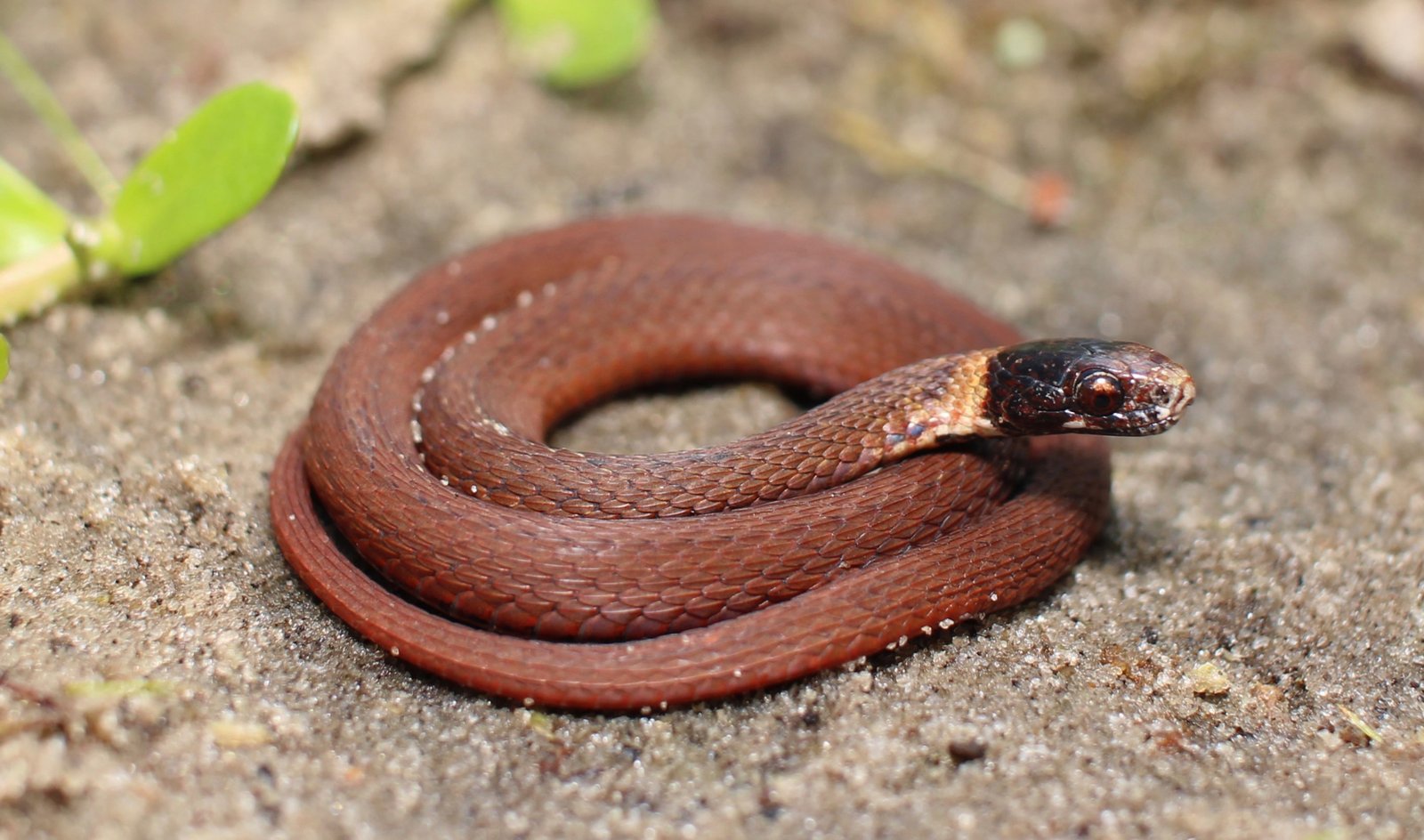
Red-bellied snake
Storeria occipitomaculata
A small forest snake with a red, orange, or yellow belly and a brown or gray back. Three pale spots on the nape are the field mark. Found under logs and bark in moist hardwood forest.
Status: Secure.
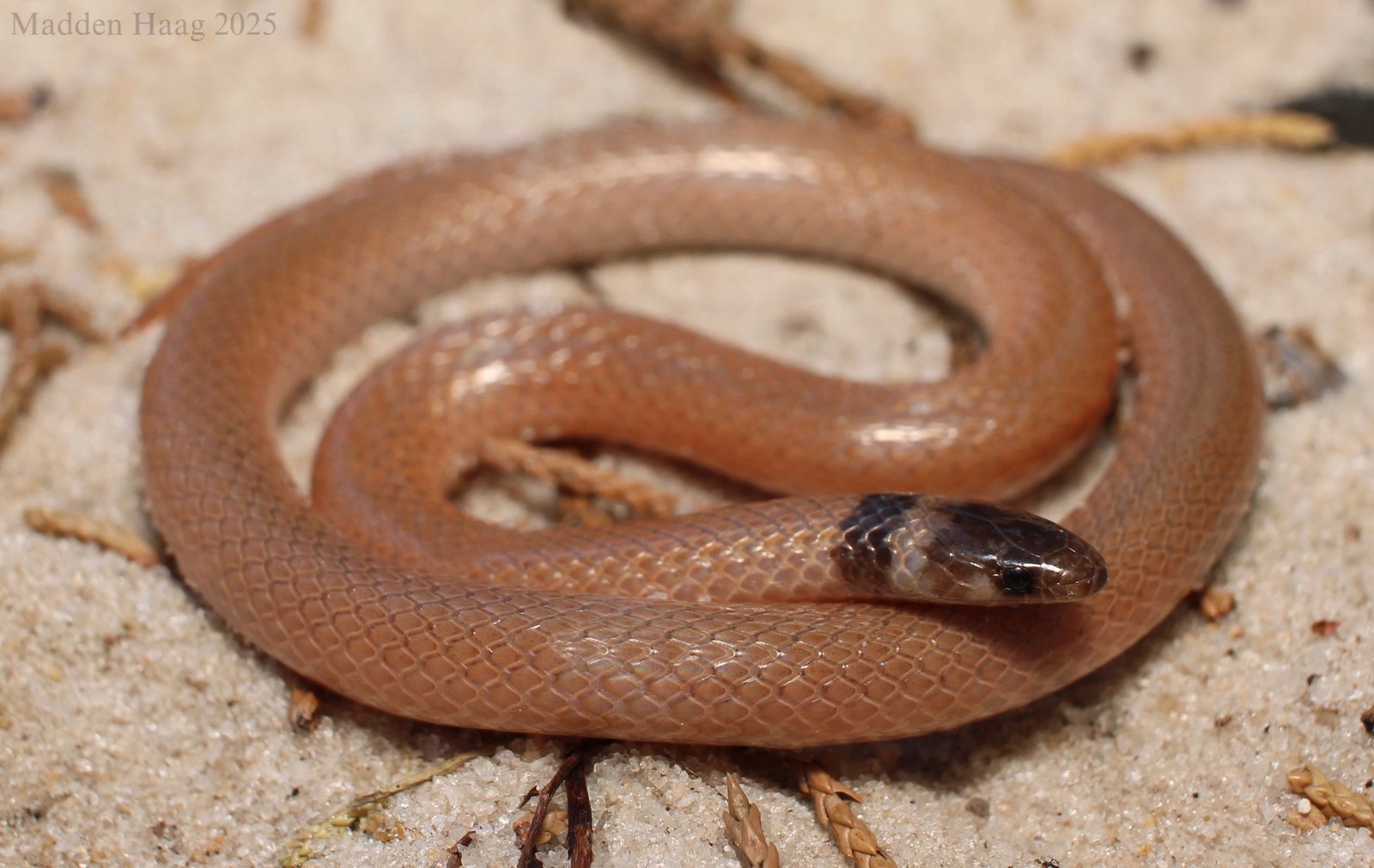
Southeastern crowned snake
Tantilla coronata
A tiny, secretive tan snake with a dark head and a pale collar. Spends most of its life under flat rocks and rotting wood; rarely seen even where common.
Status: Secure but secretive.
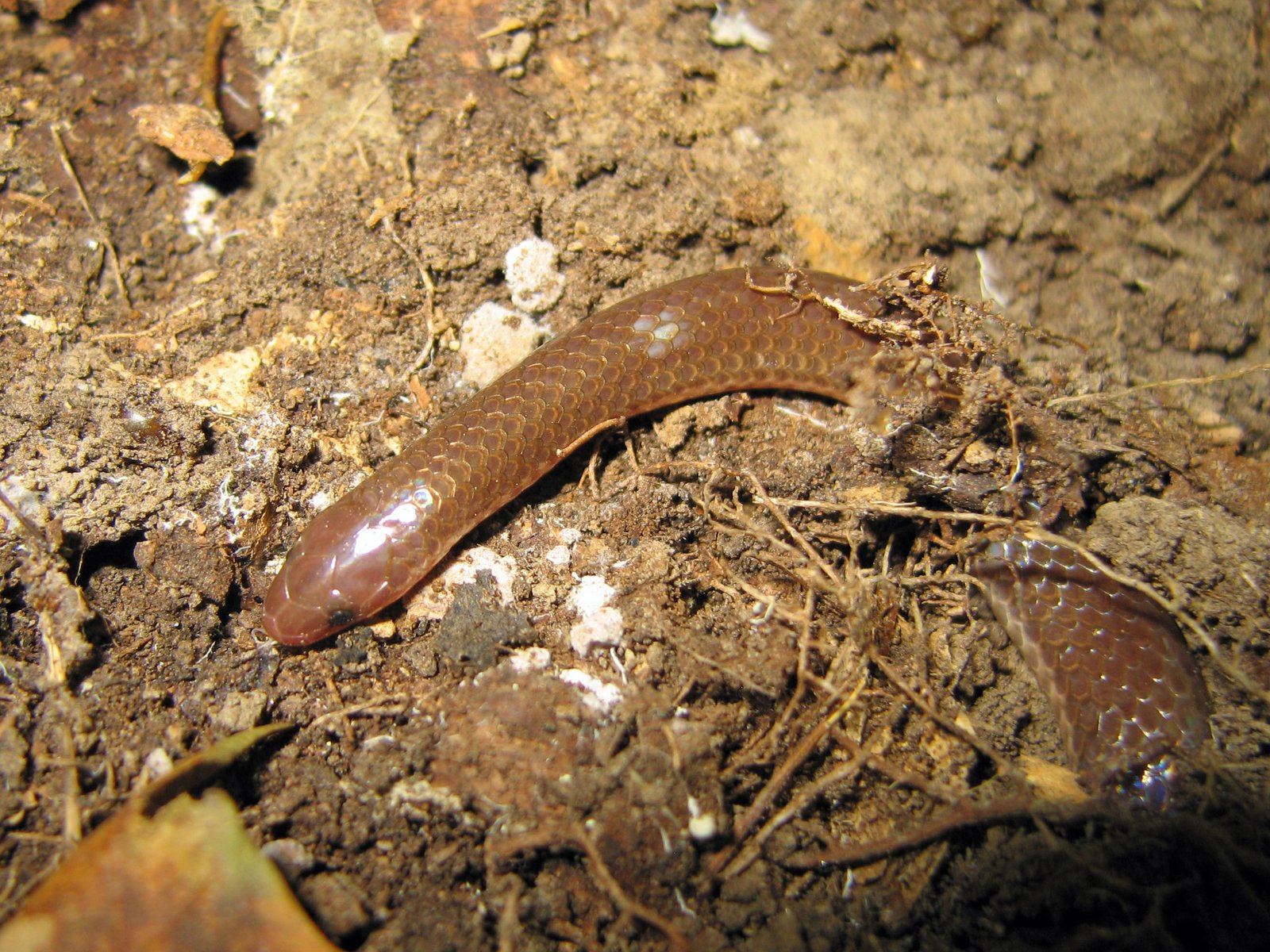
Eastern wormsnake
Carphophis amoenus
A small, smooth-scaled brown snake with a pink belly that looks remarkably like an earthworm. Burrows through forest leaf litter and loose soil hunting earthworms and soft-bodied insects.
Status: Secure.
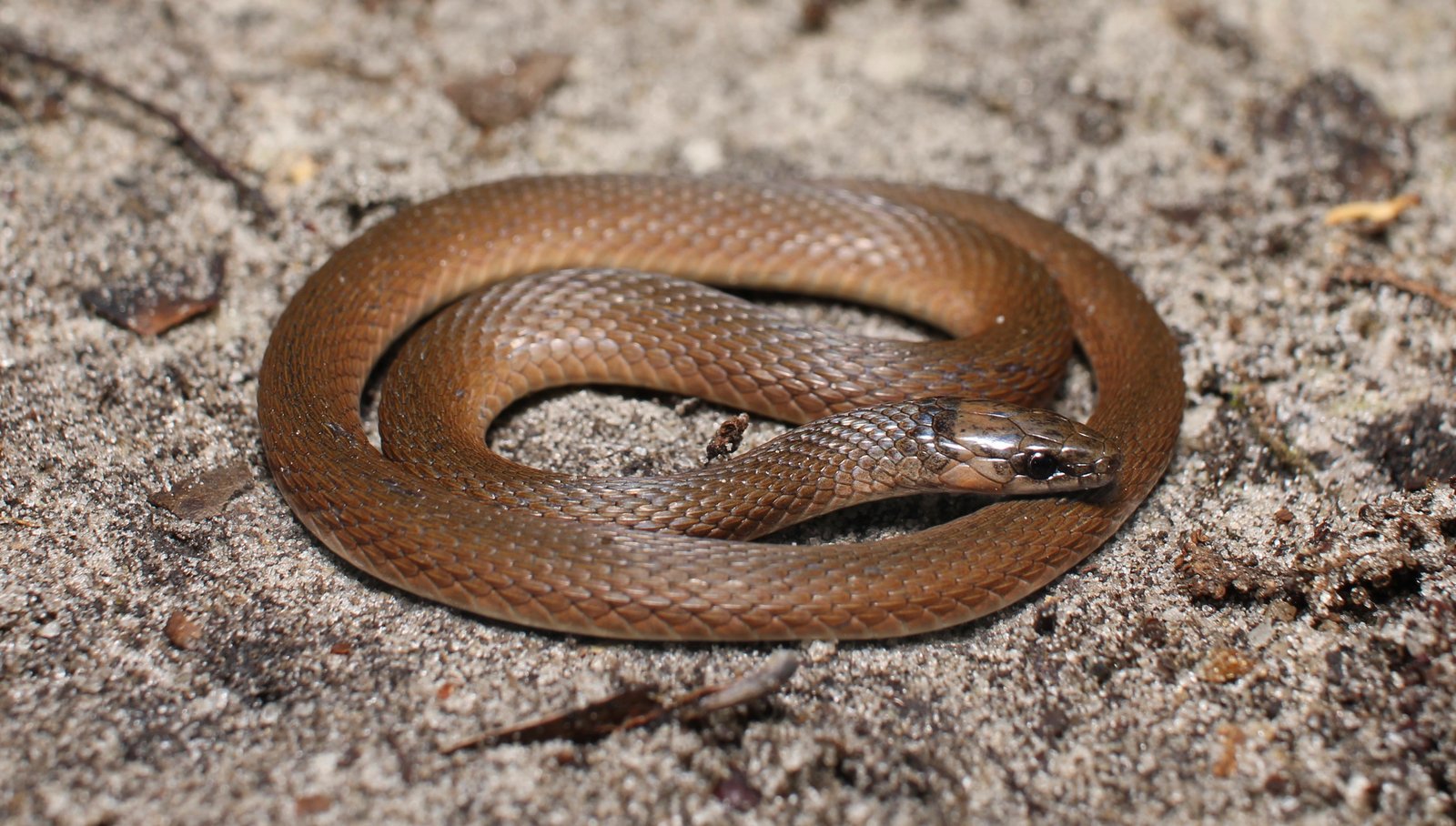
Rough earthsnake
Haldea striatula
A small brown burrowing snake with weakly keeled scales, easily missed in leaf litter. Eats earthworms and is most often turned up while working compost piles or moving rotting wood.
Status: Secure.
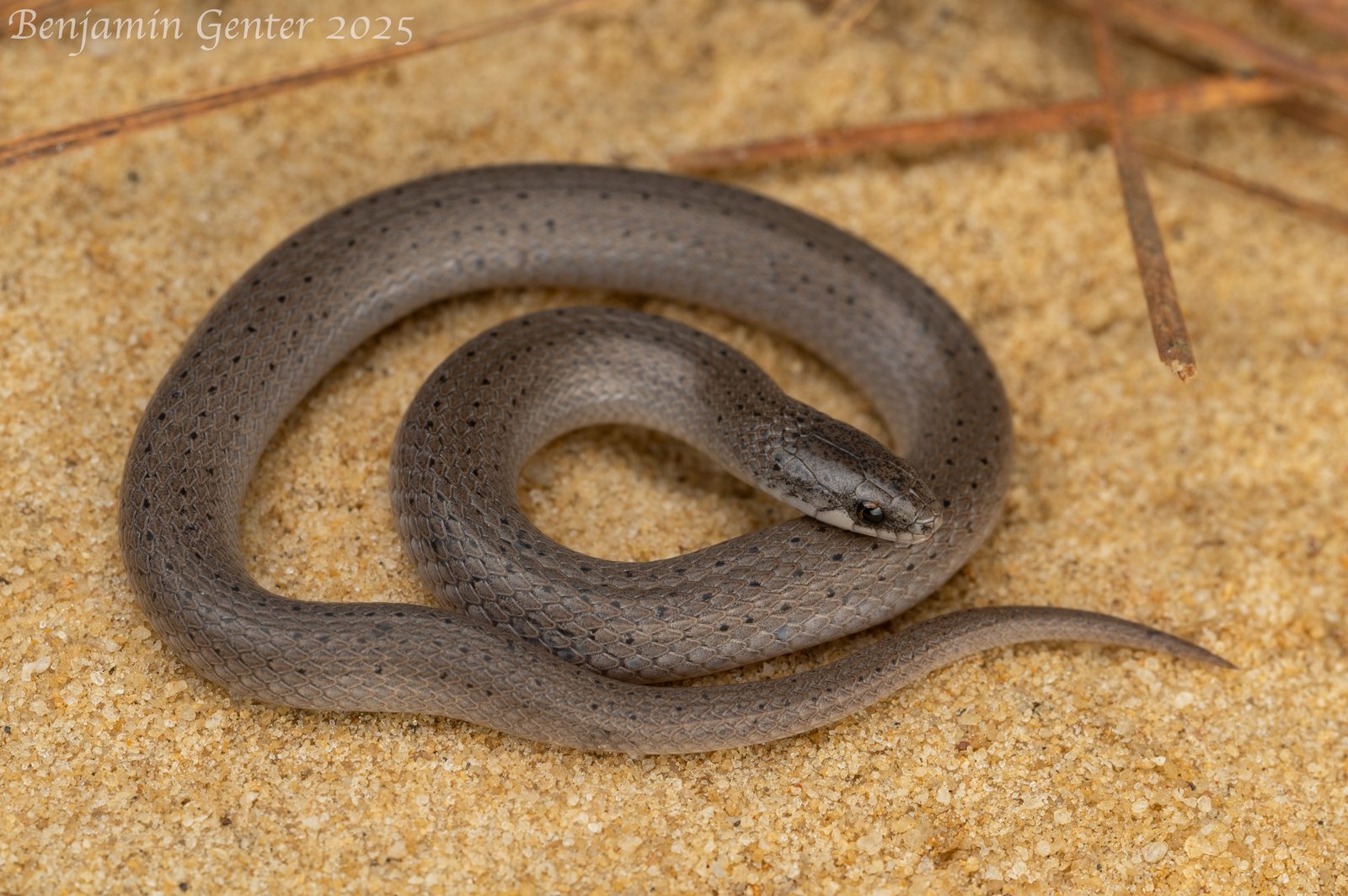
Smooth earthsnake
Virginia valeriae
A close cousin of the rough earthsnake with smooth, shiny scales. Same secretive habits and earthworm diet; the two species often occur together.
Status: Secure.
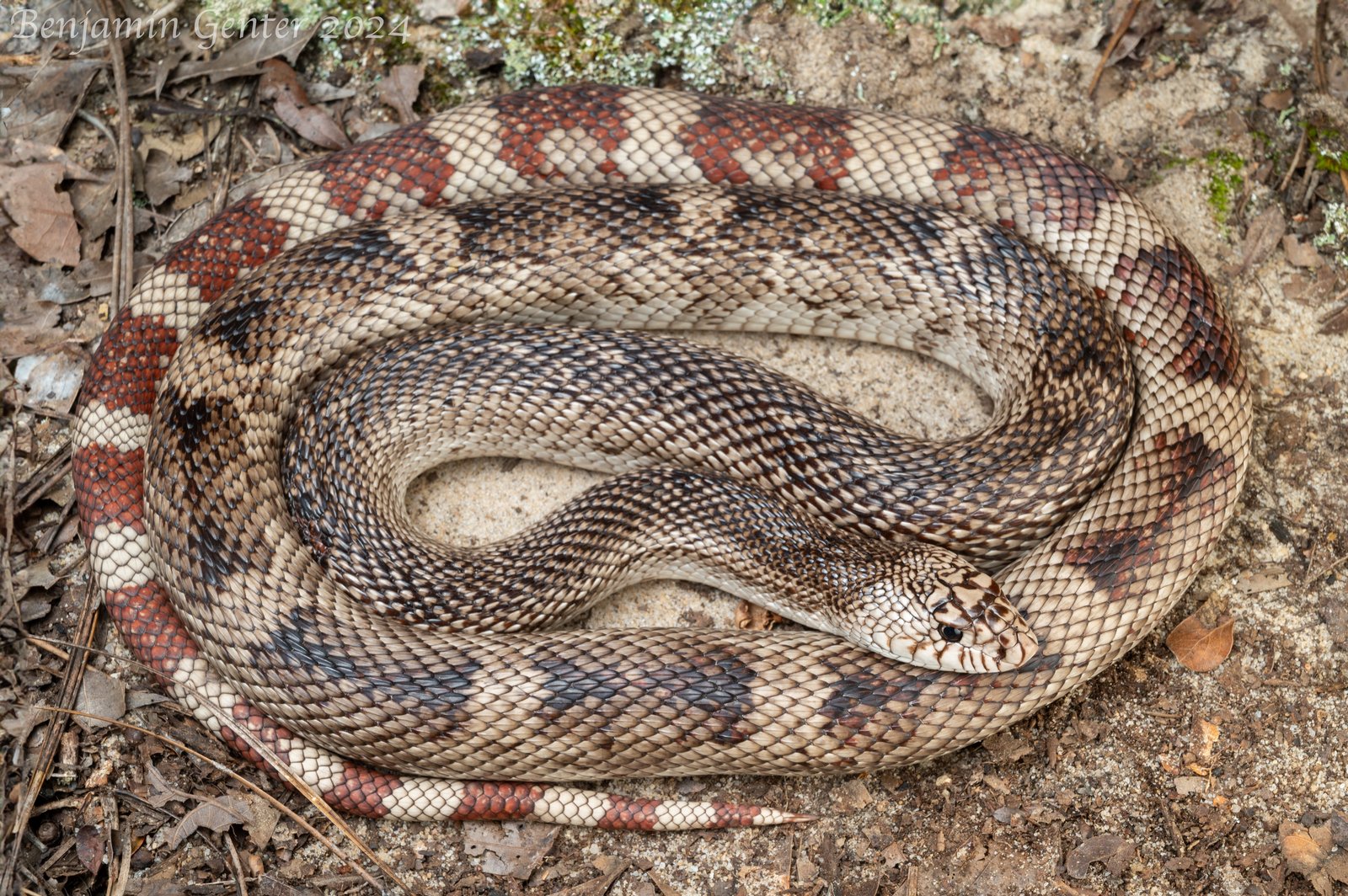
Pinesnake
Pituophis melanoleucus
A large, heavy-bodied snake of dry pine-oak ridges; loud-hissing when alarmed. Tennessee populations are scattered, and the species is uncommon at the Cumberland Plateau's southern end.
Status: TWRA Deemed in Need of Management.
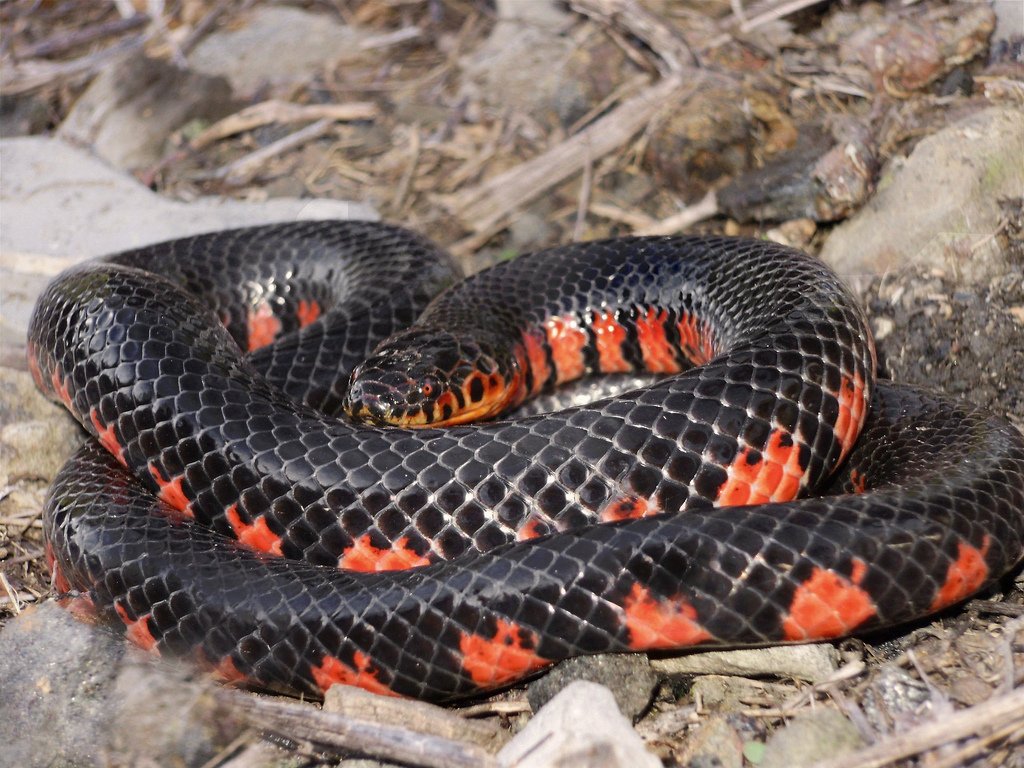
Red-bellied mudsnake
Farancia abacura
A glossy black snake with a vivid red-and-black checkered belly. Tennessee range is largely confined to West Tennessee swamps; Marion sightings would be at the eastern edge of plausibility.
Status: Secure but range-restricted; rare in Marion.
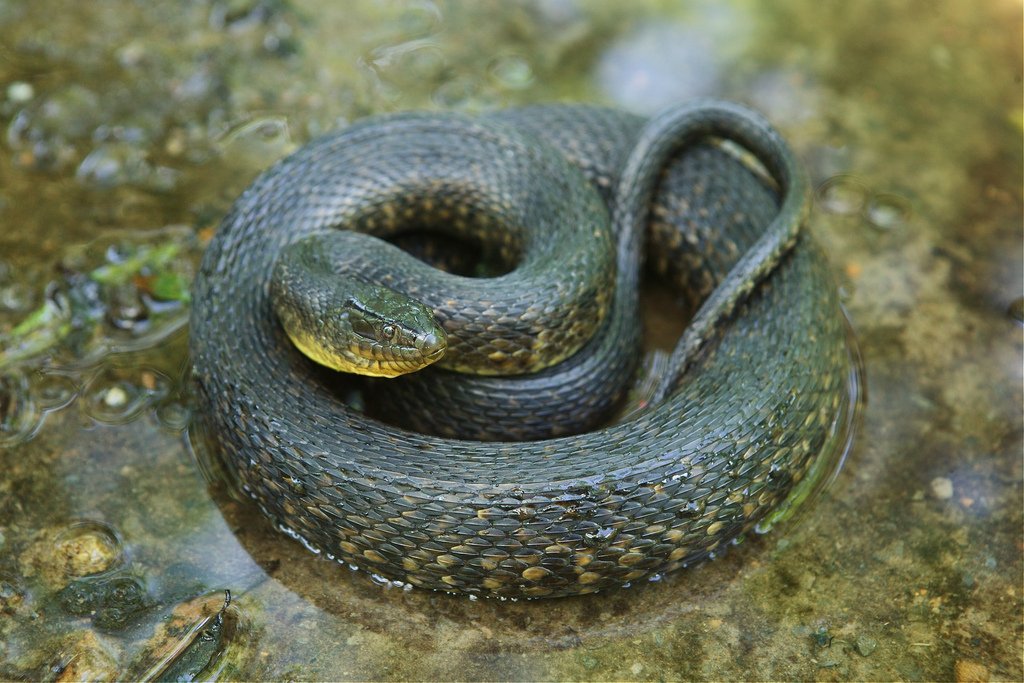
Mississippi green watersnake
Nerodia cyclopion
A heavy-bodied water snake of West Tennessee swamps and oxbows. Marion is far east of its core range; any record would be exceptional.
Status: TWRA Deemed in Need of Management; range-edge in Tennessee.
Reptiles : turtles, lizards, and skinks
Marion's reptile diversity outside snakes is anchored by the Tennessee River. The river supports a full slate of basking turtles, softshells, and large-river specialists, while the surrounding forests, rockhouses, and farmland hold a smaller cast of lizards and skinks. The eastern box turtle, Tennessee's state reptile, is the species most often encountered on a walk in the woods.
Turtles and aquatic chelonians
Sixteen turtle species are documented or credibly expected in Marion. The Tennessee River and Nickajack Lake hold the large-river specialists (map turtles, softshells, alligator snapping turtle); ponds, sloughs, and slow streams add the painted turtles, sliders, and musk turtles; and the box turtle is the one fully terrestrial species in the group.
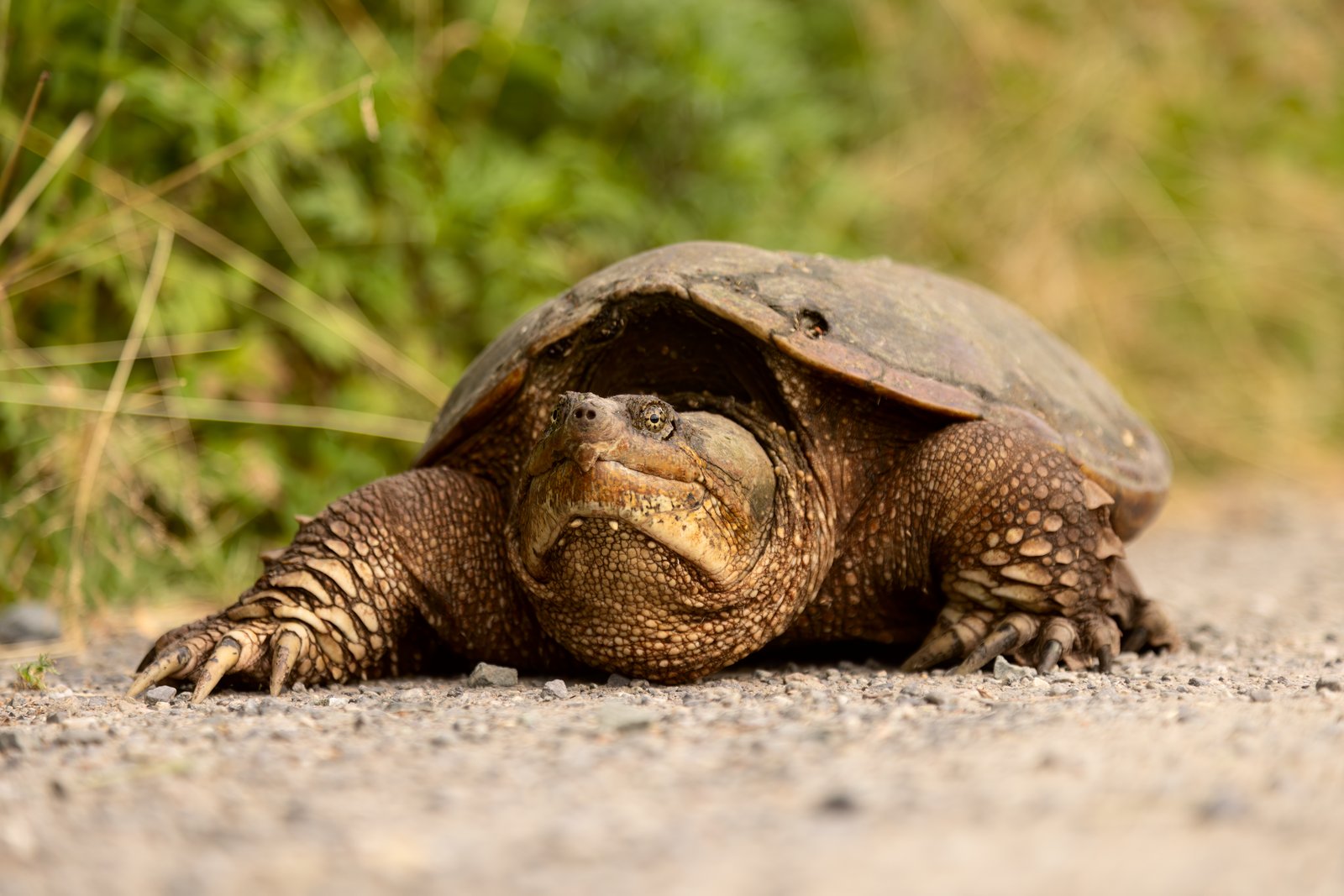
Common snapping turtle
Chelydra serpentina
Lives in every Marion pond, slough, and backwater. A heavy-bodied turtle with a serrated tail and powerful jaws; harmless in the water but strikes hard when handled out of it.
Status: Secure.
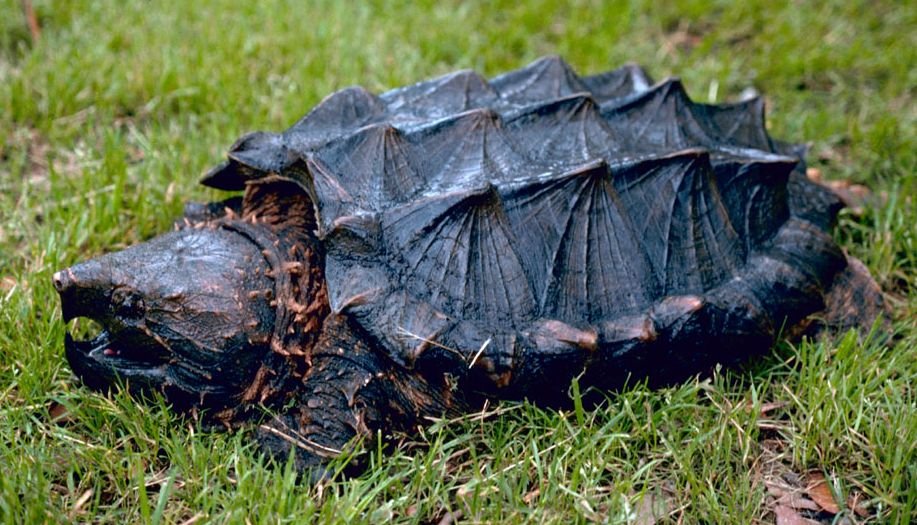
Alligator snapping turtle
Macrochelys temminckii
North America's largest freshwater turtle, with three sharp keels along the carapace and a worm-like lure on the tongue used to attract fish. Tennessee River occurrence is at the eastern edge of the range.
Status: TWRA Deemed in Need of Management; range-edge.
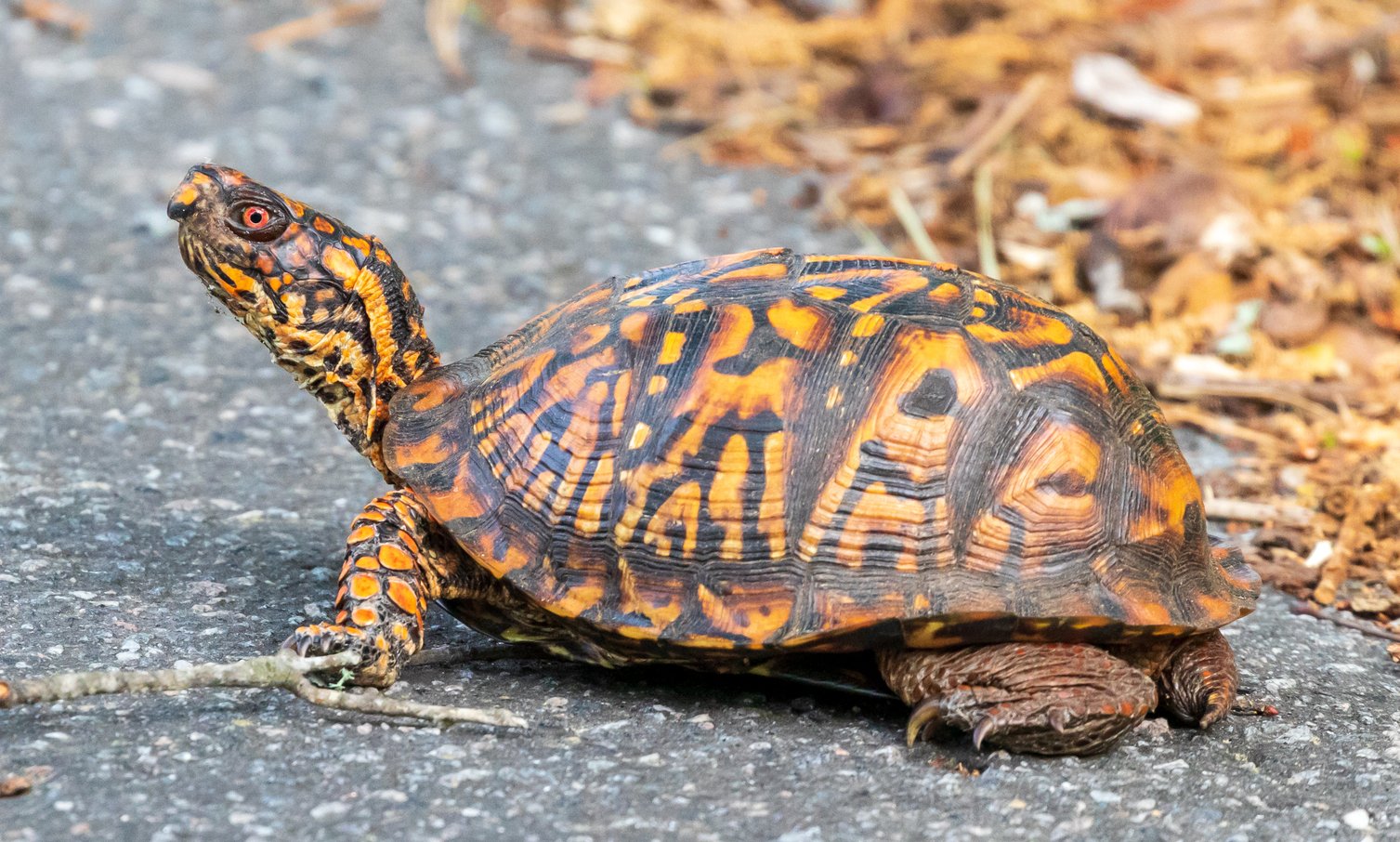
Eastern box turtle
Terrapene carolina
Tennessee's state reptile and the turtle most often encountered in Marion woods. A hinged lower shell lets the animal close itself completely into a box when threatened. Long-lived (forty years typical, a hundred documented), with a strong homing instinct and a small home range; moving one usually condemns it.
Status: TWRA Species of Greatest Conservation Need; declining.
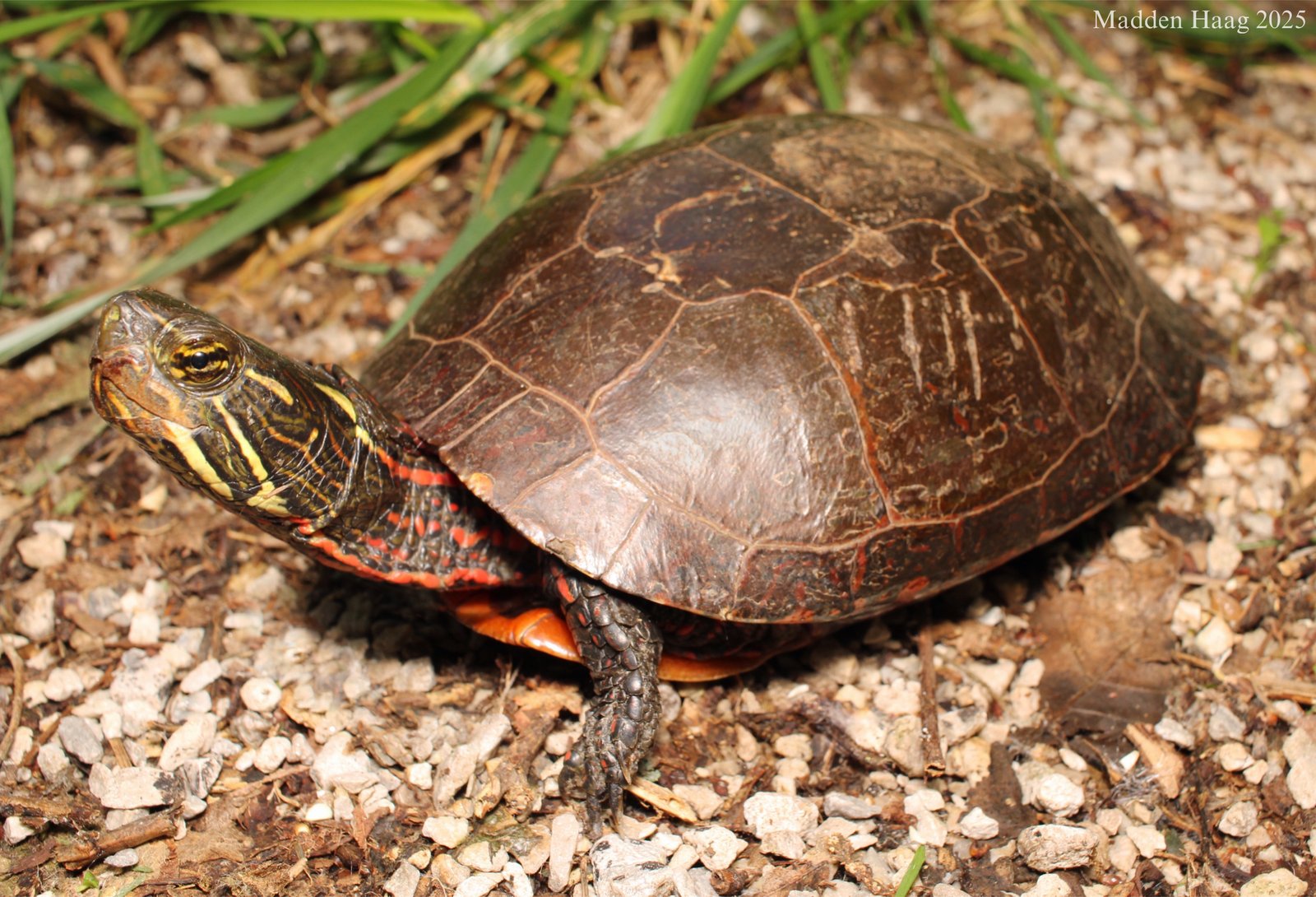
Eastern painted turtle
Chrysemys picta
A medium-sized basking turtle with red and yellow markings on a dark olive shell. Common on log jams and stumps in Marion ponds, slow streams, and Nickajack Lake backwaters.
Status: Secure.
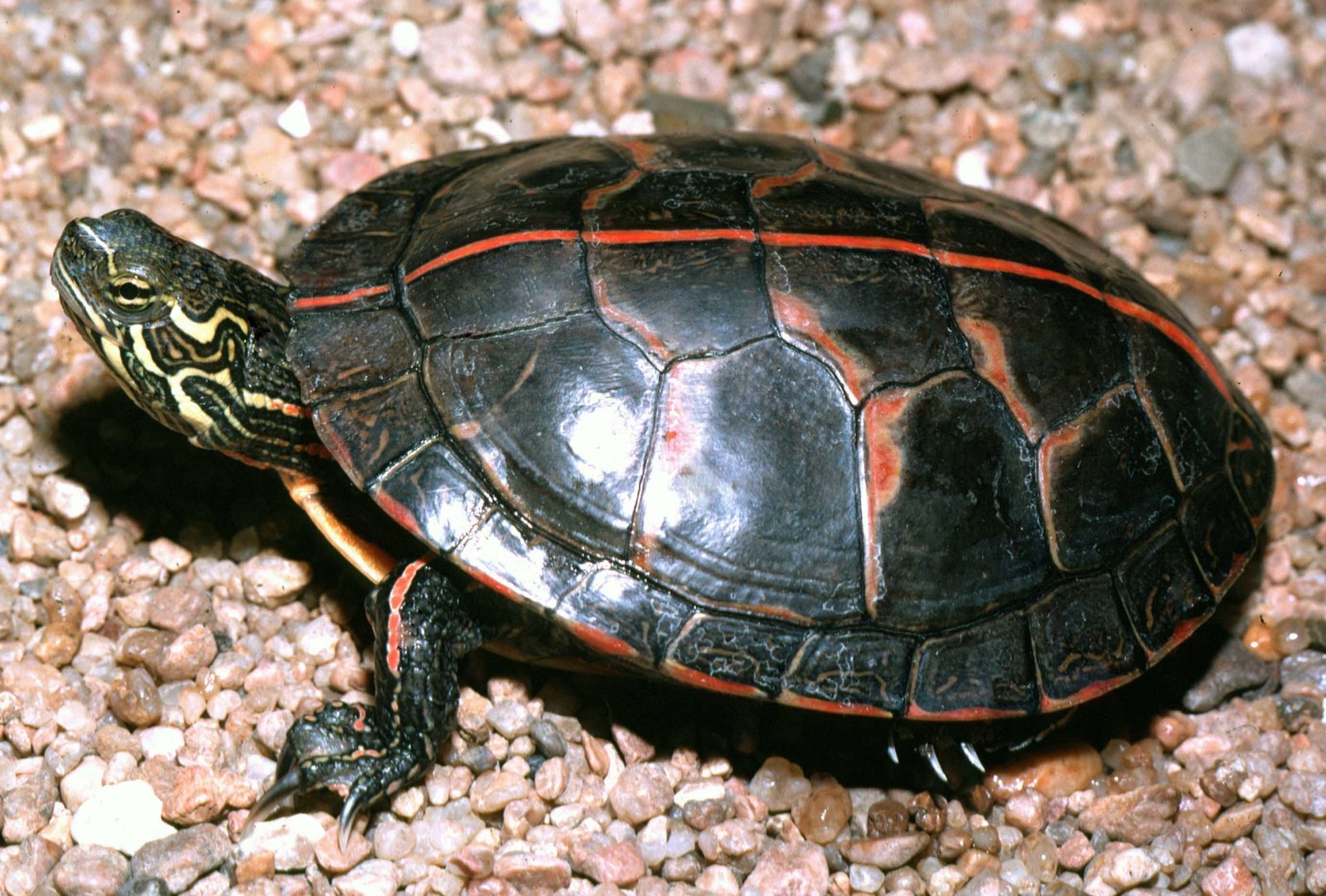
Southern painted turtle
Chrysemys dorsalis
Distinguished from the eastern painted turtle by a bright yellow stripe down the center of the shell. Tennessee range is concentrated in West Tennessee bottomlands; Marion records would be at the eastern edge.
Status: Secure but range-restricted.
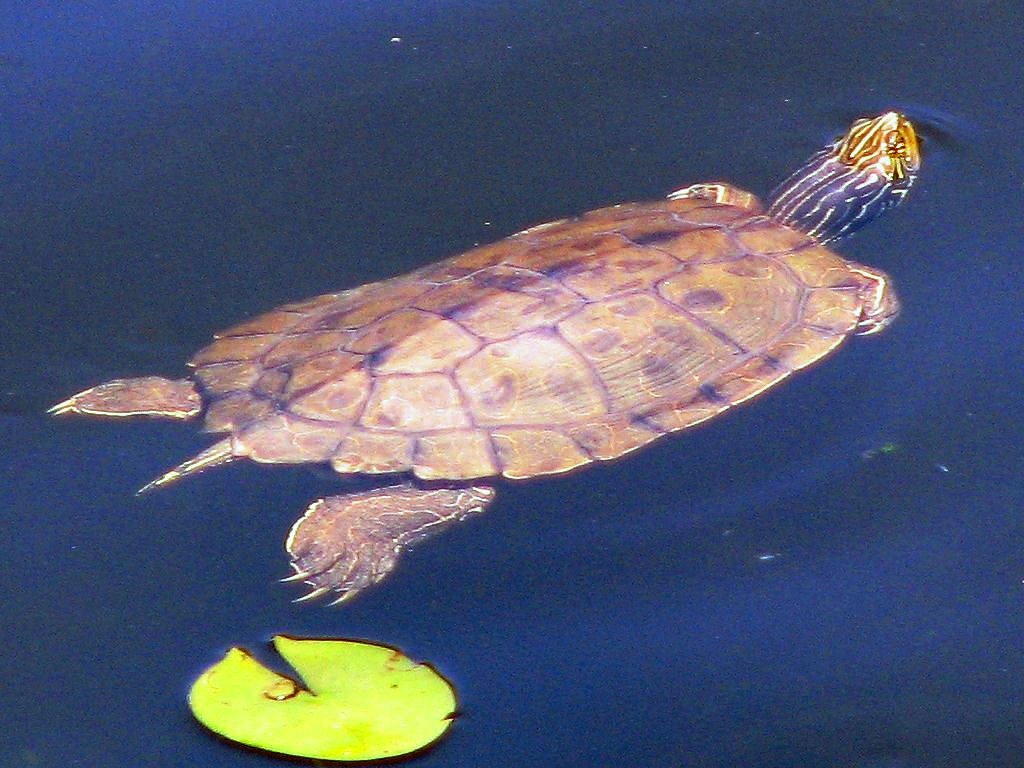
Northern map turtle
Graptemys geographica
Named for the contour-map pattern on its olive shell. Females are much larger than males and crush mussels and snails with broad jaws; common on the Tennessee River.
Status: Secure.
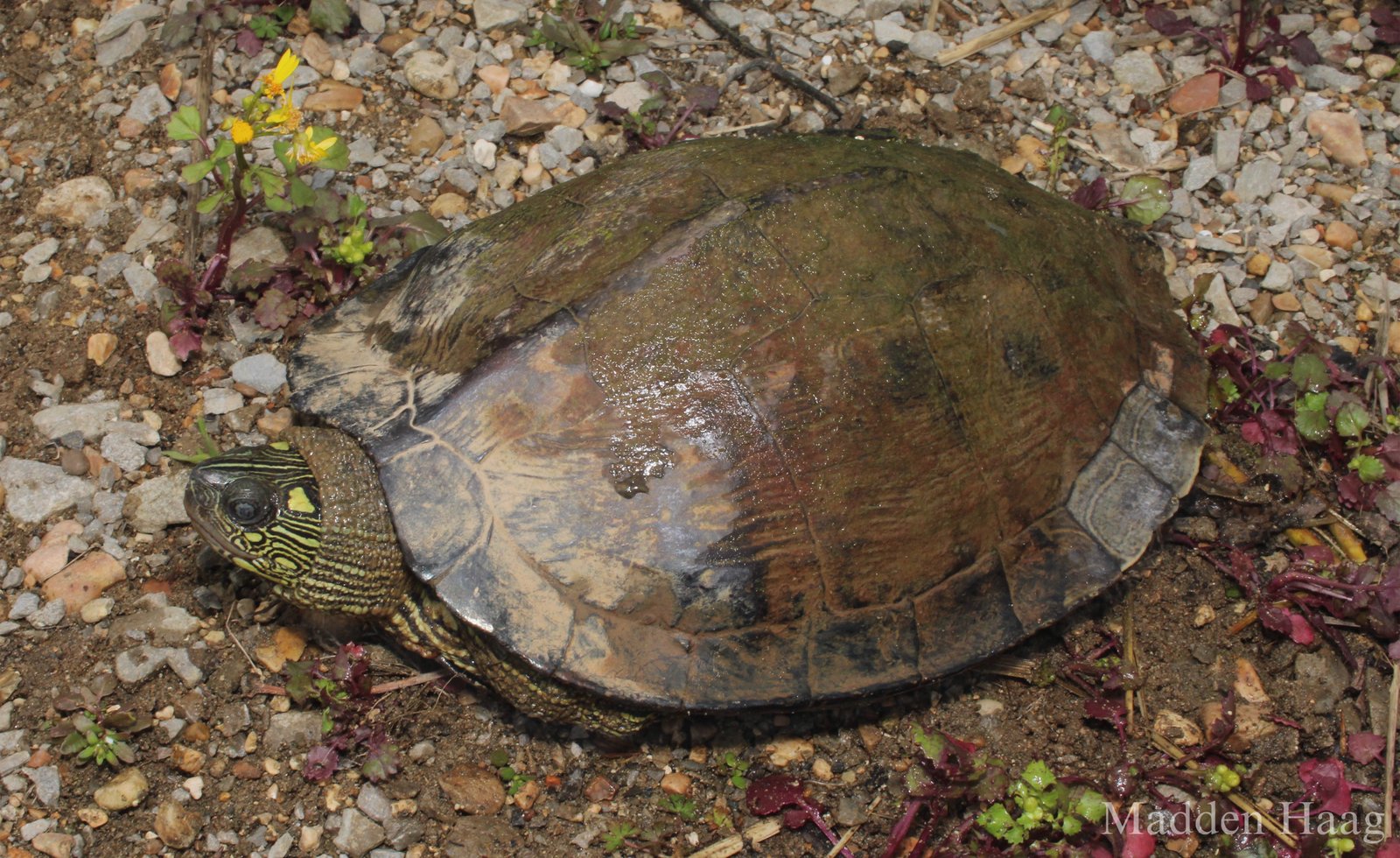
Ouachita map turtle
Graptemys ouachitensis
A close cousin of the northern map turtle distinguished by additional yellow spots on the head. Restricted to large rivers; expected on the Tennessee River within Marion.
Status: Secure but range-restricted.
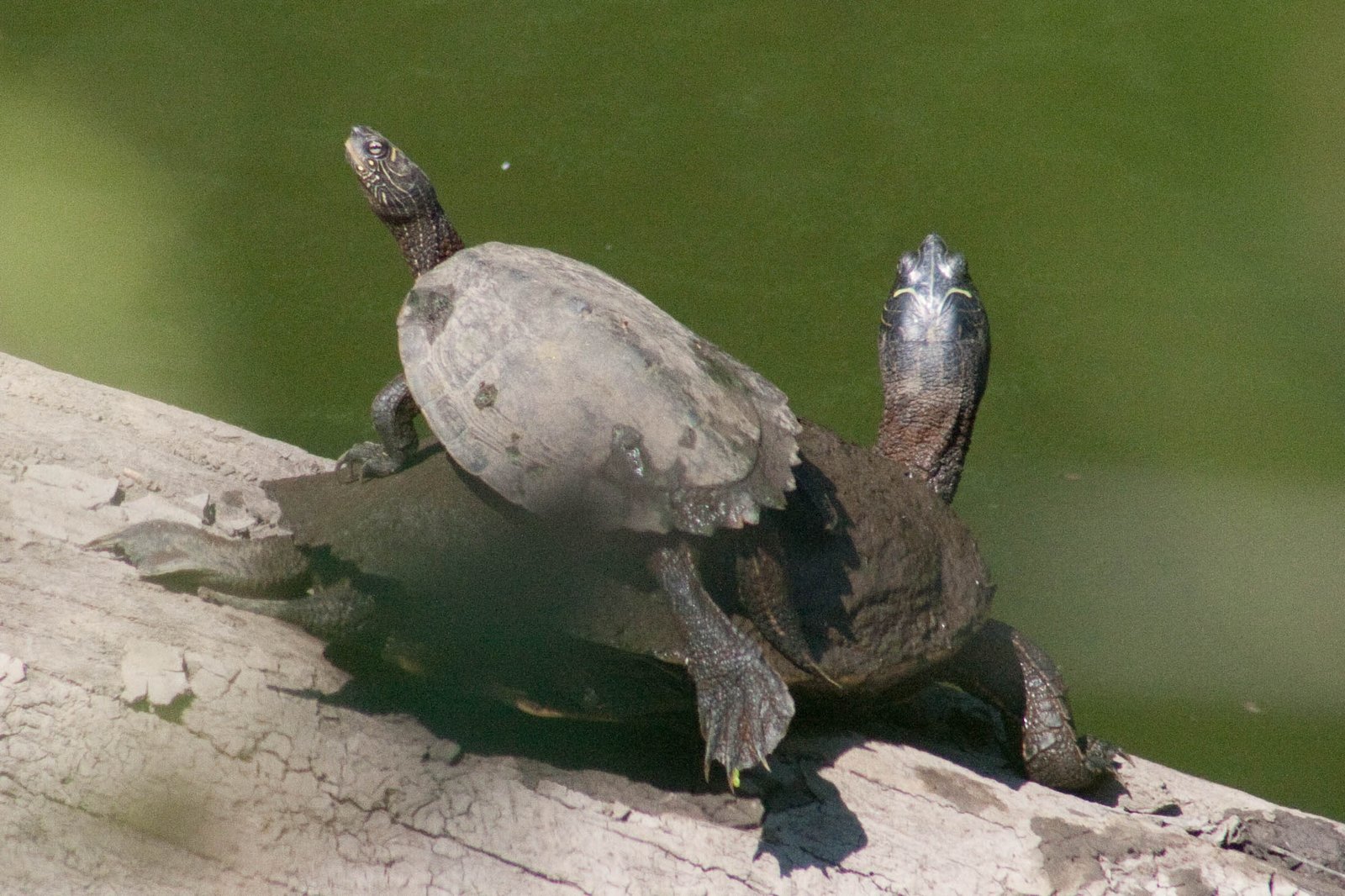
False map turtle
Graptemys pseudogeographica
Another large-river map turtle with a low keel down the center of the shell. Tennessee occurrence is patchy; Marion records would be at the eastern range edge.
Status: Secure but range-edge.
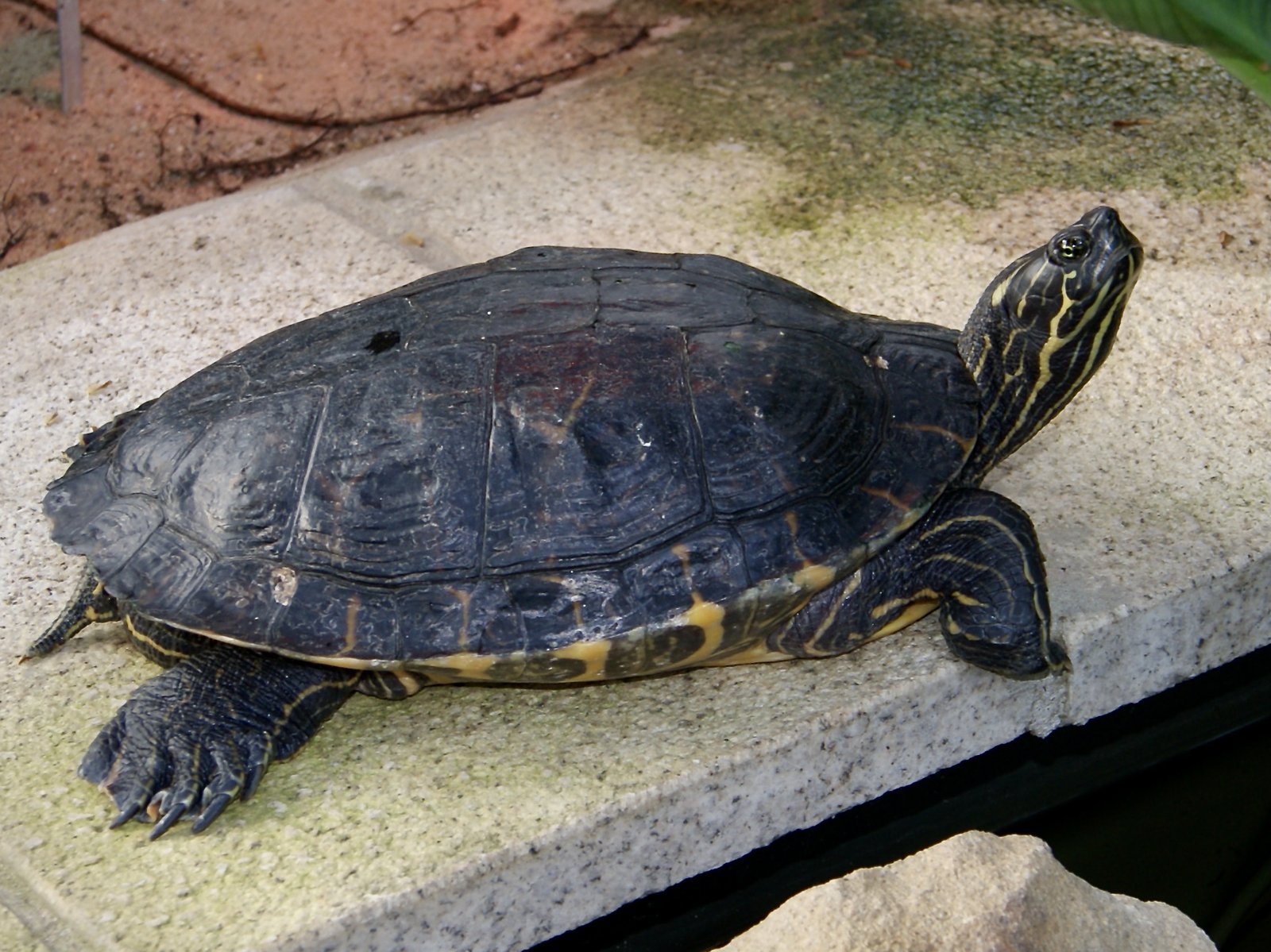
River cooter
Pseudemys concinna
Marion's largest stream turtle. Smooth, dark olive shell with concentric C-shaped yellow markings on the costal scutes; basks in the open on logs and rocks along the Sequatchie and Tennessee rivers.
Status: Secure.
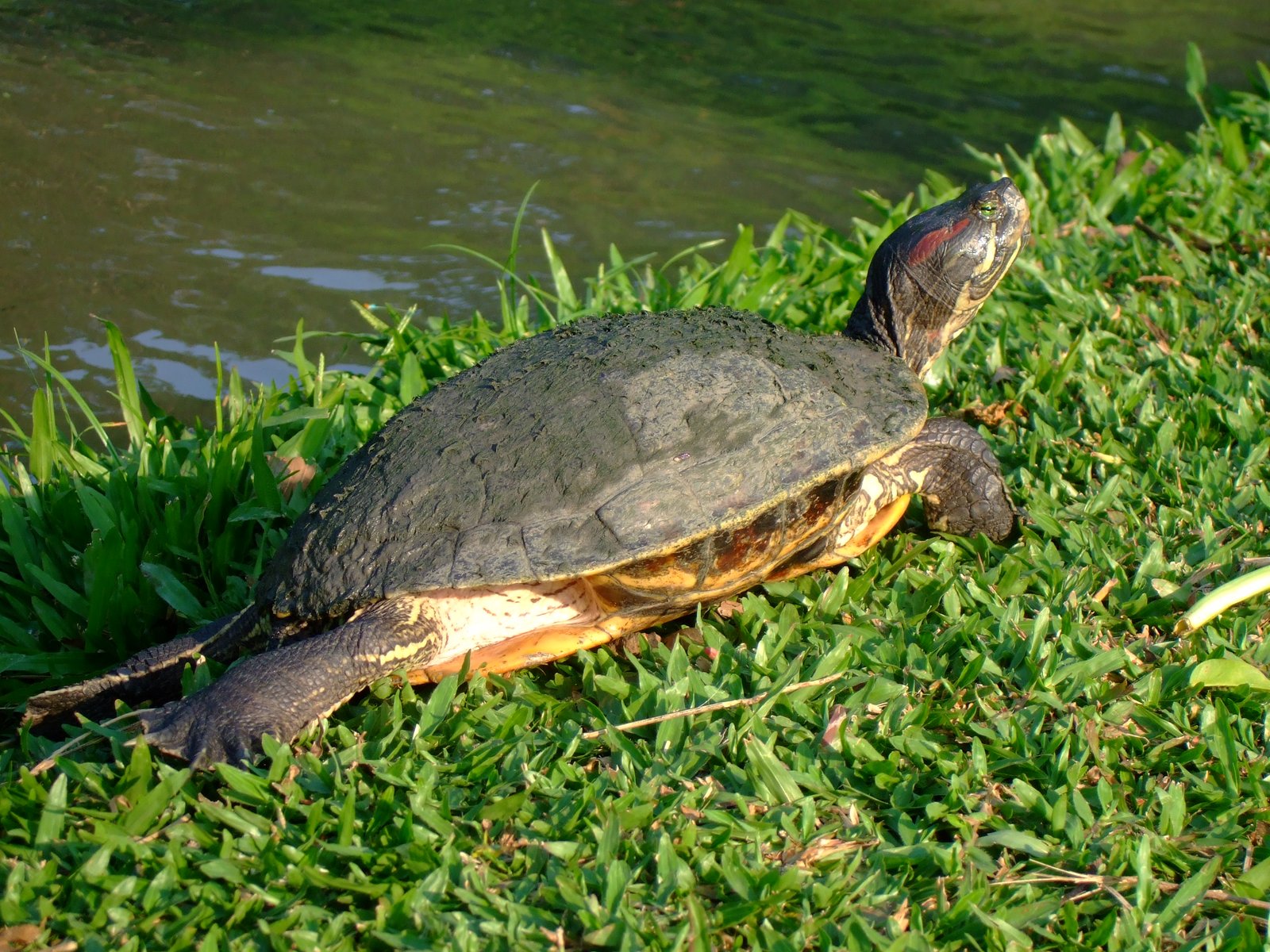
Pond slider
Trachemys scripta
Native at the species level, though the red-eared slider subspecies that dominates the pet trade has been released widely outside its native range. Common in farm ponds and slow water across the county.
Status: Secure.
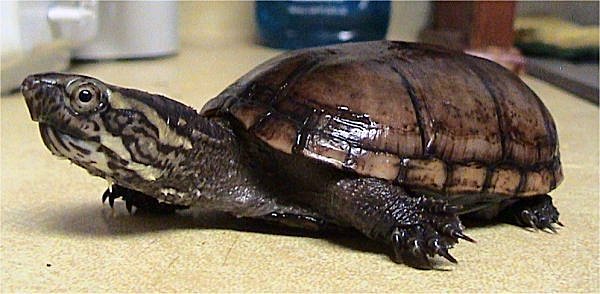
Eastern mud turtle
Kinosternon subrubrum
A small, dome-shelled turtle of shallow muddy water. Two transverse hinges in the lower shell let it close partially front and back. Spends warm spells walking overland between ponds.
Status: Secure.
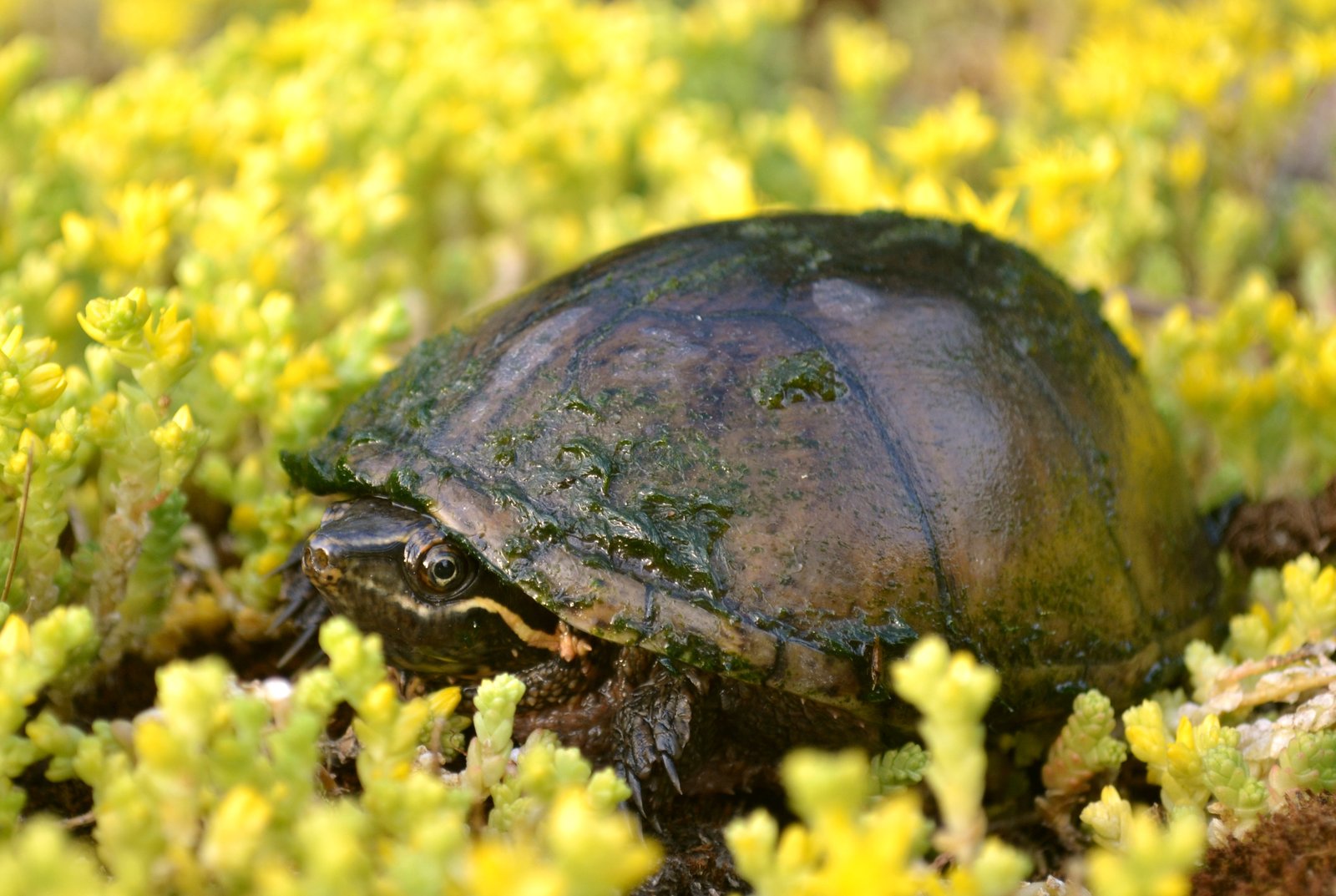
Eastern musk turtle
Sternotherus odoratus
Also called the “stinkpot” for the strong musk it releases when handled. A small, dark turtle that walks the bottoms of ponds and slow creeks rather than swimming much.
Status: Secure.
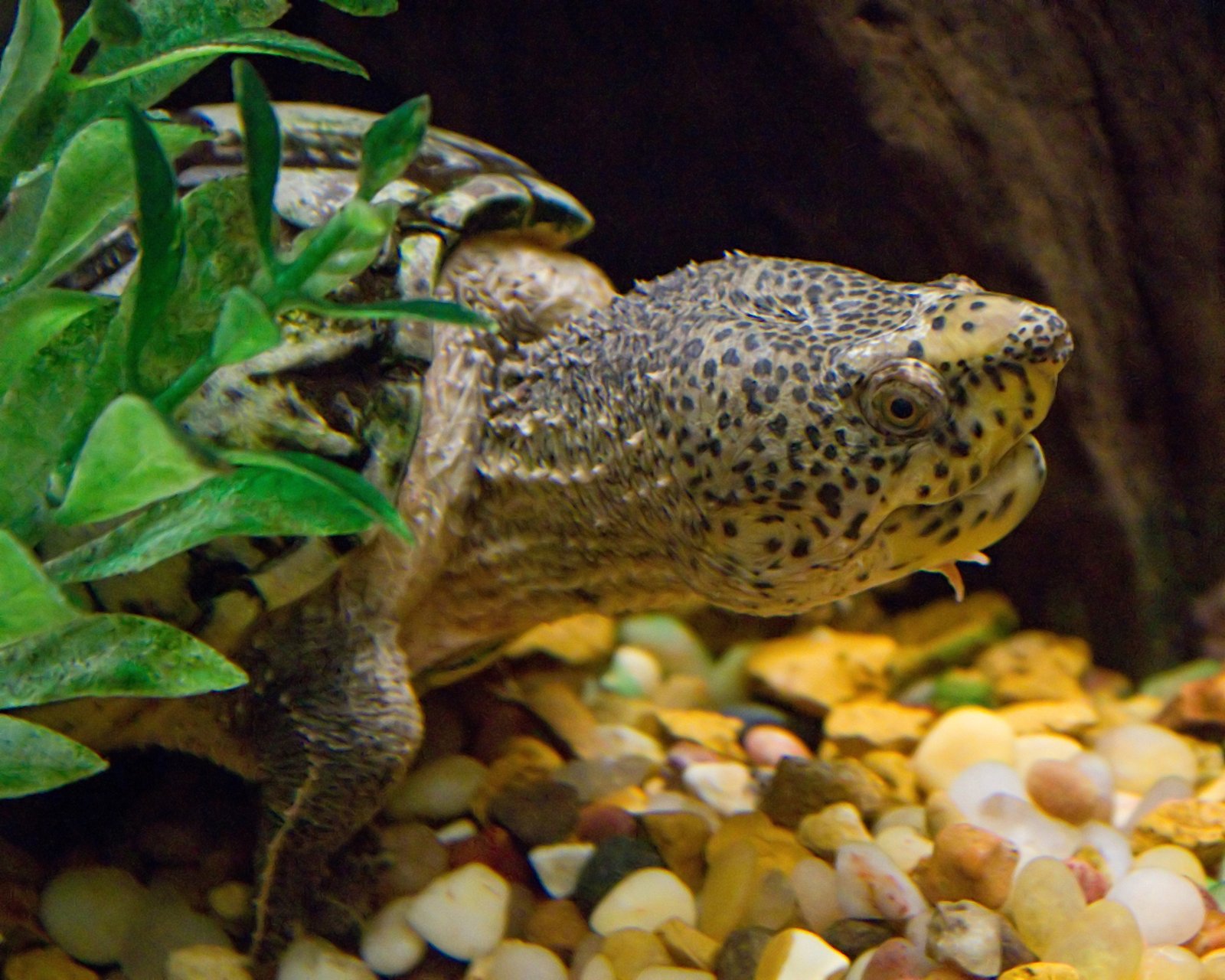
Striped-necked musk turtle
Sternotherus minor peltifer
A close cousin of the stinkpot found in clear, rocky Tennessee River drainage streams. Pale stripes on the neck and a more keeled shell distinguish it.
Status: Secure.
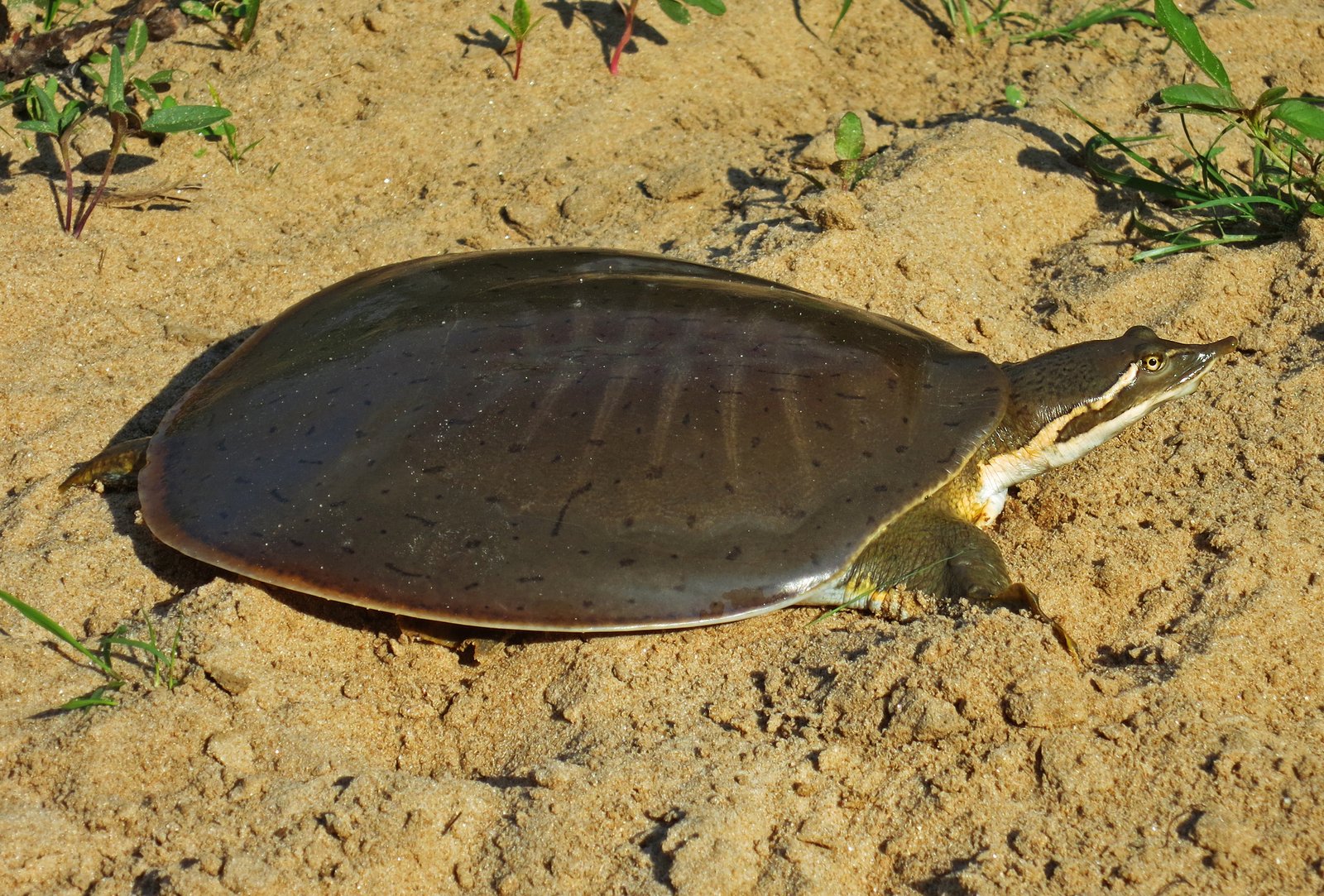
Smooth softshell
Apalone mutica
A flat, leathery-shelled turtle with a long snorkel-like snout. Buries itself in sand and gravel bars in the Tennessee River and breathes through the snout while submerged.
Status: Secure.
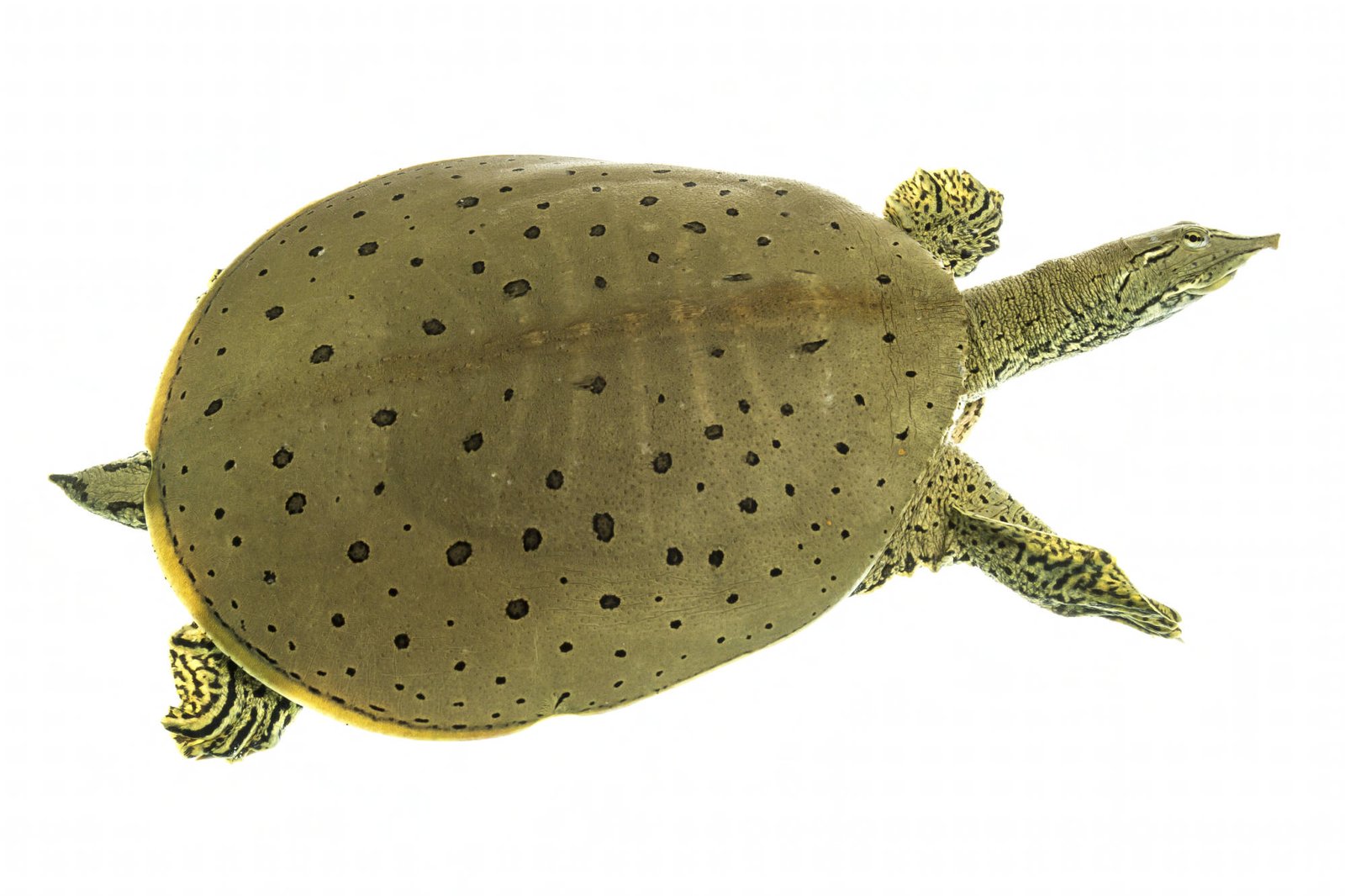
Spiny softshell
Apalone spinifera
Larger than the smooth softshell with small bumps along the front of the shell. Common in the Tennessee River and Nickajack Lake; very fast swimmers and biters when handled.
Status: Secure.
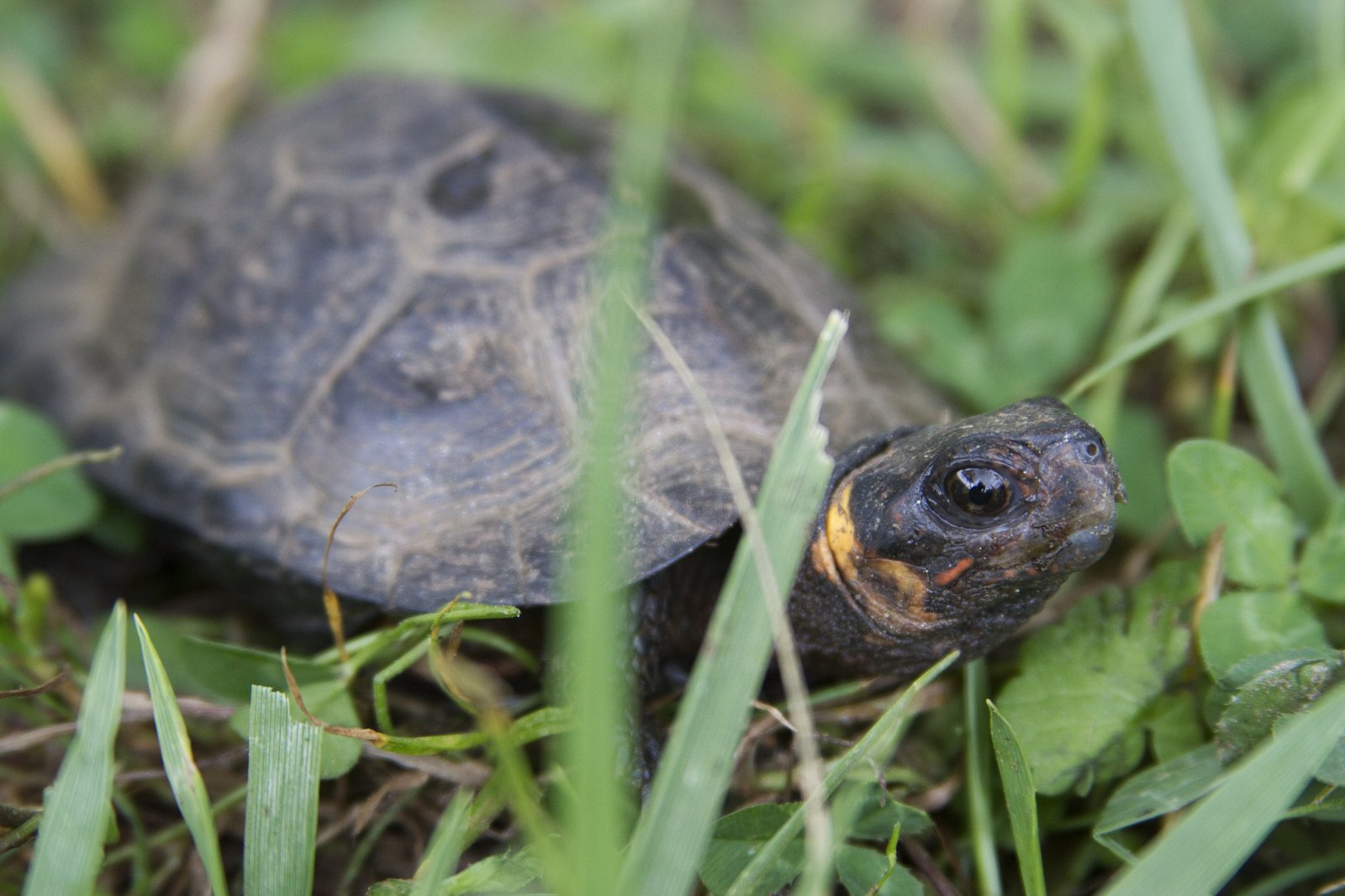
Bog turtle
Glyptemys muhlenbergii
North America's smallest turtle, with bright orange patches behind the eyes. Tennessee range is at the western edge in the high mountains east of Marion; any Marion record would be exceptional.
Status: Federally threatened; rare or accidental in Marion.
Lizards and skinks
Lizard diversity is modest compared with the Southeast's coastal-plain reach. Marion's nine species are dominated by the Plestiodon skinks; the eastern fence lizard adds a sandstone-and-stone-wall specialist, and the slender glass lizard is the legless oddity readers most often mistake for a snake.
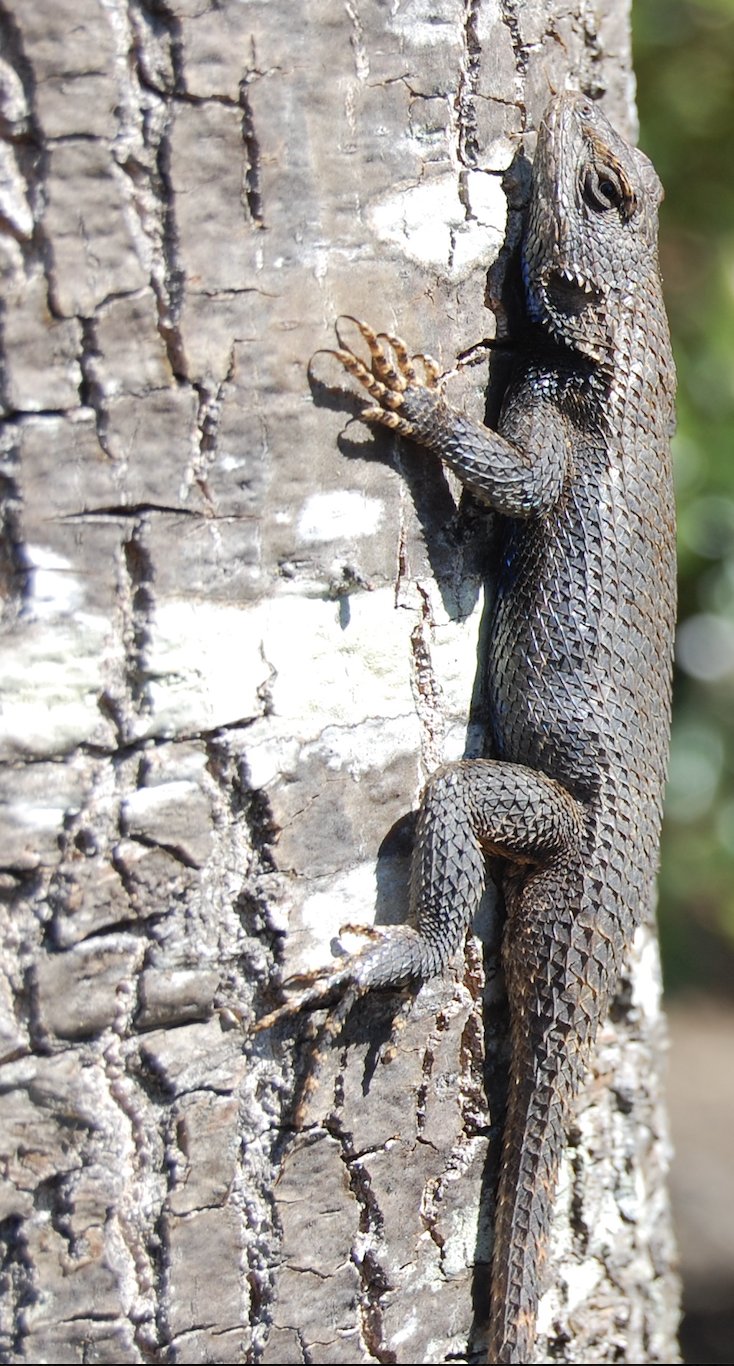
Eastern fence lizard
Sceloporus undulatus
A spiny gray-brown lizard often seen sunning on sandstone outcrops, old stone walls, and split-rail fences. Males flash a bright blue throat and belly during territorial displays.
Status: Secure.
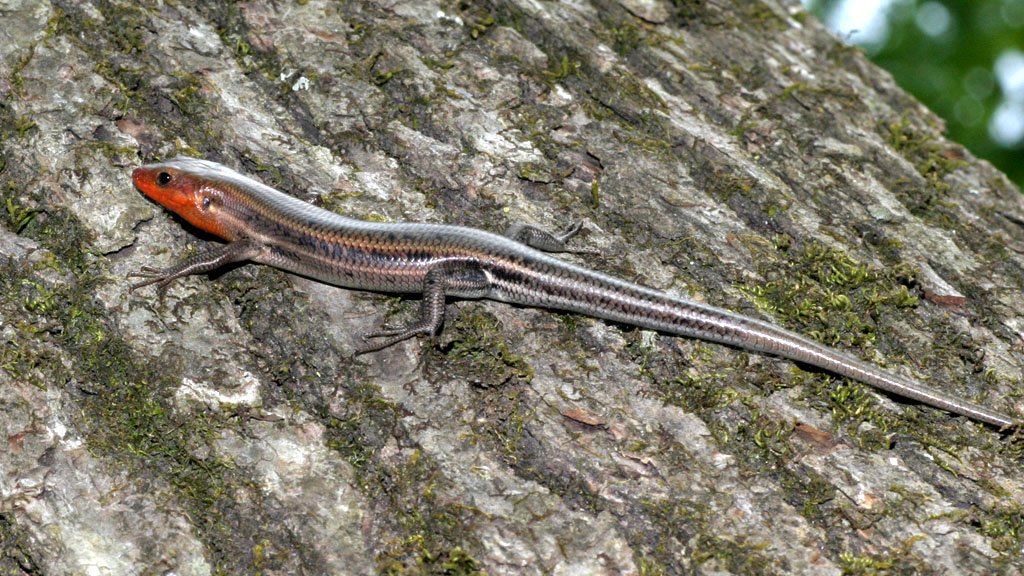
Common five-lined skink
Plestiodon fasciatus
Marion's most commonly seen lizard. Juveniles are dark with five yellow stripes and a brilliant blue tail; adult males develop reddish heads and lose the stripes during the breeding season. Drops the tail when grabbed and grows a new one.
Status: Secure.
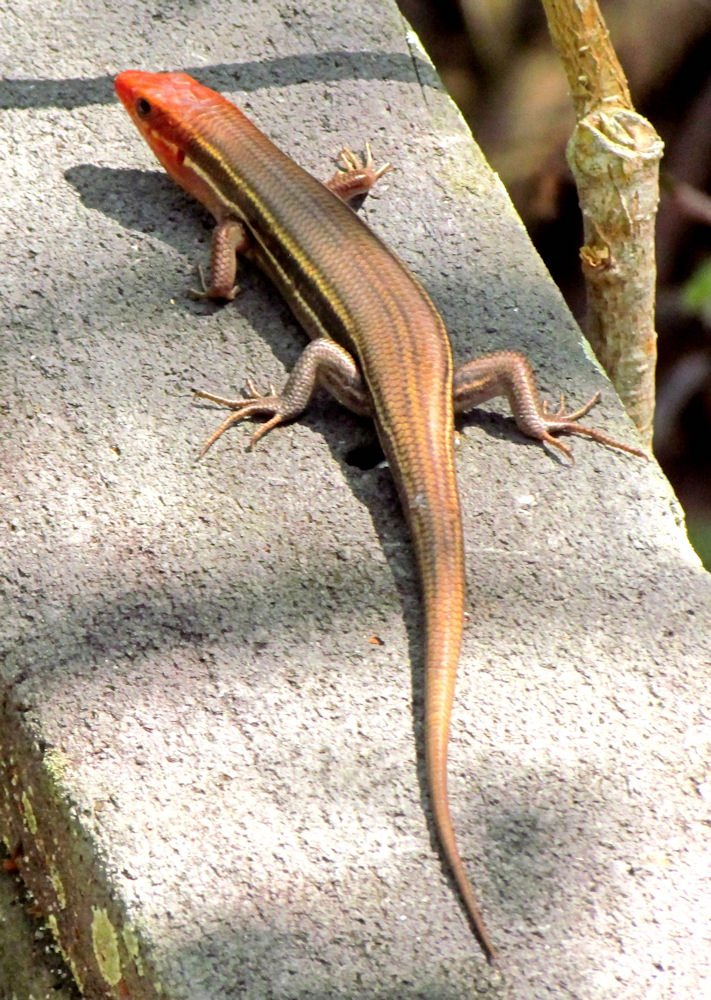
Southeastern five-lined skink
Plestiodon inexpectatus
Nearly identical to the common five-lined skink at a glance; reliably distinguished only by counting the rows of scales under the tail. Often shares logs and stumps with its cousin.
Status: Secure.
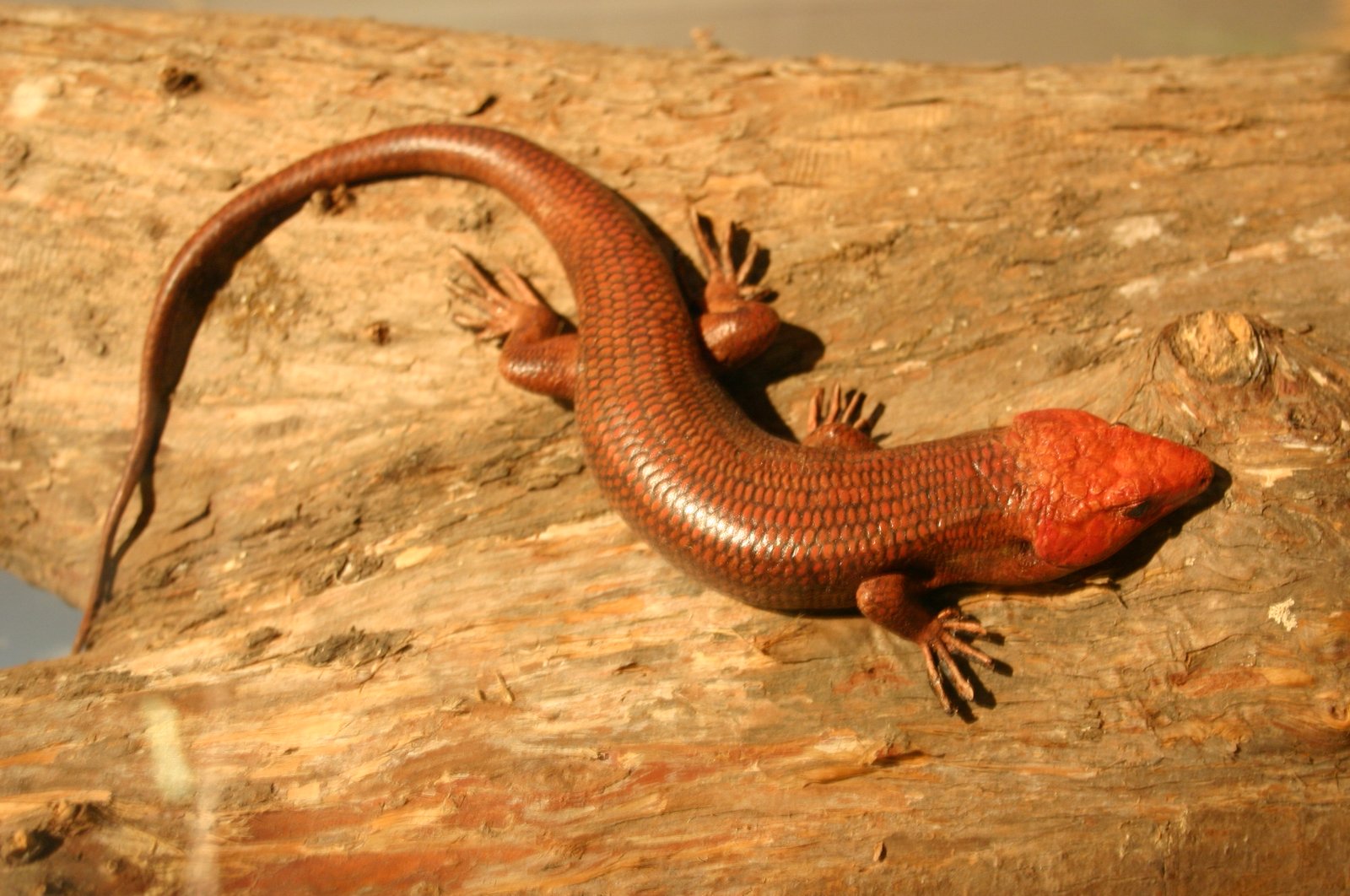
Broad-headed skink
Plestiodon laticeps
The largest skink in the southeastern United States, with breeding males developing wide, swollen, red-orange heads. Lives in the canopy of mature hardwoods and rarely descends to the ground.
Status: Secure.
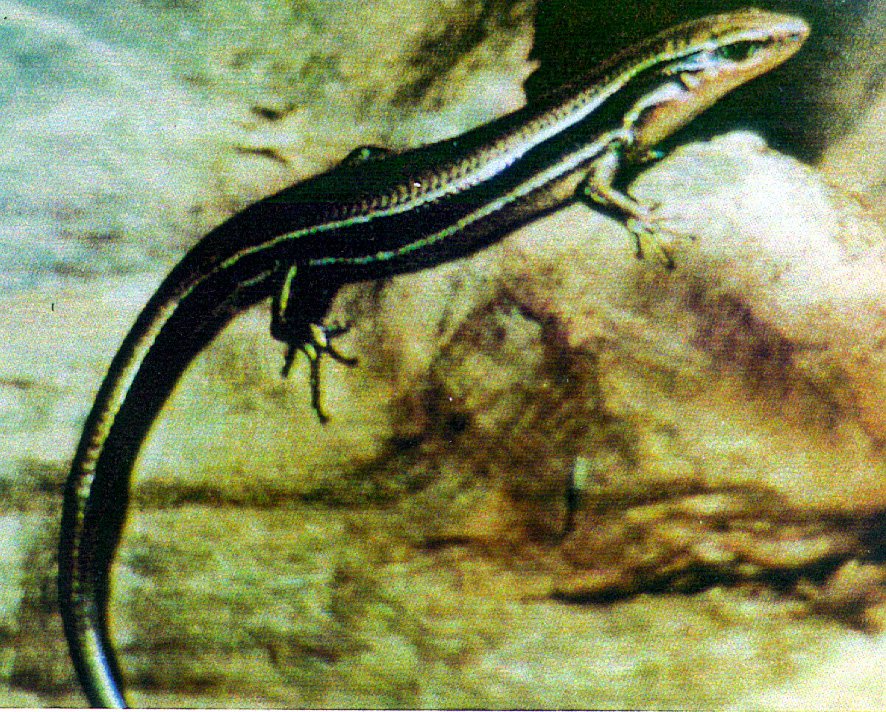
Coal skink
Plestiodon anthracinus
A small, secretive skink of seeps, springs, and streamside debris. Two pale stripes on a brown or gray body; lacks the bright blue juvenile tail of the other Plestiodon skinks.
Status: Secure but secretive.
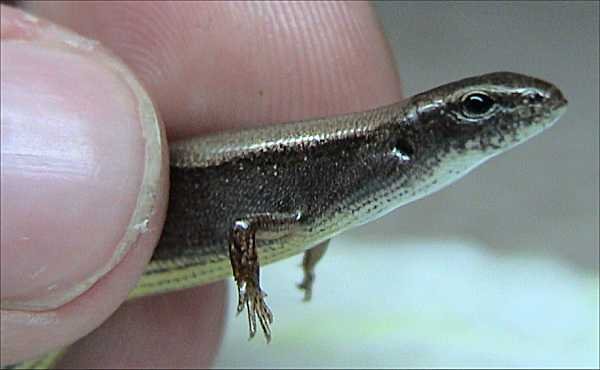
Little brown skink
Scincella lateralis
Sometimes called the ground skink. A small, smooth, copper-brown lizard that slips through forest leaf litter rather than climbing. Often seen as a brief flash of motion on a wooded trail.
Status: Secure.
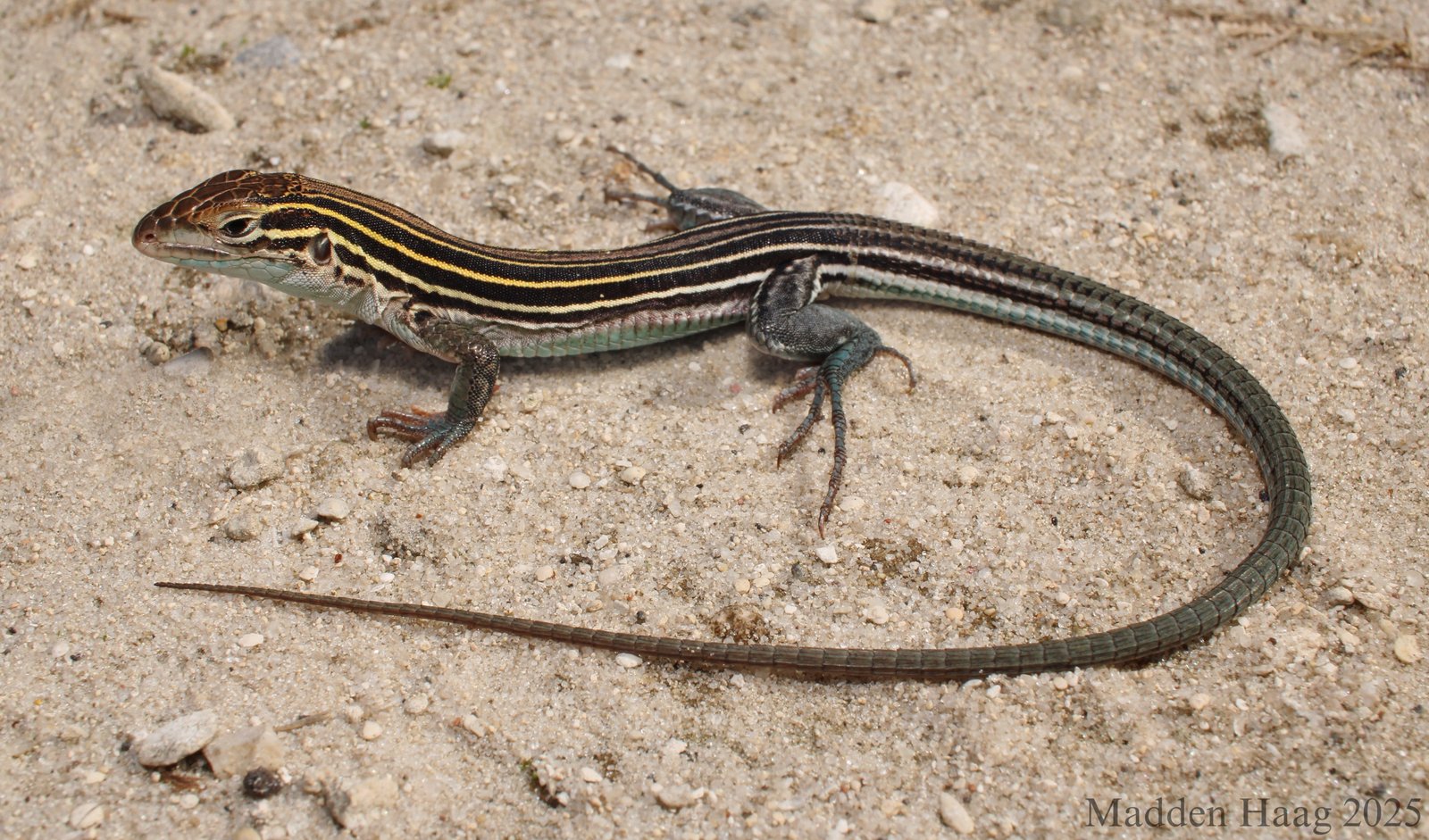
Six-lined racerunner
Aspidoscelis sexlineatus
A long-legged, fast-moving lizard of dry open ground, with six pale stripes on a dark body. Active in full sun on the hottest days; favors barrens, road cuts, and old quarry slopes.
Status: Secure.
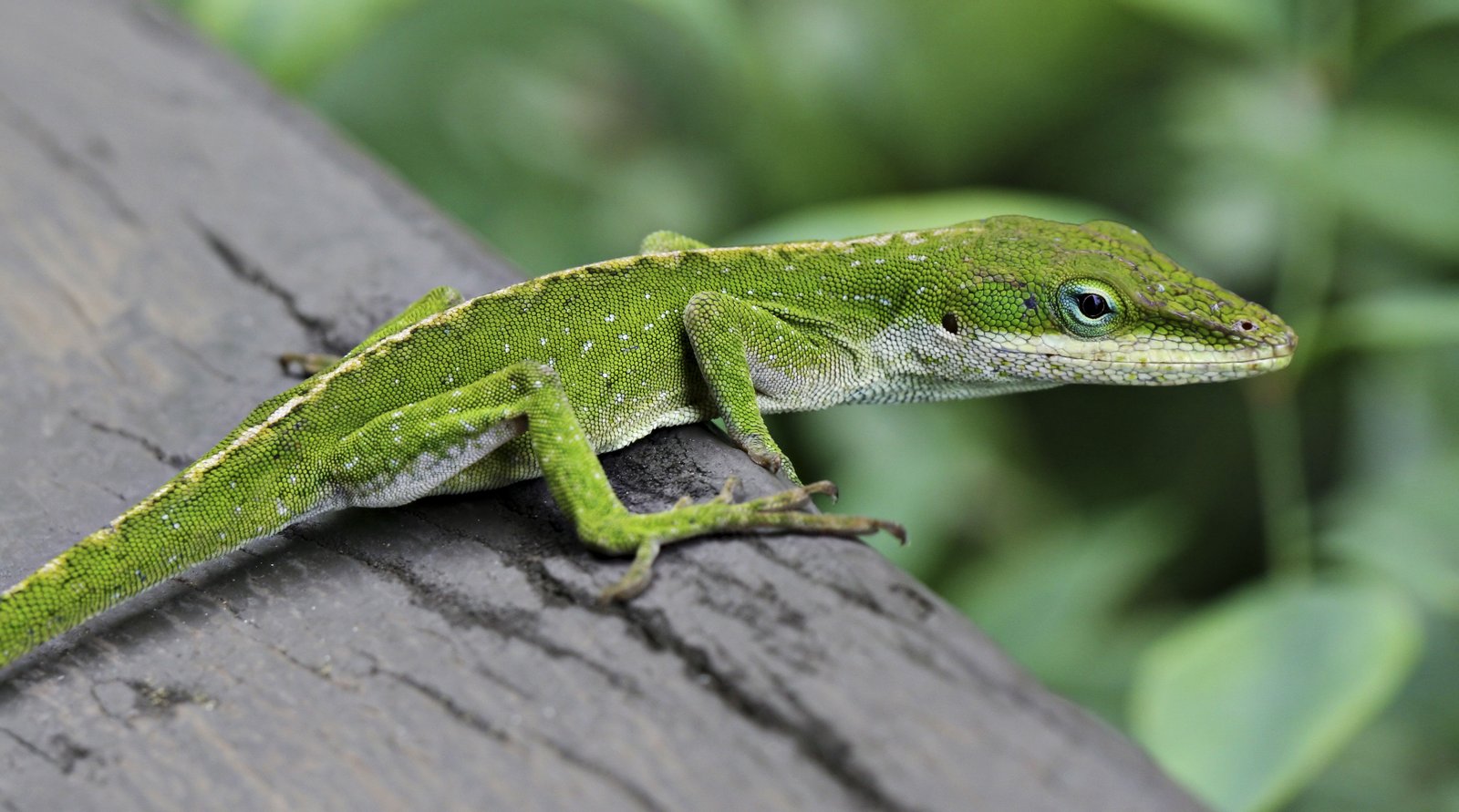
Green anole
Anolis carolinensis
A slim arboreal lizard that can change between bright green and brown depending on temperature and mood. Males extend a pink throat fan during territorial display. Marion is near the northern edge of the range.
Status: Secure but range-edge.
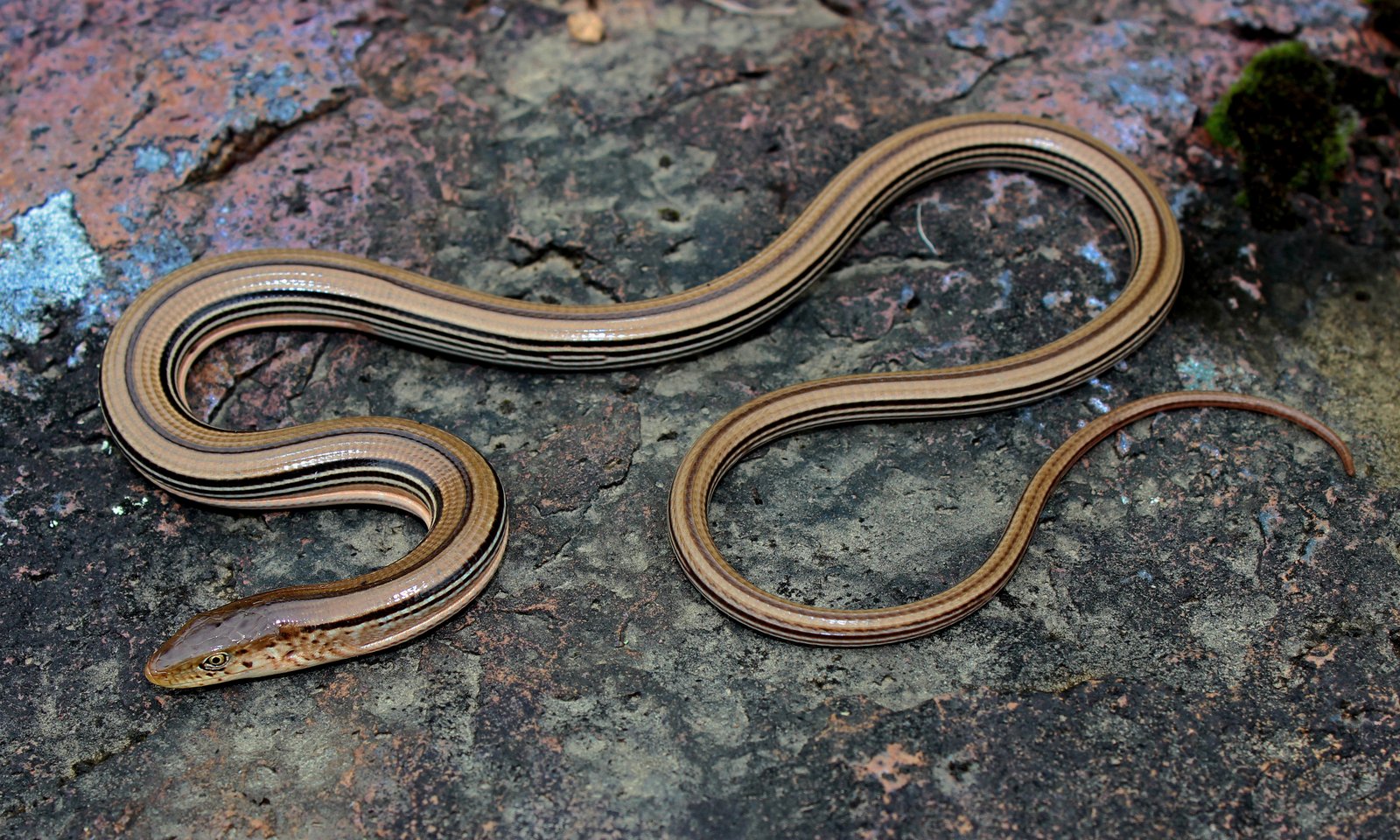
Slender glass lizard
Ophisaurus attenuatus
A legless lizard often mistaken for a snake; the visible ear opening and movable eyelids are the field marks. The tail breaks off easily into multiple pieces, the trait that gave the group its name.
Status: TWRA Deemed in Need of Management.
Amphibians : salamanders of the Cumberland
The southern Cumberland Plateau is a global hotspot for salamander diversity. Cool, wet, rockhouse-rich sandstone and the karst waters of the Sequatchie Valley combine to support a salamander fauna that rivals anywhere on Earth outside the Appalachian crest itself. Marion's 29 salamander species split into three ecological groups: the giant aquatic salamanders and cave-obligate species; the lungless plethodontids that dominate the leaf-litter and rockhouse habitats; and the mole salamanders and newts that depend on vernal-pool breeding.
ID gotcha: hellbender vs. mudpuppy
The mudpuppy (Necturus maculosus) is a smaller aquatic salamander that shares rivers with the hellbender and is often mistaken for a juvenile hellbender. Mudpuppies keep bright red external gills their entire lives; hellbenders lose theirs as larvae. If the animal in your hand has feathery red gills, it is a mudpuppy. If it is gray-brown with small gill slits and reaches twelve inches or more, it is a hellbender.
Hellbender, mudpuppy, and cave salamanders
Three salamanders sit at the top of the county's conservation profile: the eastern hellbender of cold rocky streams, the Tennessee cave salamander endemic to the Cumberland and interior Low Plateau caves, and the mudpuppy that shares the hellbender's rivers and is often mistaken for it. The Berry cave salamander is included as a range-edge possibility. The hellbender, Tennessee cave salamander, and green salamander each have their own in-depth profile on the endemic and notable species page.
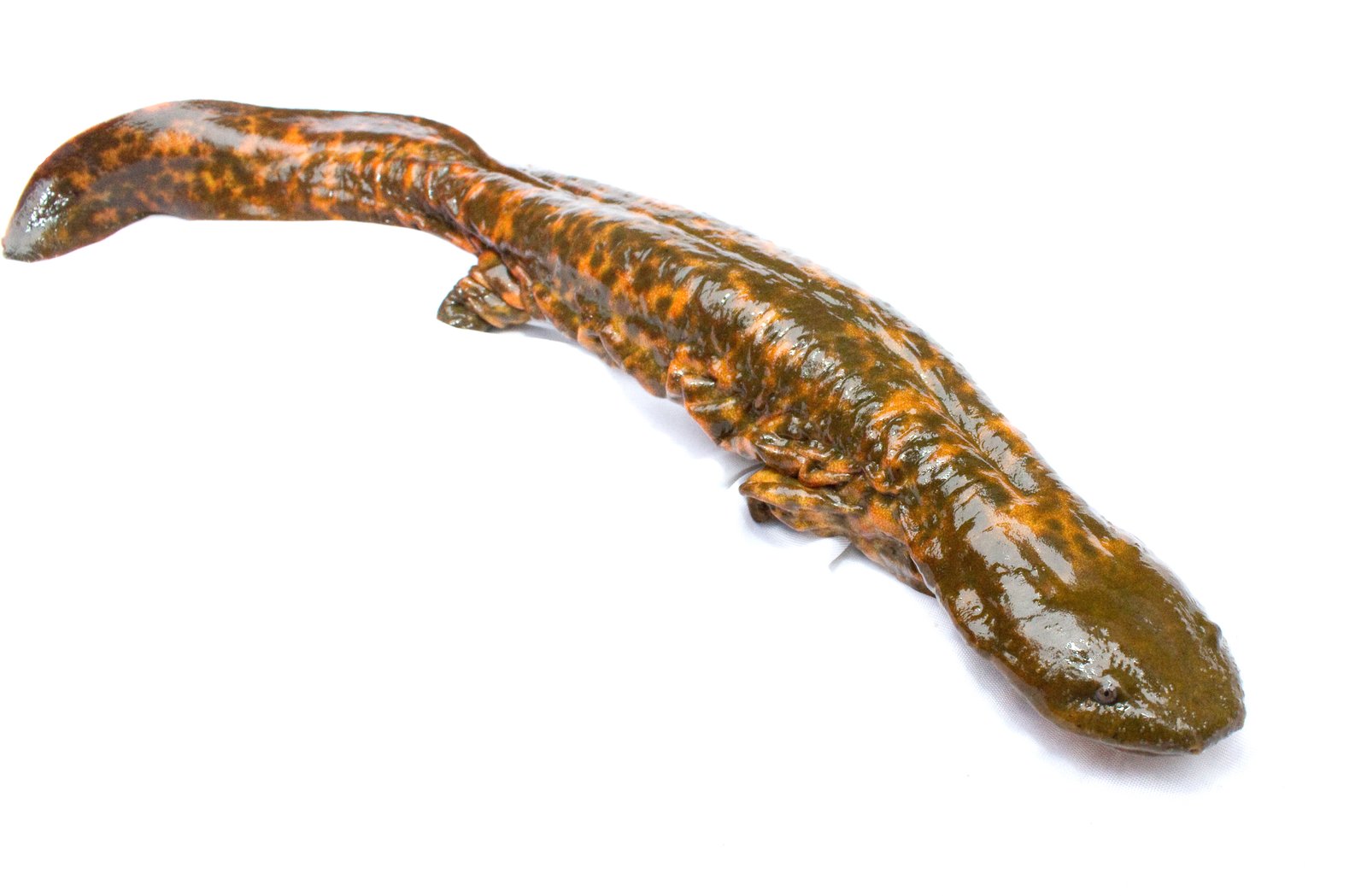
Eastern hellbender
Cryptobranchus alleganiensis
North America's largest salamander, reaching two feet and living up to thirty years. Wrinkled gray-brown skin, flat head, lidless eyes, and a finned tail; requires cold, clear, well-oxygenated streams with large flat shelter rocks. The Sequatchie River and tributaries are within historical range. The U.S. Fish and Wildlife Service proposed listing the species as endangered in December 2024; the final rule missed its December 2025 deadline, and the Center for Biological Diversity sued in February 2026 to compel listing.
Status: TWRA Species of Greatest Conservation Need; federally proposed endangered.
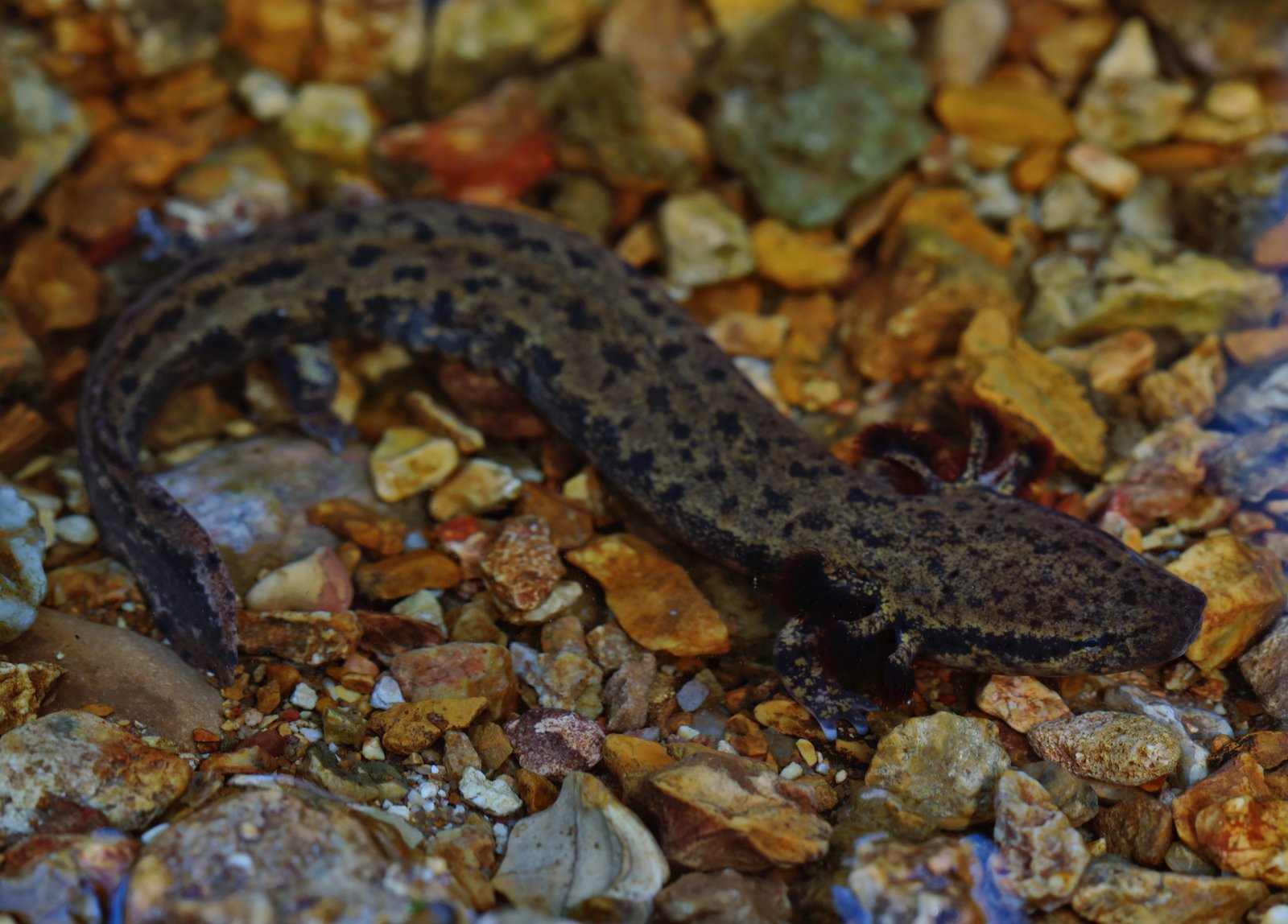
Common mudpuppy
Necturus maculosus
A fully aquatic salamander that keeps bright red external gills its entire life. Reaches a foot or more and is sometimes mistaken for a juvenile hellbender; the gills are the giveaway.
Status: Secure but uncommon.
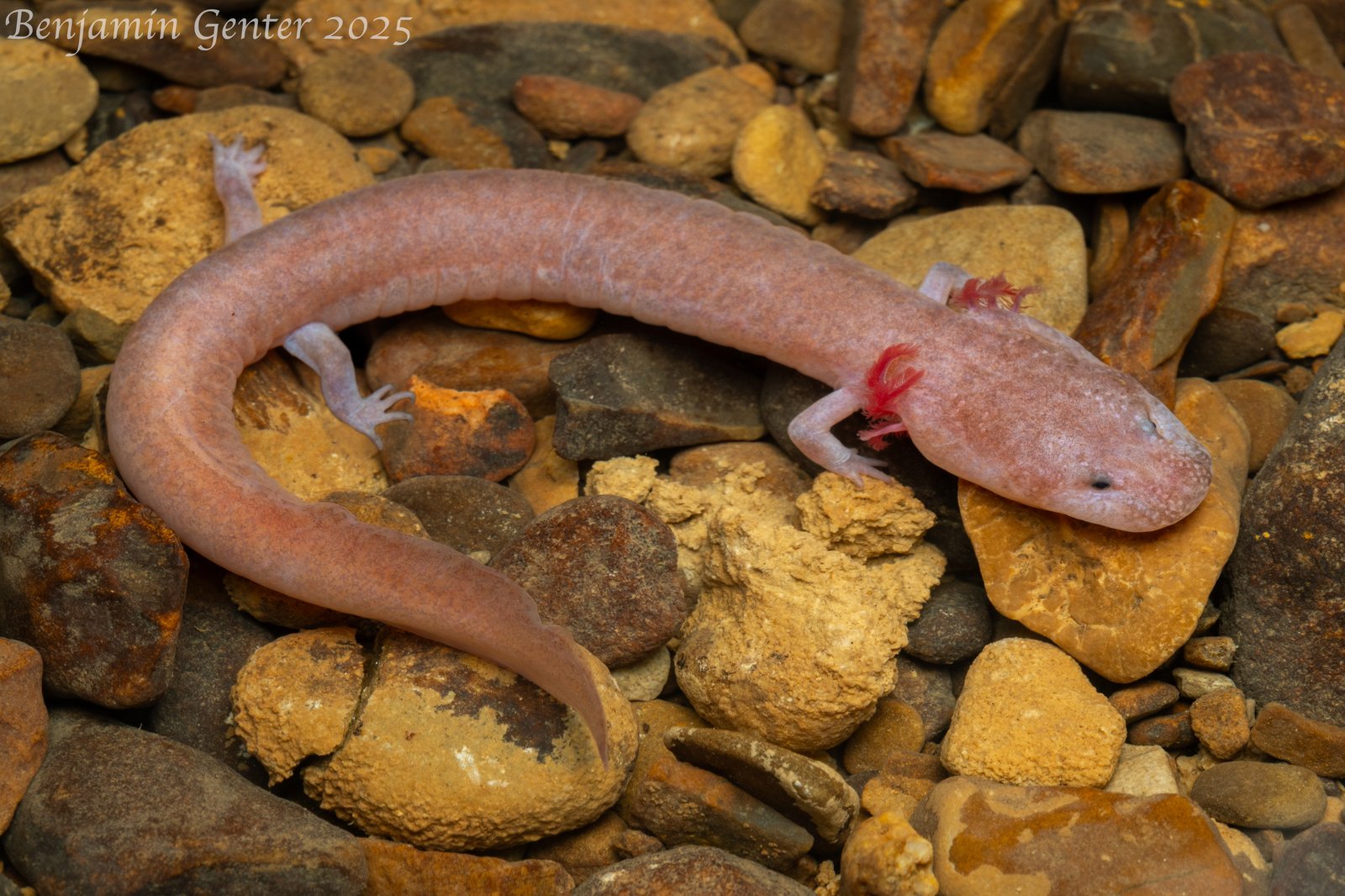
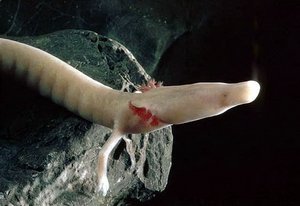
Tennessee cave salamander
Gyrinophilus palleucus
Tennessee's official state amphibian, designated in 1995. A cave-obligate species found only in limestone caves of the Cumberland and interior Low Plateau regions of Tennessee, Alabama, and Georgia. Marion's karst is prime habitat. Reduced eyes, flattened head, pale pink-white skin with scattered dark flecks, and retains larval gills throughout life.
Status: TWRA Species of Greatest Conservation Need; G2 globally imperiled; Tennessee state amphibian.
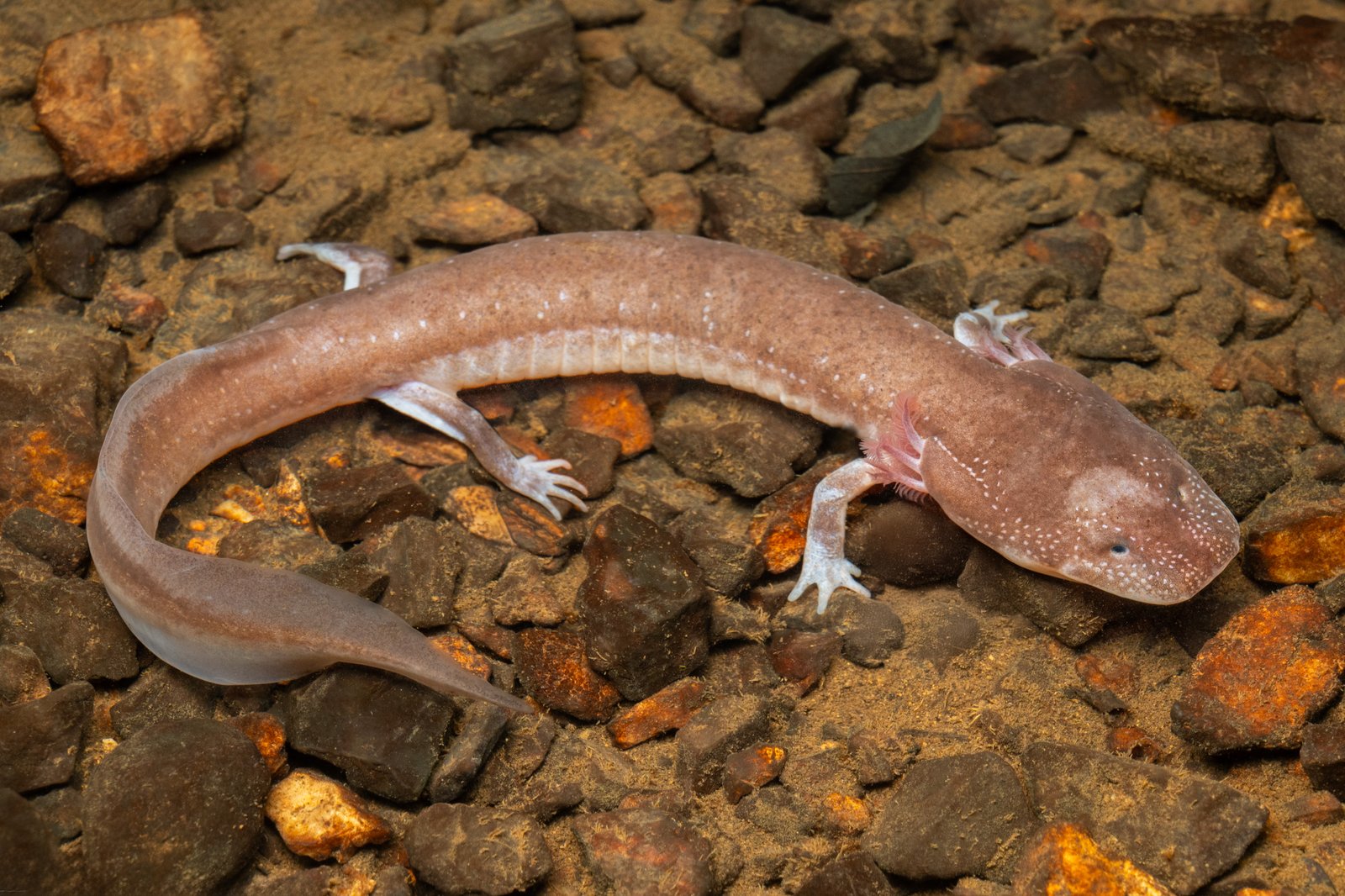
Berry cave salamander
Gyrinophilus gulolineatus
A close cousin of the Tennessee cave salamander with an even narrower range, primarily Knox, Anderson, and Roane counties. Marion is at the southern edge of plausible occurrence.
Status: TWRA Species of Greatest Conservation Need; G1 critically imperiled.
Lungless salamanders (Plethodontidae)
The lungless salamanders breathe entirely through their skin and the lining of their mouths, which ties them to permanently moist habitats: rockhouse seeps, cold-stream banks, leaf packs in shaded ravines. The plateau's sandstone cliff faces and karst seeps support a deeper plethodontid fauna than the surrounding lowlands. Two of the county's standout species are in this group: the green salamander, a sandstone-crevice specialist, and the long-tailed and cave salamanders that climb damp cave walls.
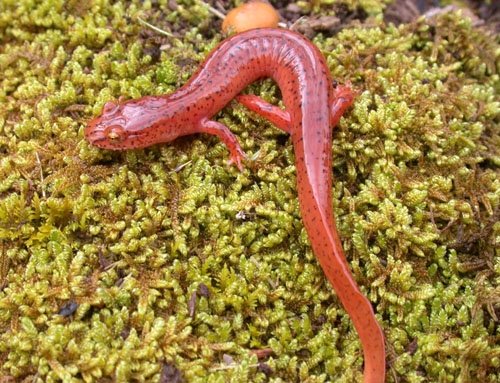
Spring salamander
Gyrinophilus porphyriticus
A large, salmon-pink to reddish-brown salamander of cold seeps, springs, and cave entrances. Reaches eight inches and is the most aggressive predator among Marion's lungless salamanders.
Status: Secure.
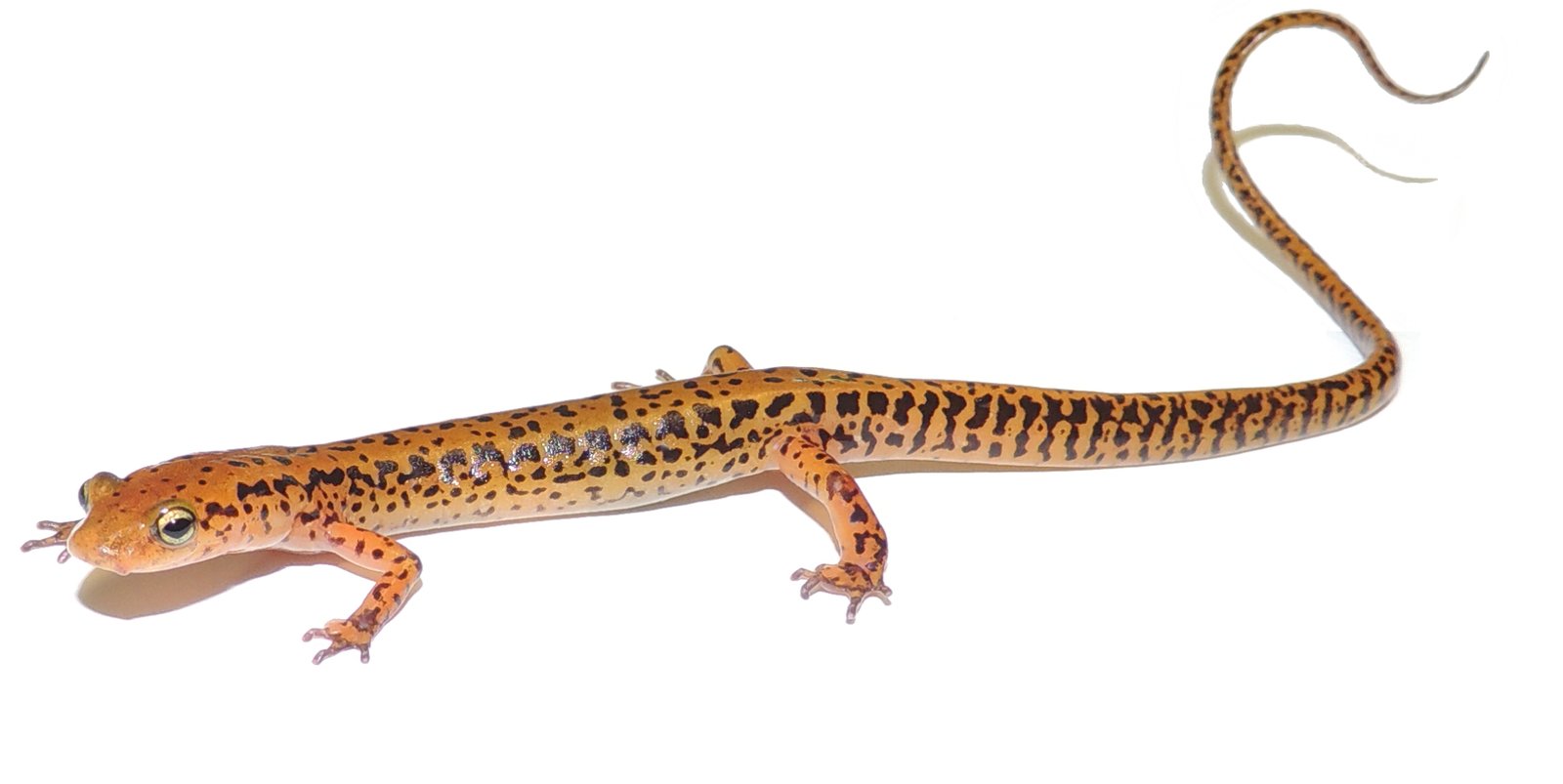
Cave salamander
Eurycea lucifuga
A bright orange-and-black-spotted salamander of cave mouths and twilight zones rather than the deep dark interior. Long prehensile tail used to grip rocks while climbing damp cave walls.
Status: Secure.
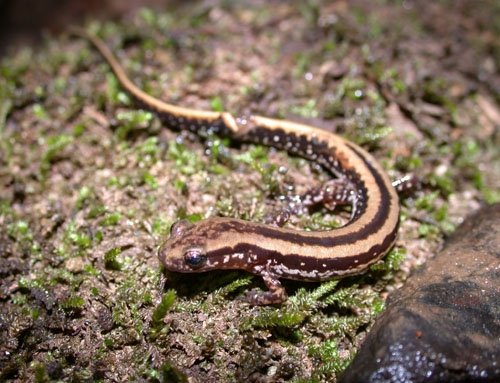
Long-tailed salamander
Eurycea longicauda
A yellow-orange salamander with vertical black bars on a tail more than half its total length. Found at cave mouths, seeps, and streamside rock crevices; close cousin of the cave salamander but more often outside caves than in them.
Status: Secure.
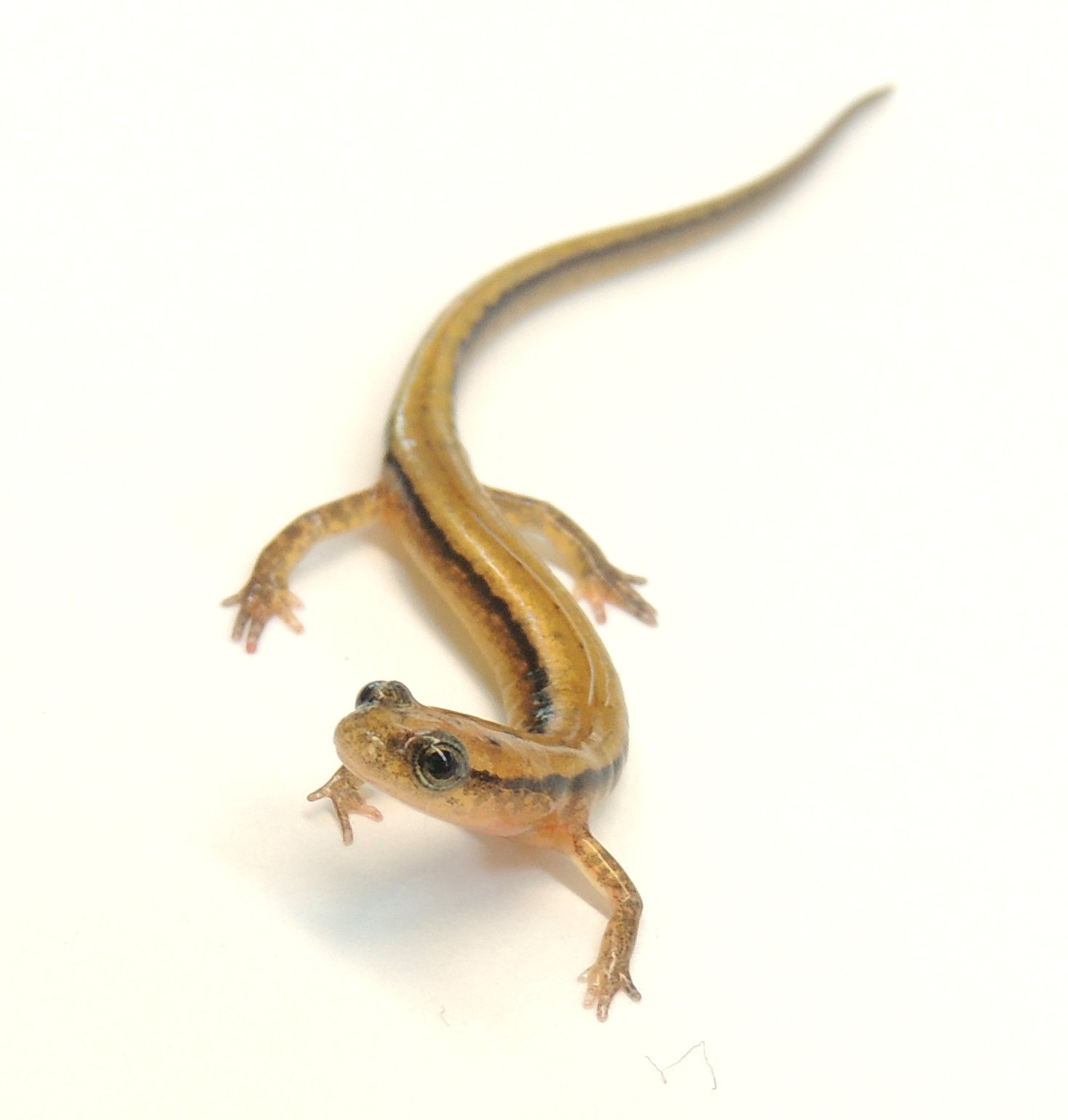
Three-lined salamander
Eurycea guttolineata
A slender yellow salamander with three dark stripes running the length of the body. Found near streams and seeps in lowland hardwood forest.
Status: Secure.
Southern two-lined salamander
Eurycea cirrigera
Common along cold, rocky seeps and small streams across Marion. Yellow-bronze body with two dark dorsal lines; one of the salamanders most often found by lifting flat rocks at the edge of running water.
Status: Secure.
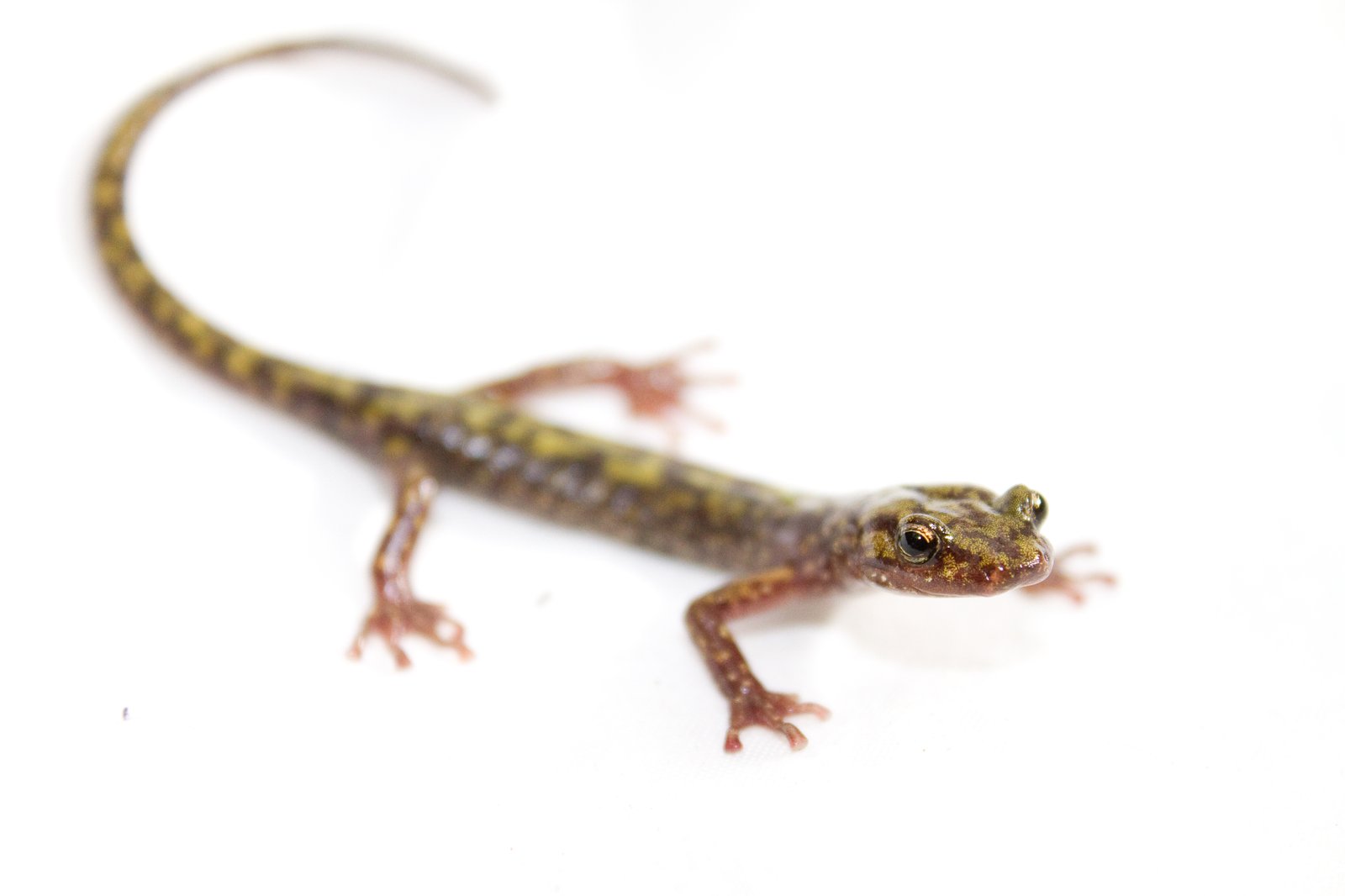
Green salamander
Aneides aeneus
A small, flat-bodied climbing salamander that lives in narrow vertical crevices in sandstone rockhouses and cliff faces. Bright lichen-green or yellow-green blotches on a dark body camouflage almost perfectly against mossy sandstone. The Cumberland Plateau is one of its population strongholds; rockhouses along the Marion-Grundy escarpment have supported populations historically.
Status: TWRA Species of Greatest Conservation Need; G3 vulnerable globally.
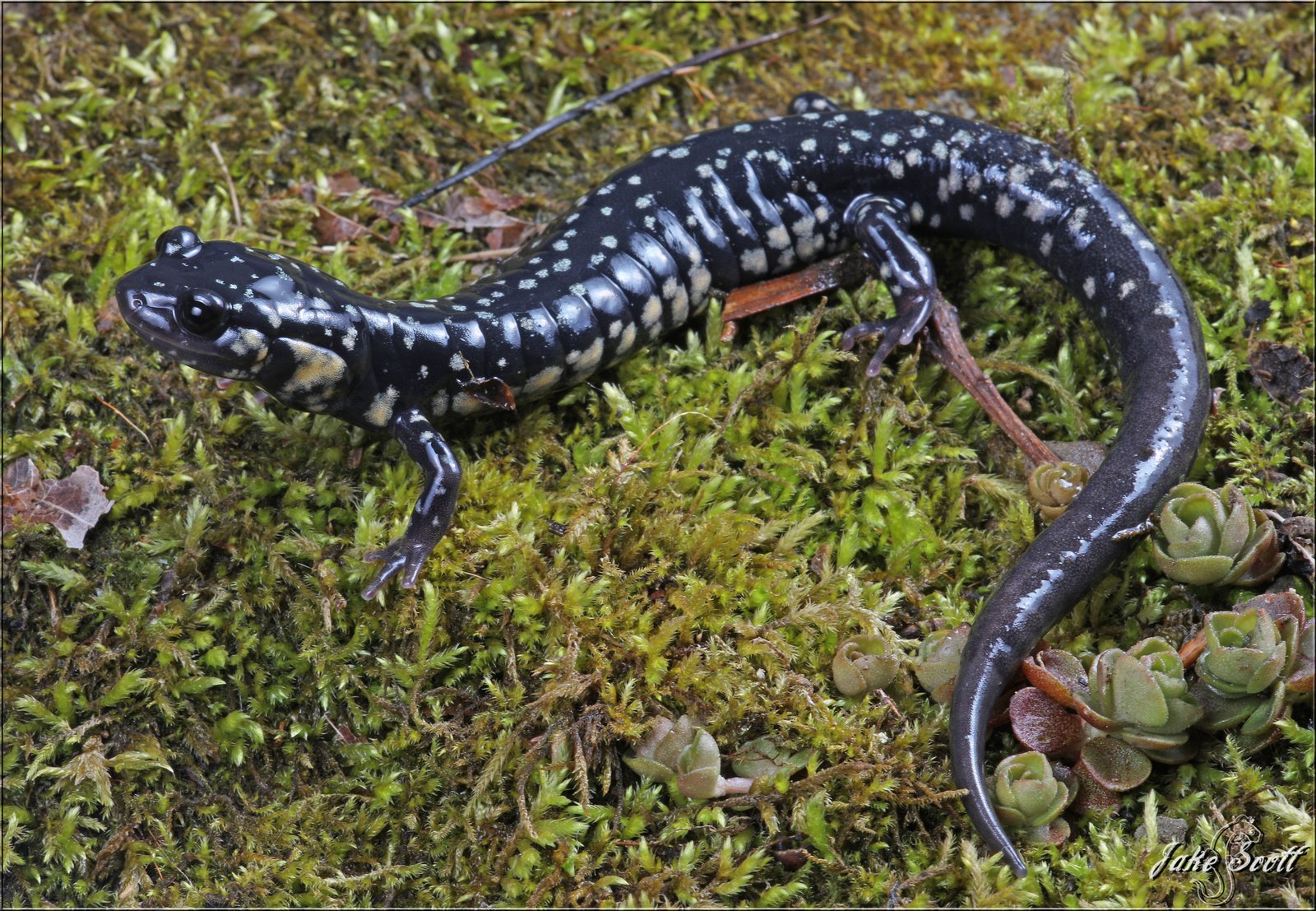
Northern slimy salamander
Plethodon glutinosus
A black salamander with white or silver flecks scattered across the body. Secretes a sticky, glue-like defense that is hard to wash off and that gave the species its common name.
Status: Secure.
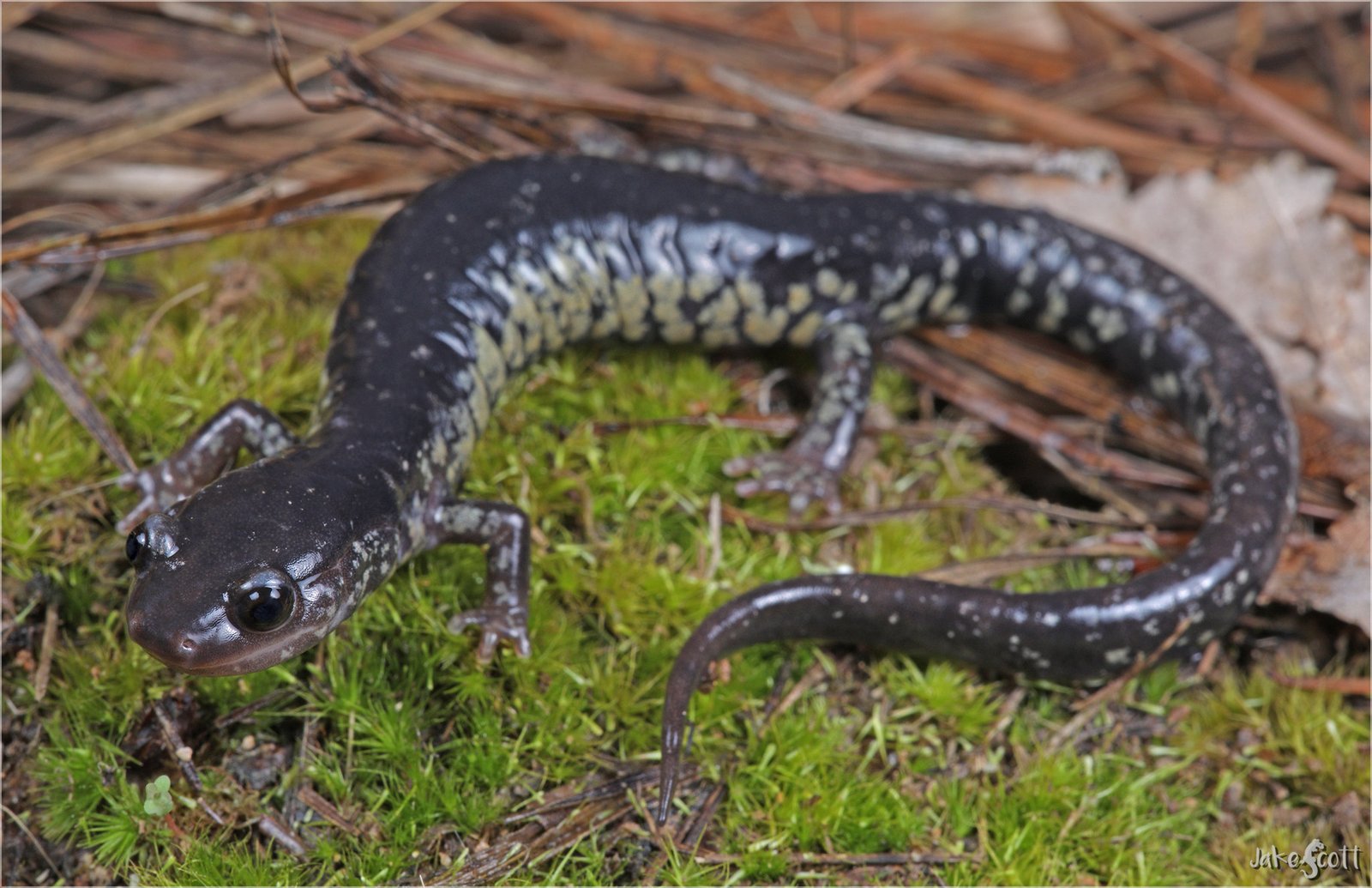
Mississippi slimy salamander
Plethodon mississippi
Visually almost identical to the northern slimy salamander; reliably separated only by range and genetics. Tennessee occurrence is at the western edge of the Plethodon glutinosus complex.
Status: Secure but range-edge.
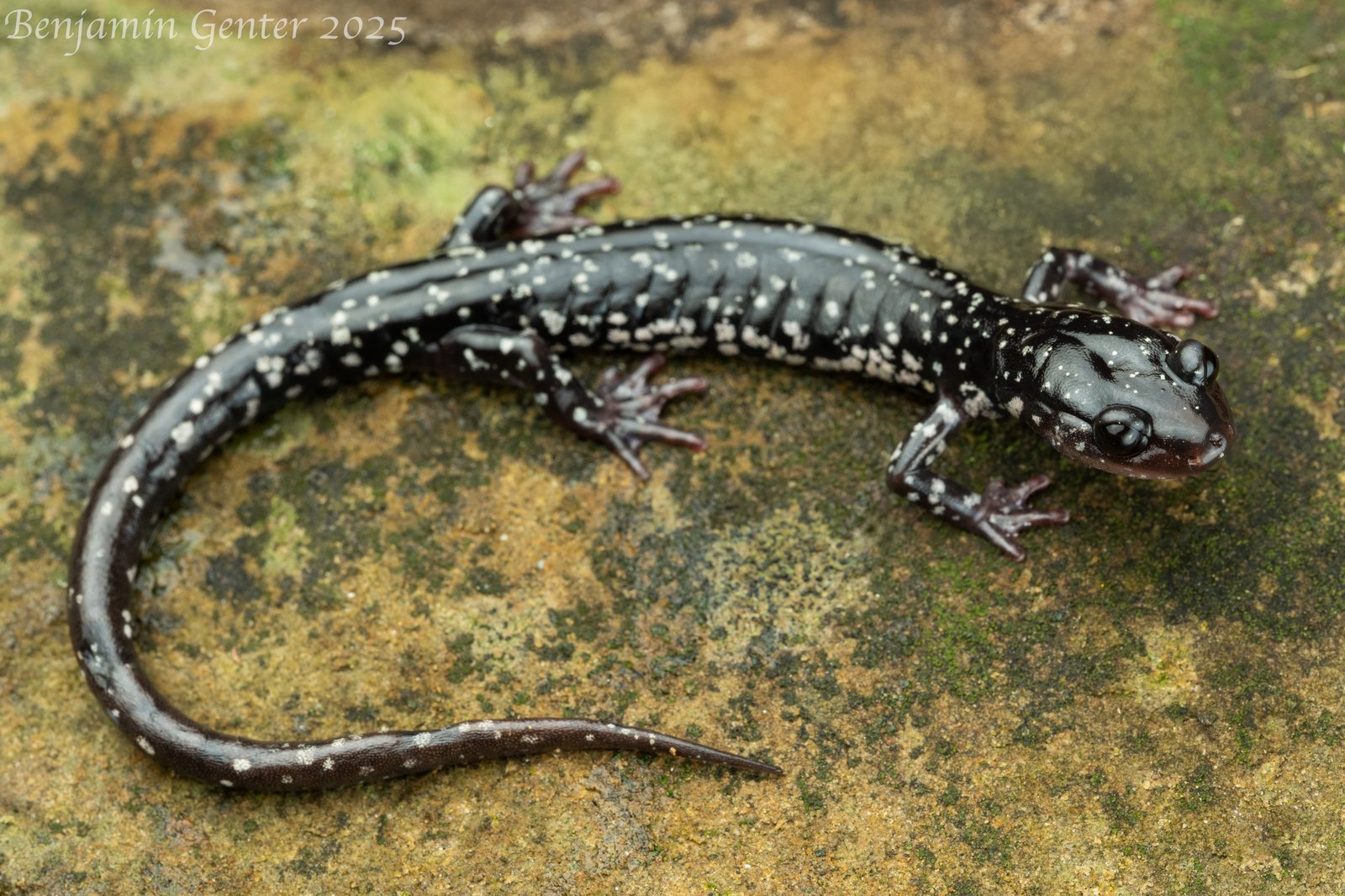
Cumberland Plateau salamander
Plethodon kentucki
Endemic to the Cumberland Plateau and adjacent escarpments. Visually similar to the northern slimy salamander but with slightly larger, more concentrated white flecks. Marion's plateau ridges sit within the range.
Status: Secure but range-restricted.
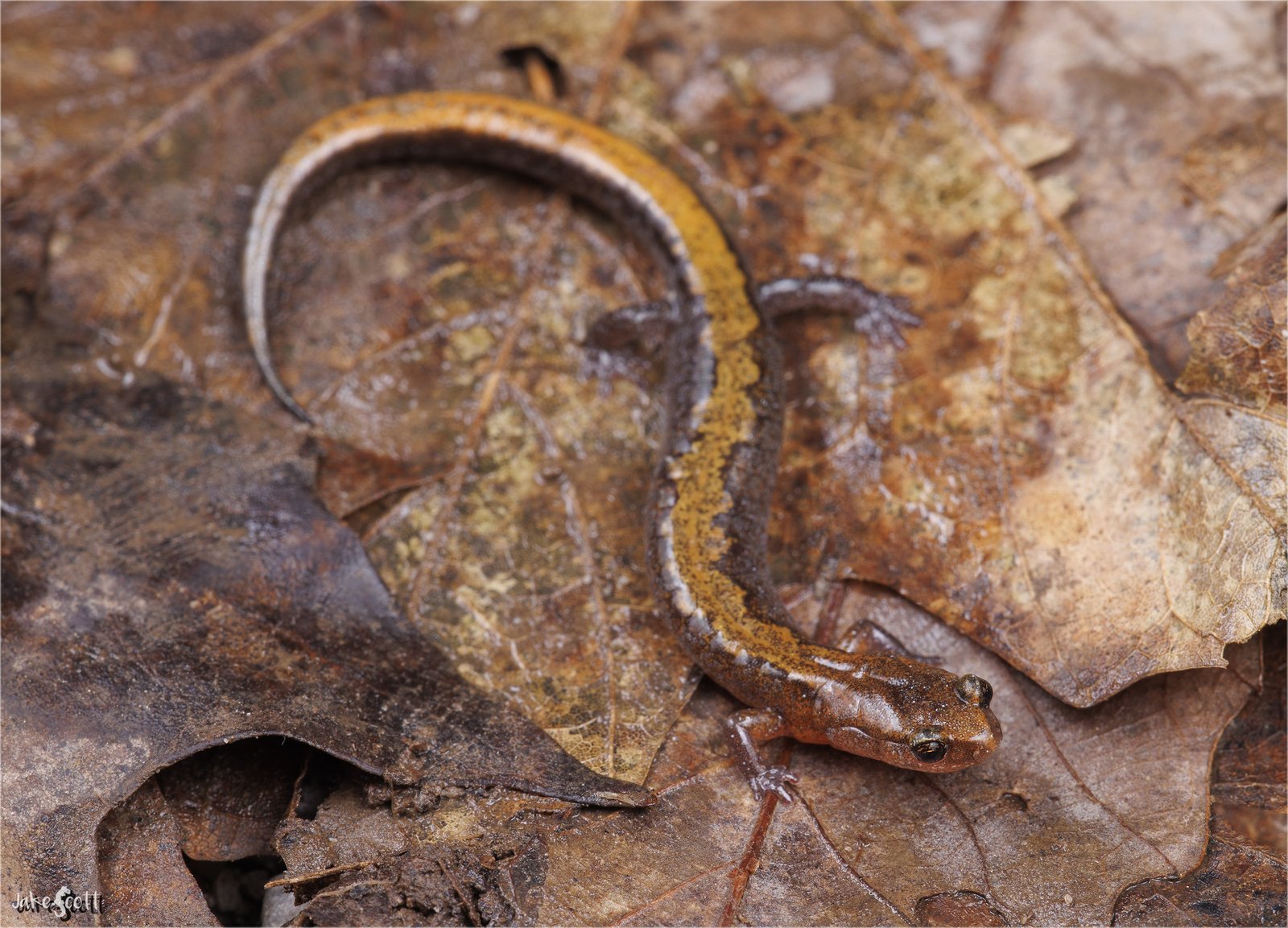
Southern zigzag salamander
Plethodon ventralis
A small, slender lungless salamander with a wavy or zigzag dorsal stripe. Found under flat rocks and rotting logs in mature hardwood forest; one of the few Plethodons reliable in Marion's drier ridge sites.
Status: Secure.
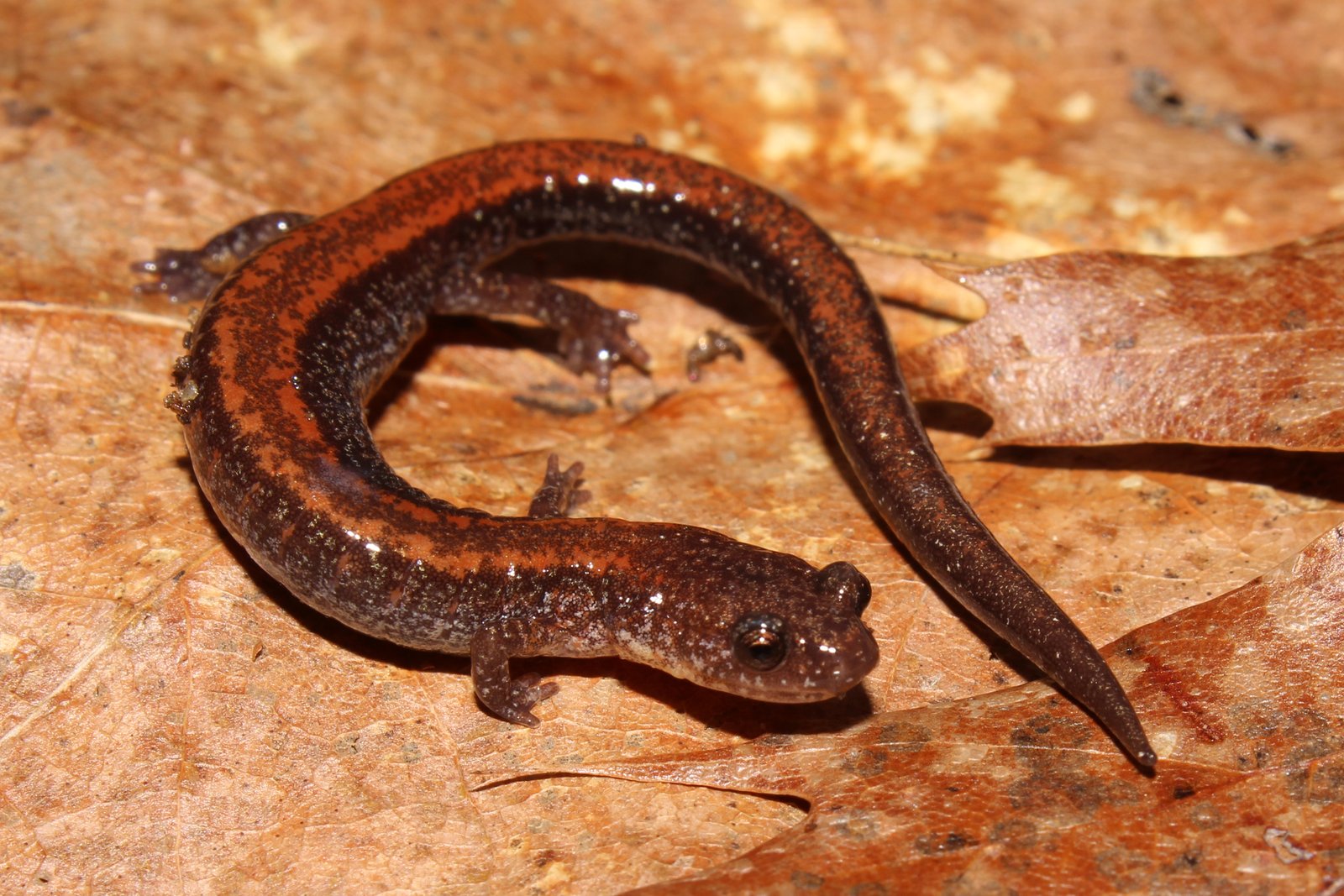
Eastern red-backed salamander
Plethodon cinereus
A small, slender salamander with two color forms: a red-orange dorsal stripe (“redback”) and a uniform dark gray (“leadback”). Often the most abundant vertebrate by biomass in northern hardwood forests; Marion is at the southwestern edge of the range.
Status: Secure.
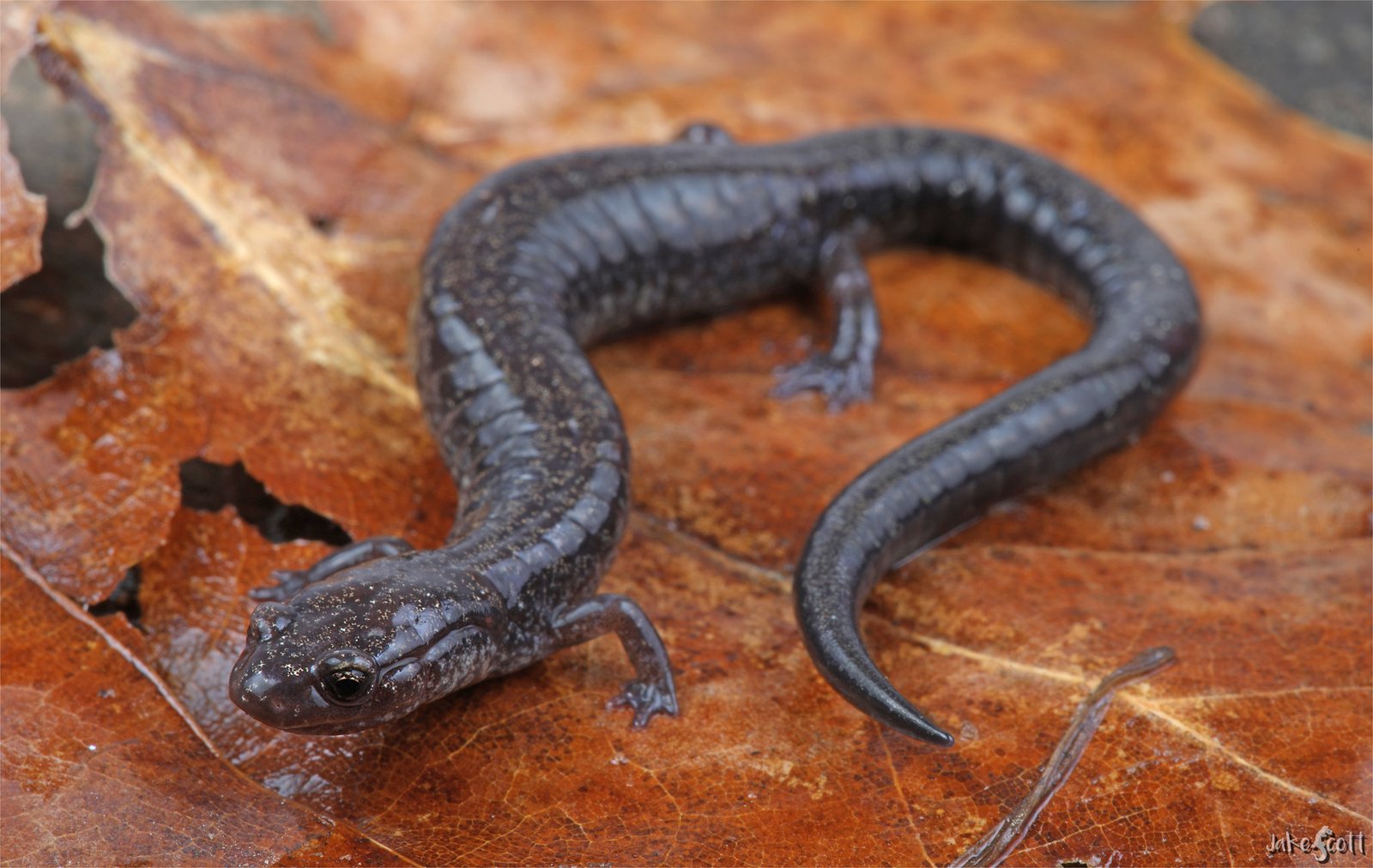
Southern ravine salamander
Plethodon richmondi
A long, thin, mostly uniform brown or gray salamander of forested ravines. Spends most of its time underground in small burrows and surfaces only on rainy nights.
Status: Secure.
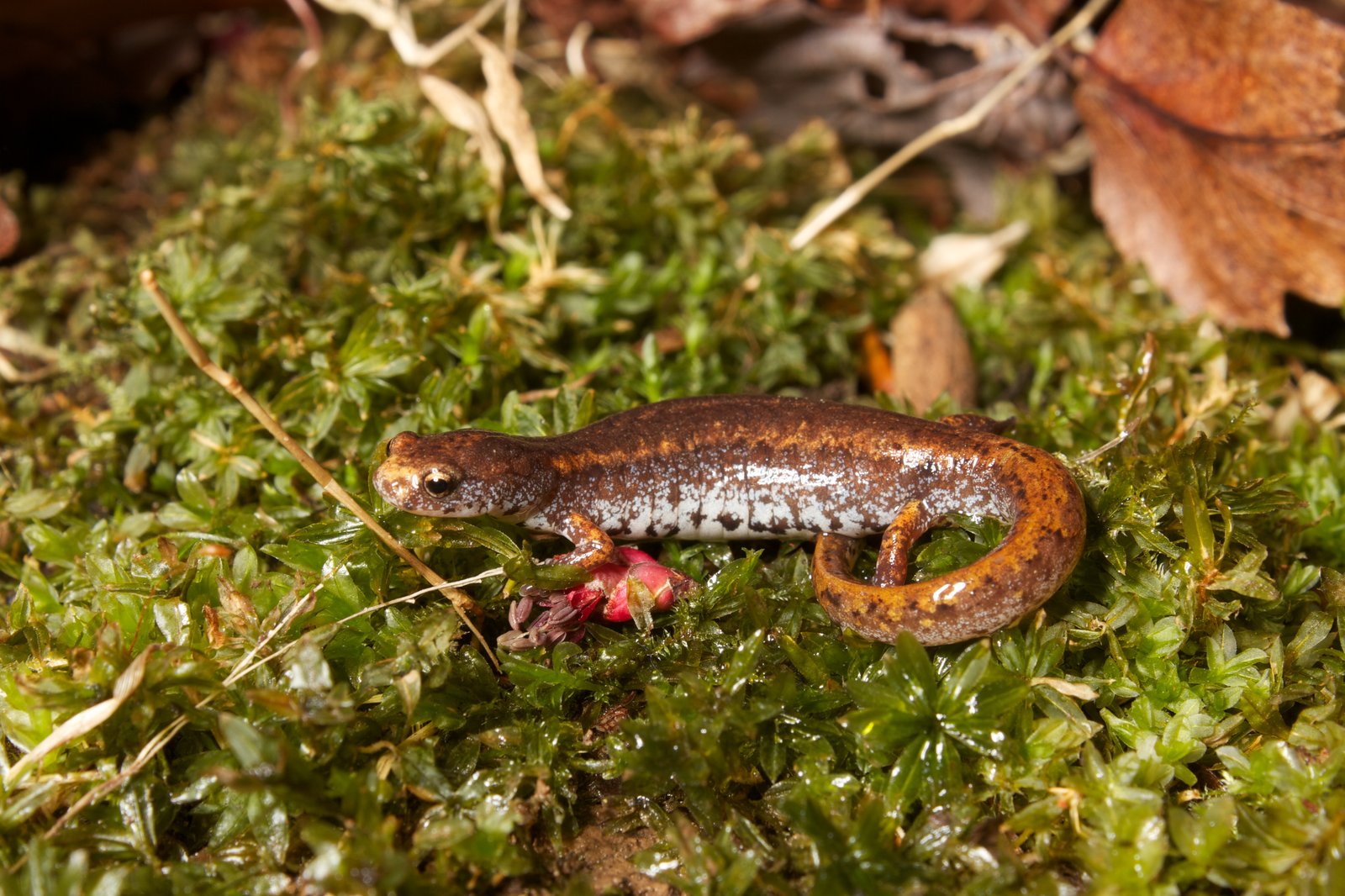
Four-toed salamander
Hemidactylium scutatum
A tiny salamander with the unusual trait of four toes on each hind foot rather than five. White belly with scattered black flecks; lays eggs in sphagnum moss above wet seeps.
Status: TWRA Deemed in Need of Management.
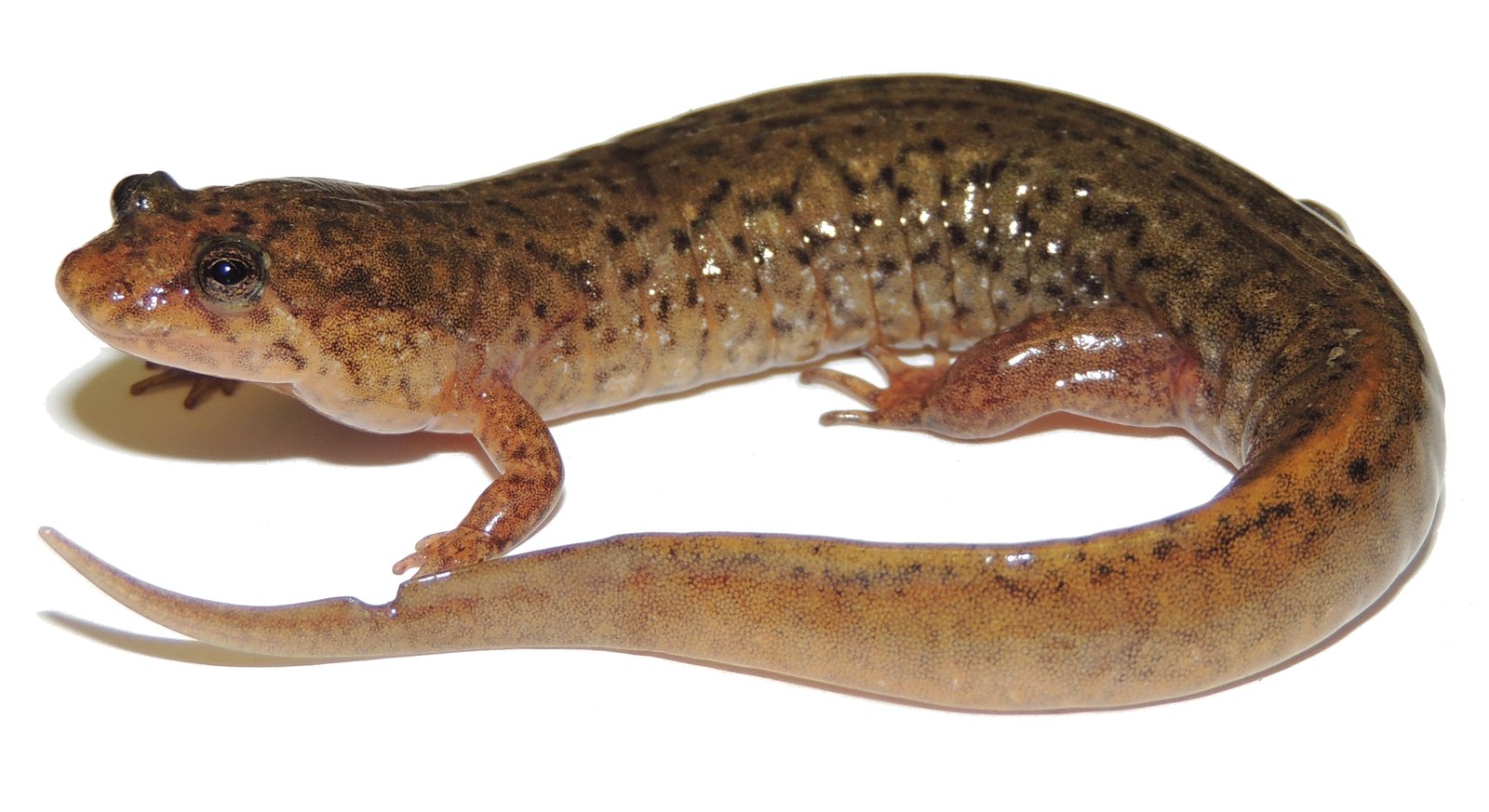
Northern dusky salamander
Desmognathus fuscus
A stocky brown salamander of streamside rocks and seeps; the genus has muscular hind legs and a wedge-shaped head used to push through wet leaf packs.
Status: Secure.
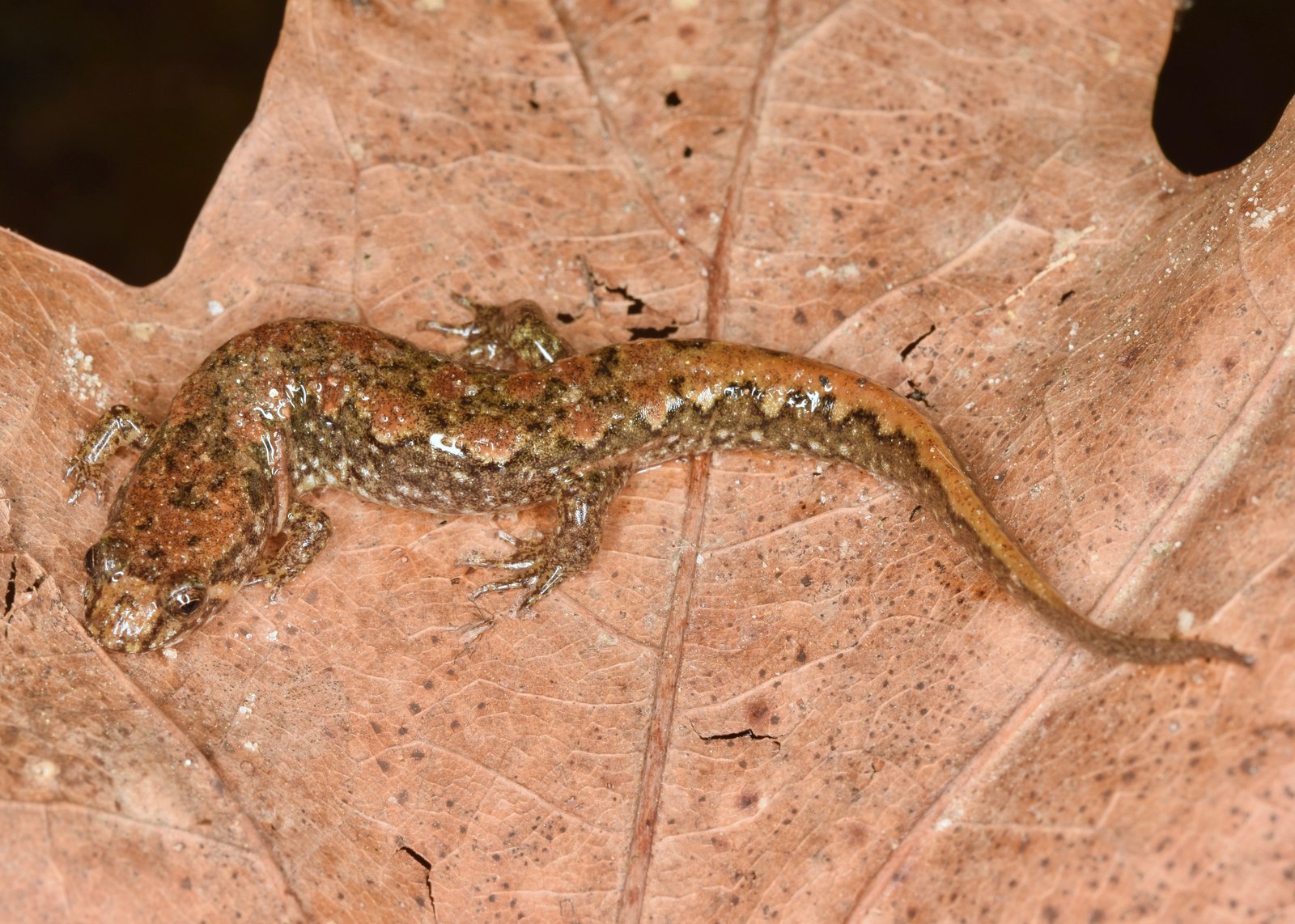
Spotted dusky salamander
Desmognathus conanti
A close cousin of the northern dusky salamander with paired light spots running down the back. Found in low-elevation seeps and stream banks rather than the cooler high-elevation sites the northern dusky prefers.
Status: Secure.
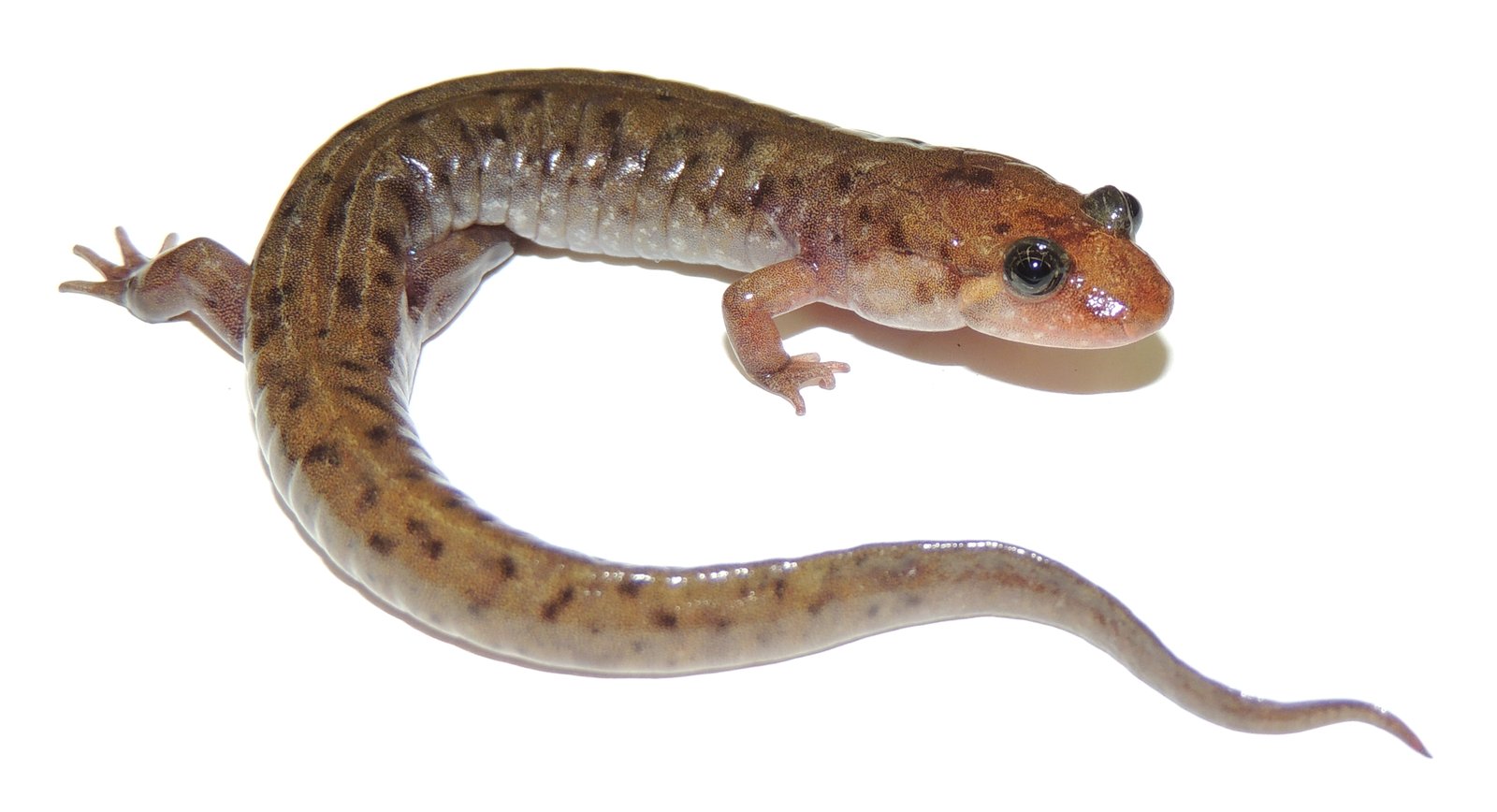
Seal salamander
Desmognathus monticola
A larger, more boldly patterned dusky salamander of cool, rocky streams. Tennessee range is concentrated in the eastern mountains; Marion sightings would be at the western edge of plausible range.
Status: Secure but range-edge.
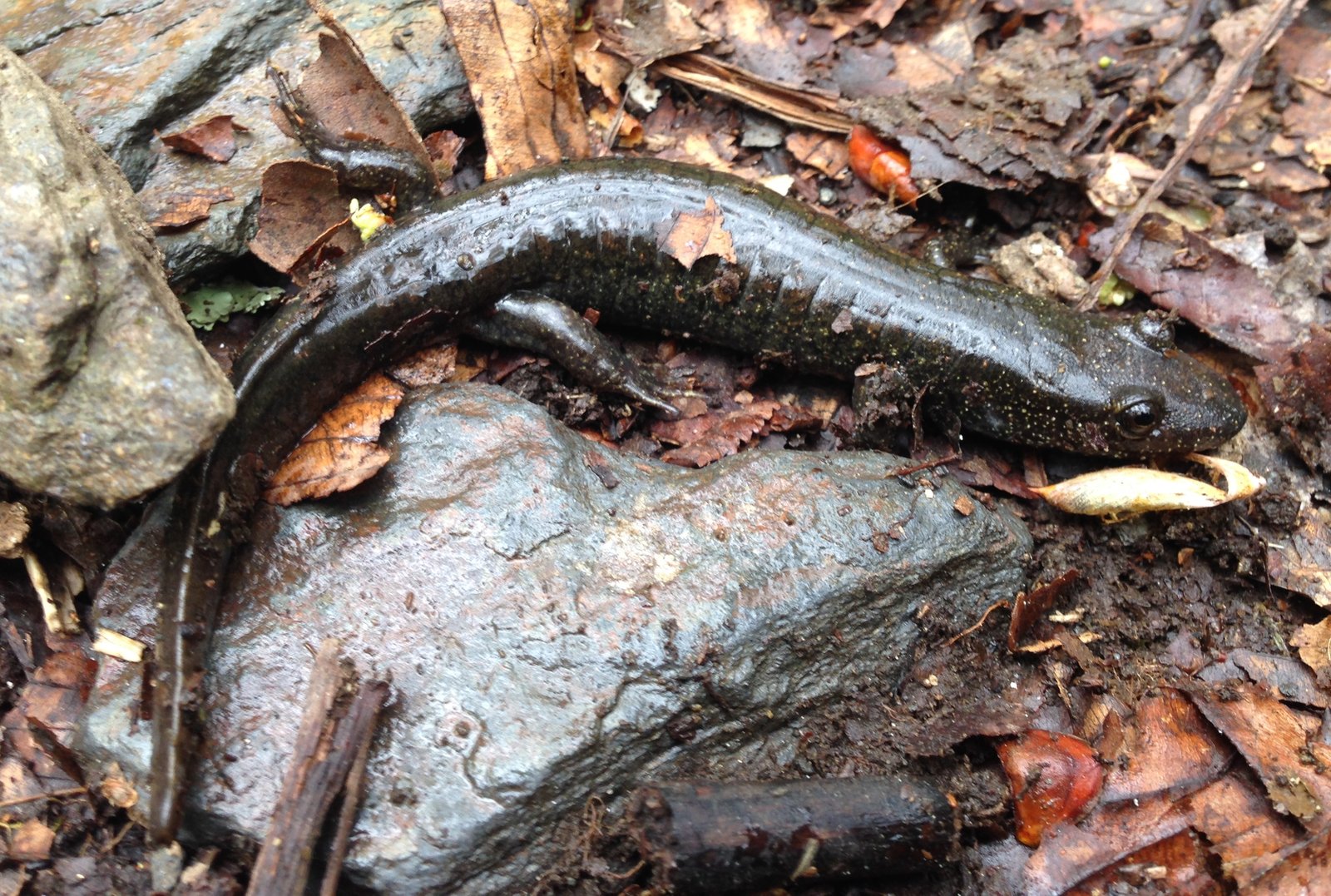
Black-bellied salamander
Desmognathus quadramaculatus
The largest member of the dusky-salamander group, reaching seven inches. Restricted to cold, fast mountain streams; Tennessee range is in the eastern mountains and Marion records would be exceptional.
Status: Secure but range-edge in Marion.
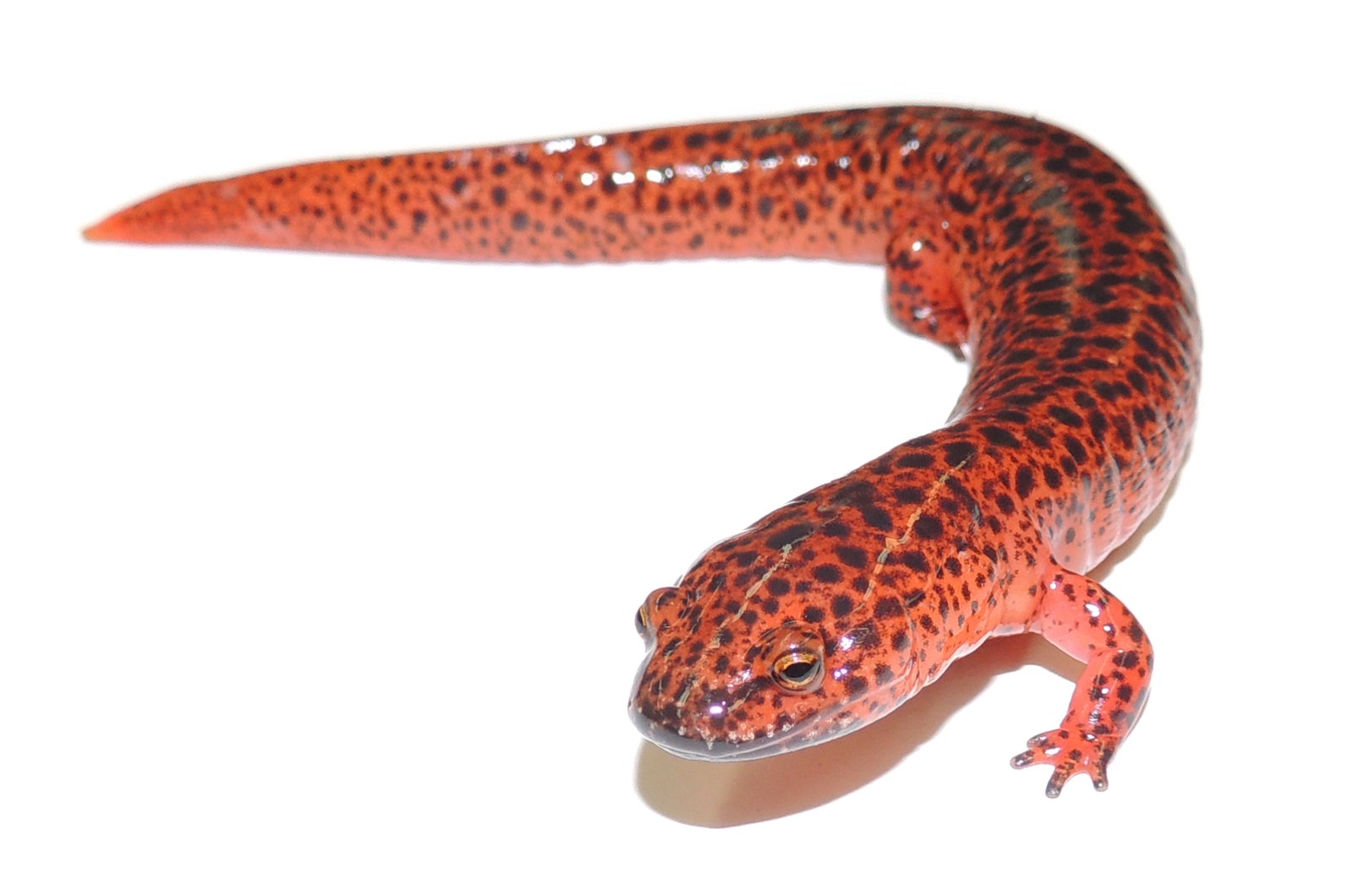
Red salamander
Pseudotriton ruber
A stout, bright orange-red salamander densely covered with small black spots; the strongest red of any Marion species. Found near springs, seeps, and cool streams.
Status: Secure.
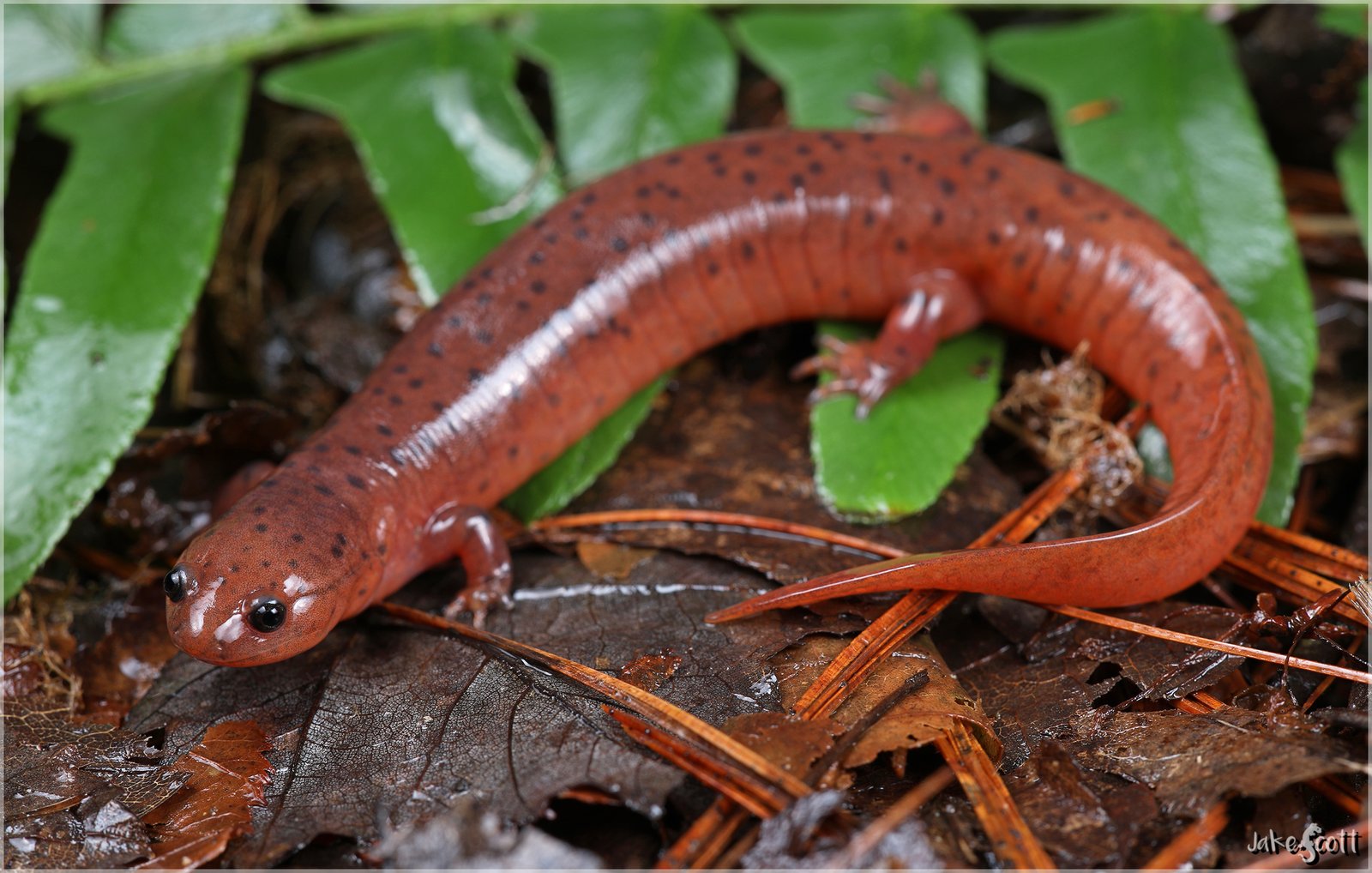
Midland mud salamander
Pseudotriton montanus diastictus
A close cousin of the red salamander with fewer, larger black spots and a slightly more orange tone. Lives in muddy seeps and spring runs rather than the cleaner-water sites the red salamander prefers.
Status: TWRA Deemed in Need of Management.
Mole salamanders and newts
The mole salamanders (genus Ambystoma) and the eastern newt depend on vernal pools and other seasonal still-water habitats for breeding. The best-known of these is the spotted salamander's late-winter migration to ancestral breeding pools on the first warm rainy nights of the year. The marbled salamander is the unusual member of the group: it breeds in fall rather than spring and lays eggs in dry vernal-pool basins that flood with autumn rains.
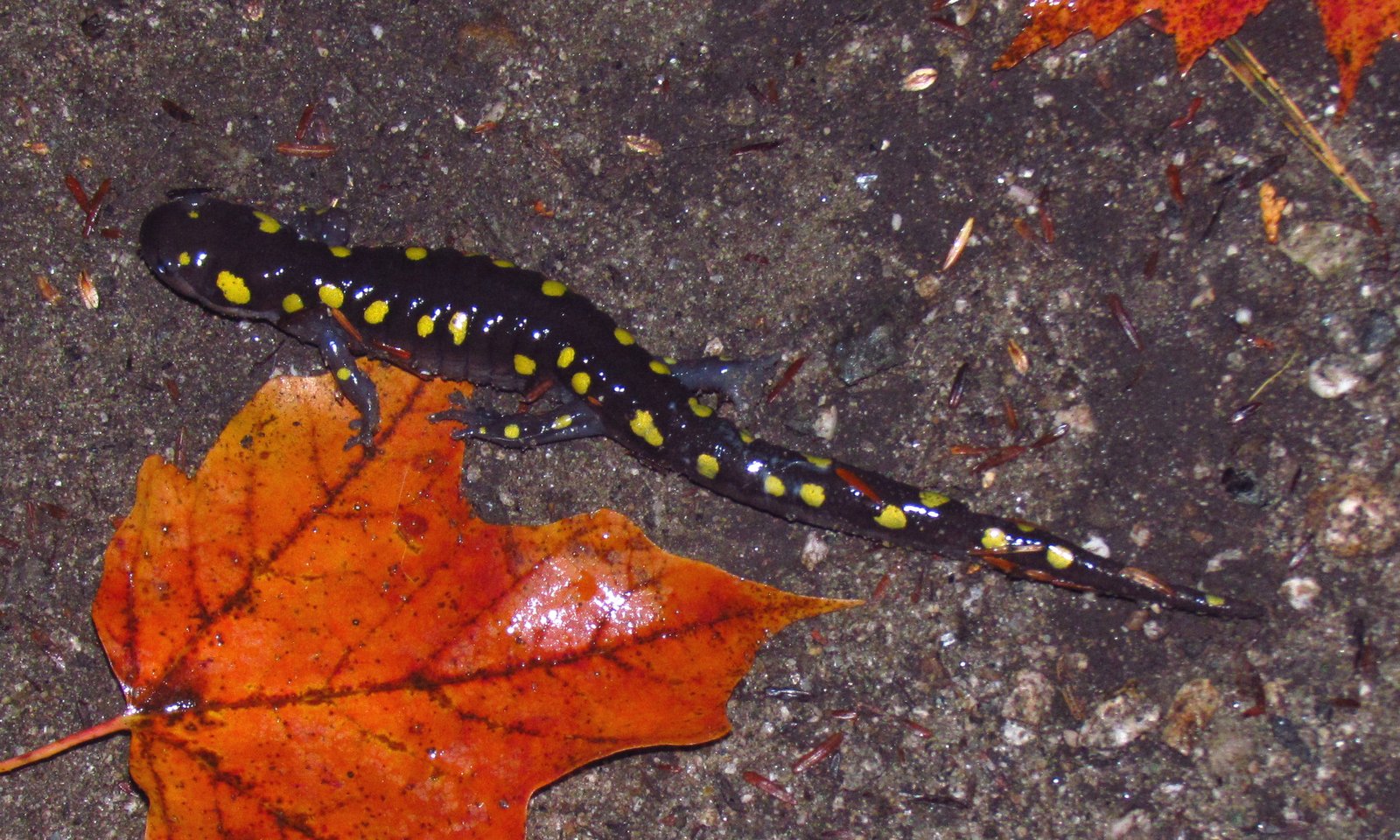
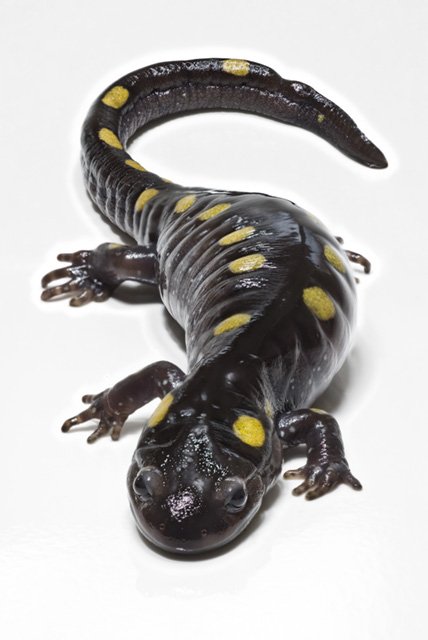
Spotted salamander
Ambystoma maculatum
A black salamander with two rows of bright yellow spots along the back. Spends most of its life underground; emerges on the first warm rainy nights of late winter and early spring to migrate to vernal pools and breed in mass gatherings.
Status: Secure.
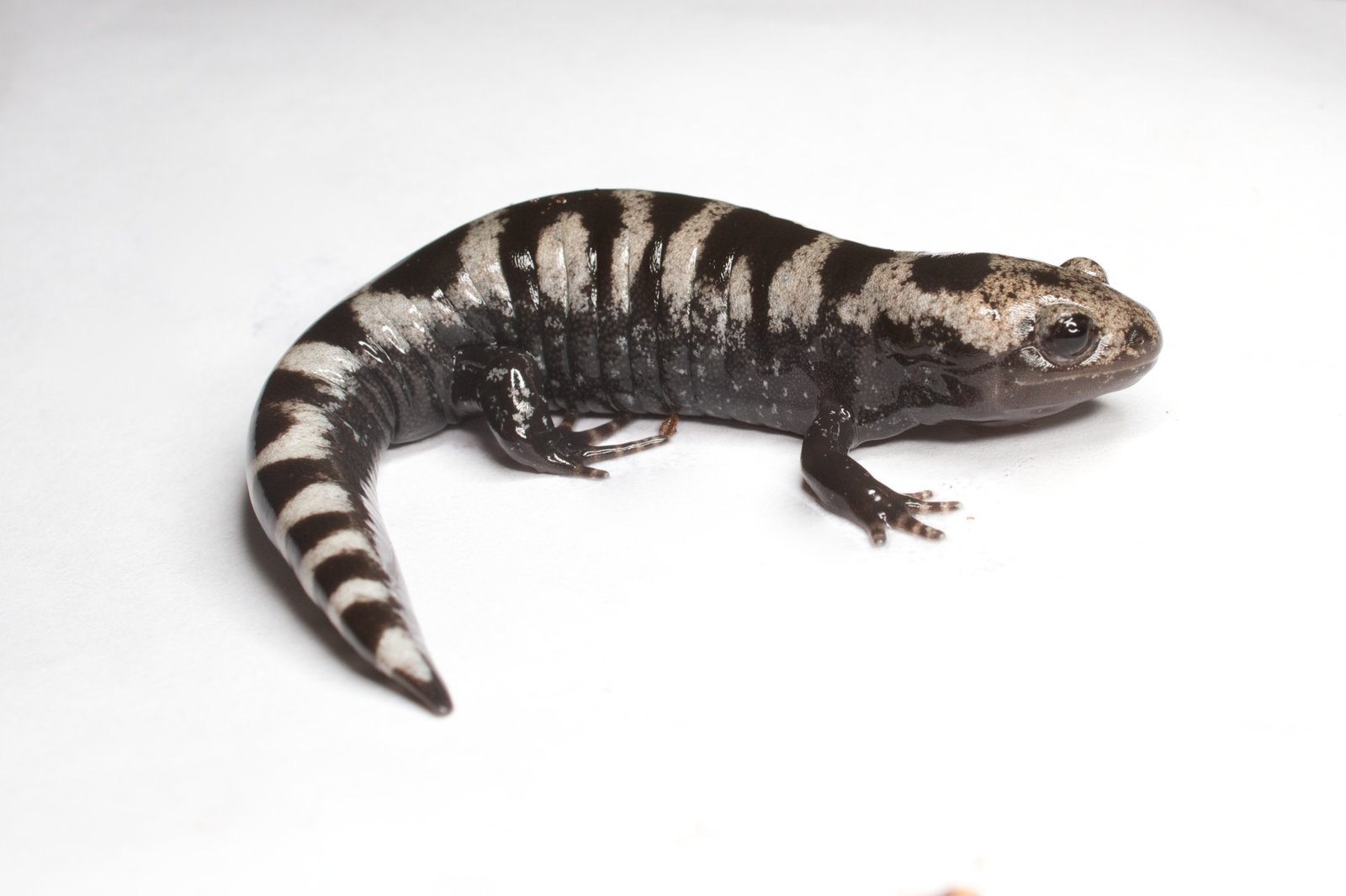
Marbled salamander
Ambystoma opacum
Black-and-silver crossbanded salamander of bottomland hardwood forest. Unlike most mole salamanders, breeds in fall and lays eggs in dry vernal-pool basins that flood with autumn rains.
Status: Secure.
Mole salamander
Ambystoma talpoideum
A short, broad-headed salamander with a stocky body and large head. Some populations remain in the gilled larval form their entire lives rather than transforming.
Status: Secure.
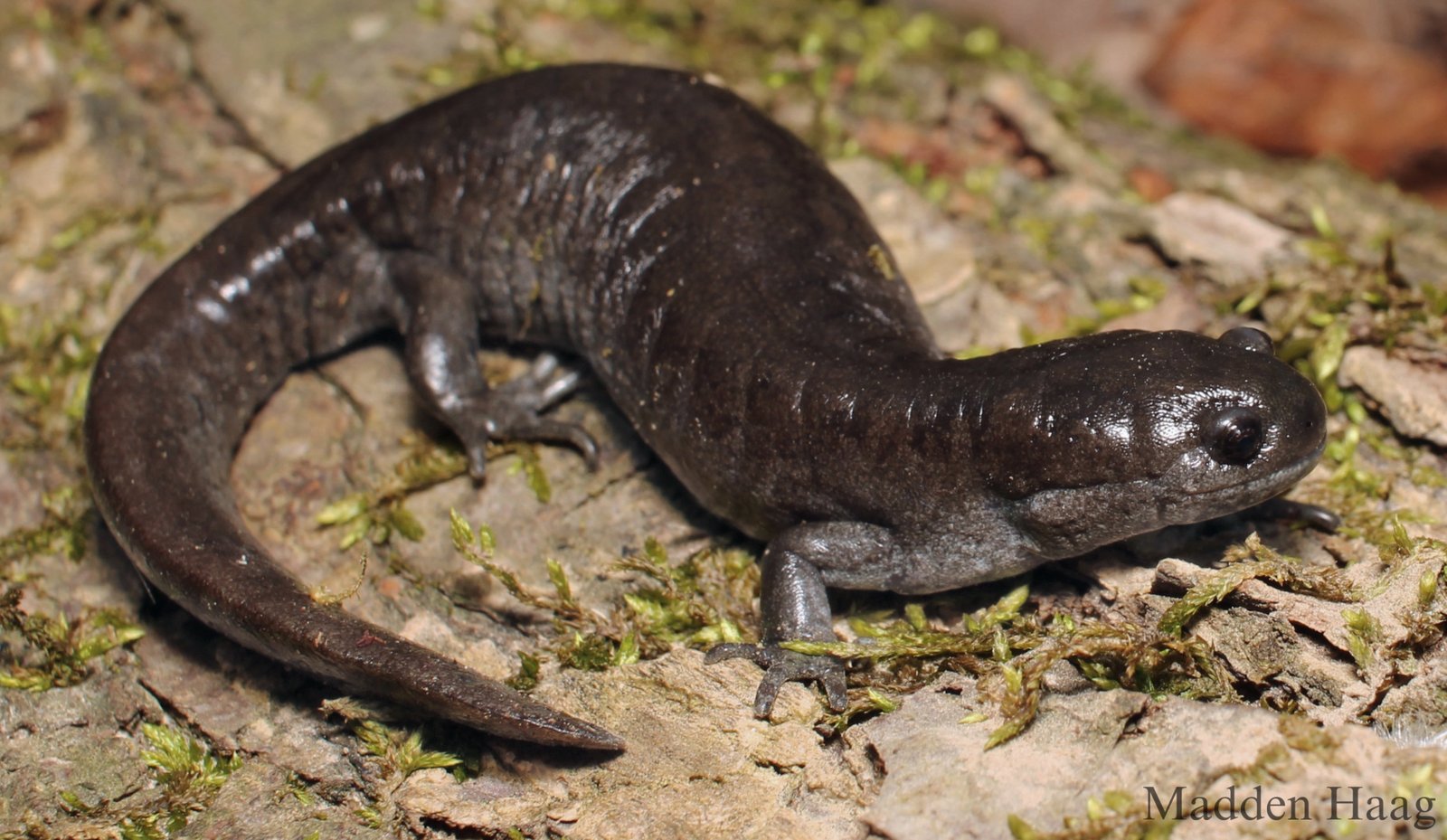
Small-mouthed salamander
Ambystoma texanum
A dark gray mole salamander with light flecks scattered across the back, most prominent on the tail. Bottomland hardwood and floodplain forest; breeds in temporary pools.
Status: Secure.
Streamside salamander
Ambystoma barbouri
A close cousin of the small-mouthed salamander that breeds in flowing streams rather than still pools. Eggs are attached individually to the underside of submerged limestone slabs.
Status: TWRA Deemed in Need of Management.
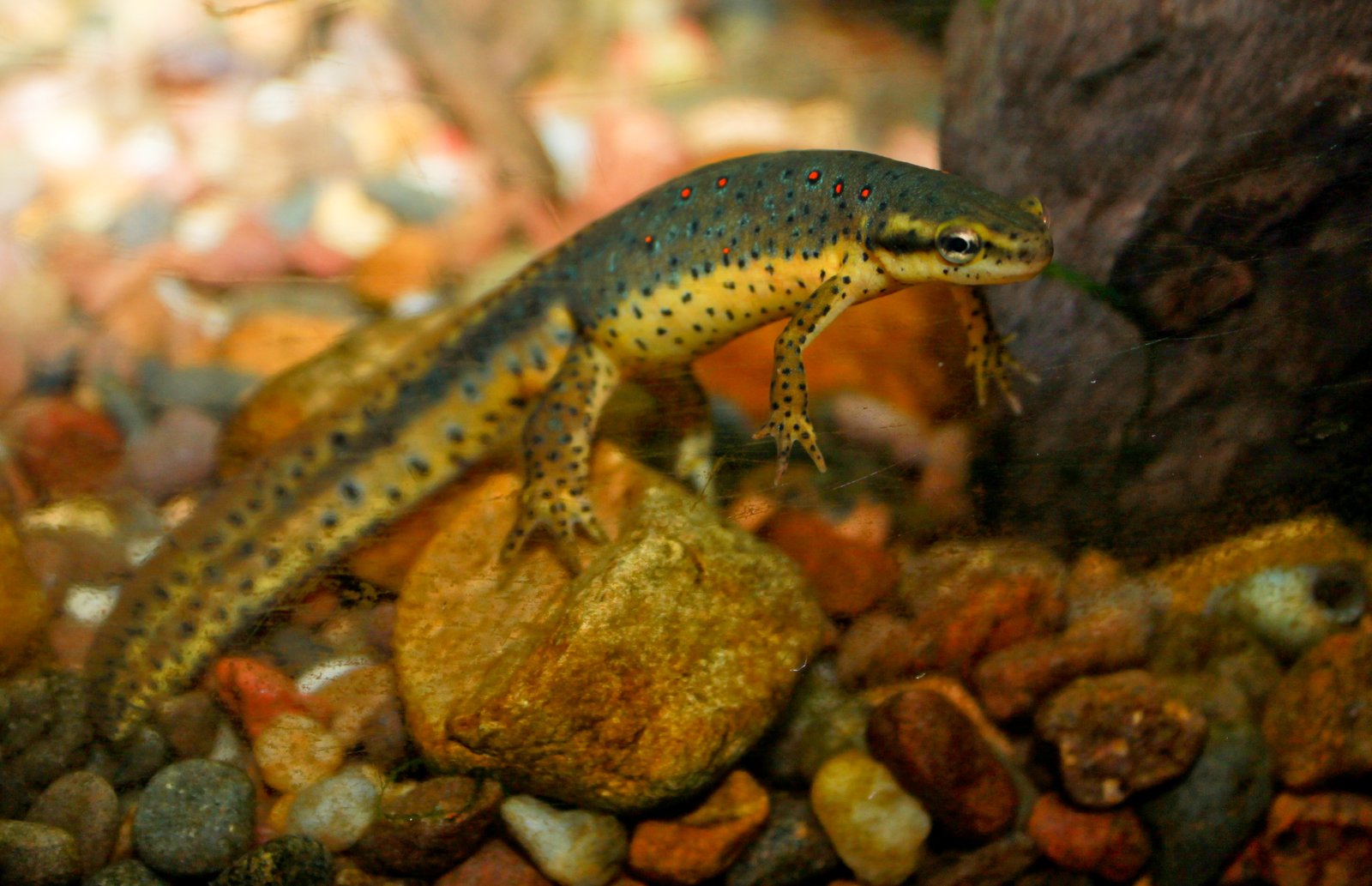
Eastern newt
Notophthalmus viridescens
A common pond salamander with a complex life cycle: aquatic larva, terrestrial bright orange-red “eft” juvenile, then back to an olive-green aquatic adult. The eft stage is the form most often seen on rainy forest trails.
Status: Secure.
Amphibians : frogs and toads
Marion's frog and toad chorus runs from late February through August. Wood frogs and spring peepers begin while ice still rims plateau pools; chorus frogs and the upland-and-mountain pair join through March; the toads, treefrogs, and bullfrogs build through the spring; and the late summer leaves green frogs and bullfrogs as the dominant nighttime voices on Marion's ponds and sloughs. Twenty species are documented or credibly expected, sorted below into toads, the chorus-and-treefrog clade, and the true frogs (genus Lithobates).
True toads and spadefoots
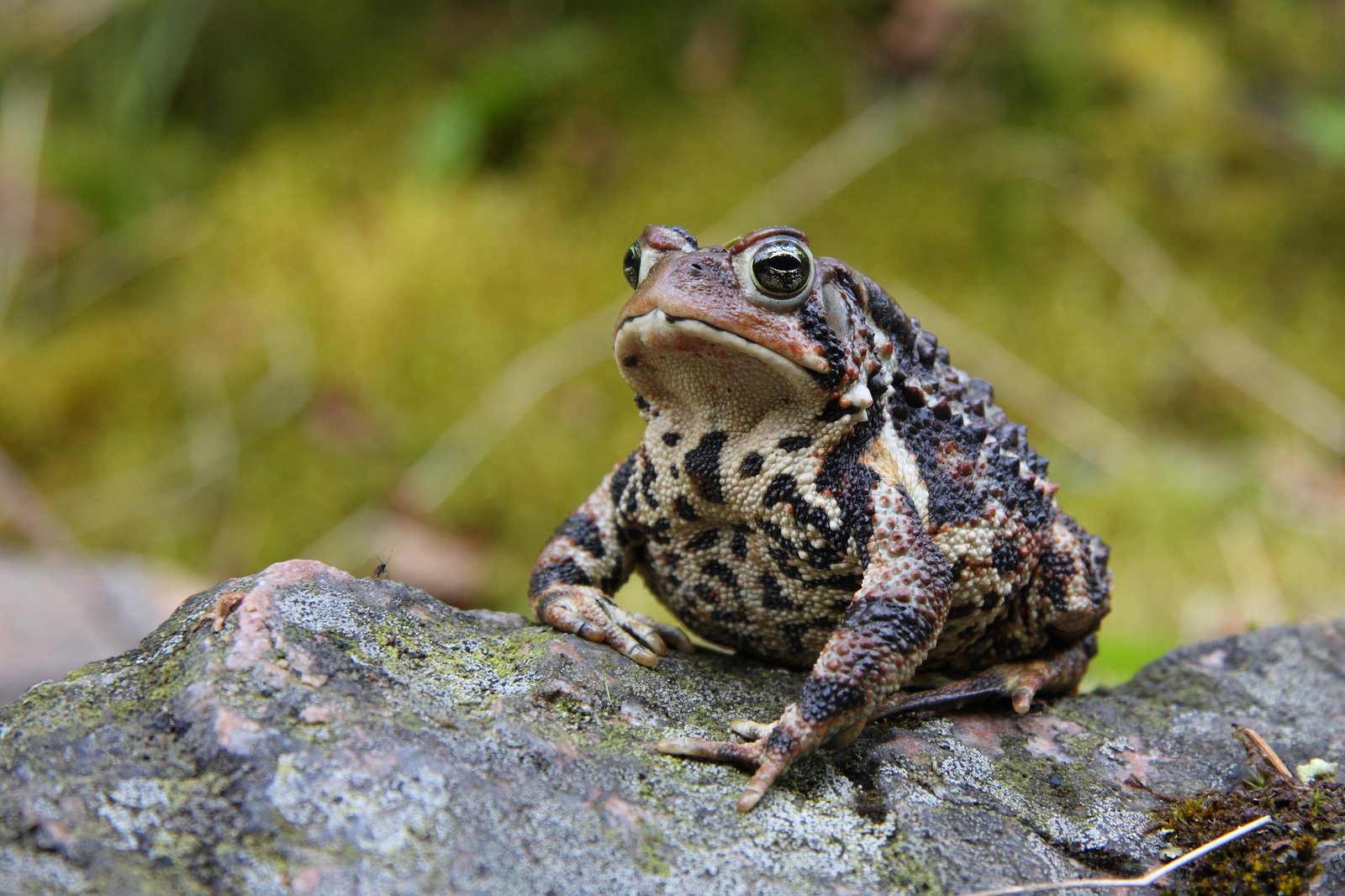
American toad
Anaxyrus americanus
A heavy, warty toad of yards, gardens, and forest edges across Marion. Breeds in nearly any standing water, with a long sustained trill that fills warm spring nights.
Status: Secure.
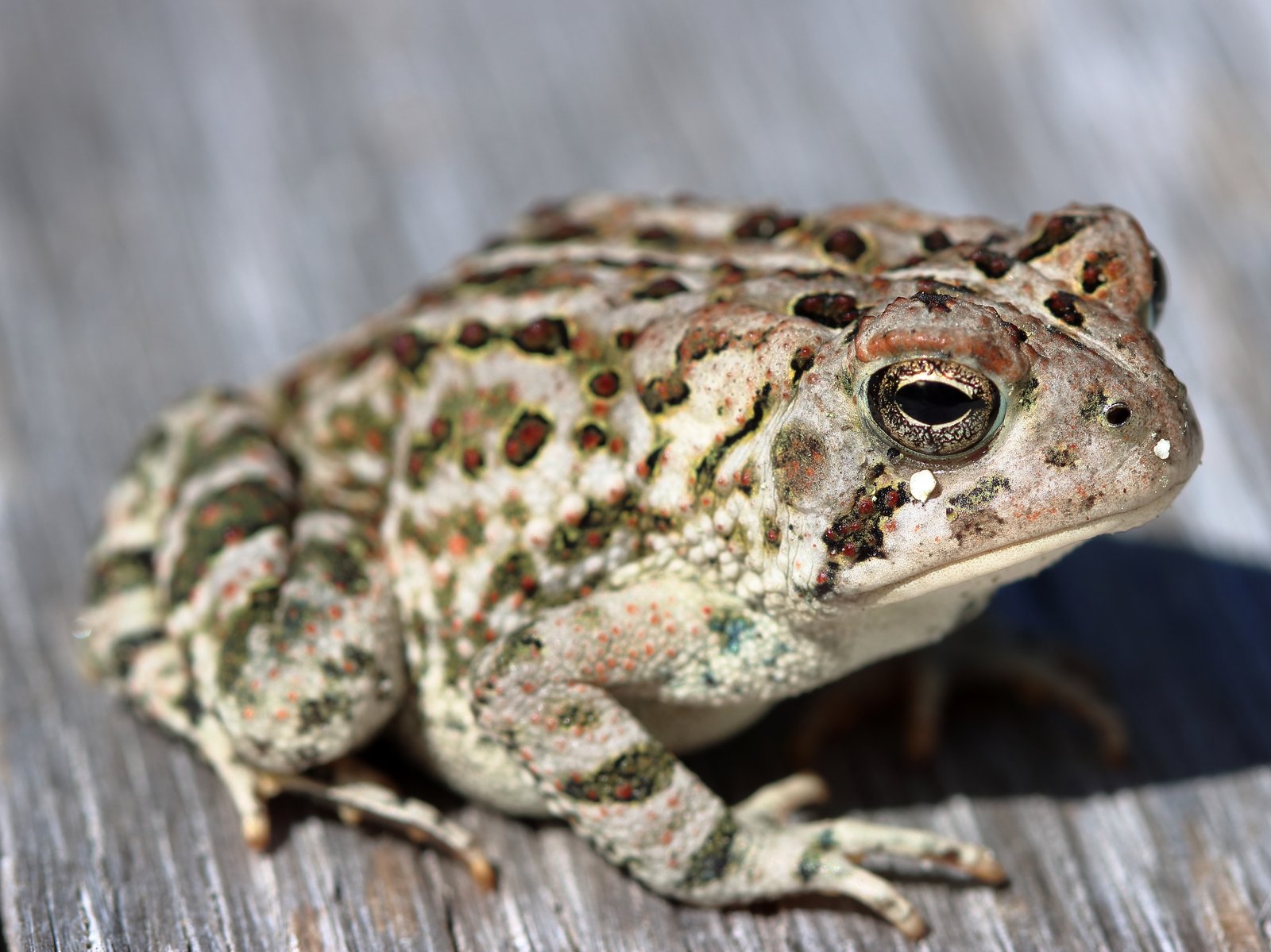
Fowler's toad
Anaxyrus fowleri
Similar to the American toad but with three or more warts within each large dark spot on the back, where the American toad usually has one or two. Call is a short, complaining bleat rather than a long trill.
Status: Secure.
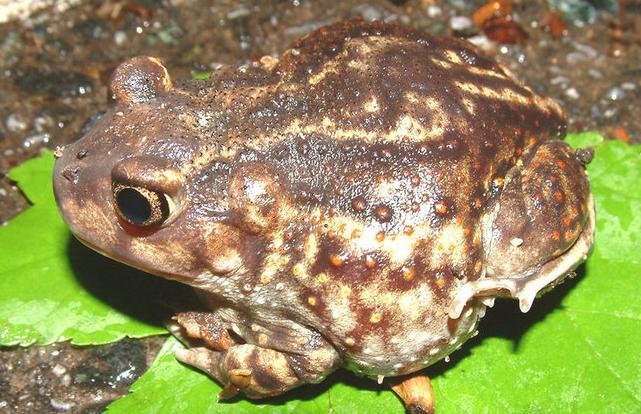
Eastern spadefoot
Scaphiopus holbrookii
Vertically slit pupils and a hardened “spade” on each hind foot used to dig backwards into loose soil. An explosive breeder: emerges only after heavy rains and can complete egg-laying and hatching in days.
Status: TWRA Deemed in Need of Management.
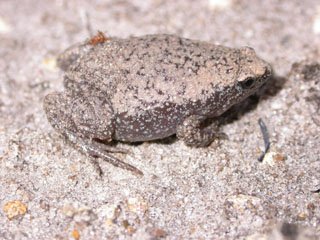
Eastern narrow-mouthed toad
Gastrophryne carolinensis
A small, plump, smooth-skinned frog with a pointed head and tiny mouth specialized for eating ants. Spends most of its life under cover and is more often heard than seen.
Status: Secure.
Chorus frogs, cricket frogs, and treefrogs
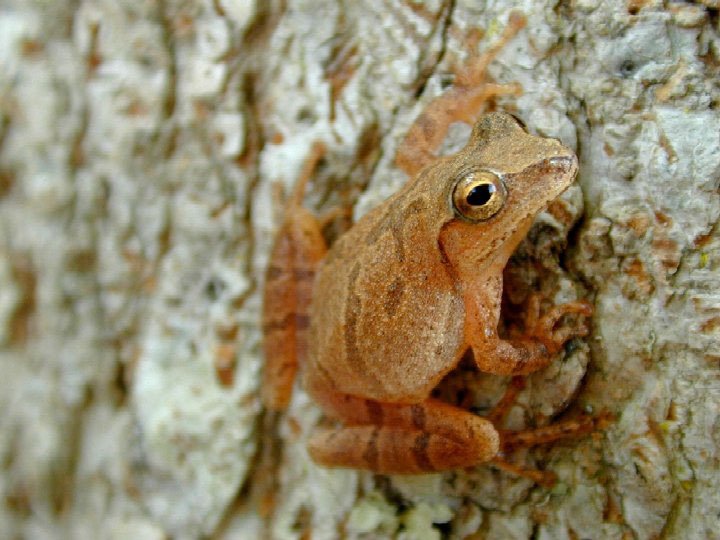
Spring peeper
Pseudacris crucifer
A tiny treefrog whose ringing high-pitched chorus fills late-winter and early-spring nights, audible a quarter mile off. A faint dark X on the back is the field mark.
Status: Secure.
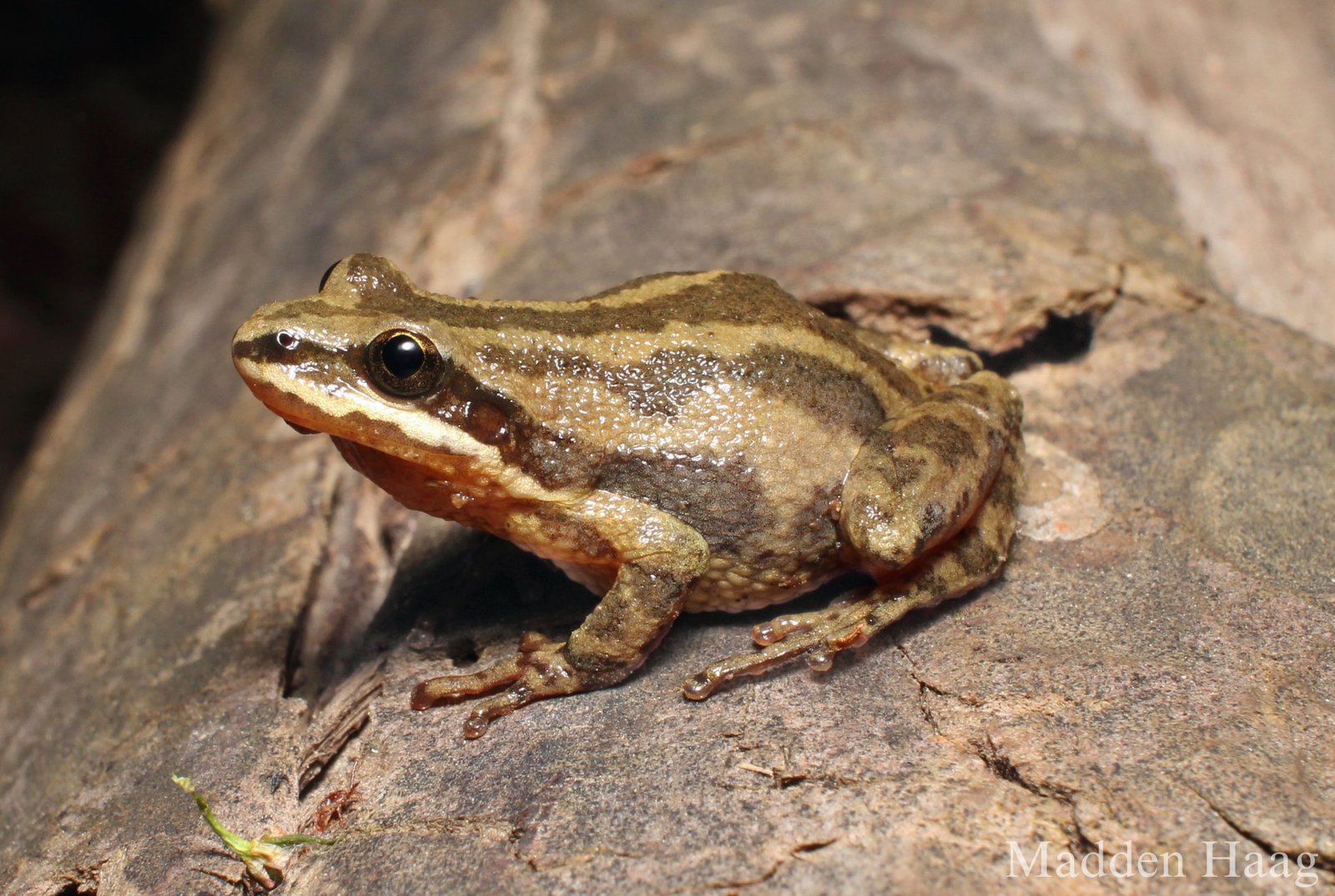
Upland chorus frog
Pseudacris feriarum
A small, slender brown frog with three dark stripes down the back. Calls a rising, comb-like trill from flooded ditches and pasture pools in late winter, often alongside the spring peeper.
Status: Secure.
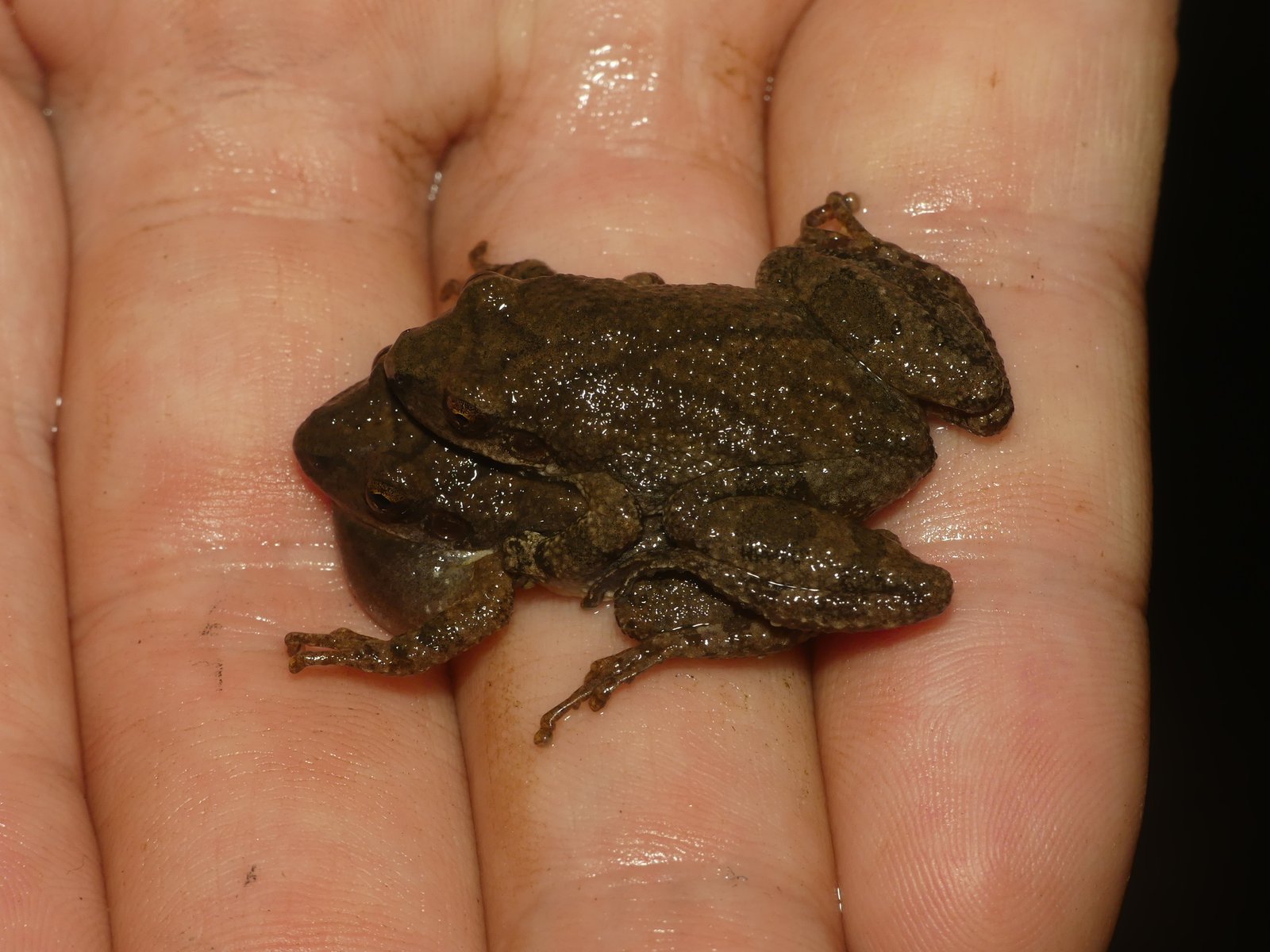
Mountain chorus frog
Pseudacris brachyphona
A close cousin of the upland chorus frog specialized to the Cumberland Plateau and Appalachian uplands. Curved or reverse-parenthesis stripes on the back distinguish it; calls a short, fast trill.
Status: TWRA Deemed in Need of Management.
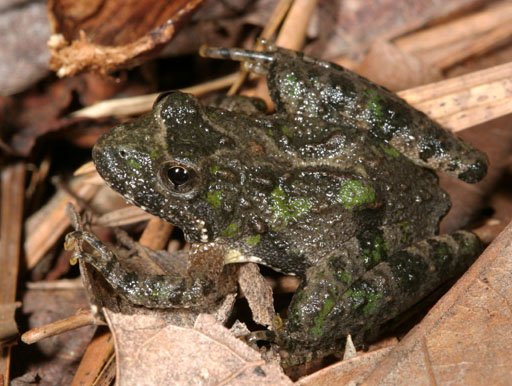
Northern cricket frog
Acris crepitans
A small, warty frog of pond and stream margins with a stuttering call that sounds like two pebbles being clicked together. Spends most of its time on the ground rather than in vegetation.
Status: Secure.
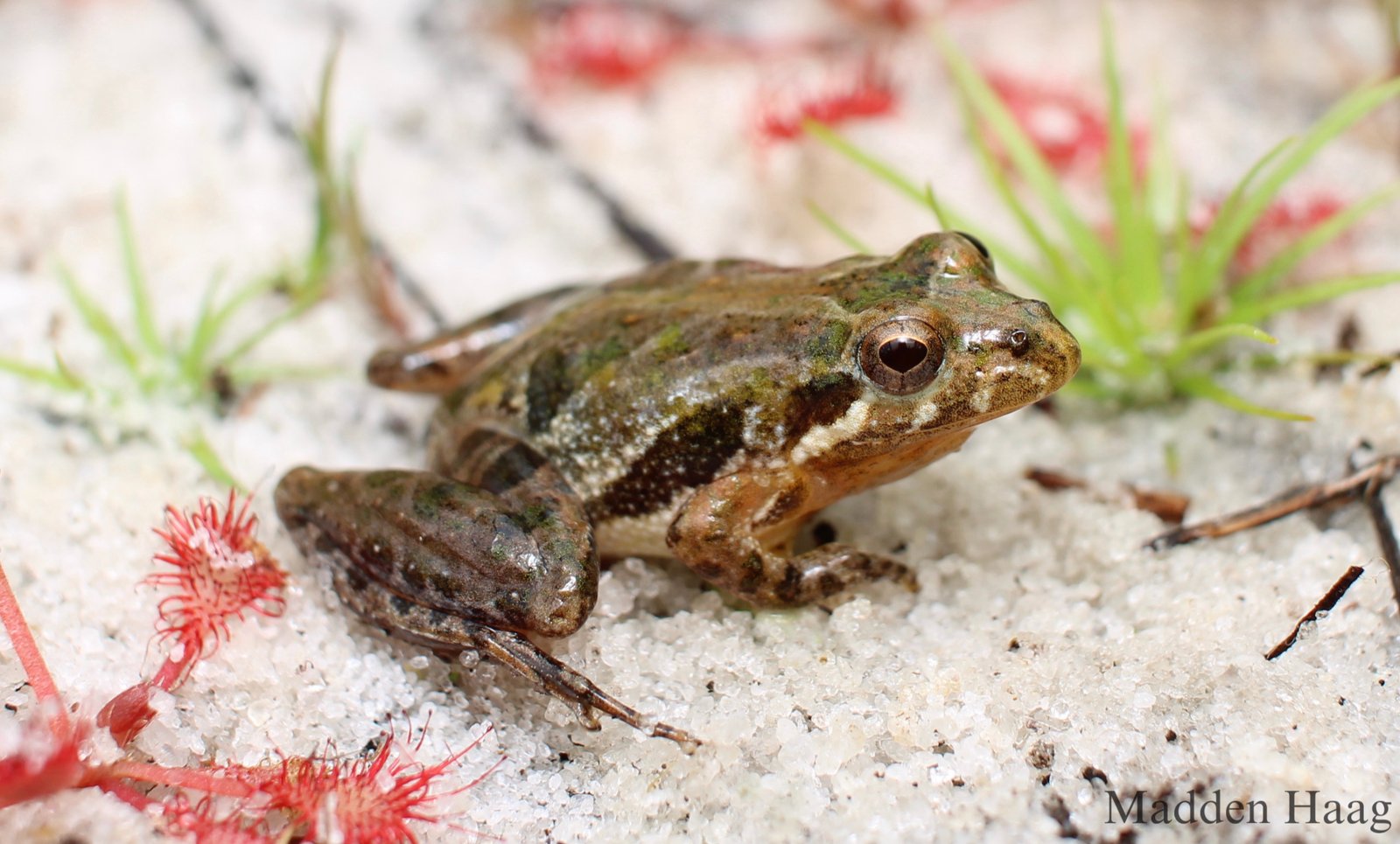
Southern cricket frog
Acris gryllus
Similar to the northern cricket frog but with longer hind legs and a more pointed snout. Tennessee distribution is patchy and Marion is at the range edge.
Status: TWRA Deemed in Need of Management.
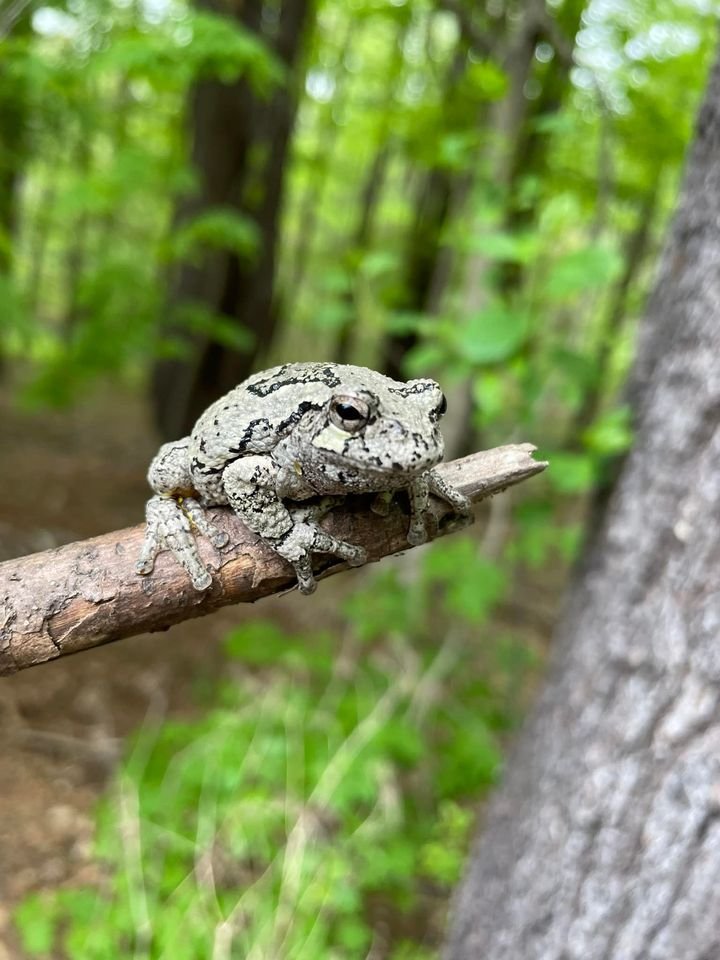
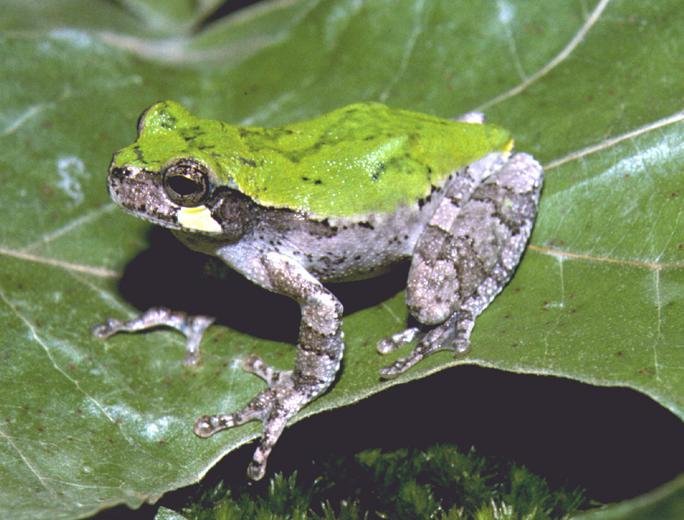
Gray treefrog
Hyla versicolor
A medium-sized treefrog that calls from trees around pond edges from May through August. Skin color shifts between gray and green depending on background. Visually identical to Cope's gray treefrog and reliably told apart only by call.
Status: Secure.
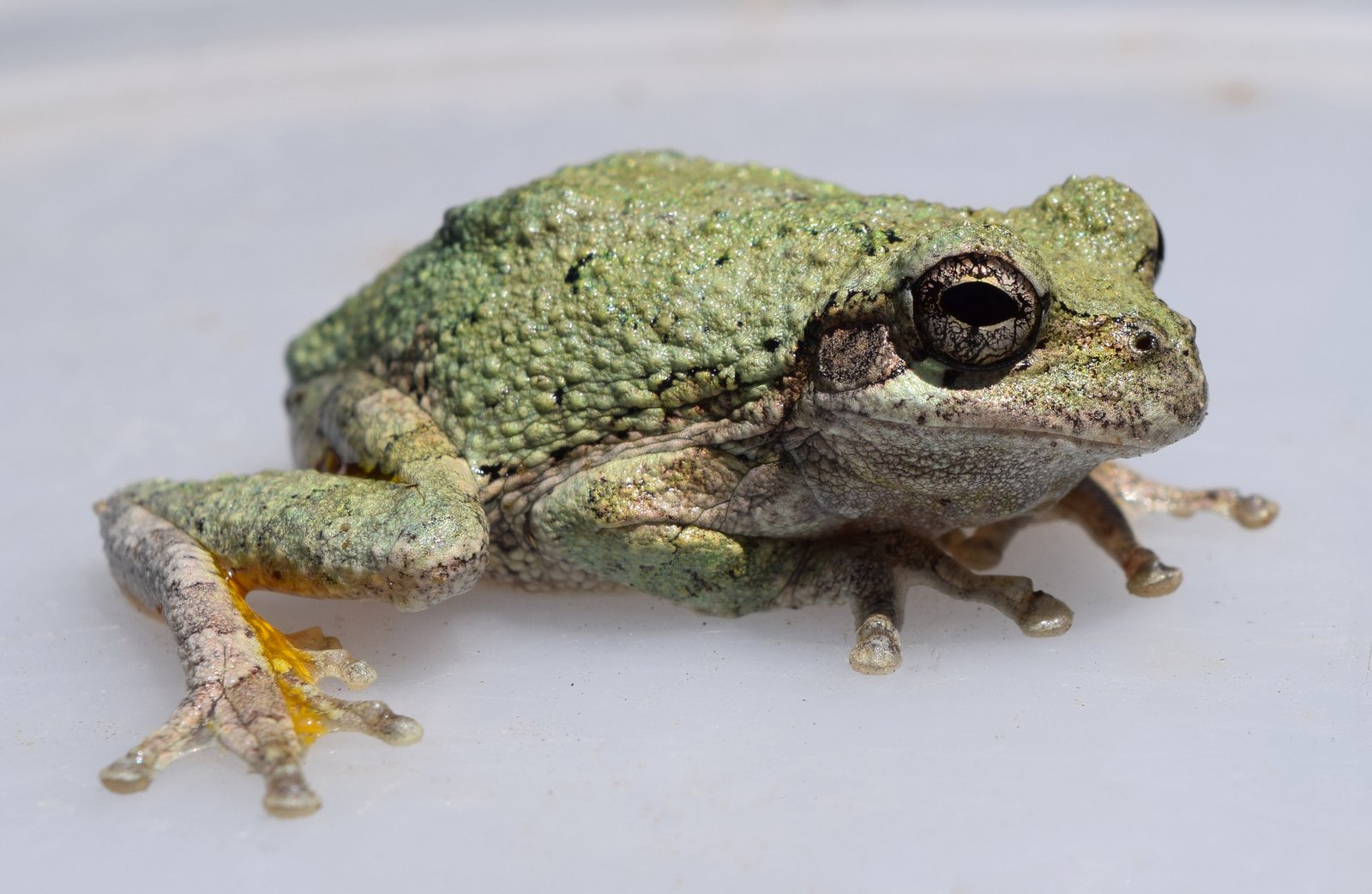
Cope's gray treefrog
Hyla chrysoscelis
A near-twin of the gray treefrog distinguished by a faster, harsher trill (call rate roughly twice the gray treefrog's). Often shares the same breeding ponds.
Status: Secure.
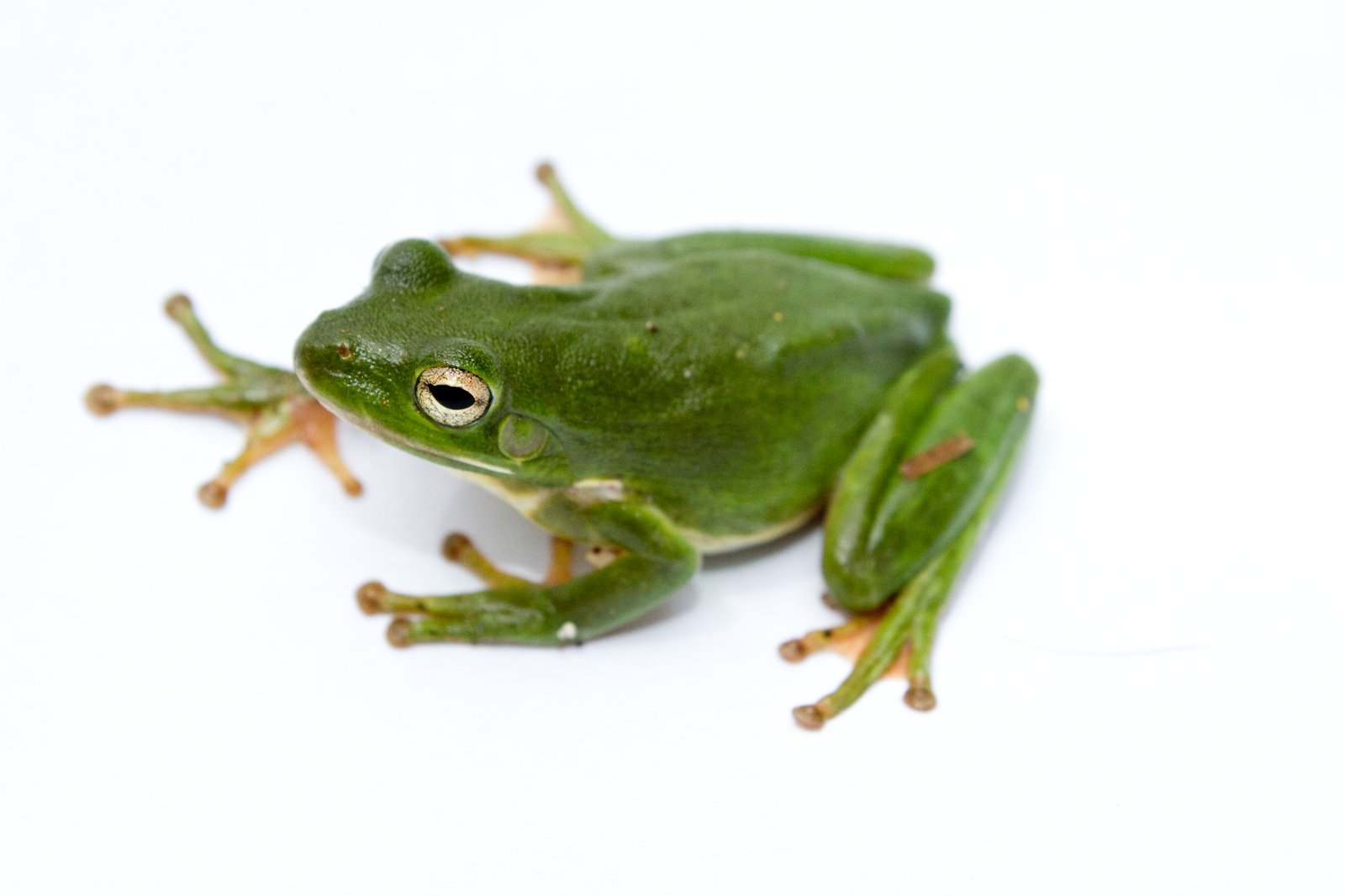
Green treefrog
Hyla cinerea
A long, slender bright-green treefrog with a bold white stripe along each side. Tennessee River bottomlands and swamps; Marion is at the northern edge of the species' core range.
Status: Secure but range-edge.
Bird-voiced treefrog
Hyla avivoca
A close cousin of the gray treefrog with a clear, whistled call that sounds more like a bird than a frog. Limited to bottomland swamps; Marion populations would be along Tennessee River sloughs.
Status: TWRA Deemed in Need of Management.
True frogs (Lithobates)
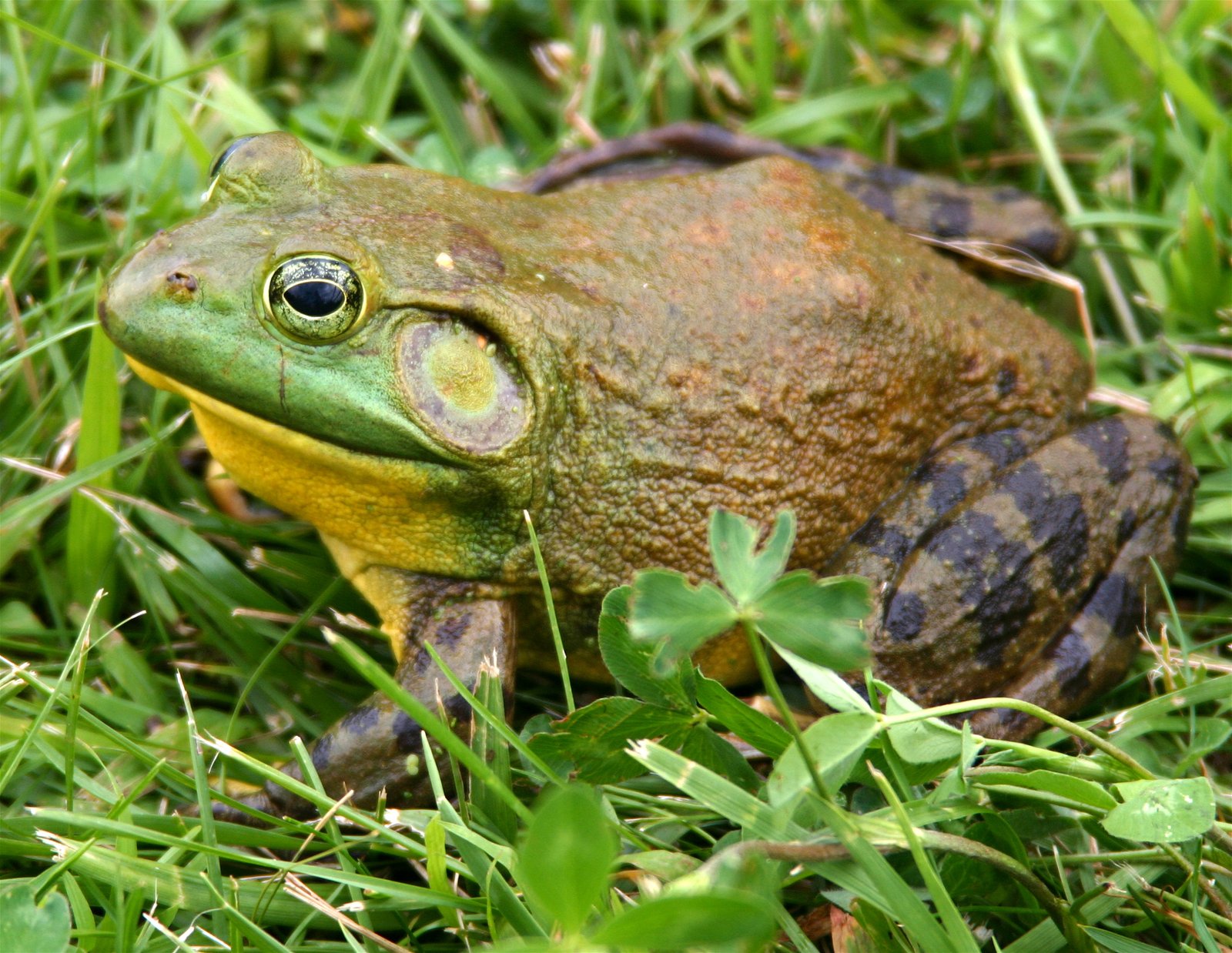
American bullfrog
Lithobates catesbeianus
Marion's largest frog. The deep two-note call (“jug-o-rum”) carries from every Marion pond and lake edge through summer. A voracious predator that takes anything it can swallow, including other frogs and small snakes.
Status: Secure.
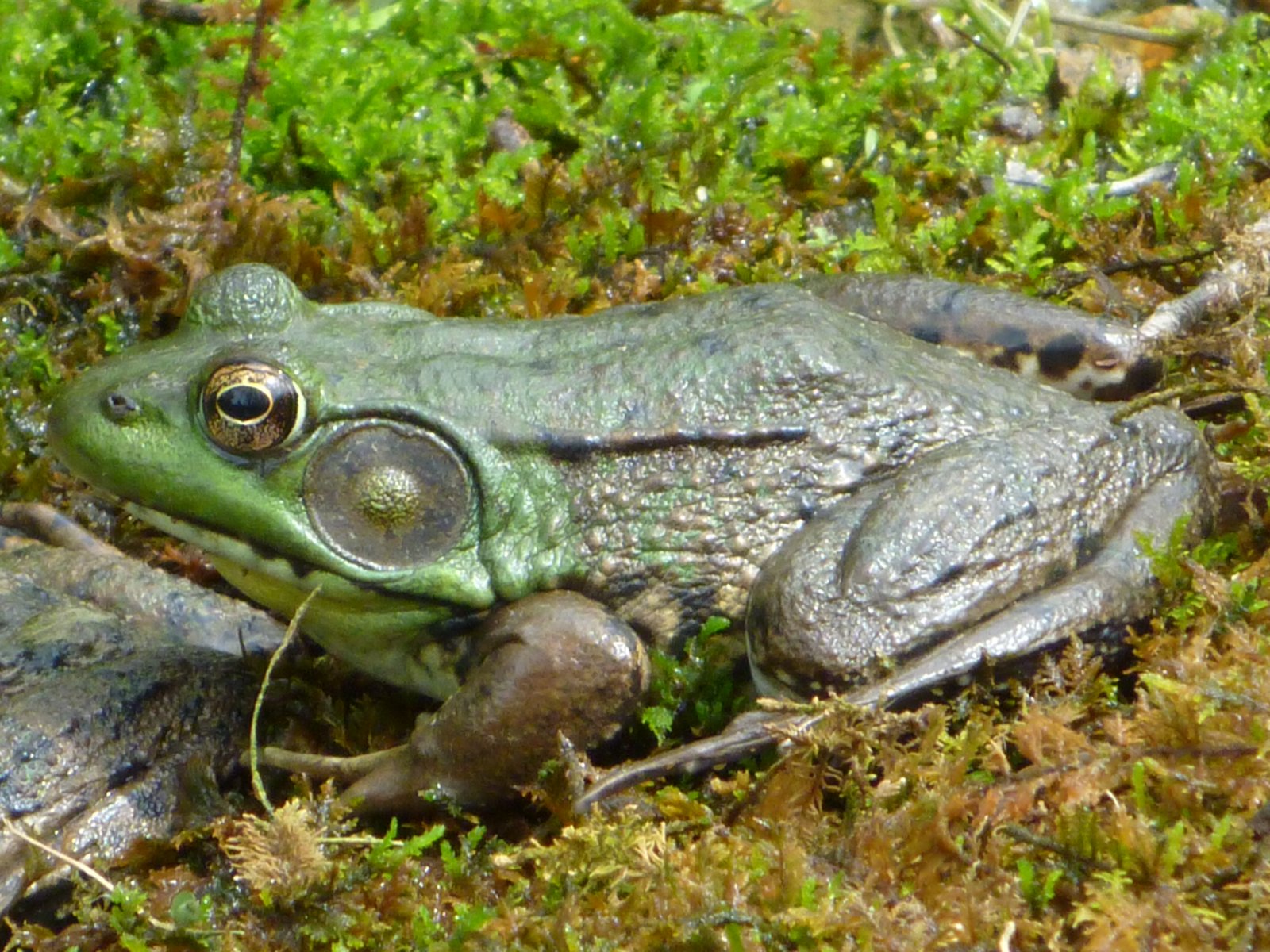
Green frog
Lithobates clamitans
Smaller than the bullfrog with a clear ridge running down each side of the back. Call is a single banjo-string twang rather than the bullfrog's sustained two-note bass. Common on every pond, slough, and slow stream.
Status: Secure.
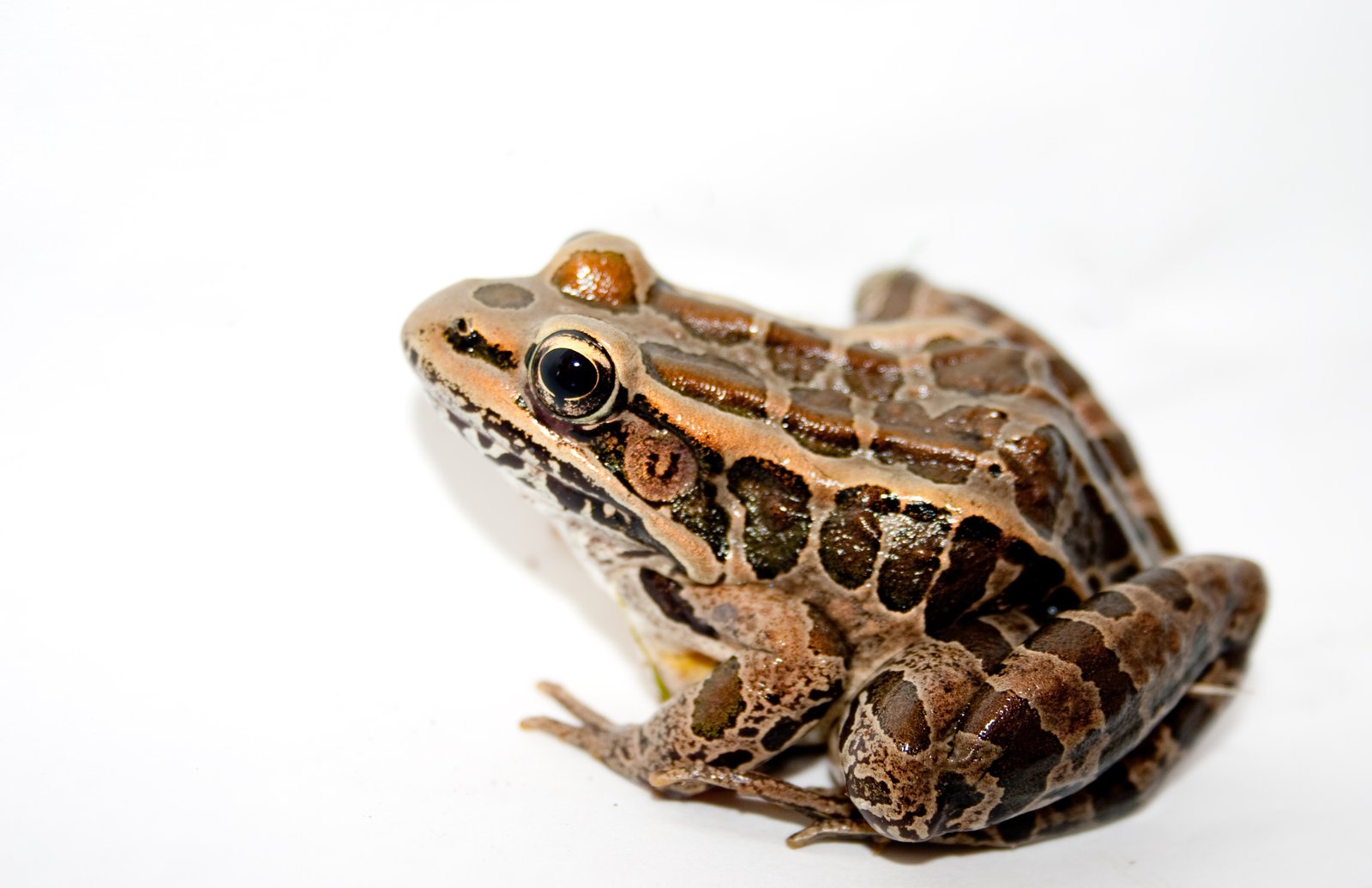
Pickerel frog
Lithobates palustris
A medium-sized frog with squarish dark spots in two parallel rows down the back. Breeds in cool plateau streams and ponds; secretes a mild toxin that other frogs sharing a holding container will react to.
Status: Secure.
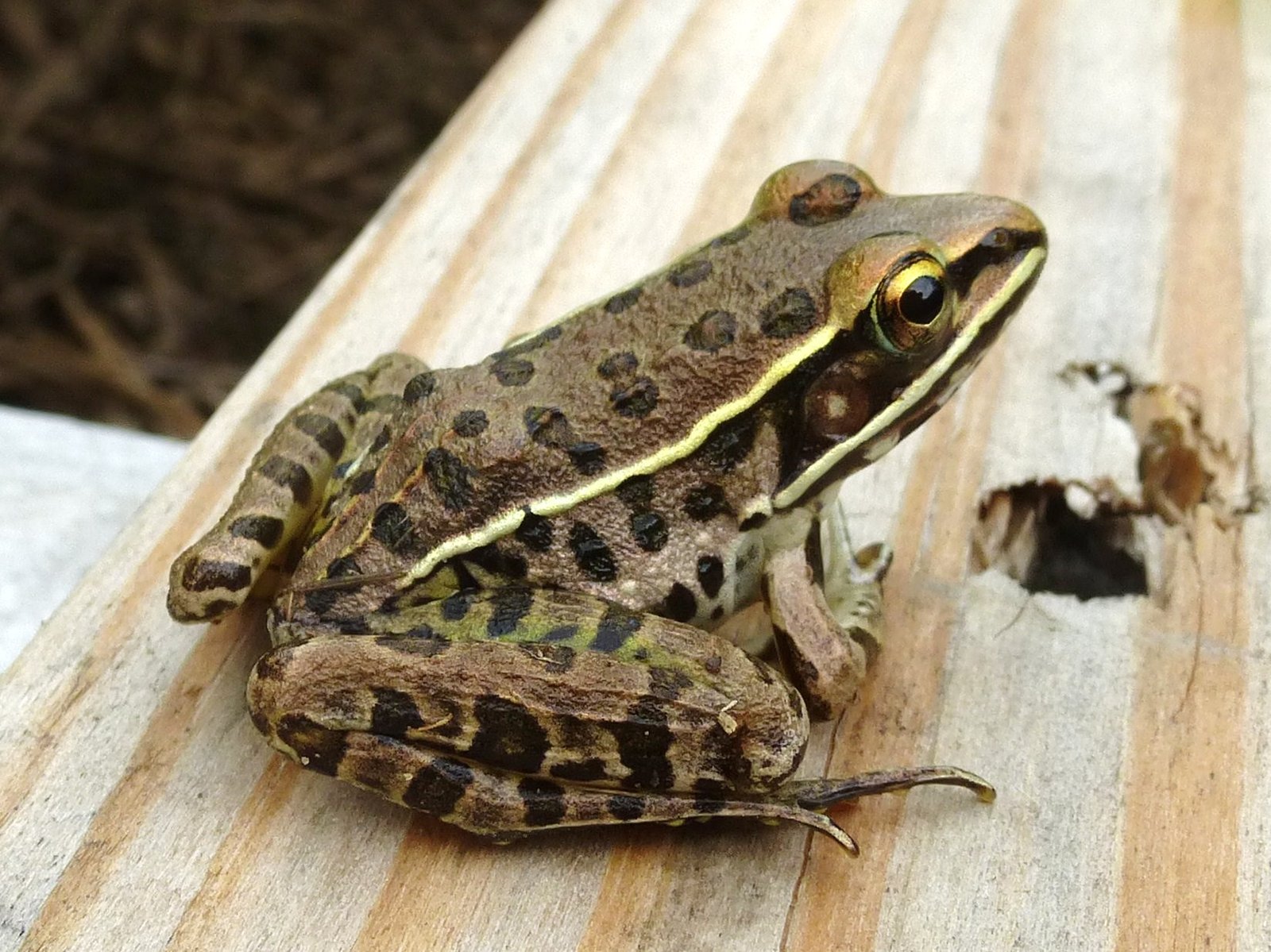
Southern leopard frog
Lithobates sphenocephalus
A long-legged, pointed-snouted frog with rounded dark spots scattered on a green or brown background. Breeds in wet meadows and roadside ditches as well as ponds.
Status: Secure.
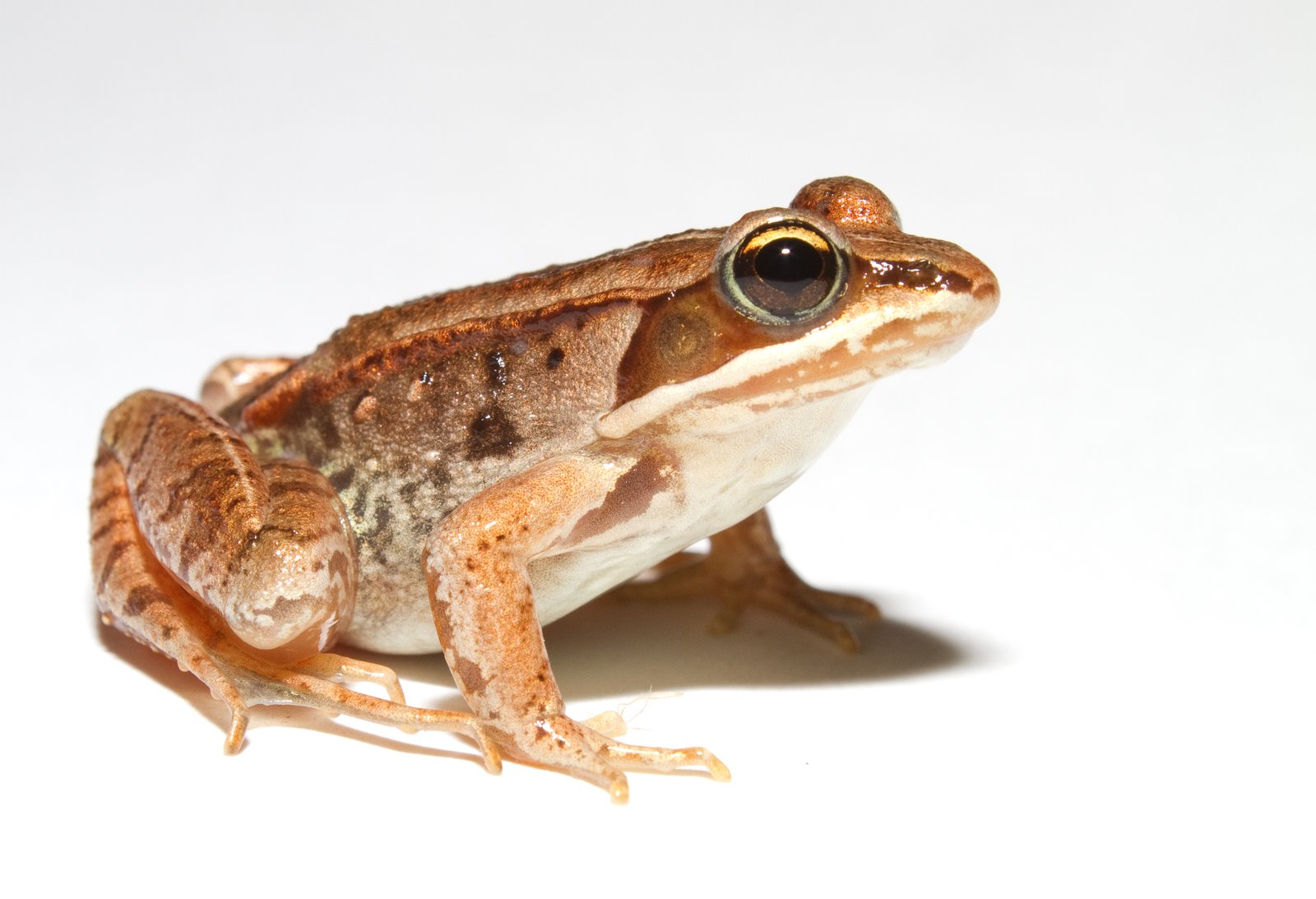
Wood frog
Lithobates sylvaticus
One of the first amphibians to breed each year, calling from plateau vernal pools while ice still rims the shallows. A dark mask through the eye and brown body distinguish it from any other Marion frog. Tolerates partial freezing of body fluids in winter.
Status: Secure but local.
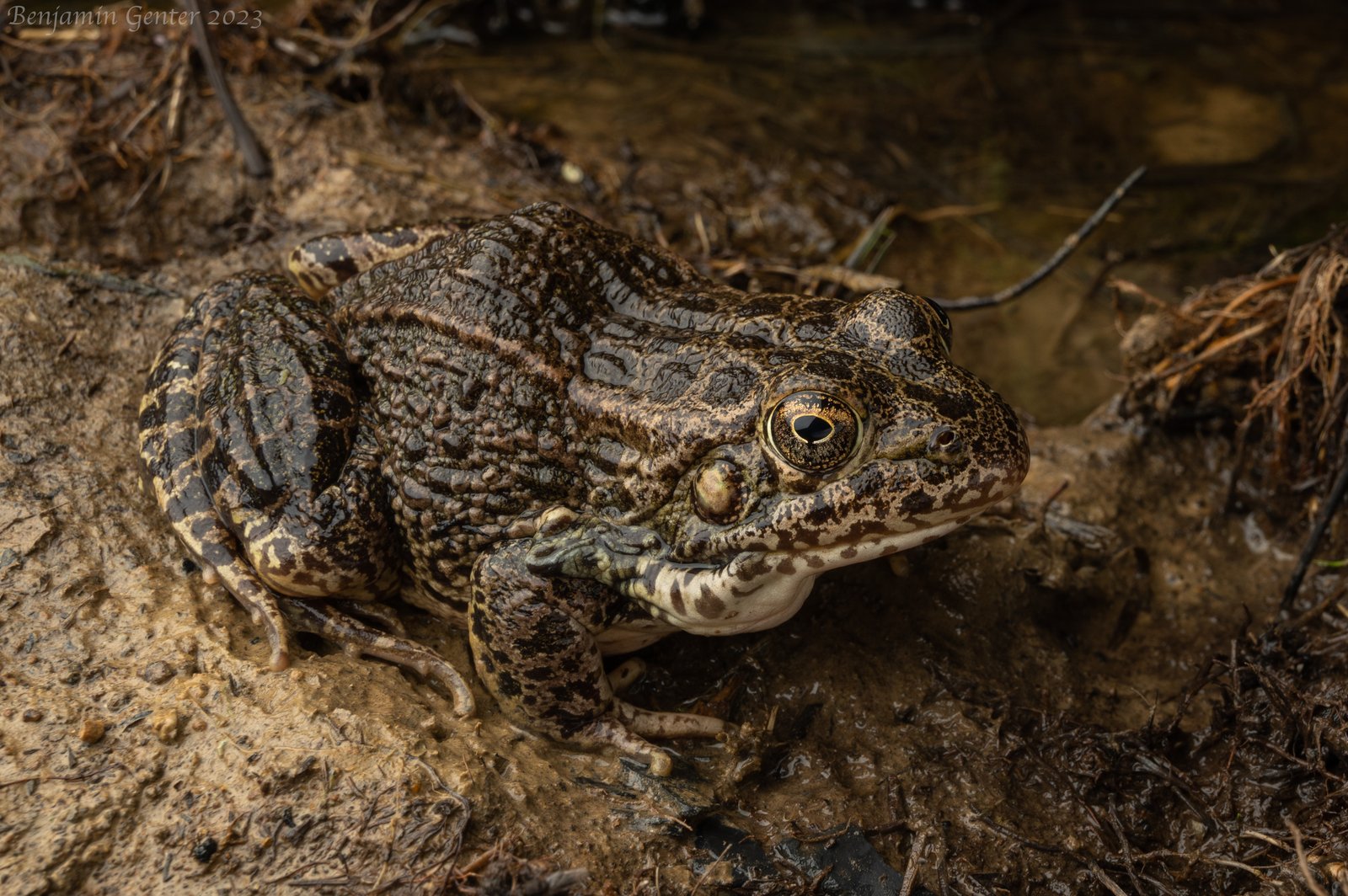
Crawfish frog
Lithobates areolatus
A heavy-bodied, dark-spotted frog that lives most of the year in abandoned crawfish burrows and emerges only briefly to breed. Tennessee occurrence is concentrated in West Tennessee prairie remnants; Marion records would be at the eastern edge.
Status: TWRA Deemed in Need of Management.
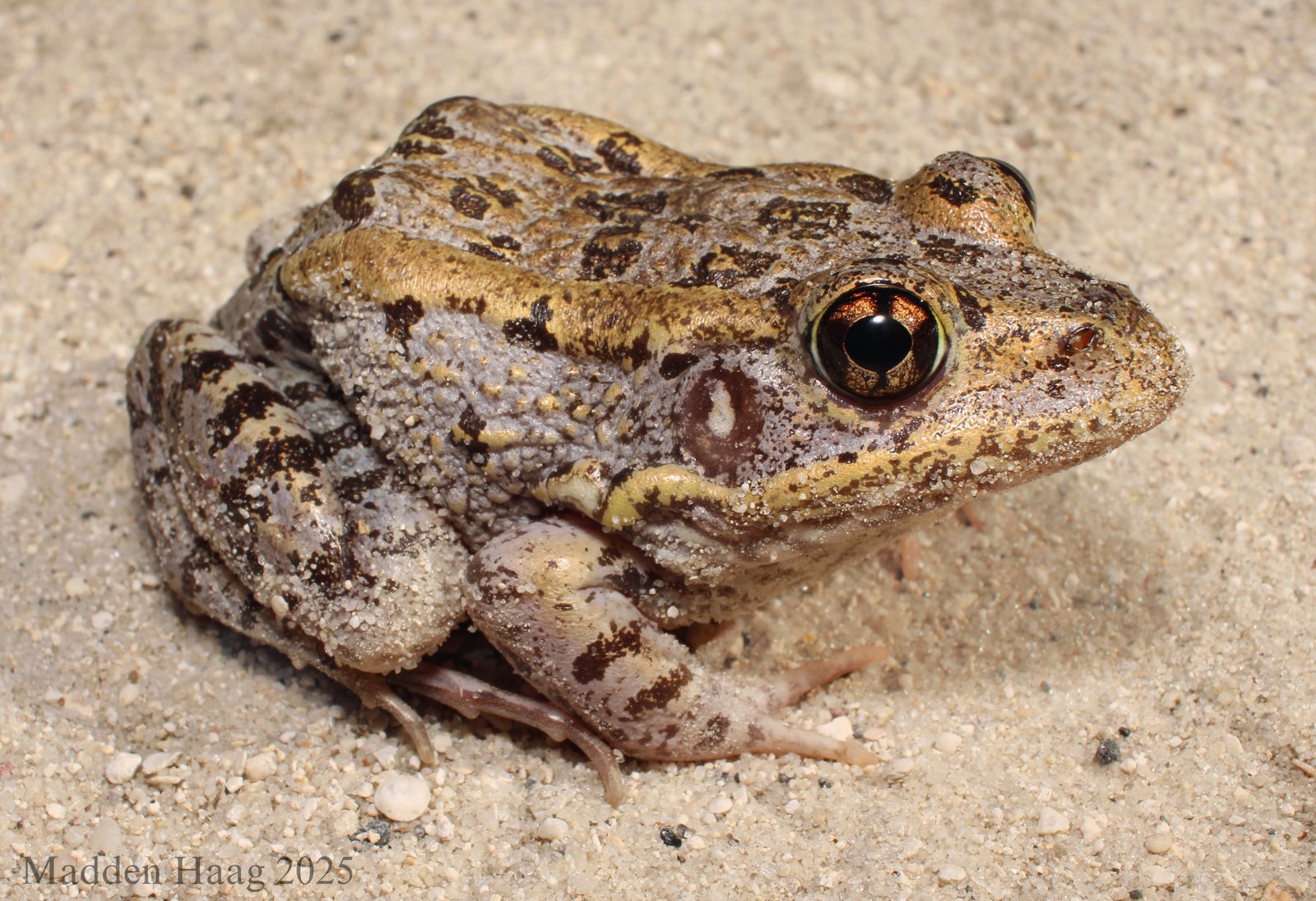
Gopher frog
Lithobates capito
A stout, dark-spotted frog of sandy uplands and pine flatwoods. Tennessee range is restricted and the species is likely extirpated or nearly so from the state; Marion records would be at the northern edge of historical range.
Status: TWRA Endangered.
Fish and aquatic life
The Tennessee River system is one of the most fish-diverse temperate river systems in the world, and Marion County sits at a confluence point between the main-stem Tennessee River, the Sequatchie River, Battle Creek, and dozens of plateau and valley tributary streams. About 91 native and established non-native fish species are documented in or credibly expected in the county across these waters. Marion's reach is dominated by Nickajack Lake (a 46-mile Tennessee Valley Authority impoundment completed in 1967) plus the cool, oxygen-rich tailwater section below Nickajack Dam, which functions as one of east Tennessee's most productive year-round game fisheries. The Sequatchie River, by contrast, is largely free-flowing across the county and supports a different community keyed to clear gravel-and-cobble streambed.
The list below pulls from the Tennessee Wildlife Resources Agency Region 3 species pages, U.S. Fish and Wildlife Service threatened-and-endangered listings, the Tennessee Valley Authority's Nickajack Reservoir fishery records, and Wikipedia's species pages for taxonomic and life-history detail. Where dam construction has reduced or extirpated a native species (American eel, lake sturgeon, Alabama shad, blue sucker), the prose says so explicitly. Where invasive species are a current concern (Alabama bass, the four Asian carps), the prose names the management context.
Nickajack Lake at a glance
Tennessee Valley Authority's Nickajack Reservoir was impounded in 1967 by Nickajack Dam, replacing the older and structurally failing Hales Bar Dam (1913) about a quarter mile upstream. The impoundment runs 46 miles up the Tennessee River from the dam to Chickamauga Dam at Chattanooga, covering roughly 10,400 acres at full pool. The reservoir holds healthy populations of largemouth and smallmouth bass, both crappie species, white and striped bass, channel and blue (trophy) catfish, sauger, walleye, freshwater drum, and the full sunfish complement; deeper channel and tailwater sections add paddlefish, lake sturgeon (hatchery-origin), and skipjack shad. The Nickajack Reservoir paddlefish snagging season runs from April 24 through May 31, with a daily limit of two fish; the rest of the year, paddlefish are protected. Lake sturgeon are protected from harvest year-round.
Game fish: black bass, temperate bass, and crappie
Marion's Tennessee River reach holds a full complement of warmwater sport fish. Smallmouth bass dominate the river above and below Nickajack Dam, largemouth dominate the impoundment, and the temperate basses (white, yellow, and stocked striped bass) school in open water. Both crappie species fill brushy coves. Spotted and Alabama bass are smaller, range-edge or invasive members of the same group; Alabama bass is invasive in Tennessee and TWRA discourages anglers from releasing it back into the water.
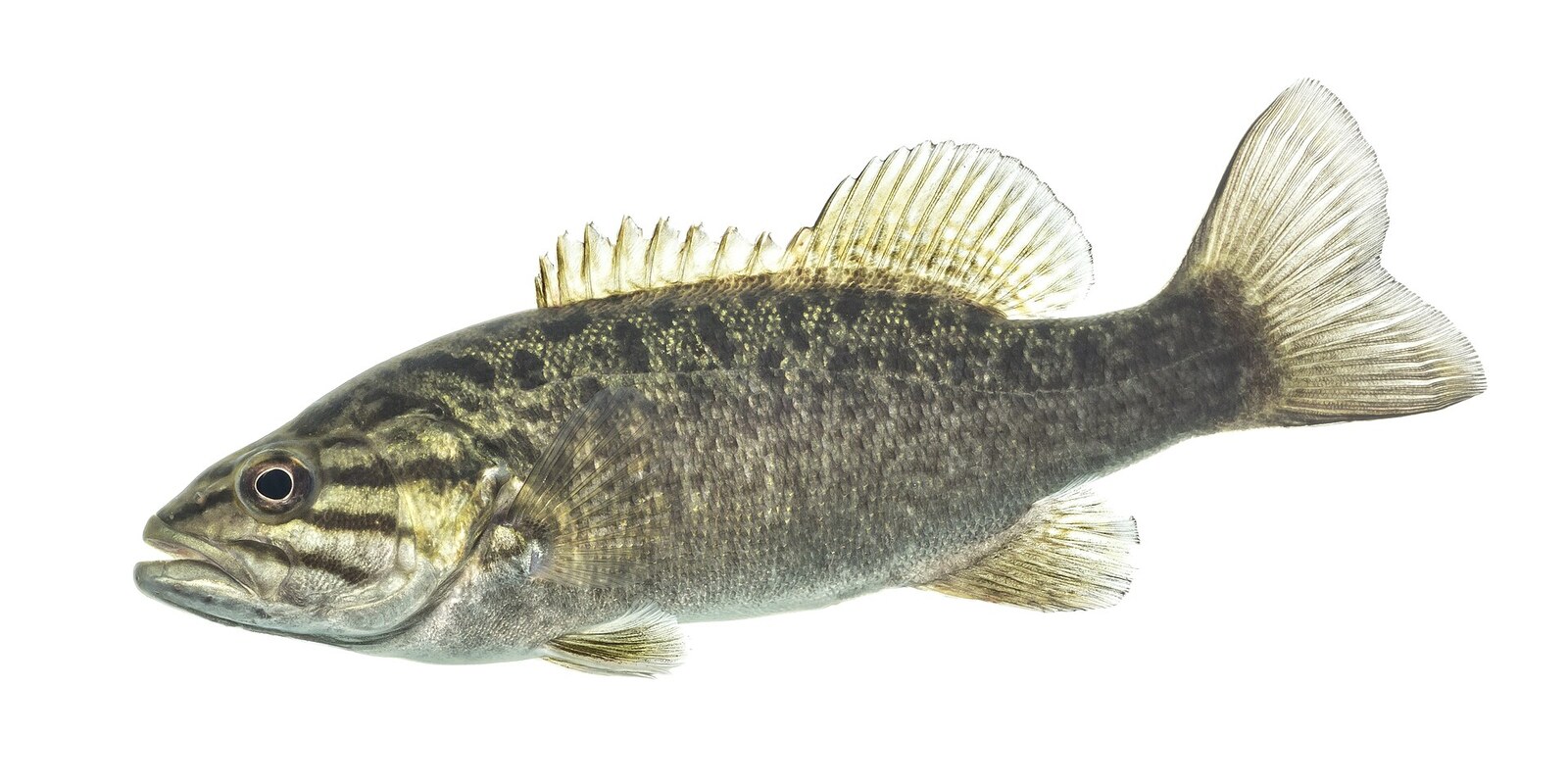
Smallmouth bass
Micropterus dolomieu
Tennessee's official state sport fish, designated in 2005. The signature game fish of the upper Sequatchie River and the Tennessee River tailwater below Nickajack Dam, prized by anglers for hard-fighting strikes in clear, rocky-bottomed water. Bronze-flanked with vertical bars, smallmouth hold over rocky shoals and gravel runs.
Status: Secure; Tennessee state sport fish.
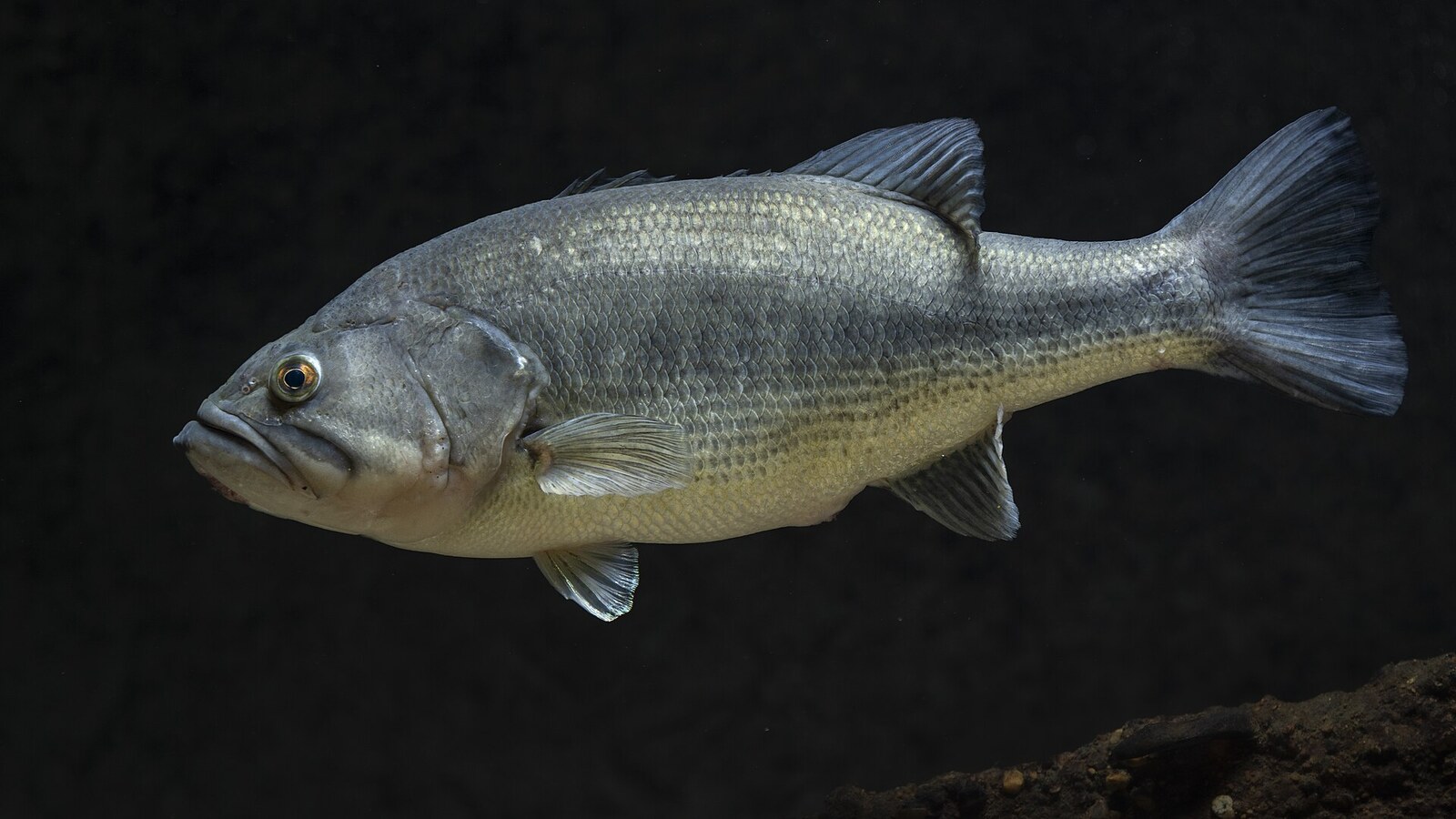
Largemouth bass
Micropterus salmoides
Tennessee's most popular reservoir game fish. Holds in cover-rich shallows on Nickajack Lake (submerged timber, lily pads, dock pilings) and exceeds twenty inches across the impoundment.
Status: Secure; abundant on Nickajack Lake.
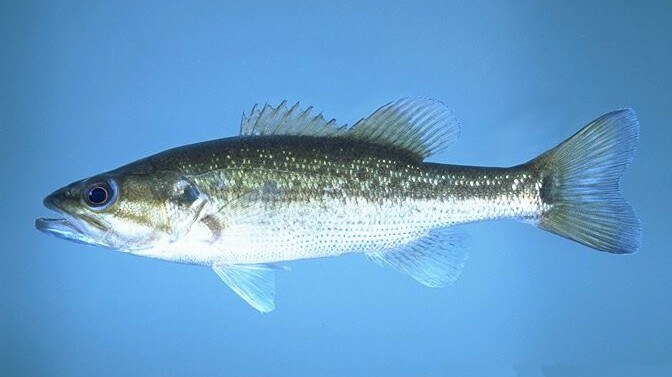
Spotted bass
Micropterus punctulatus
A smaller cousin of the smallmouth and largemouth, named for the rows of dark spots running along the lower flanks. Prefers moderate-current sections of larger rivers and feeder creeks; hybridizes with smallmouth where ranges overlap.
Status: Secure; native to the Tennessee River drainage.
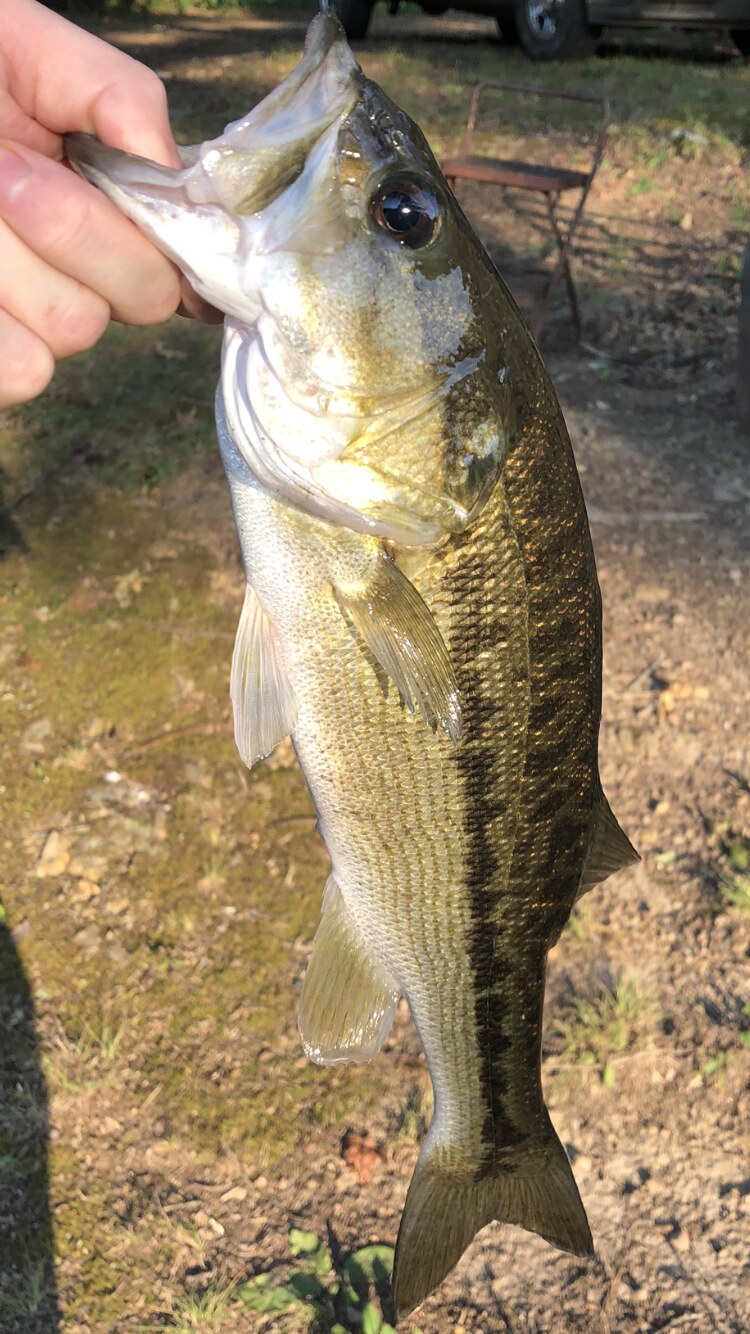
Alabama bass
Micropterus henshalli
An invasive black bass species working its way up the Tennessee River from Alabama. Hybridizes aggressively with native smallmouth and spotted bass, threatening their genetic integrity. TWRA tracks expansion and discourages release.
Status: Invasive in Tennessee; release prohibited if caught.
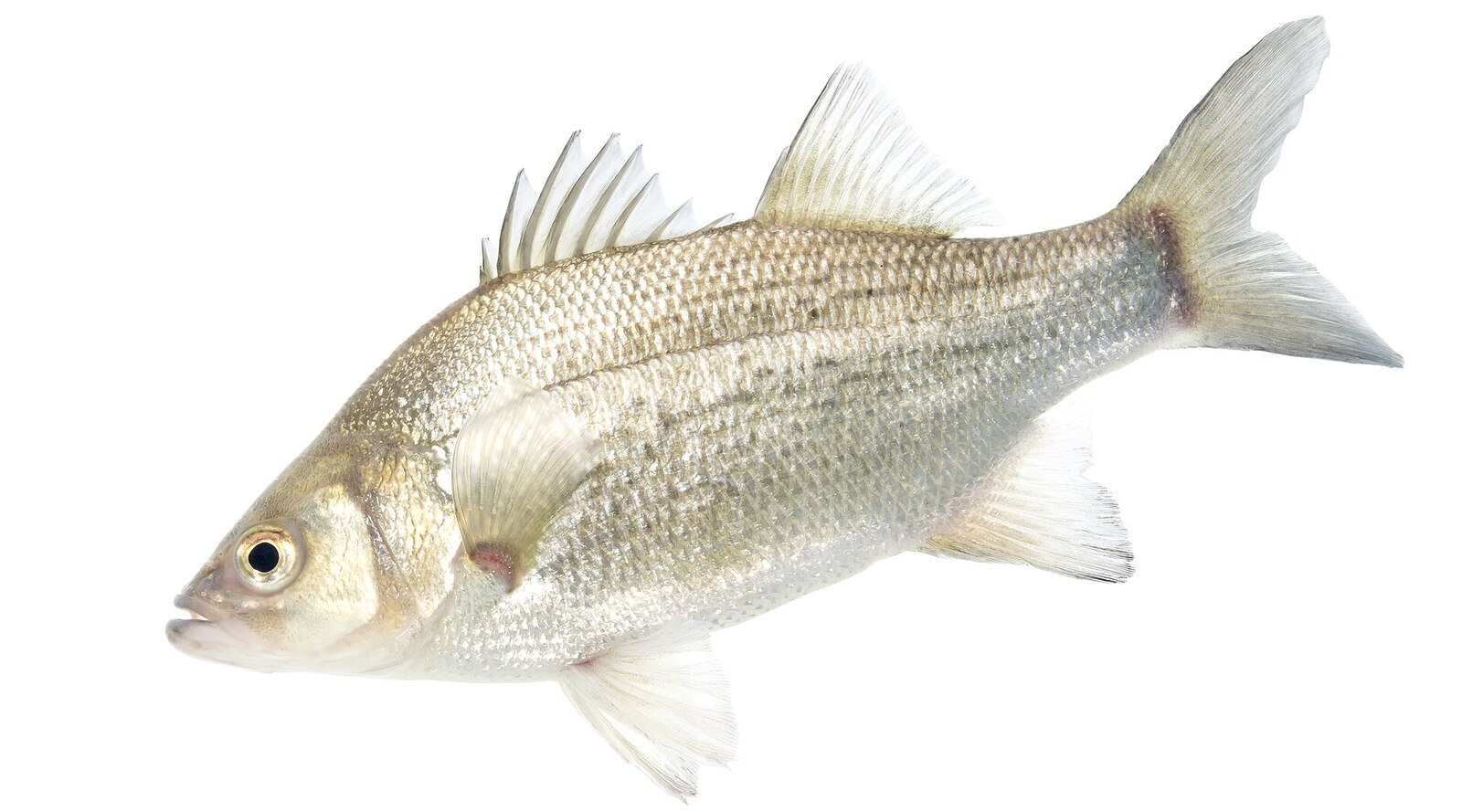
White bass
Morone chrysops
A schooling open-water fish of the Tennessee River and Nickajack Lake. Spring spawning runs into tributary creeks, when whites and yellows congregate in current at creek mouths, draw a dedicated angling following.
Status: Secure; popular pelagic game fish.
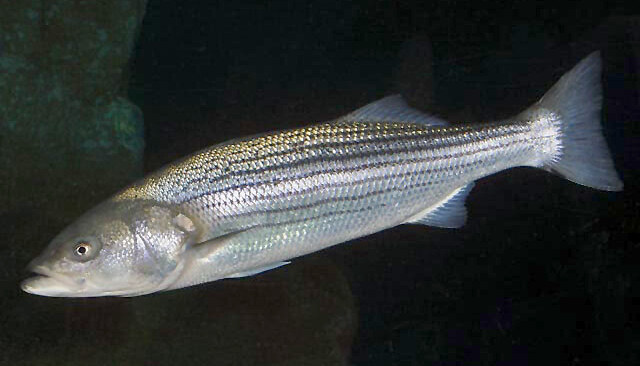
Striped bass
Morone saxatilis
A large pelagic predator stocked into the Tennessee River system; trophy fish in the Nickajack tailwater can exceed thirty pounds. Cool, oxygen-rich tailwater below the dam supports stripers through hot summer months when they retreat from the warmer upstream impoundment.
Status: Stocked; managed as a put-and-grow trophy fishery.
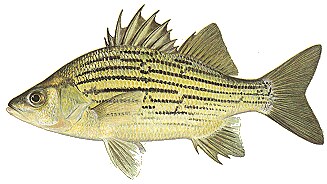
Yellow bass
Morone mississippiensis
The smaller native cousin of the white bass, with bold black horizontal stripes broken at the rear. Common in Nickajack and other Tennessee River impoundments; school in open water and feed on shad.
Status: Secure; native temperate bass.
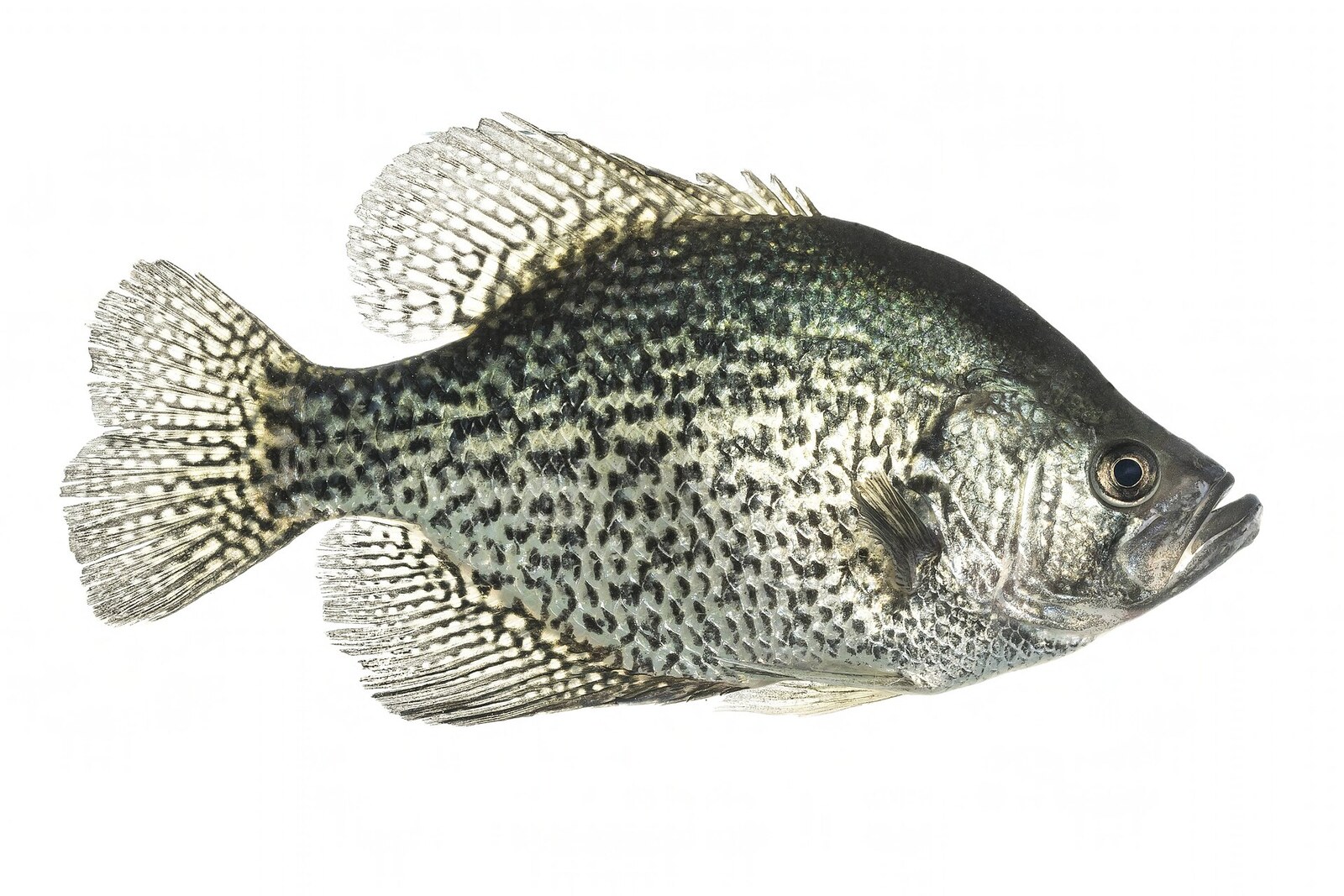
Black crappie
Pomoxis nigromaculatus
A panfish staple in Nickajack's coves and around submerged brush piles. Mottled rather than vertically barred, distinguishing it from the white crappie. Spring spawning concentrates fish in shallow cover.
Status: Secure; widespread in Tennessee impoundments.
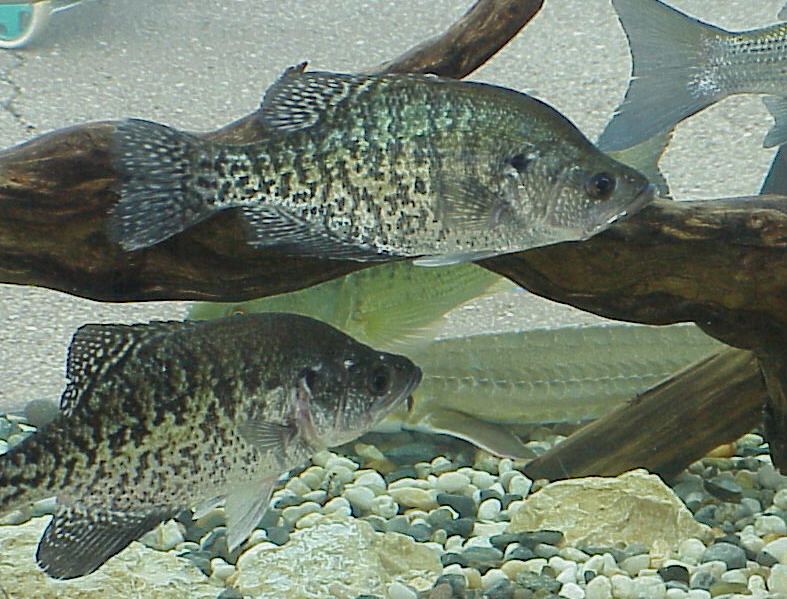
White crappie
Pomoxis annularis
The other crappie species, with vertical bars rather than scattered mottling on the flanks. Tolerant of murkier water than black crappie; both species often share the same coves on Nickajack.
Status: Secure; widely distributed.
Sunfishes (Centrarchidae)
The sunfish family (Centrarchidae) is the universal warm-water panfish lineage of the eastern United States. Marion holds nine species: bluegill is everywhere, while longear sunfish are signature stream fish of the clearer Sequatchie tributaries and rock bass are the bright-eyed predators of rocky shoals. Spawning beds form circular saucers in shallow sand and gravel each spring.
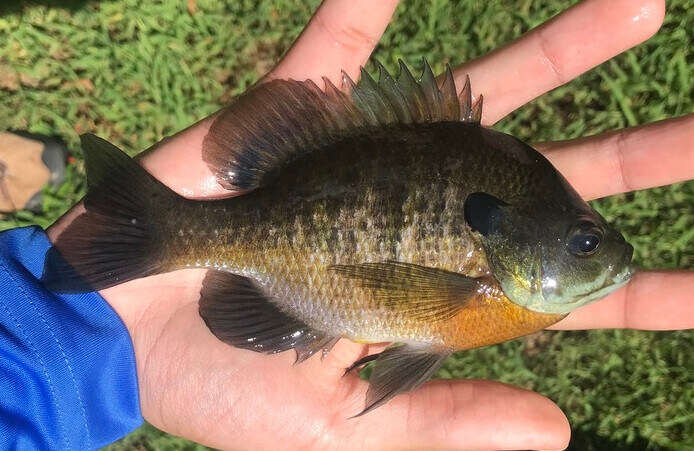
Bluegill
Lepomis macrochirus
The most abundant sunfish on Nickajack Lake and in nearly every Marion County pond and slack-water creek pool. Spring spawning beds form circular saucers in sandy shallows; the operculum's dark flap gives the species its name.
Status: Secure; the universal panfish.
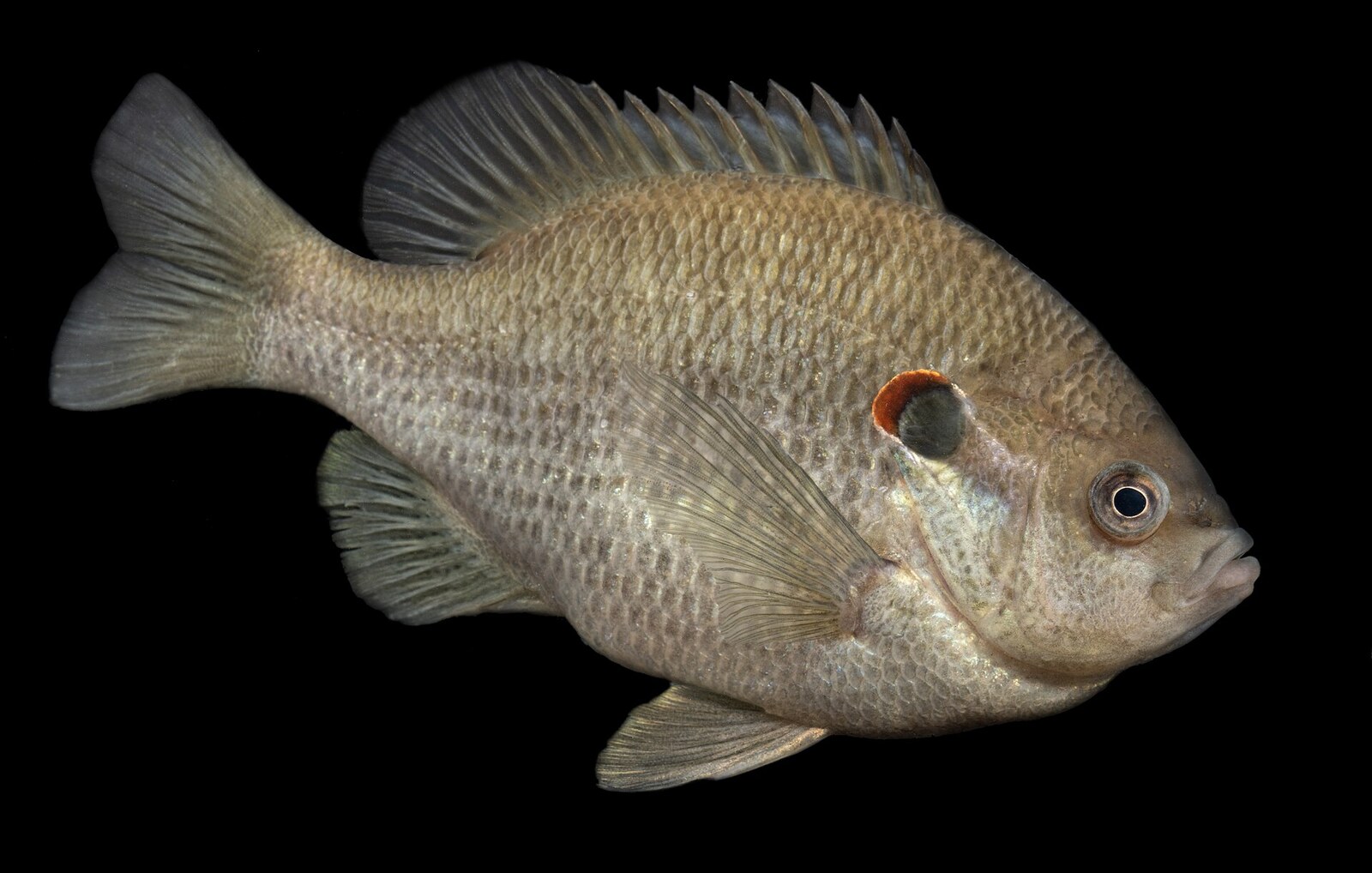
Redear sunfish
Lepomis microlophus
Larger and more open-water than the bluegill, with a red or orange margin on the gill cover. Locally called shellcracker for its specialty diet of snails and small mussels; strong pharyngeal teeth crush mollusk shells.
Status: Secure; popular panfish on Nickajack.
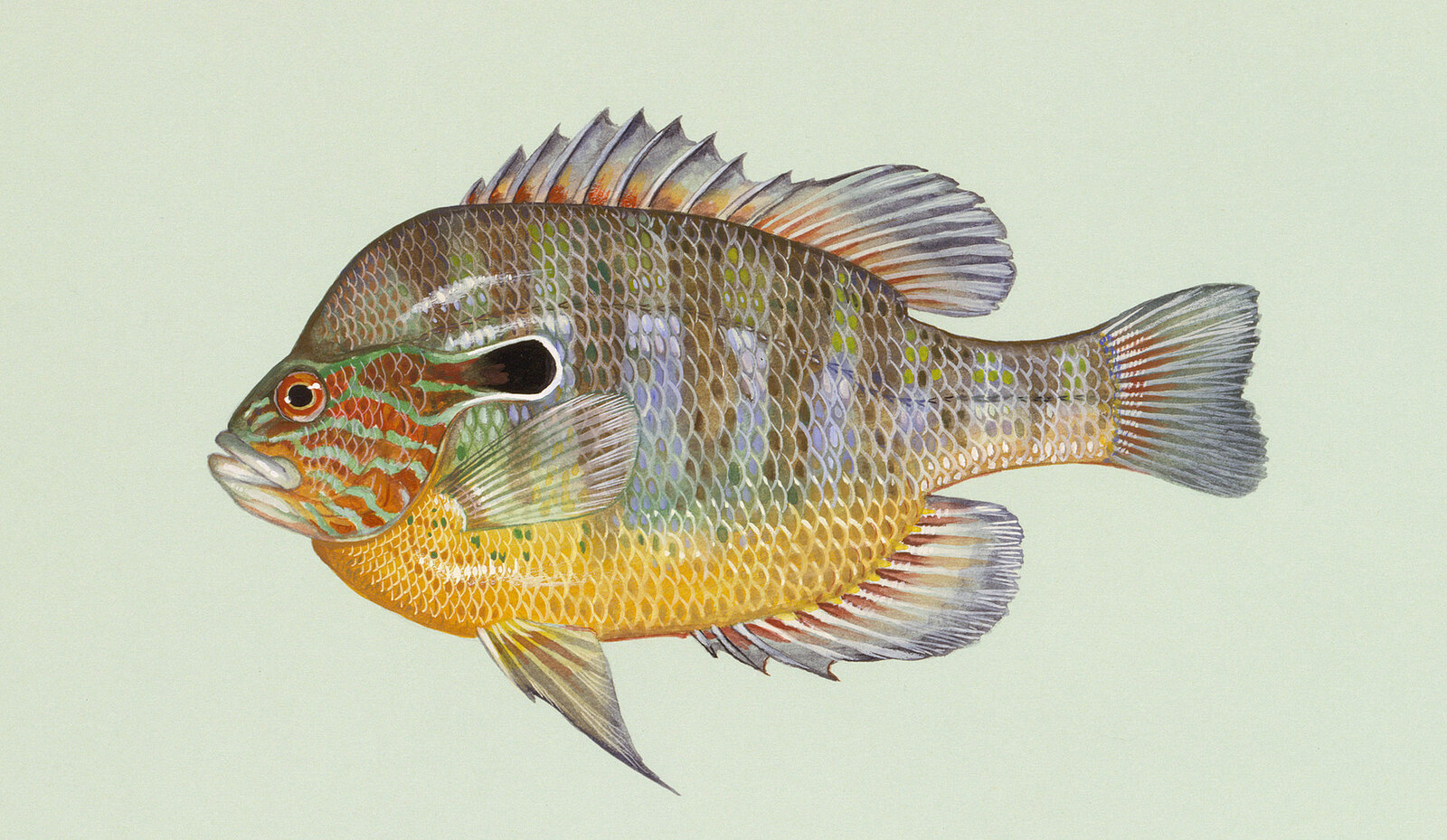
Longear sunfish
Lepomis megalotis
A small, brilliantly colored sunfish of the Sequatchie River and clear Cumberland Plateau streams. Males in breeding color show electric blue and orange flanks; the operculum flap is elongated, giving the common name.
Status: Secure; a stream specialist of clear flowing water.
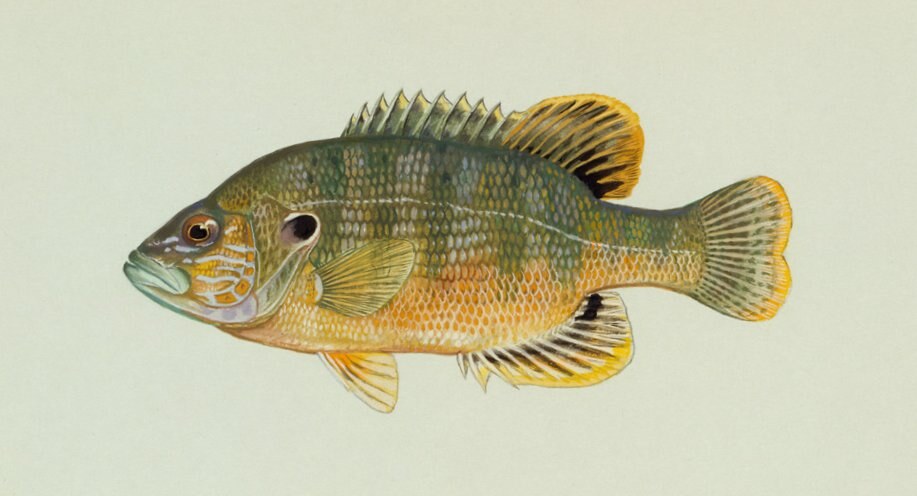
Green sunfish
Lepomis cyanellus
Adapted to small headwater streams, drainage ditches, and ponds where other sunfish struggle. Wide mouth and aggressive feeding habits; tolerates poor water quality better than most centrarchids.
Status: Secure; tolerant of disturbed habitats.
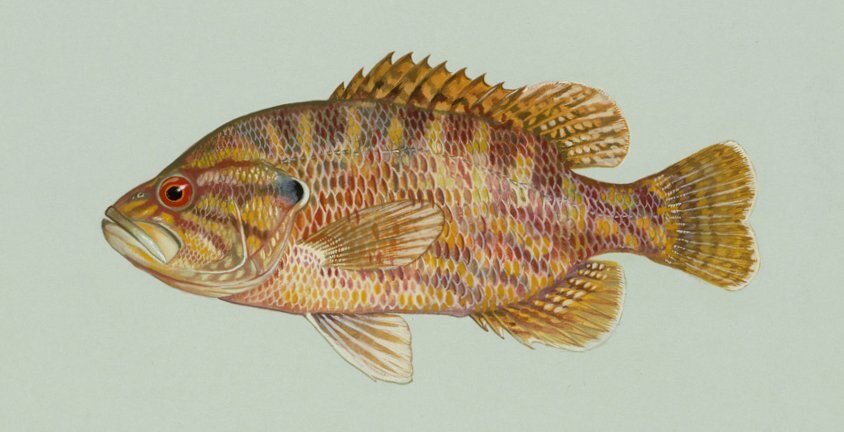
Warmouth
Lepomis gulosus
A robust sunfish of weedy backwater coves and slack-water sloughs, with three to five dark bars radiating back from the eye. Often mistaken for a small rock bass; prefers swampier conditions than the rock bass favors.
Status: Secure; backwater specialist.
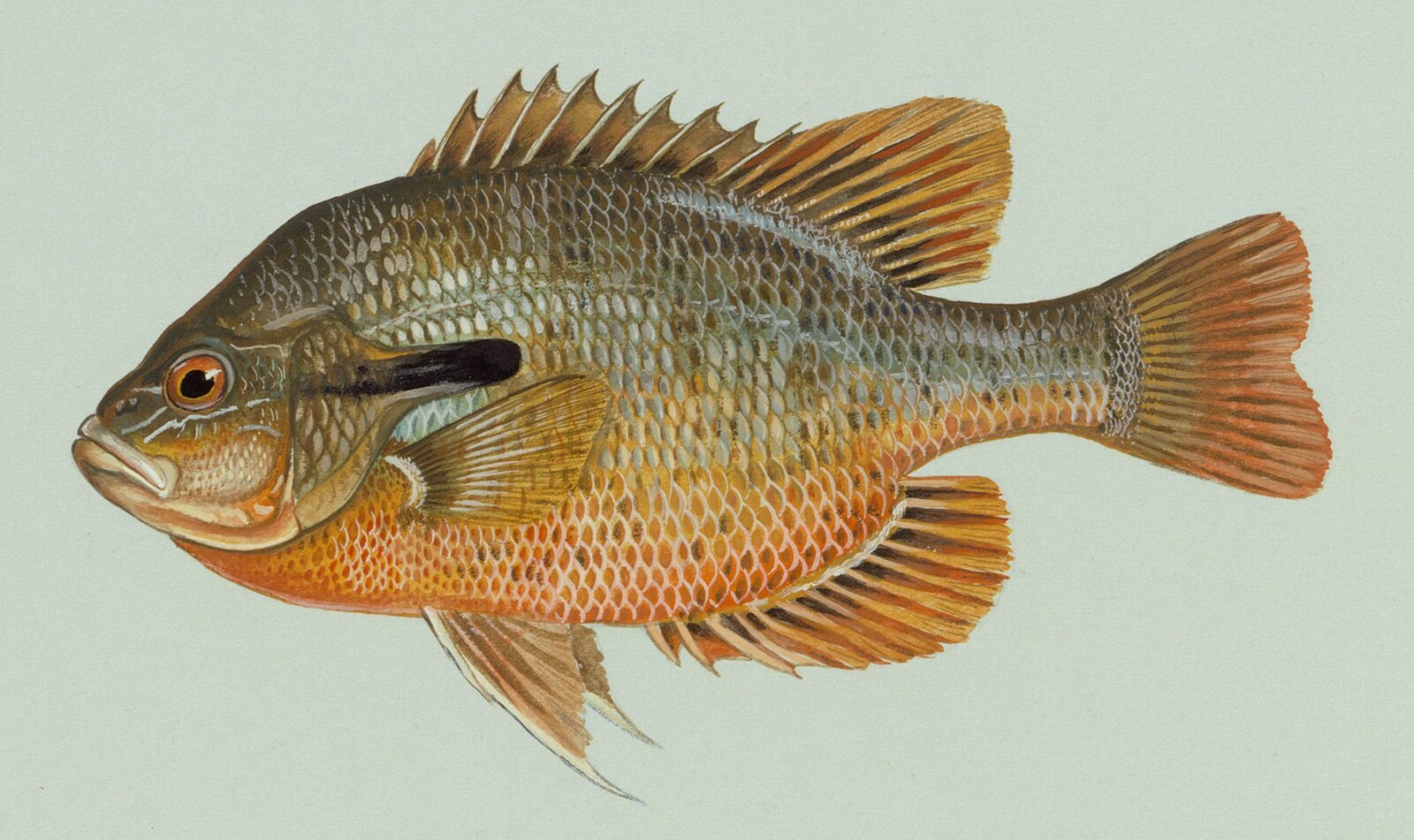
Redbreast sunfish
Lepomis auritus
A long-eared sunfish with an orange-red breast on breeding males. Native to Atlantic-slope drainages and introduced or expanding into the Tennessee River system; favors moderately flowing creeks.
Status: Secure; locally established.
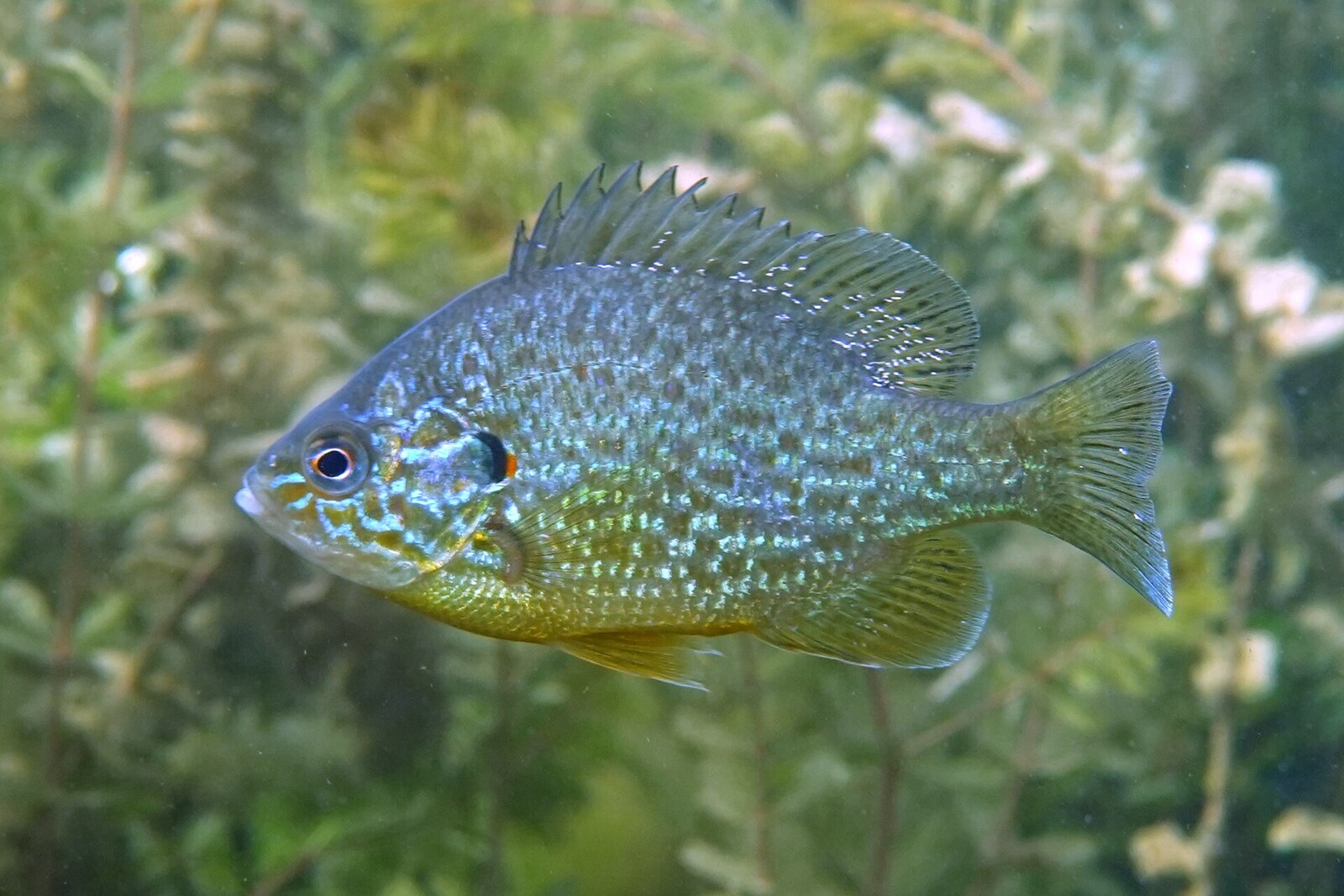
Pumpkinseed
Lepomis gibbosus
Among the most colorful sunfish: bright red dot on the operculum flap, blue and yellow facial stripes, orange flanks. Tolerates cooler water than most sunfish; less common in the warm Nickajack impoundment than in cooler tributary creeks.
Status: Secure; locally distributed.
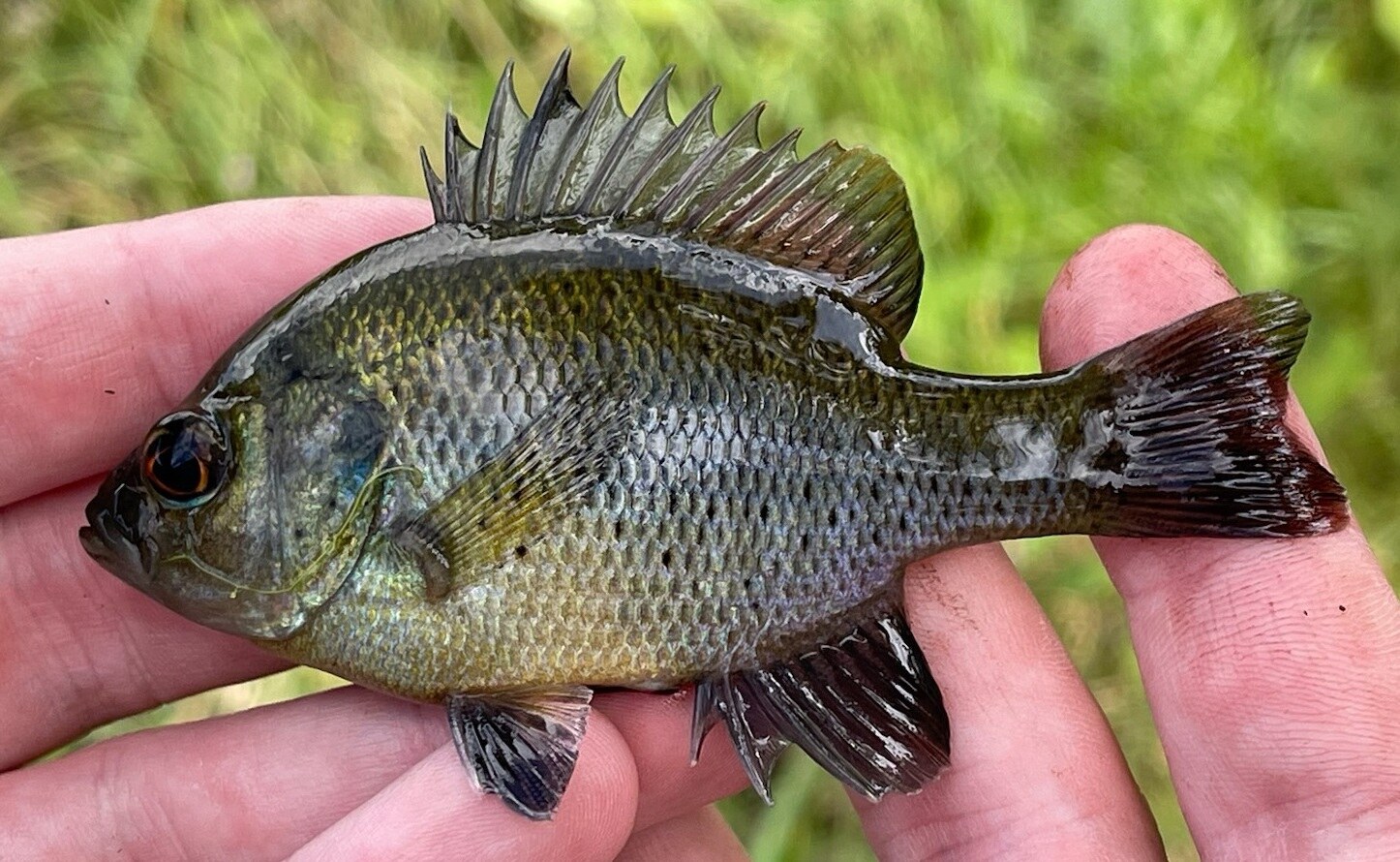
Spotted sunfish
Lepomis miniatus
A small southern sunfish with rows of dark spots on its yellow-green flanks. Inhabits swampy backwaters and slow-moving creeks; uncommon at Marion's latitude relative to lower-elevation Tennessee River reaches.
Status: Secure; range-edge species in Marion.
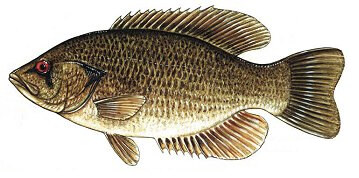
Rock bass
Ambloplites rupestris
A red-eyed sunfish of clear, rocky streams and shoal water. Common in the Sequatchie River and Tennessee River tailwater; pugnacious feeder that takes nymphs and small crayfish. Often called goggle-eye for its prominent red iris.
Status: Secure; signature fish of clear gravel-bottomed creeks.
Catfishes
Three large catfish species support the county's bigger-bait fishery: channel catfish are the standard pond and impoundment fish, blue catfish reach trophy sizes on Nickajack Lake, and flathead catfish are pursued at night in the dam tailwater. Three smaller bullheads round out the group in farm ponds and slow creek pools. Several smaller species in the genus Noturus, the madtoms, live in clearer Tennessee River drainage streams; some are TWRA Species of Greatest Conservation Need.
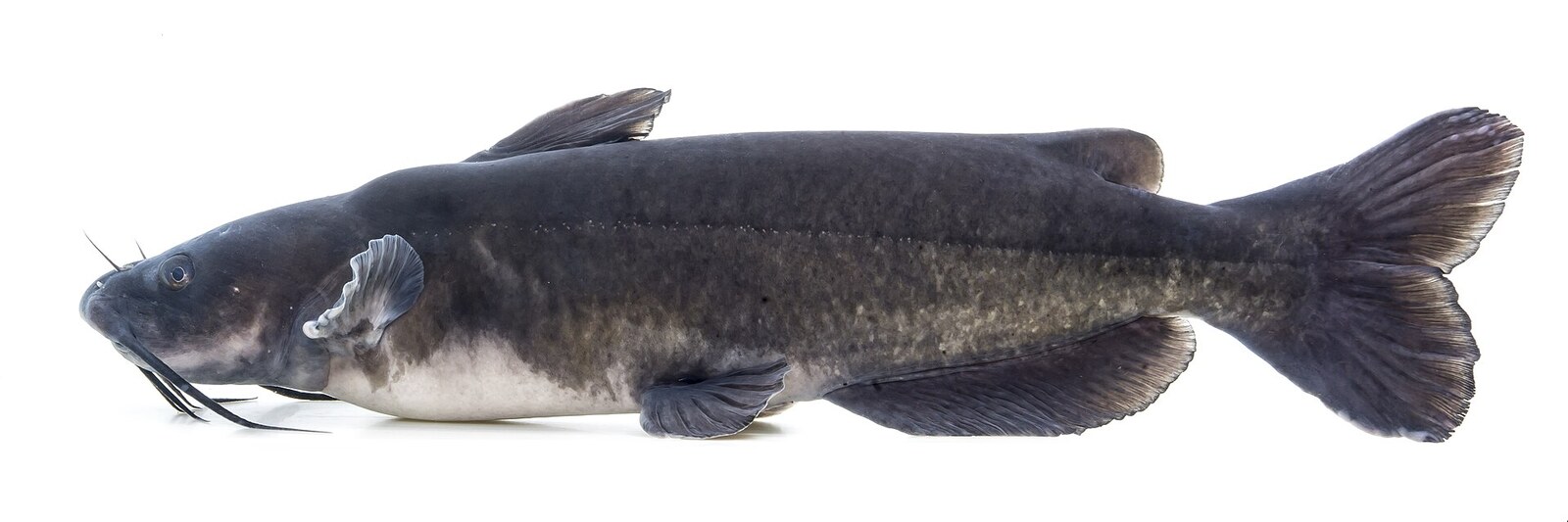
Channel catfish
Ictalurus punctatus
Tennessee's official state commercial fish, designated in 1987. The standard pond and impoundment catfish across the state. Common in Nickajack Lake and in nearly every farm pond in Marion's valleys; juveniles show dark spots on silvery flanks. Forked tail distinguishes it from the bullheads.
Status: Secure; abundant; Tennessee state commercial fish.
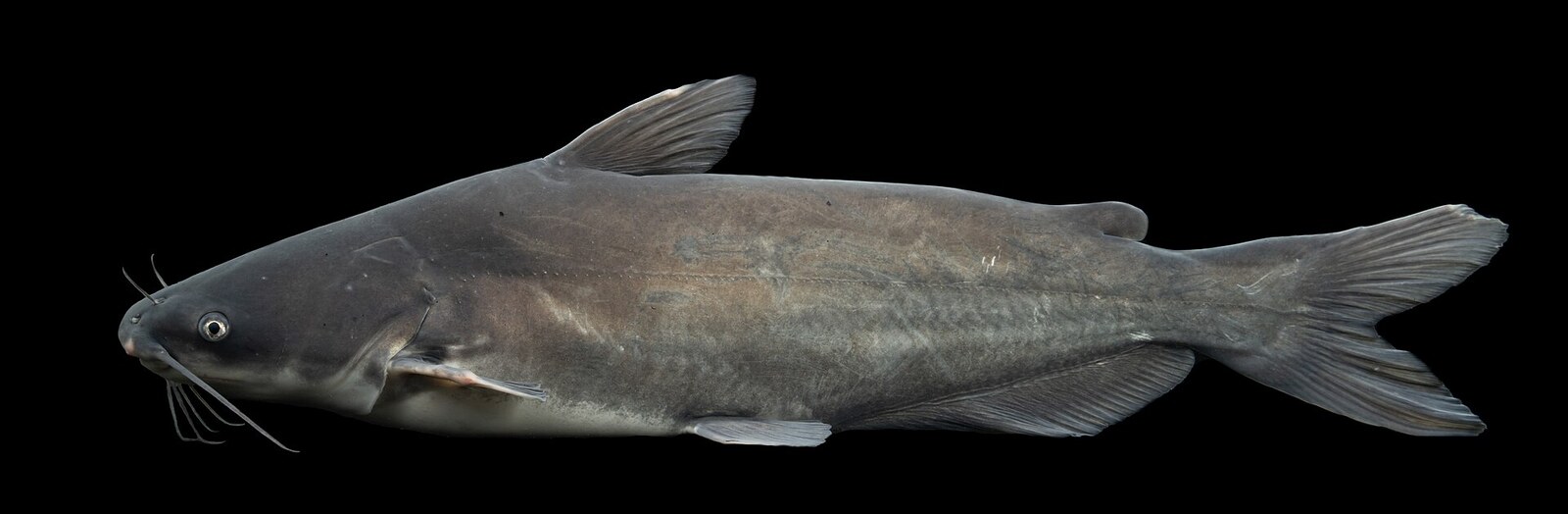
Blue catfish
Ictalurus furcatus
Nickajack Lake's trophy catfish; the largest fish in the impoundment. Trophy specimens exceed seventy pounds, with the state record fish caught from this stretch of the Tennessee River. Slate-blue coloration and a deeply forked tail.
Status: Secure; Nickajack supports a regionally notable trophy fishery.
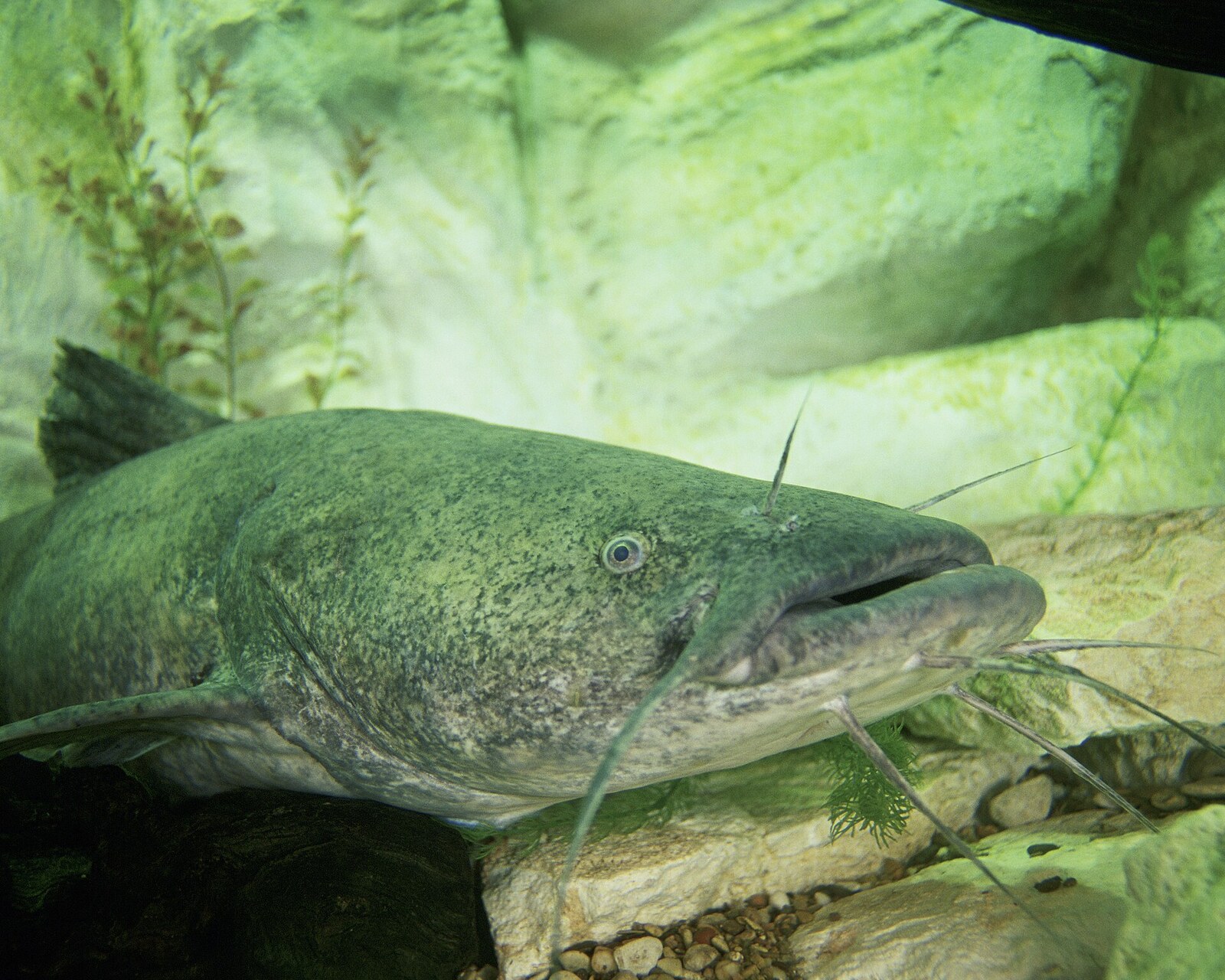
Flathead catfish
Pylodictis olivaris
A large solitary predator of the deeper Tennessee River channel and Nickajack tailwater, with a flattened head and underslung jaw. Live-bait specialists pursue them at night in the swift water below the dam; trophy fish exceed fifty pounds.
Status: Secure; pursued primarily by night anglers.
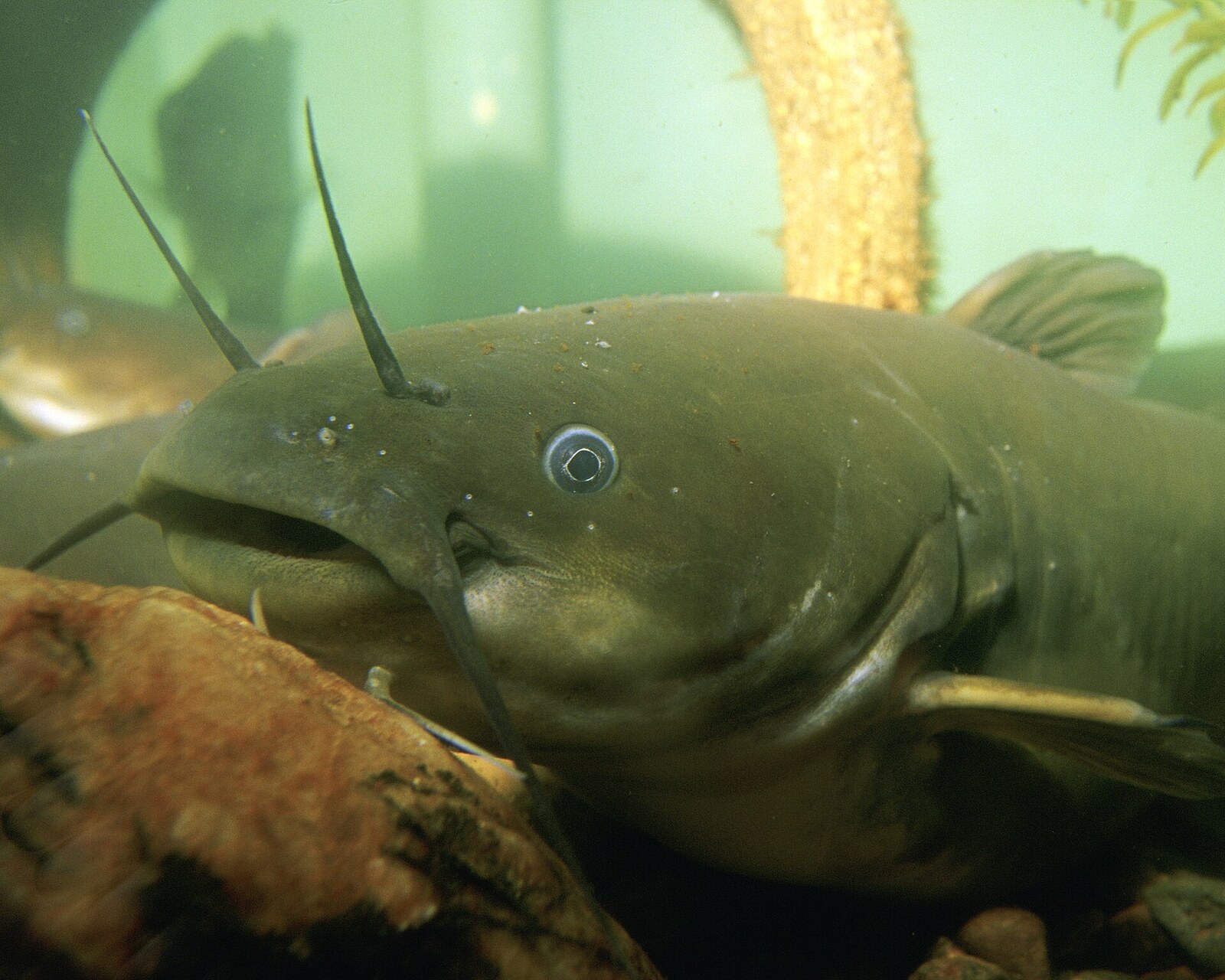
Yellow bullhead
Ameiurus natalis
A small bullhead catfish with cream-colored chin barbels (whiskers). Inhabits weedy ponds, swamps, and slow-moving creek pools across the county. Common in farm ponds where the larger channel catfish has not been stocked.
Status: Secure; common pond catfish.
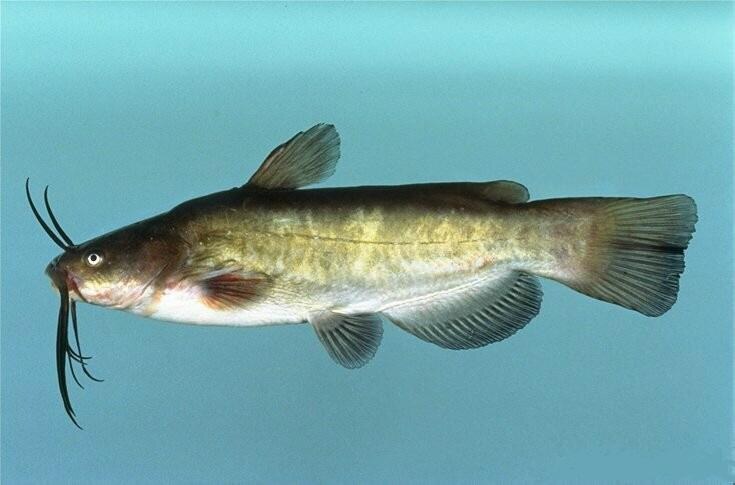
Brown bullhead
Ameiurus nebulosus
Another small bullhead, distinguished from the yellow by darker chin barbels and more mottled flank coloration. Favors clearer water than the black bullhead and is most often caught from clear-water ponds and quieter creek pools.
Status: Secure; widespread.
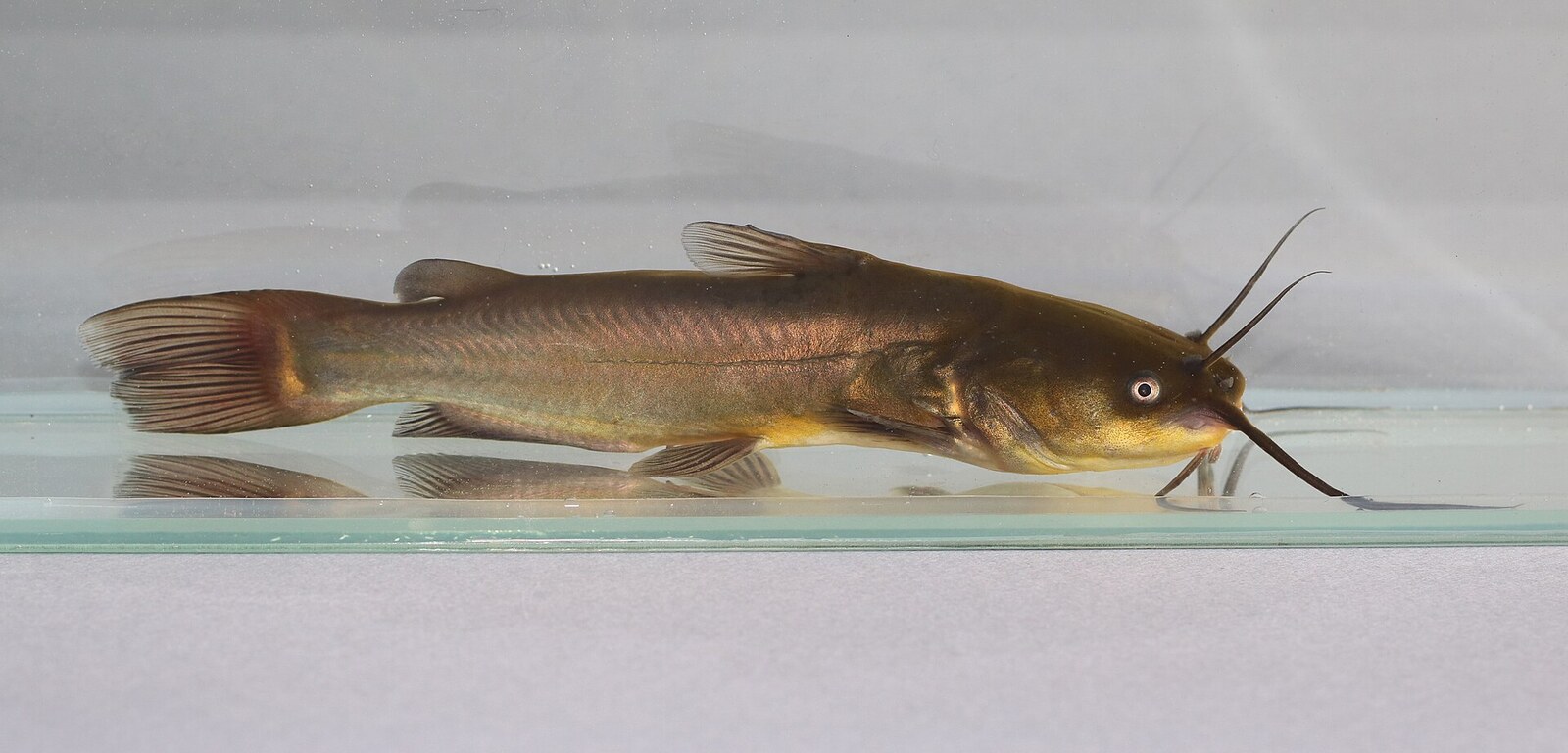
Black bullhead
Ameiurus melas
The most pollution-tolerant bullhead, surviving in turbid sloughs, drainage ditches, and oxygen-poor backwaters where the other catfish struggle. Black chin barbels distinguish it from yellow and brown bullheads.
Status: Secure; tolerant of degraded water.
Sturgeons and paddlefish
Two ancient relict species inhabit the Tennessee River: the lake sturgeon, once extirpated from this stretch and now slowly being rebuilt through cooperative stocking by TWRA, USFWS, TVA, and regional universities; and the American paddlefish, a filter-feeder whose lineage stretches back more than three hundred million years. Both have been reduced from their historical abundance by dam construction and historical overharvest. The Nickajack Reservoir paddlefish snagging season is brief and tightly regulated.
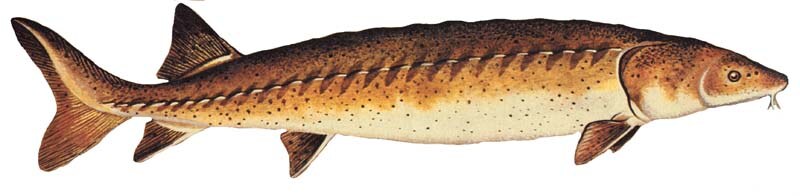
Lake sturgeon
Acipenser fulvescens
Extirpated from the middle Tennessee River by the mid-twentieth century through habitat degradation and overharvest. The Tennessee Lake Sturgeon Reintroduction Working Group (Tennessee Aquarium Conservation Institute, TWRA, TVA, USFWS, and partner universities) began stocking juvenile sturgeon raised from Wisconsin broodstock in 2000; the first recapture from Nickajack Lake came in 2011, more than four decades after the last confirmed wild fish. Lake sturgeon take many years to reach sexual maturity, and the current Tennessee population remains entirely hatchery-origin and is not yet self-sustaining.
Status: TWRA Endangered; protected from harvest year-round; reintroduction ongoing.
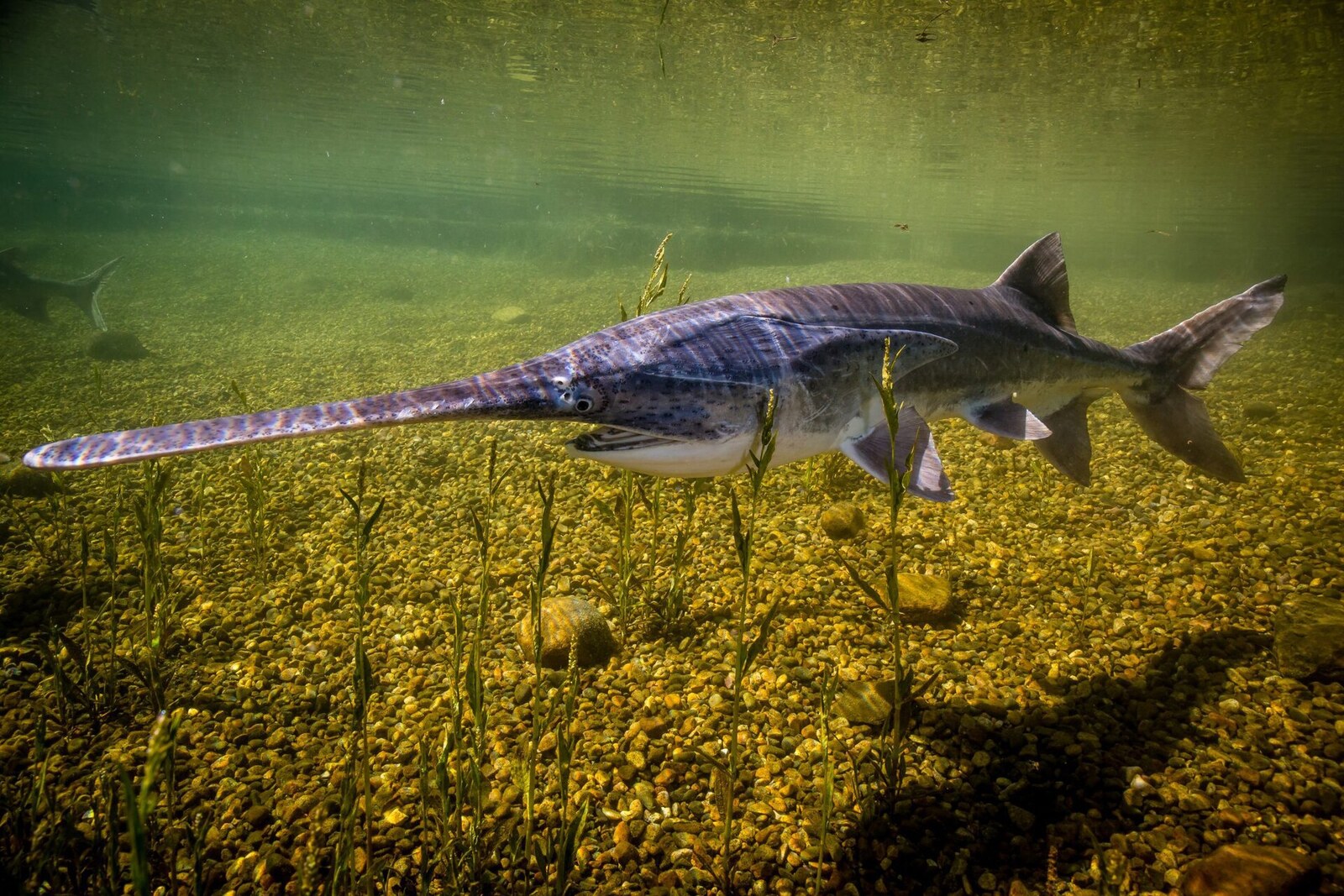
American paddlefish
Polyodon spathula
The most prehistoric fish in the Tennessee River, with a lineage stretching back more than three hundred million years. Its long flat rostrum (up to a third of total body length) is covered in electroreceptors that detect the weak fields of the zooplankton it filter-feeds. Adults reach seven feet and sixty pounds. The Nickajack Reservoir paddlefish snagging season runs from April 24 through May 31, with a daily limit of two fish.
Status: Tracked; protected by closed-season and bag limits, vulnerable to dam-blocked spawning runs.
Perches: walleye, sauger, and yellow perch
The perches (Percidae) include Tennessee's two joint state fish, the walleye and the sauger, both signature game species of the cool Nickajack Dam tailwater. Yellow perch is more typical of northern waters and reaches its southern range edge in Marion's tributaries. The Percidae family also includes the darters, treated separately below.
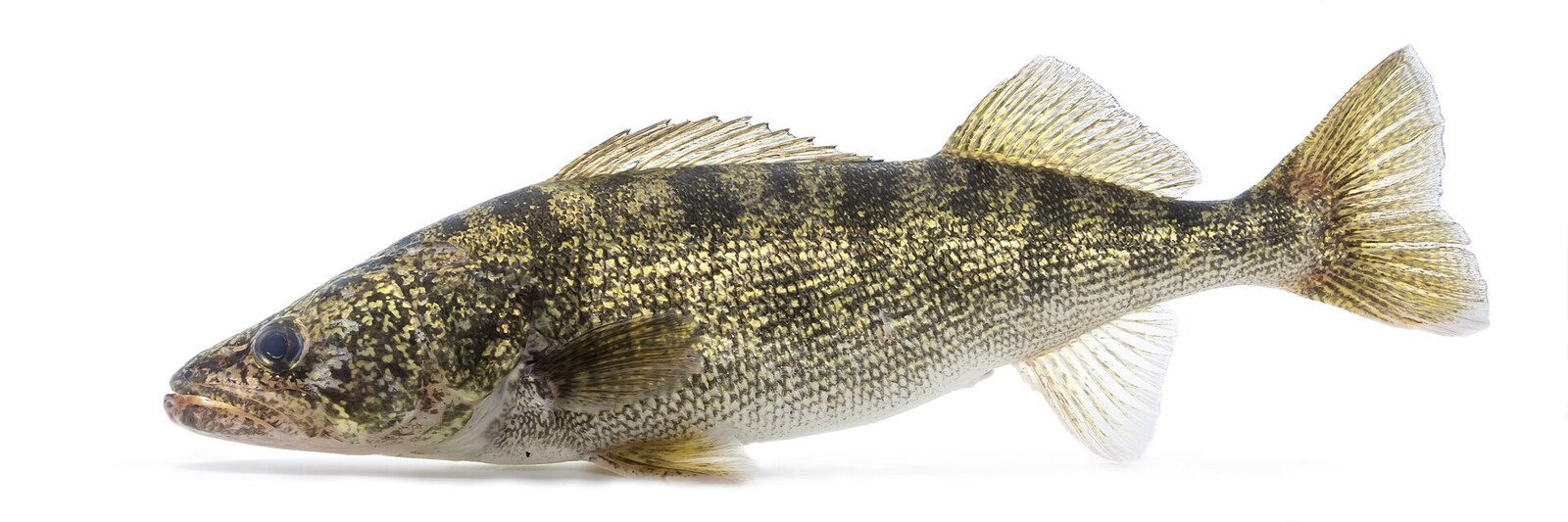
Walleye
Sander vitreus
Tennessee's joint state fish, alongside the sauger. The Nickajack tailwater is one of east Tennessee's recognized walleye fisheries; cool oxygen-rich water below the dam holds fish through the heat of summer when most of the impoundment becomes too warm.
Status: Secure; co-state-fish of Tennessee.
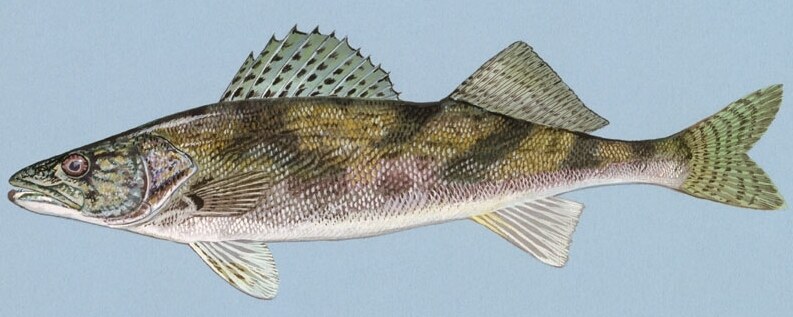
Sauger
Sander canadensis
Tennessee's other state fish, smaller and more spotted than the closely related walleye. The Tennessee River below Nickajack Dam supports one of the strongest sauger fisheries in the state during the late-winter and early-spring tailwater run.
Status: Secure; co-state-fish of Tennessee.
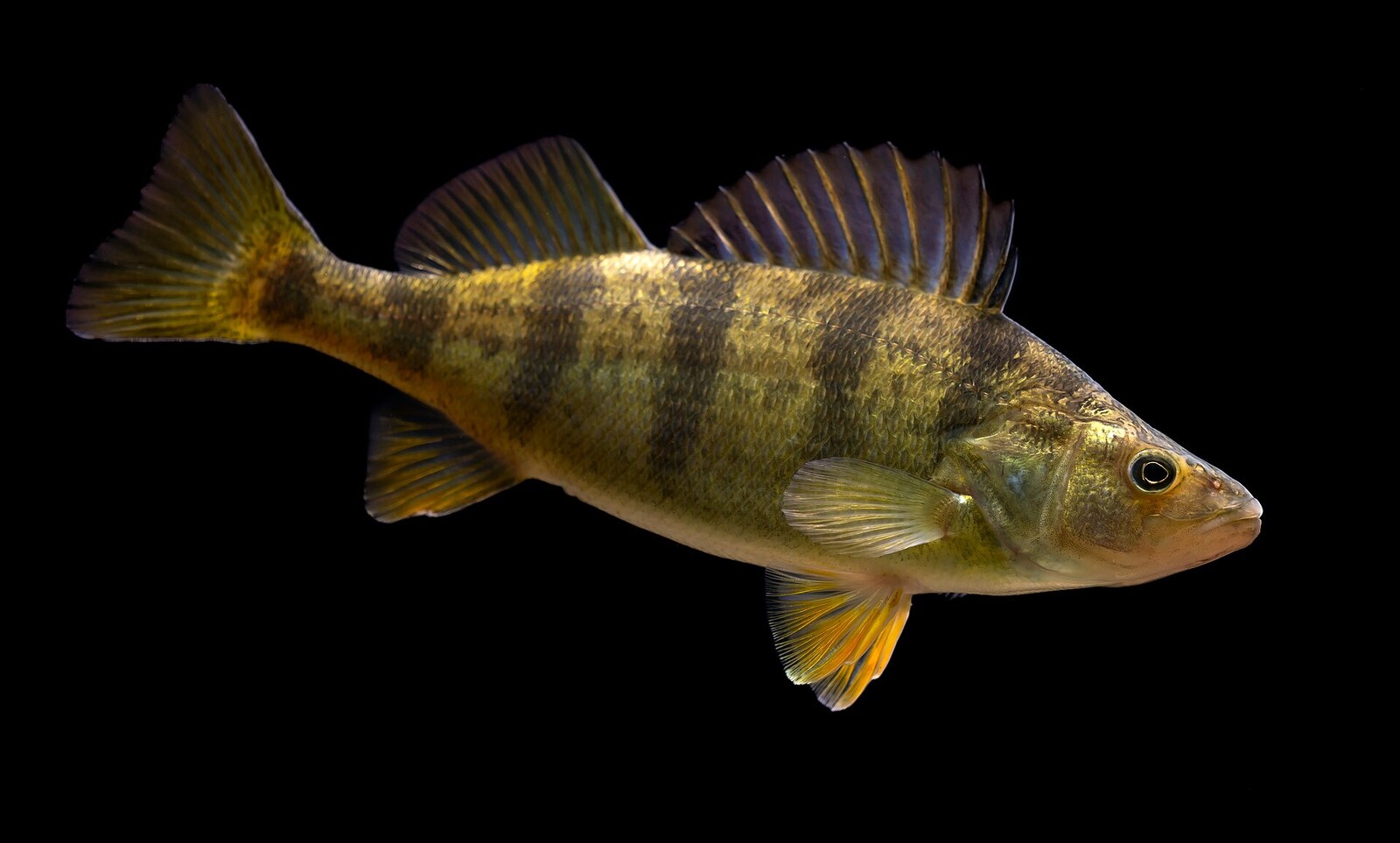
Yellow perch
Perca flavescens
A schooling, golden-bodied panfish with five to seven dark vertical bars. Less common in the Tennessee River drainage than in northern lakes; expected in cooler tributary streams and reservoir backwaters at Marion's latitude.
Status: Secure; range-edge in Tennessee.
Freshwater drum
One species in this family lives in fresh water; all the rest are marine drums and croakers.
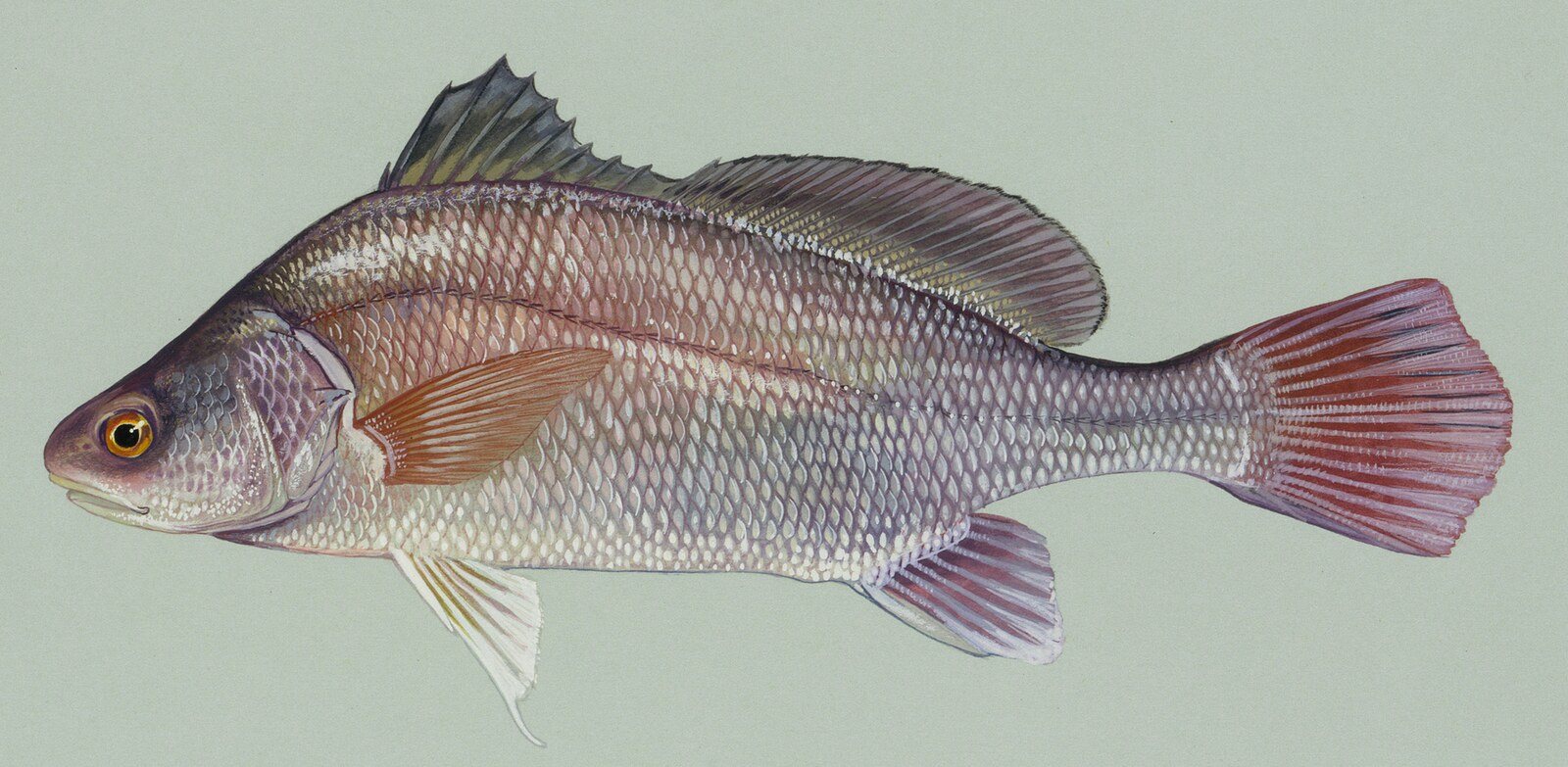
Freshwater drum
Aplodinotus grunniens
A silvery deep-bodied fish of the main-stem Tennessee River, locally called sheepshead or thunderpumper for the low-frequency drumming sound males produce during the spring spawn (audible underwater and sometimes through boat hulls). The only freshwater member of an otherwise marine family.
Status: Secure; abundant.
Darters (Percidae)
The Tennessee River drainage is the world center of darter diversity, with more species per river system than anywhere else on Earth. Marion sits squarely in this hotspot; clear gravel and cobble riffles in the Sequatchie River and clearer plateau tributaries hold some of the most colorful small fish in eastern North America. Many darters are sensitive to siltation and water-quality decline, making them indicator species for clear-stream conservation. The snail darter, famously the species at the center of TVA v. Hill (1978), occurs in the main-stem Tennessee River within Marion County.
Snail darter
Percina tanasi
A three-inch bottom-dwelling fish that became one of the most famous species in American environmental law. Discovered in 1973 in the Little Tennessee River during surveys ahead of Tellico Dam construction, it was federally listed as endangered in 1975. The Supreme Court ruled in Tennessee Valley Authority v. Hill (1978) that the Endangered Species Act required Tellico's completion to be halted. Congress subsequently exempted the dam; the dam closed in 1979. Translocations and rediscovered populations led to downlisting in 1984 and full delisting in 2022. Snail darters are now documented in multiple Tennessee River drainage tributaries.
Status: Federally delisted (2022) after recovery; population still tracked.
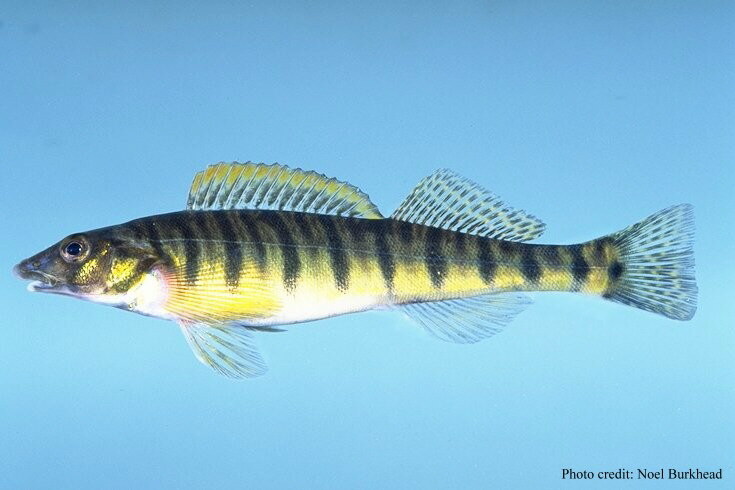
Logperch
Percina caprodes
The largest darter in the Tennessee River, reaching seven inches. Vertical tiger-stripe bars on a tan body; uses a piglike snout to flip flat stones and gravel hunting for invertebrates underneath. Common on the gravel and cobble substrates of Marion's middle Tennessee River.
Status: Secure; widespread.
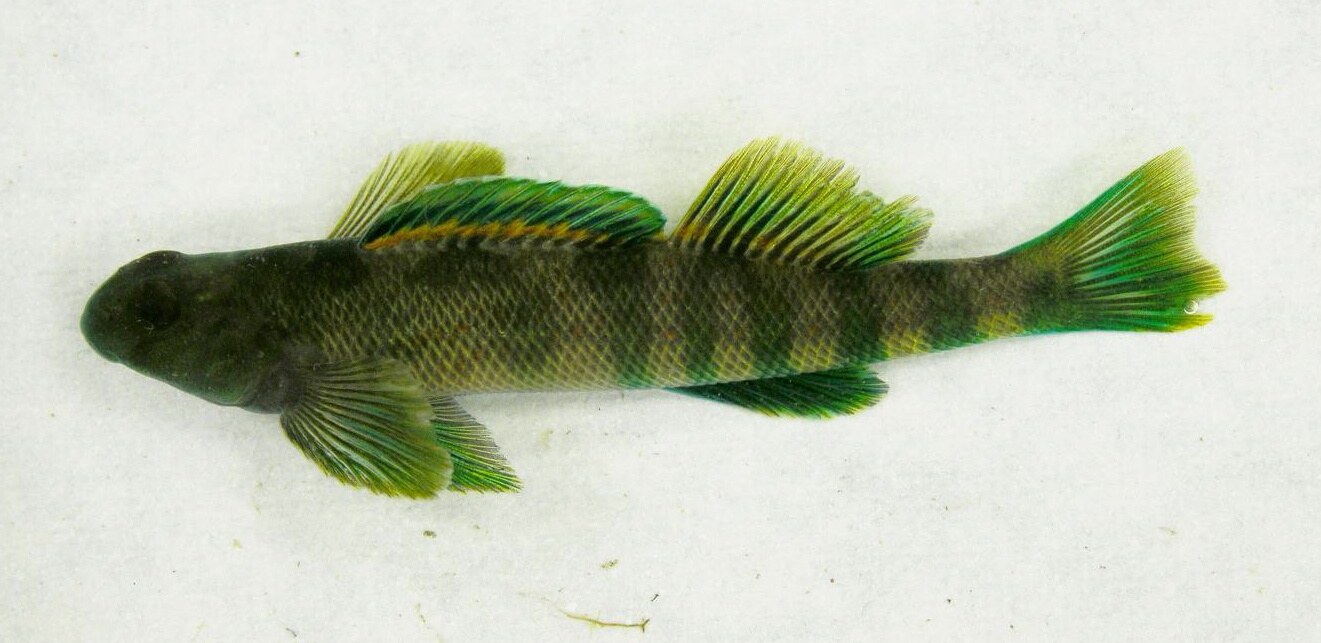
Greenside darter
Etheostoma blennioides
A clear-water riffle darter with green vertical bars on the male's flanks during the spring spawning season. Holds in fast riffles over gravel and cobble; sensitive to siltation and elevated turbidity.
Status: Secure; clear-water indicator.
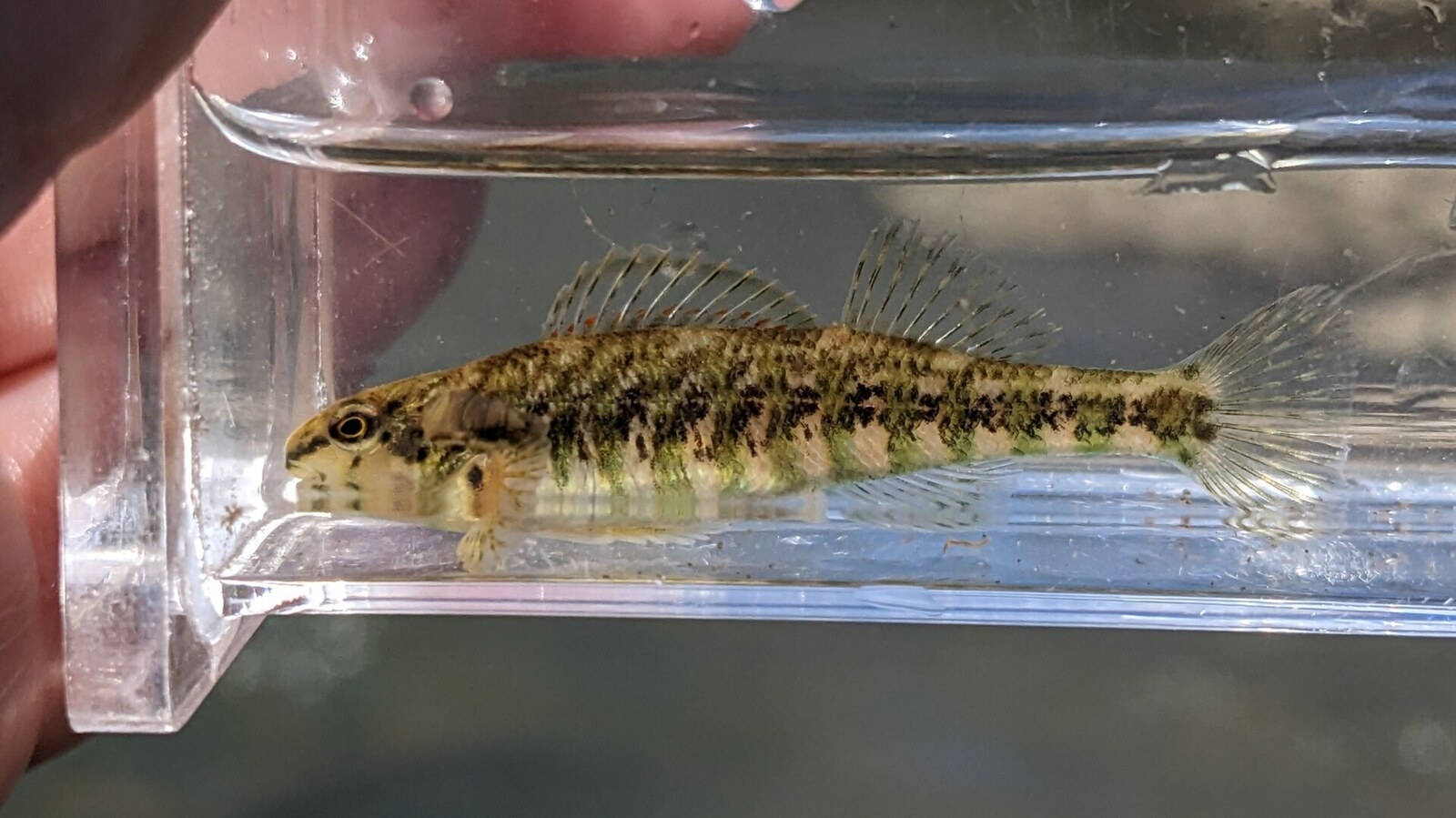
Banded darter
Etheostoma zonale
Olive flanks crossed by ten or so dark vertical bands. Inhabits gravel and cobble riffles in clear small to medium streams. Common on the upper Sequatchie River and clearer plateau tributary creeks.
Status: Secure; common in clear streams.
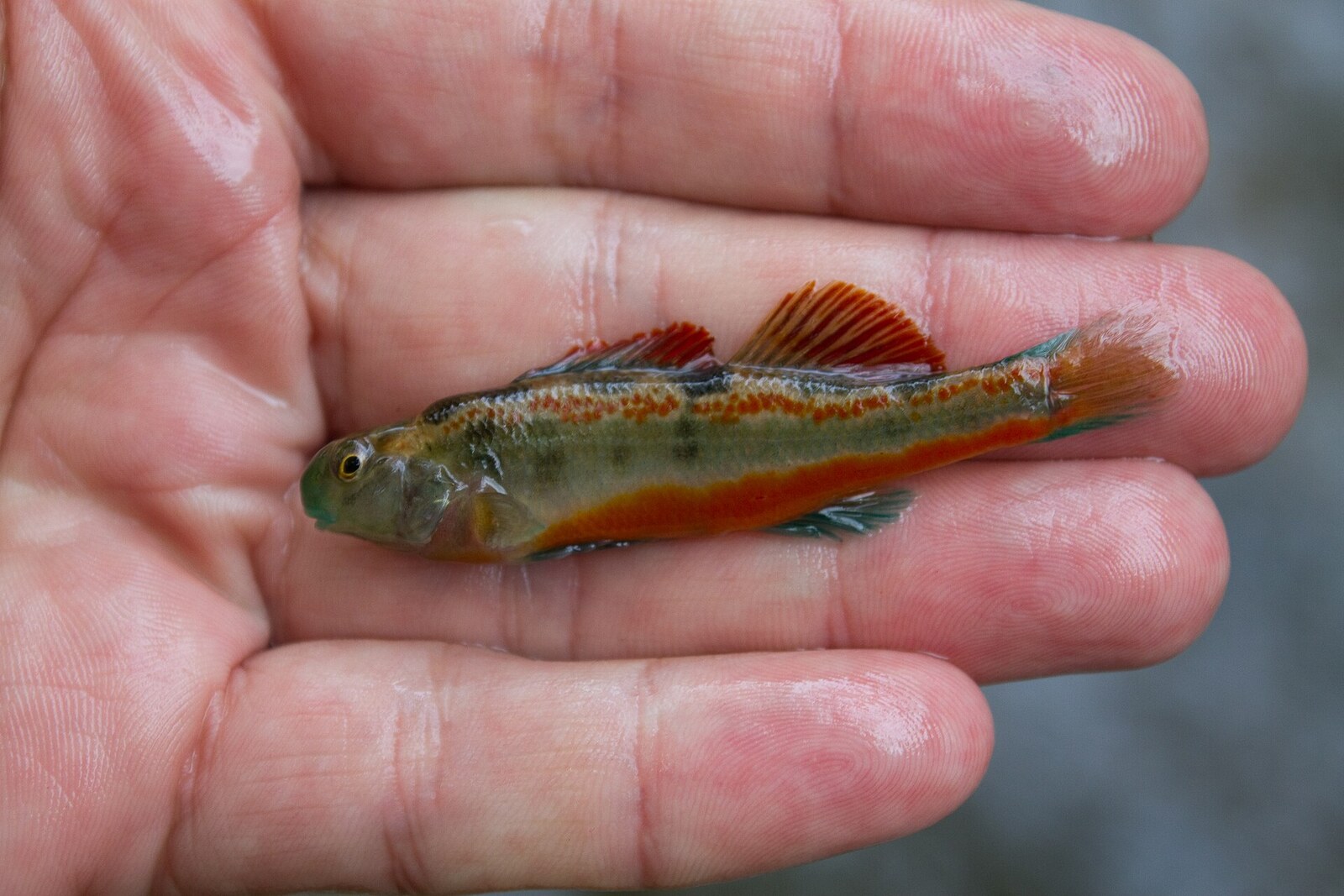
Tennessee snubnose darter
Etheostoma simoterum
A short-snouted darter endemic to the Tennessee River drainage. Males in breeding color show orange-red speckles and turquoise edging on the dorsal fins. Common in the upper Sequatchie and clear Cumberland Plateau tributaries.
Status: Secure; Tennessee River drainage endemic.
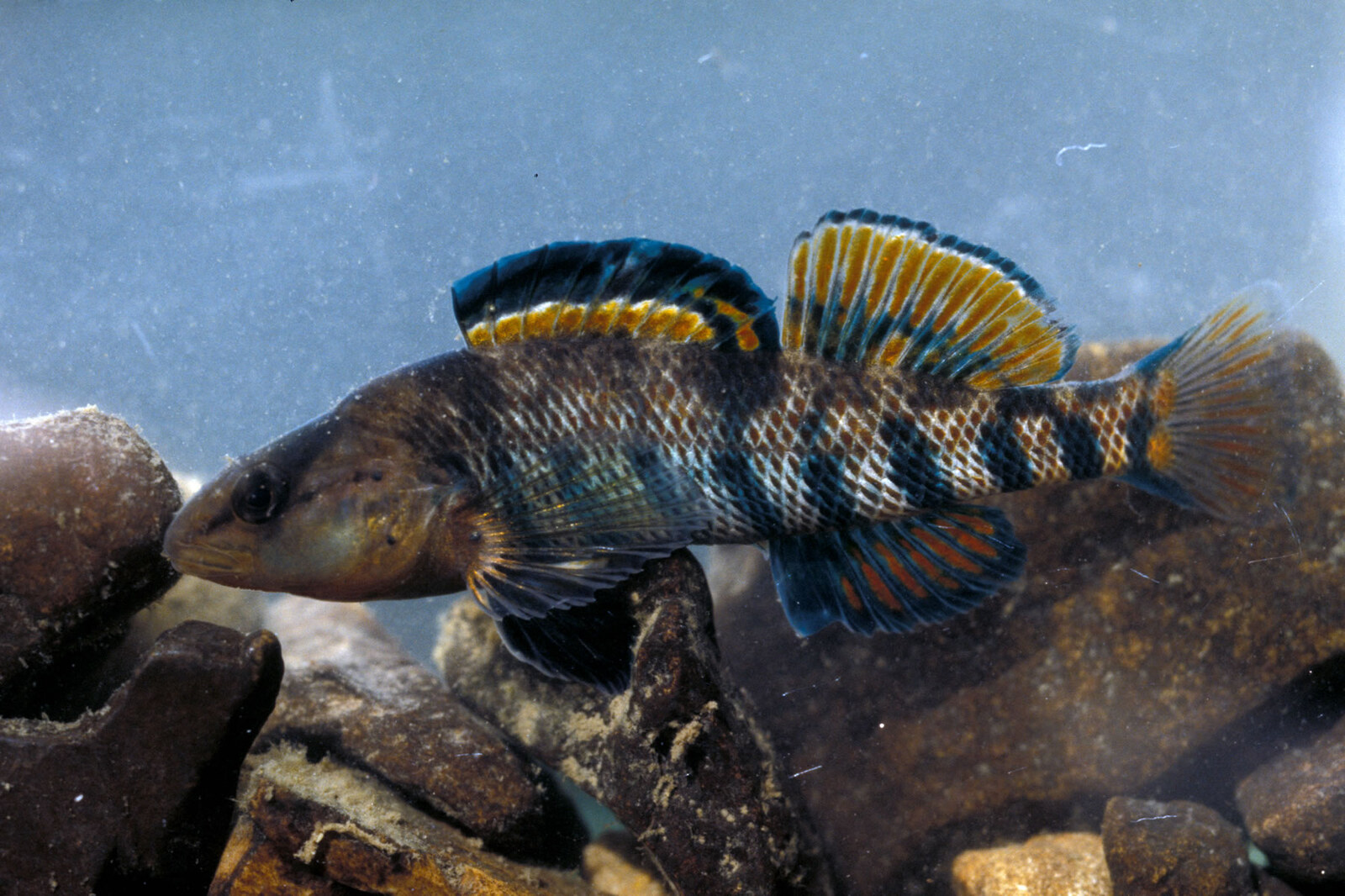
Rainbow darter
Etheostoma caeruleum
One of the most brightly colored North American freshwater fish: spawning males show alternating bands of cobalt blue and orange-red on the flanks. Inhabits clean gravel riffles in small to medium streams across Marion County's plateau streams.
Status: Secure; iconic riffle darter.
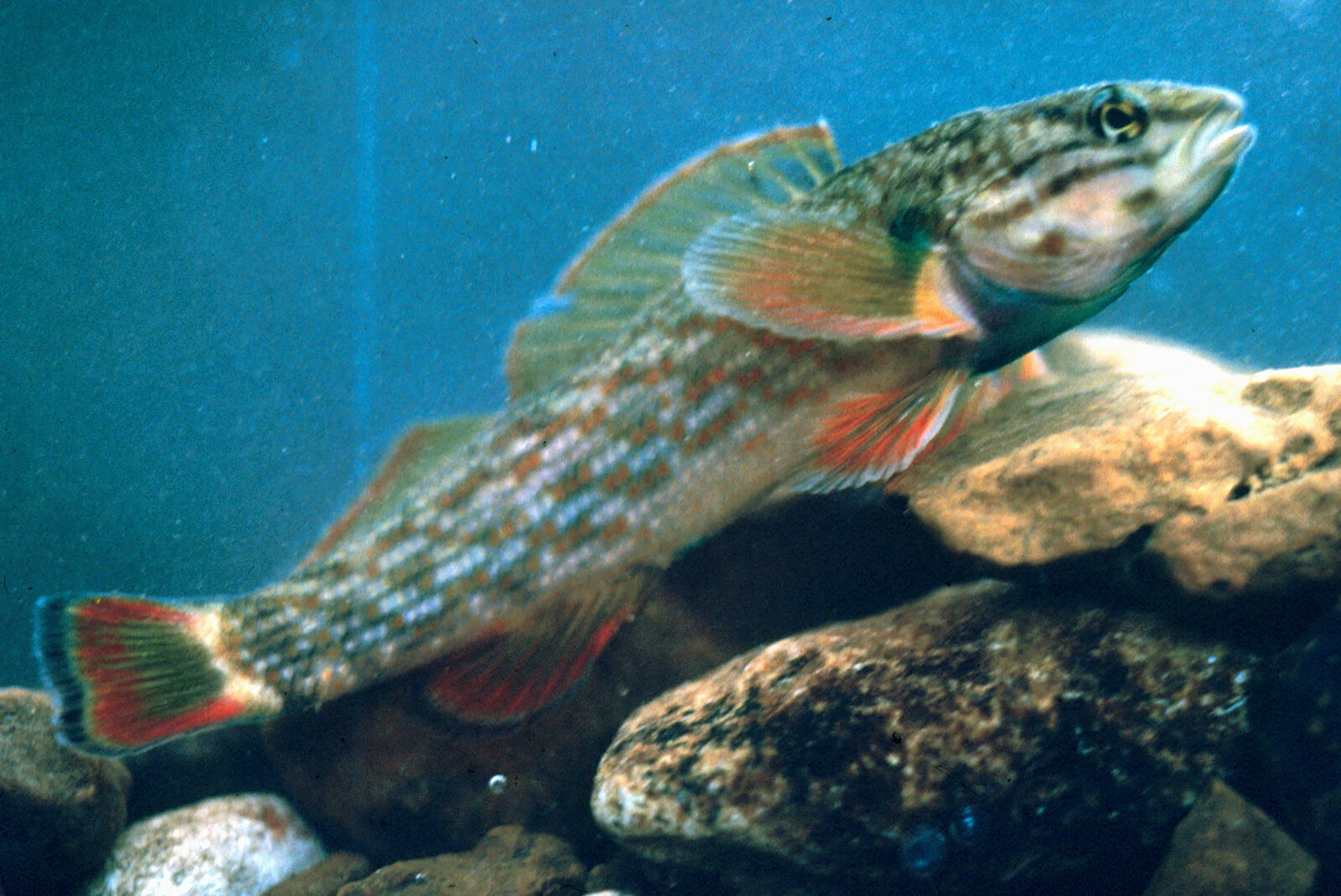
Redline darter
Etheostoma rufilineatum
A breeding-male darter with thin red lines along the flanks above each row of olive blotches. Tennessee River drainage species of clear gravel-bottomed riffles in medium-sized streams.
Status: Secure; Tennessee River drainage native.
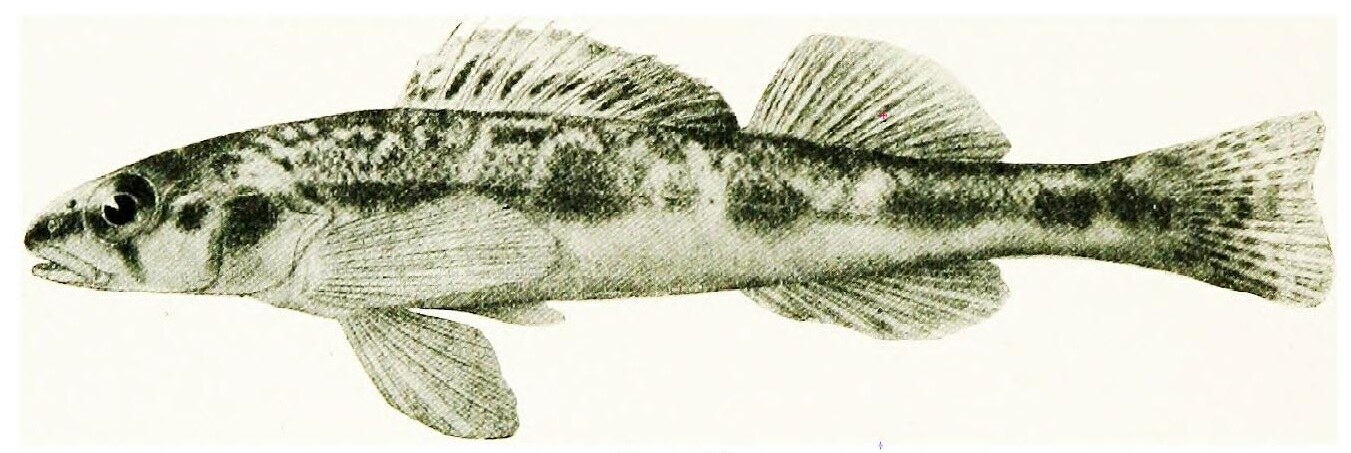
Blackside darter
Percina maculata
A streamlined darter with a row of dark blotches along the midline of each flank, joined by a thin dark line. Inhabits sand and gravel runs in medium-sized streams; tolerates somewhat siltier water than most darters.
Status: Secure; tolerant of moderate disturbance.
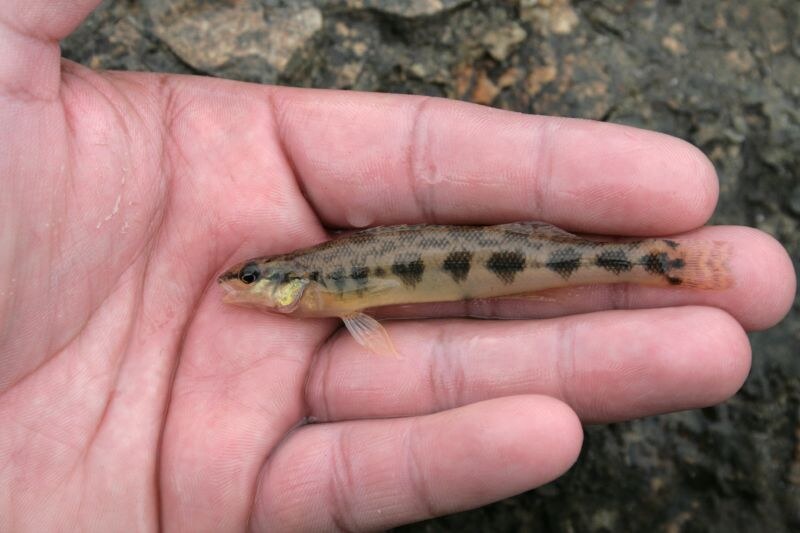
Dusky darter
Percina sciera
A larger Percina darter with three round black spots on the caudal-fin base. Holds in deeper runs and pools of medium rivers, often in slack water behind boulders.
Status: Secure; pool-and-run specialist.
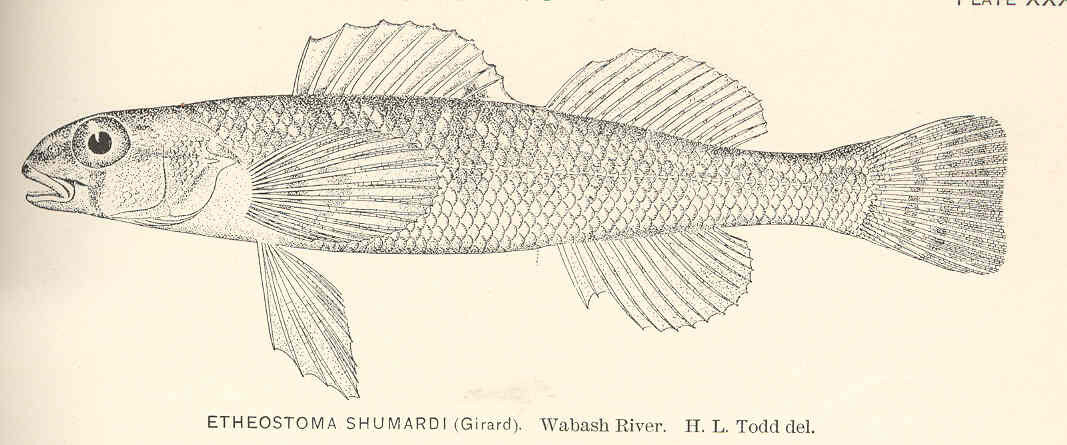
River darter
Percina shumardi
A main-stem river darter that holds in current-swept gravel and cobble of larger waters. The Marion County Tennessee River reach is within the species' range; less likely on small tributaries.
Status: Secure; main-stem river specialist.
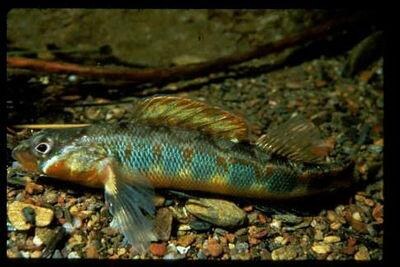
Gilt darter
Percina evides
A handsome riffle darter with bright gold and red breeding colors and a series of dark saddles across the back. Sensitive to water-quality decline; serves as a clean-water indicator on the Sequatchie River.
Status: TWRA Deemed in Need of Management; clean-water indicator.
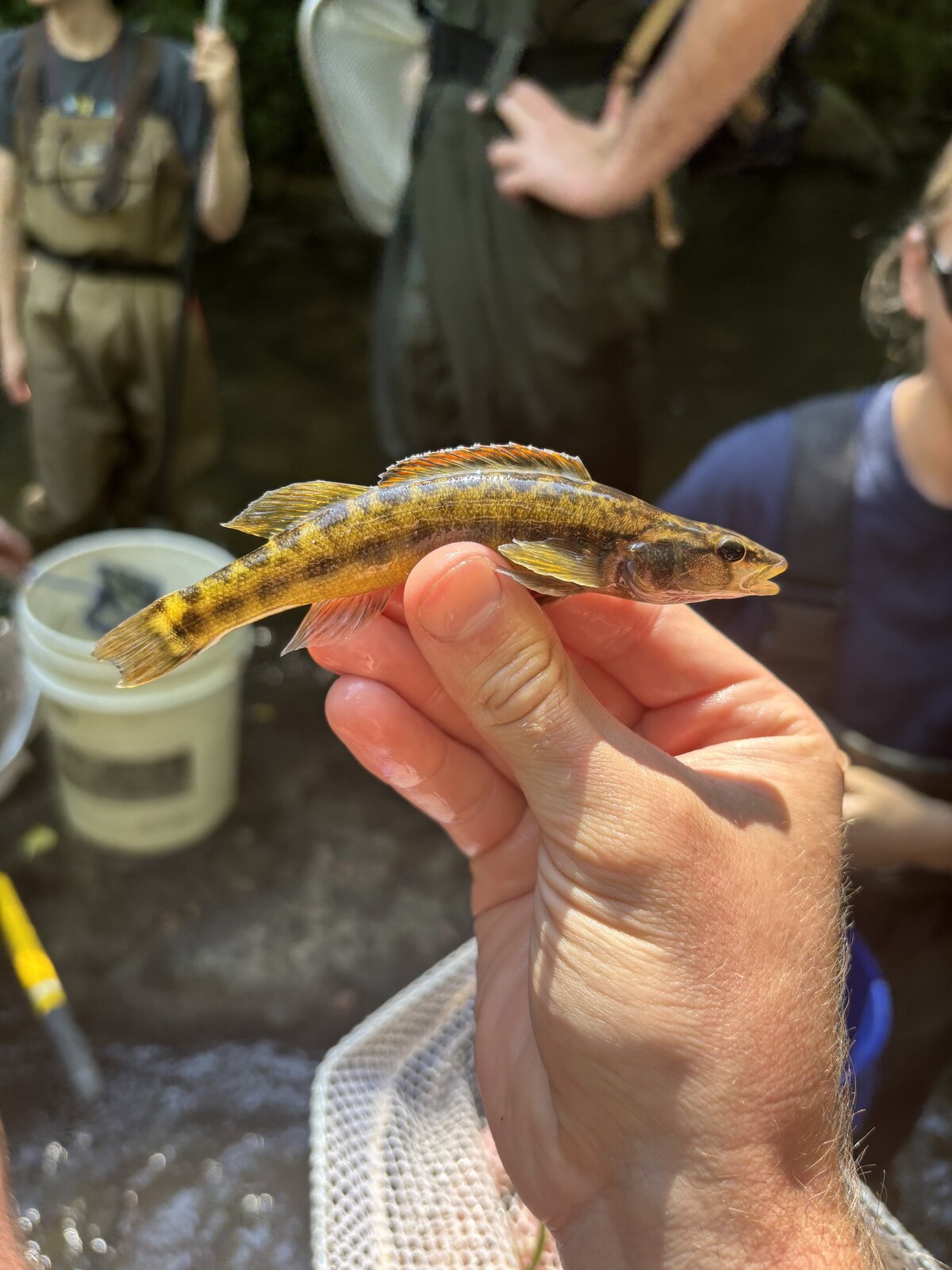
Olive darter
Percina squamata
An uncommon darter of clean medium-sized rivers in the upper Tennessee drainage; the Sequatchie River is within its expected range. Plain olive coloration relative to other Percina; conservation-significant in the state.
Status: TWRA Deemed in Need of Management; clean-water indicator.
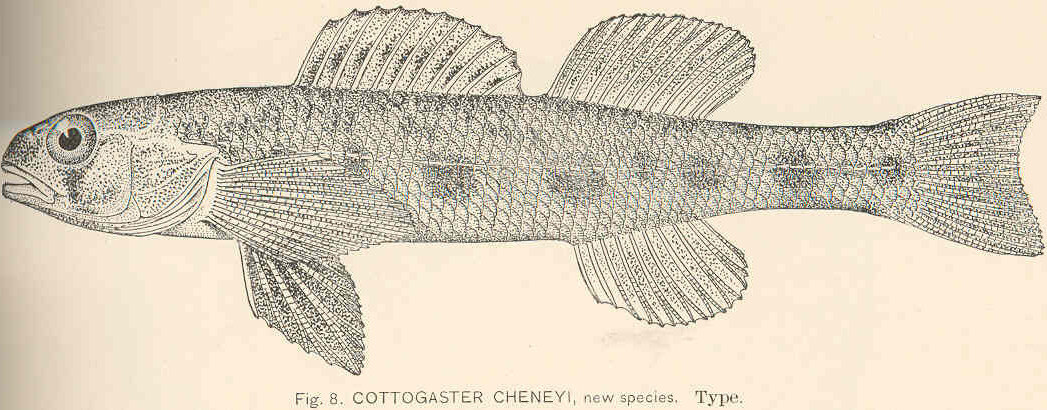
Channel darter
Percina copelandi
A small darter of larger river channels, holding on sand and fine-gravel substrate in moderate current. The Marion County Tennessee River reach is within the species' expected range.
Status: TWRA Deemed in Need of Management.
Minnows, shiners, dace, and stonerollers
The minnow family (Cyprinidae plus the recently-split Leuciscidae) covers the small-bodied schooling fish of pools, riffles, and reservoir open water. Shiners and minnows are the fundamental forage base supporting larger predators. Stonerollers shape stream ecology by scraping algae from rocks. Five non-native carp species (common, grass, silver, bighead, black) round out the family; the four invasive Asian carp species (silver, bighead, grass, black) are under aggressive TWRA management. Federal, state, and TVA cooperation through the Tennessee Compact for Habitat Improvement Program (TCHIP) had removed more than 36.5 million pounds of invasive carp from the Tennessee and Cumberland river systems by January 2025; a few bighead carp have been observed as far upstream as Nickajack Reservoir.
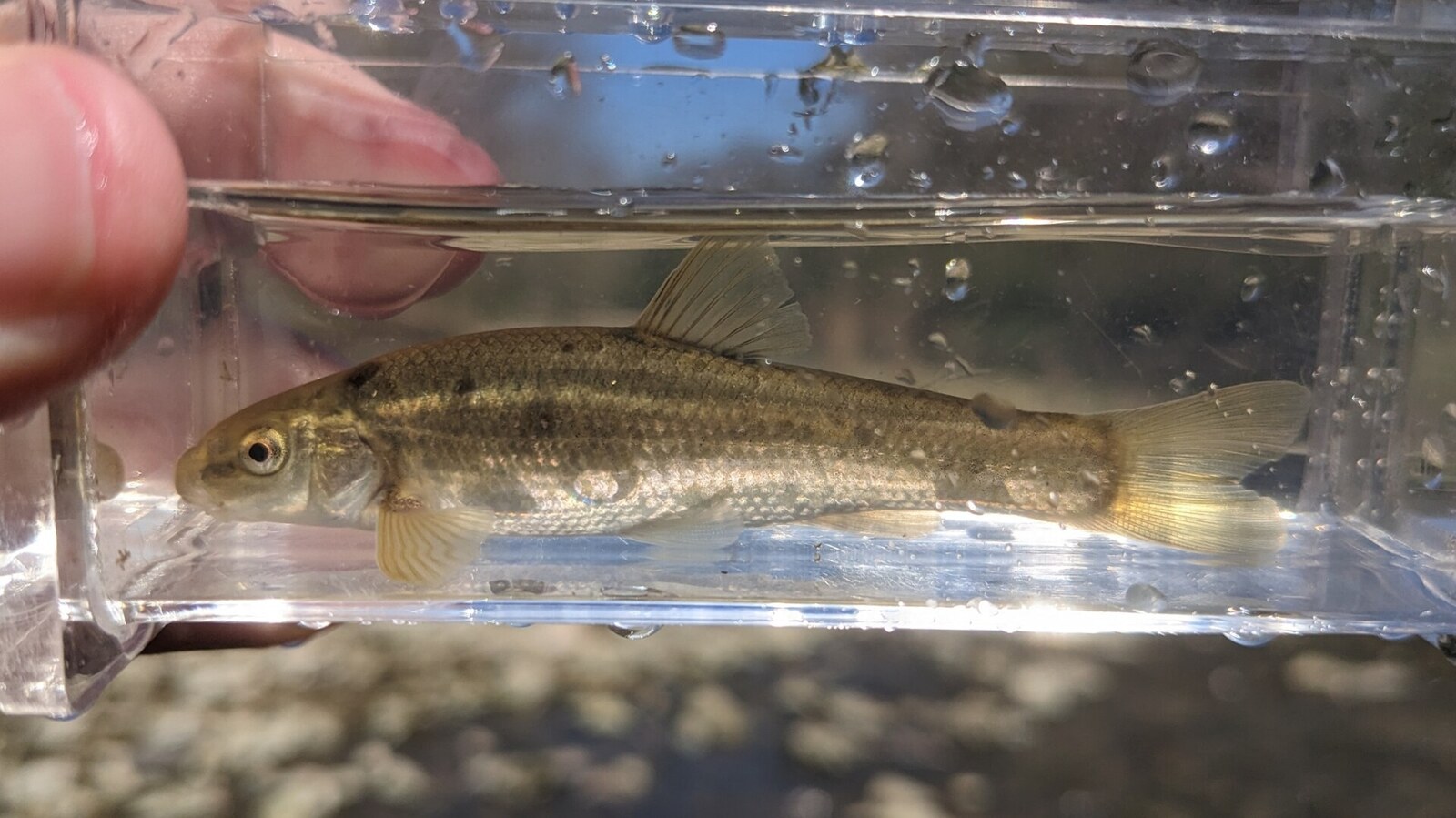
Central stoneroller
Campostoma anomalum
A small minnow whose feeding behavior shapes Tennessee stream ecology: stonerollers scrape algae from rocks with a hardened lower jaw, leaving characteristic clean stripes on cobble. Spawning males develop bright orange dorsal-fin coloration and aggressive nest-defense behavior in spring riffles.
Status: Secure; ecologically important grazer.
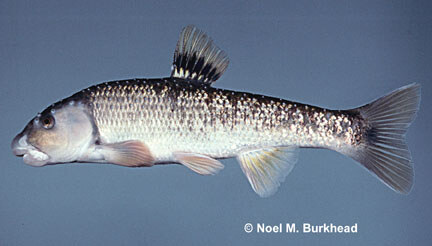
Largescale stoneroller
Campostoma oligolepis
A close relative of the central stoneroller, distinguished by larger scales and a more upper-Tennessee River drainage range. Shares the algae-scraping feeding habits and orange-finned spawning males.
Status: Secure; common in Cumberland Plateau streams.
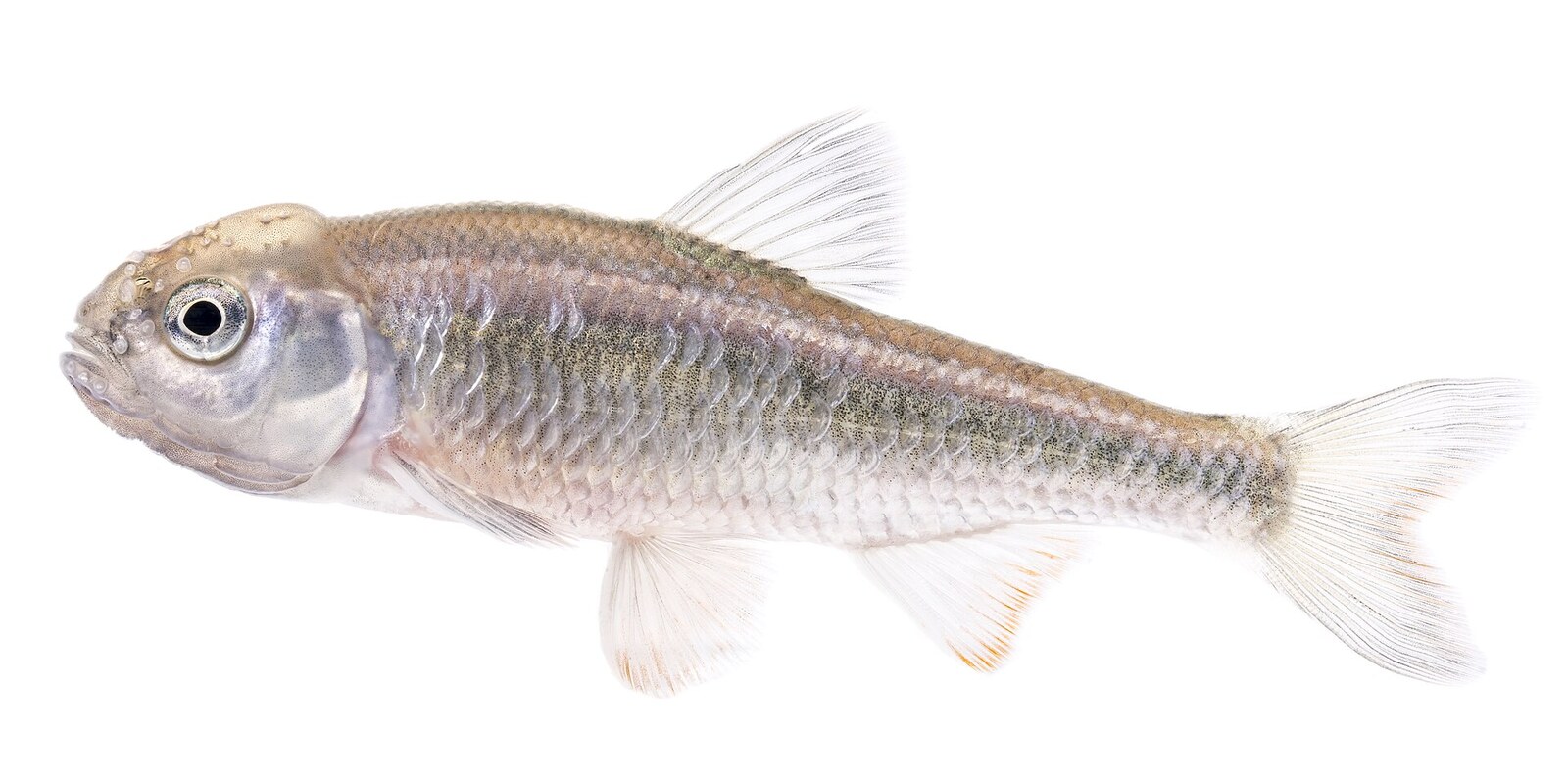
Common shiner
Luxilus cornutus
A larger shiner with deep-bodied silvery flanks; spawning males develop pinkish coloration and pronounced breeding tubercles on the head. Common in pool-and-riffle sequences of medium-sized streams.
Status: Secure; common in Marion creeks.
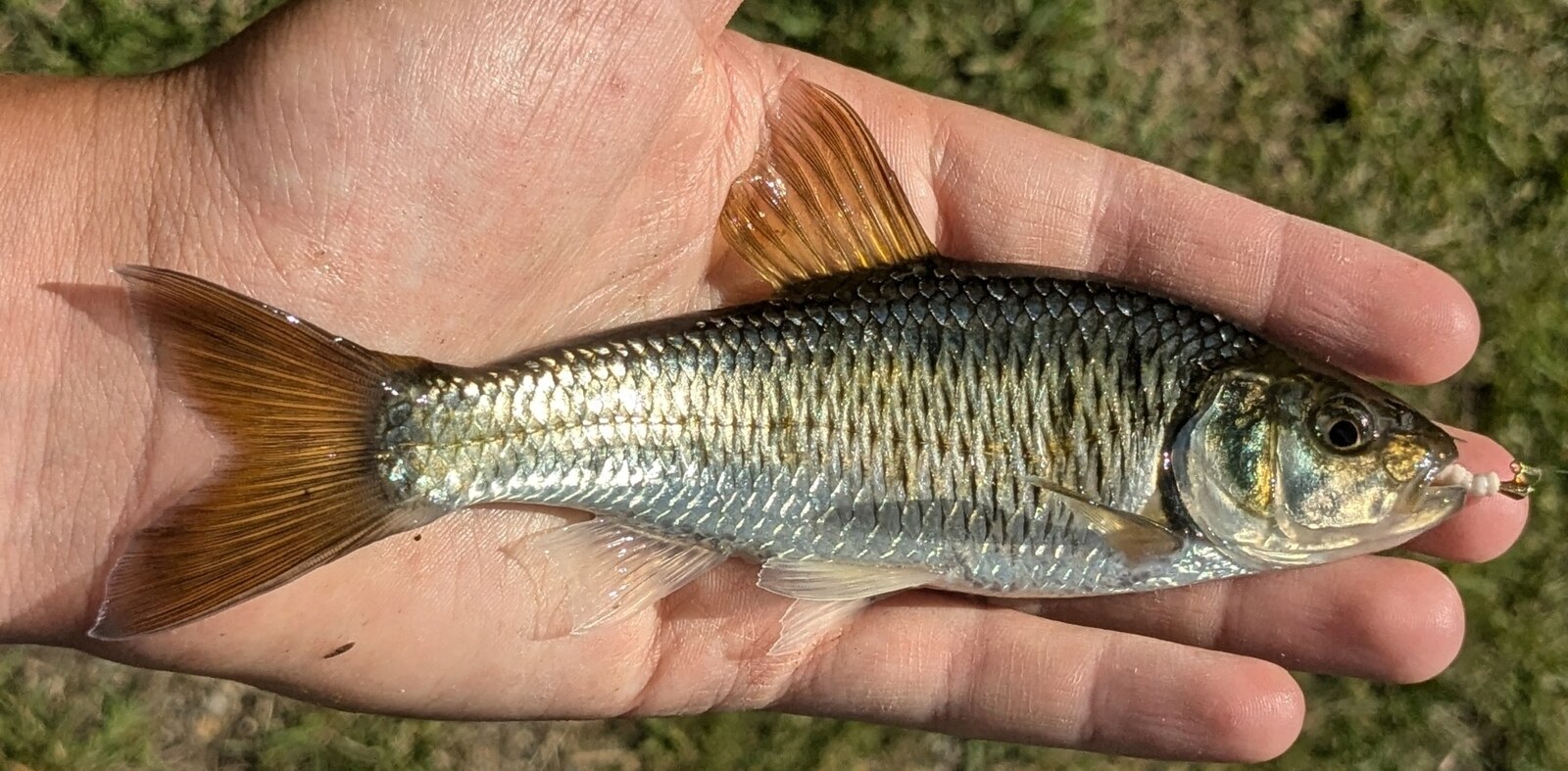
Striped shiner
Luxilus chrysocephalus
A close cousin of the common shiner with horizontal dark stripes along the upper flanks behind the dorsal fin. The Tennessee River drainage species; common in clear creeks and small rivers.
Status: Secure; widespread.
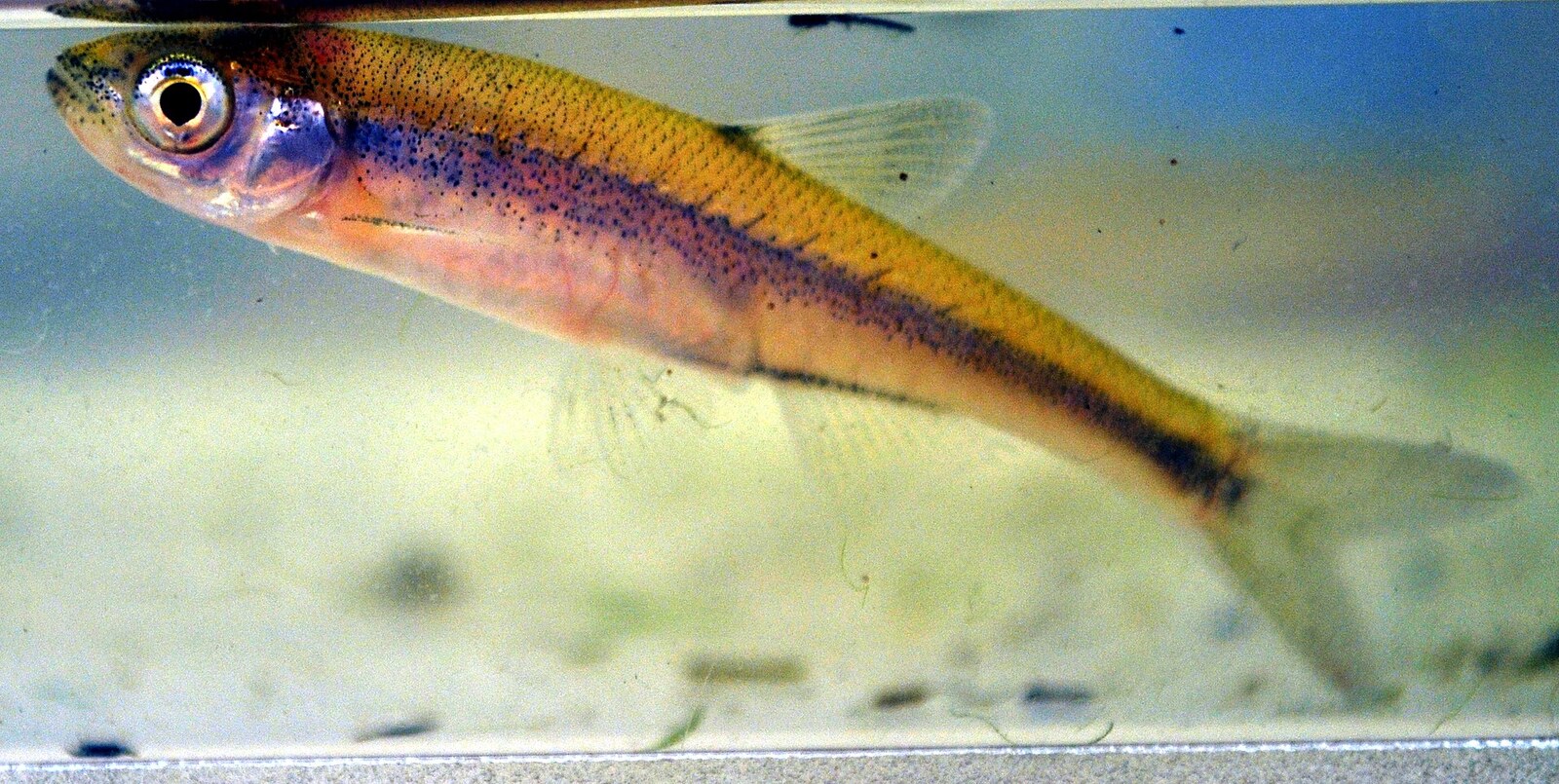
Bigeye shiner
Notropis boops
A small slender shiner with conspicuously large eyes, reflecting its sight-feeding habits in clear pool water. Common in clear medium-sized streams of the Cumberland Plateau and Sequatchie Valley.
Status: Secure; clear-water indicator.
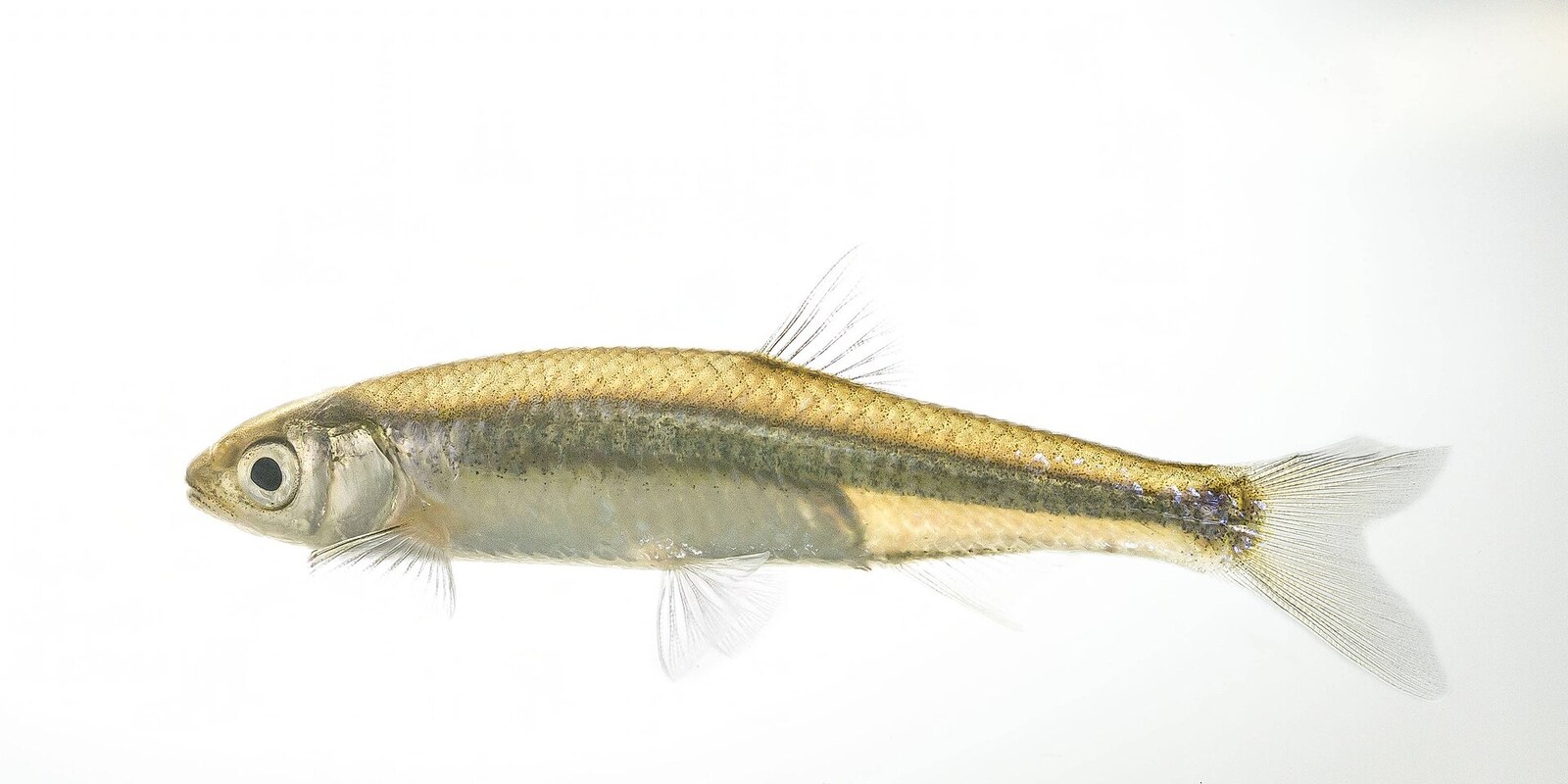
Emerald shiner
Notropis atherinoides
An open-water schooling shiner of larger rivers and reservoirs, with iridescent emerald-green dorsal coloration. Common in the main Tennessee River and Nickajack Lake; an important forage fish for game species.
Status: Secure; a foundational forage fish.
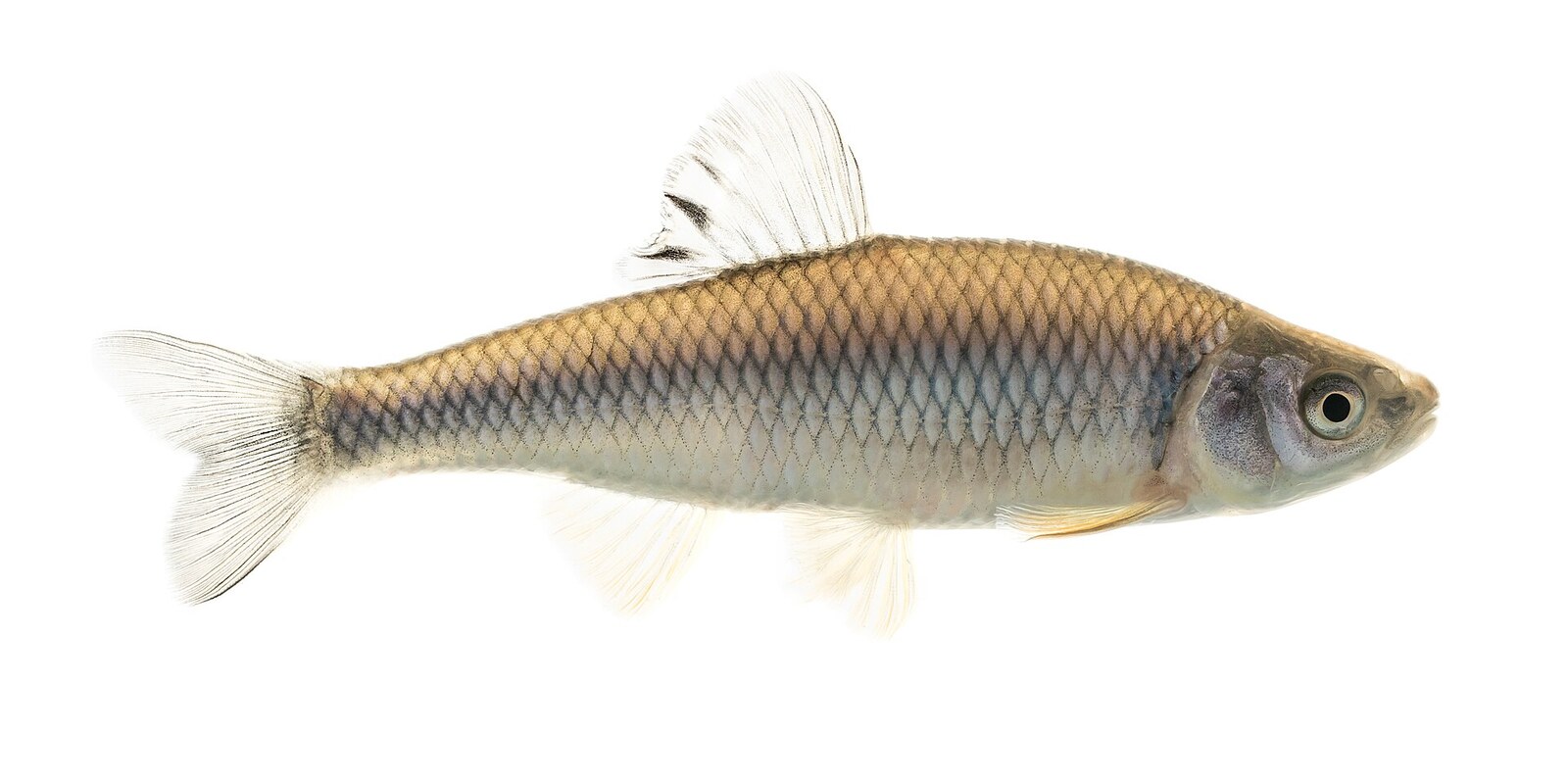
Spotfin shiner
Cyprinella spiloptera
A medium-sized shiner with a black-edged spot on the dorsal fin. Holds in moderate-current pool tails and slack water behind boulders. Found across the Tennessee River drainage including Marion County streams.
Status: Secure; common.
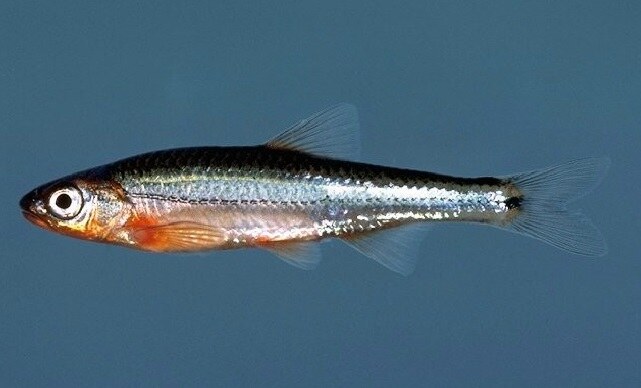
Tennessee shiner
Notropis leuciodus
A slender shiner native to the upper Tennessee River drainage. Pale flanks with a thin midline stripe; favors clear gravel-bottomed pools and runs. Tennessee River drainage endemic.
Status: Secure; Tennessee River drainage native.
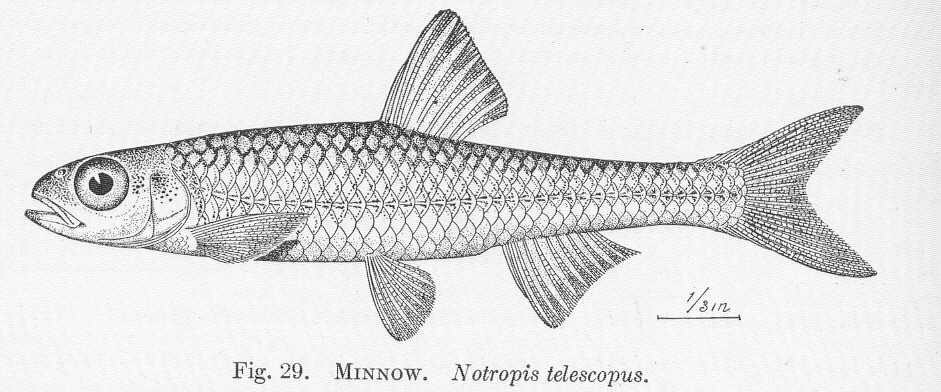
Telescope shiner
Notropis telescopus
Named for prominent eyes set on the side of the head, giving an outsized appearance. A clear-water shiner of moderate-sized streams; common on clearer Cumberland Plateau tributaries.
Status: Secure; clear-water species.
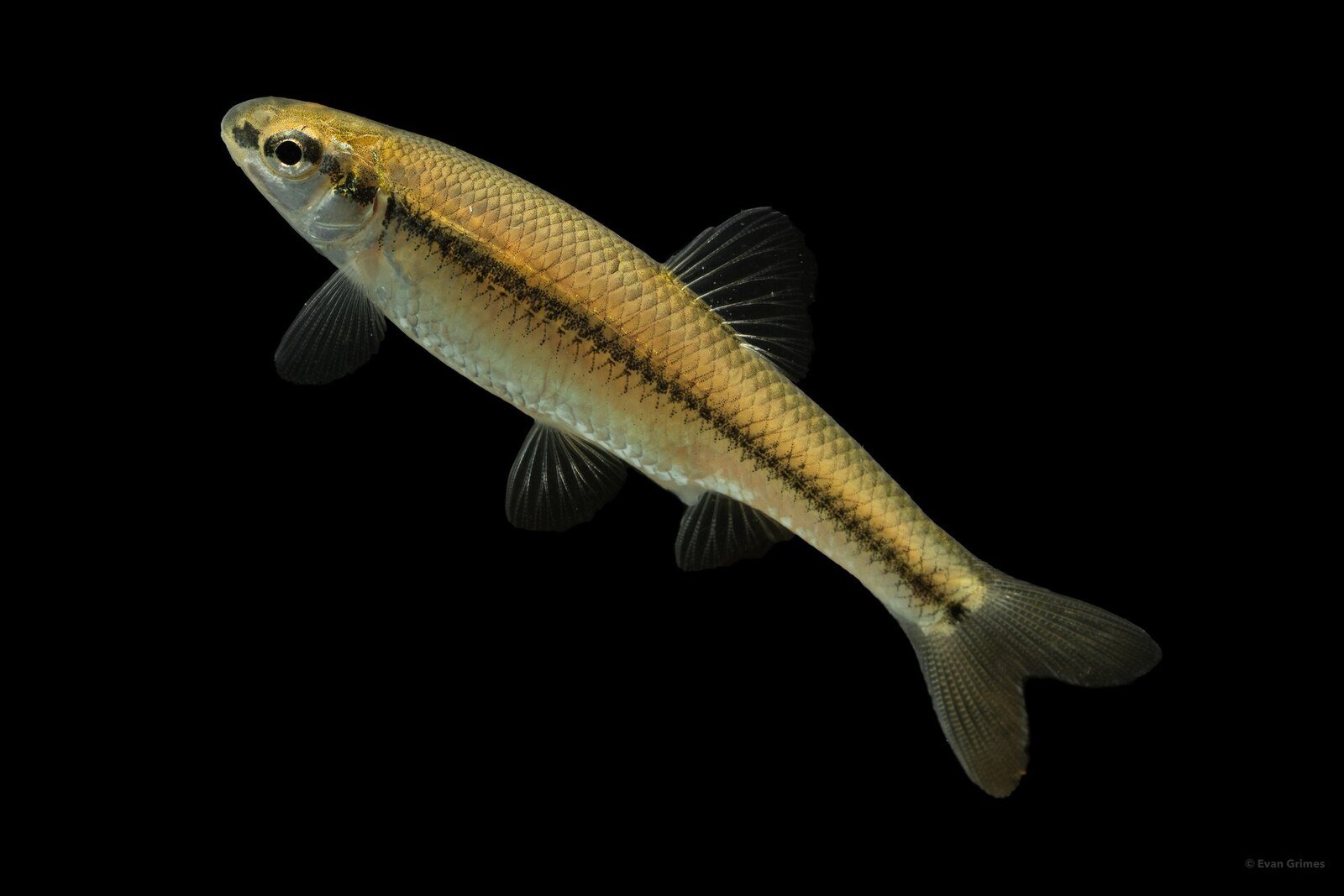
Bluntnose minnow
Pimephales notatus
A small dark-flanked minnow with a blunt rounded snout. Common in pools of small to medium creeks, often the most abundant minnow in slow-water habitats. Males guard small clutches of eggs under flat stones.
Status: Secure; widespread.
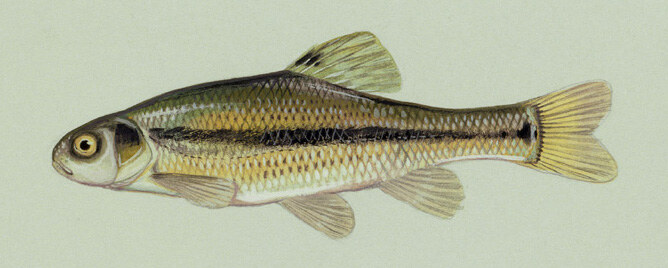
Fathead minnow
Pimephales promelas
A short-bodied tolerant minnow common in farm ponds, drainage ditches, and disturbed creek habitat. Frequently sold as bait; broadly tolerant of warm, oxygen-poor, or murky water that more sensitive minnows cannot survive.
Status: Secure; tolerant of disturbed water.
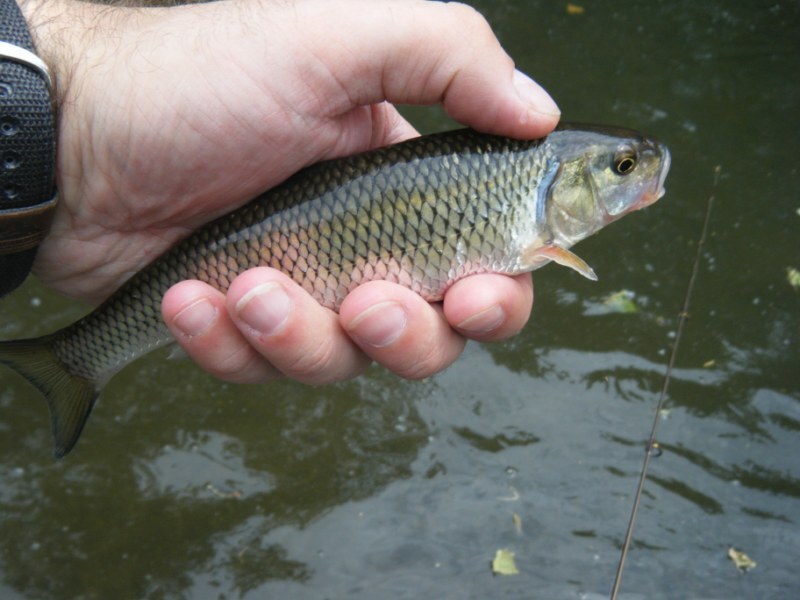
Creek chub
Semotilus atromaculatus
A larger minnow (to twelve inches) of small headwater streams. Spawning males excavate gravel pit nests and aggressively defend them. Common in the smaller plateau and valley streams of Marion County.
Status: Secure; iconic creek minnow.
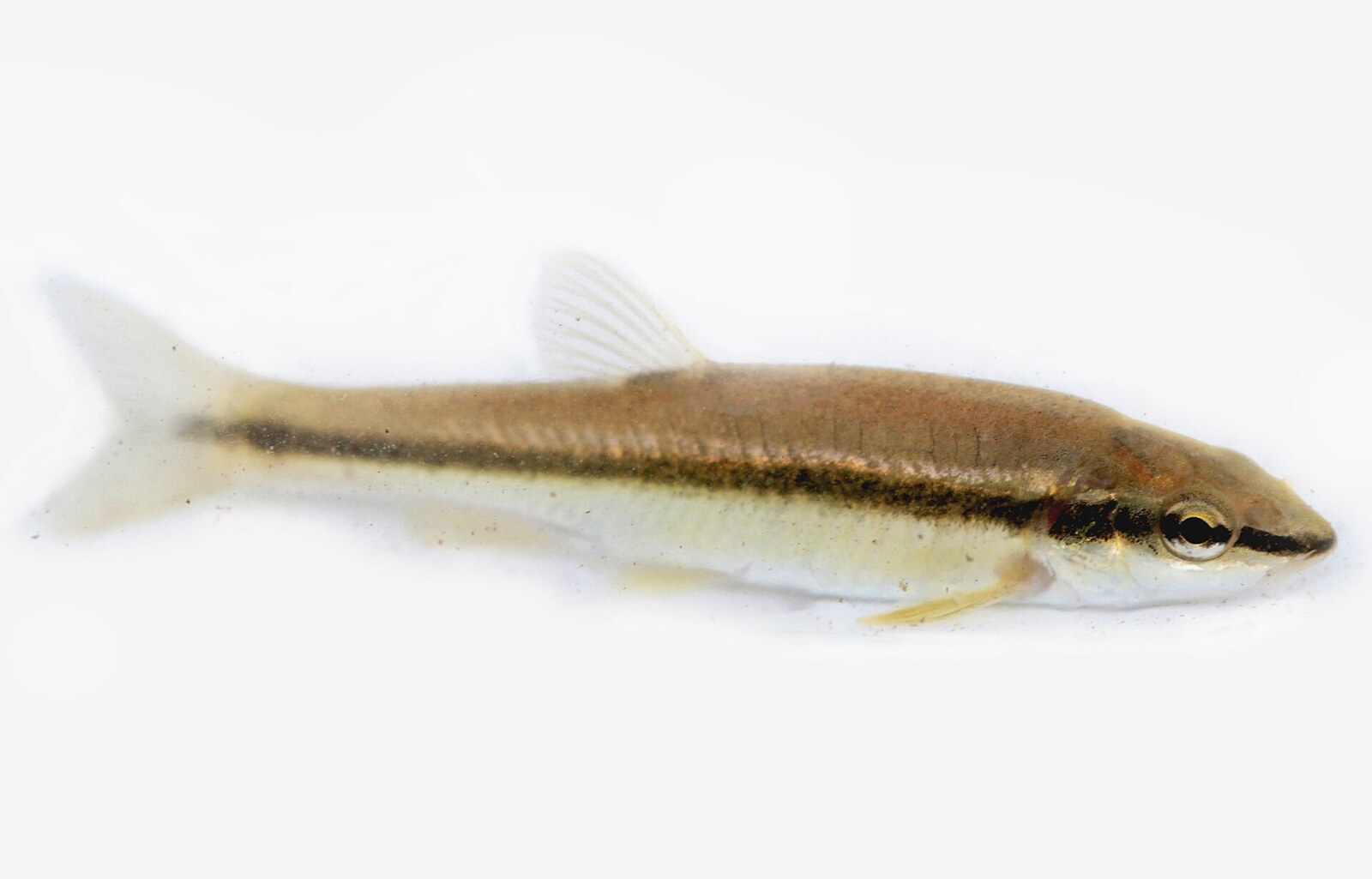
Blacknose dace
Rhinichthys atratulus
A small dark-striped minnow of cool, clear, swift-flowing creeks. The most common dace in Marion County's upper plateau tributaries; sensitive to siltation and habitat degradation.
Status: Secure; cool-water specialist.
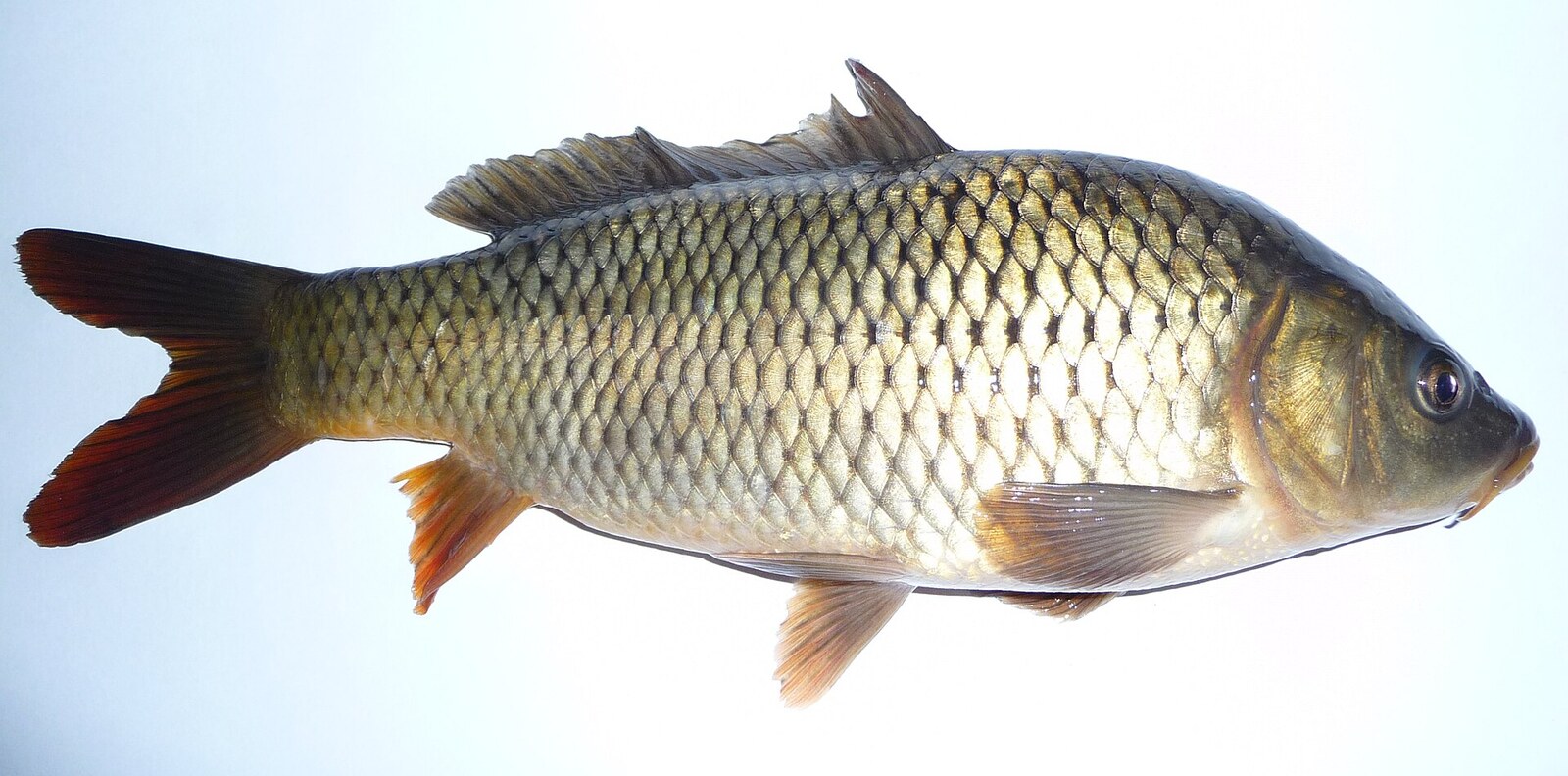
Common carp
Cyprinus carpio
An introduced Eurasian fish, deliberately stocked across the United States in the late nineteenth century before its ecological costs were understood. Common throughout Nickajack Lake and the Tennessee River; spawns in shallow weedy backwaters in spring.
Status: Introduced; established and abundant.
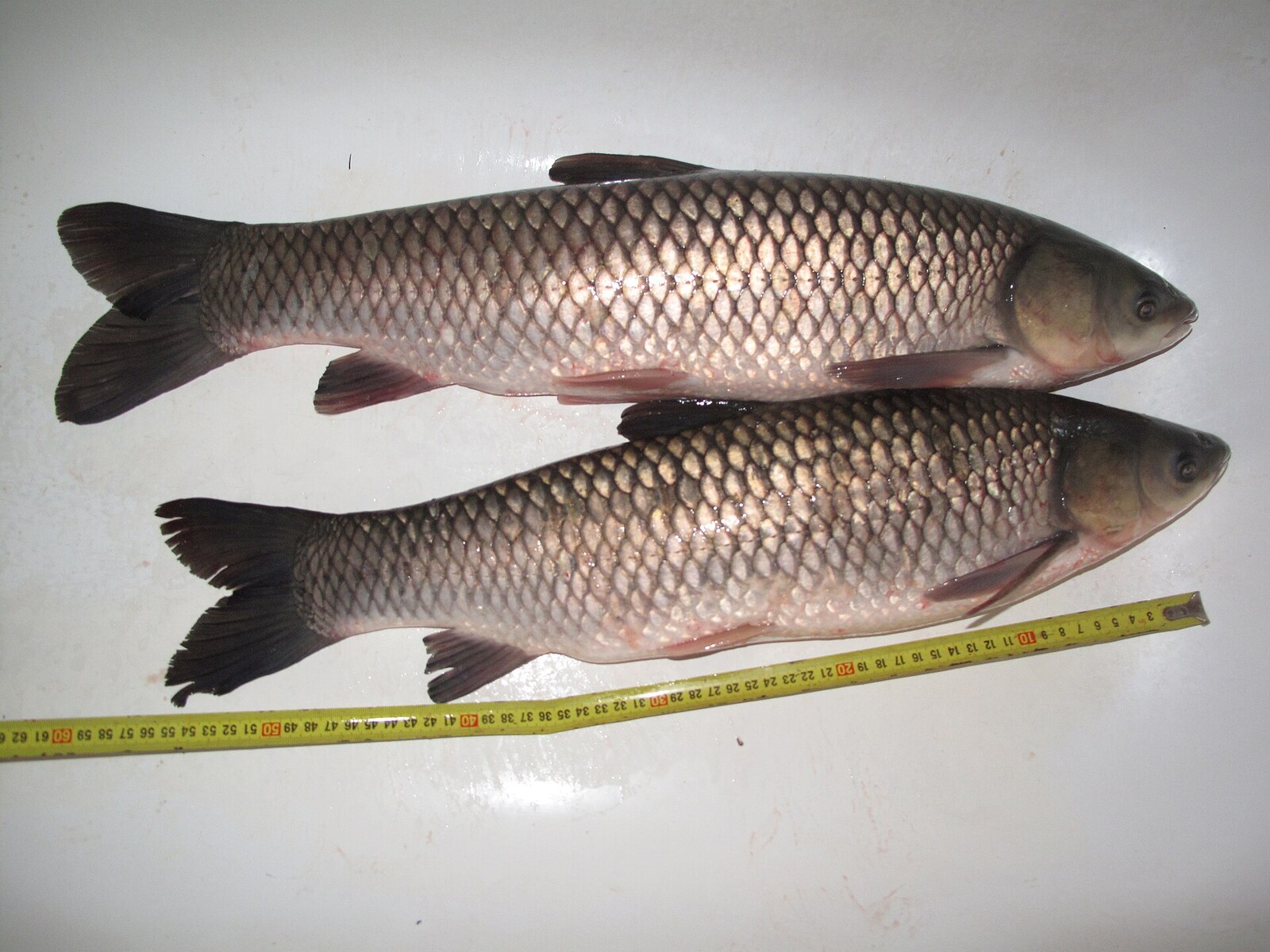
Grass carp
Ctenopharyngodon idella
An East Asian herbivore introduced as a vegetation-control measure. Federally and state-regulated in many waters; sterile triploid forms are stocked legally for aquatic-plant management, while diploid (fertile) forms are restricted.
Status: Introduced; sterile triploids legally stocked, diploids regulated.
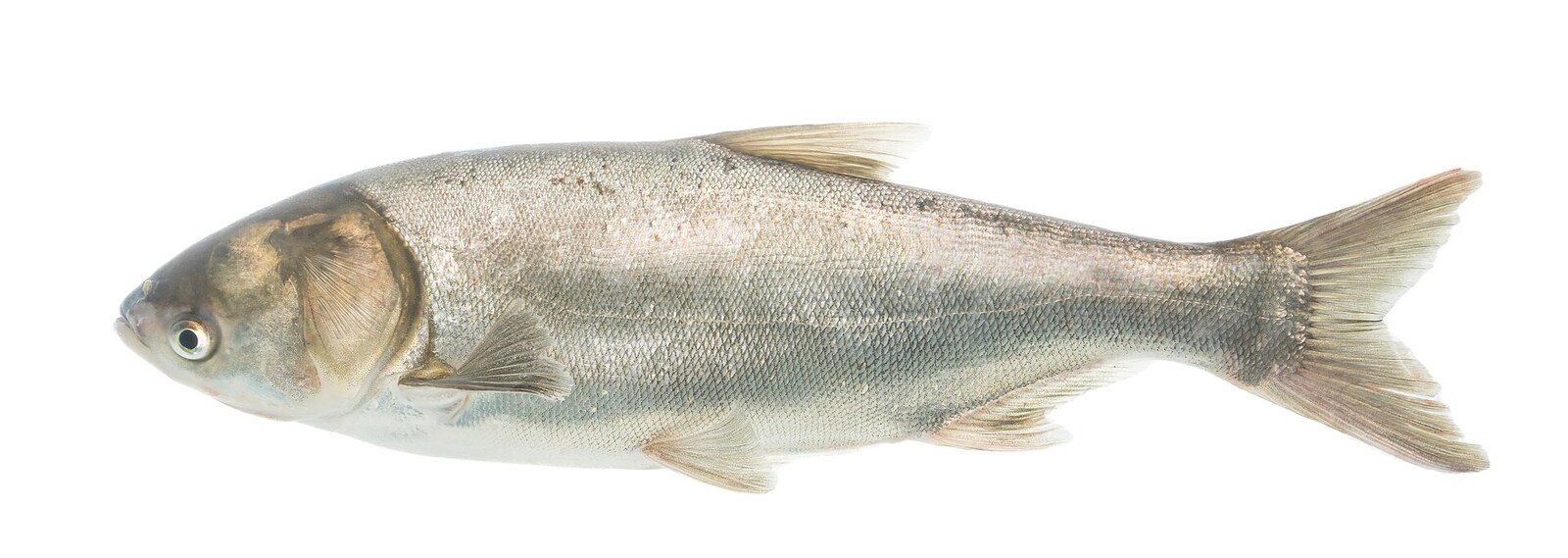
Silver carp
Hypophthalmichthys molitrix
An invasive Asian carp species infamous for jumping out of the water in response to boat motors, sometimes injuring boaters. As of TWRA tracking, silver carp are most abundant in lower Tennessee River impoundments (Kentucky and Pickwick reservoirs) but anglers on Nickajack should remain alert. The Tennessee Compact for Habitat Improvement Program (TCHIP) had removed more than 36.5 million pounds of invasive carp from Tennessee and Cumberland river systems by January 2025.
Status: Invasive; under aggressive management; removal incentivized.
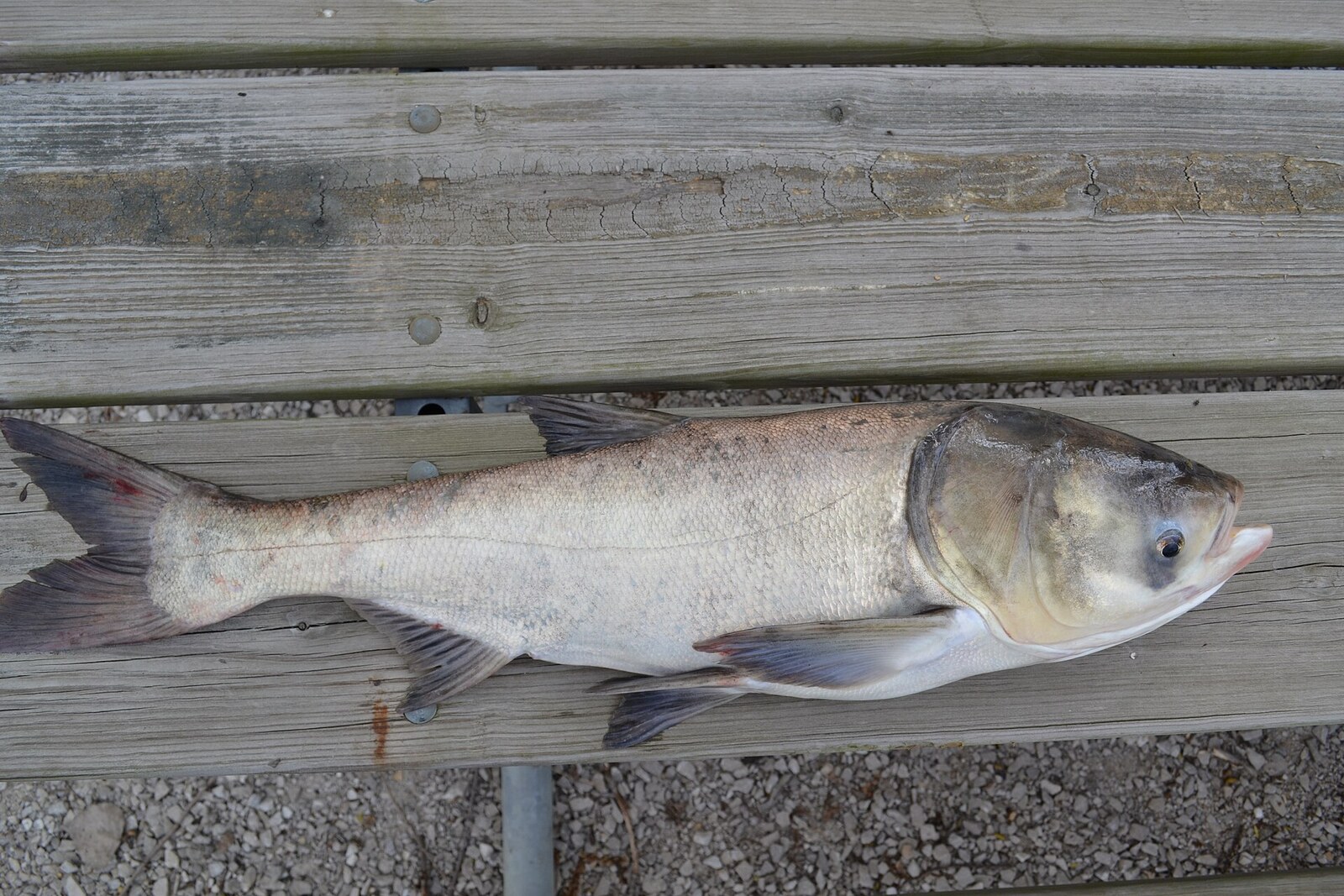
Bighead carp
Hypophthalmichthys nobilis
An invasive Asian carp species that filter-feeds zooplankton, competing directly with native paddlefish and gizzard shad for the same food base. A few individuals have been observed as far upstream as Nickajack Reservoir per TWRA monitoring; sustained populations remain concentrated in the lower Tennessee River.
Status: Invasive; under aggressive management; removal incentivized.
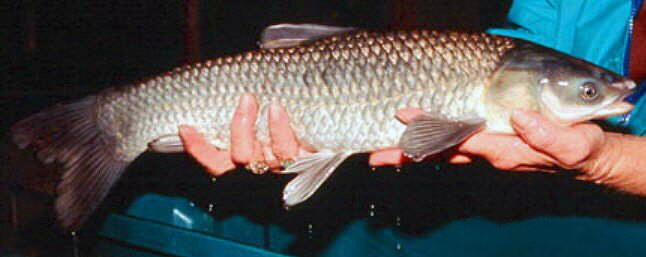
Black carp
Mylopharyngodon piceus
The fourth and least-common Asian carp species in the Tennessee River system. A mollusk specialist with crushing pharyngeal teeth; raises particular concern for Tennessee's already-endangered freshwater mussel fauna.
Status: Invasive; minor presence; mussel-conservation concern.
Suckers and buffalo (Catostomidae)
Native suckers (Catostomidae) play roles analogous to the carp family in their bottom-feeding ecology, but with deeper Tennessee River drainage roots. Three buffalo species fill the larger-bodied filter-feeding niche; redhorses are the streamlined gravel-and-pool fish of medium rivers; carpsuckers and quillback inhabit larger water; the conservation-significant blue sucker is a TWRA Species of Greatest Conservation Need that has lost habitat to dam impoundment. Many redhorses sustain spring spawning runs into smaller tributaries.
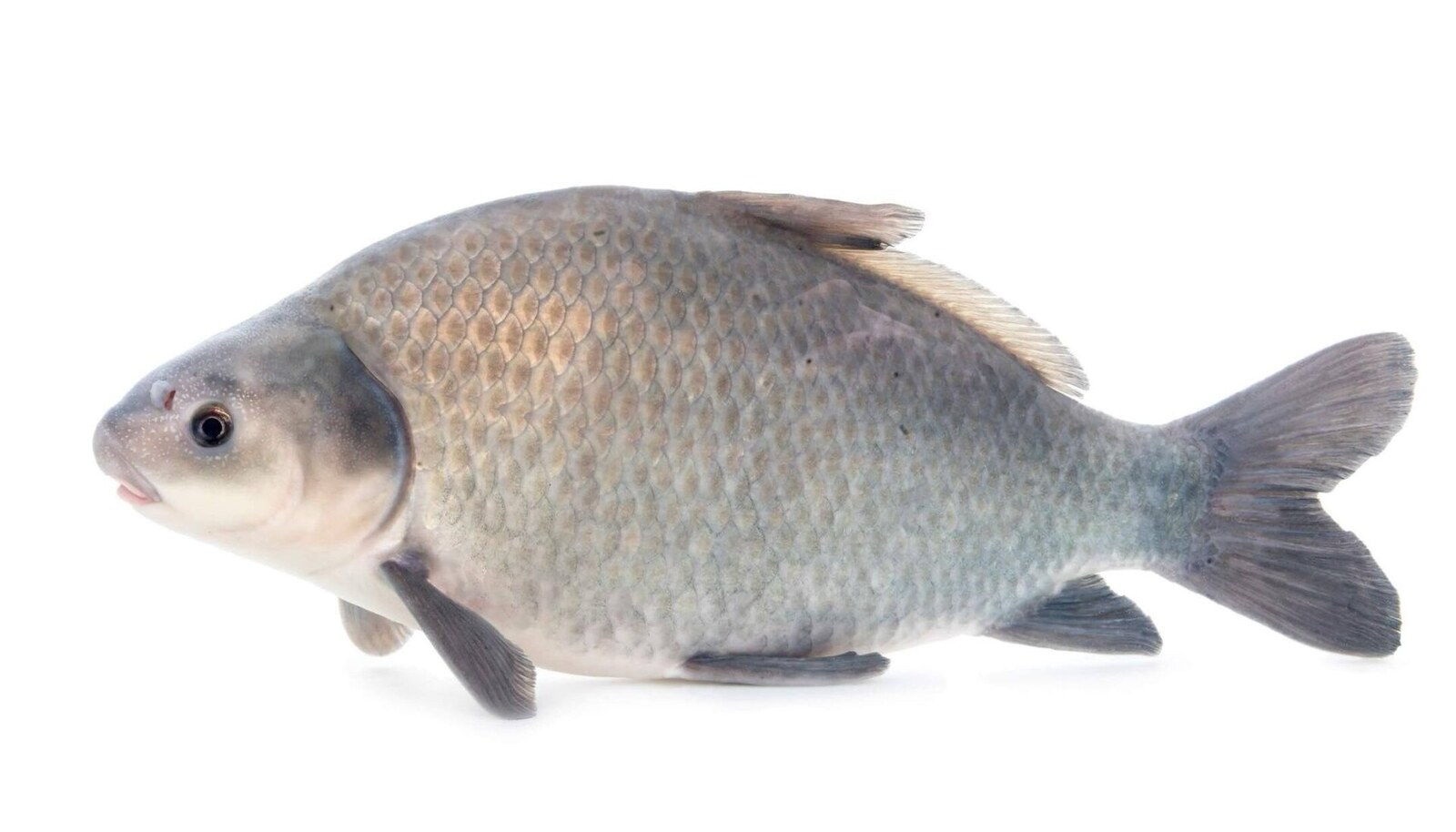
Smallmouth buffalo
Ictiobus bubalus
A deep-bodied native sucker of larger rivers and reservoirs, reaching twenty pounds in Nickajack Lake. Filter-feeds and bottom-grazes; flesh is regionally prized and the species supports a small commercial fishery on the lower Tennessee River.
Status: Secure; a large native sucker.
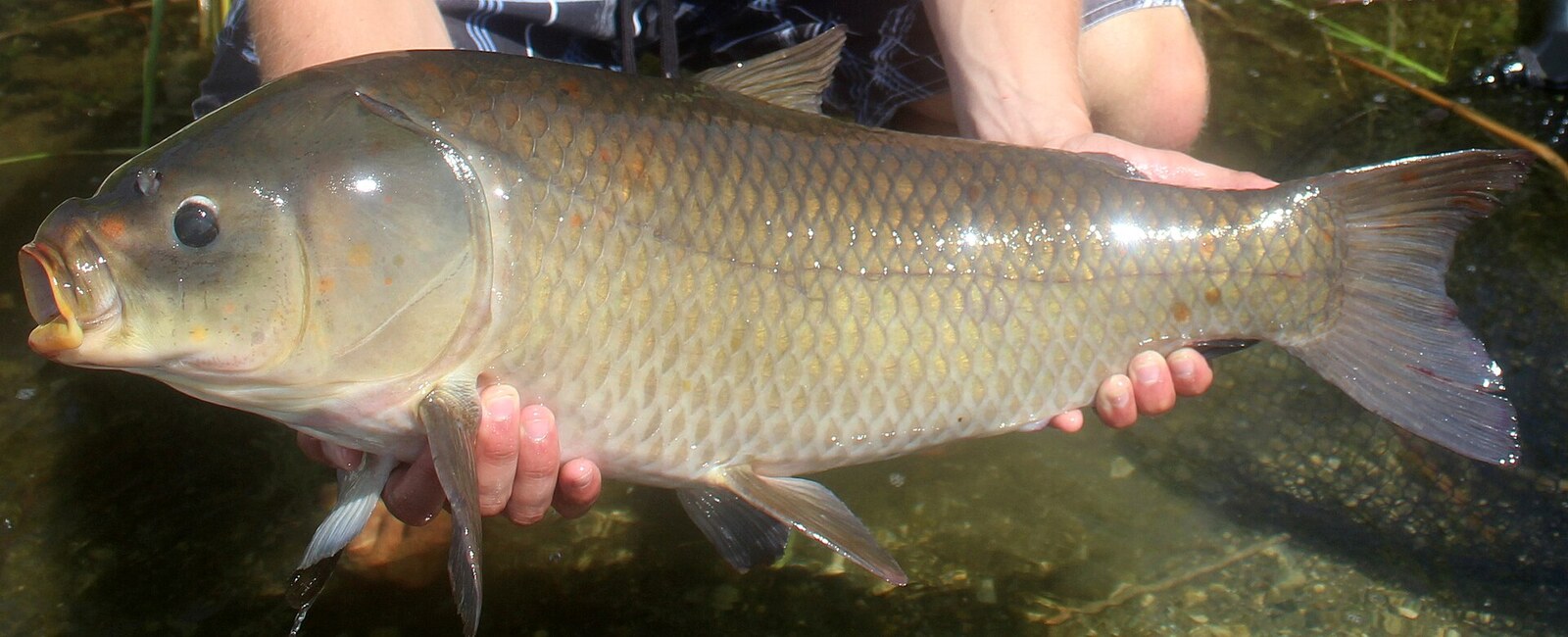
Bigmouth buffalo
Ictiobus cyprinellus
The largest buffalo species, a filter-feeder of large open-water reaches. Recent research has documented bigmouth buffalo living to over a century, making them one of the longest-lived freshwater fishes; many adults in lower Tennessee River impoundments hatched before the dams were built.
Status: Secure; remarkably long-lived.
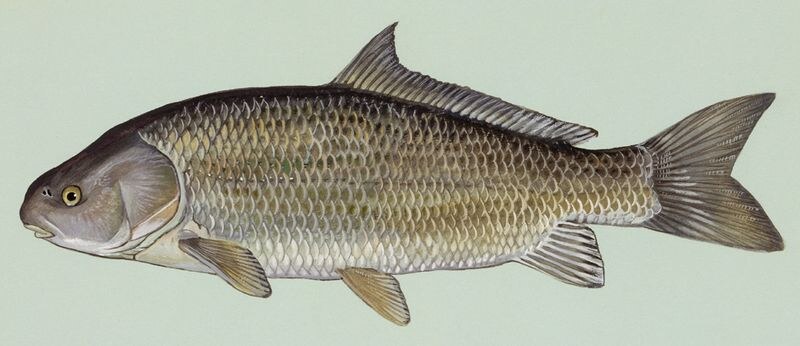
Black buffalo
Ictiobus niger
The least common of the three buffalo species, with a more terete body shape than the deep-bodied smallmouth and bigmouth. Native to the larger Tennessee River channel and Nickajack Lake.
Status: Secure; less abundant than its congeners.
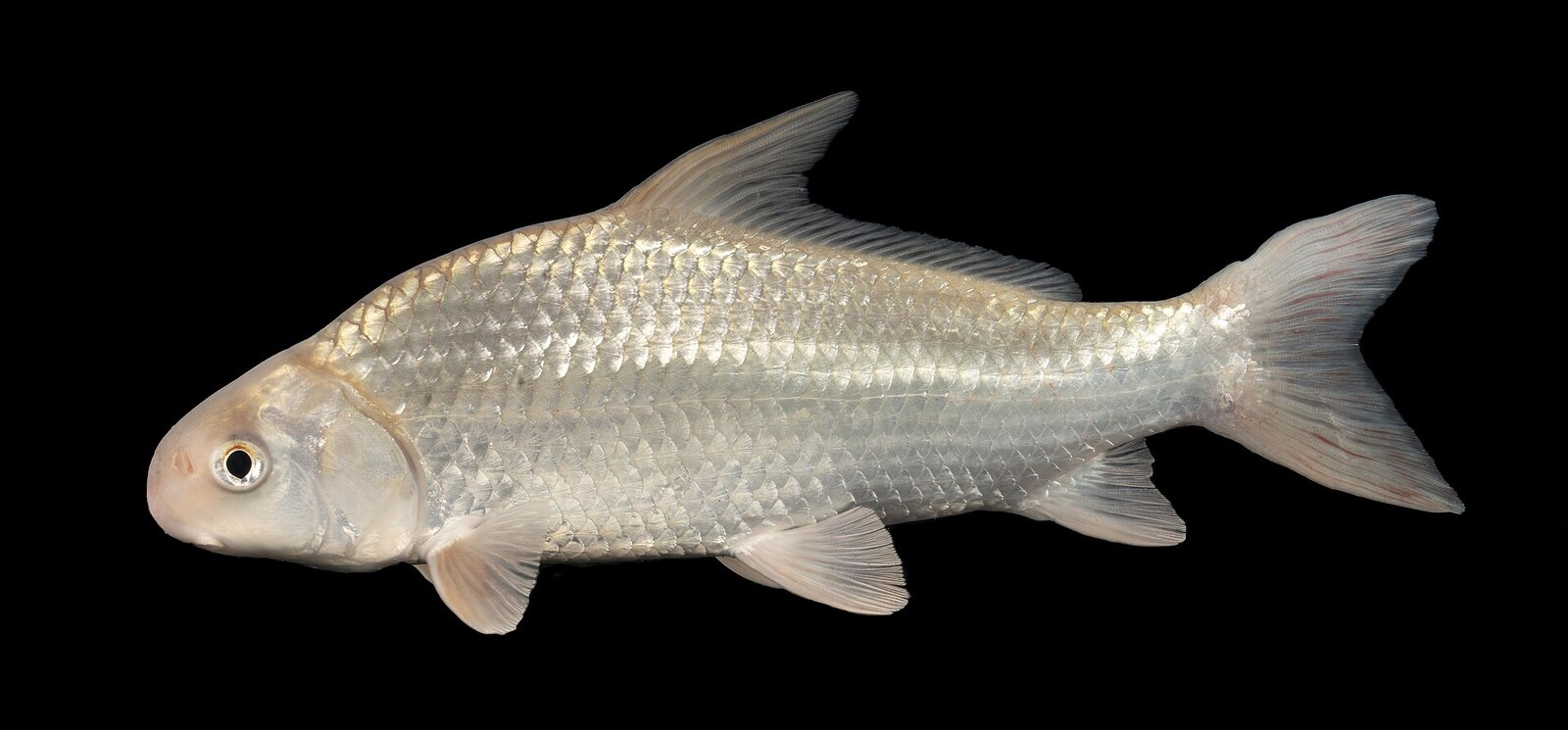
River carpsucker
Carpiodes carpio
A medium-sized native sucker of larger rivers, with a deep body, silvery flanks, and a small subterminal mouth. Common in the Tennessee River main stem.
Status: Secure; native to large river channels.
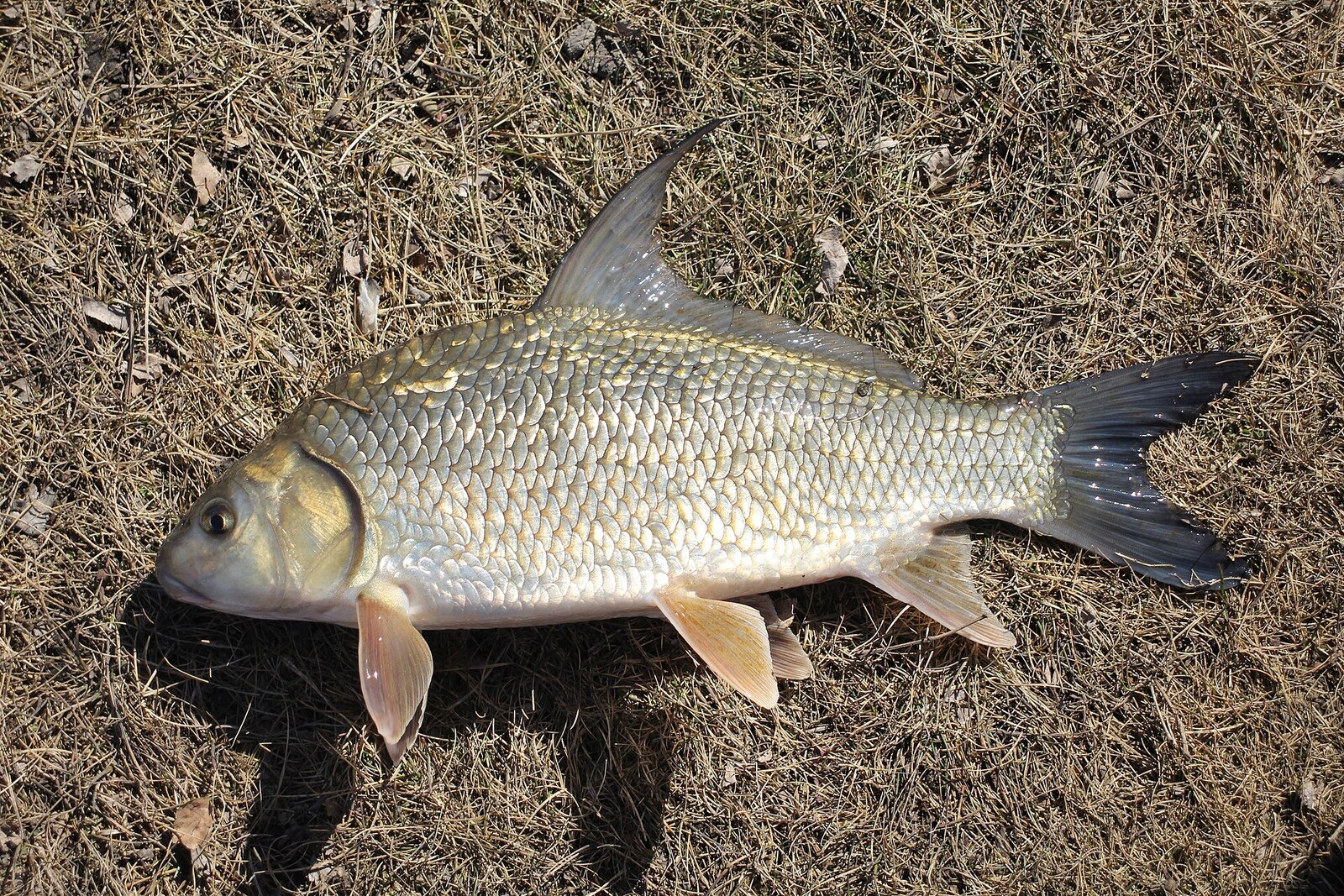
Quillback
Carpiodes cyprinus
Named for the elongated first ray of the dorsal fin, which extends back like a quill. Inhabits larger rivers and reservoirs; a member of the same Carpiodes genus as the river carpsucker and highfin carpsucker.
Status: Secure; native to medium-large rivers.
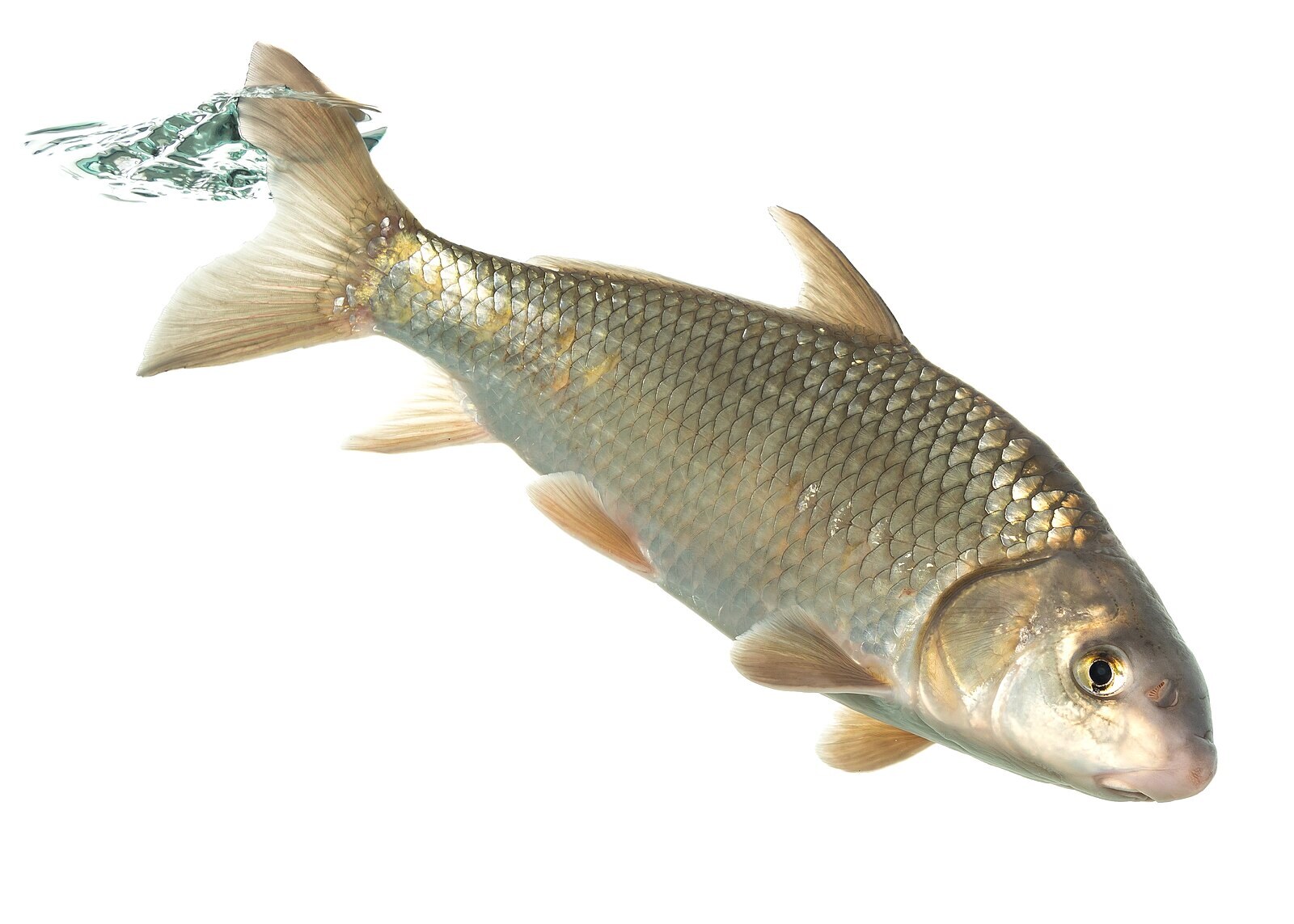
Highfin carpsucker
Carpiodes velifer
A smaller cousin of the quillback, with an even more strikingly elongated dorsal-fin spine. Native to larger Tennessee River drainage waters; less commonly encountered than quillback or river carpsucker.
Status: Secure; native; uncommonly encountered.
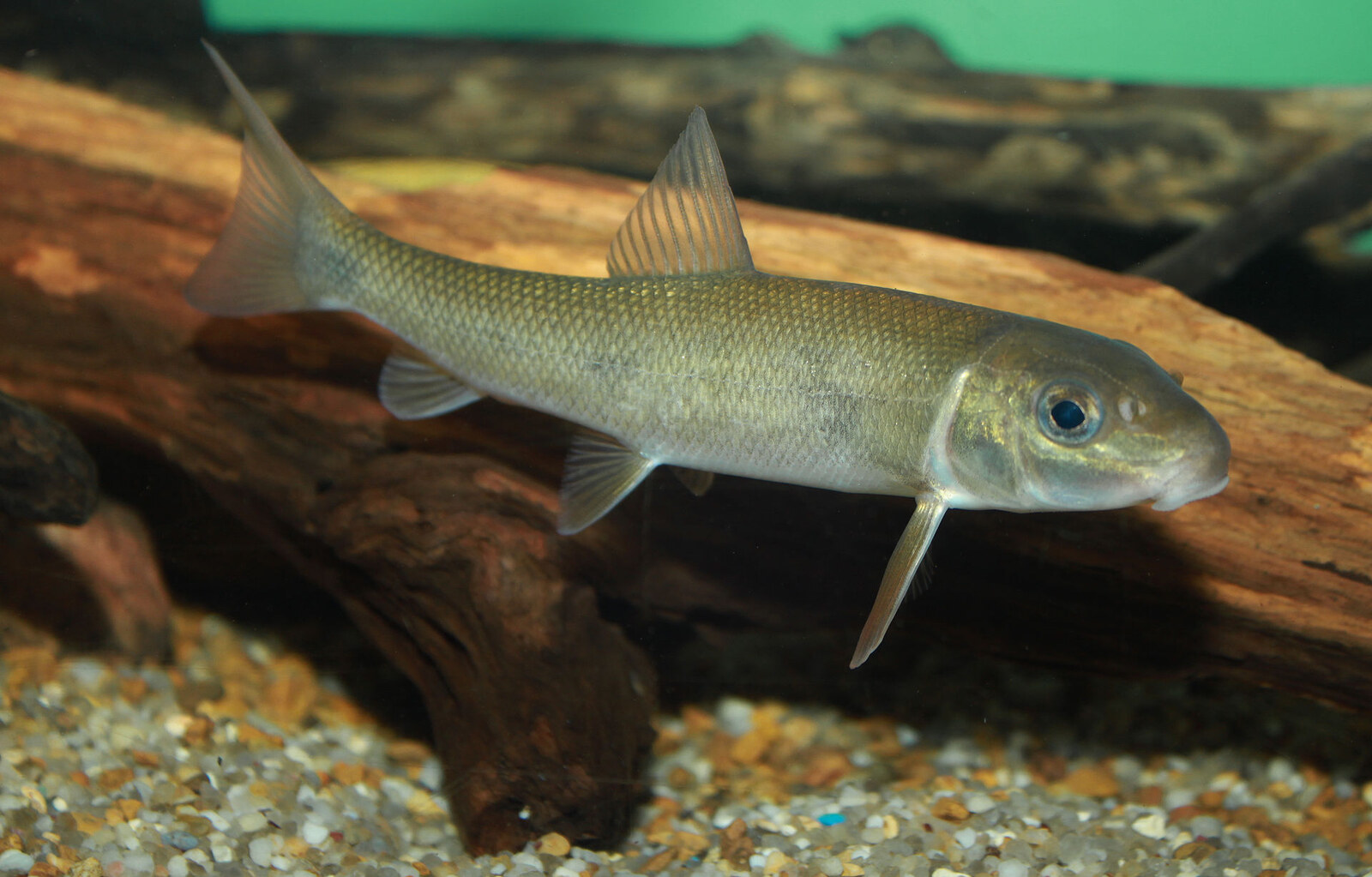
White sucker
Catostomus commersonii
A common medium-sized sucker of cooler streams across the eastern United States. Holds in pool-and-riffle creeks; spawning runs into small tributaries occur in early spring.
Status: Secure; widespread.
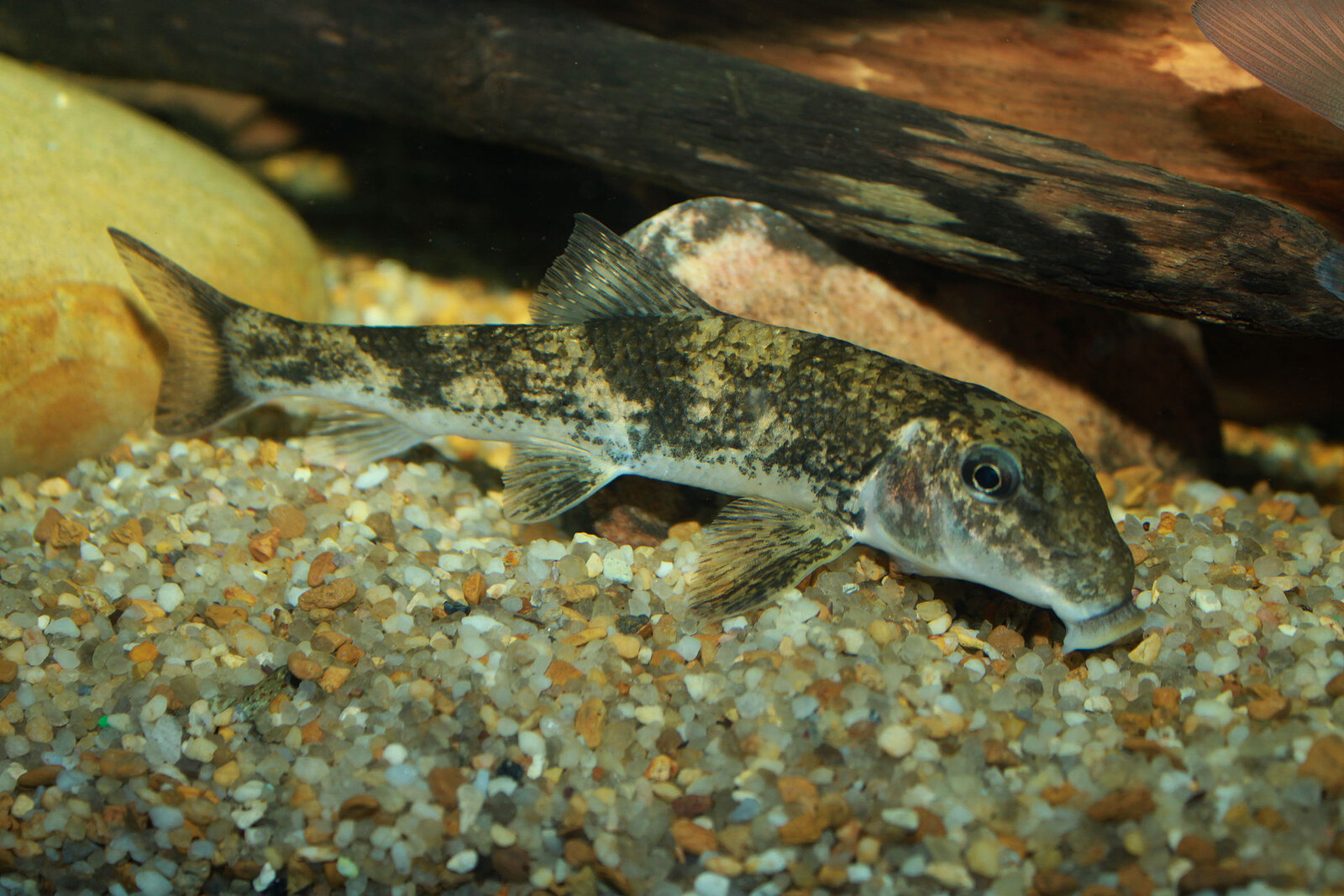
Northern hogsucker
Hypentelium nigricans
A distinctive sucker with a flattened underbelly, a sloping forehead, and four broad dark saddles across the back. Holds nose-down on gravel in clear flowing streams, hunting invertebrates dislodged from the substrate.
Status: Secure; clear-water specialist.
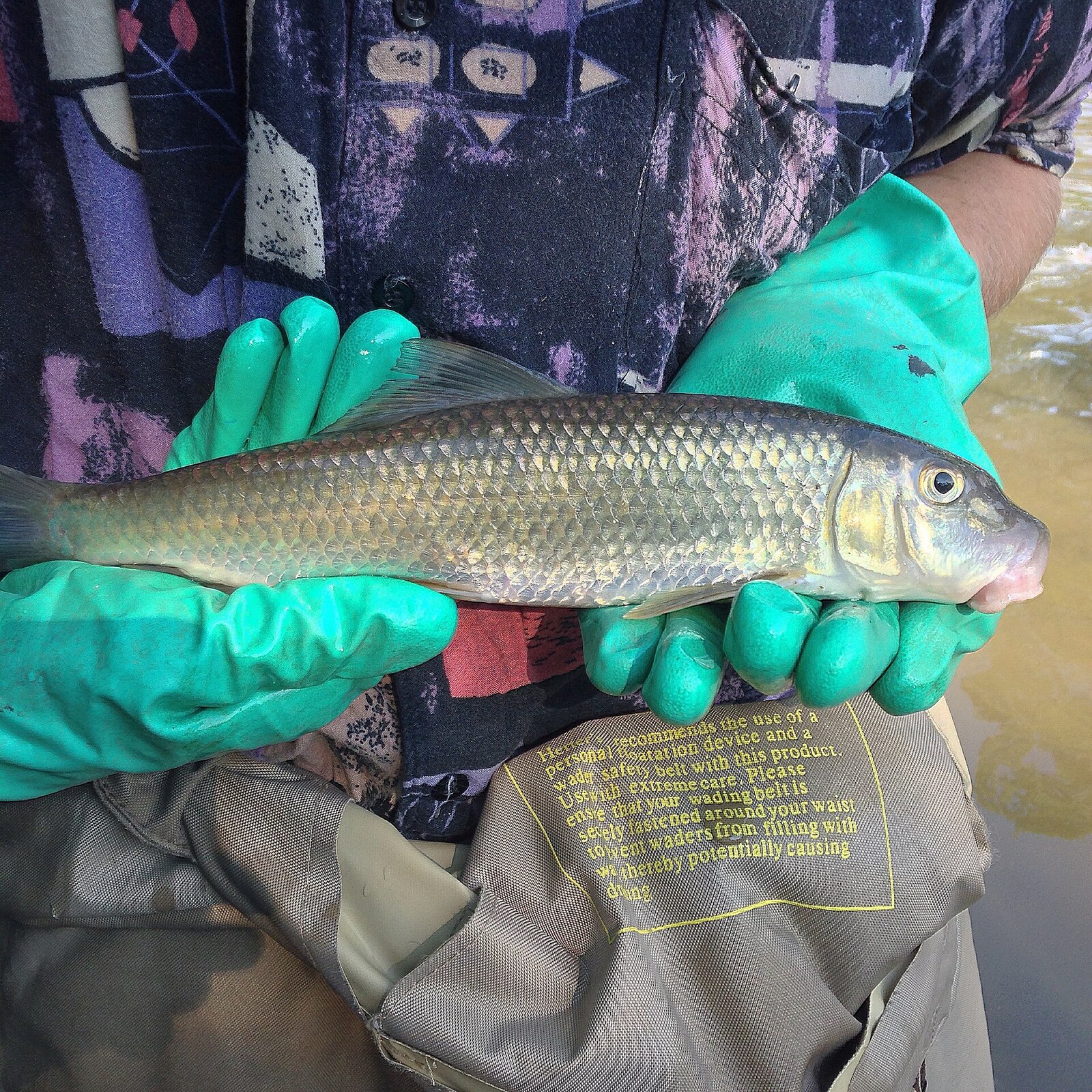
Black redhorse
Moxostoma duquesnei
A streamlined redhorse sucker with charcoal-edged scales giving the back a darker appearance than other redhorses. Inhabits clear medium-sized rivers and the lower reaches of larger tributary creeks.
Status: Secure; native to clear streams.
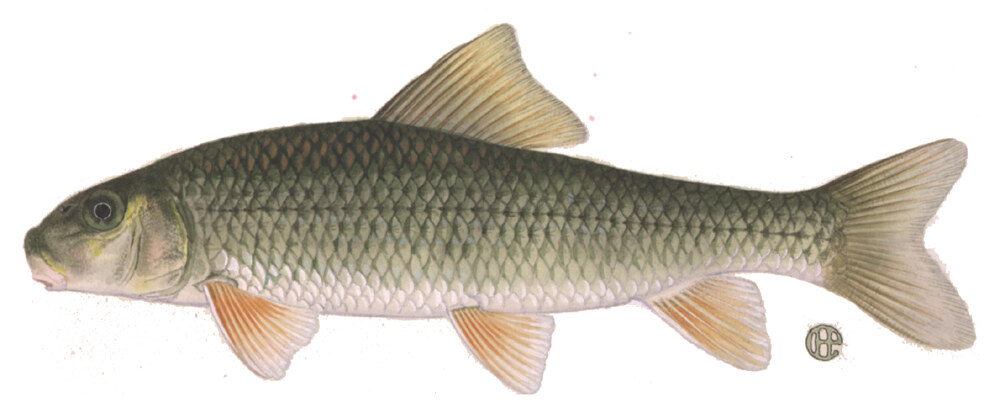
Golden redhorse
Moxostoma erythrurum
A medium-sized redhorse with golden-bronze flanks and orange-red lower fins. Common in the Sequatchie River and other clear medium-sized streams; spawns over gravel riffles in spring.
Status: Secure; common.
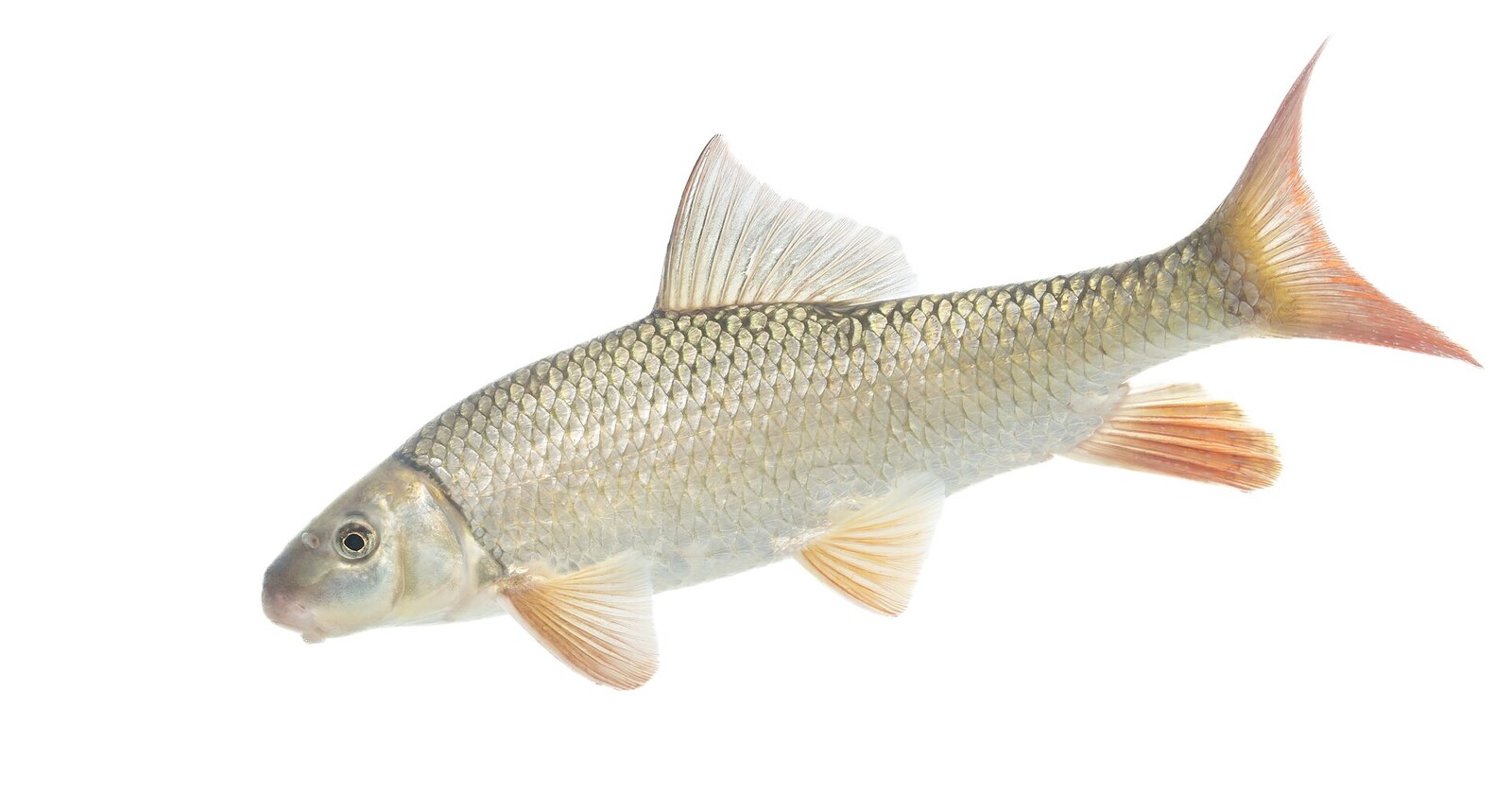
Shorthead redhorse
Moxostoma macrolepidotum
Distinguished from other redhorses by its proportionally short snout and brick-red caudal fin. Inhabits medium to large rivers; common in the Tennessee River main stem.
Status: Secure; widespread.
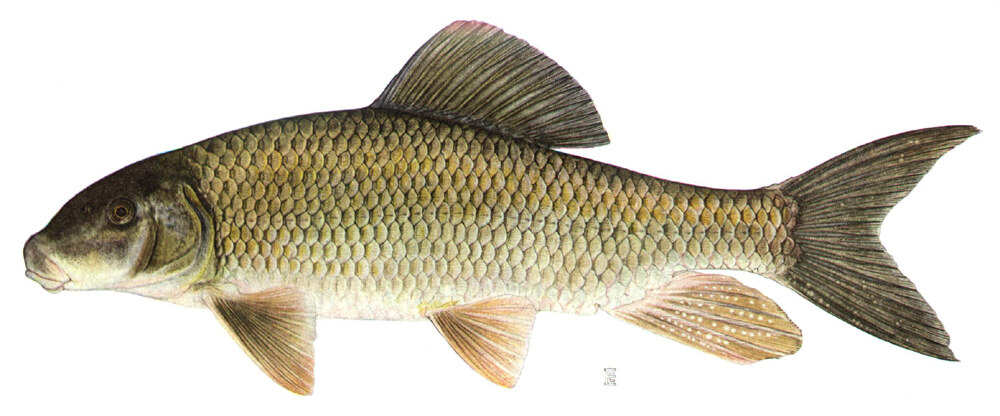
Silver redhorse
Moxostoma anisurum
A larger redhorse with silvery flanks and pale fins (rather than the orange-red fins of most congeners). Holds in larger river channels; expected in the Tennessee River reach at Marion.
Status: Secure; native to larger rivers.
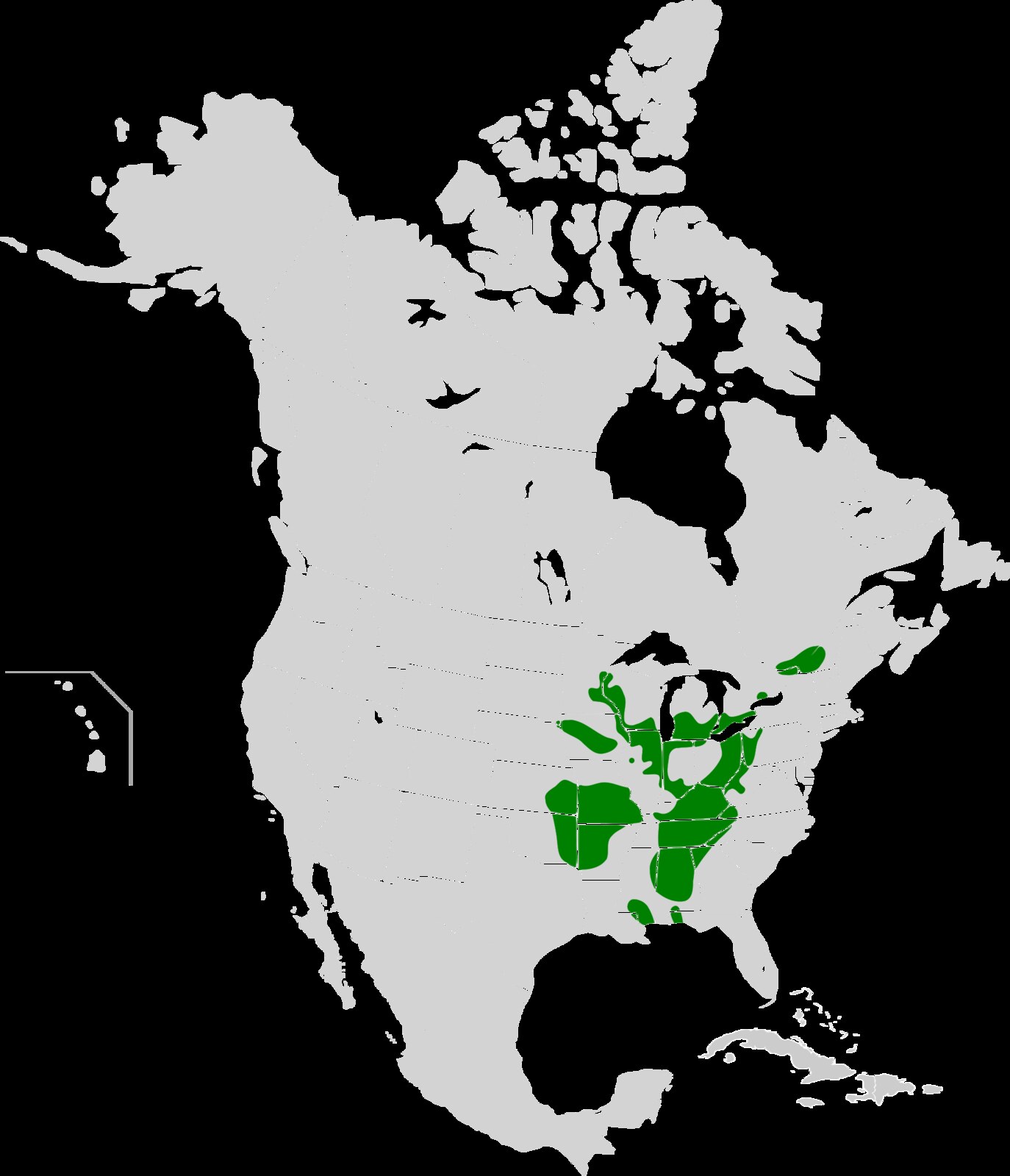
River redhorse
Moxostoma carinatum
A large redhorse (to twenty-five inches) of clean medium-sized rivers. Conservation-significant in many states because of its sensitivity to habitat degradation; the Tennessee River drainage is part of its core range.
Status: Secure but tracked; clean-river indicator.
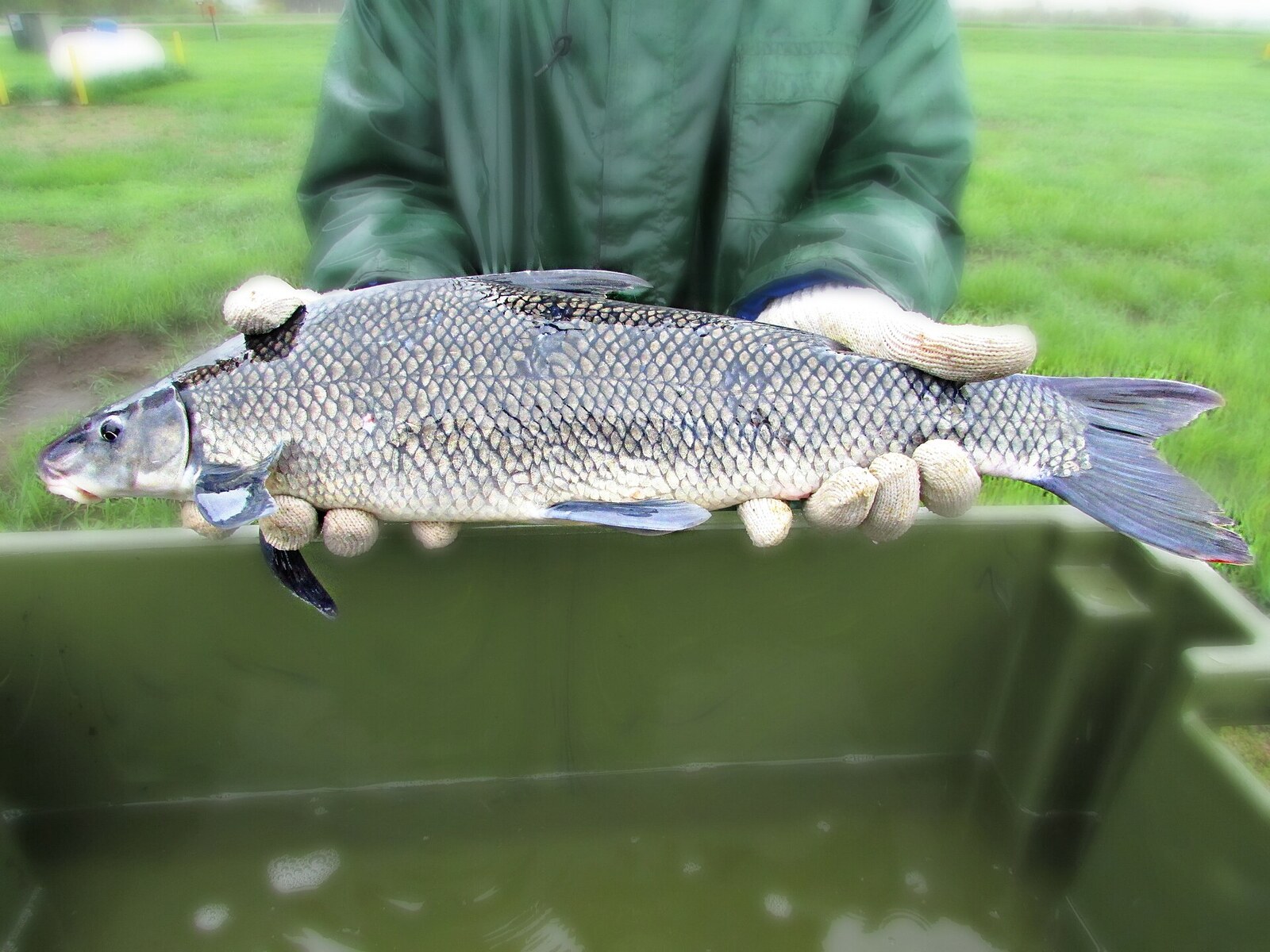
Blue sucker
Cycleptus elongatus
An elongated, blue-tinted sucker of large flowing rivers. Sensitive to dam-induced flow changes and habitat fragmentation; the Marion County Tennessee River reach is within historical range, though impoundment by Nickajack Dam has reduced suitable habitat.
Status: TWRA Species of Greatest Conservation Need.
Gars and bowfin
Three gar species and the bowfin together represent ancient lineages predating most modern fish families. Gars are armored with hard ganoid scales and breathe air through a primitive lung; the bowfin shares the lung adaptation and the Jurassic-era ancestry. Recent genetic work split the bowfin into eastern and western species; Tennessee River bowfin are now Amia ocellicauda.
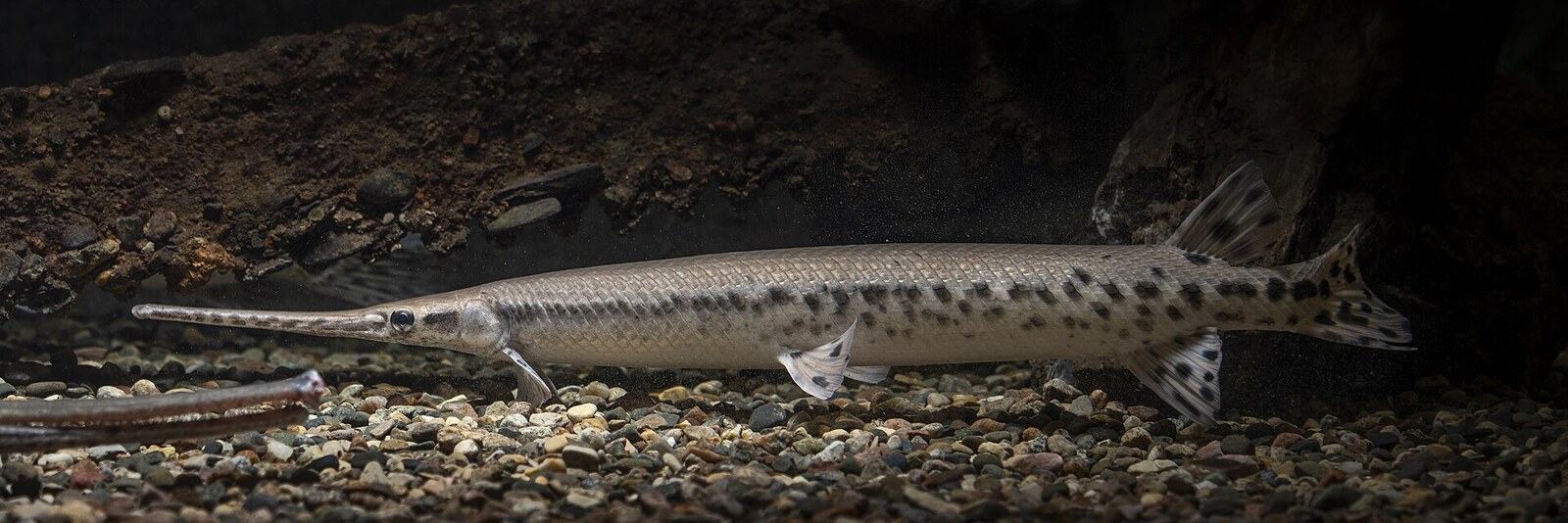
Longnose gar
Lepisosteus osseus
An ancient prehistoric-looking fish with an elongated needle-like snout lined with small sharp teeth. Common in Nickajack Lake's quieter coves and Tennessee River backwaters. Sometimes seen breaking the surface to gulp air through their primitive lung.
Status: Secure; living relict.
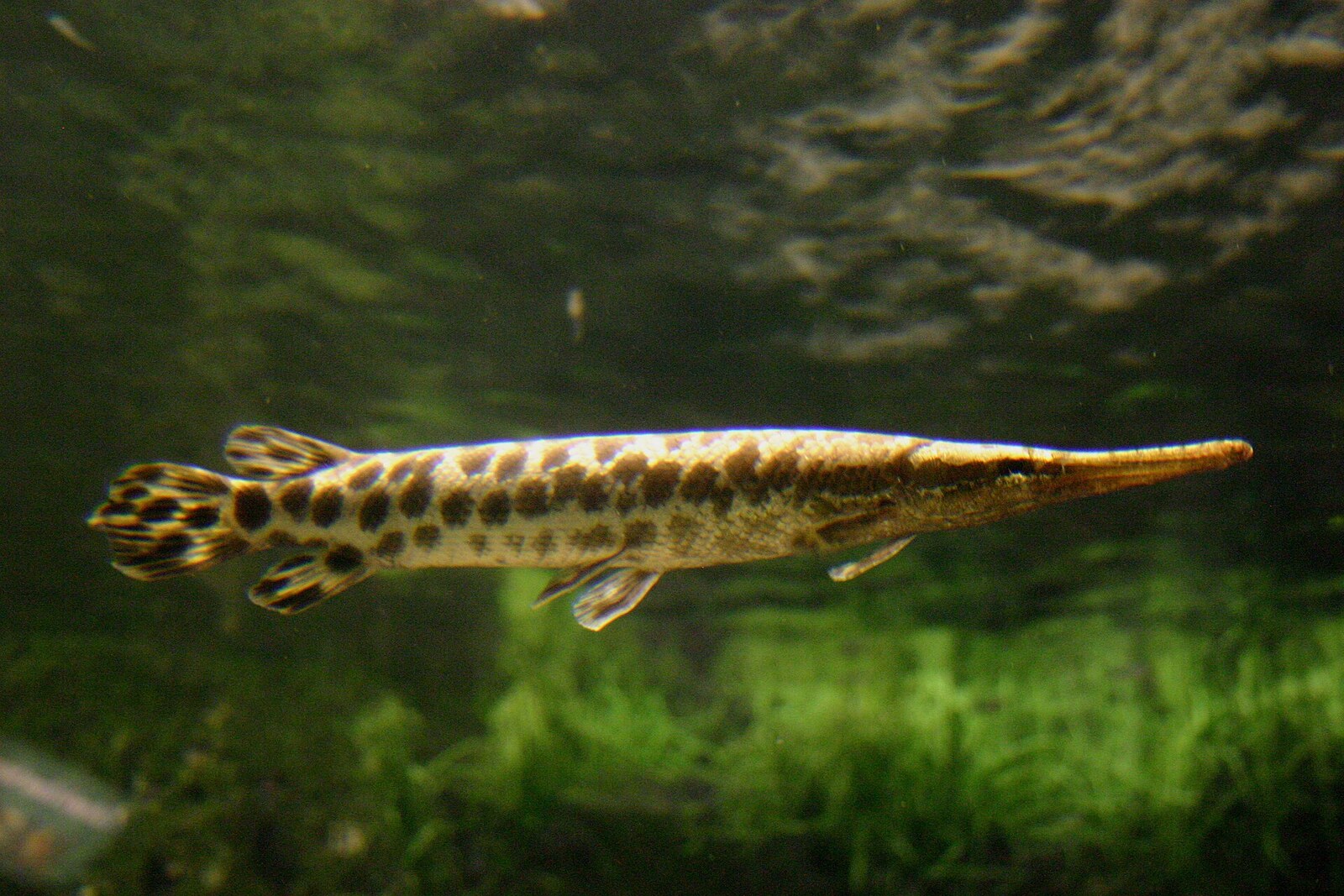
Spotted gar
Lepisosteus oculatus
A smaller gar with dark spots on the body, fins, and head. Prefers heavily vegetated backwater habitats; less common in the Marion stretch than the longnose gar.
Status: Secure; backwater specialist.
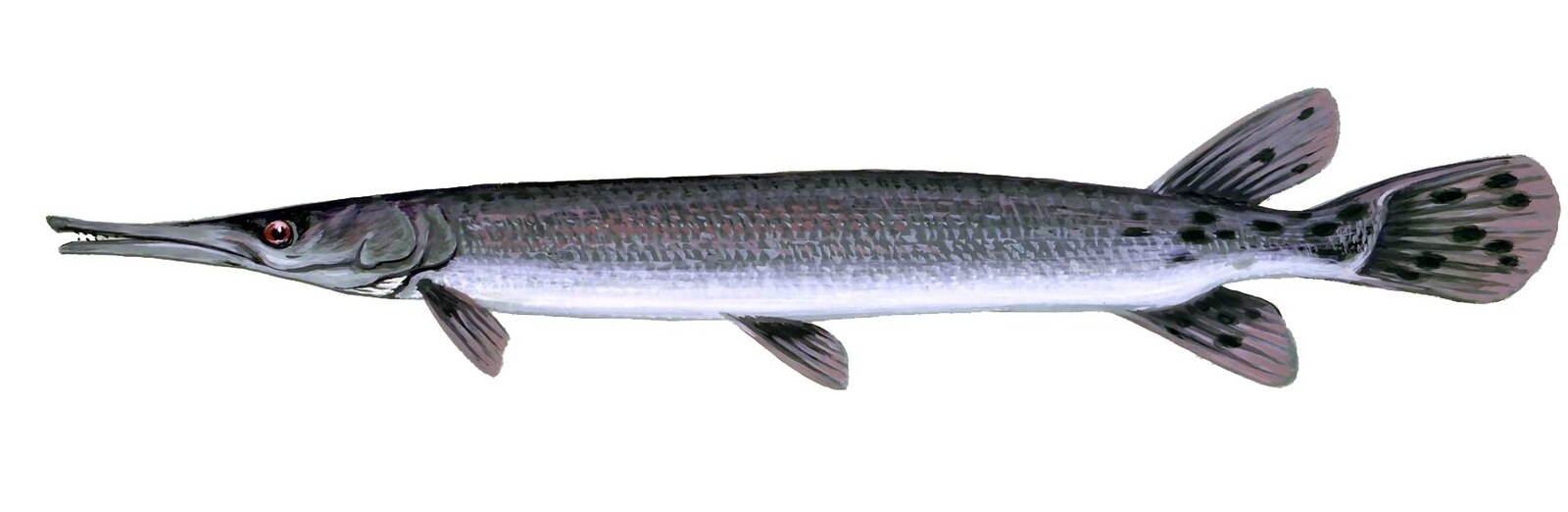
Shortnose gar
Lepisosteus platostomus
A medium-sized gar with a proportionally shorter, broader snout than the longnose. Native to large rivers and impoundments of the central United States; expected in the Tennessee River main stem.
Status: Secure; native to large rivers.
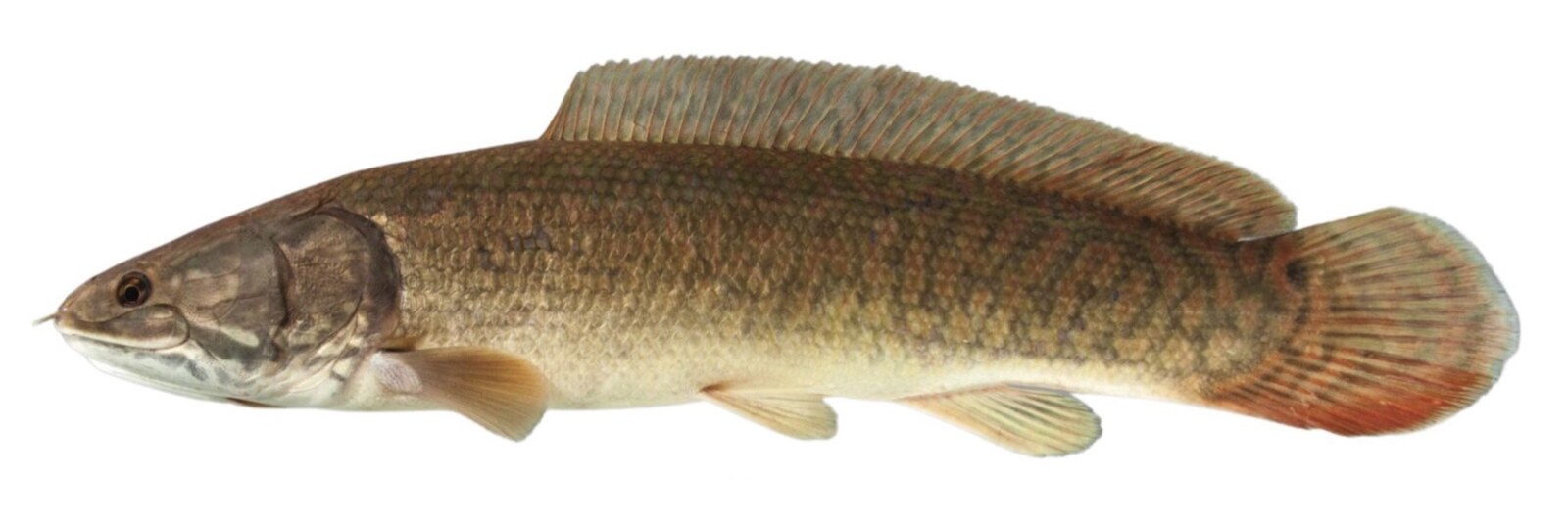
Bowfin
Amia ocellicauda
The sole living member of an ancient lineage that goes back to the Jurassic. Long dorsal fin runs nearly the full length of the back; recent genetic work split the species into eastern and western forms, with the Tennessee River population now assigned to Amia ocellicauda. Air-breathes through a primitive lung in oxygen-poor backwaters.
Status: Secure; another living relict.
Eels and shads
The shads (Clupeidae and Alosa) and the catadromous American eel make up the migratory and pelagic fish of the Tennessee River. Gizzard shad is the foundational forage fish of Nickajack Lake; striped bass, walleye, blue catfish, and ospreys all key on shad schools. The American eel and Alabama shad both depend on free passage between freshwater and the Gulf of Mexico, and both have been reduced to historical remnants by Hales Bar and Nickajack dam construction.
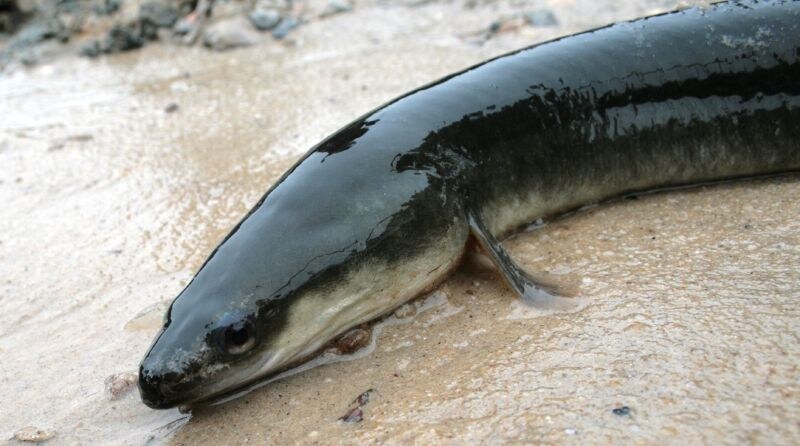
American eel
Anguilla rostrata
A snake-shaped catadromous fish: born in the Sargasso Sea, it migrates inland to spend its growing years in freshwater rivers, returning to the ocean to spawn. Hales Bar and Nickajack Dams now block upstream movement above the Marion reach, reducing the population to historical remnants.
Status: TWRA Species of Greatest Conservation Need; populations declining.
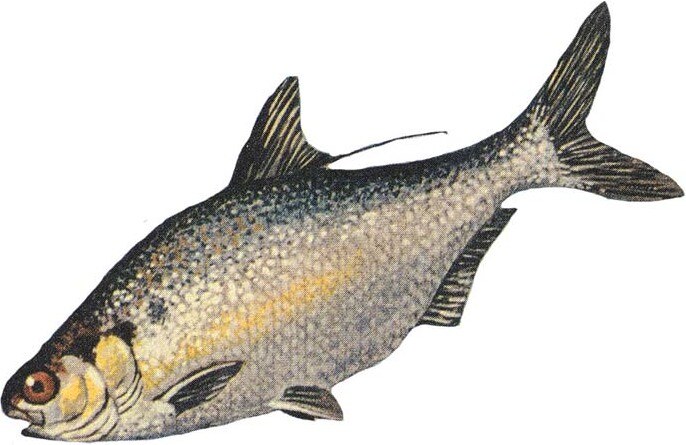
American gizzard shad
Dorosoma cepedianum
An abundant pelagic forage fish of larger rivers and reservoirs. The dominant prey base for striped bass, walleye, and other game species in Nickajack Lake. Plankton filter-feeder; juveniles fill open-water schools that stripers, gulls, and ospreys all key on.
Status: Secure; foundational forage fish.
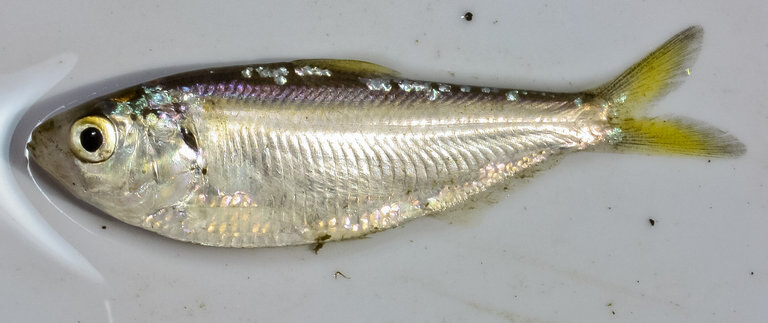
Threadfin shad
Dorosoma petenense
A smaller cousin of the gizzard shad with an elongated last dorsal-fin ray. Cold-sensitive: severe winter cold snaps can produce mass die-offs in northern impoundments. Common in Nickajack alongside gizzard shad.
Status: Secure; cold-sensitive.
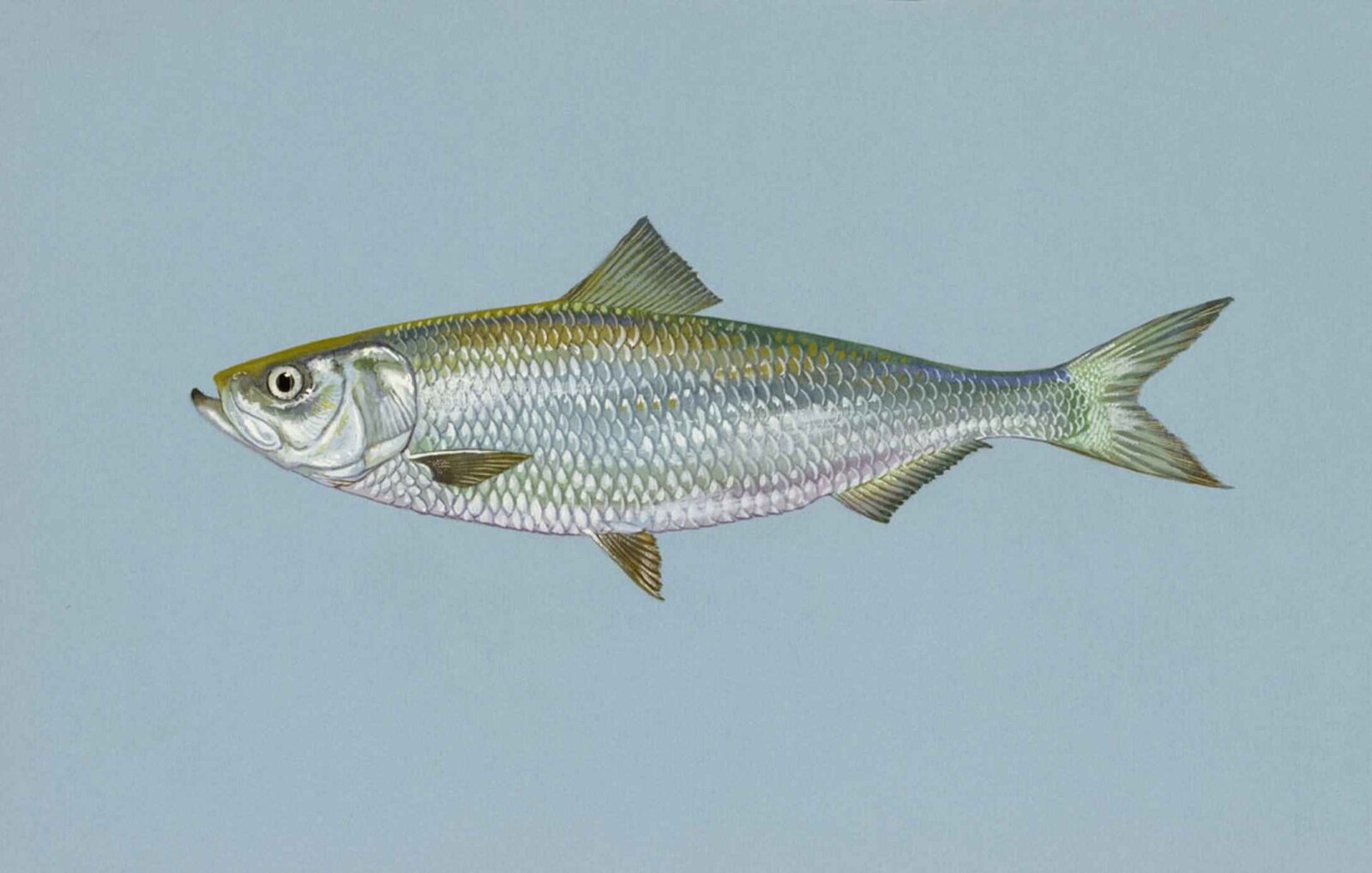
Skipjack shad
Alosa chrysochloris
A larger predatory shad that pursues smaller fish at the surface, often visible jumping in chases. Common in the Tennessee River main stem; supports a small but enthusiastic angling following.
Status: Secure; pelagic predator.
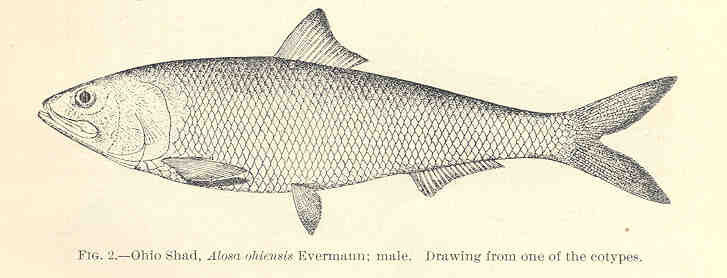
Alabama shad
Alosa alabamae
An anadromous shad that historically migrated up the Tennessee River from the Gulf of Mexico to spawn in tributary streams. Dam construction blocked these migrations; surviving populations are confined to lower Tennessee River reaches and a few Gulf-flowing rivers.
Status: TWRA Species of Greatest Conservation Need; rare or accidental in Marion.
Cave-dwelling fish
The southern cavefish lives entirely in cave streams beneath the Cumberland Plateau. Eyeless, depigmented, and slow-metabolizing, it survives on bat guano and fungal mats washed in by sinking surface streams. The Cumberland Plateau cave system in Marion and surrounding counties is one of the species' regional strongholds.
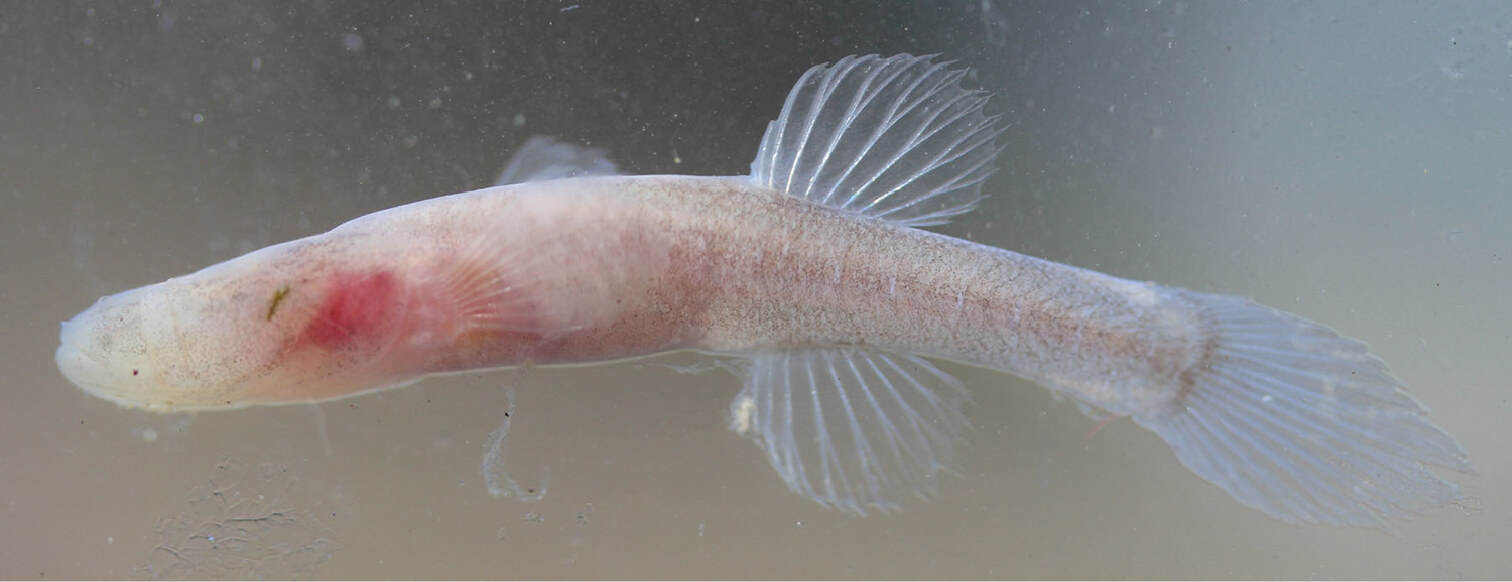
Southern cavefish
Typhlichthys subterraneus
An eyeless, depigmented fish of the underground streams beneath the Cumberland Plateau. Lives entirely in cave systems; survives on bat guano, fungal mats, and small invertebrates carried in by sinking surface streams. Cumberland Plateau caves in Marion and surrounding counties are a stronghold for the species.
Status: TWRA Species of Greatest Conservation Need; cave-system obligate.
Other notable fishes
Two mooneyes and the stocked-trout complex round out the page. The mooneye and goldeye are silver-bodied larger-river species sometimes mistaken for shads; the goldeye is more common to the west and reaches Marion only as occasional individuals. TWRA stocks rainbow, brown, and brook trout in selected cool-water Tennessee tailwaters, but the Nickajack tailwater runs too warm for trout. Trout in Marion are limited to occasional individuals washed down from cooler upstream stockings.
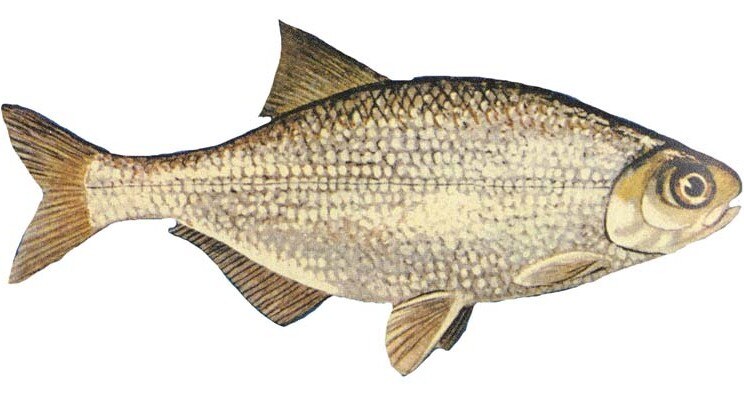
Mooneye
Hiodon tergisus
A silvery deep-bodied fish with prominent reflective eyes adapted to low-light conditions. Inhabits clearer reaches of larger rivers and the Tennessee River main stem; sometimes mistaken for a small shad.
Status: Secure; native to large rivers.
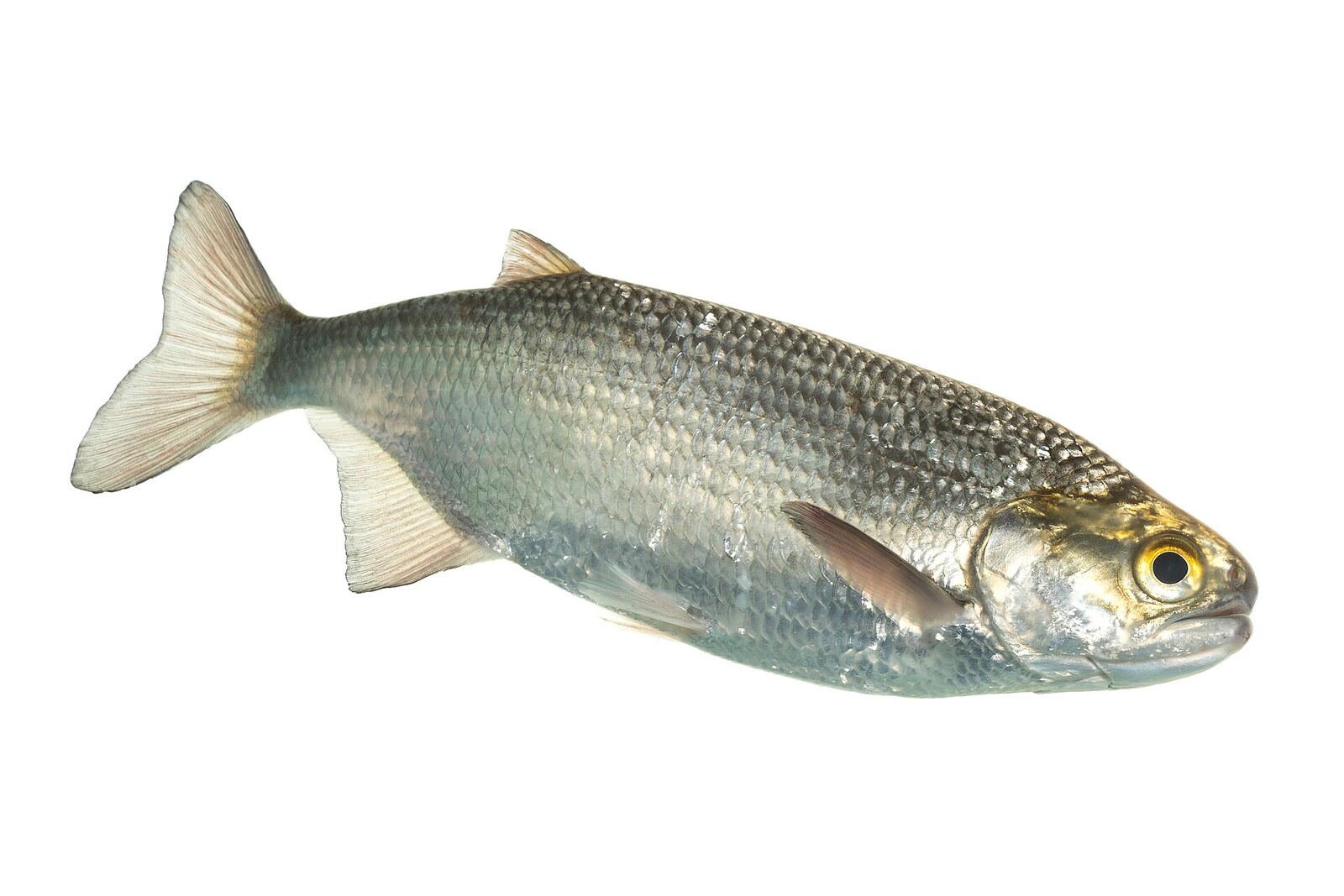
Goldeye
Hiodon alosoides
The mooneye's western cousin, distinguished by golden iris coloration. Less common in the eastern Tennessee River drainage than mooneye; expected only as occasional individuals at Marion's longitude.
Status: Secure but uncommon at Marion's longitude.
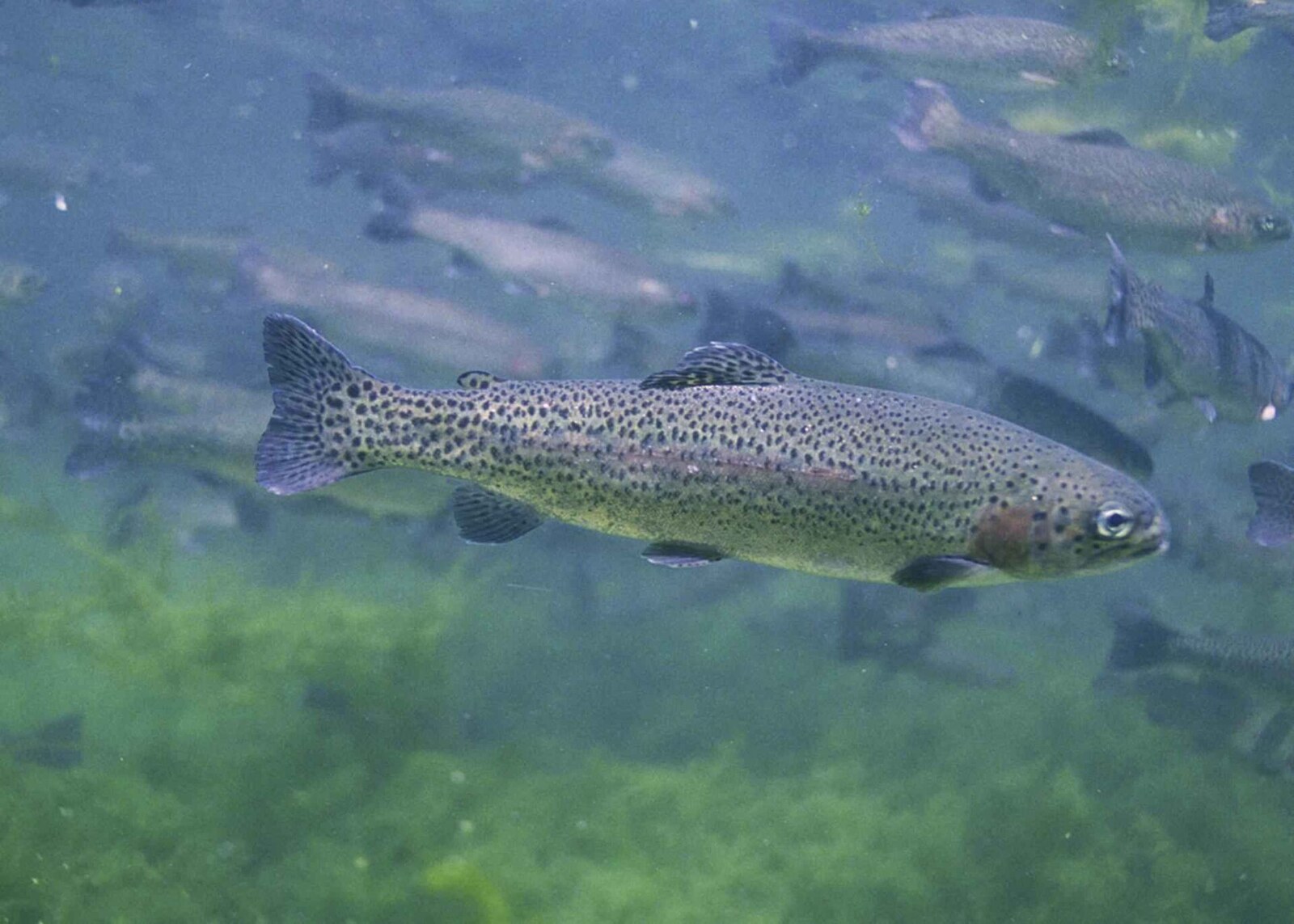
Stocked trout (rainbow, brown, brook)
Oncorhynchus mykiss, Salmo trutta, Salvelinus fontinalis
TWRA stocks rainbow, brown, and brook trout in cool-water tailwaters and selected mountain streams across Tennessee, but the Nickajack tailwater is not a designated trout fishery; water below Nickajack Dam runs warmer than trout require. Cooler tributary creeks above the plateau rim hold occasional stocked fish; the species are not native to the Cumberland Plateau Tennessee River reach.
Status: Stocked elsewhere in Tennessee; not native to Marion's main-stem Tennessee River.
Lampreys
Lampreys are jawless fishes representing one of the oldest vertebrate lineages still alive. Three native species occur in the Tennessee River drainage; two are non-parasitic (least brook and mountain brook), and the Ohio lamprey is the only native parasitic species. None should be confused with the introduced sea lamprey, which devastates Great Lakes fisheries and is the target of intensive control programs there but does not occur in Tennessee waters.
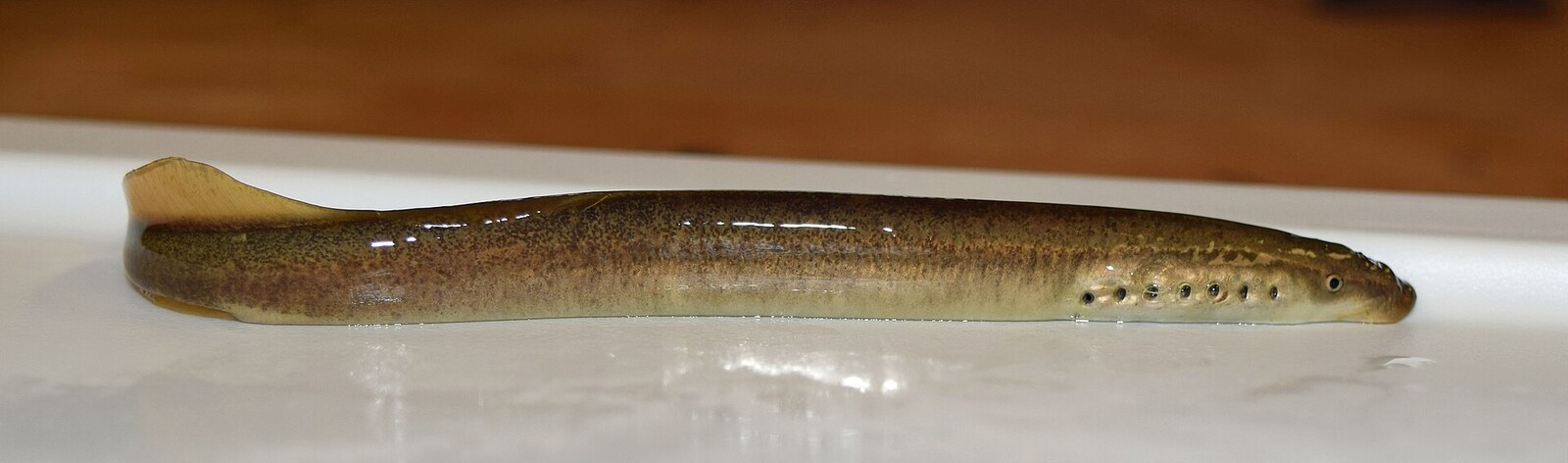
Least brook lamprey
Lampetra aepyptera
A small non-parasitic lamprey of clean Cumberland Plateau and Tennessee River drainage streams. Adults do not feed; larvae (ammocoetes) burrow in soft sediment for years, filter-feeding microorganisms before metamorphosing and spawning.
Status: Secure; non-parasitic native lamprey.

Mountain brook lamprey
Ichthyomyzon greeleyi
Another non-parasitic lamprey of clear Tennessee River drainage streams, including upper Sequatchie tributaries. Larvae filter-feed for years before metamorphosing; conservation-significant due to sensitivity to siltation.
Status: TWRA Species of Greatest Conservation Need.
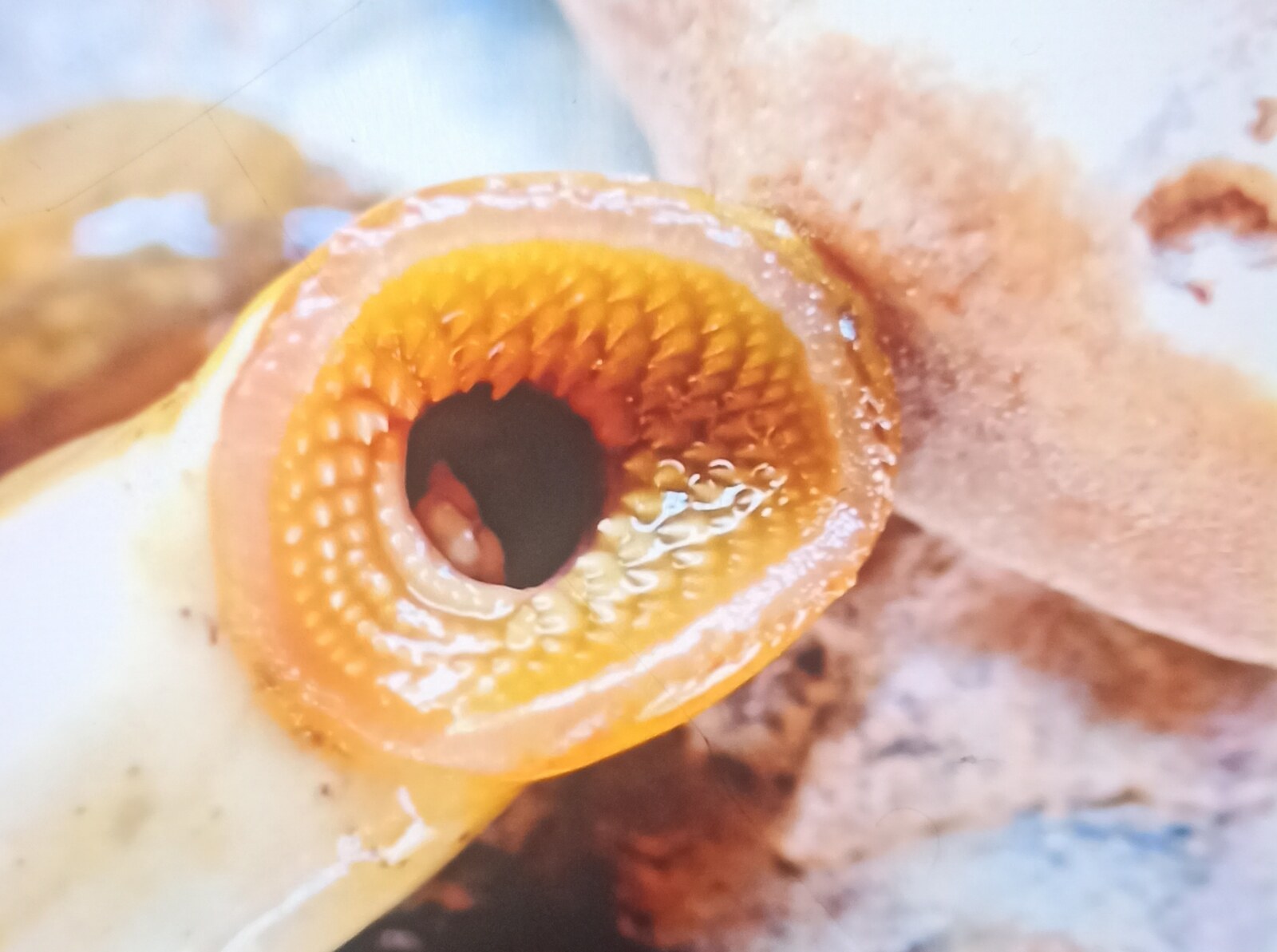
Ohio lamprey
Ichthyomyzon bdellium
A medium-sized parasitic lamprey of larger Ohio and Tennessee River drainage rivers. Adults attach to host fish and feed on body fluids; native and not subject to the suppression programs aimed at the introduced sea lamprey of the Great Lakes.
Status: Secure; native parasitic lamprey.
Freshwater mussels
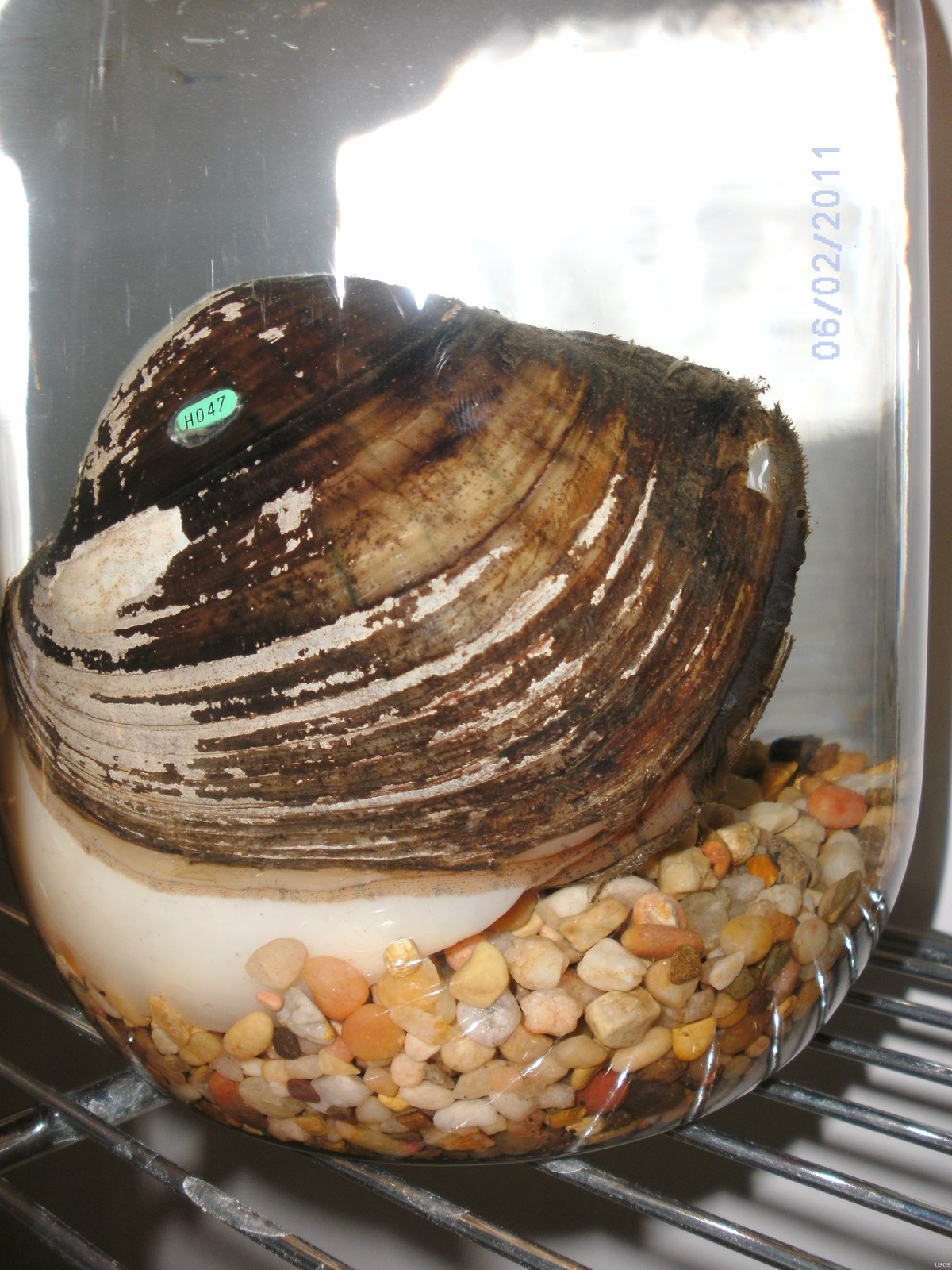
Before the twentieth century, the Tennessee River system held one of the most diverse freshwater mussel faunas on Earth, possibly the most diverse of any river system outside the tropics, with more than 120 species recorded basin-wide. Mussels feed by filtering water and require a clean, flowing substrate; their life cycle depends on a parasitic larval stage (called a glochidium) that attaches to the gills of a specific host fish species. Dam construction, siltation, channelization, and the commercial pearl-button mussel-shell harvest of 1890–1940 collapsed those populations. Dozens of species went extinct across the basin.
In the Marion County reach of the river and in the Sequatchie drainage, surviving mussel species include the plain pocketbook (Lampsilis cardium), round hickorynut (Obovaria subrotunda), pyramid pigtoe (Pleurobema rubrum), fluted kidneyshell (Ptychobranchus subtentum), and others. Ongoing mussel recovery and propagation by TVA, TWRA, USFWS, and the Tennessee Aquarium Conservation Institute have been re-establishing some species upstream of Marion; their long-term recovery in the Tennessee River will take generations. Black carp, an invasive Asian carp species with mollusk-crushing pharyngeal teeth, is a particular concern for surviving mussel populations.
Sequatchie Valley spring endemics
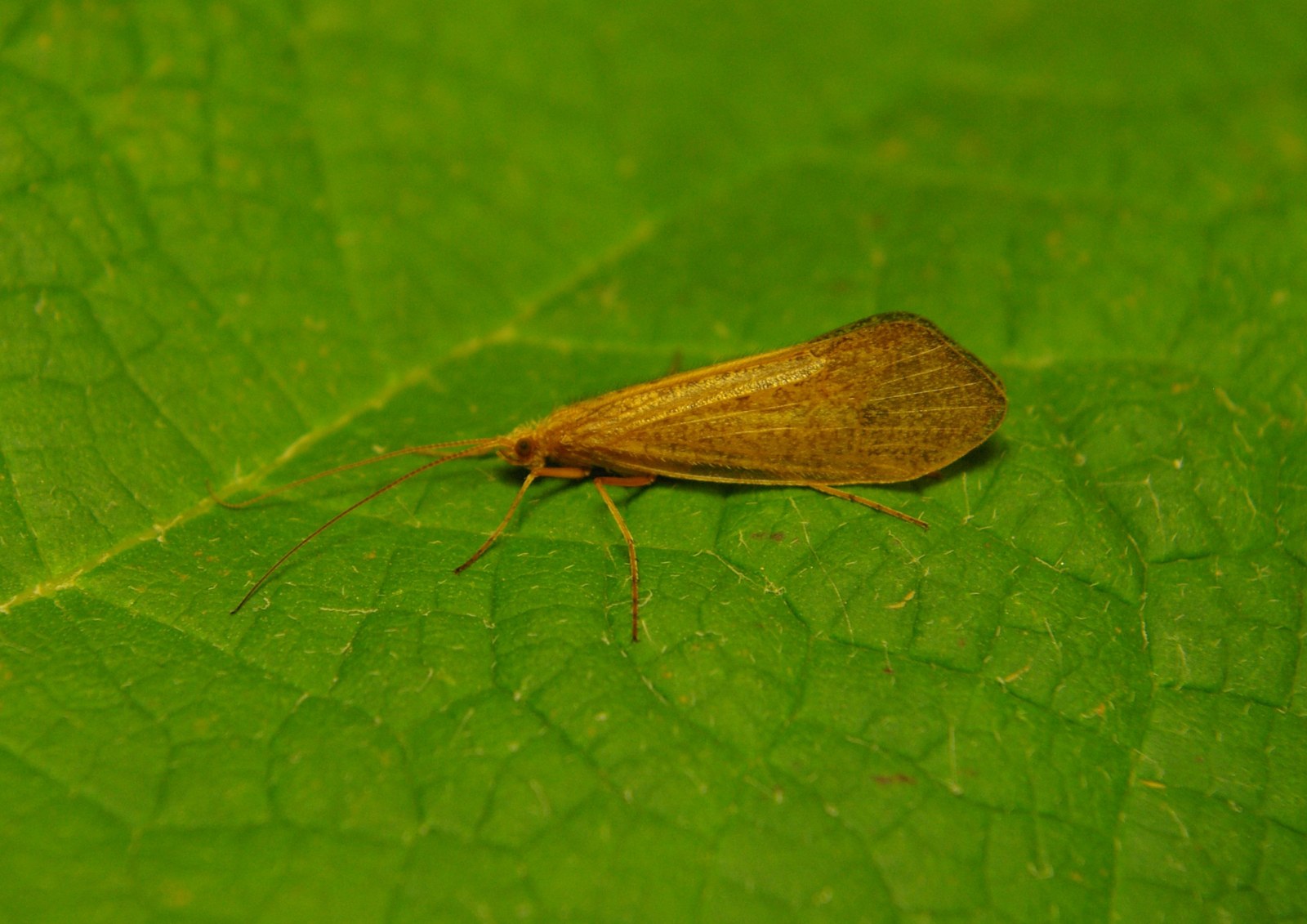
Two aquatic invertebrates endemic to Marion County live in the Sequatchie Valley's cold karst springs and nowhere else on Earth. The Royal Snail (Marstonia ogmorhaphe) is a hydrobiid snail under five millimeters long, described by F. G. Thompson in 1977 and federally listed as endangered on April 15, 1994. It is known from only two springs: Blue Spring (Jasper's municipal water source) and Owen Spring at the mouth of Sequatchie Cave, roughly four miles away. The Sequatchie Caddisfly (Glyphopsyche sequatchie) is an aquatic insect whose larvae build sand-and-debris cases in cold spring-fed streams; it was first described from Owen Spring Branch at Sequatchie Cave State Natural Area and is known from that type locality and three other Marion County streams, nowhere else. USFWS considered federal listing for the caddisfly but issued a “not warranted” finding on October 8, 2015; it remains a Tennessee Species of Greatest Conservation Need. Sequatchie Cave is also the type locality for two terrestrial cave obligates, the Blowing Cave beetle (Pseudanophthalmus ventus, Barr 1981) and the cave millipede Scoterpes ventus (Shear 1972), both eyeless, depigmented, and restricted to the cave's subterranean drainage. All four species are treated in full detail on the endemic and notable species page.
Birds: year-round residents
About 240 bird species have been reported from Marion County on eBird across all seasons; the cards below cover the 206 documented or credibly expected species, grouped by residency. About forty-seven species hold territory in the county year-round, and another four wintering species from the boreal forest are reliable enough through the cold months to be treated alongside the residents. The Cumberland Plateau hardwood ridges, the valley pastures and old fields, and the Tennessee River corridor each carry their own characteristic year-round community.
Tennessee state bird
The northern mockingbird is Tennessee's official state bird, designated in 1933. Mockingbirds hold territory year-round in Marion County and are conspicuous singers from yard shrubbery, foundation plantings, fence rows, and parking-lot light poles, layering long sequences of imitated phrases borrowed from other species' songs and from non-bird sounds. The bobwhite quail was added as Tennessee's official state game bird in 1987.
Game birds
The eastern wild turkey is a conservation success story of mid-twentieth-century state wildlife-agency restocking; the northern bobwhite is the species moving in the opposite direction, in steep decline as the open farmland and brushy edges that supported coveys have been lost. Ruffed grouse once persisted at the southern edge of their Cumberland Plateau range in Marion County but are now rare and may be effectively gone.
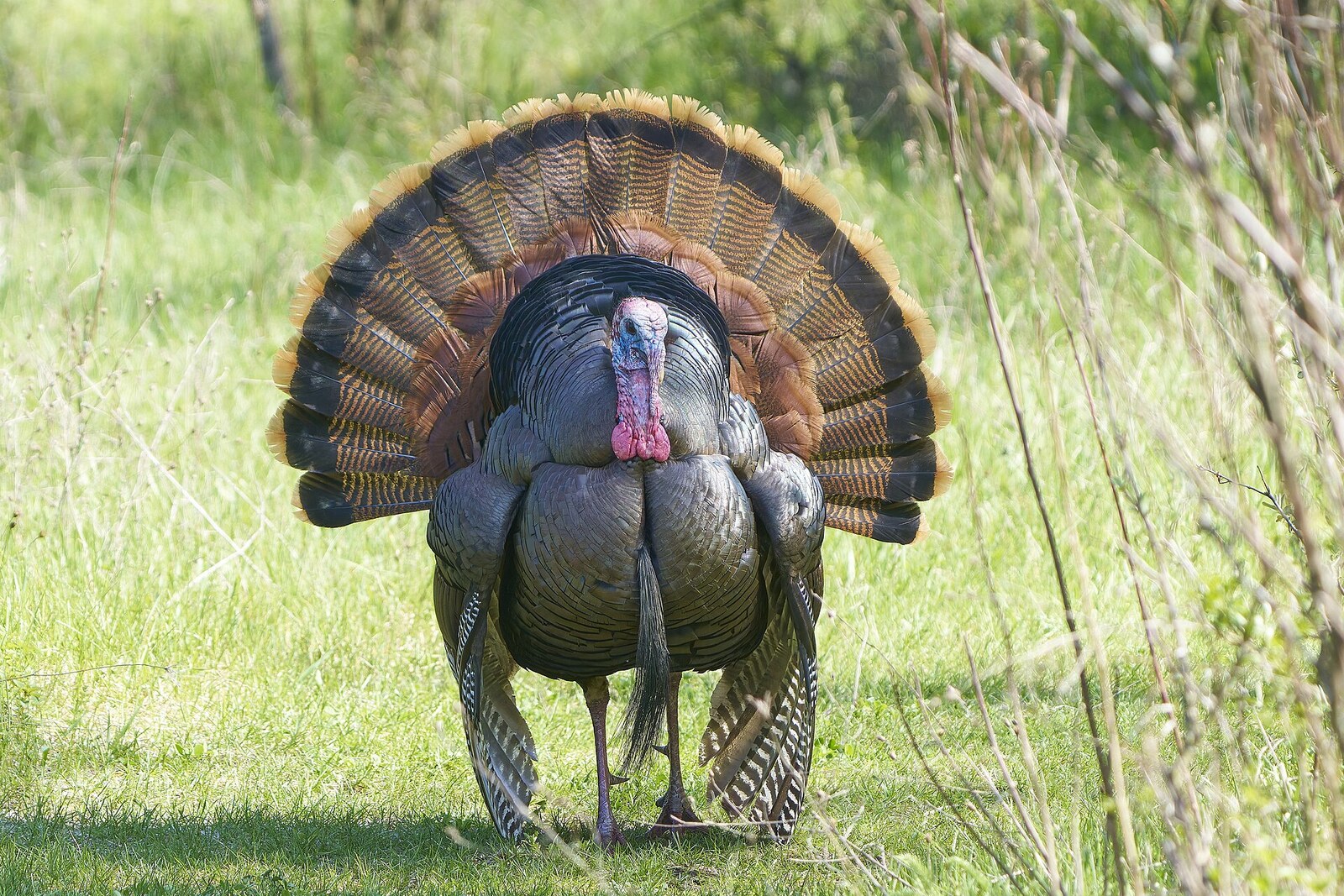
Wild turkey
Meleagris gallopavo
Nearly extirpated from Tennessee by the early twentieth century through unregulated hunting and forest loss. TWRA trap-and-transfer restocking from the 1950s through the 1980s brought turkeys back; flocks now move between plateau hardwood ridges and valley fields, gobbling from early March into May.
Status: Secure; restored.
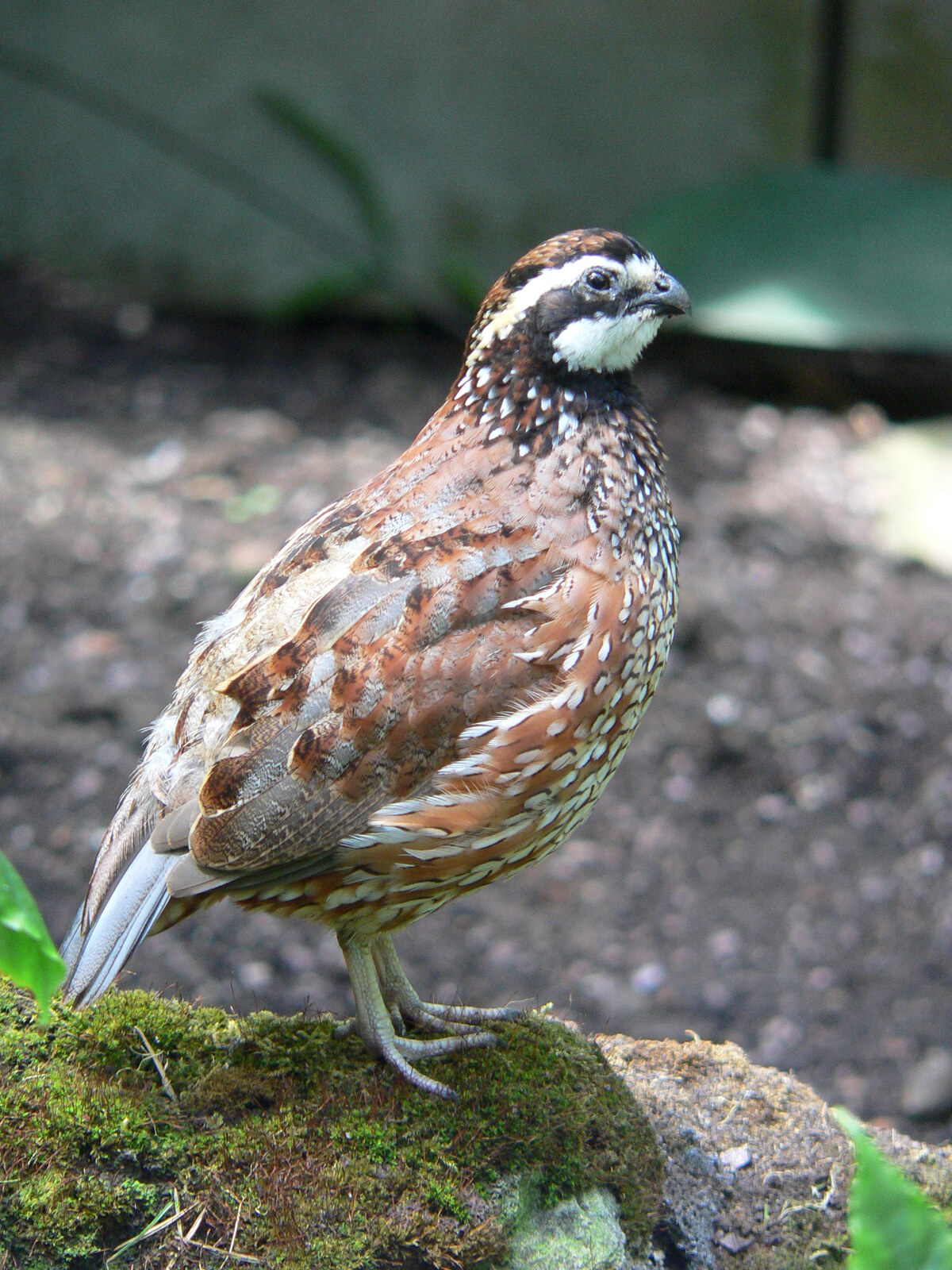
Northern bobwhite
Colinus virginianus
Tennessee's official state game bird, designated in 1987. A small ground-feeding quail with a clear two-note bob-white whistle. Populations have collapsed across the southeast over the last half-century, but scattered coveys persist on Cumberland Plateau farmland and brushy field edges.
Status: Declining; TWRA Species of Greatest Conservation Need; Tennessee state game bird.
Doves and pigeons
Three doves are common year-round in Marion County: the native mourning dove of farmland and suburban yards, the introduced rock pigeon of bridges and feed lots, and the more recent Eurasian collared-dove that arrived in Tennessee in the 1990s and is now established statewide.
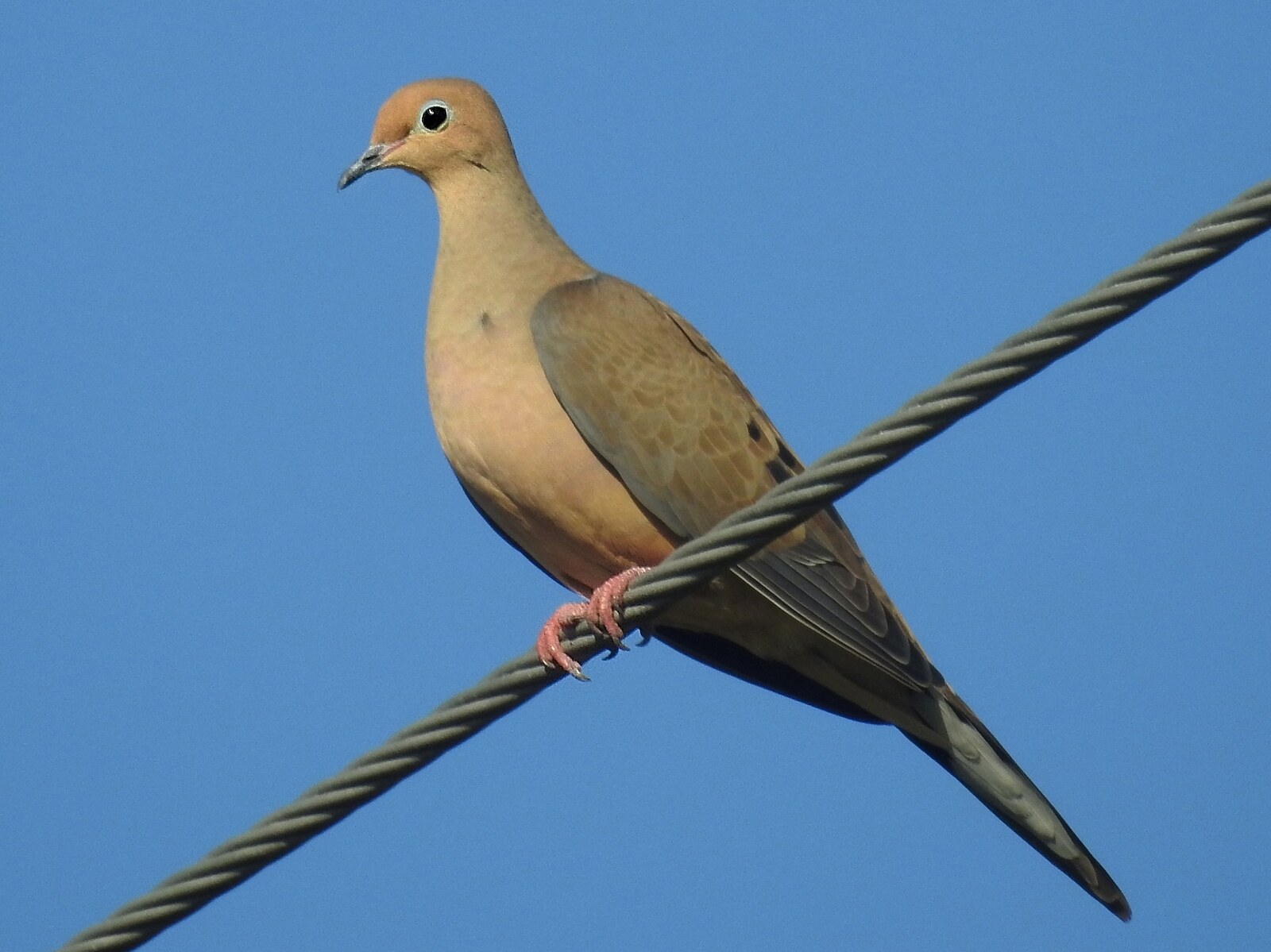
Mourning dove
Zenaida macroura
The most familiar wild dove in the county, named for its soft mournful cooing. Feeds on the ground in farmland, suburbs, and roadsides; abundant year-round.
Status: Secure; abundant.
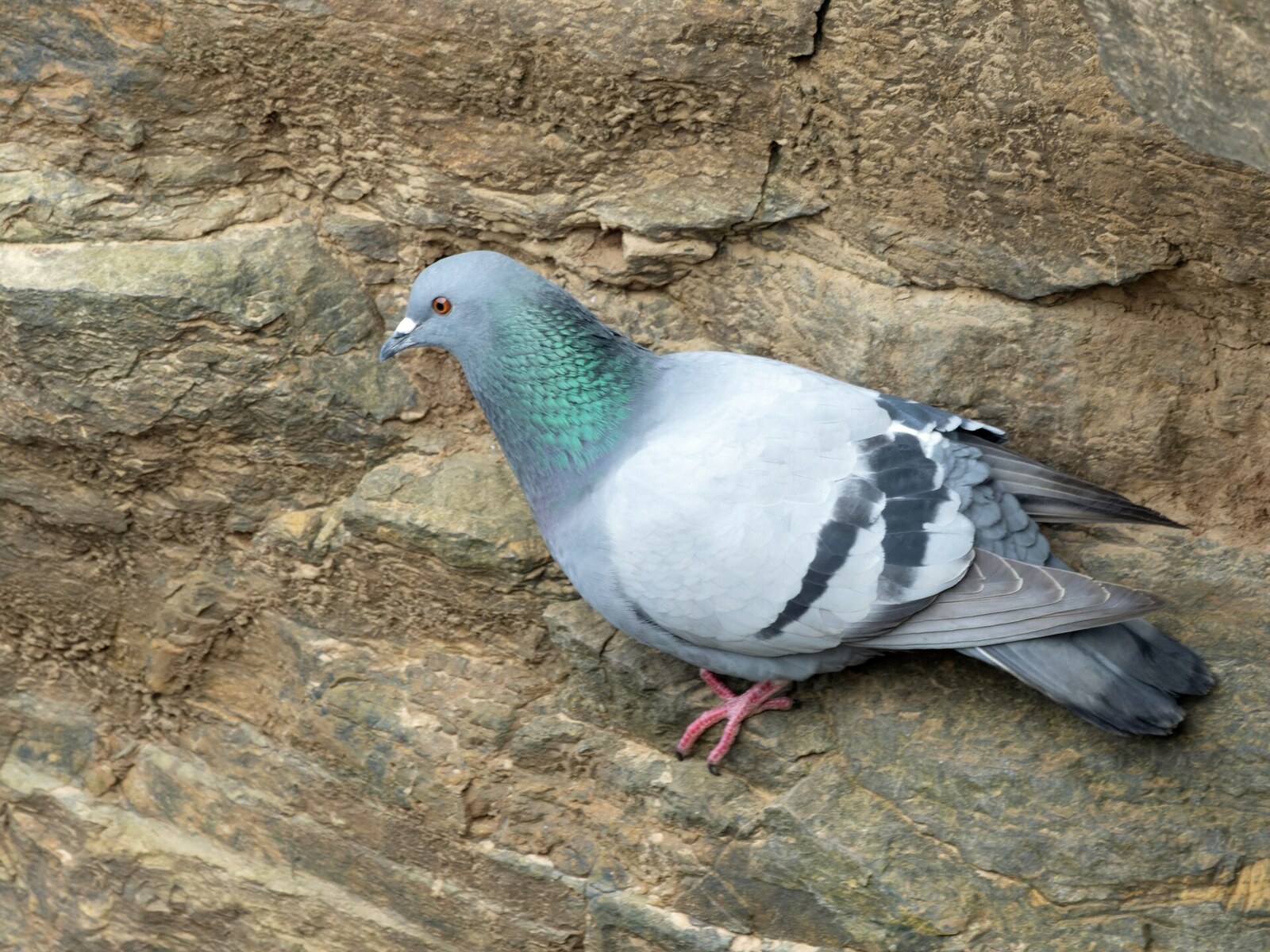
Rock pigeon
Columba livia
An introduced pigeon of cities, bridges, and feed lots, originally domesticated from a Eurasian wild ancestor. Common around Jasper and South Pittsburg in flocks on roofs and overpasses.
Status: Introduced; abundant.
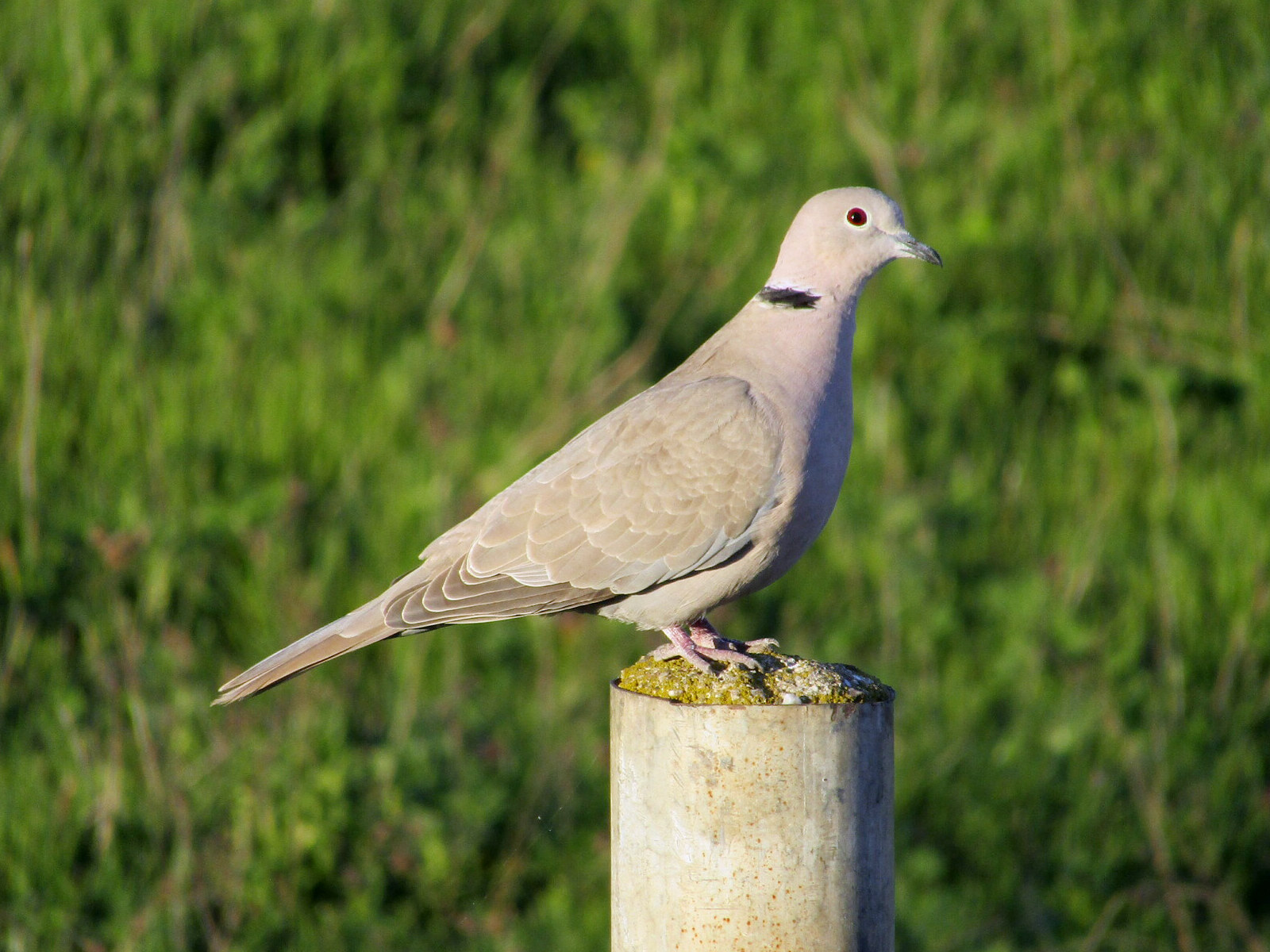
Eurasian collared-dove
Streptopelia decaocto
A pale dove with a black neck-ring, introduced into the Bahamas in the 1970s and now widespread across Tennessee since the 1990s. Common around grain elevators, farmsteads, and small-town backyards.
Status: Introduced; range-expanding.
Owls
Four owl species are reliably year-round in Marion County. The barred owl's who cooks for you-all call is the classic Tennessee woods sound after dark; the great horned owl is the county's heaviest avian predator; the eastern screech-owl is the most common but most often missed small owl; and the barn owl is an uncommon resident of open farmland and old wooden barns.
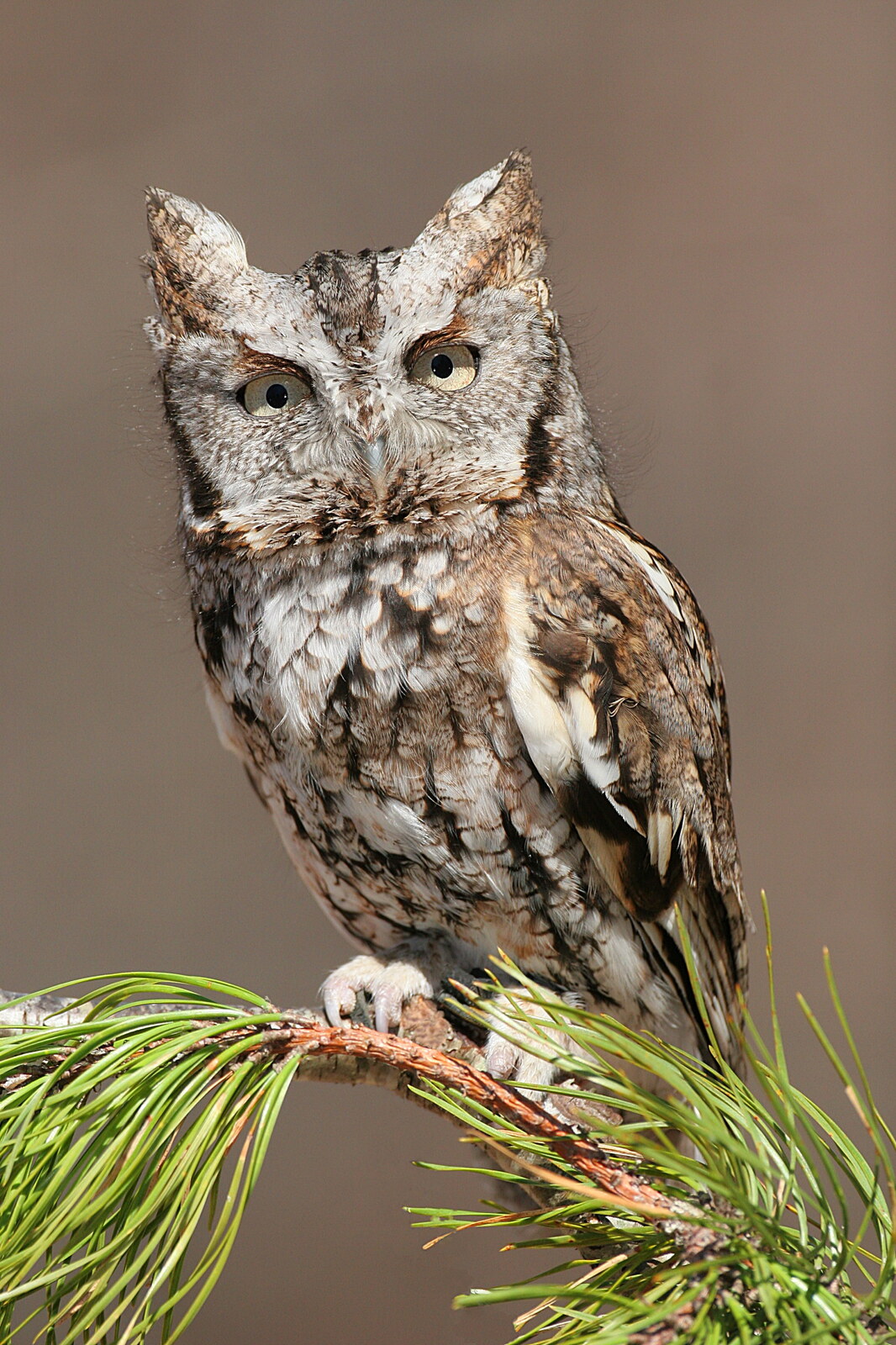
Eastern screech-owl
Megascops asio
A small ear-tufted owl with two color forms, gray and rufous. The descending whinny and even-pitched trill carry from suburban yards and woodlots after dusk; nests in tree cavities and nest boxes.
Status: Secure.
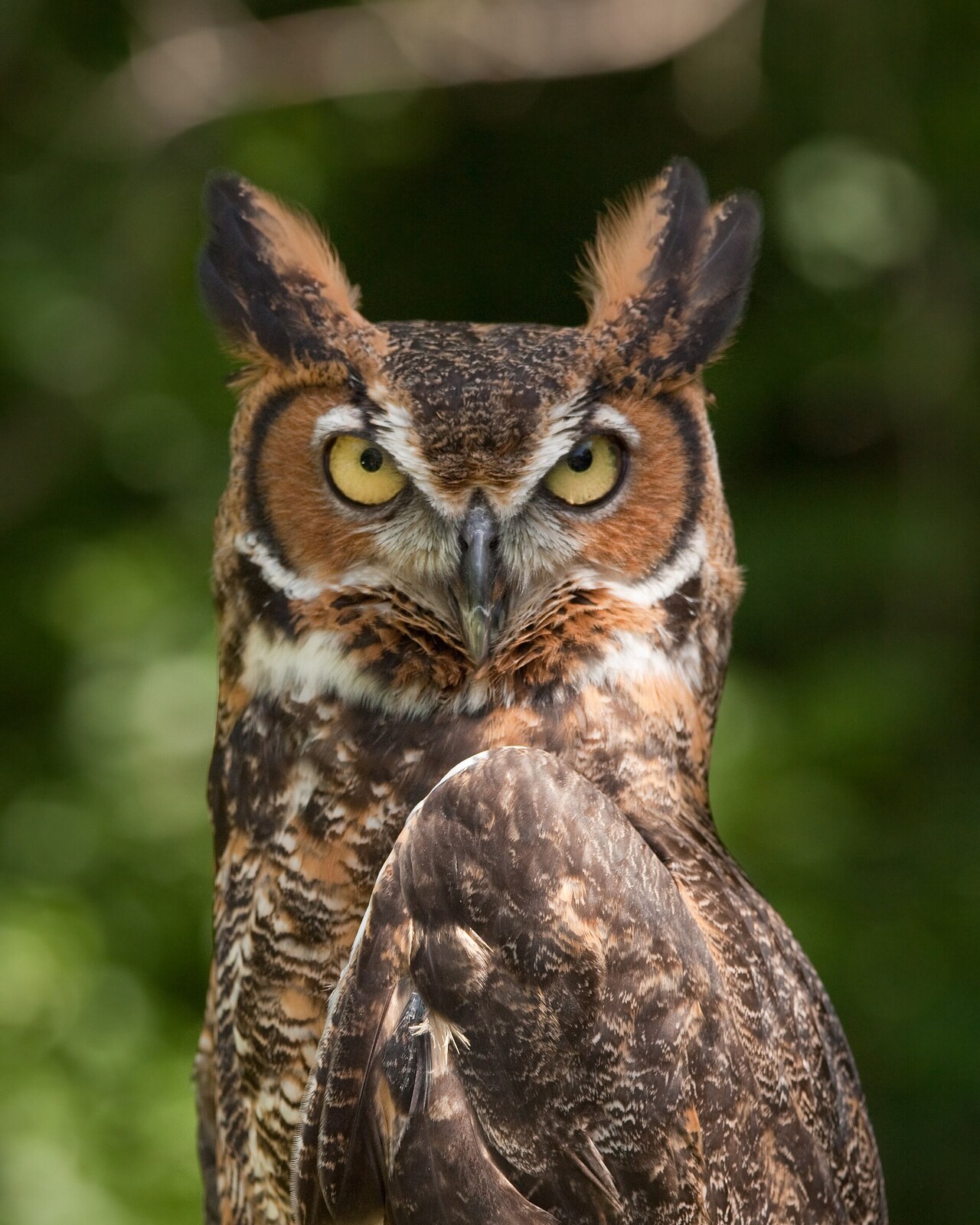
Great horned owl
Bubo virginianus
The largest common owl in the county, with prominent ear tufts and a five-note hoo, hoo-hoo, hoo, hoo call. Hunts everything from rats to skunks and nests early, often on stick nests built by hawks the year before.
Status: Secure.
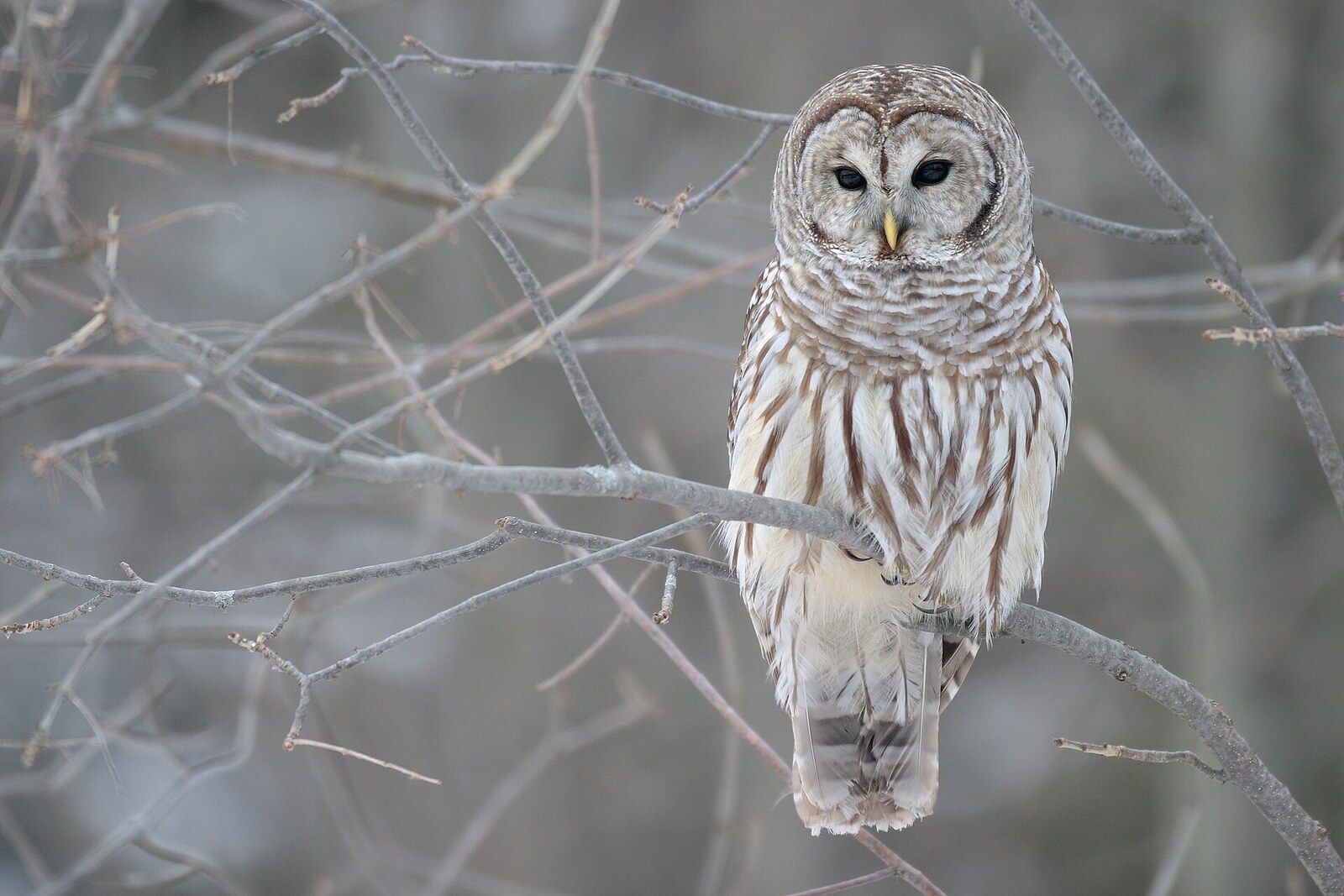
Barred owl
Strix varia
The classic Tennessee woods owl, recognized by its who cooks for you, who cooks for you-all call from bottomland and ridge forest. Hunts rodents, frogs, and crayfish along stream corridors.
Status: Secure.
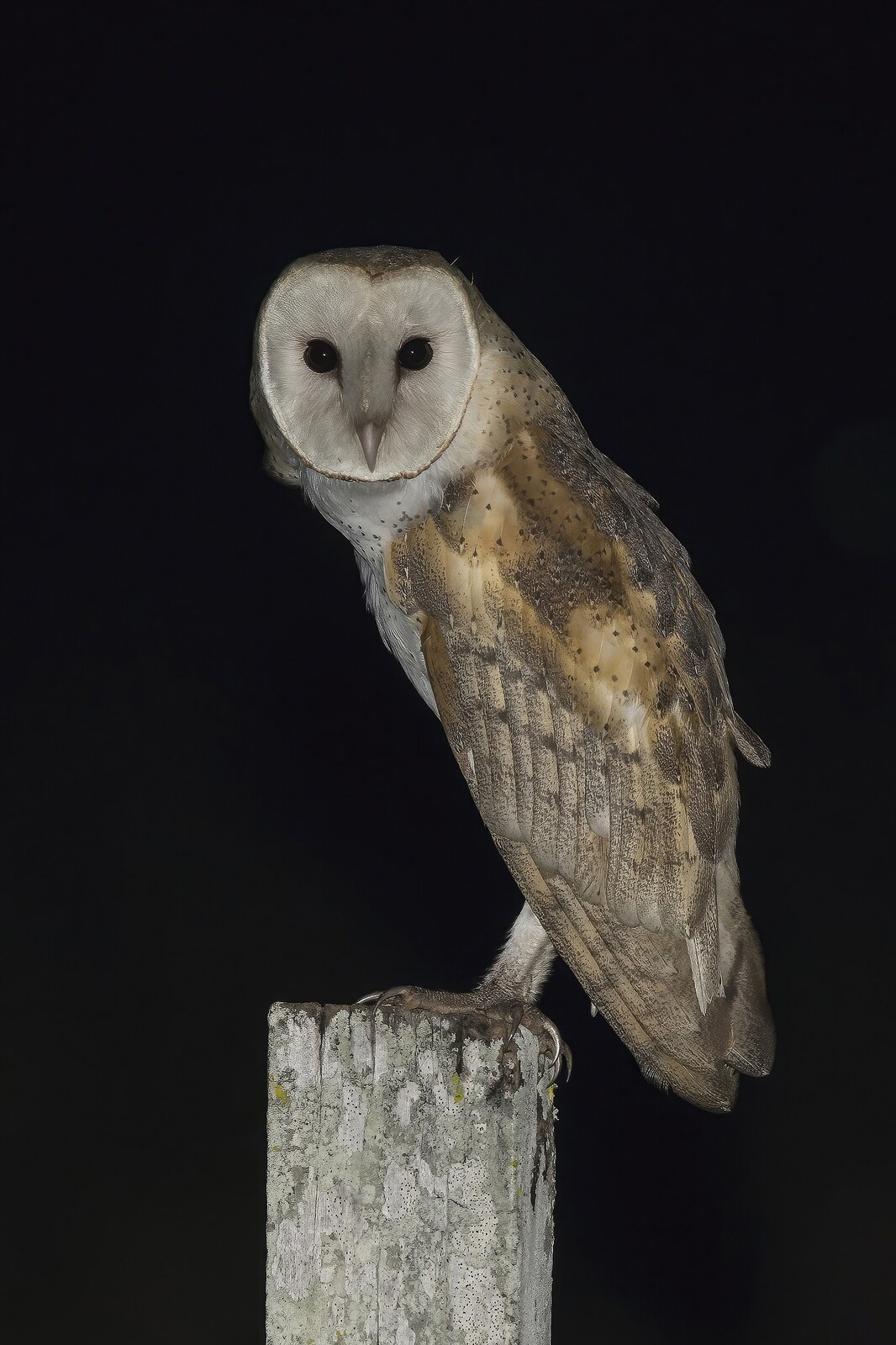
Barn owl
Tyto alba
A pale heart-faced owl of open farmland and old barns. Uncommon and patchily distributed across Tennessee; the species has lost ground as wooden barns have been replaced by metal structures less suited for nesting.
Status: Secure but uncommon.
Woodpeckers and sapsucker
Six woodpeckers are year-round residents and one (the yellow-bellied sapsucker) is a winter-only visitor. The pileated woodpecker is the largest, with cavity excavations later reused by owls, wood ducks, and flying squirrels; the downy and hairy woodpeckers are easily-confused size pairs; the red-headed woodpecker has lost ground as fire-suppressed forests have closed in.
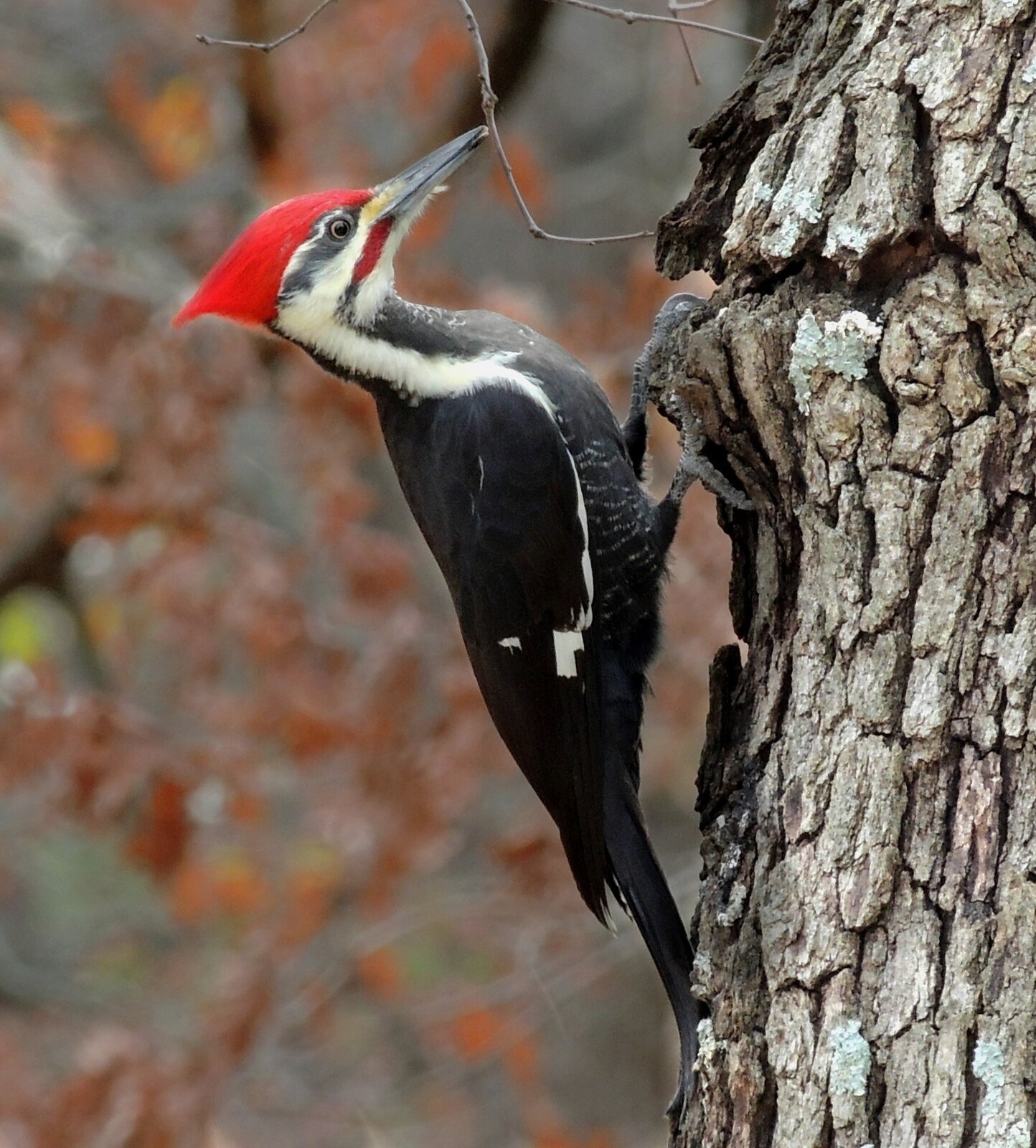
Pileated woodpecker
Dryocopus pileatus
The county's largest woodpecker at seventeen inches long, with a flaming red crest and a laughing call that carries through mature hardwood forest. Excavates large rectangular holes hunting carpenter ants; abandoned cavities are reused by owls, wood ducks, and flying squirrels.
Status: Secure.
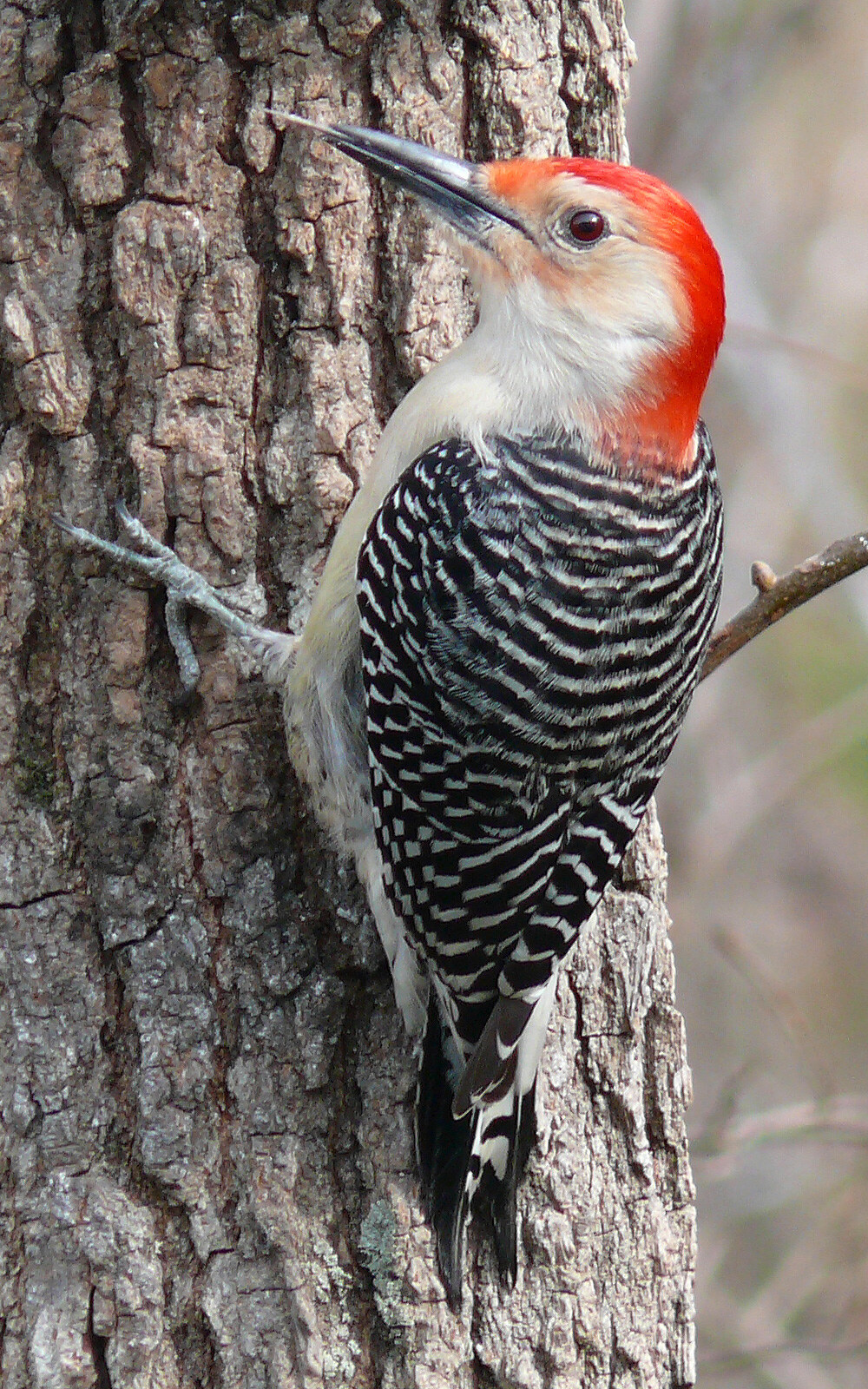
Red-bellied woodpecker
Melanerpes carolinus
A medium-sized woodpecker with a zebra-barred back and a red crown stripe. Common at backyard feeders and in mature hardwood and mixed forest across the county.
Status: Secure.
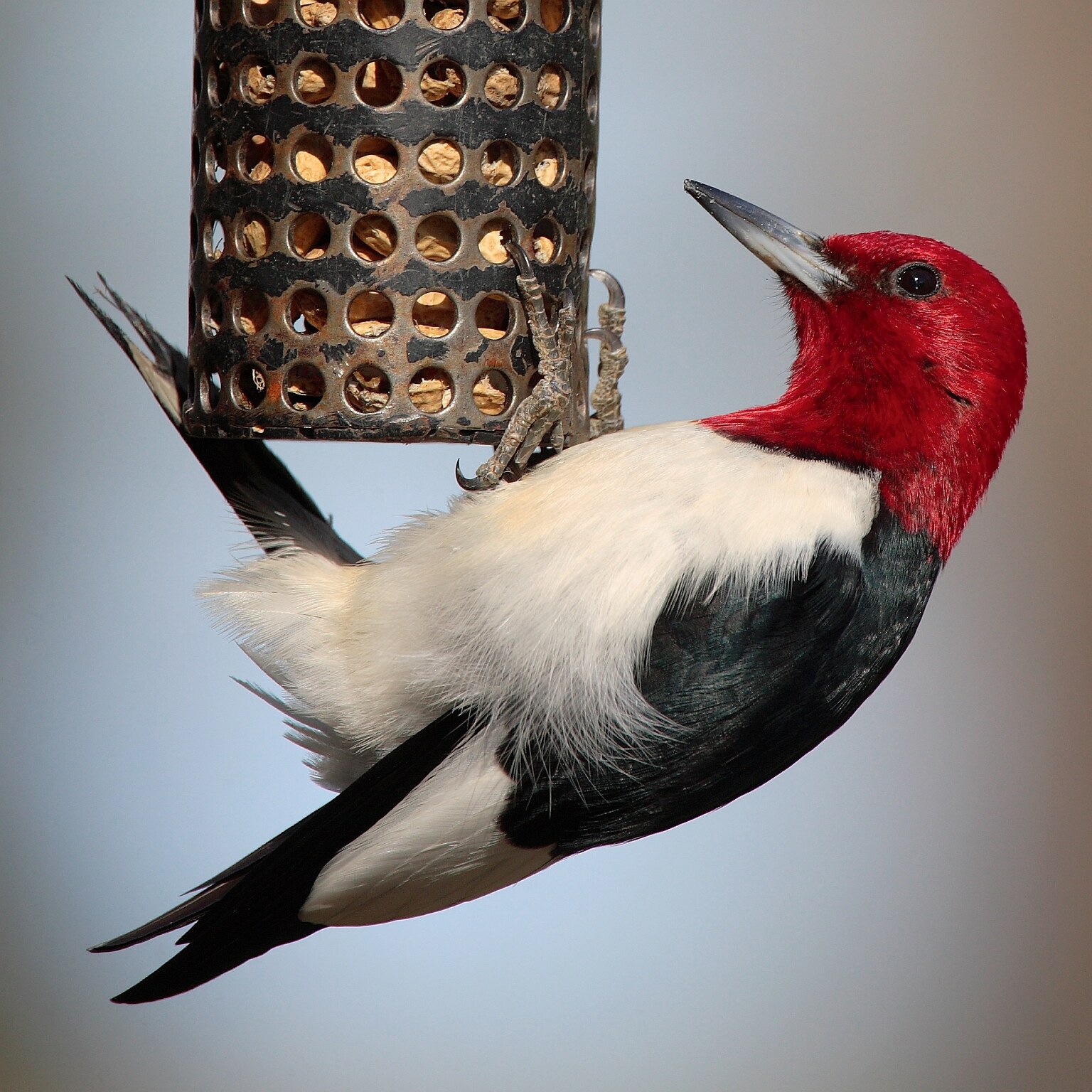
Red-headed woodpecker
Melanerpes erythrocephalus
An unmistakable solid-red-headed woodpecker of open oak woodlands and burned-over savanna. Less common than its red-bellied cousin and declining across the southeast as fire-suppressed forests close in.
Status: Declining.
Downy woodpecker
Dryobates pubescens
The smallest North American woodpecker, ladder-backed and ubiquitous in yards, parks, and woodlots. Often forages on weed stems and small twigs that larger woodpeckers cannot work.
Status: Secure.
Hairy woodpecker
Dryobates villosus
A larger lookalike of the downy with a noticeably longer bill. More tied to mature interior forest than the downy; the two species often share territory and are easily confused.
Status: Secure.
Northern flicker
Colaptes auratus
A large brown woodpecker that often forages on the ground for ants, flashing yellow underwings in flight. The yellow-shafted race is the resident form across Tennessee.
Status: Secure.
Yellow-bellied sapsucker
Sphyrapicus varius
A winter-only woodpecker that drills neat horizontal rows of sap wells in tree bark. Sap wells become a feeding bonanza for hummingbirds, kinglets, and other small species through the cold months.
Status: Secure (winter resident).
Yard and forest songbirds
The signature year-round songbirds of Marion forests are the Carolina chickadee, tufted titmouse, white-breasted nuthatch, Carolina wren, and northern cardinal. These five plus the eastern bluebird, American robin, and crows form the daily backdrop of yard and forest edge across the county; winter brings juncos, white-throated sparrows, yellow-rumped warblers, and hermit thrushes from the north as quiet additions to feeder and shrubbery activity.
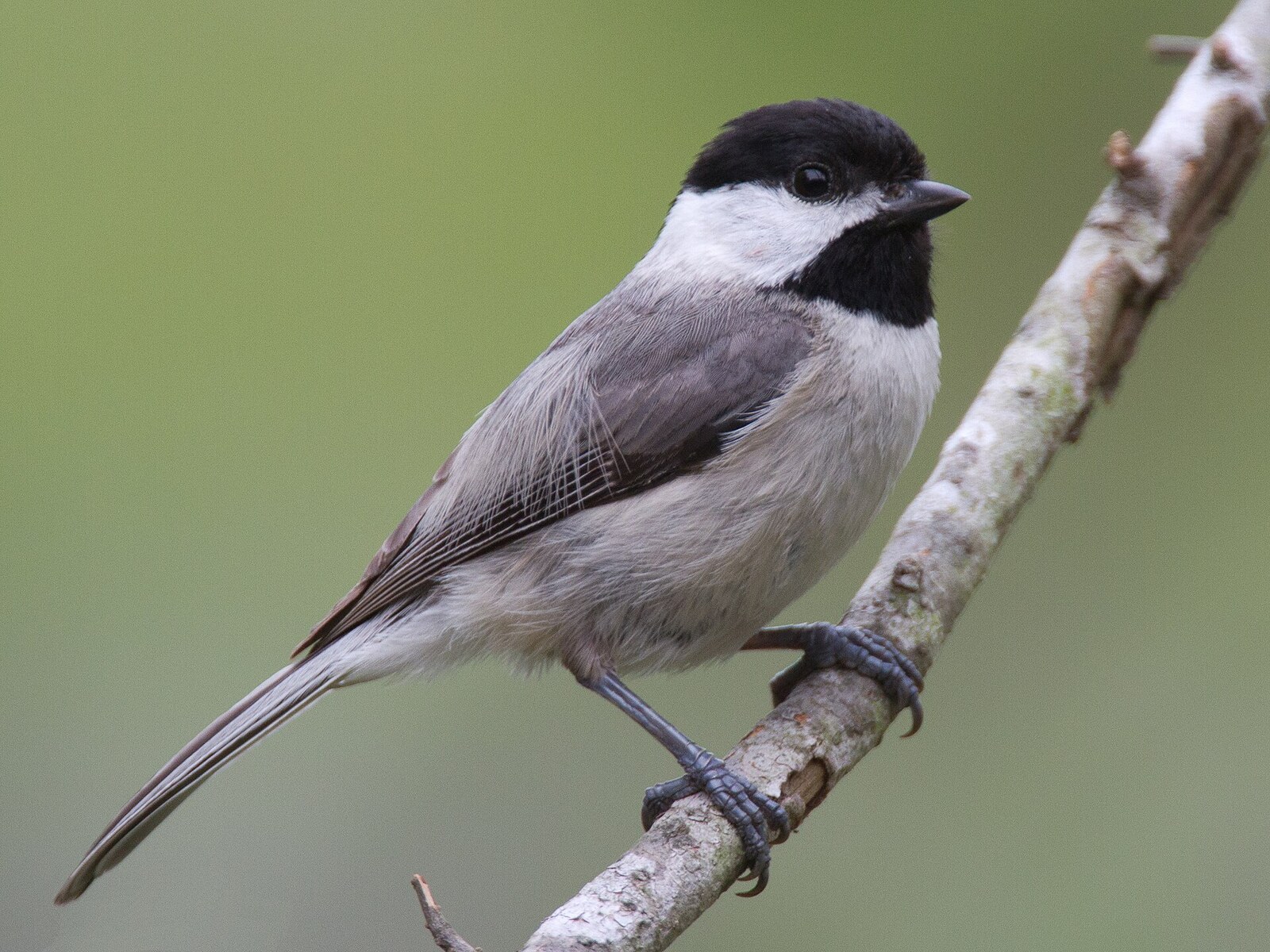
Carolina chickadee
Poecile carolinensis
A small black-capped songbird with a four-note chick-a-dee-dee call, replacing the black-capped chickadee south of the latitude of central Tennessee. The signature year-round forest songbird of Marion's woodlots and yards.
Status: Secure.
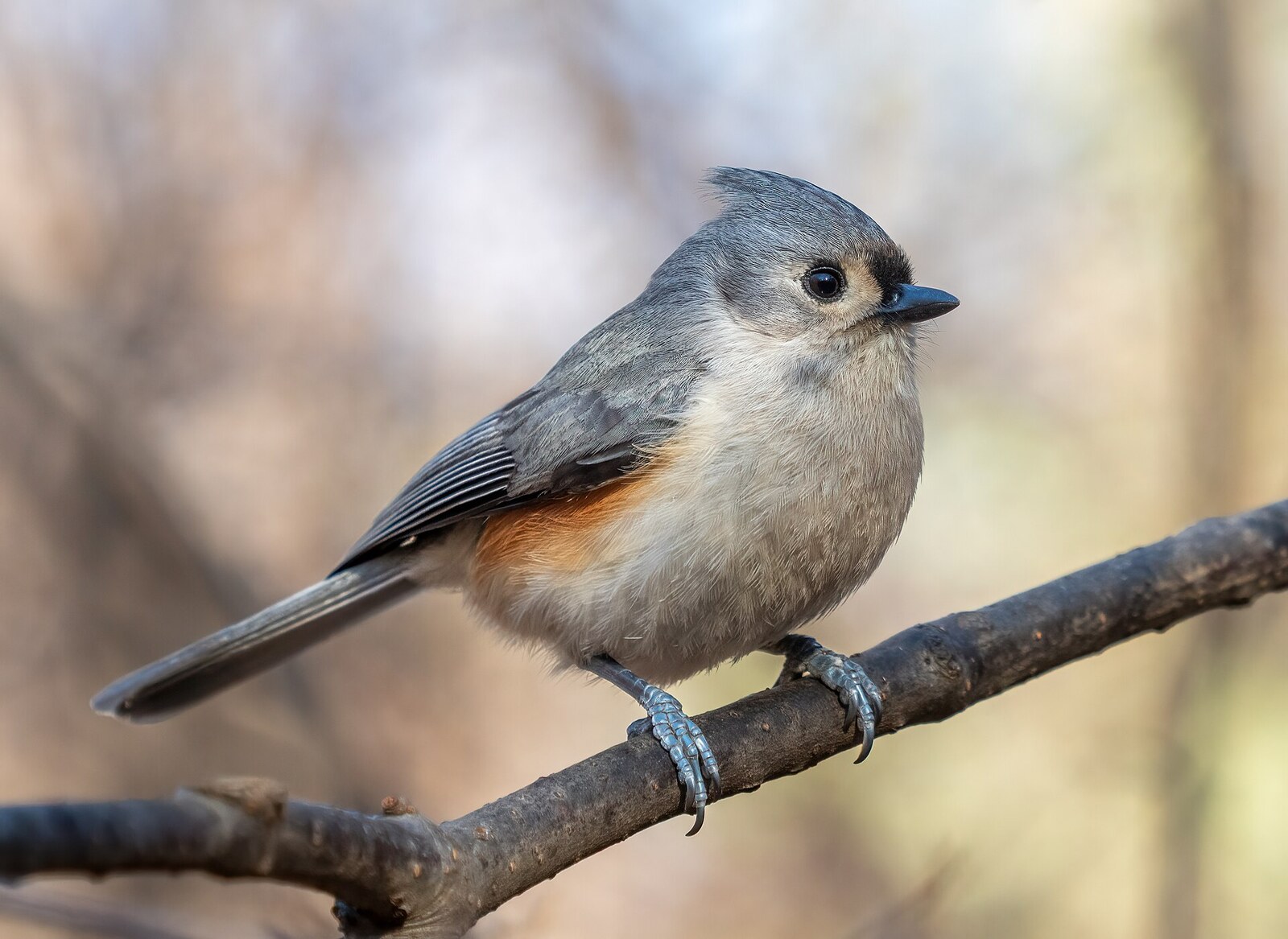
Tufted titmouse
Baeolophus bicolor
A gray crested songbird that pairs with chickadees and nuthatches in mixed winter foraging flocks. Loud peter-peter-peter song carries through forest and yard.
Status: Secure.
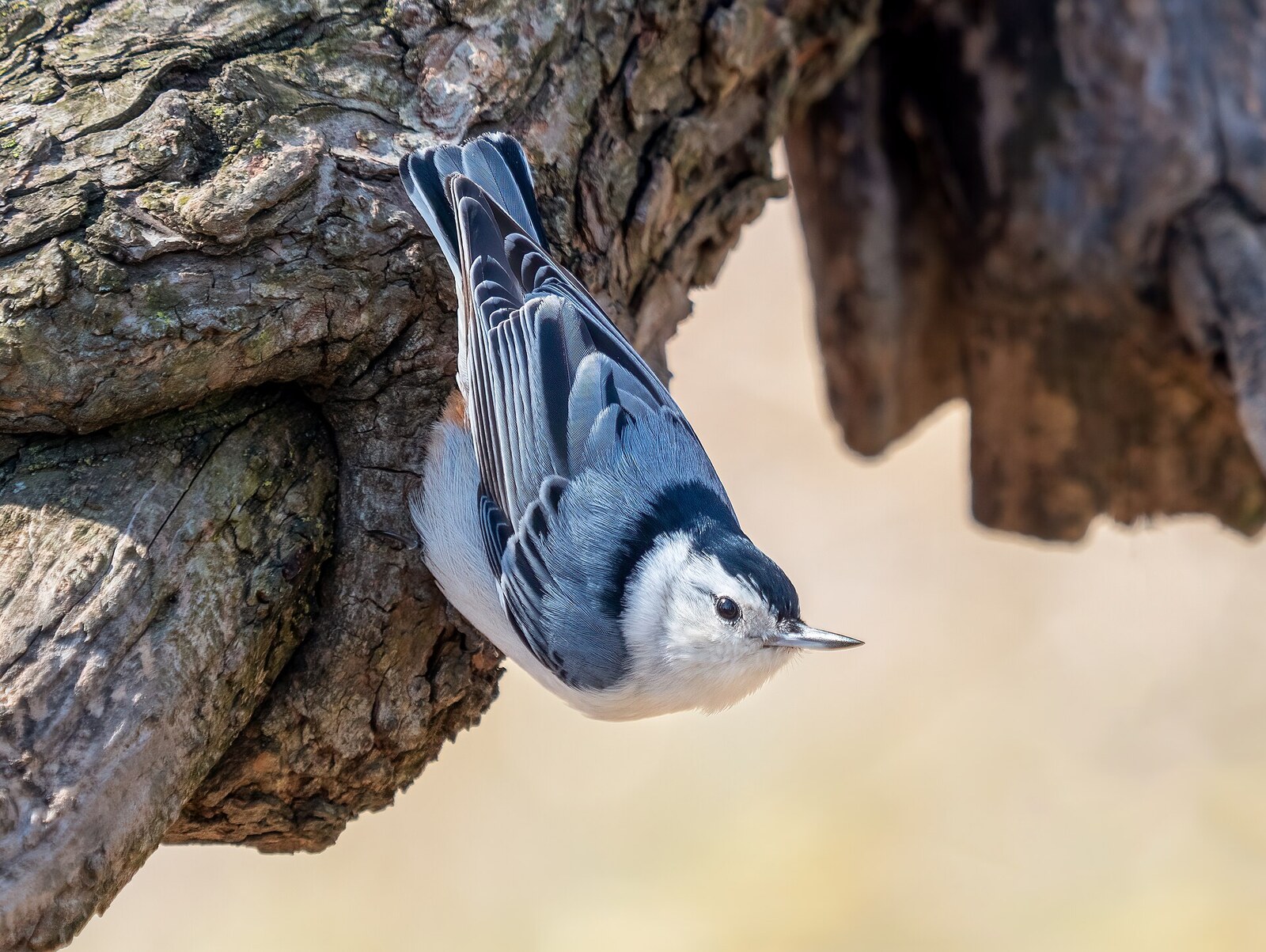
White-breasted nuthatch
Sitta carolinensis
A blue-gray bark-foraging bird that walks headfirst down tree trunks, probing for insects in bark crevices. The classic nasal yank-yank call is a year-round soundtrack of mature hardwood forest.
Status: Secure.
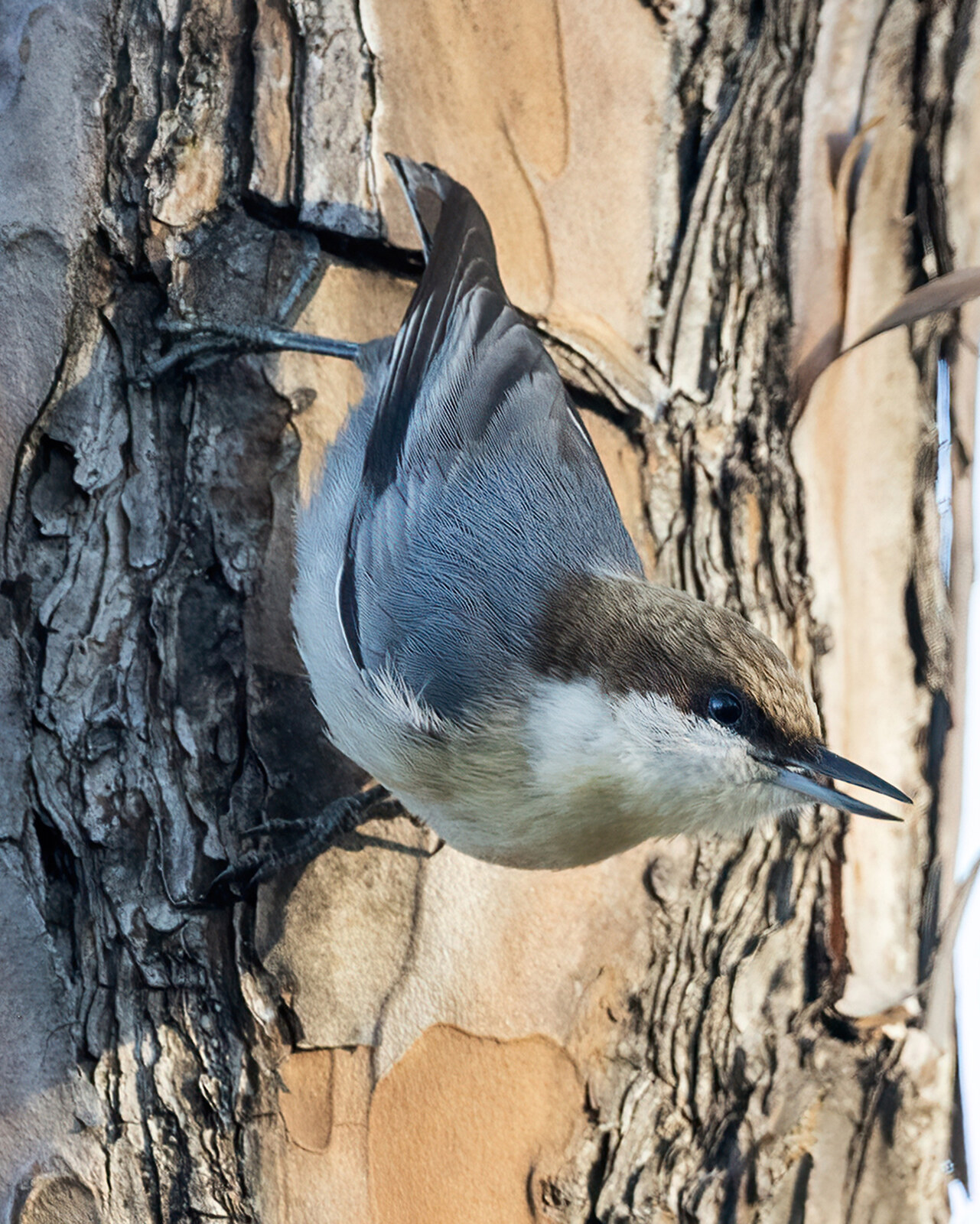
Brown-headed nuthatch
Sitta pusilla
A small pine-specialist nuthatch with a squeaky rubber-duck call. Limited to mature pine stands and pine-hardwood edges; less common than the white-breasted nuthatch in Marion County.
Status: Declining.
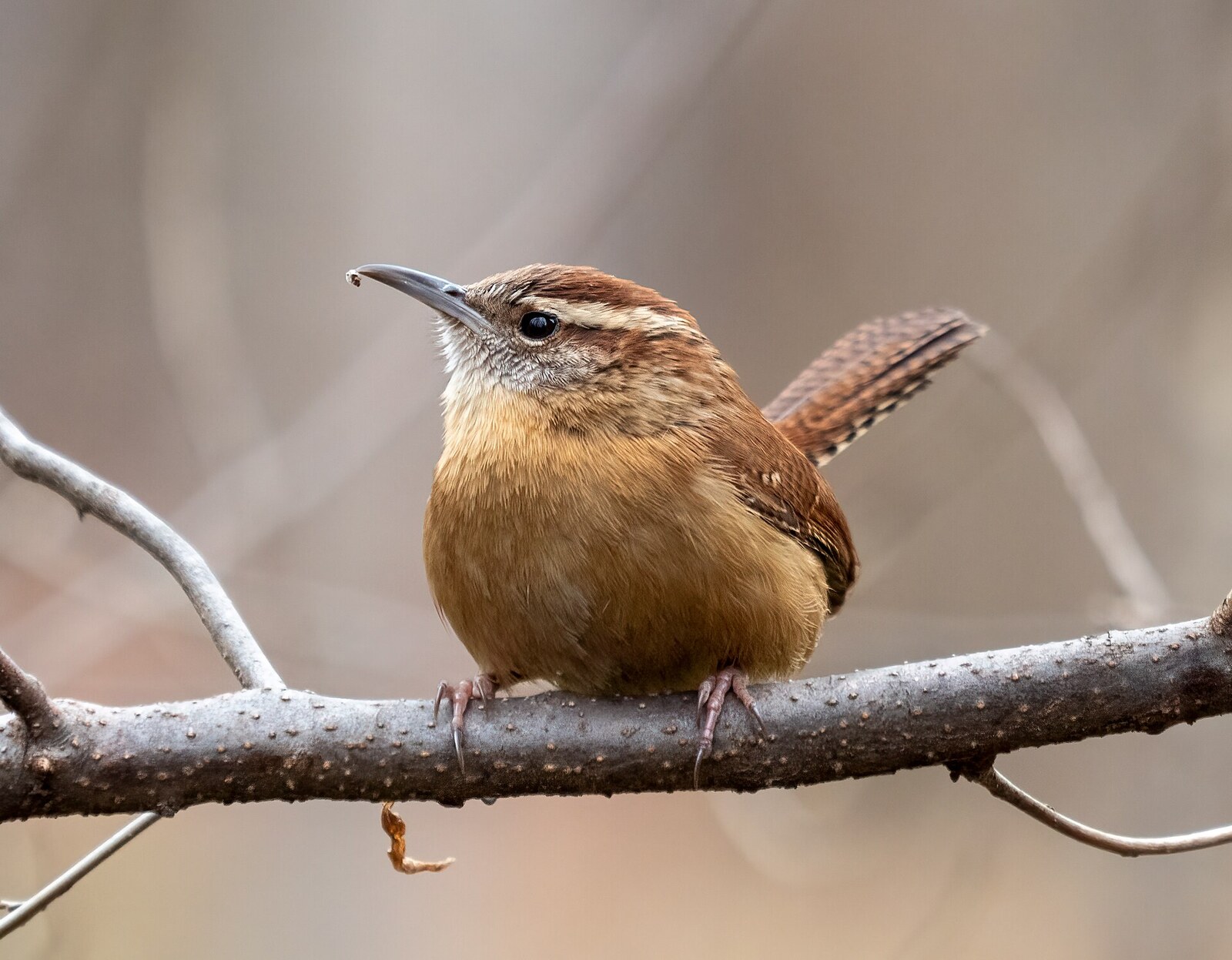
Carolina wren
Thryothorus ludovicianus
A loud cinnamon-and-white wren whose ringing teakettle teakettle song sounds out of proportion to its size. Year-round resident in tangled understory, brush piles, and yard shrubbery.
Status: Secure.
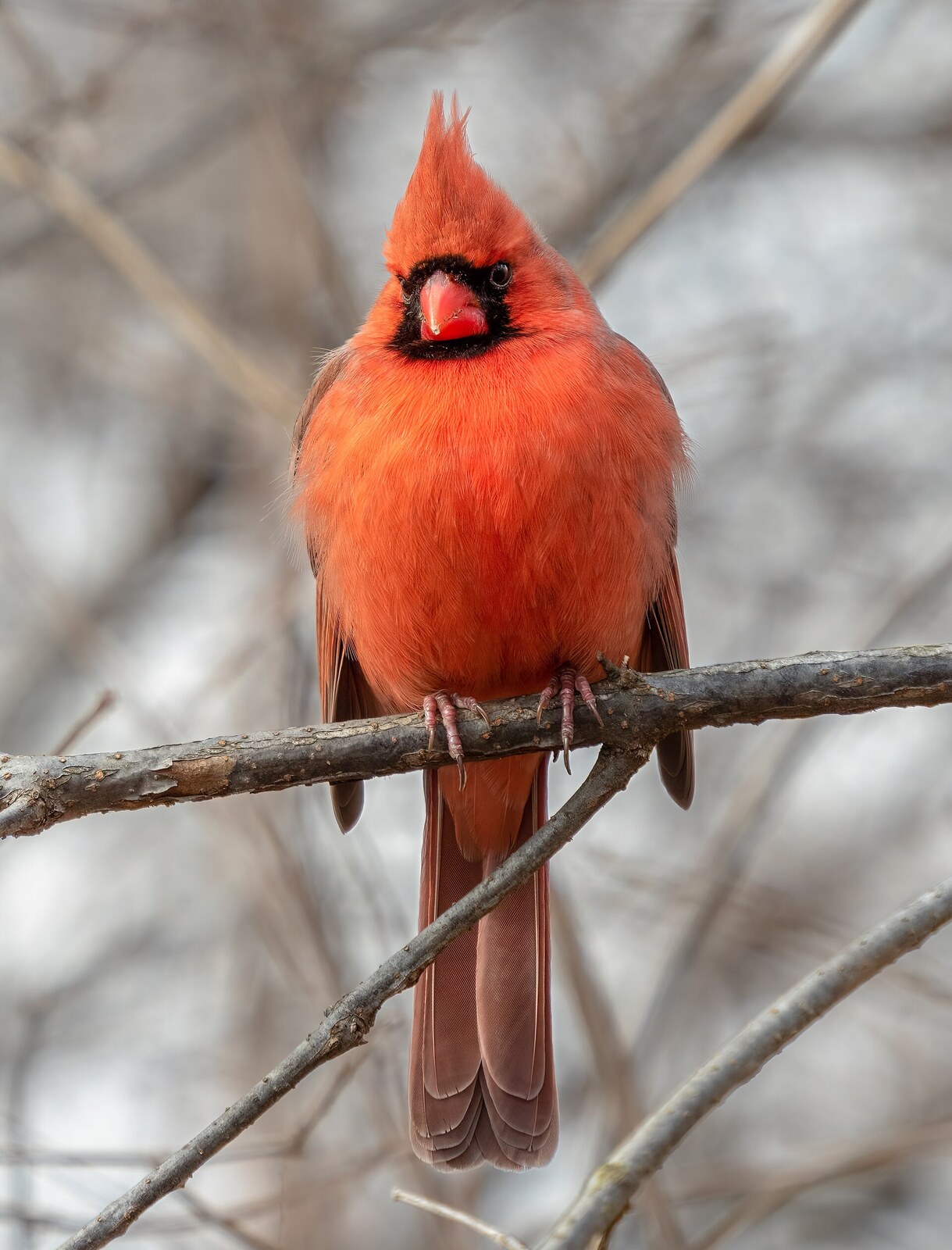
Northern cardinal
Cardinalis cardinalis
One of the most familiar songbirds in Marion County yards. The crested male is brilliant red year-round; both sexes hold territory through the winter, singing a clear whistled song from late January through summer.
Status: Secure; year-round resident.
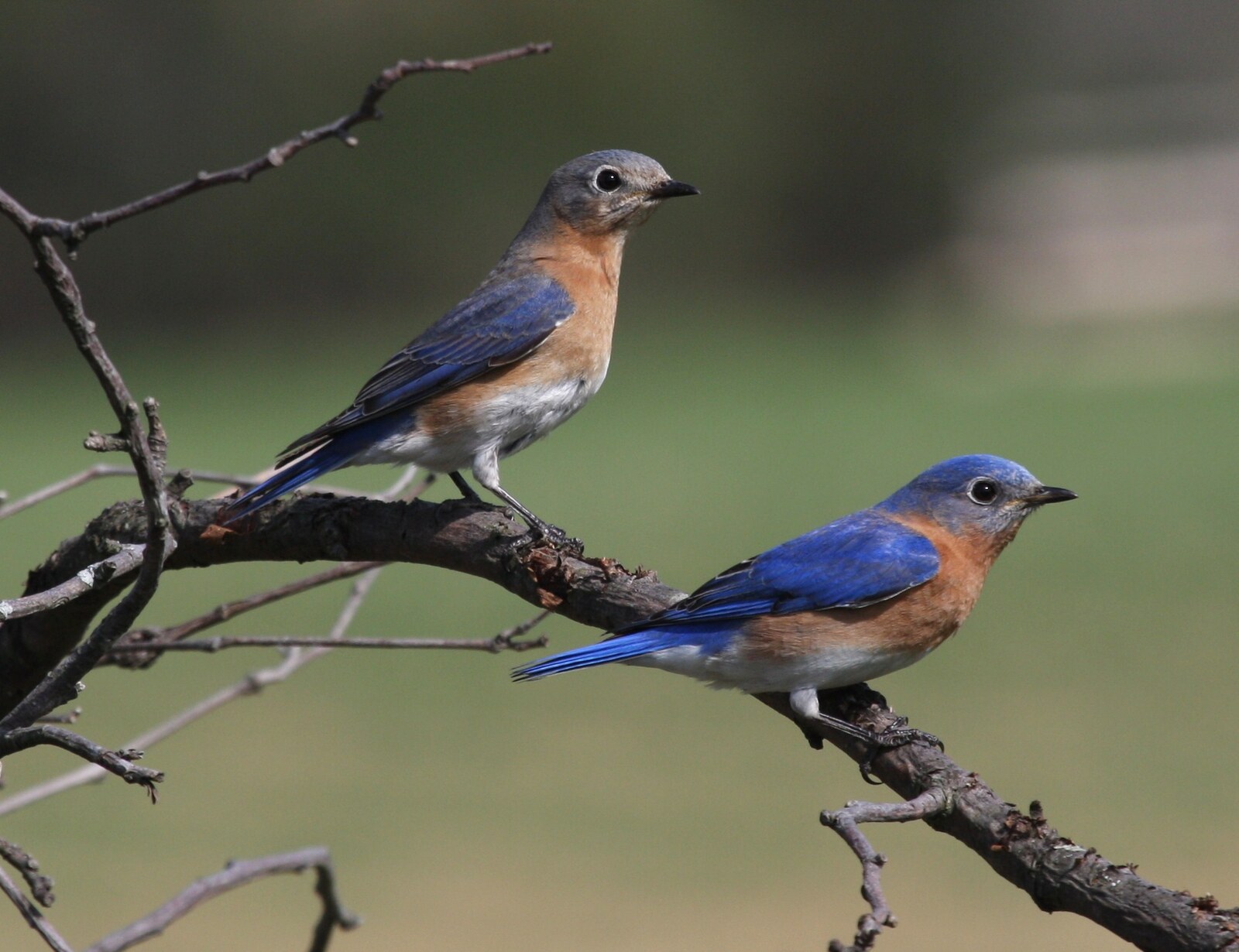
Eastern bluebird
Sialia sialis
A cavity-nesting thrush of pastures, orchards, and roadside fences. Recovered through decades of nest-box programs after twentieth-century declines; bluebird trails on rural roads across the county support breeding pairs.
Status: Secure; recovered through nest-box programs.
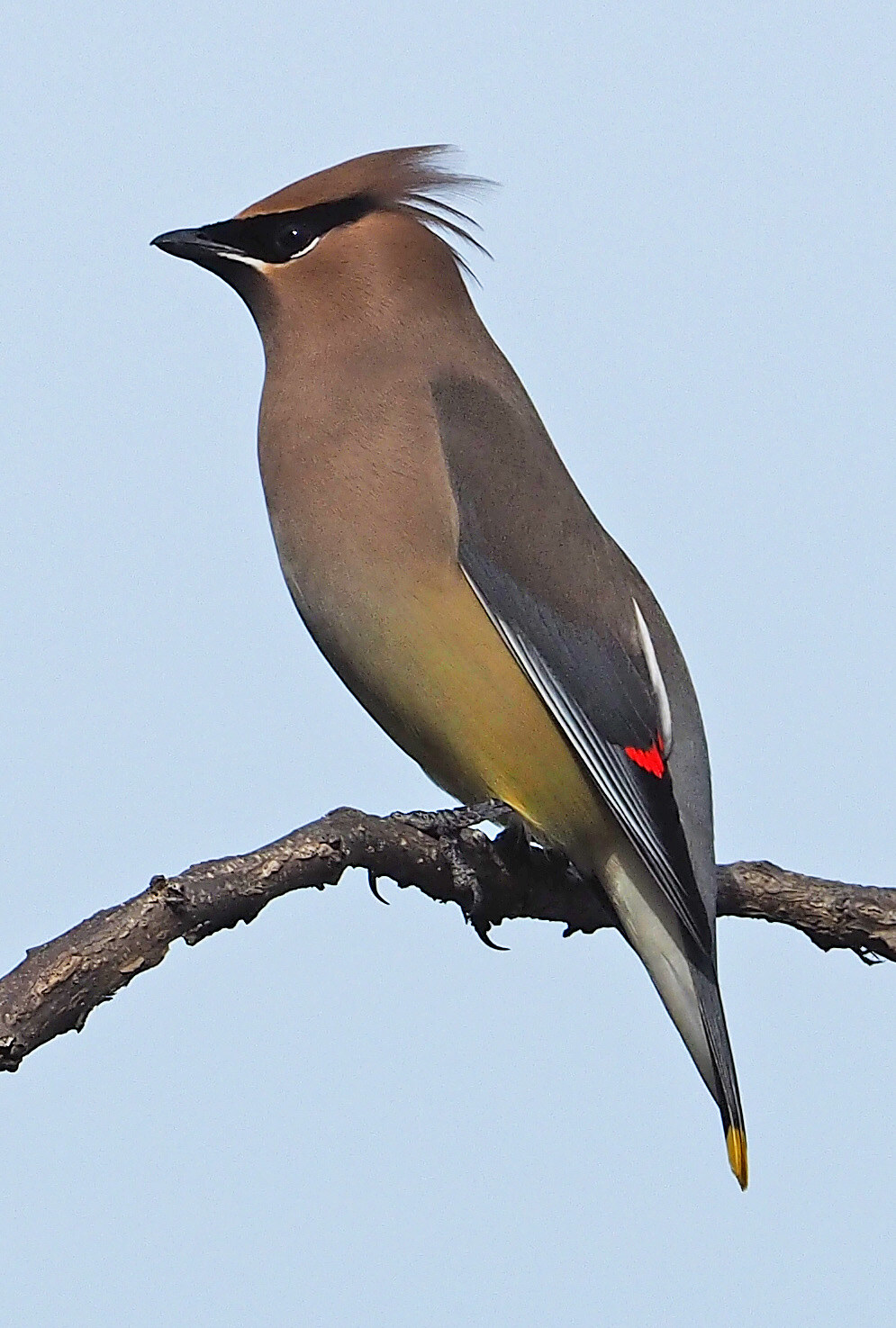
Cedar waxwing
Bombycilla cedrorum
A sleek crested fruit-eating bird with a yellow tail tip and waxy red wing markings. Roams in flocks following berry crops; takes mulberries, cherries, hollies, hackberries, and cedar berries through the year.
Status: Secure.
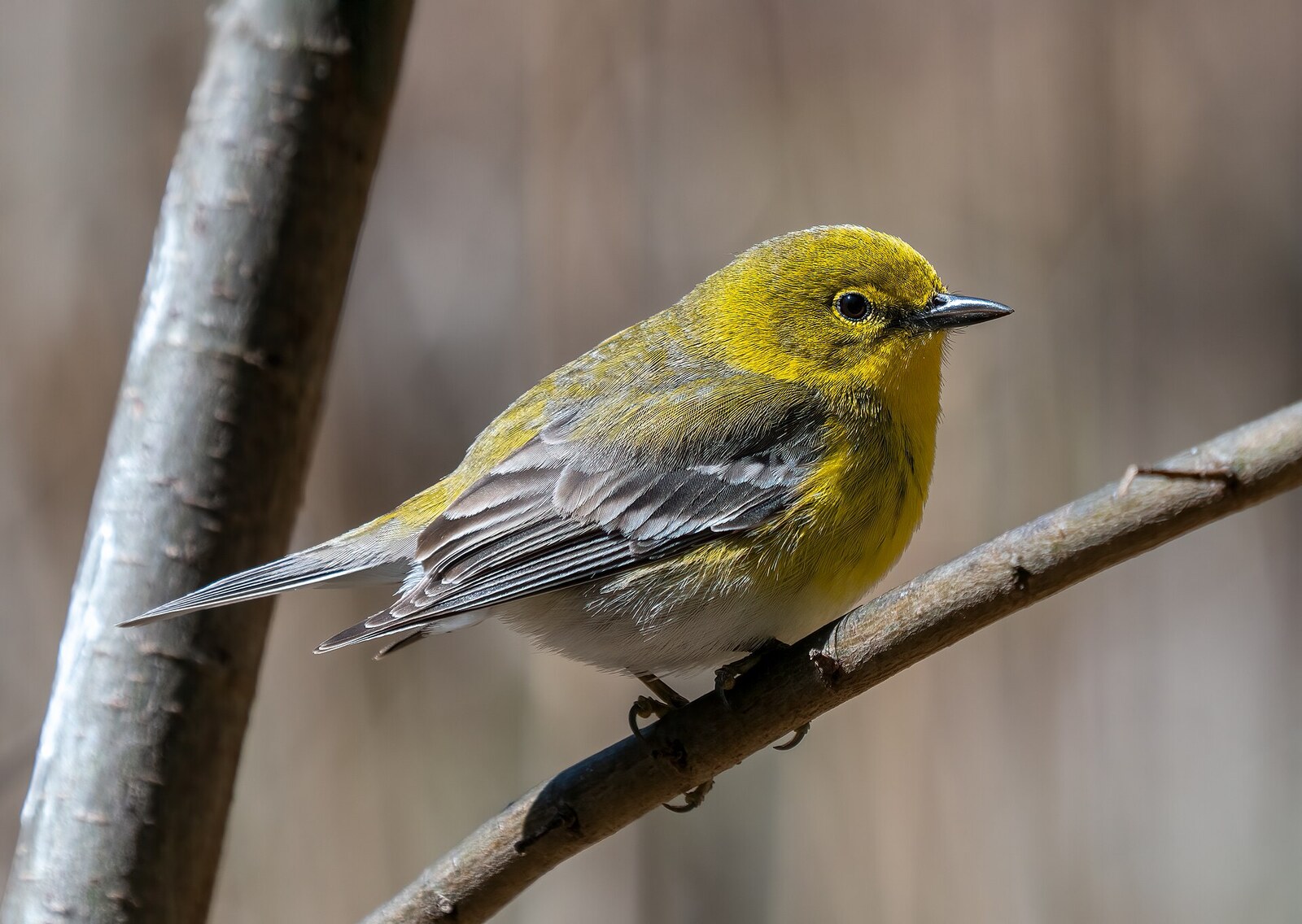
Pine warbler
Setophaga pinus
An olive-yellow warbler that nearly always sings from high in pine canopy. The slow musical trill is one of the earliest warbler songs of spring; pairs are tied to mature pine and pine-hardwood stands.
Status: Secure.
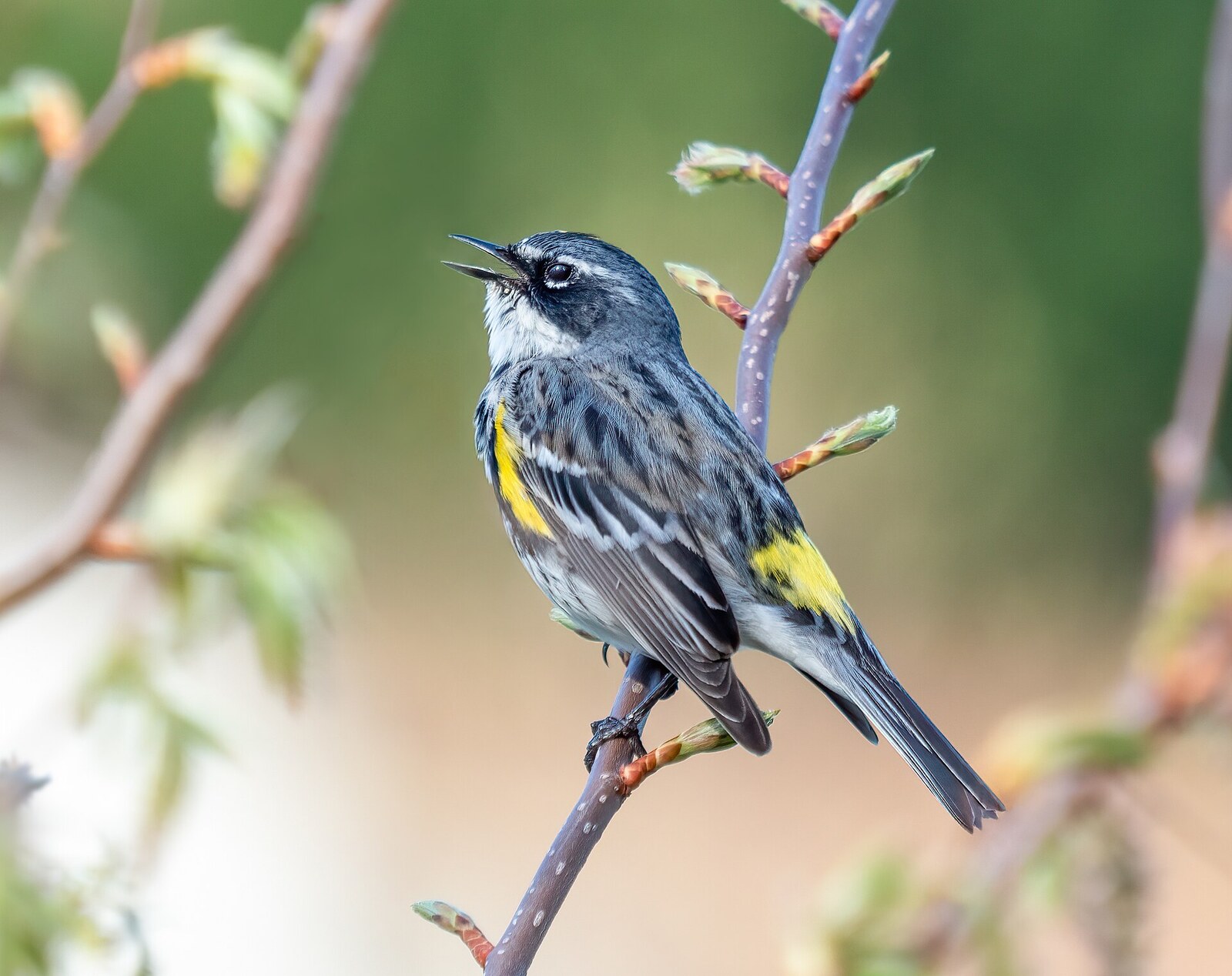
Yellow-rumped warbler
Setophaga coronata
A common winter warbler called the butter-butt for its distinctive yellow rump patch. Switches from insect to fruit feeding in winter, surviving on bayberries, junipers, and poison ivy berries when warblers that cannot digest waxy fruits have already left for the tropics.
Status: Secure (winter resident).
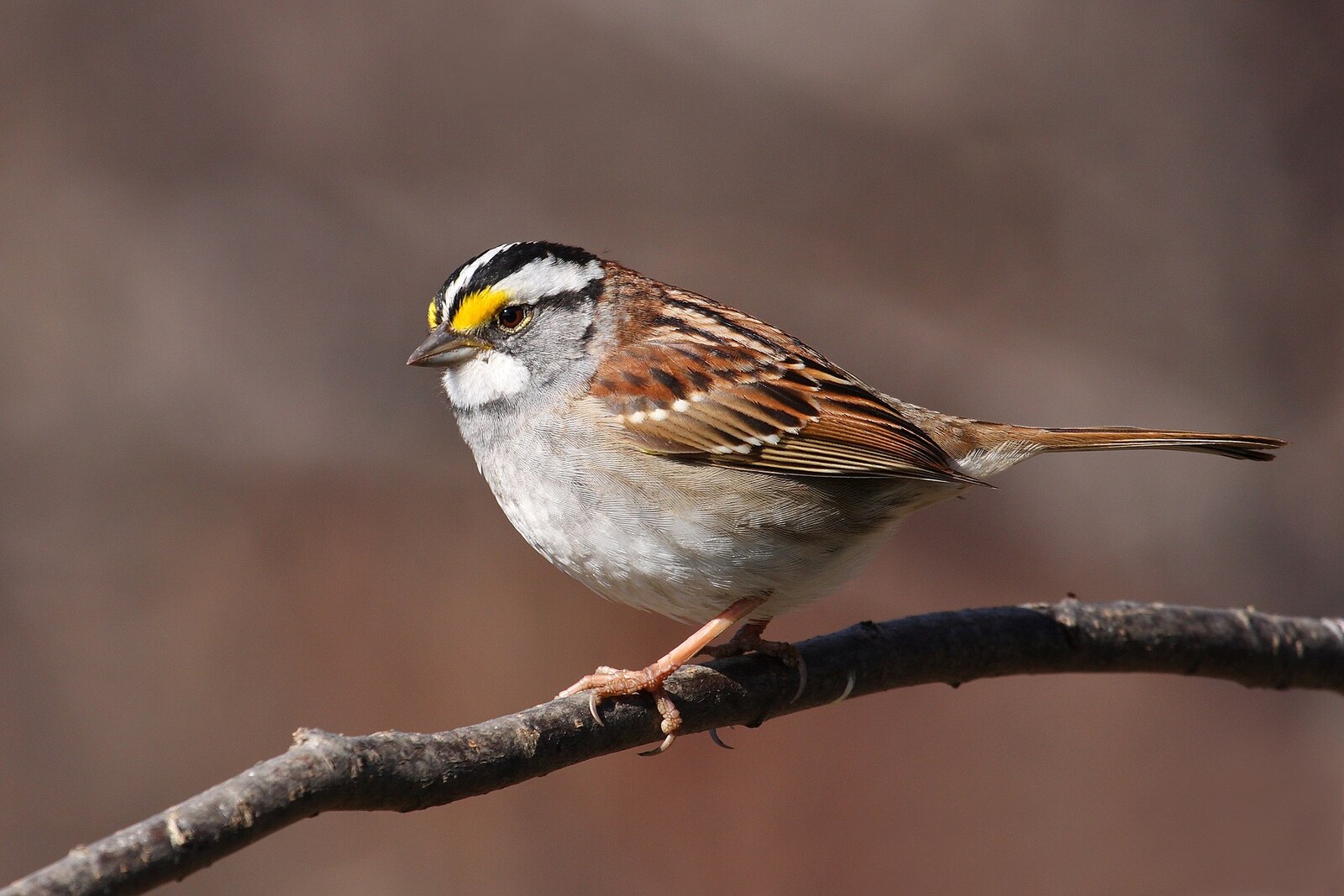
White-throated sparrow
Zonotrichia albicollis
A large sparrow with a clean white throat patch and yellow lores, common at winter feeders. The plaintive whistled Old Sam Peabody song is heard in late winter as wintering birds prepare to head north.
Status: Secure (winter resident).
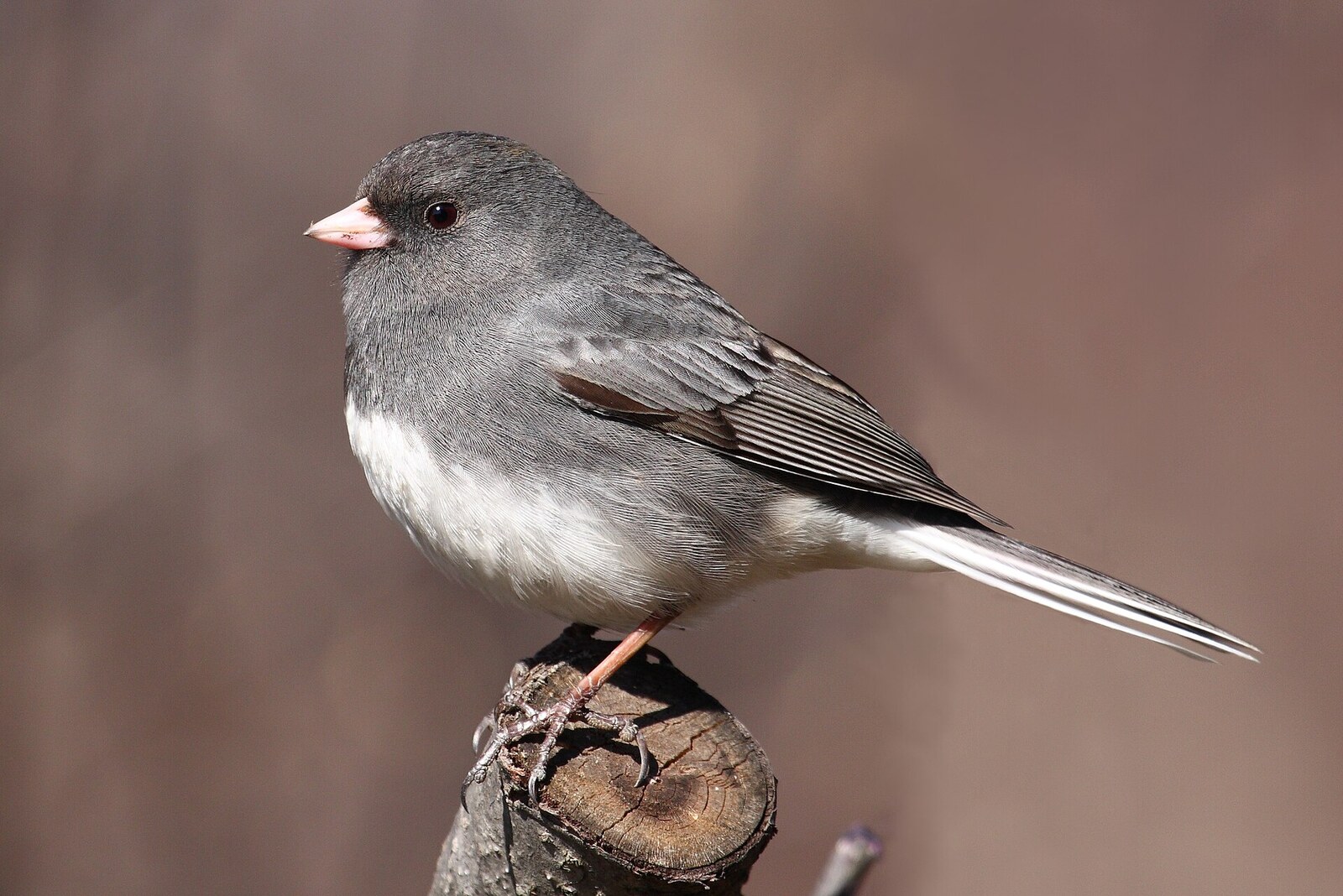
Dark-eyed junco
Junco hyemalis
A slate-and-white sparrow that arrives in October and stays through April, feeding on seeds at the edges of forest clearings, brush piles, and yard shrubs. Locally called the snowbird for its association with cold weather.
Status: Secure (winter resident).
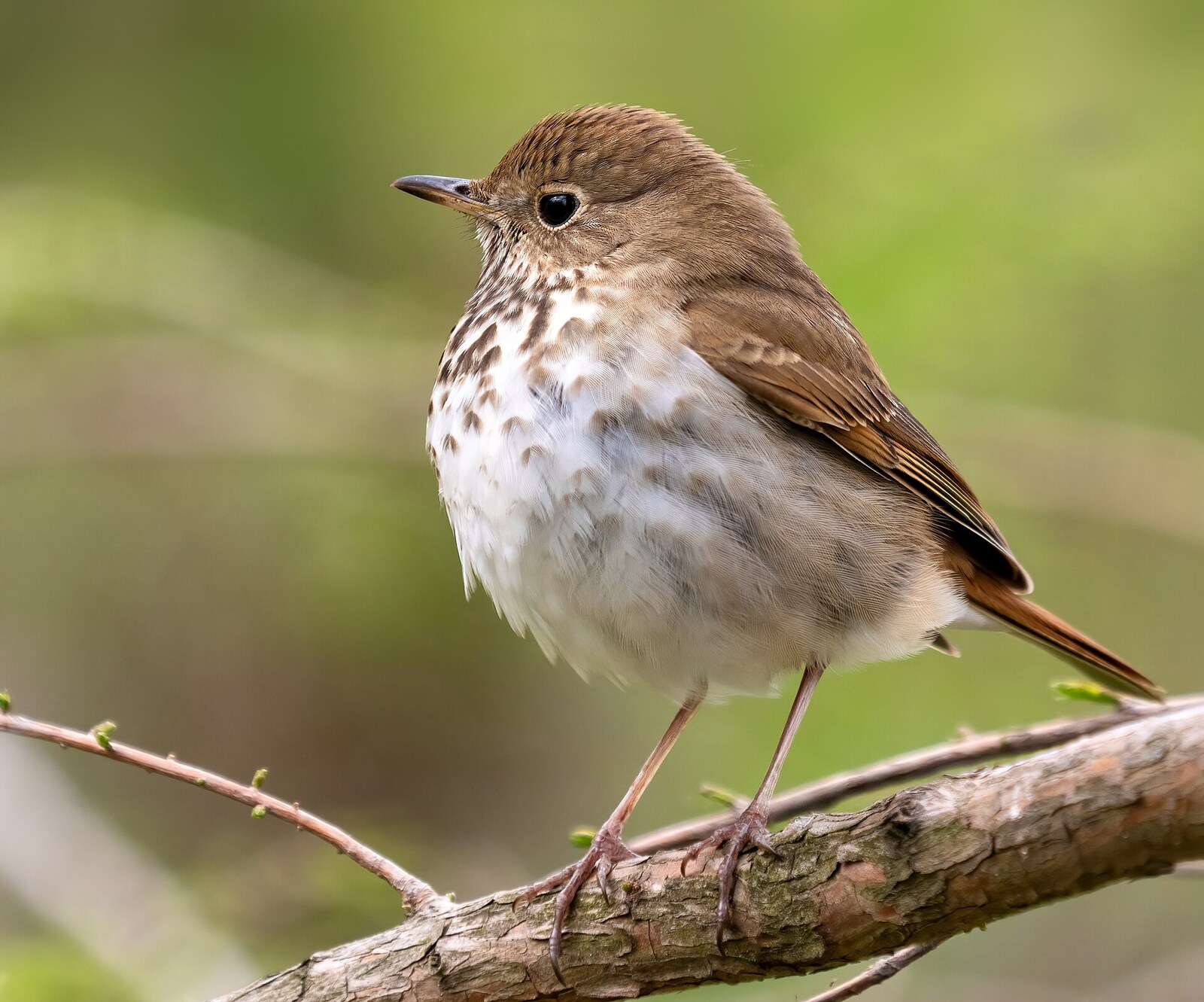
Hermit thrush
Catharus guttatus
A brown-backed thrush with a rusty tail it raises and lowers nervously while perched. The only spotted thrush regularly present in Tennessee through winter; gives a low chuck call from yard shrubbery.
Status: Secure (winter resident).
Crows, jays, and mimics
Two crows, the blue jay, and the mockingbird-thrasher pair fill open farmland, woodlot edges, and town habitats with their distinctive vocal repertoires. The fish crow has expanded inland along the Tennessee River corridor; the northern mockingbird is heard most loudly during the breeding season, often well into the night.
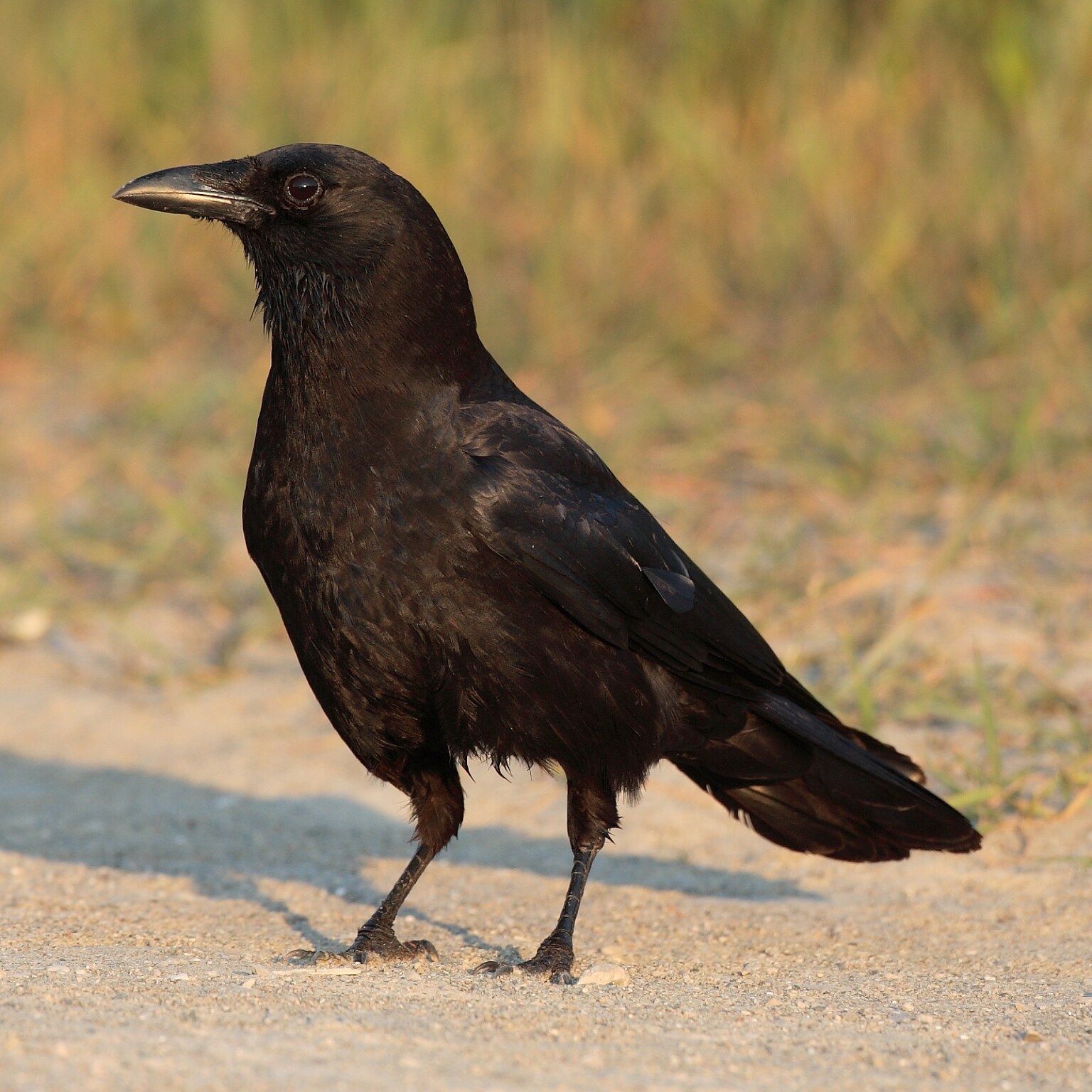
American crow
Corvus brachyrhynchos
The familiar large black corvid of farmland, towns, and forest edge. Highly social and intelligent; gathers in large winter roosts numbering hundreds of birds.
Status: Secure.
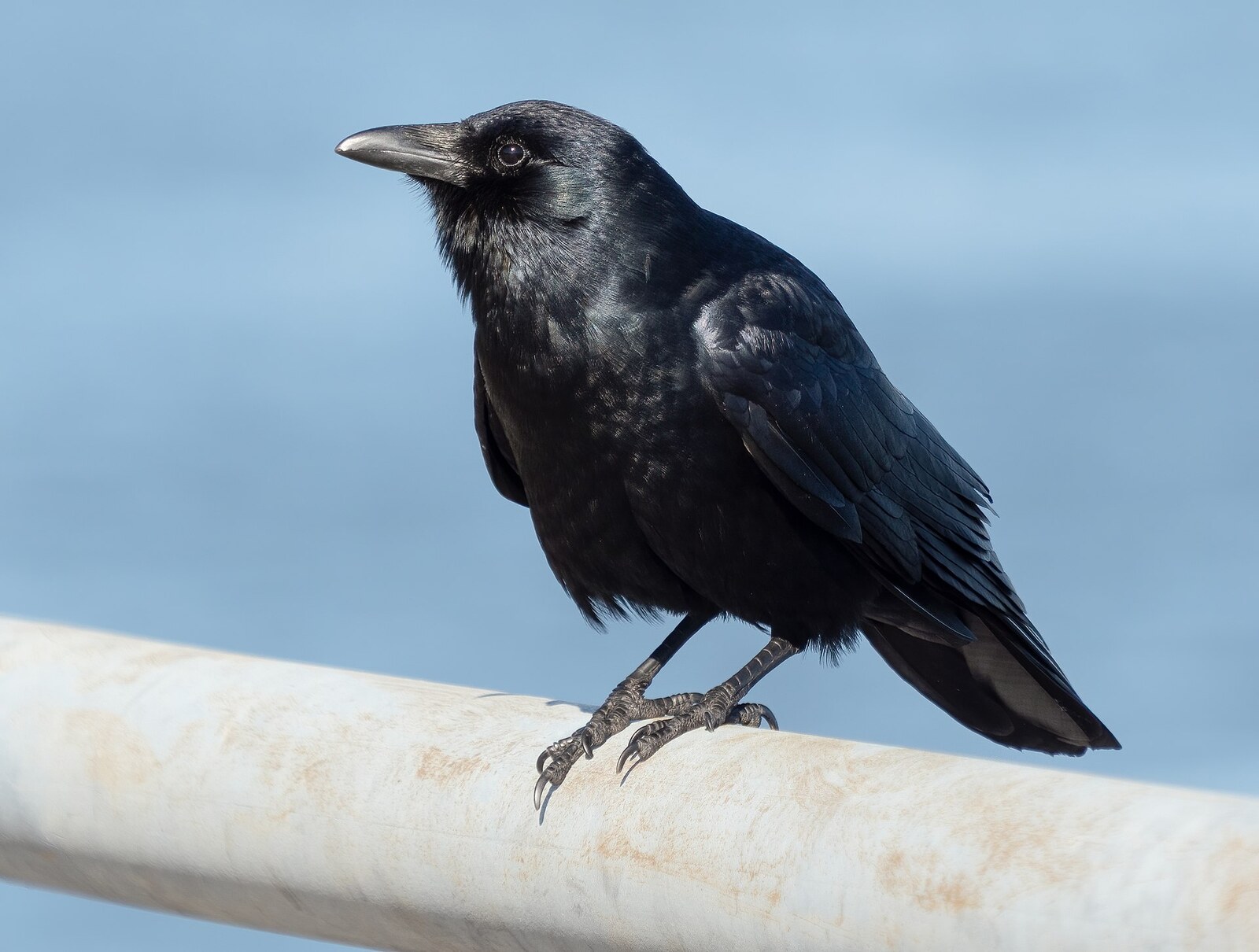
Fish crow
Corvus ossifragus
A slightly smaller cousin of the American crow that follows river corridors. Best identified by its nasal two-syllable uh-uh call rather than the American crow's familiar caw; expanding inland along the Tennessee River.
Status: Secure along river corridors.
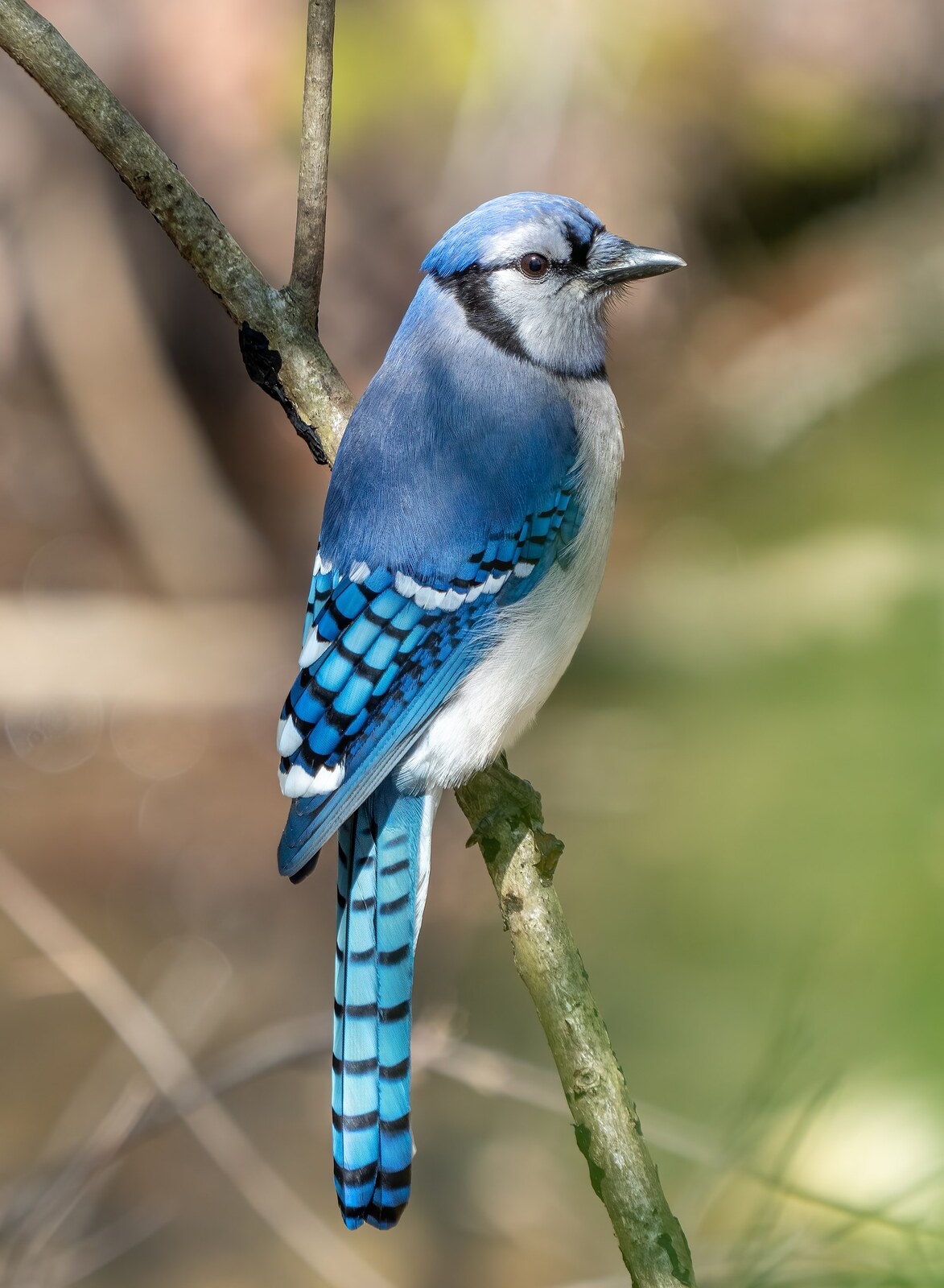
Blue jay
Cyanocitta cristata
A loud, blue-and-white corvid of mixed forest and yard. Caches acorns and beech nuts by the thousands each fall, contributing to oak regeneration; mimics red-shouldered hawk calls.
Status: Secure.
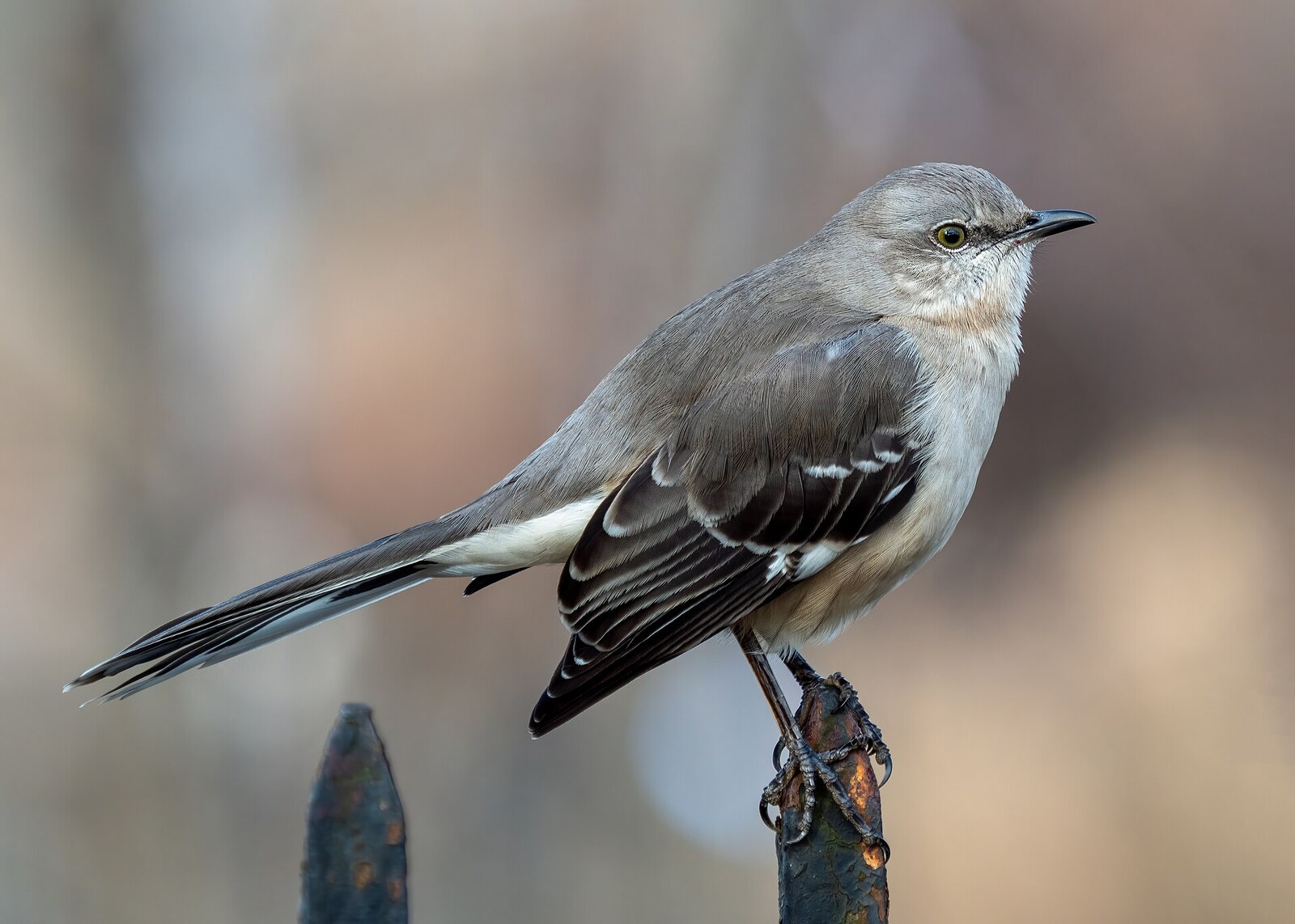
Northern mockingbird
Mimus polyglottos
Tennessee's official state bird, designated in 1933. A long-tailed gray bird that sings extended sequences of borrowed phrases from other birds, often through the night during the breeding season. Common around yards, hedgerows, and town gardens.
Status: Secure; Tennessee state bird.
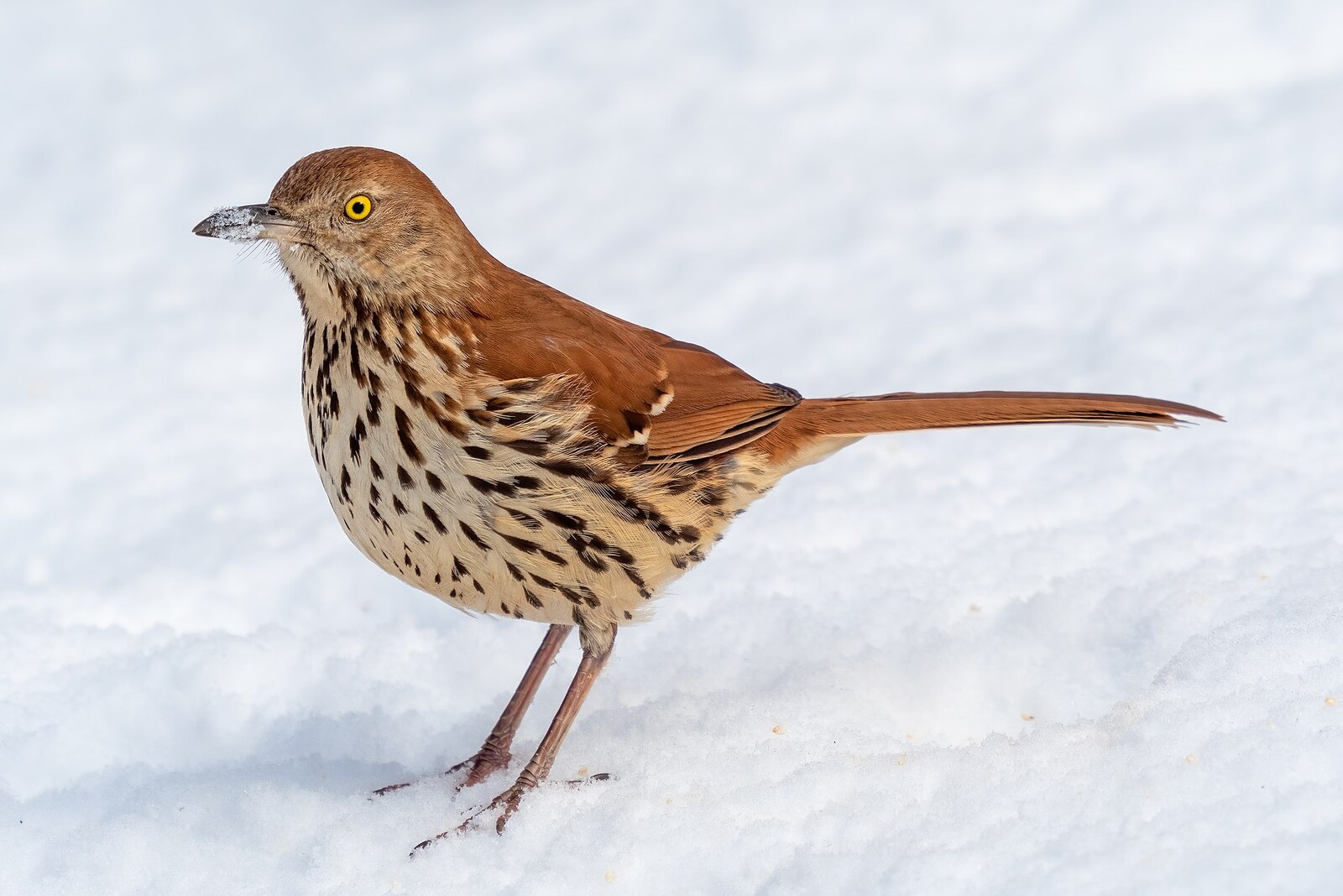
Brown thrasher
Toxostoma rufum
A long-tailed rusty-brown thrush-like bird with a heavily streaked breast, fond of dense thickets and brush piles. Sings a varied series of paired phrases from a high perch in spring.
Status: Secure.
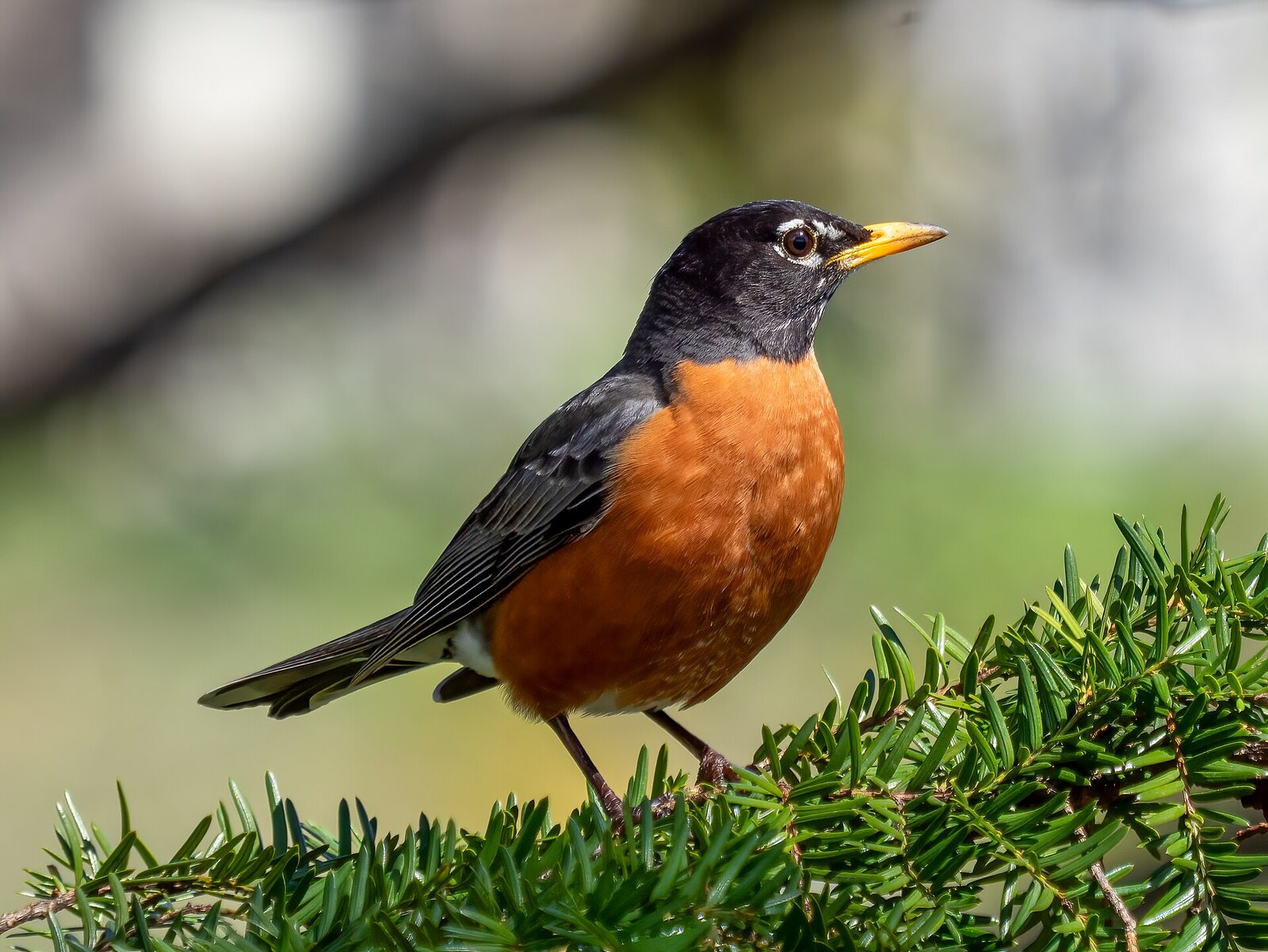
American robin
Turdus migratorius
The classic suburban thrush, abundant on lawns hunting earthworms in spring and summer. Forms large flocks in winter that strip hollies, hawthorns, and cedars of berries.
Status: Secure.
Sparrows, finches, blackbirds, and starlings
The year-round sparrow-and-finch community runs from the eastern towhee in shrubby edges to the chipping sparrow on lawns and the eastern meadowlark singing from valley fence posts. Two introduced species, European starling and house sparrow, are abundant around buildings and feed lots; the house finch, also introduced east, has taken over from the native purple finch at most feeders. The eastern meadowlark is a steeply declining grassland species and a TWRA Species of Greatest Conservation Need.
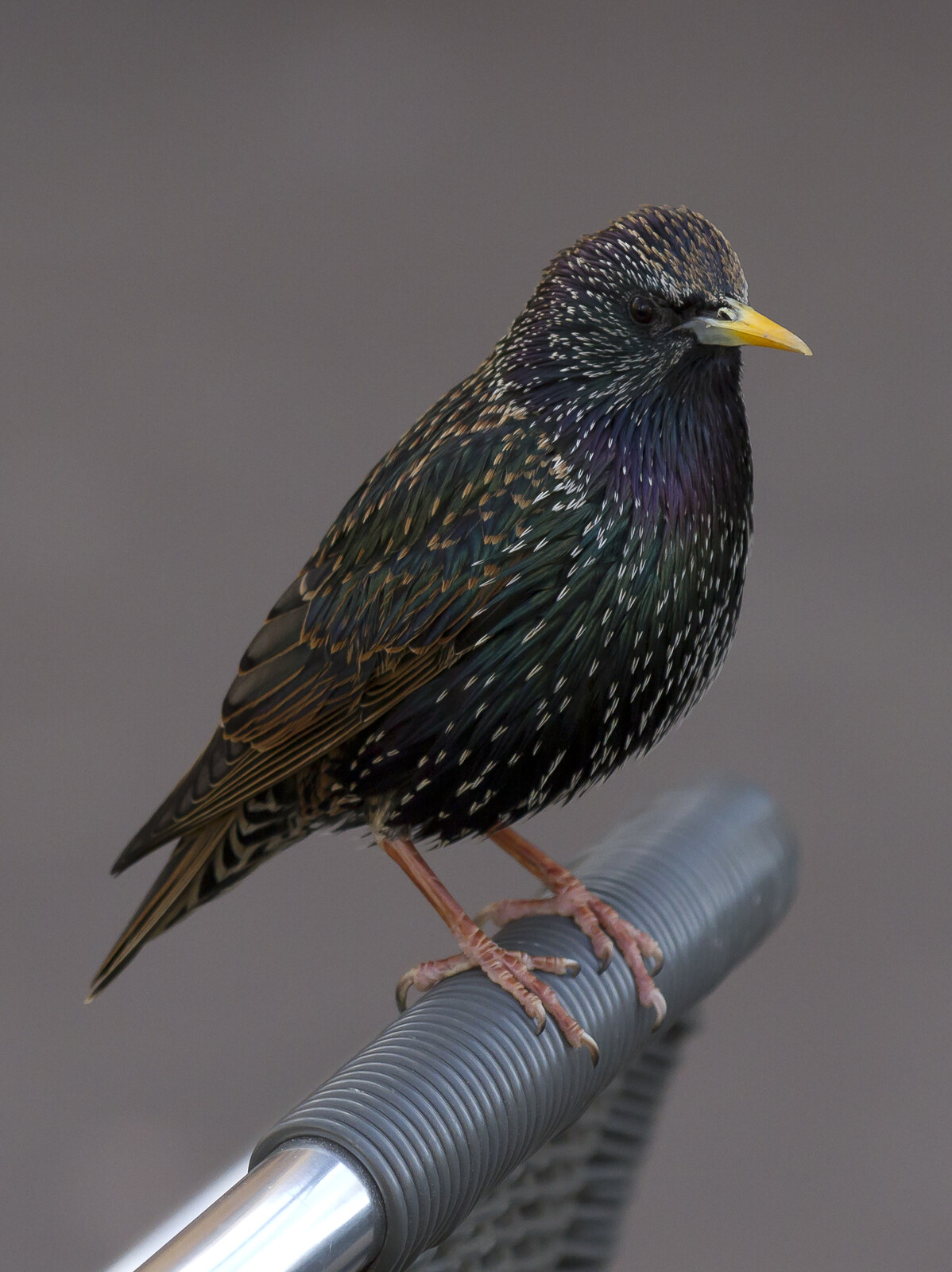
European starling
Sturnus vulgaris
An iridescent black bird introduced to North America in 1890 and now one of the continent's most abundant songbirds. Cavity-nests aggressively, often displacing native bluebirds and woodpeckers from holes.
Status: Introduced; abundant.
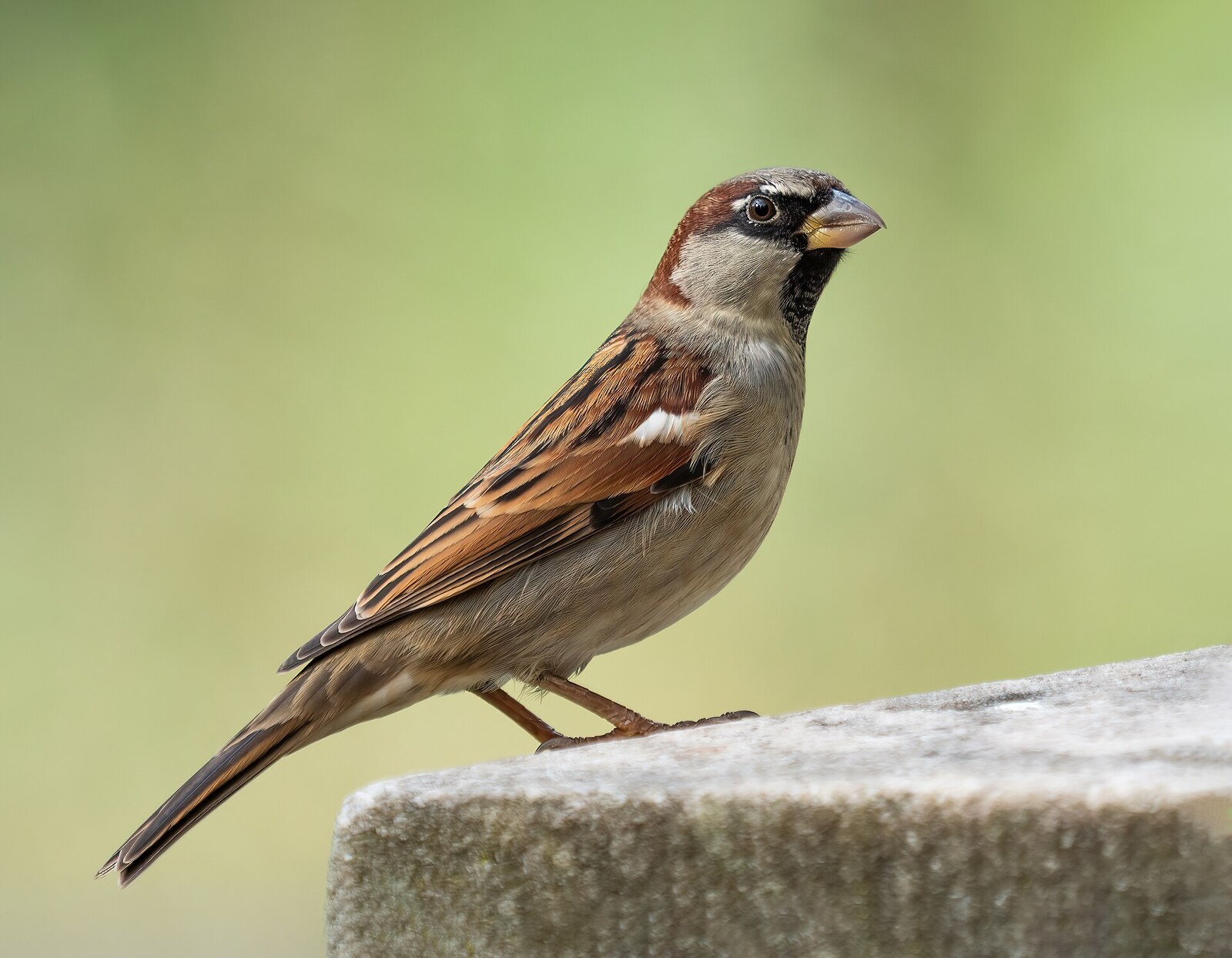
House sparrow
Passer domesticus
An introduced Old World sparrow ubiquitous around farms, feed lots, and town buildings. Aggressive cavity-nester that contributes to bluebird and tree swallow declines around human structures.
Status: Introduced; abundant.
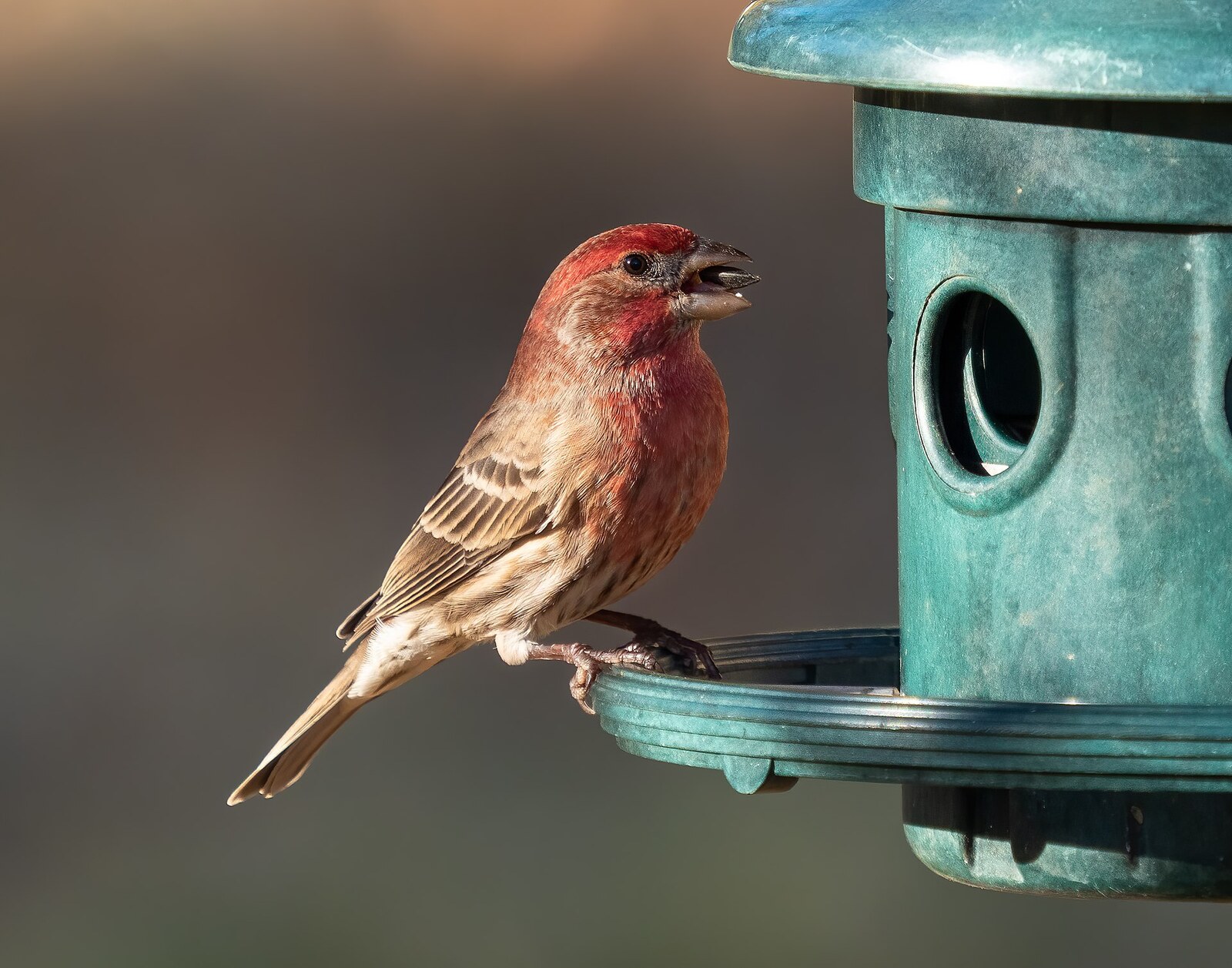
House finch
Haemorhous mexicanus
An introduced eastern North American finch (originally a western species, released in New York in 1940). Common around feeders; males have variable raspberry-red coloration on head and breast.
Status: Introduced east; common.
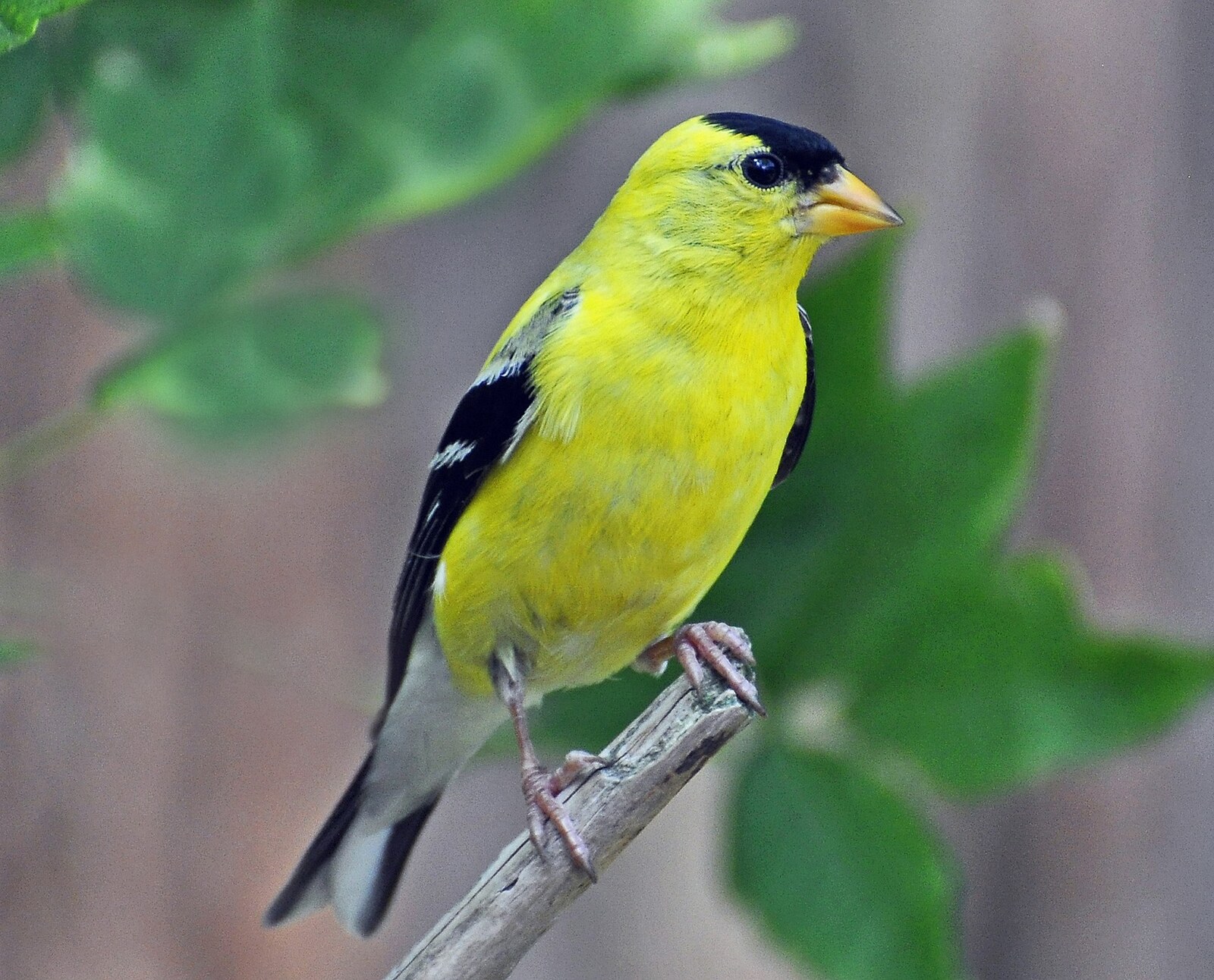
American goldfinch
Spinus tristis
A small bright-yellow finch (males in summer) that feeds heavily on thistle and other composite seeds. Breeds late in the year, timing nestlings to peak thistle-down availability in July and August.
Status: Secure.
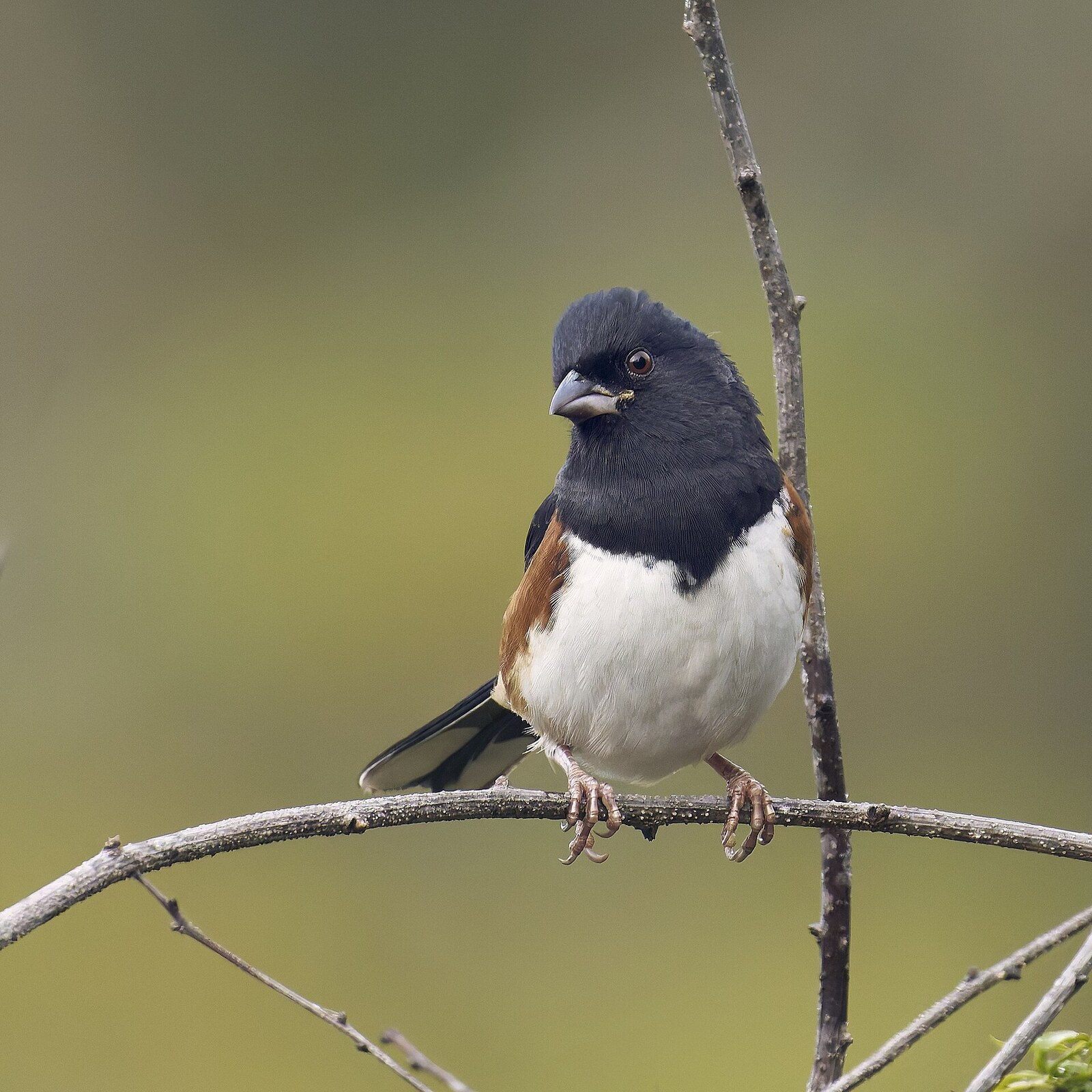
Eastern towhee
Pipilo erythrophthalmus
A large rusty-flanked sparrow of brushy edges and shrubland. The drink-your-tea song and noisy double-scratching foraging style in dry leaves give the species its presence in spring woods.
Status: Secure.
Song sparrow
Melospiza melodia
A streaky brown sparrow of damp brush and field edges, with a varied territorial song that begins with three or four short notes. Common year-round across farmland and stream corridors.
Status: Secure.
Field sparrow
Spizella pusilla
A small pink-billed sparrow of old fields and shrub-savanna habitat. The bouncing-ball song accelerates into a rapid trill; populations are declining as old-field habitat ages into closed-canopy forest.
Status: Declining.
Chipping sparrow
Spizella passerina
A small clean-faced sparrow with a rusty cap and a long even trill song. Common breeder in open woodland, lawns, and cemeteries with scattered conifers.
Status: Secure.
Eastern meadowlark
Sturnella magna
A grassland bird with a yellow breast crossed by a black V-shaped band, singing a clear flutelike whistle from fence posts in valley fields. Has lost ground across the southeast as pastures have been converted to row-crop or developed.
Status: Declining; TWRA Species of Greatest Conservation Need.
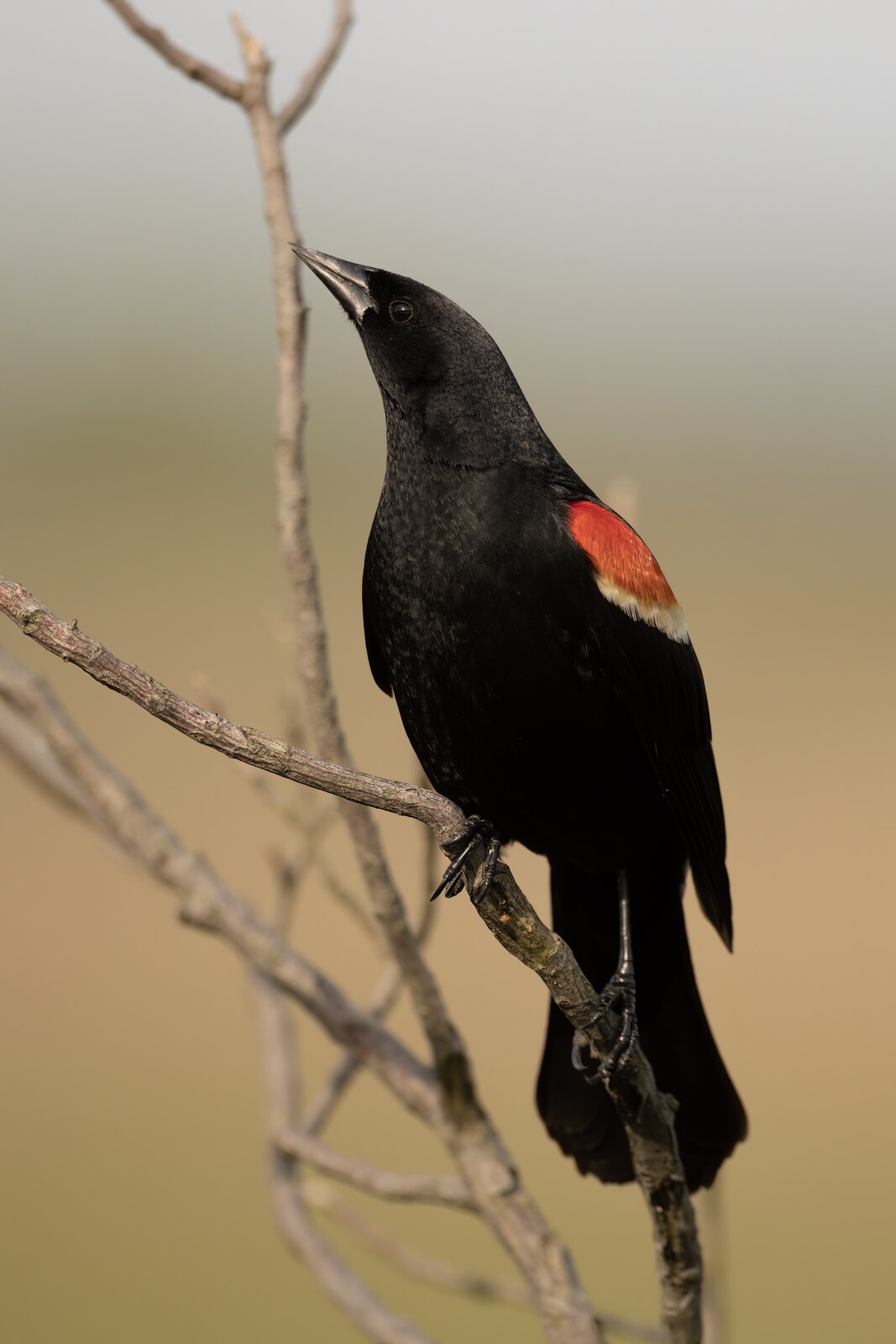
Red-winged blackbird
Agelaius phoeniceus
A glossy black bird with red-and-yellow shoulder patches in males, holding territory in marsh, wet meadow, and roadside cattail stands. The conk-a-ree song is a signature spring sound of valley wetlands.
Status: Secure.
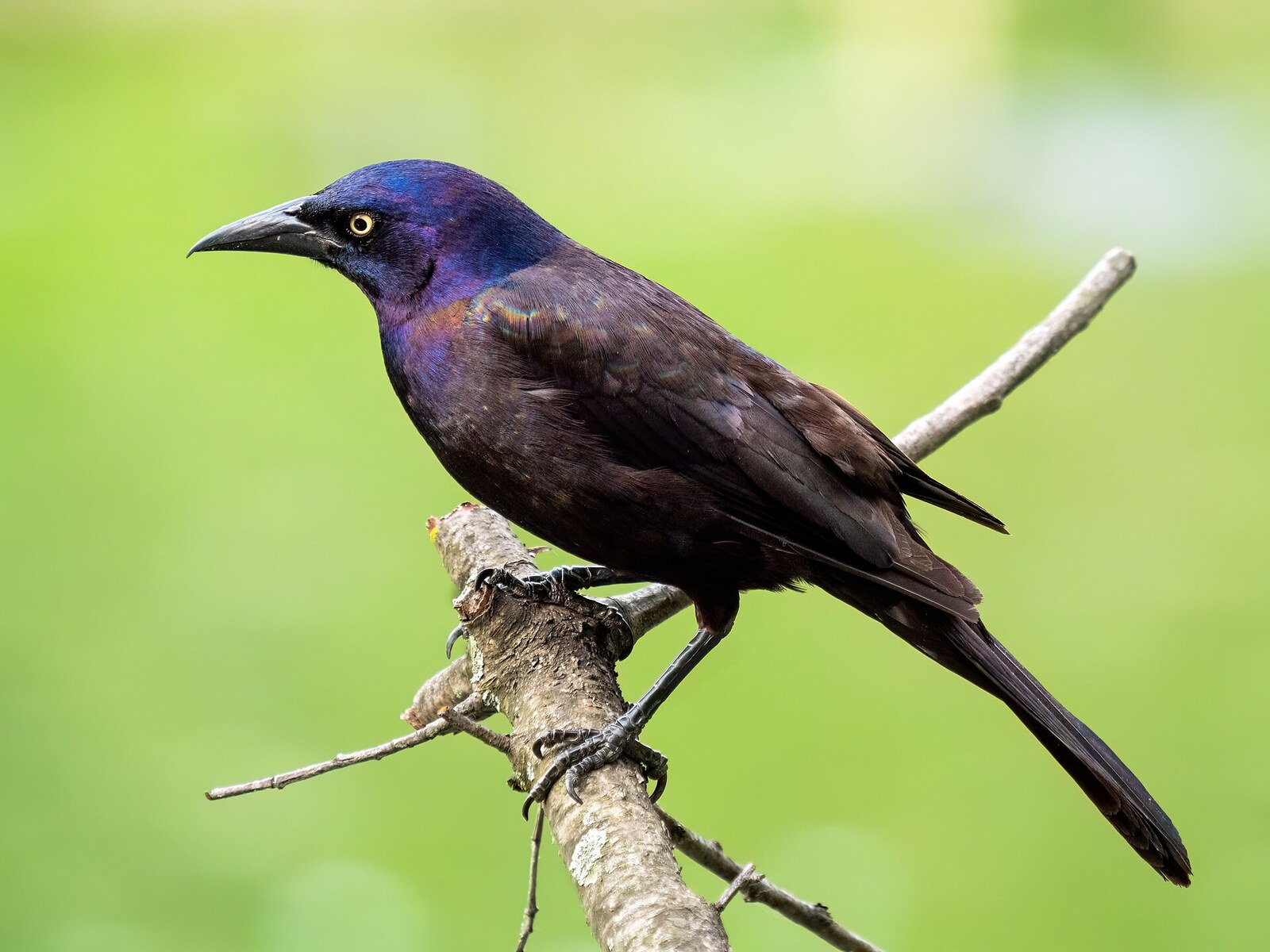
Common grackle
Quiscalus quiscula
A long-tailed iridescent black bird that gathers in large mixed flocks with starlings and red-winged blackbirds in fall and winter. Walks and feeds heavily on lawns, fields, and grain stubble.
Status: Declining.
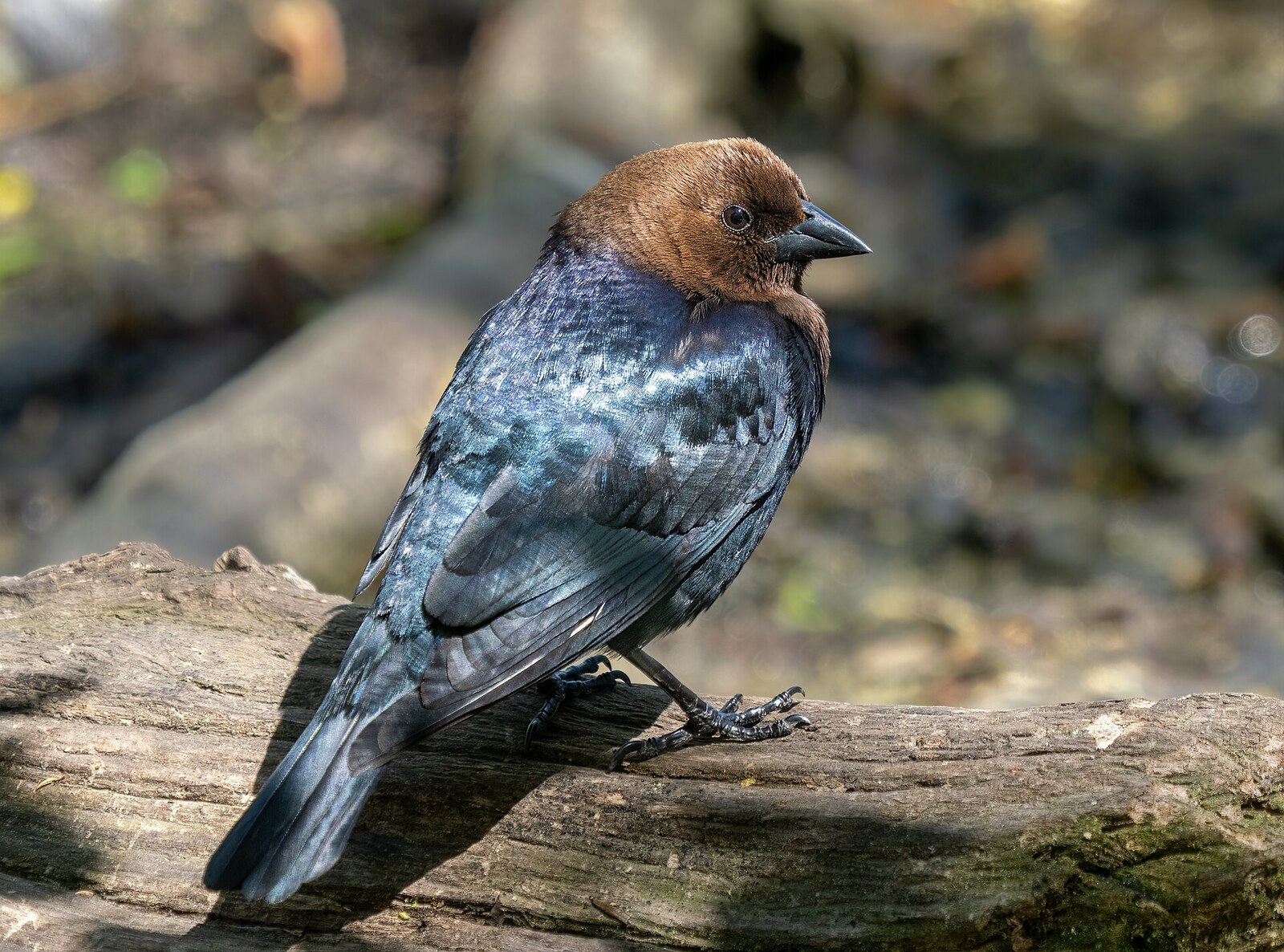
Brown-headed cowbird
Molothrus ater
A brood parasite that lays eggs in the nests of other songbirds, leaving the host species to raise the cowbird chick. Native to North American shortgrass prairie; expanded eastward as forests were cleared, contributing to declines in forest-interior songbirds.
Status: Secure.
Raptors
Marion County's mix of Tennessee River, Cumberland Plateau bluffs, valley pasture, and forest creates strong raptor habitat. The bald eagle is the county's most visible conservation recovery; ospreys returned through reintroduction; peregrine falcons use cliff faces in the Tennessee River Gorge after their own pesticide-era collapse and recovery. Forest-interior accipiters, woodland buteos, and grassland-edge falcons round out the year-round raptor community, and each fall the broad-winged hawk migration funnels hundreds of birds in river-following kettles over the gorge in mid-September.
Recovery in real time
Tennessee had no bald eagle nests as recently as the early 1980s. Nickajack and Chickamauga reservoirs now hold breeding pairs along the gorge, around the dam, and on the bluff faces. The peregrine falcon was delisted from the federal Endangered Species Act in 1999, the bald eagle in 2007. Both remain protected under the federal Bald and Golden Eagle Protection Act and Migratory Bird Treaty Act.
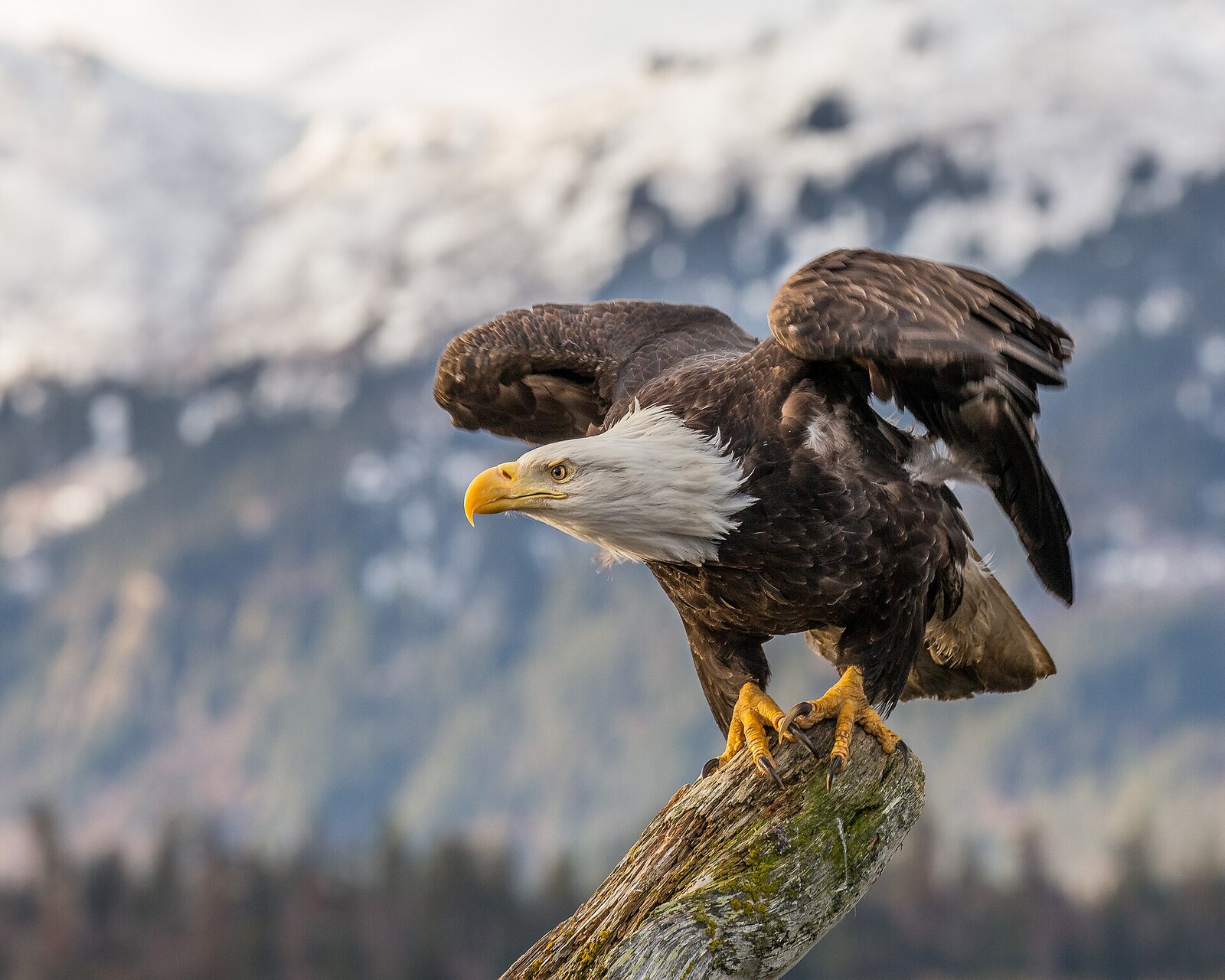
Bald eagle
Haliaeetus leucocephalus
The most visible conservation recovery in Marion County. DDT-era reproductive failure reduced the continental population to a few hundred breeding pairs by the 1960s; federal protection, the 1972 DDT ban, and targeted restoration brought eagles back. Year-round residents on Nickajack and Chickamauga reservoirs, with nests along the gorge and around Nickajack Dam.
Status: Recovered; delisted 2007.
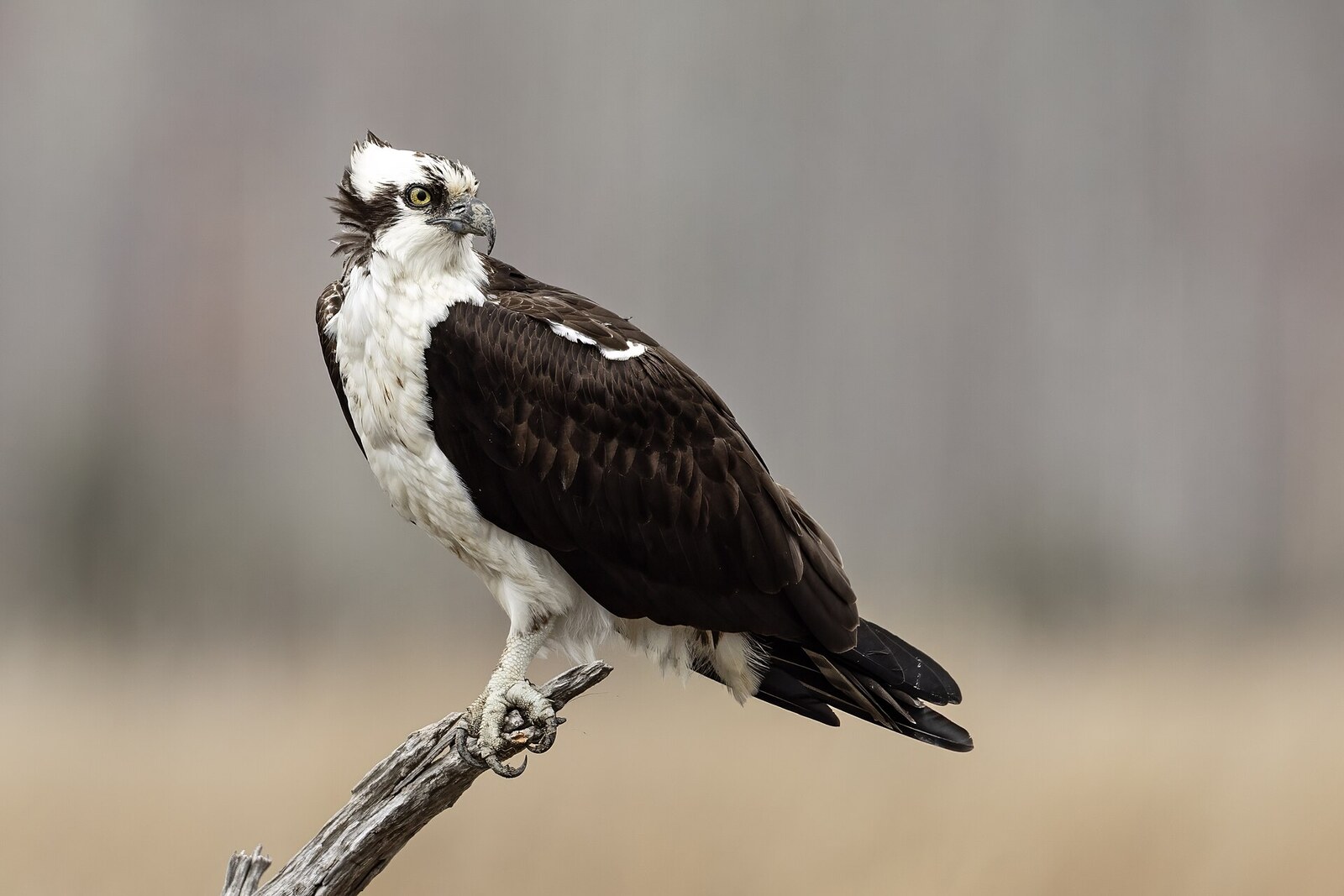
Osprey
Pandion haliaetus
A reservoir raptor that returned through reintroduction after pesticide-era declines. Breeds on Nickajack Lake and along the Tennessee River; dives feet-first for fish from a hovering posture.
Status: Recovered.
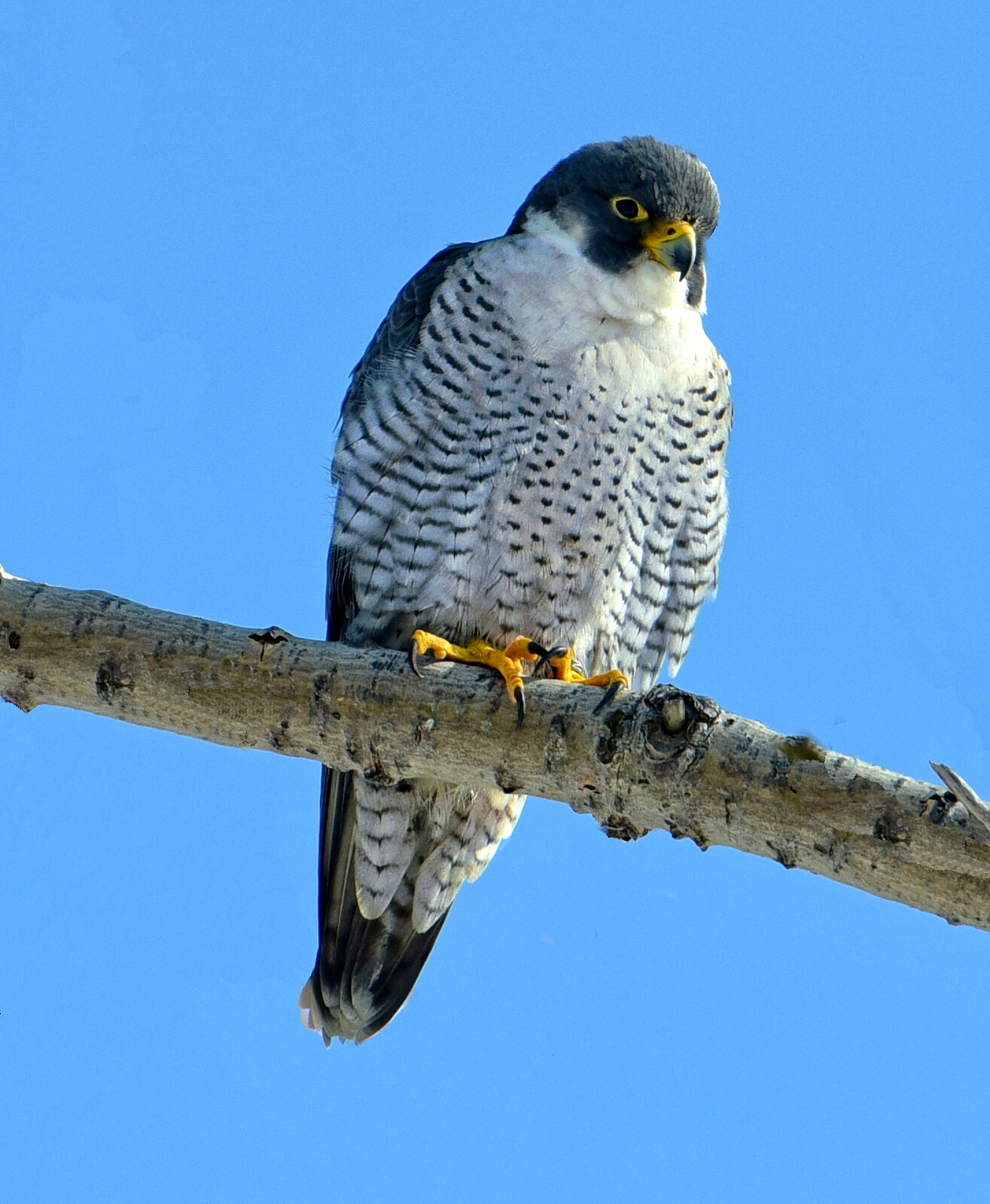
Peregrine falcon
Falco peregrinus
The fastest bird in level flight, recovered from its own pesticide-induced collapse. Documented using cliff faces in the Tennessee River Gorge and nearby escarpments; suitable nesting habitat exists in Marion County's bluff country.
Status: Recovered; delisted 1999.
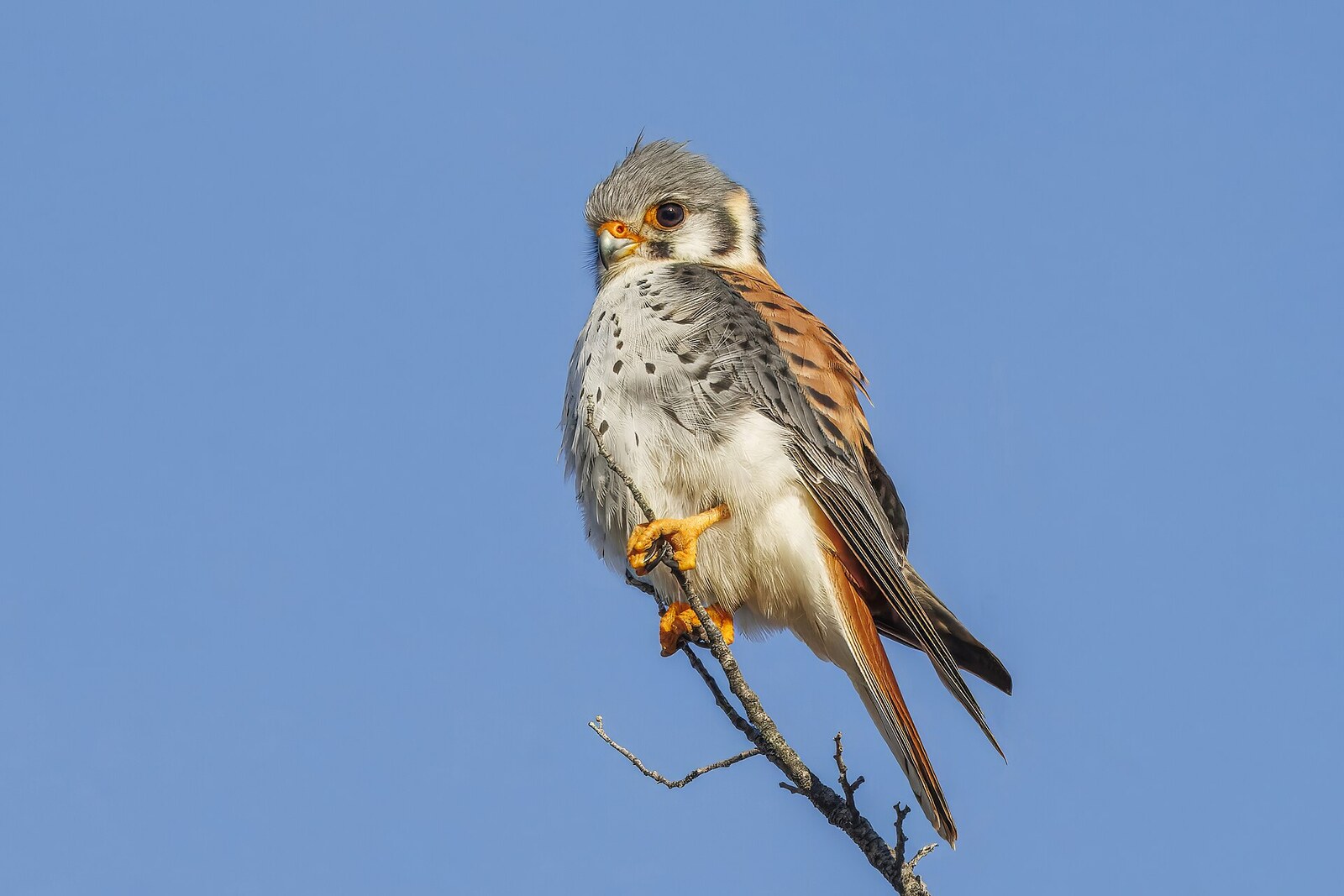
American kestrel
Falco sparverius
North America's smallest falcon, a robin-sized hunter that hovers over hay fields and roadsides looking for grasshoppers, small mammals, and lizards. Populations have declined sharply across eastern North America since the 1970s.
Status: Declining.
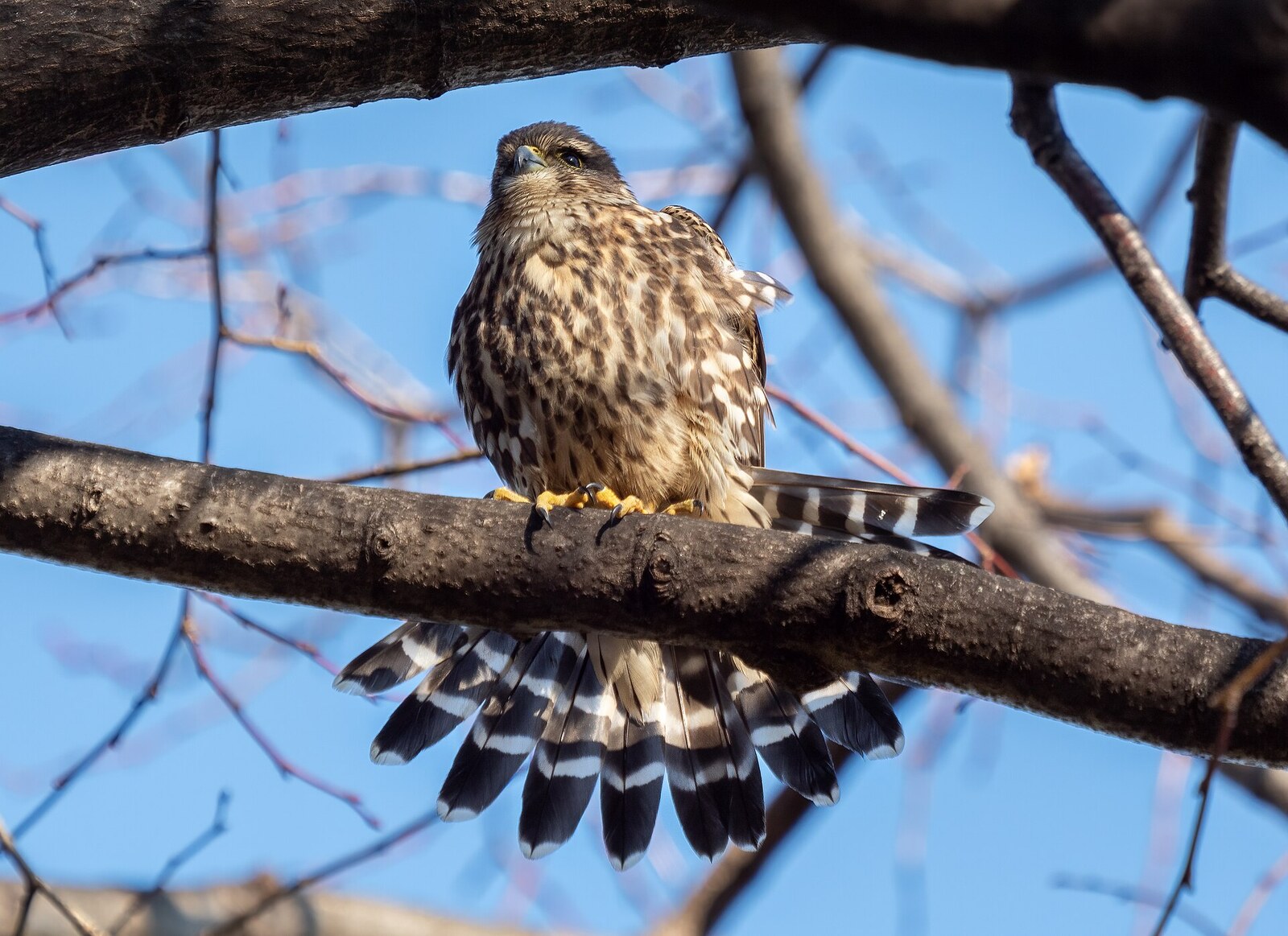
Merlin
Falco columbarius
A small dark falcon, more solid-colored than the kestrel, that passes through Marion in spring and fall and overwinters in small numbers. Hunts small birds in fast, low pursuits.
Status: Increasing winter visitor.
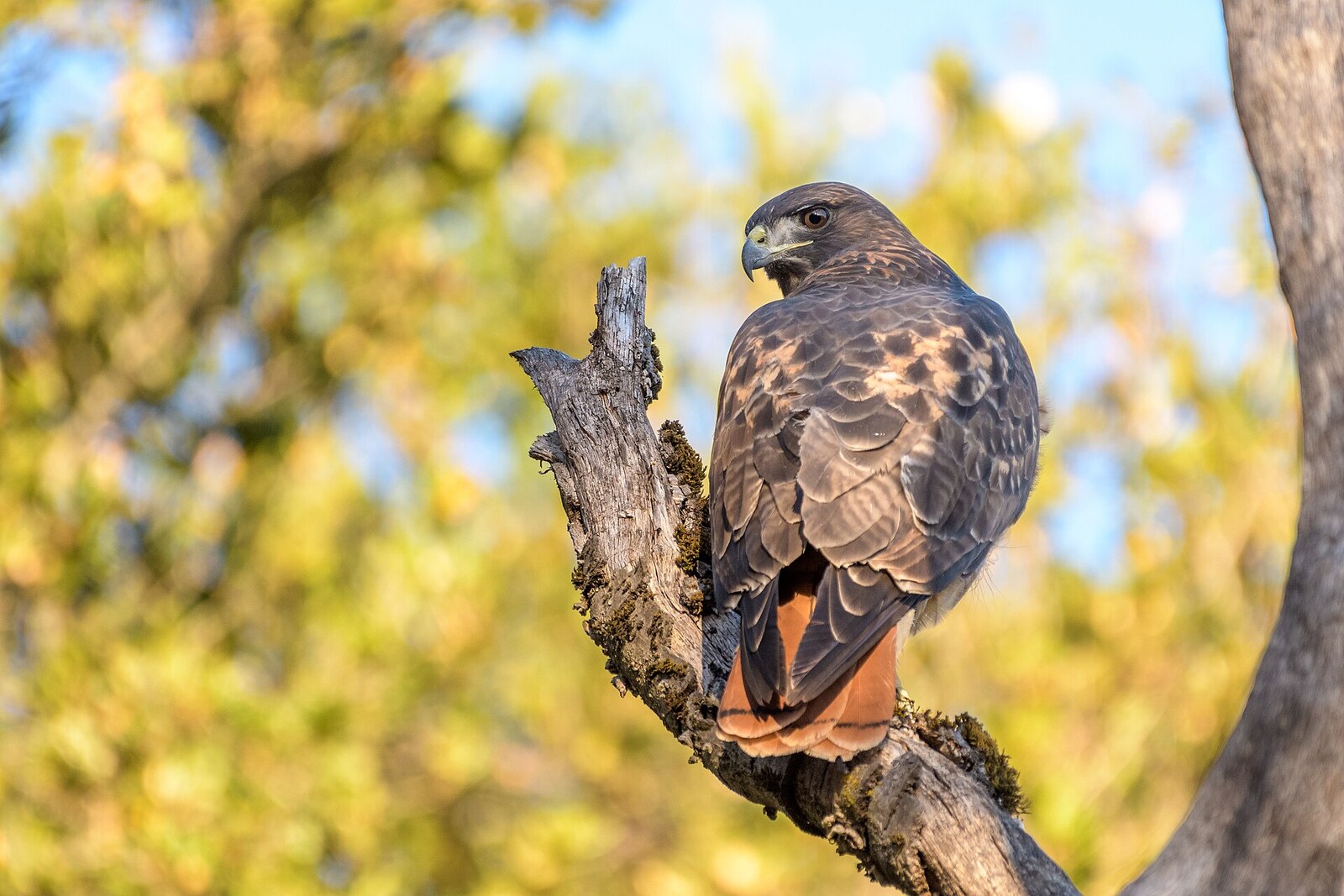
Red-tailed hawk
Buteo jamaicensis
The county's most common large hawk, with a brick-red tail in adults and a hoarse descending scream that Hollywood routinely plays over footage of bald eagles. Hunts open country and forest edge from utility-pole perches.
Status: Secure.
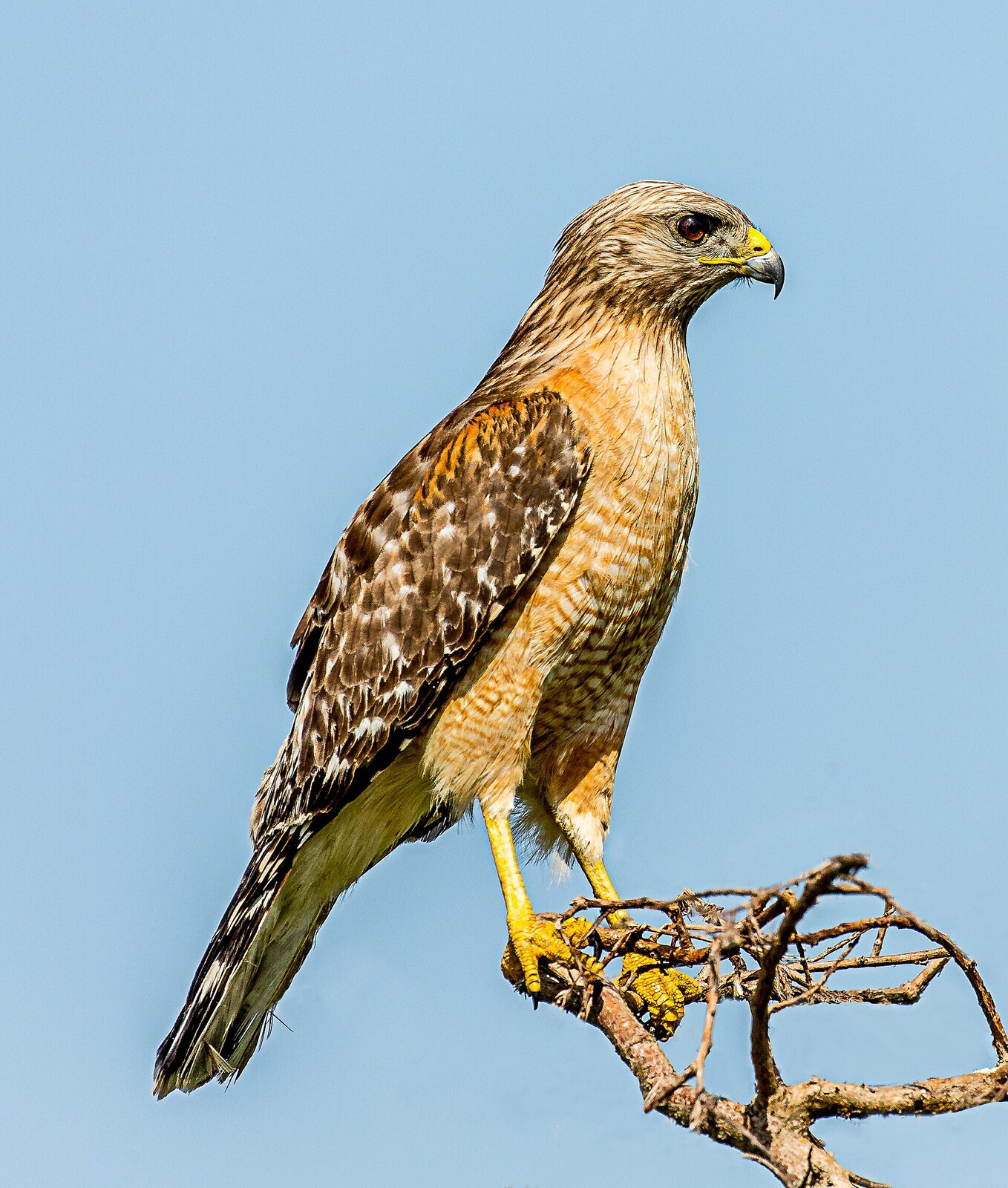
Red-shouldered hawk
Buteo lineatus
A medium-sized buteo of wet bottomland forest, with bold black-and-white wing barring and a loud repeated kee-yer call. More tied to forest interior than the red-tailed hawk, and quicker to call when disturbed.
Status: Secure.
Broad-winged hawk
Buteo platypterus
A small forest buteo that spends summers nesting in plateau hardwood forest, then migrates to South America in fall. Migrating broad-wings form river-following kettles of hundreds of birds over the gorge in mid-September.
Status: Secure (breeding); concentrated fall migrant.
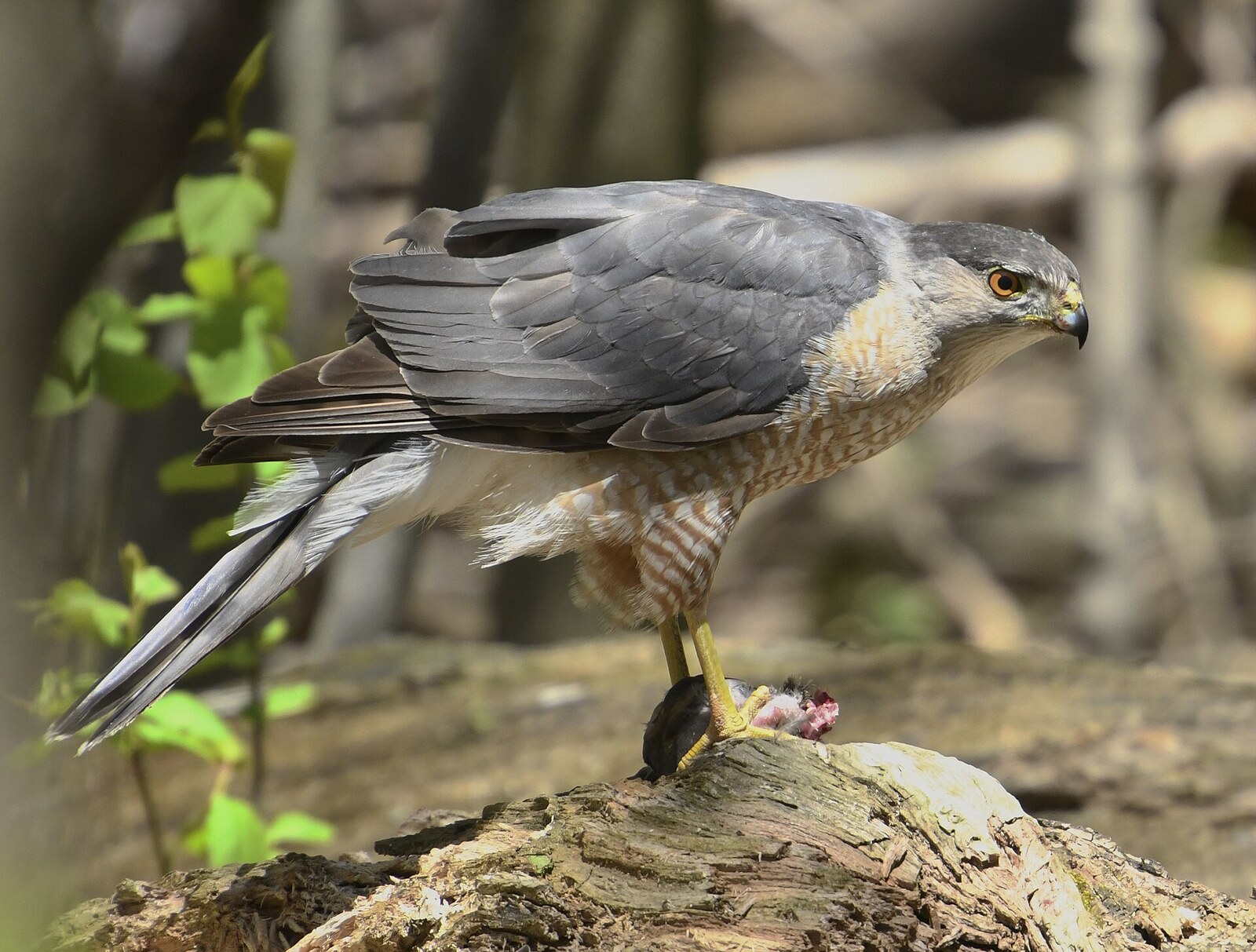
Cooper's hawk
Astur cooperii
A medium-sized accipiter that hunts songbirds in fast pursuits through forest understory. Increasingly common in town and suburban habitats where backyard feeders concentrate prey.
Status: Secure.
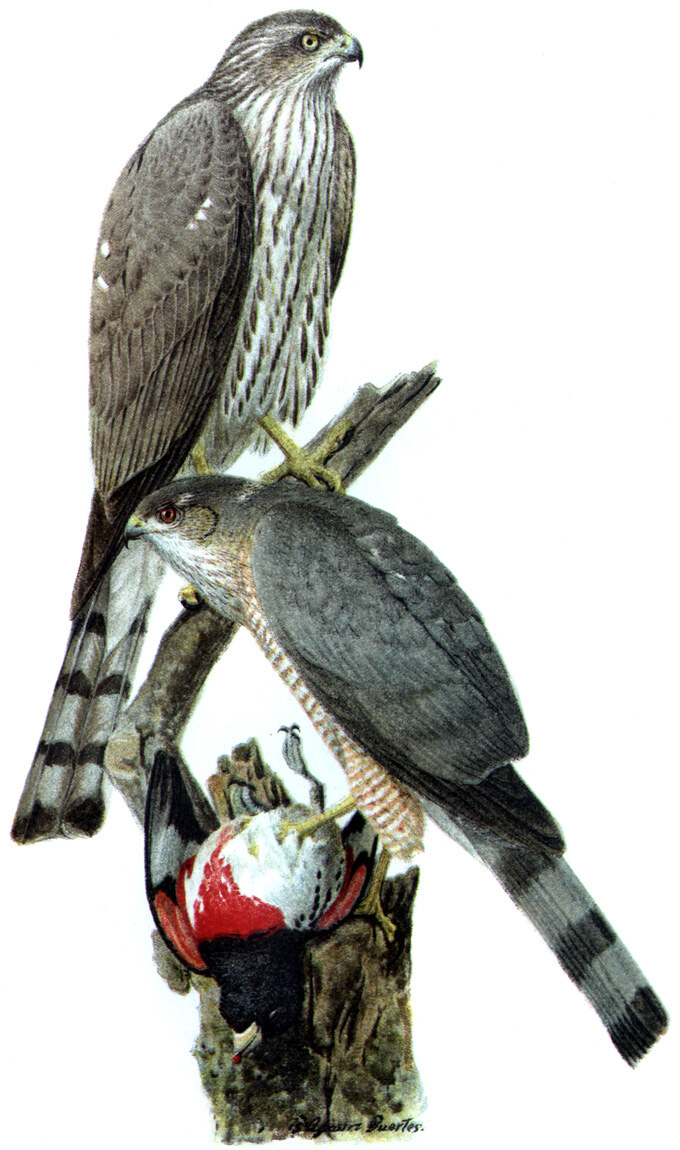
Sharp-shinned hawk
Accipiter striatus
A small accipiter, near-twin of the Cooper's hawk in plumage but with squared rather than rounded tail. A winter visitor to Marion County yards, where it ambushes feeder songbirds.
Status: Secure (mostly winter).
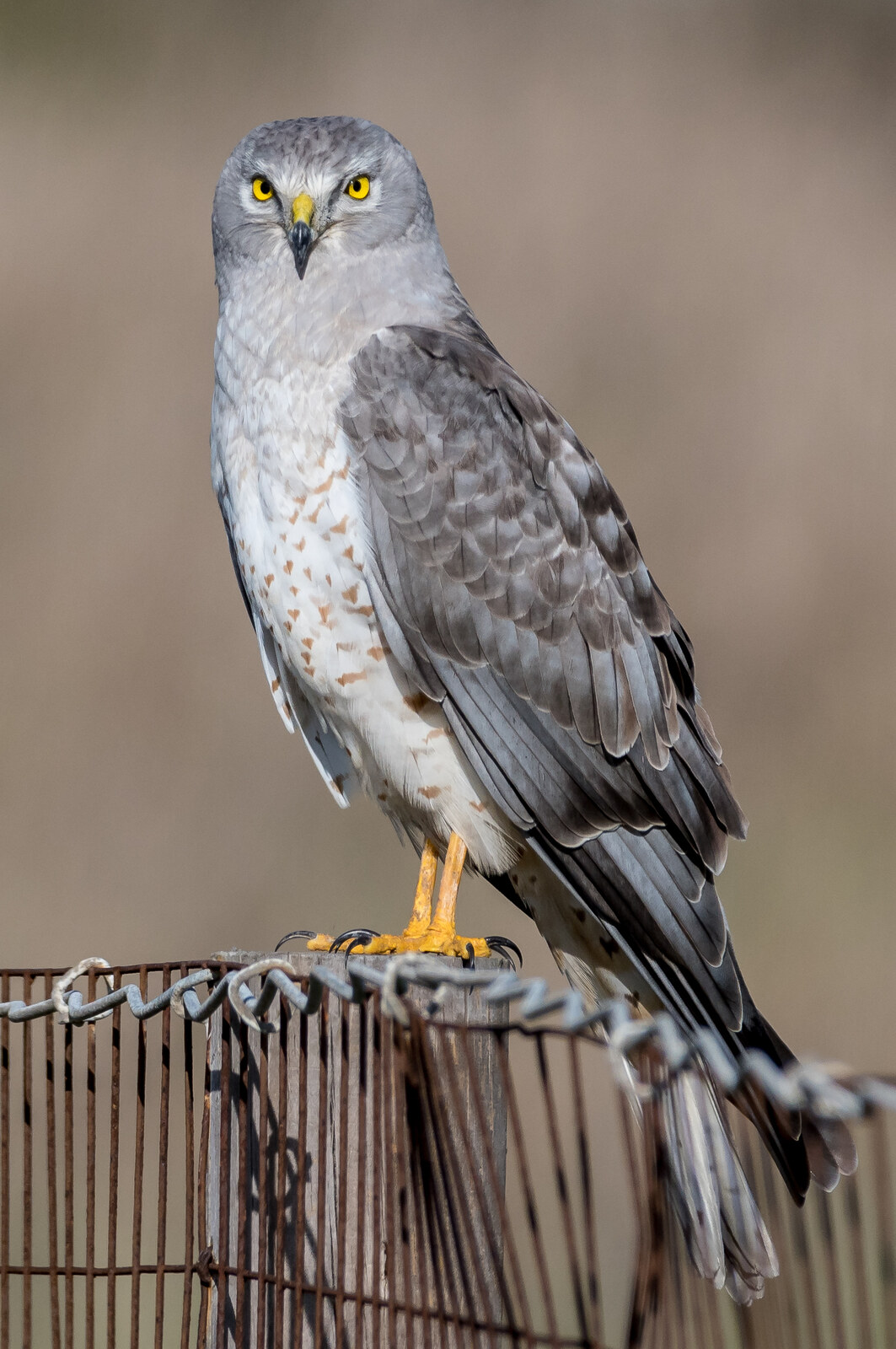
Northern harrier
Circus hudsonius
A long-winged, low-flying raptor of grasslands and farm fields, with a distinctive white rump patch in flight. A winter visitor in Tennessee; declining as grassland and old-field habitat is converted.
Status: Declining; winter resident.
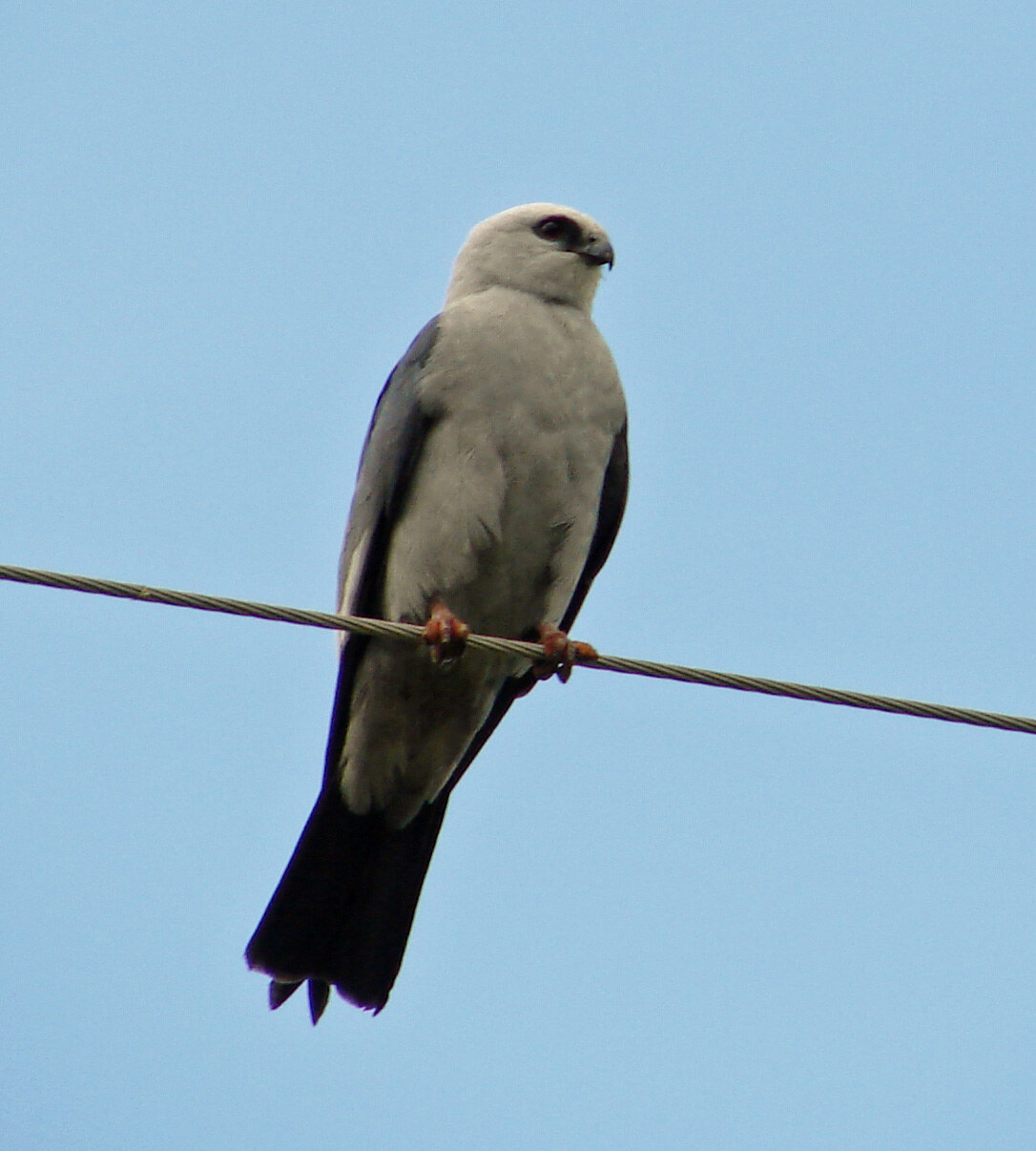
Mississippi kite
Ictinia mississippiensis
A graceful gray kite that catches dragonflies and cicadas on the wing. A range-edge breeder in the Tennessee River corridor and a striking summer sight overhead.
Status: Secure (summer breeder); range-edge.
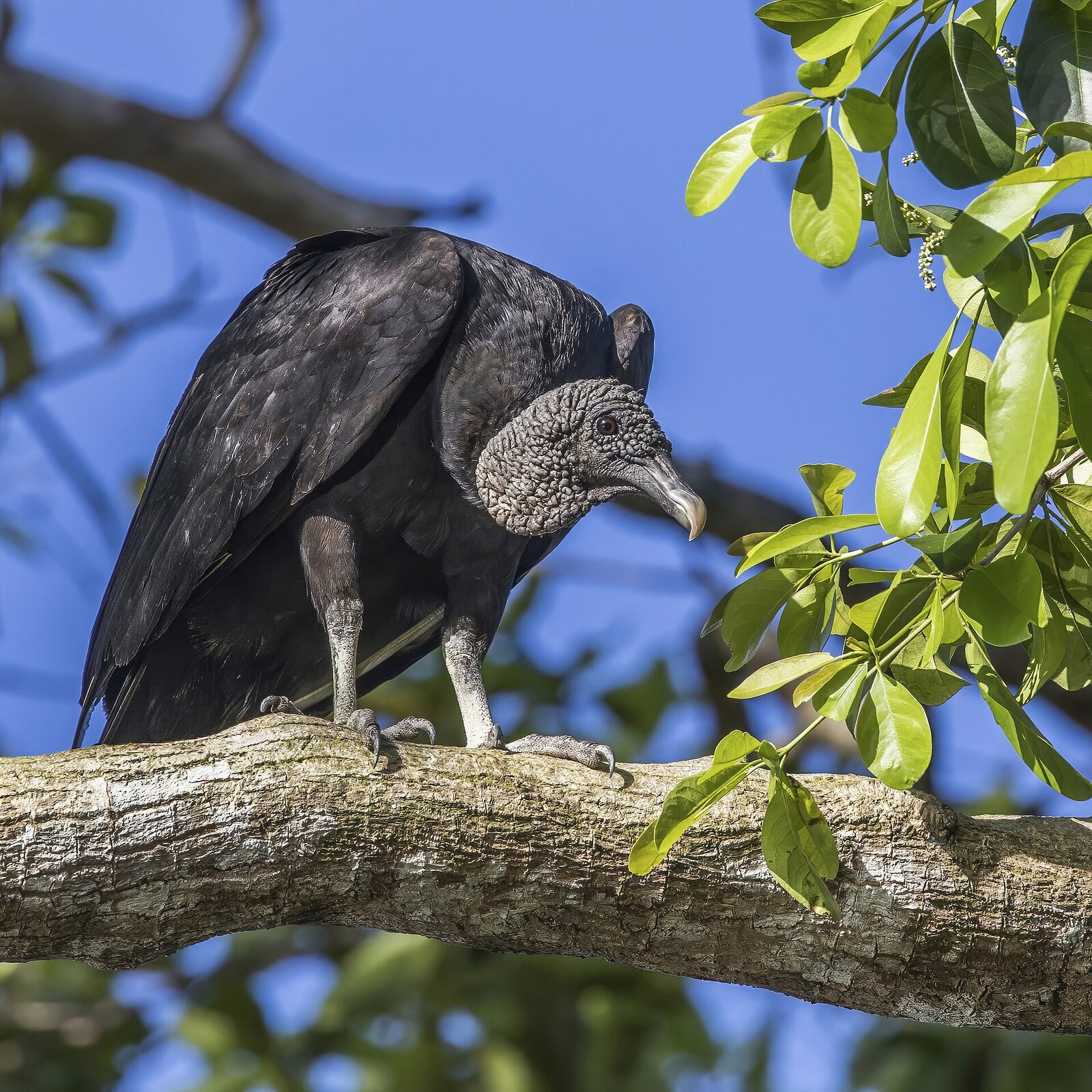
Black vulture
Coragyps atratus
A black-feathered scavenger with a bare gray head, smaller and more compact than the turkey vulture. Range-expanding across the southeast; flocks are now common around Marion roadkill and farmland.
Status: Secure; range-expanding.
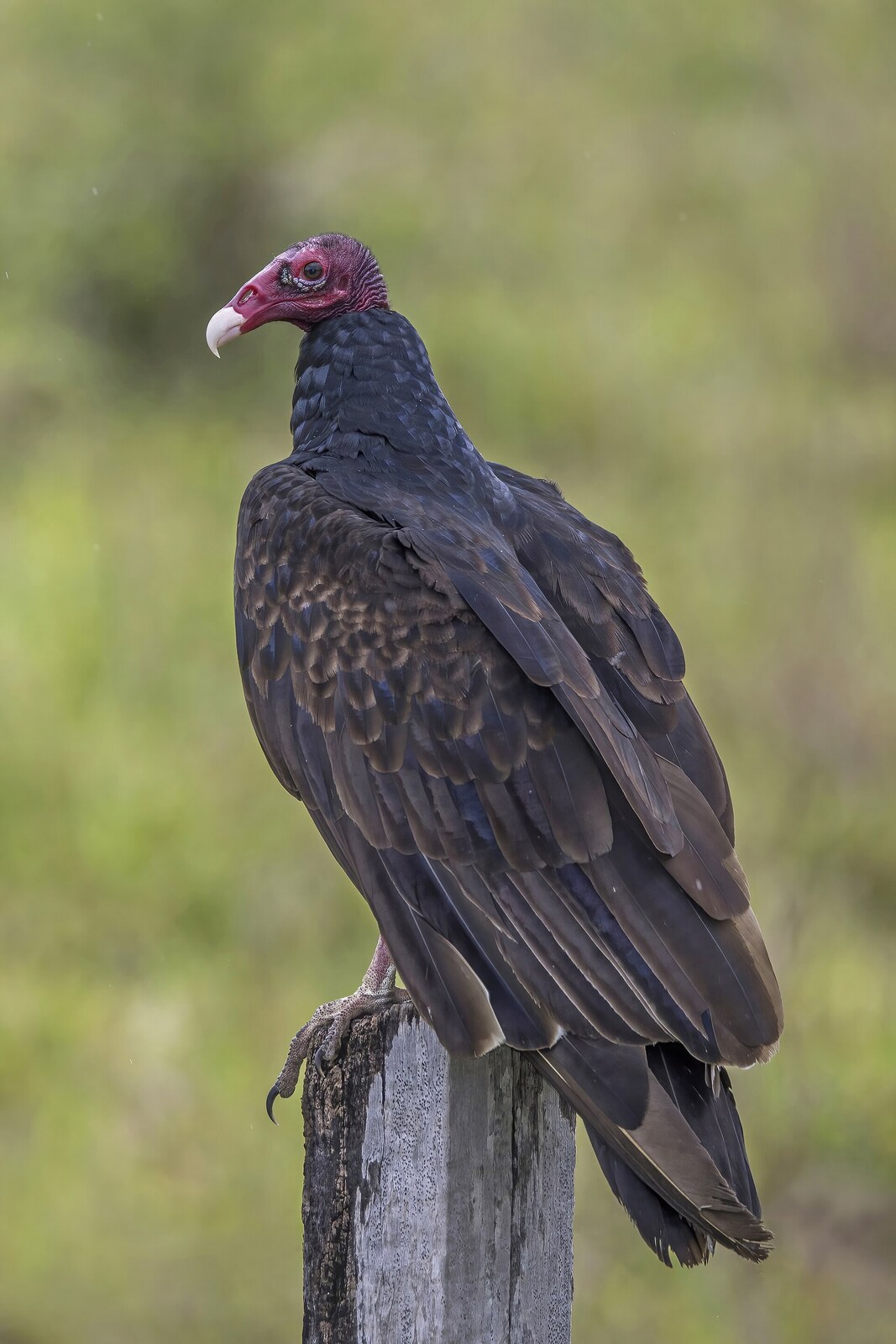
Turkey vulture
Cathartes aura
A red-headed scavenger with a six-foot wingspan that soars on dihedral wings, rocking in the wind. Locates carrion partly by smell, an ability rare among birds. Abundant year-round across Marion ridgetops and bluffs.
Status: Secure; abundant.
Breeding migrants and passage migrants
From mid-April through mid-May, a wave of long-distance migrants arrives in Marion County from wintering grounds in Mexico, Central America, the Caribbean, and South America. Many are forest breeders that hold territory through July and leave by early September. The same forested plateau slopes and gorge ravines that make Marion County good hemlock-and-hickory habitat also make it a stronghold for several globally declining songbirds, including the cerulean warbler, wood thrush, and the cuckoos. A second wave of strictly passage migrants, warblers and thrushes that breed in the boreal forest belt or the high Appalachians, passes through in spring on the way north and again in fall on the way south, lingering only a few days at a time but stacking the early-May warbler week into one of the best birding stretches of the year.
Cerulean warbler at Prentice Cooper
The cerulean warbler has declined about 70 percent continent-wide since 1966, driven by fragmentation of mature deciduous forest on its breeding grounds and by habitat loss on its South American wintering grounds. Tennessee River Gorge Trust banding studies on the gorge slopes have documented cerulean use of those forests during the breeding season, making Marion County's share of the Gorge a meaningful piece of the species' southern Appalachian range. Prentice Cooper Wildlife Management Area, just outside the county, is the regional stronghold; cerulean songs in May carry across plateau-rim ravines from canopy throughout the Gorge corridor.
Cuckoos, nightjars, hummingbird, and swift
Marion's three nightjars (whip-poor-will, chuck-will's-widow, common nighthawk) all sing into the dusk and night across plateau ridges from May through July. The yellow-billed cuckoo is the more commonly encountered of the two cuckoos and feeds heavily on tent caterpillars; the ruby-throated hummingbird is the only common breeding hummingbird in the county.
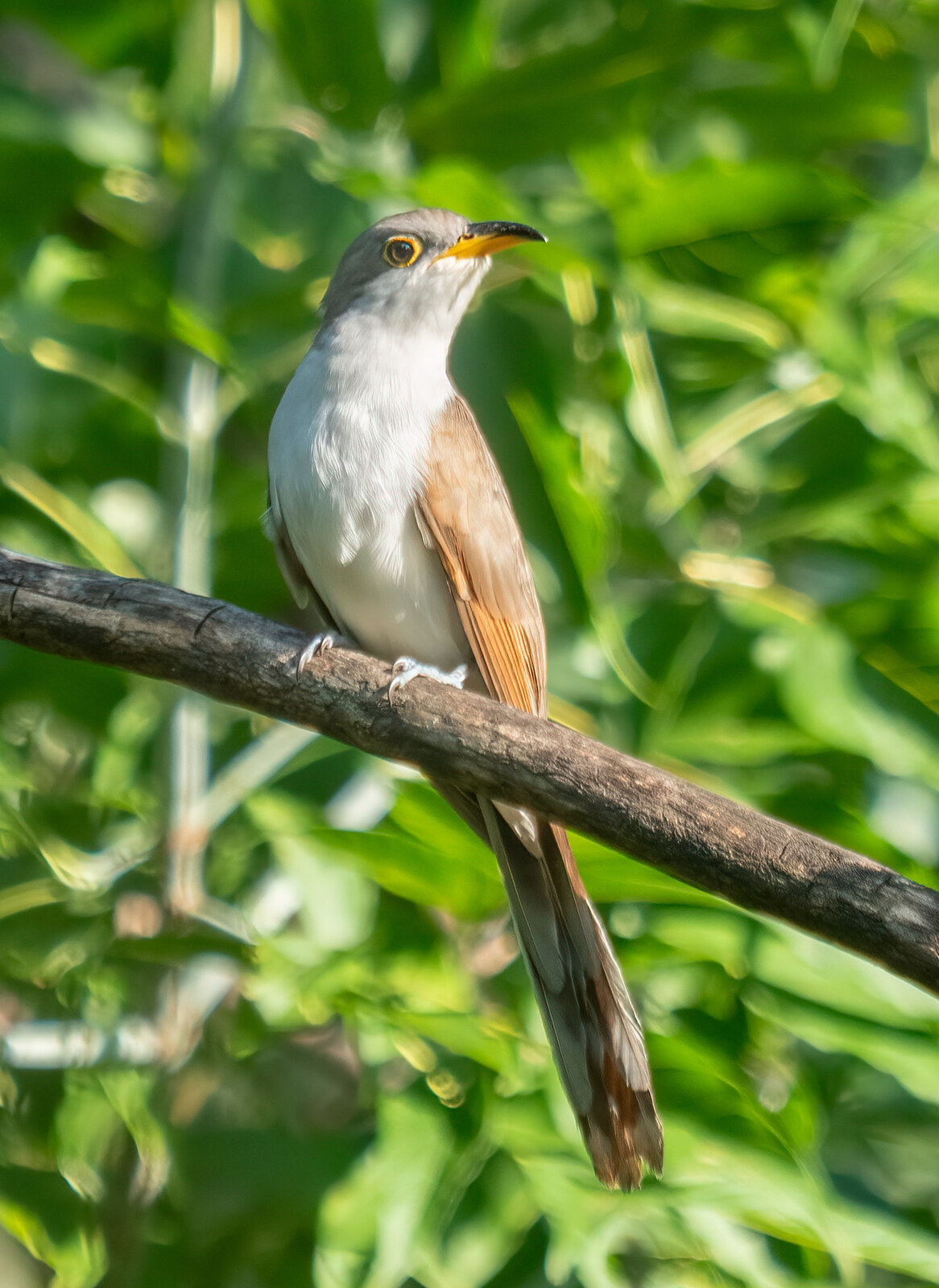
Yellow-billed cuckoo
Coccyzus americanus
A long-tailed forest cuckoo that arrives in May and feeds heavily on tent caterpillars. Locally called the rain crow for the belief that it calls more before rain; populations have declined across the southeast.
Status: Declining.
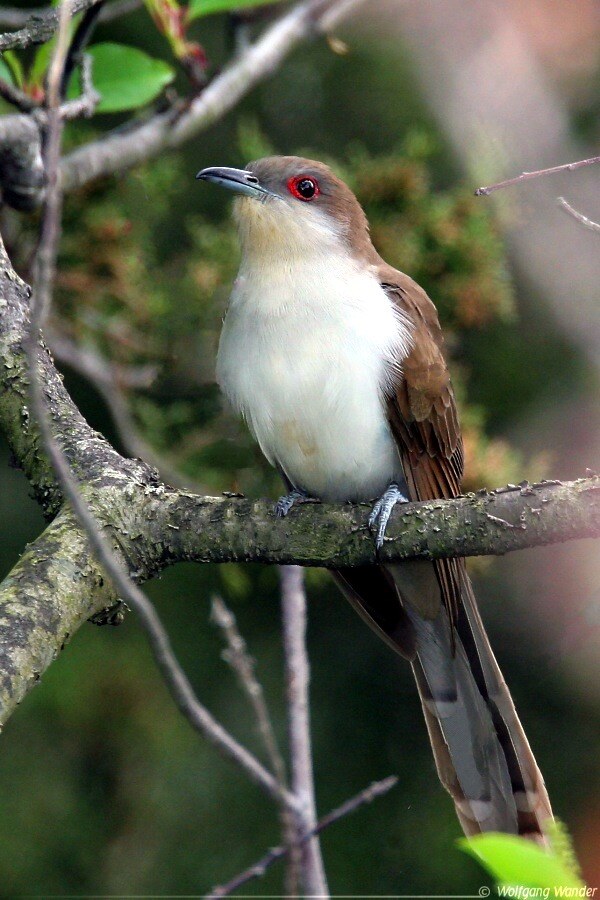
Black-billed cuckoo
Coccyzus erythropthalmus
An uncommon cousin of the yellow-billed cuckoo, with a black bill and a redder ring around the eye. Less reliably present in Marion County than the yellow-billed; populations have collapsed across the species' eastern range.
Status: Declining.
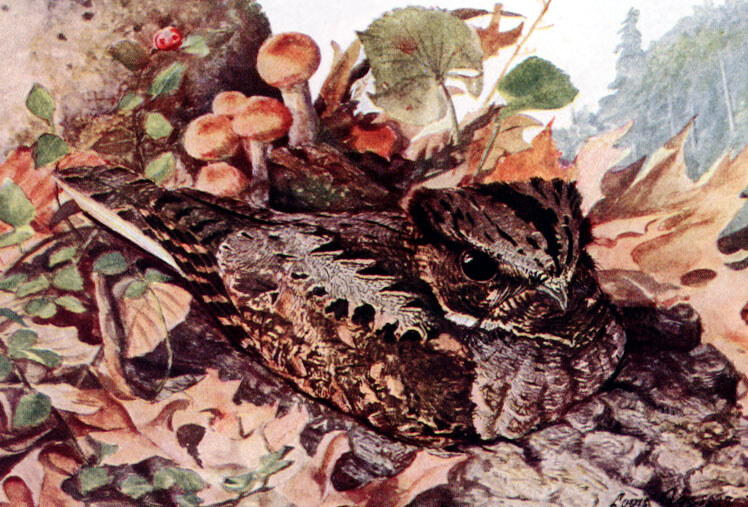
Eastern whip-poor-will
Antrostomus vociferus
A nightjar named for its unceasing three-syllable call given on warm spring and summer nights. Calls from plateau ridges at dusk; populations have declined across the southeast as forest structure has homogenized.
Status: Declining.
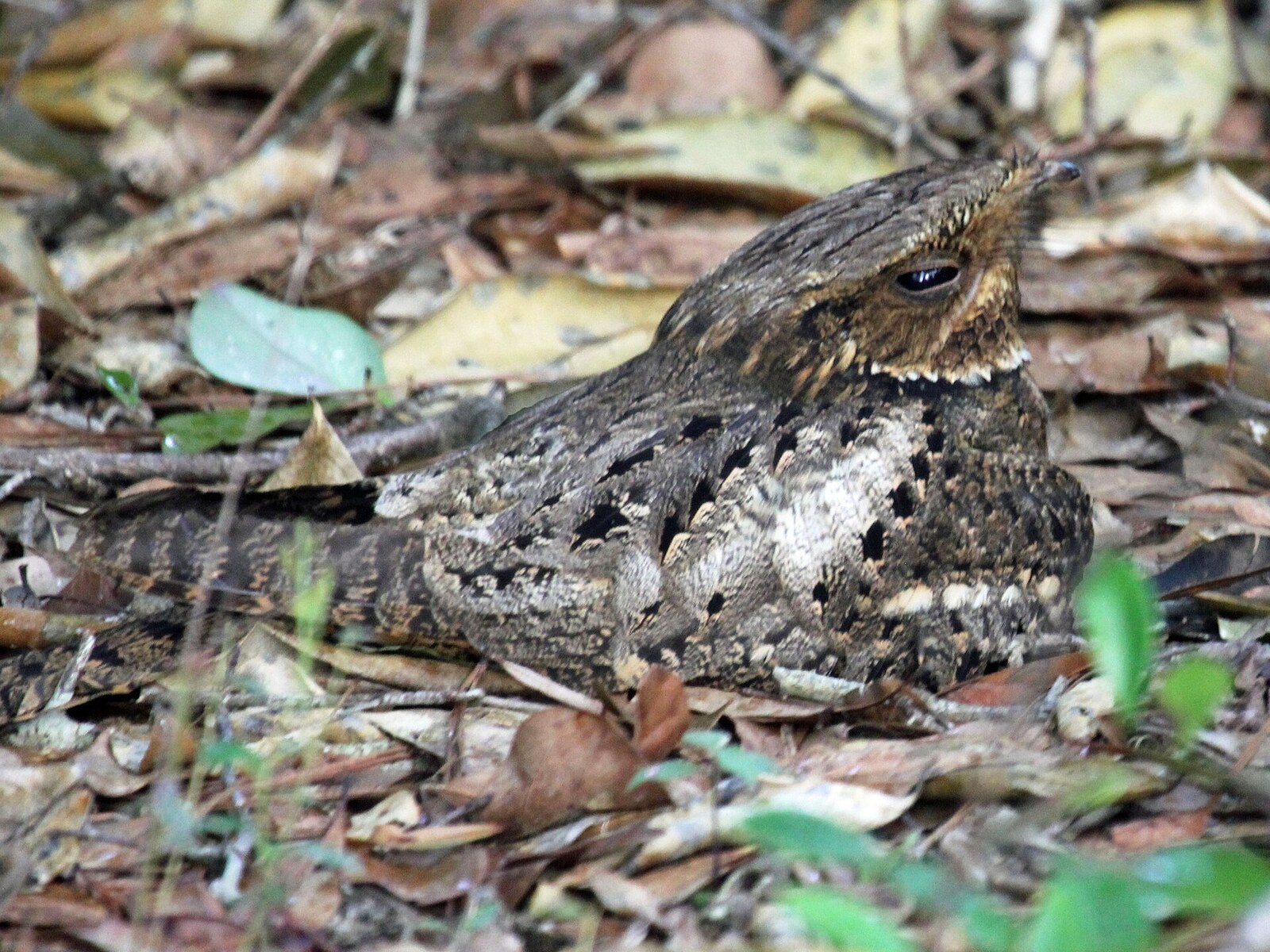
Chuck-will's-widow
Antrostomus carolinensis
A larger southern cousin of the whip-poor-will with a slower three-syllable call. Found on plateau ridges and in valley pine-hardwood; like other aerial insectivores, has lost ground in recent decades.
Status: Declining.
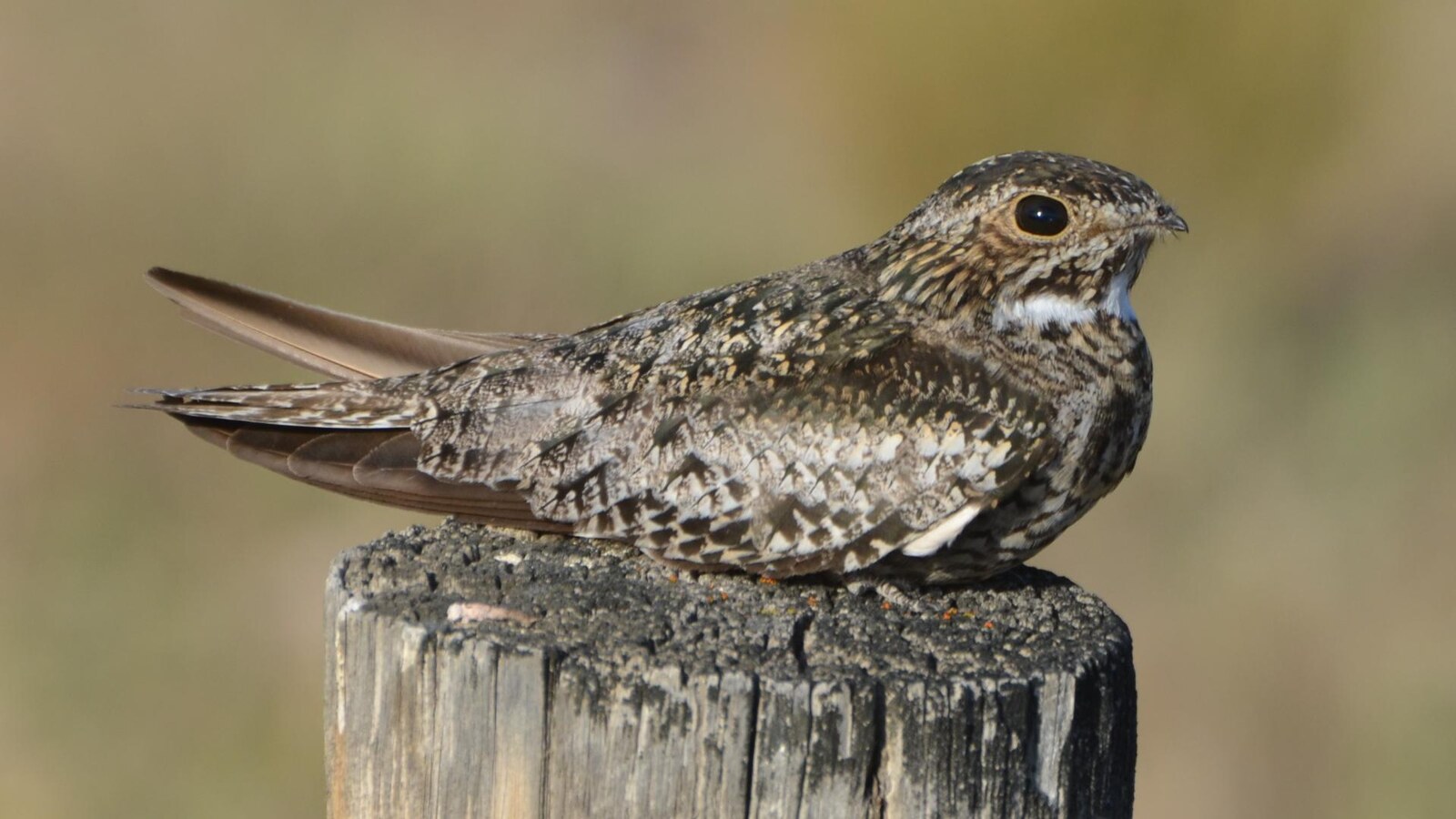
Common nighthawk
Chordeiles minor
A long-winged aerial insectivore that hunts moths and flying ants over towns and open country at dusk. The nasal peent call and white wing-bar flashes are signature summer evening sights.
Status: Declining.
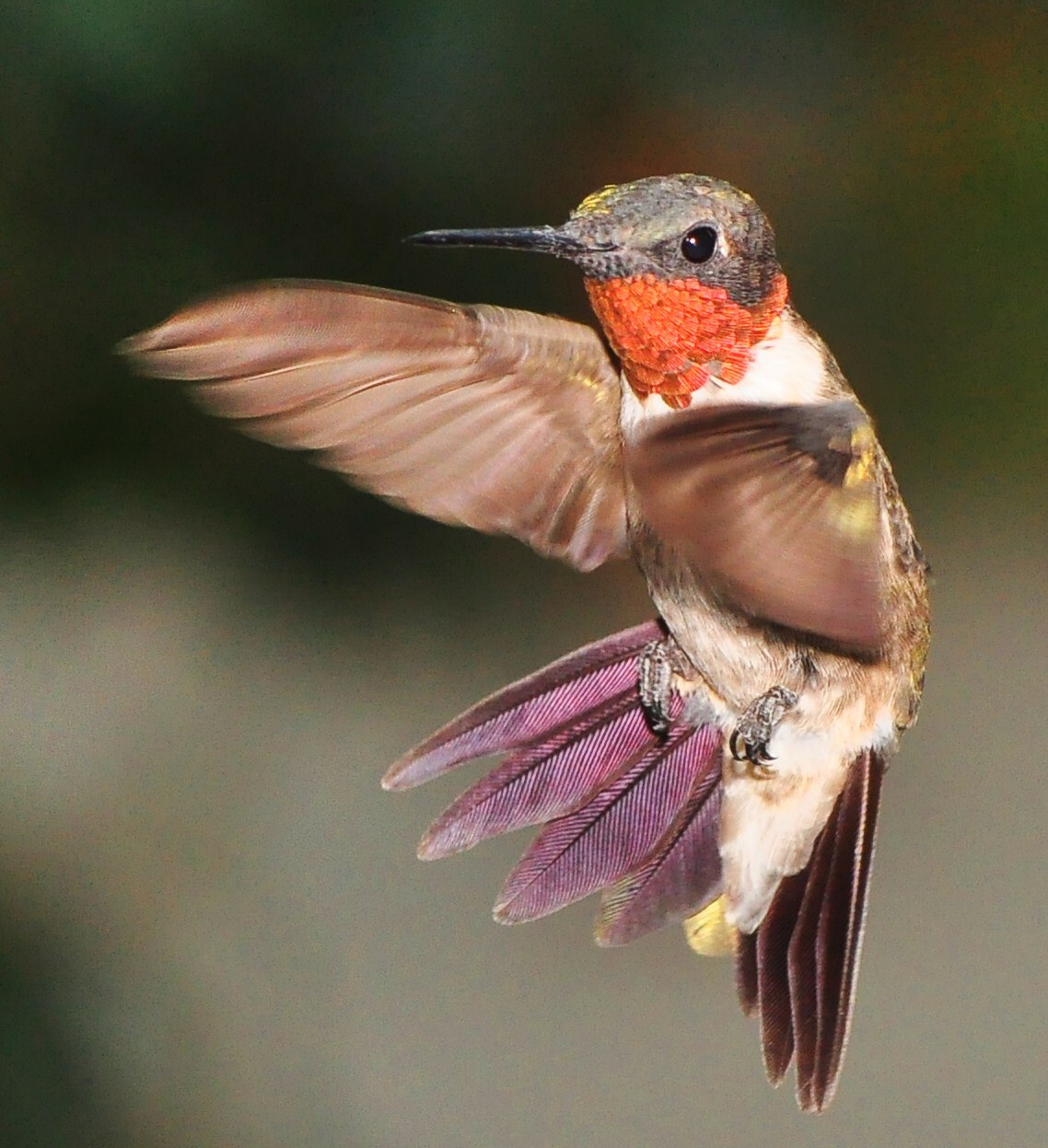
Ruby-throated hummingbird
Archilochus colubris
The county's only common breeding hummingbird, weighing about an eighth of an ounce. Males show iridescent ruby gorgets in good light; arrives in early April and leaves by late September on a non-stop crossing of the Gulf of Mexico.
Status: Secure.
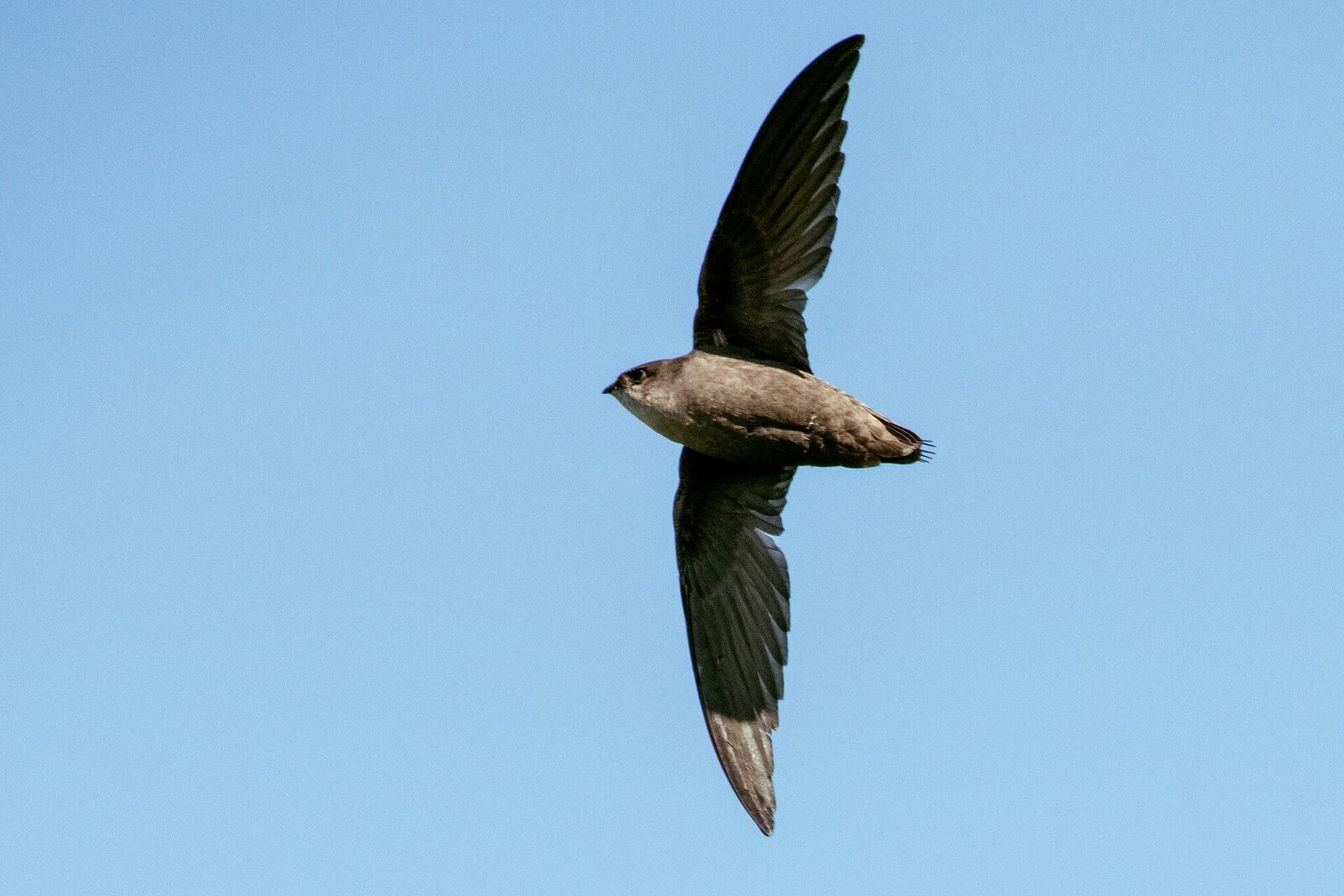
Chimney swift
Chaetura pelagica
A cigar-shaped aerial insectivore with stiff, swept-back wings, never seen perched. Roosts and nests in chimneys and hollow trees; populations have declined sharply as old chimneys are capped or torn down.
Status: Declining.
Flycatchers and vireos
Five tyrant flycatchers and three vireos breed in Marion County hardwoods and forest edges. The red-eyed vireo is among the most abundant breeding songbirds in Tennessee deciduous forest, though it sings high in the canopy and is rarely seen well; the eastern wood-pewee's plaintive pee-a-wee call is one of the signature summer-afternoon sounds of plateau woods.
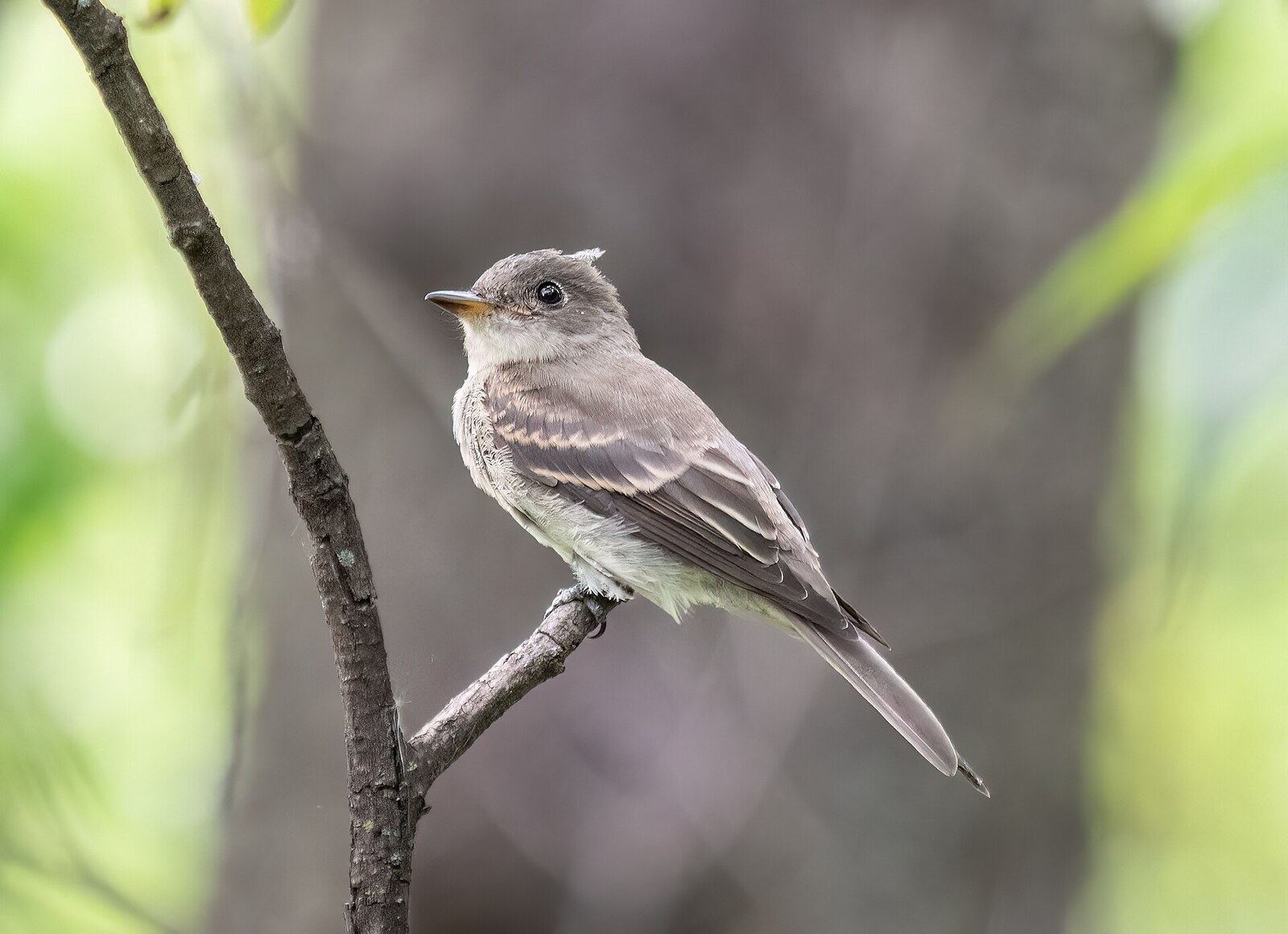
Eastern wood-pewee
Contopus virens
A small forest flycatcher whose plaintive pee-a-wee song carries through summer woods. Sits on dead branches in the canopy and sallies out to catch passing insects.
Status: Secure.
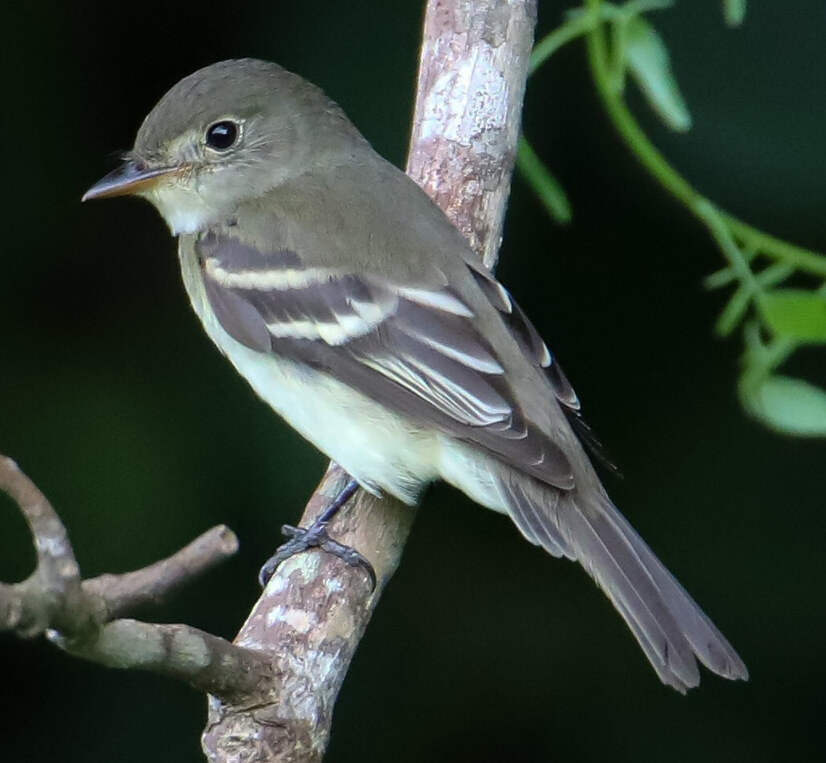
Acadian flycatcher
Empidonax virescens
A small Empidonax flycatcher of mature hardwood forest with a sharp pizza call. Builds a hammock-style nest suspended from a horizontal forked branch over a stream or shaded slope.
Status: Secure.
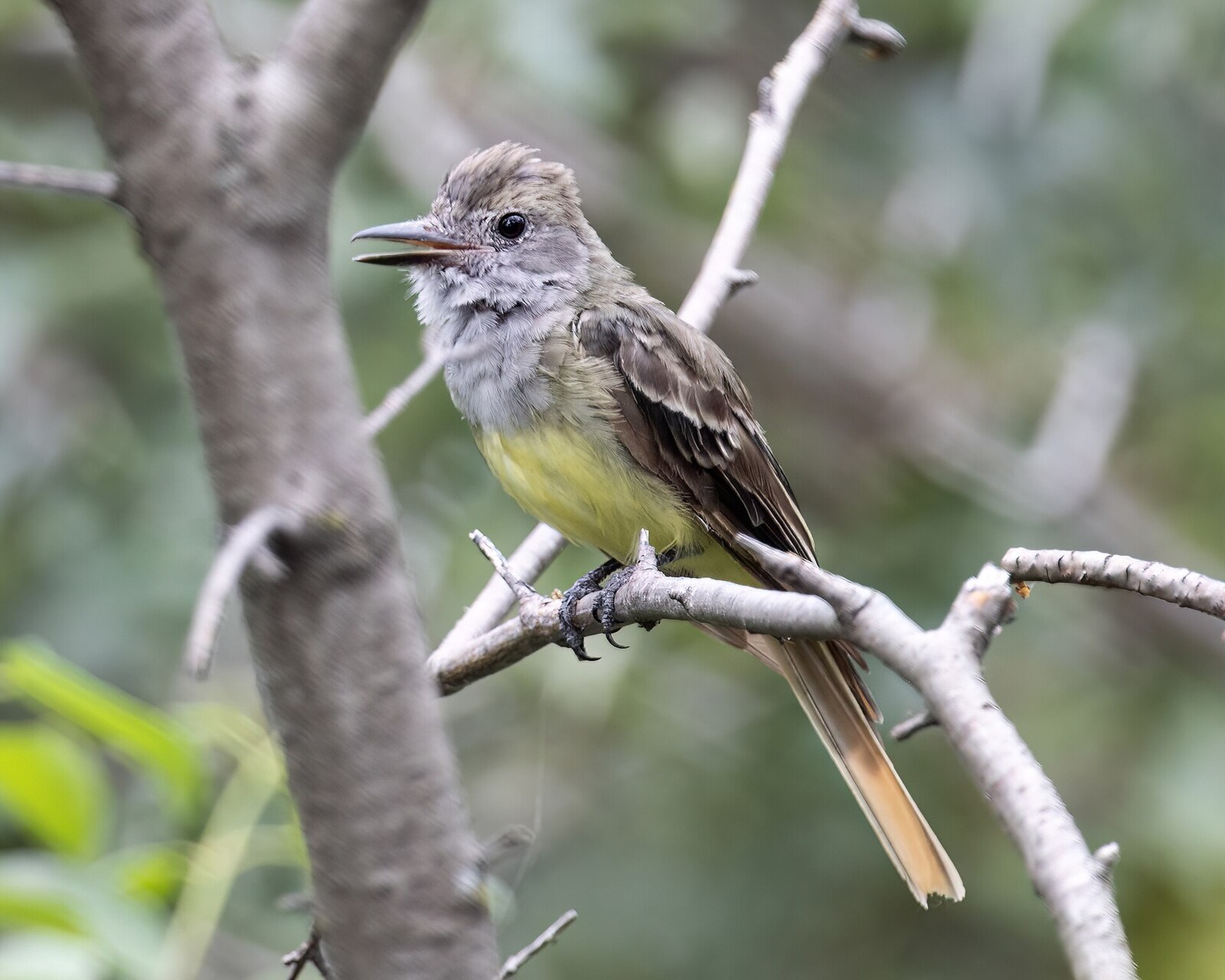
Great crested flycatcher
Myiarchus crinitus
A larger crested flycatcher with rusty wings and tail and a yellow belly. Cavity-nests, often weaving a shed snake skin into the nest lining; the loud wheep call carries through canopy gaps.
Status: Secure.
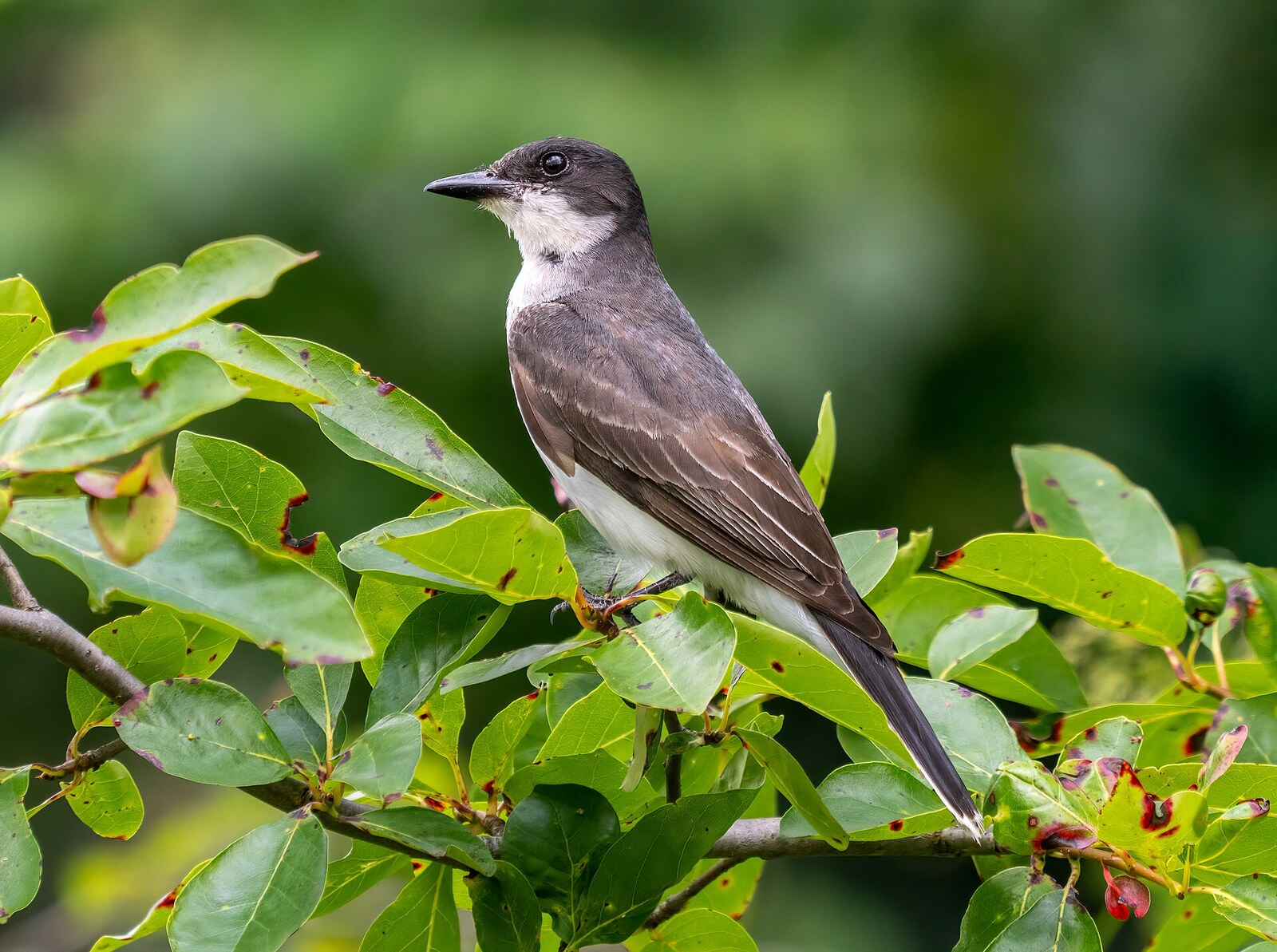
Eastern kingbird
Tyrannus tyrannus
A black-and-white tyrant flycatcher with a white-tipped tail, perched conspicuously on fences and tall stems in open country. Aggressive on territory, attacking crows and hawks several times its size.
Status: Secure.
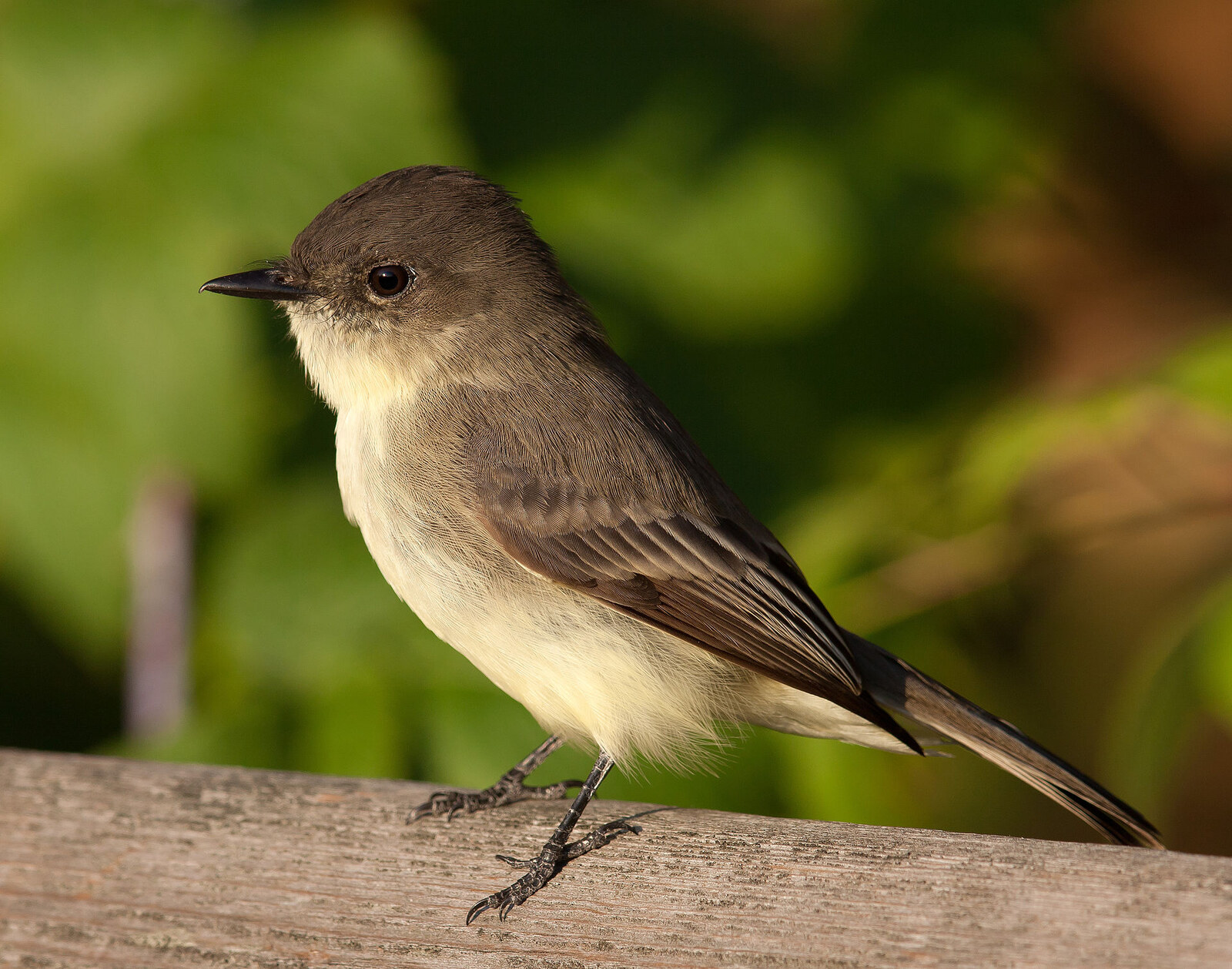
Eastern phoebe
Sayornis phoebe
A drab brown flycatcher that pumps its tail downward when perched. One of the earliest migrants to return in spring, often before mid-March; nests under bridges and barn eaves.
Status: Secure (also winter).
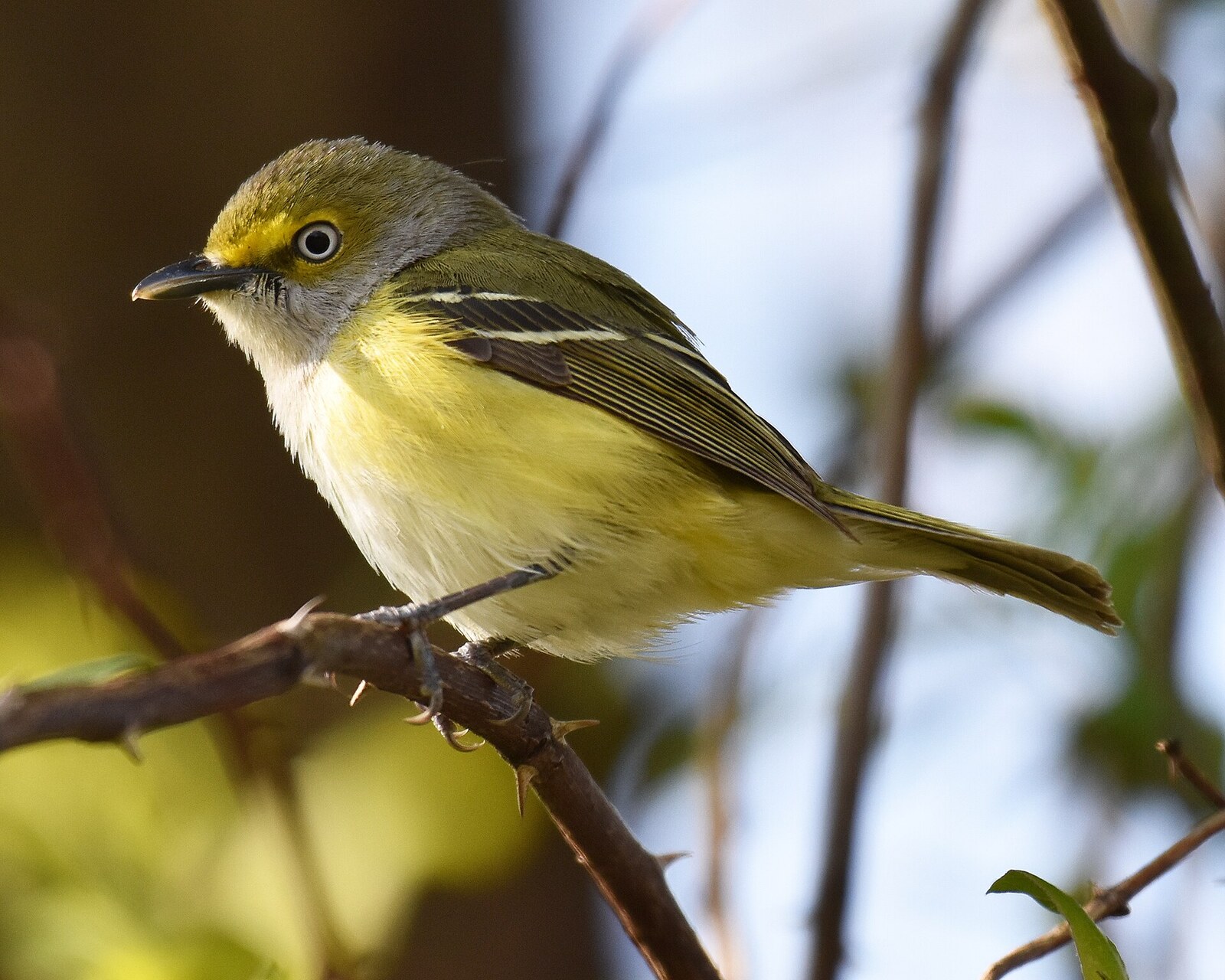
White-eyed vireo
Vireo griseus
A small olive vireo of brushy edges and old fields with a startling white eye and a fast jumbled song. Common breeder in second-growth across the county.
Status: Secure.
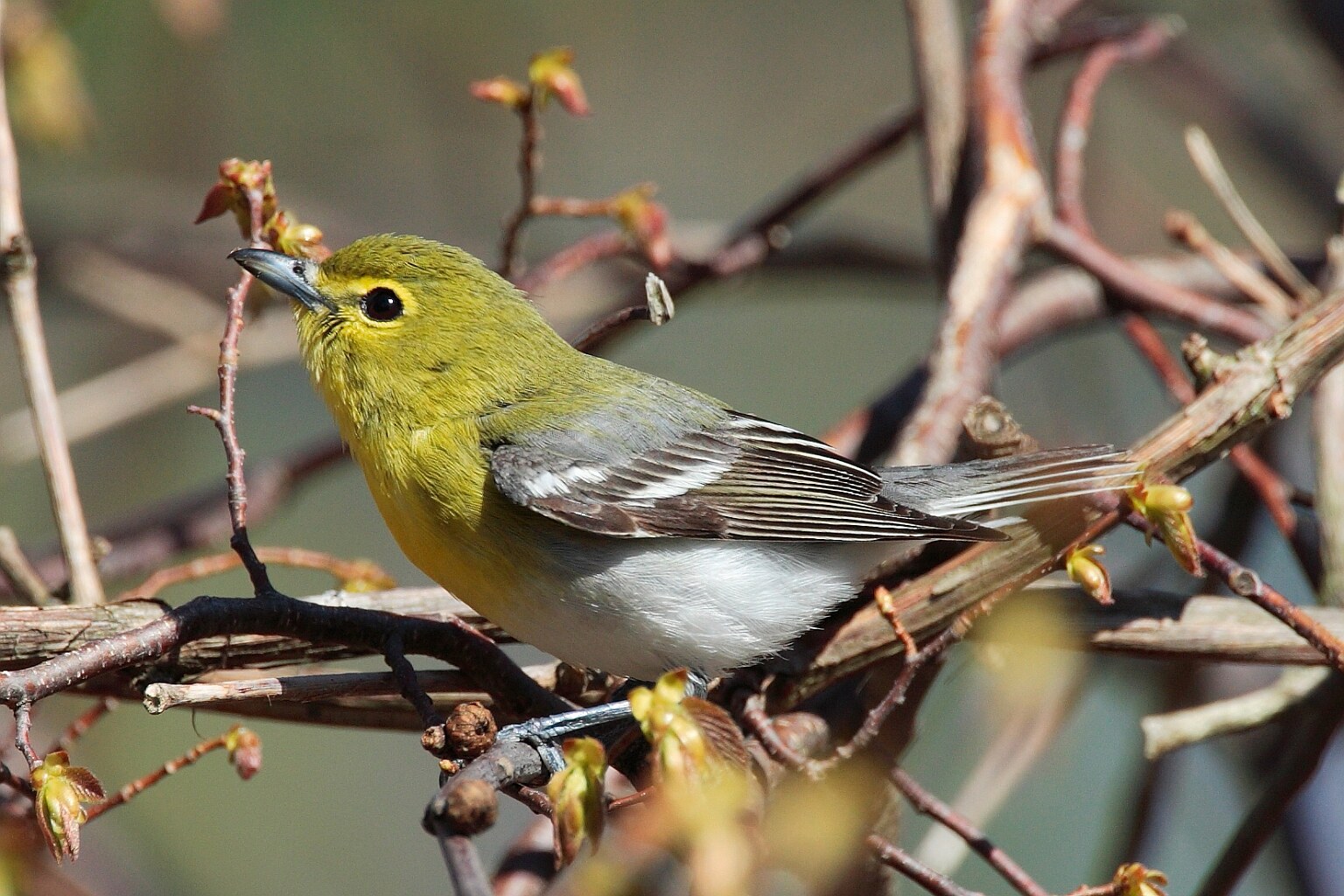
Yellow-throated vireo
Vireo flavifrons
A bright lemon-throated vireo with white wing bars and yellow spectacles. Breeds in mature deciduous forest with tall sycamores and oaks along stream corridors.
Status: Secure.
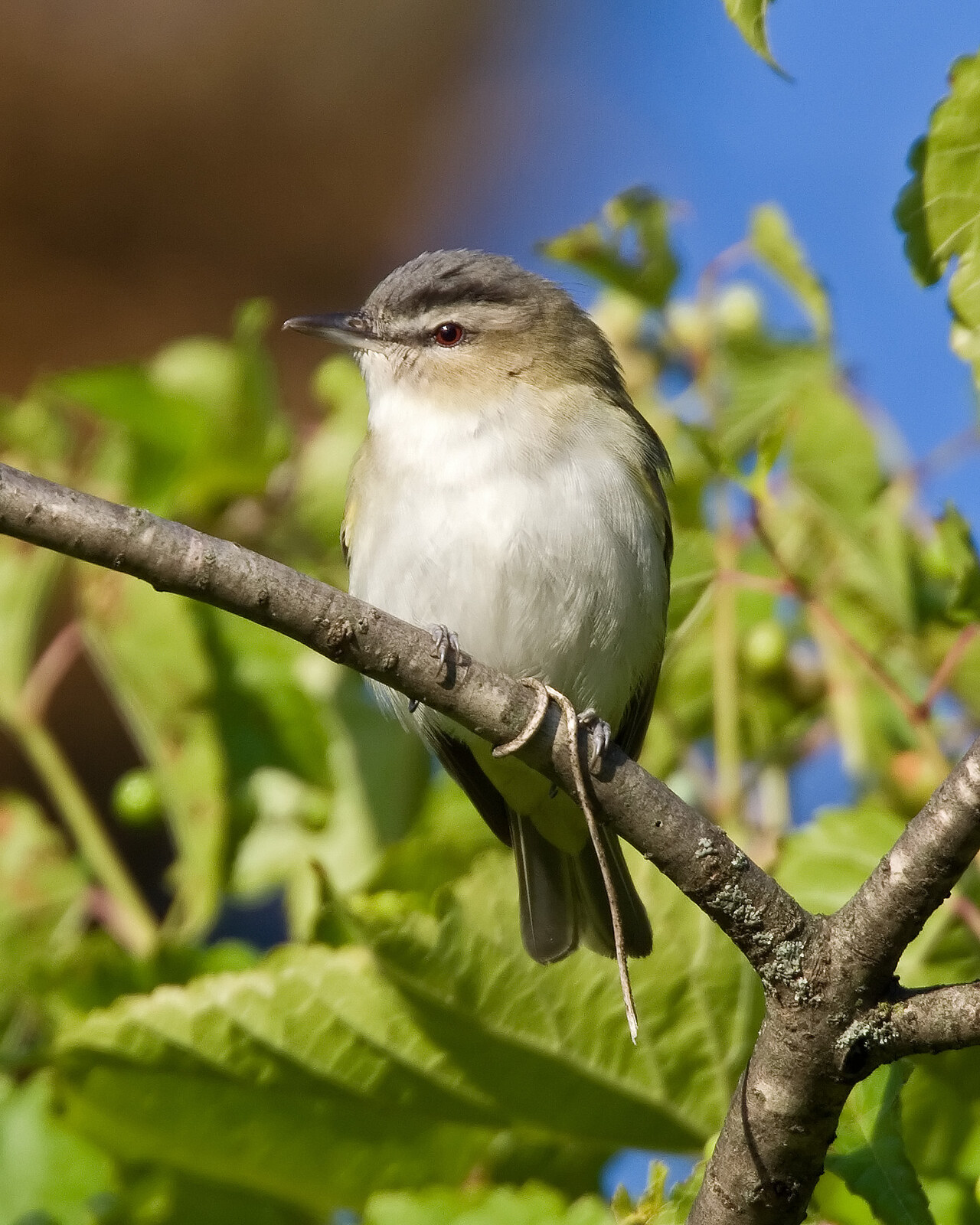
Red-eyed vireo
Vireo olivaceus
Possibly the most abundant breeding songbird in Tennessee deciduous forest, though rarely seen because it stays high in the canopy. Sings short slurred phrases continuously through the heat of summer days when other birds have gone quiet.
Status: Secure; abundant breeder.
Swallows and martin
Six swallows breed or pass through Marion County. The cliff and bank swallows nest on the Hales Bar and Nickajack dam structures and on river-cutbank colonies; barn swallows take farmsteads and bridges; tree swallows take bluebird boxes; the purple martin nests almost exclusively in human-supplied gourds and martin houses across Tennessee farmland.
Tree swallow
Tachycineta bicolor
A glittering blue-green swallow that nests in tree cavities and bluebird boxes. Migrates north earlier than most swallows because it can switch to bayberries when insect prey is scarce.
Status: Secure.
Northern rough-winged swallow
Stelgidopteryx serripennis
A plain brown-bellied swallow that nests in dirt-bank burrows along Tennessee River bluffs and creek cutbanks. Less colonial than the bank swallow and less acrobatic than the cliff swallow.
Status: Secure.
Bank swallow
Riparia riparia
A small brown swallow with a clean white belly broken by a dark breast band. Nests colonially in vertical riverbank cutbanks; Tennessee River bluff erosion exposes new nesting habitat each year.
Status: Secure on river cutbanks.
Cliff swallow
Petrochelidon pyrrhonota
A square-tailed swallow that builds gourd-shaped mud nests in dense colonies on bridge underpasses and dam structures. Hales Bar and Nickajack support large colonies under the dam structures.
Status: Secure; nests on dams and bridges.
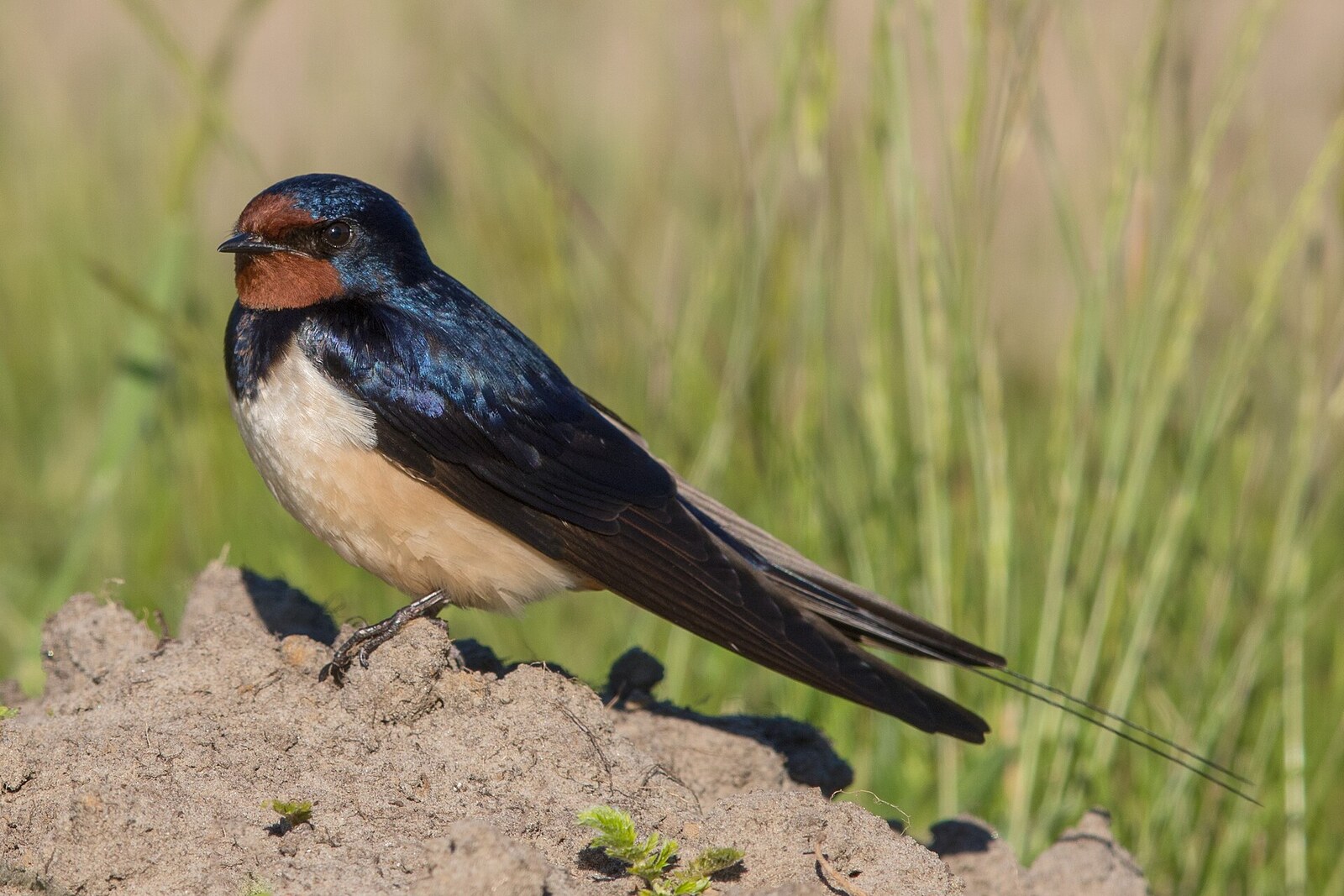
Barn swallow
Hirundo rustica
The familiar long-forked-tailed swallow of farmsteads and bridges, building open mud-cup nests inside barns and under bridge decks. Hunts insects in low banking flight over fields and ponds.
Status: Secure.
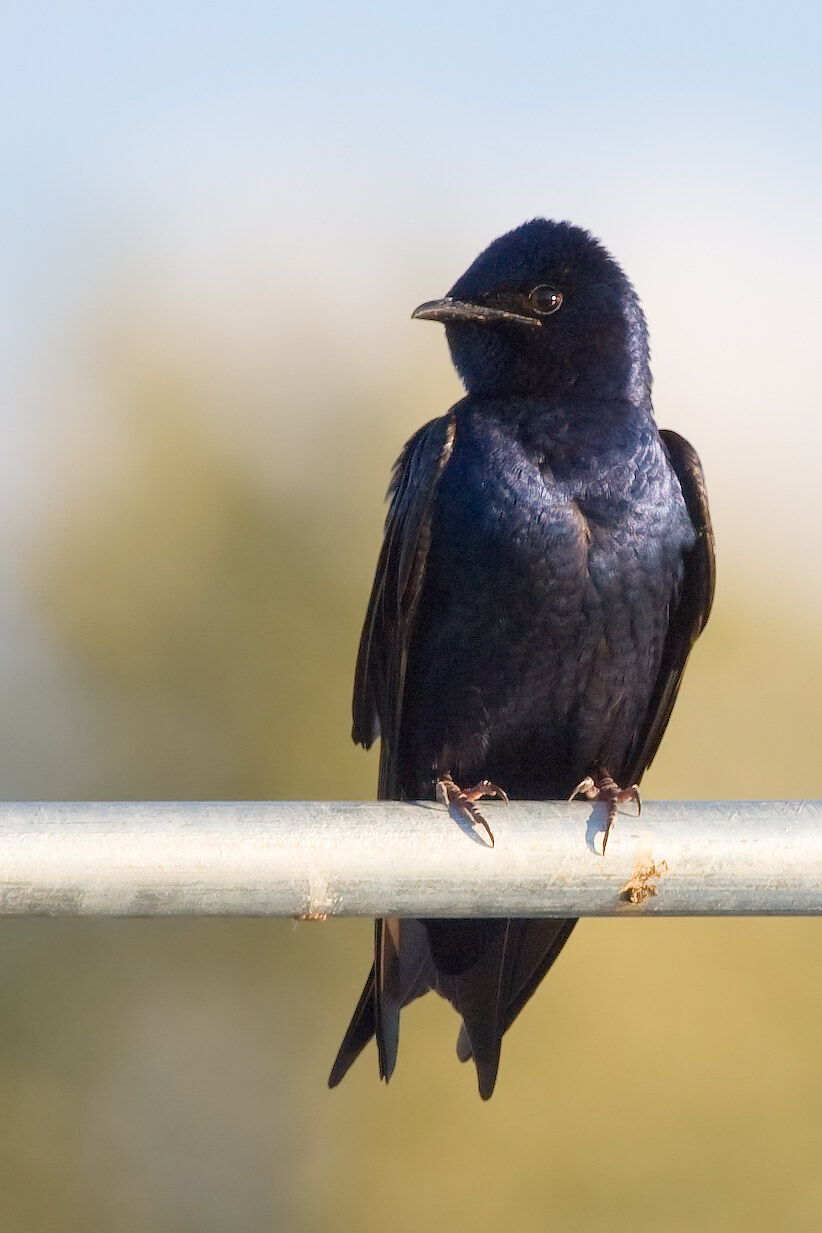
Purple martin
Progne subis
The largest North American swallow, glossy purple-black in adult males. Eastern populations now nest almost exclusively in human-supplied martin houses and gourd racks; landlords across Marion farmland keep colonies going each year.
Status: Secure (in martin houses).
Thrushes, gnatcatchers, wrens, and catbird
The wood thrush is the quintessential breeding-migrant thrush of Marion forests: a flutelike dawn-and-dusk singer that has declined more than 60 percent since 1970. The blue-gray gnatcatcher, house wren, and gray catbird share understory and yard habitats; the catbird's mewing call gives the species its name.
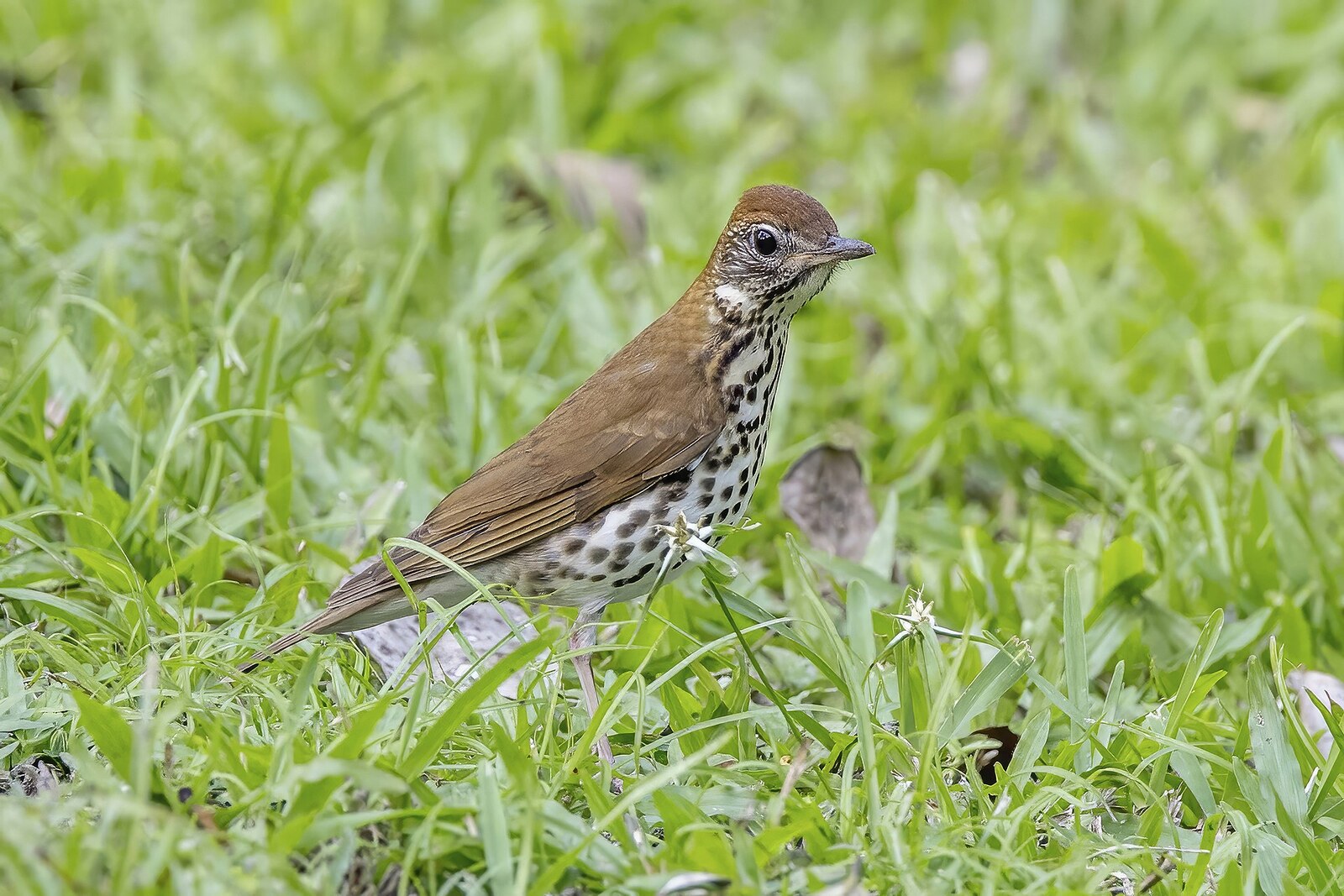
Wood thrush
Hylocichla mustelina
Cinnamon above with a white breast heavily spotted black, the wood thrush is the quintessential eastern hardwood-forest songbird. Its three-part flutelike song at dawn and dusk through May, June, and July is one of the signature sounds of the plateau; populations have declined more than 60 percent since 1970.
Status: Declining; TWRA Species of Greatest Conservation Need.
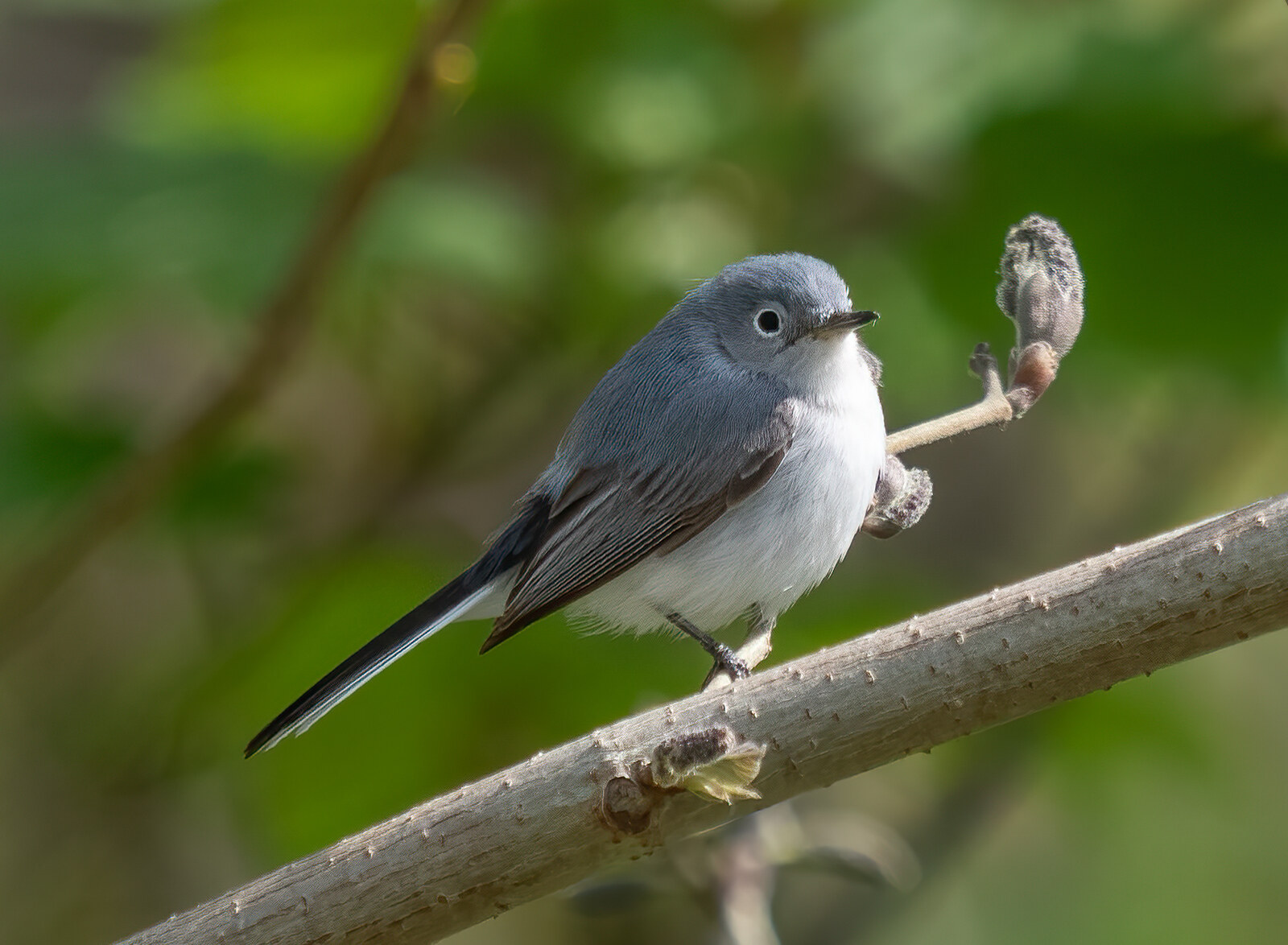
Blue-gray gnatcatcher
Polioptila caerulea
A tiny long-tailed insectivore of forest canopy, blue-gray above and white below with a thin white eye-ring. Common breeder in mixed and deciduous forest across the county.
Status: Secure.
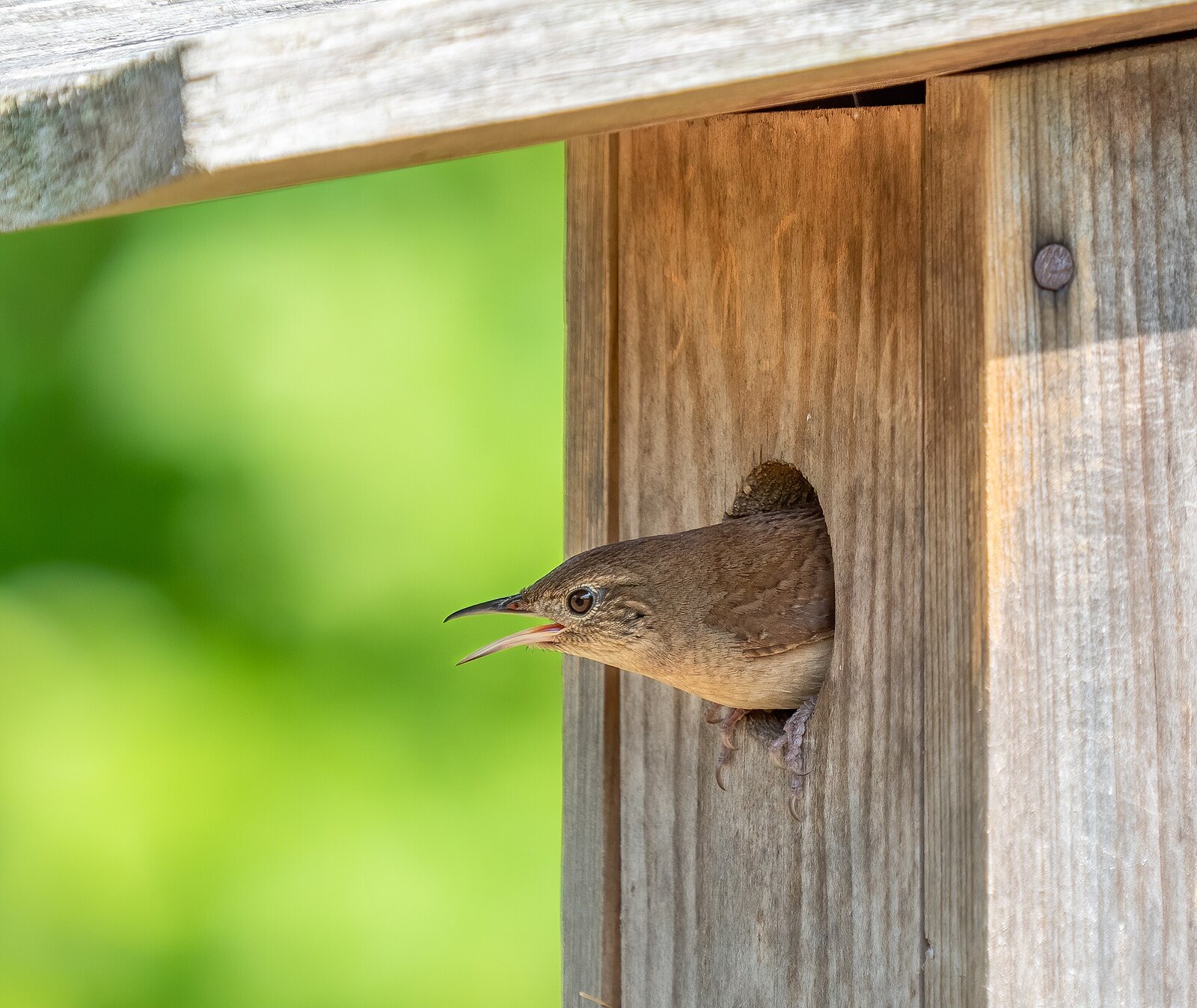
House wren
Troglodytes aedon
A small plain-brown wren that nests aggressively in cavities, sometimes evicting bluebirds and chickadees from boxes. Sings a long bubbling song through summer.
Status: Secure.
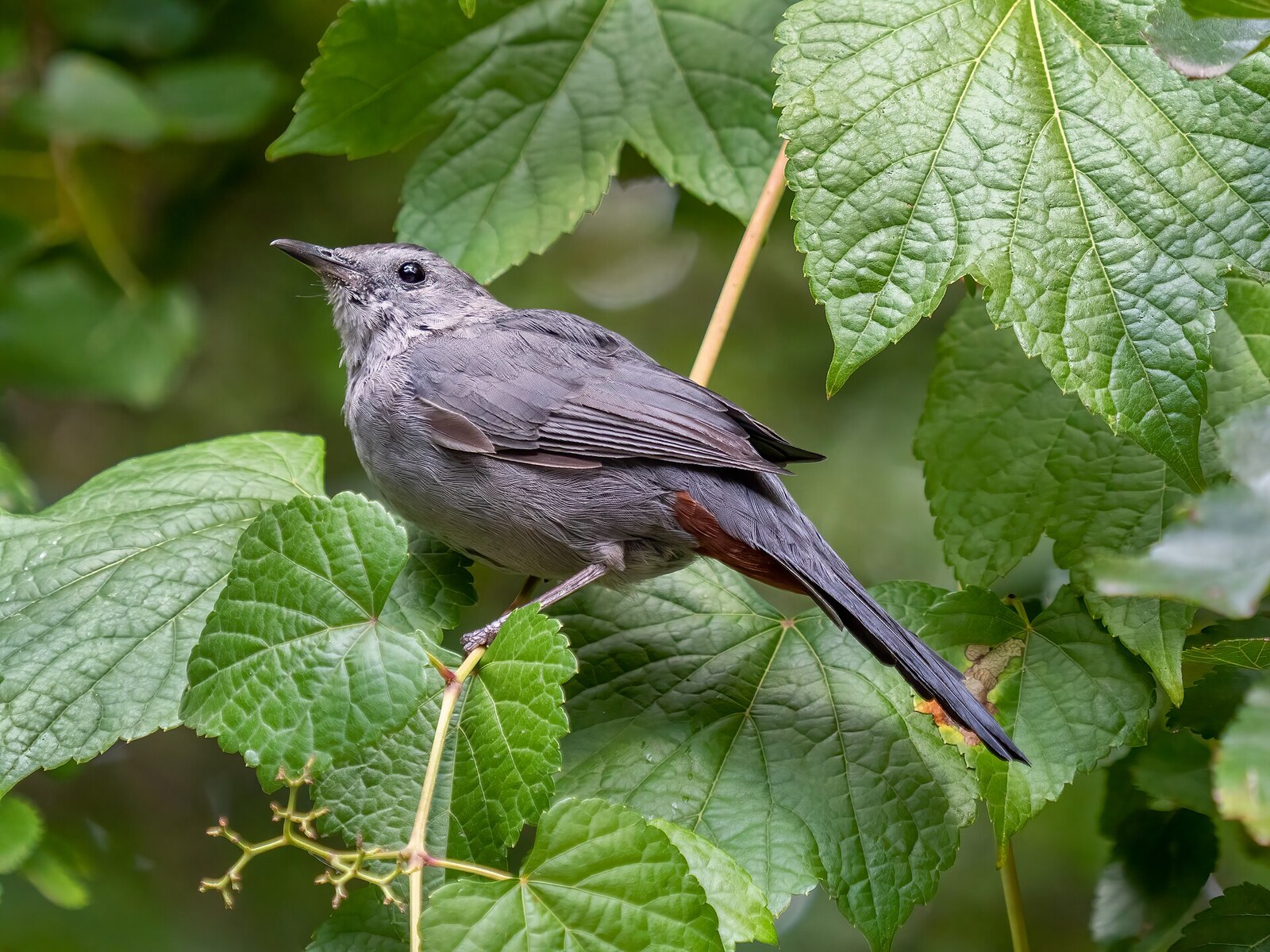
Gray catbird
Dumetella carolinensis
A slim slate-gray bird with a black cap and a chestnut undertail patch. Sings a long mimicked phrase string from inside dense thickets; the cat-like mew call gives the species its name.
Status: Secure.
Tanagers, buntings, grosbeaks, chat, and orioles
The two tanagers (summer all-red, scarlet brilliant red with black wings) are signature plateau forest breeders; the indigo bunting holds shrubland and power-line cuts in electric blue. The yellow-breasted chat is an oversized warbler-like bird of dense thickets, the orioles weave hanging pouch nests in tall hardwoods, and the rose-breasted grosbeak is mostly a passage migrant in Marion County.
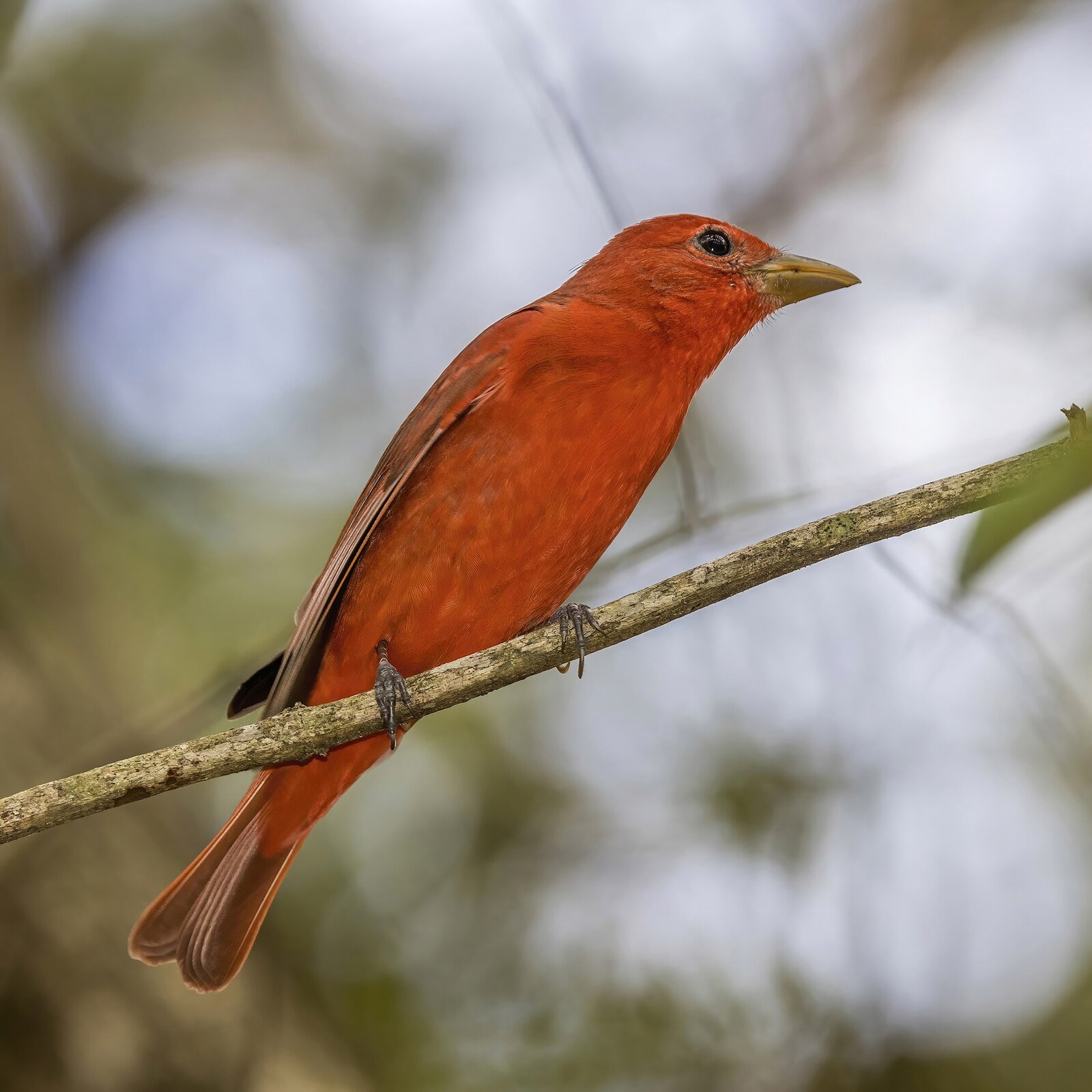
Summer tanager
Piranga rubra
An all-red tanager of oak-pine forest, often associated with the dry ridges of the Cumberland Plateau. Specializes in stinging insects: catches wasps and bees in flight, then beats them against branches to remove the sting before swallowing.
Status: Secure.
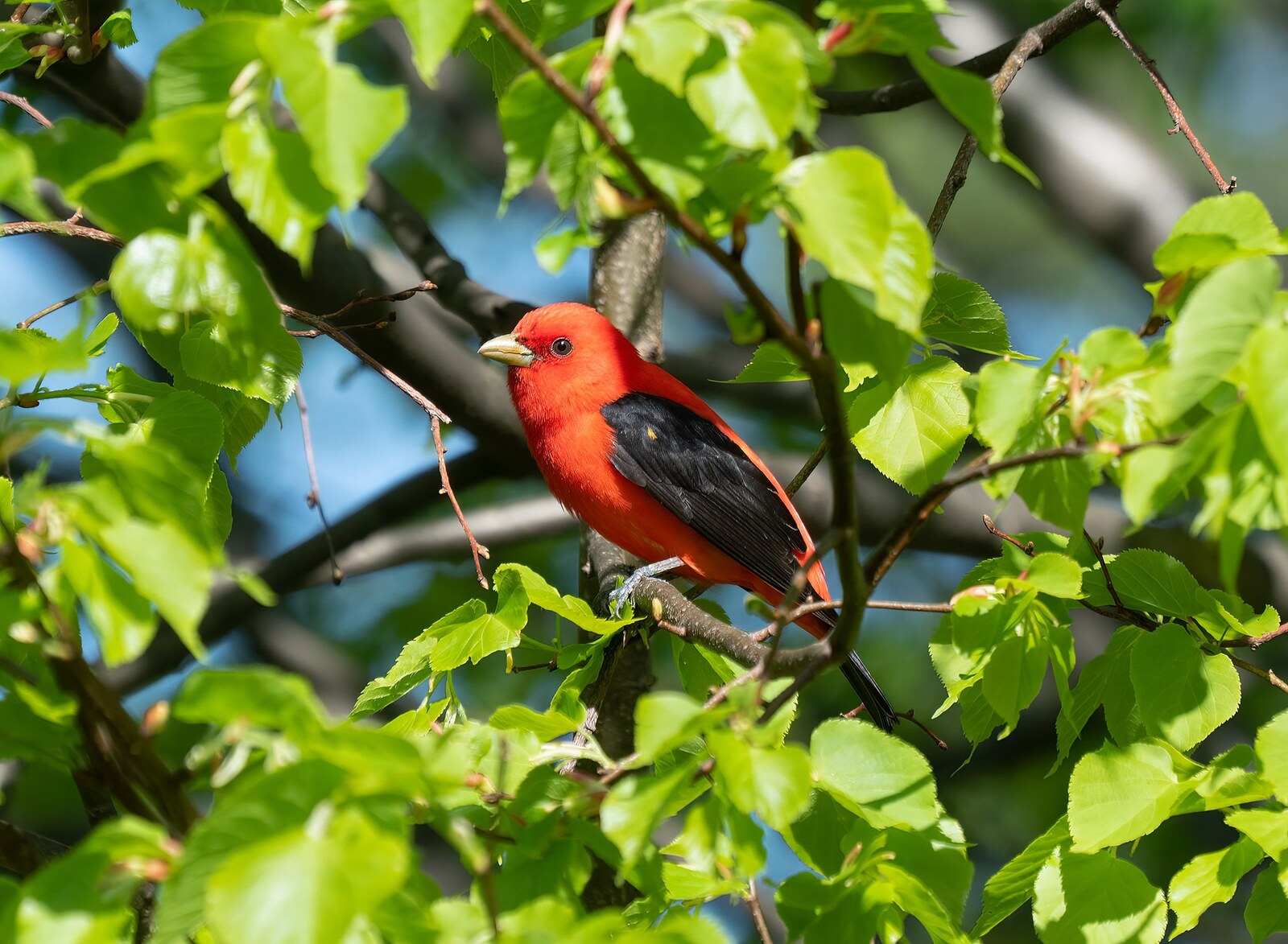
Scarlet tanager
Piranga olivacea
A brilliant red male with black wings and tail; females are olive-yellow. Breeds high in the canopy of mature hardwood forest and is heard more often than seen, giving a hoarse robin-like song.
Status: Secure.
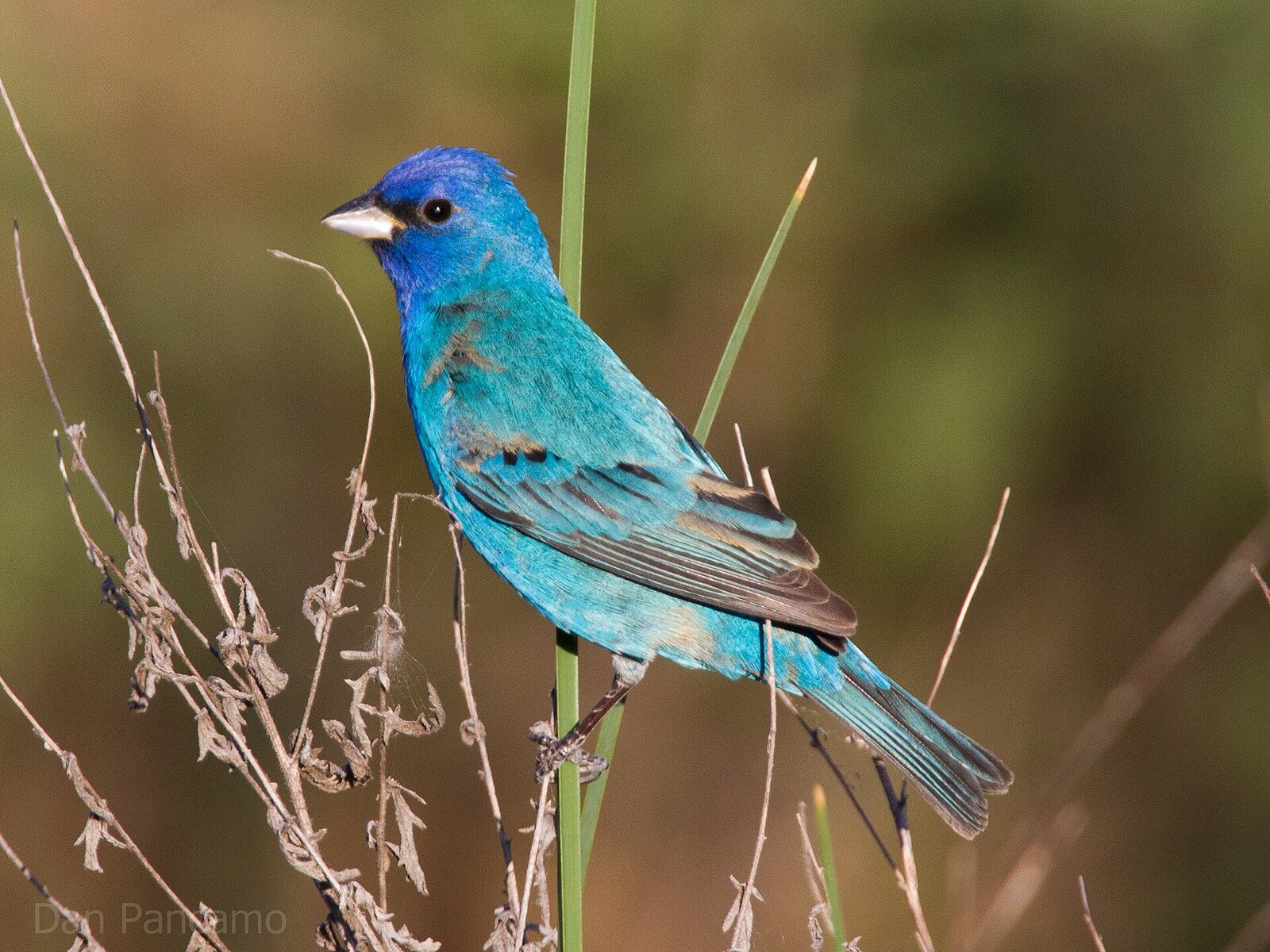
Indigo bunting
Passerina cyanea
A small finch-like bird, electric blue in breeding males. Breeds in shrubby edges, power-line cuts, and second-growth across the county; sings paired phrases from a high perch through long summer afternoons.
Status: Secure.
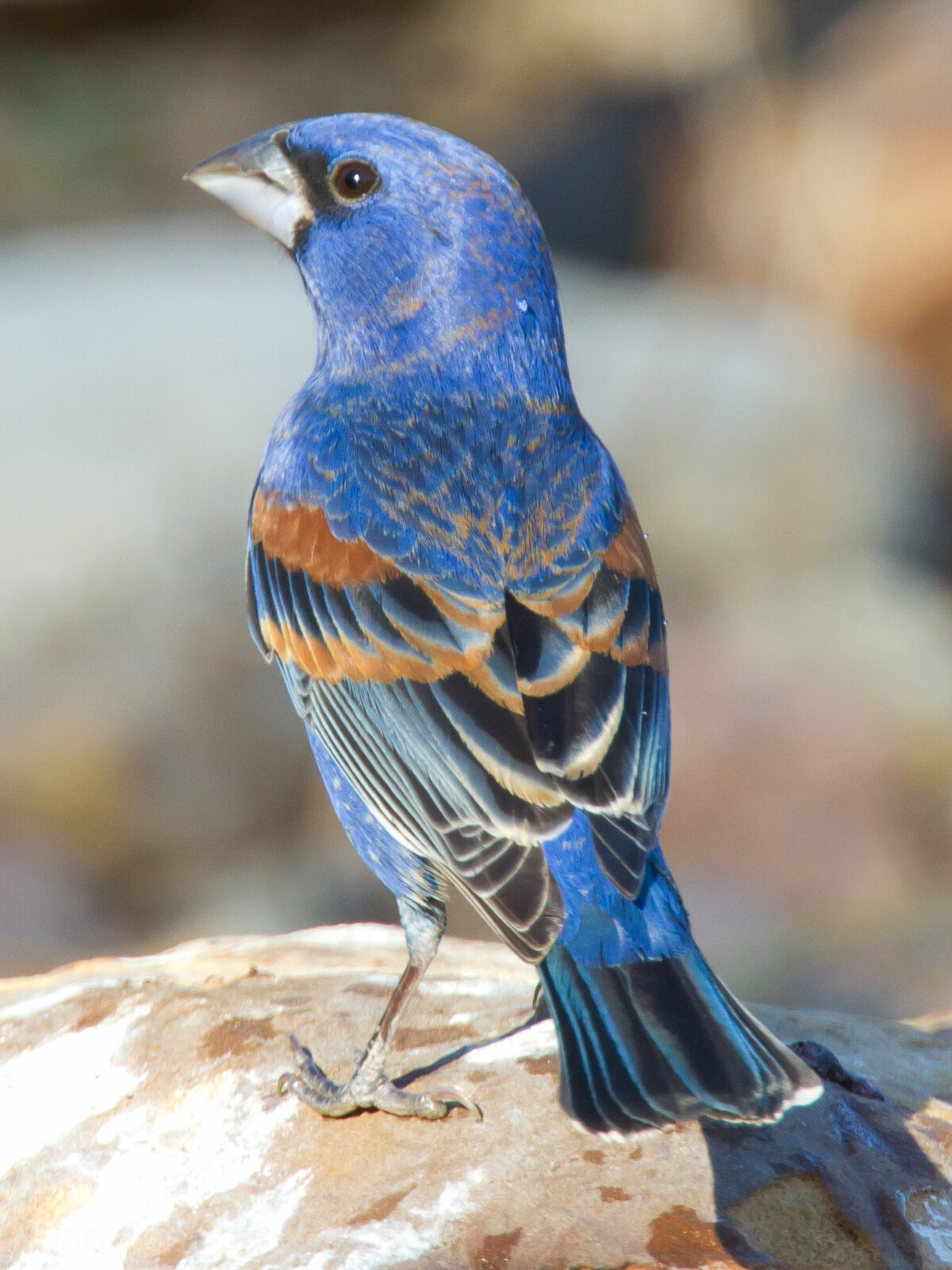
Blue grosbeak
Passerina caerulea
A heavyset deep-blue bunting cousin with chestnut wing bars. Breeds in shrubby field edges and overgrown pastures; less common than the indigo bunting but expanding northward.
Status: Secure.
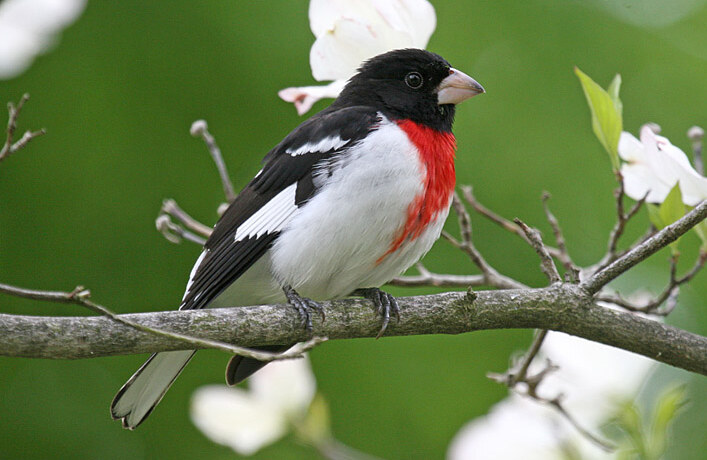
Rose-breasted grosbeak
Pheucticus ludovicianus
A black-and-white bird with a brilliant rose-red triangle on the breast in males. Mainly a passage migrant in Marion County, with rare breeding records at higher Cumberland Plateau elevations.
Status: Passage migrant; rare Plateau breeder.
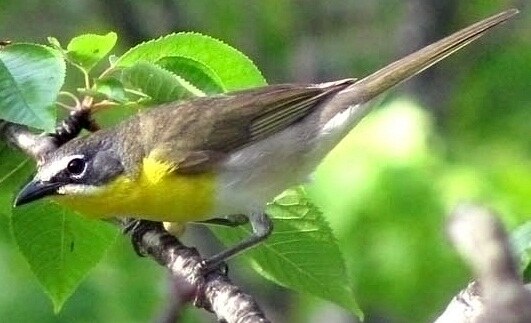
Yellow-breasted chat
Icteria virens
An odd, oversized warbler-like bird with a bright yellow breast and a varied repertoire of clucks, whistles, and rattles. Breeds in dense shrubland and old-field habitat.
Status: Secure on shrubland.
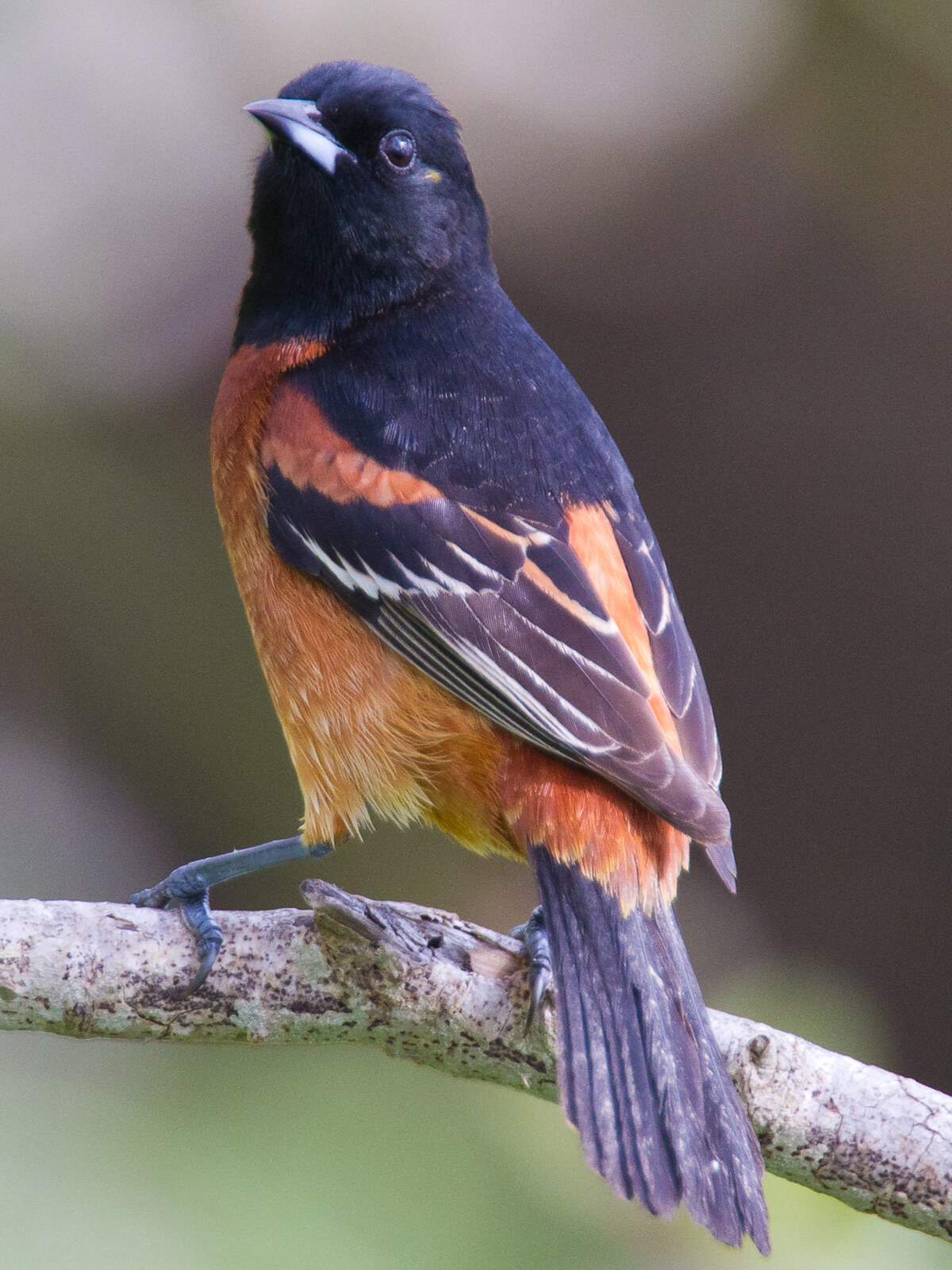
Orchard oriole
Icterus spurius
A smaller, chestnut-and-black oriole of open woodland edges and orchards. Less common in Marion County than the Baltimore oriole; departs early, often by August.
Status: Secure.
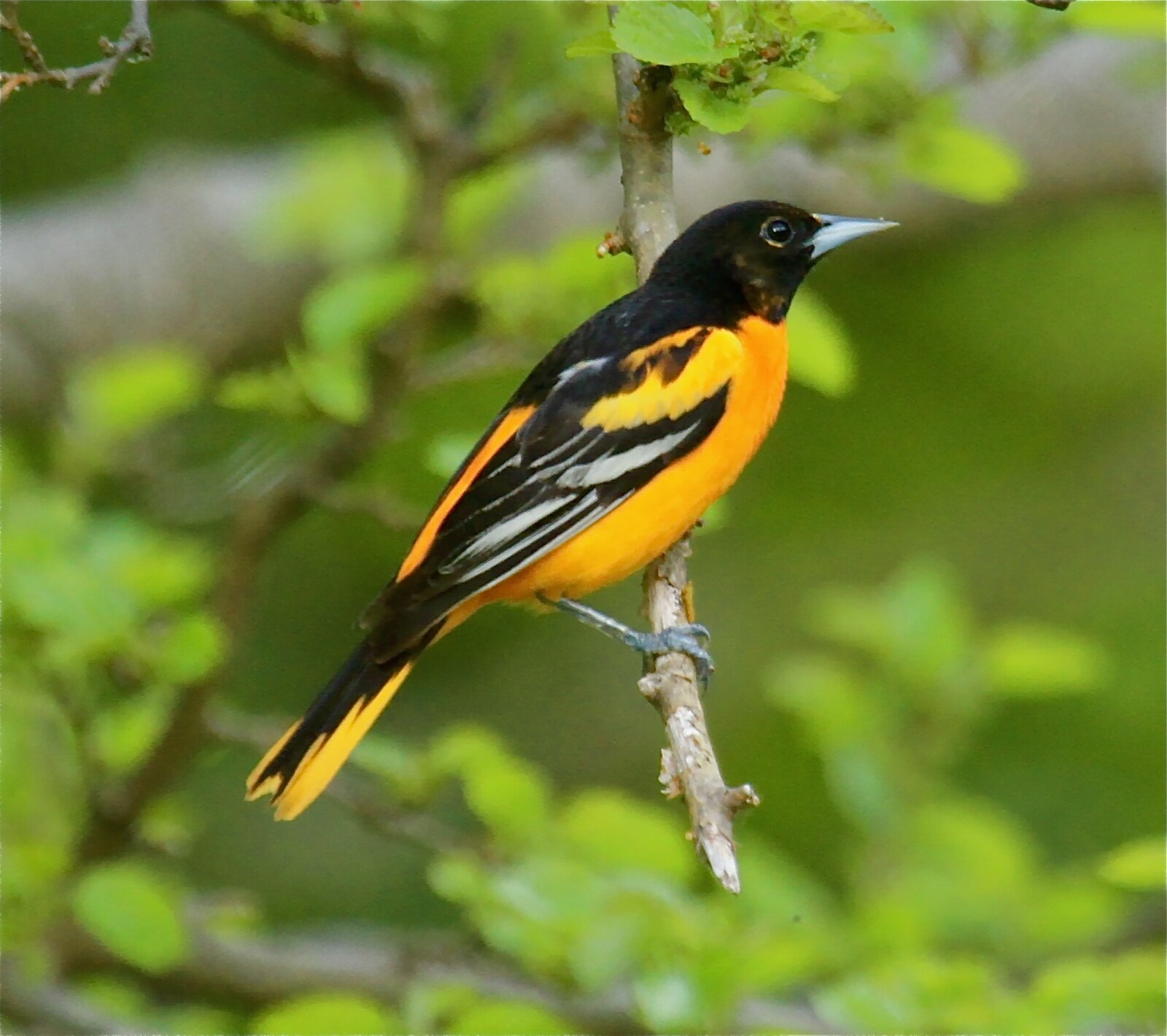
Baltimore oriole
Icterus galbula
A bright orange-and-black icterid that weaves a hanging pouch nest in tall hardwoods. Mainly a passage migrant in Marion County, with scattered breeders along stream corridors.
Status: Declining.
Warblers
Thirty-one wood-warblers (family Parulidae) breed in Marion County or pass through on migration. The cerulean warbler, worm-eating warbler, Louisiana waterthrush, hooded warbler, ovenbird, and Kentucky warbler are forest-interior breeders; the prairie warbler, blue-winged warbler, and yellow warbler take shrub-edge and old-field habitats. A second cohort of strictly-passage warblers (magnolia, Cape May, blackpoll, palm, Tennessee, Nashville, bay-breasted, blackburnian, black-throated blue, Wilson's, Canada) passes through in spring and fall on its way to boreal-forest or high-Appalachian breeding grounds. The first three weeks of May are the peak warbler window in Marion County.
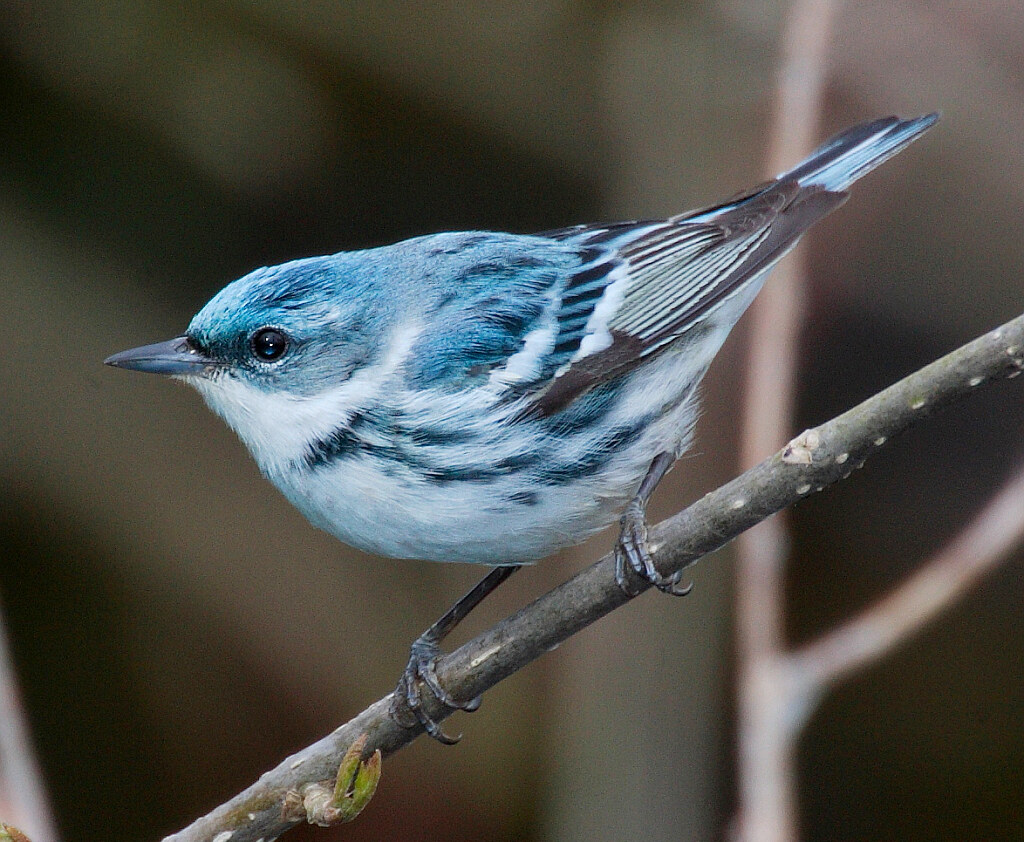
Cerulean warbler
Setophaga cerulea
One of the most specialized and most threatened songbirds in eastern North America. Males are clear sky-blue above with a narrow black necklace; females are aqua-green. Ceruleans breed in the upper canopy of mature deciduous forest and have declined about 70 percent continent-wide since 1966. Tennessee River Gorge Trust banding studies on gorge slopes have documented cerulean use of these forests during the breeding season, making the county's share of the gorge a meaningful piece of the species' southern Appalachian range.
Status: Declining; TWRA Species of Greatest Conservation Need.
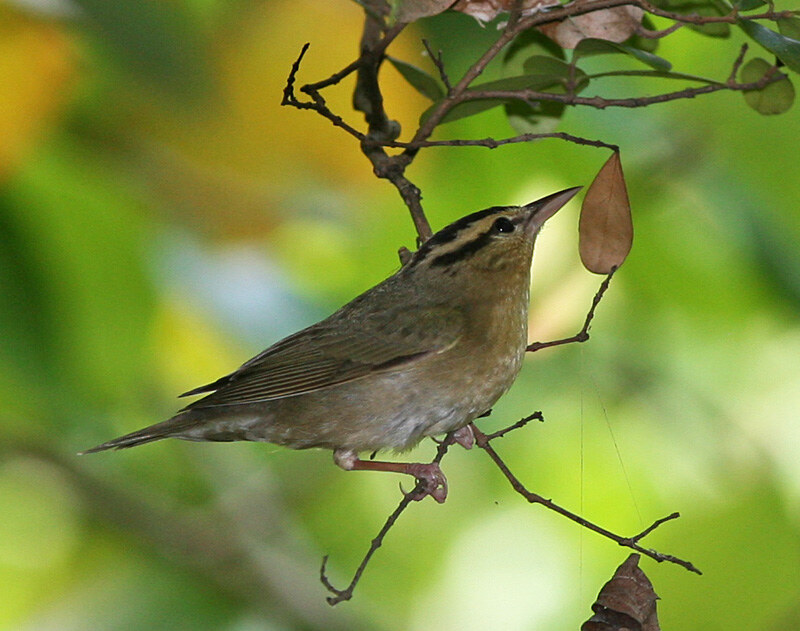
Worm-eating warbler
Helmitheros vermivorum
A buff and black warbler with striped head markings; hunts for leaf-rolling caterpillars in dead-leaf clusters hanging in the understory. Breeds in steep, leaf-littered ravine slopes with closed canopy: the kind of terrain that dominates the Tennessee River Gorge walls and the deeper plateau-rim tributaries.
Status: Secure on plateau and gorge slopes.
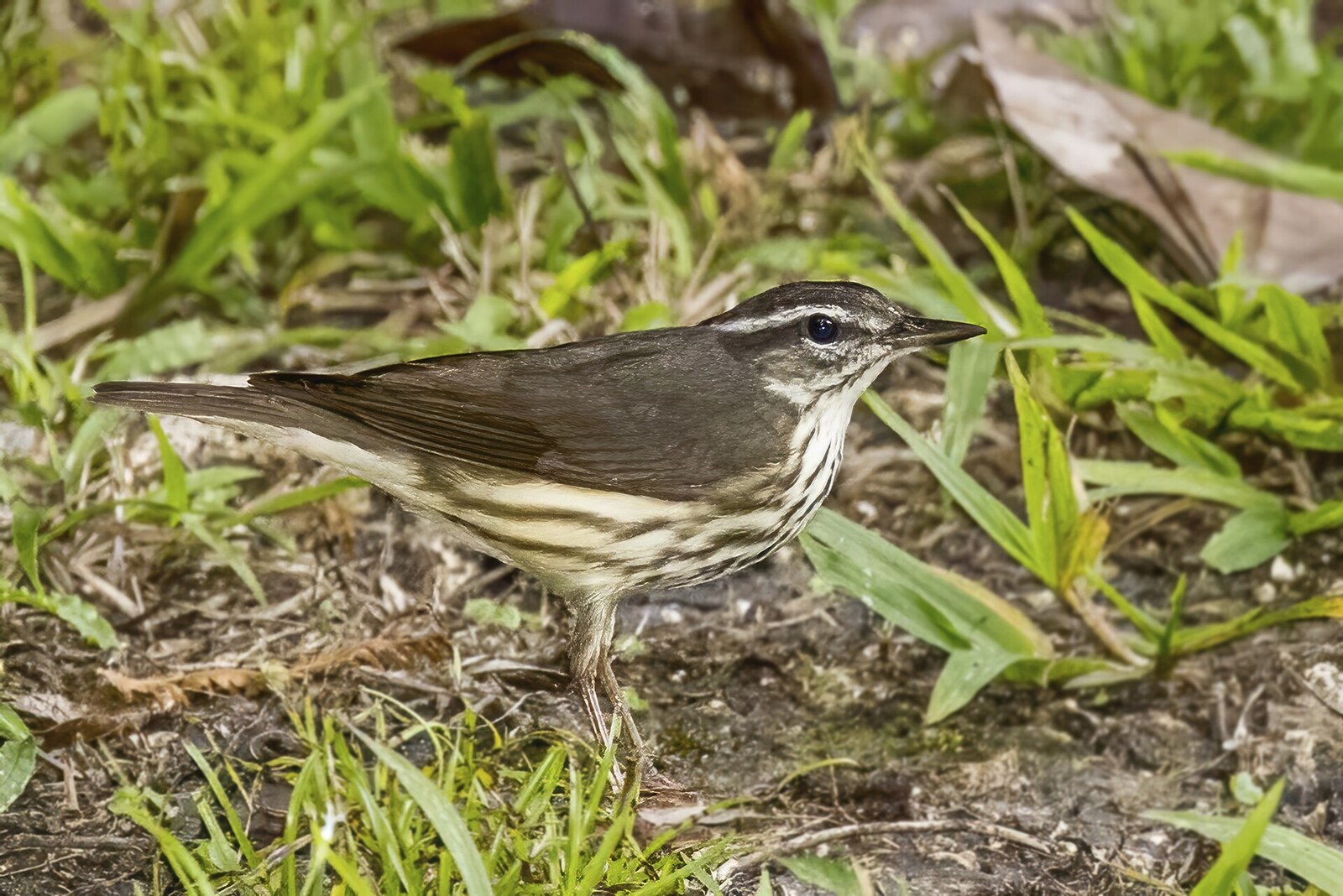
Louisiana waterthrush
Parkesia motacilla
A streambed warbler that walks rather than hops, bobbing its tail continuously as it hunts aquatic insect larvae on rocks in cold clear water. Arrives by mid-March and is one of the most reliable biological indicators of an unsilted, unpolluted stream.
Status: Secure; clean-stream indicator.
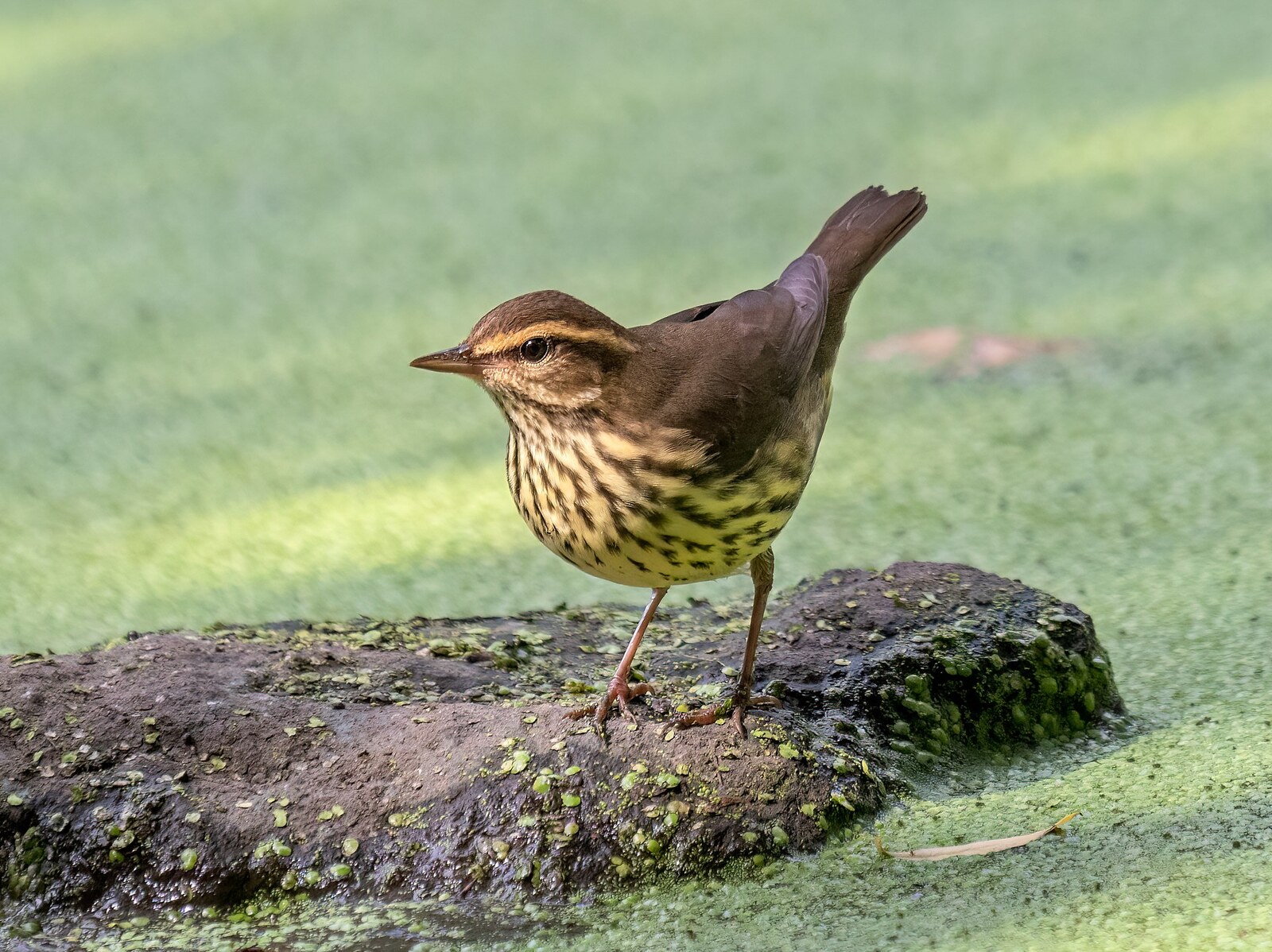
Northern waterthrush
Parkesia noveboracensis
Cousin of the Louisiana waterthrush, distinguished by a narrower yellowish supercilium and a stronger preference for swamp and wet thicket. A passage migrant in Marion County; breeds far north of Tennessee.
Status: Passage migrant.
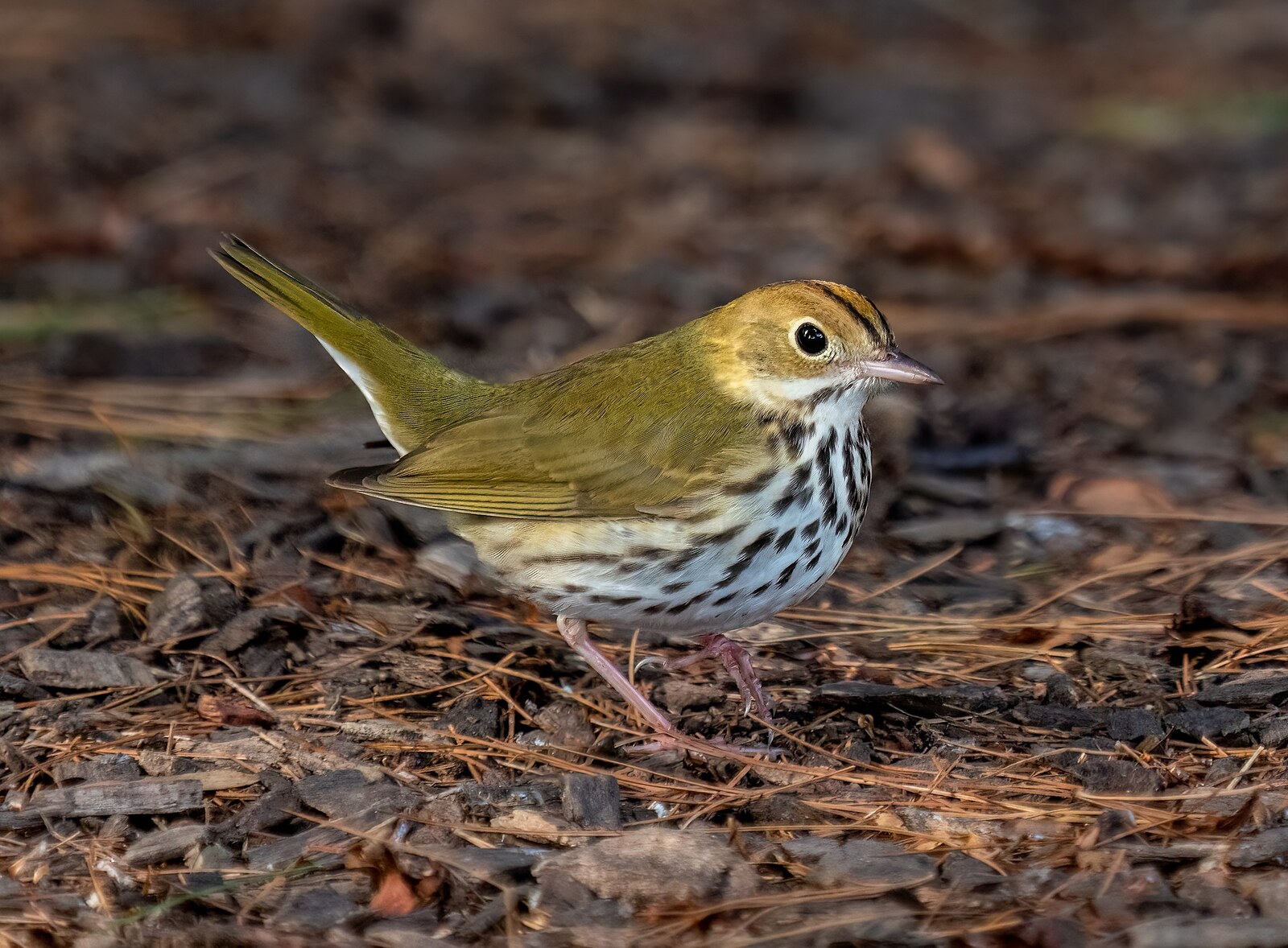
Ovenbird
Seiurus aurocapilla
A ground-dwelling warbler with a teacher-teacher song that builds in volume across the spring forest. Walks rather than hops on the leaf litter; builds a domed nest on the forest floor that gives the species its name.
Status: Secure.
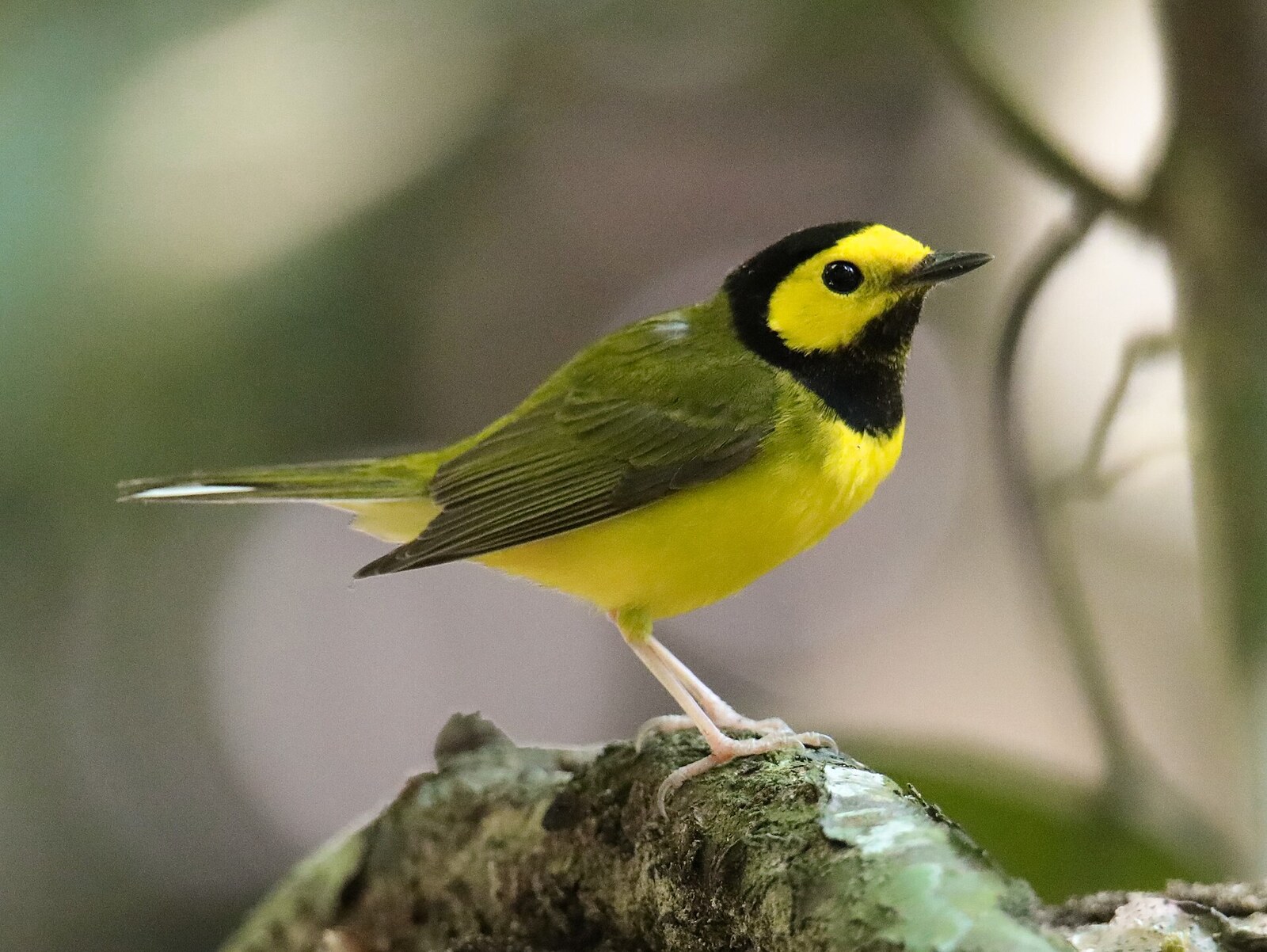
Hooded warbler
Setophaga citrina
A bright yellow warbler with a black hood in males, fond of dense forest understory and rhododendron thickets. Tail-flicking exposes white outer tail feathers as the bird forages low through forest interior.
Status: Secure in forest understory.
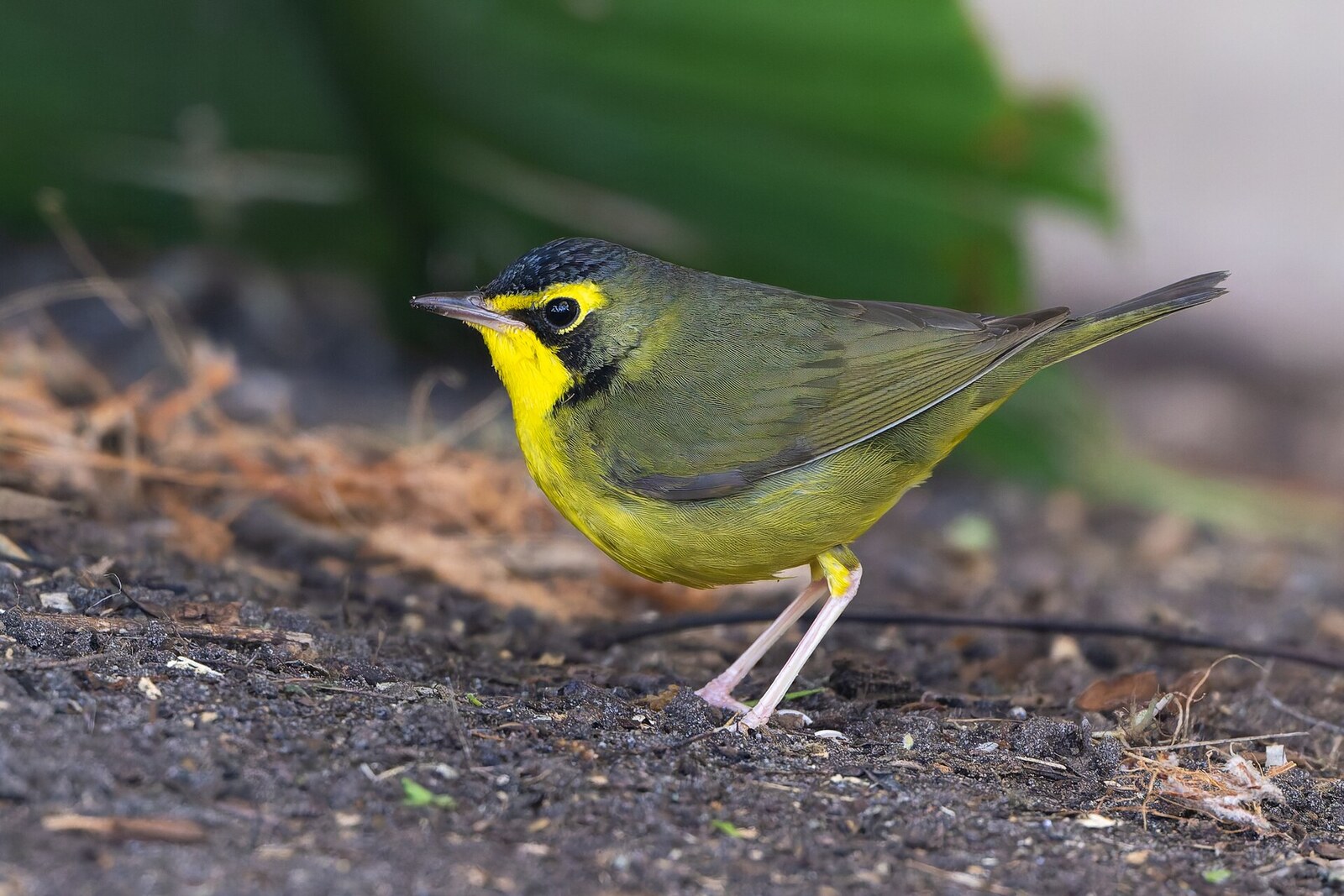
Kentucky warbler
Geothlypis formosa
A yellow warbler with bold black sideburns and a loud rolling churry-churry-churry song from deep shade. Breeds in moist hardwood forest with dense ground cover; populations have declined regionally.
Status: Declining.
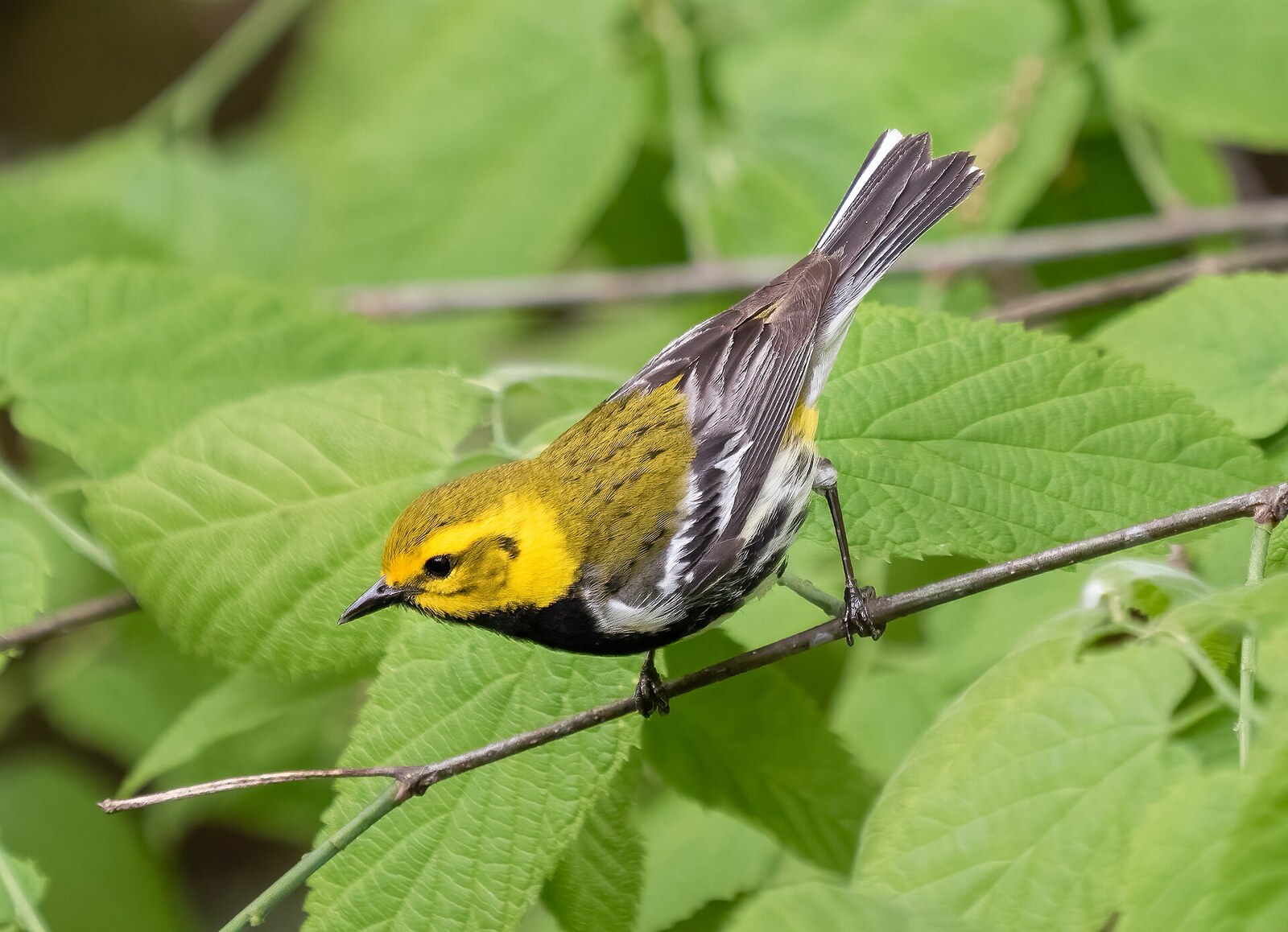
Black-throated green warbler
Setophaga virens
An olive-backed warbler with a black throat patch and a wheezy zee-zee-zee-zoo-zee song. Breeds in mixed and hemlock-hardwood forest at higher Cumberland Plateau elevations.
Status: Secure.
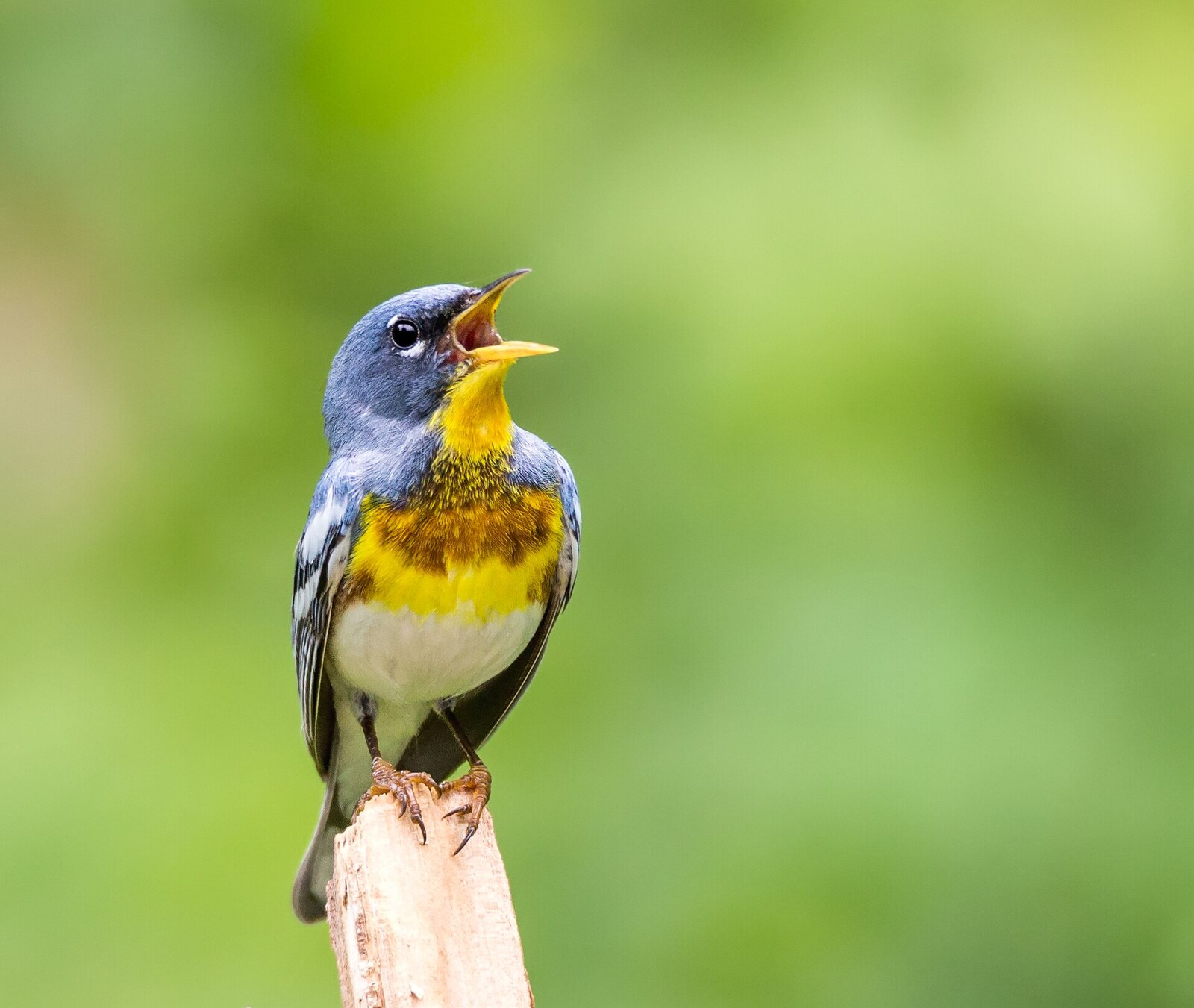
Northern parula
Setophaga americana
A small blue-and-yellow warbler that breeds in moist forest with hanging tendrils of usnea or Spanish moss for nesting material. Sings an ascending buzzy trill ending in an abrupt note.
Status: Secure.
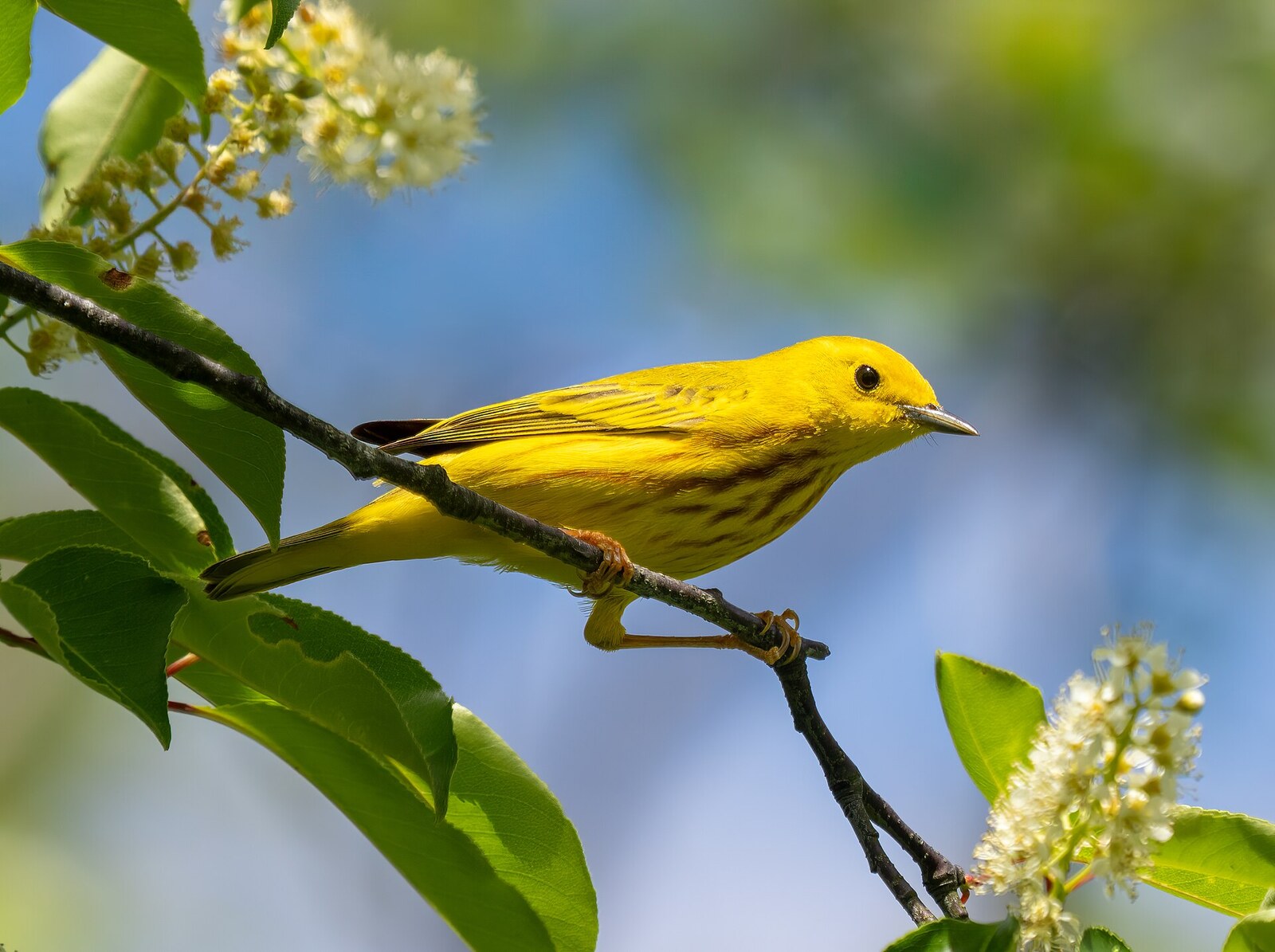
Yellow warbler
Setophaga petechia
An all-yellow warbler with chestnut breast streaks in males. Breeds in willow and shrub thickets along streams and wet meadows; the sweet-sweet-sweet-I'm-so-sweet song is a clear field mark.
Status: Secure.
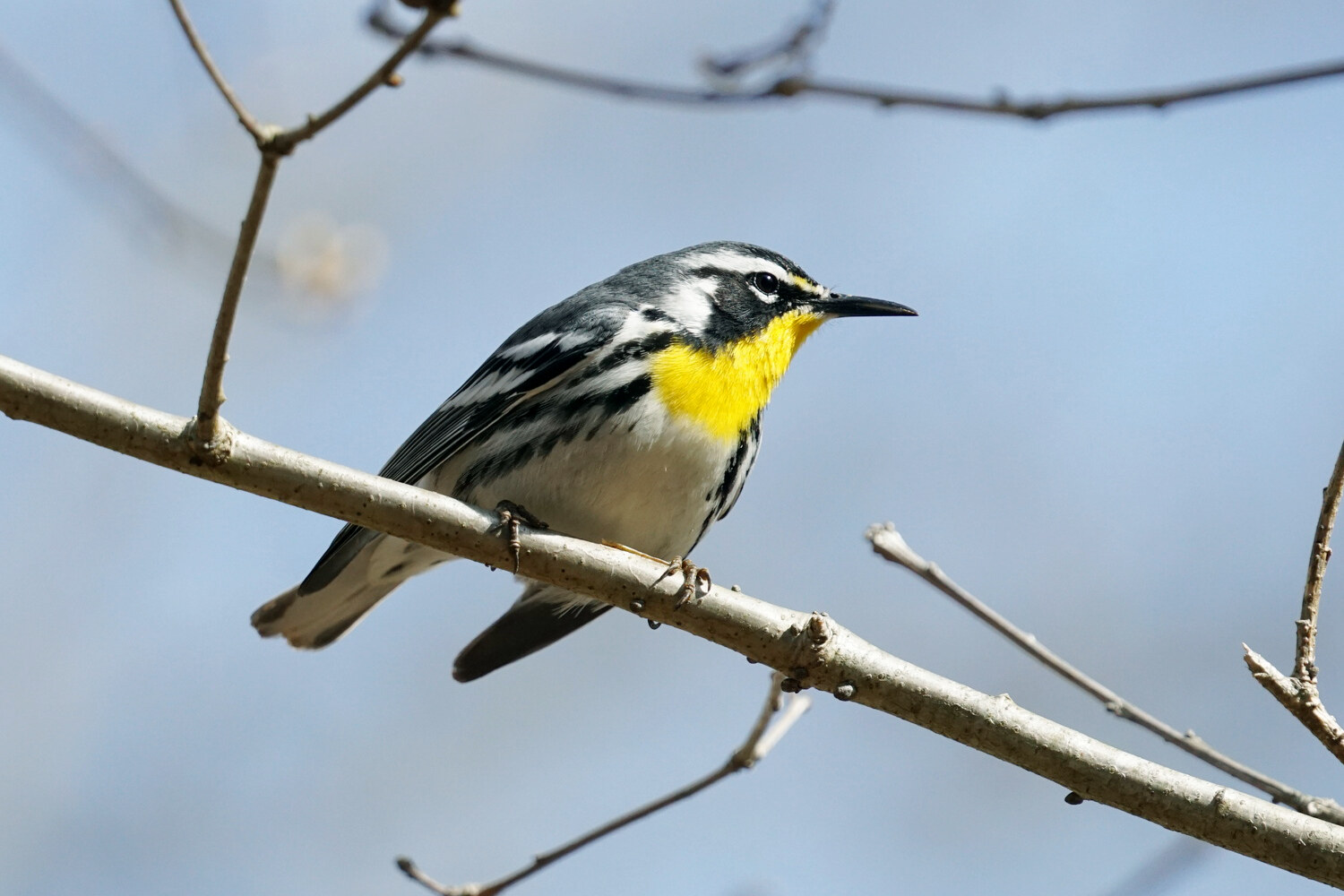
Yellow-throated warbler
Setophaga dominica
A long-billed warbler with a clean yellow throat against a black-and-white face. Breeds high in sycamore canopy along Marion's stream corridors and in pine on plateau ridges.
Status: Secure.
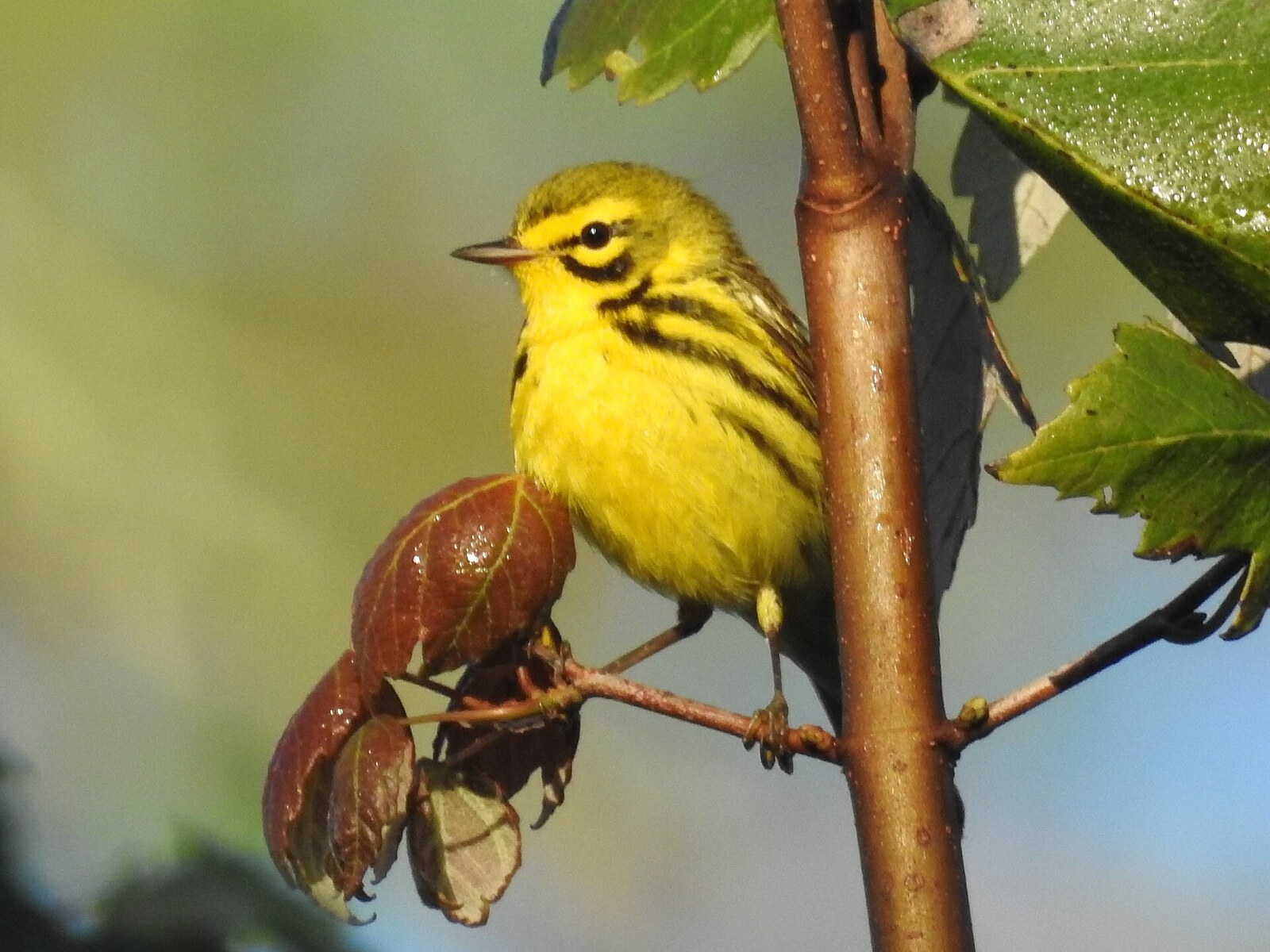
Prairie warbler
Setophaga discolor
A small yellow warbler with rusty back streaks and a buzzy ascending song. Breeds in old-field shrubland, abandoned pasture, and power-line cuts; populations have declined as old-field habitat ages out.
Status: Declining.
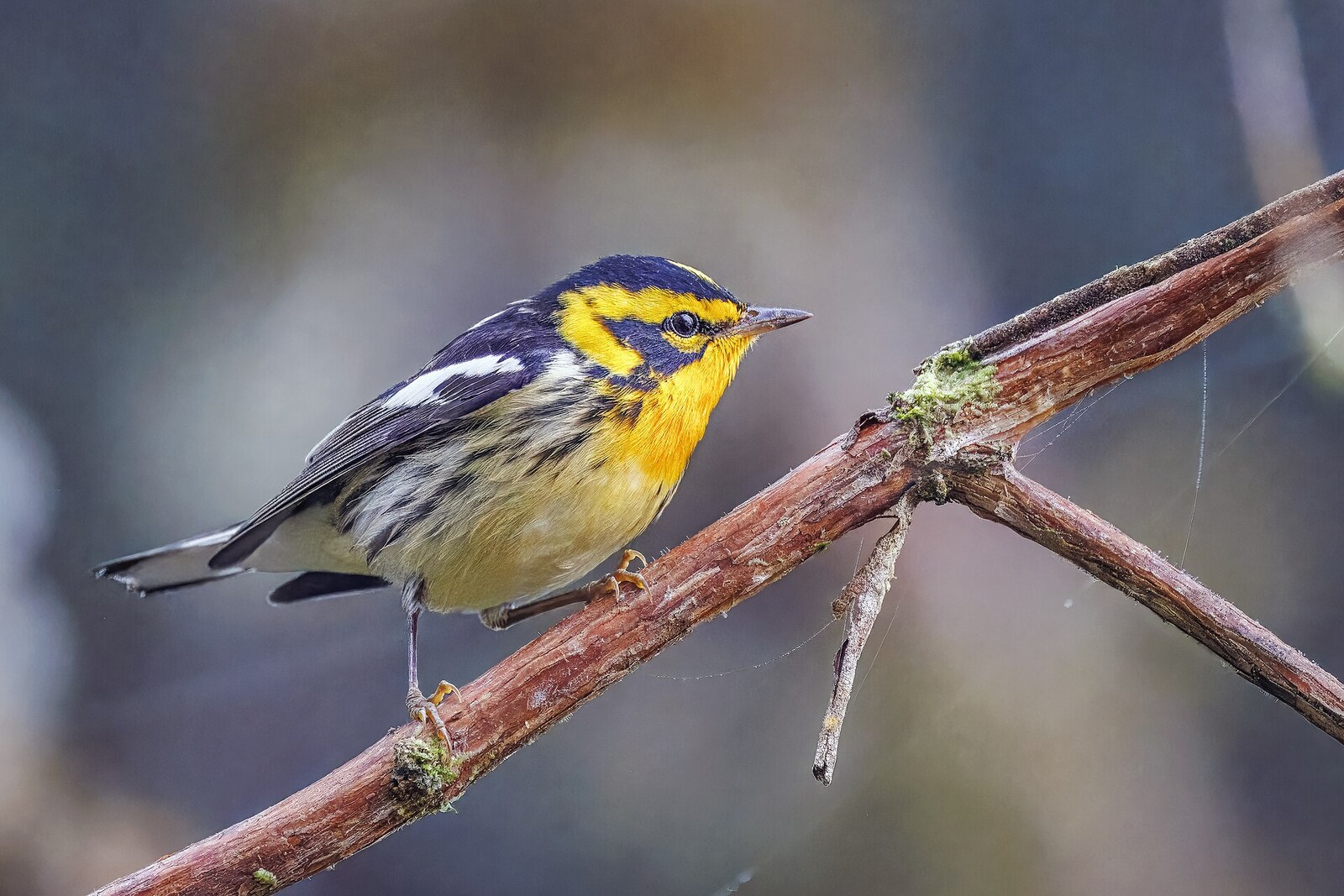
Blackburnian warbler
Setophaga fusca
A high-canopy warbler with a flame-orange throat in males, breeding mainly in the high-elevation conifers of the southern Appalachians. A passage migrant in Marion County, with rare breeding at higher Cumberland Plateau elevations.
Status: Passage migrant; rare Plateau breeder.
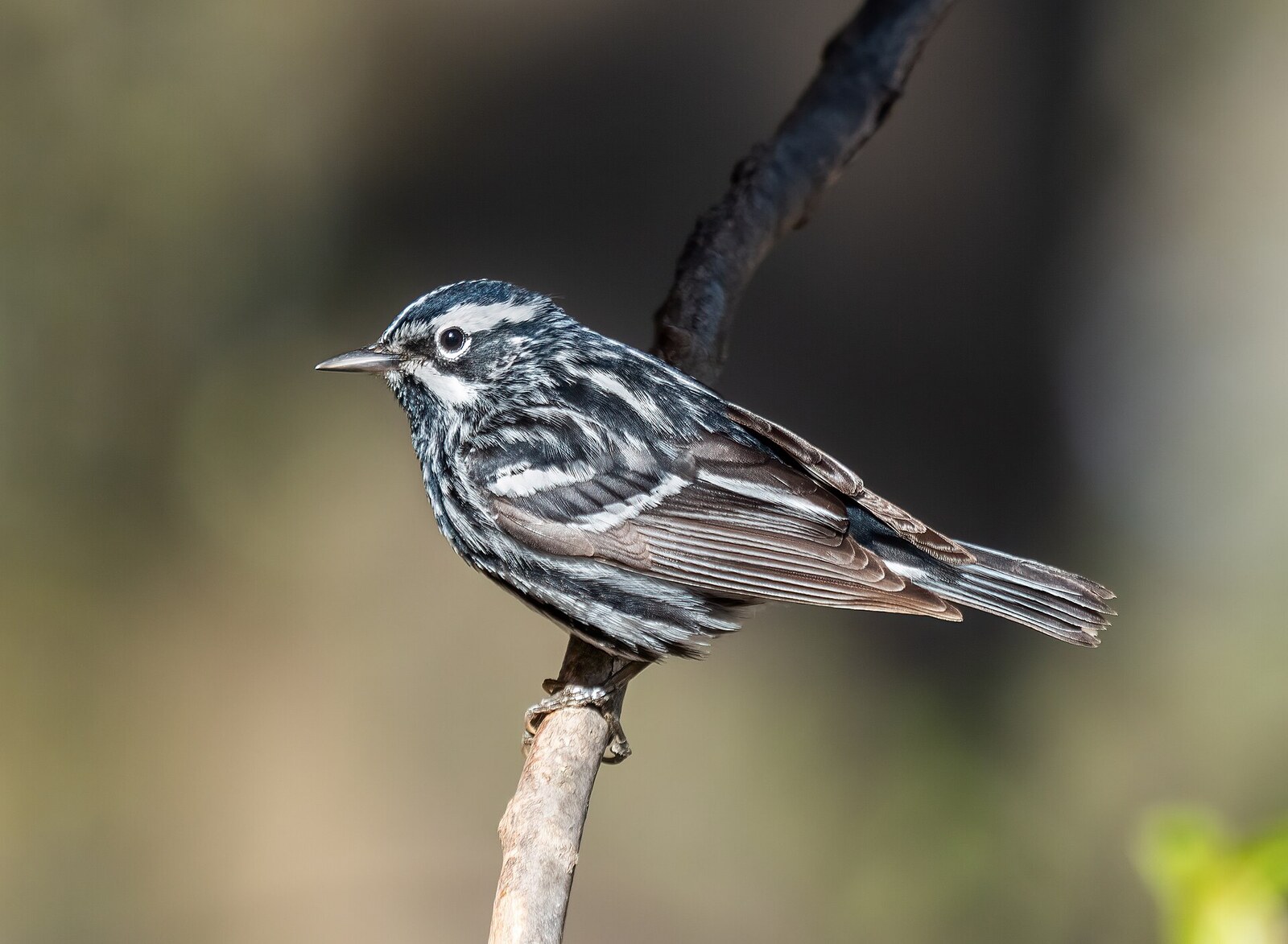
Black-and-white warbler
Mniotilta varia
A black-and-white striped warbler that creeps along trunks and branches like a nuthatch, probing for bark insects. The thin weesy-weesy-weesy song carries through deciduous forest in spring.
Status: Secure.
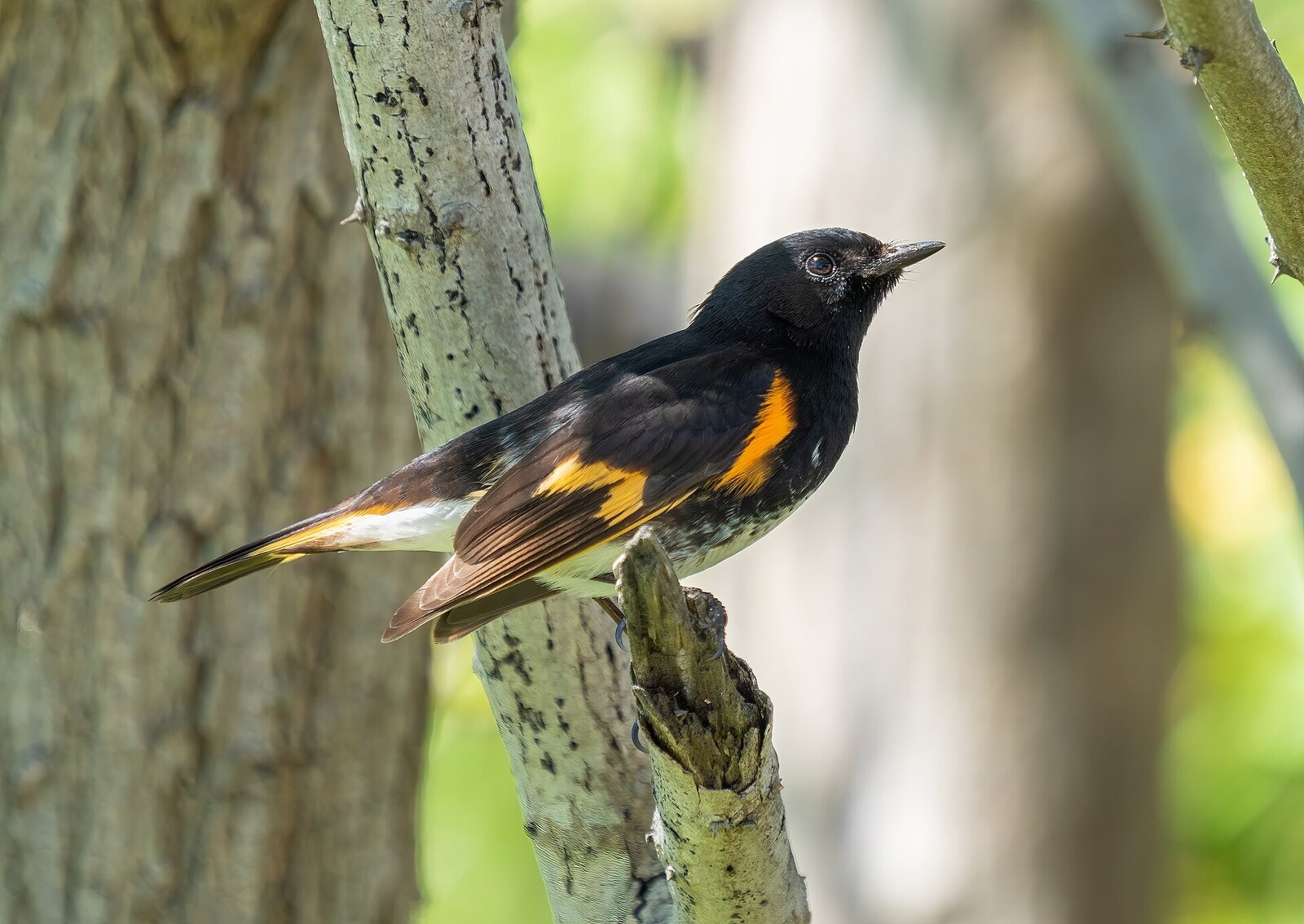
American redstart
Setophaga ruticilla
A flashy black-and-orange (males) or olive-and-yellow (females) warbler that fans its tail to flush insects. Common breeder in second-growth deciduous forest and forest edges.
Status: Secure.
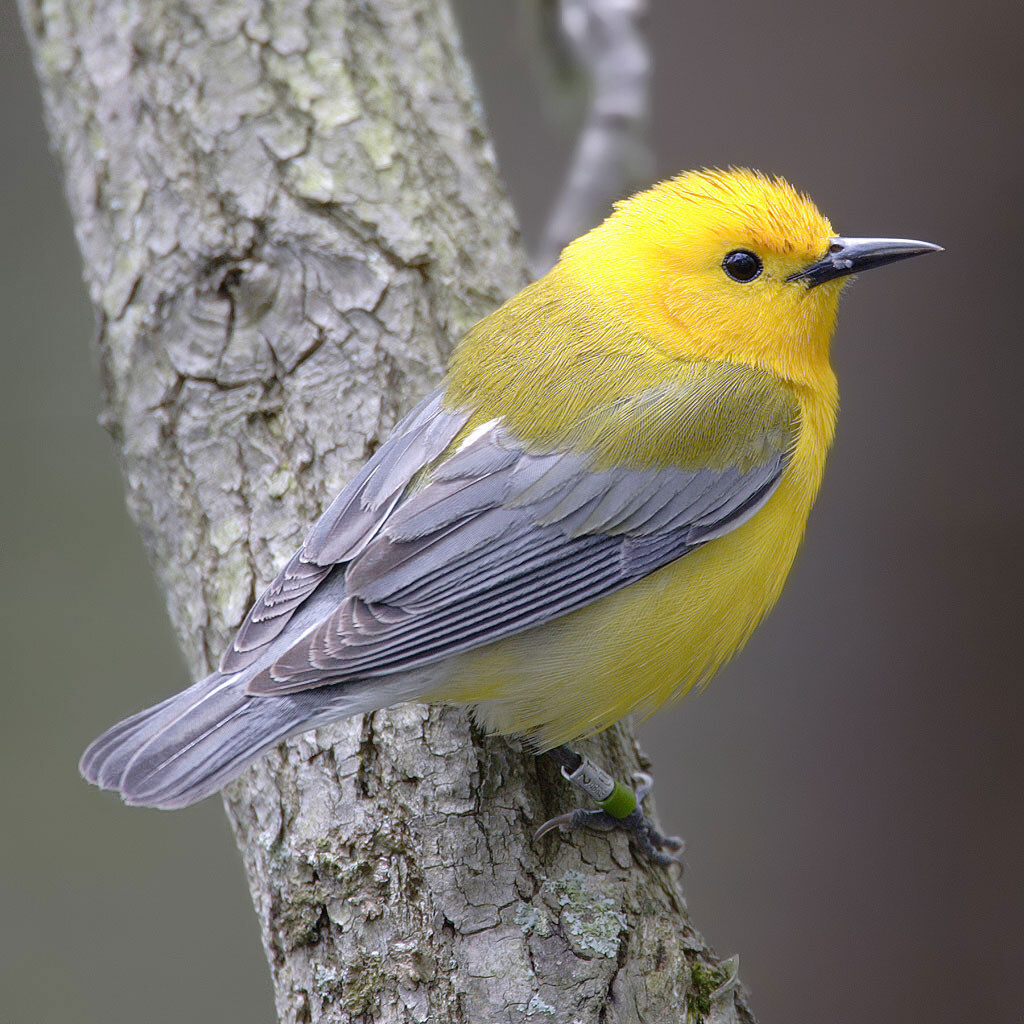
Prothonotary warbler
Protonotaria citrea
A vivid golden-yellow warbler that nests in tree cavities over standing water in bottomland hardwood forest. The Tennessee River bottomlands and slough edges are likely habitat in Marion County.
Status: Declining; TWRA Species of Greatest Conservation Need.
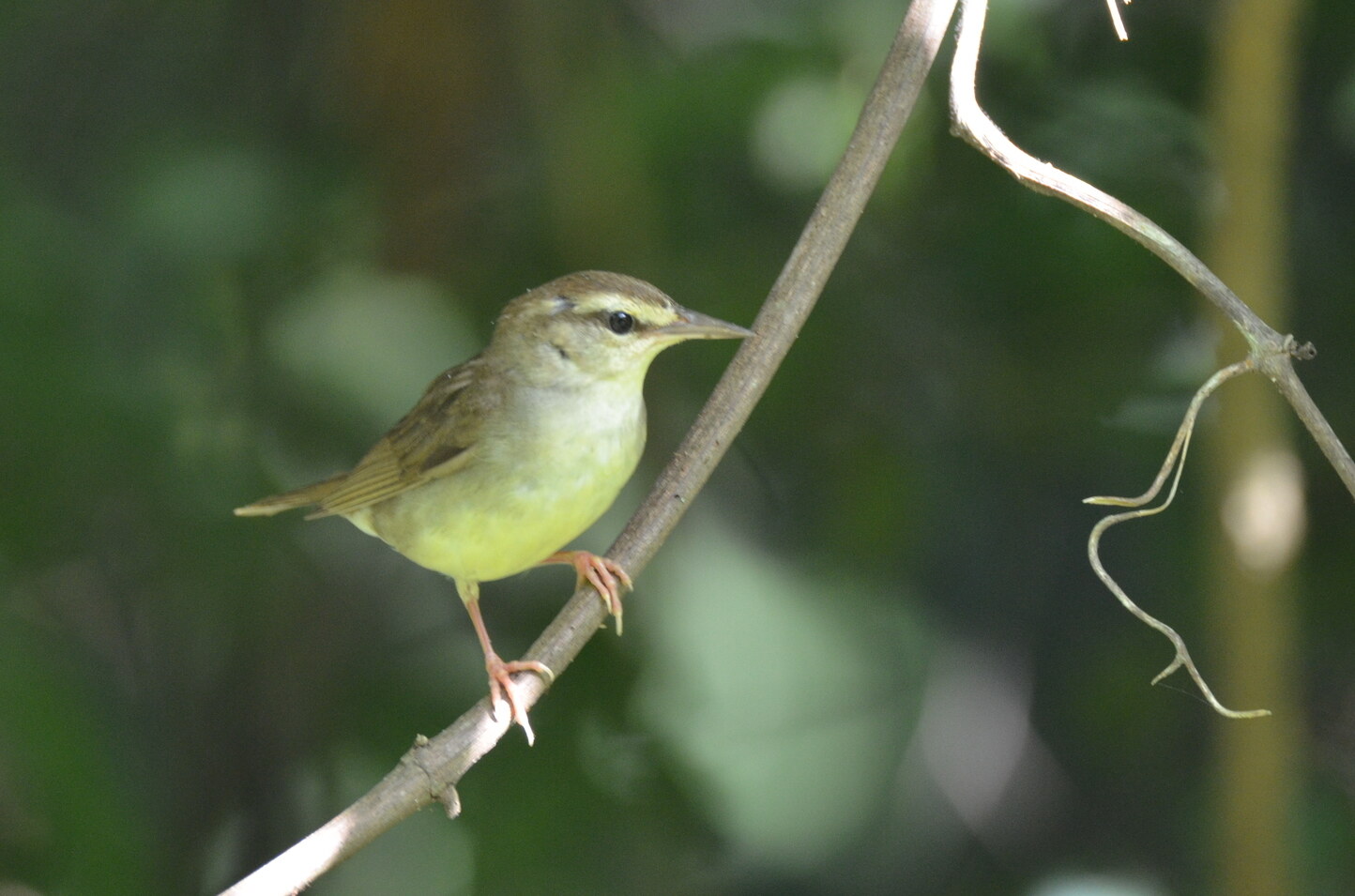
Swainson's warbler
Limnothlypis swainsonii
A drab brown warbler that breeds in dense cane and rhododendron thickets along stream corridors. Reclusive and uncommon, easier to detect by its loud whistled song than by sight.
Status: Declining; TWRA Species of Greatest Conservation Need.
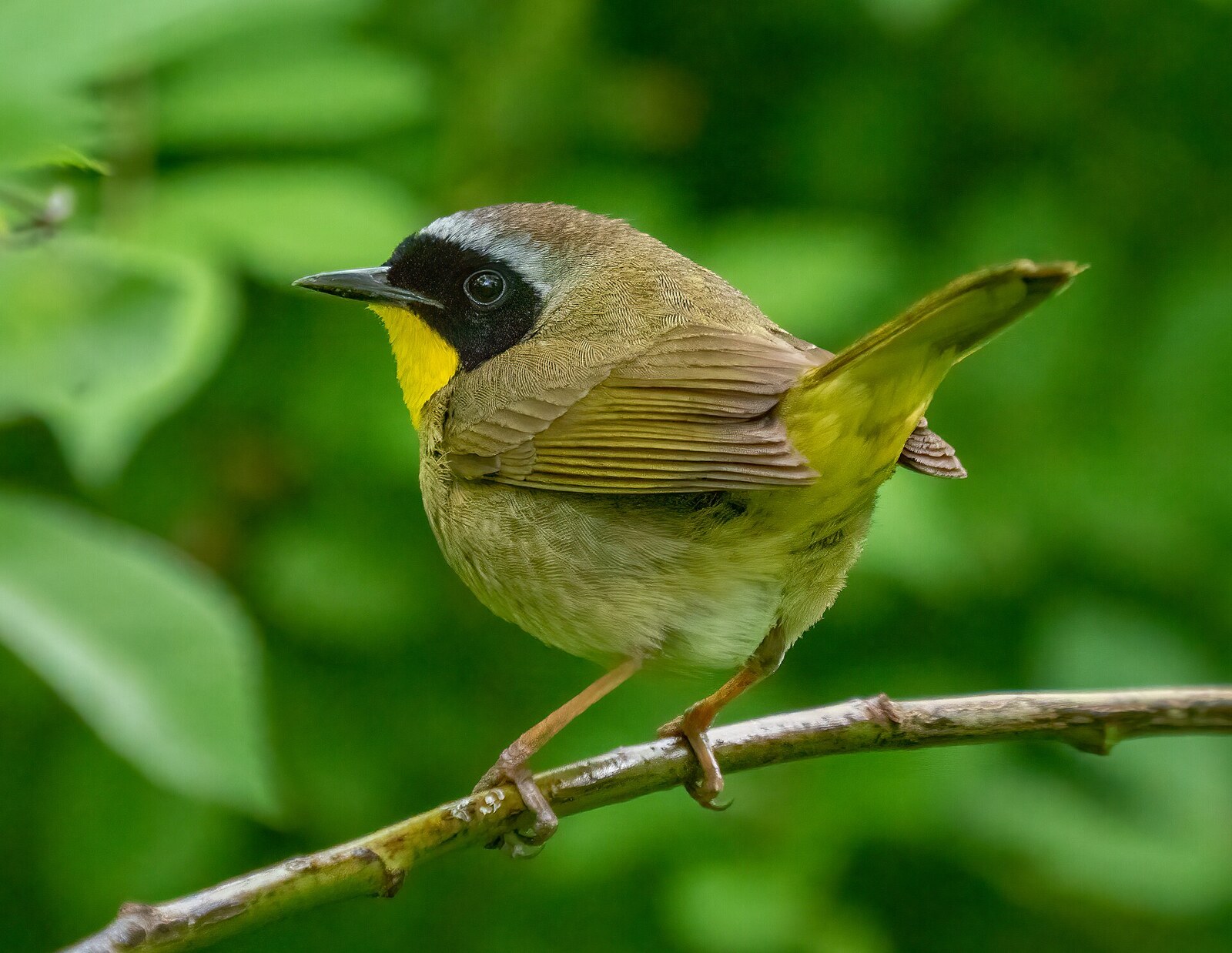
Common yellowthroat
Geothlypis trichas
A small warbler with a black mask and bright yellow throat in males. Breeds in marsh, wet meadow, and shrubland; the witchety-witchety-witchety song is one of the most familiar warbler songs.
Status: Secure.
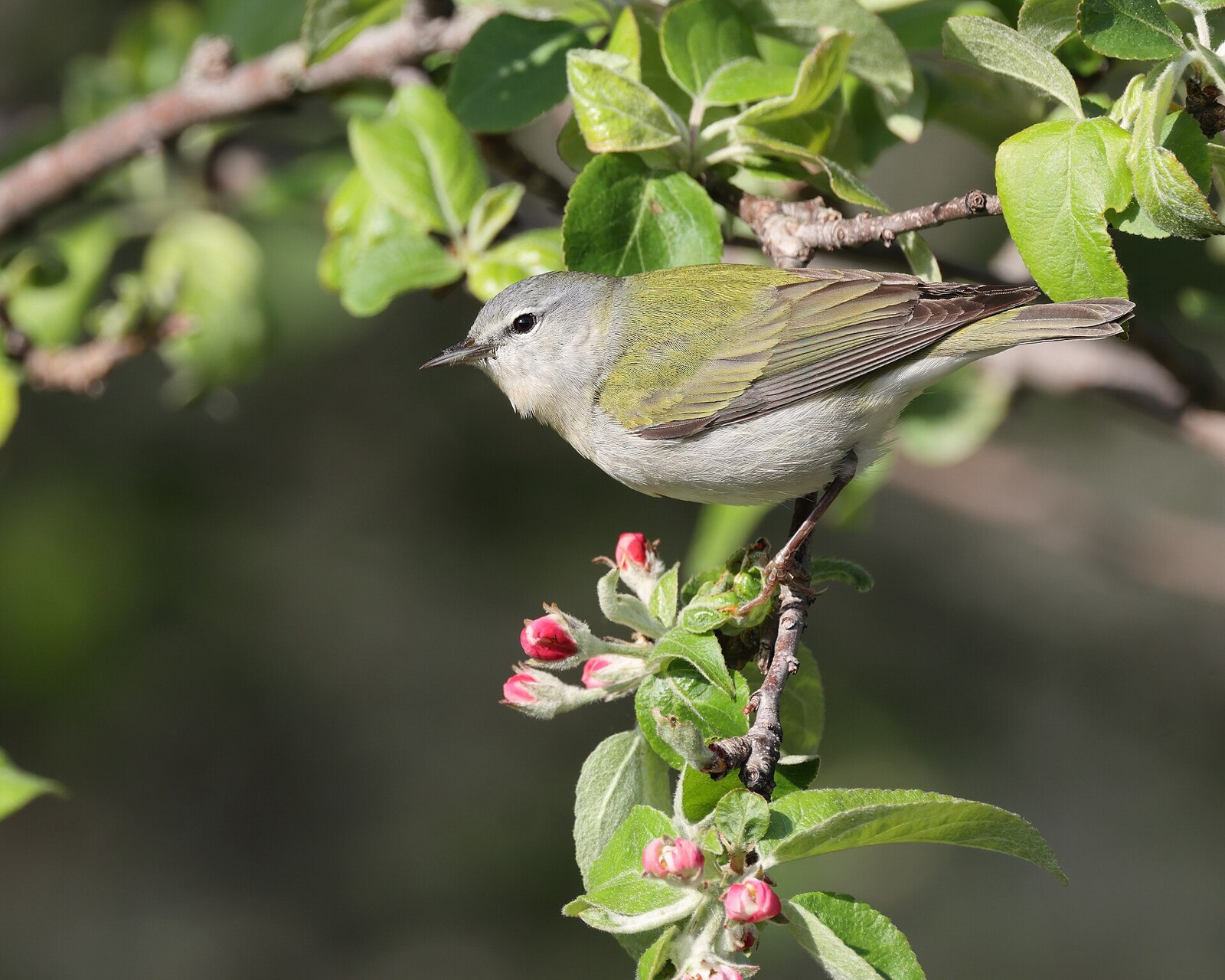
Tennessee warbler
Leiothlypis peregrina
A small olive-green warbler with a white belly, named for the state where the species was first collected though it does not breed here. A passage migrant only in Marion; breeds in the boreal forest belt.
Status: Passage migrant.
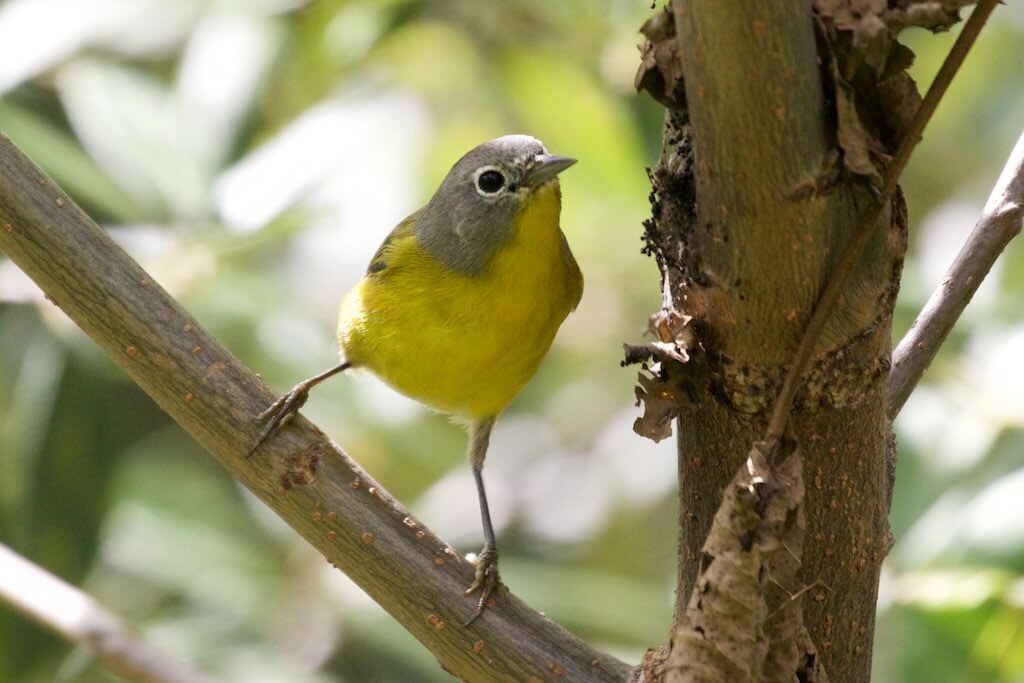
Nashville warbler
Leiothlypis ruficapilla
A small warbler with a yellow throat, gray hood, and a complete white eye-ring. Like the Tennessee warbler, named for a collecting locality but only a passage migrant through the state.
Status: Passage migrant.
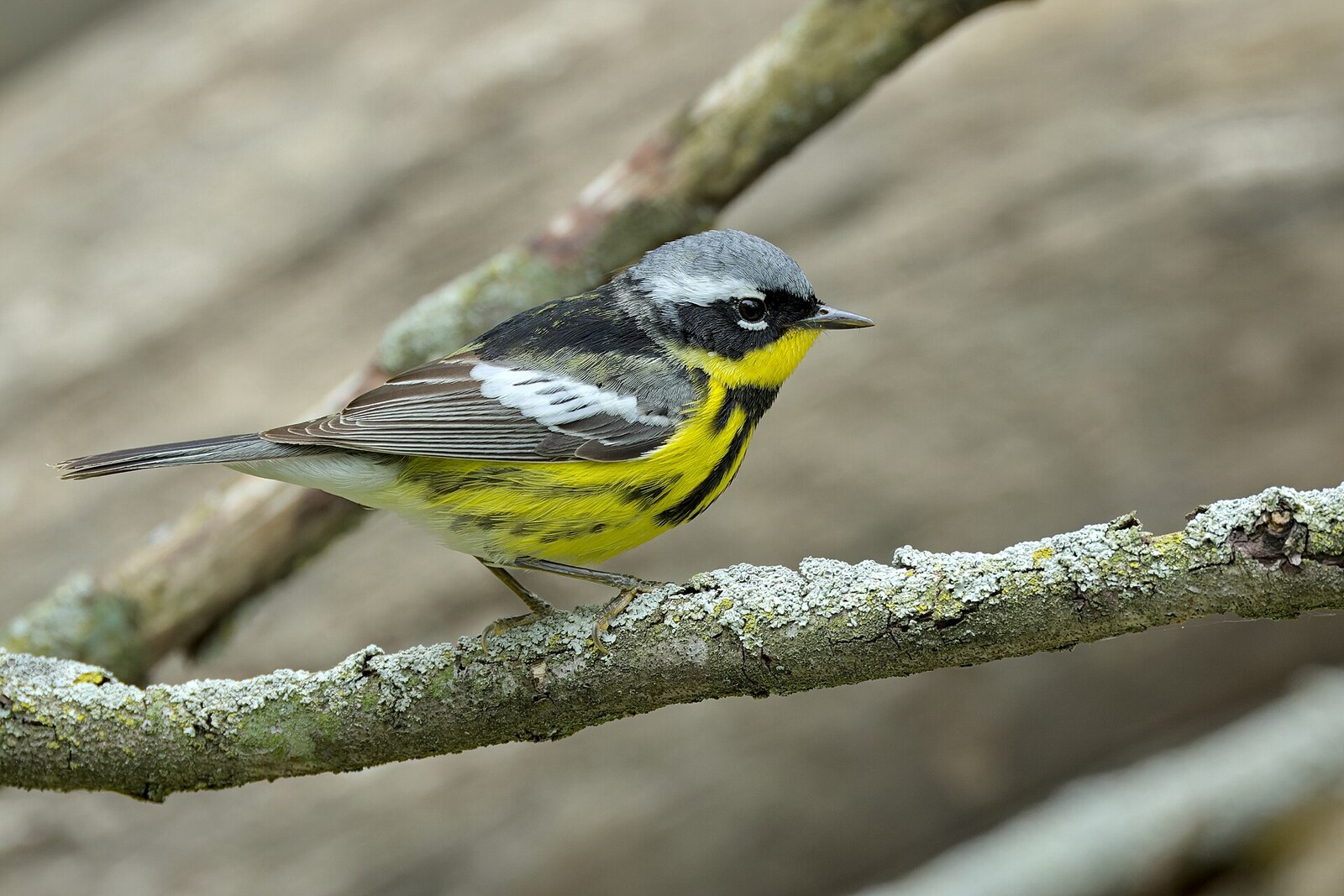
Magnolia warbler
Setophaga magnolia
A black-and-yellow warbler with a black breast band and a white tail-band visible from below. Breeds in young conifer forest far north of Tennessee; passes through Marion County in spring and fall.
Status: Passage migrant.
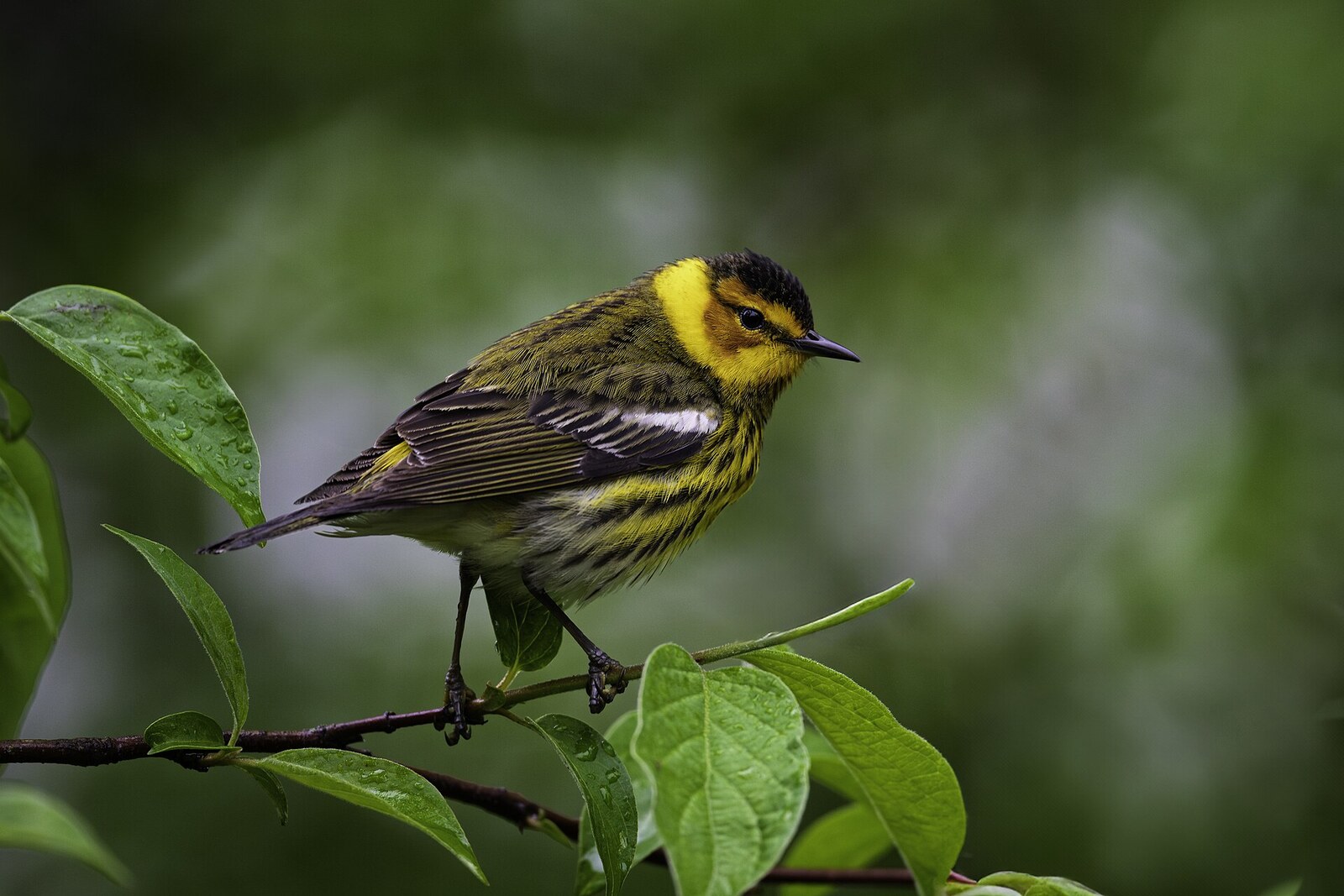
Cape May warbler
Setophaga tigrina
A tiger-striped warbler with a chestnut cheek patch in males, named for a single specimen taken in Cape May, New Jersey. Tracks spruce budworm outbreaks on its breeding grounds; passes through Marion in migration.
Status: Passage migrant.
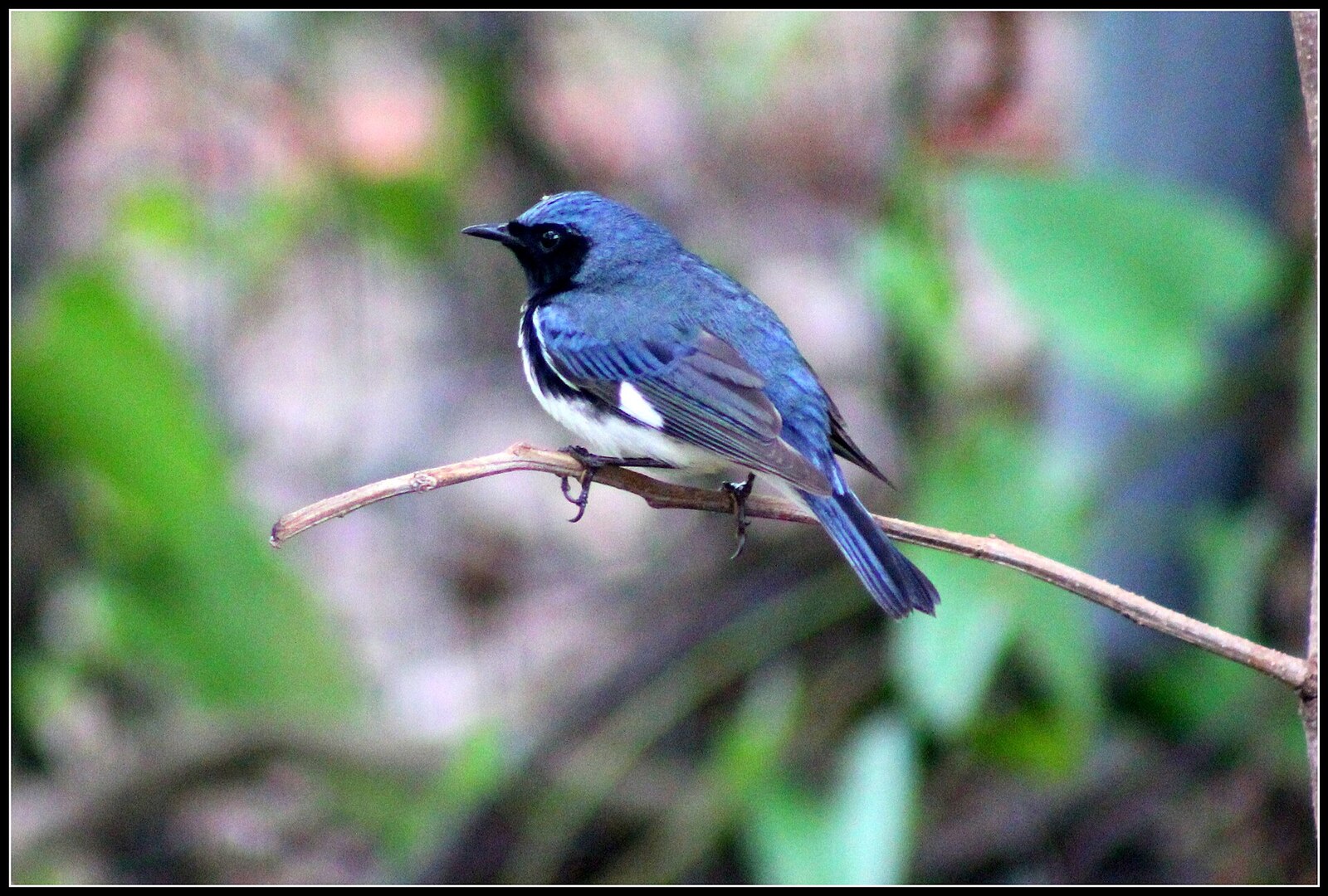
Black-throated blue warbler
Setophaga caerulescens
A blue, black, and white warbler in males; females are an entirely different drab olive. Breeds in cool moist forest at higher elevations across the Appalachians; passes through Marion as a migrant.
Status: Passage migrant; rare Plateau breeder.
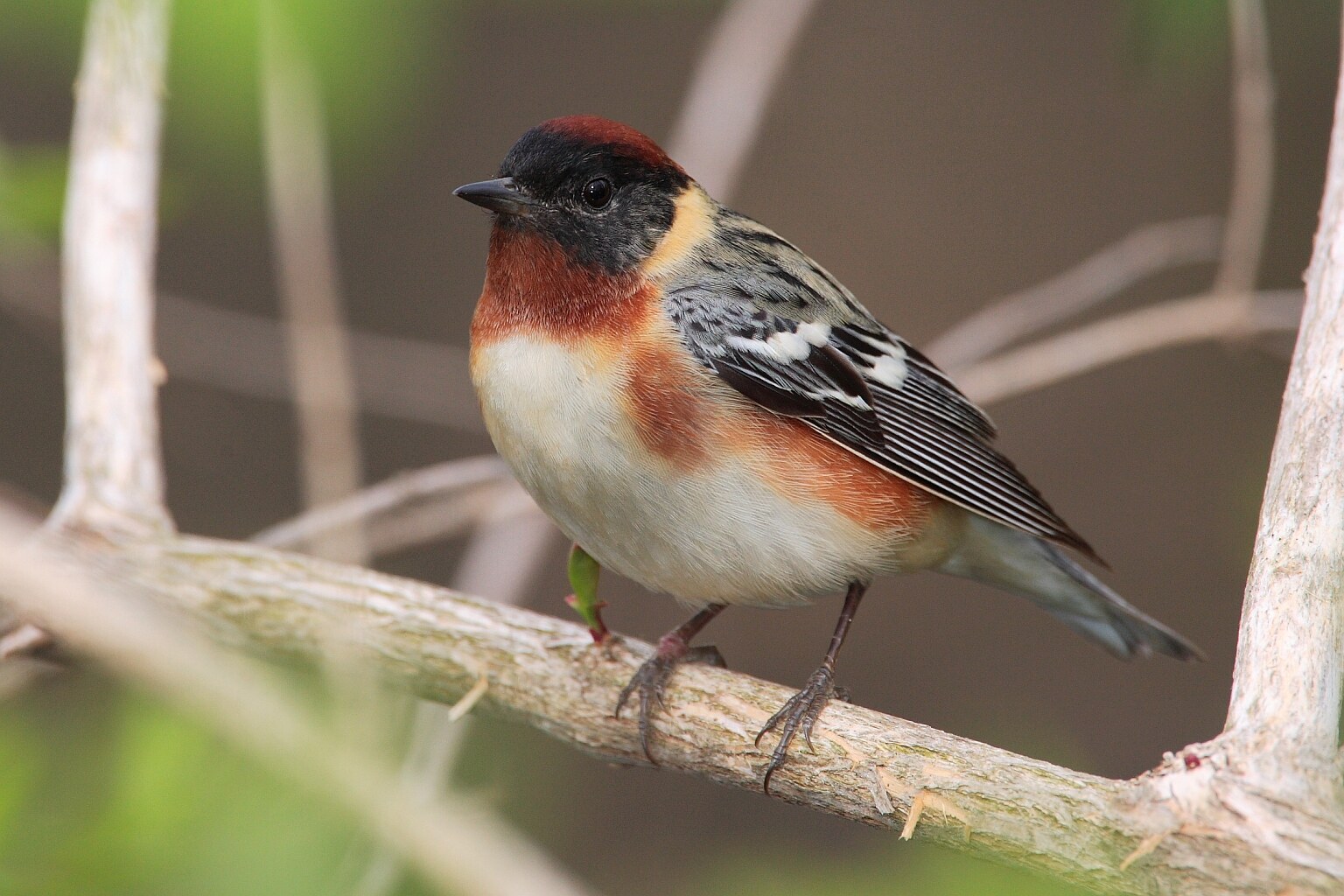
Bay-breasted warbler
Setophaga castanea
A boreal-forest warbler with a chestnut breast and crown patch in breeding males. Tracks spruce budworm on the breeding grounds; passes through Tennessee in spring and fall migration.
Status: Passage migrant.
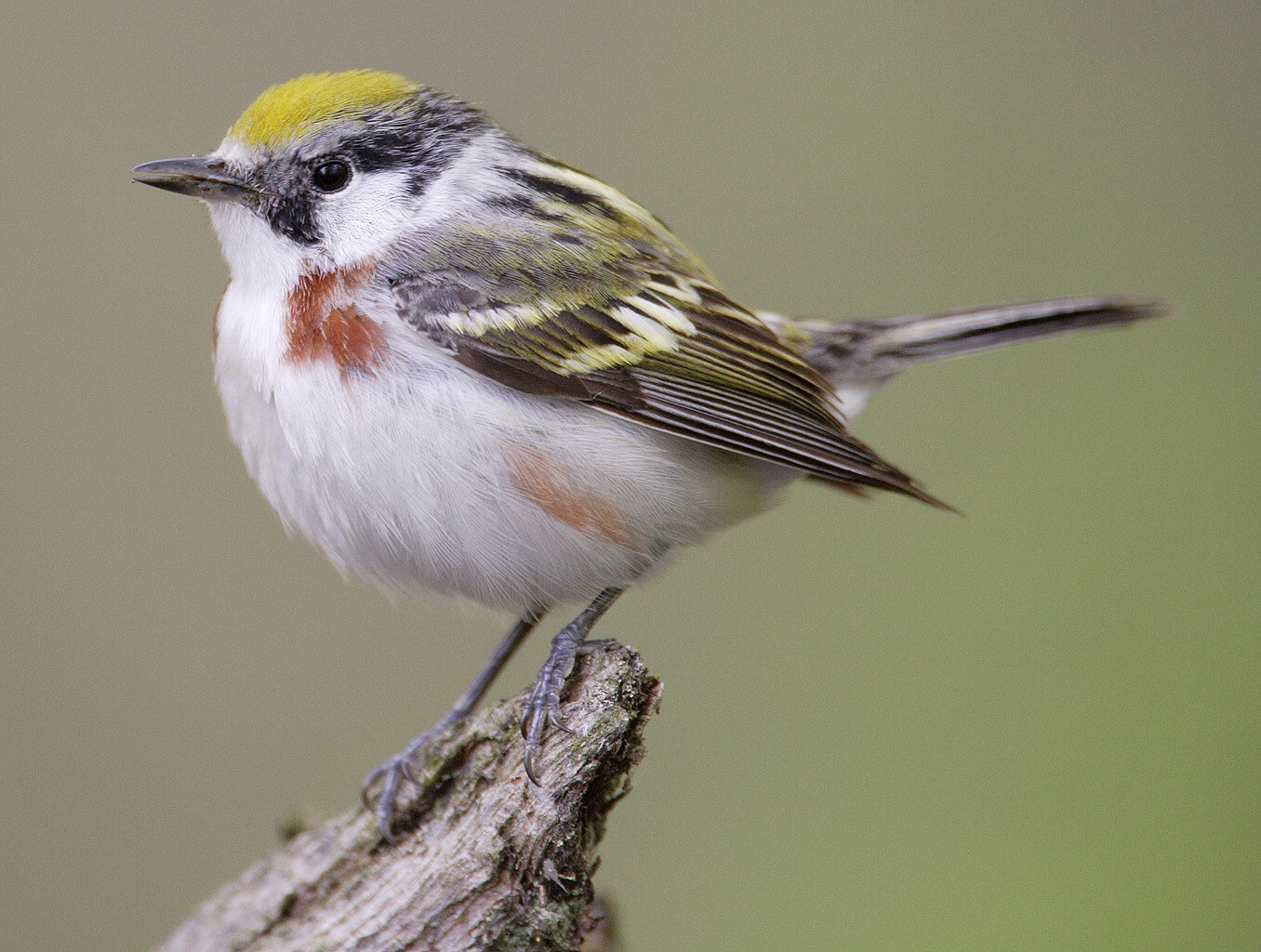
Chestnut-sided warbler
Setophaga pensylvanica
A warbler with chestnut flanks and a yellow cap, breeding in second-growth deciduous forest. Most common in Marion County as a passage migrant; rare local breeder at higher Cumberland Plateau elevations.
Status: Passage migrant; rare local breeder.
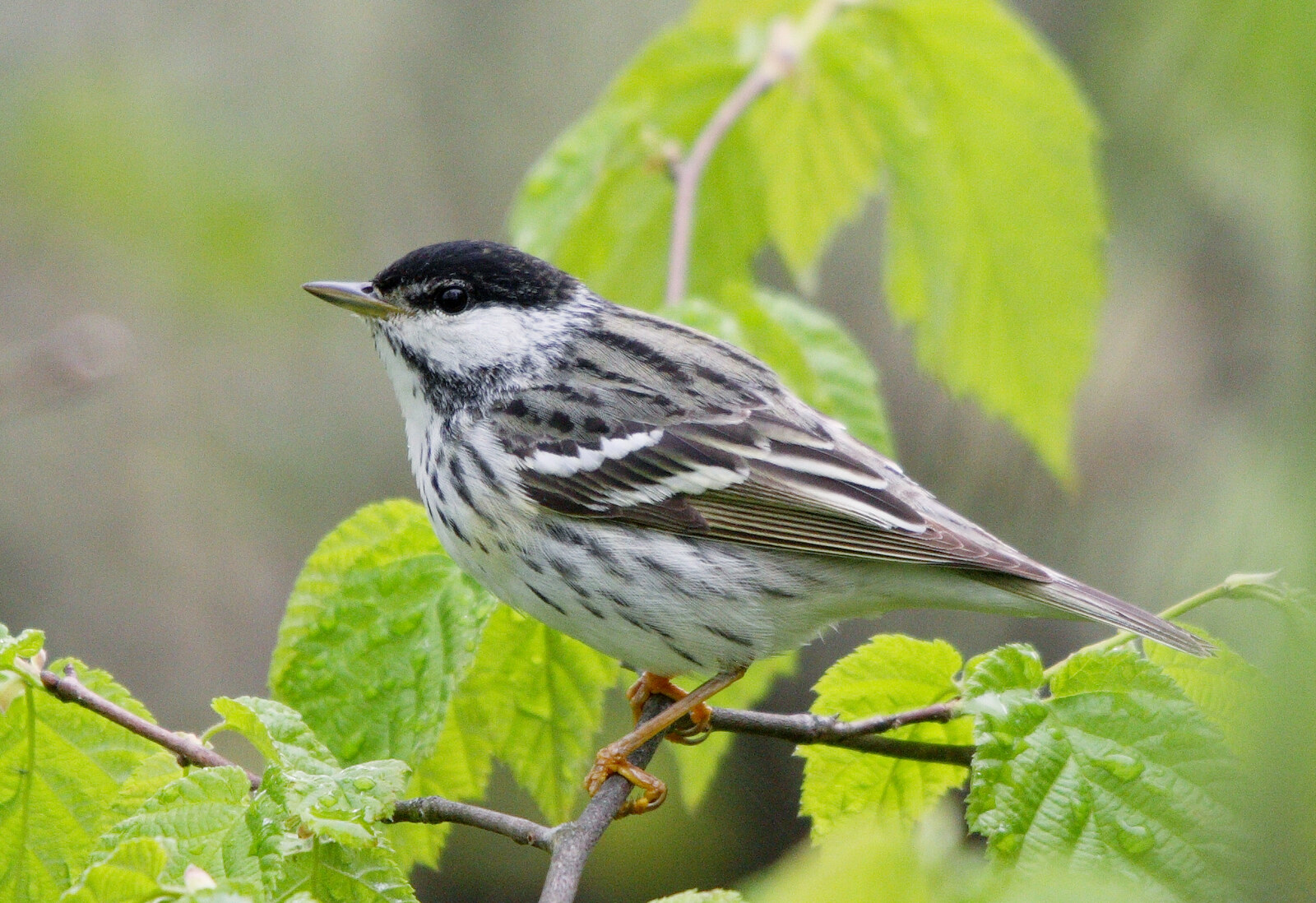
Blackpoll warbler
Setophaga striata
A black-capped warbler that completes one of the longest songbird migrations in the world, including a non-stop ocean crossing of more than 2,000 miles. Passes through Tennessee on the spring and fall legs of that journey.
Status: Passage migrant.
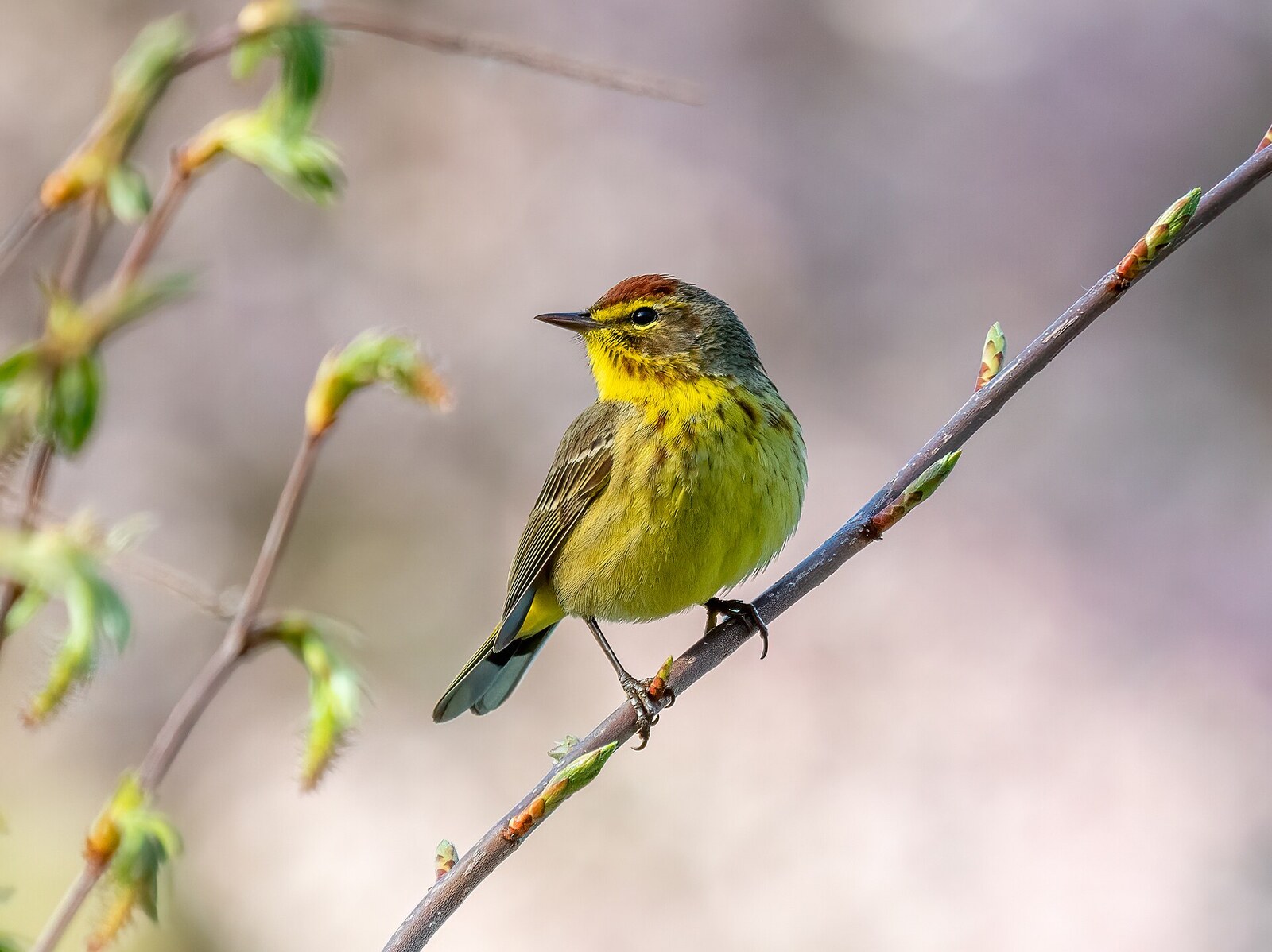
Palm warbler
Setophaga palmarum
A streaky brown warbler that pumps its tail constantly while foraging on the ground. A passage migrant through Marion County; breeds in boreal sphagnum bogs.
Status: Passage migrant.
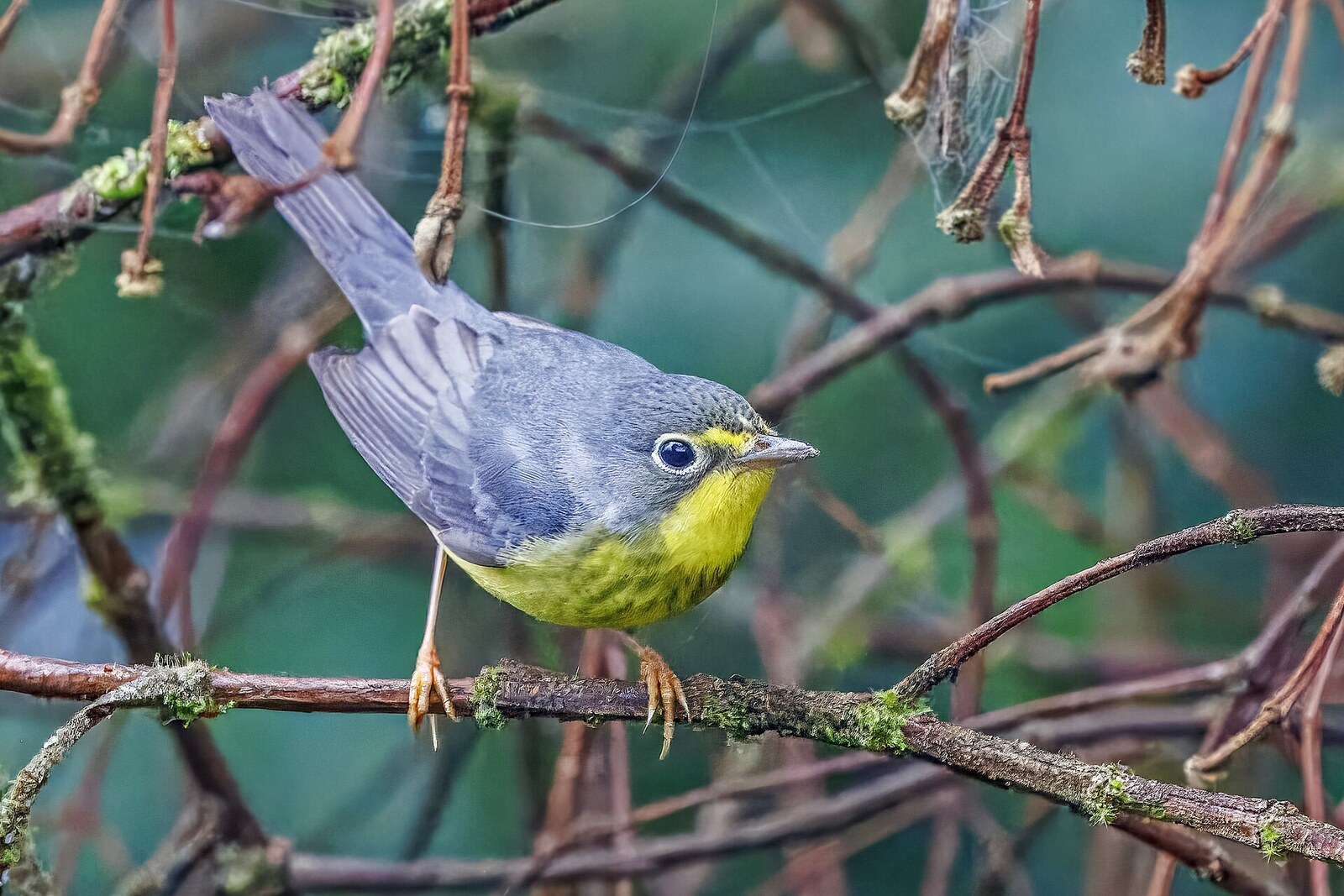
Canada warbler
Cardellina canadensis
A blue-gray warbler with a yellow throat crossed by a black necklace. Breeds in cool moist forest understory across the boreal belt and the high Appalachians; declining and passes through Marion in spring and fall.
Status: Declining; passage migrant.
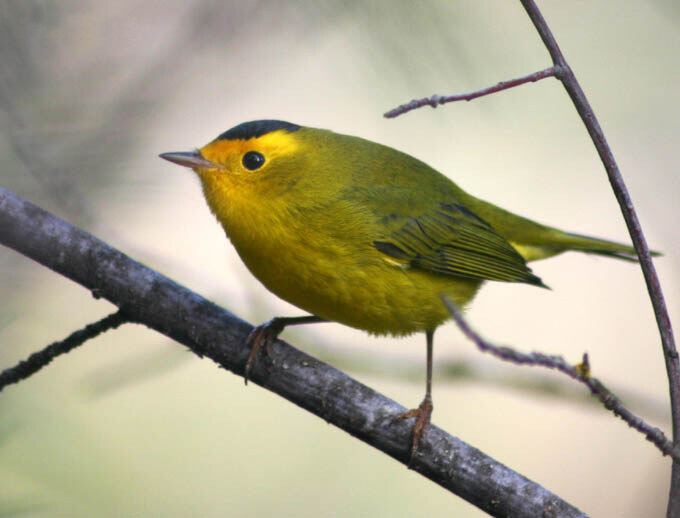
Wilson's warbler
Cardellina pusilla
A small bright-yellow warbler with a black cap in males. Breeds in northern willow and alder thickets and is a passage migrant only in the southeast.
Status: Passage migrant.
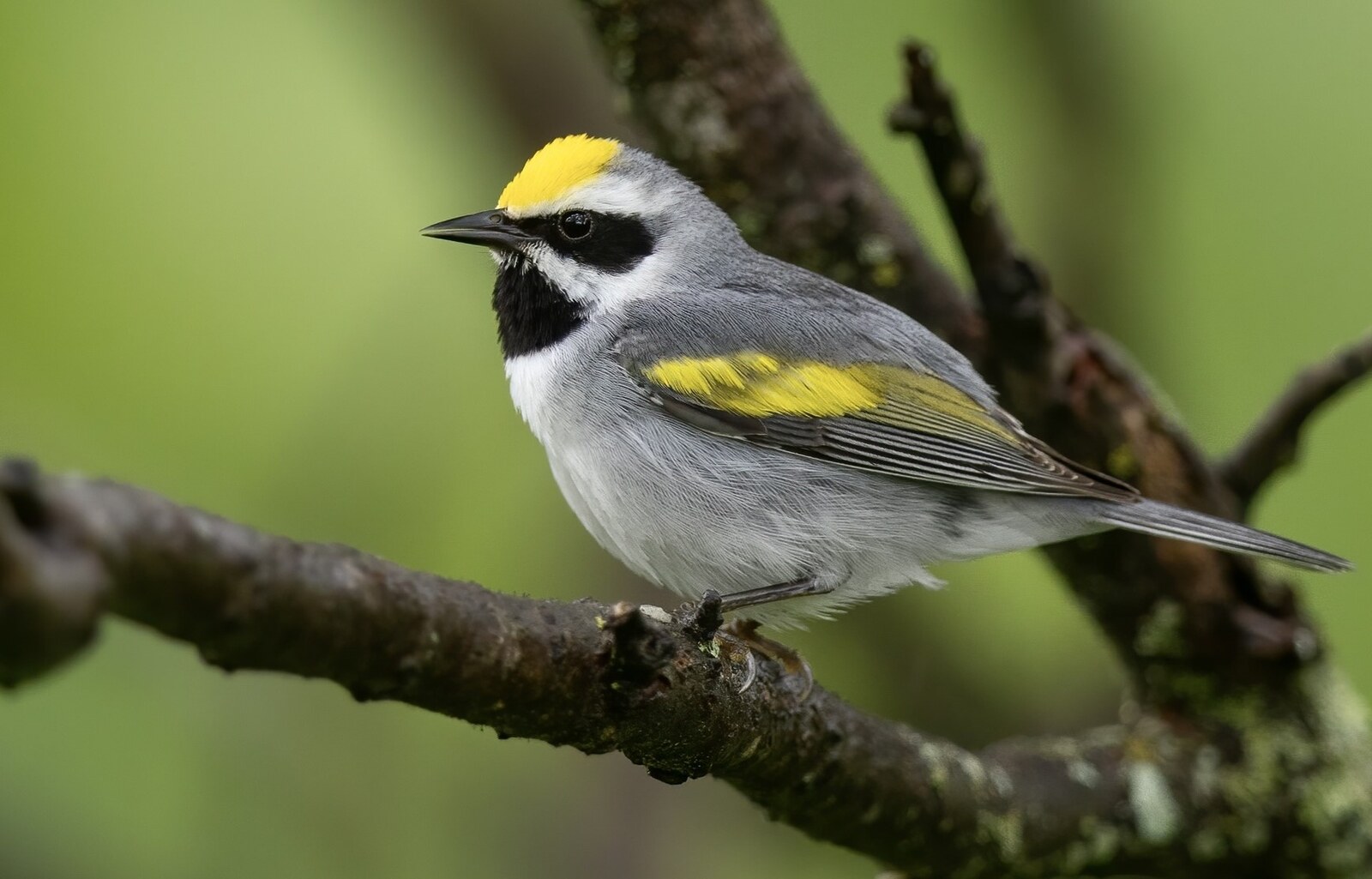
Golden-winged warbler
Vermivora chrysoptera
A black-throated gray warbler with bold golden wing patches, one of the most rapidly declining songbirds in eastern North America. Hybridizes with the blue-winged warbler where ranges overlap; rare breeder and passage migrant in Marion County.
Status: Declining; TWRA Species of Greatest Conservation Need.
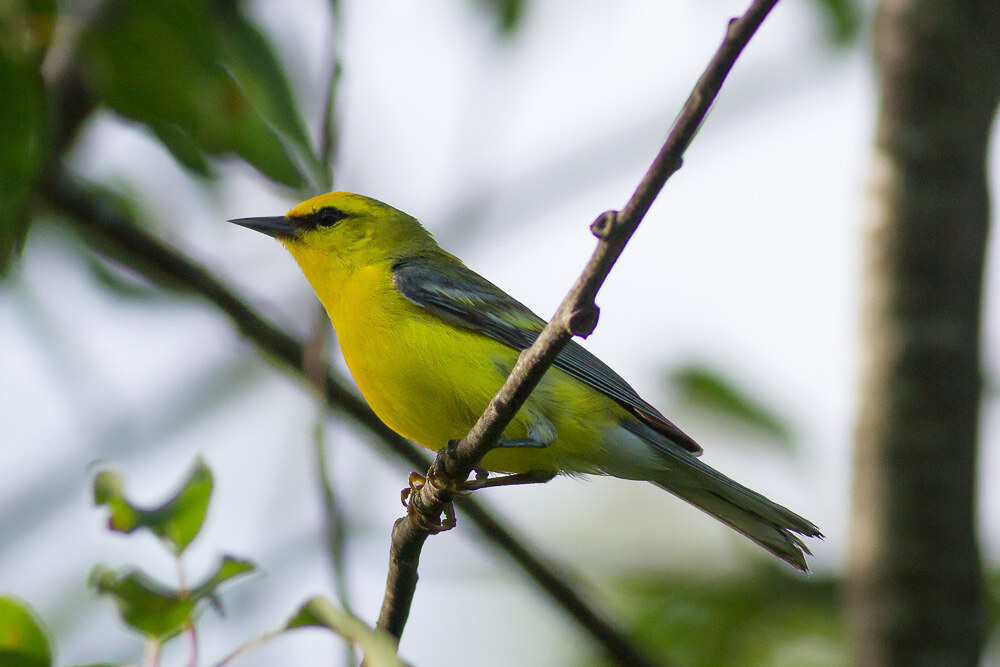
Blue-winged warbler
Vermivora cyanoptera
A yellow warbler with a thin black eye-line and blue-gray wings. Breeds in shrubby successional habitat and old fields; expanding into former golden-winged territory across the southeast.
Status: Declining (regionally).
Passage thrushes
Three Catharus thrushes pass through Marion County on spring and fall migration without breeding here. The veery breeds in the southern Appalachians and far north of Tennessee; Swainson's thrush breeds in the boreal forest and Pacific Northwest; the gray-cheeked thrush nests in the high-latitude boreal belt and is the least-encountered of the three.
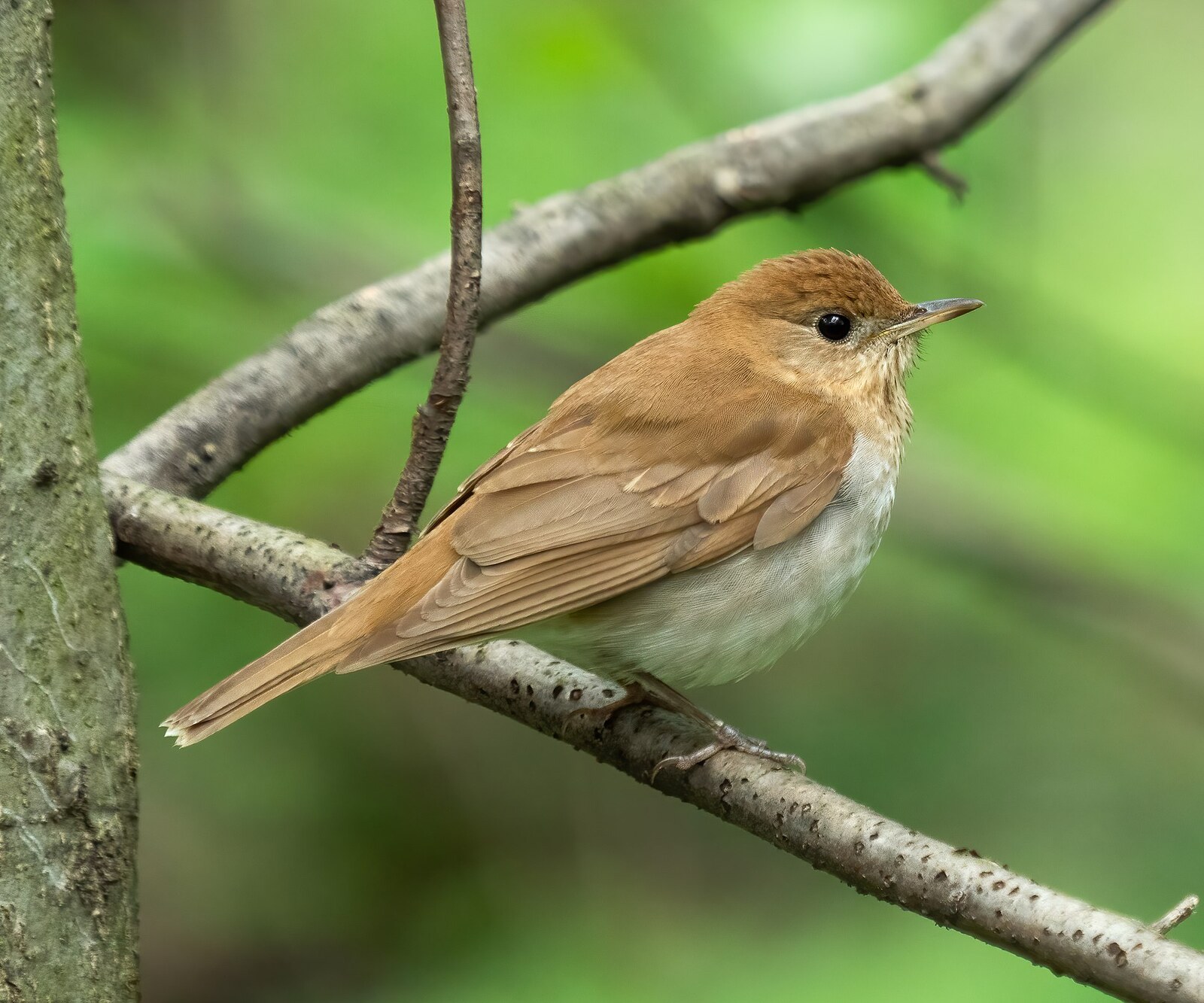
Veery
Catharus fuscescens
A cinnamon-backed thrush with faint chest spotting, breeding in the Appalachians north of Tennessee. A passage migrant in Marion County, more often heard giving its descending flutelike song than seen.
Status: Passage migrant.
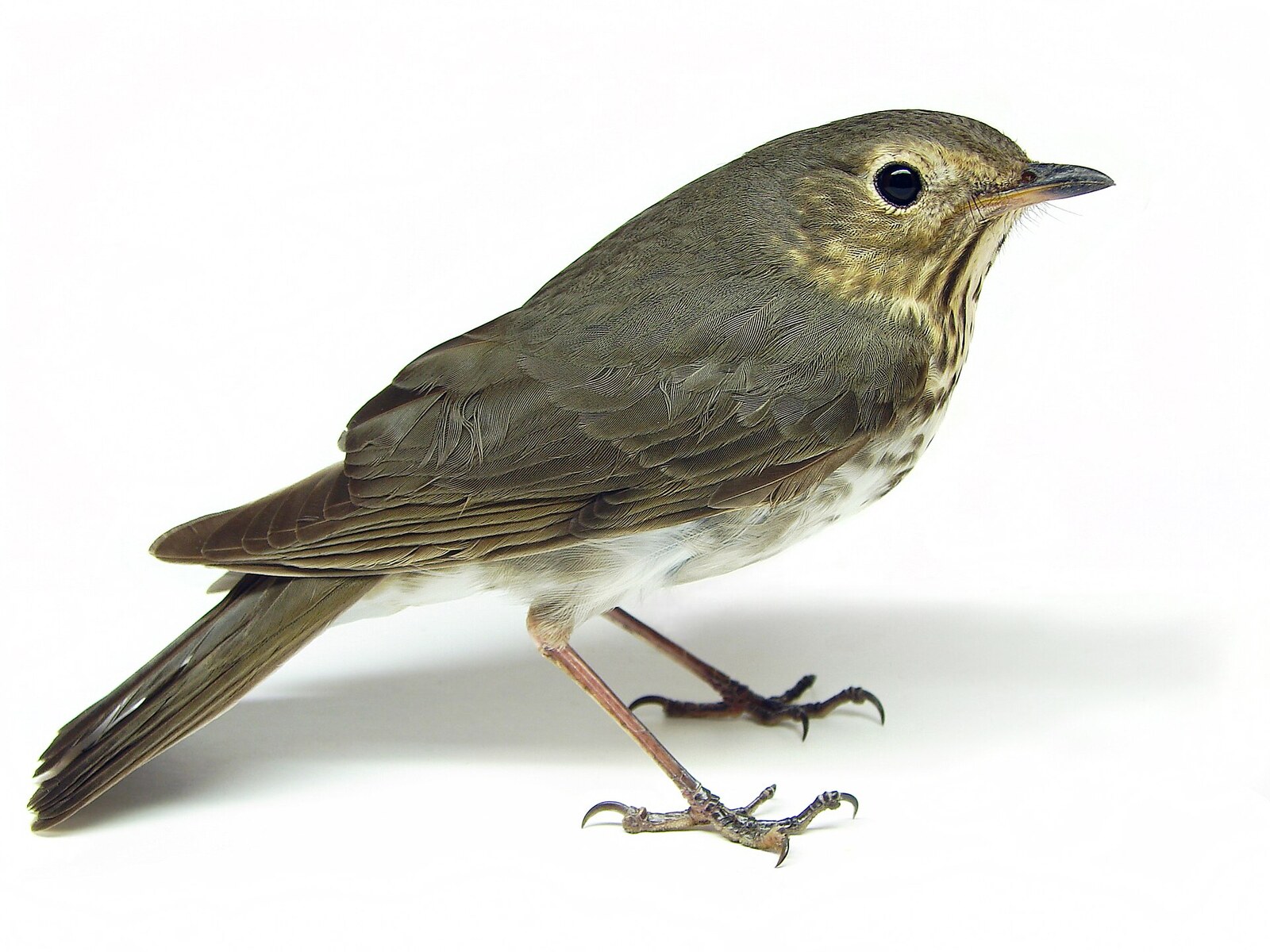
Swainson's thrush
Catharus ustulatus
A spotted brown thrush that breeds in the boreal and Pacific Northwest forests and migrates through the eastern U.S. The upward-spiraling fluty song is a passage-migration sound in Marion County.
Status: Passage migrant.
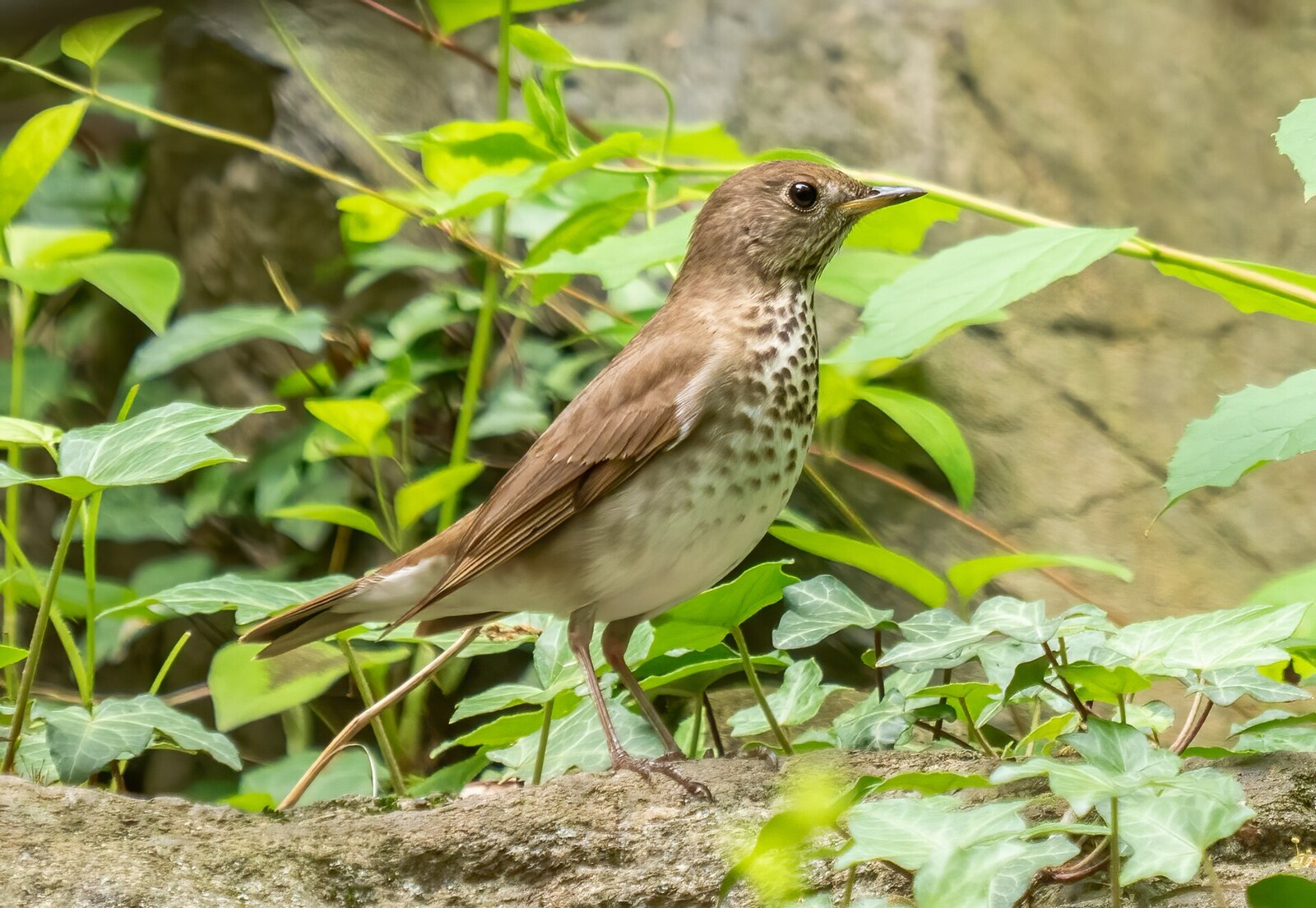
Gray-cheeked thrush
Catharus minimus
A grayish-brown thrush of the high-latitude boreal forest. The least-encountered Catharus in Marion, passing through silently in spring and fall.
Status: Passage migrant.
Wintering and passage waterbirds
The Tennessee River, Nickajack Lake, the Sequatchie River flats, and Marion farm ponds host a substantial wintering and passage waterbird population from late October through early April. Twenty-two ducks and geese, five grebes-loons-cormorants-pelicans, ten herons and bitterns, four rails-and-coots, ten shorebirds, and five gulls-and-terns regularly use the county's open-water and wetland habitats. Migrating sandhill crane skeins pass overhead in long V-formations of dozens to hundreds of birds on cold-front days each November and February.
Geese and ducks
The dabbling and diving ducks form the heart of Marion County's winter waterfowl picture. Mallards, wood ducks, and Canada geese hold year-round; pintails, wigeon, gadwall, shovelers, and the teal join in winter; the diving ducks (scaup, ring-necked, canvasback, redhead, bufflehead, goldeneye, ruddy duck, three mergansers) raft on Nickajack Lake's open water through cold months. Snow goose and blue-winged teal pass through on migration.
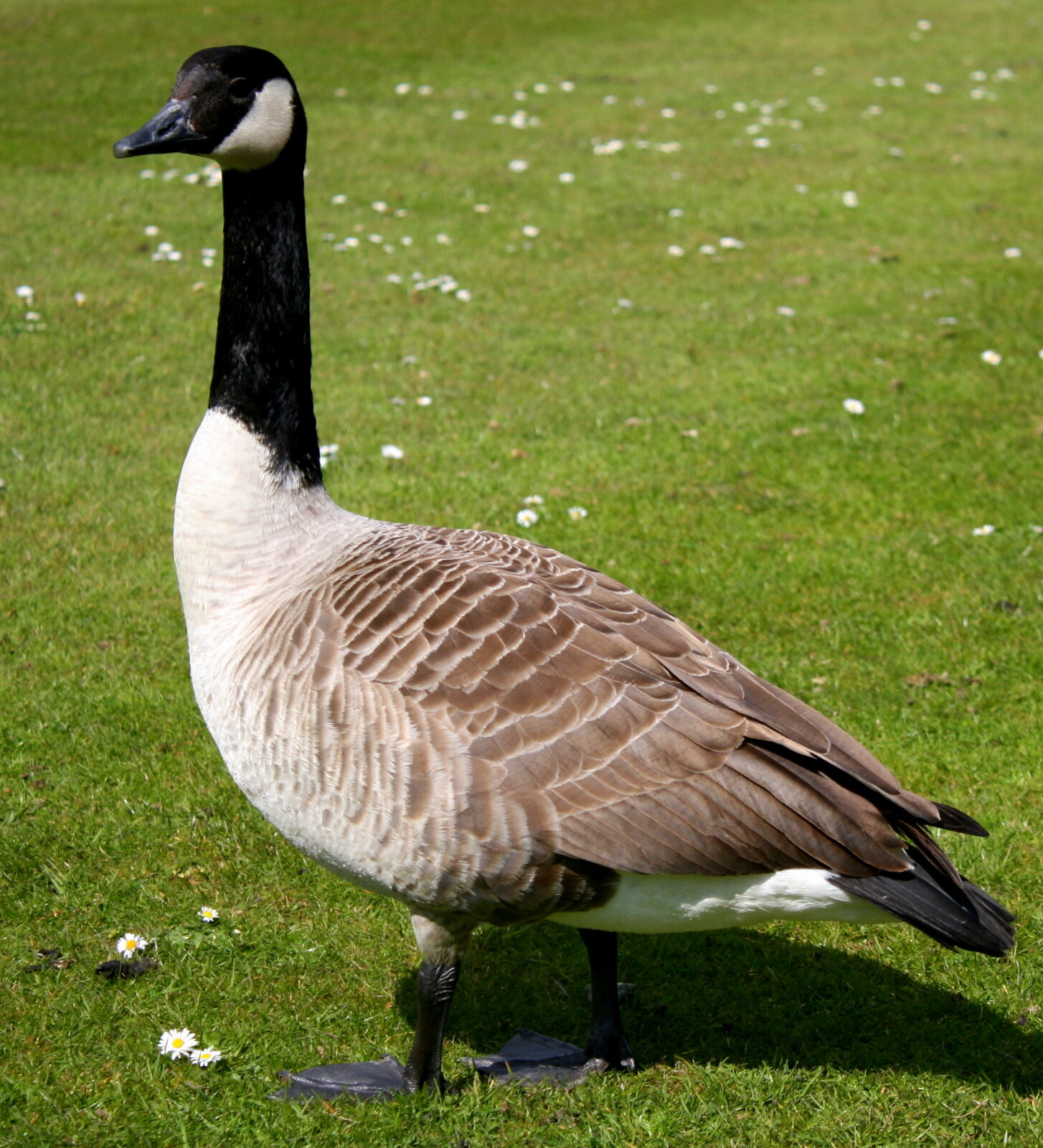
Canada goose
Branta canadensis
The familiar long-necked black-and-white goose, now abundant year-round on golf courses, parks, and the Tennessee River. A nineteenth-century near-extirpation in much of Tennessee; aggressive twentieth-century reintroductions overshot, and resident populations are now managed as a nuisance in places.
Status: Secure; year-round.
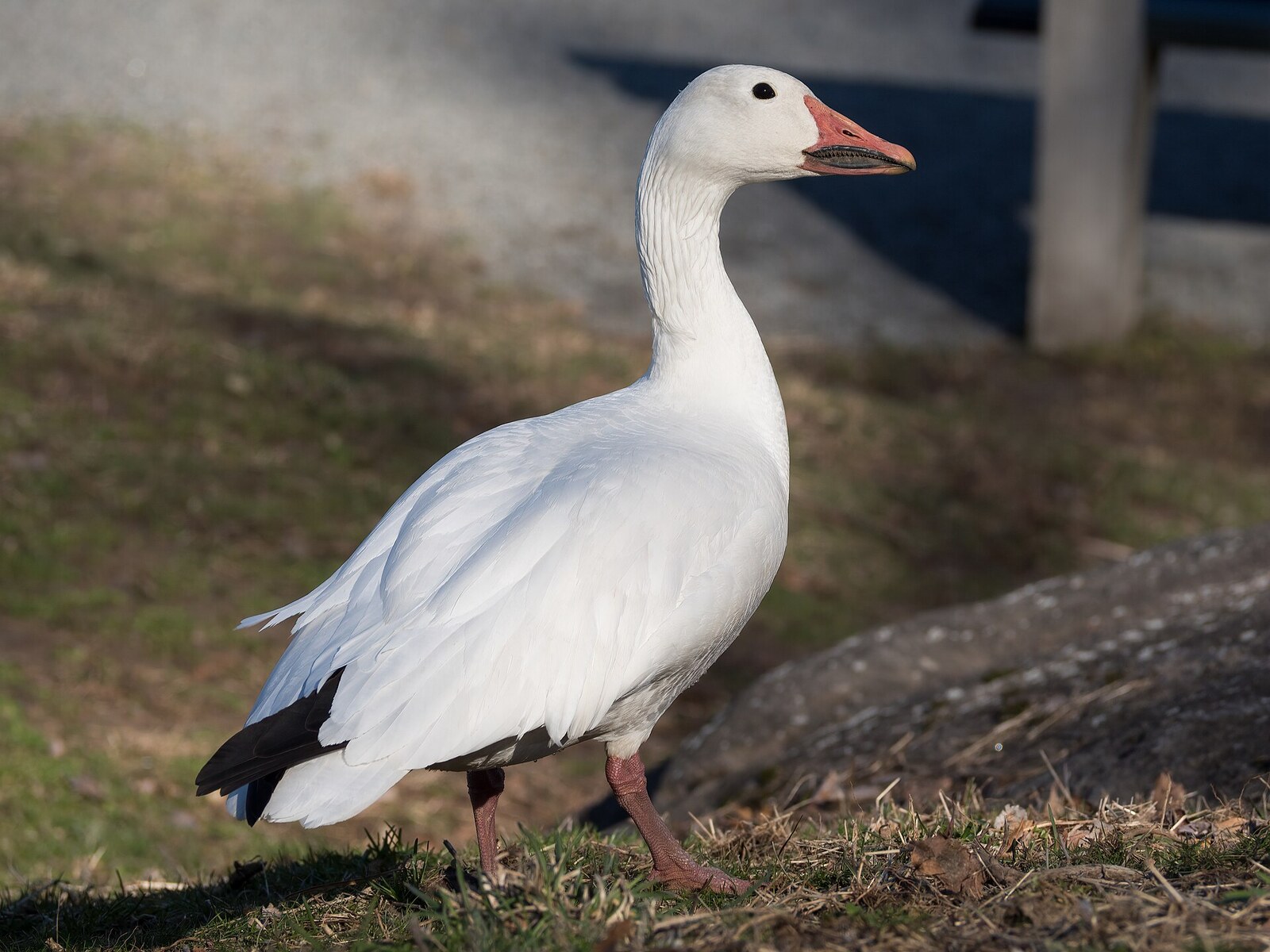
Snow goose
Anser caerulescens
A bright white goose with black wingtips, passing through Tennessee on its journey between Arctic breeding grounds and Gulf Coast wintering grounds. Most often seen in mid-winter mixed flocks on the Tennessee River.
Status: Winter passage.
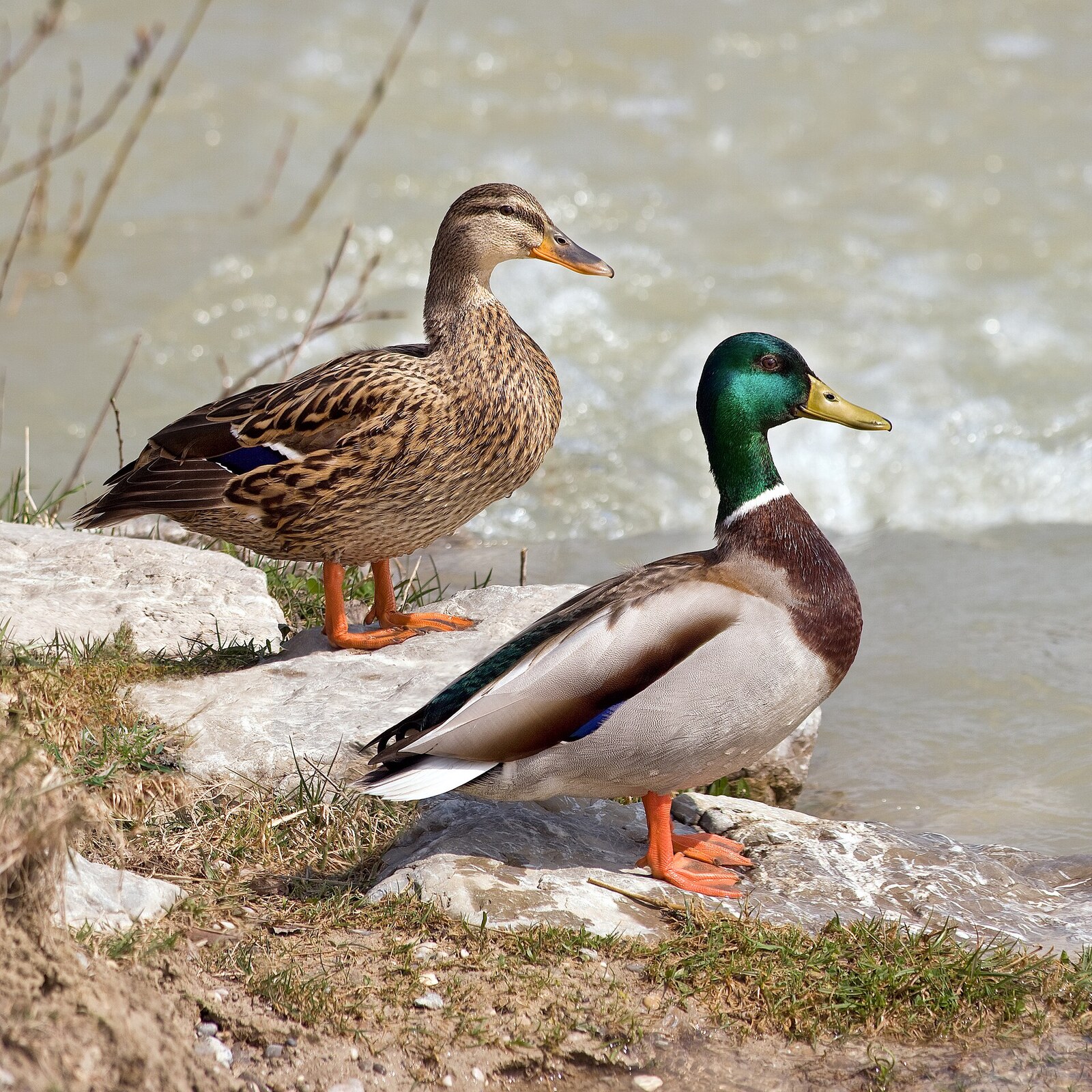
Mallard
Anas platyrhynchos
The most familiar dabbling duck in Marion County, with the green-headed drake a fixture on Nickajack Lake and farm ponds. Year-round resident; winter populations are augmented by migrants from the Mississippi Flyway.
Status: Secure; year-round.

American black duck
Anas rubripes
A dark dabbling duck of bottomland sloughs and quiet backwaters. Hybridizes with mallards across the eastern U.S.; winter visitor to Marion County wetlands.
Status: Winter resident; declining (regionally).
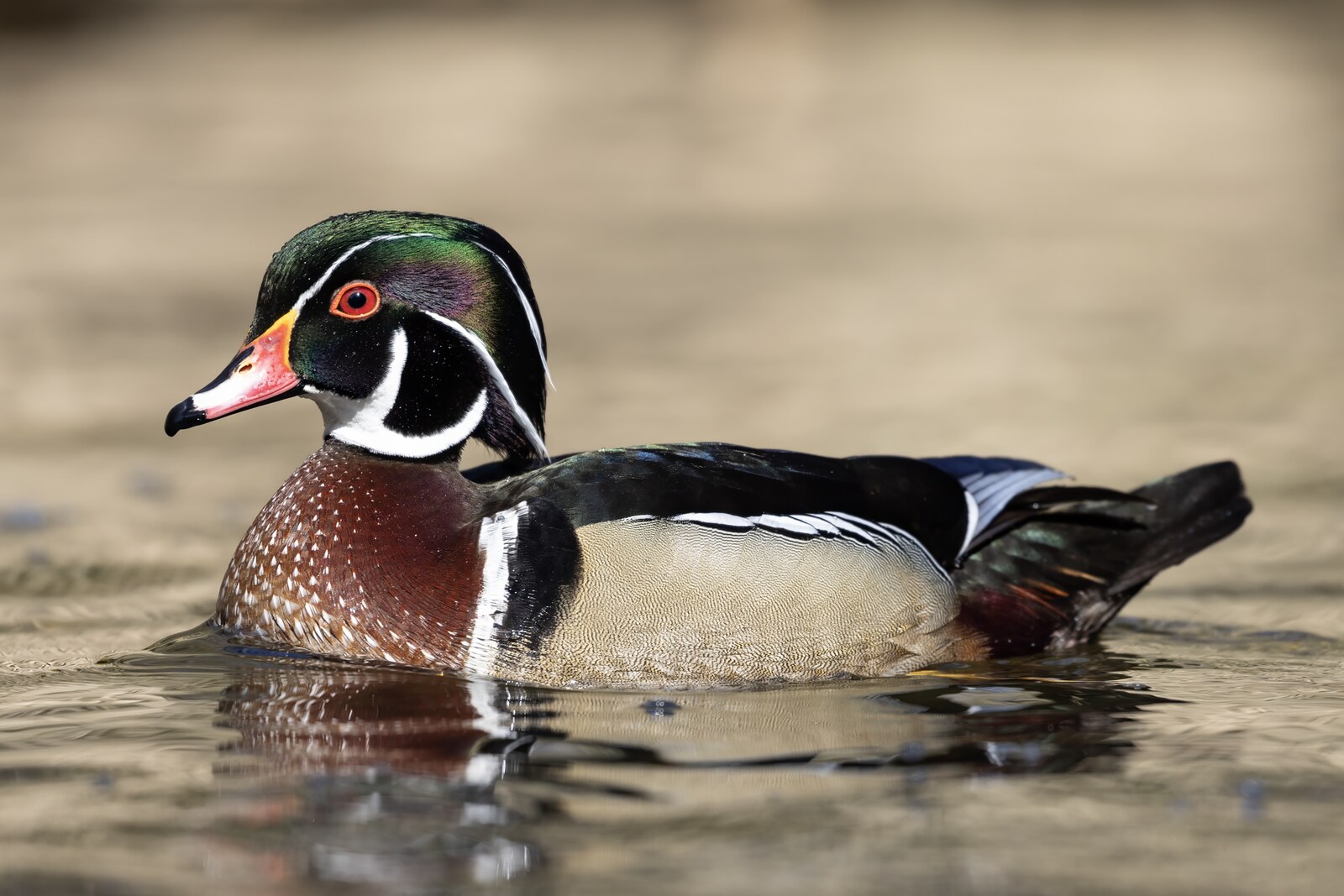
Wood duck
Aix sponsa
Possibly the most ornately patterned waterfowl in North America, breeding in tree cavities along Marion stream corridors and bottomland forest. Recovered from severe early-twentieth-century declines through nest-box programs and federal protection.
Status: Secure; year-round breeder.
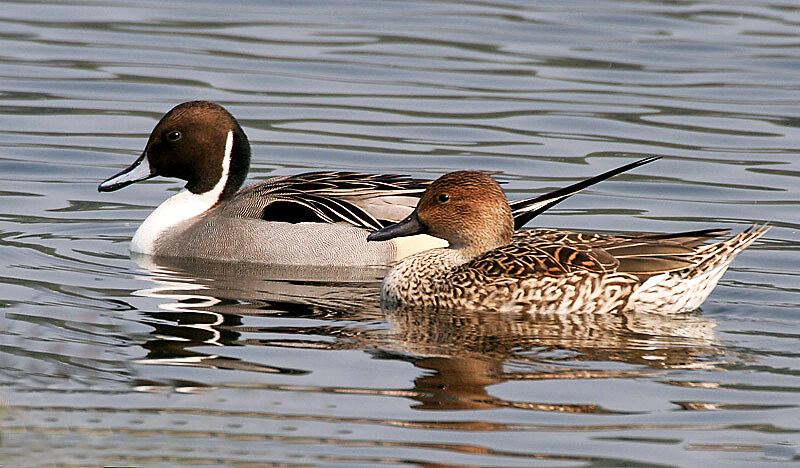
Northern pintail
Anas acuta
An elegant long-necked dabbling duck with a chocolate head and a long pointed tail. Winter visitor to the Tennessee River and Sequatchie Valley wetlands.
Status: Winter resident.
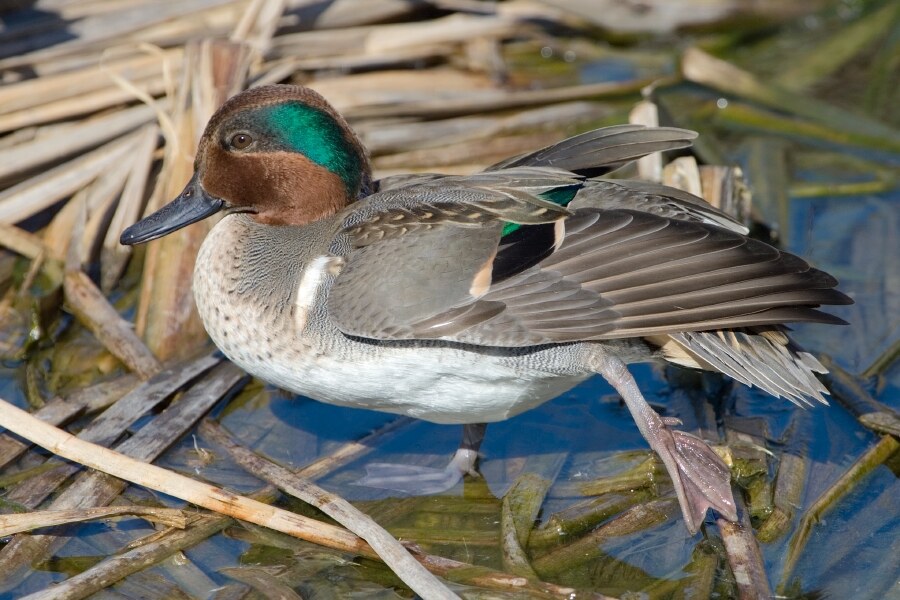
Green-winged teal
Anas crecca
The smallest North American dabbling duck, with a green wing-speculum and (in drakes) a chestnut head with a green eye-stripe. Common winter visitor in shallow Tennessee River backwaters.
Status: Winter resident.
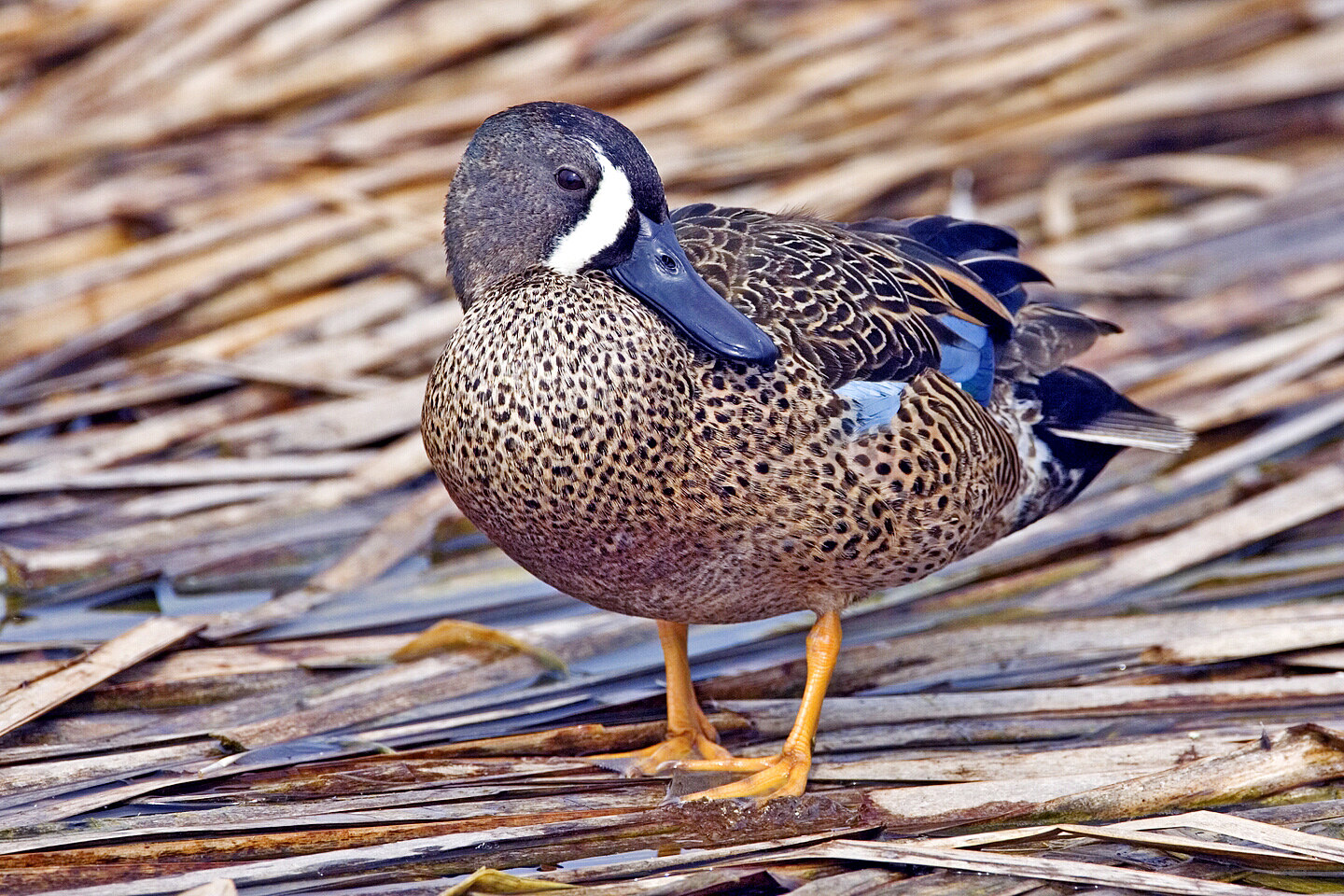
Blue-winged teal
Spatula discors
A small dabbling duck with sky-blue forewing patches visible in flight. Mostly a passage migrant in Marion County; departs Tennessee for Central and South American wintering grounds.
Status: Passage migrant.
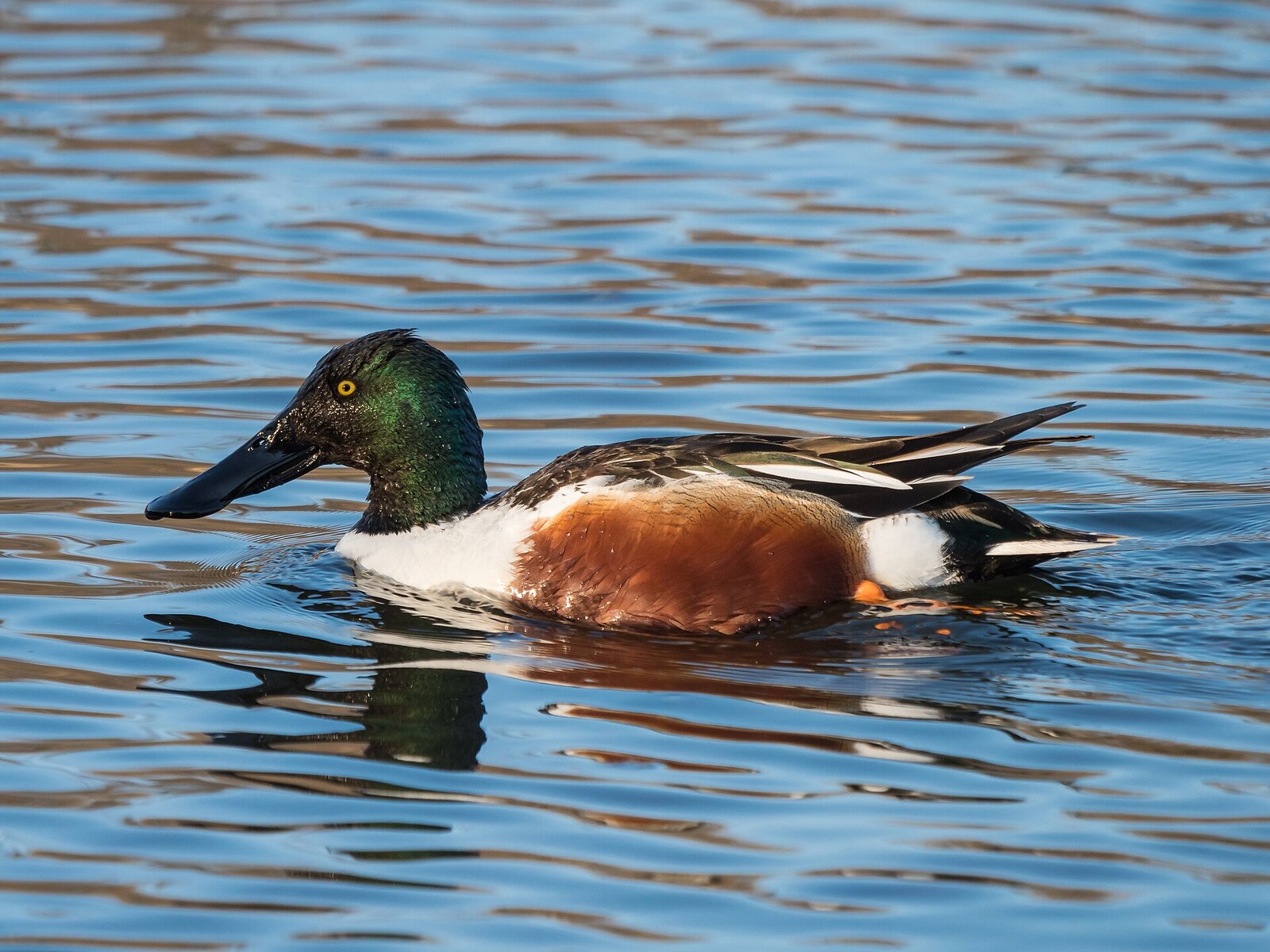
Northern shoveler
Spatula clypeata
A dabbling duck with an exaggerated spatulate bill used for filtering tiny invertebrates from the water column. Winter visitor to shallow flooded fields and pond edges.
Status: Winter resident.
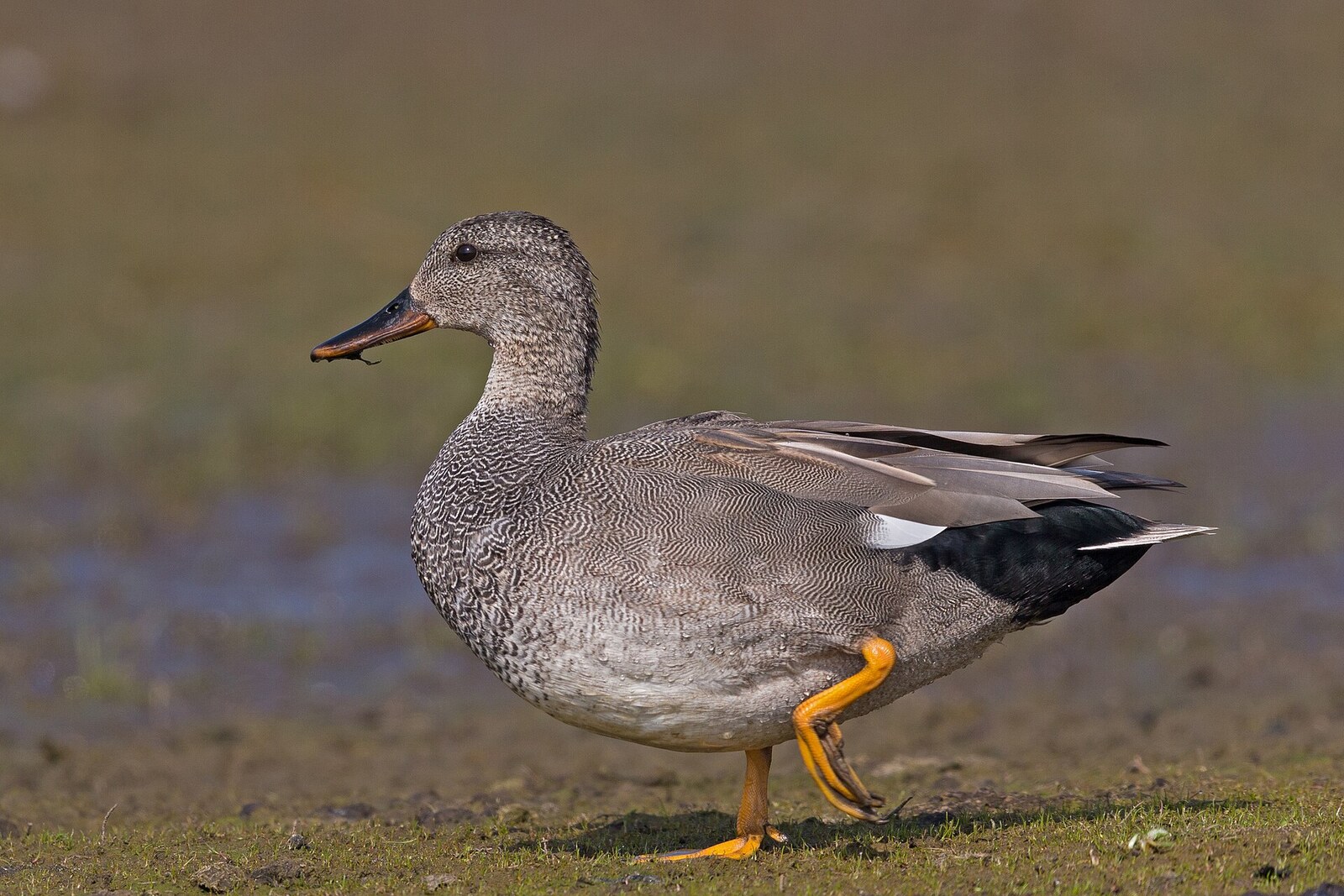
Gadwall
Mareca strepera
A mostly gray dabbling duck with a black rear end in drakes and a bright white wing-speculum visible in flight. Common winter visitor to the Tennessee River impoundments.
Status: Winter resident.
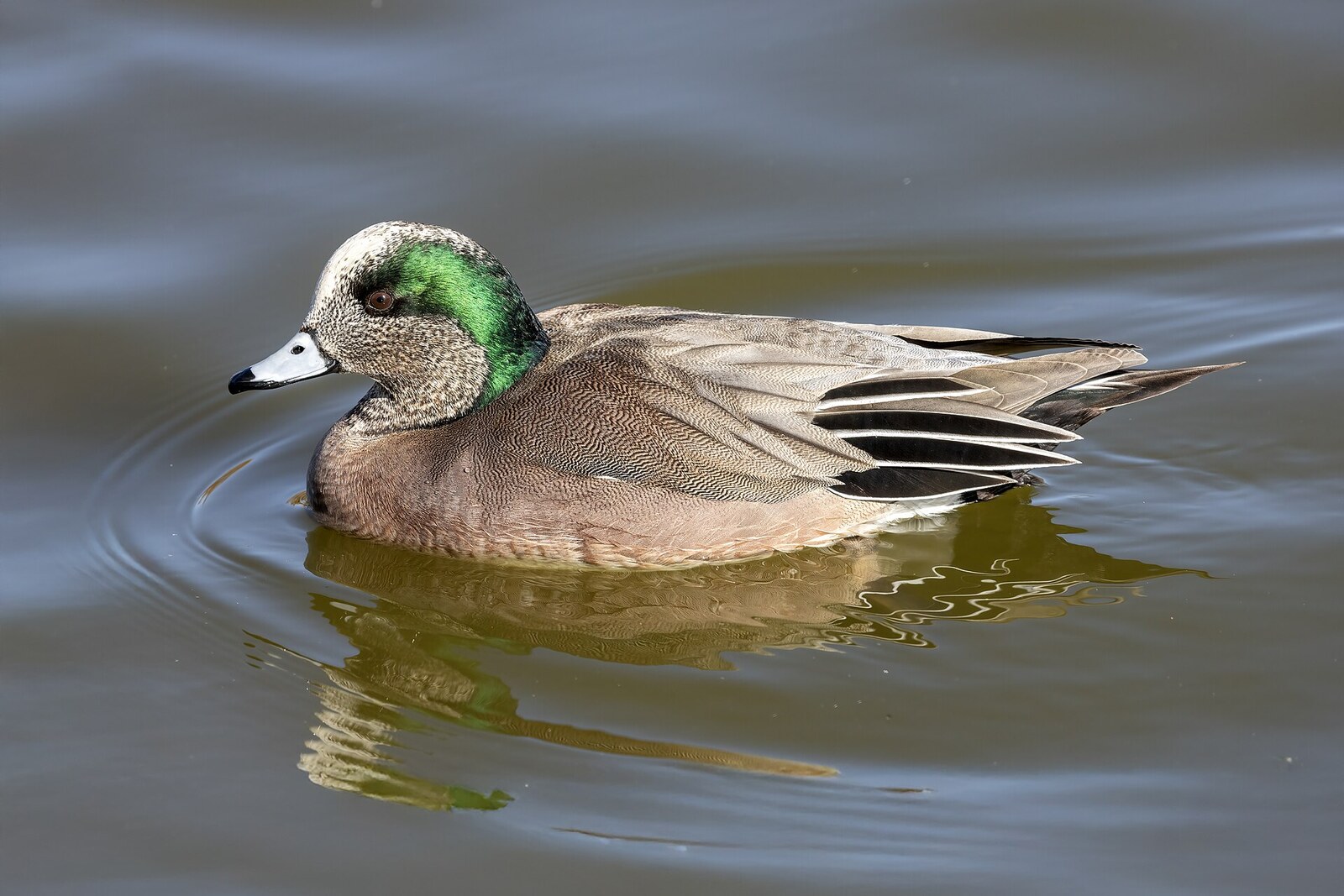
American wigeon
Mareca americana
A medium-sized dabbling duck whose male shows a green eye-patch and a creamy crown. Winter visitor that grazes on aquatic plants and lawn grass at reservoir edges.
Status: Winter resident.
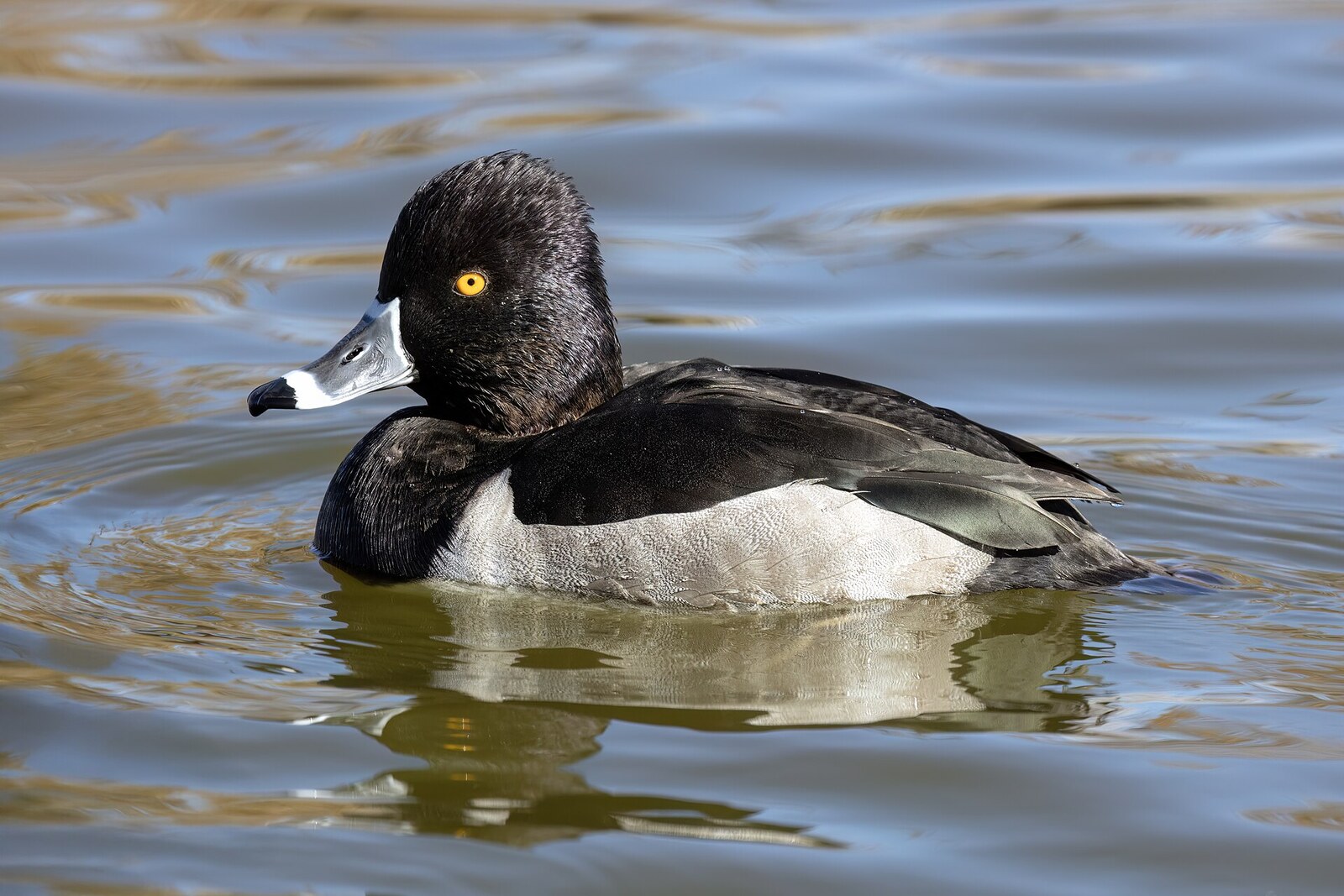
Ring-necked duck
Aythya collaris
A diving duck of forested lakes and reservoirs with a peaked black head and a white ring on the bill (the chestnut neck-ring is rarely visible in the field). Common winter visitor to Nickajack Lake.
Status: Winter resident.
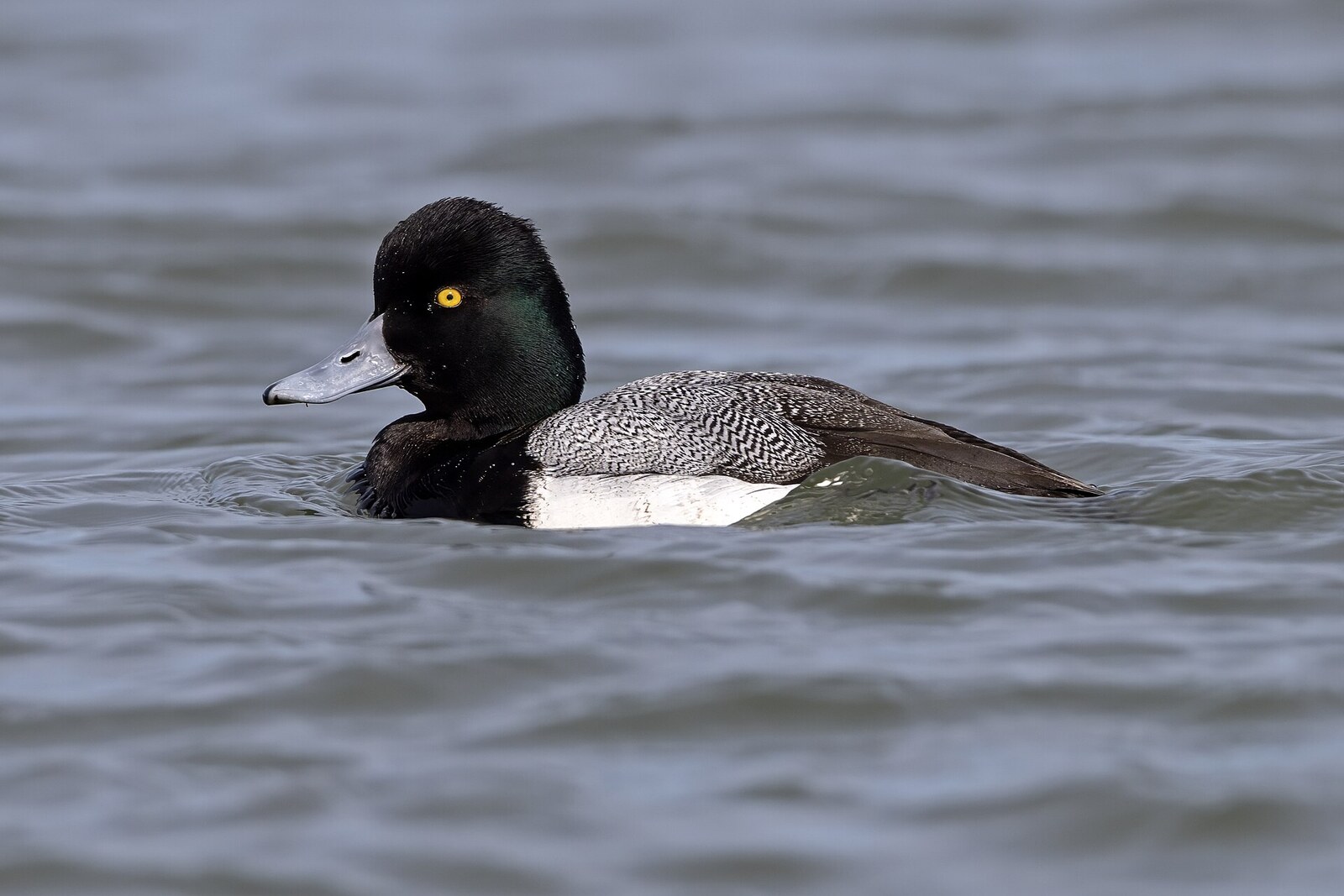
Lesser scaup
Aythya affinis
A medium-sized diving duck with a peaked head and a powder-blue bill. Common winter visitor in large open-water rafts on Nickajack Lake.
Status: Winter resident.
Greater scaup
Aythya marila
Cousin of the lesser scaup, distinguished by a rounder head and slightly more white in the wings. Less common than the lesser scaup at inland reservoirs but does occur on Nickajack in winter.
Status: Winter resident.
Canvasback
Aythya valisineria
A large diving duck with a wedge-shaped bill and a chestnut-headed drake. Less common than once on the Tennessee River impoundments but still present in winter flocks.
Status: Winter resident.
Redhead
Aythya americana
A medium-sized diving duck with a rust-red head, gray back, and pale-blue bill. Winter visitor in mixed open-water flocks with scaup and ring-necked ducks.
Status: Winter resident.
Hooded merganser
Lophodytes cucullatus
A small fish-eating diving duck with an extravagant black-and-white crest in drakes. Cavity-nests in bottomland hardwoods and is one of the few mergansers that breeds in Tennessee.
Status: Winter resident; local breeder.
Common merganser
Mergus merganser
A large fish-eating duck with a thin red bill, the male's clean white body separated from a green head by a black back. Winter visitor on the Tennessee River.
Status: Winter resident.
Red-breasted merganser
Mergus serrator
Cousin of the common merganser with a wispier double crest and a more rust-colored breast in drakes. Winter visitor on Tennessee River impoundments and tailwater.
Status: Winter resident.
Bufflehead
Bucephala albeola
A small chunky diving duck, the drake mostly white with a black back and a large white head patch. Common in winter on Nickajack Lake in pairs and small groups.
Status: Winter resident.
Common goldeneye
Bucephala clangula
A medium diving duck with a glossy green-black head and a round white face spot in drakes. Wintering flocks dive for mollusks and crustaceans in the Tennessee River tailwaters.
Status: Winter resident.
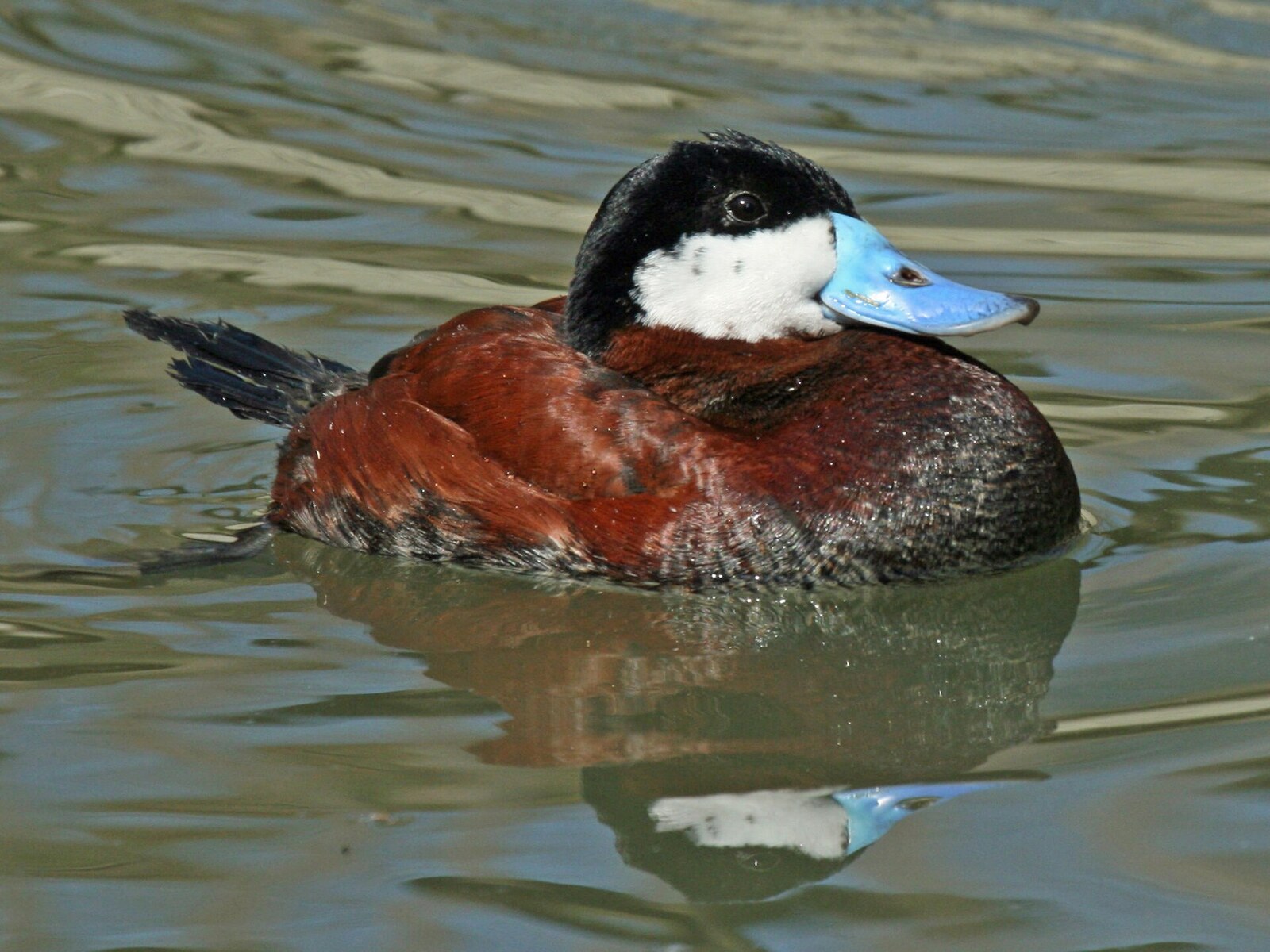
Ruddy duck
Oxyura jamaicensis
A small stiff-tailed diving duck, the breeding male a striking chestnut with a sky-blue bill and white cheek patch. Mainly a winter visitor in Marion County but can linger into spring.
Status: Winter resident.
Grebes, loons, cormorant, and pelican
Three grebe-and-loon species winter on Nickajack Lake. The double-crested cormorant is common year-round, often gathered in dozens at the Nickajack Dam tailrace. The American white pelican, a six-foot-wingspan visitor from the Great Plains breeding grounds, passes through the Tennessee River corridor and overwinters in small numbers.
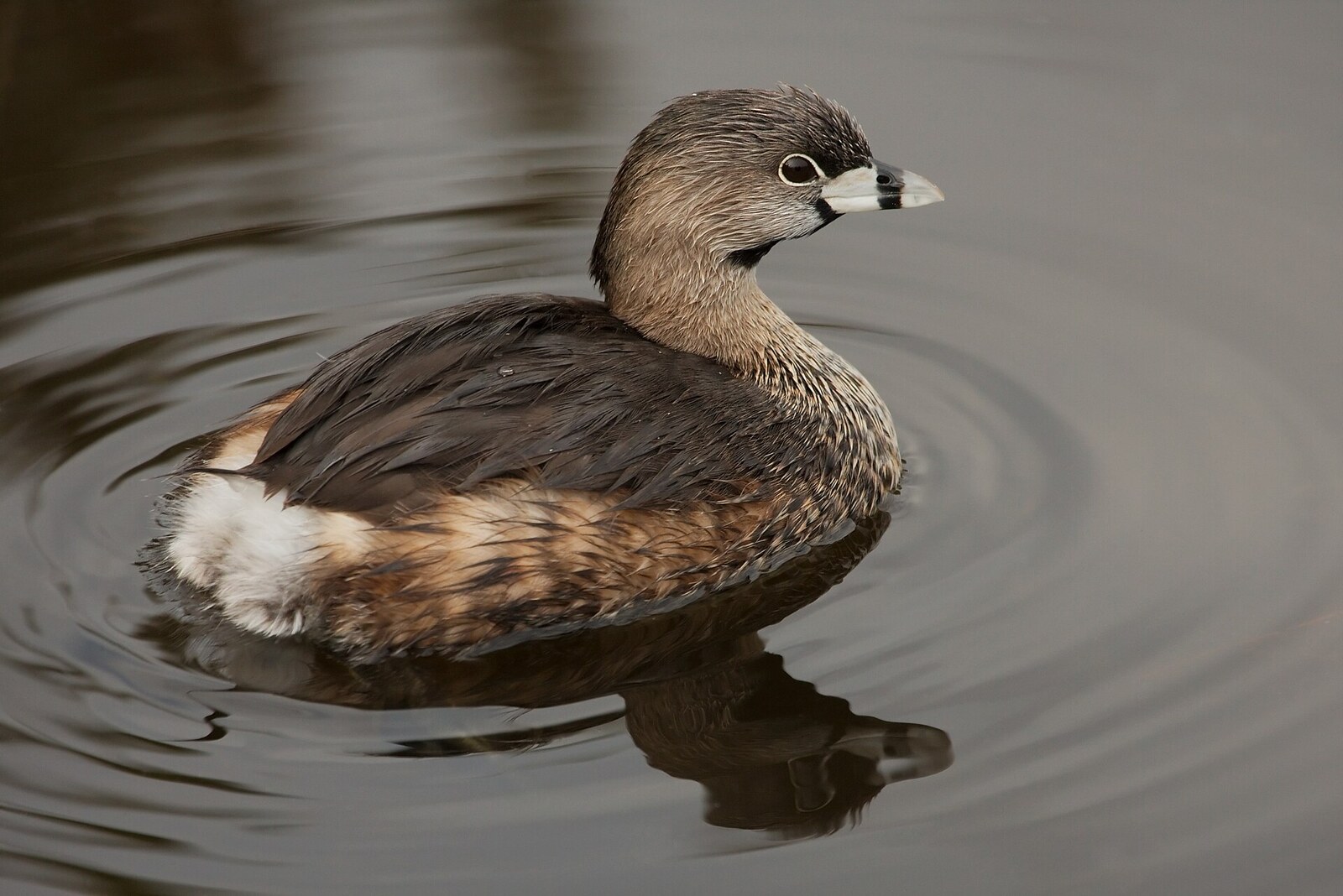
Pied-billed grebe
Podilymbus podiceps
A small brown waterbird that dives more often than it flies, controlling its buoyancy by squeezing air from its plumage. Year-round resident on quiet backwaters; nests on floating vegetation rafts.
Status: Year-round; common.
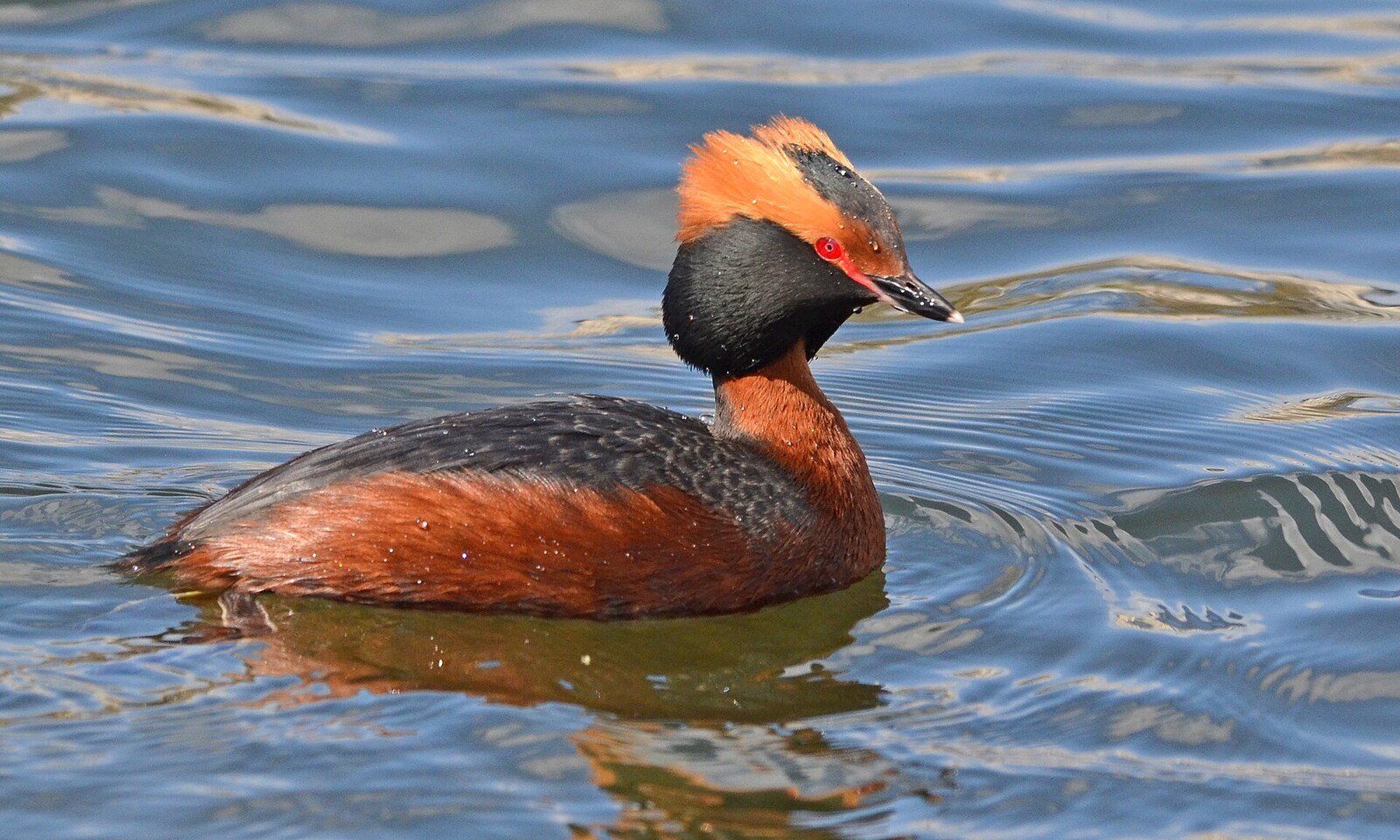
Horned grebe
Podiceps auritus
A small black-and-white winter grebe with a flat head and red eye. Common on Nickajack Lake and other Tennessee River impoundments through winter.
Status: Winter resident.
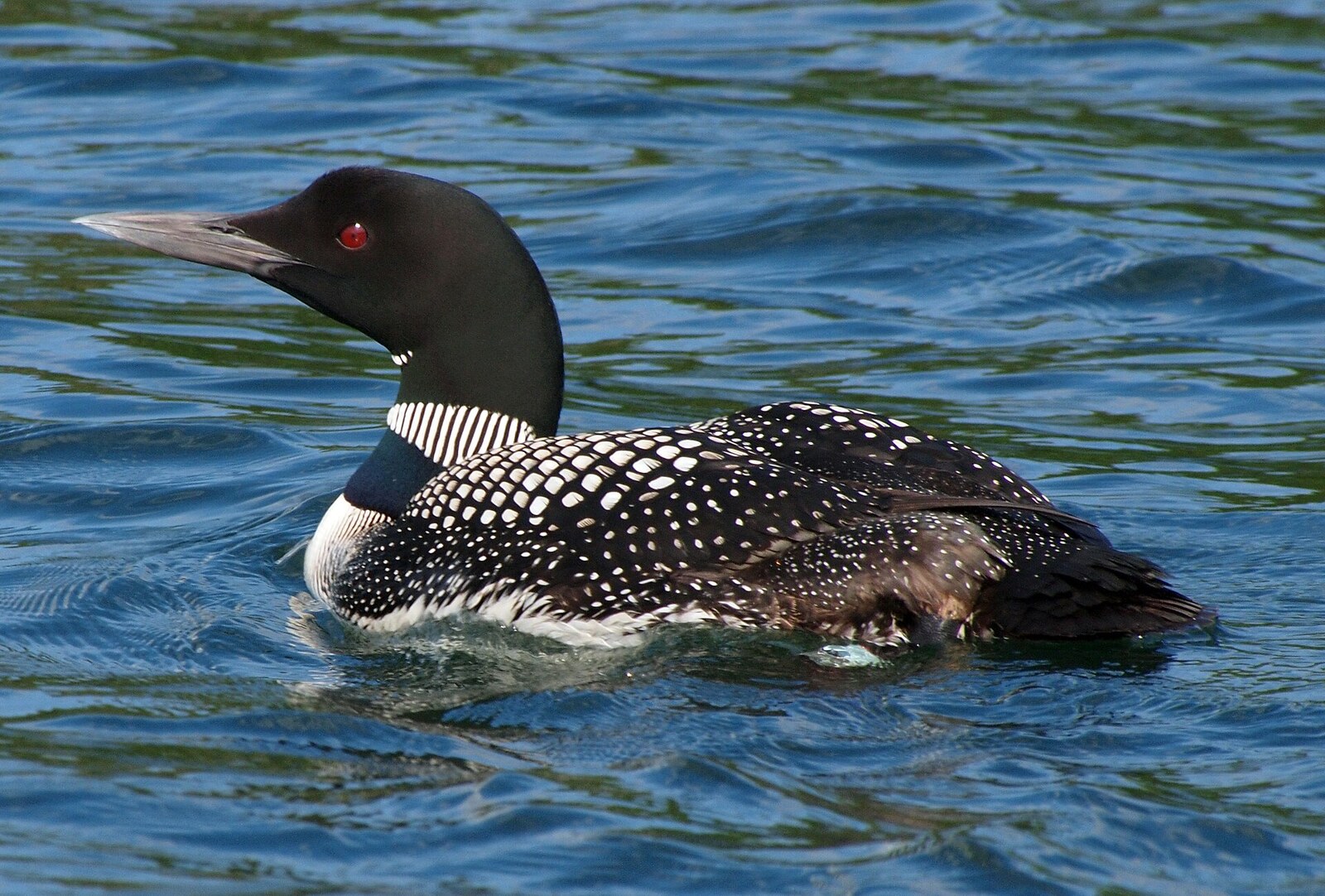
Common loon
Gavia immer
A large fish-eating diving bird with a heavy dagger bill and an eerie yodeling call on its boreal breeding grounds. Winter visitor on the Tennessee River and Nickajack Lake; loons in this part of the country are mostly silent.
Status: Winter resident.
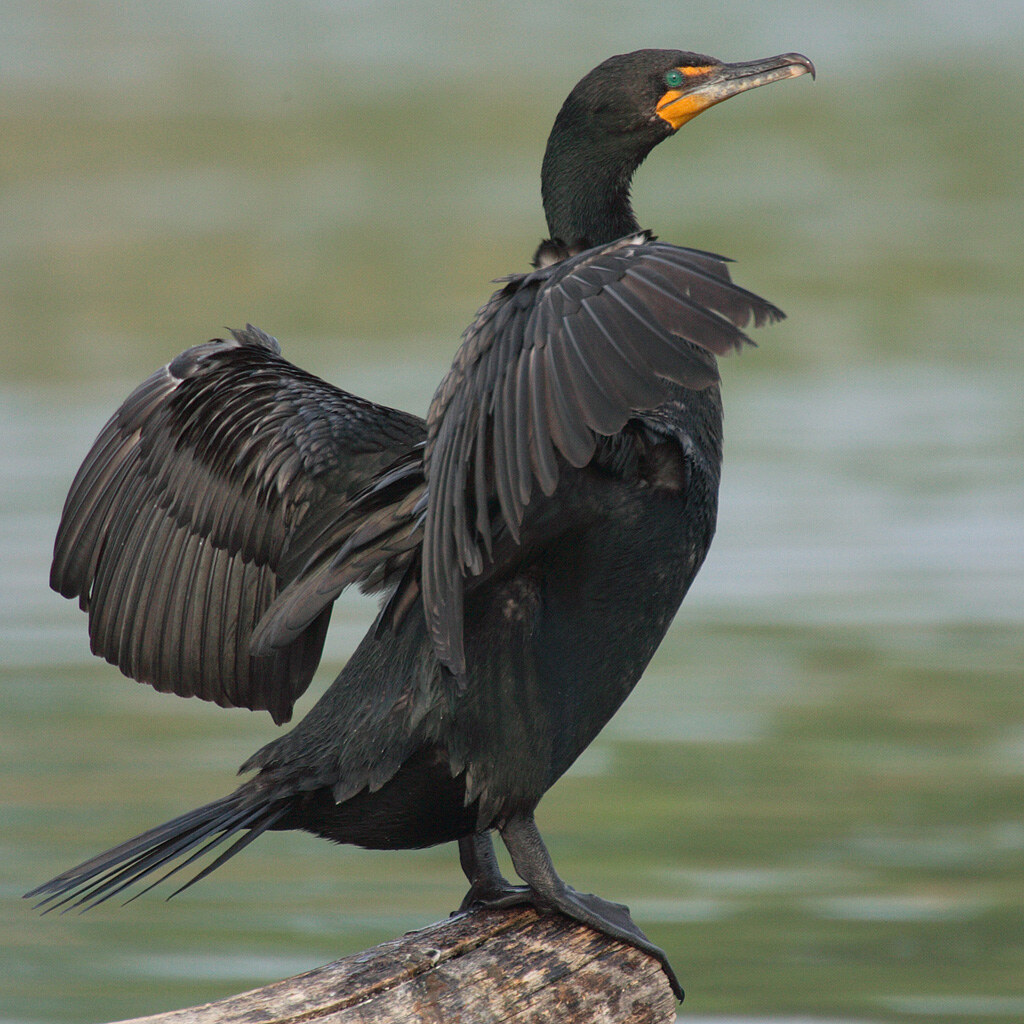
Double-crested cormorant
Nannopterum auritum
A large dark fish-eating diving bird that often perches on snags and dams with wings spread to dry. Common year-round on the Tennessee River; flocks of dozens can be seen at Nickajack Dam tailrace.
Status: Common year-round.
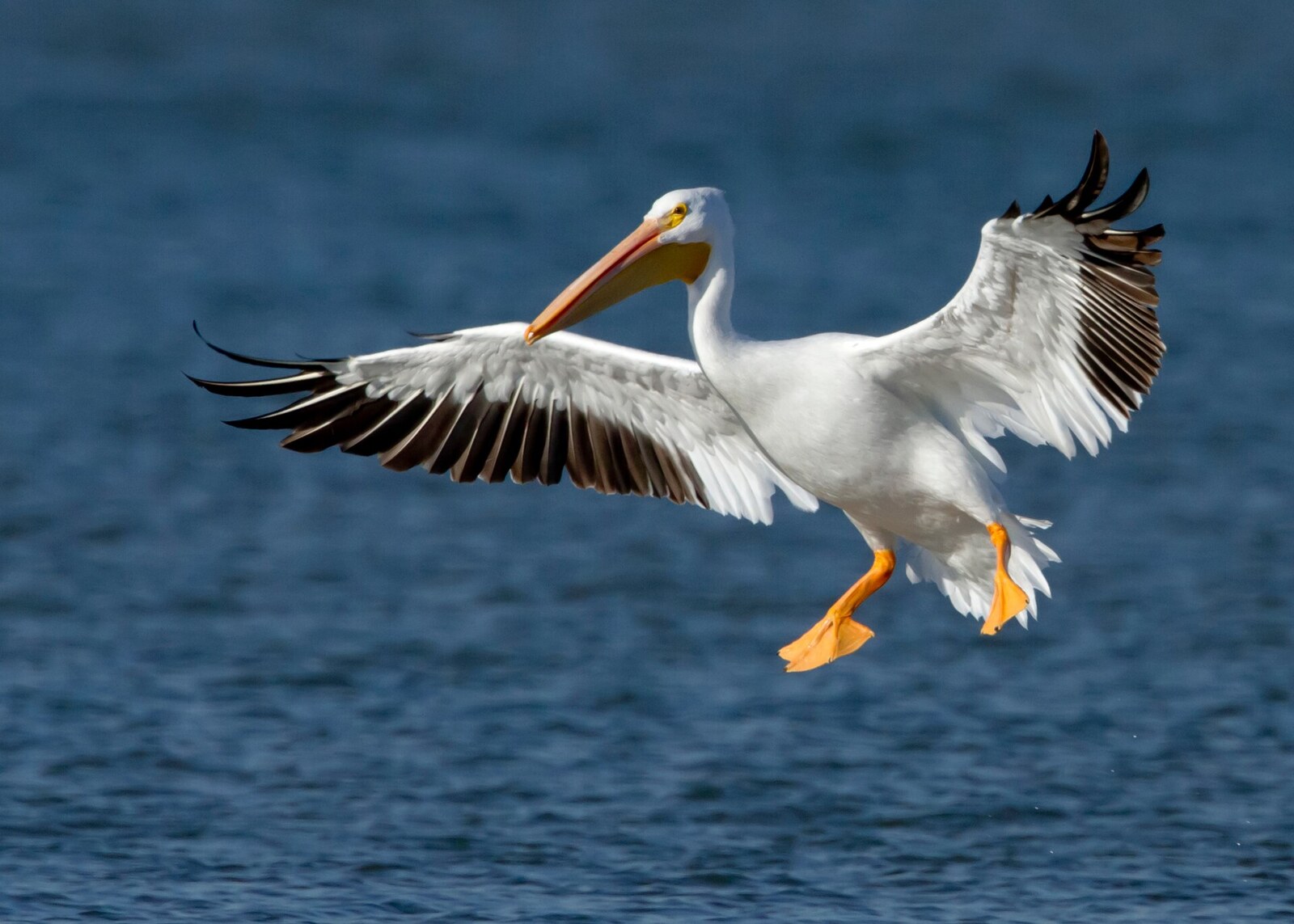
American white pelican
Pelecanus erythrorhynchos
A huge white waterbird with black wingtips and a bright orange bill, weighing up to twenty pounds. Passes through the Tennessee River corridor in spring and fall; wintering flocks have been recorded on Nickajack Lake.
Status: Passage and winter visitor.
Herons and bitterns
The great blue heron is the county's signature year-round wading bird; the great egret, snowy egret, and little blue heron are late-summer post-breeding wanderers from southern rookeries. The cattle egret, originally from Africa, has colonized Marion farmland with grazing cattle. Two night-herons and two bitterns round out the wading community, all uncommon to rare and easily missed in dense cattail and sedge.
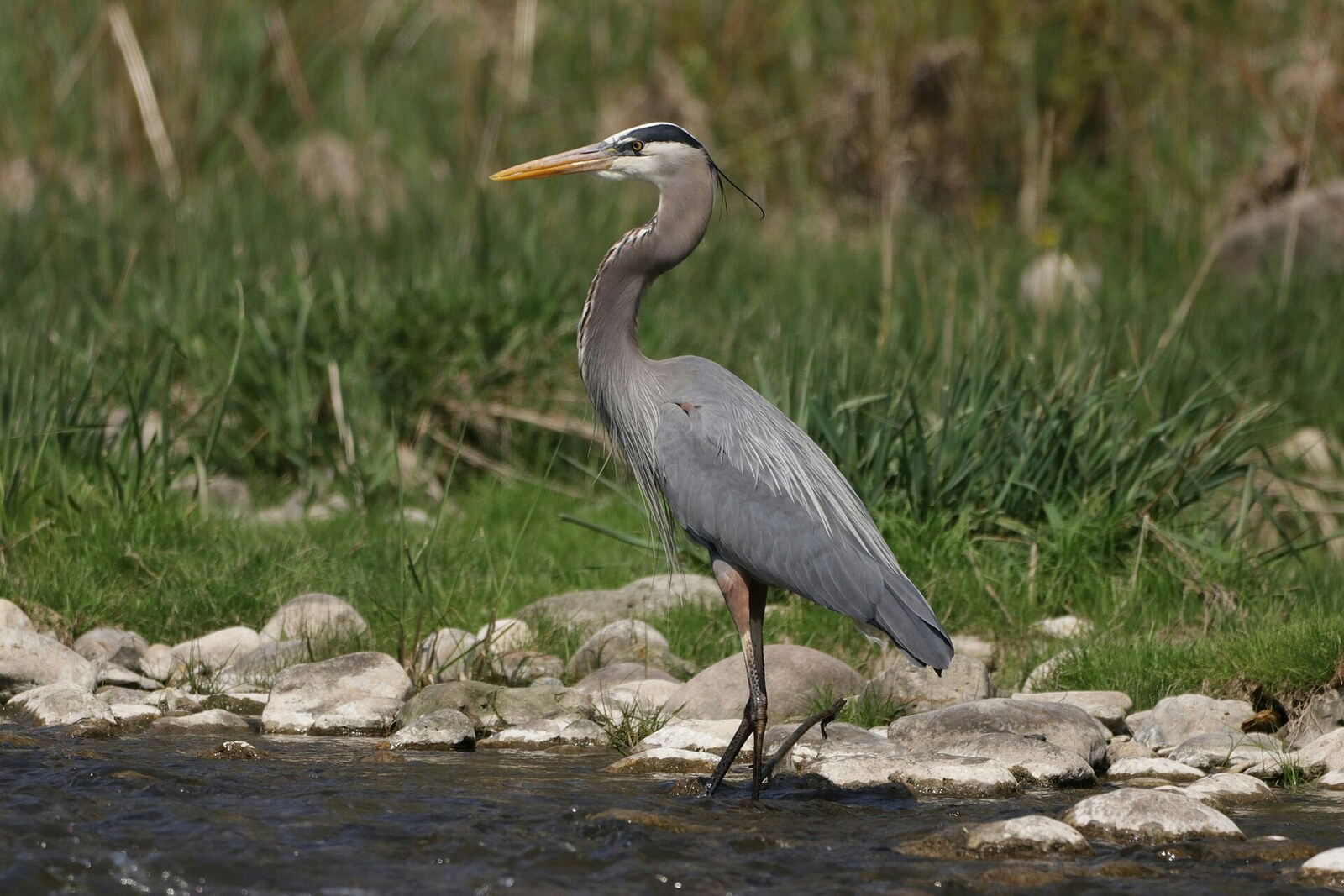
Great blue heron
Ardea herodias
The county's most common large wading bird, with a six-foot wingspan and a deliberate stalking gait. Year-round on the Tennessee River, Nickajack Lake, the Sequatchie River, and farm ponds; sometimes nests in rookeries of several dozen pairs.
Status: Secure; year-round.
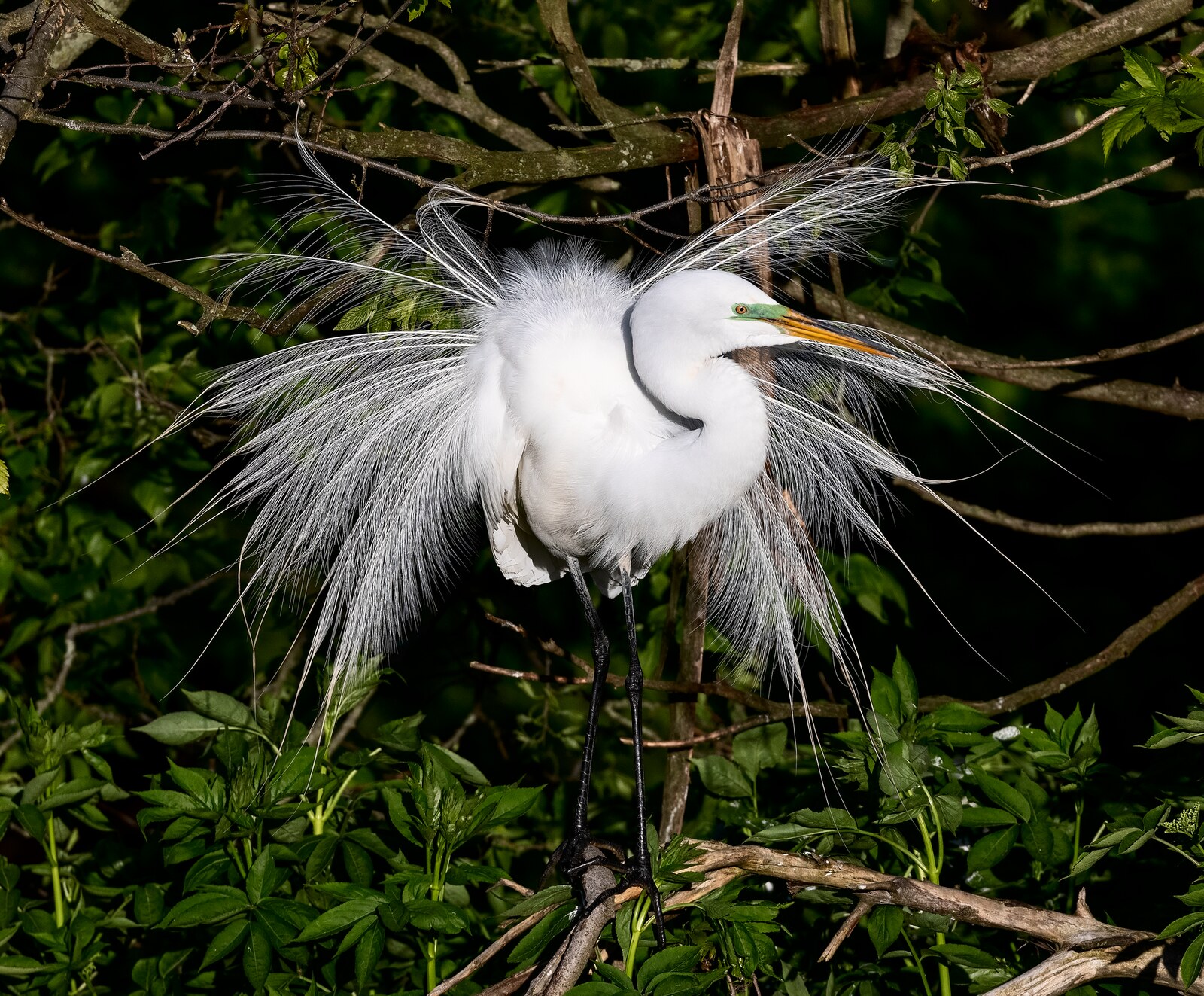
Great egret
Ardea alba
A tall white wading bird with a yellow bill and black legs. Late-summer post-breeding wanderer to Marion farm ponds and reservoir flats from rookeries to the south.
Status: Common in late summer and fall.
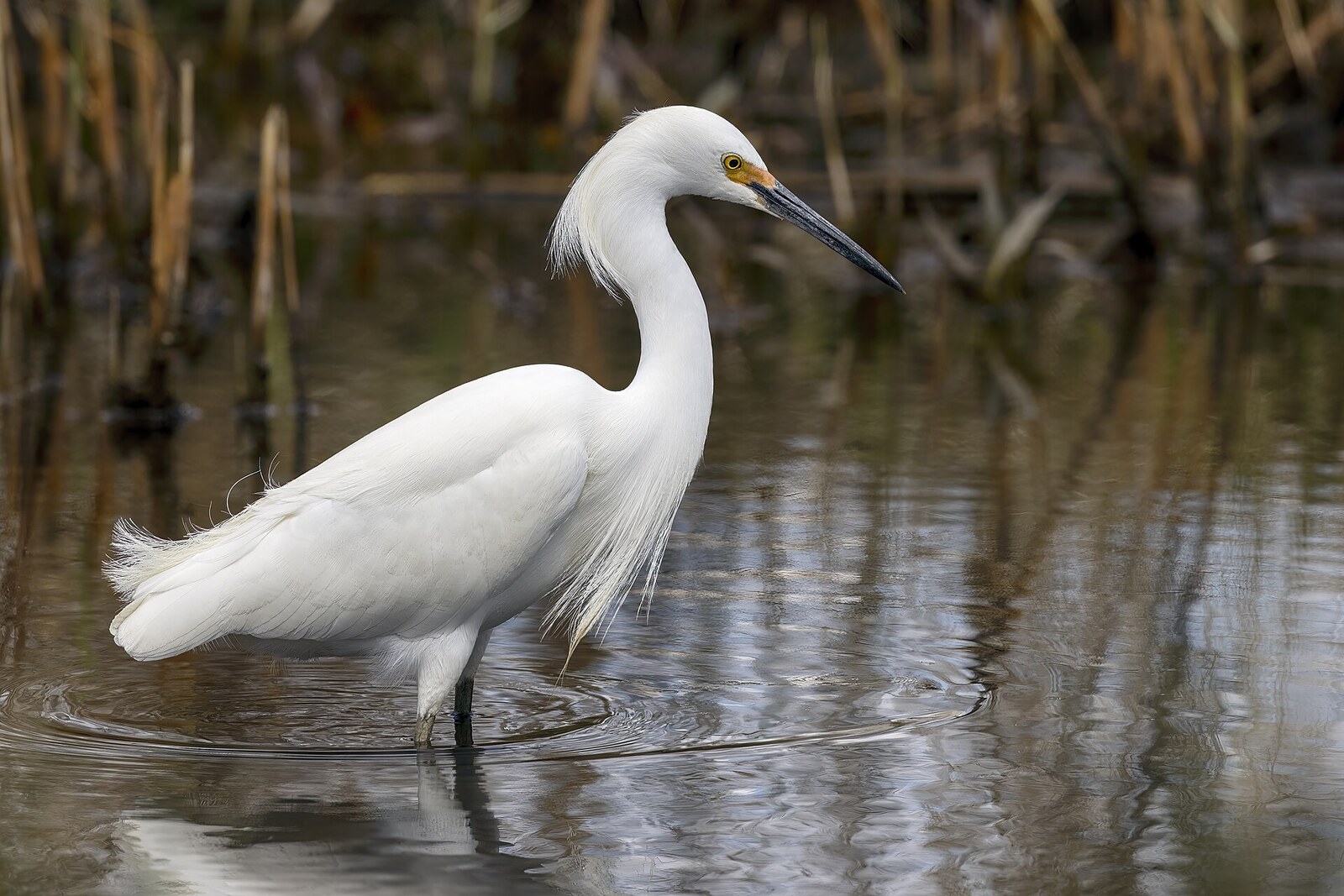
Snowy egret
Egretta thula
A smaller white egret with a black bill and yellow feet (the famous golden slippers). Less common than the great egret in Marion but does appear at reservoir flats and shallow pond edges in summer and fall.
Status: Late summer wanderer.
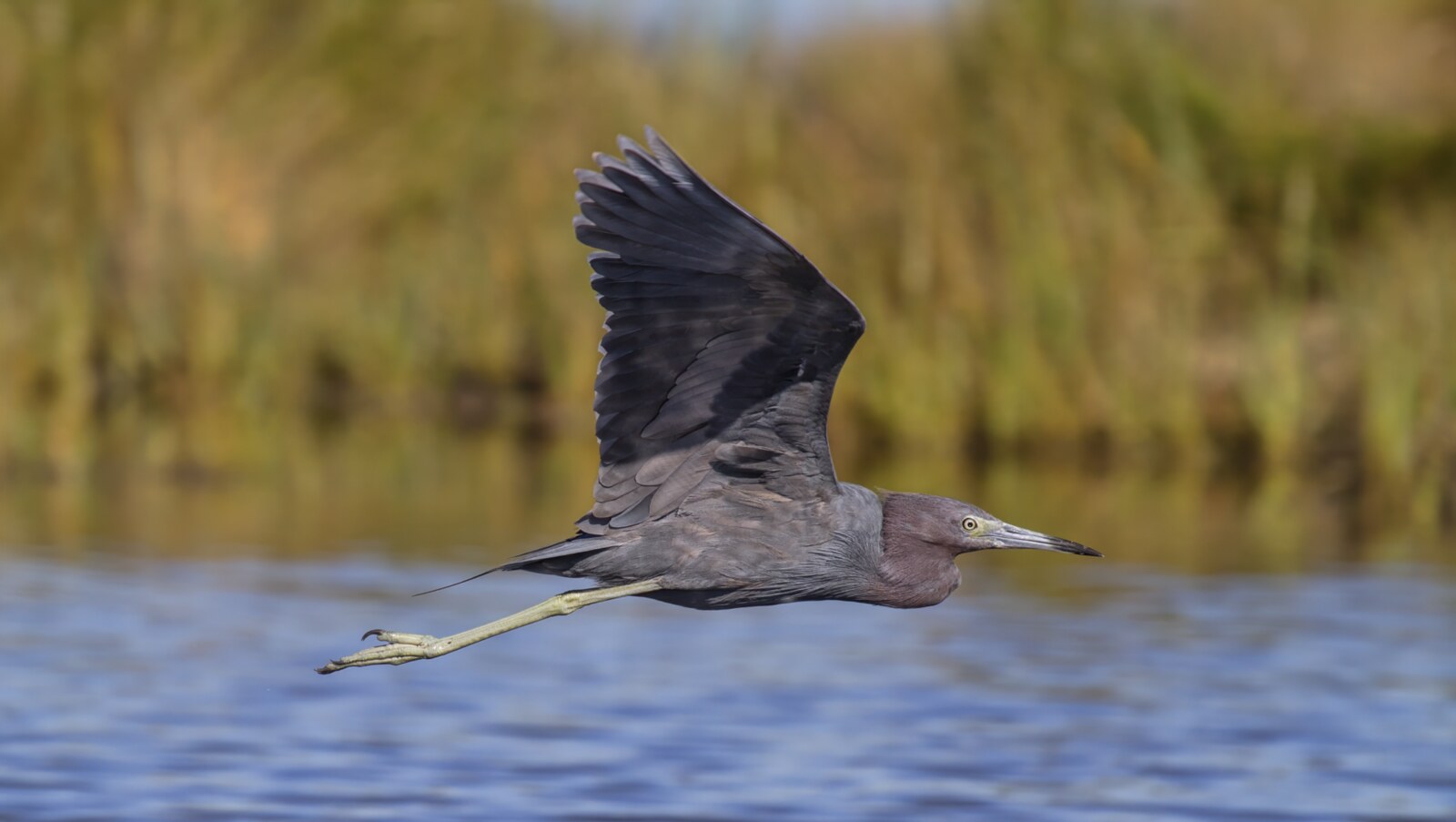
Little blue heron
Egretta caerulea
A medium-sized heron, slate-blue in adults but often confused with snowy egrets when seen as a white juvenile. Late-summer wanderer to Marion wetlands.
Status: Late summer wanderer.
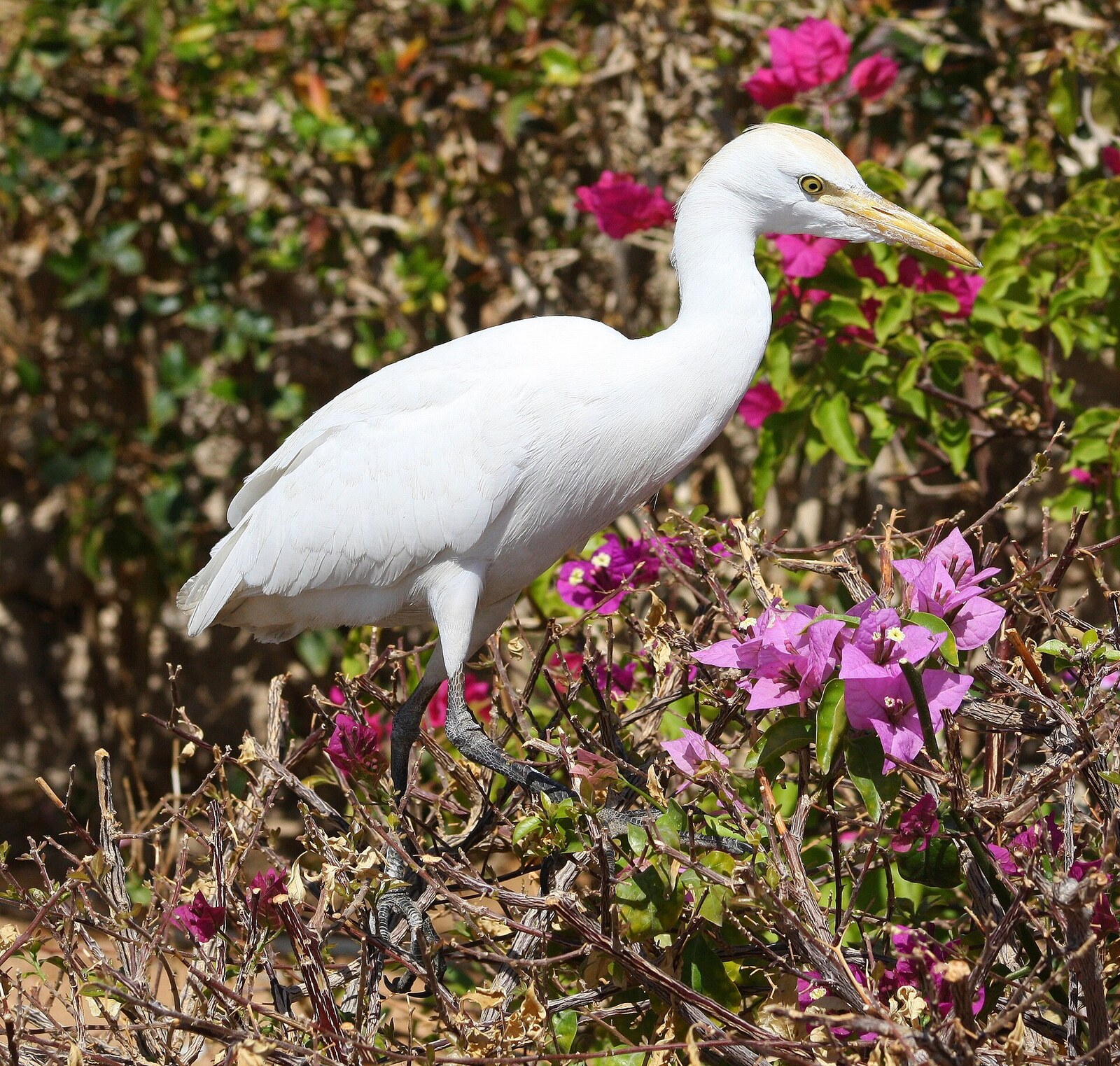
Cattle egret
Bubulcus ibis
A small white egret originally native to Africa that colonized the New World in the twentieth century. Forages in pastures with cattle, picking up insects flushed by grazing hooves.
Status: Established Old World native.
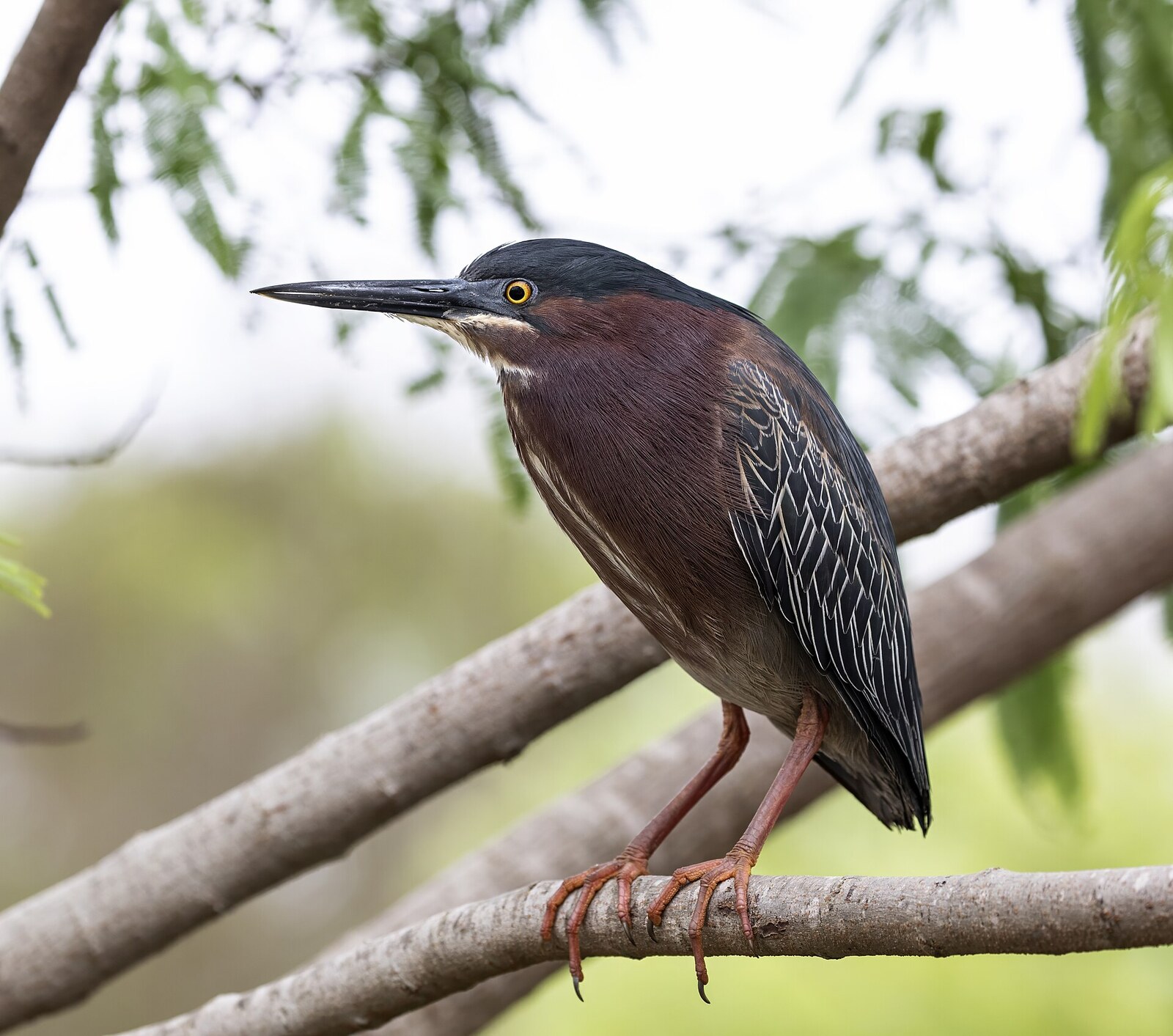
Green heron
Butorides virescens
A small dark heron with a chestnut neck and a habit of using bait (a feather or twig dropped on the water) to lure fish within reach. Common breeder along Marion stream corridors and pond edges.
Status: Secure; common breeder.
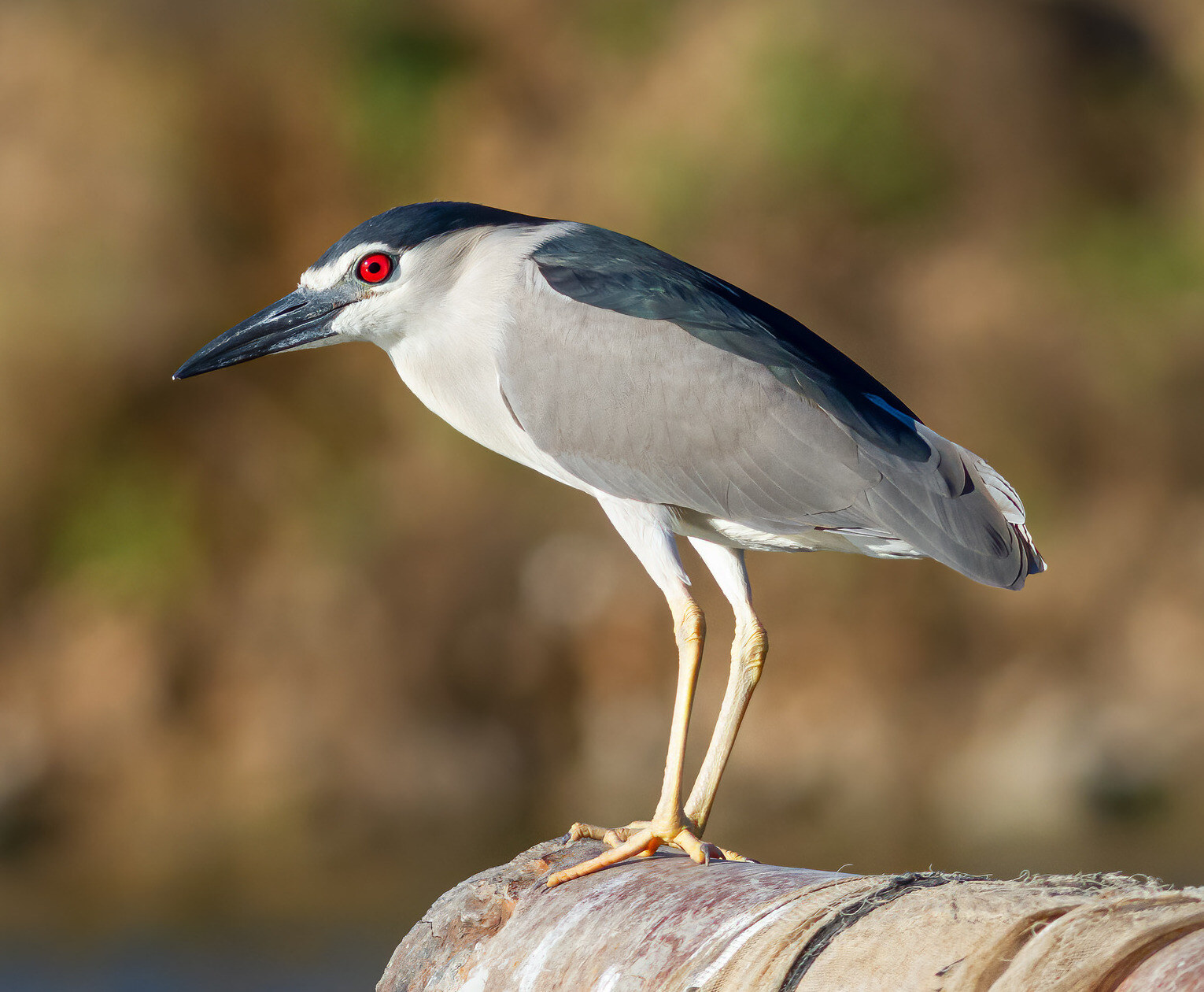
Black-crowned night-heron
Nycticorax nycticorax
A stocky black-and-gray heron with a black crown and red eyes, hunting at dusk and dawn from the edges of marshes and shaded waterways. Breeds in colonies; less commonly seen in the daytime.
Status: Uncommon resident.
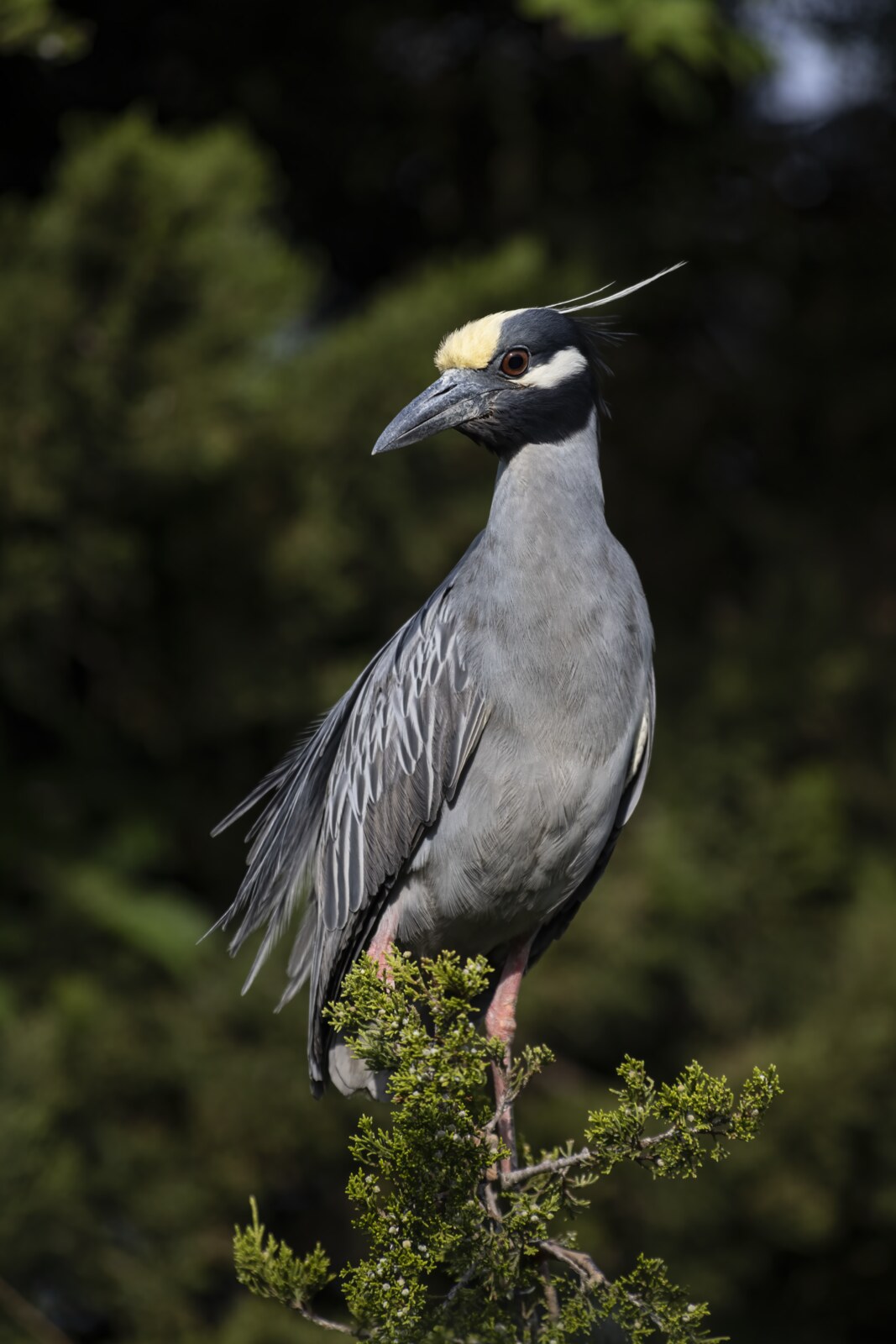
Yellow-crowned night-heron
Nyctanassa violacea
Cousin of the black-crowned night-heron with a yellow crown and a black face. Specializes in crayfish; uncommon but regular breeder along shaded creek corridors.
Status: Uncommon resident.
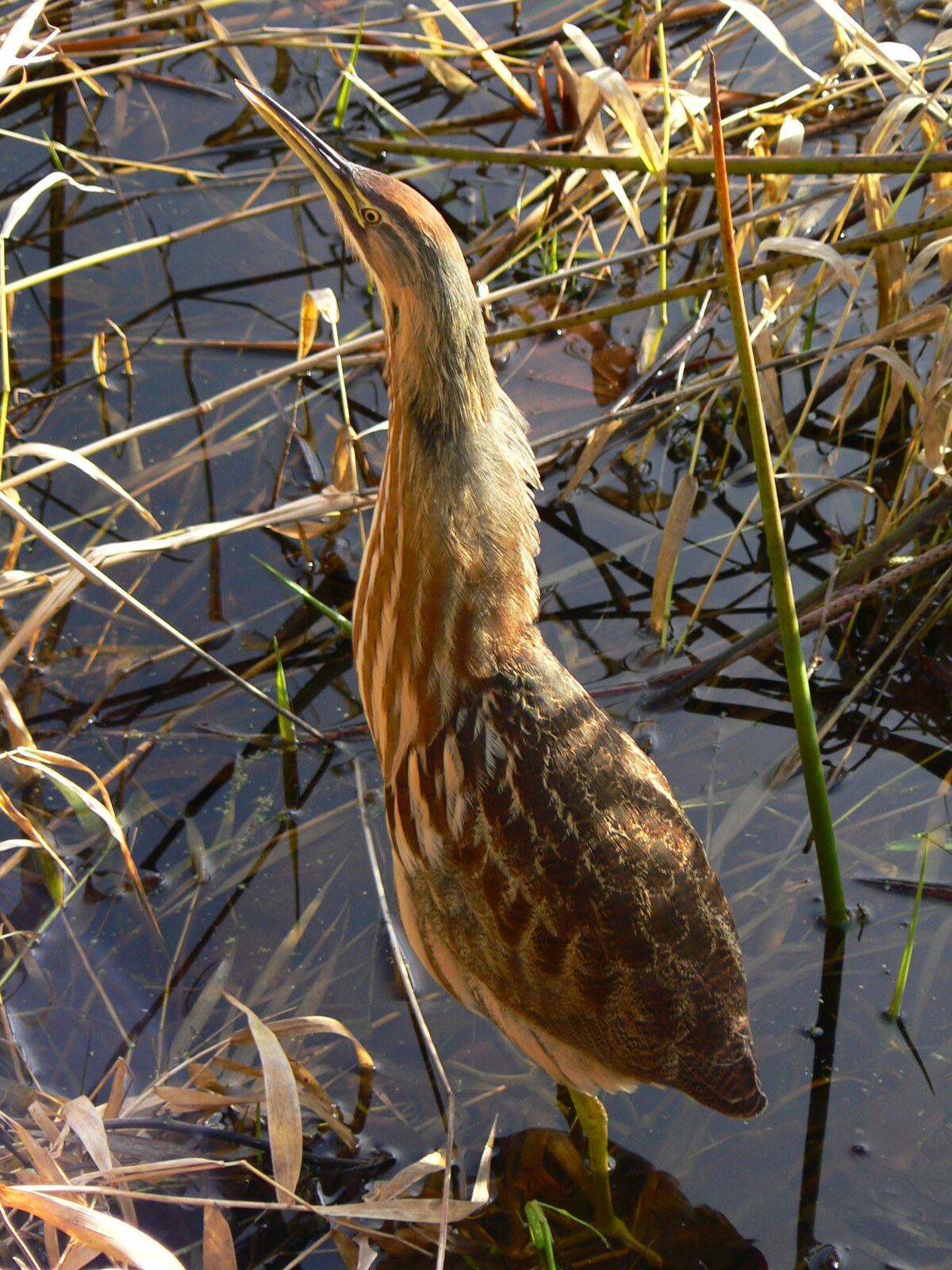
American bittern
Botaurus lentiginosus
A solitary marsh heron with vertically streaked underparts that freezes with bill pointed straight up to blend with cattail stems. Passage migrant through Marion County wetlands.
Status: Passage migrant.
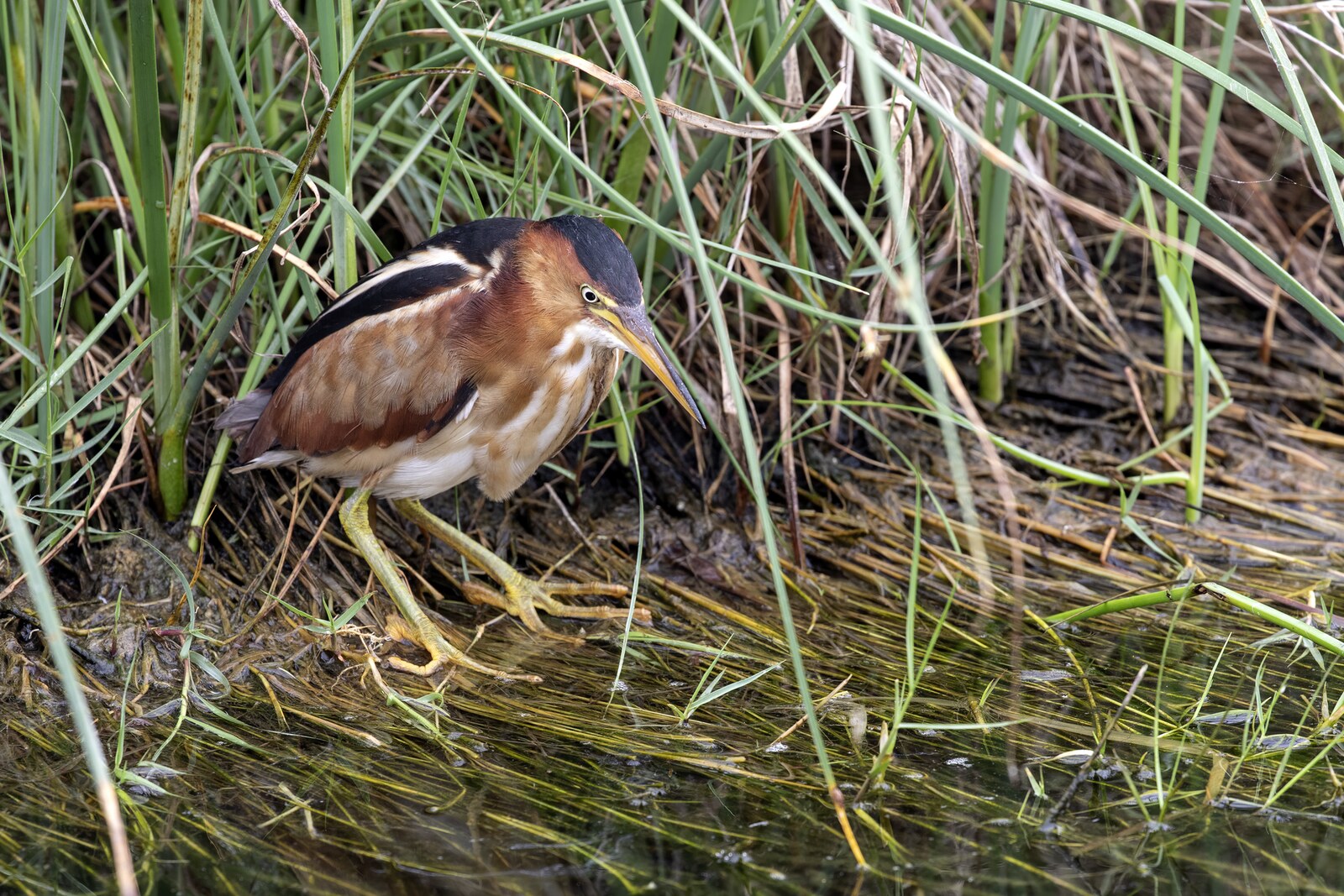
Least bittern
Ixobrychus exilis
The smallest North American heron, weighing only a few ounces. Hunts by clambering through marsh vegetation; uncommon and easily missed in cattail and tule stands.
Status: Uncommon; marsh specialist.
Rails, coots, gallinule, and crane
The Virginia rail and sora pass through Marion wetlands as silent migrants; the common gallinule breeds locally in marshy slow-water edges; the American coot rafts in winter flocks of hundreds on Nickajack Lake. Sandhill crane skeins pass overhead in fall and spring on the way to and from the Hiwassee Wildlife Refuge sandhill crane wintering grounds downriver, where tens of thousands of cranes gather each January and February.
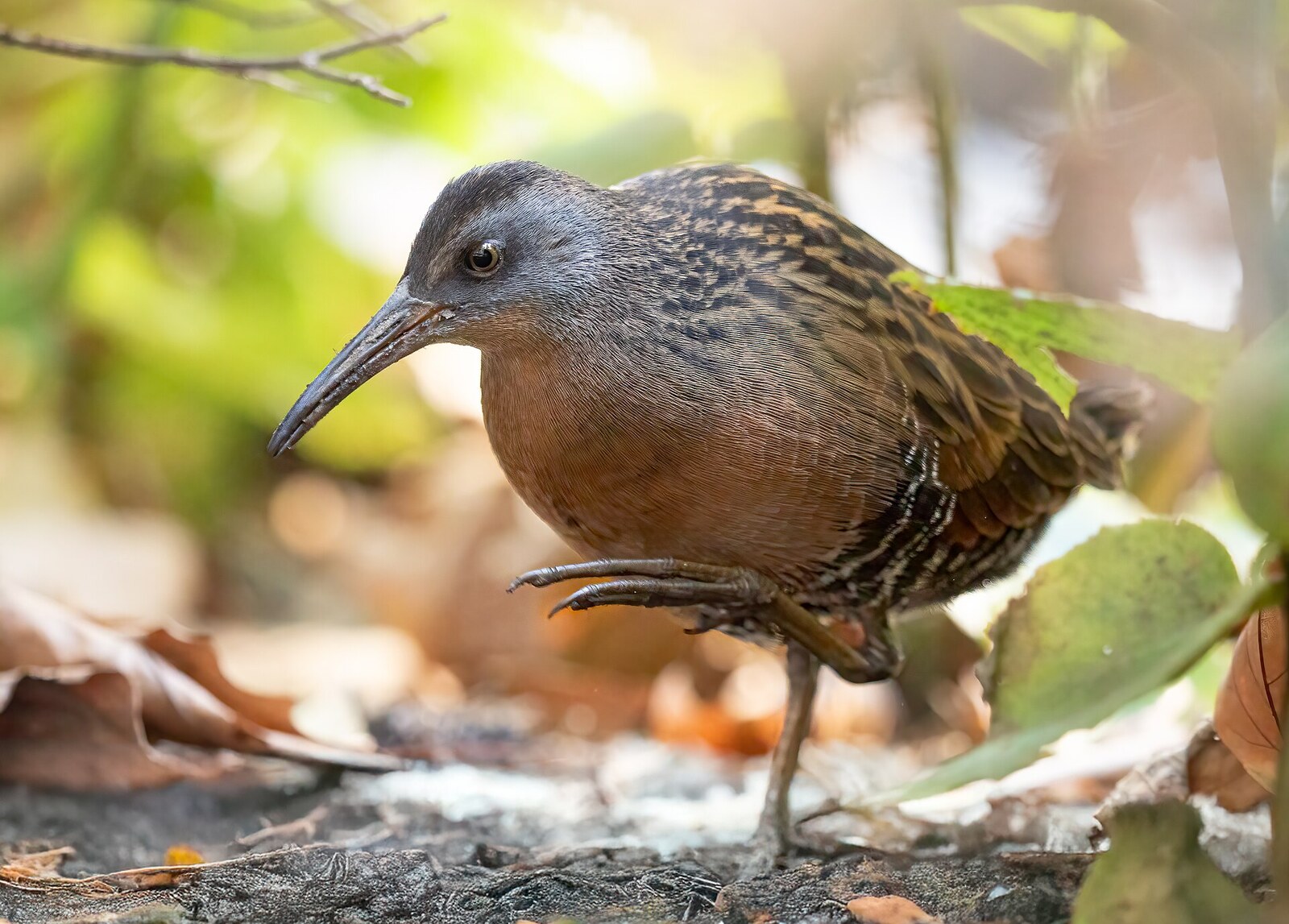
Virginia rail
Rallus limicola
A small secretive rail of dense marsh vegetation, more often heard than seen. Passes through Marion wetlands during spring and fall migration.
Status: Passage migrant.
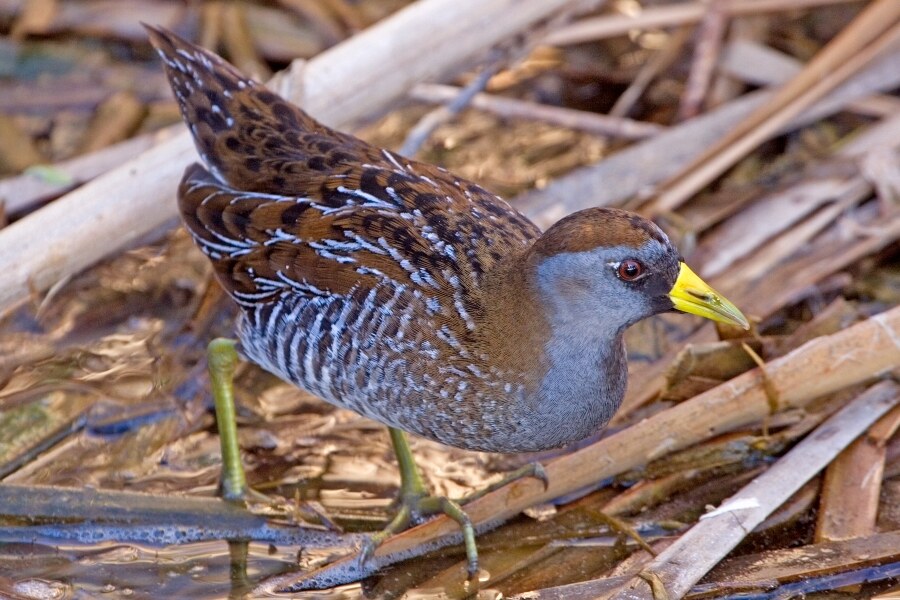
Sora
Porzana carolina
A small short-billed rail of marsh and wet meadow with a descending whinny call. Passage migrant through Marion County, more easily heard than spotted.
Status: Passage migrant.
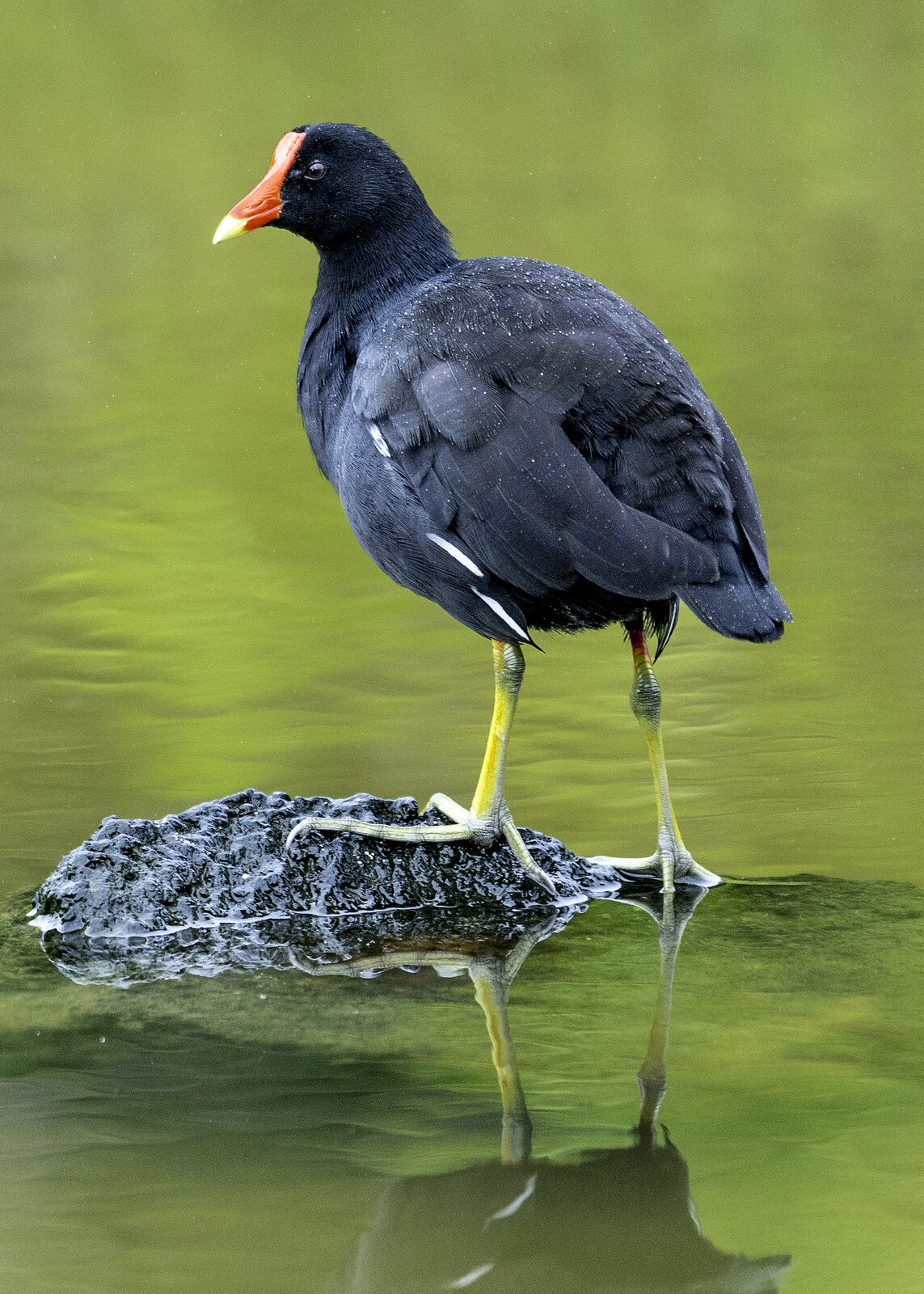
Common gallinule
Gallinula galeata
A black duck-like marsh bird with a bright red bill-shield, walking with high-stepped strides on lily pads and floating vegetation. Uncommon but regular breeder in marshy edges of slow-water habitat.
Status: Uncommon breeder.
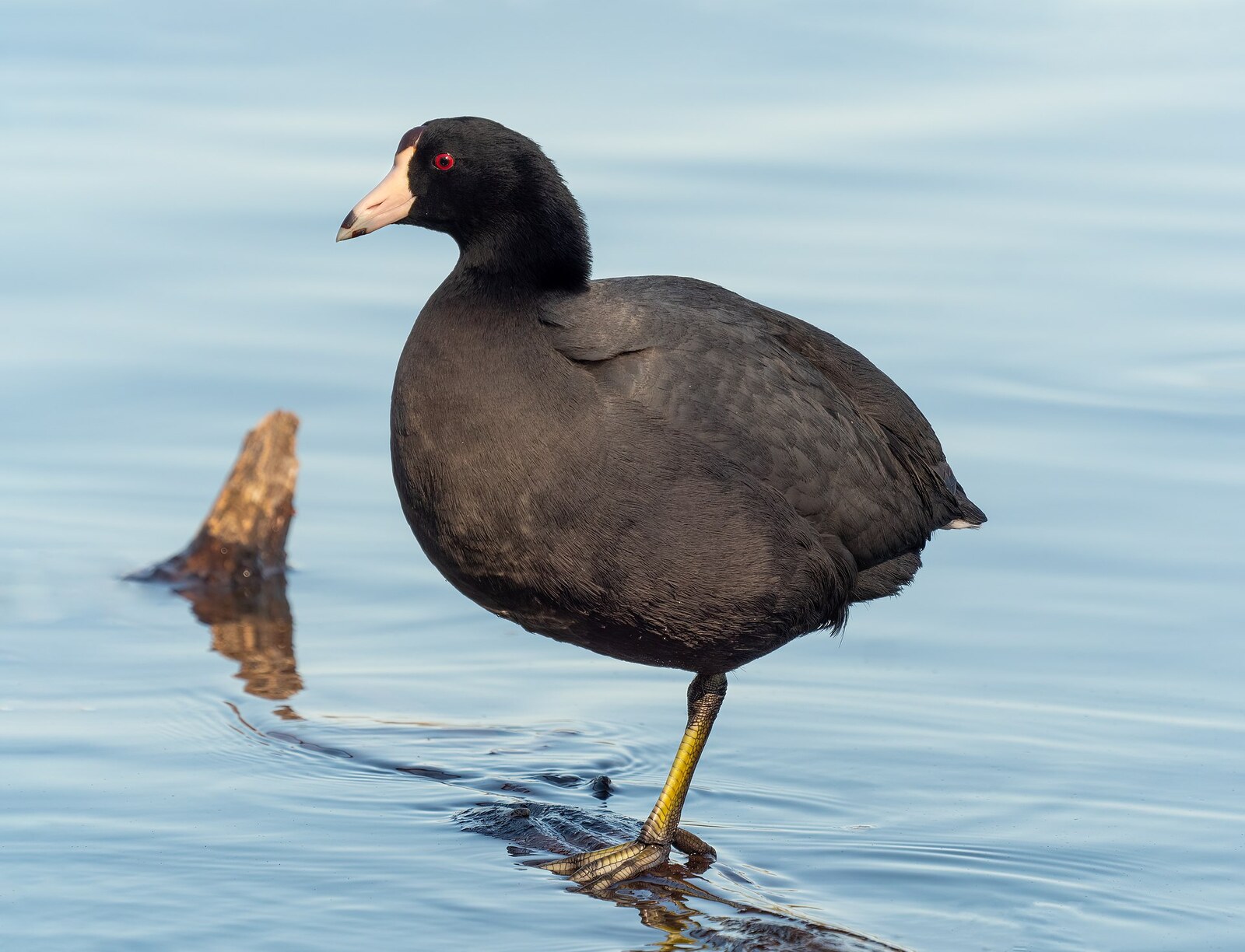
American coot
Fulica americana
A black duck-like waterbird with a white bill and lobed (not webbed) toes. Common winter visitor to Nickajack Lake in large rafts of dozens to hundreds of birds.
Status: Winter resident; abundant.
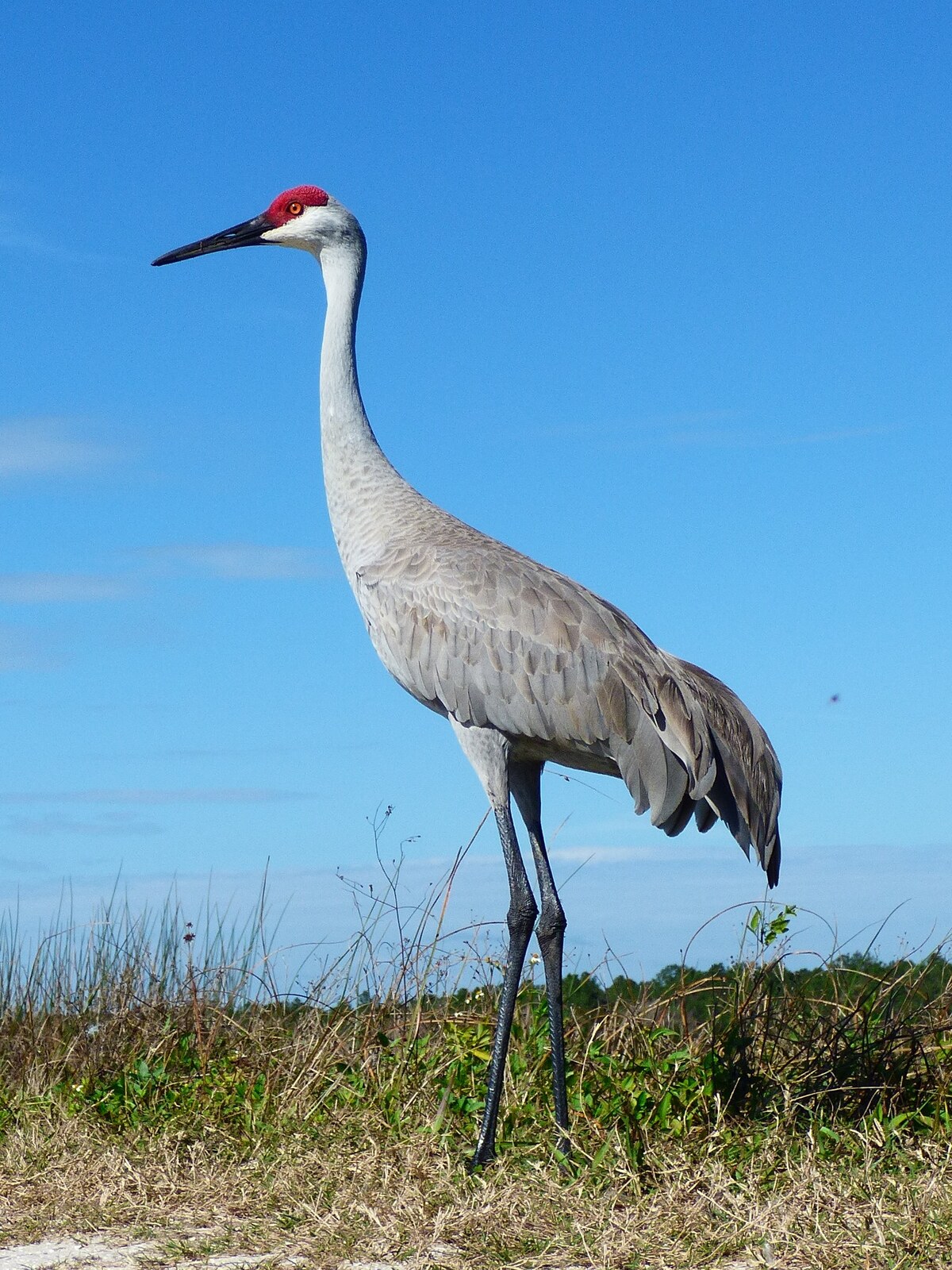
Sandhill crane
Antigone canadensis
A tall gray crane with a red forehead patch that gathers in winter flocks of tens of thousands at Hiwassee Wildlife Refuge downriver. Migrating flocks pass over Marion County in long V-formations on cold-front days each November and February.
Status: Passage migrant; flyover concentrations on cold-front days.
Shorebirds
Marion shorebirds work the muddy reservoir flats, flooded fields, and creek margins. The killdeer is the only year-round species; the spotted sandpiper breeds along Marion stream and reservoir edges; the rest are passage migrants on spring and fall journeys between Arctic breeding grounds and South American wintering grounds. Wilson's snipe winters in wet pasture; the American woodcock performs its courtship spirals over plateau-edge clearings in late winter.
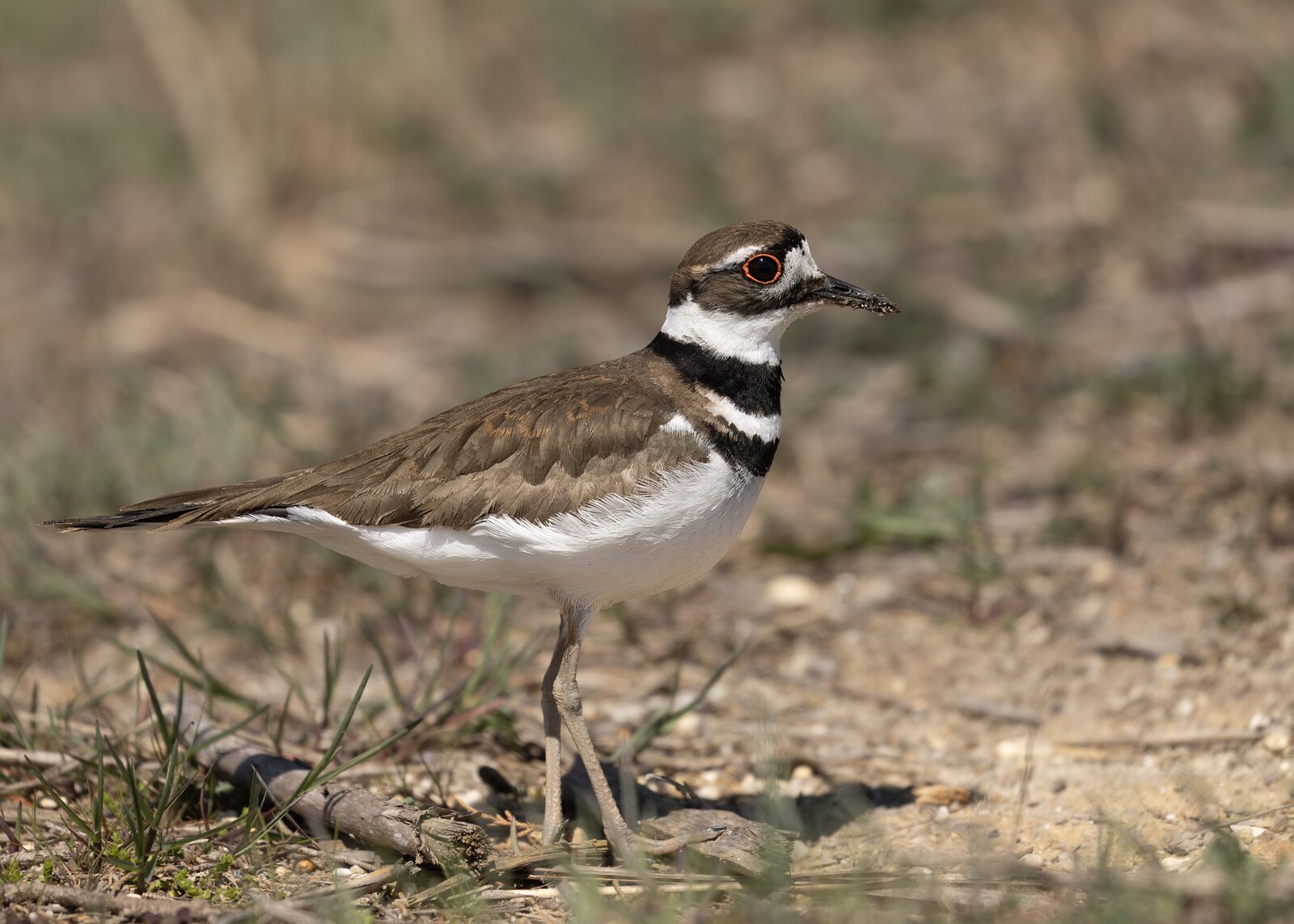
Killdeer
Charadrius vociferus
A medium-sized plover with two black breast bands and a piercing kill-deer call. Year-round resident; nests in gravel shoulders, parking lots, and bare fields and uses the famous broken-wing distraction display when threatened.
Status: Secure; year-round.
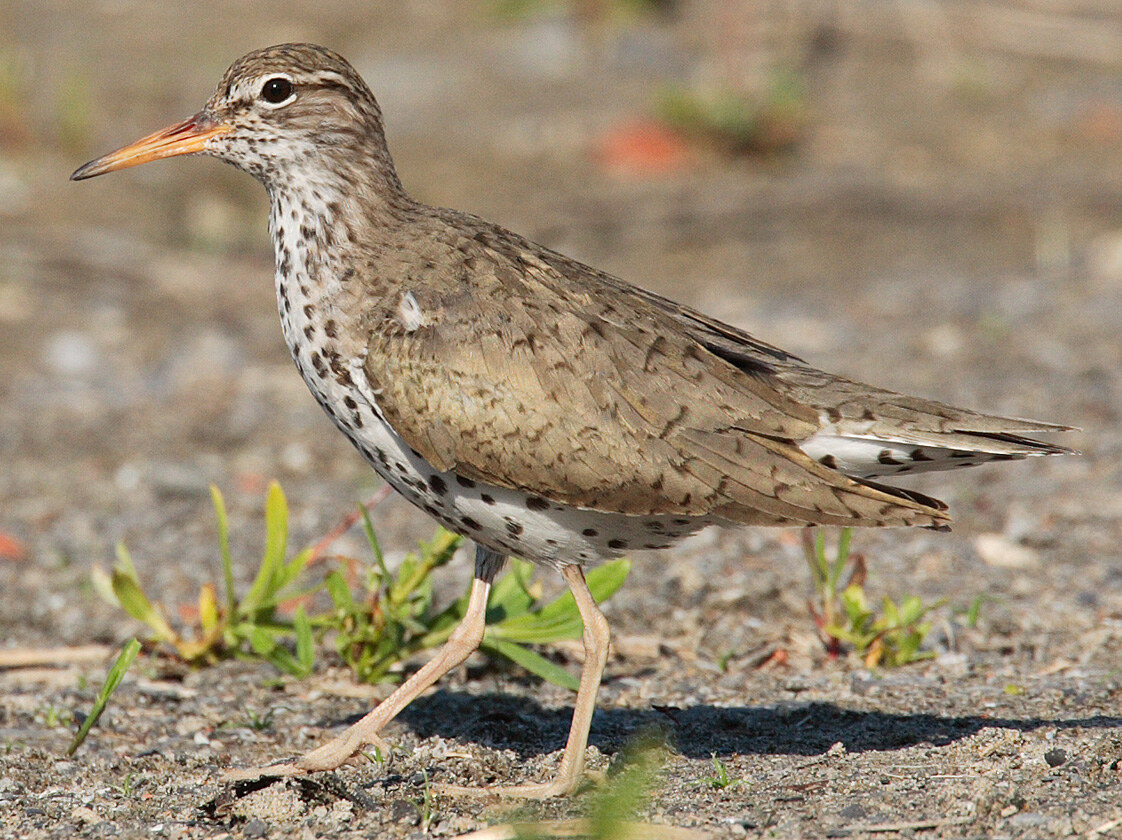
Spotted sandpiper
Actitis macularius
A small sandpiper that bobs its tail constantly while walking and shows bold dark breast spots in breeding plumage. Common along Marion creek and reservoir margins through summer.
Status: Common breeder.
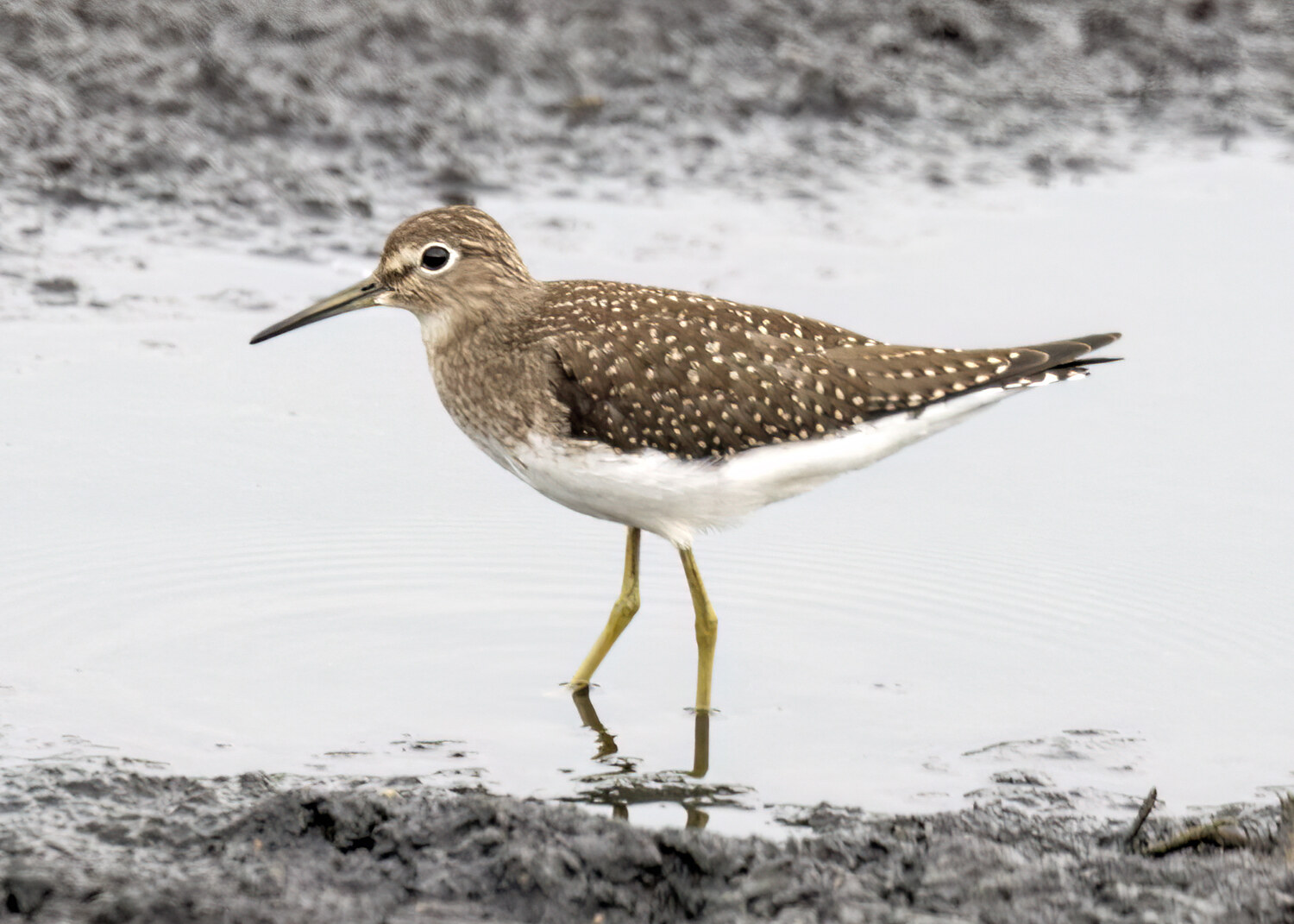
Solitary sandpiper
Tringa solitaria
A medium-sized sandpiper with white spots on a dark back and a habit of feeding alone in shallow muddy pond edges and ditches. Passage migrant through Marion County.
Status: Passage migrant.
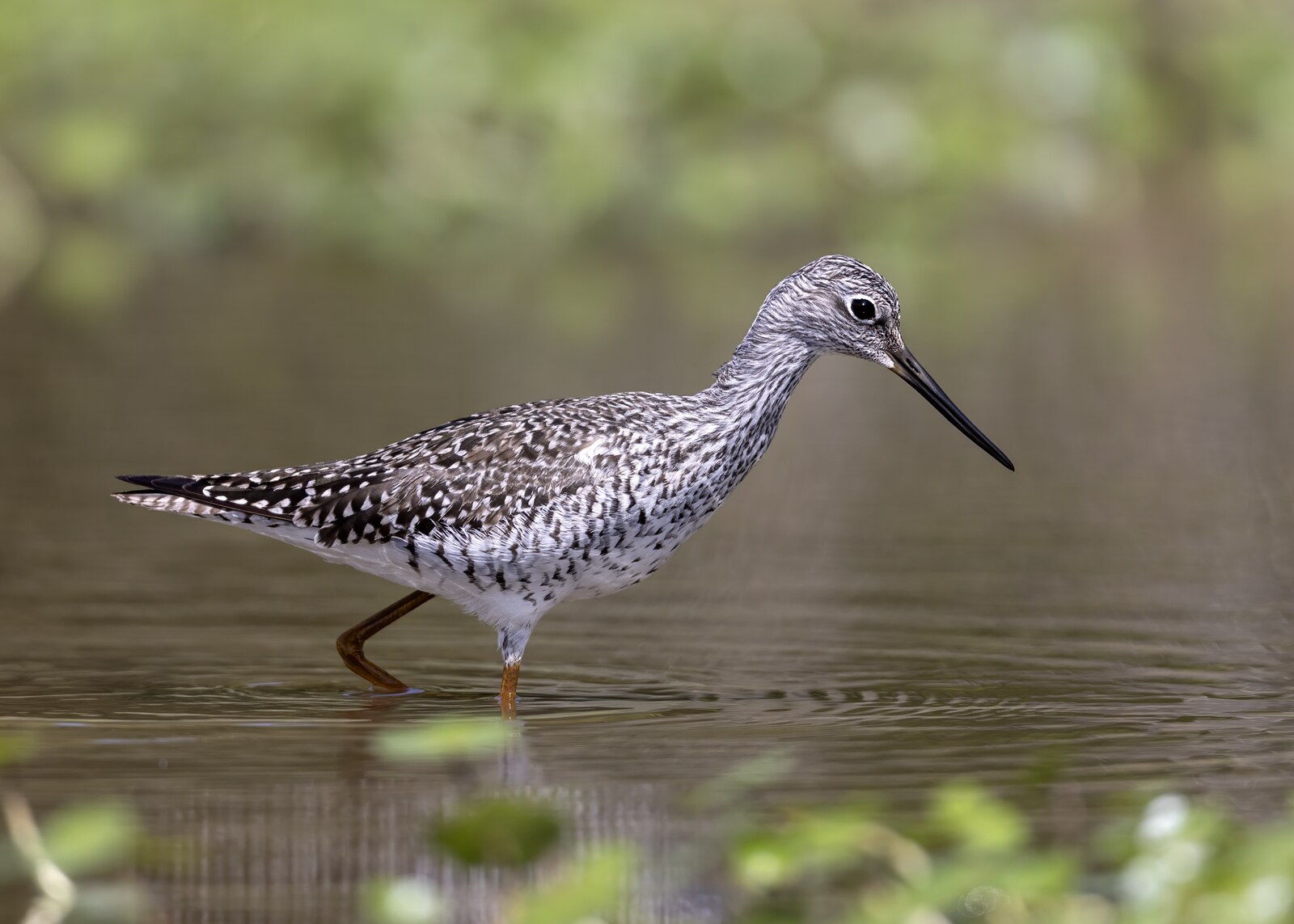
Greater yellowlegs
Tringa melanoleuca
A long-legged sandpiper with bright yellow legs and a slightly upturned bill. Passage migrant on Marion mudflats and reservoir shallows; calls a clear three- or four-note tew-tew-tew in flight.
Status: Passage migrant.
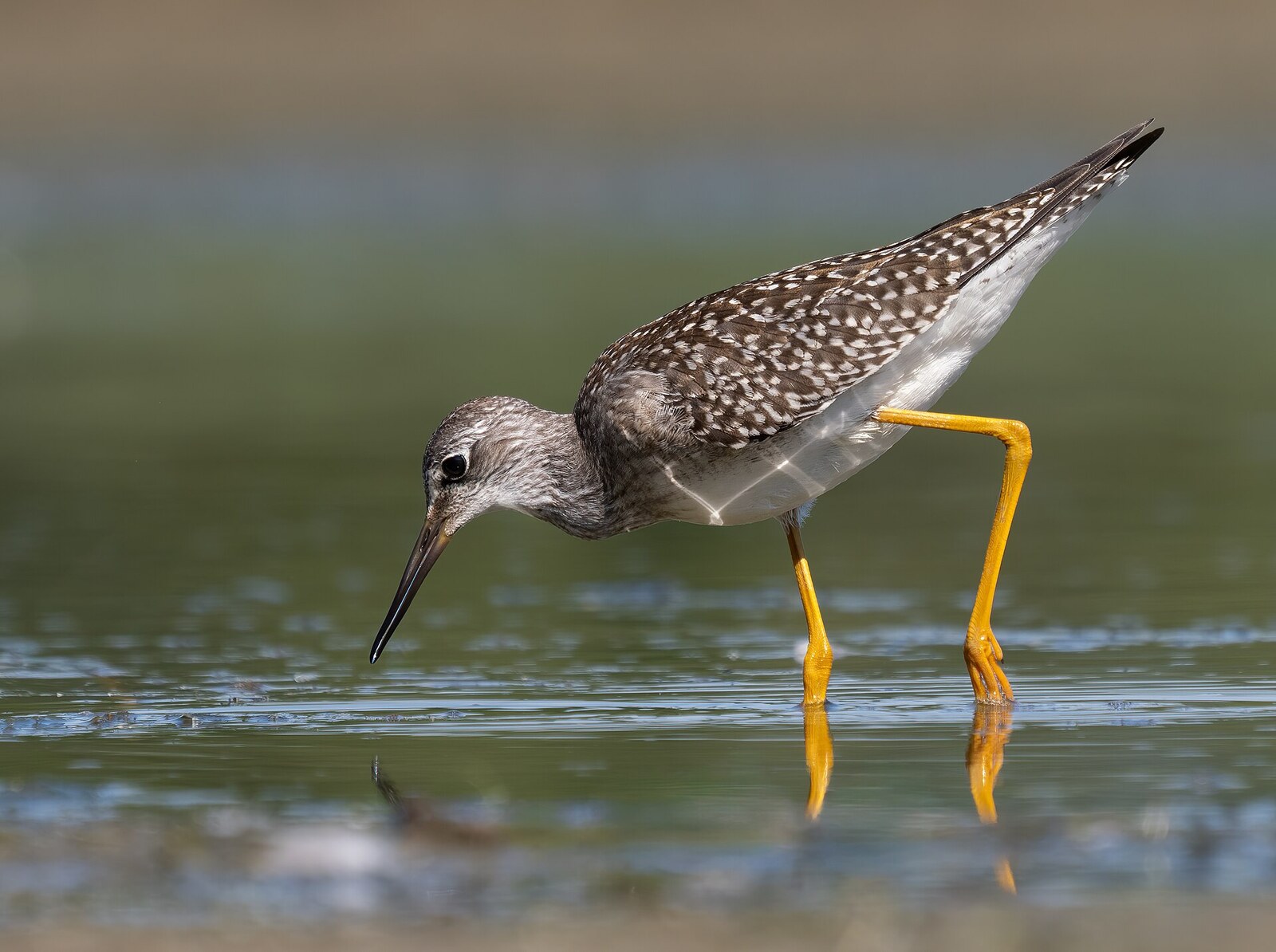
Lesser yellowlegs
Tringa flavipes
Smaller cousin of the greater yellowlegs, with a shorter straight bill. Passes through Marion County in mixed flocks with the greater on spring and fall migration.
Status: Passage migrant.
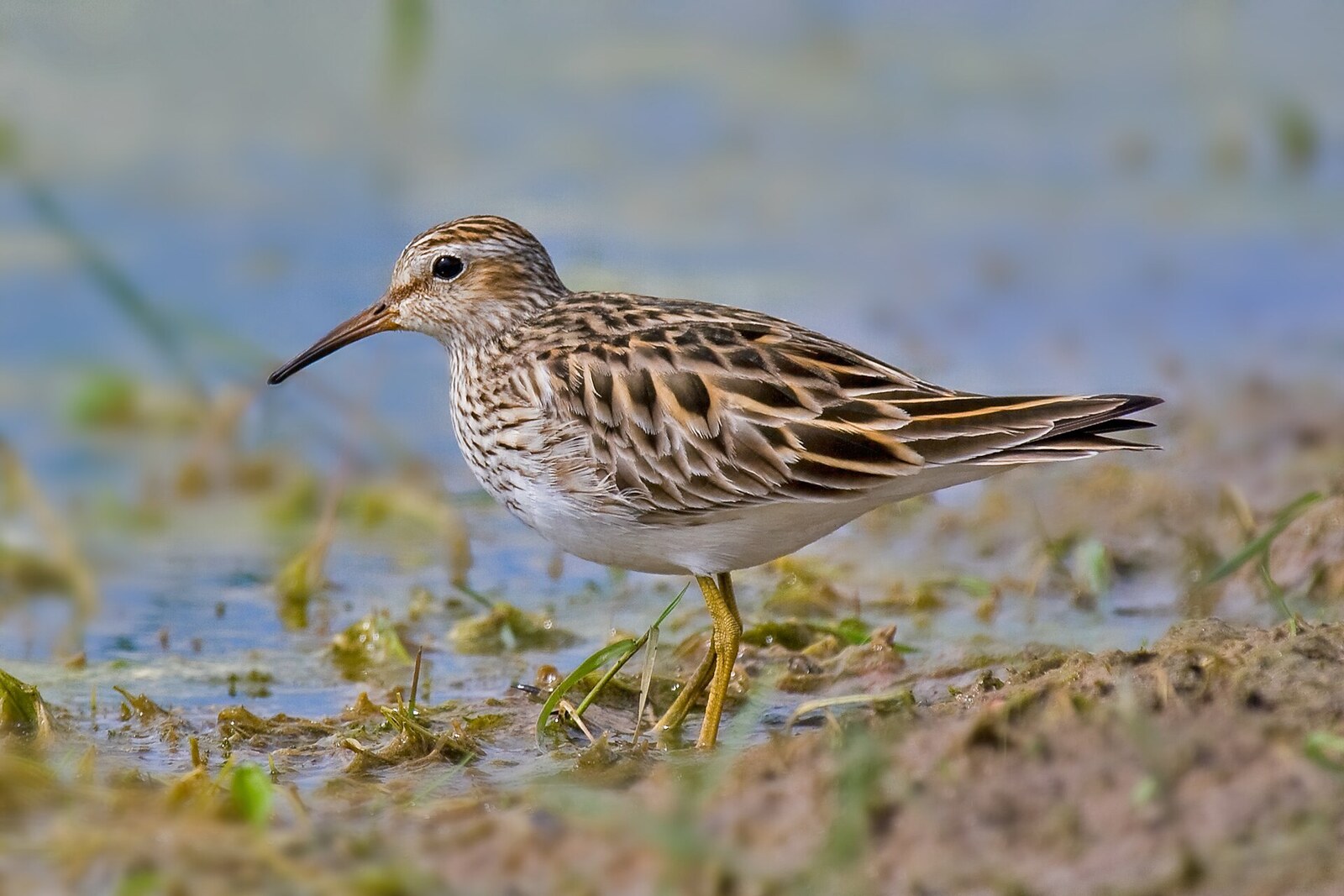
Pectoral sandpiper
Calidris melanotos
A medium-sized sandpiper with a sharp horizontal cutoff between streaked breast and white belly. Passage migrant through Marion mudflats and flooded fields.
Status: Passage migrant.
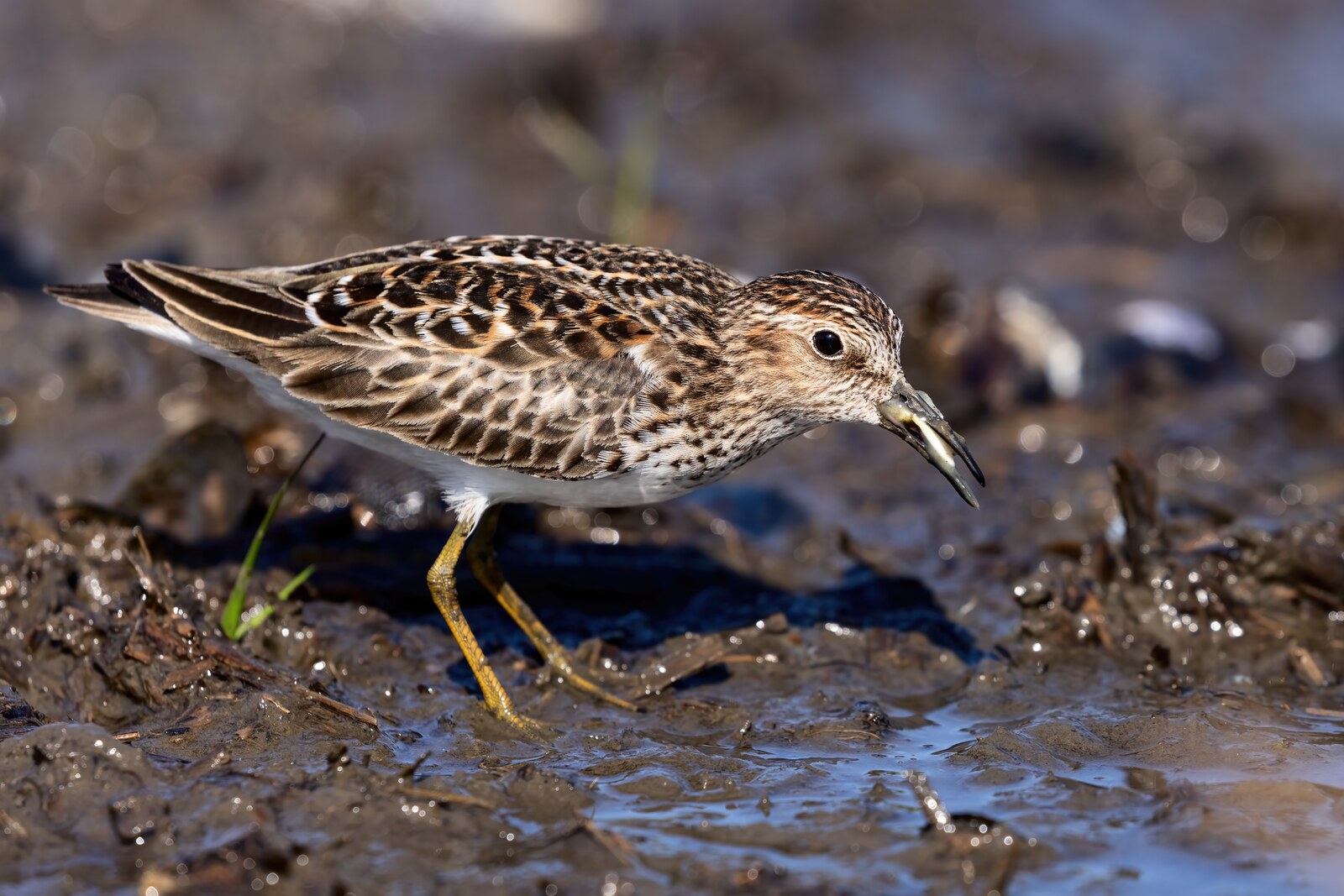
Least sandpiper
Calidris minutilla
The smallest of the regularly-seen peep sandpipers, with greenish legs and brown upperparts. Passage migrant on muddy reservoir flats.
Status: Passage migrant.
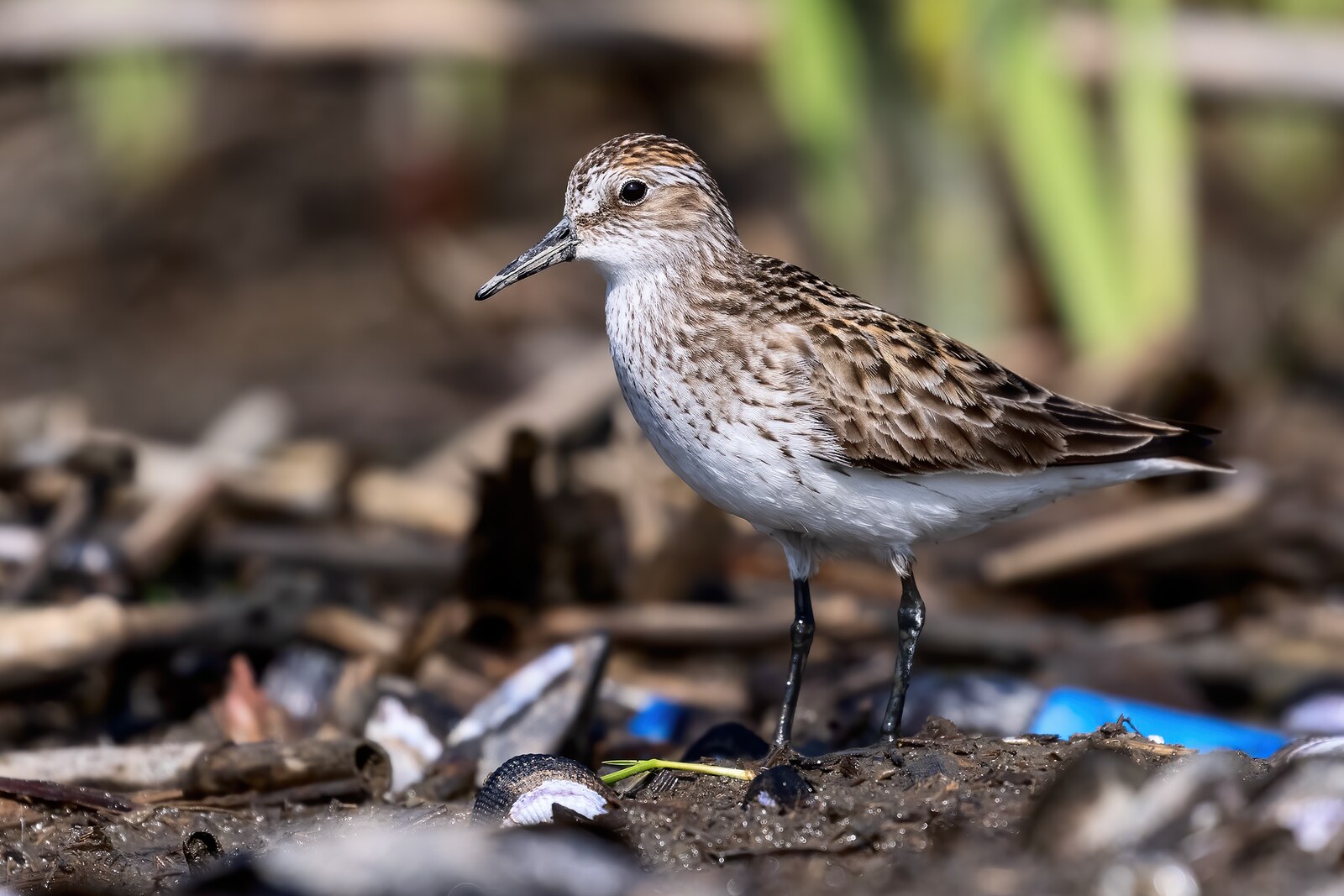
Semipalmated sandpiper
Calidris pusilla
A small dark-billed peep with black legs, named for partial webbing between the toes. Passage migrant through the Tennessee River and Sequatchie Valley wetlands.
Status: Passage migrant.
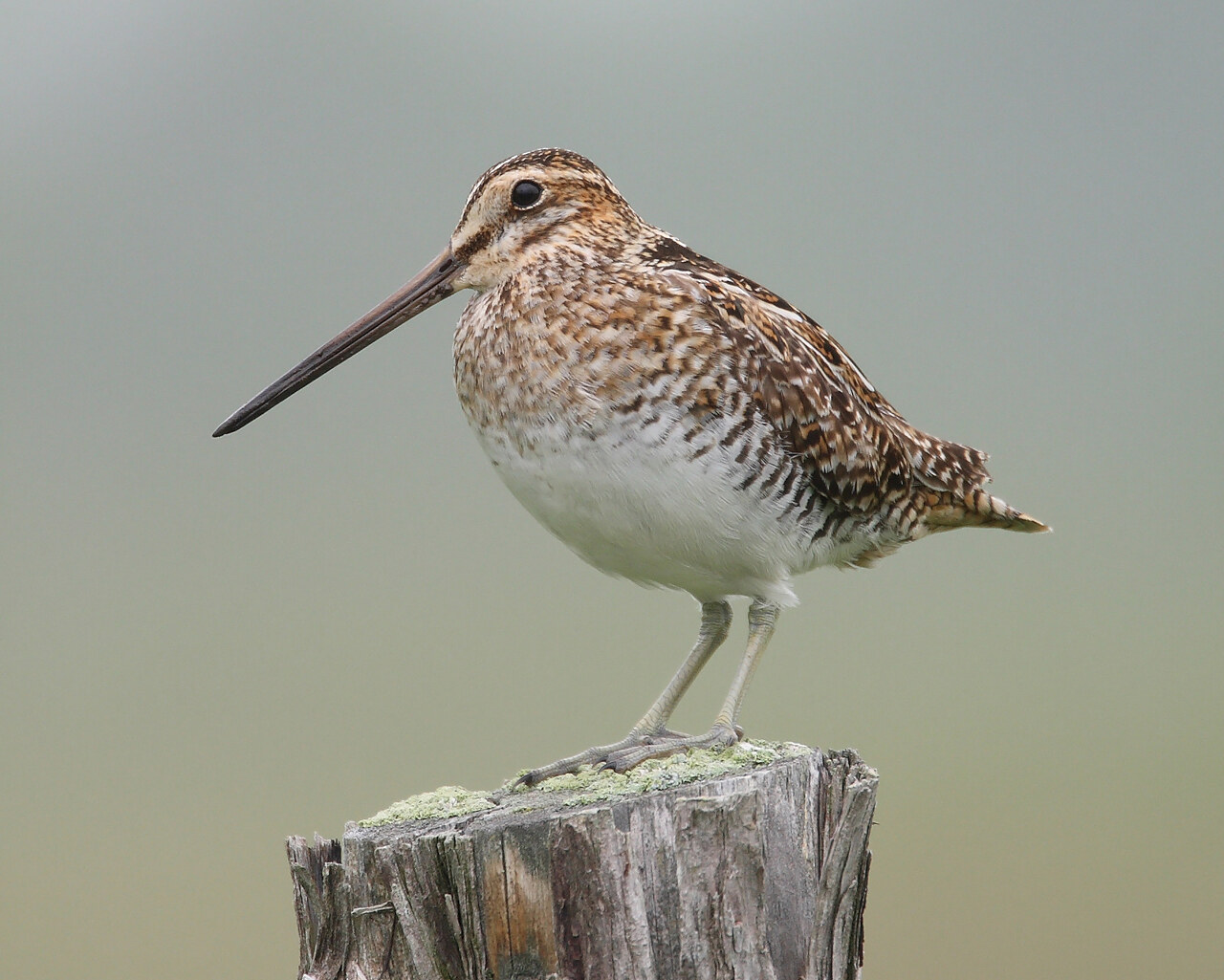
Wilson's snipe
Gallinago delicata
A long-billed cryptic shorebird that probes for invertebrates in soft mud, performing aerial winnowing displays at dawn and dusk during spring migration. Winters in wet pasture and marsh edges.
Status: Winter resident.
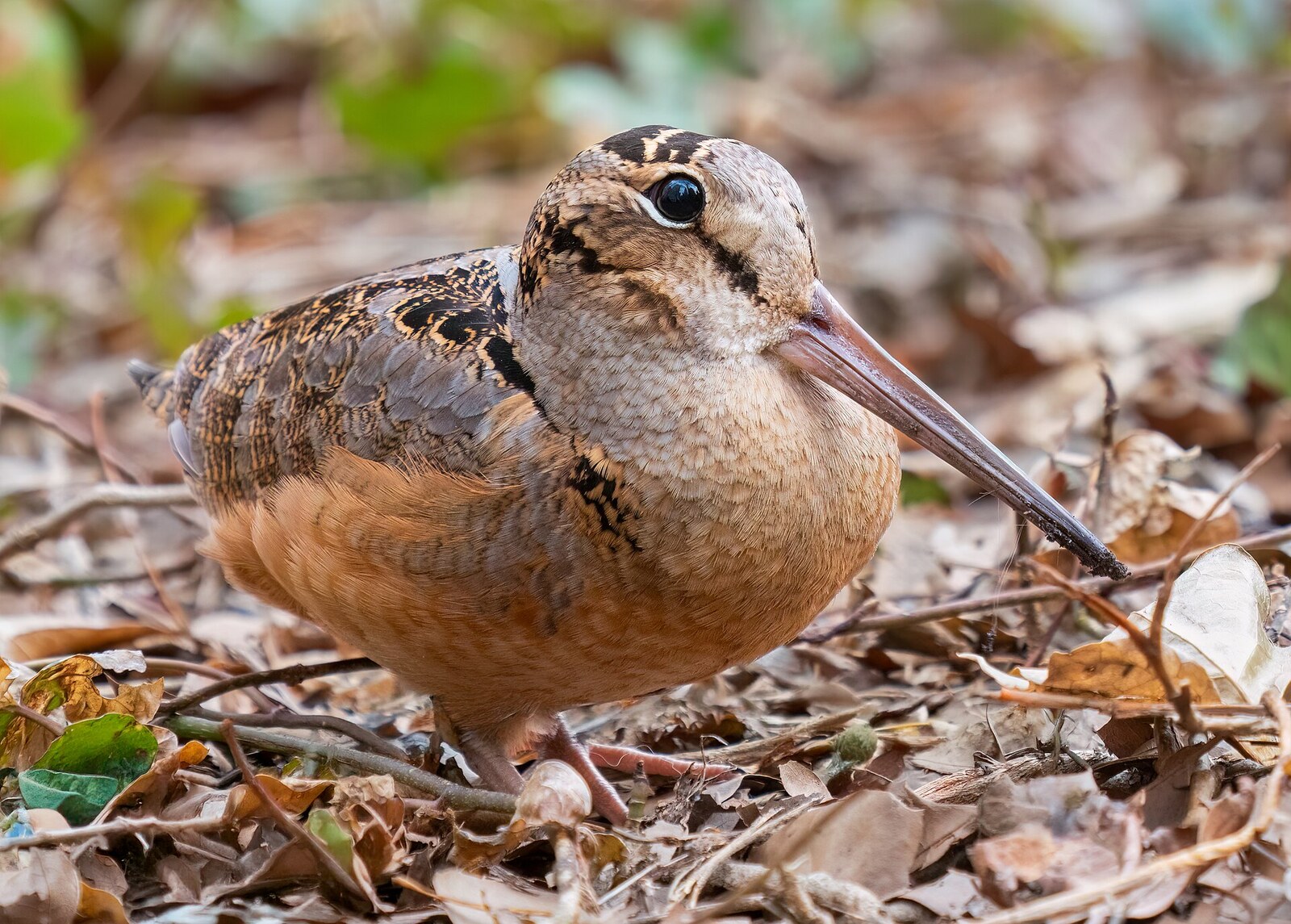
American woodcock
Scolopax minor
A long-billed cryptic woodland shorebird with bulging eyes set high on its head and a remarkable spring courtship display: males twitter on a steep upward spiral, then plummet back to the ground. Year-round in shrubby wet woods.
Status: Year-round; courtship in late winter.
Kingfisher, gulls, and terns
The belted kingfisher is a year-round resident along Marion creek and reservoir margins. Three gulls (ring-billed, herring, Bonaparte's) winter on Nickajack and the Tennessee River; two terns (Caspian, Forster's) pass through on migration.
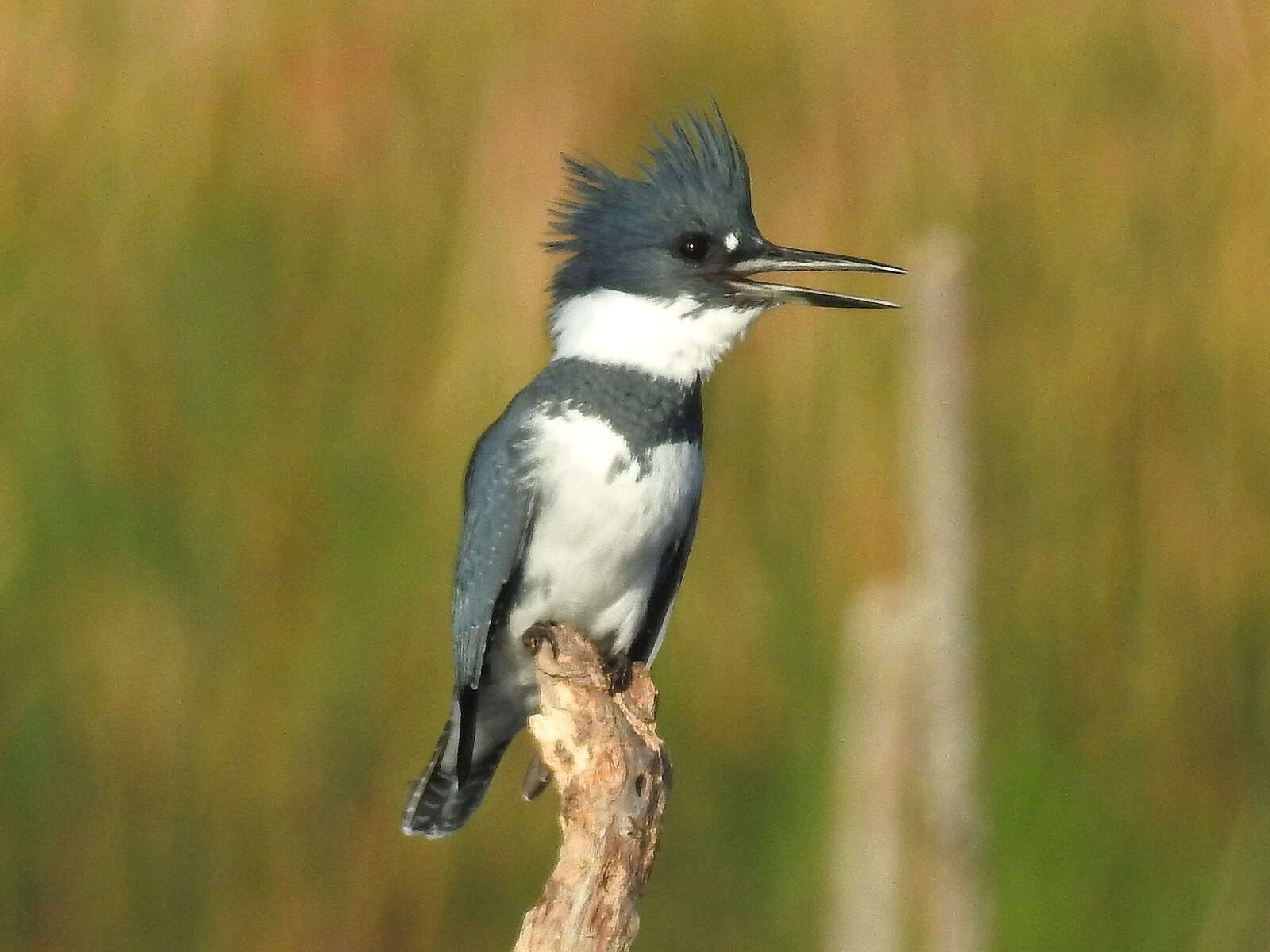
Belted kingfisher
Megaceryle alcyon
A large-headed blue-and-white kingfisher with a shaggy crest and a rattling territorial call. Year-round resident along Marion creek and reservoir margins; nests in burrows excavated in sandbank cutbanks.
Status: Secure; year-round.
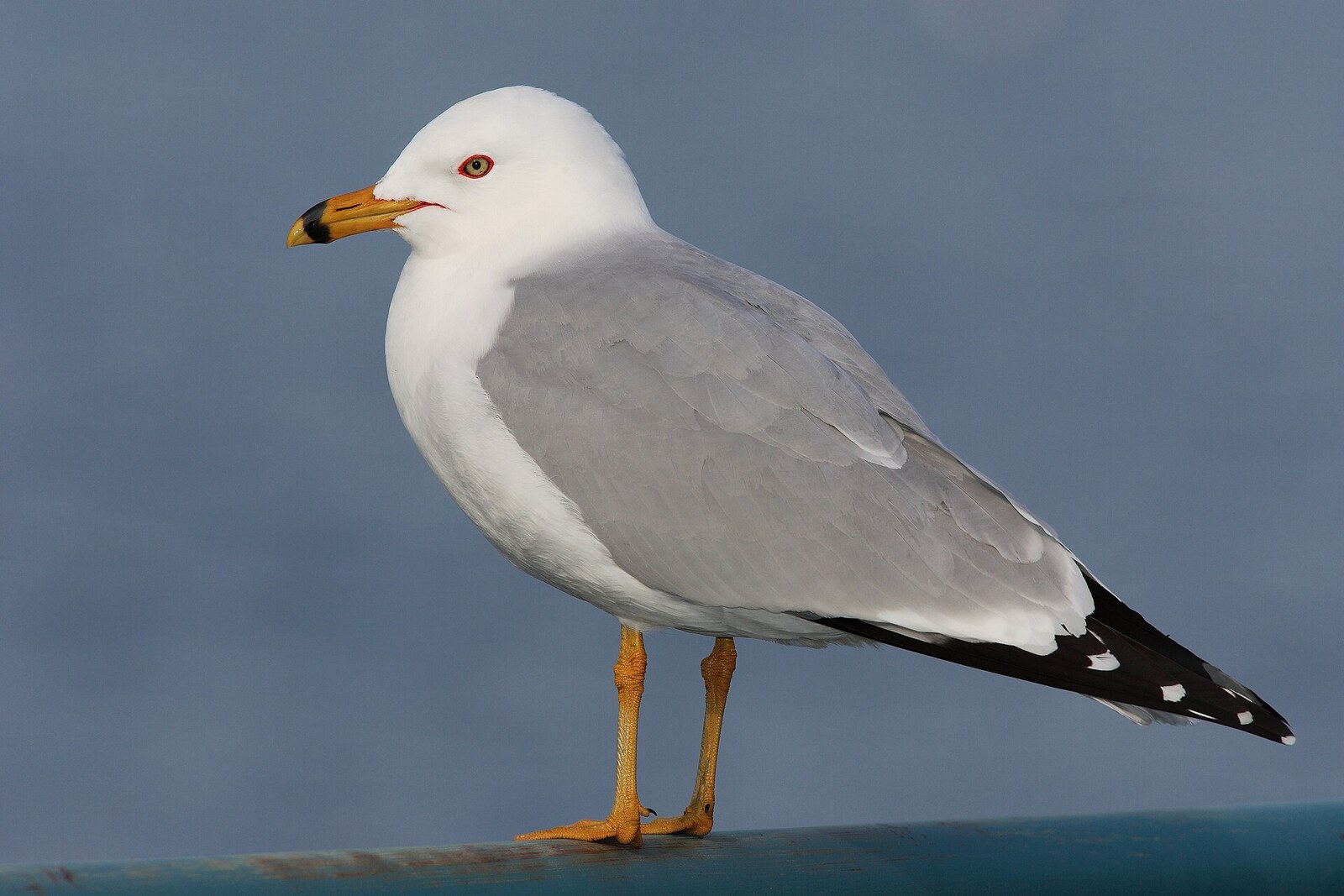
Ring-billed gull
Larus delawarensis
The familiar mid-sized gull of inland reservoirs, with a black ring around the yellow bill. Common winter visitor to Nickajack Lake and the Tennessee River.
Status: Winter resident.
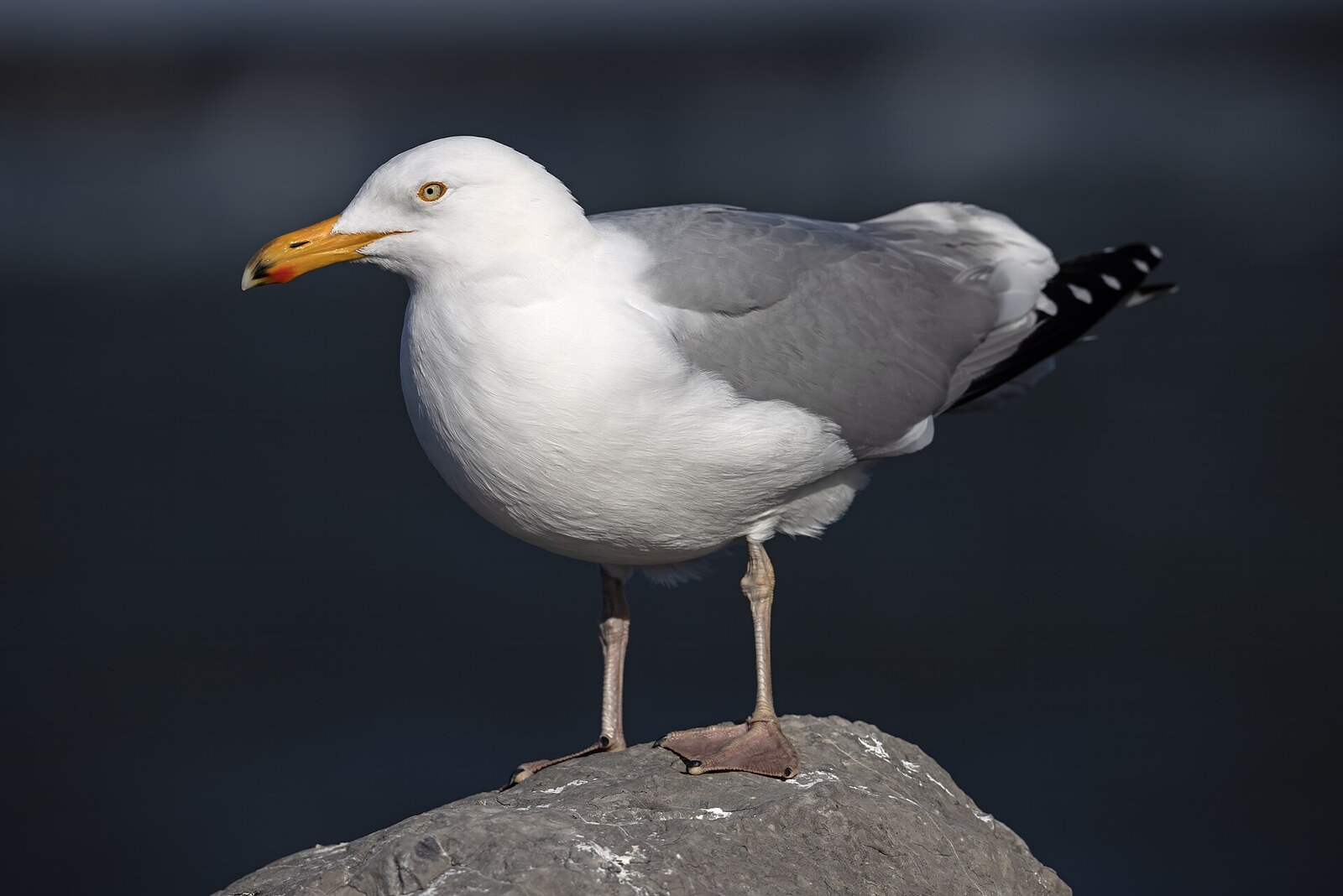
Herring gull
Larus smithsonianus
A larger gull than the ring-billed, with a heavier bill and pink legs. Common winter visitor on the Tennessee River, often loafing on barges and exposed shoals.
Status: Winter resident.
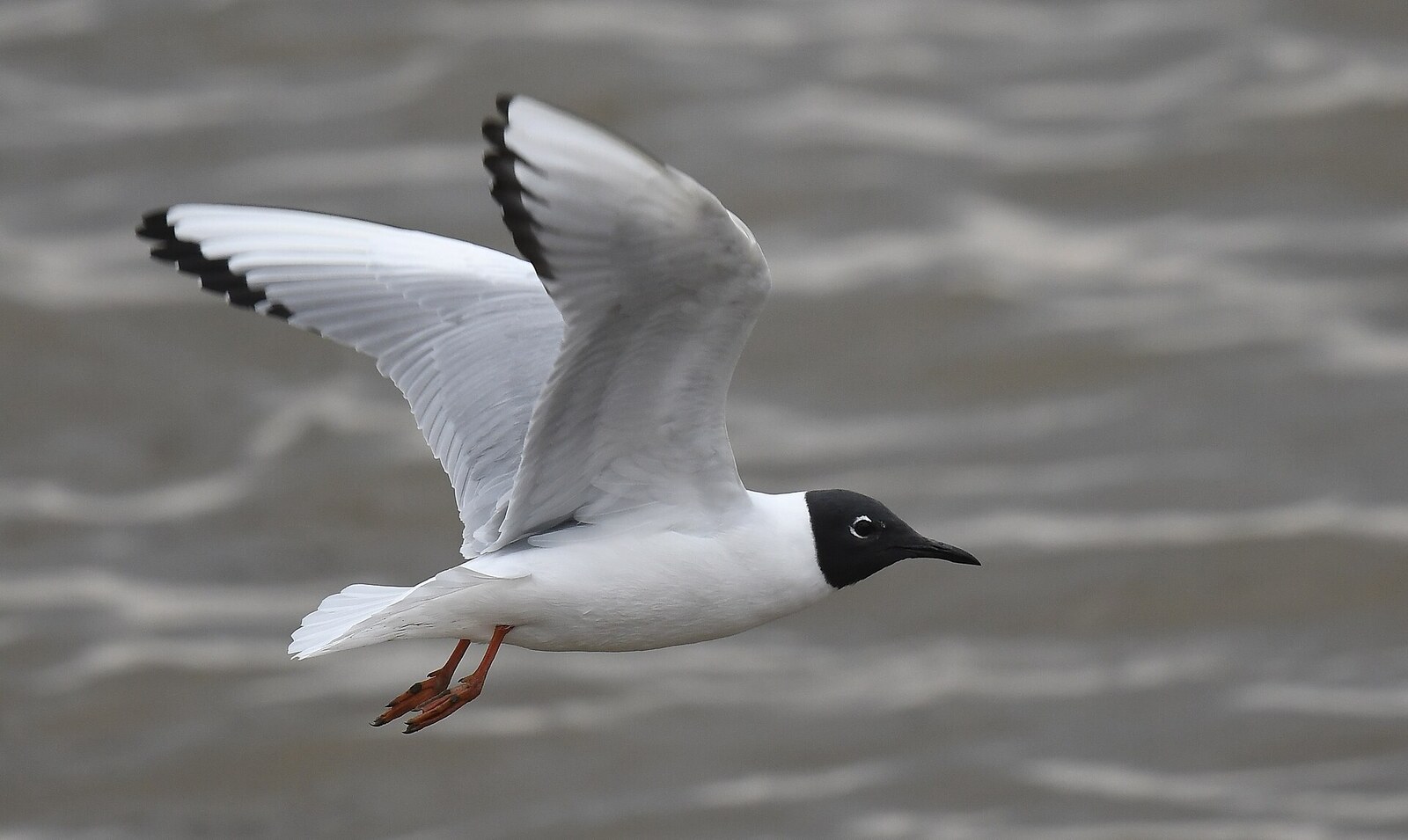
Bonaparte's gull
Chroicocephalus philadelphia
A small graceful gull with a black head in breeding plumage. Passes through Marion County in spring and fall and overwinters in small numbers on the Tennessee River.
Status: Winter resident; passage.
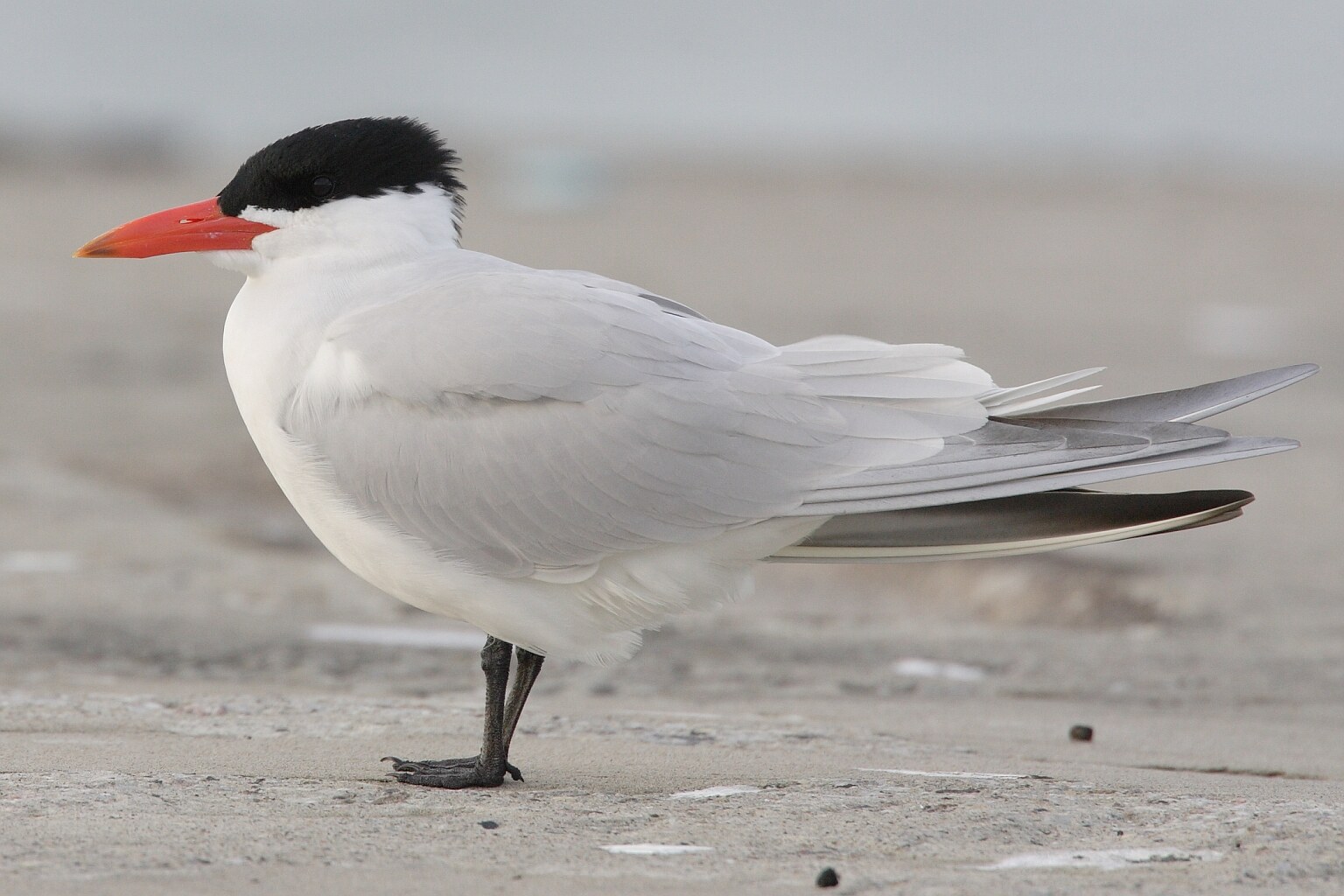
Caspian tern
Hydroprogne caspia
The largest tern in the world, with a heavy red-orange bill and a coal-black cap in breeding plumage. Passage migrant on Tennessee River impoundments.
Status: Passage migrant.
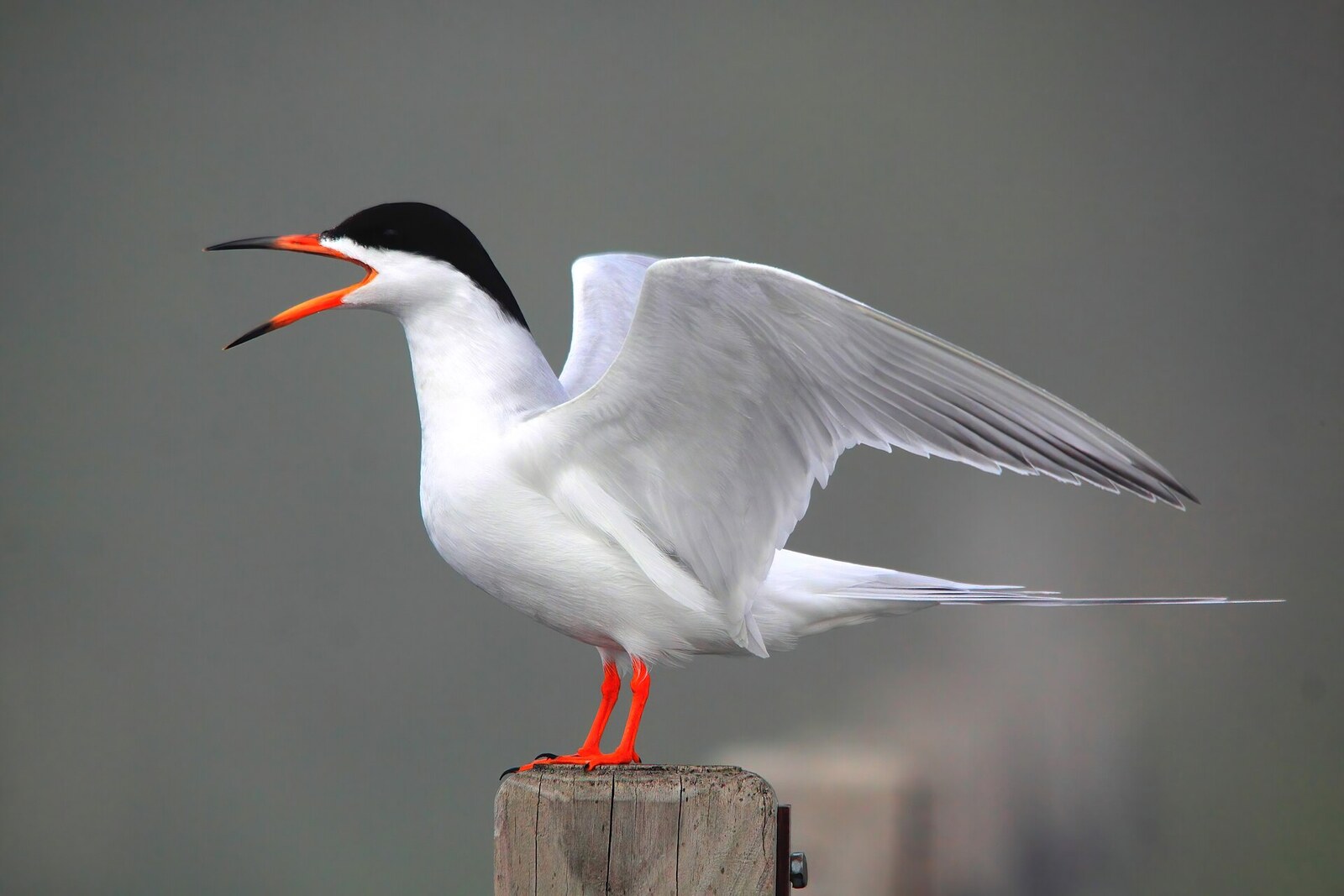
Forster's tern
Sterna forsteri
A medium-sized white-and-gray tern with a black-tipped orange bill in breeding plumage. Passes through Marion County on inland migrations; less common than the Caspian.
Status: Passage migrant.
Other wintering and passage land birds
Beyond the year-round residents and the open-water waterbirds, a third group of species uses Marion County only in the cold months or as passage migrants. Winter sparrows mix with juncos and white-throated sparrows around brush piles and field edges; winter finches and small woodland irruptives come south from the boreal belt in flight years when conifer cone crops fail; a small cluster of grassland-and-edge specialists (loggerhead shrike, horned lark, American pipit, rusty blackbird) winter in stubble fields, sod farms, and flooded woods. Several species in this group are TWRA Species of Greatest Conservation Need or have declined sharply across the southeast.
Winter sparrows
Nine sparrows winter in Marion County beyond the year-round resident sparrows. The fox sparrow, white-crowned sparrow, and savannah sparrow are reliably present each winter; the Henslow's sparrow has been recorded historically but is now rare; the grasshopper sparrow is a steeply declining valley breeder.
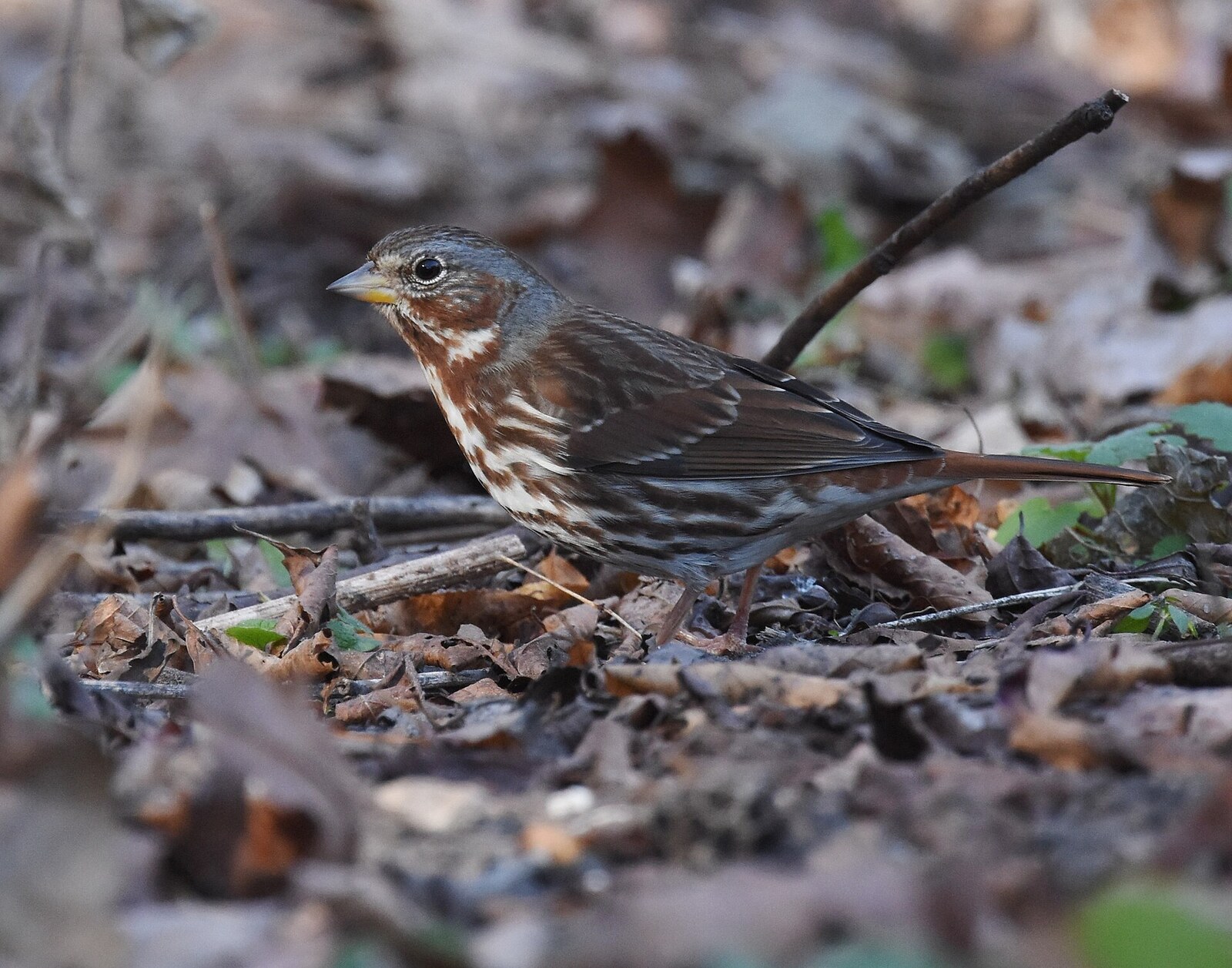
Fox sparrow
Passerella iliaca
A large rusty-chestnut sparrow that scratches noisily in dry leaves under brush piles in winter. The Tennessee subspecies is the rusty-toned eastern form.
Status: Winter resident.
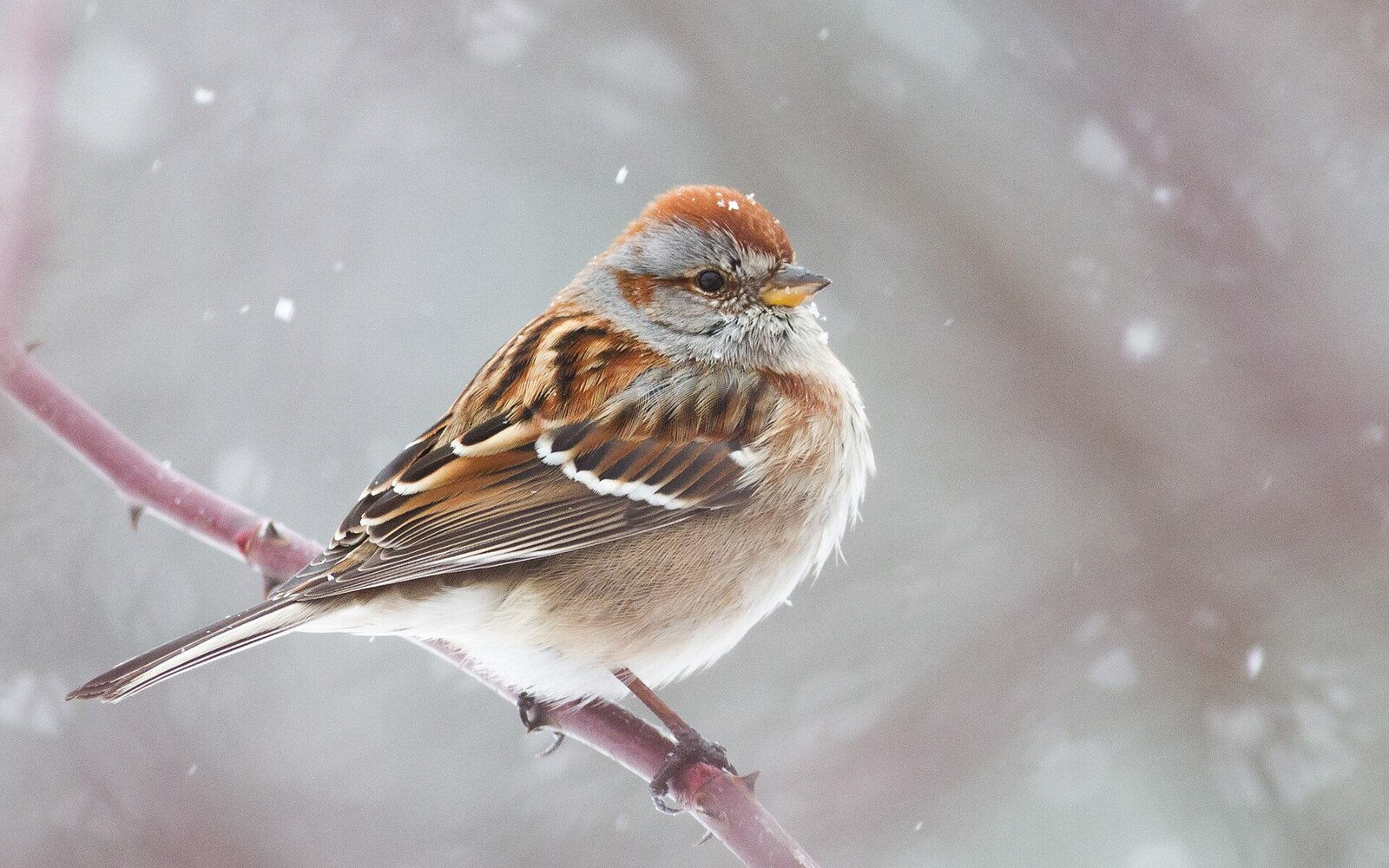
American tree sparrow
Spizelloides arborea
A small sparrow with a rusty cap and a single dark central breast spot. An uncommon winter visitor in Marion County; regularly recorded on Christmas Bird Counts at the southern edge of its winter range.
Status: Winter resident; uncommon.
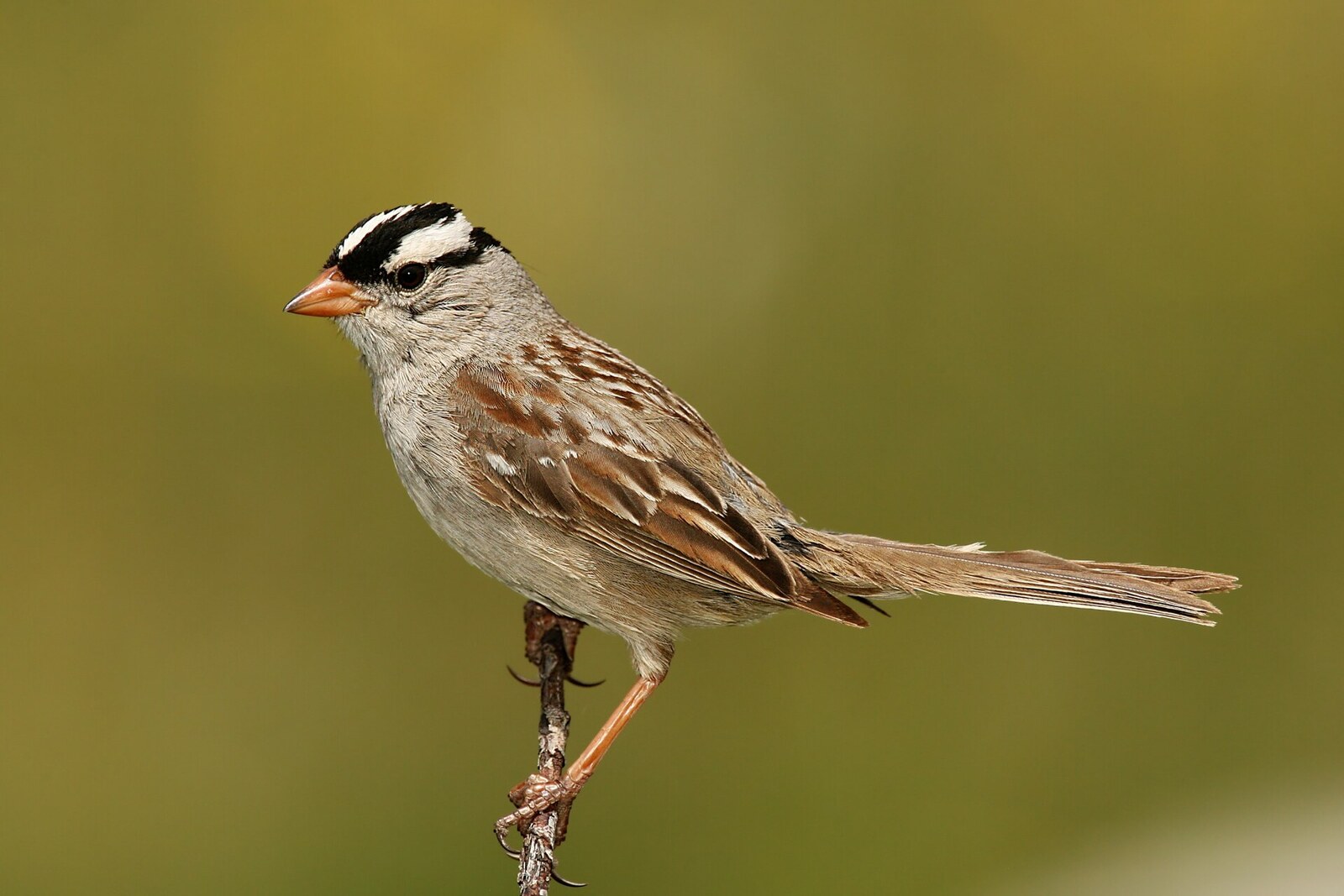
White-crowned sparrow
Zonotrichia leucophrys
A clean-faced sparrow with bold black-and-white stripes on the head. Less common than the white-throated sparrow in Marion but a regular winter visitor in brushy field edges.
Status: Winter resident.
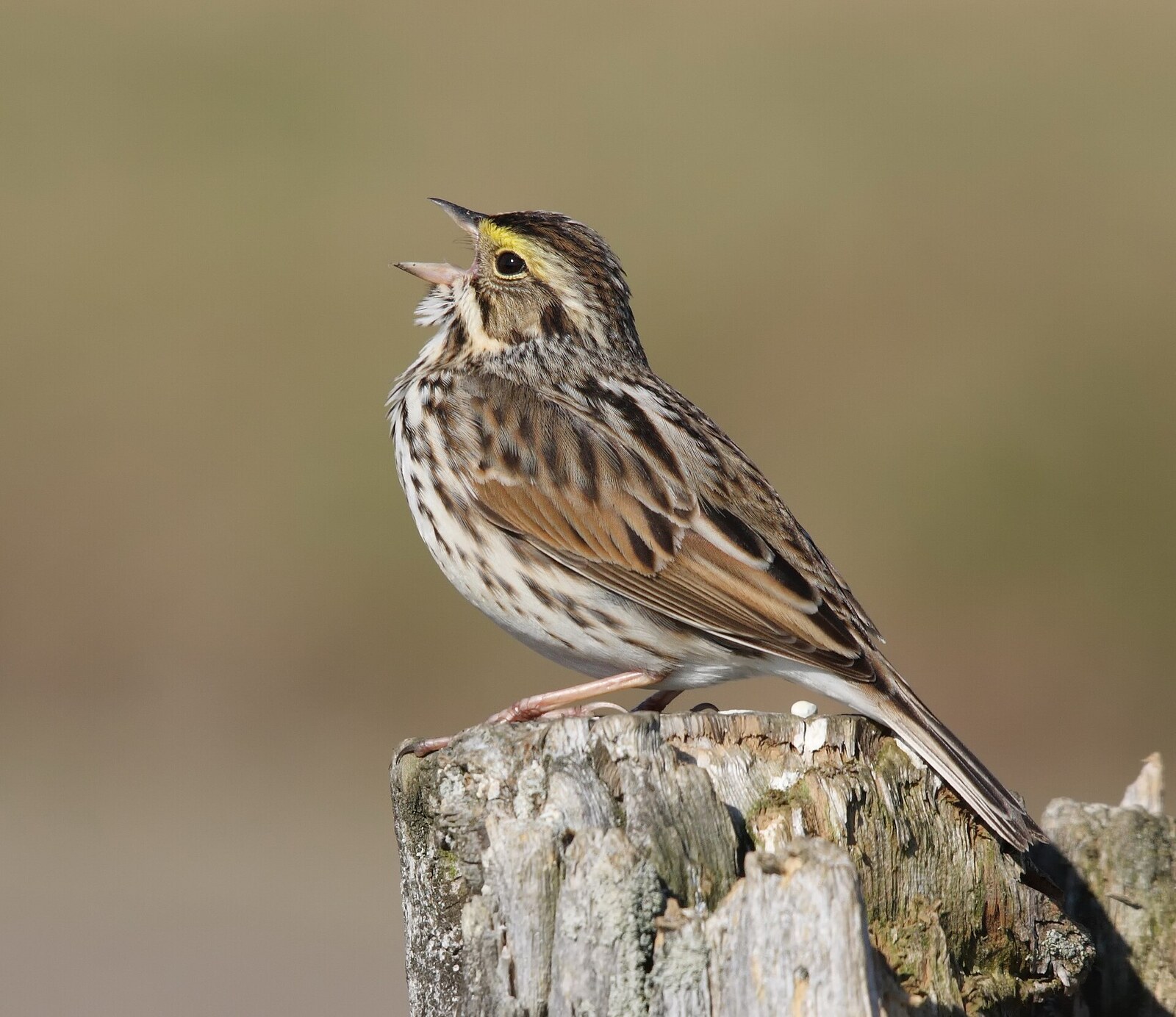
Savannah sparrow
Passerculus sandwichensis
A small streaky sparrow with a yellowish wash on the face. Winter visitor in stubble fields, hayfields, and pastures.
Status: Winter resident.
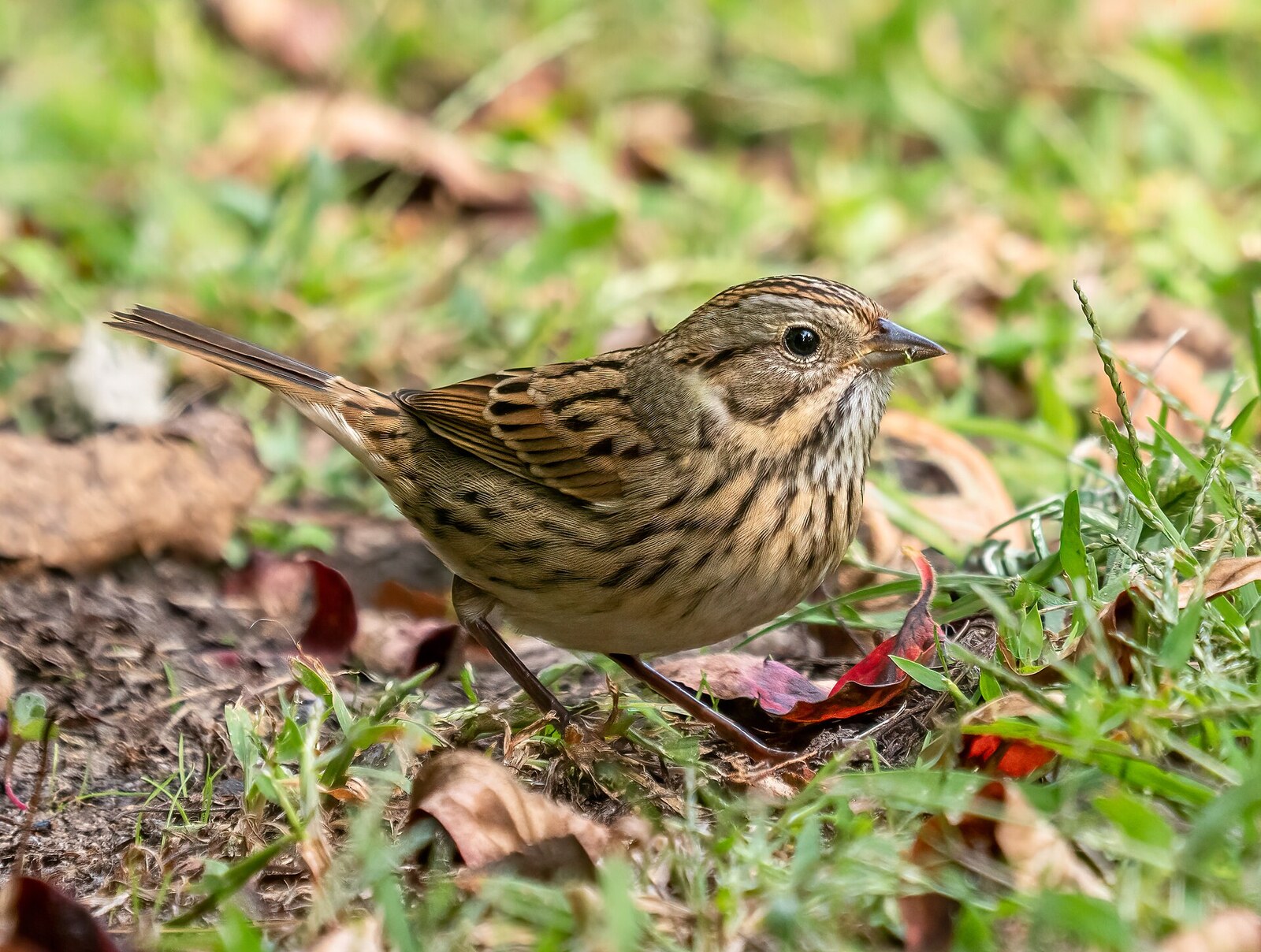
Lincoln's sparrow
Melospiza lincolnii
A streaky sparrow with a buffy chest band, easily confused with the song sparrow. Mainly a passage migrant through Marion brushy edges and damp thickets.
Status: Passage migrant; uncommon winter.
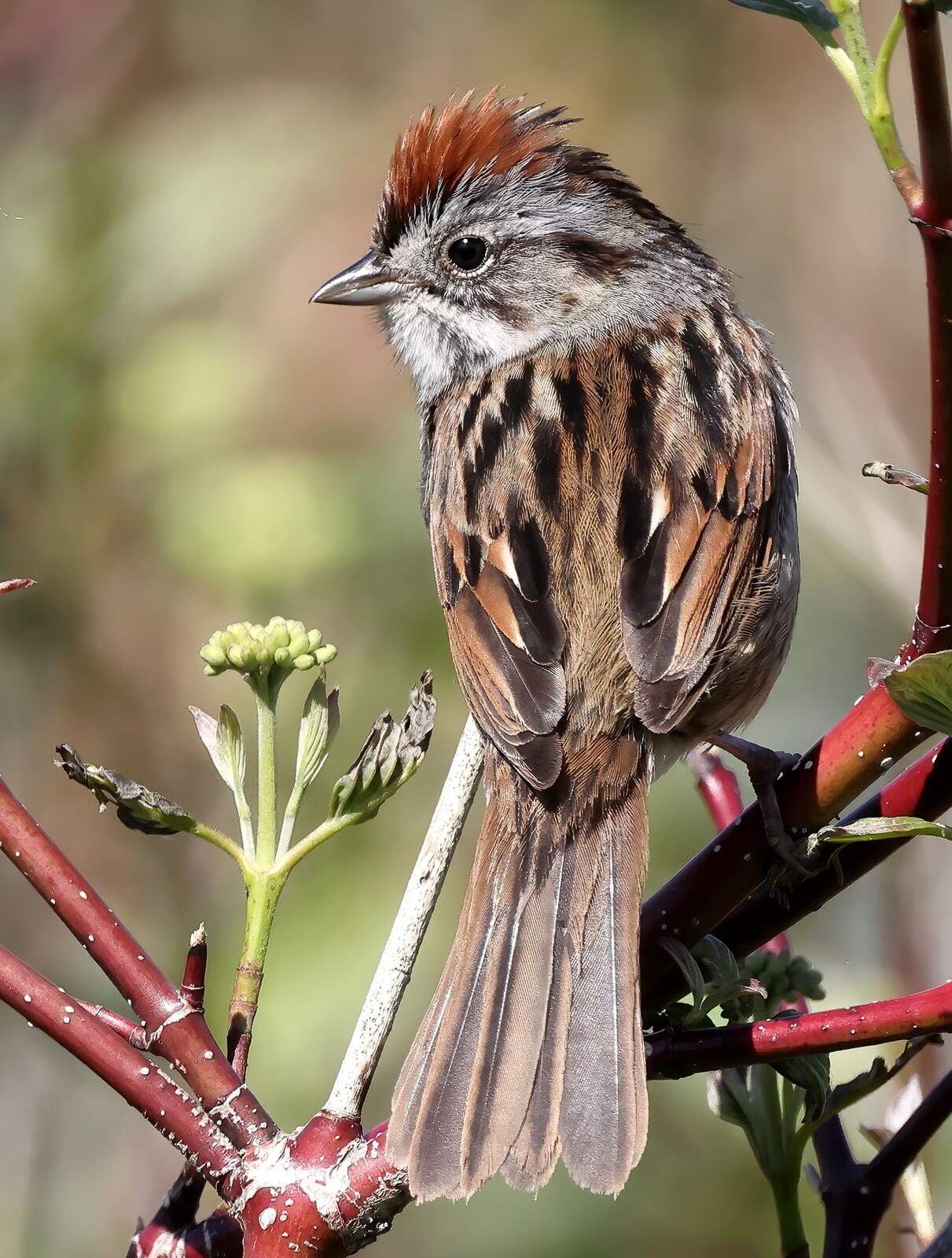
Swamp sparrow
Melospiza georgiana
A rusty-winged sparrow of marsh edges and wet meadow. Winter visitor in Marion County wetlands.
Status: Winter resident.
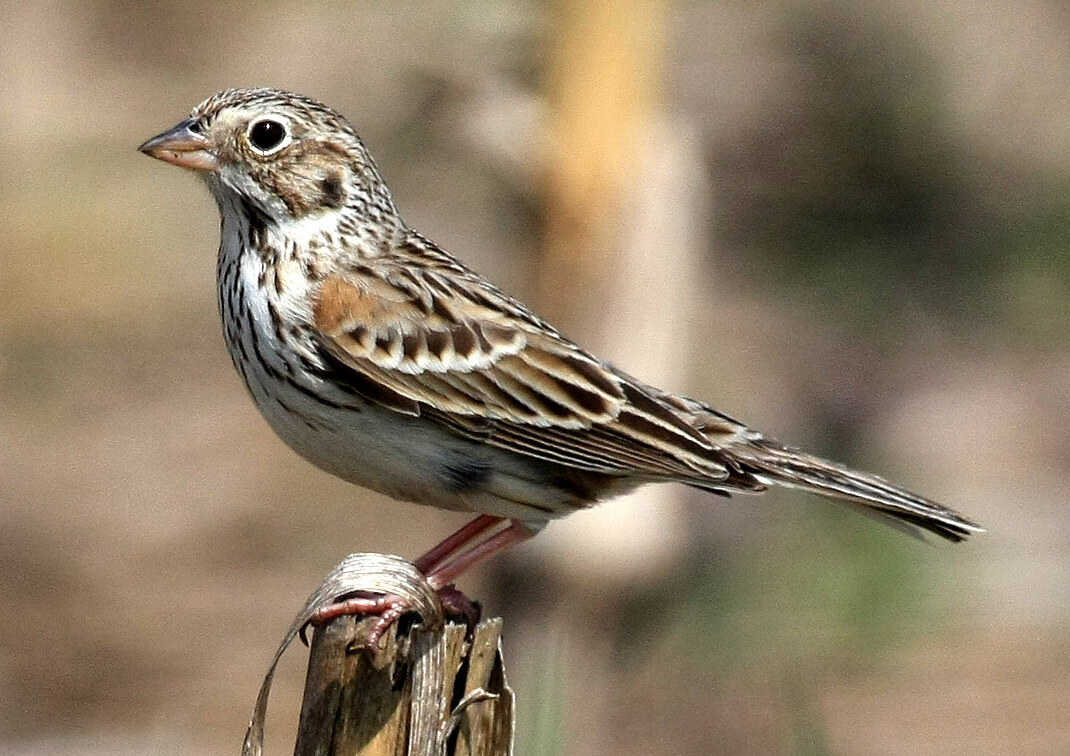
Vesper sparrow
Pooecetes gramineus
A streaky sparrow with white outer tail feathers and a chestnut shoulder patch. Declining grassland species that winters in valley pastures and stubble fields.
Status: Declining; winter resident.
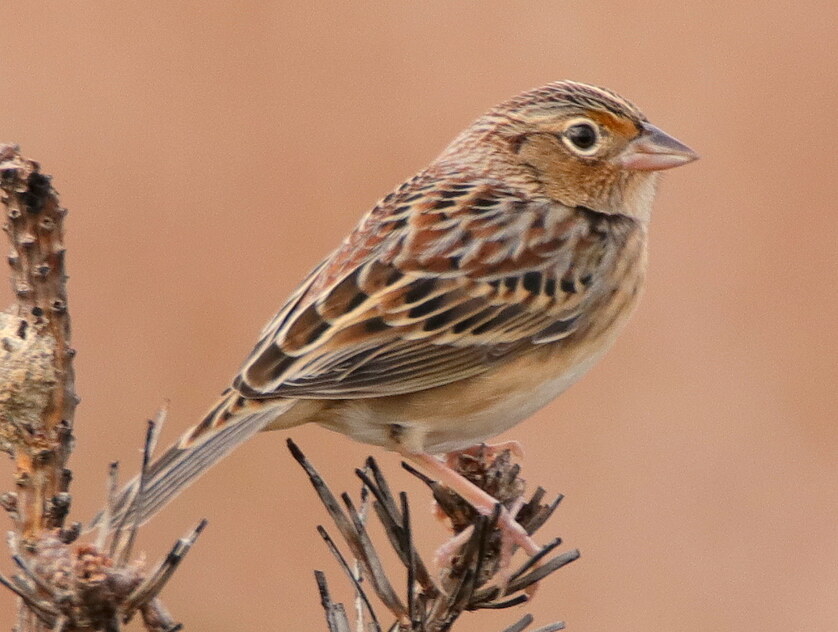
Grasshopper sparrow
Ammodramus savannarum
A small flat-headed grassland sparrow with a buzzy insect-like song. Breeds locally in valley hayfields and pastures; populations have declined as grassland habitat is lost.
Status: Declining; TWRA Species of Greatest Conservation Need.
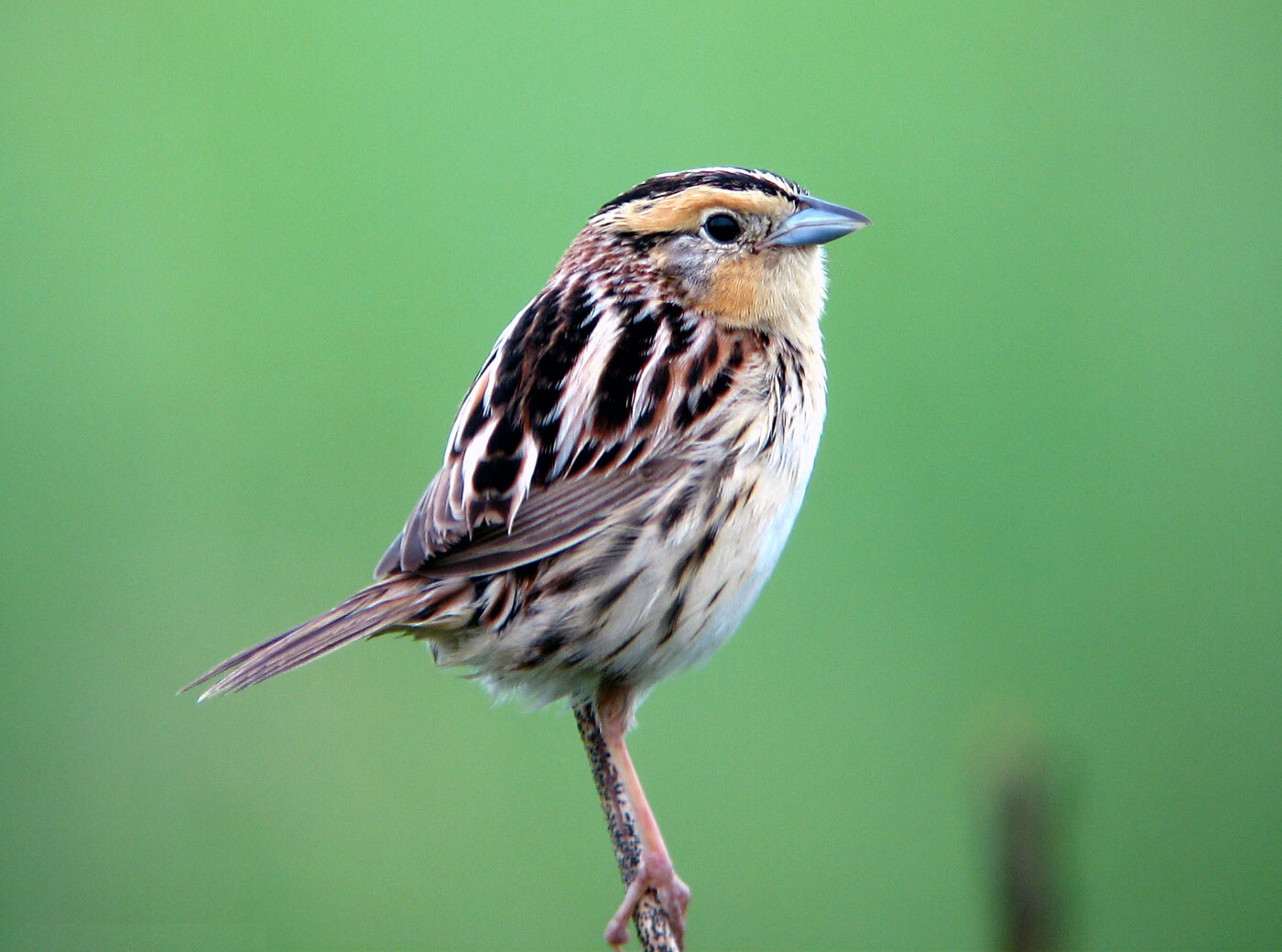
LeConte's sparrow
Ammospiza leconteii
A small bright-orange-and-streaked sparrow of damp grass and wet meadow. Uncommon winter visitor that hides in dense vegetation and is rarely seen well.
Status: Winter resident; uncommon.
Winter finches and irruptives
Seven small birds come south from the boreal forest belt in winter, abundant some years and absent in others depending on northern conifer cone crops. The pine siskin and red-breasted nuthatch are the most variable irruptives; the brown creeper and ruby-crowned and golden-crowned kinglets are more reliable winter visitors in mature forest.
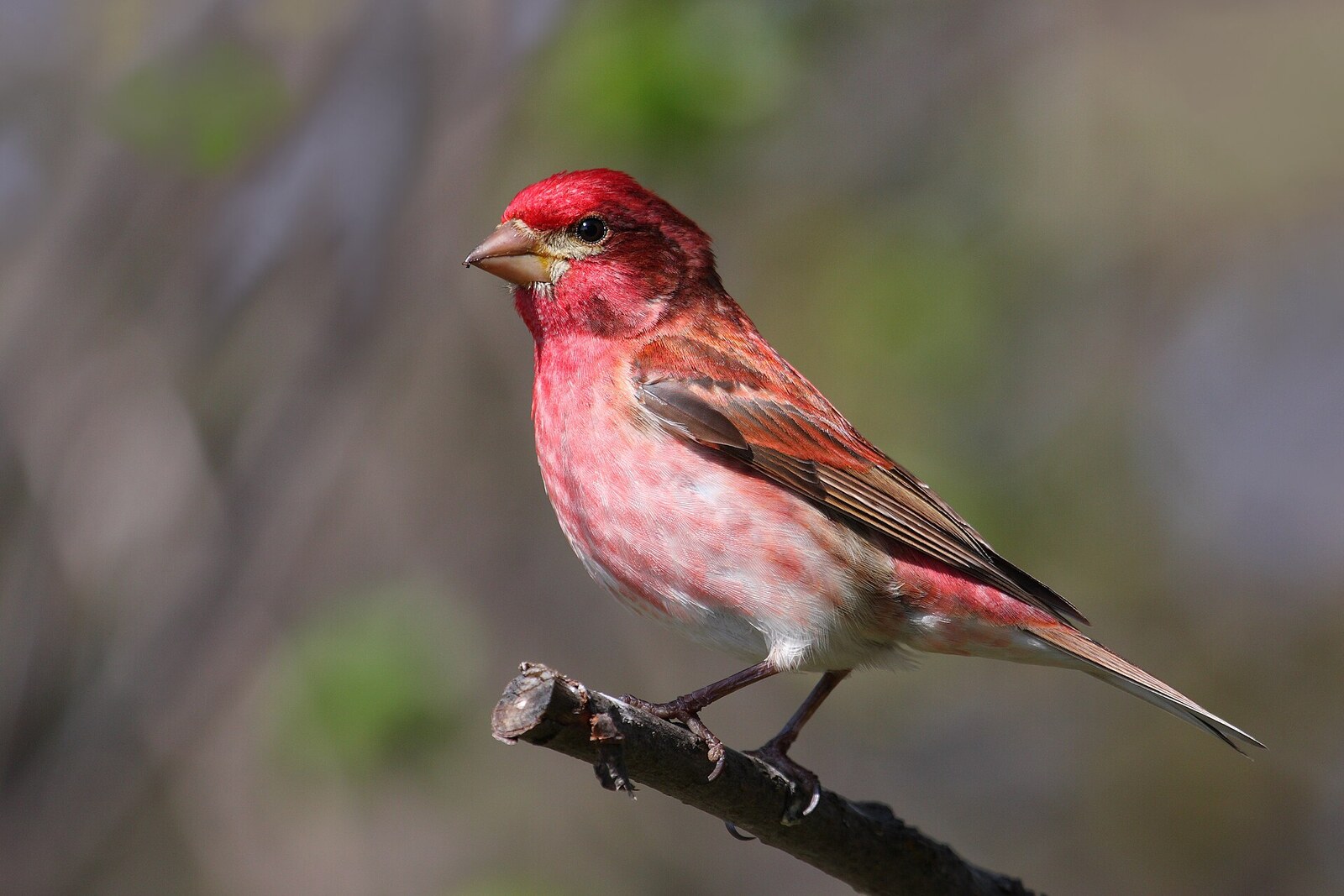
Purple finch
Haemorhous purpureus
A raspberry-colored finch (males) of conifer and mixed-forest yards in winter. Has lost ground to the introduced house finch but still appears at Marion feeders some years.
Status: Winter resident; declining.
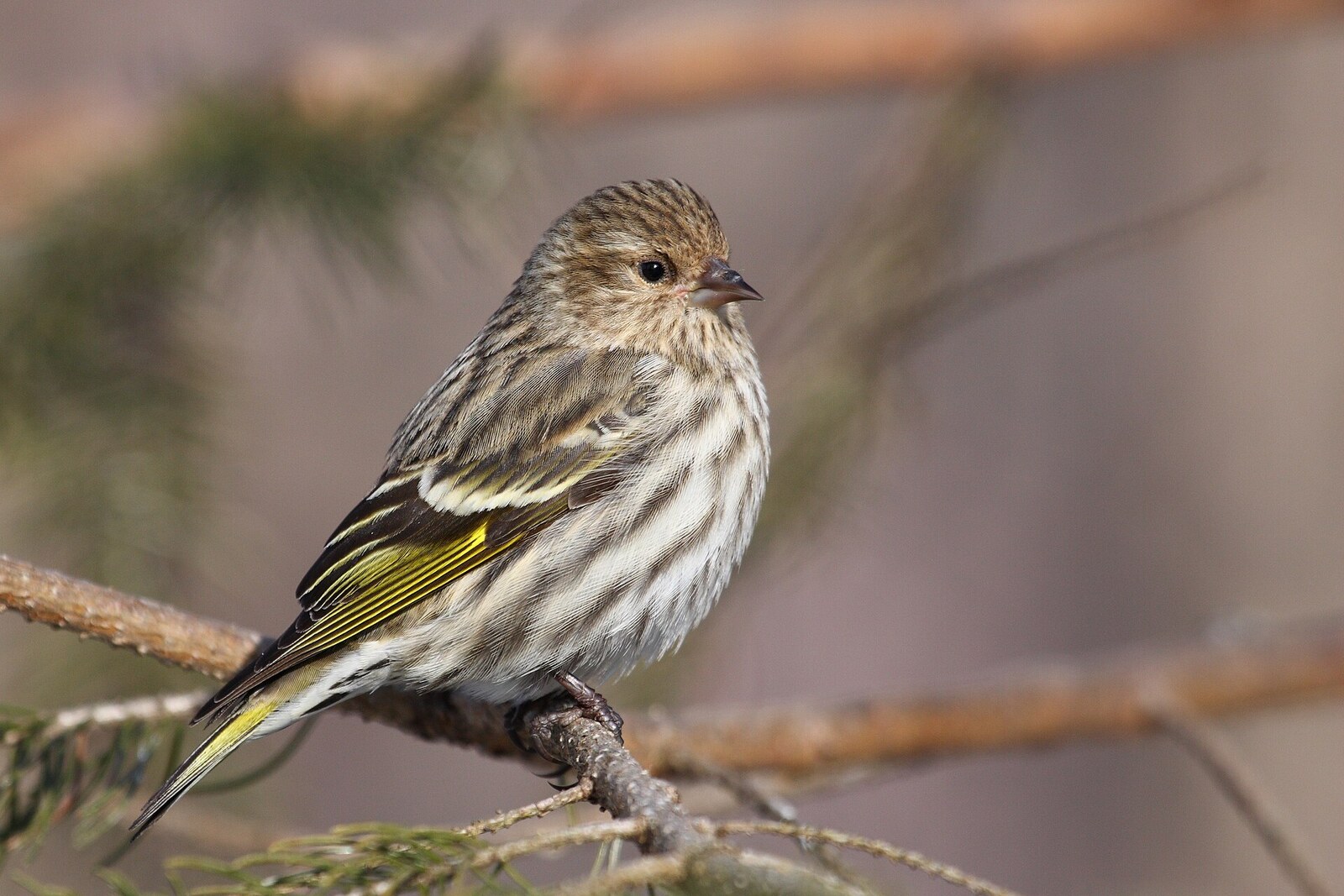
Pine siskin
Spinus pinus
A small streaky brown-and-yellow finch that visits feeders in flocks during invasion winters when boreal cone crops fail. Some years are abundant; other years almost absent.
Status: Irruptive winter visitor.
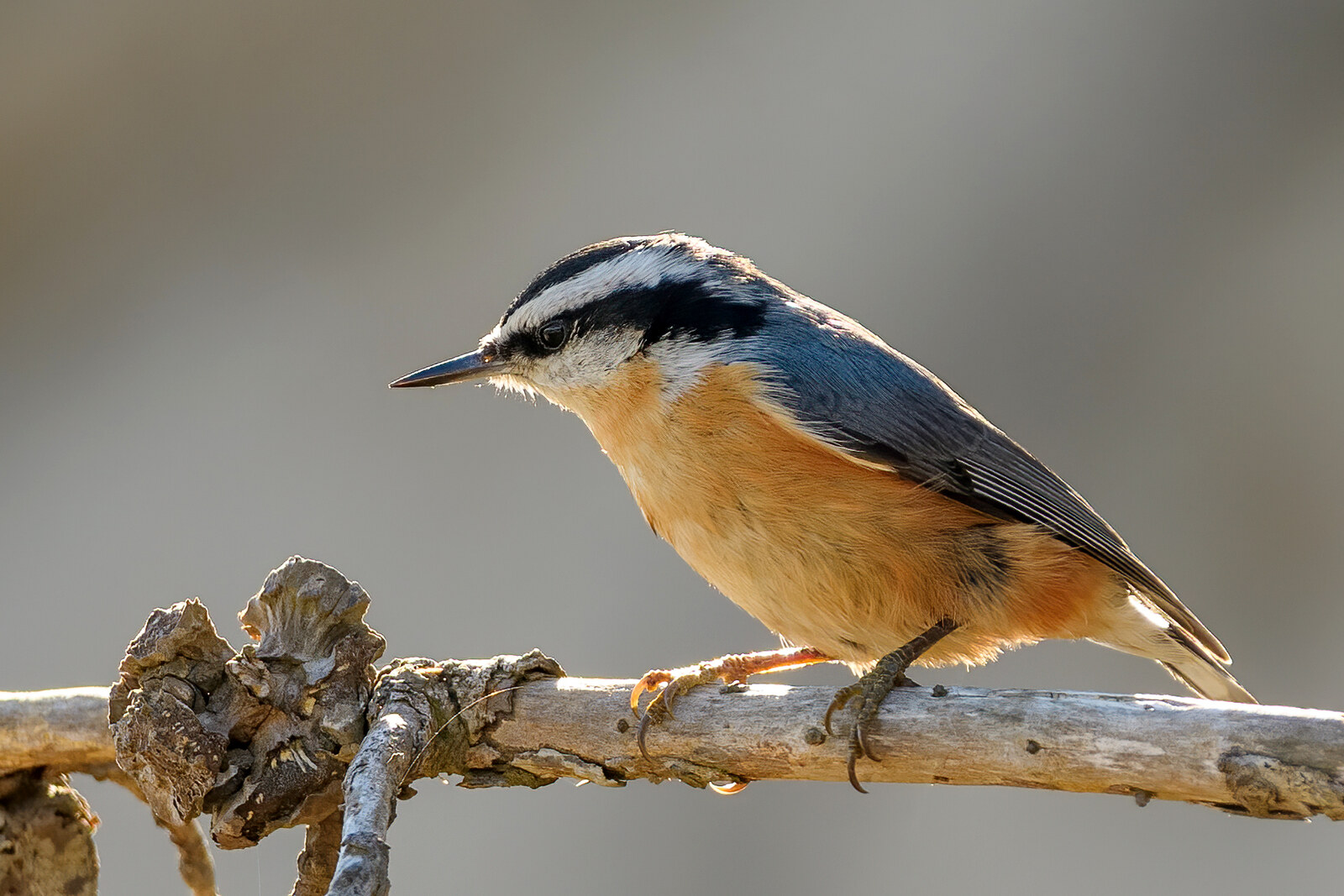
Red-breasted nuthatch
Sitta canadensis
A small nuthatch with a black eye-stripe and a rusty belly, more tied to conifers than the white-breasted nuthatch. Irruptive winter visitor in Marion County, abundant some years and absent in others.
Status: Irruptive winter visitor.
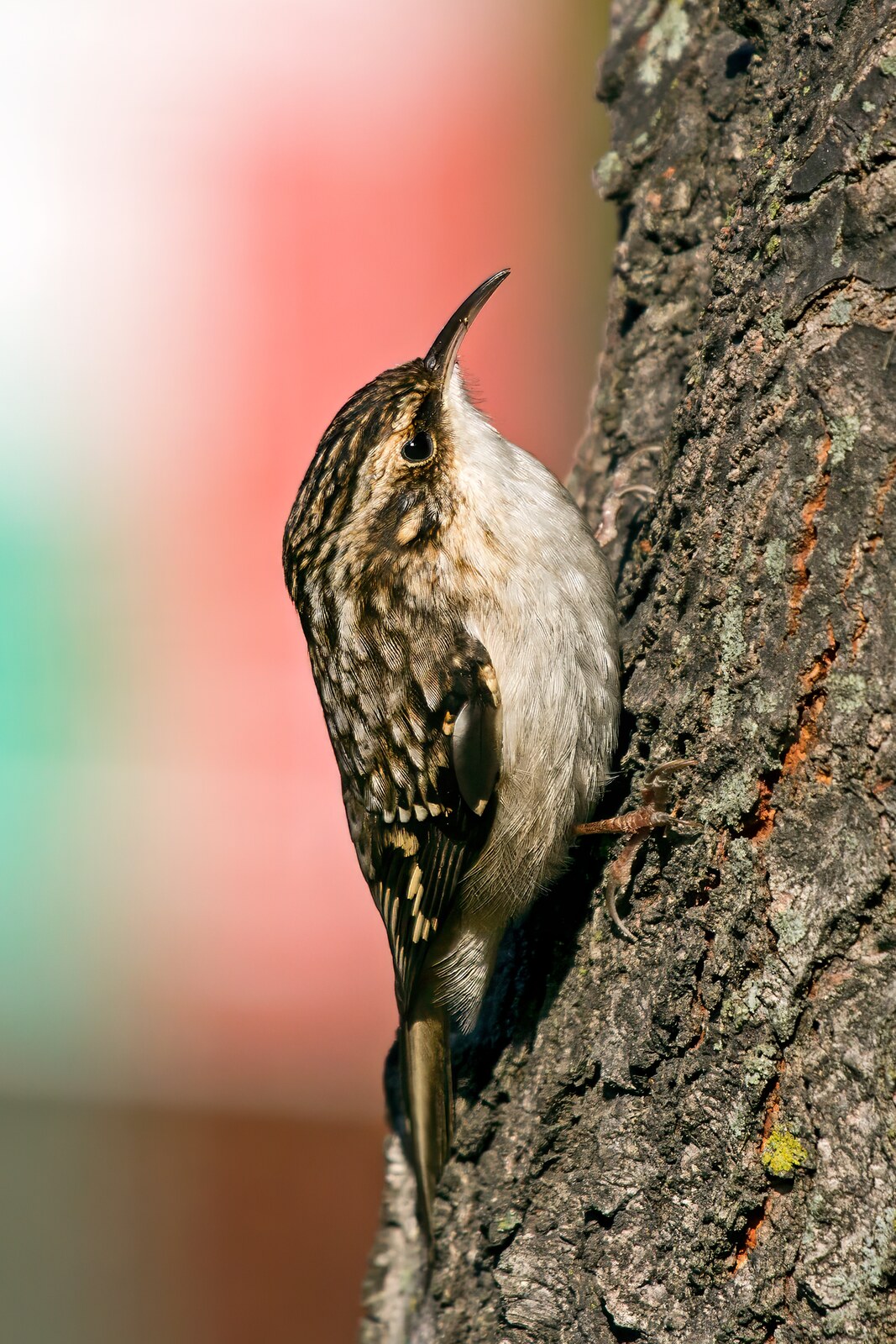
Brown creeper
Certhia americana
A tiny streaky-brown bird that creeps up tree trunks in spirals, then flies down to the base of the next tree. Winter resident in mature forest and along stream corridors.
Status: Winter resident.
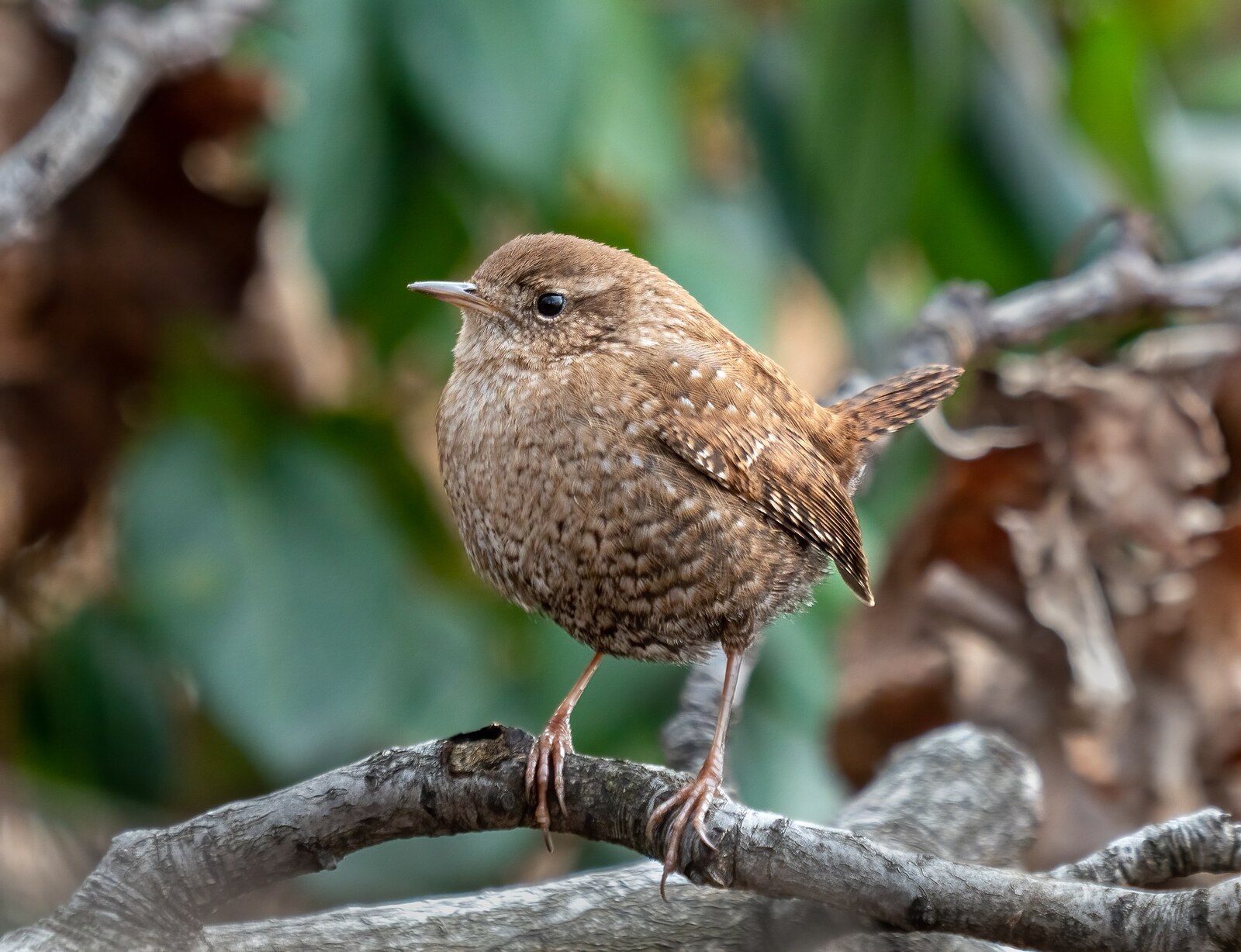
Winter wren
Troglodytes hiemalis
A tiny, dark, stub-tailed wren of mossy forest understory. Winter visitor in Marion County; sings a remarkably long, complex bubbling song on its breeding grounds far north.
Status: Winter resident.
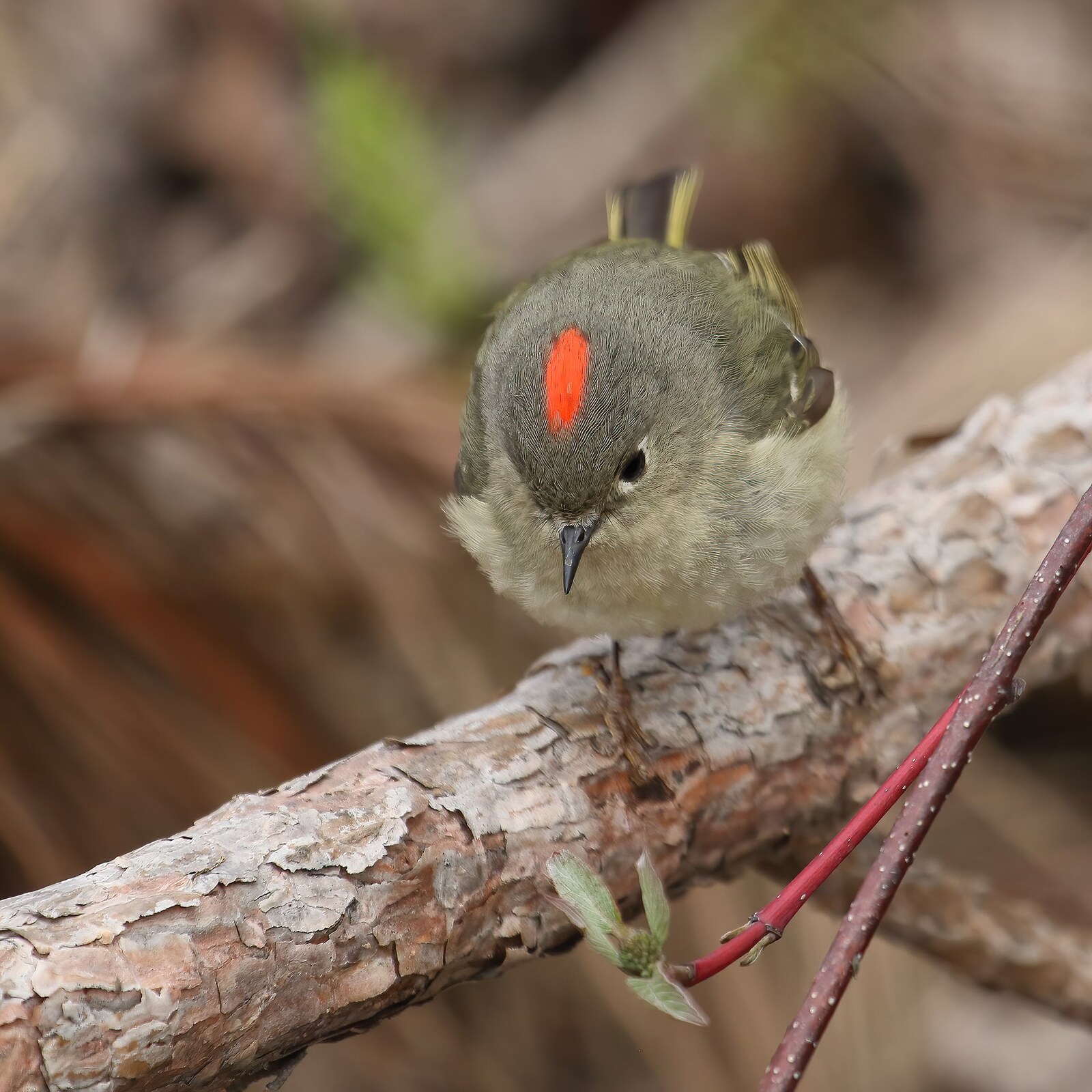
Ruby-crowned kinglet
Corthylio calendula
A tiny olive bird with a hidden red crown patch (rarely visible). Winter visitor that flits constantly through forest understory and yard shrubbery.
Status: Winter resident.
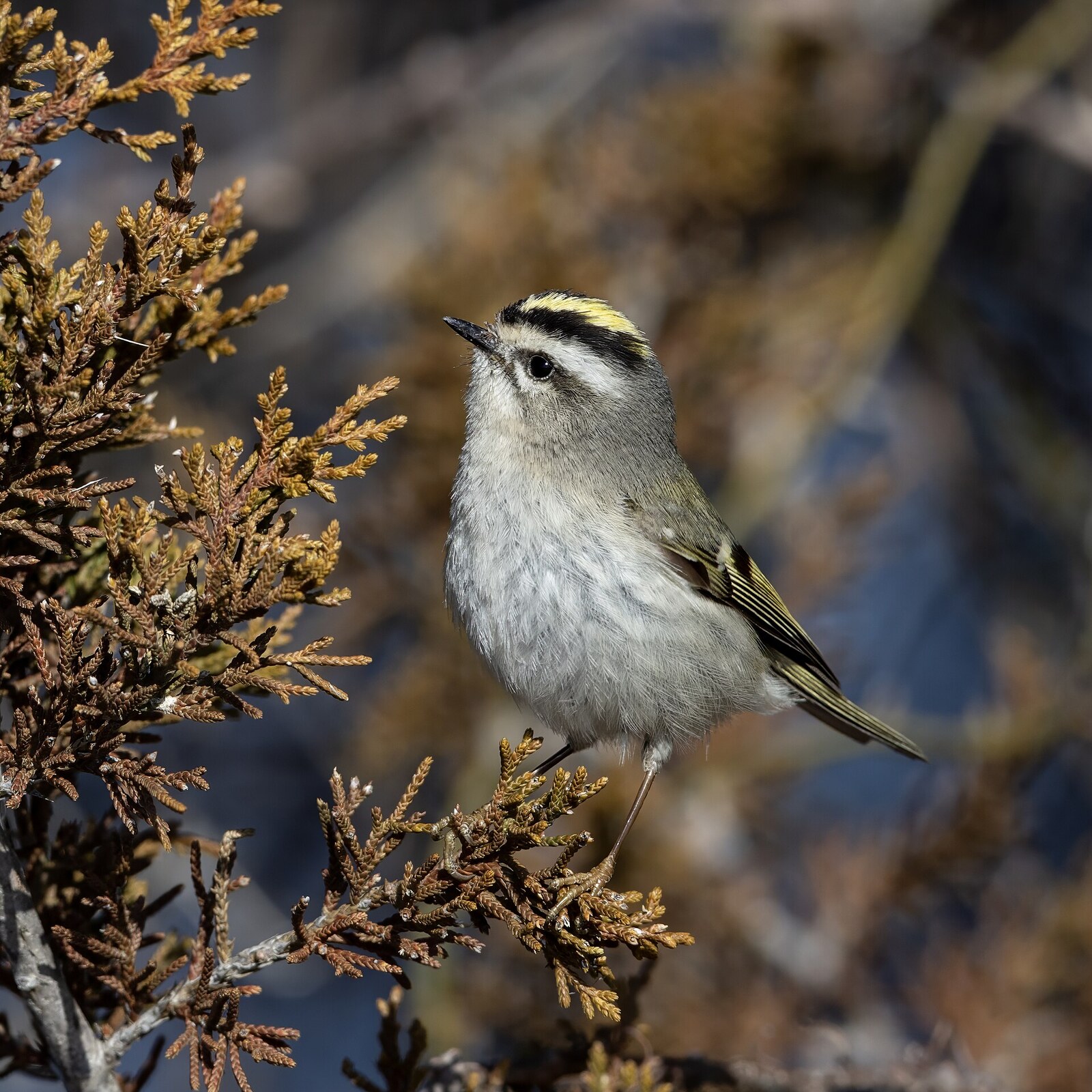
Golden-crowned kinglet
Regulus satrapa
A tiny olive bird with a striking yellow-and-black crown. Winter visitor in mixed and conifer-rich forest, often in mixed-species winter flocks with chickadees and titmice.
Status: Winter resident.
Other declining and grassland-edge winter species
The rusty blackbird, loggerhead shrike, horned lark, and American pipit each fill a distinct cold-month niche in Marion County. The rusty blackbird and loggerhead shrike have declined steeply across the southeast, the shrike enough to be designated a TWRA Species of Greatest Conservation Need.
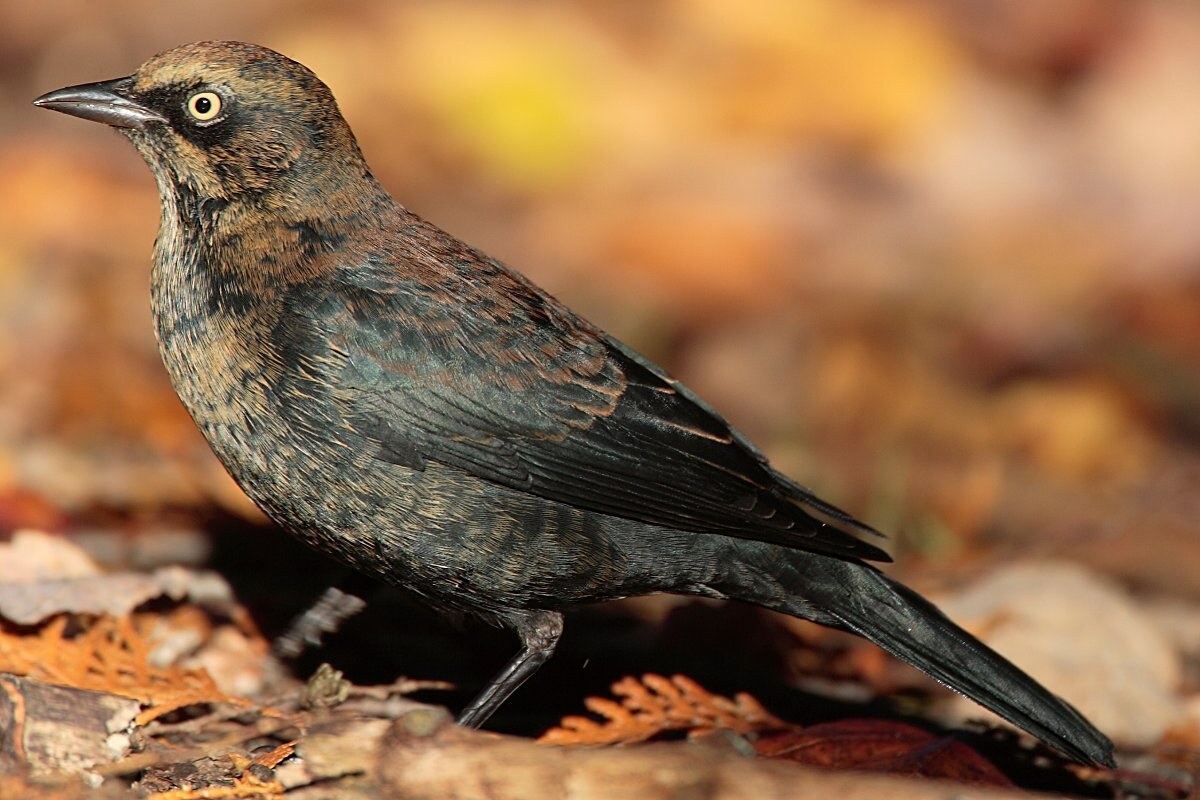
Rusty blackbird
Euphagus carolinus
A medium-sized blackbird with a yellow eye and a rusty-edged winter plumage. Has declined dramatically across its boreal range; winters in flooded woods and wet field edges in Marion County.
Status: Declining; winter resident.
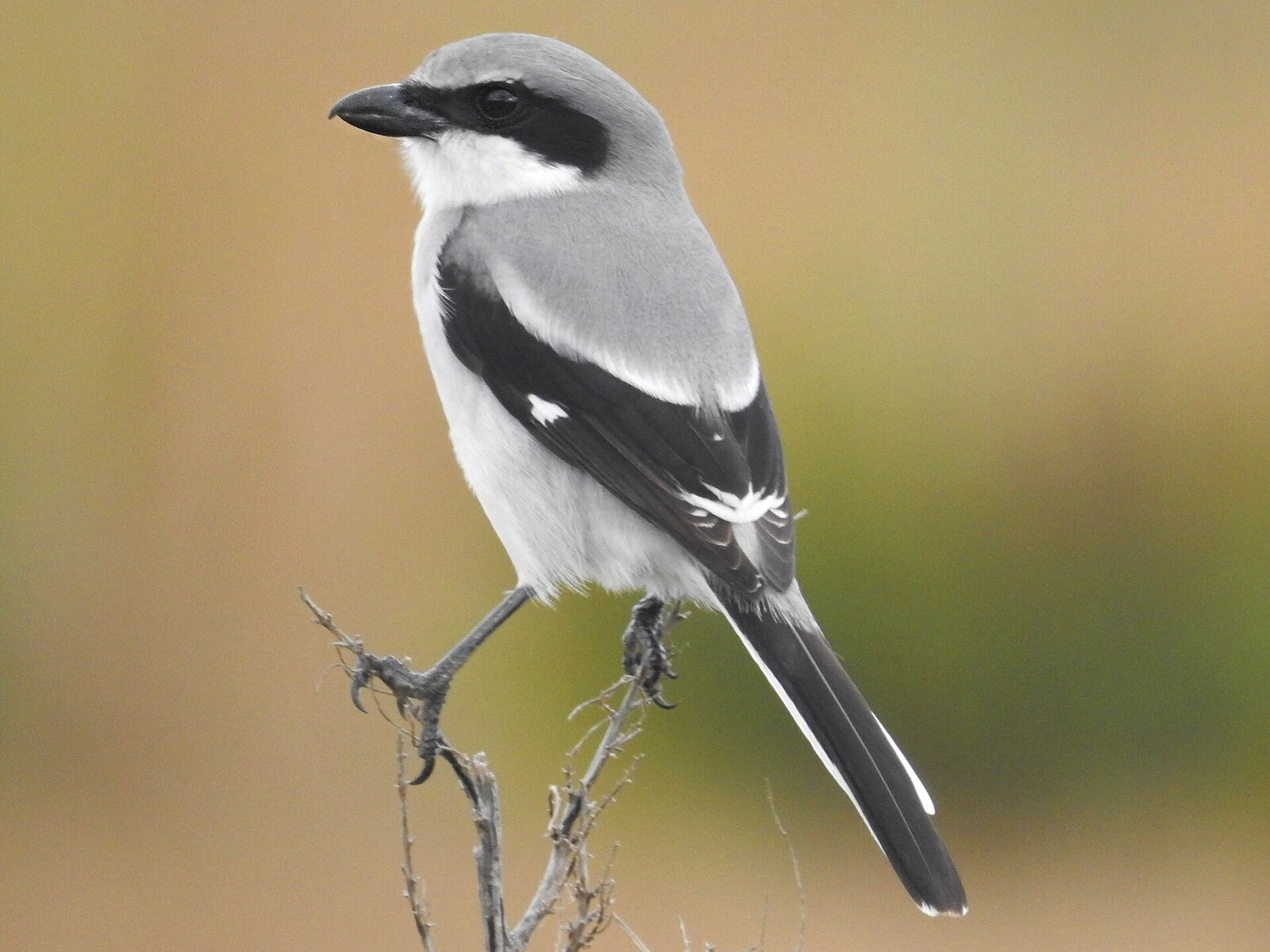
Loggerhead shrike
Lanius ludovicianus
A pale gray-and-black songbird with a hooked predatory bill, impaling prey on barbed wire and thorns to consume later. Has declined sharply across the southeast as open shrub-pasture habitat has been lost.
Status: Declining; TWRA Species of Greatest Conservation Need.
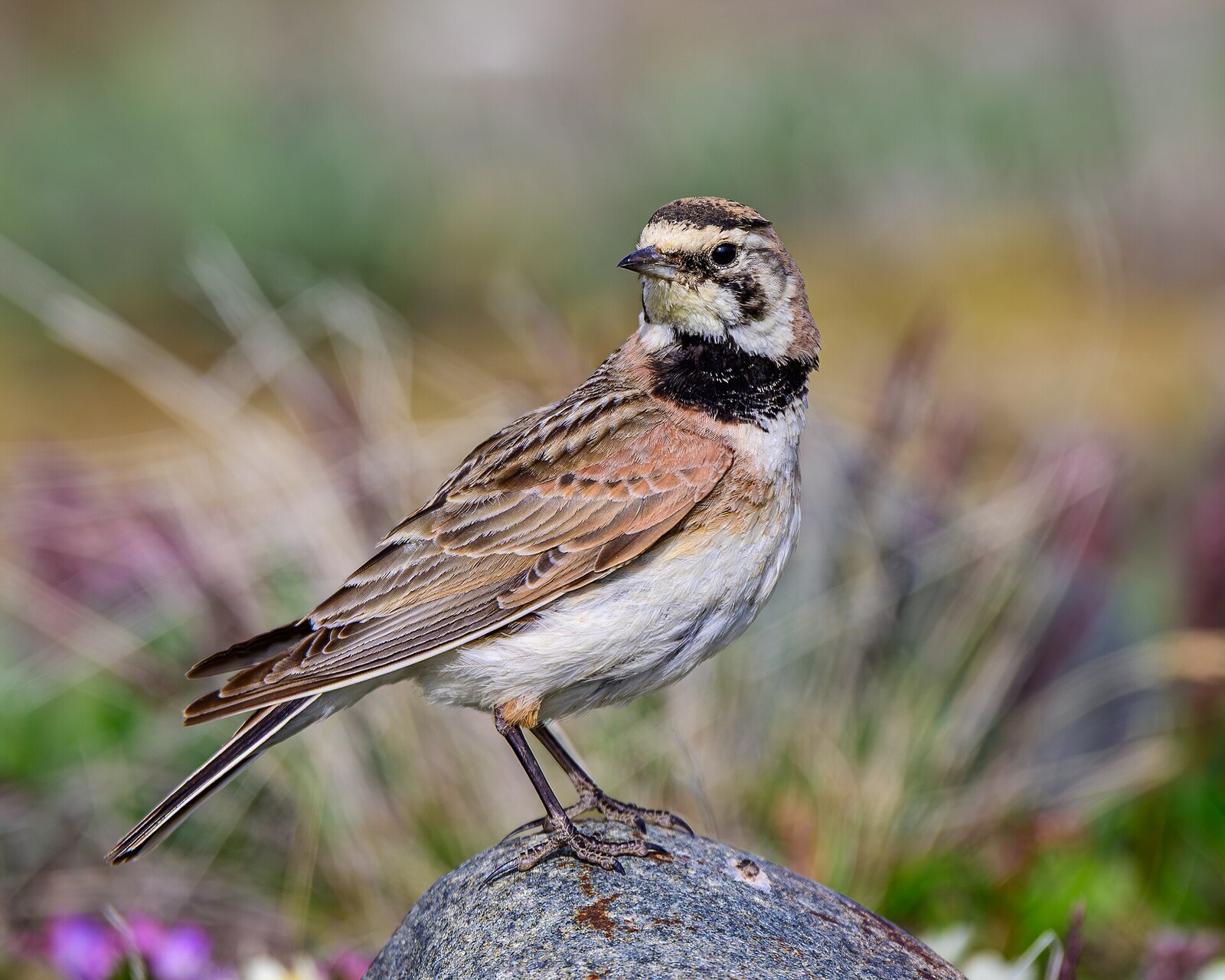
Horned lark
Eremophila alpestris
A small streaky-brown grassland bird with black face markings and small feather horns. Found in stubble fields, sod farms, and short-grazed pastures; uncommon but regular in Marion County.
Status: Uncommon resident.
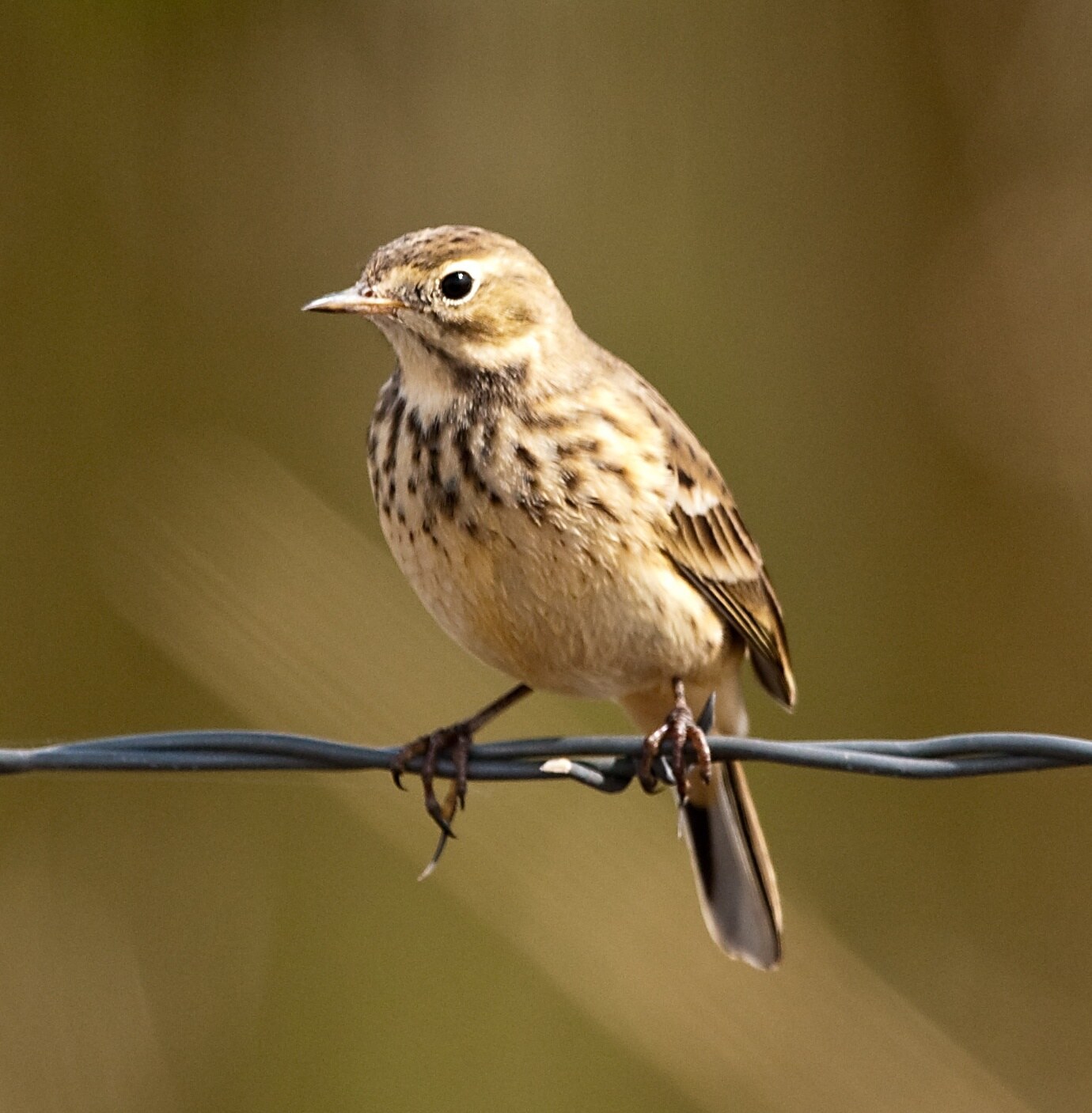
American pipit
Anthus rubescens
A slender ground-walking sparrow-like bird with a thin bill and a habit of bobbing its tail. Winter visitor in stubble fields and on muddy reservoir flats.
Status: Winter resident.
Butterflies and moths
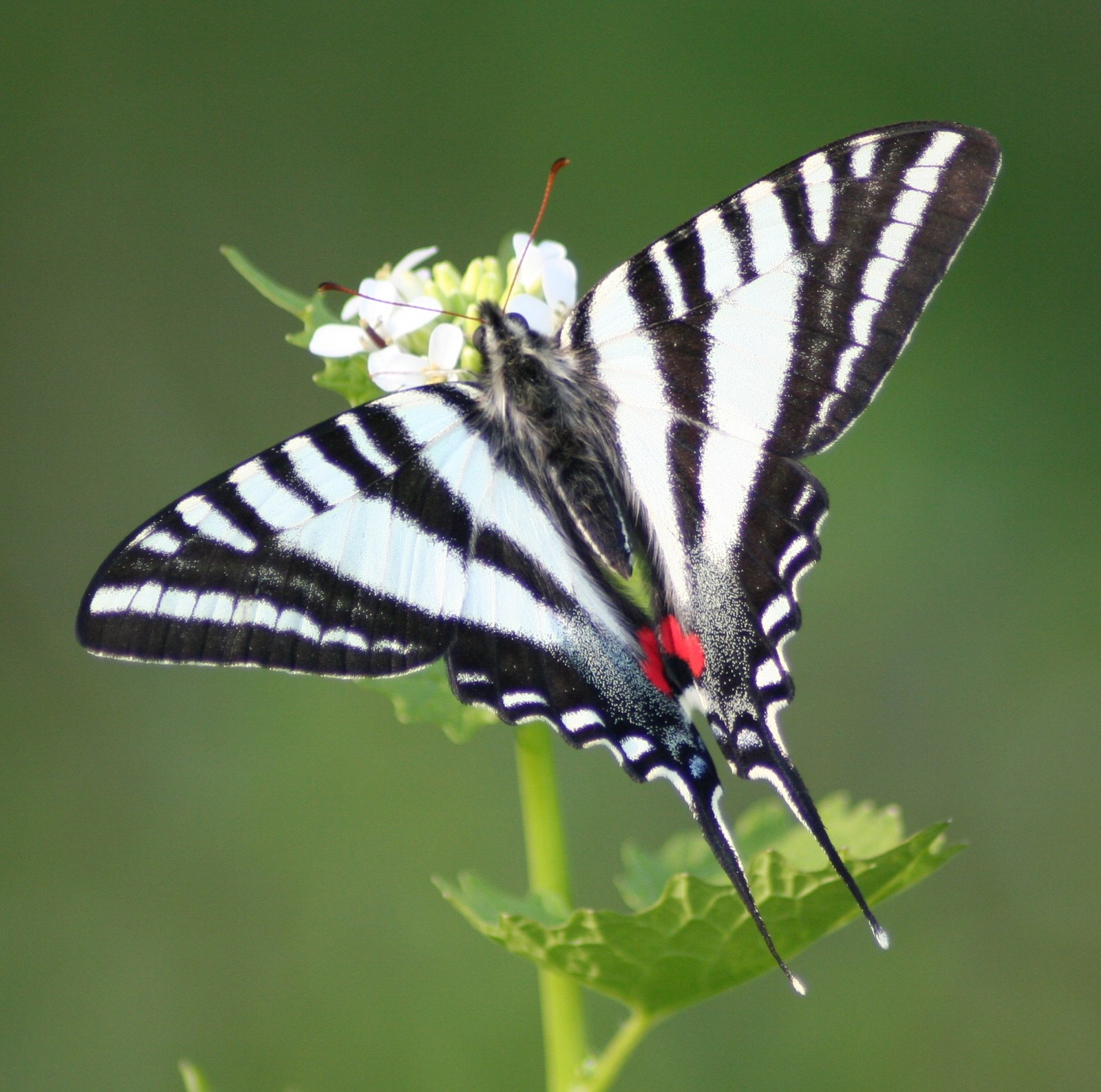
The zebra swallowtail (Eurytides marcellus) is one of the county's most striking butterflies: long tails, crisp black and white stripes, and two red spots near the base of the hindwing. Its caterpillars feed only on pawpaw (Asimina triloba), and the butterfly's abundance tracks the distribution of its host plant along creek bottoms and cove edges.
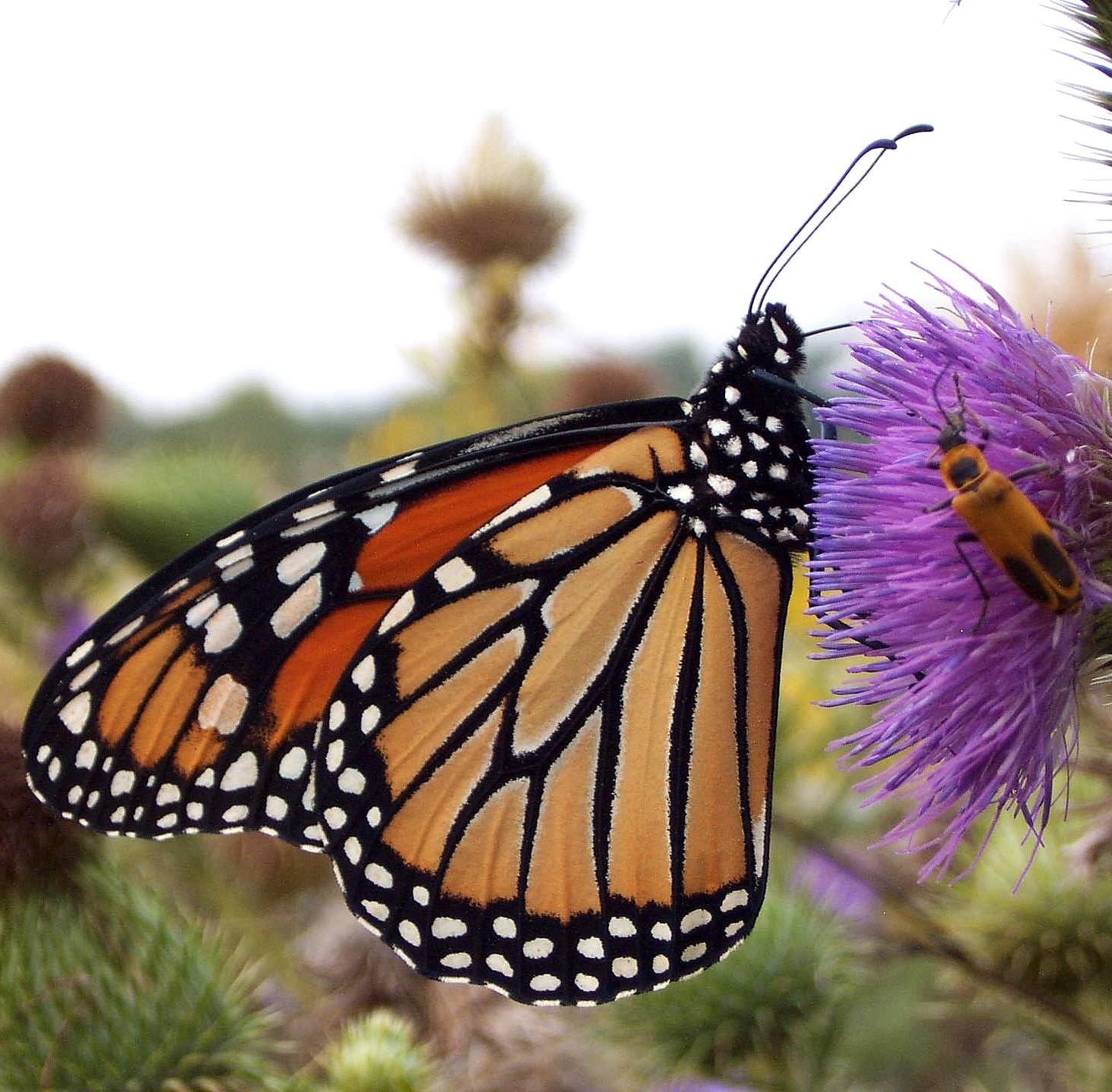
The monarch butterfly (Danaus plexippus) is both the most familiar butterfly in North America and one of the most at risk. The eastern North American population undergoes a multi-generational annual migration of up to 3,000 miles, from overwintering colonies in the oyamel fir forests of central Mexico to breeding grounds as far north as southern Canada, with the return trip taking four or five generations. The overwintering colonies contracted by more than 80 percent between the mid-1990s and the mid-2020s, driven primarily by glyphosate-induced loss of milkweed on agricultural lands across the U.S. Corn Belt. U.S. Fish and Wildlife Service proposed listing the monarch as threatened under the Endangered Species Act in December 2024. Marion County sits on the eastern-monarch southward flyway; September can see small numbers of migrants feeding on late-blooming goldenrod and aster along ridge tops and river edges. Common milkweed (Asclepias syriaca) and butterfly milkweed (A. tuberosa) are the principal host plants for breeding monarchs in the region.
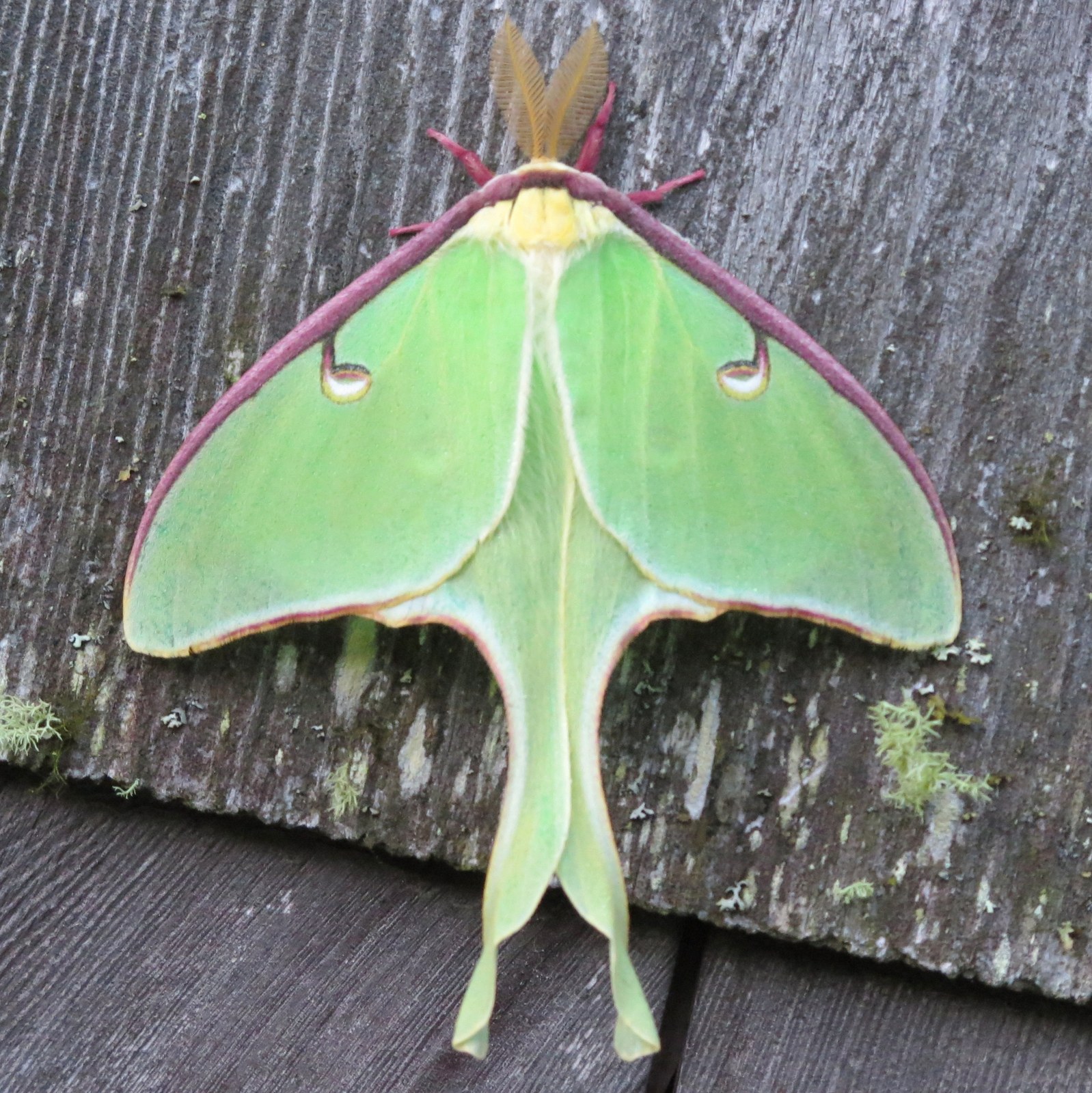
Marion's giant silk moths are unforgettable when encountered. The luna moth (Actias luna), a pale green moth with long hindwing tails and a wingspan up to four and a half inches, emerges from pupae under sweetgum, hickory, and walnut trees from April through July. Luna adults have no functional mouthparts, do not feed, and live about one week; their entire existence as an adult is dedicated to reproduction. The cecropia moth (Hyalophora cecropia), the largest moth in North America at up to six inches of wingspan, and the polyphemus moth (Antheraea polyphemus, with hindwing eyespots) also occur.
The eastern tiger swallowtail (Papilio glaucus) is the large yellow butterfly with black tiger stripes and tails that drifts along roadsides and through meadows all summer; females come in a yellow form and a black mimic form. Pipevine swallowtails (Battus philenor, iridescent blue, toxic from larval host plants), spicebush swallowtails, and black swallowtails are all common. Skippers, sulphurs, hairstreaks, and fritillaries round out the roster.
Cave fauna and the karst underworld
The limestone caves of the Sequatchie Valley and the Tennessee River Gorge slopes support a specialized cave-adapted (troglobitic) fauna that is invisible to most people. Aside from the Tennessee cave salamander already discussed, Marion County caves harbor or potentially harbor cave crayfish (Cambarus spp.), cave isopods, cave amphipods, various cave beetles (including some narrowly endemic species in adjacent counties), the southern cave fish (Typhlichthys subterraneus, eyeless and unpigmented), and the camel cricket. Most of these species are habitat-sensitive and strongly protected; cave access is restricted throughout the region to prevent disturbance and to limit the spread of white-nose syndrome to bats.
Where to see Marion County fauna
- Nickajack Cave boardwalk (TWRA Maple View Refuge): gray bat emergence visible at dusk May through August; bald eagles year-round.
- Tennessee River Gorge Trust lands: cerulean warbler, worm-eating warbler, canebrake habitat, mussel reaches.
- Prentice Cooper State Forest: wild turkey, deer, bobcat sign, timber rattlesnake habitat, migrant songbirds in April and May.
- Foster Falls and the Fiery Gizzard Trail: rockhouse salamanders (green salamander historically), ovenbird, Louisiana waterthrush.
- Sequatchie River (accessible at Ketner's Mill, Whitwell, Dunlap): smallmouth bass, longear sunfish, hellbender historical range, river otter sign.
- Nickajack Dam tailwater: winter bald eagles, bonneted cormorants, ospreys in summer.
Related
Flora & Plant Communities of Marion County →
Endemic & Notable Species →
Nickajack Cave & Dam →
Tennessee River Gorge →
The Sequatchie Valley →
Sources
- Tennessee Wildlife Resources Agency
- USFWS — Gray Bat
- USFWS — Indiana Bat
- USFWS — Northern Long-eared Bat (2022 reclassification)
- USFWS — Eastern Hellbender (2024 proposed listing)
- USFWS — Monarch Butterfly (2024 proposed listing)
- Federal Register — Snail Darter Delisting (2022)
- USFWS ECOS — Royal Snail (Marstonia ogmorhaphe)
- USFWS — Sequatchie Caddisfly species page
- eBird — Marion County, Tennessee
- iNaturalist — Marion County, Tennessee
- Tennessee River Gorge Trust
- Cornell Lab of Ornithology — All About Birds
- NatureServe Explorer
- TWRA — Reptiles of Tennessee
- TWRA — Amphibians of Tennessee
- TWRA — Snake Fungal Disease
- USFWS — Eastern Hellbender species profile (2024 proposed endangered listing)