Last updated: September 22, 2026
- Type: Temporary construction village (two linked communities, Guild and Ladd)
- Active period: 1905 to 1913 (construction); partial continuation as Haletown and Guild after 1913
- Total workforce: More than 5,000 workers over the eight years of construction
- Shift structure: Three shifts, around the clock, through the construction period
- Worker deaths: 109 during the eight years of construction
- Guild post office: Opened August 11, 1906; moved to Haletown in the 1940s after TVA renovations
- Location: Tennessee River, eastern Marion County; current Haletown and Guild addresses
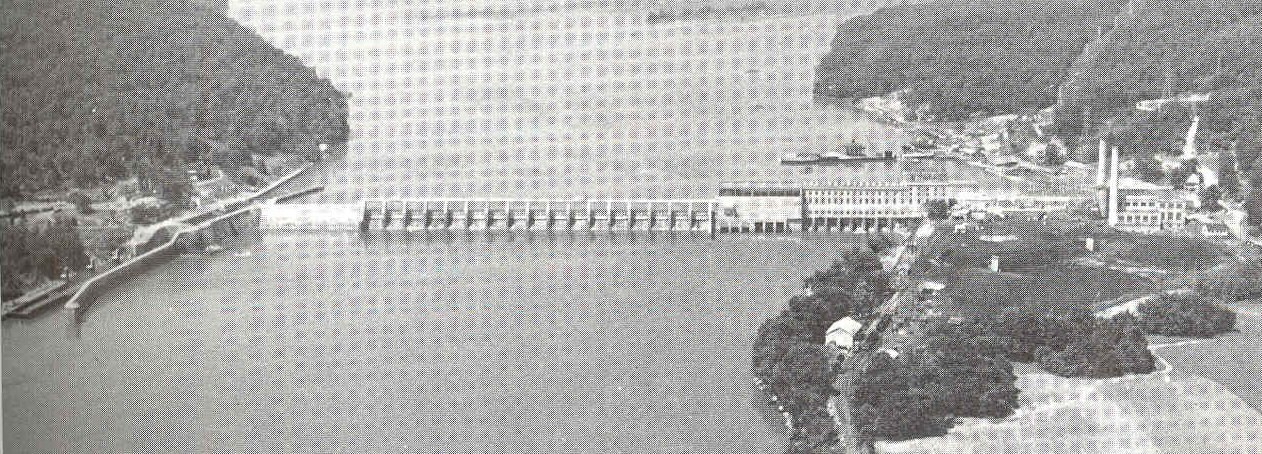
"Hale's Bar" was the name of a sand bar along the Tennessee River long before it was the name of a dam. When Josephus Conn Guild Sr. organized the Chattanooga and Tennessee River Power Company in 1904 and secured federal authorization to build a privately funded lock and dam on the river, he needed to house an industrial workforce in a stretch of the gorge that was, until then, thinly settled farm country. Between October 1905 and November 1913, the company built two self-contained construction villages for its workers: Guild, on the north bank, and Ladd, south of it at the base of Ladds Mountain. Together they made up the Hale's Bar construction camp, one of the largest worker villages in Marion County's history.
Setting
The construction camp occupied both banks of the Tennessee River at a long sandbar known as Hale's Bar, roughly 33 river miles downstream from Chattanooga. The river here was narrow, shallow across the bar, and flanked by steep bluffs that rose several hundred feet to the plateau above. The location was chosen for exactly the reasons that had made the river dangerous for a century: a natural constriction in the channel, a hard sandstone and limestone streambed that could anchor a masonry dam, and a pool of farmland just large enough on the north bank to seat a company town. The bluffs of Raccoon Mountain rose to the south; the bottomland opening toward what is now Haletown lay to the north; the foothills of Aetna Mountain rose behind Guild.
The name Hale's Bar came from the Hale family of early white settlers who farmed land near the sandbar in the mid-19th century, according to USPS and Tennessee historical records. The bar itself was a hazard for steamboats and flatboats moving through the gorge, part of a string of rapids and shoals, including "The Suck," "The Boiling Pot," "The Skillet," and "The Frying Pan," that limited navigation and helped drive the political case for a lock and dam here.
During the construction years the camp also picked up the informal nickname Sucktown, after the same Suck rapid a short distance upstream. The name turns up in period newspaper coverage and in later oral history of the project, alongside the formal names Guild and Ladd for the two halves of the village; it reflected the reputation of the reach of river where the dam was being built and the hard-edged character of the 5,000-man construction camp that lived beside it.
Cherokee and pre-Cherokee presence
The Hale family arrived at a sandbar in a stretch of the Tennessee River that had been in Indigenous use for millennia. Archaeological surveys along the gorge and around Nickajack Cave and Shellmound record Archaic and Woodland camps (roughly 8000 BC to AD 900) and later Mississippian villages (c. AD 900 to 1600) on the river flats above and below the bar; the shoals and whirlpools along the reach, including The Suck just upstream, shaped Indigenous river travel and fishing in the same way they later shaped steamboat pilots.
In the late 18th century, this section of the river was the front yard of the Chickamauga (Lower) Cherokee towns at Nickajack and Running Water, only a few miles upstream. Warriors from those towns ambushed river travelers caught in the rapids above and below the bar, and Nickajack's ferry controlled the crossing at the U-bend. Both towns were destroyed in the 1794 Nickajack Expedition. Cherokee households continued to hold ferries and farms along the river into the 1820s, and the remaining Cherokee community in the county was forcibly removed along the Trail of Tears in 1838. The Cherokee Nation, today a sovereign nation headquartered in Oklahoma, traces a portion of its ancestry through the families of the Lower Towns. The construction of the Hale's Bar villages, and later the raising of the pool behind the dam, inundated much of the ground that had carried that long Indigenous history.
Why the village was built
The stretch of Tennessee River here included some of the most dangerous water in the Southeast. The rapids known as "The Suck", "The Boiling Pot," "The Skillet," and "The Frying Pan" had destroyed steamboats and flatboats through the 19th century, and traffic through the gorge depended on pilots, portages, and a seasonal willingness to risk losing cargo or boats. Guild's lock-and-dam plan promised to tame the rapids, raise a slackwater pool for navigation, and sell hydroelectricity to Chattanooga's growing industries.
To do that, the company needed concrete placed continuously for years on a site far from Chattanooga's labor pool and lodging. The answer was to build a town from scratch. The workforce, over 5,000 men across the eight years of construction, worked three shifts around the clock, fighting mud and water in the foundation as crews battled the karst limestone that would haunt the dam for its entire operating life.
Guild on the north bank
The village on the north bank of the river took its name from Josephus Conn Guild Sr., the engineer leading the project. The U.S. Post Office Department opened the Guild post office on August 11, 1906, and the community grew around it with boarding houses, worker cottages, small stores, several churches, and multiple schools, including schools for Black children under Tennessee's segregation laws. Guild's worker housing served the men assigned to the north side of the dam foundation.
Josephus Conn Guild Sr. died in 1907 while the project was still under construction, with the dam not yet finished and the village carrying his name. The company continued under his colleagues and backers, Chattanooga entrepreneur Charles E. James and New York financier Anthony Brady.
Ladd on the south bank
Across the river, south of the dam site at the base of Ladds Mountain along what is now TN-156, the company built a second village called Ladd. Ladd housed workers assigned to the south side of the dam and provided the same mix of cottages, boarding houses, and basic services as Guild. After the dam was completed, the Ladd village dispersed; the name survives as a residential area at the base of Ladds Mountain and as the name of the mountain itself. Ladd on the Tennessee River should not be confused with Ladds Cove, a separate place at the Battle Creek headwaters near Monteagle.
Three shifts, eight years, 109 deaths
Work on Hales Bar Dam was continuous. Three shifts of workers rotated through the site around the clock. Conditions inside the cofferdams were severe, with crews standing in mud and river water while pressure-grouting the fractured limestone and pouring concrete caissons, both techniques first used at scale on this project. Over the eight years of construction, 109 workers died on the job, roughly one death per month of active construction, and nearly every death would have been felt in the Guild or Ladd boarding houses. Read more about the engineering and dam itself →
Life in the villages
The villages were not only bunkhouses. Some workers brought their families, and children were born and raised in company housing at Guild.
One family's path through the project is documented in detail. The 1910 federal census recorded Addison Bostain Sr., then 24, living at Whiteside with his parents and working alongside his father as a carpenter for a coal mine. Sometime after 1910 he moved to the Hales Bar job, and by the time his son was born in 1914 the family was living in company housing at Guild, where that son spent his early childhood. Bostain left in the spring of 1918 for the Wilson Dam project at Muscle Shoals, Alabama. The account of those years, including the census detail, comes from a family history written by Bostain's grandson.
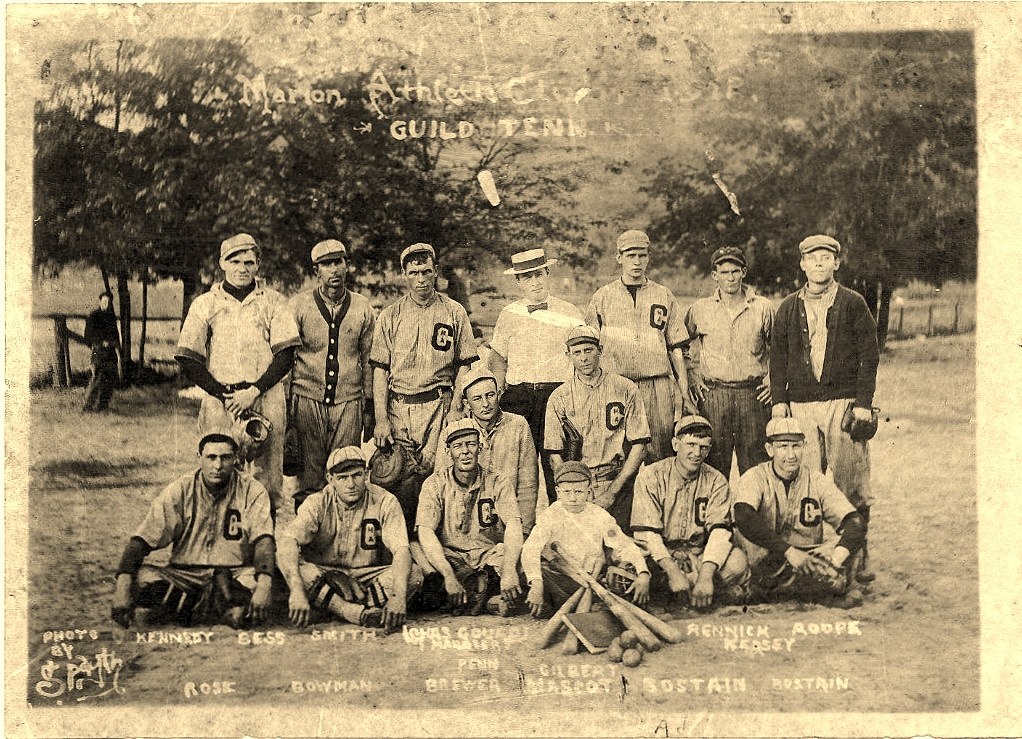
The villages also fielded a ball club. In 1912 a team photographed at Guild as the Marion Athletic Club was playing downriver under the name the newspapers used for it, the Lock and Dam team, and when it traveled to South Pittsburg that April it brought 219 supporters with it on a steamboat. Addison Bostain pitched; his brother Earl played alongside him. Read more about early baseball in Marion County →
After the dam, 1913 onward
The dam's ceremonial opening on November 13, 1913, was described at the time as "the greatest celebration that Chattanooga has ever known." Almost immediately, the construction workforce dispersed. Most of Guild's and Ladd's residents moved on to the next project; some stayed, keeping the stores and churches going. Guild post office operations continued at the original site into the 1940s, when TVA renovations after acquiring the dam led to the post office being moved to Haletown (ZIP 37340), where it still carries mail for the community.
The Marion Memorial Bridge, completed in the early 1930s, carried U.S. 41, U.S. 64, and U.S. 72 across the Tennessee River near Haletown; a modern replacement opened in November 2014. Rankin's Ferry, the pre-bridge crossing between Guild and Shellmound, continued to operate well into the late 1920s. Guild Elementary School, the last of the village-era schools, closed in the early 1970s; its students were bused to Jasper Elementary.
For a fuller treatment of Haletown and Guild as they exist today, a rural unincorporated community within the Chattanooga metropolitan area, see the Haletown and Guild community page.
What survives on the ground
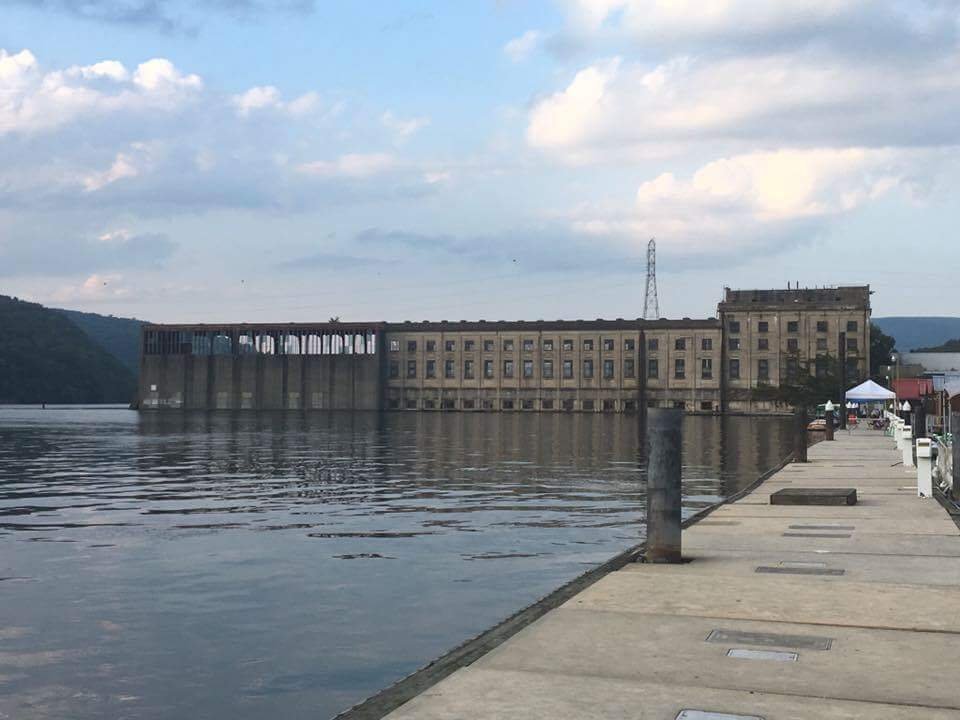
- Hales Bar powerhouse: Listed on the National Register of Historic Places on November 25, 2008; operates today as Hales Bar Marina and event venue.
- Lock walls and abutments: Remnants of the original 1913 navigation lock are still visible on both riverbanks.
- Ladds Mountain and Ladd residential area: The south-bank village is gone, but the place name is preserved in the mountain and the Ladd community at its base along TN-156.
- Haletown post office (ZIP 37340): Descendant of the Guild post office moved during the 1940s TVA renovations.
- Serodino, Inc.: An inland shipyard at Haletown that builds towboats and barges, the area's only remaining major industrial business.
Related
Haletown and Guild (modern community page) →
Ladd (south-bank worker village) →
Hales Bar Dam (engineering and history) →
Nickajack Lake, Cave, and Dam →
"The Suck" rapids →
Tennessee River Gorge →
People (Josephus Conn Guild Sr. and Jr.) →
Sources
- Wikipedia — Hales Bar Dam
- Wikipedia — Haletown, Tennessee
- Wikipedia — Jo Conn Guild
- Tennessee Encyclopedia — Hales Bar Dam
- Association of State Dam Safety Officials — Hales Bar Dam: Many Firsts and Many Lessons
- TVA — The Great Replacement (Hales Bar to Nickajack)
- Chattanooga Times Free Press — Local History: With completion of Hale's Bar Dam
- Ronnie Bostain, Addison Bostain Sr.: Hydroelectric Dam Construction Projects, family history (the 1910 census entry at Whiteside, the move to the Hales Bar job, company housing at Guild, and the 1918 departure for Wilson Dam). Community contribution, 2026
- Marion Athletic Club team photograph, Guild, Tennessee, 1912. Community photo, courtesy of Ronnie Bostain
- South Pittsburg Hustler, Friday, May 3, 1912, page 1 — the Lock and Dam team at South Pittsburg and the steamboat excursion. Community contribution, courtesy of Ronnie Bostain