Last updated: May 18, 2026
- Full name: Orville Richard Hardy
- Born: June 29, 1868, Pentwater, Michigan
- Died: August 14, 1927, Roosevelt Hospital, New York City (age 59)
- Buried: Forest Hills Cemetery, Chattanooga
- Wife: Ethel Soper Hardy (sister of Ellis Soper, the Dixie Portland co-founder)
- Children: None
- Education: University of Michigan, 1891 (varsity baseball pitcher, early 1890s)
- Career: Superintendent of Schools, Escanaba and Ishpeming, Michigan; representative, Prang Educational Company; director, Pittsburgh branch of New York Life Insurance Co.; secretary-treasurer (1907) and president (1914) of Dixie Portland Cement; Mayor of Chattanooga (October 1923 to April 1926); Chairman of the Board, Pennsylvania-Dixie Cement Corporation (1926 to 1927)
- Chattanooga residence: Tudor Revival cottage south of Cravens House on Lookout Mountain, ca. 1910 to 1927
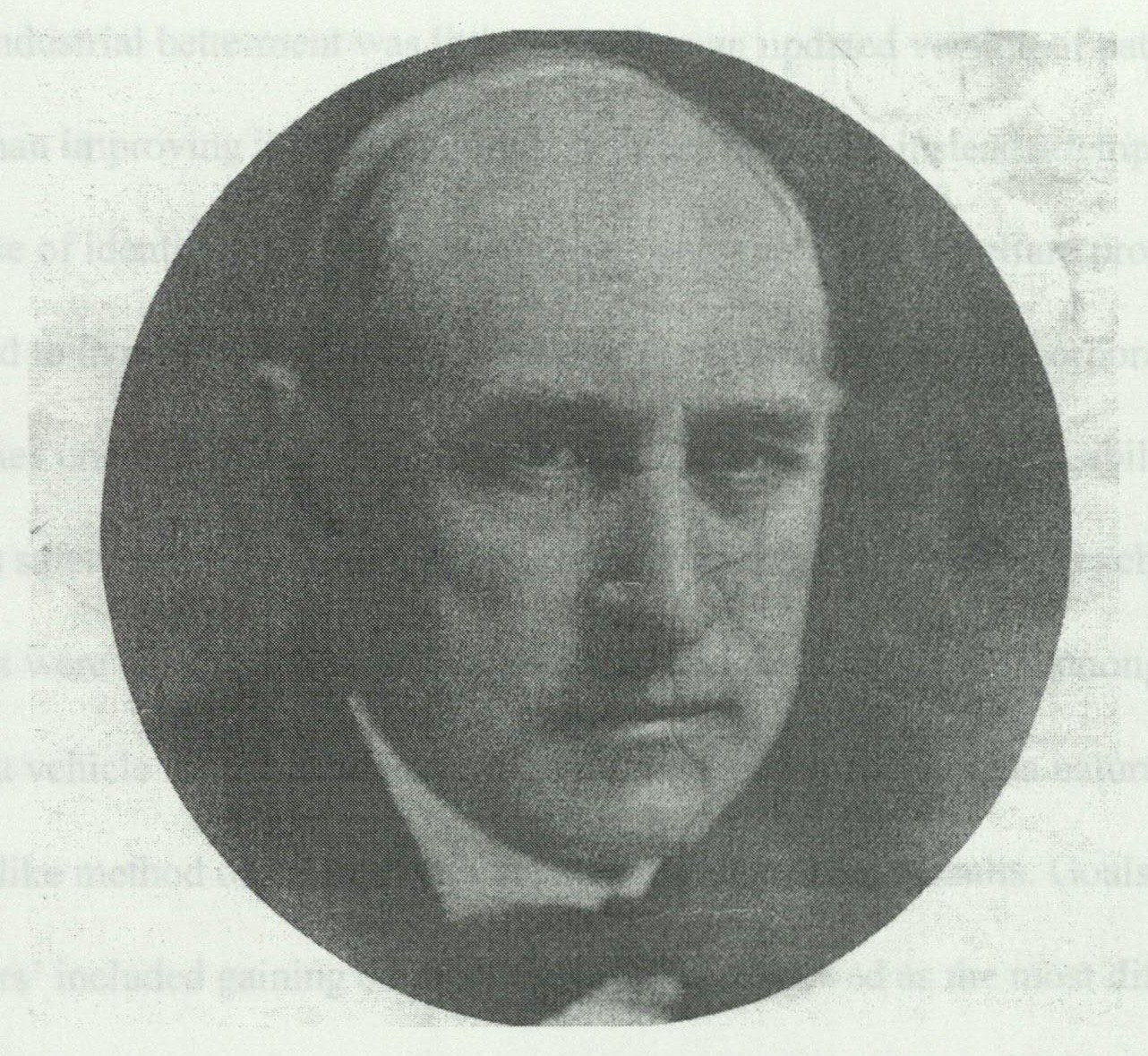
Orville Richard Hardy (1868 to 1927) was the central figure in the founding, naming, and civic life of Richard City, the Dixie Portland Cement company town at the southern edge of Marion County. Born in Pentwater, Michigan, Hardy trained as an educator before moving into insurance and then the cement industry. He arrived in the Chattanooga area in 1905 from the Pittsburgh office of New York Life, helped complete the Dixie Portland plant through the 1907 panic, and in 1914 was elected president of the company, at which point the combined communities of Deptford and Copenhagen were renamed Richard City in his honor. He later served as Mayor of Chattanooga from 1923 to 1926, and in his last year became Chairman of the Board of the new Pennsylvania-Dixie Cement Corporation.
Early life and educator
Per Kelly Wilkerson's 2003 Middle Tennessee State University thesis on Richard City (the load-bearing source for this profile, listed in the Sources section below), Hardy was born on June 29, 1868, in Pentwater, Michigan. He graduated from the University of Michigan in 1891 and became Superintendent of Schools in Escanaba and then Ishpeming, Michigan. In those roles he developed his idea of a “model school” that would, in his words, “make possible the development of the abilities of each individual child, thus enriching the entire community and assuring happier and more efficiently run homes.” That conviction ran through the rest of his career; the Richard Hardy Memorial School that was built in Richard City in 1926 was its full realization.
From education to industry
After leaving the superintendency, Hardy worked, per Wilkerson, as a traveling representative for the Prang Educational Company before moving into insurance as director of the Pittsburgh branch of the New York Life Insurance Company. In 1905, Detroit businessman George W. Millen, a large Dixie Portland stockholder, recruited Hardy to the young cement company at Deptford, Tennessee. The plant, organized by Chattanooga engineer Ellis Soper and Iola, Kansas cement men George Nicholson and Lee Hunt, was still under construction at the time. The connection between Hardy and the Dixie Portland founding circle ran through family as well as business: Hardy was married to Ethel Soper Hardy, Ellis Soper's sister, which made the two men brothers-in-law as well as partners. Hardy was elected secretary and treasurer on the company's formal incorporation in 1907.
The Dixie Portland presidency, 1914 to 1926
In 1914 Hardy was elected president of Dixie Portland, after nine years at the company and a leading role in completing the plant through the Panic of 1907. The two small communities at the plant site, Deptford and Copenhagen, were formally combined and renamed Richard City in his honor. By 1917, per Wilkerson, the plant employed 600 to 700 workers, and Hardy was simultaneously building out the company town: worker housing in cement stucco, the Dixie Inn hotel, the commissary, a hospital, a church, parks, a baseball diamond (on which Hardy often pitched, putting his University of Michigan varsity experience to use in Marion County's company-baseball era), a swimming pool, and a tennis club where he played alongside plant chemist W. H. Kewish.
The town was platted in 1907 by W. F. Arendale and Hardie Kirkpatrick on land adjoining the plant at the end of 23rd Street, with about 200 residence lots of 50 by 150 feet served by water piped from mountain springs. Dixie Portland ultimately built more than 100 homes for plant workers in four cement-stucco styles (the Pyramid Cottage, Dixie Cottage, Four Square, and Bungalow), all roofed originally in slate. The L-shaped, two-story Dixie Inn hotel was designed by Hunt Engineering and rose on Cumberland Avenue in 1907, with 32 guest rooms for employees, managers, visiting businessmen, and teachers. The plant grounds covered roughly 20 acres on the south side of town, anchored by the Neoclassical administration building. The Cumberland Avenue Bridge over Poplar Springs Branch, built 1906 to Lee Hunt's engineering design, is the only concrete arch bridge in Marion County and was listed on the National Register in 1991.
Mayor of Chattanooga, 1923 to 1926
In October 1923, the Chattanooga city commission elected Hardy to serve the unexpired term of Mayor Alexander W. Chambliss, who had been appointed to the Tennessee Supreme Court. Hardy continued as president of Dixie Portland throughout his mayoralty. John Shearer's 2013 column in the Chattanoogan on the Hardy home credits him with several of the city's most visible 1920s civic projects, including the opening of Memorial Auditorium, the southward extension of Broad Street, the annexation of the 12th and 13th wards, the opening of the city-owned Brainerd Golf Course, and a modernization of the city health department. Hardy declined to seek another term in 1926, when the consolidation of Dixie Portland into a new national cement company required him to move to New York. He was succeeded as mayor by Ed Bass, who went on to a 20-year tenure of his own.
Throughout his Dixie Portland and mayoral years Hardy lived in a Tudor Revival cottage on Lookout Mountain just south of the Cravens House, with a screen porch, slate roof, metal casement windows, and a fieldstone foundation. He had moved to the cottage around 1910 and kept it as his Tennessee residence until his death in 1927.
The Penn-Dixie consolidation and New York move, 1926
In 1926, per Wilkerson, Dixie Portland was consolidated with several other large eastern cement producers to form the Pennsylvania-Dixie Cement Corporation, a $45 million combination headquartered in New York City. Hardy became Chairman of the Board of the new corporation and relocated. That same year, the Dixie Portland Memorial School he had championed was dedicated in Richard City over three days, April 26 to 28; the Chenault 1931 account in The Nation's Schools (Sources below) lists Colonel John R. McQuigg of the American Legion, Charles F. D. Belden of the American Library Association, and Dr. Harcourt A. Morgan of the University of Tennessee among the speakers.
Death and legacy, 1927
Hardy died of heart disease at Roosevelt Hospital in New York City on August 14, 1927, at age 59, about a year after leaving the mayor's office. He was buried at Forest Hills Cemetery in Chattanooga. The Dixie Portland Memorial School was renamed Richard Hardy Memorial School in his honor that same year.
Hardy and Ethel had no children, but per the Richard Hardy Memorial School's own account of his legacy, he paid college tuition for nearly one hundred young men of the Richard City community.
Hardy's footprint on Marion County is concrete in the literal sense: more than a hundred cement-stucco houses and the company-built civic infrastructure (Dixie Inn, commissary, hospital, swimming pool, baseball diamond, Cumberland Avenue Bridge, and the Memorial School auditorium with its 625 walnut seats) still stand in the South Pittsburg-Richard City corridor. The plant ran for 73 more years after his 1914 presidency, finally closing in 1982 under Moore McCormack ownership; Vulcan Materials operates the quarry on the former plant site today. The Richard Hardy Memorial School remains in operation as a K-12 public school under the Richard City-Deptford Independent School District, the structural inheritance of Hardy's model-school conviction.
Related
About Richard City →
About Dixie Portland Cement →
About Richard Hardy Memorial School →
About South Pittsburg →
Sources
- Kelly Wilkerson, Richard City, Tennessee: Home, Community, and Paternalism in a Southern Company Town, 1900–1985, M.A. thesis, Middle Tennessee State University, May 2003
- Robert N. Chenault, “How a Dream Transformed Education in this Tennessee Town,” The Nation's Schools 8 (November 1931): 33–40
- Zella Armstrong, The History of Hamilton County and Chattanooga, Tennessee (Chattanooga: Lookout Publishing Company, 1940), vol. 2, p. 252
- “Death Claims Former Mayor Richard Hardy,” newspaper clipping, Special Collections, Local History, Chattanooga-Hamilton County Bicentennial Library
- John Shearer, “History of the Hardy Home,” Chattanoogan.com, March 25, 2013
- Tennessee Encyclopedia – Richard City
- City of Chattanooga – Past Mayors
- Richard Hardy Memorial School – About Us