Last updated: August 5, 2026
- Declared: August 23, 1784, at Jonesborough
- Capitals: Jonesborough (1784–1785), then Greeneville (1785–1788)
- Leader: John Sevier, president and governor
- Statehood bid: seven of thirteen states voted to admit, short of the required two-thirds
- Ended: collapsed through 1788; the last holdouts swore allegiance to North Carolina in February 1789
- Marion County connection: the future county was Cherokee country throughout Franklin's life; Franklin's wars were fought against it
For four and a half years in the 1780s, the settlers of upper East Tennessee ran a state of their own, unrecognized by Congress, contested by North Carolina, and known to history as the State of Franklin. No part of the future Marion County ever lay inside it: the ground between the Sequatchie Valley and the Tennessee River gorge was Cherokee country, the home of the Chickamauga Lower Towns, for Franklin's entire existence. But Franklin belongs in the county's story all the same, because the lost state's land hunger, its private treaties, and its wars are a large part of why the Lower Towns filled with warriors, and its collapse produced the territorial government that ended the Chickamauga era at Nickajack and Running Water in 1794.
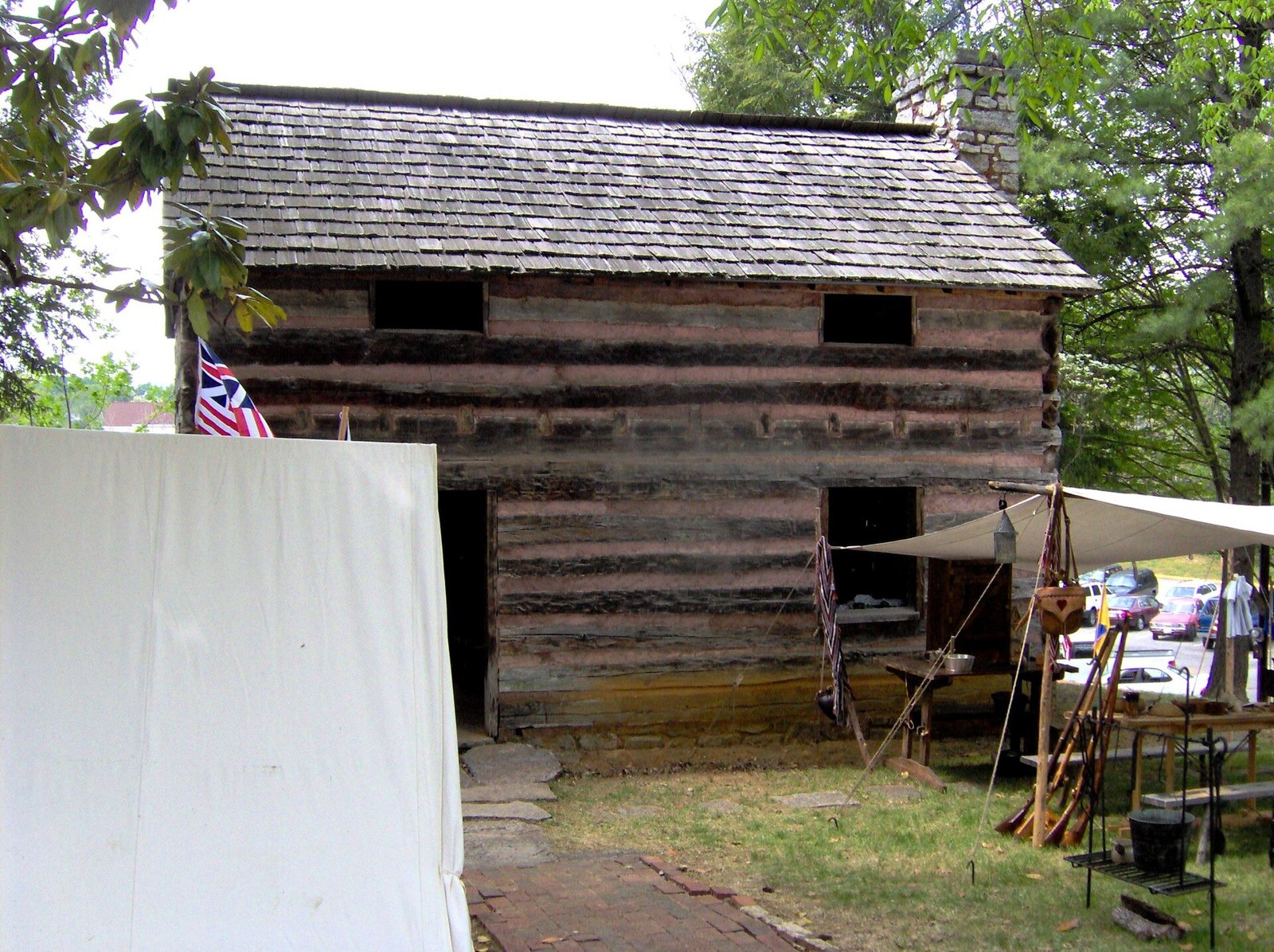
A state born from a cession
Franklin began as an accounting maneuver. In April 1784, North Carolina voted to cede its western lands (some 29 million acres beyond the mountains) to Congress, to help offset its Revolutionary War debts. Within months a newly elected North Carolina legislature thought better of the gift and rescinded it. The settlers of the Watauga, Holston, and Nolichucky country, tired of being governed from across the mountains and alarmed at being traded back and forth, took matters into their own hands: on August 23, 1784, delegates at Jonesborough declared their independence from North Carolina, and per Raulston and Livingood the people of the eastern Tennessee country declared themselves a separate state without any fixed boundaries, an embryo state, as the book calls it. They named it Franklin (early documents also use “Frankland”), chose John Sevier as president, and petitioned Congress for admission as the fourteenth state. Seven states voted in favor, short of the two-thirds the Articles of Confederation required, and Franklin spent the rest of its life in constitutional limbo, governing itself while North Carolina governed the same ground on paper.
Franklin and the Cherokee
What made Franklin dangerous to its neighbors was land. The Tennessee Encyclopedia traces the sequence: in June 1785 Franklin negotiated the Treaty of Dumplin Creek with a handful of Cherokee leaders, opening settlement south of the French Broad River, a treaty the Cherokee National Council never sanctioned. Five months later the federal government signed the Treaty of Hopewell, drawing the boundary far to the north and promising to keep settlers out; Franklin ignored it. In August 1786 Franklin pressed further with the Treaty of Coyatee, claiming settlement rights all the way to the Little Tennessee. The contradictions between Franklin's treaties and the federal boundary sparked open warfare. Per Raulston and Livingood, the independent state also bargained with the neighboring Cherokee for territory inside the tract North Carolina itself had set aside as the Cherokee Reservation: land not North Carolina's, or Franklin's, to grant.
Every one of those encroachments pushed young Cherokee men toward the Chickamauga stronghold in the river gorge. And the violence flowed back across Franklin's own frontier: it was to Sevier, as president of Franklin, that the Cumberland militia commander Anthony Bledsoe addressed his desperate letter of August 5, 1787, reprinted by Raulston and Livingood, begging for a campaign against the “perfidious Chickamaugas” who had killed some twenty-four people in the Cumberland country in a few months. Sevier's campaigns in response struck the Cherokee towns repeatedly, and in 1788, militiamen on a voluntary campaign associated with him murdered the peace chief Old Tassel under a flag of truce, the killing that radicalized the Nation and swelled the Lower Towns further. Franklin never touched Marion County ground, but Franklin's wars filled the towns that stood on it.
Collapse
Franklin's end came from inside as much as outside. Land speculators undermined its support; the personal rivalry between Sevier and the anti-Franklin leader John Tipton broke into armed confrontation; and North Carolina made strategic concessions that drained the movement of its grievances. “By early 1789 the Franklin movement was all but over,” the Tennessee Encyclopedia concludes. Raulston and Livingood catch the state's dying fall in Sevier's worst season: returning home from his discouraging 1788 campaign against the Cherokee towns, harassed the whole way by Chickamauga parties who refused open battle, he found the state he had led for four years fast dying and his own political future hanging in the balance. In February 1789 Sevier and the last holdouts swore oaths of allegiance to North Carolina, and Franklin was gone.
From Franklin to Tennessee
The collapse cleared the way for the arrangement Franklin had tried to force. North Carolina ceded its western lands again, this time for good, and in 1790 Congress organized the Territory of the United States South of the River Ohio, the Southwest Territory. President Washington appointed William Blount governor and superintendent of Indian affairs; Blount selected White's Fort as his capital and, per Raulston and Livingood, astutely named it Knoxville for his superior, Secretary of War Henry Knox. It was this territorial government, Franklin's successor, that presided over the last years of the Chickamauga war, tolerated the Nickajack Expedition of 1794 that destroyed the Lower Towns, and negotiated the peace that followed. Statehood came in 1796, and the first governor of Tennessee was the once and only president of Franklin, John Sevier.
What Franklin means in Marion County's story
Marion County keeps no Franklin courthouses, boundaries, or place-names; the lost state never governed an acre here. Its legacy in the county is indirect and real. Franklin's treaties and encroachments helped turn a Cherokee political dispute into a twelve-year war whose capital was the Five Lower Towns on the county's stretch of river. Franklin's president led the campaigns, and tolerated the killings, that kept those towns full. And Franklin's failure produced the Southwest Territory, the government under which the war ended, the river towns fell, and the valley opened to the settlement that became, in 1817, Marion County. The county formation story starts where Franklin's ends.
Related
The Chickamauga Wars, 1776–1794 →
The Cherokee Lower Towns →
The Nickajack Expedition, 1794 →
County formation, 1817 →
First settlers and Cherokee reservees →
Sources
- Wikipedia — State of Franklin
- Tennessee Encyclopedia — State of Franklin
- Wikipedia — Cherokee–American wars
- J. Leonard Raulston and James Weston Livingood, Sequatchie: A Story of the Southern Cumberlands (Knoxville: University of Tennessee Press, 1974), pp. 43–45 (the cession and repeal, the embryo state without fixed boundaries, Franklin's bargaining for Cherokee Reservation lands, and the Bledsoe letter), p. 48 (Franklin “fast dying” and Sevier's low ebb), and pp. 50–51 (the Southwest Territory, Blount, and the naming of Knoxville).