Last updated: April 23, 2026
- Dates: October 26 to 29, 1863
- Planner: Brig. Gen. William F. “Baldy” Smith, Chief Engineer, Army of the Cumberland
- Overall command: Maj. Gen. Ulysses S. Grant, commanding the Military Division of the Mississippi, in conjunction with Maj. Gen. George H. Thomas commanding the Army of the Cumberland
- Supporting column: XI and XII Corps under Maj. Gen. Joseph Hooker, marching east from Bridgeport, Alabama
- Steamer: Chattanooga, built by U.S. Army Quartermaster Arthur Edwards at Bridgeport
- Marion County anchor: Kelley's Ferry landing on the south bank of the Tennessee River
- Night battle: Battle of Wauhatchie, October 28 to 29, 1863 (immediately east of Marion County)
- Effect: opened a supply route to the besieged Union garrison at Chattanooga; set up the November Chattanooga Campaign victories
The Cracker Line was a four-day supply operation in late October 1863 that broke the siege of Chattanooga and made the Union victories at Lookout Mountain and Missionary Ridge possible. The operation physically ran the length of western Marion County. It began at the Union supply base at Bridgeport, Alabama; moved men and steamers up the Tennessee River to Kelley's Ferry in western Marion County; then moved rations by wagon the short overland distance from the ferry landing across Raccoon Mountain to Brown's Ferry, where a pontoon bridge crossed the river into the besieged town. For a few critical weeks, the narrow ferry crossing in Marion County was one of the most important logistical points in the western theater of the Civil War. The crews that unloaded rations at Kelley's Ferry in late October 1863 were feeding the army that would march up Missionary Ridge a month later.
The siege of Chattanooga
After Union Maj. Gen. William Rosecrans's defeat at the Battle of Chickamauga (September 19 and 20, 1863), the Army of the Cumberland withdrew to Chattanooga. Confederate Gen. Braxton Bragg's Army of Tennessee took positions on Lookout Mountain, Missionary Ridge, and Raccoon Mountain, cutting the rail line through the Tennessee River gorge and controlling the Nashville and Chattanooga Railroad west of town. Federal supplies could no longer reach Chattanooga by rail. The only route open ran by wagon train across the Walden Ridge and down the Sequatchie Valley to the Tennessee River crossings, then over the mountains to the besieged garrison, a journey so slow and Confederate-raider-prone that the Army of the Cumberland was put on half rations within a week and one-third rations within three. Thousands of draft animals starved or were shot. The Union garrison could not fight its way out of the siege on the food reaching it.
Grant arrives and Smith proposes a plan
In mid-October 1863 President Abraham Lincoln reorganized the western command. Maj. Gen. Ulysses S. Grant was placed in overall command of the newly created Military Division of the Mississippi and given authority over all Union forces in the region. Grant relieved Rosecrans, replaced him with Maj. Gen. George H. Thomas, and rode from Nashville to Chattanooga through the long wagon supply route, arriving on October 23. Within two days he had approved a plan Rosecrans's chief engineer, Brig. Gen. William Farrar “Baldy” Smith, had been developing for weeks.
Smith's plan was simple in concept and difficult in execution. Union forces would seize a crossing of the Tennessee River at Brown's Ferry, downstream of Lookout Mountain, and hold it. Hooker's XI and XII Corps, already on the Nashville and Chattanooga Railroad at Bridgeport, Alabama, would march east through Lookout Valley and link up with the Brown's Ferry bridgehead. Once the link was made, a steamer would carry rations up the Tennessee River from Bridgeport to Kelley's Ferry on the south bank in western Marion County, where wagons would complete the short overland haul across Raccoon Mountain to Brown's Ferry and from there over the pontoon bridge into Chattanooga. The route would be well inside Federal artillery cover from the Brown's Ferry bridgehead once it was secured. The hungry garrison would begin eating on time.
The Brown's Ferry assault, October 27
On the night of October 26, 1863, Smith loaded 1,500 men under Brig. Gen. William B. Hazen into sixty pontoon boats above Chattanooga and floated them silently down the Tennessee River through the loop around Moccasin Point, past Confederate pickets on the south bank, to the Brown's Ferry landing. At dawn on October 27, Hazen's men landed, drove off the Confederate pickets, and began entrenching. A supporting column under Brig. Gen. John B. Turchin crossed above Chattanooga and came overland to reinforce the bridgehead. By noon, Union engineers were stringing a pontoon bridge across the river at Brown's Ferry. The bridgehead was secure.
Hooker's march from Bridgeport
On the same morning, October 27, 1863, Maj. Gen. Joseph Hooker started his XI and XII Corps east from Bridgeport, Alabama, on the Nashville and Chattanooga Railroad. The column marched through the Running Water valley, skirted the north end of Raccoon Mountain, and reached Wauhatchie in the Lookout Valley by the evening of October 28. The march passed along the north edge of western Marion County; the 780-foot timber trestle at Whiteside, which had been rebuilt by U.S. Military Railroads crews weeks earlier, carried the railroad over the Running Water ravine and tied the rail line together from Bridgeport to Wauhatchie. The trestle was already famous in the eastern press before the Cracker Line operation; George N. Barnard would photograph it for the Military Railroads on January 8, 1864, a few months after these events.
The Battle of Wauhatchie, October 28 and 29
Confederate Lt. Gen. James Longstreet's corps on Lookout Mountain recognized the threat the Union advance presented. Longstreet ordered a night attack against the rearmost Union division under Brig. Gen. John W. Geary, which had been left at Wauhatchie Station to guard the railroad supply line. The attack went in at about 11 p.m. on October 28, 1863 and continued into the early hours of October 29. Geary's men held the station through the night. When Hooker sent reinforcements from the main column under Maj. Gen. Oliver O. Howard, the Confederates withdrew. The Battle of Wauhatchie is one of the rare night battles of the Civil War. Its location immediately east of the Marion County line, in the Lookout Valley near the mouth of Wauhatchie Creek, keeps it from counting as a Marion County engagement, but the railroad trestles and culverts that carried the troops to the fight sat inside Marion County ground.
The steamer Chattanooga and Kelley's Ferry
While Hooker's corps marched and Smith's men held Brown's Ferry, Union Quartermaster Arthur Edwards at Bridgeport was preparing the last piece of the plan. Edwards had been building a steam transport, christened Chattanooga, from local timber and salvaged marine boilers throughout the autumn. By the early morning of October 29, 1863, the steamer was ready and loaded with 40,000 rations and 39,000 pounds of forage. She made her first run upstream from Bridgeport, rounded the bend below Shellmound, passed the old Cherokee town ground at Nickajack, and docked at the Kelley's Ferry landing on the south bank of the Tennessee River in western Marion County, just downstream of the present town of Haletown. The date of the first successful run, October 29, 1863, is the birthday of the Cracker Line.
From Kelley's Ferry, wagons drove the rations overland eight miles across Raccoon Mountain by a route covered by Federal artillery at Brown's Ferry, then across the new pontoon bridge into Chattanooga. Within forty-eight hours, full rations were reaching the besieged garrison for the first time in six weeks. Rank-and-file Federal soldiers, still eating the hardtack that was part of every issue, took to calling the route the Cracker Line after the shape of that staple.
Effect on the campaign
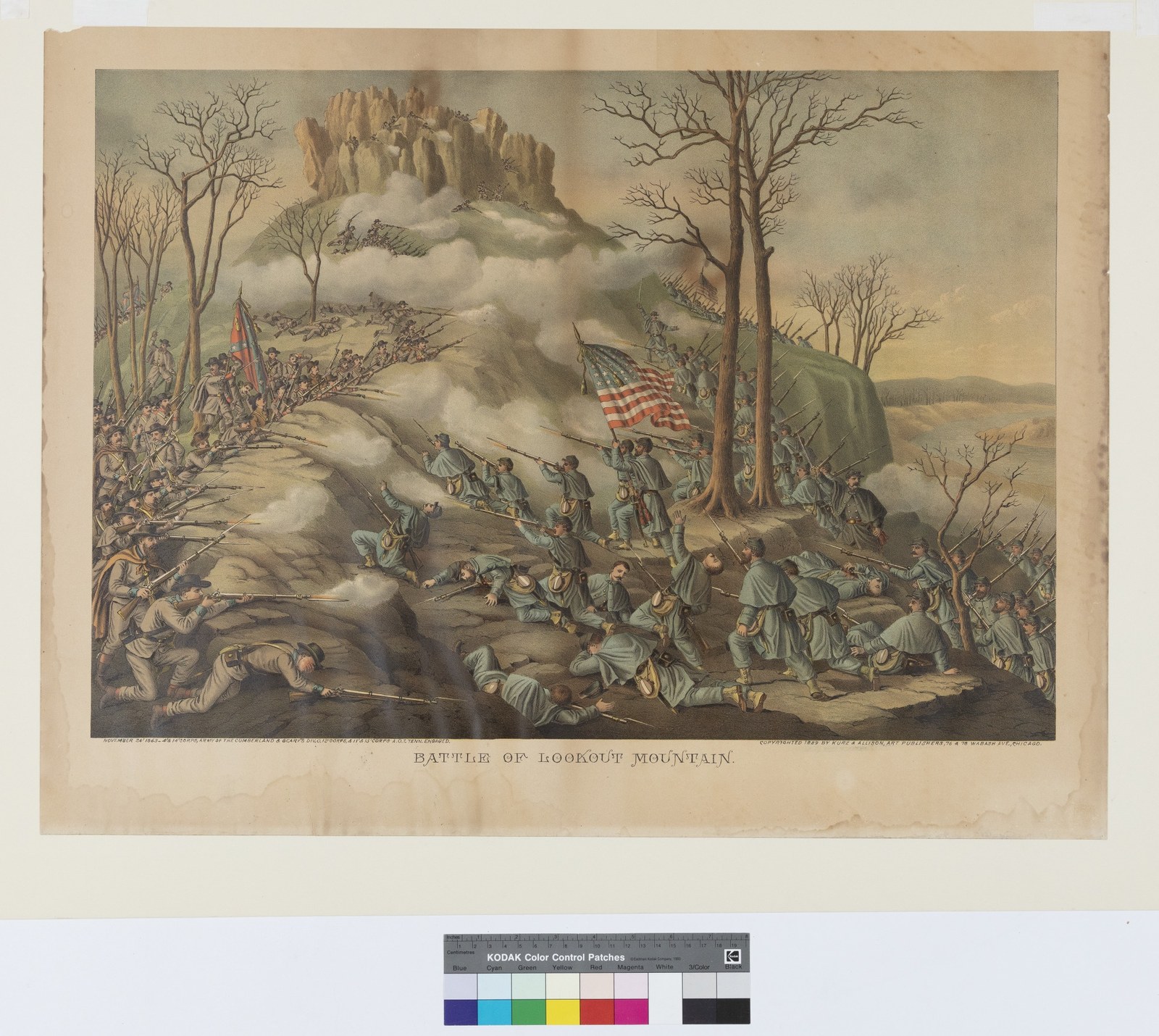
The Cracker Line did not break the Confederate siege directly; Bragg's army still held Lookout Mountain, Missionary Ridge, and the heights east of Chattanooga. But it ended the hunger that had immobilized the Union garrison. With rations reaching the town and reinforcements (Hooker's two corps from the east, William T. Sherman's Army of the Tennessee from the west) concentrating in the area, Grant was able to plan the Chattanooga Campaign offensive that opened on November 23. On November 24, 1863, Hooker's men climbed Lookout Mountain and took it above the clouds. On November 25, Thomas's Army of the Cumberland drove straight up Missionary Ridge. The Confederate Army of Tennessee broke and withdrew south into Georgia. The Confederate defensive position in the western theater was gone. The campaign that led directly into Atlanta the following summer began from the ground the Cracker Line had kept open.
Looking at the timeline from the Marion County end: the first steamer had docked at Kelley's Ferry on October 29; by November 25, four weeks later, the Confederate army that had besieged Chattanooga was retreating through Ringgold, Georgia. The cause and effect was direct. John Kelly's riverside ferry crossing, a long-established Kelly-family ferry carrying local traffic between the south bank and the north, had for a few weeks been one of the most important military logistical points in the western theater.
Afterward
The Cracker Line continued to operate through the winter of 1863 to 1864 until U.S. Military Railroads repair crews had rebuilt the direct rail line between Bridgeport and Chattanooga. Once the rail line reopened, the steamer Chattanooga and the Kelley's Ferry transshipment were no longer strategically necessary. The ferry returned to local use. Arthur Edwards's steamer was later used for routine Federal logistics on the Tennessee River. Kelley's Ferry continued as a private ferry under Kelly-family operation after the war, and the crossing remained in use for local traffic until 1952. See the Kelley's Ferry community page for the full local history of the ferry, including the 2006 listing of the Kelley's Ferry Cemetery on the National Register of Historic Places.
A note on spelling
The ferry and the cemetery associated with it are spelled “Kelley's Ferry” in the 19th-century U.S. Army records, the pension files, and the 20th-century NRHP nomination. The family name is traditionally given as “Kelly” (one L) in most genealogical sources. Marion County's site convention uses Kelley's Ferry for the place and John Kelly for the person, matching the sources for each.
Related
The Civil War in Marion County →
The Battle of Sweeden's Cove, June 4, 1862 →
Kelley's Ferry community page →
Whiteside and the Running Water trestle →
Shellmound community page →
Haletown and the Guild-Kelley corridor →
Sources
- Wikipedia — Chattanooga Campaign
- Wikipedia — Battle of Brown's Ferry
- Wikipedia — Battle of Wauhatchie, October 28–29, 1863
- Wikipedia — William Farrar Smith (“Baldy” Smith)
- Wikipedia — Joseph Hooker
- Wikipedia — Ulysses S. Grant
- Wikipedia — Battle of Lookout Mountain
- Wikipedia — Battle of Missionary Ridge
- National Park Service — Chickamauga and Chattanooga National Military Park
- National Park Service — Tennessee Civil War Battles
- Tennessee Encyclopedia — Battles of Chickamauga and Chattanooga