Last updated: April 23, 2026
- Date: June 4, 1862
- Location: Sweeden's Cove (now commonly spelled Sweeten's Cove), about 7 miles north of South Pittsburg, Tennessee
- Union force: Brig. Gen. James S. Negley's brigade, including the 79th Pennsylvania Infantry and the 5th Kentucky Cavalry
- Confederate force: 600 to 800 cavalry under Col. John Adams, acting under orders from Gen. P. G. T. Beauregard
- Outcome: Union tactical victory
- Federal casualties: 2 killed, 7 wounded
- Confederate casualties: about 20 killed and buried unidentified at the Bean-Roulston Cemetery; additional wounded
- Aftermath: opened Negley's cavalry raid toward Chattanooga, June 7–8, 1862
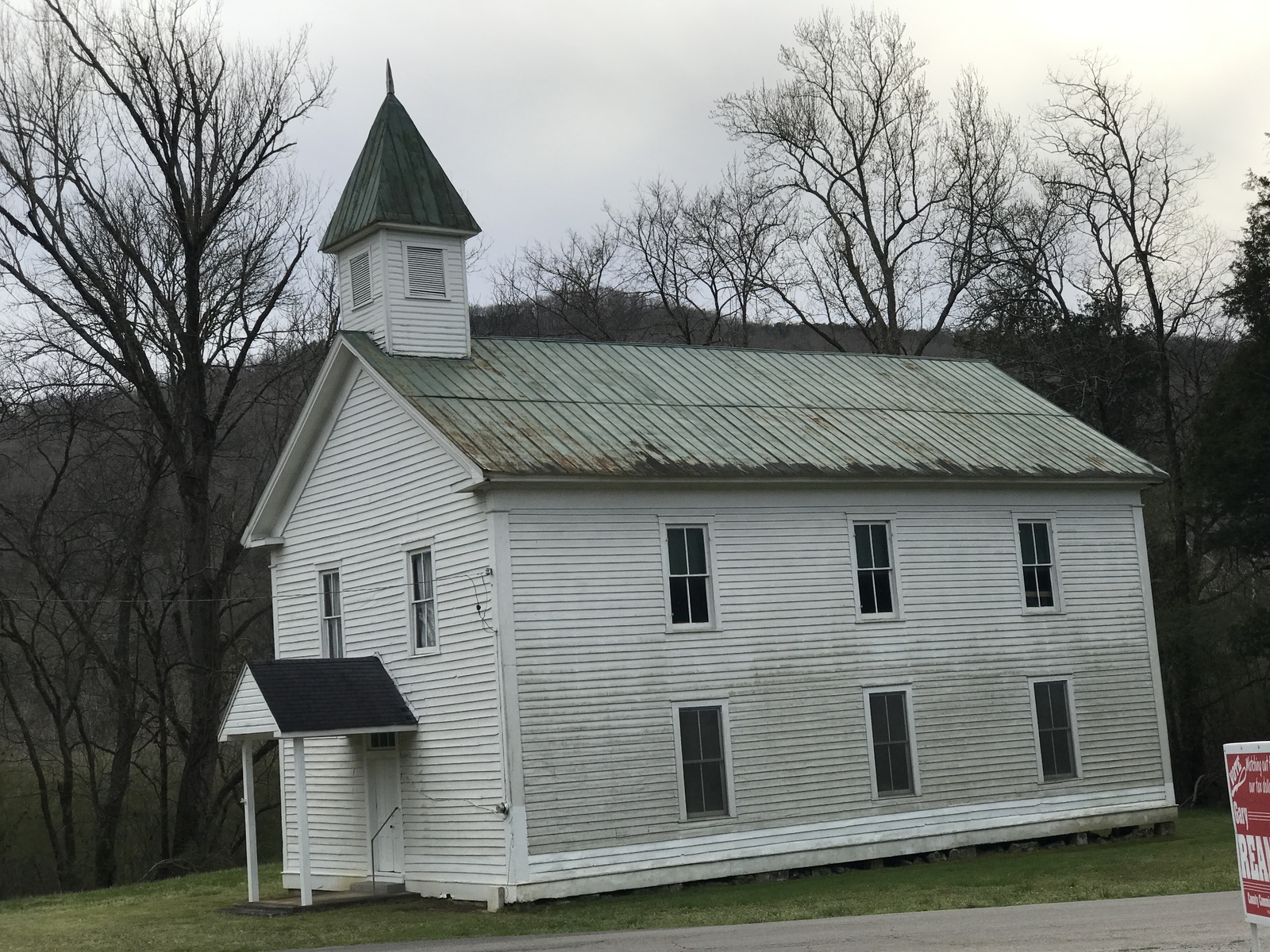
The Battle of Sweeden's Cove was the first significant armed engagement on Marion County soil during the Civil War. It was a cavalry action, fought on June 4, 1862 in the narrow ridge-hemmed cove about seven miles north of present-day South Pittsburg. Brigadier General James S. Negley's Union brigade pushed a Confederate cavalry force under Colonel John Adams out of the cove in a clean tactical victory, with two Federal soldiers killed against about twenty Confederate dead, and opened the road to Negley's subsequent cavalry raid on Chattanooga three days later. It was also the first engagement of the 79th Pennsylvania Infantry, one of the Union regiments that would fight at Stones River, Chickamauga, and Missionary Ridge in the eighteen months that followed. For Marion County, Sweeden's Cove set the pattern of the war as it was experienced locally: short, sharp cavalry encounters along the valley corridor, not set-piece battles. Who the Confederate dead buried at the Bean-Roulston Cemetery actually were has never been satisfactorily resolved.
The strategic context
By the late spring of 1862, Federal forces held Nashville and most of Middle Tennessee. Chattanooga, still in Confederate hands, was the next major objective. The Union command under General Don Carlos Buell, based at Huntsville, Alabama, planned a slow eastward drive through northern Alabama and southern Tennessee. Negley's brigade, operating semi-independently out of Shelbyville and McMinnville, was ordered to demonstrate toward Chattanooga from the north, both to draw Confederate attention and to probe the Tennessee River crossings.
On the Confederate side, General P. G. T. Beauregard, commanding the Army of Mississippi after Shiloh, had dispatched Col. John Adams with a mixed cavalry force from Chattanooga to interdict any Union advance across the Cumberland Plateau. Adams crossed the Tennessee River from Chattanooga with about 600 to 800 cavalry and moved into Marion County, intending to screen the south side of the plateau and delay Negley at the plateau descents.
Negley's approach
Negley's brigade began its advance from McMinnville on the last days of May 1862. The brigade included the 79th Pennsylvania Infantry, the 78th Pennsylvania Infantry, the 1st Wisconsin Infantry, elements of the 5th Kentucky Cavalry, and two Union artillery sections. The column crossed the plateau at the Monteagle descent, followed the same grade that the Bell detachment had climbed in the other direction twenty-four years earlier, and descended toward the Sequatchie Valley.
On the night of June 3, 1862, Negley's force camped near the head of Sweeden's Cove. Confederate scouts detected the Union approach and reported it to Adams, who was bivouacked with the main Confederate force at the lower end of the cove near what is now South Pittsburg. Adams decided to attack rather than withdraw, apparently expecting to catch the Union column strung out on the narrow valley road.
The engagement
Adams advanced into the cove with his main body on the morning of June 4, 1862. Negley, who had posted pickets and positioned his cavalry screen forward, met the Confederate column near the Bean-Roulston vicinity in the middle cove. The first contact was a cavalry clash between the 5th Kentucky Cavalry and the lead Confederate regiments. The Union cavalry held their ground long enough for Negley to deploy the 79th Pennsylvania across the cove floor in line of battle and to bring up artillery.
When the 79th Pennsylvania opened fire at close range, the Confederate column was caught in the narrow ground of the cove with no room to deploy laterally. Adams's men broke and fell back. The 5th Kentucky Cavalry pressed the retreat as a rout through the lower cove and back toward the Tennessee River crossings. Pursuit continued for several miles before Negley called it off to hold his position for the night.
Federal casualties were two killed and seven wounded. Confederate casualties are less certainly counted. Roughly twenty Confederate dead were buried on the battlefield by local residents and later reinterred at the Bean-Roulston Graveyard on family ground adjoining the cove. An unknown additional number of Confederate wounded were taken to field hospitals or to private homes in the cove and later evacuated to Chattanooga. The engagement was the first combat for the 79th Pennsylvania, a regiment whose September 19, 1861 muster had come from Lancaster County under Col. Henry A. Hambright, who served as acting brigade commander at Sweeden's Cove and later wrote that the 79th's conduct in its first fight exceeded his expectations.
The unidentified Confederate graves
The roughly twenty Confederate dead buried at the Bean-Roulston Cemetery were buried together in what became known as a “soldier's row” on the cemetery's east side. None of them were identified at the time. Local accounts hold that the burial was done by cove residents after the Union column moved on, with the intention of later marking individual graves once the war ended. The markers were never placed. By the late 19th century, the row was identifiable as a Confederate plot but no individual names were attached to it. Several 20th-century efforts by the Bean-Roulston Cemetery Association and local chapters of the United Daughters of the Confederacy to identify the dead have produced no definitive list. The roster of Col. Adams's regiments at Sweeden's Cove is not fully preserved, and many of the Confederate cavalry companies that fought there had been hastily reorganized before the engagement. The dead are known collectively but not individually.
The mystery of the Bean-Roulston graves is among Marion County's enduring Civil War questions. It is a question that probably cannot be resolved now, both because the regimental rolls are incomplete and because no forensic identification of the graves has ever been attempted or, given the age of the remains, is likely to be attempted.
The Negley raid on Chattanooga
Three days after Sweeden's Cove, on June 7 and 8, 1862, Negley's brigade crossed the Sequatchie Valley and pushed to the north bank of the Tennessee River opposite Chattanooga. From the north bank, Union artillery shelled Chattanooga from June 7 through noon on June 8 before withdrawing. The raid was a demonstration rather than a serious attempt to capture the town: Negley lacked the pontoon train and the ammunition to force a river crossing. But it served the larger Union purpose of fixing Confederate attention on the river line and demonstrating that Chattanooga was vulnerable. The tactical victory at Sweeden's Cove had opened the valley road that made the demonstration possible.
Within days, Confederate forces were reinforced at Chattanooga and Negley withdrew toward Murfreesboro. The longer campaign for Chattanooga would not begin until August, when Buell's army moved south in response to Braxton Bragg's Kentucky offensive. See the Civil War in Marion County page for the full county narrative and the Cracker Line page for the October 1863 supply operation that would also run through Marion County.
On the name
The cove's name is spelled several ways in 19th-century sources: “Sweeden's Cove” in the official Union reports from the 1862 engagement and in the Official Records of the Union and Confederate Armies, “Sweeten's Cove” in the name of the Primitive Baptist Church organized in 1821, and “Sweeton” in some 1830s federal census records. Modern usage, especially since the 2014 redesign of Sweetens Cove Golf Club, favors Sweetens Cove (no apostrophe). This page uses “Sweeden's Cove” for the 1862 engagement because that is the name that appears in the military records. The community page discusses the spelling variants in more detail.
What the battle did not settle
Sweeden's Cove was a clean tactical Union victory, but it did not bring Union control of Marion County. Confederate cavalry continued to operate across the Tennessee River crossings. Bushwhacker raids on Unionist-sympathizing families along Battle Creek and in the coves of the Cumberland escarpment continued through 1862, 1863, 1864, and into 1865. The set-piece engagement in the cove was the exception; the rule was the irregular war that the plateau geography made almost impossible to end.
Related
The Civil War in Marion County →
The Cracker Line, October 1863 →
Sweeten's Cove community page →
Battle Creek community page →
Historic cemeteries of Marion County →
Sources
- Lancaster at War — The Battle of Sweeden's Cove, June 4, 1862
- Civil War Album — Sweeten's Cove, TN
- Wikipedia — James S. Negley
- Wikipedia — John Adams (Confederate general)
- Wikipedia — 79th Pennsylvania Infantry
- Bean-Roulston Cemetery Association — Our History
- Wikipedia — Chattanooga Campaign (context)
- National Park Service — Tennessee Civil War Battles
- Tennessee Encyclopedia — Marion County