Last updated: June 7, 2026
Before mid-20th-century consolidation, Marion County operated a thick network of small schools. Most were one-room or two-room buildings serving a single cove, ridge, or company camp. Some were subscription schools funded by parents; others were common schools under the post-1867 state system; a handful were private academies; and two were explicitly segregated Black schools in addition to McReynolds in South Pittsburg. The list on this page draws on the TNGenWeb Marion County schools roster, the late local historian Nonie Webb's catalog Old Schools, Teachers, & Students of Marion Co., Tennessee and her companion Marion County, Tennessee: History & Keepsake Memories, and the South Pittsburg Historic Preservation Society's records. Where a school's community, dates, or status cannot be pinned down, the entry says so plainly.
How schooling developed in Marion County
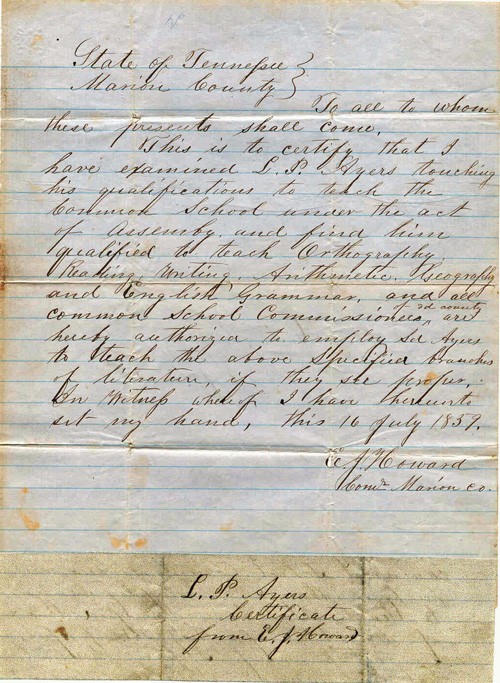
Subscription and academy era, 1817 to 1867
When Marion County was organized in 1817, Tennessee had no statewide public school system. Education in the county's first fifty years happened in three ways: subscription schools where a teacher was paid directly by a group of neighboring families, private academies chartered by the state legislature under the 1806 Cession Act framework, and private tutoring. The Sam Houston Academy, chartered as Marion County's academy in 1826 and built in its surviving Greek Revival form in 1857, is the most prominent survivor of this first era. Jasper's Male and Female Institute, the "Old Academy" listed in the roster below, and the early "South Pittsburg Old Subscription School" all belong to this period.
Common schools after 1867
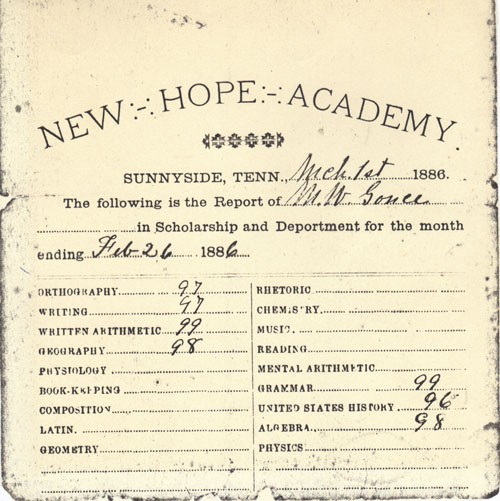
Tennessee established a statewide public school system in 1867, funded through county taxation and administered by a county superintendent. Marion County built out a network of small district schools across the 1870s and 1880s, most of them one-room log or frame buildings placed within walking distance of the families they served. The county's industrial growth in the same decades, coal on the plateau, coke in the valley, cement along the Tennessee River, added company-town schools in Cheekville (renamed Whitwell in 1887), Victoria, Guild, and eventually Richard City.
Segregation-era schools
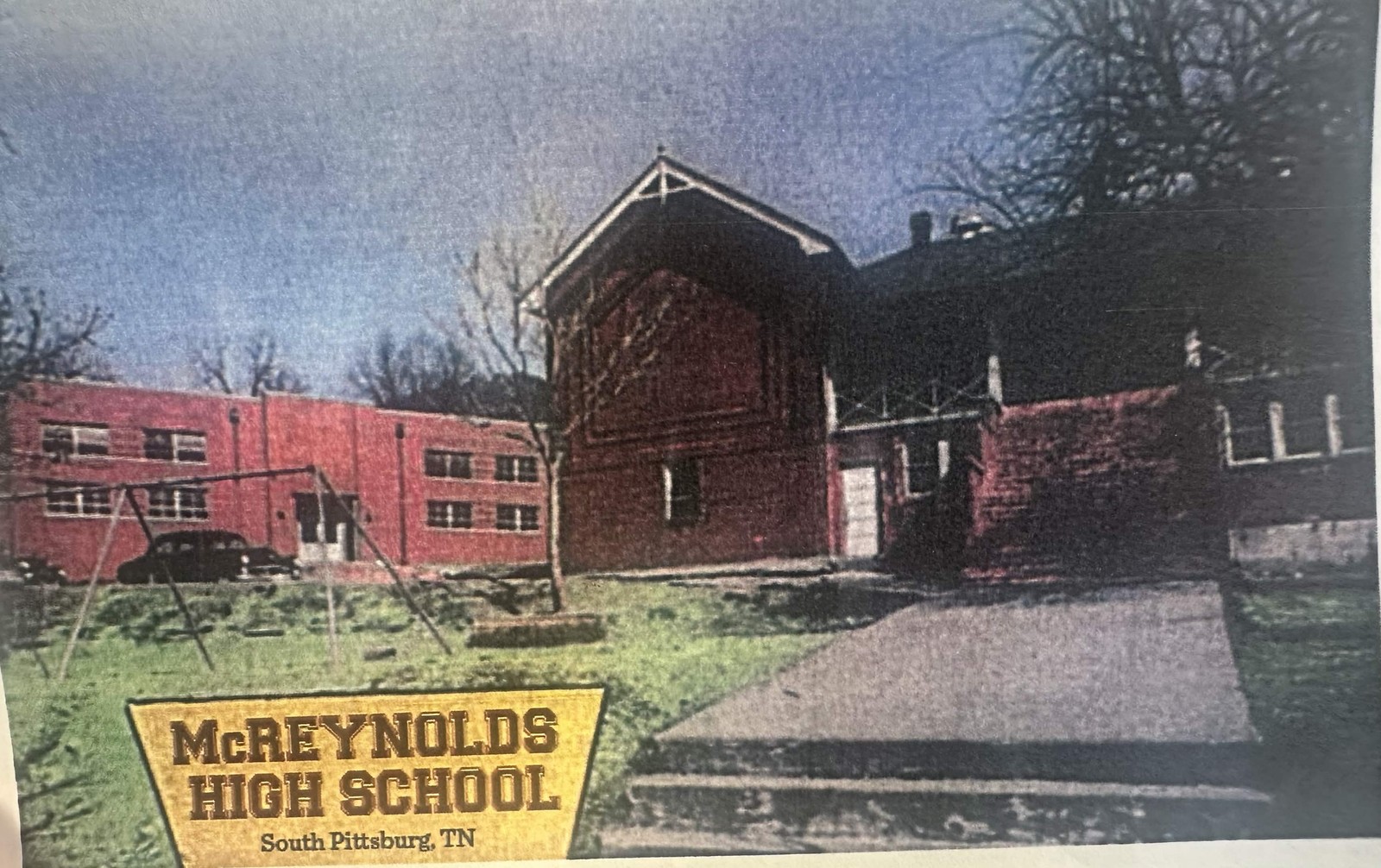
Marion County's schools were segregated by Tennessee law from the establishment of public education in 1867 until the 1965 to 1966 school year. White and Black students attended different schools funded and staffed separately. For Black students, the county ran a small number of named schools; the McReynolds High School in South Pittsburg, opened in 1921 with Julius Rosenwald Fund support, became the only Black high school in the county and also drew students from northern Jackson County, Alabama. The TNGenWeb roster lists two other Black schools plainly, "Guild (colored) School" and "Victoria (colored) School", without naming more; a separate Black school also operated at Richard City, recorded in the Dixie Portland Cement Company's own 1927 newsletter rather than on the roster. M. M. Burnett, McReynolds's long-serving principal, wrote A History of the Development of Negro Public Schools in Marion County, Tennessee from 1929 to 1950 (held in the Tennessee State University School Desegregation Digital Collection); his thesis almost certainly enumerates the county's segregated feeder schools more completely than any public source on the open web. Entries on this page name only the schools for which a specific source exists.
Consolidation, 1940s to 1960s
School buses, paved roads, and state per-pupil funding formulas made the one-room rural school obsolete. Between roughly 1940 and the mid-1960s, Marion County progressively closed its smaller schools and bused students to Jasper, Whitwell, South Pittsburg, Kimball, and a handful of consolidated elementary schools. McReynolds ceased operation after the July 1965 fire and the 1966 graduation; its students were absorbed into the white high schools, completing local desegregation. By the early 1970s the modern Marion County Schools district of four elementary schools, two middle schools, and three high schools, plus Richard Hardy Memorial in the separate Richard City Special School District, had taken its present shape.
Modern Marion County Schools and recent restructuring
Several of the schools listed in the alphabetical roster below are not one-room community schools at all but Marion County Schools facilities still operating today, or recent district-restructuring schools whose lifespans fall inside living memory. The deeper narratives sit better here than crammed into one-line roster entries; the roster itself keeps short cross-reference lines pointing back to this section.
Jasper Elementary and Jasper Middle
Jasper Elementary School is Jasper's public elementary school, still operating as part of Marion County Schools on a campus on Warrior Drive behind Marion County High School. An earlier two-story schoolhouse stood on Betsy Pack Drive before mid-20th-century consolidation; in the 1970s the school absorbed students from smaller community schools, including Guild Elementary along U.S. Highway 41 in Haletown, on the property adjacent to the former Succotash restaurant building. The present-day campus was constructed around the turn of the millennium as part of one of Marion County Schools' largest modernization efforts, which also built the Whitwell Elementary that replaced Crossroads and Griffith Creek. The older single-story Jasper Elementary building stayed in service for several decades after the new campus opened, later housing the district's alternative school and pupil services offices; Marion County Schools staff relocated out of it in 2025, and the Town of Jasper began demolition in 2026. The old single-story building was constructed in a style similar to the now-demolished phased 1929-to-1949 Whitwell Middle building on Main Street.
Jasper Middle School occupied the old College Street building (the late-1950s former Marion County High School plant, built on the front lawn of the original Pryor Institute) from the MCHS move to Ridley Drive until October 2024, when Jasper Middle relocated to a new campus on Highway 150 adjacent to the high school. The older College Street building now serves as annex and central-office space for the district. Per Logan Carmichael's Sequatchie Valley Now history of Marion County education.
Whitwell schools: the 1990s restructuring
Whitwell's elementary and middle grades went through a substantial restructuring in the mid-1990s. The original Main Street building, which had served as Whitwell Elementary beside the Whitwell High School that moved to Tiger Trail in the 1980s, was reorganized into Whitwell Middle School covering grades 4 through 8. To absorb the elementary grades, the district opened two interim schools that have since closed:
- Crossroads Elementary in Powells Crossroads, grades K-3, opened mid-1990s. Faced overcrowding as the K-3 footprint grew.
- Griffith Creek Elementary atop Whitwell Mountain, grades K-6, opened mid-1990s. Severe deterioration of the building forced its eventual closure. The community of Griffith Creek on the western plateau gave the school its name.
Both interim schools were eventually consolidated into a single new Whitwell Elementary built adjacent to Whitwell High School, with fourth grade moving back to the elementary campus when the new building opened and Whitwell Middle's grade range narrowing to 5 through 8. The new Whitwell Elementary was built as part of the same turn-of-the-millennium modernization wave that produced the current Jasper Elementary behind Marion County High School. The aging Main Street Whitwell Middle building was itself replaced by the current $11 million Whitwell Middle School facility, which opened for the 2008-to-2009 school year on a campus adjacent to Whitwell High.
South Pittsburg Elementary
South Pittsburg Elementary School opened in 1938 as the city's separate grammar-school plant on Elm Avenue between 3rd and 4th Streets, splitting the lower grades off from the combined 1924 brick high-school building. The 1938 plant was heavily damaged by fire on February 25, 1993; only the lunchroom portion of the building survived. Elementary students attended classes in local churches, community centers, and parts of the high school building while a replacement was constructed on the same Elm Avenue site, opening midway through the 1994-to-1995 school year. The rebuilt elementary continues to operate as part of Marion County Schools.
Monteagle Elementary
Monteagle Elementary School traces its origins to the 1890s on King Street in Grundy County and relocated across the railroad tracks to its current Marion County site on Second Street in 1938. The 1938 facility was modern for its time, with indoor plumbing, central heating, and a dedicated lunchroom. Substantial updates followed in 2004, with classroom and cafeteria expansion projects in 2007. Monteagle Elementary continues to operate as one of Marion County Schools' four elementary schools, serving Pre-K through grade 8.
Alphabetical roster
The following list combines the TNGenWeb Marion County schools roster, the late local historian Nonie Webb's catalog Old Schools, Teachers, & Students of Marion Co., Tennessee, and records from the South Pittsburg Historic Preservation Society. Where a date, a community, or other context exists in a public source, it is included; where it does not, only the name appears. Duplicate or overlapping roster entries are merged and noted. Currently operating Marion County Schools facilities (Jasper Elementary, Jasper Middle, Whitwell Elementary, Whitwell Middle, Monteagle Elementary, South Pittsburg Elementary) and the 1990s interim schools (Crossroads, Griffith Creek) carry their full narratives in the Modern Marion County Schools section above; this list keeps only short cross-reference entries.
- Aetna (Etna) Mountain School. Community school on Aetna Mountain, the plateau west of Jasper. The area was later acquired by TVA in connection with the Raccoon Mountain pumped-storage project.
- Battle Creek Elementary. District school serving the Battle Creek community at the base of the Cumberland Plateau on the west side of the river.
- Beech Grove School.
- Browder Switch School. Name suggests a rail-flag-stop location.
- Brown Hollow School.
- Bryant's Cove School.
- Burnett School.
- Burroughs School.
- Butcher Creek School. Named for Butcher Creek, a small stream in Marion County.
- Carolyn's Chapel School (also listed as Knox School in some rosters).
- Cave Cove School. District school in Cave Cove, adjacent to the Battle Creek area on the west side of the river.
- Cedar Springs School. Named for the Cedar Springs community, one of the named settlements on the RootsWeb Marion County communities list.
- Cheekville School. The coal-company village school for Cheekville, the settlement that was renamed Whitwell in 1887.
- Coburntown School.
- Coldwell School.
- Colony School. A rural school in the Powells Crossroads area; the exact relationship to Powell's Crossing School is unclear.
- Coppinger's Cove School. District school in Coppinger Cove, a plateau-escarpment cove west of the Sequatchie Valley floor.
- County School.
- Crossroads Elementary. Mid-1990s K-3 interim school in Powells Crossroads, now closed. Distinct from the older Powell's Crossing / Crossroads School listed below. See Modern Marion County Schools section above for the full restructuring narrative.
- Cummings School.
- Deptford School. Deptford is the pre-1914 name of the community that was renamed Richard City in honor of Dixie Portland Cement president Richard Hardy; the school likely predates or overlaps the earliest Richard Hardy Memorial years.
- Doran's Cove School. District school in Doran Cove, along the Battle Creek drainage.
- Ebenezer School. Community school of Ebenezer on the north side of the county. Separately catalogued in the Webb project as the subject of a forthcoming school-history book.
- Farrier School.
- Foster Falls School. District school in the Foster Falls area on the plateau south of Monteagle.
- Francis Springs School.
- Gains Chapel School. Named for an associated chapel; the community has not been identified in surviving records.
- Grandview School.
- Griffith Creek Elementary. Mid-1990s K-6 interim school atop Whitwell Mountain, now closed; named for the Griffith Creek community. See Modern Marion County Schools section above for the full restructuring narrative.
- Guild (colored) School. Segregated Black school under Tennessee law, serving the Guild and Haletown area. Dates, enrollment, and faculty are undocumented; M. M. Burnett's thesis on Marion County's Black schools (1929 to 1950) may contain more detail.
- Guild School (listed separately as Haletown (Guild) and Guild School (Hale Town) in the TNGenWeb roster). The community school of the Guild and Haletown settlements along the lower Tennessee River, overlapping clusters near the Hales Bar Dam site.
- Hale's Bar School. Company-town school associated with the Hales Bar Dam construction and operating village. A dedicated school-history book is in preparation as part of the Webb catalog.
- Hale's Chapel School. Small district school near Hale's Chapel; the relationship to Hale's Bar School is unclear.
- Havern's Chapel School.
- Hick's Chapel School.
- Hill School.
- Inman School. Community school of Inman on the north plateau edge, where the iron mines and the former Inman coke ovens operated.
- Jasper Cove School. District school serving the Jasper Cove area west of Jasper.
- Jasper Elementary School. Currently operating; full history in Modern Marion County Schools section above.
- Jasper Male & Female Institute. Antebellum private academy in Jasper; also called the "Old Academy" in some rosters.
- Jasper Middle School. Currently operating on a Highway 150 campus since October 2024; full history in Modern Marion County Schools section above.
- Jumpoff School.
- Ketchall School. Ketchall appears as a named community on the RootsWeb Marion County communities list.
- Killian School.
- Kimball School. Community school of Kimball. Films of Kimball pupils and faculty from 1941 and 1954 are preserved on DVD by the South Pittsburg Historic Preservation Society.
- Knox School. Likely the same school as Carolyn's Chapel, above.
- Liberty School. Possibly associated with the Liberty East community on the RootsWeb list.
- Lodge School. Lodge appears as a named community on the RootsWeb Marion County communities list.
- Looney's Creek School. District school along Looney's Creek, which flows into the Sequatchie River near Whitwell.
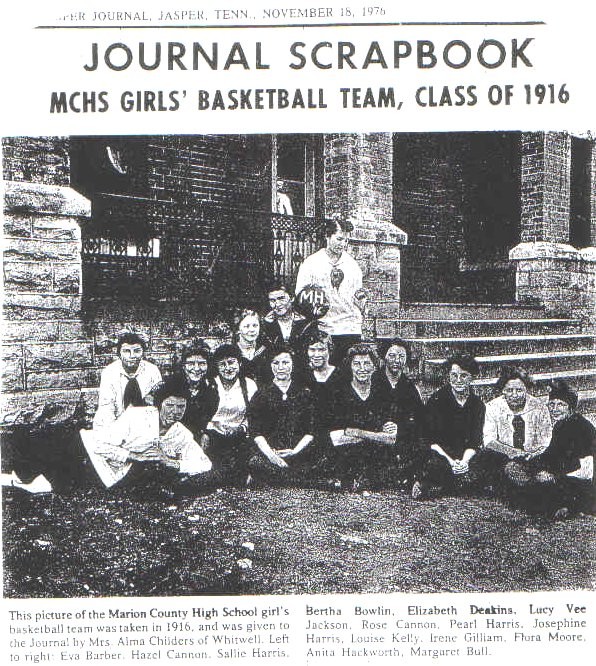
- Marion County High School (1910). Opened in the former Pryor Institute building on College Street in Jasper. Dedicated page.
- Martins Springs School. Named for the Martin Springs community on the RootsWeb list.
- Matheney School.
- McReynolds School (1918 to 1966). Segregated Black school under Tennessee law. Organized in 1917 by a committee under Brown McReynolds, opened in rented space in 1918, and rebuilt in 1921 with Julius Rosenwald Fund support as a 22-room school on the South Pittsburg side of the mountain. Served Marion County and northern Jackson County, Alabama. Destroyed by fire in July 1965; last graduation 1966. Dedicated page.
- Midway School.
- Mineral Springs School.
- Monteagle School / Monteagle Elementary School. Currently operating Marion County school on the Marion side of the Monteagle community; town straddles the Marion-Grundy line. Full history in Modern Marion County Schools section above.
- Mountain Top School.
- Mount Olive School.
- Mount Vernon Grade School. Named for the Mount Vernon community on the RootsWeb list.
- Needmore School. Needmore is a named community on the RootsWeb Marion County communities list.
- New Hope School. District school serving the New Hope community on the west side of the river.
- Nunley School.
- Oak Grove School. Oak Grove appears as a named community on the RootsWeb Marion County list.
- Old Academy. Listed separately in the TNGenWeb roster; the exact relationship to Sam Houston Academy and the Jasper Male & Female Institute is unclear.
- Orme Mountain School. Community school of the Orme coal-mining village on Gizzard Cove Creek; closed after the mines.
- Pan Gap School.
- Patton School. Possibly associated with the Patton Annex neighborhood in South Pittsburg, where Patton Annex Cemetery (Joseph Lodge's burial place) is located.
- Peck School.
- Pigeon Springs School.
- Pine Hill School.
- Pine Set School.
- Pocket School. Named for the Pocket (also listed as Poket) community on the RootsWeb list.
- Pot School.
- Powell's Crossing School (also listed as Crossroads School). Community school of Powells Crossroads on the west plateau rim.
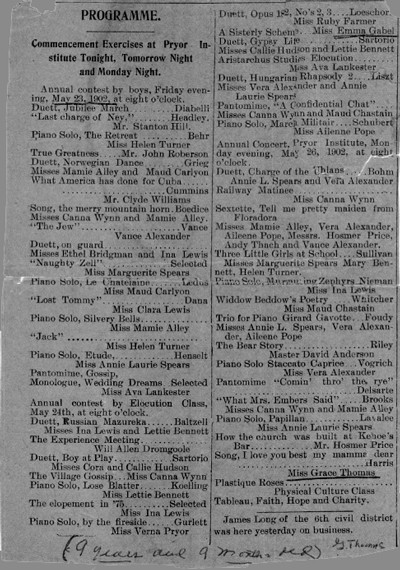
- Pryor Institute (active by the 1880s to 1910). Co-educational private institute on College Street in Jasper; founded by Jackson, Washington, and A. L. Spears Pryor. The building became Marion County High School in 1910. Dedicated page.
- Pryor Ridge School. Named for the Pryor Ridge / Pryor Cove area on the RootsWeb list, likely associated with the Pryor family of Jasper.
- Rankin's Cove School. Associated with the area around Rankin's Ferry, which operated between Guild and Shellmound on the Tennessee River into the late 1920s.
- Red Hill School.
- Richard City (colored) School. Segregated Black school under Tennessee law, serving the Black families the Dixie Portland Cement Company housed behind its plant at Richard City. The company's own newsletter referred in 1927 to “two schools in Richard City (colored and white)”; the white school was Richard Hardy Memorial. Dates, enrollment, and faculty are undocumented.
- Richard Hardy Memorial School (1926). The Dixie Portland Cement company-town school in Richard City; opened as Dixie Portland Memorial School and renamed after Richard Hardy in 1927. Operates today as the only school in the Richard City Special School District. Dedicated page.
- Ridge School.
- Ritchie's School.
- Riverview School.
- Sam Houston Academy (1826 charter; 1857 Greek Revival building). Marion County's chartered academy, near Jasper. The surviving 1857 building is now Olive Branch Masonic Lodge #297. Dedicated page.
- Sequatchie School. Community school of the Sequatchie settlement at the south end of the Sequatchie Valley.
- Sexton School.
- Shady Grove School.
- Shellmound School. Community school of Shellmound, on the Tennessee River near the Alabama line.
- Sims Chapel School.
- Skillet School. "The Skillet" was one of the 19th-century rapids nicknames in the Tennessee River Gorge, suggesting a riverside community school.
- South Pittsburg College. A non-profit college chartered by the Tennessee Coal, Iron and Railroad Company during its 1882-1886 control of the South Pittsburg town site, in the words of Dennis Lambert's SPHPS history of the town “to confer degrees and instruction in the higher branches of education.” The venture was short-lived; after it closed, its building was put back to use as an early public school, a forerunner of the city's public school system.
- South Pittsburg Elementary School. 1938 grammar-school plant on Elm Avenue, damaged by fire February 25, 1993 and rebuilt on the same site in 1994-1995. Currently operating; full history in Modern Marion County Schools section above.
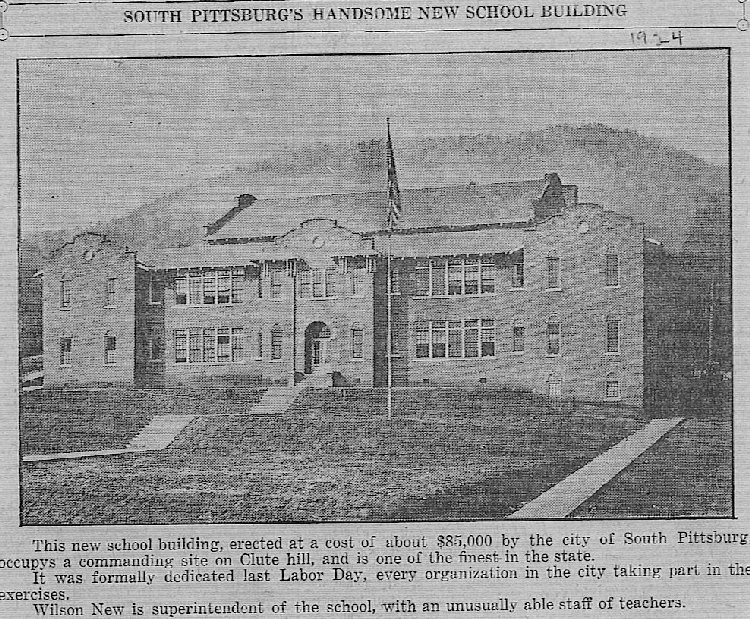
- South Pittsburg High School (1924). The Cedar Avenue brick school plant. Dedicated page.
- South Pittsburg Old Subscription School. The pre-public subscription school in South Pittsburg; precise dates and location are not confirmed in surviving records.
- South Pittsburg Public School. The 1898 frame school on Cedar Avenue between 5th and 6th Streets, near the site of today's Sequatchie Valley Electric Cooperative (SVEC) offices, was South Pittsburg's first public school building. Closed when the 1924 brick high school opened; the old frame was in use as apartments when it burned in 1931.
- Stanley School. Named for the Stanley community on the RootsWeb list.
- Suck Port School (also listed as Suck Creek School). Named for "The Suck," the most notorious of the 19th-century Tennessee River rapids in the gorge.
- Sulphur Springs School. Named for the Sulphur Springs community on the RootsWeb list.
- Summit School.
- Sweeden's Cove School. Community school of Sweeten's Cove, using the older "Sweeden's" spelling preserved in the TNGenWeb roster.
- Tickbush School.
- Turner's Chapel School.
- Union Grove School.
- Victoria Cove School. District school serving the Victoria Cove area. Victoria was the original Southern States Coal, Iron and Land Company coke-oven village.
- Victoria (colored) School. Segregated Black school under Tennessee law, serving the Victoria community. Dates and faculty are undocumented.
- Walden's Ridge School. Named for Walden's Ridge, the geographic ridge that forms the eastern wall of the Sequatchie Valley and runs through several counties including Marion.
- White School.
- Whiteside Mountain School. Named for the Whiteside community (present-day Running Water area) on the Tennessee River.
- Whitwell Elementary School. Currently operating on a campus adjacent to Whitwell High; replaced the earlier Crossroads and Griffith Creek interim schools. Full history in Modern Marion County Schools section above.
- Whitwell High School (1923). Home of the Tigers. A school history, Whitwell High School's Whitwell, Tennessee, 1923 to 1977 by Turner, Webb, and Layne, was published in 1990. Dedicated page.
Related
Education landing page →
McReynolds High School →
Sam Houston Academy →
Pryor Institute →
Richard Hardy Memorial School →
Communities index →
Black History of Marion County →
Sources
- TNGenWeb Marion County — Old Schools (legacy site roster)
- TNGenWeb Marion County — Old Schools (2024 roster)
- Tennessee State Library and Archives — Marion County Genealogical Fact Sheets (Webb, Old Schools)
- South Pittsburg Historic Preservation Society — Schools
- South Pittsburg Historic Preservation Society — McReynolds High School
- Tennessee State University — School Desegregation Digital Collection (M. M. Burnett thesis)
- Fisk Rosenwald Fund Collection — McReynolds
- Tennessee Encyclopedia — Elementary and Secondary Education
- UT CTAS — Marion County Education/Schools Historical Notes
- South Pittsburg Historic Preservation Society — Kimball films (1941, 1954)
- Logan Carmichael, “Lessons Through the Generations: The History of Education in Marion County,” Sequatchie Valley Now, May 26, 2026 (Crossroads Elementary and Griffith Creek Elementary as 1990s interim elementary schools; Jasper Elementary's turn-of-the-millennium modernization and 2025-2026 demolition; Jasper Middle's October 2024 move to Highway 150; Monteagle Elementary's 1890s King Street origin in Grundy County and 1938 relocation to Marion County)