The mine
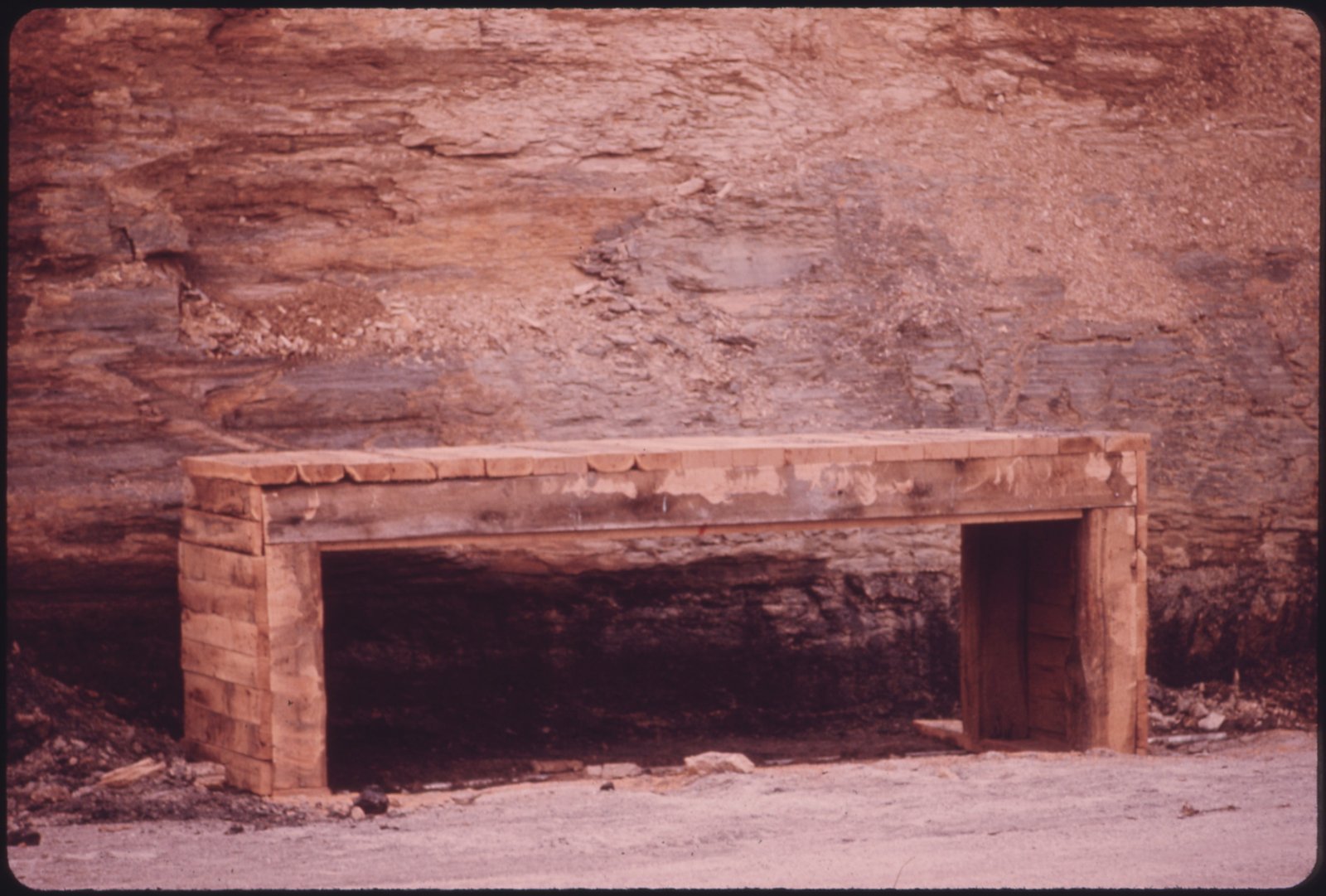
The No. 21 Mine was an underground coal mine in the Griffith Creek area between Palmer and Whitwell, on the western slope of the Cumberland Plateau. It was operated by the Grundy Mining Company, a subsidiary of the Tennessee Consolidated Coal Company (TCCC), formed in 1905 to consolidate plateau coal operations (per the Tennessee Consolidated Coal Company historical marker at Tracy City). At its mid-century peak the company employed roughly 700 miners producing hundreds of carloads of coal per week from multiple mines in Grundy and Marion counties. The company's corporate offices moved from Tracy City to Jasper in 1969 following a prolonged period of labor conflict with the United Mine Workers of America.
By the early 1980s, Mine No. 21 was the principal underground coal mine still operated by Grundy Mining Company in the area. It worked the Sewanee coal seam, the same geological formation that had sustained commercial mining on the plateau since 1852. Mining in and around Whitwell dated to the 1850s and had defined the economy and social character of the community for more than a century.
The explosion
On the morning of December 8, 1981, methane gas was present in the mine. The foreman on duty nonetheless allowed miners to enter the shaft. At some point during the shift, a miner's cigarette lighter ignited accumulated methane in the mineshaft. The resulting explosion killed thirteen miners from Marion and Grundy counties. Six of the dead were from Grundy County; the remainder were from the Whitwell area and surrounding Marion County communities.
The force of the blast was powerful enough to blow out the headlights of trucks parked 100 feet from the mine entrance. Rescue teams equipped with oxygen respirators entered the mine and worked for approximately six hours before recovering the bodies of all thirteen men.
The explosion was the worst mining disaster in Tennessee since the introduction of modern safety regulations.
Investigation and findings
The U.S. Mine Safety and Health Administration (MSHA) investigated the explosion and determined that the ignition source was a cigarette lighter carried into the mine in violation of federal regulations. MSHA cited the Grundy Mining Company for multiple safety failures:
- Failure to adequately ventilate the mineshaft, allowing methane to accumulate to dangerous concentrations.
- Failure to evacuate workers from an area with high methane levels.
- Failure to effectively enforce federal regulations prohibiting smoking materials in mines.
The investigation reached the U.S. Senate Committee on Labor and Human Resources, chaired by Senator Edward Kennedy. Barbara Myers, widow of miner Charles Myers, testified before Congress about the conditions that had led to the disaster. The congressional inquiry contributed to the enactment of additional mine-safety measures in underground coal mines nationwide.
Legal aftermath
Five widows of the killed miners filed a lawsuit against Tennessee Consolidated Coal Company seeking a total of $60 million in damages. In February 1983, Judge William Inman of Chancery Court approved a settlement in which the mine owners agreed to pay approximately $10 million to ten widows and their children over their lifetimes; five widows who had not joined the original lawsuit also received payments under the agreement (Summers and Robbins, “Mine 21 disaster: gone but not forgotten,” Chattanooga Times Free Press, December 9, 2018).
The mine after 1981
Despite the disaster, the No. 21 Mine continued to operate in diminished form after 1981. Mining employment in the area declined steadily as environmental regulation, reduced market demand for Sewanee seam coal, and the long history of labor disputes made the operation increasingly marginal. The mine finally closed in 1997, one of the last deep underground coal mines in the Sequatchie Valley. Tennessee Consolidated Coal Company's remaining coal reserves in the region were eventually sold to Massey Energy Company.
The closure of Mine No. 21 effectively ended more than 140 years of continuous coal extraction in the Whitwell area, from the earliest Etna mines of 1852 through the mechanized operations of the late twentieth century.
Legacy and memory
The names of the thirteen miners are memorialized at Whitwell High School. A monument in Grundy County, in the form of a tombstone in front of a church center, commemorates the men from that county who were killed.
The Whitwell-Marion County Coal Miners Museum in Whitwell preserves the story of underground mining in the area with exhibits and the presence of retired miners who volunteer as guides. The Mine 21 disaster is a central element of the museum's collection and interpretive program.
In 2018, filmmaker Stephen Garrett (a University of the South alumnus) and Sewanee Classics professor Chris McDonough produced Mine 21, a documentary that tells the story of the explosion through the eyes of two Sewanee students, Kelsey Arbuckle and Alexa Fults. Arbuckle's grandfather, Charles Myers, was among the thirteen miners killed. The film traces the long-term effects of the disaster on the families and communities left behind, exploring themes of grief, inherited trauma, and the economic decline of Appalachian coal communities.
Mine 21 premiered at the Whitwell Community Center in November 2018. The film has aired multiple times on East Tennessee PBS. In 2019 it received the Austen Riggs Erikson Prize for Excellence in Mental Health Media. In 2020 the Appalachian Studies Association honored it with the Jack Spadaro Award for the best nonfiction film on Appalachia or its people. The documentary is available to view free at mine21.com.
Context: coal mining labor and safety in Marion County
The No. 21 explosion did not occur in a vacuum. Marion County's coal industry had a long record of dangerous conditions and labor conflict. Tennessee Consolidated Coal Company and its predecessors had clashed with the United Mine Workers of America since at least 1905, when shots were fired at non-union miners at the Reid Hill mine in Tracy City and the Tennessee governor dispatched six companies of the National Guard. The 1892 Coal Creek War brought state militia to the TCI convict-lease stockade at Inman. In the 1960s, disputes between the UMWA and TCCC over wage-setting (national contracts vs. local agreements) led to years of wildcat strikes, arsons, and mine shutdowns across the plateau.
Against that history, the No. 21 disaster stands as the single deadliest incident in the county's mining record. Individual mine fatalities from roof falls, haulage accidents, and gas pockets had accumulated steadily since the 1850s, but no single event before or after December 8, 1981 killed as many Marion County miners in one day. The disaster brought national regulatory attention to an industry that local communities had long known was dangerous, and it accelerated the political and economic forces already pushing the region's coal industry toward closure.
Related
Sources
- Wikipedia: No. 21 Mine explosion
- U.S. Deadly Events: Mine No. 21, Grundy Mining, 1981
- HMdb: Tennessee Consolidated Coal Company historical marker (Tracy City)
- Summers and Robbins, "Mine 21 disaster: gone but not forgotten," Chattanooga Times Free Press (December 9, 2018)
- Mine 21 documentary (free streaming)
- U.S. Mine Disasters: Grundy No. 21 Mine Explosion (names of the thirteen miners)
- MSHA historical mine-disaster database (Mine Safety and Health Administration)
- TNGenWeb Marion County: Coal Mines (map and excerpts from Nonie Webb, "Old Mines and Miners of Marion Co., TN")