Last updated: April 22, 2026
- Type: Unincorporated community
- Location: Marion County, at roughly the southern edge of the Sequatchie Valley below the Cumberland Plateau rim
- Coordinates: 35°05′25″N 85°32′04″W
- Elevation: 679 feet (207 m)
- GNIS feature ID: 1294038
- Area code: 423
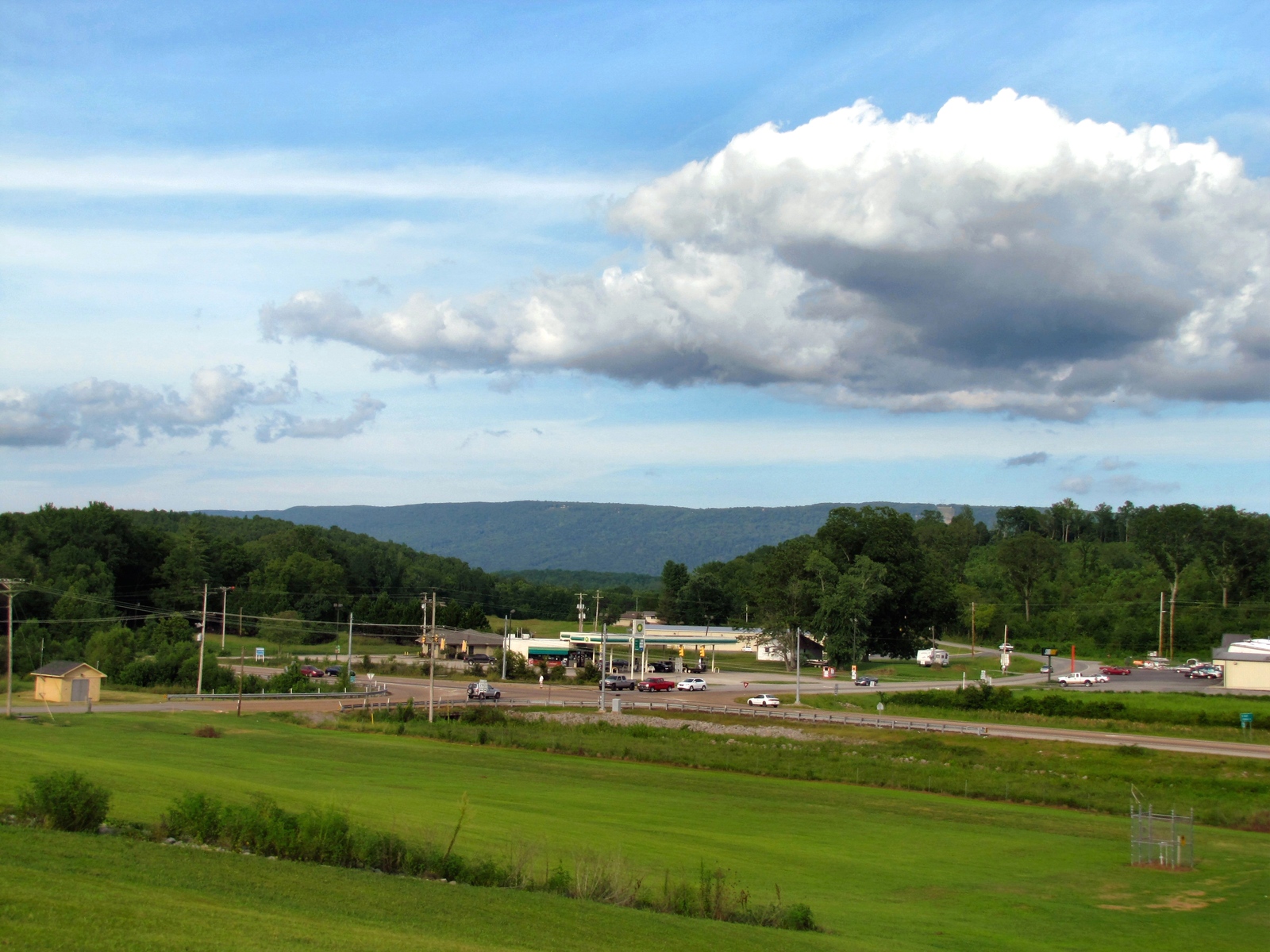
Setting
Mineral Springs is a small unincorporated community in the lower Sequatchie Valley in Marion County, named directly for the chalybeate mineral-water spring at its site. 19th-century gazetteers of the region note that Marion County had a considerable number of such springs, mostly chalybeate (iron-bearing), located from roughly three to seven miles from Jasper; the site that carries the Mineral Springs name is one of those. It sits at about 679 feet of elevation on the valley floor, low enough that its drainage is dominated by the Sequatchie River system rather than by the perched creeks of the plateau above. The U.S. Geological Survey records it as a populated place with GNIS feature ID 1294038; it has no separately incorporated government, no post office of its own, no school, and no marked commercial center. Mail goes out under one of the county's surrounding ZIP codes, and most services come from the nearby incorporated towns.
Long before the valley's 19th-century mineral-springs era, the spring and the surrounding bottomland fell within a much longer arc of Indigenous use. Springs and their associated rockshelters are among the most consistently reused places in southeastern archaeology, and the lower Sequatchie corridor carried Archaic, Woodland, and Mississippian occupation over thousands of years. By the late 18th century the ground was part of the Chickamauga (Lower) Cherokee homeland; the remaining Cherokee community in the valley was forcibly removed along the Trail of Tears in 1838, decades before the resort-era naming of springs like this one became common. The Cherokee Nation continues today as a sovereign nation headquartered in Oklahoma.
The name and Tennessee's mineral-springs era
The community's name is a tell: across the southern United States, “Mineral Springs” almost always marked a site where naturally mineralized water emerged from the ground, and such sites were often connected to the 19th-century boom in mineral-springs tourism. From roughly 1820 into the 1930s, Tennessee had on the order of seventy mineral-springs hotels and resorts; visitors came to “take the waters” for rheumatism, dyspepsia, tuberculosis, and a long list of other ailments before the antibiotic era. By the late 19th century, mineral-springs tourism had grown into one of the state's major industries, supporting inns, bathhouses, livery stables, and the transportation networks that carried visitors in and out.
Well-documented Tennessee resorts of that era, Red Boiling Springs in Macon County, Montvale Springs in Blount County, Tate Springs in Grainger County, and Beersheba Springs on the Cumberland Plateau in Grundy County, were all built around similar spring sites and declined together as the medical culture that supported them faded and as automobile-era tourism redirected travel to other places. Marion County's Mineral Springs belongs to that same broader category by naming and by geography; a cold spring and a quiet valley-floor setting are exactly the ingredients that produced the larger resorts elsewhere in the state.
What the record does and does not say
Institutional records for a specific Mineral Springs resort or hotel in Marion County are thin. The community is included in local gazetteers and genealogical rosters, and the Mineral Spring's School (as it appears in Nonie Webb's forthcoming inventory of old Marion County schools) is listed among the small rural schools that served the county before the mid-20th-century consolidation of the school system. What has not been located is a newspaper advertisement, a postcard, a hotel register, or a historical-marker text that fixes the identity, ownership, dates of operation, or architecture of a named Marion County mineral-springs inn. The Wikipedia stub on the community restricts itself to coordinates, elevation, and a GNIS reference without asserting any resort history.
The weight of the evidence suggests that Marion County's Mineral Springs shared the naming and likely the modest cold-spring draw of many Tennessee sites in its era, but that any resort that may have operated here did not reach the size or the archival footprint of the state's better-documented examples.
Present day
Mineral Springs today is a quiet, thinly populated rural area of farms, woodland lots, and scattered houses along its local roads. It has no distinctive commercial center, no incorporated identity, and no contemporary tourism draw. The community's practical daily economy is tied to Jasper, South Pittsburg, and Kimball for retail and government services, and to the regional labor shed of the Tennessee River corridor for employment. Its name is the longest-lasting trace of what it once was.
Related
Historical schools of Marion County →
Other named places →
Geography →
Sources
- Wikipedia — Mineral Springs, Marion County, Tennessee
- Tennessee History for Kids — Lost Mineral Springs Hotels
- Tennessee State Museum — The Miracle Minerals of Red Boiling Springs
- Tennessee State Library & Archives — Tennessee resorts and “taking the waters”
- TNGenWeb Marion — Historical schools roster (Mineral Spring's School listed)